

Retinoic acid synthesis and functions in early embryonic development
Open accessThe DOI matches its Crossref record; 170 of the 170 references it cites were found in a registry or an index.
Abstract
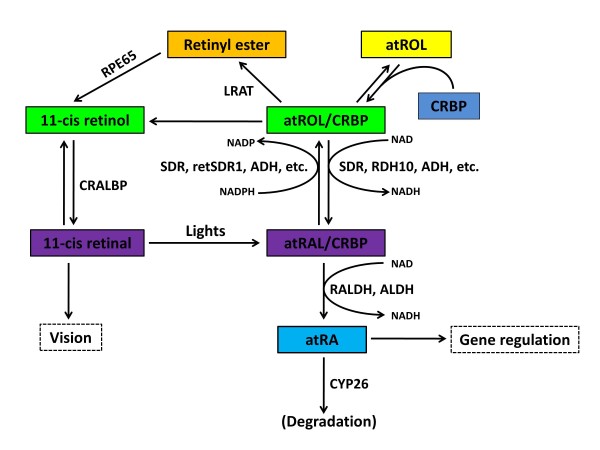
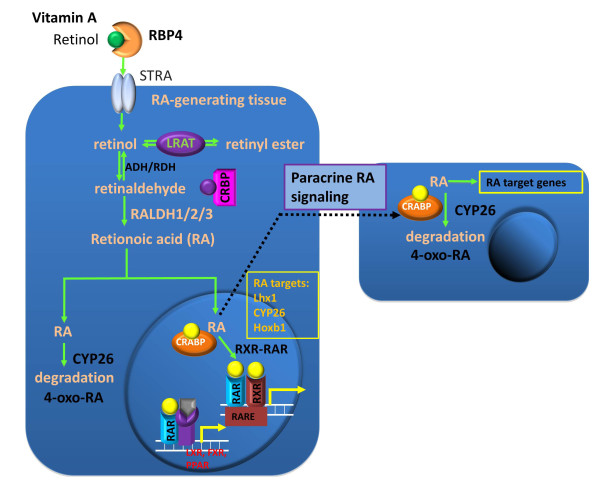
Retinoic acid (RA) is a morphogen derived from retinol (vitamin A) that plays important roles in cell growth, differentiation, and organogenesis. The production of RA from retinol requires two consecutive enzymatic reactions catalyzed by different sets of dehydrogenases. The retinol is first oxidized into retinal, which is then oxidized into RA. The RA interacts with retinoic acid receptor (RAR) and retinoic acid X receptor (RXR) which then regulate the target gene expression. In this review, we have discussed the metabolism of RA and the important components of RA signaling pathway, and highlighted current understanding of the functions of RA during early embryonic development.
Overview
The claims and statistics of this paper haven’t been checked yet.
Free: it reads the open-access text and checks the first 5 claims that cite a source we can check. Create a free account to check every claim.
Integrity signals
Registry
Cites
Statistics
Figures
Verification
Claims the paper makes
The claims and statistics of this paper haven’t been checked yet.
Free: it reads the open-access text and checks the first 5 claims that cite a source we can check. Create a free account to check every claim.
Claims other papers make about this one
Each is checked against this paper’s own text: does it say what the citing paper says it does?
The cited source says what the claim attributes to it.
In the citing paper
“Although the term vitamin A is mostly associated with retinol, and retinol is, in fact, the predominant form of retinoids in the human body, the main biologically active molecules are the oxidized derivates 11-cis-retinal and all-trans-retinoid acid (ATRA) [1,2].”
From Vitamin A Update: Forms, Sources, Kinetics, Detection, Function, Deficiency, Therapeutic Use and Toxicity (2021) · cites this paper as [2]
The check wasn’t confident either way, so it gives no verdict — never disputed.
In the citing paper
“The main retinoid found in breast milk is ATRA since it is slightly more water-soluble than the other retinoids [2].”
From Vitamin A Update: Forms, Sources, Kinetics, Detection, Function, Deficiency, Therapeutic Use and Toxicity (2021) · cites this paper as [2]
Experimental — accuracy not yet measured
Self-check
Percentages, sums and reported differences re-computed from the paper’s own numbers.
The self-check needs the paper’s full text.
Citations
Cites
Peroxisome Proliferator-Activated Receptors: Nuclear Control of Metabolism*
Desvergne, B., & Wahli, W. (1999) · Endocrine Reviews · doi:10.1210/edrv.20.5.0380 · Cited by 3,086 · cited 1×
“PPAR is a lipid sensing nuclear receptor, recognizing a wide range of fatty acids [90].”
BackgroundA human retinoic acid receptor which belongs to the family of nuclear receptors
Petkovich, M., Brand, N. J., Krust, A., & Chambon, P. (1987) · Nature · doi:10.1038/330444a0 · Cited by 2,214 · cited 1×
“The RAR family consists of RARa/b/g three members that bind to atRA [68-71].”
BackgroundNuclear Receptors and Lipid Physiology: Opening the X-Files
Chawla, A., Repa, J. J., Evans, R. M., & Mangelsdorf, D. J. (2001) · Science · doi:10.1126/science.294.5548.1866 · Cited by 2,085 · cited 7×
“Since atRA-bound RAR can form heterodimer with RXR in the absence of 9-cis retinoic acid and is still active in transcription activities, the importance of RXRs may not be as critical as RARs.”
BackgroundInfluentialIdentification of a receptor for the morphogen retinoic acid
Giguere, V., Ong, E. S., Segui, P., & Evans, R. M. (1987) · Nature · doi:10.1038/330624a0 · Cited by 1,965 · cited 1×
“The RAR family consists of RARa/b/g three members that bind to atRA [68-71].”
BackgroundVitamin effects on the immune system: Vitamins A and D take centre stage
Mora, J. R., Iwata, M., & von Andrian, U. H. (2008) · Nature Reviews Immunology · doi:10.1038/nri2378 · Cited by 1,559 · cited 1×
“Retinoids are involved in cellular growth, apoptosis, immune response, and epithelial growth [2-7] through the interaction with the nuclear receptors, retinoic acid receptor (RAR) and retinoid X receptor (RXR).”
BackgroundPeroxisome Proliferator-Activated Receptors: Nuclear Control of Metabolism
Desvergne, B. (1999) · Endocrine Reviews · doi:10.1210/er.20.5.649 · Cited by 1,251
Embryonic retinoic acid synthesis is essential for early mouse post-implantation development
Niederreither, K., Subbarayan, V., Dollé, P., & Chambon, P. (1999) · Nature Genetics · doi:10.1038/7788 · Cited by 1,077 · cited 1×
“Knockout of RALDH2 was embryonic lethal during the postimplantation period in mice [40], suggesting that atRA is essential for normal embryonic development.”
BackgroundIdentification of a second human retinoic acid receptor
Brand, N., Petkovich, M., Krust, A., Chambon, P., de Thé, H., Marchio, A., Tiollais, P., & Dejean, A. (1988) · Nature · doi:10.1038/332850a0 · Cited by 1,022 · cited 1×
“The RAR family consists of RARa/b/g three members that bind to atRA [68-71].”
BackgroundKessel, M., & Gruss, P. (1991) · Cell · doi:10.1016/0092-8674(91)90574-i · Cited by 1,009 · cited 1×
“Global application of atRA to mouse embryos during day 7 of gestation caused severe head deformations, such as exencephaly, microcephaly, and anencephaly, whereas exposure of embryos to atRA during day 8 of gestation led to severe caudal truncations reminiscent of the human caudal regression syndrome [102,103].”
MethodMendelsohn, C., Lohnes, D., Décimo, D., Lufkin, T., LeMeur, M., Chambon, P., & Mark, M. (1994) · Development · doi:10.1242/dev.120.10.2749 · Cited by 992
Research works printed but not linked: 1
- Stachurska E Loboda A Niderla-Bielinska J Szperl M Juszynski M Jozkowicz A Dulak J Ratajska A Expression of cellular retinoic acid-binding protein I and II (CRABP I and II) in embryonic mouse hearts treated with retinoic acid Acta Biochim Pol 2011 58 1 19 29 21409183 · DOI
Cited by
Items 101–200 of 300
Nuclear hormone receptors in podocytes
Khurana, S., Bruggeman, L. A., & Kao, H. (2012) · Cell & Bioscience · doi:10.1186/2045-3701-2-33 · Cited by 17
“of many organs including limbs, lung, and kidney [111].”
Verma, P., Subodh, S., Tiwari, V., Rampal, R. K., Tuteja, A., Toteja, G. S., Gupta, S., & Ahuja, V. (2016) · Scandinavian Journal of Immunology · doi:10.1111/sji.12450 · Cited by 17
Tian, J., Liu, J., Li, J., Zheng, J., Chen, L., Wang, Y., Liu, Q., & Ni, J. (2018) · Nutrition & Metabolism · doi:10.1186/s12986-017-0235-x · Cited by 19
Vitamin A and Its Related Diseases
Rao, S., Li, T., Li, X., Hou, L., & Sun, W. (2025) · Food Science & Nutrition · doi:10.1002/fsn3.70630 · Cited by 19
“Upon entering the liver, some retinyl ester is hydrolyzed to retinol, which binds to retinol-binding protein (RBP) (Futang 2015; Kam et al. 2012; Newcomer and Ong 2000; Soprano et al. 1986).”
Nastały, P., Filipska, M., Morrissey, C. M., Eltze, E., Semjonow, A., Brandt, B., Pantel, K., & Bednarz‐Knoll, N. (2018) · Translational research · doi:10.1016/j.trsl.2018.08.007 · Cited by 17
Mohamed, I. A., El‐Badri, N., & Zaher, A. (2019) · Life Sciences · doi:10.1016/j.lfs.2019.116937 · Cited by 17
Panase, P., Vongkampang, T., Wangkahart, E., & Sutthi, N. (2024) · Fish Physiology and Biochemistry · doi:10.1007/s10695-024-01331-8 · Cited by 16
“Furthermore, astaxanthin serves as an essential source of retinol and 3,4-didehydroretinol, which are precursors of vitamin A and have crucial roles during the development of vertebrate embryos (Moren et al. 2002; Blomhoff and Blomhoff 2006; Duester 2008; Kin Ting Kam et al. 2012).”
Luo, C., Zhang, Q., Zheng, S., Wang, D., Huang, W., Huang, Y., Shi, X., Xie, H., & Wu, K. (2024) · The Science of The Total Environment · doi:10.1016/j.scitotenv.2024.175131 · Cited by 15
The guinea pig serves as an alternative model to study human preimplantation development
Canizo, J., Zhao, C., & Petropoulos, S. (2025) · Nature Cell Biology · doi:10.1038/s41556-025-01642-9 · Cited by 15
Bang, J., Han, M., Yoo, T.-J., Qiao, L., Jung, J., Na, J.-W., Carlson, B. A., Gladyshev, V. N., Hatfield, D. L., Kim, J., et al. (2021) · International Journal of Molecular Sciences · doi:10.3390/ijms222111647 · Cited by 18
“Retinoic acid is a morphogen, and its signaling pathway is known to regulate axis formation and cell fate determination [35].”
BackgroundNuclear Proteomics of Induced Leukemia Cell Differentiation
Novikova, S. E., Tolstova, T. V., Kurbatov, L. K., Farafonova, T. E., Tikhonova, O. V., Soloveva, N. A., Rusanov, A. L., Archakov, A. I., & Zgoda, V. G. (2022) · Cells · doi:10.3390/cells11203221 · Cited by 15
Kim, D., Lee, J., & Lee, K. (2019) · Lipids · doi:10.1002/lipd.12123 · Cited by 15
Retinoic Acid Signaling in Vertebrate Hindbrain Segmentation: Evolution and Diversification
Bedois, A. M. H., Parker, H. J., & Krumlauf, R. K. (2021) · Diversity · doi:10.3390/d13080398 · Cited by 16
Barandeh, B., Mahabadi, J. A., Azadbakht, M., Hayat, S. M. G., & Amini, A. (2019) · Journal of Cellular Biochemistry · doi:10.1002/jcb.28934 · Cited by 15
Retinoids: Mechanisms of Action in Neuronal Cell Fate Acquisition
Koshy, A., & Mendoza-Parra, M. A. (2023) · Life · doi:10.3390/life13122279 · Cited by 15
“Retinoic acid binds Retinoic Acid Receptor/Retinoid X Receptor (RAR/RXR) heterodimers, which are usually bound to retinoic acid response elements (RAREs) or retinoic X response elements (RXREs) in the promoter or enhancer regions of target genes [14].”
BackgroundSali, S., Azzam, L., Jaro, T., Ali, A. A. G., Mardini, A., Al-Dajani, O., Khattak, S., Butler, A. E., Azeez, J. M., & Nandakumar, M. (2025) · Stem Cell Research & Therapy · doi:10.1186/s13287-025-04293-7 · Cited by 18
“RA, a metabolite of vitamin A, plays an essential role in the generation of pancreatic progenitor cells that form the dorsal bud of the pancreas [86].”
Vitamin A and the Immune System
Roy, S., & Awasthi, A. (2019) · Springer eBooks · doi:10.1007/978-3-030-16073-9_3 · Cited by 16
Cho, K., Lee, S., Heo, J., Kwon, Y. M., Chung, D., Yu, W.-J., Bae, S. S., Choi, G., Lee, D.-S., & Kim, Y. J. (2021) · Toxins · doi:10.3390/toxins13110739 · Cited by 15
Advancement of All-Trans Retinoic Acid Delivery Systems in Dermatological Application
Omar, S. S. S., & Hadi, H. A. (2022) · Cosmetics · doi:10.3390/cosmetics9060140 · Cited by 13
Schmieder, H., Leischner, C., Piotrowsky, A., Marongiu, L., Venturelli, S., & Burkard, M. (2025) · Immunity & Ageing · doi:10.1186/s12979-025-00501-3 · Cited by 16
“Moreover, even though retinol is the most common form of retinoids found in the human body, the biologically active derivates comprise the oxidized 11- cis-retinal and ATRA [78, 79].”
Chen, Y., Zhao, N., Xu, L., Jia, X., Liu, F., Huang, J., Li, X., Wang, Y., Lai, C., Shen, Y., et al. (2025) · Molecular Cancer · doi:10.1186/s12943-025-02359-x · Cited by 15
Self-citationIlić, I., Oršolić, N., Rođak, E., Odeh, D., Lovrić, M., Mujkić, R., Aždajić, M. D., Grgić, A., Levak, M. T., Vargek, M., et al. (2020) · PLoS ONE · doi:10.1371/journal.pone.0238600 · Cited by 13
Sun, D., & Wang, S. (2021) · Oncology Letters · doi:10.3892/ol.2021.12842 · Cited by 13
Reduced Retinoic Acid Signaling During Gastrulation Induces Developmental Microcephaly
Gur, M., Bendelac-Kapon, L., Shabtai, Y., Pillemer, G., & Fainsod, A. (2022) · Frontiers in Cell and Developmental Biology · doi:10.3389/fcell.2022.844619 · Cited by 14
Notch2 with retinoic acid license IL-23 expression by intestinal EpCAM+ DCIR2+ cDC2s in mice
Ohara, D., Takeuchi, Y., Watanabe, H., Lee, Y., Mukoyama, H., Ohteki, T., Kondoh, G., & Hirota, K. (2024) · The Journal of Experimental Medicine · doi:10.1084/jem.20230923 · Cited by 13
“We found increased expression of gene modules for retinol uptake ( Stra6 and Stra6l ), retinoic acid production ( Adh4 , Rdh12 , and Dhrs1 ), and the retinoic acid ’ s intracellular carrier protein Crabp2 in Il23a-Venus + cDC2s (Kam et al., 2012; Napoli, 2016; Fig.”
The endocannabinoid system and retinoic acid signaling combine to influence bone growth
Fraher, D., Mann, R. J., Dubuisson, M. J., Ellis, M. K., Yu, T., Walder, K. R., Ward, A. C., Winkler, C., & Gibert, Y. (2021) · Molecular and Cellular Endocrinology · doi:10.1016/j.mce.2021.111267 · Cited by 12
Vitamin A: A Key Inhibitor of Adipocyte Differentiation
Malibary, M. (2023) · PPAR Research · doi:10.1155/2023/7405954 · Cited by 15
“The main bioactive forms are 11-cis -retinal and all-trans -retinoid acid (ATRA) [10].”
BackgroundThe roles of endogenous retinoid signaling in organ and appendage regeneration
Blum, N., & Begemann, G. (2013) · Cellular and Molecular Life Sciences · doi:10.1007/s00018-013-1303-7 · Cited by 13
“The acidic vitamin A metabolite RA acts as a ligand for transcription factors that regulate a variety of processes, including organogenesis, embryonic pattern formation, cell proliferation and differentiation, cell death, immunity and tissue homeostasis [23, 24].”
Transcriptional regulation of genes involved in retinoic acid metabolism in Senegalese sole larvae
Boglino, A., Ponce, M., Cousin, X., Gisbert, E., & Manchado, M. (2016) · Comparative Biochemistry and Physiology Part B Biochemistry and Molecular Biology · doi:10.1016/j.cbpb.2016.08.007 · Cited by 12
Falker‐Gieske, C., Mott, A., Franzenburg, S., & Tetens, J. (2021) · BMC Genomics · doi:10.1186/s12864-021-07451-2 · Cited by 13
Viswanathan, S., & Grace, V. M. B. (2018) · Gene · doi:10.1016/j.gene.2018.05.051 · Cited by 13
Onouchi, S., Ichii, O., Otsuka, S., Hashimoto, Y., & Kon, Y. (2013) · Journal of Anatomy · doi:10.1111/joa.12093 · Cited by 12
Zhang, X., Ma, B., Li, P., Chen, T., Ren, C., Hu, C., & Luo, P. (2025) · International Journal of Molecular Sciences · doi:10.3390/ijms26073133 · Cited by 11
“Although vitamin A itself is not the primary bioactive mediator, its derivatives, such as retinoate and 11-cis retinaldehyde, are critical for its functioning [28].”
The metabolic code of ferroptosis: nutritional regulators of cell death
Tschuck, J., Skafar, V., Angeli, J. P. F., & Hadian, K. (2025) · Trends in Biochemical Sciences · doi:10.1016/j.tibs.2025.04.007 · Cited by 14
Zhao, Z.-S., Yang, L.-Y., Li, F.-X., Cun, W., Wang, X.-Y., Cao, C., & Zhang, Q. (2023) · iScience · doi:10.1016/j.isci.2023.107809 · Cited by 11
“58 Excessive retinol caused tissue hypoxia and pathological endosteum mineralization in rats, 59,60 but retinol metabolism was an essential regulator for retinol levels in the hypoxia response of silver sillago.”
BackgroundWang, W., Jiang, Z., Wang, L., Wang, A., Liu, J., Chen, C., Yu, K., Zou, F., Wang, W., Liu, J. L., et al. (2020) · Cancer Letters · doi:10.1016/j.canlet.2019.12.045 · Cited by 11
Cohen, P. E., & Holloway, J. K. (2014) · Elsevier eBooks · doi:10.1016/b978-0-12-397175-3.00001-6 · Cited by 13
Manoochehri, H., Farrokhnia, M., Sheykhhasan, M., Mahaki, H., & Tanzadehpanah, H. (2024) · Heliyon · doi:10.1016/j.heliyon.2024.e34300 · Cited by 10
“All-trans-Retinoic Acid (ATRA) is a key bioactive mediator of the physiological functions of vitamin A. Additionally, ATRA plays an important role in regulating several cellular processes, including organogenesis, cell apoptosis, differentiation, and growth [33].”
BackgroundWang, S., Bi, W., Liu, Y., Cheng, J., Sun, W., Wu, G., & Xu, X. (2020) · Drug Design Development and Therapy · doi:10.2147/dddt.s215786 · Cited by 11
Pharmacotherapeutic potential of astaxanthin: Human and animal targeting roles – A review
Basuini, M. F. E., El-Bilawy, E. H., Kari, Z. A., Raza, S. H. A., Tapingkae, W., Doan, H. V., & Dawood, M. A. O. (2022) · Annals of Animal Science · doi:10.2478/aoas-2022-0017 · Cited by 11
Pípal, M., Novák, J., Rafajová, A., Smutná, M., & Hilscherová, K. (2022) · Aquatic Toxicology · doi:10.1016/j.aquatox.2022.106151 · Cited by 10
Kumar, M., Has, C., Lam‐Kamath, K., Ayciriex, S., Dewett, D., Bashir, M., Poupault, C. L., Schuhmann, K., Knittelfelder, O. L., Raghuraman, B. K., et al. (2022) · Biomolecules · doi:10.3390/biom12081083 · Cited by 10
Transcription factors regulating the specification of brainstem respiratory neurons
Xia, Y., Cui, K., Alonso, A., Lowenstein, E. D., & Hernandez-Miranda, L. R. (2022) · Frontiers in Molecular Neuroscience · doi:10.3389/fnmol.2022.1072475 · Cited by 10
Xie, S., Lu, F., Zhang, X., Shen, Q., He, Z., Gao, W., Hu, D., & Yang, H. (2013) · NeuroMolecular Medicine · doi:10.1007/s12017-012-8215-9 · Cited by 13
Meningeal-derived retinoic acid regulates neurogenesis via suppression of Notch and Sox2
Como, C. N., O’Rourke, R., Winkler, C. C., Mitchell, D. N., Tran, L. N., Lorberbaum, D. S., Sussel, L., Franco, S. J., & Siegenthaler, J. A. (2025) · Cell Reports · doi:10.1016/j.celrep.2025.115637 · Cited by 11
In Ovo Inoculation of Vitamin A Modulates Chicken Embryo Immune Functions
Shojadoost, B., Alizadeh, M., Taha-Abdelaziz, K., Doost, J. S., Astill, J., & Sharif, S. (2021) · Journal of Interferon & Cytokine Research · doi:10.1089/jir.2020.0212 · Cited by 10
Retinoic Acid: Metabolism, Developmental Functions, and Evolution
Carvalho, J. E., & Schubert, M. (2013) · CRC Press eBooks · doi:10.1201/b15313-2 · Cited by 10
Li, Z., Chen, C., Yu, W., Xu, L., Jia, H., Wang, C., Pei, N., Liu, Z., Luo, D., Wang, J., et al. (2023) · Nutrients · doi:10.3390/nu15112425 · Cited by 11
Arima, N., Uchida, Y., Yu, R., Nakayama, K., & Nishina, H. (2013) · Biochemical and Biophysical Research Communications · doi:10.1016/j.bbrc.2013.05.006 · Cited by 9
Kutasy, B., Pes, L., Friedmacher, F., Paradisi, F., & Puri, P. S. (2014) · Pediatric Surgery International · doi:10.1007/s00383-014-3525-7 · Cited by 10
Lien, Y., Won, K., & Simmons, R. A. (2020) · Endocrinology · doi:10.1210/endocr/bqaa187 · Cited by 10
Balhara, A., Basit, A., Argikar, U. A., Dumouchel, J. L., Singh, S., & Prasad, B. (2021) · Drug Metabolism and Disposition · doi:10.1124/dmd.120.000297 · Cited by 9
Vitamin A deficiency affects gene expression in the Drosophila melanogaster head
Dewett, D., Labaf, M., Lam‐Kamath, K., Zarringhalam, K., & Rister, J. (2021) · G3 Genes Genomes Genetics · doi:10.1093/g3journal/jkab297 · Cited by 10
Blixt, M. K. E., Konjusha, D., Ring, H., & Hallböök, F. (2017) · Developmental Dynamics · doi:10.1002/dvdy.24607 · Cited by 10
Carrera, A. R. M., Eleazar, E. G., Caparanga, A. R., & Tayo, L. L. (2024) · Toxics · doi:10.3390/toxics12010049 · Cited by 8
Synergistic Effect of Retinoic Acid and Lactoferrin in the Maintenance of Gut Homeostasis
Peña‐Juárez, M. C., Guadarrama-Escobar, O. R., Serrano-Castañeda, P., Méndez‐Albores, A., Vázquez‐Durán, A., Vera‐Graziano, R., Pérez, B. R., Salgado-Machuca, M., Anguíano-Almazán, E., Morales-Florido, M. I., et al. (2024) · Biomolecules · doi:10.3390/biom14010078 · Cited by 9
“RA also promotes homeostasis and cellular differentiation [125,126].”
BackgroundAhmadi, Z., Jena, H., Singh, M., Dhawan, G., & Kumar, P. (2021) · Journal of Pharmaceutical Sciences · doi:10.1016/j.xphs.2021.04.016 · Cited by 8
Patterning of vertebrate cardiac progenitor fields by retinoic acid signaling
Duong, T. B., & Waxman, J. S. (2021) · genesis · doi:10.1002/dvg.23458 · Cited by 8
Seyyedin, S., Ezzatabadipour, M., & Nematollahi‐Mahani, S. N. (2023) · Current Stem Cell Research & Therapy · doi:10.2174/1574888x18666230124151311 · Cited by 9
Kutasy, B., Friedmacher, F., Pes, L., Coyle, D., Doi, T., Paradisi, F., & Puri, P. S. (2015) · Pediatric Research · doi:10.1038/pr.2015.256 · Cited by 8
Viera‐Vera, J., & García‐Arrarás, J. E. (2018) · Gene · doi:10.1016/j.gene.2018.01.102 · Cited by 9
Khaksary-Mahabady, M., Ranjbar, R., Najafzadehvarzi, H., Mohammadian, B., & Gohari-Behbahani, N. (2018) · International Journal of Morphology · doi:10.4067/s0717-95022018000100338 · Cited by 9
Harding, P., Wojtynska, M., Smith, A. J., Ali, R. R., & Pearson, R. A. (2025) · Stem Cell Reports · doi:10.1016/j.stemcr.2025.102647 · Cited by 10
“Given the known role of RA in maintaining the cell cycle (Kam et al., 2012), this first wave of CYP26A1 appears to serve to promote early cell cycle exit within the PM.”
Effect of retinoic acid on the nitrergic innervation of meibomian glands in rats
Boleková, A., Kluchová, D., Tomášová, L., & Hvizdošová, N. (2012) · European Journal of Histochemistry · doi:10.4081/ejh.2012.e50 · Cited by 9
The Origin of Teratogenic Retinoids in Cyanobacteria
Sehnal, L., Smutná, M., Bláhová, L., Babica, P., Šplíchalová, P., & Hilscherová, K. (2022) · Toxins · doi:10.3390/toxins14090636 · Cited by 7
Broeker, C. D., Ortiz, M. M. O., Murillo, M. S., & Andrechek, E. R. (2023) · Breast Cancer Research · doi:10.1186/s13058-023-01723-3 · Cited by 10
“We speculate that the A255D mutation interferes with retinoic acid binding and heterodimerization with the retinoid X receptor, which thus inhibits the transcriptional activation of downstream genes that would lead to cell differentiation and cell cycle control [63, 64].”
BackgroundMiyajima, A., Ohashi, H., Fujishiro, A., Matsuoka, Y., Hiramatsu, A., & Hirota, T. (2016) · Biological and Pharmaceutical Bulletin · doi:10.1248/bpb.b15-00704 · Cited by 7
Cao, D.-X., Wang, S.-L., WANG, R., Chai, S., Liu, S.-J., & Hao, L.-Z. (2019) · Journal of Animal and Feed Sciences · doi:10.22358/jafs/109953/2019 · Cited by 7
Genes and Specific (Related) Proteins in Neurodevelopmental Disorders
Nisar, S., Haris, M., & Fakhro, K. A. (2022) · Nutritional neurosciences · doi:10.1007/978-981-15-9781-7_2 · Cited by 8
Singh, B., Pahuja, I., Yadav, P., Shaji, A., Chaturvedi, S., Ranganathan, A., Dwivedi, V. P., & Das, G. (2023) · The Journal of Infectious Diseases · doi:10.1093/infdis/jiad460 · Cited by 7
Williams, A. L., & Bohnsack, B. L. (2024) · Cells · doi:10.3390/cells13171473 · Cited by 7
Anggraeni, A. S., Alam, L. P. M., Utami, I. D., Khasanah, Y., Nurfahmi, L., Noviana, I. M. P., Windarsih, A., & Suratno, S. (2024) · Case Studies in Chemical and Environmental Engineering · doi:10.1016/j.cscee.2024.101034 · Cited by 7
Retinoic acid and CTCF play key roles in inducing the collinear expression of the Hoxa cluster
Oh, J. H., Kim, C. Y., Lee, J., & Kim, M. H. (2018) · Acta Biochimica et Biophysica Sinica · doi:10.1093/abbs/gmy039 · Cited by 7
A rare mutation of retinoic acid receptor-β associated with lethal neonatal Matthew-Wood syndrome
Nobile, S., Pisaneschi, E., Novelli, A., & Carnielli, V. P. (2018) · Clinical Dysmorphology · doi:10.1097/mcd.0000000000000251 · Cited by 7
RAI14 in the blood feather regulates chicken pigmentation
Adetula, A. A., Liu, X., Yang, L., Fang, C., Yu, H., Li, H., & Li, S. (2020) · Archives animal breeding/Archiv für Tierzucht · doi:10.5194/aab-63-231-2020 · Cited by 7
Sears, K. E., Gullapalli, K., Trivedi, D., Mihas, A. K., Bukys, M. A., & Jensen, J. N. (2022) · iScience · doi:10.1016/j.isci.2022.104133 · Cited by 6
Differentiation of Pluripotent Stem Cells for Disease Modeling: Learning from Heart Development
Chi, C., Roland, T. J., & Song, K. (2024) · Pharmaceuticals · doi:10.3390/ph17030337 · Cited by 7
“Retinoic acid (RA) is an active vitamin A metabolite that acts as an essential, diffusible morphogen during embryogenesis through autocrine or paracrine signaling [102].”
BackgroundCaudal regression syndrome without maternal diabetes mellitus
Mwamanenge, N. A., Mariki, H. K., Mkony, M. F., & Manji, K. P. (2023) · BMJ Case Reports · doi:10.1136/bcr-2022-253136 · Cited by 6
Toxicological mechanism of cannabidiol (CBD) exposure on zebrafish embryonic development
Wei, Y., Chen, X., Li, Y., Guo, Y., Zhang, S., Jin, J., Li, J., & Wu, D. (2024) · Food and Chemical Toxicology · doi:10.1016/j.fct.2024.114929 · Cited by 8
Vishwakarma, S. K., Fatima, N., Lakkireddy, C., Raju, N., Bardia, A., Sandhya, A., Paspala, S. A. B., Satti, V., & Khan, A. A. (2018) · Tissue and Cell · doi:10.1016/j.tice.2018.02.001 · Cited by 6
Wang, F., Tang, Y., Cai, Y., Yang, R., Wang, Z., Wang, X., Yang, Q., Wang, W., Tian, J., & An, L. (2023) · Genes · doi:10.3390/genes14040946 · Cited by 6
Gauthier, M., Defrance, J., Jumarie, C., Vulliet, E., Garric, J., Boily, M. H., & Geffard, O. (2023) · Environmental Science and Pollution Research · doi:10.1007/s11356-023-28327-w · Cited by 6
Comparison between NAFLD fibrosis score and retinoic acid serum level in NAFLD
Allam, A. S., Salama, M. M., Nasser, H. M., Kabiel, W. A. Y., & Elsayed, E. H. (2020) · Egyptian Liver Journal · doi:10.1186/s43066-019-0014-7 · Cited by 6
Molecular Characterization of Retinoic Acid Receptor CgRAR in Pacific Oyster (Crassostrea gigas)
Jin, K., Jin, Q., Cai, Z., Huang, B., Wei, L., Zhang, M., Guo, W., Liu, Y., & Wang, X. (2021) · Frontiers in Physiology · doi:10.3389/fphys.2021.666842 · Cited by 8
Xi, J., Yue, J., & Yang, Z. (2015) · Genetics and Molecular Research · doi:10.4238/2015.april.27.9 · Cited by 7
Čižmáriková, M., Háziková, V., Michalková, R., Franko, O., Lešková, B., Homolya, A. D., Gabzdilová, J., & Takáč, P. (2025) · International Journal of Molecular Sciences · doi:10.3390/ijms262211157 · Cited by 5
“Collectively, retinoids, rexinoids, and carotenoids are either natural or synthetic agents involved in various biological processes [45–56] (Figure 1).”
Wei, Y., Gao, Y., Zhang, S., Li, Y., Wang, Z., Zhang, X., Li, Z., Li, J., Chen, Y., & Wu, D. (2025) · Aquatic Toxicology · doi:10.1016/j.aquatox.2025.107247 · Cited by 6
Self-citationBarrier function of the skin and the role of fat-soluble vitamins in the correction of its disorders
Petrova, S. Y., & Albanova, V. I. (2022) · Vestnik dermatologii i venerologii · doi:10.25208/vdv1313 · Cited by 6
Petrelli, B., Oztürk, A., Pind, M., Ayele, H., Fainsod, A., & Hicks, G. G. (2023) · Frontiers in Cell and Developmental Biology · doi:10.3389/fcell.2023.1208279 · Cited by 5
Boyi, J. O., Stokholm, I., Hillmann, M., Søndergaard, J., Persson, S., de Wit, C. A., Siebert, U., & Lehnert, K. (2021) · Aquatic Toxicology · doi:10.1016/j.aquatox.2021.106035 · Cited by 7
Elkazzaz, M., Haydara, T., Abo-Amer, Y. E.-E., Sahyon, H. A. E., Shamkh, I. M., Magd, M. F. A. E., Çen, O., & Ahmed, A. K. K. (2021) · Research Square · doi:10.21203/rs.3.rs-936697/v2 · Cited by 7
Mapping molluscan endocrinology: a systematic and critical appraisal
Panagiotidis, K., Miller, T. H., Martin, O., & Baynes, A. (2025) · Biological reviews/Biological reviews of the Cambridge Philosophical Society · doi:10.1002/brv.70112 · Cited by 4
Nanoplastics amplify 6PPD ocular toxicity in zebrafish
Lin, J., Pan, D., Chen, X., Xu, M., Zhu, Y., Zheng, Y., Song, Y., & Chen, J. (2026) · Environmental Science and Ecotechnology · doi:10.1016/j.ese.2026.100657 · Cited by 3
“The disruption of Aldh1a implies a failure in retinoic acid synthesis, a critical morphogen for eye development [45,46].”
From neural tube to spinal cord: The dynamic journey of the dorsal neuroepithelium
Ventriglia, S., & Kalcheim, C. (2024) · Developmental Biology · doi:10.1016/j.ydbio.2024.04.001 · Cited by 4
Quorum Quenching with a Diffusible Signal Factor Analog in Stenotrophomonas maltophilia
Guillén-Navarro, D., González-Vázquez, R., León-Ávila, G., & Cerezo, S. G. (2023) · Pathogens · doi:10.3390/pathogens12121448 · Cited by 5
“Bioisosteres as retinoids have properties attributed to cell differentiation in embryonic development and, recently, as treatment against cancer since they induce apoptosis in cancerous cells without affecting healthy cells [15,16].”
BackgroundComplete Bilateral Agenesis of the Diaphragm
Al‐Adnani, M., & Marnerides, A. (2017) · Pediatric and Developmental Pathology · doi:10.1177/1093526616680906 · Cited by 4
Ophthalmic manifestations associated with RARB mutations
Wangtiraumnuay, N., Kopinsky, S. M., Iyer, P., Capasso, J. E., Whitehead, R., Schneider, A. S., & Levin, A. V. (2018) · Clinical Dysmorphology · doi:10.1097/mcd.0000000000000246 · Cited by 4
A fetal mouse model of ventricular non-compaction using retinoic acid
Cao, F., Yang, Z., & Yin, L. (2019) · Pathology - Research and Practice · doi:10.1016/j.prp.2019.152496 · Cited by 4
Matamoros, N., Visentin, S., Ferrari, G., Falivene, M., Fasano, M. V., & González, H. F. (2018) · Archivos Argentinos de Pediatria · doi:10.5546/aap.2018.eng.146 · Cited by 4
Role of Antioxidant Vitamins in Neurogenesis
Roy‐Chowdhury, S., Bhavsar, D., Singh, J., & Mardon, A. A. (2021) · Journal of Undergraduate Life Sciences · doi:10.33137/juls.v15i1.37312 · Cited by 4
Metadata
- Authors
- Kin Ting Kam, R., Deng, Y., Chen, Y., & Zhao, H.
- Affiliations
- Chinese University of Hong Kong (HK)
- Chinese Academy of Sciences (CN)
- Corresponding author
- Chen, Yonglong
- Zhao, Hui
- Venue
- Cell & Bioscience
- Published
- 2012-03
- Volume
- 2
- Issue
- 1
- Pages
- 11-11
- ISSN
- 2045-3701 (ISSN-L)
- PMC
- PMC3325842
- OpenAlex
- W2100283268
- Cited by
- 283
- References
- 168
- Citations by year
- 2026: 11 · 2025: 24 · 2024: 22 · 2023: 29 · 2022: 24 · 2021: 39 · 2020: 25 · 2019: 18 · 2018: 21 · 2017: 12 · 2016: 11 · 2015: 11 · 2014: 16 · 2013: 15 · 2012: 5
- FWCI
- 6.05
- Type
- journal article
- Language
- en
- Open access
- gold
- doi.org
- Licence
- cc-by
- Locations
- Cell & Bioscience (publishedVersion, cc-by)
- Europe PMC (PubMed Central) (publishedVersion, cc-by)
- PubMed Central (publishedVersion, cc-by)
- PubMed (publishedVersion)
- DOAJ (DOAJ: Directory of Open Access Journals) (submittedVersion, cc-by-sa)
- Funders
- Chinese Academy of Sciences (KSCX2-YW-R)
- Chinese University of Hong Kong
- National Key Research and Development Program of China (KSCX2-YW-R-083, 2009CB941202)
- Topics
- Life Sciences › Biochemistry, Genetics and Molecular Biology › Molecular Biology › Retinoids in leukemia and cellular processes
- Life Sciences › Biochemistry, Genetics and Molecular Biology › Molecular Biology › Developmental Biology and Gene Regulation
- Health Sciences › Medicine › Ophthalmology › Retinal Development and Disorders
- Keywords
- retinoic acid, retinol, retinal, retinoic acid synthesis, retinoic acid metabolism, retinoic acid receptor, early embryonic development, organogenesis, cell differentiation
About these checks
Registry, retraction, Cites and statistics results are computed, not judged, with one exception: a printed reference that no index lists is read once by a model before it counts as a citation error. Claims are extracted by a model and kept only when their quote appears verbatim in the text; each cited source is then checked, with a model’s help, for whether it says what the claim relies on. Those verdicts can be wrong — read the claim’s quote and the cited source before relying on one.
Statistics and arithmetic are recomputed, not judged.
Confidence bands are shown only for fields calibrated on our annotated test set. None is calibrated yet, so no band is shown.
What counts as a claim ›How we measure confidence ›How we check this ›
Are you an author, or do you see a problem with this page? Request a review
Data sources
Bibliographic data: Semantic Scholar, OpenAlex, Crossref.
Contains information from the Semantic Scholar Academic Graph Datasets, made available under the ODC Attribution License (ODC-BY 1.0).
Semantic Scholar’s data is described in: Kinney, R., et al. (2023). The Semantic Scholar Open Data Platform. arXiv:2301.10140.
