

Retinoic acid synthesis and functions in early embryonic development
Open accessThe DOI matches its Crossref record; 170 of the 170 references it cites were found in a registry or an index.
Abstract
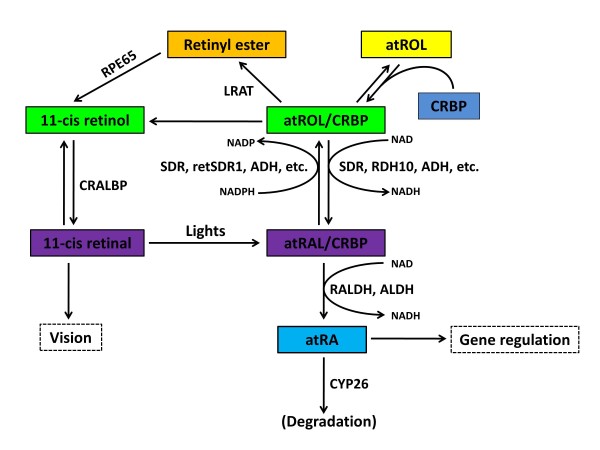
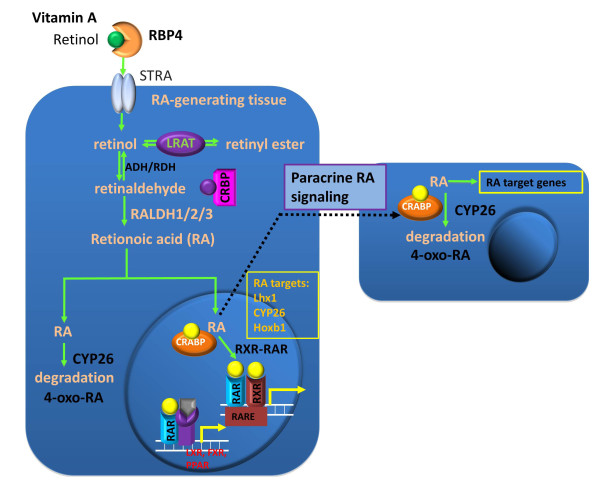
Retinoic acid (RA) is a morphogen derived from retinol (vitamin A) that plays important roles in cell growth, differentiation, and organogenesis. The production of RA from retinol requires two consecutive enzymatic reactions catalyzed by different sets of dehydrogenases. The retinol is first oxidized into retinal, which is then oxidized into RA. The RA interacts with retinoic acid receptor (RAR) and retinoic acid X receptor (RXR) which then regulate the target gene expression. In this review, we have discussed the metabolism of RA and the important components of RA signaling pathway, and highlighted current understanding of the functions of RA during early embryonic development.
Overview
The claims and statistics of this paper haven’t been checked yet.
Free: it reads the open-access text and checks the first 5 claims that cite a source we can check. Create a free account to check every claim.
Integrity signals
Registry
Cites
Statistics
Figures
Verification
Claims the paper makes
The claims and statistics of this paper haven’t been checked yet.
Free: it reads the open-access text and checks the first 5 claims that cite a source we can check. Create a free account to check every claim.
Claims other papers make about this one
Each is checked against this paper’s own text: does it say what the citing paper says it does?
The cited source says what the claim attributes to it.
In the citing paper
“Although the term vitamin A is mostly associated with retinol, and retinol is, in fact, the predominant form of retinoids in the human body, the main biologically active molecules are the oxidized derivates 11-cis-retinal and all-trans-retinoid acid (ATRA) [1,2].”
From Vitamin A Update: Forms, Sources, Kinetics, Detection, Function, Deficiency, Therapeutic Use and Toxicity (2021) · cites this paper as [2]
The check wasn’t confident either way, so it gives no verdict — never disputed.
In the citing paper
“The main retinoid found in breast milk is ATRA since it is slightly more water-soluble than the other retinoids [2].”
From Vitamin A Update: Forms, Sources, Kinetics, Detection, Function, Deficiency, Therapeutic Use and Toxicity (2021) · cites this paper as [2]
Experimental — accuracy not yet measured
Self-check
Percentages, sums and reported differences re-computed from the paper’s own numbers.
The self-check needs the paper’s full text.
Citations
Cites
Peroxisome Proliferator-Activated Receptors: Nuclear Control of Metabolism*
Desvergne, B., & Wahli, W. (1999) · Endocrine Reviews · doi:10.1210/edrv.20.5.0380 · Cited by 3,086 · cited 1×
“PPAR is a lipid sensing nuclear receptor, recognizing a wide range of fatty acids [90].”
BackgroundA human retinoic acid receptor which belongs to the family of nuclear receptors
Petkovich, M., Brand, N. J., Krust, A., & Chambon, P. (1987) · Nature · doi:10.1038/330444a0 · Cited by 2,214 · cited 1×
“The RAR family consists of RARa/b/g three members that bind to atRA [68-71].”
BackgroundNuclear Receptors and Lipid Physiology: Opening the X-Files
Chawla, A., Repa, J. J., Evans, R. M., & Mangelsdorf, D. J. (2001) · Science · doi:10.1126/science.294.5548.1866 · Cited by 2,085 · cited 7×
“Since atRA-bound RAR can form heterodimer with RXR in the absence of 9-cis retinoic acid and is still active in transcription activities, the importance of RXRs may not be as critical as RARs.”
BackgroundInfluentialIdentification of a receptor for the morphogen retinoic acid
Giguere, V., Ong, E. S., Segui, P., & Evans, R. M. (1987) · Nature · doi:10.1038/330624a0 · Cited by 1,965 · cited 1×
“The RAR family consists of RARa/b/g three members that bind to atRA [68-71].”
BackgroundVitamin effects on the immune system: Vitamins A and D take centre stage
Mora, J. R., Iwata, M., & von Andrian, U. H. (2008) · Nature Reviews Immunology · doi:10.1038/nri2378 · Cited by 1,559 · cited 1×
“Retinoids are involved in cellular growth, apoptosis, immune response, and epithelial growth [2-7] through the interaction with the nuclear receptors, retinoic acid receptor (RAR) and retinoid X receptor (RXR).”
BackgroundPeroxisome Proliferator-Activated Receptors: Nuclear Control of Metabolism
Desvergne, B. (1999) · Endocrine Reviews · doi:10.1210/er.20.5.649 · Cited by 1,251
Embryonic retinoic acid synthesis is essential for early mouse post-implantation development
Niederreither, K., Subbarayan, V., Dollé, P., & Chambon, P. (1999) · Nature Genetics · doi:10.1038/7788 · Cited by 1,077 · cited 1×
“Knockout of RALDH2 was embryonic lethal during the postimplantation period in mice [40], suggesting that atRA is essential for normal embryonic development.”
BackgroundIdentification of a second human retinoic acid receptor
Brand, N., Petkovich, M., Krust, A., Chambon, P., de Thé, H., Marchio, A., Tiollais, P., & Dejean, A. (1988) · Nature · doi:10.1038/332850a0 · Cited by 1,022 · cited 1×
“The RAR family consists of RARa/b/g three members that bind to atRA [68-71].”
BackgroundKessel, M., & Gruss, P. (1991) · Cell · doi:10.1016/0092-8674(91)90574-i · Cited by 1,009 · cited 1×
“Global application of atRA to mouse embryos during day 7 of gestation caused severe head deformations, such as exencephaly, microcephaly, and anencephaly, whereas exposure of embryos to atRA during day 8 of gestation led to severe caudal truncations reminiscent of the human caudal regression syndrome [102,103].”
MethodMendelsohn, C., Lohnes, D., Décimo, D., Lufkin, T., LeMeur, M., Chambon, P., & Mark, M. (1994) · Development · doi:10.1242/dev.120.10.2749 · Cited by 992
Research works printed but not linked: 1
- Stachurska E Loboda A Niderla-Bielinska J Szperl M Juszynski M Jozkowicz A Dulak J Ratajska A Expression of cellular retinoic acid-binding protein I and II (CRABP I and II) in embryonic mouse hearts treated with retinoic acid Acta Biochim Pol 2011 58 1 19 29 21409183 · DOI
Cited by
Carazo, A., Macáková, K., Matoušová, K., Krčmová, L. K., Protti, M., & Mladěnka, P. (2021) · Nutrients · doi:10.3390/nu13051703 · Cited by 461
Astaxanthin as feed supplement in aquatic animals
Lim, K. C., Yusoff, F. M., Shariff, M., & Kamarudin, M. S. (2018) · Reviews in Aquaculture · doi:10.1111/raq.12200 · Cited by 446
Biomarkers of Nutrition for Development (BOND)-Vitamin A Review
Tanumihardjo, S. A., Russell, R. M., Stephensen, C. B., Gannon, B. M., Craft, N. E., Haskell, M. J., Lietz, G., Schulze, K., & Raiten, D. J. (2016) · The Journal of Nutrition · doi:10.3945/jn.115.229708 · Cited by 451
“receptors, such as RARs (71, 123), and 11-cis-retinal required in the visual cycle (124, 125).”
BackgroundElbahnaswy, S., & Elshopakey, G. E. (2023) · Fish Physiology and Biochemistry · doi:10.1007/s10695-022-01167-0 · Cited by 190
“…is its function as a primary source of vitamin A precursors (retinol and 3,4-didehydroretinol) (Torris-sen 1990; Moren et al. 2002; Blomhoff and Blom-hoff 2006), which they have a substantial role in cell signaling during the shaping of developing vertebrate embryos (Duester 2008; Kam et al. 2012).”
Lower urinary tract development and disease
Rasouly, H. M., & Lu, W. (2013) · WIREs Systems Biology and Medicine · doi:10.1002/wsbm.1212 · Cited by 125
Evaluation of an alternative in vitro test battery for detecting reproductive toxicants
Piersma, A. H., Bosgra, S., van Duursen, M. B. M., Hermsen, S. A. B., Jonker, L., Kroese, E. D., van der Linden, S. C., Man, H.-Y., Roelofs, M. J. E., Schulpen, S. H. W., et al. (2013) · Reproductive Toxicology · doi:10.1016/j.reprotox.2013.03.002 · Cited by 112
Zhang, Q., Zheng, S., Shi, X., Luo, C., Huang, W., Lin, H., Peng, J., Tan, W., & Wu, K. (2023) · Environment International · doi:10.1016/j.envint.2023.107745 · Cited by 109
Retinoic Acid and Its Role in Modulating Intestinal Innate Immunity
Czarnewski, P., Das, S., Parigi, S. M., & Villablanca, E. J. (2017) · Nutrients · doi:10.3390/nu9010068 · Cited by 109
Current Trends in ATRA Delivery for Cancer Therapy
Giuli, M. V., Hanieh, P. N., Giuliani, E., Rinaldi, F., Marianecci, C., Screpanti, I., Checquolo, S., & Carafa, M. (2020) · Pharmaceutics · doi:10.3390/pharmaceutics12080707 · Cited by 101
Centennial Review: Effects of vitamins A, D, E, and C on the chicken immune system
Shojadoost, B., Yitbarek, A., Alizadeh, M., Kulkarni, R. R., Astill, J., Boodhoo, N., & Sharif, S. (2021) · Poultry Science · doi:10.1016/j.psj.2020.12.027 · Cited by 115
A Clinician’s Guide to Topical Retinoids
Motamedi, M., Chehade, A., Sanghera, R., & Grewal, P. S. (2021) · Journal of Cutaneous Medicine and Surgery · doi:10.1177/12034754211035091 · Cited by 102
Nakajima, T., Shibata, M., Nishio, M., Nagata, S., Alev, C., Sakurai, H., Toguchida, J., & Ikeya, M. (2018) · Development · doi:10.1242/dev.165431 · Cited by 88
Hu, X., Gao, J. H., Liao, Y., Tang, S., & Lu, F. (2013) · Cell Death and Disease · doi:10.1038/cddis.2013.424 · Cited by 61
Dhrs3 Protein Attenuates Retinoic Acid Signaling and Is Required for Early Embryonic Patterning
Kam, R. K. T., Shi, W., Chan, S. O., Chen, Y., Xu, G., Lau, C. B., Fung, K., Chan, W. Y., & Zhao, H. (2013) · Journal of Biological Chemistry · doi:10.1074/jbc.m113.514984 · Cited by 60
Self-citationSpecification of anteroposterior axis by combinatorial signaling during Xenopus development
Carron, C., & Shi, D. (2015) · Wiley Interdisciplinary Reviews Developmental Biology · doi:10.1002/wdev.217 · Cited by 61
Telias, M., Denlinger, B. L., Helft, Z., Thornton, C. A., Beckwith‐Cohen, B., & Krämer, R. (2019) · Neuron · doi:10.1016/j.neuron.2019.02.015 · Cited by 60
Tu, M., Zheng, X., Liu, P., Wang, S., Yan, Z., Sun, Q., & Liu, X. (2020) · The Science of The Total Environment · doi:10.1016/j.scitotenv.2020.142959 · Cited by 58
Lien, Y., Zhang, Z., Cheng, Y., Polyák, E., Sillers, L., Falk, M. J., Ischiropoulos, H., Parry, S. I., & Simmons, R. A. (2021) · International Journal of Molecular Sciences · doi:10.3390/ijms22157899 · Cited by 62
New perspectives on the mechanisms establishing the dorsal-ventral axis of the spinal cord
Andrews, M. G., Kong, J. H., Novitch, B. G., & Butler, S. J. (2018) · Current topics in developmental biology/Current Topics in Developmental Biology · doi:10.1016/bs.ctdb.2018.12.010 · Cited by 61
Petrelli, B., Bendelac-Kapon, L., Hicks, G. G., & Fainsod, A. (2019) · genesis · doi:10.1002/dvg.23278 · Cited by 57
All-trans Retinoic Acid as a Versatile Cytosolic Signal Modulator Mediated by CRABP1
Nagpal, I., & Wei, L. (2019) · International Journal of Molecular Sciences · doi:10.3390/ijms20153610 · Cited by 57
Vitamin A deficiency modulates iron metabolism via ineffective erythropoiesis
da Cunha, M. D. S. B., Siqueira, E. M. A., Trindade, L. S., & Arruda, S. F. (2014) · The Journal of Nutritional Biochemistry · doi:10.1016/j.jnutbio.2014.05.005 · Cited by 56
Stachowiak, M. K., & Stachowiak, E. K. (2016) · Journal of Cellular Physiology · doi:10.1002/jcp.25298 · Cited by 52
Bioactive Lipid Signaling in Cardiovascular Disease, Development, and Regeneration
Wasserman, A. H., Venkatesan, M., & Aguirre, A. (2020) · Cells · doi:10.3390/cells9061391 · Cited by 50
Roberts, C. (2020) · Journal of Developmental Biology · doi:10.3390/jdb8010006 · Cited by 51
Vitamin A, endocrine tissues and hormones: interplay and interactions
Brossaud, J., Pallet, V., & Corcuff, J. (2017) · Endocrine Connections · doi:10.1530/ec-17-0101 · Cited by 53
“Vitamin A and the pancreas RA receptor signalling is required in early pancreatic progenitor cells for pancreatic development (84).”
BackgroundPequerul, R., Lillo, J. V., Giménez-Dejoz, J., Crespo, I., Coines, J., Porté, S., Rovira, C., Parés, X., & Farrés, J. (2020) · Archives of Biochemistry and Biophysics · doi:10.1016/j.abb.2020.108256 · Cited by 51
Retinoic acid signaling determines the fate of uterine stroma in the mouse Müllerian duct
Nakajima, T., Iguchi, T., & Sato, T. (2016) · Proceedings of the National Academy of Sciences · doi:10.1073/pnas.1608808113 · Cited by 50
Mechanisms of vitamin A metabolism and deficiency in the mammalian and fly visual system
Dewett, D., Lam‐Kamath, K., Poupault, C. L., Khurana, H., & Rister, J. (2021) · Developmental Biology · doi:10.1016/j.ydbio.2021.03.013 · Cited by 54
Focal facial dermal dysplasia, type IV, is caused by mutations in CYP26C1
Slavotinek, A. M., Mehrotra, P., Nazarenko, I. A., Tang, P. L.-F., Lao, R., Cameron, D. A., Li, B., Chu, C., Chou, C., Marqueling, A. L., et al. (2012) · Human Molecular Genetics · doi:10.1093/hmg/dds477 · Cited by 47
Sarang, Z., Joós, G., Garabuczi, É., Rühl, R., Gregory, C. D., & Szondy, Z. (2014) · The Journal of Immunology · doi:10.4049/jimmunol.1400284 · Cited by 49
WNT/β-CATENIN modulates the axial identity of ES derived human neural crest
Gomez, G. A., Prasad, M. S., Wong, M., Charney, R. M., Shelar, P. B., Sandhu, N., Hackland, J. O. S., Hernández, J. C., Leung, A. W., & García‐Castro, M. I. (2019) · Development · doi:10.1242/dev.175604 · Cited by 57
Roles of vitamins in stem cells
Godoy-Parejo, C., Deng, C., Zhang, Y., Liu, W., & Chen, G. (2019) · Cellular and Molecular Life Sciences · doi:10.1007/s00018-019-03352-6 · Cited by 52
Age-dependent Protein Abundance of Cytosolic Alcohol and Aldehyde Dehydrogenases in Human Liver
Bhatt, D. K., Gaedigk, A., Pearce, R. E., Leeder, J. S., & Prasad, B. (2017) · Drug Metabolism and Disposition · doi:10.1124/dmd.117.076463 · Cited by 44
Wang, W., Hsu, H., Li, Y.-F., & Wu, C. (2017) · International Journal of Molecular Sciences · doi:10.3390/ijms18010130 · Cited by 42
Dubey, A., Rose, R. E., Jones, D. R., & Saint‐Jeannet, J. (2018) · genesis · doi:10.1002/dvg.23091 · Cited by 49
Retinoid-like activity and teratogenic effects of cyanobacterial exudates
Jonas, A., Buranova, V., Scholz, S., Fetter, É., Nováková, K., Kohoutek, J., & Hilscherová, K. (2014) · Aquatic Toxicology · doi:10.1016/j.aquatox.2014.06.022 · Cited by 41
Shi, W., Xu, G., Wang, C., Sperber, S. M., Chen, Y., Zhou, Q., Deng, Y., & Zhao, H. (2014) · Journal of Biological Chemistry · doi:10.1074/jbc.m114.591628 · Cited by 42
Self-citationVogeler, S., Galloway, T. S., Isupov, M. N., & Bean, T. P. (2017) · PLoS ONE · doi:10.1371/journal.pone.0176024 · Cited by 43
Garabuczi, É., Sarang, Z., & Szondy, Z. (2014) · Biochimica et Biophysica Acta (BBA) - Molecular Cell Research · doi:10.1016/j.bbamcr.2014.12.014 · Cited by 41
Genetics of Vesicoureteral Reflux
Nino, F., Ilari, M., Noviello, C., Santoro, L., Ratsch, I.-M., Martino, A., & Cobellis, G. (2015) · Current Genomics · doi:10.2174/1389202916666151014223507 · Cited by 38
“Gli3, Smo, Tshz3) [64]; TGF(genes: Bmp4, Smad4) [65]; retinoic acid mediated nuclear receptor (genes Rara, Rarb) [50, 66]; renin-angiotensin system(genes: Agt, Ren, Agtr1, Agtr2) [67, 68].”
Zhang, Q., Wu, R., Zheng, S., Luo, C., Huang, W., Shi, X., & Wu, K. (2023) · Journal of Hazardous Materials · doi:10.1016/j.jhazmat.2023.133332 · Cited by 39
Primary and secondary defects of the thymus
Dinges, S. S., Amini, K., Notarangelo, L. D., & Delmonte, O. M. (2024) · Immunological Reviews · doi:10.1111/imr.13306 · Cited by 39
Goto, S., Onishi, A., Misaki, K., Yonemura, S., Sugita, S., Ito, H., Ohigashi, Y., Ema, M., Sakaguchi, H., Nishida, K., et al. (2018) · eLife · doi:10.7554/elife.32358 · Cited by 37
Saetan, W., Ye, M., Lin, X., Lin, X., Zhang, Y., Huang, Y., Du, T., Li, G., & Tian, C. (2021) · Journal of Ocean University of China · doi:10.1007/s11802-021-4692-5 · Cited by 39
Litwa, E., Rzemieniec, J., Wnuk, A., Lasoń, W., Krzeptowski, W., & Kajta, M. (2014) · The Journal of Steroid Biochemistry and Molecular Biology · doi:10.1016/j.jsbmb.2014.07.014 · Cited by 39
Palmer, J. A., Smith, A. M., Egnash, L. A., Colwell, M. R., Donley, E. L. R., Kirchner, F. R., & Burrier, R. E. (2017) · Reproductive Toxicology · doi:10.1016/j.reprotox.2017.07.011 · Cited by 40
Retinoic acid receptor-targeted drugs in neurodegenerative disease
Clark, J. N., Whiting, A., & McCaffery, P. J. A. (2020) · Expert Opinion on Drug Metabolism & Toxicology · doi:10.1080/17425255.2020.1811232 · Cited by 37
Gupta, S. S., & Gupta, P. K. (2020) · Frontiers in Immunology · doi:10.3389/fimmu.2020.02161 · Cited by 38
Jaurena, M. B., Juraver-Geslin, H. A., Devotta, A., & Saint‐Jeannet, J. (2015) · Nature Communications · doi:10.1038/ncomms8476 · Cited by 35
Song, J., Wang, C., Long, D., Li, Z., You, L., Brand‐Saberi, B., Wang, G., & Yang, X. (2020) · The FASEB Journal · doi:10.1096/fj.201902965r · Cited by 34
Retinoids and motor neuron disease: Potential role in amyotrophic lateral sclerosis
Riancho, J., Berciano, M. T., Ruiz‐Soto, M., Berciano, J., Landreth, G. E., & Lafarga, M. (2015) · Journal of the Neurological Sciences · doi:10.1016/j.jns.2015.11.058 · Cited by 33
“Nevertheless, it is worth mentioning that not only RAR-RXR, but also direct and indirect RARα-RARβ interactions may be involved in the regulation of target genes (Chen et al. 1996; Geisen et al. 1997; Passeri et al. 2006; Kam et al. 2012).”
Clinically relevant doses of vitamin A decrease cortical bone mass in mice
Lionikaite, V., Gustafsson, K. L., Westerlund, A., Windahl, S. H., Koskela, A., Tuukkanen, J., Johansson, H., Ohlsson, C., Conaway, H. H., Henning, P., et al. (2018) · Journal of Endocrinology · doi:10.1530/joe-18-0316 · Cited by 32
The multi-faceted role of retinoid X receptor in cardiovascular diseases
Shao, M., Lu, L., Wang, Q. Q., Ma, L., Tian, X., Li, C., Li, C., Guo, D., Wang, Q., Wang, W., et al. (2021) · Biomedicine & Pharmacotherapy · doi:10.1016/j.biopha.2021.111264 · Cited by 31
Machine learning on drug-specific data to predict small molecule teratogenicity
Challa, A. P., Beam, A. L., Shen, M., Peryea, T., Lavieri, R. R., Lippmann, E. S., & Aronoff, D. M. (2020) · Reproductive Toxicology · doi:10.1016/j.reprotox.2020.05.004 · Cited by 30
Molecular Mechanisms of Retinoid Receptors in Diabetes-Induced Cardiac Remodeling
Pan, J., Guleria, R. S., Zhu, S., & Baker, K. M. (2014) · Journal of Clinical Medicine · doi:10.3390/jcm3020566 · Cited by 31
The orphan GPCR, Gpr161, regulates the retinoic acid and canonical Wnt pathways during neurulation
Li, B. I., Matteson, P. G., Ababon, M. R., Nato, A. Q., Lin, Y., Nanda, V., Matise, T. C., & Millonig, J. H. (2015) · Developmental Biology · doi:10.1016/j.ydbio.2015.02.007 · Cited by 29
Zhou, T., Drummen, G. P. C., Jiang, Z., Long, Y.-B., & Qin, Y. (2013) · Journal of Receptors and Signal Transduction · doi:10.3109/10799893.2013.838786 · Cited by 28
All-Trans Retinoic Acid Increases DRP1 Levels and Promotes Mitochondrial Fission
Chidipi, B., Shah, S. I., Reiser, M. A., Kanithi, M., Garces, A. H., Cha, B. J., Ullah, G., & Noujaim, S. F. (2021) · Cells · doi:10.3390/cells10051202 · Cited by 27
Pinilla-González, V., Rojas-Solé, C., Gómez-Hevia, F., González-Fernández, T., Cereceda-Cornejo, A., Chichiarelli, S., Saso, L., & Rodrigo, R. (2024) · Foods · doi:10.3390/foods13131999 · Cited by 33
NRF2 inhibitors: Recent progress, future design and therapeutic potential
Lv, B., Xing, S., Wang, Z., Zhang, A., Wang, Q., Bian, Y., Pei, Y., Sun, H., & Chen, Y. (2024) · European Journal of Medicinal Chemistry · doi:10.1016/j.ejmech.2024.116822 · Cited by 33
Self-citationIllendula, A., Fultang, N., & Peethambaran, B. (2020) · Oncology Reports · doi:10.3892/or.2020.7681 · Cited by 30
Micronutrient imbalance and common phenotypes in neural tube defects
Kakebeen, A. D., & Niswander, L. A. (2021) · genesis · doi:10.1002/dvg.23455 · Cited by 26
Škugor, A., Tveiten, H., Krasnov, A., & Andersen, Ø. (2014) · Animal Reproduction Science · doi:10.1016/j.anireprosci.2013.12.010 · Cited by 28
Zinc regulation of transcriptional activity during retinoic acid-induced neuronal differentiation
Morris, D. R., & Levenson, C. W. (2013) · The Journal of Nutritional Biochemistry · doi:10.1016/j.jnutbio.2013.06.002 · Cited by 27
Retinoid-like compounds produced by phytoplankton affect embryonic development of Xenopus laevis
Smutná, M., Priebojová, J., Večerková, J., & Hilscherová, K. (2016) · Ecotoxicology and Environmental Safety · doi:10.1016/j.ecoenv.2016.12.018 · Cited by 26
Morrison, V. E., Smith, V. N., & Huang, J. K. (2019) · eNeuro · doi:10.1523/eneuro.0270-19.2019 · Cited by 29
Zhang, T., Ahn, K., Emerick, B., Modarai, S., Opdenaker, L. M., Palazzo, J., Schleiniger, G. F., Fields, J. Z., & Boman, B. M. (2020) · PLoS ONE · doi:10.1371/journal.pone.0239601 · Cited by 26
Intracellular Communication among Morphogen Signaling Pathways during Vertebrate Body Plan Formation
Takebayashi‐Suzuki, K., & Suzuki, A. (2020) · Genes · doi:10.3390/genes11030341 · Cited by 24
PI 3K/Akt pathway regulates retinoic acid‐induced Hox gene expression in F9 cells
Lee, Y., Lee, J., & Kim, M. H. (2014) · Development Growth & Differentiation · doi:10.1111/dgd.12152 · Cited by 26
Kumar, A., Singh, H. N., Pareek, V., Raza, K., Dantham, S., Kumar, P., Mochan, S., & Faiq, M. A. (2016) · Frontiers in Human Neuroscience · doi:10.3389/fnhum.2016.00403 · Cited by 26
Audouze, K., Taboureau, O., & Grandjean, P. (2018) · Toxicology and Applied Pharmacology · doi:10.1016/j.taap.2018.02.014 · Cited by 27
“The notion that PPF could be potentially involved in brain disorders via adverse outcome pathways similar to those of RA (Kam et al., 2012) may be of particular relevance in a country like Brazil, where vitamin A deficiency is an important public health concern (Fernandes et al.”
Saadeldin, I. M., Tanga, B. M., Bang, S., Seo, C., Maigoro, A. Y., Kang, H., Cha, D., Yun, S. H., Kim, S. I., Lee, S., et al. (2023) · Scientific Reports · doi:10.1038/s41598-023-31012-0 · Cited by 23
Zhang, T., Guo, X., & Chen, Y. (2013) · PLoS ONE · doi:10.1371/journal.pone.0065058 · Cited by 25
Self-citationLiu, D., Xue, J., Liu, Y., Gu, H., Wei, X., Ma, W., Luo, W., Ma, L., Jia, S., Dong, N., et al. (2018) · NeuroToxicology · doi:10.1016/j.neuro.2018.09.005 · Cited by 25
Patchipala, S. B., Pasupuleti, V. R., Audipudi, A. V., & Bollikolla, H. B. (2021) · Arabian Journal of Chemistry · doi:10.1016/j.arabjc.2021.103546 · Cited by 23
Adam, A. H. B., de Haan, L. H. J., Louisse, J., Rietjens, I. M. C. M., & Kamelia, L. (2021) · Toxicology in Vitro · doi:10.1016/j.tiv.2021.105088 · Cited by 25
Wai, H. A., Kawakami, K., Wada, H., Müller, F., Vernallis, A. B., Brown, G., & Johnson, W. E. B. (2014) · Stem Cells and Development · doi:10.1089/scd.2014.0235 · Cited by 24
Ma, J., & Lwigale, P. Y. (2019) · Investigative Ophthalmology & Visual Science · doi:10.1167/iovs.18-26018 · Cited by 24
Moescheid, M. F., Lu, Z., Soria, C. L. D., Quack, T., Puckelwaldt, O., Holroyd, N. E., Holzaepfel, P., Haeberlein, S., Rinaldi, G., Berriman, M., et al. (2024) · Nucleic Acids Research · doi:10.1093/nar/gkae1228 · Cited by 19
“In vertebrates, retinoid acid NRs, which cover RARs and RXRs, are functionally associated with fertility ( 150 ), cell differentiation, embryogenesis, and post-embryonic development ( 55 , 151 , 152 ).”
Rekler, D., & Kalcheim, C. (2022) · eLife · doi:10.7554/elife.72723 · Cited by 22
Dihazi, G. H., Jahn, O., Tampe, B., Zeisberg, M., Müller, C. A., Muller, G. A., & Dihazi, H. (2015) · Scientific Reports · doi:10.1038/srep13951 · Cited by 22
Retinoid signaling in skeletal development: Scoping the system for predictive toxicology
Knudsen, T. B., Pierro, J. D., & Baker, N. (2020) · Reproductive Toxicology · doi:10.1016/j.reprotox.2020.10.014 · Cited by 22
Pet Wellness and Vitamin A: A Narrative Overview
Shastak, Y., & Pelletier, W. (2024) · Animals · doi:10.3390/ani14071000 · Cited by 96
“ATRA is recognized for its pivotal involvement in fundamental cellular processes such as growth (including in bones), differentiation, and organogenesis [125,126].”
BackgroundHHIP,HDAC4,NCR3andRARBpolymorphisms affect fetal, childhood and adult lung function
Collins, S. A., Lucas, J. S., Inskip, H. M., Godfrey, K. M., Roberts, G. C., Holloway, J. W., & the Southampton Women’s Survey Study Group (2013) · European Respiratory Journal · doi:10.1183/09031936.00171712 · Cited by 21
Coronado, R. E., Somaraki-Cormier, M., Ong, J. L., & Halff, G. A. (2019) · Stem Cell Research · doi:10.1016/j.scr.2019.101471 · Cited by 20
DICKINSON, A. J. G., Turner, S., Wahl, S., Kennedy, A. E., Wyatt, B. H., & Howton, D. A. (2021) · Developmental Biology · doi:10.1016/j.ydbio.2021.09.004 · Cited by 21
Vitória, J. J. M., Trigo, D., & Silva, O. A. B. D. C. E. (2022) · Cellular and Molecular Life Sciences · doi:10.1007/s00018-021-04090-4 · Cited by 22
Kim, D., Ahn, J., Suh, Y., Ziouzenkova, O., Lee, J.-W., & Lee, K. (2022) · Frontiers in Cell and Developmental Biology · doi:10.3389/fcell.2022.876031 · Cited by 23
Thymus vulgaris Essential Oil in Beta-Cyclodextrin for Solid-State Pharmaceutical Applications
Arrais, A., Bona, E., Todeschini, V., Caramaschi, A., Massa, N., Roncoli, M., Minervi, A., Perin, E., & Gianotti, V. (2023) · Pharmaceutics · doi:10.3390/pharmaceutics15030914 · Cited by 22
Kubíčková, B., Ramwell, C., Hilscherová, K., & Jacobs, M. N. (2021) · Environmental Sciences Europe · doi:10.1186/s12302-020-00428-0 · Cited by 23
Sun, W., Shi, A., Ma, D., Bolscher, J. G. M., Nazmi, K., Veerman, E. C. I., Bikker, F. J., Lin, H., & Wu, G. (2020) · FEBS Open Bio · doi:10.1002/2211-5463.12792 · Cited by 19
Screening for novel risk factors related to high myopia using machine learning
Zhang, R., Dong, L., Yang, Q., Zhou, W., Wu, H., Li, Y., Li, H., & Wei, W. (2022) · BMC Ophthalmology · doi:10.1186/s12886-022-02627-0 · Cited by 21
“Its derivative all-trans retinoic acid (atRA) and 11-cis retinal are key gene transcription regulators [25].”
BackgroundZhao, J., Zhu, X., Xu, T., & Yin, D. (2014) · Environmental Science and Pollution Research · doi:10.1007/s11356-014-3364-z · Cited by 18
Draut, H., Liebenstein, T., & Begemann, G. (2019) · Biomolecules · doi:10.3390/biom9120860 · Cited by 22
Adam, A. H. B., de Haan, L. H. J., Estruch, I. M., Hooiveld, G. J. E. J., Louisse, J., & Rietjens, I. M. C. M. (2020) · Cell Biology and Toxicology · doi:10.1007/s10565-020-09516-6 · Cited by 20
Retinoic acid for treatment of systemic sclerosis and morphea: A literature review
Thomas, R. M., Worswick, S., & Aleshin, M. A. (2016) · Dermatologic Therapy · doi:10.1111/dth.12455 · Cited by 19
Payne, C. M., Burke, L. P., Cavanagh, B., O’Toole, D., Cryan, S.-A., & Kelly, H. M. (2019) · Pharmaceutical Research · doi:10.1007/s11095-019-2583-x · Cited by 17
“atRA belongs to the retinoid family of compounds of which retinol (or vitamin A), is the parent compound (5).”
BackgroundShastak, Y., & Pelletier, W. (2023) · Poultry · doi:10.3390/poultry2040037 · Cited by 21
“It exerts its effects via various mechanisms that primarily focus on promoting growth and supporting organ development [28].”
BackgroundRetinal regions shape human and murine Müller cell proteome profile and functionality
Kaplan, L., Drexler, C., Pfaller, A. M., Brenna, S., Wunderlich, K. A., Dimitracopoulos, A., Merl‐Pham, J., Perez, M., Schlötzer-Schrehardt, U. M., Enzmann, V., et al. (2022) · Glia · doi:10.1002/glia.24283 · Cited by 19
Metadata
- Authors
- Kin Ting Kam, R., Deng, Y., Chen, Y., & Zhao, H.
- Affiliations
- Chinese University of Hong Kong (HK)
- Chinese Academy of Sciences (CN)
- Corresponding author
- Chen, Yonglong
- Zhao, Hui
- Venue
- Cell & Bioscience
- Published
- 2012-03
- Volume
- 2
- Issue
- 1
- Pages
- 11-11
- ISSN
- 2045-3701 (ISSN-L)
- PMC
- PMC3325842
- OpenAlex
- W2100283268
- Cited by
- 283
- References
- 168
- Citations by year
- 2026: 11 · 2025: 24 · 2024: 22 · 2023: 29 · 2022: 24 · 2021: 39 · 2020: 25 · 2019: 18 · 2018: 21 · 2017: 12 · 2016: 11 · 2015: 11 · 2014: 16 · 2013: 15 · 2012: 5
- FWCI
- 6.05
- Type
- journal article
- Language
- en
- Open access
- gold
- doi.org
- Licence
- cc-by
- Locations
- Cell & Bioscience (publishedVersion, cc-by)
- Europe PMC (PubMed Central) (publishedVersion, cc-by)
- PubMed Central (publishedVersion, cc-by)
- PubMed (publishedVersion)
- DOAJ (DOAJ: Directory of Open Access Journals) (submittedVersion, cc-by-sa)
- Funders
- Chinese Academy of Sciences (KSCX2-YW-R)
- Chinese University of Hong Kong
- National Key Research and Development Program of China (KSCX2-YW-R-083, 2009CB941202)
- Topics
- Life Sciences › Biochemistry, Genetics and Molecular Biology › Molecular Biology › Retinoids in leukemia and cellular processes
- Life Sciences › Biochemistry, Genetics and Molecular Biology › Molecular Biology › Developmental Biology and Gene Regulation
- Health Sciences › Medicine › Ophthalmology › Retinal Development and Disorders
- Keywords
- retinoic acid, retinol, retinal, retinoic acid synthesis, retinoic acid metabolism, retinoic acid receptor, early embryonic development, organogenesis, cell differentiation
About these checks
Registry, retraction, Cites and statistics results are computed, not judged, with one exception: a printed reference that no index lists is read once by a model before it counts as a citation error. Claims are extracted by a model and kept only when their quote appears verbatim in the text; each cited source is then checked, with a model’s help, for whether it says what the claim relies on. Those verdicts can be wrong — read the claim’s quote and the cited source before relying on one.
Statistics and arithmetic are recomputed, not judged.
Confidence bands are shown only for fields calibrated on our annotated test set. None is calibrated yet, so no band is shown.
What counts as a claim ›How we measure confidence ›How we check this ›
Are you an author, or do you see a problem with this page? Request a review
Data sources
Bibliographic data: Semantic Scholar, OpenAlex, Crossref.
Contains information from the Semantic Scholar Academic Graph Datasets, made available under the ODC Attribution License (ODC-BY 1.0).
Semantic Scholar’s data is described in: Kinney, R., et al. (2023). The Semantic Scholar Open Data Platform. arXiv:2301.10140.
