

Retinoic acid synthesis and functions in early embryonic development
Open accessThe DOI matches its Crossref record; 170 of the 170 references it cites were found in a registry or an index.
Abstract
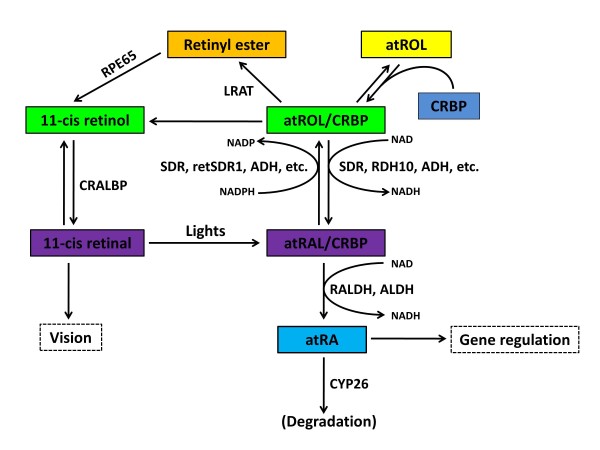
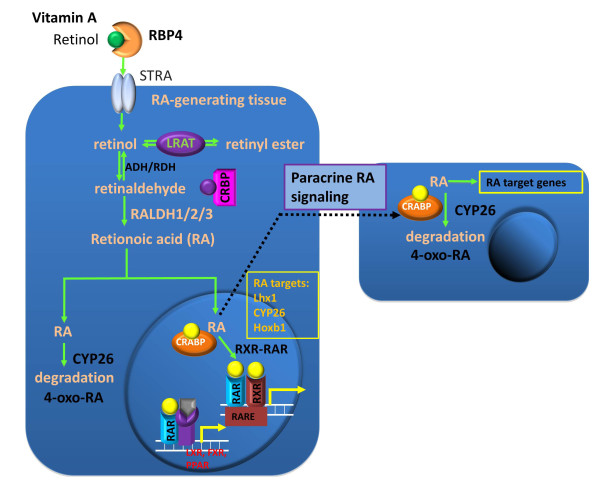
Retinoic acid (RA) is a morphogen derived from retinol (vitamin A) that plays important roles in cell growth, differentiation, and organogenesis. The production of RA from retinol requires two consecutive enzymatic reactions catalyzed by different sets of dehydrogenases. The retinol is first oxidized into retinal, which is then oxidized into RA. The RA interacts with retinoic acid receptor (RAR) and retinoic acid X receptor (RXR) which then regulate the target gene expression. In this review, we have discussed the metabolism of RA and the important components of RA signaling pathway, and highlighted current understanding of the functions of RA during early embryonic development.
Overview
The claims and statistics of this paper haven’t been checked yet.
Free: it reads the open-access text and checks the first 5 claims that cite a source we can check. Create a free account to check every claim.
Integrity signals
Registry
Cites
Statistics
Figures
Verification
Claims the paper makes
The claims and statistics of this paper haven’t been checked yet.
Free: it reads the open-access text and checks the first 5 claims that cite a source we can check. Create a free account to check every claim.
Claims other papers make about this one
Each is checked against this paper’s own text: does it say what the citing paper says it does?
The cited source says what the claim attributes to it.
In the citing paper
“Although the term vitamin A is mostly associated with retinol, and retinol is, in fact, the predominant form of retinoids in the human body, the main biologically active molecules are the oxidized derivates 11-cis-retinal and all-trans-retinoid acid (ATRA) [1,2].”
From Vitamin A Update: Forms, Sources, Kinetics, Detection, Function, Deficiency, Therapeutic Use and Toxicity (2021) · cites this paper as [2]
The check wasn’t confident either way, so it gives no verdict — never disputed.
In the citing paper
“The main retinoid found in breast milk is ATRA since it is slightly more water-soluble than the other retinoids [2].”
From Vitamin A Update: Forms, Sources, Kinetics, Detection, Function, Deficiency, Therapeutic Use and Toxicity (2021) · cites this paper as [2]
Experimental — accuracy not yet measured
Self-check
Percentages, sums and reported differences re-computed from the paper’s own numbers.
The self-check needs the paper’s full text.
Citations
Cites
Peroxisome Proliferator-Activated Receptors: Nuclear Control of Metabolism*
Desvergne, B., & Wahli, W. (1999) · Endocrine Reviews · doi:10.1210/edrv.20.5.0380 · Cited by 3,086 · cited 1×
“PPAR is a lipid sensing nuclear receptor, recognizing a wide range of fatty acids [90].”
BackgroundA human retinoic acid receptor which belongs to the family of nuclear receptors
Petkovich, M., Brand, N. J., Krust, A., & Chambon, P. (1987) · Nature · doi:10.1038/330444a0 · Cited by 2,214 · cited 1×
“The RAR family consists of RARa/b/g three members that bind to atRA [68-71].”
BackgroundNuclear Receptors and Lipid Physiology: Opening the X-Files
Chawla, A., Repa, J. J., Evans, R. M., & Mangelsdorf, D. J. (2001) · Science · doi:10.1126/science.294.5548.1866 · Cited by 2,085 · cited 7×
“Since atRA-bound RAR can form heterodimer with RXR in the absence of 9-cis retinoic acid and is still active in transcription activities, the importance of RXRs may not be as critical as RARs.”
BackgroundInfluentialIdentification of a receptor for the morphogen retinoic acid
Giguere, V., Ong, E. S., Segui, P., & Evans, R. M. (1987) · Nature · doi:10.1038/330624a0 · Cited by 1,965 · cited 1×
“The RAR family consists of RARa/b/g three members that bind to atRA [68-71].”
BackgroundVitamin effects on the immune system: Vitamins A and D take centre stage
Mora, J. R., Iwata, M., & von Andrian, U. H. (2008) · Nature Reviews Immunology · doi:10.1038/nri2378 · Cited by 1,559 · cited 1×
“Retinoids are involved in cellular growth, apoptosis, immune response, and epithelial growth [2-7] through the interaction with the nuclear receptors, retinoic acid receptor (RAR) and retinoid X receptor (RXR).”
BackgroundPeroxisome Proliferator-Activated Receptors: Nuclear Control of Metabolism
Desvergne, B. (1999) · Endocrine Reviews · doi:10.1210/er.20.5.649 · Cited by 1,251
Embryonic retinoic acid synthesis is essential for early mouse post-implantation development
Niederreither, K., Subbarayan, V., Dollé, P., & Chambon, P. (1999) · Nature Genetics · doi:10.1038/7788 · Cited by 1,077 · cited 1×
“Knockout of RALDH2 was embryonic lethal during the postimplantation period in mice [40], suggesting that atRA is essential for normal embryonic development.”
BackgroundIdentification of a second human retinoic acid receptor
Brand, N., Petkovich, M., Krust, A., Chambon, P., de Thé, H., Marchio, A., Tiollais, P., & Dejean, A. (1988) · Nature · doi:10.1038/332850a0 · Cited by 1,022 · cited 1×
“The RAR family consists of RARa/b/g three members that bind to atRA [68-71].”
BackgroundKessel, M., & Gruss, P. (1991) · Cell · doi:10.1016/0092-8674(91)90574-i · Cited by 1,009 · cited 1×
“Global application of atRA to mouse embryos during day 7 of gestation caused severe head deformations, such as exencephaly, microcephaly, and anencephaly, whereas exposure of embryos to atRA during day 8 of gestation led to severe caudal truncations reminiscent of the human caudal regression syndrome [102,103].”
MethodMendelsohn, C., Lohnes, D., Décimo, D., Lufkin, T., LeMeur, M., Chambon, P., & Mark, M. (1994) · Development · doi:10.1242/dev.120.10.2749 · Cited by 992
Research works printed but not linked: 1
- Stachurska E Loboda A Niderla-Bielinska J Szperl M Juszynski M Jozkowicz A Dulak J Ratajska A Expression of cellular retinoic acid-binding protein I and II (CRABP I and II) in embryonic mouse hearts treated with retinoic acid Acta Biochim Pol 2011 58 1 19 29 21409183 · DOI
Cited by
Items 201–300 of 300
Chen, J., Yang, W., Tseng, L.-Y., & Chang, H. (2022) · Cells · doi:10.3390/cells11182841 · Cited by 4
Gauthier, M., Danièle, G., Giroud, B., Lafay, F., Vulliet, E., Jumarie, C., Garric, J., Boily, M. H., & Geffard, O. (2023) · Ecotoxicology and Environmental Safety · doi:10.1016/j.ecoenv.2023.114602 · Cited by 4
Computational prediction of photosensitizers’ toxicity
Анатольевна, А. Н., Tcheremenskaia, O., Timashev, P. S., & Solovieva, A. B. (2021) · Journal of Porphyrins and Phthalocyanines · doi:10.1142/s1088424621500334 · Cited by 4
Elkazzaz, M., Haydara, T., Abo-Amer, Y. E.-E., Sahyon, H. A. E., Shamkh, I. M., Magd, M. F. A. E., & Ahmed, A. K. K. (2021) · Research Square · doi:10.21203/rs.3.rs-936697/v1 · Cited by 4
Schwartz, A. V., Sant, K. E., & George, U. Z. (2025) · Toxicological Sciences · doi:10.1093/toxsci/kfaf069 · Cited by 3
Zhang, W., Mayr, V., Ducos, B., Distel, M., & Bensimon, D. (2019) · Journal of Statistical Physics · doi:10.1007/s10955-019-02265-9 · Cited by 3
Adipogenic Differentiation from Human Embryonic Stem Cells Through Formation of Embryoid Bodies
Olmedo-Suárez, M. Á., Sánchez-Ramírez, E., & Aguilar‐Arnal, L. (2025) · Methods in molecular biology · doi:10.1007/978-1-0716-4607-6_1 · Cited by 3
Takahashi, H., Kutasy, B., Pes, L., Paradisi, F., & Puri, P. S. (2014) · Pediatric Surgery International · doi:10.1007/s00383-014-3621-8 · Cited by 3
Niknazar, S., Abbaszadeh, H., Khoshsirat, S., Mehrjerdi, F. Z., & Peyvandi, A. A. (2022) · Molecular and Cellular Neuroscience · doi:10.1016/j.mcn.2022.103752 · Cited by 3
Retinoic Acid-Mediated Differentiation of Mouse Embryonic Stem Cells to Neuronal Cells
Dutta, S., Pal, D., & Rao, M. R. S. (2023) · Methods in molecular biology · doi:10.1007/7651_2023_480 · Cited by 3
Wei, S., Yang, Y., Yao, Z., Yang, Y., Guo, M., Zhang, Z., Zhang, R., Ru, S., & Zhang, X. (2024) · Chemosphere · doi:10.1016/j.chemosphere.2024.142835 · Cited by 4
Zhou, Y., Zhang, Q., Ding, R., Fan, X., Li, Q., & Li, Z. (2025) · Life Sciences · doi:10.1016/j.lfs.2025.123463 · Cited by 3
The Role of Multimicronutrients on Improving Better Pregnancy Outcomes: A literature review
Widasari, L., Chalid, M. T., Jafar, N., Thaha, A. R., & Dirpan, A. (2020) · Hasanuddin University Repository · Cited by 3
Zhang, X., Yan, C., Chu, Z., Shi, L., Zheng, Y., Zhao, Q., Geng, S., & Guo, K. (2022) · The International Journal of Biochemistry & Cell Biology · doi:10.1016/j.biocel.2022.106190 · Cited by 3
STRA6 (vitamin A receptor), as a Novel binding receptor of COVID-19Preprint
Elkazzaz, M., Ahmed, A. K. K., Shamkh, I. M., & Magd, M. F. A. E. (2021) · doi:10.14293/s2199-1006.1.sor-.pp8lwhl.v1 · Cited by 3
STRA6 (vitamin A receptor), as a Novel binding receptor of COVID-19 (A breakthrough)Preprint
Elkazzaz, M., Haydara, T., Abo-Amer, Y. E.-E., Shamkh, I. M., Magd, M. F. A. E., & Ahmed, A. K. K. (2021) · Research Square · doi:10.21203/rs.3.rs-892203/v3 · Cited by 3
Dragar, B., Kranjc, S., Čemažar, M., Jesenko, T., Romih, R., Kreft, M. E., Kuret, T., & Zupančič, D. (2025) · Molecular Nutrition & Food Research · doi:10.1002/mnfr.70045 · Cited by 2
Draskau, M. K., Spiller, C. M., Panagiotou, E. M., Zilliacus, J., Beronius, A., Damdimopoulou, P., Bowles, J., & Svingen, T. (2025) · Current Research in Toxicology · doi:10.1016/j.crtox.2025.100257 · Cited by 2
Retinoic acid promotes expression of inflammatory factors in proliferative adult human heart cells
Gans, I. M., Lessard, A., Ryzhov, S. V., Vary, C., & Sawyer, D. B. (2025) · American Journal of Physiology-Cell Physiology · doi:10.1152/ajpcell.00696.2025 · Cited by 2
Ovarian Rev-erbα: a central regulator of fertility following chronodisruption
Gupta, S., Kumawat, S., Kaushal, V., Arora, R., Kumar, S., Sharma, R., Bhardwaj, A., Khatri, N., & Gupta, P. (2026) · Frontiers in Endocrinology · doi:10.3389/fendo.2026.1742988 · Cited by 2
Suzuki, K., Koyama, H., Nakamura, N., Kimura, Y., Ogata, A., Ikenuma, H., Ishii, H., Zhang, M., Kawamura, K., Minamimoto, T., et al. (2023) · Bioorganic & Medicinal Chemistry Letters · doi:10.1016/j.bmcl.2023.129212 · Cited by 3
In silico Discovering STRA 6 Vitamin A Receptor, as a Novel Binding Receptor of COVID-19
Elkazzaz, M., Ahmed, A. K. K., Abo-Amer, Y. E.-E., Haydara, T., Eltayb, W. A., Khan, M. S., Bhattacharya, K., Alkhammash, S., Mattar, H., Beigh, S., et al. (2023) · Indian Journal of Pharmaceutical Education and Research · doi:10.5530/ijper.57.4.126 · Cited by 2
Banjan, B., Vishwakarma, R., Ramakrishnan, K., Dev, R. R., Kalath, H., Kumar, P., Soman, S., Raju, R., Revikumar, A., Rehman, N., et al. (2024) · Molecular Diversity · doi:10.1007/s11030-024-10915-8 · Cited by 2
“RA, an anti-tumorigenic agent, is a vitamin A derivative that governs cellular processes including growth, apoptosis, immune response, and epithelial growth by interacting with nuclear receptor proteins such as RARs and RXRs [21].”
Hassabo, A. G., Ragab, M. M., & Othman, H. A. (2025) · Industrial Crops and Products · doi:10.1016/j.indcrop.2025.121154 · Cited by 2
Chen, H., Babino, D., Schönbichler, S. A., Arkhipova, V., Töchterle, S., Martin, F., Huck, C. W., Lintig, J. V., & Meyer, D. (2015) · PLoS ONE · doi:10.1371/journal.pone.0143825 · Cited by 3
Bilska‐Wilkosz, A. (2022) · Bioscience Reports · doi:10.1042/bsr20211522 · Cited by 2
(2018) · Archivos Argentinos de Pediatria · doi:10.5546/aap.2018.146 · Cited by 2
Dental Signatures as a Potential Biomarker of FASD
Petrelli, B., Boorberg, N. B., & Hicks, G. G. (2022) · Neuromethods · doi:10.1007/978-1-0716-2613-9_12 · Cited by 2
Nuclear receptors and other molecular targets in type 2 diabetes mellitus
Sugumar, D., Rymbai, E., Vasu, S., & Selvaraj, D. (2023) · Journal of Applied Pharmaceutical Science · doi:10.7324/japs.2023.132467 · Cited by 4
“, 2009), visual functions (Kam et al., 2012), acute myeloid leukemia therapy (di Martino and Welch, 2019), and inflammation (Mihály et al.”
BackgroundQuantitative study of the somitogenetic wavefront in zebrafishPreprint
Zhang, W., Ducos, B., Delagrange, M., Vriz, S., & Bensimon, D. (2018) · bioRxiv (Cold Spring Harbor Laboratory) · doi:10.1101/419705 · Cited by 3
Sequence analysis and expression regulation of rbp4 by 9-cis-RA in Megalobrama amblycephala
Xu, M., Huang, C., Chen, N., Wu, X., Zhu, K.-C., Wang, W., & Wang, H. (2014) · Fish Physiology and Biochemistry · doi:10.1007/s10695-014-9995-7 · Cited by 1
Rosenmai, A. K., Paik, J., Wedebye, E. B., Davidsen, N., Henriksen, C. S., Melchiors, M., & Svingen, T. (2025) · Toxicology and Applied Pharmacology · doi:10.1016/j.taap.2025.117577 · Cited by 1
Ma, Y., Wang, B., Gao, S., & Song, T. (2025) · Biomedicines · doi:10.3390/biomedicines13112836 · Cited by 2
Hvizdak, M., Kandel, S. E., & Lampe, J. N. (2026) · Chemical Research in Toxicology · doi:10.1021/acs.chemrestox.5c00468 · Cited by 1
Retinoic acid in health and disease
Angelis, M. T. D., Dattilo, V., Vono, N., Lise, V., Reda, M., Marco, C. D., Rizzuto, A., Trapasso, F., Viglietto, G., & Santamaria, G. (2026) · Signal Transduction and Targeted Therapy · doi:10.1038/s41392-026-03055-y · Cited by 2
“43,44 Disruption of this fi nely tuned system by genetic lesions or environmental exposure leads to a broad spectrum of congenital malformations, now increasingly formalized within adverse outcome pathway frameworks for retinoid-induced developmental toxicity.”
The Effects of Quercetin and Retinoic acid on Skeletal System of Rat Embryos in Prenatal Period
Gohari-Behbahani, N., Khaksary-Mahabady, M., Ranjbar, R., Najafzadehvarzi, H., & Mohammadian, B. (2014) · Zahedan Journal of Research in Medical Sciences · Cited by 1
Hvizdošová, N., Ihnátová, L., Bona, M., Matéffy, S., & Kluchová, D. (2020) · Biotechnic & Histochemistry · doi:10.1080/10520295.2020.1725640 · Cited by 1
Noori, B. H., & Waheed, I. N. (2020) · Journal of Biology Agriculture and Healthcare · doi:10.7176/jbah/10-18-04 · Cited by 1
Morato, N. M., Hallett, J. E., Wang, W., Elzey, B. D., Cresswell, G. M., Cooper, B. R., & Ferreira, C. R. (2022) · Molecular Omics · doi:10.1039/d2mo00071g · Cited by 1
Liu, Y., Wu, F., Huang, C., Li, Q., & Hu, J. (2025) · ACS ES&T Water · doi:10.1021/acsestwater.4c01175 · Cited by 1
Mohammed, A., Solomon, B. D., Slepicka, P. F., Hubka, K. M., Nguyen, H. D., Wang, W., Arreola, M., Chavez, M., Yeh, C. Y., Kim, D. K., et al. (2022) · bioRxiv (Cold Spring Harbor Laboratory) · doi:10.1101/2022.10.02.510339 · Cited by 1
Koshy, A. (2023) · theses.fr (ABES) · doi:10.70675/a048b410zfddaz4f7czbd4az7954670d470d · Cited by 1
de Morais, B. P. (2012) · Digital Library of Theses and Dissertations (Universidade de São Paulo) · doi:10.11606/d.87.2012.tde-26112012-104547
Bosma, F. S. M. (2013) · Utrecht University Repository (Utrecht University)
Jeon, J. P., Cho, W., Kang, H., Kim, J. E., Kim, S., & Oh, C. W. (2015) · Journal of Korean Neurosurgical Society · doi:10.3340/jkns.2015.57.2.88
Manning, A. A. (2015) · Murdoch University Research Portal
Exploring Roles of Notch and Sonic Hedgehog Signaling in the Developing Central Nervous System
Kong, J. H. (2015) · eScholarship (California Digital Library)
Fang, N. (2016) · FIU - Digital Commons (Florida International University) · doi:10.25148/etd.fidc000724
Chaffay, B. (2017) · Scholarship@Western (Western University) · Cited by 1
Validation and Mechanism Studies of Novel Therapeutic Compounds Modulating Angiogenesis
Tat, J. (2013) · TSpace (University of Toronto)
Gregory, C. D., Szondy, Z., Sarang, Z., Joós, G., Garabuczi, É., & Rühl, R. (2015)
Heterologous Expression and Purification of Full-Length Human Polybromo-1 Protein
Hopson, S. (2017) · Digital Commons - Michigan Tech (Michigan Technological University) · doi:10.37099/mtu.dc.etdr/436
Investigating the dual roles of STRA6 in cell signaling and vitamin A trafficking
Schulte, C. E. (2012) · Iowa State University Digital Repository (Iowa State University) · doi:10.31274/etd-180810-2000
Characterisation of a dual-colour retinoic acid reporter system for analysing cells and embryos
Black, B. (2018) · Open Access Victoria University of Wellington | Te Herenga Waka (Figshare) · doi:10.26686/wgtn.17134544
Petrelli, B. (2017) · Mspace (University of Manitoba) · Cited by 2
Engineered Biomaterials for Human Neural Stem Cell Applications
Ma, W. (2019) · TUScholarShare (Temple University)
Mathematical Models of Morphogen Gradients and Growth Control
Lei, J. (2021) · Lecture notes on mathematical modelling in the life sciences · doi:10.1007/978-3-030-73033-8_7
STRA6, as a Novel binding receptor of COVID-19 (Insilco study)Preprint
Mahmoud, Haydara, T., Shamkh, I. M., & Ahmed, A. K. K. (2021) · Research Square · doi:10.21203/rs.3.rs-892203/v1
STRA6 (vitamin A receptor), as a Novel binding receptor of COVID-19 (A breakthrough)Preprint
Mahmoud, Haydara, T., Shamkh, I. M., & Ahmed, A. K. K. (2021) · Research Square · doi:10.21203/rs.3.rs-892203/v2
Silva, M. A. (2022) · Digital Library of Theses and Dissertations (Universidade de São Paulo) · doi:10.11606/t.17.2022.tde-24112022-145126
Mahapatra, C., Naik, P., Singh, M. B., & Mohapatra, P. P. (2023) · Indian Journal of Pharmaceutical Education and Research · doi:10.5530/ijper.57.3.99
Insilico discovering of STRA6 as a Novel Binding Receptor of Human Immunodeficiency (HIV)Preprint
Elkazzaz, M., Ahmed, A. K. K., Haikal, A., Jabbar, B., & Shamkh, I. M. (2023) · Research Square · doi:10.21203/rs.3.rs-3193829/v1
Synthesis and Biological Evaluations of Granulatamide B and its Structural Analogues
Matulja, D., Grbčić, P., Matijević, G., Babić, S., Bojanić, K., Laclef, S., Vrček, V., Čož‐Rakovac, R., Pavelić, S. K., & Marković, D. (2024) · Current Medicinal Chemistry · doi:10.2174/0109298673272687231226111132
Cabellon, S. X. (2024) · Digital Repository Service (Northeastern University) · doi:10.17760/d20659800
Pereira, K. E., de Aguiar, G. B., Villanova, B., Rabello, N. J., Schelbauer, R., Carniel, E. S., Moresco, R. M., de Souza, M. A., & Centenaro, L. A. (2024) · International Journal of Developmental Neuroscience · doi:10.1002/jdn.10370
“Nevertheless, pyriproxyfen is structurally similar to retinoic acid, a metabolite of vitamin A, which controls several stages of embryonic development (Kam et al., 2012).”
Fat Soluble Vitamins and Macrominerals
Polat, E. (2024) · doi:10.69860/nobel.9786053359173.1
Research Status on the Etiology of Tic Disorders and Vitamin A and D Levels
路, 宏. (2024) · Journal of Clinical Personalized Medicine · doi:10.12677/jcpm.2024.34341
Çocukluk Çağında Vitamin ve Mineraller
Ersoy, M., İnal, G. A., Okuducu, U., Barutçu, S., Köşeci, B., Gündüz, N. T., Aydın, E., Haykır, N., Çelik, M. Y., Kekeç, İ., et al. (2025) · Akademisyen Kitabevi eBooks · doi:10.37609/akya.3548
Effects of vitamin A supplementation on visual function in healthy adults: A systematic review
Shahsavarinia, K., Mostafaei, A., Milanchian, N., Roshangar, L., Fallahi, P., Balafar, M., Mehdipour, R., Farhadi, F., Soleimanpour, H., Kashgsaray, N. H., et al. (2025) · Medical Journal of Tabriz University of Medical Sciences and Health Services · doi:10.34172/mj.025.33830
Guan, X., Chen, X., Xu, Y., Wang, L., Zhang, Q., Luo, X., Yin, Y., Zhang, R., Liu, X., Wan, F., et al. (2025) · Biochemical and Biophysical Research Communications · doi:10.1016/j.bbrc.2025.152563
Falker‐Gieske, C., Mott, A., Franzenburg, S., & Tetens, J. (2021) · Figshare · doi:10.6084/m9.figshare.14150902
Broeker, C. D., Ortiz, M. M. O., Murillo, M. S., & Andrechek, E. R. (2023) · Figshare · doi:10.6084/m9.figshare.24266030
Falker‐Gieske, C., Mott, A., Franzenburg, S., & Tetens, J. (2021) · Figshare · doi:10.6084/m9.figshare.14150911
Broeker, C. D., Ortiz, M. M. O., Murillo, M. S., & Andrechek, E. R. (2024) · Figshare · doi:10.6084/m9.figshare.24266073
Additional file 1 of Screening for novel risk factors related to high myopia using machine learning
Zhang, R., Dong, L., Yang, Q., Zhou, W., Wu, H., Li, Y., Li, H., & Wei, W. (2022) · Figshare · doi:10.6084/m9.figshare.21332702
Falker‐Gieske, C., Mott, A., Franzenburg, S., & Tetens, J. (2021) · Figshare · doi:10.6084/m9.figshare.14150893
The regulation and function of integrin alphaE (CD103) in human dendritic cells
Roe, M. M. (2019) · Montana State University ScholarWorks (Montana State University)
Determining the Effect of Isotretinoin on CYP2D6 and CYP3A4 Activity in Patients with Severe Acne
Zhao, Y. (2023) · ResearchWorks at the University of Washington (University of Washington)
Teratogeni učinki retinojske kisline na razvoj zarodkov španskega pupka (Pleurodeles waltl)
Naiaretto, S. (2020) · Repository of the University of Ljubljana (University of Ljubljana)
Yuan, Y. (2023) · Open Archive (Karolinska Institutet)
Brossaud, J. (2013) · theses.fr (ABES) · doi:10.70675/43284af6z5f92z45f5z9ff7z7570cc39ffd0 · Cited by 1
Quantitative perturbative study of the role of Fgf8 in somitogenesis
Zhang, W. (2016) · theses.fr (ABES) · doi:10.70675/0fd360b0z12c8z455bza6e4z8eabae0ccaf4
Rouzaire, M. (2016) · theses.fr (ABES) · doi:10.70675/375d627dz9088z4a5cz9213z6255b1d4cc0a
Retinoic acid signaling in chordates : the evolutionary history of a morphogen-dependent signaling
Carvalho, J. E. (2017) · theses.fr (ABES) · doi:10.70675/d7ca0d25zbfe5z46caz8d50zcd071004e022
Ji, R., Hu, H., Zhang, Y., Liu, K., Du, J., Ma, Y., Song, B., & Han, Y. (2026) · Ecotoxicology and Environmental Safety · doi:10.1016/j.ecoenv.2026.120131
Poveda-Carrazana, V., Chávez, I. A., & Quintana, M. P. (2026) · doi:10.59410/preprint-uea-v2026ep06-1206
Zhang, Y., Nie, Y., Yu, S., Liu, Y., Yang, H., Sun, J., Song, D., Zhu, W., Zhou, Z., & Diao, J. (2026) · Journal of Hazardous Materials · doi:10.1016/j.jhazmat.2026.142359
Combating Mycobacterial Infections: An Overview of Therapeutic Strategies
Shaji, A., Bhaskar, A., Dwivedi, V. P., & Singh, A. (2026) · Springer eBooks · doi:10.1007/978-981-92-0256-0_1
Angptl5 restricts primitive hematopoiesis by promoting retinoic acid signaling in zebrafish
Mo, J., Zhuo, D., Huang, Y., Cheng, T., Dong, Y., Xing, Y.-Y., Li, Y.-F., Jin, Z.-X., Liu, X., Zhao, G.-Q., et al. (2026) · PLoS Biology · doi:10.1371/journal.pbio.3003858
“Retinoic acid (RA), a key morphogen involved in patterning the A-P axis and regulating tissue specification during embryonic development, has been shown to suppress spi1b expression in the ALPM [9].”
Retinoid dynamics in immune cells during age-related diseases
Wang, Y., Muslihah, A. T., Fu, M., Dong, X., & Fu, Y. L. (2026) · Cytokine & Growth Factor Reviews · doi:10.1016/j.cytogfr.2026.07.001
Retos de la fortificación con vitamina A preformada y seguridad embriofetal
Poveda-Carrazana, V., Chávez, I. A., & Pérez, M. (2026) · Revista Amazónica Ciencia y Tecnología · doi:10.59410/racyt-v11n02ep03-0192
Vitamin A in crustaceans: a review of the actual knowledge and research perspectives
Tapia-Palacios, L., Frías-Gómez, S. A., Suárez-Rodríguez, M., Castillo-Domínguez, M., & Hernández, L. H. H. (2026) · Latin American Journal of Aquatic Research · doi:10.3856/vol54-issue4-fulltext-3570
“Once the ARE has joined the respective receptor, a dimer is formed, which can be a homodimer RXR-RXR or a heterodimer RXRs-RAR (Kam et al. 2012).”
Elucidating the role of the gap 0 switch 2 gene in breast cancer
Corbet, A. K. (2023) · Illinois Digital Environment for Access to Learning and Scholarship (University of Illinois at Urbana-Champaign)
BindingDB Entry 50022224: NRF2 inhibitors: Recent progress, future design and therapeutic potential.
BindingDB (2025) · UC San Diego · doi:10.7270/q27h1q92
Human Placental Transcriptome and fetal sex differences in SPTB
Simmons, R. (2022) · ImmPort · doi:10.21430/m3qpejcgy4
Kang, J.-B., Park, D.-J., & Koh, P. (2027) · Journal of Veterinary Science · doi:10.4142/jvs.26235
Metadata
- Authors
- Kin Ting Kam, R., Deng, Y., Chen, Y., & Zhao, H.
- Affiliations
- Chinese University of Hong Kong (HK)
- Chinese Academy of Sciences (CN)
- Corresponding author
- Chen, Yonglong
- Zhao, Hui
- Venue
- Cell & Bioscience
- Published
- 2012-03
- Volume
- 2
- Issue
- 1
- Pages
- 11-11
- ISSN
- 2045-3701 (ISSN-L)
- PMC
- PMC3325842
- OpenAlex
- W2100283268
- Cited by
- 283
- References
- 168
- Citations by year
- 2026: 11 · 2025: 24 · 2024: 22 · 2023: 29 · 2022: 24 · 2021: 39 · 2020: 25 · 2019: 18 · 2018: 21 · 2017: 12 · 2016: 11 · 2015: 11 · 2014: 16 · 2013: 15 · 2012: 5
- FWCI
- 6.05
- Type
- journal article
- Language
- en
- Open access
- gold
- doi.org
- Licence
- cc-by
- Locations
- Cell & Bioscience (publishedVersion, cc-by)
- Europe PMC (PubMed Central) (publishedVersion, cc-by)
- PubMed Central (publishedVersion, cc-by)
- PubMed (publishedVersion)
- DOAJ (DOAJ: Directory of Open Access Journals) (submittedVersion, cc-by-sa)
- Funders
- Chinese Academy of Sciences (KSCX2-YW-R)
- Chinese University of Hong Kong
- National Key Research and Development Program of China (KSCX2-YW-R-083, 2009CB941202)
- Topics
- Life Sciences › Biochemistry, Genetics and Molecular Biology › Molecular Biology › Retinoids in leukemia and cellular processes
- Life Sciences › Biochemistry, Genetics and Molecular Biology › Molecular Biology › Developmental Biology and Gene Regulation
- Health Sciences › Medicine › Ophthalmology › Retinal Development and Disorders
- Keywords
- retinoic acid, retinol, retinal, retinoic acid synthesis, retinoic acid metabolism, retinoic acid receptor, early embryonic development, organogenesis, cell differentiation
About these checks
Registry, retraction, Cites and statistics results are computed, not judged, with one exception: a printed reference that no index lists is read once by a model before it counts as a citation error. Claims are extracted by a model and kept only when their quote appears verbatim in the text; each cited source is then checked, with a model’s help, for whether it says what the claim relies on. Those verdicts can be wrong — read the claim’s quote and the cited source before relying on one.
Statistics and arithmetic are recomputed, not judged.
Confidence bands are shown only for fields calibrated on our annotated test set. None is calibrated yet, so no band is shown.
What counts as a claim ›How we measure confidence ›How we check this ›
Are you an author, or do you see a problem with this page? Request a review
Data sources
Bibliographic data: Semantic Scholar, OpenAlex, Crossref.
Contains information from the Semantic Scholar Academic Graph Datasets, made available under the ODC Attribution License (ODC-BY 1.0).
Semantic Scholar’s data is described in: Kinney, R., et al. (2023). The Semantic Scholar Open Data Platform. arXiv:2301.10140.
