

Lenvatinib, an angiogenesis inhibitor targeting VEGFR/FGFR, shows broad antitumor activity in human tumor xenograft models associated with microvessel density and pericyte coverage.
Open accessThe DOI matches its Crossref record; 45 of the 45 references it cites were found in a registry or an index.
Abstract
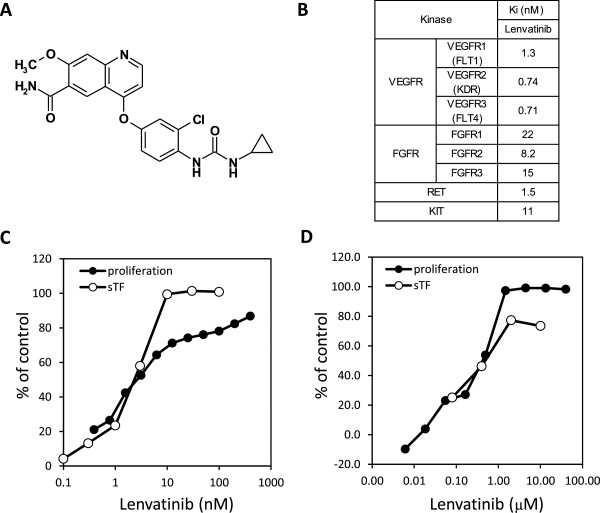
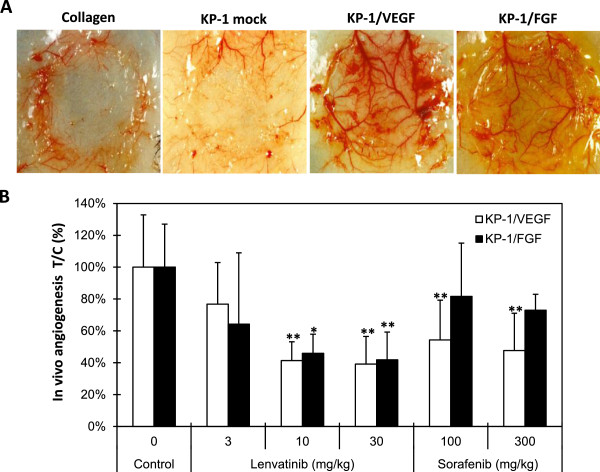
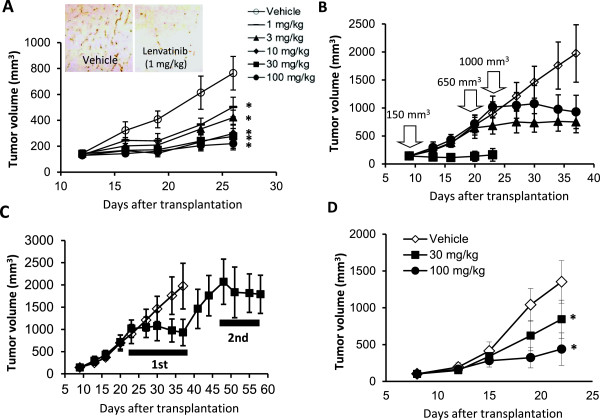
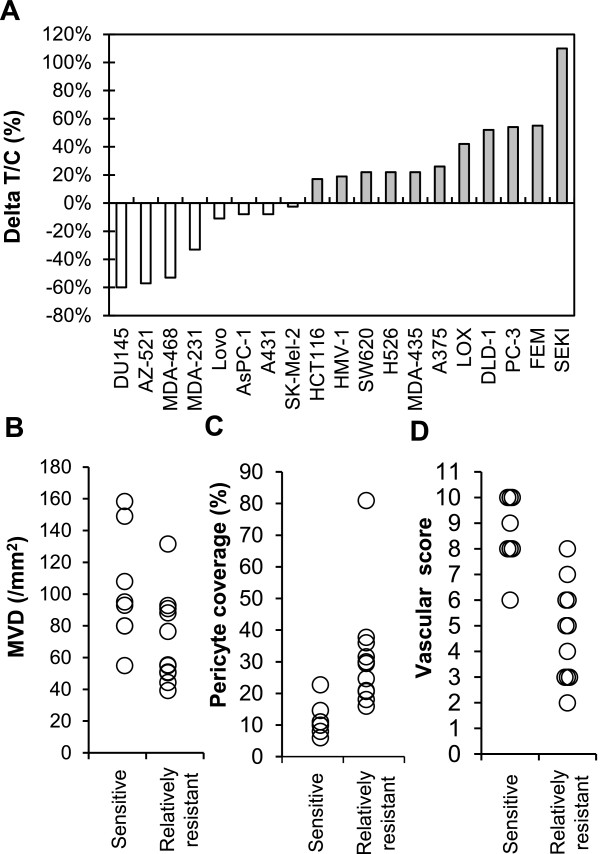
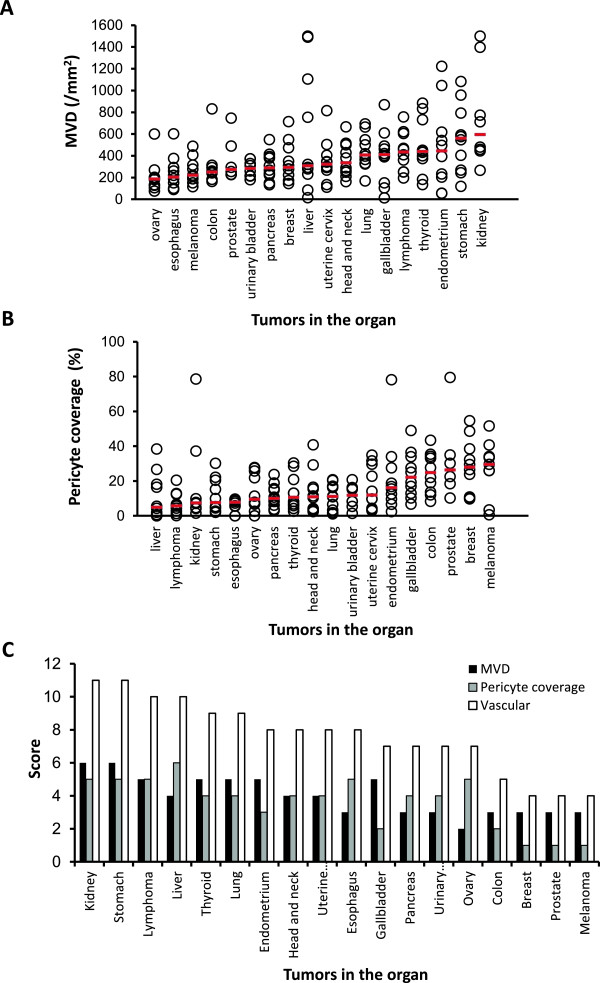
BACKGROUND: Lenvatinib is an oral inhibitor of multiple receptor tyrosine kinases (RTKs) targeting vascular endothelial growth factor receptor (VEGFR1-3), fibroblast growth factor receptor (FGFR1-4), platelet growth factor receptor α (PDGFR α), RET and KIT. Antiangiogenesis activity of lenvatinib in VEGF- and FGF-driven angiogenesis models in both in vitro and in vivo was determined. Roles of tumor vasculature (microvessel density (MVD) and pericyte coverage) as biomarkers for lenvatinib were also examined in this study. METHOD: We evaluated antiangiogenesis activity of lenvatinib against VEGF- and FGF-driven proliferation and tube formation of HUVECs in vitro. Effects of lenvatinib on in vivo angiogenesis, which was enhanced by overexpressed VEGF or FGF in human pancreatic cancer KP-1 cells, were examined in the mouse dorsal air sac assay. We determined antitumor activity of lenvatinib in a broad panel of human tumor xenograft models to test if vascular score, which consisted of high MVD and low pericyte coverage, was associated with sensitivity to lenvatinib treatment. Vascular score was also analyzed using human tumor specimens with 18 different types of human primary tumors. RESULT: Lenvatinib inhibited VEGF- and FGF-driven proliferation and tube formation of HUVECs in vitro. In vivo angiogenesis induced by overexpressed VEGF (KP-1/VEGF transfectants) or FGF (KP-1/FGF transfectants) was significantly suppressed with oral treatments of lenvatinib. Lenvatinib showed significant antitumor activity in KP-1/VEGF and five 5 of 7 different types of human tumor xenograft models at between 1 to 100 mg/kg. We divided 19 human tumor xenograft models into lenvatinib-sensitive (tumor-shrinkage) and relatively resistant (slow-growth) subgroups based on sensitivity to lenvatinib treatments at 100 mg/kg. IHC analysis showed that vascular score was significantly higher in sensitive subgroup than relatively resistant subgroup (p < 0.0004). Among 18 types of human primary tumors, kidney cancer had the highest MVD, while liver cancer had the lowest pericyte coverage, and cancers in Kidney and Stomach had highest vascular score. CONCLUSION: These results indicated that Lenvatinib inhibited VEGF- and FGF-driven angiogenesis and showed a broad spectrum of antitumor activity with a wide therapeutic window. MVD and pericyte-coverage of tumor vasculature might be biomarkers and suggest cases that would respond for lenvatinib therapy.
Overview
The claims and statistics of this paper haven’t been checked yet.
Free: it reads the open-access text and checks the first 5 claims that cite a source we can check. Create a free account to check every claim.
Integrity signals
Registry
Cites
Statistics
Figures
Verification
Claims the paper makes
The claims and statistics of this paper haven’t been checked yet.
Free: it reads the open-access text and checks the first 5 claims that cite a source we can check. Create a free account to check every claim.
Self-check
Percentages, sums and reported differences re-computed from the paper’s own numbers.
The self-check needs the paper’s full text.
Citations
Cites
Sorafenib in advanced hepatocellular carcinoma
Llovet, J. M., Ricci, S., Mazzaferro, V., Hilgard, P., Gane, E., Blanc, J.-F., de Oliveira, A. C., Santoro, A., Raoul, J.-L., Forner, A., et al. (2008) · New England Journal of Medicine · doi:10.1056/nejmoa0708857 · Cited by 13,097
Bevacizumab plus Irinotecan, Fluorouracil, and Leucovorin for Metastatic Colorectal Cancer
Hurwitz, H., Fehrenbacher, L., Novotny, W., Cartwright, T., Hainsworth, J., Heim, W., Berlin, J., Baron, A., Griffing, S., Holmgren, E., et al. (2004) · New England Journal of Medicine · doi:10.1056/nejmoa032691 · Cited by 10,968 · cited 1×
“Bevacizumab (a monoclonal antibody against VEGFA) was the first angiogenesis inhibitor, and was approved for the treatment of patients with metastatic colon cancer based on its survival benefit [3].”
Sunitinib versus Interferon Alfa in Metastatic Renal-Cell Carcinoma
Motzer, R. J., Hutson, T. E., Tomczak, P., Michaelson, M. D., Bukowski, R. M., Rixe, O., Oudard, S., Negrier, S., Szczylik, C., Kim, S. T., et al. (2007) · New England Journal of Medicine · doi:10.1056/nejmoa065044 · Cited by 5,775 · cited 1×
“Several small-molecule inhibitors of VEGFR2 kinase have been approved for treatments of multiple cancer types, such as sunitinib (RCC, gastrointestinal stromal tumor (GIST)) [8,9], sorafenib (RCC, HCC, differentiated thyroid cancer (DTC)) [10-12], pazopanib (RCC, soft-tissue sarcoma (STS)) [13,14], axitinib (RCC) [15]…”
Sorafenib in Advanced Hepatocellular Carcinoma
정, 재. (2008) · Cited by 5,586
Molecular mechanisms and clinical applications of angiogenesis
Carmeliet, P., & Jain, R. K. (2011) · Nature · doi:10.1038/nature10144 · Cited by 5,467 · cited 1×
“The development of novel inhibitors of multi-targeted RTKs in addition to VEGFR2 is still required to improve cancer therapy in the clinic [22], since one of the resistance mechanisms involved is the up-regulation of alternative pro-angiogenic signaling pathways that include FGF/FGFR, angiopoietin/TIE2 and ephrin/EPH…”
Sorafenib in Advanced Clear-Cell Renal-Cell Carcinoma
Escudier, B., Eisen, T., Stadler, W. M., Szczylik, C., Oudard, S., Siebels, M., Negrier, S., Chevreau, C., Solska, E., Desai, A. A., et al. (2007) · New England Journal of Medicine · doi:10.1056/nejmoa060655 · Cited by 4,802
Modes of resistance to anti-angiogenic therapy
Bergers, G., & Hanahan, D. (2008) · Nature Reviews Cancer · doi:10.1038/nrc2442 · Cited by 2,953 · cited 3×
“There are accumulating evidences that tumor vasculature evaluated by MVD and % of pericyte coverage has an impact on disease prognosis and/or acquired resistance to antiangiogenesis therapy in cancer patients [4,23].”
Grothey, A., Cutsem, E. V., Sobrero, A., Siena, S., Falcone, A., Ychou, M., Humblet, Y., Bouché, O., Mineur, L., Barone, C., et al. (2013) · The Lancet · doi:10.1016/s0140-6736(12)61900-x · Cited by 2,895 · cited 1×
“…(RCC, gastrointestinal stromal tumor (GIST)) [8,9], sorafenib (RCC, HCC, differentiated thyroid cancer (DTC)) [10-12], pazopanib (RCC, soft-tissue sarcoma (STS)) [13,14], axi-tinib (RCC) [15], vandetanib (medullary thyroid cancer (MTC)) [16] and regorafnib (colorectal cancer (CRC), GIST) [17,18].”
Sternberg, C. N., Davis, I. D., Mardiak, J., Szczylik, C., Lee, E., Wagstaff, J., Barrios, C. H., Salman, P., Gladkov, O. A., Kavina, A., et al. (2010) · Journal of Clinical Oncology · doi:10.1200/jco.2009.23.9764 · Cited by 2,471 · cited 1×
“…(RCC, gastrointestinal stromal tumor (GIST)) [8,9], sorafenib (RCC, HCC, differentiated thyroid cancer (DTC)) [10-12], pazopanib (RCC, soft-tissue sarcoma (STS)) [13,14], axi-tinib (RCC) [15], vandetanib (medullary thyroid cancer (MTC)) [16] and regorafnib (colorectal cancer (CRC), GIST) [17,18].”
van der Graaf, W. T., Blay, J.-Y., Chawla, S. P., Kim, D.-W., Bui-Nguyen, B., Casali, P. G., Schöffski, P., Aglietta, M., Staddon, A. P., Beppu, Y., et al. (2012) · The Lancet · doi:10.1016/s0140-6736(12)60651-5 · Cited by 2,102
Cited by
Items 101–200 of 522
New Insight into Therapies Targeting Angiogenesis in Hepatocellular Carcinoma
Mossenta, M., Busato, D., Baboçi, L., Cintio, F. D., Toffoli, G., & Bo, M. D. (2019) · Cancers · doi:10.3390/cancers11081086 · Cited by 56
Chen, R., Li, Q., Xu, S., Ye, C., Tian, T., Jiang, Q., Shan, J., & Ruan, J. (2022) · Cancer Cell International · doi:10.1186/s12935-021-02435-4 · Cited by 57
Ozeki, T., Nagahama, M., Fujita, K., Suzuki, A., Sugino, K., Ito, K., & Miura, M. (2019) · Scientific Reports · doi:10.1038/s41598-019-41820-y · Cited by 53
Masaki, C., Sugino, K., Saito, N., Akaishi, J., Hames, K. Y., Tomoda, C., Suzuki, A., Matsuzu, K., Uruno, T., Ohkuwa, K., et al. (2020) · Thyroid · doi:10.1089/thy.2019.0221 · Cited by 56
“Since lenvatinib has the potential to shrink tumors very quickly (1,15) due to suppression of VEGF signaling (16), as we have also already reported (17), it can cause immediate reduction in tumor-related symptoms.”
Deciphering role of FGFR signalling pathway in pancreatic cancer
Kang, X., Zeng, L., Xu, M., Pan, J., & Wang, Z. P. (2019) · Cell Proliferation · doi:10.1111/cpr.12605 · Cited by 51
Grünwald, V., Powles, T. B., Choueiri, T. K., Hutson, T. E., Porta, C., Eto, M., Sternberg, C. N., Rha, S. Y., He, C. S., Dutcus, C. E., et al. (2019) · Future Oncology · doi:10.2217/fon-2018-0745 · Cited by 50
Taylor, M. H., Takahashi, S., Capdevila, J., Tahara, M., Leboulleux, S., Kiyota, N., Dutcus, C. E., Xie, R., Robinson, B. G., Sherman, S. I., et al. (2021) · Thyroid · doi:10.1089/thy.2020.0779 · Cited by 50
Niizeki, T., Tokunaga, T., Takami, Y., Wada, Y., Harada, M., Shibata, M., Nakao, K., Sasaki, R., Hirai, F., Shakado, S., et al. (2022) · Targeted Oncology · doi:10.1007/s11523-022-00921-x · Cited by 48
Self-citationFrench, J. D., Haugen, B. R., Worden, F. P., Bowles, D. W., Gianoukakis, A. G., Konda, B., Dadu, R., Sherman, E. J., McCue, S. A., Foster, N. R., et al. (2024) · Clinical Cancer Research · doi:10.1158/1078-0432.ccr-23-3417 · Cited by 47
Kuroda, H., Oikawa, T., Ninomiya, M., Fujita, M., Abe, K., Okumoto, K., Katsumi, T., Sato, W., Igarashi, G., Iino, C., et al. (2022) · Liver Cancer · doi:10.1159/000522424 · Cited by 48
Wang, X., Qiu, Z., Dong, W., Yang, Z., Wang, J., Xu, H., Sun, T., Huang, Z., & Jin, J. (2022) · Cell Death and Disease · doi:10.1038/s41419-022-05210-z · Cited by 47
Lenvatinib in Advanced Hepatocellular Carcinoma
Kudo, M. (2017) · Liver Cancer · doi:10.1159/000479573 · Cited by 46
Sho, T., Suda, G., Ogawa, K., Shigesawa, T., Suzuki, K., Nakamura, A., Ohara, M., Umemura, M., Kawagishi, N., Natsuizaka, M., et al. (2020) · Hepatology Research · doi:10.1111/hepr.13511 · Cited by 46
Self-citationSho, T., Suda, G., Ogawa, K., Kimura, M., Shimazaki, T., Maehara, O., Shigesawa, T., Suzuki, K., Nakamura, A., Ohara, M., et al. (2019) · JGH Open · doi:10.1002/jgh3.12209 · Cited by 45
Self-citationZheng, X., Xu, Z., Ji, Q., Ge, M., Shi, F., Qin, J., Wang, F., Chen, G., Zhang, Y., Huang, R., et al. (2021) · Clinical Cancer Research · doi:10.1158/1078-0432.ccr-21-0761 · Cited by 48
Burgio, V., Iavarone, M. A., Costanzo, G. G. D., Marra, F., Lonardi, S., Tamburini, E., Piscaglia, F., Masi, G., Celsa, C., Foschi, F. G., et al. (2021) · Cancer Management and Research · doi:10.2147/cmar.s330195 · Cited by 45
Nagahama, M., Ozeki, T., Suzuki, A., Sugino, K., Niioka, T., Ito, K., & Miura, M. (2019) · Medical Oncology · doi:10.1007/s12032-019-1263-3 · Cited by 46
Zhang, Q., Liu, H., Wang, H., Lü, M., Miao, Y., Ding, J., Li, H., Gao, X., Sun, S., & Zheng, J. (2019) · PubMed Central · Cited by 48
Saha, D., Ryan, K. R., Lakkaniga, N. R., Acharya, B., Garcia, N. G., Smith, E. L., & Frett, B. (2021) · Journal of Medicinal Chemistry · doi:10.1021/acs.jmedchem.0c02167 · Cited by 46
Zhang, P., Sun, H., Wen, P., Wang, Y., Cui, Y., & Wu, J. (2021) · Molecular Therapy — Nucleic Acids · doi:10.1016/j.omtn.2021.12.001 · Cited by 47
“DISCUSSION Lenvatinib is a multitargeted TKI with anti-tumor activities via the inhibition of fibroblast growth factor receptors (FGFRs) 1–4, VEGFRs 1–3, ret proto-oncogene, platelet-derived growth factor receptor alpha (PDGFRa), and KIT proto-oncogene receptor tyrosine kinase (KIT).(15,16) A phase III REFLECT trial h…”
BackgroundLuo, J., Gao, B., Lin, Z., Fan, H., Ma, W., Yu, D., Yang, Q., Tian, J., Yang, X., & Li, B. (2022) · Frontiers in Oncology · doi:10.3389/fonc.2022.1010726 · Cited by 46
“Sorafenib is an oral multikinase inhibitor that modulates multiple tumor-signaling pathways by inhibiting several receptor tyrosine kinases, such as vascular endothelial growth factor receptor (VEGFR) 1-3, platelet-derived growth factor receptor (PDGFR), KIT, and RET; and downstream Raf signaling molecules (5–7).”
BackgroundTran, T. T. T., Caulfield, J. I., Zhang, L., Schoenfeld, D. A., Djureinovic, D., Chiang, V., Oria, V. O., Weiss, S. A., Olino, K. L., Jilaveanu, L. B., et al. (2023) · JCI Insight · doi:10.1172/jci.insight.157347 · Cited by 43
“Signaling through VEGFRs and FGFRs promotes tumor-associated angiogenesis (20, 21), and FGFR activation results in decreased Tregs, programmed death ligand-1 (PD-L1) expression, and increased IFN-γ + CD8 + T cells (22, 23).”
InfluentialSpotlight on lenvatinib in the treatment of thyroid cancer: patient selection and perspectives
da Costa, R. B., Giles, F. J., Carneiro, B. A., Kaplan, J. B., Agulnik, M., Pai, S. G., Chae, Y. K., Kopp, P. A., Chandra, S., & Garrett, H. (2016) · Drug Design Development and Therapy · doi:10.2147/dddt.s93459 · Cited by 45
“35 Preclinical evidence indicates that lenvatinib inhibits tumor growth, tumor-induced angiogenesis, cell migration, and invasion in various human thyroid cancer xenograft and in vitro models.”
Gore, J., Imasuen, I., Conteh, A. M., Craven, K. E., Cheng, M., & Korc, M. (2016) · Cancer Letters · doi:10.1016/j.canlet.2016.05.037 · Cited by 47
“Nonetheless, studies using subcutaneous or orthotopic models of PDAC have suggested that targeting VEGF-R2 with vatalanib, VEGF-R2 and VEGF-R3 with lenvatinib, or all three VEGF receptors with axitinib suppresses tumor growth and lymphatic metastasis [16-18].”
BackgroundGoh, M. J., Oh, J. H., Park, Y., Kim, J., Kang, W., Sinn, D. H., Gwak, G., Paik, Y., Choi, M. S., Lee, J. H., et al. (2021) · Liver Cancer · doi:10.1159/000512239 · Cited by 45
Current Progress of Ferroptosis Study in Hepatocellular Carcinoma
Zhu, X., Sha, X., Zang, Y., Ren, Q., Zhang, S., Ma, D., Wang, L., Yao, J., Zhou, X. Y., Yu, L., et al. (2024) · International Journal of Biological Sciences · doi:10.7150/ijbs.96014 · Cited by 43
Optimal management of patients with hepatocellular carcinoma treated with lenvatinib
Ikeda, M., Kobayashi, M., Tahara, M., & Kaneko, S. (2018) · Expert Opinion on Drug Safety · doi:10.1080/14740338.2018.1530212 · Cited by 43
Lenvatinib as a therapy for unresectable hepatocellular carcinoma
Spallanzani, A., Orsi, G., Andrikou, K., Gelsomino, F., Rimini, M., Riggi, L., & Cascinu, S. (2018) · Expert Review of Anticancer Therapy · doi:10.1080/14737140.2018.1524297 · Cited by 42
“In preclinical studies, Lenvatinib inhibited angiogenesis and showed potent antitumor activity in xenograft models of multiple cancer cell lines [22].”
BackgroundThe action and resistance mechanisms of Lenvatinib in liver cancer
Buttell, A., & Qiu, W. (2023) · Molecular Carcinogenesis · doi:10.1002/mc.23625 · Cited by 40
“21 With the average duration of treatment only being 7.4 months due to the ineffectiveness of Lenvatinib or severe symptoms, 22 understanding the mechanisms behind Lenvatinib resistance is crucial to making further headway in the targeted drug therapy approach.”
BackgroundInfluentialLenvatinib: A Review in Refractory Thyroid Cancer
Frampton, J. E. (2016) · Targeted Oncology · doi:10.1007/s11523-015-0416-3 · Cited by 46
“Inhibited VEGFR- [48], FGFR- [48] and KIT- [49] driven angiogenesis in human umbilical vein endothelial cells”
BackgroundInfluentialFan, H., Wei, D., Zheng, K., Qin, X., Yang, L., Yang, Y., Duan, Y., Xu, Y., & Hu, L. (2019) · European Journal of Medicinal Chemistry · doi:10.1016/j.ejmech.2019.04.015 · Cited by 40
The Tumor Vessel Targeting Strategy: A Double-Edged Sword in Tumor Metastasis
Li, X., Li, Y., Lu, W., Chen, M., Ye, W., & Zhang, D. (2019) · Cells · doi:10.3390/cells8121602 · Cited by 41
Targeting Lymphangiogenesis and Lymph Node Metastasis in Liver Cancer
Roy, S., Banerjee, P., Ekser, B., Bayless, K. J., Zawieja, D. C., Alpini, G. D., Glaser, S. S., & Chakraborty, S. (2021) · American Journal Of Pathology · doi:10.1016/j.ajpath.2021.08.011 · Cited by 41
“Furthermore, it inhibitsVEGF- and FGF-driven proliferation and angiogenic mechanisms.(88)”
BackgroundLenvatinib induces early tumor shrinkage in patients with advanced thyroid carcinoma
Masaki, C., Sugino, K., Saito, N., Saito, Y., Tanaka, T., Ogimi, Y., Maeda, T., Osaku, T., Akaishi, J., Hames, K. Y., et al. (2017) · Endocrine Journal · doi:10.1507/endocrj.ej17-0104 · Cited by 40
Lenvatinib-induced renal failure: two first-time case reports and review of literature
Cavalieri, S., Cosmai, L., Genderini, A., Nebuloni, M., Tosoni, A., Favales, F., Pistillo, P., Bergamini, C., Bossi, P., Licitra, L. F., et al. (2018) · Expert Opinion on Drug Metabolism & Toxicology · doi:10.1080/17425255.2018.1461839 · Cited by 38
“Lenvatinib (Lenvima®, LEN) is an orally bioavailable multitarget tyrosine kinase inhibitor (TKI), acting on VEGFR, FGFR, PDGFR-α, KIT, and RET [1].”
BackgroundWei, M., Xia, P., Xing, L., Dai, Y., Huang, R., Geng, M., Zhang, A., Ai, J., & Song, Z. (2018) · European Journal of Medicinal Chemistry · doi:10.1016/j.ejmech.2018.05.005 · Cited by 38
Lenvatinib-induced thyroid abnormalities in unresectable hepatocellular carcinoma
Koizumi, Y., Hirooka, M., Hiraoka, A., Ochi, H., Tanaka, T., Yukimoto, A., Imai, Y., Watanabe, T., Yoshida, O., Miyake, T., et al. (2019) · Endocrine Journal · doi:10.1507/endocrj.ej19-0140 · Cited by 38
Self-citationHatanaka, T., Kakizaki, S., Nagashima, T., Namikawa, M., Tojima, H., Shimada, Y., Takizawa, D., Naganuma, A., Arai, H., Sato, K., et al. (2019) · Hepatology Research · doi:10.1111/hepr.13460 · Cited by 39
Liu, J., Chen, J., Liu, H., Zhang, K., Zeng, Q., Yang, S., Jiang, Z., Zhang, X., Chen, T., Li, D., et al. (2021) · ACS Applied Materials & Interfaces · doi:10.1021/acsami.1c11763 · Cited by 38
Stokes, M. E., Calvo, V., Fujisawa, S., Dudgeon, C., Huang, S., Ballal, N., Shen, L., Gasparek, J., Betzenhauser, M. J., Taylor, S. J., et al. (2023) · Clinical Cancer Research · doi:10.1158/1078-0432.ccr-23-1182 · Cited by 37
Lenvatinib for Anaplastic Thyroid Cancer and Lenvatinib-Induced Thyroid Dysfunction
Koyama, S., Miyake, N., Fujiwara, K., Morisaki, T., Fukuhara, T., Kitano, H., & Takeuchi, H. (2018) · European Thyroid Journal · doi:10.1159/000485972 · Cited by 39
Dissecting FGF Signalling to Target Cellular Crosstalk in Pancreatic Cancer
Carter, E. P., Coetzee, A. S., Bort, E. T., Wang, Q., Kocher, H. M., & Grose, R. P. (2021) · Cells · doi:10.3390/cells10040847 · Cited by 39
Kuzuya, T., Ishigami, M., Ito, T., Ishizu, Y., Honda, T., Ishikawa, T., & Fujishiro, M. (2019) · Hepatology Research · doi:10.1111/hepr.13452 · Cited by 36
Outcomes and Quality of Life of Systemic Therapy in Advanced Hepatocellular Carcinoma
Zhou, K., & Fountzilas, C. K. (2019) · Cancers · doi:10.3390/cancers11060861 · Cited by 39
Angiogenesis inhibitors in early development for gastric cancer
Pinto, M. P., Owen, G. I., Retamal, I. N., & Garrido, M. (2017) · Expert Opinion on Investigational Drugs · doi:10.1080/13543784.2017.1361926 · Cited by 34
“Lenvatinib yielded good results as an angiogenesis inhibitor in xenograft models [62]; however, its effect in GC patients has yet to be determined.”
BackgroundLeighl, N. B., Paz-Ares, L. G., Rodríguez‐Abreu, D., Hui, R., Baka, S., Bigot, F., Nishio, M., Smolin, A., Ahmed, S. I., Schoenfeld, A. J., et al. (2025) · Journal of Thoracic Oncology · doi:10.1016/j.jtho.2025.05.020 · Cited by 33
Shimose, S., Hiraoka, A., Gardini, A. C., Tsutsumi, T., Nakano, D., Iwamoto, H., Tada, F., Rimini, M., Tanaka, M., Torimura, T., et al. (2022) · Hepatology Research · doi:10.1111/hepr.13843 · Cited by 34
“LEN targets vascular endothelial growth factor receptors 1–3 and fibroblast growth factor receptors 1–4.(8,9) LEN showed a better response rate than other molecular‐ targeted agents.”
BackgroundTargeted therapies for the treatment of soft tissue sarcoma
Fuchs, J. W., Schulte, B. C., Fuchs, J. R., & Agulnik, M. (2023) · Frontiers in Oncology · doi:10.3389/fonc.2023.1122508 · Cited by 35
“Lenvatinib is an orally administered tyrosine kinase inhibitor that targets VEGFR1-3, FGFR1-4, PDGFRa, c-kit, and RET (69).”
BackgroundHidaka, H., Uojima, H., Nakazawa, T., Shao, X., Hara, Y., Iwasaki, S., Wada, N., Kubota, K., Tanaka, Y., Shibuya, A., et al. (2020) · Hepatology Research · doi:10.1111/hepr.13531 · Cited by 32
Lee, C., DiNatale, R. G., Chowell, D., Krishna, C., Makarov, V., Valero, C., Vuong, L. H., Lee, M., Weiss, K. L., Hoen, D., et al. (2021) · Molecular Cancer Research · doi:10.1158/1541-7786.mcr-21-0053 · Cited by 36
Self-citationLenvatinib in Advanced, Radioactive Iodine–Refractory, Differentiated Thyroid Carcinoma
Yeung, K. T., & Cohen, E. E. W. (2015) · Clinical Cancer Research · doi:10.1158/1078-0432.ccr-15-0923 · Cited by 33
“Despite the in vitro studies, lenvatinib showed significant antitumor activity in five DTC xenograft nude mouse models (25).”
BackgroundHori, Y., Ito, K., Hamamichi, S., Ozawa, Y., Matsui, J., Umeda, I. O., & Fujii, H. (2017) · Anticancer Research · doi:10.21873/anticanres.12120 · Cited by 35
Self-citationImpaired tumor growth and angiogenesis in mice heterozygous for Vegfr2 (Flk1)
Oladipupo, S. S., Kabir, A. U., Smith, C. S., Choi, K., & Ornitz, D. M. (2018) · Scientific Reports · doi:10.1038/s41598-018-33037-2 · Cited by 31
Furuto, Y., Hashimoto, H., Namikawa, A., Outi, H., Takahashi, H., Horiuti, H., Honda, K., & Shibuya, Y. (2018) · BMC Nephrology · doi:10.1186/s12882-018-1074-3 · Cited by 31
Gardini, A. C., Puzzoni, M., Montagnani, F., Marisi, G., Tamburini, E., Cucchetti, A., Solaini, L., Foschi, F. G., Conti, F., Ercolani, G., et al. (2019) · OncoTargets and Therapy · doi:10.2147/ott.s192572 · Cited by 32
“Statistical analysis We performed the meta-analysis according to the Prisma statement recommendations.(10) Data were entered in a computer database for transfer and statistical analysis in Review Manager 5.”
MethodKim, S., Kim, D. Y., Kim, B. K., Park, J. Y., Ahn, S. H., Kim, D. Y., & Kim, S. U. (2020) · Journal of Gastroenterology and Hepatology · doi:10.1111/jgh.15355 · Cited by 31
Zhu, J., Fang, P., Wang, C., Gu, M., Pan, B., Guo, W., Yang, X., & Wang, B. (2021) · Cancer Medicine · doi:10.1002/cam4.4312 · Cited by 32
Huynh, J. C., Cho, M. T., Kim, E. J.-H., Ren, M., Ramji, Z., & Vogel, A. (2022) · Therapeutic Advances in Medical Oncology · doi:10.1177/17588359221116608 · Cited by 33
Lymphangiogenesis in gastric cancer: function and mechanism
Liu, P., Ding, P., Sun, C., Chen, S., Lowe, S., Meng, L., & Zhao, Q. (2023) · European journal of medical research · doi:10.1186/s40001-023-01298-x · Cited by 32
“Moreover, it can also inhibit VEGF and FGF-driven proliferation and angiogenesis mechanisms [161].”
BackgroundSystemic treatments for radioiodine-refractory thyroid cancers
Chen, P., Yao, Y., Tan, H., & Li, J. (2024) · Frontiers in Endocrinology · doi:10.3389/fendo.2024.1346476 · Cited by 34
Molecularly targeted therapy for advanced hepatocellular carcinoma - a drug development crisis?
Thillai, K., Ross, P., & Sarker, D. (2016) · World Journal of Gastrointestinal Oncology · doi:10.4251/wjgo.v8.i2.173 · Cited by 32
Hamieh, L., Beck, R. L., Le, V. H., & Hsieh, J. J.-D. (2020) · Clinical Genitourinary Cancer · doi:10.1016/j.clgc.2020.03.003 · Cited by 30
Choi, N. R., Kim, J. Y., Hong, J. H., Hur, M. H., Cho, H., Park, M. K., Kim, J., Lee, Y. B., Cho, E. J., Lee, J., et al. (2022) · BMC Gastroenterology · doi:10.1186/s12876-022-02210-3 · Cited by 29
Lenvatinib Plus Ifosfamide and Etoposide in Children and Young Adults With Relapsed Osteosarcoma
Gaspar, N., Hung, G.-Y., Strauss, S. J., Campbell-Hewson, Q., Dela Cruz, F. S., Glade Bender, J. L., Koh, K.-N., Whittle, S. B., Chan, G. C.-F., Gerber, N. U., et al. (2024) · JAMA Oncology · doi:10.1001/jamaoncol.2024.4381 · Cited by 28
Kiyota, N., Tahara, M., Robinson, B. G., Schlumberger, M. J., Sherman, S. I., Leboulleux, S., Lee, E. K., Suzuki, T., Ren, M., Fushimi, K., et al. (2022) · Cancer · doi:10.1002/cncr.34181 · Cited by 30
Sun, K., Cao, S., Shi, F., Guan, Y., Tang, M. Y., Zhao, M., Jian, Y.-F., Cui, B., Li, Z., Wang, J., et al. (2022) · Therapeutic Advances in Gastroenterology · doi:10.1177/17562848221140662 · Cited by 28
Guo, J. F., Zhu, P., Ye, Z., Wang, M., Yang, H., Huang, S., Shu, Y., Zhang, W., Zhou, H., & Li, Q. (2021) · Frontiers in Pharmacology · doi:10.3389/fphar.2021.744578 · Cited by 28
“Lenvatinib is an emerging MKI that targets the vascular endothelial growth factor receptor (VEGFR) one to three, fibroblast growth factor receptors (FGFR) one to four, plateletderived growth factor receptor (PDGFR) α, and proto-oncogenes RET and KIT (Tohyama et al., 2014; Yamamoto et al., 2014).”
BackgroundLiu, B., Shang, X., Shi, J., Cui, G., Li, X., & Wang, N.-Y. (2022) · Frontiers in Oncology · doi:10.3389/fonc.2022.807189 · Cited by 27
Chen, S., Shi, F., Wu, Z., Wang, L., Cai, H., Ma, P., Zhou, Y.-M., Mai, Q., Wang, F., Tang, S., et al. (2023) · Journal of Hepatocellular Carcinoma · doi:10.2147/jhc.s417550 · Cited by 29
“Abdominal pain 59 (59) 26 (26) 38 (76) 17 (34) 21 (42) 9 (18)”
Kobayashi, K., Ogasawara, S., Maruta, S., Okubo, T., Itokawa, N., Haga, Y., Seko, Y., Moriguchi, M., Watanabe, S., Shiko, Y., et al. (2023) · Clinical Cancer Research · doi:10.1158/1078-0432.ccr-23-1462 · Cited by 27
Self-citationTomonari, T., Tani, J., Sato, Y., Tanaka, H., Tanaka, T., Taniguchi, T., Kawano, Y., Morishita, A., Okamoto, K., Sogabe, M., et al. (2023) · Cancers · doi:10.3390/cancers15215221 · Cited by 29
Wei, X., Zhang, T., Yao, Y., Zeng, S., Li, M., Xiang, H., Zhao, C., Cao, G., Li, M., Wan, R., et al. (2017) · Experimental Eye Research · doi:10.1016/j.exer.2017.12.009 · Cited by 27
Kudo, M., Ueshima, K., Chiba, Y., Ogasawara, S., Obi, S., Izumi, N., Aikata, H., Nagano, H., Hatano, E., Sasaki, Y., et al. (2019) · Liver Cancer · doi:10.1159/000503032 · Cited by 29
FGFR Pathway Inhibition in Gastric Cancer: The Golden Era of an Old Target?
Lengyel, C. G., Hussain, S., Seeber, A., Nidhamalddin, S. J., Trapani, D., Habeeb, B. S., Elfaham, E., Mazher, S. A., Seid, F. U., Khan, S. Z., et al. (2022) · Life · doi:10.3390/life12010081 · Cited by 28
Cancer Treatment-Related Cardiovascular Toxicity in Gynecologic Malignancies
Parashar, S., Akhter, N., Paplomata, E., Elgendy, I. Y., Upadhyaya, D., Scherrer‐Crosbie, M., Okwuosa, T. M., Sanghani, R. M., Chalas, E., Lindley, K. J., et al. (2023) · JACC CardioOncology · doi:10.1016/j.jaccao.2023.02.002 · Cited by 30
“Lenvatinib, a small molecule inhibitor of multiple receptor tyrosine kinases, targets VEGF receptor 1 to 3, fibroblast growth factor receptor 1 to 4, plateletderived growth factor receptor a, stem cell factor receptor, and rearranged during transfection—all receptors responsible for tumor angiogenesis, as well as prol…”
BackgroundMuto, H., Kuzuya, T., Kawabe, N., Ohno, E., Funasaka, K., Nagasaka, M., Nakagawa, Y., Miyahara, R., Shibata, T., Hashimoto, S., et al. (2023) · Anticancer Research · doi:10.21873/anticanres.16663 · Cited by 27
Spahn, S., Kleinhenz, F., Shevchenko, E., Stahl, A., Rasen, Y., Geisler, C., Ruhm, K., Klaumuenzer, M., Kronenberger, T., Laufer, S., et al. (2024) · Nature Communications · doi:10.1038/s41467-024-45247-6 · Cited by 28
“Most non-selective inhibitors were initially designed for other kinases but proved to harbor potent inhibitory activity towards FGFRs 26 , such as ponatinib, pazopanib, nintedanib, or lenvatinib 25,27 – 29 .”
Niho, S., Sato, J., Satouchi, M., Itoh, S., Okuma, Y., Mizugaki, H., Murakami, H., Fujisaka, Y., Kozuki, T., Nakamura, K., et al. (2024) · Lung Cancer · doi:10.1016/j.lungcan.2024.107557 · Cited by 28
Self-citationHan, Y., Zhi, W., Xu, F., Zhang, C., Huang, X., & Luo, J. (2021) · World Journal of Gastroenterology · doi:10.3748/wjg.v27.i19.2415 · Cited by 28
Hepatocellular carcinoma, novel therapies on the horizon
Dika, I. E., Makki, I., & Abou‐Alfa, G. K. (2020) · Chinese Clinical Oncology · doi:10.21037/cco-20-113 · Cited by 25
“Though both sorafenib and lenvatinib have overlapping targets, it appears that lenvatinib could be a more potent inhibitor of VEGFR (21).”
BackgroundInfluentialBertol, B. C., Bales, E. S., Calhoun, J., Mayberry, A., Ledezma, M. L., Sams, S. B., Orlicky, D. J., Donadi, E. A., Haugen, B. R., & French, J. D. (2022) · Thyroid · doi:10.1089/thy.2021.0371 · Cited by 27
Georgiev, P., Muise, E. S., Linn, D. E., Hinton, M. C., Wang, Y., Cai, M., Cadzow, L., Wilson, D. C., Sukumar, S., Caniga, M., et al. (2022) · Molecular Cancer Therapeutics · doi:10.1158/1535-7163.mct-21-0561 · Cited by 25
“…and oncogenic pathway-related receptor tyrosine kinases, including FGFR1 – 4, platelet-derived growth factor receptor-a , KIT, and RET (33), has shown promising antitumor activity in combination with pembrolizumab in several solid tumor types and is emerging as a potentially novel…”
Kobayashi, T., Iwama, S., Yamagami, A., Yasuda, Y., Okuji, T., Ito, M., Zhou, X., Ando, M., Onoue, T., Miyata, T., et al. (2022) · The Journal of Clinical Endocrinology & Metabolism · doi:10.1210/clinem/dgac467 · Cited by 24
Tomonari, T., Sato, Y., Tanaka, H., Tanaka, T., Fujino, Y., Mitsui, Y., Hirao, A., Taniguchi, T., Okamoto, K., Sogabe, M., et al. (2020) · Oncotarget · doi:10.18632/oncotarget.27640 · Cited by 24
Targeting fibroblast growth factor receptor (FGFR) pathway in renal cell carcinoma
Massari, F., Ciccarese, C., Santoni, M., Antonio Lopez-beltran, B., Scarpelli, M., Montironi, R., & Liang Cheng, C. (2015) · Expert Review of Anticancer Therapy · doi:10.1586/14737140.2015.1110488 · Cited by 25
“Lenvatinib is a potent oral TKI of VEGF- and FGF-driven angiogenesis, which showed an acceptable safety profile and an encouraging antitumor activity in preclinical models [21] and in patients with multiple solid tumors, including mRCC in phase 1 studies.”
BackgroundIesato, A., Li, S., Roti, G., Hacker, M. R., Fischer, A. H., & Nucera, C. (2021) · The Journal of Clinical Endocrinology & Metabolism · doi:10.1210/clinem/dgab552 · Cited by 23
Bitzer, M., Spahn, S., Babaei, S., Horger, M., Singer, S., Schulze‐Osthoff, K., Missios, P., Gatidis, S., Nann, D., Mattern, S., et al. (2021) · npj Precision Oncology · doi:10.1038/s41698-021-00220-0 · Cited by 30
Clinical Developments and Challenges in Treating FGFR2-Driven Gastric Cancer
Lau, D. K., Collin, J. P., & Mariadason, J. M. (2024) · Biomedicines · doi:10.3390/biomedicines12051117 · Cited by 26
“These include foretinib [53], cediranib (AZD2171) [54], ponatinib [55], sorafenib [56], sunitinib [57], pazopanib [58], nintedanib [59], lenvatinib [60], sulfatinib [61], dovitinib [62], lucitanib [63], SOMCL-085 [64], derazantinib [65], ODM-203 [66] and regorafenib [67] (Table 1).”
BackgroundAdachi, Y., Matsuki, M., Watanabe, H., Takase, K., Kodama, K., Matsui, J., Funahashi, Y., & Nomoto, K. (2019) · Cancer Investigation · doi:10.1080/07357907.2019.1601209 · Cited by 24
Self-citationChoi, G. H., Jang, E. S., Kim, J., & Jeong, S. (2021) · World Journal of Gastroenterology · doi:10.3748/wjg.v27.i27.4453 · Cited by 23
Wang, B., Xiang, Y., Liu, X., Pan, X., Peng, L., & Ma, J. (2025) · Frontiers in Immunology · doi:10.3389/fimmu.2025.1582887 · Cited by 30
Impact of lenvatinib on renal function: long-term analysis of differentiated thyroid cancer patients
Masaki, C., Sugino, K., Kobayashi, S., Hosoi, Y., Ono, R., Yamazaki, H., Akaishi, J., Hames, K. Y., Tomoda, C., Suzuki, A., et al. (2021) · BMC Cancer · doi:10.1186/s12885-021-08622-w · Cited by 22
Cosma, L.-S., Weigand, K., Müller-Schilling, M., & Kandulski, A. (2021) · Journal of Gastrointestinal and Liver Diseases · doi:10.15403/jgld-3345 · Cited by 21
“Lenvatinib is an oral multikinase inhibitor that targets vascular endothelial growth factor (VEGF) receptors 1-3, fibroblast growth factor (FGF) receptors 1-4, plate-derived growth factor (PDGF) receptor α, and proto-oncogenes (rearranged during transfection (RET) and tyrosine kinase receptor encoding protein (KIT) [6…”
BackgroundQuantifying Vascular Density in Tissue Engineered Constructs Using Machine Learning
Strobel, H. A., Schultz, A., Moss, S. M., Eli, R., & Hoying, J. B. (2021) · Frontiers in Physiology · doi:10.3389/fphys.2021.650714 · Cited by 21
“The ImageJ plugin Angiogenesis Analyzer, for example, has been widely published for use in 2D endothelial cell assays (Yamamoto et al., 2014; Yang et al., 2016) and a handful of 3D tissues where the vasculature was very distinct and uniform (Samarelli et al.”
MethodKaneko, S., Tsuchiya, K., Kurosaki, M., Kirino, S., Inada, K., Yamashita, K., Osawa, L., Hayakawa, Y., Sekiguchi, S., Watakabe, K., et al. (2019) · Hepatology Research · doi:10.1111/hepr.13416 · Cited by 21
Lenvatinib: established and promising drug for the treatment of advanced hepatocellular carcinoma
Catalano, M., Gardini, A. C., Vannini, G., Campani, C., Marra, F., Mini, E., & Roviello, G. (2021) · Expert Review of Clinical Pharmacology · doi:10.1080/17512433.2021.1958674 · Cited by 21
Xue, M., Wu, Y., Zhu, B., Zou, X., Fan, W., & Li, J. (2021) · PubMed Central · Cited by 23
Kuwano, A., Yada, M., Miyazaki, Y., Tanaka, K., Kurosaka, K., Ohishi, Y., Masumoto, A., & Motomura, K. (2023) · Oncology Letters · doi:10.3892/ol.2023.13845 · Cited by 21
“As a result, atezolizumab plus bevacizumab has become the first‑line systemic chemotherapy regimen for advanced HCC. Lenvatinib is an oral multi‑kinase inhibitor of VEGF receptors 1‑3, fibroblast growth factor (FGF) receptors 1‑4, platelet‑derived growth factor (PDGF) receptor α, rearranged during transfection (RET),…”
BackgroundLi, J., Wang, X., Chen, N., Wang, Z., Wang, Y., Zheng, M. Y., Zhang, S., Lu, Y., Zhang, Y., Li, N., et al. (2020) · European Journal of Clinical Pharmacology · doi:10.1007/s00228-020-02879-z · Cited by 21
Mossenta, M., Busato, D., Bo, M. D., Macor, P., & Toffoli, G. (2022) · International Journal of Molecular Sciences · doi:10.3390/ijms231710038 · Cited by 20
Metadata
- Authors
- Yamamoto, Y., Matsui, J., Matsushima, T., Obaishi, H., Miyazaki, K., Nakamura, K., Tohyama, O., Semba, T., Yamaguchi, A., Hoshi, S., Mimura, F., Haneda, T., Fukuda, Y., Kamata, J.-I., Takahashi, K., Matsukura, M., Wakabayashi, T., Asada, M., Nomoto, K.-I., Watanabe, T., Dezso, Z., Yoshimatsu, K., Funahashi, Y., & Tsuruoka, A.
- Affiliations
- Eisai (Japan) (JP)
- Eisai (United States) (US)
- Corresponding author
- Funahashi, Yasuhiro
- ORCID
- Venue
- Vascular Cell
- Publisher
- Publiverse Online SRL
- Published
- 2014
- Volume
- 6
- Issue
- 1
- Pages
- 18
- ISSN
- 2040-2384 (ISSN-L)
- 2045-824X
- PMC
- PMC4156793
- OpenAlex
- W2151600653
- Cited by
- 507
- References
- 45
- Citations by year
- 2026: 41 · 2025: 38 · 2024: 72 · 2023: 54 · 2022: 63 · 2021: 70 · 2020: 50 · 2019: 50 · 2018: 28 · 2017: 17 · 2016: 13 · 2015: 10 · 2014: 1
- FWCI
- 5.61
- Type
- journal article
- Language
- en
- Open access
- diamond
- doi.org
- Licence
- cc-by
- Locations
- Vascular Cell (publishedVersion, cc-by)
- Europe PMC (PubMed Central) (publishedVersion, cc-by)
- PubMed Central (publishedVersion, cc-by)
- PubMed (publishedVersion)
- Topics
- Life Sciences › Biochemistry, Genetics and Molecular Biology › Molecular Biology › Angiogenesis and VEGF in Cancer
- Health Sciences › Medicine › Oncology › Lymphatic System and Diseases
- Life Sciences › Biochemistry, Genetics and Molecular Biology › Molecular Biology › Fibroblast Growth Factor Research
- Keywords
- lenvatinib, anti-angiogenic therapy, VEGFR inhibition, FGFR inhibition, microvessel density, pericyte coverage, tumor xenografts, pancreatic cancer, kidney cancer, liver cancer, receptor tyrosine kinase inhibitors
About these checks
Registry, retraction, Cites and statistics results are computed, not judged, with one exception: a printed reference that no index lists is read once by a model before it counts as a citation error. Claims are extracted by a model and kept only when their quote appears verbatim in the text; each cited source is then checked, with a model’s help, for whether it says what the claim relies on. Those verdicts can be wrong — read the claim’s quote and the cited source before relying on one.
Statistics and arithmetic are recomputed, not judged.
Confidence bands are shown only for fields calibrated on our annotated test set. None is calibrated yet, so no band is shown.
What counts as a claim ›How we measure confidence ›How we check this ›
Are you an author, or do you see a problem with this page? Request a review
Data sources
Bibliographic data: Semantic Scholar, OpenAlex, Crossref.
Contains information from the Semantic Scholar Academic Graph Datasets, made available under the ODC Attribution License (ODC-BY 1.0).
Semantic Scholar’s data is described in: Kinney, R., et al. (2023). The Semantic Scholar Open Data Platform. arXiv:2301.10140.
