

Lenvatinib, an angiogenesis inhibitor targeting VEGFR/FGFR, shows broad antitumor activity in human tumor xenograft models associated with microvessel density and pericyte coverage.
Open accessThe DOI matches its Crossref record; 45 of the 45 references it cites were found in a registry or an index.
Abstract
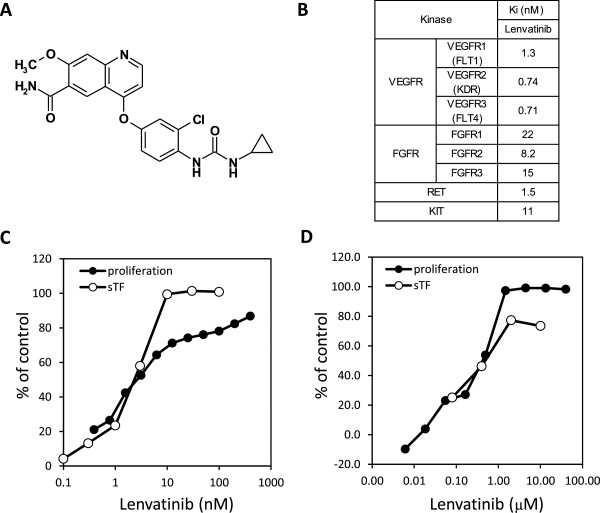
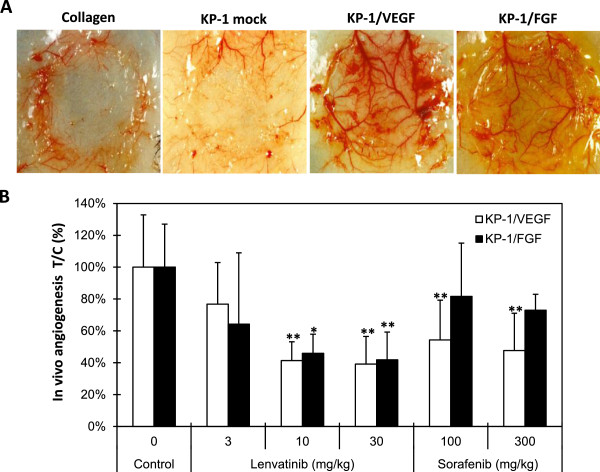
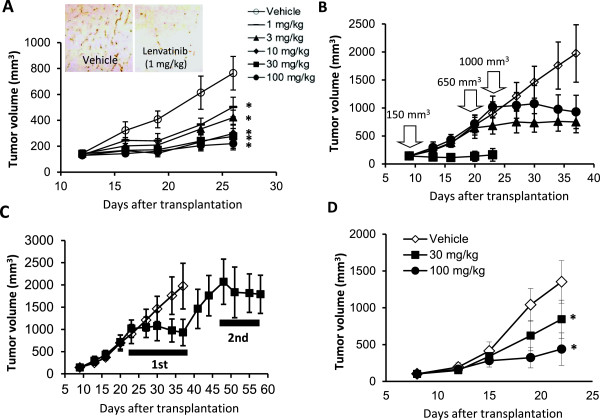
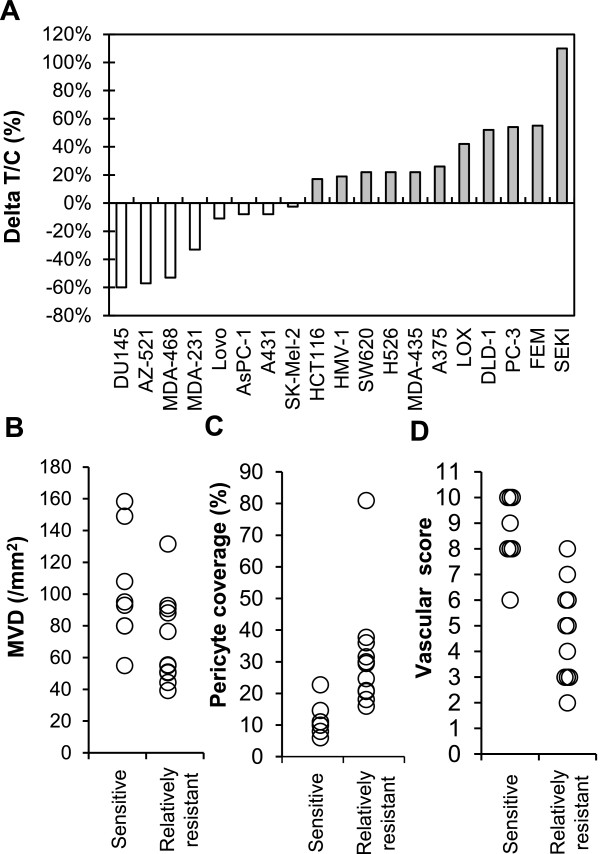
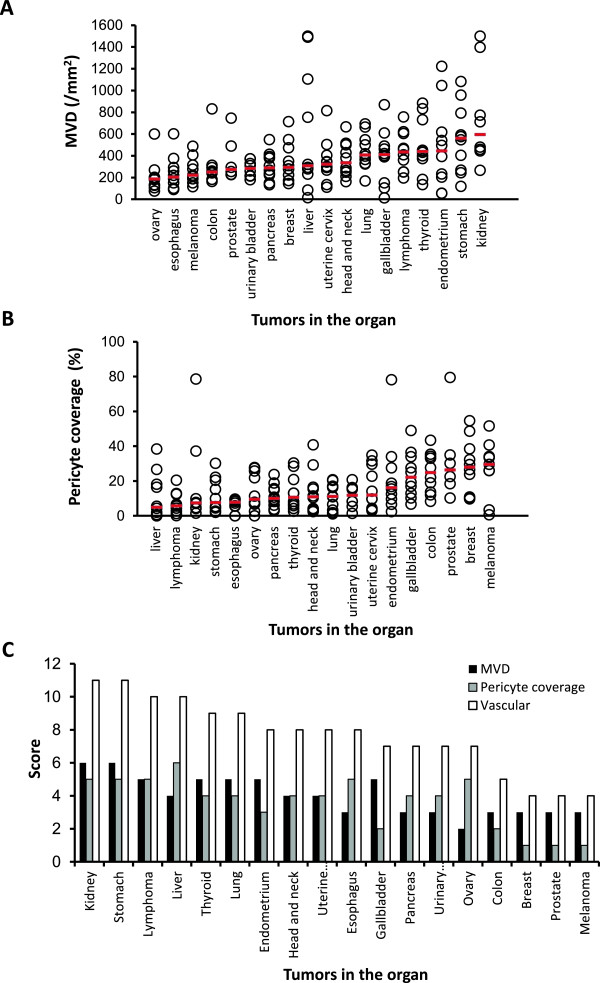
BACKGROUND: Lenvatinib is an oral inhibitor of multiple receptor tyrosine kinases (RTKs) targeting vascular endothelial growth factor receptor (VEGFR1-3), fibroblast growth factor receptor (FGFR1-4), platelet growth factor receptor α (PDGFR α), RET and KIT. Antiangiogenesis activity of lenvatinib in VEGF- and FGF-driven angiogenesis models in both in vitro and in vivo was determined. Roles of tumor vasculature (microvessel density (MVD) and pericyte coverage) as biomarkers for lenvatinib were also examined in this study. METHOD: We evaluated antiangiogenesis activity of lenvatinib against VEGF- and FGF-driven proliferation and tube formation of HUVECs in vitro. Effects of lenvatinib on in vivo angiogenesis, which was enhanced by overexpressed VEGF or FGF in human pancreatic cancer KP-1 cells, were examined in the mouse dorsal air sac assay. We determined antitumor activity of lenvatinib in a broad panel of human tumor xenograft models to test if vascular score, which consisted of high MVD and low pericyte coverage, was associated with sensitivity to lenvatinib treatment. Vascular score was also analyzed using human tumor specimens with 18 different types of human primary tumors. RESULT: Lenvatinib inhibited VEGF- and FGF-driven proliferation and tube formation of HUVECs in vitro. In vivo angiogenesis induced by overexpressed VEGF (KP-1/VEGF transfectants) or FGF (KP-1/FGF transfectants) was significantly suppressed with oral treatments of lenvatinib. Lenvatinib showed significant antitumor activity in KP-1/VEGF and five 5 of 7 different types of human tumor xenograft models at between 1 to 100 mg/kg. We divided 19 human tumor xenograft models into lenvatinib-sensitive (tumor-shrinkage) and relatively resistant (slow-growth) subgroups based on sensitivity to lenvatinib treatments at 100 mg/kg. IHC analysis showed that vascular score was significantly higher in sensitive subgroup than relatively resistant subgroup (p < 0.0004). Among 18 types of human primary tumors, kidney cancer had the highest MVD, while liver cancer had the lowest pericyte coverage, and cancers in Kidney and Stomach had highest vascular score. CONCLUSION: These results indicated that Lenvatinib inhibited VEGF- and FGF-driven angiogenesis and showed a broad spectrum of antitumor activity with a wide therapeutic window. MVD and pericyte-coverage of tumor vasculature might be biomarkers and suggest cases that would respond for lenvatinib therapy.
Overview
The claims and statistics of this paper haven’t been checked yet.
Free: it reads the open-access text and checks the first 5 claims that cite a source we can check. Create a free account to check every claim.
Integrity signals
Registry
Cites
Statistics
Figures
Verification
Claims the paper makes
The claims and statistics of this paper haven’t been checked yet.
Free: it reads the open-access text and checks the first 5 claims that cite a source we can check. Create a free account to check every claim.
Self-check
Percentages, sums and reported differences re-computed from the paper’s own numbers.
The self-check needs the paper’s full text.
Citations
Cites
Sorafenib in advanced hepatocellular carcinoma
Llovet, J. M., Ricci, S., Mazzaferro, V., Hilgard, P., Gane, E., Blanc, J.-F., de Oliveira, A. C., Santoro, A., Raoul, J.-L., Forner, A., et al. (2008) · New England Journal of Medicine · doi:10.1056/nejmoa0708857 · Cited by 13,097
Bevacizumab plus Irinotecan, Fluorouracil, and Leucovorin for Metastatic Colorectal Cancer
Hurwitz, H., Fehrenbacher, L., Novotny, W., Cartwright, T., Hainsworth, J., Heim, W., Berlin, J., Baron, A., Griffing, S., Holmgren, E., et al. (2004) · New England Journal of Medicine · doi:10.1056/nejmoa032691 · Cited by 10,968 · cited 1×
“Bevacizumab (a monoclonal antibody against VEGFA) was the first angiogenesis inhibitor, and was approved for the treatment of patients with metastatic colon cancer based on its survival benefit [3].”
Sunitinib versus Interferon Alfa in Metastatic Renal-Cell Carcinoma
Motzer, R. J., Hutson, T. E., Tomczak, P., Michaelson, M. D., Bukowski, R. M., Rixe, O., Oudard, S., Negrier, S., Szczylik, C., Kim, S. T., et al. (2007) · New England Journal of Medicine · doi:10.1056/nejmoa065044 · Cited by 5,775 · cited 1×
“Several small-molecule inhibitors of VEGFR2 kinase have been approved for treatments of multiple cancer types, such as sunitinib (RCC, gastrointestinal stromal tumor (GIST)) [8,9], sorafenib (RCC, HCC, differentiated thyroid cancer (DTC)) [10-12], pazopanib (RCC, soft-tissue sarcoma (STS)) [13,14], axitinib (RCC) [15]…”
Sorafenib in Advanced Hepatocellular Carcinoma
정, 재. (2008) · Cited by 5,586
Molecular mechanisms and clinical applications of angiogenesis
Carmeliet, P., & Jain, R. K. (2011) · Nature · doi:10.1038/nature10144 · Cited by 5,467 · cited 1×
“The development of novel inhibitors of multi-targeted RTKs in addition to VEGFR2 is still required to improve cancer therapy in the clinic [22], since one of the resistance mechanisms involved is the up-regulation of alternative pro-angiogenic signaling pathways that include FGF/FGFR, angiopoietin/TIE2 and ephrin/EPH…”
Sorafenib in Advanced Clear-Cell Renal-Cell Carcinoma
Escudier, B., Eisen, T., Stadler, W. M., Szczylik, C., Oudard, S., Siebels, M., Negrier, S., Chevreau, C., Solska, E., Desai, A. A., et al. (2007) · New England Journal of Medicine · doi:10.1056/nejmoa060655 · Cited by 4,802
Modes of resistance to anti-angiogenic therapy
Bergers, G., & Hanahan, D. (2008) · Nature Reviews Cancer · doi:10.1038/nrc2442 · Cited by 2,953 · cited 3×
“There are accumulating evidences that tumor vasculature evaluated by MVD and % of pericyte coverage has an impact on disease prognosis and/or acquired resistance to antiangiogenesis therapy in cancer patients [4,23].”
Grothey, A., Cutsem, E. V., Sobrero, A., Siena, S., Falcone, A., Ychou, M., Humblet, Y., Bouché, O., Mineur, L., Barone, C., et al. (2013) · The Lancet · doi:10.1016/s0140-6736(12)61900-x · Cited by 2,895 · cited 1×
“…(RCC, gastrointestinal stromal tumor (GIST)) [8,9], sorafenib (RCC, HCC, differentiated thyroid cancer (DTC)) [10-12], pazopanib (RCC, soft-tissue sarcoma (STS)) [13,14], axi-tinib (RCC) [15], vandetanib (medullary thyroid cancer (MTC)) [16] and regorafnib (colorectal cancer (CRC), GIST) [17,18].”
Sternberg, C. N., Davis, I. D., Mardiak, J., Szczylik, C., Lee, E., Wagstaff, J., Barrios, C. H., Salman, P., Gladkov, O. A., Kavina, A., et al. (2010) · Journal of Clinical Oncology · doi:10.1200/jco.2009.23.9764 · Cited by 2,471 · cited 1×
“…(RCC, gastrointestinal stromal tumor (GIST)) [8,9], sorafenib (RCC, HCC, differentiated thyroid cancer (DTC)) [10-12], pazopanib (RCC, soft-tissue sarcoma (STS)) [13,14], axi-tinib (RCC) [15], vandetanib (medullary thyroid cancer (MTC)) [16] and regorafnib (colorectal cancer (CRC), GIST) [17,18].”
van der Graaf, W. T., Blay, J.-Y., Chawla, S. P., Kim, D.-W., Bui-Nguyen, B., Casali, P. G., Schöffski, P., Aglietta, M., Staddon, A. P., Beppu, Y., et al. (2012) · The Lancet · doi:10.1016/s0140-6736(12)60651-5 · Cited by 2,102
Cited by
Kudo, M., Finn, R. S., Qin, S., Han, K.-H., Ikeda, K., Piscaglia, F., Baron, A., Park, J.-W., Han, G., Jassem, J., et al. (2018) · The Lancet · doi:10.1016/s0140-6736(18)30207-1 · Cited by 5,497
Finn, R. S., Ikeda, M., Zhu, A. X., Sung, M. W., Baron, A. D., Kudo, M., Okusaka, T., Kobayashi, M., Kumada, H., Kaneko, S., et al. (2020) · Journal of Clinical Oncology · doi:10.1200/jco.20.00808 · Cited by 1,167
“AST increased 20 (20) 4 (4) 5 (5) 11 (11) Proteinuria 20 (20) 9 (9) 7 (7) 4 (4) Asthenia 19 (19) 4 (4) 10 (10) 5 (5)”
Tumor biomarkers for diagnosis, prognosis and targeted therapy
Zhou, Y., Tao, L., Qiu, J., Xu, J., Yang, X., Zhang, Y., Tian, X., Guan, X., Cen, X., & Zhao, Y. (2024) · Signal Transduction and Targeted Therapy · doi:10.1038/s41392-024-01823-2 · Cited by 720
Targeting the HIF2–VEGF axis in renal cell carcinoma
Choueiri, T. K., & Kaelin, W. G. (2020) · Nature Medicine · doi:10.1038/s41591-020-1093-z · Cited by 477
Tohyama, O., Matsui, J., Kodama, K., Hata-Sugi, N., Kimura, T., Okamoto, K., Minoshima, Y., Iwata, M., & Funahashi, Y. (2014) · Journal of Thyroid Research · doi:10.1155/2014/638747 · Cited by 475
Self-citationPeng, Z., Fan, W., Zhu, B., Wang, G., Sun, J., Xiao, C., Huang, F., Tang, R., Cheng, Y., Huang, Z., et al. (2023) · Journal of Clinical Oncology · doi:10.1200/jco.22.00392 · Cited by 460
“It is known that TACE induces the upregulation of proangiogenic factors by creating an ischemic tumor environment.(14,15) LEN is a multikinase inhibitor that targets vascular endothelial growth factor receptors 1-3, fibroblast growth factor receptors 1-4, platelet-derived growth factor receptor a, RET, and KIT, all of…”
BackgroundKato, Y., Tabata, K., Kimura, T., Yachie-Kinoshita, A., Ozawa, Y., Yamada, K., Ito, J., Tachino, S., Hori, Y., Matsuki, M., et al. (2019) · PLOS ONE · doi:10.1371/journal.pone.0212513 · Cited by 460
Self-citationPhase 2 study of lenvatinib in patients with advanced hepatocellular carcinoma
Ikeda, K., Kudo, M., Kawazoe, S., Osaki, Y., Ikeda, M., Okusaka, T., Tamai, T., Suzuki, T., Hisai, T., Hayato, S., et al. (2017) · Journal of Gastroenterology · doi:10.1007/s00535-016-1263-4 · Cited by 338
MAPK/ERK Signaling Pathway in Hepatocellular Carcinoma
Moon, H., & Ro, S. W. (2021) · Cancers · doi:10.3390/cancers13123026 · Cited by 326
Lenvatinib: A Review in Hepatocellular Carcinoma
Al-Salama, Z. T., Syed, Y. Y., & Scott, L. J. (2019) · Drugs · doi:10.1007/s40265-019-01116-x · Cited by 318
Lenvatinib for hepatocellular carcinoma: From preclinical mechanisms to anti-cancer therapy
Zhao, Y., Zhang, Y.-N., Wang, K.-T., & Chen, L. (2020) · Biochimica et Biophysica Acta (BBA) - Reviews on Cancer · doi:10.1016/j.bbcan.2020.188391 · Cited by 278
Matsuki, M., Hoshi, T., Yamamoto, Y., Ikemori‐Kawada, M., Minoshima, Y., Funahashi, Y., & Matsui, J. (2018) · Cancer Medicine · doi:10.1002/cam4.1517 · Cited by 266
“Lenvatinib is an orally administered, multitargeted TKI that selectively inhibits VEGFR1–3, fibroblast growth factor receptor (FGFR) 1–4, PDGFR α, RET, and KIT [3, 7].”
BackgroundInfluentialSelf-citationSmall Molecule Kinase Inhibitor Drugs (1995–2021): Medical Indication, Pharmacology, and Synthesis
Ayala-Aguilera, C. C., Valero, T., Lorente-Macías, Á., Baillache, D. J., Croke, S., & Unciti-Broceta, A. (2022) · Journal of Medicinal Chemistry · doi:10.1021/acs.jmedchem.1c00963 · Cited by 265
New Therapies for Advanced Thyroid Cancer
Laha, D., Nilubol, N., & Boufraqech, M. (2020) · Frontiers in Endocrinology · doi:10.3389/fendo.2020.00082 · Cited by 261
“Due to its high affinity to VEGFR and FGFR, lenvatinib showed a high anti-angiogenic effects in thyroid cancer mouse model (36).”
BackgroundTchekmedyian, V., Sherman, E. J., Dunn, L., Tran, C., Baxi, S., Katabi, N., Antonescu, C. R., Ostrovnaya, I., Haque, S. S., Pfister, D. G., et al. (2019) · Journal of Clinical Oncology · doi:10.1200/jco.18.01859 · Cited by 243
“Other notable genomic alterations included a patient with a 3.8- fold amplification of RET (215% regression; withdrew consent after 3.3 months of treatment) and a patient with a two-fold FGFR1 amplification (25% regression; came off study after 21 weeks as a result of development of an orocutaneous fistula).”
InfluentialHepatocellular Carcinoma: Etiology and Current and Future Drugs
Jindal, A., Thadi, A., & Shailubhai, K. (2019) · Journal of Clinical and Experimental Hepatology · doi:10.1016/j.jceh.2019.01.004 · Cited by 257
“Its higher potency than sorafenib in targeting FGF1– and FGF-2–orchestrated angiogenesis makes it a promising candidate for HCC.(102) Other targets of lenvatinib include VEGFR3, KIT, RET and PDGF receptor a.”
BackgroundInfluentialTargeted therapy for hepatocellular carcinoma: Challenges and opportunities
Chen, S., Cao, Q., Wen, W., & Wang, H. (2019) · Cancer Letters · doi:10.1016/j.canlet.2019.114428 · Cited by 255
Targeted therapy for head and neck cancer: signaling pathways and clinical studies
Li, Q., Tie, Y., Alu, A., Ma, X., & Shi, H. (2023) · Signal Transduction and Targeted Therapy · doi:10.1038/s41392-022-01297-0 · Cited by 253
“Lenvatinib is a novel dual inhibitor targeting VEGFR-2 and FGFR1 that demonstrates robust anticancer efficiency in PDXs and humanized mice, which is equivalent to bevacizumab.(277,278) AEE788 is a specific kinase inhibitor targeting VEGFR and has a potential effect on EGFR.”
BackgroundSchlumberger, M., Jarzab, B., Cabanillas, M. E., Robinson, B., Pacini, F., Ball, D. W., McCaffrey, J., Newbold, K., Allison, R., Martins, R. G., et al. (2016) · Clinical Cancer Research · doi:10.1158/1078-0432.ccr-15-1127 · Cited by 247
Self-citationRecent advances in systemic therapy for hepatocellular carcinoma
Zhang, H., Zhang, W., Jiang, L., & Chen, Y. (2022) · Biomarker Research · doi:10.1186/s40364-021-00350-4 · Cited by 214
FGFR a promising druggable target in cancer: Molecular biology and new drugs
Porta, R., Borea, R., Coelho, A., Khan, S., Araújo, A., Reclusa, P., Franchina, T., Van Der Steen, N., Van Dam, P., Ferri, J., et al. (2017) · Critical Reviews in Oncology/Hematology · doi:10.1016/j.critrevonc.2017.02.018 · Cited by 199
Brose, M. S., Worden, F. P., Newbold, K. L., Guo, M. D., & Hurria, A. (2017) · Journal of Clinical Oncology · doi:10.1200/jco.2016.71.6472 · Cited by 209
Lenvatinib for Anaplastic Thyroid Cancer
Tahara, M., Kiyota, N., Yamazaki, T., Chayahara, N., Nakano, K., Inagaki, L., Toda, K., Enokida, T., Minami, H., Imamura, Y., et al. (2017) · Frontiers in Oncology · doi:10.3389/fonc.2017.00025 · Cited by 205
“Decreased appetite 14 (82) 3 (18) 0 Hypertension 14 (82) 5 (29) 0 Fatigue 10 (59) 1 (6) 0 Nausea 10 (59) 0 (0) 0”
Safety and Pharmacokinetics of Lenvatinib in Patients with Advanced Hepatocellular Carcinoma
Ikeda, M., Okusaka, T., Mitsunaga, S., Ueno, H., Tamai, T., Suzuki, T., Hayato, S., Kadowaki, T., Okita, K., & Kumada, H. (2016) · Clinical Cancer Research · doi:10.1158/1078-0432.ccr-15-1354 · Cited by 186
“The inhibitory effect of lenvatinib on VEGF signaling has been evaluated in preclinical studies; VEGF-induced growth of human endothelial cells was suppressed by lenvatinib (35).”
BackgroundDeng, H., Kan, A., Lyu, N., Mu, L., Han, Y., Liu, L., Zhang, Y., Duan, Y., Liao, S., Li, S., et al. (2020) · Liver Cancer · doi:10.1159/000505695 · Cited by 173
Adachi, Y., Kamiyama, H., Ichikawa, K., Fukushima, S., Ozawa, Y., Yamaguchi, S., Goda, S., Kimura, T., Kodama, K., Matsuki, M., et al. (2021) · Cancer Research · doi:10.1158/0008-5472.can-20-2426 · Cited by 186
Self-citationSystemic Therapy for Hepatocellular Carcinoma: Latest Advances
Kudo, M. (2018) · Cancers · doi:10.3390/cancers10110412 · Cited by 172
“Lenvatinib is an oral kinase inhibitor that selectively inhibits receptor tyrosine kinases involved in tumor angiogenesis and tumor growth (e.g., VEGFR1, VEGFR2, VEGFR3, fibroblast growth factor receptor (FGFR)1, FGFR2, FGFR3, FGFR4, PDGFRα, KIT, and RET) [34,35].”
InfluentialRoskoski, R. J. (2019) · Pharmacological Research · doi:10.1016/j.phrs.2019.104567 · Cited by 159
New developments in the biology of fibroblast growth factors
Ornitz, D. M., & Itoh, N. (2022) · WIREs Mechanisms of Disease · doi:10.1002/wsbm.1549 · Cited by 144
Lenvatinib: A Promising Molecular Targeted Agent for Multiple Cancers
Suyama, K., & Iwase, H. (2018) · Cancer Control · doi:10.1177/1073274818789361 · Cited by 145
Wu, J., Yin, Z., Bai, Y., Chen, Y., Zhou, S., Wang, S., Zhou, J., Li, Y., Qiu, F., Li, B., et al. (2021) · Journal of Hepatocellular Carcinoma · doi:10.2147/jhc.s332420 · Cited by 148
Lenvatinib May Drastically Change the Treatment Landscape of Hepatocellular Carcinoma
Kudo, M. (2018) · Liver Cancer · doi:10.1159/000487148 · Cited by 135
Ruan, R., Li, L., Li, X., Huang, C., Zhanmin, Z., Zhong, H., Zeng, S., Shi, Q., Yang, X., Zeng, Q., et al. (2023) · Molecular Cancer · doi:10.1186/s12943-023-01761-7 · Cited by 144
Cabanillas, M. E., & Takahashi, S. (2018) · Seminars in Oncology · doi:10.1053/j.seminoncol.2018.11.004 · Cited by 142
Capozzi, M., Divitiis, C. D., Ottaiano, A., von Arx, C., Scala, S., Tatangelo, F., Delrio, P., & Tafuto, S. (2019) · Cancer Management and Research · doi:10.2147/cmar.s188316 · Cited by 138
Wirth, L. J., Brose, M. S., Sherman, E. J., Licitra, L. F., Schlumberger, M. J., Sherman, S. I., Bible, K. C., Robinson, B. G., Rodien, P., Godbert, Y., et al. (2021) · Journal of Clinical Oncology · doi:10.1200/jco.20.03093 · Cited by 138
The role of endothelial cell–pericyte interactions in vascularization and diseases
Li, G., Gao, J., Ding, P., & Gao, Y. (2024) · Journal of Advanced Research · doi:10.1016/j.jare.2024.01.016 · Cited by 139
Targeting FGFR for cancer therapy
Zhang, P., Yue, L., Leng, Q., Chen, C., Gan, C., Ye, T., & Cao, D. (2024) · Journal of Hematology & Oncology · doi:10.1186/s13045-024-01558-1 · Cited by 140
“Lenvatinib, a selective, multi-target tyrosine kinase inhibitor, exerts its action on the vascular endothelial growth factor receptor (VEGFR), FGFR, and platelet-derived growth factor receptor (PDGFR) family [154, 155].”
BackgroundBergerot, P., Lamb, P., Wang, E., & Pal, S. K. (2019) · Molecular Cancer Therapeutics · doi:10.1158/1535-7163.mct-18-1399 · Cited by 124
“Lenvatinib, an inhibitor of VEGFR1–3, FGFR1–4, PDGFRa, KIT, and RET (66), is being partnered with pembrolizumab.”
BackgroundSystemic Therapy for Hepatocellular Carcinoma: 2017 Update
Kudo, M. (2017) · Oncology · doi:10.1159/000481244 · Cited by 134
Drug screening on digital microfluidics for cancer precision medicine
Zhai, J., Liu, Y., Ji, W., Huang, X., Wang, P., Li, Y., Li, H., Wong, A. H., Zhou, X., Chen, P., et al. (2024) · Nature Communications · doi:10.1038/s41467-024-48616-3 · Cited by 133
“For patient #3, Apa and Sor did not show an effect at any concentration, whereas Len and Reg led to reduced cell viability at high concentrations.”
InfluentialMei, J., Tang, Y., Wei, W., Shi, M., Zheng, L., Li, S., & Guo, R. (2021) · Frontiers in Oncology · doi:10.3389/fonc.2021.618206 · Cited by 127
“Lenvatinib inhibits multiple receptor tyrosine kinases (RTKs) targeting VEGFR1-3, FGFR14, PDGFR a, RET, and KIT (15).”
BackgroundChen, Y., Dai, S., Cheng, C., & Chen, L. (2024) · Journal of Hematology & Oncology · doi:10.1186/s13045-024-01647-1 · Cited by 122
“This makes VEGFR2 an important target for len-vatinib, which is particularly sensitive to VEGFR2-related kinases [5].”
Emerging agents and regimens for hepatocellular carcinoma
Zhu, X.-D., & Sun, H.-C. (2019) · Journal of Hematology & Oncology · doi:10.1186/s13045-019-0794-6 · Cited by 117
Wang, F., Sun, W., Zhang, J., & Fan, Y. (2019) · Oncology Letters · doi:10.3892/ol.2019.9973 · Cited by 115
“In vitro and in vivo experiments indicated that lenvatinib also exerts an anti‑angiogenic effect by targeting VEGFR1‑3 and FGFR1‑4 (129).”
BackgroundRET signaling pathway and RET inhibitors in human cancer
Regua, A. T., Najjar, M. K., & Lo, H. (2022) · Frontiers in Oncology · doi:10.3389/fonc.2022.932353 · Cited by 119
Tahara, M., Brose, M. S., Wirth, L. J., Suzuki, T., Miyagishi, H., Fujino, K., Dutcus, C. E., & Gianoukakis, A. G. (2018) · European Journal of Cancer · doi:10.1016/j.ejca.2018.10.002 · Cited by 115
Haddad, R. I., Schlumberger, M. J., Wirth, L. J., Sherman, E. J., Shah, M. H., Robinson, B. G., Dutcus, C. E., Teng, A., Gianoukakis, A. G., & Sherman, S. I. (2017) · Endocrine · doi:10.1007/s12020-017-1233-5 · Cited by 111
Lenvatinib in hepatocellular carcinoma: Resistance mechanisms and strategies for improved efficacy
Qin, Y., Han, S., Yu, Y., Ding, Q., Ran, M., Yang, M., Liu, Y., Li, Y., Lu, L., Liu, Y., et al. (2024) · Liver International · doi:10.1111/liv.15953 · Cited by 112
“8,11 Because of these properties, lenvatinib is a particularly effective angiogenesis inhibitor; it can also promote apoptosis and inhibit cell proliferation to suppress tumour growth.”
The tumor microenvironment: shaping cancer progression and treatment response
Desai, S. A., Patel, V. P., Bhosle, K. P., Nagare, S. D., & Thombare, K. C. (2025) · Journal of Chemotherapy · doi:10.1080/1120009x.2023.2300224 · Cited by 106
Targeting angiogenesis for liver cancer: Past, present, and future
Zhu, X., Tang, Z., & Sun, H. (2020) · Genes & Diseases · doi:10.1016/j.gendis.2020.03.010 · Cited by 111
“Lenvatinib is also a multi-kinase inhibitor targeting VEGFRs 1e3, PDGFR, FGFR, RET, and KIT.32 Lenvatinib was approved for advanced HCC in 2018 based on the REFLECT study, a non-inferior designed open-labeled control trial.26 The objective response rate (ORR) of lenvatinib treatment was 18.8% (RECIST v1.”
MethodInfluentialLenvatinib: First Global Approval
Scott, L. J. (2015) · Drugs · doi:10.1007/s40265-015-0383-0 · Cited by 103
“In an in vitro assay of angiogenesis, lenvatinib inhibited VEGFR- and FGFR-induced proliferation and tube formation of human umbilical vein endothelial cells [18].”
BackgroundUeno, M., Ikeda, M., Sasaki, T., Nagashima, F., Mizuno, N., Shimizu, S., Ikezawa, H., Hayata, N., Nakajima, R., & Morizane, C. (2020) · BMC Cancer · doi:10.1186/s12885-020-07365-4 · Cited by 100
Prolonged duration of response in lenvatinib responders with thyroid cancer
Gianoukakis, A. G., Dutcus, C. E., Batty, N., Guo, M. D., & Baig, M. A. (2018) · Endocrine Related Cancer · doi:10.1530/erc-18-0049 · Cited by 98
Hierro, C., Rodon, J. A., & Tabernero, J. M. (2015) · Seminars in Oncology · doi:10.1053/j.seminoncol.2015.09.027 · Cited by 99
Von Hippel–Lindau protein signalling in clear cell renal cell carcinoma
Liao, C., Hu, L., & Zhang, Q. H. (2024) · Nature Reviews Urology · doi:10.1038/s41585-024-00876-w · Cited by 98
“Cabo-zantinib can target VEGFR, AXL and MET 43 , whereas lenvatinib can inhibit VEGFR and FGFR 44 ; AXL, MET and FGF signalling are implicated in immunosuppressive roles and resistance to TKIs 37 .”
Brose, M. S., Panaseykin, Y., Konda, B., de la Fouchardière, C., Hughes, B. G. M., Gianoukakis, A. G., Park, Y. J., Romanov, I., Krzyzanowska, M. K., Leboulleux, S., et al. (2021) · The Journal of Clinical Endocrinology & Metabolism · doi:10.1210/clinem/dgab731 · Cited by 98
Hutson, T. E., Michaelson, M. D., Kuzel, T. M., Agarwal, N., Molina, A. M., Hsieh, J. J.-D., Vaishampayan, U. N., Xie, R., Bapat, U., Ye, W., et al. (2021) · European Urology · doi:10.1016/j.eururo.2021.03.015 · Cited by 94
“Lenvatinib is a multitargeted TKI of VEGF receptors 1–3, FGF receptors 1–4, platelet-derived growth factor receptor α , RET, and KIT [8–11].”
Ye, T., Yang, F., Zhu, Y., Li, Y., Lei, Q., Song, X., Xia, Y., Xiong, Y., Zhang, L., Wang, N., et al. (2017) · Cell Death and Disease · doi:10.1038/cddis.2016.452 · Cited by 94
“and downstream signaling cascades (RAS-RAF-MEK-ERK and PI3K-PTEN-AKT-mTOR).(5,10) Notably, these abnormal-”
BackgroundLenvantinib: A Tyrosine Kinase Inhibitor of VEGFR 1-3, FGFR 1-4, PDGFRα, KIT and RET
Zschäbitz, S., & Grüllich, C. (2018) · Recent results in cancer research/Recent Results in Cancer Research · doi:10.1007/978-3-319-91442-8_13 · Cited by 94
Pharmacogenetics of the systemic treatment in advanced hepatocellular carcinoma
Mattia, E. D., Cecchin, E., Guardascione, M., Foltran, L., Raimo, T. D., Angelini, F., D'Andrea, M. R., & Toffoli, G. (2019) · World Journal of Gastroenterology · doi:10.3748/wjg.v25.i29.3870 · Cited by 86
Abdel‐Mohsen, H. T., Abdullaziz, M. A., Kerdawy, A. M. E., Ragab, F. A. F., Flanagan, K. J., Mahmoud, A. E. E.-D., Ali, M. M., Diwani, H. I. E., & Senge, M. O. (2020) · Molecules · doi:10.3390/molecules25040770 · Cited by 83
Tahara, M., Schlumberger, M. J., Elisei, R., Habra, M. A., Kiyota, N., Paschke, R., Dutcus, C. E., Hihara, T., McGrath, S. M., Matijevic, M., et al. (2017) · European Journal of Cancer · doi:10.1016/j.ejca.2017.01.013 · Cited by 84
Self-citationHoshi, T., Miyano, S. W., Watanabe, H., Sonobe, R. M. K., Seki, Y., Ohta, E., Nomoto, K., Matsui, J., & Funahashi, Y. (2019) · Biochemical and Biophysical Research Communications · doi:10.1016/j.bbrc.2019.02.015 · Cited by 84
Self-citationThe LEAP Program: Lenvatinib Plus Pembrolizumab for the Treatment of Advanced Solid Tumors
Taylor, M. H., Schmidt, E. V., Dutcus, C. E., Pinheiro, E. M., Funahashi, Y., Lubiniecki, G. M., & Rasco, D. W. (2020) · Future Oncology · doi:10.2217/fon-2020-0937 · Cited by 82
Self-citationFinn, R. S., Kudo, M., Cheng, A., Wyrwicz, L. S., Ngan, R. K. C., Blanc, J., Baron, A. D., Vogel, A., Ikeda, M., Piscaglia, F., et al. (2021) · Clinical Cancer Research · doi:10.1158/1078-0432.ccr-20-4219 · Cited by 86
“dependent on the FGF signaling pathway (4, 10).”
Self-citationImmunotherapy for advanced thyroid cancers — rationale, current advances and future strategies
French, J. D. (2020) · Nature Reviews Endocrinology · doi:10.1038/s41574-020-0398-9 · Cited by 86
Lenvatinib for the treatment of unresectable hepatocellular carcinoma: evidence to date
Personeni, N., Pressiani, T., & Rimassa, L. (2019) · Journal of Hepatocellular Carcinoma · doi:10.2147/jhc.s168953 · Cited by 82
Fogli, S., Porta, C., Re, M. D., Crucitta, S., Gianfilippo, G., Danesi, R., Rini, B. I., & Schmidinger, M. (2020) · Cancer Treatment Reviews · doi:10.1016/j.ctrv.2020.101966 · Cited by 78
Angiogenesis in the progression from liver fibrosis to cirrhosis and hepatocelluar carcinoma
Li, H. (2020) · Expert Review of Gastroenterology & Hepatology · doi:10.1080/17474124.2021.1842732 · Cited by 79
Alsina, A. E., Kudo, M., Vogel, A., Cheng, A., Tak, W. Y., Ryoo, B., Evans, T. R. J., López, C., Daniele, B., Misir, S., et al. (2019) · Liver Cancer · doi:10.1159/000504624 · Cited by 81
Second-line lenvatinib in patients with recurrent endometrial cancer
Vergote, I. B., Powell, M. A., Teneriello, M. G., Miller, D. S., García, A. A., Mikheeva, O. N., Bidziński, M., Cebotaru, C. L., Dutcus, C. E., Ren, M., et al. (2020) · Gynecologic Oncology · doi:10.1016/j.ygyno.2019.12.039 · Cited by 80
Self-citationSecond-Line Treatment Landscape for Renal Cell Carcinoma: A Comprehensive Review
Tannir, N. M., Pal, S. K., & Atkins, M. B. (2018) · The Oncologist · doi:10.1634/theoncologist.2017-0534 · Cited by 79
Novel approaches for molecular targeted therapy against hepatocellular carcinoma
Eso, Y., & Marusawa, H. (2018) · Hepatology Research · doi:10.1111/hepr.13181 · Cited by 76
Mou, L., Tian, X., Zhou, B., Zhan, Y., Chen, J., Lu, Y., Deng, J., Deng, Y., Wu, Z., Li, Q., et al. (2021) · Frontiers in Oncology · doi:10.3389/fonc.2021.752725 · Cited by 77
Hussein, Z., Mizuo, H., Hayato, S., Namiki, M., & Shumaker, R. (2017) · European Journal of Drug Metabolism and Pharmacokinetics · doi:10.1007/s13318-017-0403-4 · Cited by 73
“In preclinical studies, lenvatinib decreased angiogenesis and showed potent antitumor activity in xenograft models of multiple cancer cell lines [8, 12, 13].”
BackgroundZhao, Z., Zhang, D., Wu, F., Tu, J., Song, J., Xu, M., & Ji, J. (2020) · Journal of Cellular and Molecular Medicine · doi:10.1111/jcmm.16108 · Cited by 73
Shimose, S., Kawaguchi, T., Tanaka, M., Iwamoto, H., Miyazaki, K., Moriyama, E., Suzuki, H., Niizeki, T., Shirono, T., Nakano, M., et al. (2020) · Oncology Letters · doi:10.3892/ol.2020.11758 · Cited by 69
“Recently, an oral multi-kinase inhibitor, lenvatinib, was developed that targets vascular endothelial growth factor (VEGF) receptors 1‐3 (VEGFR1‐3) and fibroblast growth factor (FGF) receptors 1-4 (FGFR1-4) (12,13).”
BackgroundInfluentialSelf-citationMatsuki, M., Adachi, Y., Ozawa, Y., Kimura, T., Hoshi, T., Okamoto, K., Tohyama, O., Mitsuhashi, K. O., Yamaguchi, A., Matsui, J., et al. (2017) · Cancer Science · doi:10.1111/cas.13169 · Cited by 68
Self-citationImmune Checkpoint Inhibitors for Unresectable Hepatocellular Carcinoma
Aziz, M. A. A. E., Facciorusso, A., Nayfeh, T., Saadi, S. M., Elnaggar, M. Y., Cotsoglou, C., & Sacco, R. (2020) · Vaccines · doi:10.3390/vaccines8040616 · Cited by 67
Lenvatinib for Hepatocellular Carcinoma: A Literature Review
Hatanaka, T., Naganuma, A., & Kakizaki, S. (2021) · Pharmaceuticals · doi:10.3390/ph14010036 · Cited by 68
Ikeda, S., Lim, J. S., & Kurzrock, R. (2018) · Molecular Cancer Therapeutics · doi:10.1158/1535-7163.mct-17-0604 · Cited by 64
“FGFR1 FGFR1 aberrations are potentially targetable with lenvatinib (33).”
BackgroundEGFR inhibition reverses resistance to lenvatinib in hepatocellular carcinoma cells
He, X., Hikiba, Y., Suzuki, Y., Nakamori, Y., Kanemaru, Y., Sugimori, M., Sato, T. A., Nozaki, A., Chuma, M., & Maeda, S. (2022) · Scientific Reports · doi:10.1038/s41598-022-12076-w · Cited by 62
Ichikawa, K., Miyano, S. W., Minoshima, Y., Matsui, J., & Funahashi, Y. (2020) · Scientific Reports · doi:10.1038/s41598-020-59853-z · Cited by 66
Self-citationAdvances of Targeted Therapy for Hepatocellular Carcinoma
Niu, M., Yi, M., Li, N., Wu, K., & Wu, K. (2021) · Frontiers in Oncology · doi:10.3389/fonc.2021.719896 · Cited by 64
“Lenvatinib Lenvatinib is an oral multi-kinase inhibitor targeting VEGFR1-3, FGFR1-4, PDGFR-a, RET and c-Kit (37).”
BackgroundInflammatory Networks in Renal Cell Carcinoma
Kruk, L., Mamtimin, M., Braun, A., Anders, H., Andrassy, J., Gudermann, T. W., & Mammadova‐Bach, E. (2023) · Cancers · doi:10.3390/cancers15082212 · Cited by 62
Systemic Therapy for Advanced Hepatocellular Carcinoma: An Update of a Rapidly Evolving Field
Doycheva, I., & Thuluvath, P. J. (2019) · Journal of Clinical and Experimental Hepatology · doi:10.1016/j.jceh.2019.07.012 · Cited by 61
“The distinctive feature of this molecule is the additional inhibition of FGFRs 1–4 of HCC tumor cells.(26) A recent study that used an animal model of HCC noted that lenvatinib had immunomodulatory activity that enhanced its antitumor effect, especially when combined with anti– PD-1 antibody.”
BackgroundShigesawa, T., Maehara, O., Suda, G., Natsuizaka, M., Kimura, M., Shimazaki, T., Yamamoto, K., Yamada, R., Kitagataya, T., Nakamura, A., et al. (2020) · Carcinogenesis · doi:10.1093/carcin/bgaa049 · Cited by 63
Shimose, S., Iwamoto, H., Tanaka, M., Niizeki, T., Shirono, T., Noda, Y., Kamachi, N., Okamura, S., Nakano, M., Suga, H., et al. (2021) · Cancers · doi:10.3390/cancers13010160 · Cited by 63
Kudo, M., Finn, R. S., Qin, S., Han, K., Ikeda, K., Cheng, A., Vogel, A., Tovoli, F., Ueshima, K., Aikata, H., et al. (2020) · Journal of Hepatology · doi:10.1016/j.jhep.2022.09.006 · Cited by 63
Resistance of Lenvatinib in Hepatocellular Carcinoma
Xu, Q., Huang, D., Guo, J., & Zhao, J. (2022) · Current Cancer Drug Targets · doi:10.2174/1568009622666220428111327 · Cited by 61
Kodama, K., Kawaoka, T., Namba, M., Uchikawa, S., Ohya, K., Morio, K., Nakahara, T., Murakami, E., Yamauchi, M., Hiramatsu, A., et al. (2019) · Oncology · doi:10.1159/000499715 · Cited by 59
Chuma, M., Uojima, H., Numata, K., Hidaka, H., Toyoda, H., Hiraoka, A., Tada, T., Hirose, S., Atsukawa, M., Itokawa, N., et al. (2020) · Cancers · doi:10.3390/cancers12020293 · Cited by 58
“Lenvatinib inhibits VEGF-and FGF-driven angiogenesis [29].”
Vogel, A., Frenette, C. T., Sung, M. W., Daniele, B., Baron, A. D., Chan, S. L., Blanc, J. F., Tamai, T., Ren, M., Lim, H. J., et al. (2021) · Liver Cancer · doi:10.1159/000516490 · Cited by 61
Antiproliferative Effect of Lenvatinib on Human Liver Cancer Cell Lines In Vitro and In Vivo
Ogasawara, S., Mihara, Y., Kondo, R., Kusano, H., Akiba, J., & Yano, H. (2019) · Anticancer Research · doi:10.21873/anticanres.13802 · Cited by 62
The correlation and role analysis of COL4A1 and COL4A2 in hepatocarcinogenesis
Liu, Y., Zhang, J., Chen, Y., Sohel, H., Ke, X., Chen, J., & Li, Y. (2020) · Aging · doi:10.18632/aging.102610 · Cited by 65
Liu, J., Li, Z., Zhang, W., Lu, H., Sun, Z., Wang, G., & Han, X. (2021) · Frontiers in Pharmacology · doi:10.3389/fphar.2021.709060 · Cited by 60
“Lenvatinib is an oral tyrosine kinase inhibitor that plays an anticancer role by effectively inhibiting vascular endothelial growth factor receptor 1–3 (VEGFR1–3), platelet-derived growth factor receptor α, RET proto-oncogene (RET), and v-kit Hardy-Zuckerman 4 (KIT) (Yamamoto et al., 2014).”
BackgroundMakker, V., Aghajanian, C. A., Cohn, A. L., Romeo, M., Bratos, R., Brose, M. S., Messing, M. J., Dutta, L., Dutcus, C. E., Huang, J., et al. (2023) · Journal of Clinical Oncology · doi:10.1200/jco.22.01021 · Cited by 58
Sun, D., Liu, J., Wang, Y., & Dong, J. (2022) · Frontiers in Oncology · doi:10.3389/fonc.2022.944537 · Cited by 55
“Unfortunately, lenvatinib targets multiple cell membrane RTKs but EGFR (4).”
BackgroundInfluentialNakamichi, S., Nokihara, H., Yamamoto, N., Yamada, Y., Honda, K., Tamura, Y., Wakui, H., Sasaki, T., Yusa, W., Fujino, K., et al. (2015) · Cancer Chemotherapy and Pharmacology · doi:10.1007/s00280-015-2899-0 · Cited by 54
“In preclinical models, lenvatinib inhibits VEGF- and FGF-driven proliferation and tube formation of human umbilical vein endothelial cells in vitro [6].”
Background
Metadata
- Authors
- Yamamoto, Y., Matsui, J., Matsushima, T., Obaishi, H., Miyazaki, K., Nakamura, K., Tohyama, O., Semba, T., Yamaguchi, A., Hoshi, S., Mimura, F., Haneda, T., Fukuda, Y., Kamata, J.-I., Takahashi, K., Matsukura, M., Wakabayashi, T., Asada, M., Nomoto, K.-I., Watanabe, T., Dezso, Z., Yoshimatsu, K., Funahashi, Y., & Tsuruoka, A.
- Affiliations
- Eisai (Japan) (JP)
- Eisai (United States) (US)
- Corresponding author
- Funahashi, Yasuhiro
- ORCID
- Venue
- Vascular Cell
- Publisher
- Publiverse Online SRL
- Published
- 2014
- Volume
- 6
- Issue
- 1
- Pages
- 18
- ISSN
- 2040-2384 (ISSN-L)
- 2045-824X
- PMC
- PMC4156793
- OpenAlex
- W2151600653
- Cited by
- 507
- References
- 45
- Citations by year
- 2026: 41 · 2025: 38 · 2024: 72 · 2023: 54 · 2022: 63 · 2021: 70 · 2020: 50 · 2019: 50 · 2018: 28 · 2017: 17 · 2016: 13 · 2015: 10 · 2014: 1
- FWCI
- 5.61
- Type
- journal article
- Language
- en
- Open access
- diamond
- doi.org
- Licence
- cc-by
- Locations
- Vascular Cell (publishedVersion, cc-by)
- Europe PMC (PubMed Central) (publishedVersion, cc-by)
- PubMed Central (publishedVersion, cc-by)
- PubMed (publishedVersion)
- Topics
- Life Sciences › Biochemistry, Genetics and Molecular Biology › Molecular Biology › Angiogenesis and VEGF in Cancer
- Health Sciences › Medicine › Oncology › Lymphatic System and Diseases
- Life Sciences › Biochemistry, Genetics and Molecular Biology › Molecular Biology › Fibroblast Growth Factor Research
- Keywords
- lenvatinib, anti-angiogenic therapy, VEGFR inhibition, FGFR inhibition, microvessel density, pericyte coverage, tumor xenografts, pancreatic cancer, kidney cancer, liver cancer, receptor tyrosine kinase inhibitors
About these checks
Registry, retraction, Cites and statistics results are computed, not judged, with one exception: a printed reference that no index lists is read once by a model before it counts as a citation error. Claims are extracted by a model and kept only when their quote appears verbatim in the text; each cited source is then checked, with a model’s help, for whether it says what the claim relies on. Those verdicts can be wrong — read the claim’s quote and the cited source before relying on one.
Statistics and arithmetic are recomputed, not judged.
Confidence bands are shown only for fields calibrated on our annotated test set. None is calibrated yet, so no band is shown.
What counts as a claim ›How we measure confidence ›How we check this ›
Are you an author, or do you see a problem with this page? Request a review
Data sources
Bibliographic data: Semantic Scholar, OpenAlex, Crossref.
Contains information from the Semantic Scholar Academic Graph Datasets, made available under the ODC Attribution License (ODC-BY 1.0).
Semantic Scholar’s data is described in: Kinney, R., et al. (2023). The Semantic Scholar Open Data Platform. arXiv:2301.10140.
