

Lenvatinib, an angiogenesis inhibitor targeting VEGFR/FGFR, shows broad antitumor activity in human tumor xenograft models associated with microvessel density and pericyte coverage.
Open accessThe DOI matches its Crossref record; 45 of the 45 references it cites were found in a registry or an index.
Abstract
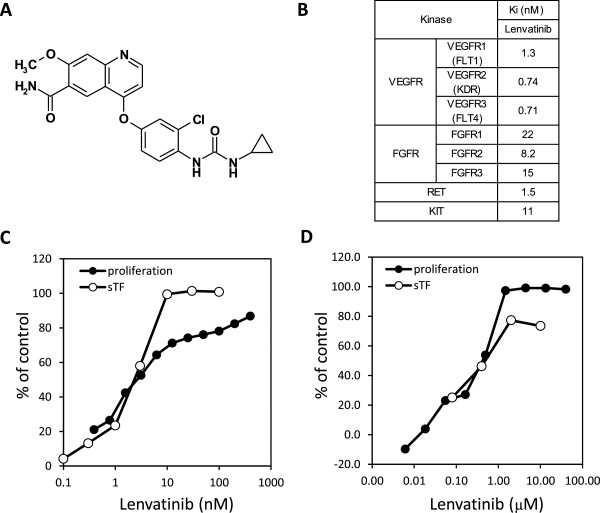
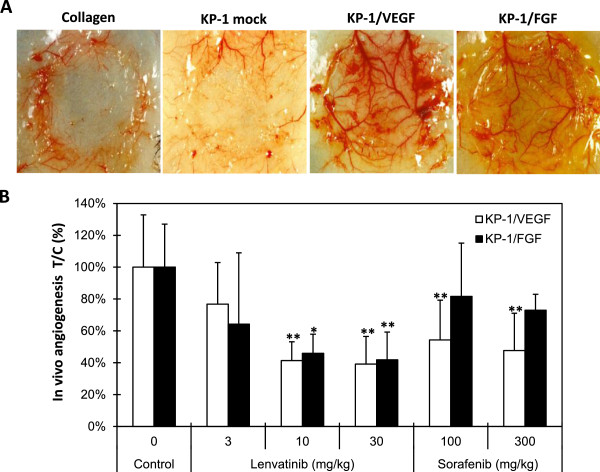
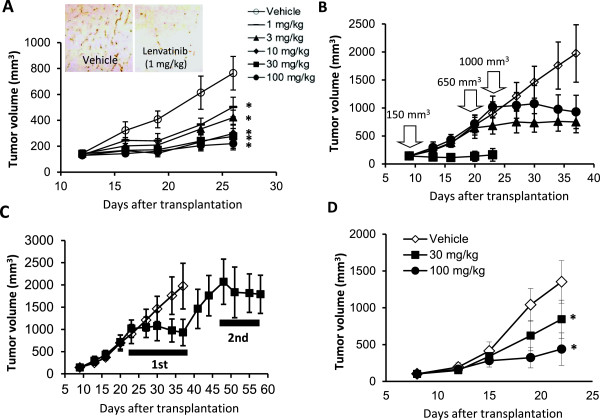
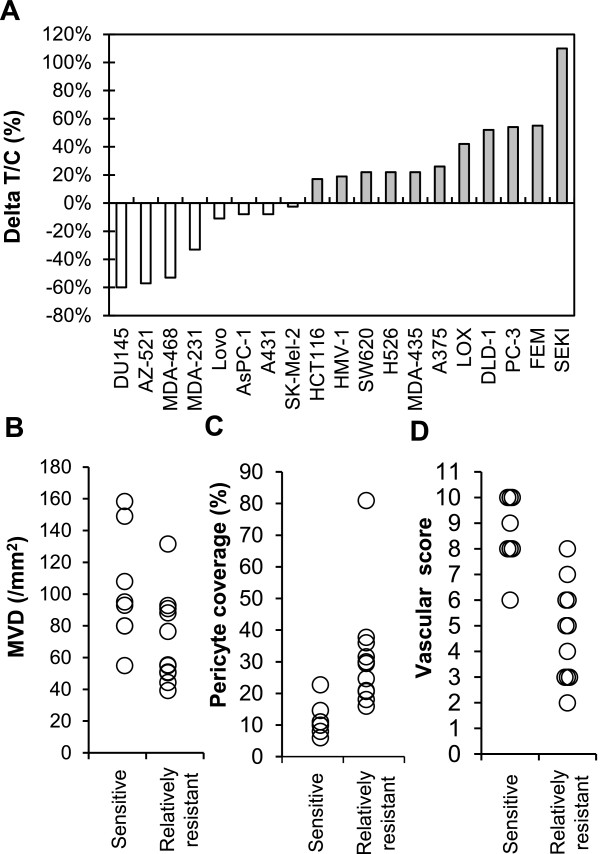
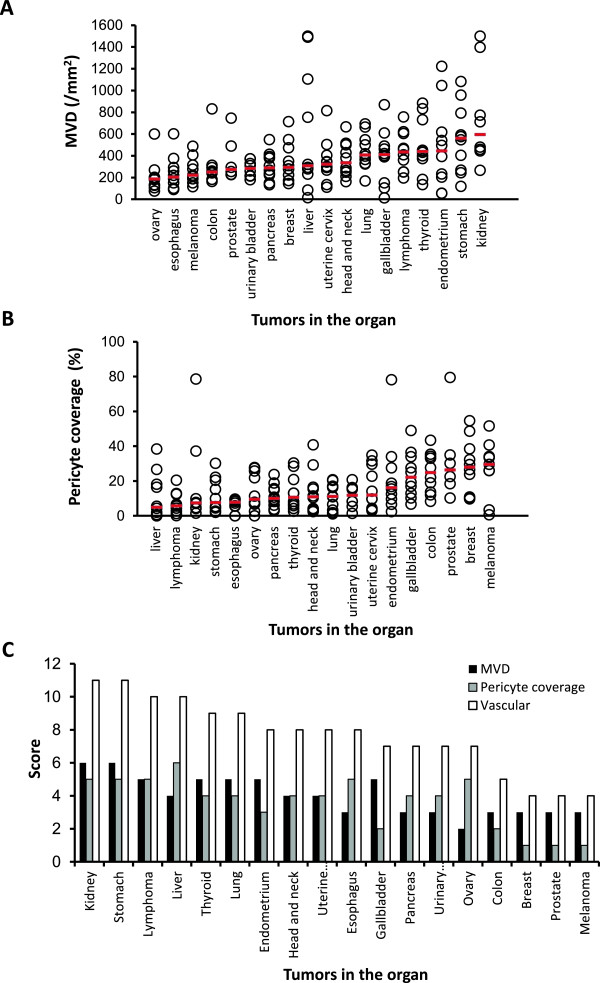
BACKGROUND: Lenvatinib is an oral inhibitor of multiple receptor tyrosine kinases (RTKs) targeting vascular endothelial growth factor receptor (VEGFR1-3), fibroblast growth factor receptor (FGFR1-4), platelet growth factor receptor α (PDGFR α), RET and KIT. Antiangiogenesis activity of lenvatinib in VEGF- and FGF-driven angiogenesis models in both in vitro and in vivo was determined. Roles of tumor vasculature (microvessel density (MVD) and pericyte coverage) as biomarkers for lenvatinib were also examined in this study. METHOD: We evaluated antiangiogenesis activity of lenvatinib against VEGF- and FGF-driven proliferation and tube formation of HUVECs in vitro. Effects of lenvatinib on in vivo angiogenesis, which was enhanced by overexpressed VEGF or FGF in human pancreatic cancer KP-1 cells, were examined in the mouse dorsal air sac assay. We determined antitumor activity of lenvatinib in a broad panel of human tumor xenograft models to test if vascular score, which consisted of high MVD and low pericyte coverage, was associated with sensitivity to lenvatinib treatment. Vascular score was also analyzed using human tumor specimens with 18 different types of human primary tumors. RESULT: Lenvatinib inhibited VEGF- and FGF-driven proliferation and tube formation of HUVECs in vitro. In vivo angiogenesis induced by overexpressed VEGF (KP-1/VEGF transfectants) or FGF (KP-1/FGF transfectants) was significantly suppressed with oral treatments of lenvatinib. Lenvatinib showed significant antitumor activity in KP-1/VEGF and five 5 of 7 different types of human tumor xenograft models at between 1 to 100 mg/kg. We divided 19 human tumor xenograft models into lenvatinib-sensitive (tumor-shrinkage) and relatively resistant (slow-growth) subgroups based on sensitivity to lenvatinib treatments at 100 mg/kg. IHC analysis showed that vascular score was significantly higher in sensitive subgroup than relatively resistant subgroup (p < 0.0004). Among 18 types of human primary tumors, kidney cancer had the highest MVD, while liver cancer had the lowest pericyte coverage, and cancers in Kidney and Stomach had highest vascular score. CONCLUSION: These results indicated that Lenvatinib inhibited VEGF- and FGF-driven angiogenesis and showed a broad spectrum of antitumor activity with a wide therapeutic window. MVD and pericyte-coverage of tumor vasculature might be biomarkers and suggest cases that would respond for lenvatinib therapy.
Overview
The claims and statistics of this paper haven’t been checked yet.
Free: it reads the open-access text and checks the first 5 claims that cite a source we can check. Create a free account to check every claim.
Integrity signals
Registry
Cites
Statistics
Figures
Verification
Claims the paper makes
The claims and statistics of this paper haven’t been checked yet.
Free: it reads the open-access text and checks the first 5 claims that cite a source we can check. Create a free account to check every claim.
Self-check
Percentages, sums and reported differences re-computed from the paper’s own numbers.
The self-check needs the paper’s full text.
Citations
Cites
Sorafenib in advanced hepatocellular carcinoma
Llovet, J. M., Ricci, S., Mazzaferro, V., Hilgard, P., Gane, E., Blanc, J.-F., de Oliveira, A. C., Santoro, A., Raoul, J.-L., Forner, A., et al. (2008) · New England Journal of Medicine · doi:10.1056/nejmoa0708857 · Cited by 13,097
Bevacizumab plus Irinotecan, Fluorouracil, and Leucovorin for Metastatic Colorectal Cancer
Hurwitz, H., Fehrenbacher, L., Novotny, W., Cartwright, T., Hainsworth, J., Heim, W., Berlin, J., Baron, A., Griffing, S., Holmgren, E., et al. (2004) · New England Journal of Medicine · doi:10.1056/nejmoa032691 · Cited by 10,968 · cited 1×
“Bevacizumab (a monoclonal antibody against VEGFA) was the first angiogenesis inhibitor, and was approved for the treatment of patients with metastatic colon cancer based on its survival benefit [3].”
Sunitinib versus Interferon Alfa in Metastatic Renal-Cell Carcinoma
Motzer, R. J., Hutson, T. E., Tomczak, P., Michaelson, M. D., Bukowski, R. M., Rixe, O., Oudard, S., Negrier, S., Szczylik, C., Kim, S. T., et al. (2007) · New England Journal of Medicine · doi:10.1056/nejmoa065044 · Cited by 5,775 · cited 1×
“Several small-molecule inhibitors of VEGFR2 kinase have been approved for treatments of multiple cancer types, such as sunitinib (RCC, gastrointestinal stromal tumor (GIST)) [8,9], sorafenib (RCC, HCC, differentiated thyroid cancer (DTC)) [10-12], pazopanib (RCC, soft-tissue sarcoma (STS)) [13,14], axitinib (RCC) [15]…”
Sorafenib in Advanced Hepatocellular Carcinoma
정, 재. (2008) · Cited by 5,586
Molecular mechanisms and clinical applications of angiogenesis
Carmeliet, P., & Jain, R. K. (2011) · Nature · doi:10.1038/nature10144 · Cited by 5,467 · cited 1×
“The development of novel inhibitors of multi-targeted RTKs in addition to VEGFR2 is still required to improve cancer therapy in the clinic [22], since one of the resistance mechanisms involved is the up-regulation of alternative pro-angiogenic signaling pathways that include FGF/FGFR, angiopoietin/TIE2 and ephrin/EPH…”
Sorafenib in Advanced Clear-Cell Renal-Cell Carcinoma
Escudier, B., Eisen, T., Stadler, W. M., Szczylik, C., Oudard, S., Siebels, M., Negrier, S., Chevreau, C., Solska, E., Desai, A. A., et al. (2007) · New England Journal of Medicine · doi:10.1056/nejmoa060655 · Cited by 4,802
Modes of resistance to anti-angiogenic therapy
Bergers, G., & Hanahan, D. (2008) · Nature Reviews Cancer · doi:10.1038/nrc2442 · Cited by 2,953 · cited 3×
“There are accumulating evidences that tumor vasculature evaluated by MVD and % of pericyte coverage has an impact on disease prognosis and/or acquired resistance to antiangiogenesis therapy in cancer patients [4,23].”
Grothey, A., Cutsem, E. V., Sobrero, A., Siena, S., Falcone, A., Ychou, M., Humblet, Y., Bouché, O., Mineur, L., Barone, C., et al. (2013) · The Lancet · doi:10.1016/s0140-6736(12)61900-x · Cited by 2,895 · cited 1×
“…(RCC, gastrointestinal stromal tumor (GIST)) [8,9], sorafenib (RCC, HCC, differentiated thyroid cancer (DTC)) [10-12], pazopanib (RCC, soft-tissue sarcoma (STS)) [13,14], axi-tinib (RCC) [15], vandetanib (medullary thyroid cancer (MTC)) [16] and regorafnib (colorectal cancer (CRC), GIST) [17,18].”
Sternberg, C. N., Davis, I. D., Mardiak, J., Szczylik, C., Lee, E., Wagstaff, J., Barrios, C. H., Salman, P., Gladkov, O. A., Kavina, A., et al. (2010) · Journal of Clinical Oncology · doi:10.1200/jco.2009.23.9764 · Cited by 2,471 · cited 1×
“…(RCC, gastrointestinal stromal tumor (GIST)) [8,9], sorafenib (RCC, HCC, differentiated thyroid cancer (DTC)) [10-12], pazopanib (RCC, soft-tissue sarcoma (STS)) [13,14], axi-tinib (RCC) [15], vandetanib (medullary thyroid cancer (MTC)) [16] and regorafnib (colorectal cancer (CRC), GIST) [17,18].”
van der Graaf, W. T., Blay, J.-Y., Chawla, S. P., Kim, D.-W., Bui-Nguyen, B., Casali, P. G., Schöffski, P., Aglietta, M., Staddon, A. P., Beppu, Y., et al. (2012) · The Lancet · doi:10.1016/s0140-6736(12)60651-5 · Cited by 2,102
Cited by
Items 201–300 of 522
Zhai, L., Shi, Y., Yan, Y., Lu, A., Liu, X., Lei, L., Sun, Y., Jiang, L., Wang, X., Qian, H.-G., et al. (2023) · Chinese Chemical Letters · doi:10.1016/j.cclet.2022.108104 · Cited by 22
Deng, L., Bao, W., Zhang, B., Zhang, S., Chen, Z., Zhu, X., He, B., Wu, L., Chen, X., Deng, T., et al. (2023) · Cell Death and Disease · doi:10.1038/s41419-023-06092-5 · Cited by 22
Makker, V., Taylor, M. H., Aghajanian, C. A., Cohn, A. L., Brose, M. S., Simone, C. D., Cao, Z. A., Suttner, L. H., Loboda, A. P., Cristescu, R., et al. (2024) · Journal for ImmunoTherapy of Cancer · doi:10.1136/jitc-2023-007929 · Cited by 20
Self-citationWu, J., Wu, J., Li, S., Luo, M., Zeng, Z., Li, Y., Fu, Y., Li, H., Liu, D.-Y., Ou, X.-Y., et al. (2024) · BioScience Trends · doi:10.5582/bst.2023.01326 · Cited by 20
Lenvatinib: A Potential Breakthrough in Advanced Hepatocellular Carcinoma?
Oikonomopoulos, G., Aravind, P., & Sarker, D. (2016) · Future Oncology · doi:10.2217/fon.15.341 · Cited by 21
Lee, D. H., Lee, J., Jeon, J., Kim, K.-J., Yun, J.-H., Jeong, H.-S., Lee, E. H., Koh, Y. J., & Cho, C. (2018) · PubMed Central · doi:10.14348/molcells.2018.0207 · Cited by 24
Ohya, K., Kawaoka, T., Namba, M., Uchikawa, S., Kodama, K., Morio, K., Nakahara, T., Murakami, E., Hiramatsu, A., Tsuge, M., et al. (2019) · Scientific Reports · doi:10.1038/s41598-019-48045-z · Cited by 20
Fazio, N., Cella, C. A., Re, M. D., Laffi, A., Rubino, M., Zagami, P., & Spada, F. (2019) · Expert Opinion on Drug Metabolism & Toxicology · doi:10.1080/17425255.2019.1700951 · Cited by 20
“Microvessel density and pericyte coverage represented the tumor marker to define the response [54].”
BackgroundLee, C., Motzer, R. J., Glen, H., Michaelson, M. D., Larkin, J., Minoshima, Y., Kanekiyo, M., Ikezawa, H., Sachdev, P., Dutcus, C. E., et al. (2020) · British Journal of Cancer · doi:10.1038/s41416-020-01092-0 · Cited by 21
Self-citationSpiliopoulou, P., Vornicova, O., Genta, S., & Spreafico, A. (2023) · International Journal of Molecular Sciences · doi:10.3390/ijms24021294 · Cited by 20
“While cutaneous melanoma is often characterized by BRAF, NRAS and KIT mutations, uveal melanoma typically harbors GNAQ/GNA11, EIF1AX, SF3B1, BAP1 mutations and chromosomal abnormalities [79].”
BackgroundInfluentialSystemic therapy for advanced hepatocellular carcinoma: targeted therapies
Tella, S. H., Kommalapati, A., & Mahipal, A. (2020) · Chinese Clinical Oncology · doi:10.21037/cco-20-117 · Cited by 20
“It is yet to be determined if these agents would be beneficial in the patients who used lenvatinib as first-line therapy as lenvatinib targets FGFR, KIT, and RET pathways, which was not the case with sorafenib (58).”
BackgroundMoon, H., & Ro, S. W. (2021) · Journal of Liver Cancer · doi:10.17998/jlc.21.1.1 · Cited by 21
Chen, Y.-X., Zhang, J.-X., Zhou, C., Liu, J., Liu, S., Shi, H., & Zu, Q. (2022) · Journal of Hepatocellular Carcinoma · doi:10.2147/jhc.s373250 · Cited by 23
DKK1‐CKAP4 signal axis promotes hepatocellular carcinoma aggressiveness
Iguchi, K., Sada, R., Matsumoto, S., Kimura, H., Zen, Y., Akita, M., Gon, H., Fukumoto, T., & Kikuchi, A. (2023) · Cancer Science · doi:10.1111/cas.15743 · Cited by 19
Okusaka, T., Ikeda, K., Kudo, M., Finn, R. S., Qin, S., Han, K., Cheng, A., Piscaglia, F., Kobayashi, M., Sung, M. W., et al. (2021) · Journal of Gastroenterology · doi:10.1007/s00535-021-01785-0 · Cited by 19
Suzuki, K., Iwai, H., Utsunomiya, K., Kono, Y., Kobayashi, Y., Bui, D. V., Sawada, S., Yun, Y., Mitani, A., Kondo, N., et al. (2020) · Experimental Cell Research · doi:10.1016/j.yexcr.2020.112390 · Cited by 19
Yang, H., Yang, T.-S., Qiu, G., & Liu, J. (2023) · Journal of Hepatocellular Carcinoma · doi:10.2147/jhc.s423684 · Cited by 18
“Lenvatinib can inhibit vascular endothelial growth factor 1–3, thereby inhibiting the original vascular generation and immune suppression effect of the tumor microenvironment and improving the clinical benefits of TACE and PD-(L)1 antibodies.(27) The hepa1-6 HCC model shows that lenvatinib has immune regulatory activi…”
BackgroundHuang, J., Yang, R., Long, H., Kong, J., Shao, G., & Xiong, F. (2024) · Materials Today Bio · doi:10.1016/j.mtbio.2024.101419 · Cited by 18
Prelaj, A., Pircher, C. C., Massa, G., Martelli, V., Corrao, G., Russo, G. L., Proto, C., Ferrara, R., Galli, G., Toma, A. D., et al. (2021) · Cancers · doi:10.3390/cancers13061300 · Cited by 18
Destructive Thyroiditis Induced by Lenvatinib in Three Patients with Hepatocellular Carcinoma
Hirooka, M., Ochi, H., Hiraoka, A., Koizumi, Y., Matsuura, B., Joko, K., Michitaka, K., Abe, M., & Hiasa, Y. (2018) · Internal Medicine · doi:10.2169/internalmedicine.1874-18 · Cited by 19
“Lenvatinib is an oral multi-target receptor tyrosine kinase inhibitor (TKI) for vascular endothelial growth factor (VEGF) receptors 1-3, fibroblast growth factor receptors 14, platelet-derived growth factor receptor alpha, and KIT and RET proto-oncogenes (1-4).”
BackgroundTherapeutic efficacy of lenvatinib in nonviral unresectable hepatocellular carcinoma
Tomonari, T., Sato, Y., Tanaka, H., Mitsuhashi, T., Hirao, A., Tanaka, T., Taniguchi, T., Okamoto, K., Sogabe, M., Miyamoto, H., et al. (2021) · JGH Open · doi:10.1002/jgh3.12663 · Cited by 17
Suryaprakash, R. T. C., Shearston, K., Farah, C. S., Fox, S. A., Iqbal, M. M., Kadolsky, U. D., Zhong, X., Saxena, A., & Kujan, O. (2023) · International Journal of Molecular Sciences · doi:10.3390/ijms24044096 · Cited by 18
“We tested the efficacy of pazopanib and lenvatinib on transformed spheroids [51,52].”
MethodNing, Z., Xie, L., Xia, Y., Hua, Y., Shi, W., Lin, J., Xu, L., & Meng, Z. (2023) · British Journal of Radiology · doi:10.1259/bjr.20230079 · Cited by 17
Ikeda, S., Hansel, D. E., & Kurzrock, R. (2015) · Cancer Treatment Reviews · doi:10.1016/j.ctrv.2015.06.004 · Cited by 19
Neoadjuvant Lenvatinib in Advanced Unresectable Medullary Thyroid Carcinoma: A Case Report
Golingan, H., Hunis, B., Golding, A. C., Bimston, D. N., & Harrell, R. M. (2019) · AACE Clinical Case Reports · doi:10.4158/accr-2019-0365 · Cited by 17
Lenvatinib: A narrative drug review
Goel, A., & Singla, A. (2021) · Cancer Research Statistics and Treatment · doi:10.4103/crst.crst_151_21 · Cited by 19
Disrupting Tumor Angiogenesis and “the Hunger Games” for Breast Cancer
Zhou, Z., Yao, H., & Hu, H. (2017) · Advances in experimental medicine and biology · doi:10.1007/978-981-10-6020-5_8 · Cited by 19
Cao, M., Ren, Y., Li, Y., Deng, J., Su, X., Tang, Y., Feng, Y., Deng, H., Yang, G., He, Z., et al. (2023) · International Journal of Biological Sciences · doi:10.7150/ijbs.85270 · Cited by 16
“Lenvatinib is one of the multi-target tyrosine kinase inhibitors (TKIs) targeting a collection of receptors primarily affecting angiogenesis[5, 6].”
BackgroundProme, A. A., Robin, T. B., Ahmed, N., Rani, N. A., Ahmad, I., Patel, H., Bappy, M. N. I., & Zinnah, K. M. A. (2023) · Journal of Biomolecular Structure and Dynamics · doi:10.1080/07391102.2023.2240895 · Cited by 16
“Two established drugs Lenvatinib and Withaferin A was utilized as reference ligand after the literature review to compare the binding affinity of our listed metabolites (Kumar & Patnaik, 2018; Yamamoto et al., 2014).”
Sun, P., Li, Z., Yan, Z., Wang, Z., Zheng, P., Wang, M., Xu, C., Liu, Z., Zhang, J., Wu, H., et al. (2024) · BMC Cancer · doi:10.1186/s12885-024-12680-1 · Cited by 17
“Studies have shown that LEN exerts potent antiangiogenic effects mainly by inhibiting VEGF and FGF signalling in tumour cells [13, 14].”
BackgroundClinical pharmacology and drug-drug interactions of lenvatinib in thyroid cancer
Fogli, S., Gianfilippo, G., Cucchiara, F., Re, M. D., Valerio, L., Elisei, R., & Danesi, R. (2021) · Critical Reviews in Oncology/Hematology · doi:10.1016/j.critrevonc.2021.103366 · Cited by 16
Tchekmedyian, V. (2021) · Hematology/Oncology Clinics of North America · doi:10.1016/j.hoc.2021.05.011 · Cited by 16
Role of Immunological Cells in Hepatocellular Carcinoma Disease and Associated Pathways
Aasarey, R., Yadav, K., Kashyap, B. K., Prabha, S., Kumar, P., Kumar, A. K. S., Ruokolainen, J., & Kesari, K. K. (2023) · ACS Pharmacology & Translational Science · doi:10.1021/acsptsci.3c00216 · Cited by 17
Hua, X., Yin, Z., Liang, J., Chen, W., & Gong, H. (2023) · European Journal of Gastroenterology & Hepatology · doi:10.1097/meg.0000000000002668 · Cited by 16
“Firstly, Lenvatinib targets multiple receptors including VEGFR1-3, FGFR1-4, and KIT, its broad-spectrum activity provides a high response rate during the treatment period [32].”
BackgroundThe Tumor Microenvironment in Hepatocellular Carcinoma
Nagaoka, K., Tanaka, Y., & Hino, O. (2022) · Interdisciplinary cancer research · doi:10.1007/16833_2022_66 · Cited by 16
Lin, Y.-S., Li, S., Yang, X., Guo, R., Huang, Y.-H., Bai, K., Weng, J., & Yun, J. (2024) · Journal of Cancer Research and Clinical Oncology · doi:10.1007/s00432-024-05795-2 · Cited by 15
“Lenvatinib functioned as a multiple receptor tyrosine kinases (RTKs) inhibitor, targeting VEGFR1-3, FGFR1-4, PDGFR a, RET, and KIT (Yamamoto et al. 2014).”
BackgroundDubbelman, A.-C., Nijenhuis, C. M., Jansen, R. S., Rosing, H., Mizuo, H., Kawaguchi, S., Critchley, D. J. P., Shumaker, R., Schellens, J. H. M., & Beijnen, J. H. (2016) · Investigational New Drugs · doi:10.1007/s10637-016-0342-y · Cited by 15
“Lenvatinib is an oral multiple receptor tyrosine kinase inhibitor that inhibits VEGFR1-3, FGFR1-4, PDGFRβ, RET and KIT [1, 2].”
BackgroundHonda, S., Saito, Y., Sawada, K., Hasebe, T., Nakajima, S., & Okumura, T. (2019) · Internal Medicine · doi:10.2169/internalmedicine.3806-19 · Cited by 15
“Lenvatinib, which is a TKI that targets vascular endothelial growth factor receptors (VEGFRs) 1-3 and fibroblast growth factors receptors (FGFRs) 1-4, can inhibit VEGF- and FGFdriven angiogenesis (18-20).”
BackgroundLi, N., Yuan, W., Jianyong, Y., & Huang, Y. (2022) · Anti-Cancer Agents in Medicinal Chemistry · doi:10.2174/1871520622666220907115027 · Cited by 15
Huang, Y., Zhang, Y., Zhang, M., Zhao, K., Feng, L., Guan, J., Dong, R., Liu, J., Tian, D., Liu, M., et al. (2023) · Critical Reviews in Oncology/Hematology · doi:10.1016/j.critrevonc.2023.104070 · Cited by 16
Hatanaka, T., Kakizaki, S., Hiraoka, A., Tada, T., Hirooka, M., Kariyama, K., Tani, J., Atsukawa, M., Takaguchi, K., Itobayashi, E., et al. (2023) · Cancer Medicine · doi:10.1002/cam4.6726 · Cited by 15
“19 In a mouse model, FGF19 was associated with the regulation of hepatic protein and glycogen metabolism.”
BackgroundArance, A. M., Berciano‐Guerrero, M., Guo, J., Carlino, M. S., Ascierto, P. A., Burotto, M., Mortier, L., Queirolo, P., Chiarion‐Sileni, V., Schachter, J., et al. (2025) · Annals of Oncology · doi:10.1016/j.annonc.2025.08.008 · Cited by 14
Nakashima, S., Sekine, A., Sawa, N., Kawamura, Y., Kono, K., Kinowaki, K., Kawada, M., Hasegawa, E., Akuta, N., Suzuki, Y., et al. (2022) · Internal Medicine · doi:10.2169/internalmedicine.8365-21 · Cited by 14
Zhang, Y., Zhang, H., Xu, H., Wang, Y., Feng, L., & Yi, F. (2024) · World Journal of Surgical Oncology · doi:10.1186/s12957-024-03396-4 · Cited by 14
An, C., Wei, R., Yao, W., Han, W., Li, W., Shi, G., & Wu, P. (2024) · Cancer Medicine · doi:10.1002/cam4.7319 · Cited by 14
Ueno, M., Morizane, C., Ikeda, M., Ozaka, M., Nagashima, F., Kataoka, T., Mizusawa, J., Ohba, A., Kobayashi, S., Imaoka, H., et al. (2024) · ESMO Open · doi:10.1016/j.esmoop.2024.103919 · Cited by 14
“13 18-20 It was very promising as a potentiator of ICIs in BTC, not only because of its potentiation of ICIs via the inhibition of angiogenesis and fi broblast growth factor (FGF) 21 but also because, as a single agent, it showed a response rate of 11.5% in the second-line treatment of BTC. 22 In…”
BackgroundInfluentialAssessment of lenvatinib treatment for unresectable hepatocellular carcinoma with liver cirrhosis
Komatsu, S., Yano, Y., Sofue, K., Kido, M., Tanaka, M., Kuramitsu, K., Awazu, M., Gon, H., Yamamoto, A., Yanagimoto, H., et al. (2020) · HPB · doi:10.1016/j.hpb.2020.03.002 · Cited by 14
Perera, S., Kelly, D., & O'Kane, G. M. (2020) · Current Oncology · doi:10.3747/co.27.7159 · Cited by 14
Kubo, A., Suda, G., Kimura, M., Maehara, O., Tokuchi, Y., Kitagataya, T., Ohara, M., Yamada, R., Shigesawa, T., Suzuki, K., et al. (2021) · Cancers · doi:10.3390/cancers13143633 · Cited by 14
Zhu, S., Liu, C., Dong, Y., Shao, J., Liu, B., & Shen, J. (2021) · Frontiers in Oncology · doi:10.3389/fonc.2021.788635 · Cited by 14
“In August 2018, data from the Phase III REFLECT trial (NCT01761266) have enabled the same agency to approve another small-molecule tyrosine kinase inhibitor as first-line medication of advanced liver cancer, Lenvatinib, which inhibits the activity of the vascular endothelial growth factor receptor, platelet-derived gr…”
MethodNing, Z., Yang, L., Yan, X., Wang, D., Hua, Y., Shi, W., Lin, J., & Meng, Z. (2022) · Current Pharmaceutical Design · doi:10.2174/1381612828666220113161712 · Cited by 14
Zhai, J., Liu, J., Fu, Z., Bai, S., Li, X., Qu, Z., Sun, Y., Ge, R., & Xue, F. (2022) · Journal of Gastrointestinal Oncology · doi:10.21037/jgo-22-404 · Cited by 15
Long, F., Chen, S., Li, R., Lin, Y., Han, J., Guo, J., Chen, Y., Li, C., & Song, P. (2023) · Medical Oncology · doi:10.1007/s12032-023-02012-x · Cited by 14
“Lenvatinib can assist in vessel normalization in the case of HCC, as well as drug delivery [29].”
BackgroundPark, J., Lee, Y. B., Ko, Y., Park, Y., Shin, H., Hur, M. H., Park, M. K., Lee, D., Cho, E. J., Lee, K.-H., et al. (2024) · Journal of Liver Cancer · doi:10.17998/jlc.2023.12.25 · Cited by 14
“28 Although both mechanisms impair hemostatic function, the specific inhibition of circulating VEGF leads to reduced capillary bed density in the liver and increased pressure in the reticuloendothelial system, resulting in exacerbated varicose veins.”
Xie, Z., Cheng, D., Luo, L., Shen, G., Pan, S., Pan, Y., Chen, B., Wang, X., Liu, Z., Zhang, Y., et al. (2018) · Journal of Enzyme Inhibition and Medicinal Chemistry · doi:10.1080/14756366.2018.1460824 · Cited by 14
Han, R., Gan, L., Lang, M., Ren, S., Liu, D., Li, G., Liu, Y., Tian, X., Zhu, K., Sun, L., et al. (2024) · World Journal of Gastroenterology · doi:10.3748/wjg.v30.i43.4620 · Cited by 13
“Lenvatinib inhibits tumor angiogenesis by comprehensively blocking the VEGFR 1-3 signaling pathway, leading to tumor "starvation" and hypoxia, which also results in growth inhibition or death and regulates the tumor immune microenvironment by inhibiting the VEGF pathway[34,35].”
Lenvatinib enhances antitumor immunity of anti-PD-1 antibody
Kato, Y. (2025) · International Journal of Clinical Oncology · doi:10.1007/s10147-025-02721-5 · Cited by 13
“In both in vitro and in vivo functional assays, lenvatinib demonstrates antitumor efficacy through anti-angiogenic activity [25].”
InfluentialNing, Z., Zhao, Y., Xia, Y., Hua, Y., & Meng, Z. (2022) · Nanomaterials · doi:10.3390/nano12122048 · Cited by 13
Lenvatinib Therapy for the Treatment of Patients with Advanced Renal Cell Carcinoma
Glen, H. (2016) · Future Oncology · doi:10.2217/fon-2016-0215 · Cited by 13
Management of Side Effects of Systemic Therapies for Hepatocellular Carcinoma
Winters, A. C., Bedier, F., & Saab, S. (2020) · Clinics in Liver Disease · doi:10.1016/j.cld.2020.07.008 · Cited by 13
Yamazaki, H., Yokose, T., Hayashi, H., Iwasaki, H., Osanai, S., Suganuma, N., Nakayama, H., Masudo, K., Rino, Y., & Masuda, M. (2020) · European Journal of Clinical Pharmacology · doi:10.1007/s00228-020-02842-y · Cited by 15
Roshdy, E., Řezníčková, E., Elbadawi, M. M., Çelik, İ., Giovannuzzi, S., Veselá, D., Vojáčková, V., Krňávková, P., Nocentini, A., Supuran, C. T., et al. (2026) · Journal of Medicinal Chemistry · doi:10.1021/acs.jmedchem.5c03037 · Cited by 13
Sueshige, Y., Shiraiwa, K., Honda, K., Tanaka, R., Saito, T., Tokoro, M., Iwao, M., Endo, M., Arakawa, M., Tatsuta, R., et al. (2021) · Therapeutic Drug Monitoring · doi:10.1097/ftd.0000000000000872 · Cited by 13
Sugimoto, R., Satoh, T., Ueda, A., Senju, T., Tanaka, Y., Yamashita, S., Koyanagi, T., Kurashige, T., Higuchi, N., Nakamura, T., et al. (2022) · Medicine · doi:10.1097/md.0000000000030871 · Cited by 12
“with lenvatinib exhibiting strong antitumor activity by specifically inhibiting fibroblast growth factor (FGF) receptor (FGFR), vascular endothelial growth factor (VEGF) receptor (VEGFR), platelet-derived growth factor receptor (PDGFR), KIT, and rearranged during transfection (RET).[19] In contrast, bevacizumab is a m…”
BackgroundWu, J., Zeng, J., Wang, H., Huo, Z., Hou, X., & He, D. (2023) · Frontiers in Oncology · doi:10.3389/fonc.2023.1244341 · Cited by 12
Aprile, G., Ferrari, L., Cremolini, C., Bergamo, F., Fontanella, C., Battaglin, F., Rihawi, K., Lonardi, S., Loupakis, F., & Scartozzi, M. (2016) · Expert Review of Clinical Pharmacology · doi:10.1080/17512433.2016.1182861 · Cited by 12
“A phase II trial with FOLFIRINOX ± ramucirumab is ongoing (NCT02581215) [53] and other novel VEGFR-2 inhibitors, such as lenvatinib and SKLB261 are being tested in preclinical models of pancreatic tumors [54,55].”
BackgroundAll Good Things Must End: Termination of Receptor Tyrosine Kinase Signal
Margiotta, A. (2021) · International Journal of Molecular Sciences · doi:10.3390/ijms22126342 · Cited by 15
Shen, Y., Huang, C., Zhu, X., Xu, M., Chen, Z.-S., Tan, C., Zhou, J., Fan, J., & Sun, H. (2022) · Annals of Surgery Open · doi:10.1097/as9.0000000000000163 · Cited by 12
Matsui, J. (2016) · Global Journal of Cancer Therapy · doi:10.17352/gjct.000009 · Cited by 13
“3 nmol/L, and FGFRs are between 8 and 22 nmol/L [19].”
BackgroundMethodInfluentialSelf-citationWu, F.-D., Zhou, H.-F., Yang, W., Zhu, D., Wu, B., Shi, H., Liu, S., & Zhou, W.-Z. (2024) · World Journal of Gastrointestinal Oncology · doi:10.4251/wjgo.v17.i1.96267 · Cited by 11
Hamidi, S., Vodopivec, D. M., Busaidy, N. L., Gule-Monroe, M. K., Akhave, N. S., Banuchi, V., Ferraroto, R., Fournier, I., Gunn, G. B., Iyer, P. C., et al. (2026) · Thyroid · doi:10.1177/10507256251409138 · Cited by 11
Lenvatinib in the management of metastatic renal cell carcinoma: a promising combination therapy?
Lisi, D. D., Giorgi, U. D., Lolli, C., Schepisi, G., Conteduca, V., Menna, C., Tonini, G., Santini, D., & Farolfi, A. (2018) · Expert Opinion on Drug Metabolism & Toxicology · doi:10.1080/17425255.2018.1455826 · Cited by 12
Solubilization and in vitro permeation of dovitinib/cyclodextrin complexes and their aggregates
Jansook, P., Praphanwittaya, P., Sripetch, S., & Loftsson, Þ. (2020) · Journal of Inclusion Phenomena and Macrocyclic Chemistry · doi:10.1007/s10847-020-00995-y · Cited by 11
Legros, L., Pascale, A., Guettier, C., Eftekhari, P., Merabet, Y. B., Stang, M., Bossevot, R., Goldschmidt, E., Ulusakarya, A., Morisset, S., et al. (2023) · Cancer Chemotherapy and Pharmacology · doi:10.1007/s00280-023-04519-6 · Cited by 11
“1 3 the tyrosine kinase activity of VEGFR 1–3, PDGFR-alpha, fibroblast growth factors receptor (FGFR) 1–4, RET, and mast/stem cell growth factor receptor (KIT) [8, 9].”
BackgroundChen, P., Wang, Y., Zhu, X., Huang, Y., Chen, J., Sun, H., Wang, Y., Zhao, S., You, Y., Wu, Y., et al. (2024) · International Immunopharmacology · doi:10.1016/j.intimp.2024.111728 · Cited by 11
Wang, H., Bo, W., Feng, X., Zhang, J., Li, G., & Chen, Y. (2024) · International Journal of Nanomedicine · doi:10.2147/ijn.s460844 · Cited by 11
“…efficacy of LVN. LVN is a multiple-targeted receptor tyrosine kinase inhibitor of vascular endothelial growth factor receptors (VEGFR) 1, 2, and 3, 1,3 fibroblast growth factor receptors (FGFR) 1 through 4, 27 platelet-derived growth factor receptor (PDGFR) α, rearranged during transfection…”
BackgroundNovel concepts of antiangiogenic therapies in metastatic renal cell cancer
Pichler, R., & Heidegger, I. (2017) · memo - Magazine of European Medical Oncology · doi:10.1007/s12254-017-0344-2 · Cited by 13
“suppressed with oral lenvatinib treatment [26].”
Paragliola, R. M., Corsello, A., Gatto, V. D., Papi, G., Pontecorvi, A., & Corsello, S. M. (2019) · Expert Opinion on Drug Discovery · doi:10.1080/17460441.2020.1674280 · Cited by 11
“higher in the sensitive subgroup than in the relatively resistant subgroup, representing a possible biomarker for a successful lenvatinib therapy [72].”
BackgroundCurrent Translational and Clinical Challenges in Advanced Hepatocellular Carcinoma
Frizziero, M., McNamara, M. G., Lamarca, Á., Pihlak, R., Kurup, R., & Hubner, R. A. (2020) · Current Medicinal Chemistry · doi:10.2174/0929867327666200422143847 · Cited by 12
Suzuki, K., Iwai, H., Utsunomiya, K., Kono, Y., Watabe, T., Kobayashi, Y., Bui, D. V., Sawada, S., Yun, Y., Mitani, A., et al. (2022) · International Journal of Molecular Sciences · doi:10.3390/ijms23179872 · Cited by 11
Efficacy of lenvatinib in treating thyroid cancer
Krajewska, J., Kukulska, A., & Jarząb, B. (2016) · Expert Opinion on Pharmacotherapy · doi:10.1080/14656566.2016.1206078 · Cited by 11
“It also demonstrates a negative impact on RET and KIT signaling networks [28,29].”
BackgroundArai, N., Sasaki, H., Tamura, R., Ohara, K., & Yoshida, K. (2017) · World Neurosurgery · doi:10.1016/j.wneu.2017.08.017 · Cited by 11
“Lenvatinib is a multi-target receptor tyrosine kina se (RTK) inhibitor that inhibits targets including RET, KIT, VEGFR1–3, FGFR1–4, and PDGFRA.(21) Therefore, similar to bevacizumab (Avastin), lenvatinib, a monoclonal antibody against VEGF, is anti-angiogenic, and the atypical MRI characteristi cs of the present case…”
BackgroundSun, J., Wang, M., Guo, L., Cao, Y., Su, L., Wang, S., Chai, L., Yuan, Q., & Hu, L. (2025) · Frontiers in Pharmacology · doi:10.3389/fphar.2025.1548122 · Cited by 11
Juthani, R., Malalur, P. G., Manne, A., & Mittra, A. (2025) · Cancers · doi:10.3390/cancers17091572 · Cited by 12
“…factors (VEGFs) 1, 2, and 3, as well as other tyrosine kinase receptors, such as fibroblast growth factor receptors (FGFRs) 1, 2, 3, and 4; platelet-derived growth factor receptor α (PDGFR α ); cKIT; and RET; which are involved in promoting cancer via proangiogenic and oncogenic pathways [9].”
Considerations for individualized first-line systemic treatment in advanced hepatocellular carcinoma
Peeters, F., & Dekervel, J. (2023) · Current Opinion in Pharmacology · doi:10.1016/j.coph.2023.102365 · Cited by 12
Yuan, F., Tang, Y., Liang, H., Cao, M., Ren, Y., Li, Y., Yang, G., Zhong, Z., Xiong, Z., He, Z., et al. (2025) · Genomics · doi:10.1016/j.ygeno.2025.110999 · Cited by 10
Piscaglia, F., Ikeda, K., Cheng, A., Kudo, M., Ikeda, M., Breder, V. V., Ryoo, B., Mody, K., Ren, M., Ramji, Z., et al. (2024) · Cancer · doi:10.1002/cncr.35185 · Cited by 12
Liu, H., Zheng, S., Hou, X., Liu, X., Du, K., Lv, X., Li, Y., Yang, F., Li, W., & Sui, J. (2020) · Cancer Science · doi:10.1111/cas.14353 · Cited by 10
Gaspar, N., Campbell-Hewson, Q., Huang, J., Okpara, C. E., & Bautista, F. (2021) · Future Oncology · doi:10.2217/fon-2021-0743 · Cited by 9
Kudo, M., Finn, R. S., Ikeda, M., Sung, M. W., Baron, A. D., Okusaka, T., Kobayashi, M., Kumada, H., Kaneko, S., Pracht, M., et al. (2023) · Liver Cancer · doi:10.1159/000535154 · Cited by 10
“…endothelial growth factor receptors 1 – 3, fi broblast growth factor receptors 1 – 4, platelet-derived growth factor receptor α , RET, and KIT) [3 – 6] is approved for the fi rst-line treatment of unresectable HCC (uHCC) in over 80 countries based on results of the phase 3 REFLECT trial [7, 8].”
BackgroundLei, Y., Liang, X., Zhu, H., Wang, J., Zhang, X., Duan, S., & Liang, W. (2025) · Frontiers in Immunology · doi:10.3389/fimmu.2025.1586914 · Cited by 9
Intratumor Epigenetic Heterogeneity—A Panel Gene Methylation Study in Thyroid Cancer
Zhu, C., Zhang, M., Wang, Q., Jen, J., Liu, B., & Guo, M. (2021) · Frontiers in Genetics · doi:10.3389/fgene.2021.714071 · Cited by 9
Liu, J., Yan, S., Zhang, G., Yang, L., Wei, S., & Yi, P. (2023) · Oncology Letters · doi:10.3892/ol.2023.14094 · Cited by 9
Maltseva, A. A., Kalinchuk, A. V., Chernorubashkina, N. M., Сисакян, В. Г., Lots, I. Y., Gofman, A. A., Anzhiganova, Y., Martynova, E., Zukov, R. A., Александрова, Е. Н., et al. (2024) · International Journal of Molecular Sciences · doi:10.3390/ijms25073933 · Cited by 9
“Lenvatinib’s primary antitumor mechanism of action is its antiangiogenic activity, achieved through the inhibition of vascular endothelial growth factor receptors (VEGFR1-3), fibroblast growth factor receptors (FGFR1-4), platelet-derived growth factor receptor α (PDGFR α ), RET, and KIT [8].”
BackgroundKobayashi, T., Iwama, S., Yamagami, A., Izuchi, T., Suzuki, K. A. O., Otake, K., Yasuda, Y., Ando, M., Onoue, T., Miyata, T., et al. (2024) · Cancer Immunology Immunotherapy · doi:10.1007/s00262-024-03733-2 · Cited by 9
“…1–3, fibroblast growth factor receptors 1–4, platelet-derived growth factor receptor α, the transmembrane tyrosine kinase rearranged during transfection, and a region of stem cell factor receptor [11, 12], are also reported to frequently induce thyroid dysfunction, mainly hypothyroidism [13].”
A case report of a patient presented with skin ulcer after treatment of lenvatinib
Cha, S., Kim, D., Choe, J. W., Kim, T. H., Kim, S. Y., Hyun, J. J., Jung, S. W., Koo, J. S., Jung, Y. K., & Yim, H. J. (2021) · Journal of Liver Cancer · doi:10.17998/jlc.2021.09.20 · Cited by 9
“Lenvatinib is a type I tyrosine kinase inhibitor with antiangiogenic activity.(9,10) Due to this property, lenvatinib is used to treat liver cancer, differentiated thyroid cancer and renal cell carcinoma, and there are recent studies that have also demonstrated its effectiveness on medullary and anaplastic thyroid can…”
BackgroundMushtaq, H., Zarlashat, Y., Ambreen, A., Mujahid, M., & Shafqat4, S. K. A. D. (2024) · Agrobiological Records · doi:10.47278/journal.abr/2024.004 · Cited by 11
Liu, J., Deng, Y., Wu, X. Y., & Jiang, Y. (2021) · Cancer Management and Research · doi:10.2147/cmar.s300430 · Cited by 9
Analysis of drug-induced hand–foot syndrome using a spontaneous reporting system database
Yoshida, Y., Sasaoka, S., Tanaka, M., Matsumoto, K., Inoue, M., Satake, R., Shimada, K., Mukai, R., Suzuki, T., Iwata, M., et al. (2022) · Therapeutic Advances in Drug Safety · doi:10.1177/20420986221101963 · Cited by 9
Jing, Z., Okubo, H., Morishige, J., Xu, P., Hasan, N., Nagata, N., & Ando, H. (2022) · Toxicology Letters · doi:10.1016/j.toxlet.2022.06.012 · Cited by 9
Metadata
- Authors
- Yamamoto, Y., Matsui, J., Matsushima, T., Obaishi, H., Miyazaki, K., Nakamura, K., Tohyama, O., Semba, T., Yamaguchi, A., Hoshi, S., Mimura, F., Haneda, T., Fukuda, Y., Kamata, J.-I., Takahashi, K., Matsukura, M., Wakabayashi, T., Asada, M., Nomoto, K.-I., Watanabe, T., Dezso, Z., Yoshimatsu, K., Funahashi, Y., & Tsuruoka, A.
- Affiliations
- Eisai (Japan) (JP)
- Eisai (United States) (US)
- Corresponding author
- Funahashi, Yasuhiro
- ORCID
- Venue
- Vascular Cell
- Publisher
- Publiverse Online SRL
- Published
- 2014
- Volume
- 6
- Issue
- 1
- Pages
- 18
- ISSN
- 2040-2384 (ISSN-L)
- 2045-824X
- PMC
- PMC4156793
- OpenAlex
- W2151600653
- Cited by
- 507
- References
- 45
- Citations by year
- 2026: 41 · 2025: 38 · 2024: 72 · 2023: 54 · 2022: 63 · 2021: 70 · 2020: 50 · 2019: 50 · 2018: 28 · 2017: 17 · 2016: 13 · 2015: 10 · 2014: 1
- FWCI
- 5.61
- Type
- journal article
- Language
- en
- Open access
- diamond
- doi.org
- Licence
- cc-by
- Locations
- Vascular Cell (publishedVersion, cc-by)
- Europe PMC (PubMed Central) (publishedVersion, cc-by)
- PubMed Central (publishedVersion, cc-by)
- PubMed (publishedVersion)
- Topics
- Life Sciences › Biochemistry, Genetics and Molecular Biology › Molecular Biology › Angiogenesis and VEGF in Cancer
- Health Sciences › Medicine › Oncology › Lymphatic System and Diseases
- Life Sciences › Biochemistry, Genetics and Molecular Biology › Molecular Biology › Fibroblast Growth Factor Research
- Keywords
- lenvatinib, anti-angiogenic therapy, VEGFR inhibition, FGFR inhibition, microvessel density, pericyte coverage, tumor xenografts, pancreatic cancer, kidney cancer, liver cancer, receptor tyrosine kinase inhibitors
About these checks
Registry, retraction, Cites and statistics results are computed, not judged, with one exception: a printed reference that no index lists is read once by a model before it counts as a citation error. Claims are extracted by a model and kept only when their quote appears verbatim in the text; each cited source is then checked, with a model’s help, for whether it says what the claim relies on. Those verdicts can be wrong — read the claim’s quote and the cited source before relying on one.
Statistics and arithmetic are recomputed, not judged.
Confidence bands are shown only for fields calibrated on our annotated test set. None is calibrated yet, so no band is shown.
What counts as a claim ›How we measure confidence ›How we check this ›
Are you an author, or do you see a problem with this page? Request a review
Data sources
Bibliographic data: Semantic Scholar, OpenAlex, Crossref.
Contains information from the Semantic Scholar Academic Graph Datasets, made available under the ODC Attribution License (ODC-BY 1.0).
Semantic Scholar’s data is described in: Kinney, R., et al. (2023). The Semantic Scholar Open Data Platform. arXiv:2301.10140.
