

Lenvatinib, an angiogenesis inhibitor targeting VEGFR/FGFR, shows broad antitumor activity in human tumor xenograft models associated with microvessel density and pericyte coverage.
Open accessThe DOI matches its Crossref record; 45 of the 45 references it cites were found in a registry or an index.
Abstract
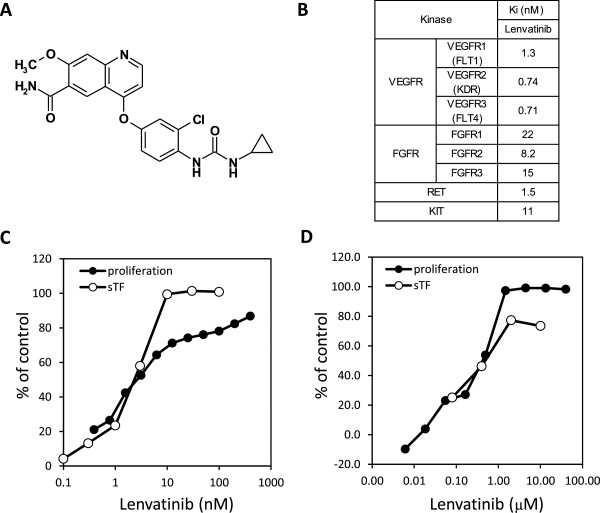
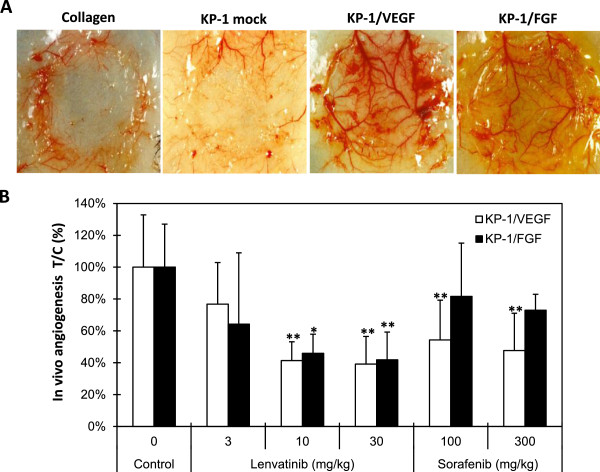
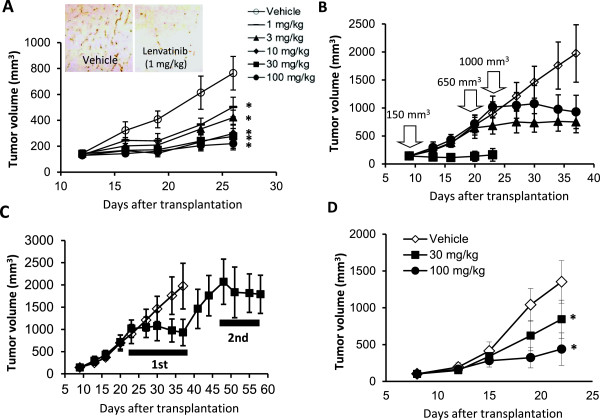
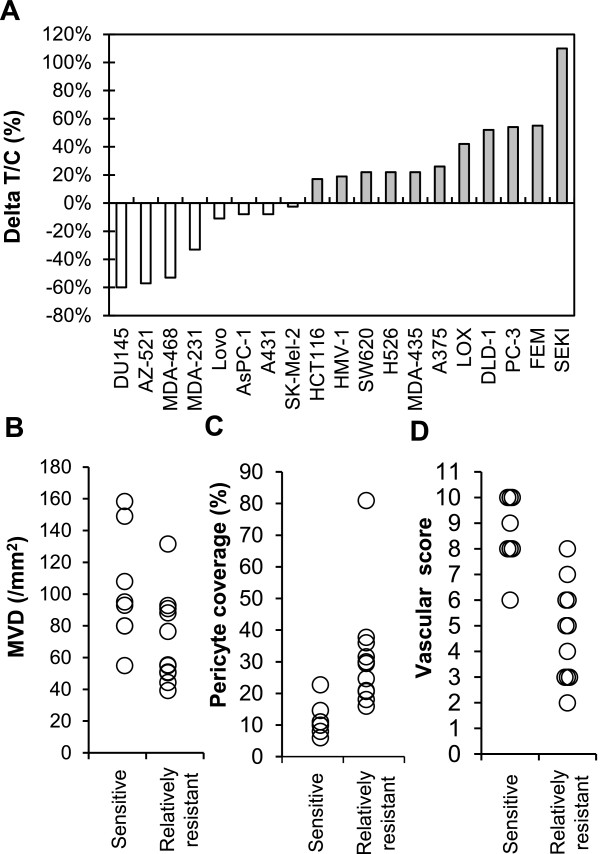
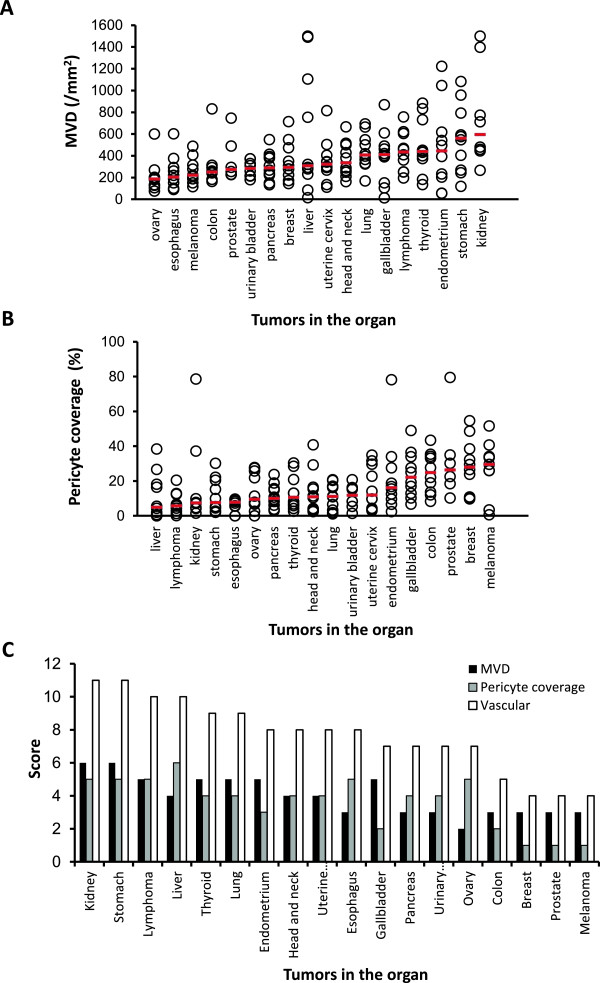
BACKGROUND: Lenvatinib is an oral inhibitor of multiple receptor tyrosine kinases (RTKs) targeting vascular endothelial growth factor receptor (VEGFR1-3), fibroblast growth factor receptor (FGFR1-4), platelet growth factor receptor α (PDGFR α), RET and KIT. Antiangiogenesis activity of lenvatinib in VEGF- and FGF-driven angiogenesis models in both in vitro and in vivo was determined. Roles of tumor vasculature (microvessel density (MVD) and pericyte coverage) as biomarkers for lenvatinib were also examined in this study. METHOD: We evaluated antiangiogenesis activity of lenvatinib against VEGF- and FGF-driven proliferation and tube formation of HUVECs in vitro. Effects of lenvatinib on in vivo angiogenesis, which was enhanced by overexpressed VEGF or FGF in human pancreatic cancer KP-1 cells, were examined in the mouse dorsal air sac assay. We determined antitumor activity of lenvatinib in a broad panel of human tumor xenograft models to test if vascular score, which consisted of high MVD and low pericyte coverage, was associated with sensitivity to lenvatinib treatment. Vascular score was also analyzed using human tumor specimens with 18 different types of human primary tumors. RESULT: Lenvatinib inhibited VEGF- and FGF-driven proliferation and tube formation of HUVECs in vitro. In vivo angiogenesis induced by overexpressed VEGF (KP-1/VEGF transfectants) or FGF (KP-1/FGF transfectants) was significantly suppressed with oral treatments of lenvatinib. Lenvatinib showed significant antitumor activity in KP-1/VEGF and five 5 of 7 different types of human tumor xenograft models at between 1 to 100 mg/kg. We divided 19 human tumor xenograft models into lenvatinib-sensitive (tumor-shrinkage) and relatively resistant (slow-growth) subgroups based on sensitivity to lenvatinib treatments at 100 mg/kg. IHC analysis showed that vascular score was significantly higher in sensitive subgroup than relatively resistant subgroup (p < 0.0004). Among 18 types of human primary tumors, kidney cancer had the highest MVD, while liver cancer had the lowest pericyte coverage, and cancers in Kidney and Stomach had highest vascular score. CONCLUSION: These results indicated that Lenvatinib inhibited VEGF- and FGF-driven angiogenesis and showed a broad spectrum of antitumor activity with a wide therapeutic window. MVD and pericyte-coverage of tumor vasculature might be biomarkers and suggest cases that would respond for lenvatinib therapy.
Overview
The claims and statistics of this paper haven’t been checked yet.
Free: it reads the open-access text and checks the first 5 claims that cite a source we can check. Create a free account to check every claim.
Integrity signals
Registry
Cites
Statistics
Figures
Verification
Claims the paper makes
The claims and statistics of this paper haven’t been checked yet.
Free: it reads the open-access text and checks the first 5 claims that cite a source we can check. Create a free account to check every claim.
Self-check
Percentages, sums and reported differences re-computed from the paper’s own numbers.
The self-check needs the paper’s full text.
Citations
Cites
Sorafenib in advanced hepatocellular carcinoma
Llovet, J. M., Ricci, S., Mazzaferro, V., Hilgard, P., Gane, E., Blanc, J.-F., de Oliveira, A. C., Santoro, A., Raoul, J.-L., Forner, A., et al. (2008) · New England Journal of Medicine · doi:10.1056/nejmoa0708857 · Cited by 13,097
Bevacizumab plus Irinotecan, Fluorouracil, and Leucovorin for Metastatic Colorectal Cancer
Hurwitz, H., Fehrenbacher, L., Novotny, W., Cartwright, T., Hainsworth, J., Heim, W., Berlin, J., Baron, A., Griffing, S., Holmgren, E., et al. (2004) · New England Journal of Medicine · doi:10.1056/nejmoa032691 · Cited by 10,968 · cited 1×
“Bevacizumab (a monoclonal antibody against VEGFA) was the first angiogenesis inhibitor, and was approved for the treatment of patients with metastatic colon cancer based on its survival benefit [3].”
Sunitinib versus Interferon Alfa in Metastatic Renal-Cell Carcinoma
Motzer, R. J., Hutson, T. E., Tomczak, P., Michaelson, M. D., Bukowski, R. M., Rixe, O., Oudard, S., Negrier, S., Szczylik, C., Kim, S. T., et al. (2007) · New England Journal of Medicine · doi:10.1056/nejmoa065044 · Cited by 5,775 · cited 1×
“Several small-molecule inhibitors of VEGFR2 kinase have been approved for treatments of multiple cancer types, such as sunitinib (RCC, gastrointestinal stromal tumor (GIST)) [8,9], sorafenib (RCC, HCC, differentiated thyroid cancer (DTC)) [10-12], pazopanib (RCC, soft-tissue sarcoma (STS)) [13,14], axitinib (RCC) [15]…”
Sorafenib in Advanced Hepatocellular Carcinoma
정, 재. (2008) · Cited by 5,586
Molecular mechanisms and clinical applications of angiogenesis
Carmeliet, P., & Jain, R. K. (2011) · Nature · doi:10.1038/nature10144 · Cited by 5,467 · cited 1×
“The development of novel inhibitors of multi-targeted RTKs in addition to VEGFR2 is still required to improve cancer therapy in the clinic [22], since one of the resistance mechanisms involved is the up-regulation of alternative pro-angiogenic signaling pathways that include FGF/FGFR, angiopoietin/TIE2 and ephrin/EPH…”
Sorafenib in Advanced Clear-Cell Renal-Cell Carcinoma
Escudier, B., Eisen, T., Stadler, W. M., Szczylik, C., Oudard, S., Siebels, M., Negrier, S., Chevreau, C., Solska, E., Desai, A. A., et al. (2007) · New England Journal of Medicine · doi:10.1056/nejmoa060655 · Cited by 4,802
Modes of resistance to anti-angiogenic therapy
Bergers, G., & Hanahan, D. (2008) · Nature Reviews Cancer · doi:10.1038/nrc2442 · Cited by 2,953 · cited 3×
“There are accumulating evidences that tumor vasculature evaluated by MVD and % of pericyte coverage has an impact on disease prognosis and/or acquired resistance to antiangiogenesis therapy in cancer patients [4,23].”
Grothey, A., Cutsem, E. V., Sobrero, A., Siena, S., Falcone, A., Ychou, M., Humblet, Y., Bouché, O., Mineur, L., Barone, C., et al. (2013) · The Lancet · doi:10.1016/s0140-6736(12)61900-x · Cited by 2,895 · cited 1×
“…(RCC, gastrointestinal stromal tumor (GIST)) [8,9], sorafenib (RCC, HCC, differentiated thyroid cancer (DTC)) [10-12], pazopanib (RCC, soft-tissue sarcoma (STS)) [13,14], axi-tinib (RCC) [15], vandetanib (medullary thyroid cancer (MTC)) [16] and regorafnib (colorectal cancer (CRC), GIST) [17,18].”
Sternberg, C. N., Davis, I. D., Mardiak, J., Szczylik, C., Lee, E., Wagstaff, J., Barrios, C. H., Salman, P., Gladkov, O. A., Kavina, A., et al. (2010) · Journal of Clinical Oncology · doi:10.1200/jco.2009.23.9764 · Cited by 2,471 · cited 1×
“…(RCC, gastrointestinal stromal tumor (GIST)) [8,9], sorafenib (RCC, HCC, differentiated thyroid cancer (DTC)) [10-12], pazopanib (RCC, soft-tissue sarcoma (STS)) [13,14], axi-tinib (RCC) [15], vandetanib (medullary thyroid cancer (MTC)) [16] and regorafnib (colorectal cancer (CRC), GIST) [17,18].”
van der Graaf, W. T., Blay, J.-Y., Chawla, S. P., Kim, D.-W., Bui-Nguyen, B., Casali, P. G., Schöffski, P., Aglietta, M., Staddon, A. P., Beppu, Y., et al. (2012) · The Lancet · doi:10.1016/s0140-6736(12)60651-5 · Cited by 2,102
Cited by
Items 401–500 of 522
Luo, W., Tan, J., Chen, X., Liu, C., Zhang, W., Saw, P. E., & Luo, B. (2024) · ACS Applied Nano Materials · doi:10.1021/acsanm.3c05540 · Cited by 2
Li, Y., Liu, X., Liu, J., Yang, L., Wei, S., Li, J.-J., Gan, H., Ma, T., & Yi, P. (2024) · Oncology Letters · doi:10.3892/ol.2024.14480 · Cited by 2
Promsorn, P., Yamaguchi, T., Kosaka, H., Aoi, K., Yoshida, K., Matsushima, H., Matsui, K., Shimoda, S., Kaibori, M., & Naganuma, M. (2024) · Molecular and Clinical Oncology · doi:10.3892/mco.2024.2761 · Cited by 2
“TACE is known to induce the expression of angiogenic factors involved in tumor metastasis by creating an ischemic environment in the tumor (17‑19, 32, 33).”
BackgroundThe potential of lenvatinib in breast cancer therapy
Shang, Y., Liu, Y., & Wang, W. (2024) · Medical Oncology · doi:10.1007/s12032-024-02477-4 · Cited by 2
“Because of its strong inhibition of VEGFR, it is commonly used as an anti-angiogenic agent to achieve anti-tumor effects [13, 15].”
Transplant oncology and immunotherapy: Immunotherapy and liver transplants
Abdelrahim, M., & Esmail, A. (2024) · Elsevier eBooks · doi:10.1016/b978-0-443-21901-6.00008-2 · Cited by 4
Fujita, K., Suzuki, A., Nagahama, M., Sugino, K., Masaki, C., Ito, K., & Miura, M. (2024) · Drugs - Real World Outcomes · doi:10.1007/s40801-024-00467-6 · Cited by 2
Data mining reveals novel gene drivers of lenvatinib resistance in hepatocellular carcinoma
Disoma, C., Tiribelli, C., & Sukowati, C. H. C. (2025) · Annals of Hepatology · doi:10.1016/j.aohep.2025.101932 · Cited by 2
Hunt, A., & Newbold, K. L. (2019) · Springer eBooks · doi:10.1007/978-3-319-72102-6_42 · Cited by 2
Cabanillas, M. E., & Takahashi, S. (2019) · Head and neck tumors (HNT) · doi:10.17650/2222-1468-2019-9-4-49-61 · Cited by 2
Indonesian consensus on systemic therapies for hepatocellular carcinoma
Hasan, I., Loho, I. M., Setiawan, P. B., Djumhana, A., Purnomo, H. D., Siregar, L., Gani, R. A., Sulaiman, A. S., & Lesmana, C. R. A. (2022) · Asia-Pacific Journal of Clinical Oncology · doi:10.1111/ajco.13768 · Cited by 2
The Role of Fibroblast Growth Factor Receptors Inhibitors in Bladder Cancer
Seo, H. K., Jung, E. H., Yang, S., & Lee, H. W. (2024) · Journal of Urologic Oncology · doi:10.22465/juo.244800460023 · Cited by 2
“The dual inhibitory activity of lenvatinib against both VEGF and FGF induces broadspectrum antitumor activity due to its antiangiogenic effects [42,44].”
BackgroundYe, T., Yang, F.-F., Zhu, Y., Li, Y., Lei, Q., Song, X., Xia, Y., Xiong, Y., Zhang, L., Wang, N., et al. (2019) · Cell Death and Disease · doi:10.1038/s41419-019-1955-9 · Cited by 2
Lee, C., DiNatale, R. G., Chowell, D., Krishna, C., Makarov, V., Valero, C., Vuong, L. H., Lee, M., Weiss, K. L., Hoen, D., et al. (2023) · doi:10.1158/1541-7786.c.6545243 · Cited by 2
Self-citationHepatocellular Carcinoma (HCC) in the UAE
Srayaldeen, S. W., & Elkhalifa, M. A. M. (2024) · Springer eBooks · doi:10.1007/978-981-99-6794-0_30 · Cited by 1
Positive results of treatment of adenocystic carcinoma of the parotid salivary gland with lenvatinib
Александрович, Ф. И., Сергеевич, Ш. М., Гайсина, Э. А., & Адиповна, Б. Л. (2024) · Head and neck tumors (HNT) · doi:10.17650/2222-1468-2024-14-3-10-13 · Cited by 1
Liu, X., Lu, J., Dong, X., Zhang, Y., Jiang, G., Cao, Y., & Hong, D. (2025) · Annals of Medicine · doi:10.1080/07853890.2025.2512436 · Cited by 1
“In addition, lenvatinib has shown potential in inhibiting the growth of pancreatic cancer graft tumors, implying a link between microvessel density and the effectiveness of anti-angiogenic drugs [31].”
Xie, J.-P., Tang, Y., Fan, Y.-W., Huang, Y., Deng, M., Zhang, T., Li, Y., Deng, G., & Tang, D. (2025) · World Journal of Gastrointestinal Oncology · doi:10.4251/wjgo.v17.i7.108650 · Cited by 1
Phthalates promote lenvatinib resistance in hepatocellular carcinoma through the HPX-MAPK pathway
Han, J., Chen, W., Song, Y., Hu, H.-T., Chen, M., Zhao, D., Wu, Q., & Xu, L. (2025) · Ecotoxicology and Environmental Safety · doi:10.1016/j.ecoenv.2025.118932 · Cited by 1
Wu, F., & Zeng, H. (2025) · Cancer Treatment and Research Communications · doi:10.1016/j.ctarc.2025.101018 · Cited by 1
Liu, X., Li, F., Wang, S., Zhang, M., Hu, X., Liu, Y., Hou, R., & Cai, K. (2025) · Veterinary and Animal Science · doi:10.1016/j.vas.2025.100551 · Cited by 1
“Consequently, targeting VEGFA has become a well-established therapeutic strategy in oncology, the initial clinical application dates back to 2004, when anti-angiogenic drugs were introduced for managing advanced colorectal cancer (Yamamoto et al., 2014).”
Muraoka, N., Oyakawa, T., Fujita, A., Iida, K., Hamauchi, S., Kawakami, T., & Yokota, T. (2025) · Cardiology · doi:10.1159/000549932 · Cited by 1
Wang, P., Liu, S., & Lu, X. (2026) · Biomarkers · doi:10.1080/1354750x.2026.2628045 · Cited by 1
“…Kit, disrupting tumor angiogenesis and oncogenic signaling pathways critical for hcc proliferation (Matsui et al. 2008a, 2008b; Okamoto et al. 2013; Yamamoto et al. 2014). clinical adoption has accelerated due to its efficacy in unresectable hcc patients with preserved liver function (child-Pugh…”
Mehmood, S., Abbas, S. J., Liao, P.-Y., Su, Y., Chang, W.-C., Bibi, F., Hung, Y.-C., Chen, L., Chung, Y.-M., & Ma, W. (2026) · Journal of physiological investigation. · doi:10.4103/ejpi.ejpi-d-25-00056 · Cited by 1
Fu, J.-J., Zhang, J., Liu, D.-E., Lin, Z., Liu, H.-L., Hu, J.-L., Zhang, T., Tang, J. P., & Xue, J. (2026) · Current Medical Science · doi:10.1007/s11596-026-00180-1 · Cited by 1
Wang, Z., Wei, Y., Xing, Z., Jiang, L., & Wang, L. (2026) · ChemMedChem · doi:10.1002/cmdc.70283 · Cited by 1
“To date, several small-molecule VEGFR-2 tyrosine kinase inhibitors have been approved for clinical use, including sorafenib [7], sunitinib [8], pazopanib [9], vandetanib [10], axitinib [11], nin-tedanib [12], regorafenib [13], cabozantinib [14], and lenvatinib [15], as shown in Figure 1.”
Xie, Y., Zhang, X., Yin, Q., Chen, R., Chen, F., Huang, Y., & Shentu, X. (2026) · International Journal of Pharmaceutics · doi:10.1016/j.ijpharm.2026.127029 · Cited by 1
Shimo, T., Yoshidome, K., Anno, K., & Tori, M. (2018) · Nihon Rinsho Geka Gakkai Zasshi (Journal of Japan Surgical Association) · doi:10.3919/jjsa.79.283 · Cited by 1
Nawa, T., Katayama, K., Kiyota, R., Imai, T., Abe, Y., Hasegawa, N., Takada, R., Fukutake, N., Ikezawa, K., Sakakibara, M., et al. (2019) · Clinical Journal of Gastroenterology · doi:10.1007/s12328-019-01021-6 · Cited by 1
Kumagai, M., Nagahama, M., Akamine, Y., Ozeki, T., Suzuki, A., Sugino, K., Ito, K., & Miura, M. (2022) · Cancer Diagnosis & Prognosis · doi:10.21873/cdp.10114 · Cited by 1
Role of transcription factors in hepatocellular carcinoma
Shinde, S. D., Kulkarni, N., Sahu, B., Kalia, K., & Behera, S. K. (2022) · Elsevier eBooks · doi:10.1016/b978-0-323-98807-0.00007-7 · Cited by 1
Okusaka, T., Kudo, M., Ikeda, K., Ikeda, M., Okita, K., Sugawara, M., Tamai, T., Ren, M., Saito, K., & Kumada, H. (2022) · Hepatology Research · doi:10.1111/hepr.13800 · Cited by 1
[New progress in the first-line treatment of advanced hepatocellular carcinoma].
Zhang, C. H., Yao, D. Y., Liu, S., Yang, L. L., & Jin, Z. J. (2024) · PubMed Central · doi:10.3760/cma.j.cn501113-20231114-00193 · Cited by 1
Shao, J., Liu, X., Zhang, G., Xiang, A., & Xie, X. (2024) · Clinical Pharmacology in Drug Development · doi:10.1002/cpdd.1470 · Cited by 1
Han, R., Gan, L., Sun, L., Lang, M., Tian, X., Zhu, K., Chen, L., Li, G., & Song, T. (2024) · Journal of Hepatocellular Carcinoma · doi:10.2147/jhc.s482803 · Cited by 1
“3,19,20 In an open Phase 3 multicenter clinical trial, lenvatinib demonstrated non-inferiority to sorafenib in terms of OS in untreated advanced HCC. Based on mRECIST criteria, lenvatinib significantly enhances objective response rate (ORR), median time to progression and median progression-free…”
BackgroundKato, D., Suzuki, T., Matsuura, K., Okayama, K., Okumura, F., Nagura, Y., Sobue, S., Hayashi, K., Kusakabe, A., Hasegawa, I., et al. (2024) · Oncology · doi:10.1159/000541455 · Cited by 2
“LEN is a tyrosine kinase inhibitor (TKI) and selectively targets multiple receptors involved in cell growth and angiogenesis, such as vascular endothelial growth factor receptors 1 – 3 and fi broblast growth factor receptors 1 – 4 [5, 6].”
Kishimoto, K., Izumi, N., Kinoshita, H., Tanimura, T., Suzuki, S., Hara, K., Inoue, H., Tsukioka, T., Shiohara, M., Odagiri, N., et al. (2025) · Respiratory Medicine Case Reports · doi:10.1016/j.rmcr.2025.102233 · Cited by 1
“These receptors are important for tumor angiogenesis, and lenvatinib inhibits tumor angiogenesis by inhibiting function of these receptors [3,4].”
Lenvatinib Is Effective in Advanced Medullary Thyroid Cancer
Parangi, S. (2015) · Clinical Thyroidology · doi:10.1089/ct.2015;27.284-286
Molecular Therapeutics: Pancreatic Cancer
Fogelman, D. R., Javle, M. M., & Abbruzzese, J. L. (2015) · Wiley eBooks · doi:10.1002/9781118468678.ch26
Prolonged duration of response in lenvatinib responders with thyroid cancer (Russian translation)
Gianoukakis, A. G., Dutcus, C. E., Batty, N., Guo, M., & Baig, M. (2018) · Head and neck tumors (HNT) · doi:10.17650/2222-1468-2018-8-3-53-60 · Cited by 1
Tahara, M., Brose, M. S., Wirth, L. J., Suzuki, T., Miyagishi, H., Fujino, K., Dutcus, C. E., & Gianoukakis, A. G. (2019) · Head and neck tumors (HNT) · doi:10.17650/2222-1468-2019-9-1-38-50
Tomonari, T., Sato, Y., Tanaka, H., Tanaka, T., Fujino, Y., Mitsui, Y., Hirao, A., Taniguchi, T., Sogabe, M., Okamoto, K., et al. (2020) · bioRxiv (Cold Spring Harbor Laboratory) · doi:10.1101/2020.01.03.893800
Osteonecrosis of the Jaw during Lenvatinib Therapy: A Case Report Based on Surgical Management
Udagawa, G., Okamoto, T., Kaibuchi, N., Sangu, N., Kagawa, C., & Ando, T. (2019) · Institutional Repositories DataBase (IRDB) · doi:10.24488/twmuj.2019002
Hamieh, L., Beck, R. L., Le, V. H., & Hsieh, J. J. (2020) · Cancer Urology · doi:10.17650/1726-9776-2020-16-3-53-61
Saito, N., Hatanaka, T., Nakano, Y., Yoshida, S., Hachisu, Y., Tanaka, Y., Yoshinaga, T., Kubota, J., Tokue, H., Shibuya, K., et al. (2020) · Kanzo · doi:10.2957/kanzo.61.588
Sui, W. F., li, J. Y., & Fu, J. (2020) · Research Square · doi:10.21203/rs.3.rs-68877/v1
Sugimoto, R., Satoh, T., Ueda, A., Senju, T., Tanaka, Y., Yamashita, S., Koyanagi, T., Kurashige, T., Higuchi, N., Nakamura, T., et al. (2021) · Research Square · doi:10.21203/rs.3.rs-590457/v1
Kosaka, Y., Kawaoka, T., Ogawa, Y., Amioka, K., Naruto, K., Yoshikawa, Y., Ando, Y., Suehiro, Y., Yamaoka, K., Fujii, Y., et al. (2021) · Clinical Journal of Gastroenterology · doi:10.1007/s12328-021-01481-9
Fujii, H., Iwasaku, M., Kuno, H., Nitta, N., Ueda, H., Yoshikawa, T., Usui, S., Hirota, T., Hayashi, N., Yoshimura, A., et al. (2022) · Current Problems in Cancer Case Reports · doi:10.1016/j.cpccr.2022.100164
Kumagai, M., Nagahama, M., Akamine, Y., Ozeki, T., Suzuki, A., Sugino, K., Ito, K., & Miura, M. (2021) · Research Square · doi:10.21203/rs.3.rs-828572/v2
Systemtherapie des anaplastischen Schilddrüsenkarzinoms
Dierks, C. (2022) · Die Onkologie · doi:10.1007/s00761-022-01198-5
Combination therapy regimens in the treatment of metastatic renal cell carcinoma: A review
Zukov, R. A., Chernyaev, D. V., & Zulkaidarova, A. R. (2022) · Journal of Modern Oncology · doi:10.26442/18151434.2022.2.201720
Advances in Targeted Therapy for Patients with Neuroendocrine Tumours
Katiyar, V., & Das, S. (2022) · touchREVIEWS in Oncology & Haematology · doi:10.17925/ohr.2022.18.1.66
Neuerungen in der Systemtherapie des Anaplastischen Schilddrüsenkarzinoms
Dierks, C., Vordermark, D., & Lorenz, K. (2022) · TumorDiagnostik & Therapie · doi:10.1055/a-1744-2100
Research Progress of Systematic Therapy for Advanced Primary Liver Cancer
叶, 萌. (2022) · Advances in Clinical Medicine · doi:10.12677/acm.2022.12101391
Potential of combination therapy with lenvatinib and radiation for thyroid cancer
Suzuki, K., Iwai, H., Utsunomiya, K., Kono, Y., Kobayashi, Y., Yun, Y., Mitani, A., Fukui, K., Sakai, H., Tanigawa, N., et al. (2022) · The Journal of Kansai Medical University · doi:10.5361/jkmu.73.1
Jung, A. R., Kang, S. S., Jeon, S. Y., & Lee, Y. S. (2023) · Korean Journal of Otorhinolaryngology - Head and Neck Surgery · doi:10.3342/kjorl-hns.2023.00178
NEW THYROID CANCER TREATMENT STRATEGIES
Mamashov, N. M. (2023) · Научное обозрение Медицинские науки (Scientific Review Medical Sciences) · doi:10.17513/srms.1374
Rearranged during transfection (RET) inhibitors
Shrivastava, V., Gurjar, V. K., Jain, S., Vaidya, A., & Sharma, A. (2024) · Elsevier eBooks · doi:10.1016/b978-0-323-96121-9.00013-9
Радимович, Р. Р., Султанбаев, А. В., Меньшиков, К. В., Насретдинов, А. Ф., Мусин, Ш. И., Lipatov, O. N., & Suravatkin, V. A. (2024) · Medical alphabet · doi:10.33667/2078-5631-2024-7-18-25
Maltseva, A. A., Kalinchuk, A. V., Krakhmal, N. V., Chernorubashkina, N. M., Martynova, E. S., Zukov, R. A., Gofman, A. A., Виллерт, А. Б., Чуруксаева, О. Н., Коломиец, Л. А., et al. (2024) · Tumors of female reproductive system · doi:10.17650/1994-4098-2024-20-1-114-123
Fu, J., 章, 金., Liu, D., Lin, Z., Liu, H., Hu, J., Zhang, T., Tang, J. P., & Xue, J. (2024) · Research Square · doi:10.21203/rs.3.rs-4482445/v1
Indra, R., Jelínková, S., Kollárová, K., Zahumenska, P., Dvořák, J., Dušková, Š., & Dračínská, H. (2024) · Acta Pharmaceutica · doi:10.2478/acph-2024-0027
Zhang, P., Wang, X., Li, R., Li, X., Cheng, K., & Cao, D. (2024) · Frontiers in Pharmacology · doi:10.3389/fphar.2024.1447582
Fujita, K., Nagahama, M., Suzuki, A., Masaki, C., Sugino, K., Ito, K., & Miura, M. (2024) · Cancer Chemotherapy and Pharmacology · doi:10.1007/s00280-024-04729-6
“…an oral multikinase inhibitor, exerts its effects through a number of targets, including vascular endothelial growth factor (VEGF) receptors 1–3, fibroblast growth factor receptors 1–4, platelet-derived growth factor receptor α, RET proto-oncogene, and stem cell growth factor receptor [1–4].”
Fournier's Gangrene During Lenvatinib Treatment for Hepatocarcinoma
Rota, S., de Scordilli, M., Vida, R., Guardascione, M., Nardo, P. D., Fumagalli, A., Zdjelar, A., Bottos, S., Cabas, P., Maffeis, F., et al. (2025) · Cureus · doi:10.7759/cureus.82881
“These include the vascular endothelial growth factor (VEGF) receptors 1-3, the fibroblast growth factor receptors (FGFR) 1-4, the platelet-derived growth factor receptor (PDGFR) alpha, KIT, and RET [2].”
VEGF/VEGFR: A Novel Therapy Target in Cancer
Wanode, D. M., Nandurkar, D., Palekar, R., Bhendarkar, K. P., & Khedekar, P. B. (2025) · Current Cancer Therapy Reviews · doi:10.2174/0115733947341681241209082508
Alkhouri, N., & Arora, S. P. (2025) · Springer eBooks · doi:10.1007/978-3-031-90225-3_23
Patel, R. P., & Varghese, J. F. (2025) · Cancer drug discovery and develogment/Cancer drug discovery and development · doi:10.1007/978-3-031-93894-8_9
Lenvatinib in advanced hepatocellular carcinoma: current position and future perspectives
Cano, K. S. V., Castet, F., Genovesi, V., Brage, E. T., & Macarulla, T. M. (2025) · Revisiones en cáncer · doi:10.20960/revcancer.00107
NRF2 Dysregulation and Its Implications in Renal Cell Carcinoma
Jang, B., & Kwak, M. (2025) · Drug Targets and Therapeutics · doi:10.58502/dtt.25.0013
Dumoulin, D. W., & Aerts, J. G. J. V. (2025) · Journal of Thoracic Oncology · doi:10.1016/j.jtho.2025.07.012
2-Chloro-4-hydroxyanilinium chloride
Bai, S. V., Mensah, P. F., Li, G., Fronczek, F. R., & Uppu, R. M. (2025) · IUCrData · doi:10.1107/s2414314625008934
Choi, N. R., Kim, J. Y., Hong, J. H., Hur, M. H., Cho, H., Park, M. K., Kim, J., Lee, Y. B., Cho, E. J., Lee, J.-H., et al. (2022) · Figshare · doi:10.6084/m9.figshare.19424960
Chen, R., Li, Q., Xu, S., Ye, C., Tian, T., Jiang, Q., Shan, J., & Ruan, J. (2022) · Figshare · doi:10.6084/m9.figshare.19164478
Bando, N., Ogino, H., Murakami, K., Wadatsu, M., Tsukazaki, Y., Yabuki, Y., Kajimoto, T., Matsumoto, R., Harada, S., Morita, Y., et al. (2025) · International Cancer Conference Journal · doi:10.1007/s13691-025-00836-0
A Case Report of Early-Onset Multiple Arterial Dissections after Initiation of Lenvatinib
Okada, J., Kameyama, N., MASUDA, Y., Yahagi, M., Tsutsui, M., Akiyama, Y., Katai, H., & Nakanishi, K. (2025) · 日本消化器外科学会雑誌 · doi:10.5833/jjgs.2024.0115
Pan, T., Zhao, C., Mu, L., Liu, H., Tong, Y., Xiang, Z., Yan, H., Liu, M., & Huang, M. (2025) · Quantitative Imaging in Medicine and Surgery · doi:10.21037/qims-2025-615
Salivary gland acinar cell carcinoma: Long-term treatment experience
Popov, A. Y., Дмитриевич, С. А., Baitman, T. P., Makarov, V. A., Mudunov, A. M., Кондратьев, Е. В., Kalinin, D. V., & Грицкевич, А. А. (2026) · Meditsinskiy sovet = Medical Council · doi:10.21518/ms2025-520
Shiraishi, C., Kato, H., Asai, Y., & Iwamoto, T. (2026) · Cancer Reports · doi:10.1002/cnr2.70461
Lenvatinib is More Effective & Safer Than Sorafenib in the Treatment of Hepatocellular Carcinoma
Arunadevi (2026) · Journal of chemical health risks · doi:10.52783/jchr.v16.i1.11795
Kong, W., Xu, Y., Liu, G., Lv, W., Wang, Z., Cao, D., Jiao, F., Hu, J., Hu, J., Huang, J., et al. (2026) · Nature Communications · doi:10.1038/s41467-026-77615-9
Wang, P., Li, L., Liu, Y., Shi, Y., Zhang, X., & Wu, J. (2026) · Frontiers in Oncology · doi:10.3389/fonc.2026.1720670
Ali, A. M., Bhongade, B. A., Tawfik, S. S., Massoud, M. A. M., & Mostafa, A. S. (2026) · Archiv der Pharmazie · doi:10.1002/ardp.70217
Feng, S., Sun, H., Pan, W., Zhang, A., Piao, M., Li, C., Li, J., Zhang, L., Yu, G., Yang, X., et al. (2026) · Research Square · doi:10.21203/rs.3.rs-8949132/v1
Insights and Queries on TSB / TTP Regimens Combined With TACE in uHCC Treatment
Wang, Y., & Chen, M. (2026) · Liver International · doi:10.1111/liv.70599
“For instance, lenvatinib exerts broader anti-angiogenic and multi-target inhibitory effects compared to sorafenib [2], while different PD-1 inhibitors vary in binding affinity and immune modulation capacity.”
Imamura, H., Chiang, S., Kuronishi, M., Funahashi, Y., Nishino, T., & Yachie‐Kinoshita, A. (2026) · Cancers · doi:10.3390/cancers18071067
“Consequently, previous studies have examined the association of lenvatinib with microvascular density https://doi.org/10.3390/cancers18071067 and pericyte coverage of tumor vasculature, which are factors correlated with its antitumor activity [3].”
InfluentialSelf-citationZhang, L., Zhang, Q., Zhang, X., Mao, A., Liu, Y., & Luo, H. (2026) · MedComm – Future Medicine · doi:10.1002/mef2.70051
Jiang, H.-H., Feng, G.-Y., Shi, Y., Li, X., Zhang, Y.-Z., Cheng, Y., & Shi, Z. (2026) · BMC Cancer · doi:10.1186/s12885-026-15621-2
“However, ~ 50% of patients show minimal clinical response [34], underscoring tumor-intrinsic molecular heterogeneity as a key resistance driver.”
Matsuo, H., Tanaka, H., & ISHII, T. (2026) · Supportive Care in Cancer · doi:10.1007/s00520-026-10605-1
CDK4 inhibition by luteolin enhances lenvatinib sensitivity in HCC via Wnt/β-catenin modulation
Yuan, B., Wang, R., Li, R., Yang, S., Zhan, D., & Tan, J. (2026) · Cancer Cell International · doi:10.1186/s12935-026-04274-7
“It targets multiple receptor tyrosine kinases involved in tumor angiogenesis and oncogenesis, including vascular endothelial growth factor receptors (VEGFRs), fibroblast growth factor receptors (FGFRs), platelet-derived growth factor receptor α (PDGFRα), KIT, and RET [6].”
Zhu, Y., Huang, Y., Song, M., Yang, J., Zhao, J., Tang, Y., Ouyang, D., Yang, C., Chen, Y., Wang, Q., et al. (2026) · Cell Death and Disease · doi:10.1038/s41419-026-08735-9 · Cited by 1
“Our study identi fi es ANXA3 as a biomarker predictive of poor prognosis and lenvatinib resistance in HCC. Collectively, the combined use of Alpelisib and lenvatinib represents a promising therapeutic strategy for lenvatinib-resistant HCC.”
Zhao, X., Yan, S., Meng, J., & Wang, L. (2026) · Hepatology Research · doi:10.1111/hepr.70164
Feng, S., Sun, H., Pan, W., Zhang, A., Piao, M., Li, C., Li, J., Zhang, L., Yu, G., Yang, X., et al. (2026) · Research Square · doi:10.21203/rs.3.rs-8949132/v2
Augustin, M., Laguerre, B., Baldini, C., Zedan, A. H., González‐Billalabeitia, E., Fong, P. C. C., Зуков, Р., Hammerer, P., Prentice, M., Shore, N. D., et al. (2026) · European Urology Oncology · doi:10.1016/j.euo.2026.03.026
Metadata
- Authors
- Yamamoto, Y., Matsui, J., Matsushima, T., Obaishi, H., Miyazaki, K., Nakamura, K., Tohyama, O., Semba, T., Yamaguchi, A., Hoshi, S., Mimura, F., Haneda, T., Fukuda, Y., Kamata, J.-I., Takahashi, K., Matsukura, M., Wakabayashi, T., Asada, M., Nomoto, K.-I., Watanabe, T., Dezso, Z., Yoshimatsu, K., Funahashi, Y., & Tsuruoka, A.
- Affiliations
- Eisai (Japan) (JP)
- Eisai (United States) (US)
- Corresponding author
- Funahashi, Yasuhiro
- ORCID
- Venue
- Vascular Cell
- Publisher
- Publiverse Online SRL
- Published
- 2014
- Volume
- 6
- Issue
- 1
- Pages
- 18
- ISSN
- 2040-2384 (ISSN-L)
- 2045-824X
- PMC
- PMC4156793
- OpenAlex
- W2151600653
- Cited by
- 507
- References
- 45
- Citations by year
- 2026: 41 · 2025: 38 · 2024: 72 · 2023: 54 · 2022: 63 · 2021: 70 · 2020: 50 · 2019: 50 · 2018: 28 · 2017: 17 · 2016: 13 · 2015: 10 · 2014: 1
- FWCI
- 5.61
- Type
- journal article
- Language
- en
- Open access
- diamond
- doi.org
- Licence
- cc-by
- Locations
- Vascular Cell (publishedVersion, cc-by)
- Europe PMC (PubMed Central) (publishedVersion, cc-by)
- PubMed Central (publishedVersion, cc-by)
- PubMed (publishedVersion)
- Topics
- Life Sciences › Biochemistry, Genetics and Molecular Biology › Molecular Biology › Angiogenesis and VEGF in Cancer
- Health Sciences › Medicine › Oncology › Lymphatic System and Diseases
- Life Sciences › Biochemistry, Genetics and Molecular Biology › Molecular Biology › Fibroblast Growth Factor Research
- Keywords
- lenvatinib, anti-angiogenic therapy, VEGFR inhibition, FGFR inhibition, microvessel density, pericyte coverage, tumor xenografts, pancreatic cancer, kidney cancer, liver cancer, receptor tyrosine kinase inhibitors
About these checks
Registry, retraction, Cites and statistics results are computed, not judged, with one exception: a printed reference that no index lists is read once by a model before it counts as a citation error. Claims are extracted by a model and kept only when their quote appears verbatim in the text; each cited source is then checked, with a model’s help, for whether it says what the claim relies on. Those verdicts can be wrong — read the claim’s quote and the cited source before relying on one.
Statistics and arithmetic are recomputed, not judged.
Confidence bands are shown only for fields calibrated on our annotated test set. None is calibrated yet, so no band is shown.
What counts as a claim ›How we measure confidence ›How we check this ›
Are you an author, or do you see a problem with this page? Request a review
Data sources
Bibliographic data: Semantic Scholar, OpenAlex, Crossref.
Contains information from the Semantic Scholar Academic Graph Datasets, made available under the ODC Attribution License (ODC-BY 1.0).
Semantic Scholar’s data is described in: Kinney, R., et al. (2023). The Semantic Scholar Open Data Platform. arXiv:2301.10140.
