

Evidence summaries: the evolution of a rapid review approach
Open accessThe DOI matches its Crossref record; 18 of the 19 references it cites were found in a registry or an index; 2 of the 20 sources its claims cite were checked for support.
Abstract
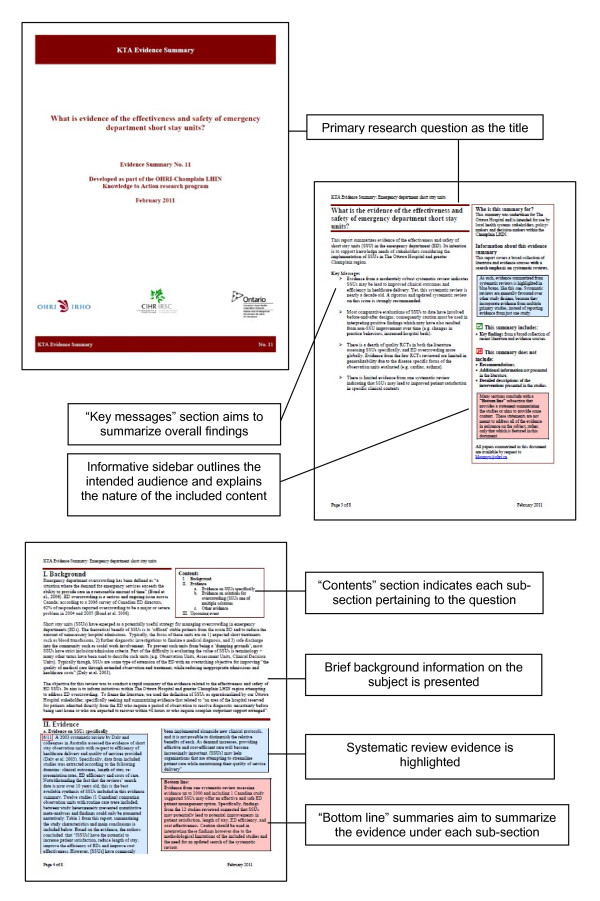
Background: Rapid reviews have emerged as a streamlined approach to synthesizing evidence - typically for informing emergent decisions faced by decision makers in health care settings. Although there is growing use of rapid review 'methods', and proliferation of rapid review products, there is a dearth of published literature on rapid review methodology. This paper outlines our experience with rapidly producing, publishing and disseminating evidence summaries in the context of our Knowledge to Action (KTA) research program. Methods: The KTA research program is a two-year project designed to develop and assess the impact of a regional knowledge infrastructure that supports evidence-informed decision making by regional managers and stakeholders. As part of this program, we have developed evidence summaries - our form of rapid review - which have come to be a flagship component of this project. Our eight-step approach for producing evidence summaries has been developed iteratively, based on evidence (where available), experience and knowledge user feedback. The aim of our evidence summary approach is to deliver quality evidence that is both timely and user-friendly. Results: From November 2009 to March 2011 we have produced 11 evidence summaries on a diverse range of questions identified by our knowledge users. Topic areas have included questions of clinical effectiveness to questions on health systems and/or health services. Knowledge users have reported evidence summaries to be of high value in informing their decisions and initiatives. We continue to experiment with incorporating more of the established methods of systematic reviews, while maintaining our capacity to deliver a final product in a timely manner. Conclusions: The evolution of the KTA rapid review evidence summaries has been a positive one. We have developed an approach that appears to be addressing a need by knowledge users for timely, user-friendly, and trustworthy evidence and have transparently reported these methods here for the wider rapid review and scientific community.
Overview
CoChat Summary
TL;DR
This paper describes the Knowledge to Action (KTA) program’s iterative development of “evidence summaries,” a rapid review approach for producing timely, user-friendly evidence for health care decision makers. From November 2009 to March 2011, the program produced 11 evidence summaries using an eight-step process, while acknowledging inherent trade-offs between rigor and timeliness.
Key findings
- The KTA program produced 11 evidence summaries from November 2009 to March 2011 on diverse questions identified by knowledge users, ranging from clinical effectiveness to health systems and services topics.
- Evidence summaries were produced within a short timeframe of four to five weeks, compared with six months to two years for traditional systematic reviews, and most reports were 10 to 15 pages long, though knowledge users confirmed keeping them under 10 pages is likely important.
- The eight-step approach included needs assessment; question development and refinement; proposal development and approval; systematic literature search; screening and selection; narrative synthesis with evidence-level assignment; report production; and ongoing follow-up and dialogue with knowledge users.
- Knowledge users reported evidence summaries to be of high value in informing decisions and initiatives; the paper cites Watt et al. (2008) as finding that “the essential conclusions of the rapid and full reviews did not differ extensively,” though research comparing rapid and systematic reviews remains limited.
Methods
- Design: an experience-based methodological report describing the iterative development and refinement of KTA evidence summaries within a two-year KTA research program, a collaboration between the Ottawa Hospital Research Institute and the Champlain Local Health Integration Network.
- Data or sample: 11 evidence summaries produced from November 2009 to March 2011, with topics listed in the paper; a case example describes an evidence summary on emergency department short stay units; formal evaluation through key informant interviews was ongoing.
- Main analysis: descriptive account of the eight-step production process, including narrative synthesis of included studies, assignment of evidence levels based on a modified Cochrane Musculoskeletal Group framework, and recent use of AMSTAR to assess included systematic reviews.
Limitations
- The paper states that rapid review products inherently harbor limitations relative to systematic reviews because they are produced within a short timeframe using limited resources, do not employ as much rigor, and may be subject to greater bias and/or error; it also states there is no clear evidence about decision makers’ willingness to compromise methodological rigor for quicker answers.
- The paper states that research comparing rapid with systematic review is limited, and that the purposes and context of rapid review use should be carefully considered when assessing their value.
- Evident from the text: early evidence summaries used a single reviewer for screening, excluded non-English reports and records not available electronically, did not undertake meta-analysis, relied on subjective selection of “high-quality” studies and extraction of relevant material, and in the most recent summary resolved conflicts by passing records to the next screening level rather than consensus.
Model-written summary. Check it against the paper before relying on it.
Integrity signals
Registry
Cites
Statistics
Figures
Verification
Claims the paper makes
2 Valid · 4 Not valid · 14 Not checked · 41 Own results and interpretations
The cited sources support only part of this claim — read each source’s verdict below.
In the paper
“Recent evidence summaries have also employed the 'assessment of multiple systematic reviews' (AMSTAR) tool as a means of assessing the methodological quality of included systematic reviews [13].”
§ Evidence summaries: the evolution of a rapid review approach > Evidence summary methods > Narrative synthesis of included studies (including risk-of-bias assessment)
What the sources say
- Partly supportedcites [13] 13. Shea BJ Grimshaw JM Wells GA Boers M Andersson N Hamel C Development of AMSTAR: a measurement tool to assess the methodological quality of systematic reviews BMC Med Res Methodol 2007 7 10 10.1186/1471-2288-7-10 17302989 PMC1810543 sourceExperimental — accuracy not yet measured
The Background identifies AMSTAR as a tool developed to assess the methodological quality of systematic reviews. The Discussion describes preliminary experience with the tool, but our copy does not establish that recent evidence summaries employed it to assess their included reviews. (LLM, conf=0.82)
plain- Asserted: passes — The authors put it forward as true.
- Checkable: passes — It can be checked against evidence.
- Load-bearing: unclear — It is unclear whether the paper’s conclusions depend on it.
- Based: passes — The paper gives a reason why it holds.
- Partly supported
Every source the paper cites for this claim was checked and supports it.
In the paper
“Parkill and colleagues have shown that, when compared to highly sensitive searches, pragmatically-based searches conducted for the purpose of populating an evidence map can produce a similar amount of relevant records, more quickly and at less cost [18].”
§ Evidence summaries: the evolution of a rapid review approach > Discussion
What the sources say
- Supportedcites [18] 18. Parkill A Clavisi R Pattuwage L Chau M Turner T Bragge P Searches for evidence mapping: effective, shorter, cheaper J Med Libr Assoc 2011 99 157 160 10.3163/1536-5050.99.2.008 21464854 PMC3066574 source
The RESULTS (p. 4 of our copy) report that the pragmatic evidence-mapping (EM) strategy retrieved 120 (77%) of included references versus 125 (81%) for the highly sensitive (HS) strategy — a similar yield of relevant records — while retrieving 781 fewer total citations, which 'would have resulted in a saving 19.5 hours of staff time over the 6 questions.' The DISCUSSION AND CONCLUSIONS states HS methods 'are not always cost effective for evidence mapping, in terms of resource use' and that the EM strings 'effectively identified relevant references using less staff time' (extrapolating to six extra weeks for the six questions, a year across all 55). The METHOD confirms the comparison was on yield, included studies retrieved/missed, and staff time. Only caveat: the evaluation covered six questions in traumatic brain/spinal cord injury on PubMed MEDLINE alone, so the finding is stated for that context, but the citing sentence's 'can produce' framing matches the paper's own conclusion. (LLM, conf=0.90)
plainstates a cause- Asserted: passes — The authors put it forward as true.
- Checkable: passes — It can be checked against evidence.
- Load-bearing: passes — The paper’s conclusions depend on it.
- Based: passes — The paper gives a reason why it holds.
- Supported
A result the paper reports from its own data — it cites no other source for it, so there is none to check. The quote shows it is in the paper.
In the paper
“Knowledge users have reported evidence summaries to be of high value in informing their decisions and initiatives.”
§ Evidence summaries: the evolution of a rapid review approach > Abstract > Results
plain- Asserted: passes — The authors put it forward as true.
- Checkable: passes — It can be checked against evidence.
- Load-bearing: passes — The paper’s conclusions depend on it.
- Based: passes — The paper gives a reason why it holds.
The paper states this without a source or data behind it here, so there is nothing to check it against. The quote shows it is in the paper.
In the paper
“Generally, knowledge users in our context have not demonstrated a strong capacity for formulating effective research questions”
§ Evidence summaries: the evolution of a rapid review approach > Evidence summary methods > Question development and refinement
boosted- Asserted: passes — The authors put it forward as true.
- Checkable: passes — It can be checked against evidence.
- Load-bearing: passes — The paper’s conclusions depend on it.
- Based: unclear — It is unclear why the paper says it holds.
A result the paper states — it cites no source for it, so there is none to check. The quote shows it is in the paper.
In the paper
“the first three evidence summaries were produced in the absence of a primary research question but rather using a series of research questions developed by the research team.”
§ Evidence summaries: the evolution of a rapid review approach > Evidence summary methods > Question development and refinement
plain- Asserted: passes — The authors put it forward as true.
- Checkable: passes — It can be checked against evidence.
- Load-bearing: passes — The paper’s conclusions depend on it.
- Based: passes — The paper gives a reason why it holds.
22 more claims
Create a free account to see all 61 claims and to verify the 18 references still open.
- Probably not a substantial claim. 28
- It may state two separate claims as one. 17
Claims other papers make about this one
Each is checked against this paper’s own text: does it say what the citing paper says it does?
The cited source doesn’t support the claim as written.
In the citing paper
“RRs are better suited for narrowly defined research questions where one or more SR steps may be reduced or omitted [4, 6, 21, 22, 24, 25].”
From How to conduct systematic reviews more expeditiously? (2015) · cites this paper as [4]
Checked by a reasoning model — may be wrong.
Experimental — accuracy not yet measuredThe source backs part of the claim, not all of it — or backs it for a different population, condition or comparison.
In the citing paper
“The conduct of SRs can be a time-consuming, cost- and resource-intensive task, which may take on average from 6 months to several years [4–6].”
From How to conduct systematic reviews more expeditiously? (2015) · cites this paper as [4]
Experimental — accuracy not yet measuredThe source backs part of the claim, not all of it — or backs it for a different population, condition or comparison.
In the citing paper
“In addition, the HTA process is time-consuming, generally taking over a year to complete, with the SLR and NMA part of this process taking several months each [8, 11].”
From Artificial Intelligence to Automate Network Meta-Analyses: Four Case Studies to Evaluate the Potential Application of Large Language Models (2024) · cites this paper as [11]
Experimental — accuracy not yet measuredThe source backs part of the claim, not all of it — or backs it for a different population, condition or comparison.
In the citing paper
“the methodological rigor and process that makes SR evidence trustworthy often take one to 2 years to complete [[1], [2], [3], [4]] and limit their utility to meet the time-sensitive needs of stakeholders.”
From Cochrane Rapid Reviews Methods Group offers evidence-informed guidance to conduct rapid reviews (2021) · cites this paper as [2]
Experimental — accuracy not yet measuredThe cited source says what the claim attributes to it.
In the citing paper
“We used a rapid review methodology developed by Khangura et al. (2012) which has been used within the context of various disciplines (Blakemore et al., 2017; Kadykalo et al., 2020).”
From Residential care as an alternative care option: A review of literature within a global context (2022) · cites this paper as Khangura et al., 2012
11 more claims about this paper
Create a free account to see every claim other papers make about this one.
Citations
Cites
Cochrane Handbook for Systematic Reviews of Interventions: Cochrane Book Series
(2008) · doi:10.1002/9780470712184 · Cited by 25,048 · cited 1×
“It uses explicit, systematic methods that are selected with a view to minimizing bias, thus providing more reliable findings from which conclusions can be drawn and decisions made” [1].”
MethodDevelopment of AMSTAR: A measurement tool to assess the methodological quality of systematic reviews
Shea, B. J., Grimshaw, J. M., Wells, G. A., Boers, M., Andersson, N., Hamel, C., Porter, A. C., Tugwell, P., Moher, D., & Bouter, L. M. (2007) · BMC Medical Research Methodology · doi:10.1186/1471-2288-7-10 · Cited by 4,374
Self-citationEpidemiology and reporting characteristics of systematic reviews.
Moher, D., Tetzlaff, J., Tricco, A. C., Sampson, M., & Altman, D. G. (2007) · PLoS Medicine · doi:10.1371/journal.pmed.0040078 · Cited by 891 · cited 1×
“While about half of published systematic reviews include a meta-analysis [11], the KTA evidence summaries do not undertake this level of quantitative synthesis (although we do report the results of included metaanalyses).”
BackgroundSelf-citationExpediting systematic reviews: methods and implications of rapid reviews
Ganann, R., Ciliska, D., & Thomas, H. (2010) · Implementation Science · doi:10.1186/1748-5908-5-56 · Cited by 752 · cited 3×
“A growing number of organizations, across various jurisdictions and countries, appear to be experimenting with this approach [3].”
BackgroundMoher, D., Pham, B., Lawson, M., & Klassen, T. (2003) · Health Technology Assessment · doi:10.3310/hta7410 · Cited by 500 · cited 1×
“Although exclusion of languages other than English is undesirable, it is considered to be a reasonable practice given limited time and resources and there is some evidence to suggest that it may not markedly bias review findings [9].”
BackgroundSelf-citationSingle data extraction generated more errors than double data extraction in systematic reviews
Buscemi, N., Hartling, L., Vandermeer, B., Tjosvold, L., & Klassen, T. P. (2006) · Journal of Clinical Epidemiology · doi:10.1016/j.jclinepi.2005.11.010 · Cited by 464 · cited 1×
“It is recognized, however, that a single reviewer introduces a level of error that is not desirable [10], and a second reviewer is now generally included on all evidence summaries, typically to review records excluded by the first reviewer - an approach we have labeled ‘liberal accelerated’.”
BackgroundRAPID VERSUS FULL SYSTEMATIC REVIEWS: VALIDITY IN CLINICAL PRACTICE?
Watt, A., Cameron, A., Sturm, L., Lathlean, T., Babidge, W., Blamey, S., Facey, K., Hailey, D., Norderhaug, I., & Maddern, G. (2008) · ANZ Journal of Surgery · doi:10.1111/j.1445-2197.2008.04730.x · Cited by 163 · cited 3×
“found that, despite “axiomatic differences” between the rapid and full reviews evaluated, “the essential conclusions of the rapid and full reviews did not differ extensively” [4], suggesting that products like the KTA evidence summaries may offer a useful and valid approach.”
BackgroundUsing Existing Systematic Reviews in Complex Systematic Reviews
Whitlock, E. P., Lin, J. S., Chou, R., Shekelle, P., & Robinson, K. A. (2008) · Annals of Internal Medicine · doi:10.7326/0003-4819-148-10-200805200-00010 · Cited by 144 · cited 1×
“Another consideration is a Grades of Recommendation, Assessment, Development and Evaluation-like assessment for the overall body of information included in the evidence summary as an important feature for knowledge users’ interpretation of the global evidence base [20].”
BackgroundEnd-user involvement in health technology assessment (HTA) development: A way to increase impact
McGregor, M., & Brophy, J. M. (2005) · International Journal of Technology Assessment in Health Care · doi:10.1017/s026646230505035x · Cited by 125 · cited 1×
“Usability has been an oft-neglected component in traditional systematic reviews despite evidence that has shown its capacity to improve the quality and cost effectiveness of health care [5,6].”
BackgroundLomas, J. (2005) · Healthcare Policy | Politiques de Santé · doi:10.12927/hcpol..17567 · Cited by 120
Research works printed but not linked: 2
- 1. Green S Higgins J Alderson P Clarke M Mulrow C Oxman A Higgins J, Green S Chapter 1 - Introduction Cochrane handbook for systematic reviews of interventions 2008 West Sussex, England: The Cochrane Collaboration and John Wiley & Sons Ltd
- 8. Information services CADTH Grey matters: A practical search tool for evidence-based medicine 2011 Ottawa, Canada: Canadian Agency for Drugs and Technologies in Health
Cited by
Items 201–300 of 1,003
Defining ethical challenge(s) in healthcare research: a rapid review
Schofield, G., Dittborn, M., Selman, L. E., & Huxtable, R. (2021) · BMC Medical Ethics · doi:10.1186/s12910-021-00700-9 · Cited by 65
Matterne, U., Egger, N., Tempes, J., Tischer, C., Lander, J., Dierks, M., Bitzer, E., & Apfelbacher, C. (2020) · Patient Education and Counseling · doi:10.1016/j.pec.2020.10.012 · Cited by 64
“Our methodology was also guided by the rapid review approach which inevitably uses less rigor as is required by a traditional systematic review due to the need for production within a short time-frame using limited resources [26].”
Nambiema, A., Fouquet, J.-L., Guilloteau, J., & Descatha, A. (2021) · Archives des maladies professionnelles et de médecine du travail/Archives des maladies professionnelles et de l'environnement · doi:10.1016/j.admp.2021.03.004 · Cited by 86
Experience of Music Used With Psychedelic Therapy: A Rapid Review and Implications
O’Callaghan, C. C., Hubik, D. J., Dwyer, J. L., Williams, M. L., & Ross, M. (2020) · Journal of Music Therapy · doi:10.1093/jmt/thaa006 · Cited by 58
Rehabilitation following rotator cuff repair: a systematic review
Littlewood, C., Bateman, M., Clark, D., Selfe, J., Watkinson, D. J., Walton, M., & Funk, L. (2015) · Shoulder & Elbow · doi:10.1177/1758573214567702 · Cited by 57
Socioeconomic position in childhood and cancer in adulthood: a rapid-review
Vohra, J., Marmot, M. G., Bauld, L., & Hiatt, R. A. (2015) · Journal of Epidemiology & Community Health · doi:10.1136/jech-2015-206274 · Cited by 60
Clinical utility of F-18 FDG PET-CT in the initial evaluation of lung cancer
Madsen, P. H., Holdgaard, P. C., Christensen, J. B., & Høilund‐Carlsen, P. F. (2016) · European Journal of Nuclear Medicine and Molecular Imaging · doi:10.1007/s00259-016-3407-4 · Cited by 65
“Despite the lack of consensus on and consistency in REA methodology [20] REA is widely used by Health Technology Assessment (HTA) producers worldwide to address the informational needs for health care decision makers in a timely manner [21].”
MethodA retrospective comparison of systematic reviews with same-topic rapid reviews
Reynen, E., Robson, R., Ivory, J., Hwee, J., Straus, S. E., Pham, B., & Tricco, A. C. (2018) · Journal of Clinical Epidemiology · doi:10.1016/j.jclinepi.2017.12.001 · Cited by 51
“Rapid reviews have arisen as a timelier, cheaper 51 alternative, and are often requested by healthcare, public health, and governmental organizations [4] to 52 address the needs of clinical, health promotion, preventive medicine, and policy decision makers [2,5].”
BackgroundChanging prescribing behaviours with educational outreach: an overview of evidence and practice
Kunstler, B., Lennox, A., & Bragge, P. (2019) · BMC Medical Education · doi:10.1186/s12909-019-1735-3 · Cited by 63
Ahmadzai, N., Kilty, S., Cheng, W., Esmaeilisaraji, L., Wolfe, D. M., Bonaparte, J. P., Schramm, D., Fitzpatrick, E. M., Lin, V., Skidmore, B., et al. (2019) · PLoS ONE · doi:10.1371/journal.pone.0221713 · Cited by 63
Self-citationDeveloping WHO rapid advice guidelines in the setting of a public health emergency
Garritty, C. M., Norris, S. L., & Moher, D. (2017) · Journal of Clinical Epidemiology · doi:10.1016/j.jclinepi.2016.08.010 · Cited by 56
“This approach consists of an eight-step process based upon widely accepted systematic review methods, particularly those of the Cochrane Collaboration [6].”
MethodSelf-citationOostermeijer, S., Brasier, C., Harvey, C. A., Hamilton, B. E., Roper, C., Martel, A., Fletcher, J. R., & Brophy, L. M. (2021) · BMJ Open · doi:10.1136/bmjopen-2020-046647 · Cited by 67
Nakaishi, T., & Chapman, A. J. (2024) · Renewable and Sustainable Energy Reviews · doi:10.1016/j.rser.2024.114708 · Cited by 61
Measuring Voice UX Quantitatively: A Rapid Review
Seaborn, K., & Urakami, J. (2021) · Extended Abstracts of the 2021 CHI Conference on Human Factors in Computing Systems · doi:10.1145/3411763.3451712 · Cited by 55
“Rapid reviews are used to generate a quick yet systematic descriptive and narrative summary of a focused area of study [12, 14, 23].”
MethodWagner, G., Nussbaumer-Streit, B., Greimel, J., Ciapponi, A., & Gartlehner, G. (2017) · BMC Medical Research Methodology · doi:10.1186/s12874-017-0406-5 · Cited by 55
“As a consequence, rapid reviews have become a pragmatic alternative to systematic reviews [4].”
BackgroundHamel, C., Lang, E., Morissette, K., Beck, A., Stevens, A., Skidmore, B., Colquhoun, H., LeBlanc, J., Moore, A., Riva, J. J., et al. (2019) · Systematic Reviews · doi:10.1186/s13643-018-0930-3 · Cited by 55
“second reviewer will verify those records deemed not relevant by the first reviewer [52].”
BackgroundSelf-citationEnabling factors for sustainable menstrual hygiene management practices: a rapid review
Pednekar, S., Some, S., Rivankar, K., & Thakore, R. (2022) · Discover Sustainability · doi:10.1007/s43621-022-00097-4 · Cited by 67
Shukla, S., Ezebuihe, J. A., & Steinert, J. (2023) · BMC Public Health · doi:10.1186/s12889-023-15054-7 · Cited by 63
“It aims to provide a succinct summary of available research to inform context-specific decision making and guideline recommendations for an urgent policy issue [28].”
BackgroundCo-designing conversational agents: A comprehensive review and recommendations for best practices
Sadek, M., Calvo, R. A., & Mougenot, C. (2023) · Design Studies · doi:10.1016/j.destud.2023.101230 · Cited by 59
Mijumbi, R., Oxman, A. D., Panisset, U. D. B., & Sewankambo, N. K. (2014) · Implementation Science · doi:10.1186/s13012-014-0114-z · Cited by 56
“For example, researchers on the Knowledge to Action (KTA) research program reported that their efforts to address knowledge users’ needs for timely and user-friendly evidence in the Champlain region in Canada were highly valued by researchers and knowledge users [41].”
Clark, J., McFarlane, C., Cleo, G., Ishikawa Ramos, C., & Marshall, S. (2021) · JMIR Medical Education · doi:10.2196/24418 · Cited by 54
“The time from SR registration to publication has been reported as taking five authors approximately 67 weeks [5], with time frames ranging from 6 months to 2 years [6].”
MethodCoates, A., Fuad, A., Hodgson, A., & Bourgeault, I. L. (2021) · Human Resources for Health · doi:10.1186/s12960-021-00698-6 · Cited by 61
Needs of informal caregivers of people with a rare disease: a rapid review of the literature
McMullan, J., Lohfeld, L. H., & McKnight, A. J. (2022) · BMJ Open · doi:10.1136/bmjopen-2022-063263 · Cited by 57
Garcia, M. B. (2025) · Education and Information Technologies · doi:10.1007/s10639-025-13452-5 · Cited by 69
“This limitation means conducting a comprehensive systematic review could be a potentially lengthy process with limited existing studies to analyze (Khangura et al., 2012).”
Crowley, D. M., Scott, T., & Fishbein, D. H. (2017) · Prevention Science · doi:10.1007/s11121-017-0833-x · Cited by 60
“In contrast, other translational strategies emphasize policymakers’ needs, but are limited to research synthesis (e.g., Khangura et al. 2012).”
BackgroundFamily‐centred care interventions for children with chronic conditions: A scoping review
Chow, A., Saad, A., Al‐Baldawi, Z., Iverson, R., Skidmore, B., Jordán, I., Pallone, N., Smith, M., Chakraborty, P. K., Brehaut, J., et al. (2024) · Health Expectations · doi:10.1111/hex.13897 · Cited by 58
Self-citationLee, J. Y. J., Sullivan, K., Demellawy, D. E., & Nasr, A. (2016) · Journal of Pediatric Surgery · doi:10.1016/j.jpedsurg.2016.02.016 · Cited by 56
DEFINING RAPID REVIEWS: A MODIFIED DELPHI CONSENSUS APPROACH
Kelly, S. E., Moher, D., & Clifford, T. J. (2016) · International Journal of Technology Assessment in Health Care · doi:10.1017/s0266462316000489 · Cited by 50
Self-citationHuman insecurities in gold mining: A systematic review of evidence from Ghana
Ros-Tonen, M. A. F., Aggrey, J. J., Somuah, D. P., & Derkyi, M. A. A. (2021) · The Extractive Industries and Society · doi:10.1016/j.exis.2021.100951 · Cited by 61
Building resilient education systems: A rapid review of the education in emergencies literature
Tarricone, P., Mestan, K., & Teo, I. (2021) · ACEReSearch Repository (Australian Council for Educational Research) · doi:10.37517/978-1-74286-639-0 · Cited by 64
Nama, N., Hennawy, M., Barrowman, N., O’Hearn, K., Sampson, M., & McNally, J. D. (2021) · Systematic Reviews · doi:10.1186/s13643-021-01632-6 · Cited by 53
“The study did not assess the benefits of moving abstracts retained by a single reviewer to the full-text stage, without obtaining a second assessment, a method known as liberal acceleration [35, 36].”
BackgroundThe impact of COVID ‐19 on the mental health workforce: A rapid review
Crocker, K. M., Gnatt, I., Haywood, D., Butterfield, I., Bhat, R. S., Lalitha, A. R. N., Jenkins, Z., & Castle, D. J. (2022) · International Journal of Mental Health Nursing · doi:10.1111/inm.13097 · Cited by 55
“A further limitation is the absence of an assessment of risk of bias or quality of included studies; a methodological constraint of rapid reviews (Hamel et al. 2021; Khangura et al. 2012).”
BackgroundBe Sweet to Babies During Painful Procedures: A Pilot Evaluation of a Parent-Targeted Video
Harrison, D. M., Larocque, C., Reszel, J., Harrold, J., & Aubertin, C. (2017) · Advances in Neonatal Care · doi:10.1097/anc.0000000000000425 · Cited by 55
Predictors of functional outcome in musculoskeletal healthcare: An umbrella review
Burgess, R., Mansell, G., Bishop, A., Lewis, M., & Hill, J. C. (2019) · European Journal of Pain · doi:10.1002/ejp.1483 · Cited by 53
Tremblay, M., Graham, J., Porgo, T. V., Dogba, M. J., Paquette, J., Careau, E., & Witteman, H. O. (2019) · Canadian Journal of Diabetes · doi:10.1016/j.jcjd.2019.11.006 · Cited by 53
Screening for depression in children and adolescents: a protocol for a systematic review update
Beck, A., LeBlanc, J. C., Morissette, K., Hamel, C., Skidmore, B., Colquhoun, H. L., Lang, E., Moore, A. E., Riva, J. J., Thombs, B. D., et al. (2021) · Systematic Reviews · doi:10.1186/s13643-020-01568-3 · Cited by 56
Self-citationUmutlu, L., Kirchner, J., Bruckmann, N. M., Morawitz, J., Antoch, G., Ingenwerth, M., Bittner, A., Hoffmann, O., Haubold, J., Grueneisen, J. S., et al. (2021) · Cancers · doi:10.3390/cancers13122928 · Cited by 52
Not quite cooking on gas: Understanding biogas plant failure and abandonment in Northern Tanzania
Hewitt, J., Holden, M., Robinson, B. L., Jewitt, S., & Clifford, M. (2022) · Renewable and Sustainable Energy Reviews · doi:10.1016/j.rser.2022.112600 · Cited by 57
“This enables researchers to identify key literature quickly and effectively in narrow fields of study in time-limited contexts [40,41].”
BackgroundAl-Wathinani, A. M., Alhallaf, M. A., Borowska-Stefańska, M., Wiśniewski, S., Sultan, M. A. S., Samman, O. Y., Alobaid, A. M., Althunayyan, S. M., & Goniewicz, K. (2023) · Healthcare · doi:10.3390/healthcare11111575 · Cited by 60
A scoping review of competencies for scientific editors of biomedical journals
Galipeau, J., Barbour, V., Baskin, P. K., Bell-Syer, S. E., Cobey, K. D., Cumpston, M., Deeks, J. J., Garner, P., MacLehose, H. G., Shamseer, L., et al. (2016) · BMC Medicine · doi:10.1186/s12916-016-0561-2 · Cited by 59
“Each title and abstract was screened by two of four reviewers (LS, JG, JT (see Acknowledgements), and MG (see Acknowledgements)) using a ‘liberal accelerated’ method [21] (i.”
MethodSelf-citationDecision-Making Under Uncertainty in Research Synthesis: Designing for the Garden of Forking Paths
Kale, A. M., Kay, M., & Hullman, J. R. (2019) · CHI Conference on Human Factors in Computing Systems · doi:10.1145/3290605.3300432 · Cited by 62
“, rapid review [24, 40, 76]) by surveying the literature through citation trails or by making inclusion and exclusion decisions individually.”
MethodThe AI risk repository: A meta-review, database, and taxonomy of risks from artificial intelligence
Slattery, P., Saeri, A. K., Grundy, E. A. C., Graham, J., Noetel, M., Uuk, R., Dao, J., Pour, S., Casper, S., & Thompson, N. (2024) · arXiv · doi:10.48550/arxiv.2408.12622 · Cited by 51
Bolster-Foucault, C., Fane, B. H. M., & Blair, A. (2021) · Health Promotion and Chronic Disease Prevention in Canada · doi:10.24095/hpcdp.41.3.03 · Cited by 59
Interventions to promote healthy eating choices when dining out: A systematic review of reviews
Wright, B., & Bragge, P. (2017) · British Journal of Health Psychology · doi:10.1111/bjhp.12285 · Cited by 53
Meng, M. L., Sorber, M., Herzog, A., Igel, C., & Kugler, C. (2018) · American Journal of Infection Control · doi:10.1016/j.ajic.2018.10.012 · Cited by 51
Nguyen, L., Cross, A., Rosenbaum, P., & Gorter, J. W. (2019) · Disability and Rehabilitation · doi:10.1080/09638288.2019.1643419 · Cited by 54
Osborne, S. R., Piper, D. A., Alston, L. V., Bolton, K. A., Whelan, J., Reeve, E., Shee, A. W., Browne, J., Walker, T., Versace, V. L., et al. (2020) · The Medical Journal of Australia · doi:10.5694/mja2.50881 · Cited by 62
Evidence Briefings: Towards a Medium to Transfer Knowledge from Systematic Reviews to Practitioners
Cartaxo, B., Pinto, G., Vieira, E. R., & Soares, S. (2016) · Proceedings of the ... ACM-IEEE International Symposium on Empirical Software Engineering and Measurement/International Symposium on Empirical Software Engineering and Measurement · doi:10.1145/2961111.2962603 · Cited by 69
“For instance, the Briefings presented by Chambers and Wilson [9], the Evidence Sum-maries by Khangura et al. [29], the Contextual Summaries by Young et al. [50] and others.”
MethodMasoudian, P., Sullivan, K., Mohamed, H., & Nasr, A. (2018) · Journal of Pediatric Surgery · doi:10.1016/j.jpedsurg.2018.11.002 · Cited by 49
Defining and Evaluating Overdiagnosis in Mental Health: A Meta-Research Review
Thombs, B. D., Turner, K. A., & Shrier, I. (2019) · Psychotherapy and Psychosomatics · doi:10.1159/000501647 · Cited by 57
Fleet, R. P., Lapointe, L., Lavallée‐Bourget, M., Pichard-Jolicoeur, A., & Turgeon-Pelchat, C. (2019) · Canadian Journal of Rural Medicine · doi:10.4103/cjrm.cjrm_8_19 · Cited by 51
Moya, B., Eaton, S., Pethrick, H., Hayden, A., Brennan, R., Wiens, J., & McDermott, B. (2024) · Canadian Perspectives on Academic Integrity · doi:10.55016/ojs/cpai.v7i3.78123 · Cited by 48
“The two screen-ers attended to the pre-defined criteria for each document to ensure the quality of the process (Khangura et al., 2012).”
BackgroundGarritty, C., Tricco, A. C., Smith, M., Pollock, D., Kamel, C., & King, V. J. (2023) · BMJ Evidence-Based Medicine · doi:10.1136/bmjebm-2022-112070 · Cited by 55
Taking knowledge users’ knowledge needs into account in health: an evidence synthesis framework
Wickremasinghe, D., Kuruvilla, S., Mays, N., & Avan, B. I. (2015) · Health Policy and Planning · doi:10.1093/heapol/czv079 · Cited by 55
“What evidence is there that misoprostol can prevent postpartum haemorrhage? Although the knowledge to action (KTA) evidence summaries prepared as part of a collaborative project between the Champlain Local Health Integration Network and the University of Ottawa, funded by Canadian Institutes of Health Research, were n…”
BackgroundInfluentialMcIntyre, C., Harris, M., Baxter, A. J., Leske, S., Diminic, S., Gone, J. P., Hunter, E. M., & Whiteford, H. (2017) · Health Research Policy and Systems · doi:10.1186/s12961-017-0233-5 · Cited by 49
Interventions for Organizational Climate and Culture in Academia: A Scoping Review
Viđak, M., Barać, L., Tokalić, R., Buljan, I., & Marušić, A. (2021) · Science and Engineering Ethics · doi:10.1007/s11948-021-00298-6 · Cited by 52
Nonoperative treatment of lateral epicondylitis: a systematic review and meta-analysis
Lapner, P. L. C., Alfonso-Fernández, A., Hébert‐Davies, J., Pollock, J. W., Marsh, J. P., & King, G. J. W. (2021) · JSES International · doi:10.1016/j.jseint.2021.11.010 · Cited by 54
Toomey, E. C., Murphy, L., Matthews, J. J., & Hurley, D. A. (2014) · Manual Therapy · doi:10.1016/j.math.2014.10.013 · Cited by 55
Chambers, D., Paton, F., Wilson, P. M., Eastwood, A. J., Craig, D., Fox, D., Jayne, D. G., & McGinnes, E. (2014) · BMJ Open · doi:10.1136/bmjopen-2014-005014 · Cited by 46
Goddard, K. A. B., Whitlock, E. P., Berg, J. S., Williams, M. S., Webber, E. M., Webster, J., Lin, J. S., Schrader, K. A., Campos-Outcalt, D. E., Offit, K., et al. (2013) · Genetics in Medicine · doi:10.1038/gim.2013.37 · Cited by 50
Mason‐Jones, A. J., & Nicholson, P. J. (2018) · Public Health · doi:10.1016/j.puhe.2018.03.009 · Cited by 54
A 10 Step Framework to Implement Integrated Care for Older Persons
Harnett, P. J., Kennelly, S., & Williams, P. A. (2019) · Ageing International · doi:10.1007/s12126-019-09349-7 · Cited by 53
Care plans for women pregnant using assisted reproductive technologies: a systematic review
Vélez, M. P., Hamel, C., Hutton, B., Gaudet, L., WALKER, M. C., Thuku, M., Cobey, K. D., Pratt, M., Skidmore, B., & Smith, G. N. (2019) · Reproductive Health · doi:10.1186/s12978-019-0667-z · Cited by 51
Gobat, N., Gal, M., Francis, N. A., Hood, K., Watkins, A. K., Turner, J., Moore, R., Webb, S. A. R., Butler, C., & Nichol, A. (2015) · Trials · doi:10.1186/s13063-015-1110-6 · Cited by 53
How Best to Engage Users of Forensic Services in Research: Literature Review and Recommendations
Vӧllm, B., Foster, S., Bates, P., & Huband, N. (2017) · International Journal of Forensic Mental Health · doi:10.1080/14999013.2016.1255282 · Cited by 48
“The approach adopted in this review was to follow Lal and Adair (2014) who used methods similar to Khangura and colleagues’ seven-step process for conducting a rapid review (Khangura et al., 2012).”
Raine, K. D., Atkey, K. M., Olstad, D. L., Ferdinands, A. R., Beaulieu, D., Buhler, S., Campbell, N. R. C., Cook, B., L’Abbé, M. R., Lederer, A., et al. (2018) · Health Promotion and Chronic Disease Prevention in Canada · doi:10.24095/hpcdp.38.1.03 · Cited by 50
Costello, A. M., Maunsell, C., Cullen, C., & Bourke, A. (2022) · Frontiers in Education · doi:10.3389/feduc.2022.787966 · Cited by 47
Uttley, L., Indave, B. I., Hyde, C., White, V. A., Lokuhetty, D., & Cree, I. A. (2020) · International Journal of Cancer · doi:10.1002/ijc.32975 · Cited by 45
“While alternative methods that abbreviate systematic reviews may be appealing, they do increase the risk of bias and errors in the review process and may not always provide the expected results.(21,22,24) Careful assessment of the need for evidence synthesis may show that a structured expert description of the subject…”
MethodStrategies that Promote Equity in COVID-19 Vaccine Uptake for Undocumented Immigrants: A Review
Demeke, J., McFadden, S. M., Dada, D., Djiometio, J. N., Vlahov, D., Wilton, L., Wang, M., & Nelson, L. E. (2022) · Journal of Community Health · doi:10.1007/s10900-022-01063-x · Cited by 44
“To perform a modified rapid review [14], our search strategy used PubMed, Google and the New York Times with a pre-”
MethodWhat Works to Increase Charitable Donations? A Meta-Review with Meta-Meta-Analysis
Saeri, A. K., Slattery, P., Lee, J., Houlden, T., Farr, N., Gelber, R., Stone, J., Huuskes, L., Timmons, S., Windle, K., et al. (2023) · VOLUNTAS International Journal of Voluntary and Nonprofit Organizations · doi:10.1007/s11266-022-00499-y · Cited by 55
“We conducted a meta-review of systematic reviews using established recommendations (Becker & Oxman, 2011; Grant & Booth, 2009; Khangura et al., 2012; Pollock et al., 2017; World Health Organisation, 2017) to synthesise the literature on how to increase charitable donations.”
Mijumbi-Deve, R., Rosenbaum, S. E., Oxman, A. D., Lavis, J. N., & Sewankambo, N. K. (2017) · Health Research Policy and Systems · doi:10.1186/s12961-017-0200-1 · Cited by 43
Improving the conduct of systematic reviews: a process mining perspective
Pham, B., Bagheri, E., Rios, P., Pourmasoumi, A., Robson, R. C., Hwee, J., Isaranuwatchai, W., Darvesh, N., Page, M. J., & Tricco, A. C. (2018) · Journal of Clinical Epidemiology · doi:10.1016/j.jclinepi.2018.06.011 · Cited by 40
Methodological guidance for rapid reviews in healthcare: A scoping review
Speckemeier, C., Niemann, A., Wasem, J., Buchberger, B., & Neusser, S. (2022) · Research Synthesis Methods · doi:10.1002/jrsm.1555 · Cited by 49
Peterson, K., Floyd, N., Ferguson, L., Christensen, V., & Helfand, M. (2016) · Systematic Reviews · doi:10.1186/s13643-016-0306-5 · Cited by 42
“Although rapid reviews carry the promise of increasing the uptake of evidence in healthcare decision-making where the alternative is no evidence at all [1, 2, 5, 10], uncertainty remains about their potential trade-offs.”
Behavioural determinants of COVID-19 vaccination acceptance among healthcare workers: a rapid review
Crawshaw, J., Konnyu, K. J., Castillo, G., van Allen, Z., Grimshaw, J., & Presseau, J. (2022) · Public Health · doi:10.1016/j.puhe.2022.06.003 · Cited by 44
Self-citationNeed for an Australian Indigenous disability workforce strategy: review of the literature
Gilroy, J., Dew, A., Lincoln, M., & Hines, M. (2016) · Disability and Rehabilitation · doi:10.1080/09638288.2016.1201151 · Cited by 42
“, rapid reviews have the potential for greater selection and publication bias.[34] Given the first authors’”
BackgroundApplication of exome sequencing for prenatal diagnosis: a rapid scoping review
Pratt, M., Garritty, C., Thuku, M., Esmaeilisaraji, L., Hamel, C., Hartley, T., Millar, K. E., Skidmore, B., Dougan, S., & Armour, C. M. (2020) · Genetics in Medicine · doi:10.1038/s41436-020-0918-y · Cited by 47
Jayakumar, P., Lin, E., Galea, V. P., Mathew, A. J., Panda, N., Vetter, I., & Haynes, A. B. (2020) · Journal of Personalized Medicine · doi:10.3390/jpm10040282 · Cited by 44
Do policy-makers find commissioned rapid reviews useful?
Moore, G., Redman, S., Rudge, S., & Haynes, A. (2018) · Health Research Policy and Systems · doi:10.1186/s12961-018-0293-1 · Cited by 41
“Rapid review programmes have been established in response to policy-makers’ need for relevant summaries of research in short timeframes [1, 2].”
BackgroundPeng, F., Wang, H., Li, J., Ma, M., Jiang, X., Run, H., Qingting, L., Leng, J., Xiao, L., & Tang, L. (2023) · Journal of Clinical Nursing · doi:10.1111/jocn.16934 · Cited by 46
Valentijn, P., Biermann, C. W., & Bruijnzeels, M. A. (2016) · BMC Health Services Research · doi:10.1186/s12913-016-1586-0 · Cited by 51
“[23], which differs from a traditional systematic review in the sense that it fits to the purpose of the knowledge users’ specific needs in circumstances wherein time and resources are limited.”
BackgroundThe use of rapid review methods in health technology assessments: 3 case studies
Kaltenthaler, E., Cooper, K., Pandor, A., Martyn-St. James, M., Chatters, R., & Wong, R. (2016) · BMC Medical Research Methodology · doi:10.1186/s12874-016-0216-1 · Cited by 38
“views is potentially very useful [6] [8] and can save valuable time and resources.”
BackgroundRaschi, E., Bianchin, M., Ageno, W., Ponti, R. D., & Ponti, F. D. (2016) · Drug Safety · doi:10.1007/s40264-016-0464-3 · Cited by 47
“Although rapid reviews cannot be formally considered as systematic analysis, they may share quality and reproducibility of systematic reviews (provided that the research question and criteria for study selection and appraisal are specified a priori) with the additional benefit of a descriptive summary/categorization o…”
BackgroundDavies, C., Fattori, F., O’Donnell, D., Donnelly, S., Shé, É. N., Shea, M. O., Prihodová, L., Gleeson, C., Flynn, Á., Rock, B., et al. (2019) · BMC Health Services Research · doi:10.1186/s12913-019-4802-x · Cited by 48
McMahon, T., & Ward, P. (2012) · Systematic Reviews · doi:10.1186/2046-4053-1-56 · Cited by 53
“In areas where the evidence base is ‘weak’, we need to make the best use of the available evidence, whatever its limitations, in our efforts to uncover the mechanisms that might be contributing to outcomes [61-63].”
The use of rapid review methods for the U.S. Preventive services task force
Patnode, C. D., Eder, M. L., Walsh, E. S., Viswanathan, M., & Lin, J. S. (2018) · American Journal of Preventive Medicine · doi:10.1016/j.amepre.2017.07.024 · Cited by 40
Pham, M. T., Waddell, L., Rajić, A., Sargeant, J. M., Papadopoulos, A., & McEwen, S. A. (2016) · Research Synthesis Methods · doi:10.1002/jrsm.1215 · Cited by 40
“To better align with the needs of decision makers and other knowledge users, the rapid review (RR) has emerged as an approach to synthesizing research evidence when a shorter time frame (e.g. less than 6months) is required (Ganann et al., 2010; Harker and Kleijnen, 2012; Khangura et al., 2012).”
BackgroundMethodInfluentialSundaram, G., & Berleant, D. (2023) · Lecture notes in networks and systems · doi:10.1007/978-981-99-3243-6_7 · Cited by 48
Beall, R. F., Kuhn, R., & Attaran, A. (2015) · Health Affairs · doi:10.1377/hlthaff.2014.0658 · Cited by 50
Donnan, J. R., Grandy, C., Chibrikov, E., Marra, C. A., Aubrey‐Bassler, K., Johnston, K., Swab, M., Haché, J., Curnew, D., Nguyen, H. V., et al. (2018) · CMAJ Open · doi:10.9778/cmajo.20180111 · Cited by 42
Webb, J., Baker, A. H., Palmer, T., Hall, A., Ahlquist, A., Darlow, J., Olaniyan, F., Horlock, R., & Stewart, D. (2022) · Public Health in Practice · doi:10.1016/j.puhip.2022.100250 · Cited by 44
“Streamlining methods include limiting the sources of information to one or two databases, having one person screen the identified articles for inclusion, in some cases not conducting a quality appraisal, and presenting the results as a narrative summary [13,14].”
BackgroundMethodInfluentialBirchley, G., Jones, K., Huxtable, R., Dixon, J., Kitzinger, J. V., & Clare, L. (2016) · BMC Medical Ethics · doi:10.1186/s12910-016-0129-x · Cited by 43
“The fact that we were aiming for breadth rather than depth of review ruled out systematic review, as well as more novel forms that were suitable for swift assessment of precisely defined topics, such as rapid review [10].”
BackgroundOusey, K. J., & Roberts, D. (2016) · Journal of Wound Care · doi:10.12968/jowc.2016.25.8.438 · Cited by 40
“Jones et al [5] in their mixed methods study employed the Hospital Anxiety and Depression Scale (HADS) with 196 participants living with chronic leg ulceration and a further 20 interviews; although it is unclear if these were with the same sample.”
MethodHoussami, N., & Turner, R. M. (2016) · The Breast · doi:10.1016/j.breast.2016.09.008 · Cited by 39
Khalid, A. F., Lavis, J. N., El‐Jardali, F., & Vanstone, M. G. (2020) · Health Research Policy and Systems · doi:10.1186/s12961-020-0530-2 · Cited by 45
Ting, D. K., Boreskie, P. E., Luckett-Gatopoulos, S., Gysel, L., Lanktree, M. B., & Chan, T. M. (2020) · Seminars in Nephrology · doi:10.1016/j.semnephrol.2020.04.011 · Cited by 40
Ansari, B., Tote, K. M., Rosenberg, E. S., & Martin, E. G. (2020) · Public Health Reports · doi:10.1177/0033354920922975 · Cited by 41
Fergusson, D. A., Avey, M. T., Barron, C. C., Bocock, M., Biefer, K., Boet, S., Bourque, S. L., Conic, I., Chen, K., Dong, Y., et al. (2019) · PLoS ONE · doi:10.1371/journal.pone.0215221 · Cited by 40
“Title assessment used a liberal accelerated screening method (one reviewer required to process, two required to exclude) [25].”
MethodRapid response in health technology assessment: a Delphi study for a Brazilian guideline
Silva, M. T., da Silva, E. N., & Barreto, J. O. M. (2018) · BMC Medical Research Methodology · doi:10.1186/s12874-018-0512-z · Cited by 49
“In comparison with others methods of rapid reviews [8], our proposal is distinguished by the use of GRADE core principles in the synthesis [23].”
BackgroundMethodRapid evidence synthesis approach for limits on the search date: How rapid could it be?
Xu, C., Ju, K., Lin, L., Jia, P., Kwong, J. S. W., Syed, A., & Furuya‐Kanamori, L. (2021) · Research Synthesis Methods · doi:10.1002/jrsm.1525 · Cited by 40
Metadata
- Authors
- Khangura, S., Konnyu, K., Cushman, R., Grimshaw, J., & Moher, D.
- Affiliations
- Ottawa Hospital Research Institute (CA)
- Champlain Local Health Integration Network (CA)
- University of Ottawa (CA)
- Corresponding author
- Moher, David
- Venue
- Systematic Reviews
- Published
- 2012-02-10
- Volume
- 1
- Issue
- 1
- Pages
- 10-10
- ISSN
- 2046-4053 (ISSN-L)
- PMC
- PMC3351736
- OpenAlex
- W2156100542
- Cited by
- 1,232
- References
- 19
- Citations by year
- 2026: 43 · 2025: 96 · 2024: 132 · 2023: 137 · 2022: 156 · 2021: 171 · 2020: 121 · 2019: 87 · 2018: 72 · 2017: 67 · 2016: 61 · 2015: 41 · 2014: 27 · 2013: 16 · 2012: 5
- FWCI
- 32.38
- Type
- journal article
- Language
- en
- Open access
- gold
- doi.org
- Licence
- Locations
- Systematic Reviews (publishedVersion, cc-by)
- PubMed Central (publishedVersion, cc-by)
- PubMed (publishedVersion)
- uO Research (University of Ottawa) (submittedVersion, public-domain)
- DOAJ (DOAJ: Directory of Open Access Journals) (submittedVersion)
- Funders
- University of Ottawa
- Canadian Institutes of Health Research (86796_1)
- Topics
- Social Sciences › Decision Sciences › Statistics, Probability and Uncertainty › Meta-analysis and systematic reviews
- Health Sciences › Health Professions › General Health Professions › Health Sciences Research and Education
- Health Sciences › Medicine › Public Health, Environmental and Occupational Health › Clinical practice guidelines implementation
- Keywords
- rapid review, evidence summaries, knowledge to action, evidence-informed decision-making, knowledge users, knowledge infrastructure, healthcare decision-making, evidence synthesis, evidence dissemination, regional health administration
- MeSH terms
- Decision Making, Humans, Publishing, Review Literature as Topic, Evidence-Based Medicine, Information Dissemination
About these checks
Registry, retraction, Cites and statistics results are computed, not judged, with one exception: a printed reference that no index lists is read once by a model before it counts as a citation error. Claims are extracted by a model and kept only when their quote appears verbatim in the text; each cited source is then checked, with a model’s help, for whether it says what the claim relies on. Those verdicts can be wrong — read the claim’s quote and the cited source before relying on one.
The claim verdicts this report counts are experimental: their accuracy is not yet measured.
A language model drew the claims from the paper on 2026-10-04, under version 3 of the claim definition (model deepseek-v4.1-flash, prompt extract-v3).
A second model labelled each claim on 2026-10-04 (model jev-1.13-20260917, definition revision gold-guideline-v0.2).
Cited sources are checked with a language model’s help (gpt-6-sol and qwen3.8-omni-flash).
Statistics and arithmetic are recomputed, not judged.
Confidence bands are shown only for fields calibrated on our annotated test set. None is calibrated yet, so no band is shown.
What counts as a claim ›How we measure confidence ›How we check this ›
Are you an author, or do you see a problem with this page? Request a review
Data sources
Bibliographic data: Semantic Scholar, OpenAlex, Crossref.
Contains information from the Semantic Scholar Academic Graph Datasets, made available under the ODC Attribution License (ODC-BY 1.0).
Semantic Scholar’s data is described in: Kinney, R., et al. (2023). The Semantic Scholar Open Data Platform. arXiv:2301.10140.
