

Evidence summaries: the evolution of a rapid review approach
Open accessThe DOI matches its Crossref record; 18 of the 19 references it cites were found in a registry or an index; 2 of the 20 sources its claims cite were checked for support.
Abstract
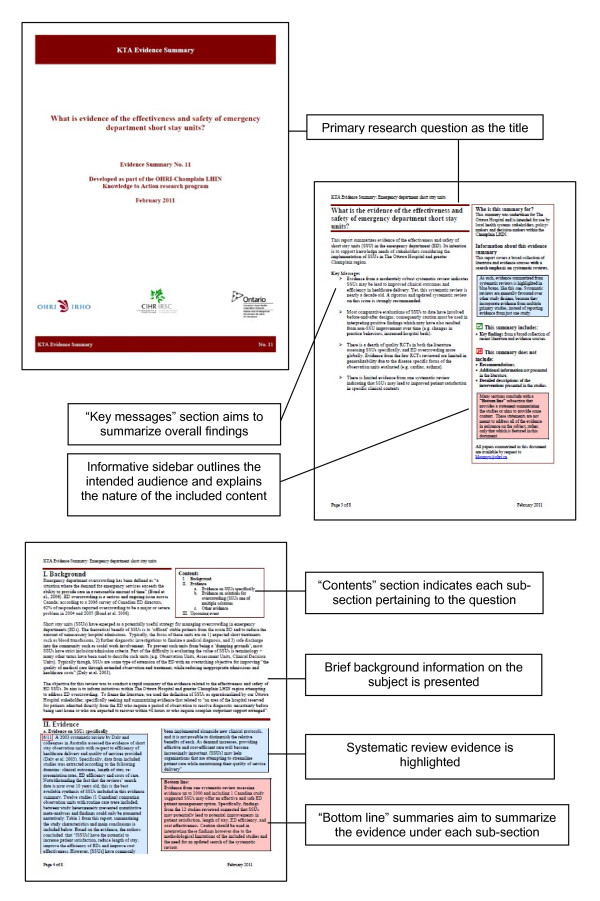
Background: Rapid reviews have emerged as a streamlined approach to synthesizing evidence - typically for informing emergent decisions faced by decision makers in health care settings. Although there is growing use of rapid review 'methods', and proliferation of rapid review products, there is a dearth of published literature on rapid review methodology. This paper outlines our experience with rapidly producing, publishing and disseminating evidence summaries in the context of our Knowledge to Action (KTA) research program. Methods: The KTA research program is a two-year project designed to develop and assess the impact of a regional knowledge infrastructure that supports evidence-informed decision making by regional managers and stakeholders. As part of this program, we have developed evidence summaries - our form of rapid review - which have come to be a flagship component of this project. Our eight-step approach for producing evidence summaries has been developed iteratively, based on evidence (where available), experience and knowledge user feedback. The aim of our evidence summary approach is to deliver quality evidence that is both timely and user-friendly. Results: From November 2009 to March 2011 we have produced 11 evidence summaries on a diverse range of questions identified by our knowledge users. Topic areas have included questions of clinical effectiveness to questions on health systems and/or health services. Knowledge users have reported evidence summaries to be of high value in informing their decisions and initiatives. We continue to experiment with incorporating more of the established methods of systematic reviews, while maintaining our capacity to deliver a final product in a timely manner. Conclusions: The evolution of the KTA rapid review evidence summaries has been a positive one. We have developed an approach that appears to be addressing a need by knowledge users for timely, user-friendly, and trustworthy evidence and have transparently reported these methods here for the wider rapid review and scientific community.
Overview
CoChat Summary
TL;DR
This paper describes the Knowledge to Action (KTA) program’s iterative development of “evidence summaries,” a rapid review approach for producing timely, user-friendly evidence for health care decision makers. From November 2009 to March 2011, the program produced 11 evidence summaries using an eight-step process, while acknowledging inherent trade-offs between rigor and timeliness.
Key findings
- The KTA program produced 11 evidence summaries from November 2009 to March 2011 on diverse questions identified by knowledge users, ranging from clinical effectiveness to health systems and services topics.
- Evidence summaries were produced within a short timeframe of four to five weeks, compared with six months to two years for traditional systematic reviews, and most reports were 10 to 15 pages long, though knowledge users confirmed keeping them under 10 pages is likely important.
- The eight-step approach included needs assessment; question development and refinement; proposal development and approval; systematic literature search; screening and selection; narrative synthesis with evidence-level assignment; report production; and ongoing follow-up and dialogue with knowledge users.
- Knowledge users reported evidence summaries to be of high value in informing decisions and initiatives; the paper cites Watt et al. (2008) as finding that “the essential conclusions of the rapid and full reviews did not differ extensively,” though research comparing rapid and systematic reviews remains limited.
Methods
- Design: an experience-based methodological report describing the iterative development and refinement of KTA evidence summaries within a two-year KTA research program, a collaboration between the Ottawa Hospital Research Institute and the Champlain Local Health Integration Network.
- Data or sample: 11 evidence summaries produced from November 2009 to March 2011, with topics listed in the paper; a case example describes an evidence summary on emergency department short stay units; formal evaluation through key informant interviews was ongoing.
- Main analysis: descriptive account of the eight-step production process, including narrative synthesis of included studies, assignment of evidence levels based on a modified Cochrane Musculoskeletal Group framework, and recent use of AMSTAR to assess included systematic reviews.
Limitations
- The paper states that rapid review products inherently harbor limitations relative to systematic reviews because they are produced within a short timeframe using limited resources, do not employ as much rigor, and may be subject to greater bias and/or error; it also states there is no clear evidence about decision makers’ willingness to compromise methodological rigor for quicker answers.
- The paper states that research comparing rapid with systematic review is limited, and that the purposes and context of rapid review use should be carefully considered when assessing their value.
- Evident from the text: early evidence summaries used a single reviewer for screening, excluded non-English reports and records not available electronically, did not undertake meta-analysis, relied on subjective selection of “high-quality” studies and extraction of relevant material, and in the most recent summary resolved conflicts by passing records to the next screening level rather than consensus.
Model-written summary. Check it against the paper before relying on it.
Integrity signals
Registry
Cites
Statistics
Figures
Verification
Claims the paper makes
2 Valid · 4 Not valid · 14 Not checked · 41 Own results and interpretations
The cited sources support only part of this claim — read each source’s verdict below.
In the paper
“Recent evidence summaries have also employed the 'assessment of multiple systematic reviews' (AMSTAR) tool as a means of assessing the methodological quality of included systematic reviews [13].”
§ Evidence summaries: the evolution of a rapid review approach > Evidence summary methods > Narrative synthesis of included studies (including risk-of-bias assessment)
What the sources say
- Partly supportedcites [13] 13. Shea BJ Grimshaw JM Wells GA Boers M Andersson N Hamel C Development of AMSTAR: a measurement tool to assess the methodological quality of systematic reviews BMC Med Res Methodol 2007 7 10 10.1186/1471-2288-7-10 17302989 PMC1810543 sourceExperimental — accuracy not yet measured
The Background identifies AMSTAR as a tool developed to assess the methodological quality of systematic reviews. The Discussion describes preliminary experience with the tool, but our copy does not establish that recent evidence summaries employed it to assess their included reviews. (LLM, conf=0.82)
plain- Asserted: passes — The authors put it forward as true.
- Checkable: passes — It can be checked against evidence.
- Load-bearing: unclear — It is unclear whether the paper’s conclusions depend on it.
- Based: passes — The paper gives a reason why it holds.
- Partly supported
Every source the paper cites for this claim was checked and supports it.
In the paper
“Parkill and colleagues have shown that, when compared to highly sensitive searches, pragmatically-based searches conducted for the purpose of populating an evidence map can produce a similar amount of relevant records, more quickly and at less cost [18].”
§ Evidence summaries: the evolution of a rapid review approach > Discussion
What the sources say
- Supportedcites [18] 18. Parkill A Clavisi R Pattuwage L Chau M Turner T Bragge P Searches for evidence mapping: effective, shorter, cheaper J Med Libr Assoc 2011 99 157 160 10.3163/1536-5050.99.2.008 21464854 PMC3066574 source
The RESULTS (p. 4 of our copy) report that the pragmatic evidence-mapping (EM) strategy retrieved 120 (77%) of included references versus 125 (81%) for the highly sensitive (HS) strategy — a similar yield of relevant records — while retrieving 781 fewer total citations, which 'would have resulted in a saving 19.5 hours of staff time over the 6 questions.' The DISCUSSION AND CONCLUSIONS states HS methods 'are not always cost effective for evidence mapping, in terms of resource use' and that the EM strings 'effectively identified relevant references using less staff time' (extrapolating to six extra weeks for the six questions, a year across all 55). The METHOD confirms the comparison was on yield, included studies retrieved/missed, and staff time. Only caveat: the evaluation covered six questions in traumatic brain/spinal cord injury on PubMed MEDLINE alone, so the finding is stated for that context, but the citing sentence's 'can produce' framing matches the paper's own conclusion. (LLM, conf=0.90)
plainstates a cause- Asserted: passes — The authors put it forward as true.
- Checkable: passes — It can be checked against evidence.
- Load-bearing: passes — The paper’s conclusions depend on it.
- Based: passes — The paper gives a reason why it holds.
- Supported
A result the paper reports from its own data — it cites no other source for it, so there is none to check. The quote shows it is in the paper.
In the paper
“Knowledge users have reported evidence summaries to be of high value in informing their decisions and initiatives.”
§ Evidence summaries: the evolution of a rapid review approach > Abstract > Results
plain- Asserted: passes — The authors put it forward as true.
- Checkable: passes — It can be checked against evidence.
- Load-bearing: passes — The paper’s conclusions depend on it.
- Based: passes — The paper gives a reason why it holds.
The paper states this without a source or data behind it here, so there is nothing to check it against. The quote shows it is in the paper.
In the paper
“Generally, knowledge users in our context have not demonstrated a strong capacity for formulating effective research questions”
§ Evidence summaries: the evolution of a rapid review approach > Evidence summary methods > Question development and refinement
boosted- Asserted: passes — The authors put it forward as true.
- Checkable: passes — It can be checked against evidence.
- Load-bearing: passes — The paper’s conclusions depend on it.
- Based: unclear — It is unclear why the paper says it holds.
A result the paper states — it cites no source for it, so there is none to check. The quote shows it is in the paper.
In the paper
“the first three evidence summaries were produced in the absence of a primary research question but rather using a series of research questions developed by the research team.”
§ Evidence summaries: the evolution of a rapid review approach > Evidence summary methods > Question development and refinement
plain- Asserted: passes — The authors put it forward as true.
- Checkable: passes — It can be checked against evidence.
- Load-bearing: passes — The paper’s conclusions depend on it.
- Based: passes — The paper gives a reason why it holds.
22 more claims
Create a free account to see all 61 claims and to verify the 18 references still open.
- Probably not a substantial claim. 28
- It may state two separate claims as one. 17
Claims other papers make about this one
Each is checked against this paper’s own text: does it say what the citing paper says it does?
The cited source doesn’t support the claim as written.
In the citing paper
“RRs are better suited for narrowly defined research questions where one or more SR steps may be reduced or omitted [4, 6, 21, 22, 24, 25].”
From How to conduct systematic reviews more expeditiously? (2015) · cites this paper as [4]
Checked by a reasoning model — may be wrong.
Experimental — accuracy not yet measuredThe source backs part of the claim, not all of it — or backs it for a different population, condition or comparison.
In the citing paper
“The conduct of SRs can be a time-consuming, cost- and resource-intensive task, which may take on average from 6 months to several years [4–6].”
From How to conduct systematic reviews more expeditiously? (2015) · cites this paper as [4]
Experimental — accuracy not yet measuredThe source backs part of the claim, not all of it — or backs it for a different population, condition or comparison.
In the citing paper
“In addition, the HTA process is time-consuming, generally taking over a year to complete, with the SLR and NMA part of this process taking several months each [8, 11].”
From Artificial Intelligence to Automate Network Meta-Analyses: Four Case Studies to Evaluate the Potential Application of Large Language Models (2024) · cites this paper as [11]
Experimental — accuracy not yet measuredThe source backs part of the claim, not all of it — or backs it for a different population, condition or comparison.
In the citing paper
“the methodological rigor and process that makes SR evidence trustworthy often take one to 2 years to complete [[1], [2], [3], [4]] and limit their utility to meet the time-sensitive needs of stakeholders.”
From Cochrane Rapid Reviews Methods Group offers evidence-informed guidance to conduct rapid reviews (2021) · cites this paper as [2]
Experimental — accuracy not yet measuredThe cited source says what the claim attributes to it.
In the citing paper
“We used a rapid review methodology developed by Khangura et al. (2012) which has been used within the context of various disciplines (Blakemore et al., 2017; Kadykalo et al., 2020).”
From Residential care as an alternative care option: A review of literature within a global context (2022) · cites this paper as Khangura et al., 2012
11 more claims about this paper
Create a free account to see every claim other papers make about this one.
Citations
Cites
Cochrane Handbook for Systematic Reviews of Interventions: Cochrane Book Series
(2008) · doi:10.1002/9780470712184 · Cited by 25,048 · cited 1×
“It uses explicit, systematic methods that are selected with a view to minimizing bias, thus providing more reliable findings from which conclusions can be drawn and decisions made” [1].”
MethodDevelopment of AMSTAR: A measurement tool to assess the methodological quality of systematic reviews
Shea, B. J., Grimshaw, J. M., Wells, G. A., Boers, M., Andersson, N., Hamel, C., Porter, A. C., Tugwell, P., Moher, D., & Bouter, L. M. (2007) · BMC Medical Research Methodology · doi:10.1186/1471-2288-7-10 · Cited by 4,374
Self-citationEpidemiology and reporting characteristics of systematic reviews.
Moher, D., Tetzlaff, J., Tricco, A. C., Sampson, M., & Altman, D. G. (2007) · PLoS Medicine · doi:10.1371/journal.pmed.0040078 · Cited by 891 · cited 1×
“While about half of published systematic reviews include a meta-analysis [11], the KTA evidence summaries do not undertake this level of quantitative synthesis (although we do report the results of included metaanalyses).”
BackgroundSelf-citationExpediting systematic reviews: methods and implications of rapid reviews
Ganann, R., Ciliska, D., & Thomas, H. (2010) · Implementation Science · doi:10.1186/1748-5908-5-56 · Cited by 752 · cited 3×
“A growing number of organizations, across various jurisdictions and countries, appear to be experimenting with this approach [3].”
BackgroundMoher, D., Pham, B., Lawson, M., & Klassen, T. (2003) · Health Technology Assessment · doi:10.3310/hta7410 · Cited by 500 · cited 1×
“Although exclusion of languages other than English is undesirable, it is considered to be a reasonable practice given limited time and resources and there is some evidence to suggest that it may not markedly bias review findings [9].”
BackgroundSelf-citationSingle data extraction generated more errors than double data extraction in systematic reviews
Buscemi, N., Hartling, L., Vandermeer, B., Tjosvold, L., & Klassen, T. P. (2006) · Journal of Clinical Epidemiology · doi:10.1016/j.jclinepi.2005.11.010 · Cited by 464 · cited 1×
“It is recognized, however, that a single reviewer introduces a level of error that is not desirable [10], and a second reviewer is now generally included on all evidence summaries, typically to review records excluded by the first reviewer - an approach we have labeled ‘liberal accelerated’.”
BackgroundRAPID VERSUS FULL SYSTEMATIC REVIEWS: VALIDITY IN CLINICAL PRACTICE?
Watt, A., Cameron, A., Sturm, L., Lathlean, T., Babidge, W., Blamey, S., Facey, K., Hailey, D., Norderhaug, I., & Maddern, G. (2008) · ANZ Journal of Surgery · doi:10.1111/j.1445-2197.2008.04730.x · Cited by 163 · cited 3×
“found that, despite “axiomatic differences” between the rapid and full reviews evaluated, “the essential conclusions of the rapid and full reviews did not differ extensively” [4], suggesting that products like the KTA evidence summaries may offer a useful and valid approach.”
BackgroundUsing Existing Systematic Reviews in Complex Systematic Reviews
Whitlock, E. P., Lin, J. S., Chou, R., Shekelle, P., & Robinson, K. A. (2008) · Annals of Internal Medicine · doi:10.7326/0003-4819-148-10-200805200-00010 · Cited by 144 · cited 1×
“Another consideration is a Grades of Recommendation, Assessment, Development and Evaluation-like assessment for the overall body of information included in the evidence summary as an important feature for knowledge users’ interpretation of the global evidence base [20].”
BackgroundEnd-user involvement in health technology assessment (HTA) development: A way to increase impact
McGregor, M., & Brophy, J. M. (2005) · International Journal of Technology Assessment in Health Care · doi:10.1017/s026646230505035x · Cited by 125 · cited 1×
“Usability has been an oft-neglected component in traditional systematic reviews despite evidence that has shown its capacity to improve the quality and cost effectiveness of health care [5,6].”
BackgroundLomas, J. (2005) · Healthcare Policy | Politiques de Santé · doi:10.12927/hcpol..17567 · Cited by 120
Research works printed but not linked: 2
- 1. Green S Higgins J Alderson P Clarke M Mulrow C Oxman A Higgins J, Green S Chapter 1 - Introduction Cochrane handbook for systematic reviews of interventions 2008 West Sussex, England: The Cochrane Collaboration and John Wiley & Sons Ltd
- 8. Information services CADTH Grey matters: A practical search tool for evidence-based medicine 2011 Ottawa, Canada: Canadian Agency for Drugs and Technologies in Health
Cited by
Items 501–600 of 1,003
Adams, E. J., Morris, L., Marshall, G., Coffey, F., Miller, P. D., & Blake, H. (2023) · BMC Emergency Medicine · doi:10.1186/s12873-023-00798-7 · Cited by 24
Conceptualizing “Preparedness for Practice”: Perspectives of Early-Career Family Physicians
Aggarwal, M., Abdelhalim, R., Fowler, N., & Oandasan, I. (2023) · Family Medicine · doi:10.22454/fammed.2023.294689 · Cited by 19
Adjei, B., Tudzi, E. P., Owusu‐Ansah, A., Kidido, J. K., & Durán-Díaz, P. (2024) · Land · doi:10.3390/land13091386 · Cited by 23
“This research employs a systematic literature review methodology which, according to Kangura [29], involves formulating review questions, conducting a thorough literature search across diverse academic databases, and screening and selecting studies according to clearly defined inclusion and…”
Hasan, H., Muhammed, T., Yu, J., Taguchi, K., Samargandi, O. A., Howard, A. F., Lo, A., Olson, R. A., & Goddard, K. (2017) · Cancer Epidemiology · doi:10.1016/j.canep.2017.08.013 · Cited by 18
Assessing the Completeness of Reporting in Preclinical Oncolytic Virus Therapy Studies
Fergusson, D. A., Wesch, N. L., Leung, G. J., MacNeil, J. L., Conic, I., Presseau, J., Cobey, K. D., Diallo, J., Auer, R. C., Kimmelman, J., et al. (2019) · Molecular Therapy — Oncolytics · doi:10.1016/j.omto.2019.05.004 · Cited by 21
“Title and abstract screenings were performed independently and in duplicate using an accelerated screening method (one reviewer required to include, two reviewers required to exclude).(41) A subsequent full-text screening was performed in duplicate by two independent reviewers (consensus required to exclude).”
MethodPap, R., McKeown, R., Lockwood, C. S., Stephenson, M., & Simpson, P. (2020) · Scandinavian Journal of Trauma Resuscitation and Emergency Medicine · doi:10.1186/s13049-020-00762-5 · Cited by 19
Oakley, P. A., Betz, J. W., Harrison, D. E., Siskin, L. A., & Hirsh, D. W. (2021) · Dose-Response · doi:10.1177/15593258211033142 · Cited by 19
Milner, K. A. (2014) · Oncology nursing forum · doi:10.1188/15.onf.89-93 · Cited by 18
Hamel, C., Corace, K., Hersi, M., Rice, D., Willows, M., Macpherson, P., Sproule, B., Flores-Aranda, J., Garber, G., Esmaeilisaraji, L., et al. (2020) · Systematic Reviews · doi:10.1186/s13643-020-01499-z · Cited by 17
“Once the AI reviewer is trained (n = 200, as determined by 2% of all records, with a minimum of 25 and a maximum of 200 records), remaining citations will be screened by the review team using the liberal accelerated method [96].”
MethodEffectiveness of e-cigarettes as a stop smoking intervention in adults: a systematic review
Vyas, N., Bennett, A., Hamel, C., Beck, A., Thuku, M., Hersi, M., Shaver, N., Skidmore, B., Hutton, B., Manuel, D. G., et al. (2024) · Systematic Reviews · doi:10.1186/s13643-024-02572-7 · Cited by 21
“Two reviewers independently screened the title and abstracts of citations using the liberal accelerated method (i.e., a second reviewer verifies records excluded by a first reviewer) [51].”
MethodSelf-citationHayden, J. A., Killian, L., Zygmunt, A., Babineau, J., Martin‐Misener, R., Jensen, J. L., & Carter, A. J. E. (2015) · Systematic Reviews · doi:10.1186/2046-4053-4-7 · Cited by 18
“Despite the increased production of rapid reviews and projects with an integrated decision-maker involvement, there is minimal methodological guidance available for these approaches [19].”
BackgroundMethodPiccenna, L. G., Lannin, N. A., Scott, K., Bragge, P., & Gruen, R. L. (2016) · Health & Social Care in the Community · doi:10.1111/hsc.12327 · Cited by 17
Gavine, A. J., MacGillivray, S. A., Ross–Davie, M., Campbell, K., White, L., & Renfrew, M. J. (2018) · Humanities and Social Sciences Communications · doi:10.1057/s41599-017-0054-8 · Cited by 18
Zúñiga, F., Chu, C. H., Boscart, V., Fagertun, A., Gea‐Sánchez, M., Meyer, J. E., Spilsbury, K., Devi, R., Haunch, K. J., Zheng, N., et al. (2019) · Gerontology and Geriatric Medicine · doi:10.1177/2333721419844344 · Cited by 23
Singh, H., Armas, A., Law, S., Tang, T., Gray, C. S., Cunningham, H., Thombs, R., Ellen, M., Sritharan, J., Nie, J. X., et al. (2021) · BMJ Open · doi:10.1136/bmjopen-2020-045596 · Cited by 18
Sukriti, K. C., Aulakh, M., Curtis, S., Scambler, S., & Gallagher, J. E. (2021) · BDJ Open · doi:10.1038/s41405-021-00091-4 · Cited by 23
Nicholas, A., Krysinska, K. E., & King, K. (2022) · Psychiatry Research · doi:10.1016/j.psychres.2022.114847 · Cited by 18
Enhancing involvement of people with multiple sclerosis in clinical trial design
Gray, E., Amjad, A., Robertson, J., Beveridge, J., Scott, S. C., Peryer, G., Braisher, M., Pugh, C., Peres, S., Marrie, R. A., et al. (2023) · Multiple Sclerosis Journal · doi:10.1177/13524585231189678 · Cited by 17
Awareness and use of systematic literature reviews and meta‐analyses by ministerial policy analysts
Bédard, P., & Ouimet, M. (2017) · Canadian Public Administration · doi:10.1111/capa.12215 · Cited by 17
Psychosocial Interventions for Parents with Incurable End‐Stage Cancer: A Rapid Evidence Assessment
Steiner, V., Shlonsky, A., & Joubert, L. (2017) · Australian Psychologist · doi:10.1111/ap.12286 · Cited by 17
Implementation of systematic reviews in EFSA scientific outputs workflow
O'Connor, A. M. C., Löveï, G. L., Eales, J. F., Frampton, G. K., Glanville, J., Pullin, A. S., & Sargeant, J. M. (2012) · EFSA Supporting Publications · doi:10.2903/sp.efsa.2012.en-367 · Cited by 19
“Rapid reviews currently attract a lot of interest in health research (Khangura et al., 2012; Watt et al., 2008a, b), but experience so far mainly comes from individual groups and institutions.”
Bermúdez‐Tamayo, C., Mukamana, O., Carabalí, M., Osório, L., Fournet, F., Dabiré, R. K., Marteli, C. T., Contreras, A., & Ridde, V. (2016) · Infectious Diseases of Poverty · doi:10.1186/s40249-016-0198-6 · Cited by 17
“The methods are somewhat less rigorous than those of a traditional systematic review, and evidence summaries may therefore be subject to more bias and/or error [25].”
MethodAutomation of Legal Precedents Retrieval: Findings from a Literature Review
Mentzingen, H., António, N., & Bacao, F. (2023) · International Journal of Intelligent Systems · doi:10.1155/2023/6660983 · Cited by 16
“Te defnition of an RR is still not universally recognized [16].”
BackgroundHyde, M. K., Masser, B., & Coundouris, S. P. (2022) · Transfusion Medicine · doi:10.1111/tme.12849 · Cited by 16
“We adopted a systematic rapid review approach with a descriptive categorisation and narrative synthesis of the evidence.(10) Six apriori research questions (RQ) supported our overarching aim and focus on aspects amenable to future intervention to encourage blood donors to donate another SoHO.”
MethodPaternal Leave and Fathers’ Mental Health: A Rapid Literature Review
Philpott, L. F., Goodwin, J., & Saab, M. M. (2022) · International Journal of Men s Social and Community Health · doi:10.22374/ijmsch.v5isp1.72 · Cited by 16
Edmunds, C. E. R., Gold, N., Burton, R., Smolar, M., Walmsley, M., Henn, C., Egan, M., Tran, A., Harper, H., Dale, M. K., et al. (2023) · BMC Public Health · doi:10.1186/s12889-023-16327-x · Cited by 17
“Methods Design A rapid evidence review was used which balances resource and time constraints by streamlining the systematic review approach to synthesise evidence to inform decision makers [14].”
Cibin, R., Horgan, L., Ciolfi, L., Dockray, S., Murphy, G., Venables, D. S., & Cassarino, M. (2025) · Environmental Challenges · doi:10.1016/j.envc.2025.101237 · Cited by 18
A rapid review of variation in the use of dental general anaesthetics in children
Broomhead, T., RODD, H. D., Baker, S. R., Jones, K., Davies, G., White, S., & Marshman, Z. (2020) · BDJ · doi:10.1038/s41415-020-1846-6 · Cited by 21
“This approach emphasises the synthesis of evidence in a timely manner and can be used to inform health related policy scenarios.(30,31) Rapid reviews involve the streamlining of more traditional literature searches (such as systematic reviews)(31) and can be more accurately tailored to the needs of the end user.”
MethodBanati, P., & Idele, P. (2021) · Frontiers in Psychiatry · doi:10.3389/fpsyt.2021.589827 · Cited by 18
“The themes are derived with the goal of providing a sense of the “volume and direction of available evidence” (18).”
BackgroundMethodEarly childhood education and care policies in the U.S. And their impact on family violence
Maguire‐Jack, K., Hardi, F. A., Stormer, B., Lee, J. Y., Feely, M., Rostad, W. L., Ford, D. C., Merrick, M. T., Murphy, C. A., & Klika, J. B. (2022) · Children and Youth Services Review · doi:10.1016/j.childyouth.2022.106653 · Cited by 20
Westphal, A., Kriston, L., Hölzel, L. P., Härter, M., & von Wolff, A. (2014) · Journal of Public Health Research · doi:10.4081/jphr.2014.177 · Cited by 15
Cord, K. A. M., Imran, M., Rice, D. B., McCall, S. J., Kwakkenbos, L., Sampson, M., Fröbert, O., Gale, C. P., Langan, S., Moher, D., et al. (2021) · Journal of Clinical Epidemiology · doi:10.1016/j.jclinepi.2021.09.012 · Cited by 19
Self-citationMellifont, D. (2022) · Work · doi:10.3233/wor-210811 · Cited by 15
“The steps taken to conduct this rapid review were informed by an approach as indicated by Khangura, Konnyu, Cushman, Grimshaw and Moher [34] in their comparison of this type of review to a systematic review.”
BackgroundMethodZuo, C., Yang, X., Errickson, J., Li, J., Hong, Y., & Wang, R. (2025) · Environmental Evidence · doi:10.1186/s13750-025-00358-5 · Cited by 17
Wilson, J. A., Carson, G., Fitzgerald, S., Llewelyn, M., Jenkins, D. R., Parker, S. T., Boies, A., Thomas, J., Sutcliffe, K., Sowden, A. J., et al. (2021) · Journal of Hospital Infection · doi:10.1016/j.jhin.2021.06.011 · Cited by 16
Bragge, P., Allison, D. J., Mehta, S., Guy, S. D., & Loh, E. (2021) · Journal of Clinical Epidemiology · doi:10.1016/j.jclinepi.2021.11.037 · Cited by 15
Mariwah, S., Drangert, J.-O., & Adams, E. A. (2022) · Global Public Health · doi:10.1080/17441692.2022.2111453 · Cited by 17
“Researchers such as Khangura et al. (2012) and Tricco et al. (2015) have touted rapid review as one of the commonest ways of obtaining synthetic, though less rigorous but relatively quick knowledge and evidence on specific issues under investigation.”
BackgroundHawkins, L. K., Burns, L., Swancutt, D. R., Moghadam, S., Pinkney, J. H., Tarrant, M., & The PROGROUP Programme Team (2024) · Obesity Reviews · doi:10.1111/obr.13798 · Cited by 19
“The review followed the procedure recommended by Khangura et al., 29 employing expedited systematic methods, including question development and refinement and development of search strategies, in consultation with an information specialist (LB).”
Young, I., Kerr, A., Waddell, L. A., Pham, M., Greig, J. D., McEwen, S. A., & Rajić, A. (2014) · Foodborne Pathogens and Disease · doi:10.1089/fpd.2014.1807 · Cited by 15
“…summary formats based on a review and evaluation of existing plain-language and contextual summaries in health and other sectors (Canadian Foundation for Healthcare Improvement, 2010; Rosenbaum et al. , 2011; Khangura et al. , 2012; Health Evidence, 2013; Opiyo et al. , 2013; ResearchImpact, 2014).”
A pragmatic strategy for the review of clinical evidence
Sagliocca, L., MASI, S. D., Ferrigno, L., Mele, A., & Traversa, G. (2013) · Journal of Evaluation in Clinical Practice · doi:10.1111/jep.12020 · Cited by 17
“Given that SRs usually take between six months and one year to be completed, there is an increasing interest in finding ways to synthesize evidence in shorter time periods [35–37].”
BackgroundAntenatal and postpartum prevention of Rh alloimmunization: A systematic review and GRADE analysis
Hamel, C., Esmaeilisaraji, L., Thuku, M., Michaud, A., Sikora, L., & Fung‐Kee‐Fung, K. (2020) · PLoS ONE · doi:10.1371/journal.pone.0238844 · Cited by 19
“First, two reviewers (CH, LE, MT) screened citations based on titles and abstracts, using the liberal accelerated method [20].”
Cirillo, N. (2021) · Journal of Infection and Public Health · doi:10.1016/j.jiph.2021.07.002 · Cited by 17
Johnston, A., Tseung, V., Dancey, S. R., Visintini, S. M., Coutinho, T. A., & Edwards, J. D. (2021) · CJC Open · doi:10.1016/j.cjco.2021.08.002 · Cited by 17
Koh, J. J.-K., Malczewska, M., Doyle‐Waters, M. M., & Moe, J. (2021) · BMC Emergency Medicine · doi:10.1186/s12873-021-00524-1 · Cited by 15
Building Kincentric Awareness in Planetary Health Education: A Rapid Evidence Review
LeClair, J. (2021) · Creative Nursing · doi:10.1891/cn-2021-0009 · Cited by 17
“This review utilized collaborative methods described by Khangura et al. (2012), which included responding to the PHA’s need for evidence within 2 weeks; developing and refining the research question; receiving approval from the project lead; conducting a rapid systematic review by searching,…”
BackgroundMethodInfluentialSystematic Reviews in Medical Education
Maggio, L. A., Samuel, A., & Stellrecht, E. M. (2022) · Journal of Graduate Medical Education · doi:10.4300/jgme-d-22-00113.1 · Cited by 17
Clark, E., Dhaliwal, B., Ciliska, D. K., Neil‐Sztramko, S., Steinberg, M., & Dobbins, M. (2022) · Implementation Science Communications · doi:10.1186/s43058-022-00267-5 · Cited by 16
“During the final 6 months of the program, participants completed a rapid review [36].”
BackgroundBougioukas, K. I., Pamporis, K., Vounzoulaki, E., Karagiannis, T., & Haidich, A. (2022) · Journal of Clinical Epidemiology · doi:10.1016/j.jclinepi.2022.11.003 · Cited by 16
Smartphone Applications for Mental Health—A Rapid Review
Hind, J., & Sibbald, S. L. (2014) · Western Undergraduate Research Journal Health and Natural Sciences · doi:10.5206/wurjhns.2014-15.16 · Cited by 17
Anshasi, H. A., & Ahmad, M. M. (2018) · Complementary Therapies in Clinical Practice · doi:10.1016/j.ctcp.2018.06.013 · Cited by 15
Eiring, Ø., Brurberg, K. G., Nytrøen, K., & Nylenna, M. (2018) · Systematic Reviews · doi:10.1186/s13643-018-0829-z · Cited by 17
Blackmail on social media: what do we know and what remains unknown?
Habsi, A. A., Butler, M., Percy, A., & Sezer, S. (2020) · Security Journal · doi:10.1057/s41284-020-00246-2 · Cited by 16
Cooper, C., Garside, R., Varley‐Campbell, J., Talens‐Bou, J., Booth, A., & Britten, N. (2020) · Research Synthesis Methods · doi:10.1002/jrsm.1426 · Cited by 17
Chiumento, A., Baines, P. B., Redhead, C. A. B., Fovargue, S., Draper, H., & Frith, L. (2021) · BMJ Open · doi:10.1136/bmjopen-2021-049214 · Cited by 15
A rapid review of practices to support people experiencing homelessness during COVID-19
Oudshoorn, A., Benjamin‐Thomas, T. E., Smith-Carrier, T. A., Benbow, S., Marshall, C. A., Kennedy, R., Hall, J., Caxaj, C. S., Berman, H., & Befus, D. (2021) · Housing Care and Support · doi:10.1108/hcs-11-2020-0018 · Cited by 15
Hamel, C., Ghannad, M., McInnes, M. D. F., Marshall, J. R., Earnshaw, J. J., Ward, R., Skidmore, B., & Garritty, C. (2018) · Journal of Vascular Surgery · doi:10.1016/j.jvs.2017.11.074 · Cited by 19
Mogo, E., Badillo, I., Majnemer, A., Duckworth, K., Kennedy, S., Symington, V., & Shikako-Thomas, K. (2020) · Leisure/Loisir · doi:10.1080/14927713.2020.1760121 · Cited by 14
“Rapid reviews streamline systematic review processes to produce information in a timely manner (Khangura et al., 2012).”
BackgroundKerman, N., Kidd, S. A., Mutschler, C., Sylvestre, J., Henwood, B. F., Oudshoorn, A., Marshall, C. A., Aubry, T., & Stergiopoulos, V. (2023) · Harm Reduction Journal · doi:10.1186/s12954-023-00873-z · Cited by 14
“Rapid reviews provide a streamlined approach to synthesizing evidence that can be efficiently disseminated to and used by sectoral decision-makers and service providers [32].”
BackgroundThe Law and NLP: Bridging Disciplinary Disconnects
Mahari, R., Stammbach, D., Ash, E., & Pentland, A. (2023) · Findings of the Association for Computational Linguistics: EMNLP (Findings of EMNLP) · doi:10.18653/v1/2023.findings-emnlp.224 · Cited by 21
Hamzaei, Z., Houlind, M. B., Kjeldsen, L. J., Christensen, L. W. S., Walls, A. B., Aharaz, A., Olesen, C., Coric, F., Revell, J. H. P., Ravn‐Nielsen, L. V., et al. (2024) · Basic & Clinical Pharmacology & Toxicology · doi:10.1111/bcpt.13986 · Cited by 17
“80 A strength in our study is that two independent reviewers performed the title and abstract screening and quality assessment.”
BackgroundRotschild, T. (2024) · Journal of Research in Special Educational Needs · doi:10.1111/1471-3802.12709 · Cited by 15
Systemic Racism in Canadian Higher Education: A Rapid Scoping Review of 22 Years of Literature
Cranston, J. A., & Bennett, A. (2024) · Canadian Journal of Higher Education · doi:10.47678/cjhe.v54i1.190069 · Cited by 19
“…of the traditional scoping review are simplified or omitted (e.g., one reviewer versus two, and data collection over the period of a single day) to produce re-sults in a timely manner as the most appropriate approach to address our research objectives (Khangura et al., 2012; Tricco et al., 2017).”
Rethinking single-use plastic (SUP): Behavioural insights and lessons from a developing nation
Pham, H. V. (2024) · Environmental Challenges · doi:10.1016/j.envc.2024.101052 · Cited by 17
Comparing alternative design options for chronic disease prevention interventions
Golfam, M., Beall, R. F., Brehaut, J., Saeed, S., Relton, C., Ashbury, F. D., & Little, J. (2014) · European Journal of Clinical Investigation · doi:10.1111/eci.12371 · Cited by 15
Falchi, L., Ferrajoli, A., Jacobs, I. A., & Nava-Parada, P. (2018) · Clinical Lymphoma Myeloma & Leukemia · doi:10.1016/j.clml.2018.05.009 · Cited by 14
“Median, mo (Range) Rate, % (Range) Median, mo (Range) Rate, % (Range) Aviles et al,(83) 2010; phase III RTX, ESHAP: 47 NA NA 50 (42-58) at 60 mo NA 26 (21-39) at 60 mo Fayad et al,(95) 2015; phase IIb RTX, ICE, PBO: 76 NA NA NA 17.”
BackgroundInfluentialArévalo-Rodríguez, I., Moreno-Nuñez, P., Nußbaumer-Streit, B., Steingart, K. R., Peña, L. D. M. G., Buitrago‐García, D., Kaunelis, D., Emparanza, J. I., Alonso‐Coello, P., Tricco, A. C., et al. (2019) · Journal of Clinical Epidemiology · doi:10.1016/j.jclinepi.2019.09.004 · Cited by 14
“intensity of work using methodological tailoring (review shortcuts) and by automating review tasks to streamline the process (6, 14-16).”
MethodCurrent methods for development of rapid reviews about diagnostic tests: an international survey
Arévalo-Rodríguez, I., Steingart, K. R., Tricco, A. C., Nußbaumer-Streit, B., Kaunelis, D., Alonso‐Coello, P., Baxter, S. K., Bossuyt, P. M., Emparanza, J. I., & Zamora, J. (2020) · BMC Medical Research Methodology · doi:10.1186/s12874-020-01004-z · Cited by 15
Noibi, S., Mohy, A., Gouhar, R., Shaker, F., Lukic, T., & Al-Jahdali, H. H. (2020) · BMC Public Health · doi:10.1186/s12889-020-09259-3 · Cited by 14
“Such reviews have proven to be useful in certain healthcare settings as they can address gaps in knowledge through provision of reliable, user-friendly and timely evidence [22, 23].”
BackgroundThe Management of Children with Cancer during the COVID-19 Pandemic: A Rapid Review
Amicucci, M., Mastronuzzi, A., Ciaralli, I., Piccioni, F., Schiopu, A. C., Tiozzo, E., Gawronski, O., Biagioli, V., & Dall’Oglio, I. (2020) · Journal of Clinical Medicine · doi:10.3390/jcm9113756 · Cited by 17
“Rapid review has been best designed following the steps described by Khangura et al. (2012) and Cochrane Rapid Review Methods—Interim Recommendations (2020) [22,23].”
MethodUnbiased Approaches for Reviewing Entomology Literature: A Systematized Review
Oliveira, A. R. S., Cohnstaedt, L. W., & Cernicchiaro, N. (2021) · Annals of the Entomological Society of America · doi:10.1093/aesa/saaa058 · Cited by 15
Removing Gamification: A Research Agenda
Seaborn, K. (2021) · CHI Conference Extended Abstracts on Human Factors in Computing Systems (CHI EA) · doi:10.1145/3411763.3451695 · Cited by 17
“I conducted all database searches, data extraction, and data analyses alone, which is common and adequate for rapid reviews [24].”
MethodThe consequences of the COVID-19 pandemic on the refugee population: a rapid review
Badanta, B., González‐Cano‐Caballero, M., Fernández‐García, E., Lucchetti, G., & de Diego‐Cordero, R. (2022) · Perspectives in Public Health · doi:10.1177/17579139221093159 · Cited by 14
Rapid systematic reviews for synthesizing research on built environment
Lagisz, M., Vasilakopoulou, K., Bridge, C. E., Santamouris, M., & Nakagawa, S. (2022) · Environmental Development · doi:10.1016/j.envdev.2022.100730 · Cited by 16
(EFSA), E. F. S. A., Candiani, D. F., Drewe, J. A., Forkman, B., Herskin, M. S., Soom, A. V., Aboagye, G., Ashe, S., Mountricha, M., der Stede, Y. V., et al. (2023) · EFSA Journal · doi:10.2903/j.efsa.2023.8213 · Cited by 17
A Rapid Review of the Role of Virtual Reality in Care Delivery of Palliative Care and Hospice
Moutogiannis, P. P., Thrift, J. R., Pope, J. K., Browning, M. H. E. M., McAnirlin, O., & Fasolino, T. K. (2023) · Journal of Hospice and Palliative Nursing · doi:10.1097/njh.0000000000000983 · Cited by 16
Ruiz‐Casares, M., Drummond, J. D., Beeman, I., & Lach, L. (2016) · Health & Social Care in the Community · doi:10.1111/hsc.12364 · Cited by 16
Lewis, R. A., Hendry, M., Din, N., Stanciu, M. A., Nafees, S. B., Hendry, A., Teoh, Z. H., Lloyd, T., Parsonage, R., Neal, R. D., et al. (2019) · Systematic Reviews · doi:10.1186/s13643-019-1087-4 · Cited by 17
What is the evidence for the activities of Namaste Care? A rapid assessment review
Bray, J., Brooker, D., & Garabedian, C. E. (2019) · Dementia · doi:10.1177/1471301219878299 · Cited by 16
Williams, G. F., Pirret, A. M., Credland, N., Odell, M., Raftery, C., Smith, D., Winterbottom, F. A., & Massey, D. L. (2022) · Australian Critical Care · doi:10.1016/j.aucc.2022.01.008 · Cited by 15
Kaltenthaler, E., Tappenden, P., & Paisley, S. (2013) · Value in Health · doi:10.1016/j.jval.2013.04.009 · Cited by 15
Hersi, M., Corace, K., Hamel, C., Esmaeilisaraji, L., Rice, D., Dryburgh, N., Skidmore, B., Garber, G., Porath, A., Willows, M., et al. (2023) · PLoS ONE · doi:10.1371/journal.pone.0292745 · Cited by 13
“, one reviewer was required to include a record, and two reviewers to exclude) [39].”
BackgroundSousa, M. S. A., Peiris, S., Figueiró, M. F., Haby, M. M., Baraldi, A. C., Revéiz, L., & Souza, J. P. (2026) · Systematic Reviews · doi:10.1186/s13643-025-02842-y · Cited by 14
“…and transparent methodologies, is often but not exclusively published as systematic literature reviews (SLRs), and more recently as living systematic reviews (or Living ES) [3], and can also include rapid reviews [4], scoping reviews [5, 6] and qualitative ES [7], among other research ES methods.”
Dinko, D. H., & Bahati, I. (2023) · Journal of Climate Resilience and Justice · doi:10.1162/crcj_a_00002 · Cited by 15
A policy monitoring framework to prepare for, respond to, and recover from education in emergencies
Tarricone, P., Mestan, K., & Teo, I. (2023) · Education Inquiry · doi:10.1080/20004508.2023.2260105 · Cited by 13
“In contrast, traditional systematic reviews seek to analyse all available evidence to address specific research questions, and employ explicit methods to reduce bias and increase validity and reliability (Garritty, Norris, & Moher, 2017; Khangura, Konnyu, Cushman, Grimshaw, & Moher, 2012).”
Examining the Heat Health Burden in Australia: A Rapid Review
Bhatta, M., Field, E. J., Cass, M., Zander, K. K., Guthridge, S. L., Brearley, M. B., Hines, S. J., Pereira, G. F., Nur, D., Chang, A. B., et al. (2023) · Climate · doi:10.3390/cli11120246 · Cited by 13
“An adapted version of the rapid evidence synthesis process proposed by Khangura and colleagues [24] was adopted.”
Maternal and child oral health interventions in Middle East and North Africa regions: a rapid review
Abuhaloob, L., MacGillivray, S. A., Mossey, P. A., & Freeman, R. (2019) · International Dental Journal · doi:10.1111/idj.12506 · Cited by 13
Merino‐Soto, C., Carbajal, A. B., Toledano‐Toledano, F., Nabors, L., & Núñez-Benítez, M. Á. (2022) · International Journal of Environmental Research and Public Health · doi:10.3390/ijerph19020935 · Cited by 14
Telemedicine in the treatment of addictions
Caballería, E., López‐Pelayo, H., Matrai, S., & Gual, A. (2022) · Current Opinion in Psychiatry · doi:10.1097/yco.0000000000000795 · Cited by 13
“We conducted a rapid review [6] of randomized controlled trials, systematic reviews, and meta-analyses published between January 2020 and January 2022 in two databases (PubMed and Web of Knowledge) of real-time telemedicine.”
MethodA Rapid Semi-automated Literature Review on Legal Precedents Retrieval
Mentzingen, H., António, N., & Bação, F. (2022) · Lecture notes in computer science · doi:10.1007/978-3-031-16474-3_5 · Cited by 17
Stewart-Tufescu, A., Dávila, I. G., Salmon, S., Pappas, K. V., McCarthy, J., Taillieu, T., Gill, S., & Afifi, T. O. (2022) · International Journal of Environmental Research and Public Health · doi:10.3390/ijerph192416481 · Cited by 14
How expert insight into alpine peatland conservation complements global scientific evidence
Rowland, J. A., Moore, J. L., & Walsh, J. C. (2023) · Conservation Biology · doi:10.1111/cobi.14081 · Cited by 14
“Rapid reviews synthesize evidence from reviews and other secondary sources (rather than primary studies) to efficiently gather information (Khangura et al., 2012).”
BackgroundConnecting unattached patients to comprehensive primary care: a rapid review
Nabieva, K., McCutcheon, T., & Liddy, C. E. (2023) · Primary Health Care Research & Development · doi:10.1017/s1463423623000099 · Cited by 15
Martins, V. M., Ziegelmann, P. K., Ferrari, F., Bottino, L. G., Lucca, M. B., Corrêa, H. L. R., Blum, G. B., Helal, L. C. A. S., Fuchs, S. C. P. C., & Fuchs, F. D. (2023) · Journal of Hypertension · doi:10.1097/hjh.0000000000003436 · Cited by 17
Mirra, L., Russo, S., & Borrello, M. (2024) · Sustainability · doi:10.3390/su16072870 · Cited by 13
Innes, N., & Evans, D. (2013) · Evidence-Based Dentistry · doi:10.1038/sj.ebd.6400926 · Cited by 15
Young, S., & Maley, M. (2018) · The Journal of Academic Librarianship · doi:10.1016/j.acalib.2018.02.002 · Cited by 16
Gates, M., Pillay, J., Thériault, G., Limburg, H., Grad, R. M., Klarenbach, S. W., Korownyk, C. S., Reynolds, D. L., Riva, J. J., Thombs, B. D., et al. (2019) · Systematic Reviews · doi:10.1186/s13643-019-1094-5 · Cited by 13
“We will first review the titles and abstracts of all records for relevance using a liberal-accelerated approach [125, 126].”
MethodHwang, I., Hallock, T. M., Schwartz, A., Roth, S. C., Pfeiffer, B., & Kramer, J. M. (2021) · Journal of Applied Research in Intellectual Disabilities · doi:10.1111/jar.12931 · Cited by 15
Tran, N. T., Harker, K., Yaméogo, W. M. E., Kouanda, S., Millogo, T., Menna, E. D., Lohani, J., Maharjan, O., Sake, J., Odinga, E. A., et al. (2017) · Reproductive Health Matters · doi:10.1080/09688080.2017.1405678 · Cited by 14
“Based on our technical experts’ in-depth knowledge of the field and of the training gaps regarding such refresher courses, a rapid review was deemed to be sufficient to produce information in a timely manner while limiting the risk of missing key publications.(9) This search did not yield any results specific to refre…”
BackgroundTranslating Evidence into Practice
Grant, M., & Davis, A. (2018) · Springer eBooks · doi:10.1007/978-3-319-74983-9_32 · Cited by 14
Metadata
- Authors
- Khangura, S., Konnyu, K., Cushman, R., Grimshaw, J., & Moher, D.
- Affiliations
- Ottawa Hospital Research Institute (CA)
- Champlain Local Health Integration Network (CA)
- University of Ottawa (CA)
- Corresponding author
- Moher, David
- Venue
- Systematic Reviews
- Published
- 2012-02-10
- Volume
- 1
- Issue
- 1
- Pages
- 10-10
- ISSN
- 2046-4053 (ISSN-L)
- PMC
- PMC3351736
- OpenAlex
- W2156100542
- Cited by
- 1,232
- References
- 19
- Citations by year
- 2026: 43 · 2025: 96 · 2024: 132 · 2023: 137 · 2022: 156 · 2021: 171 · 2020: 121 · 2019: 87 · 2018: 72 · 2017: 67 · 2016: 61 · 2015: 41 · 2014: 27 · 2013: 16 · 2012: 5
- FWCI
- 32.38
- Type
- journal article
- Language
- en
- Open access
- gold
- doi.org
- Licence
- Locations
- Systematic Reviews (publishedVersion, cc-by)
- PubMed Central (publishedVersion, cc-by)
- PubMed (publishedVersion)
- uO Research (University of Ottawa) (submittedVersion, public-domain)
- DOAJ (DOAJ: Directory of Open Access Journals) (submittedVersion)
- Funders
- University of Ottawa
- Canadian Institutes of Health Research (86796_1)
- Topics
- Social Sciences › Decision Sciences › Statistics, Probability and Uncertainty › Meta-analysis and systematic reviews
- Health Sciences › Health Professions › General Health Professions › Health Sciences Research and Education
- Health Sciences › Medicine › Public Health, Environmental and Occupational Health › Clinical practice guidelines implementation
- Keywords
- rapid review, evidence summaries, knowledge to action, evidence-informed decision-making, knowledge users, knowledge infrastructure, healthcare decision-making, evidence synthesis, evidence dissemination, regional health administration
- MeSH terms
- Decision Making, Humans, Publishing, Review Literature as Topic, Evidence-Based Medicine, Information Dissemination
About these checks
Registry, retraction, Cites and statistics results are computed, not judged, with one exception: a printed reference that no index lists is read once by a model before it counts as a citation error. Claims are extracted by a model and kept only when their quote appears verbatim in the text; each cited source is then checked, with a model’s help, for whether it says what the claim relies on. Those verdicts can be wrong — read the claim’s quote and the cited source before relying on one.
The claim verdicts this report counts are experimental: their accuracy is not yet measured.
A language model drew the claims from the paper on 2026-10-04, under version 3 of the claim definition (model deepseek-v4.1-flash, prompt extract-v3).
A second model labelled each claim on 2026-10-04 (model jev-1.13-20260917, definition revision gold-guideline-v0.2).
Cited sources are checked with a language model’s help (gpt-6-sol and qwen3.8-omni-flash).
Statistics and arithmetic are recomputed, not judged.
Confidence bands are shown only for fields calibrated on our annotated test set. None is calibrated yet, so no band is shown.
What counts as a claim ›How we measure confidence ›How we check this ›
Are you an author, or do you see a problem with this page? Request a review
Data sources
Bibliographic data: Semantic Scholar, OpenAlex, Crossref.
Contains information from the Semantic Scholar Academic Graph Datasets, made available under the ODC Attribution License (ODC-BY 1.0).
Semantic Scholar’s data is described in: Kinney, R., et al. (2023). The Semantic Scholar Open Data Platform. arXiv:2301.10140.
