

Evidence summaries: the evolution of a rapid review approach
Open accessThe DOI matches its Crossref record; 18 of the 19 references it cites were found in a registry or an index; 2 of the 20 sources its claims cite were checked for support.
Abstract
Background: Rapid reviews have emerged as a streamlined approach to synthesizing evidence - typically for informing emergent decisions faced by decision makers in health care settings. Although there is growing use of rapid review 'methods', and proliferation of rapid review products, there is a dearth of published literature on rapid review methodology. This paper outlines our experience with rapidly producing, publishing and disseminating evidence summaries in the context of our Knowledge to Action (KTA) research program. Methods: The KTA research program is a two-year project designed to develop and assess the impact of a regional knowledge infrastructure that supports evidence-informed decision making by regional managers and stakeholders. As part of this program, we have developed evidence summaries - our form of rapid review - which have come to be a flagship component of this project. Our eight-step approach for producing evidence summaries has been developed iteratively, based on evidence (where available), experience and knowledge user feedback. The aim of our evidence summary approach is to deliver quality evidence that is both timely and user-friendly. Results: From November 2009 to March 2011 we have produced 11 evidence summaries on a diverse range of questions identified by our knowledge users. Topic areas have included questions of clinical effectiveness to questions on health systems and/or health services. Knowledge users have reported evidence summaries to be of high value in informing their decisions and initiatives. We continue to experiment with incorporating more of the established methods of systematic reviews, while maintaining our capacity to deliver a final product in a timely manner. Conclusions: The evolution of the KTA rapid review evidence summaries has been a positive one. We have developed an approach that appears to be addressing a need by knowledge users for timely, user-friendly, and trustworthy evidence and have transparently reported these methods here for the wider rapid review and scientific community.
Overview
CoChat Summary
TL;DR
This paper describes the Knowledge to Action (KTA) program’s iterative development of “evidence summaries,” a rapid review approach for producing timely, user-friendly evidence for health care decision makers. From November 2009 to March 2011, the program produced 11 evidence summaries using an eight-step process, while acknowledging inherent trade-offs between rigor and timeliness.
Key findings
- The KTA program produced 11 evidence summaries from November 2009 to March 2011 on diverse questions identified by knowledge users, ranging from clinical effectiveness to health systems and services topics.
- Evidence summaries were produced within a short timeframe of four to five weeks, compared with six months to two years for traditional systematic reviews, and most reports were 10 to 15 pages long, though knowledge users confirmed keeping them under 10 pages is likely important.
- The eight-step approach included needs assessment; question development and refinement; proposal development and approval; systematic literature search; screening and selection; narrative synthesis with evidence-level assignment; report production; and ongoing follow-up and dialogue with knowledge users.
- Knowledge users reported evidence summaries to be of high value in informing decisions and initiatives; the paper cites Watt et al. (2008) as finding that “the essential conclusions of the rapid and full reviews did not differ extensively,” though research comparing rapid and systematic reviews remains limited.
Methods
- Design: an experience-based methodological report describing the iterative development and refinement of KTA evidence summaries within a two-year KTA research program, a collaboration between the Ottawa Hospital Research Institute and the Champlain Local Health Integration Network.
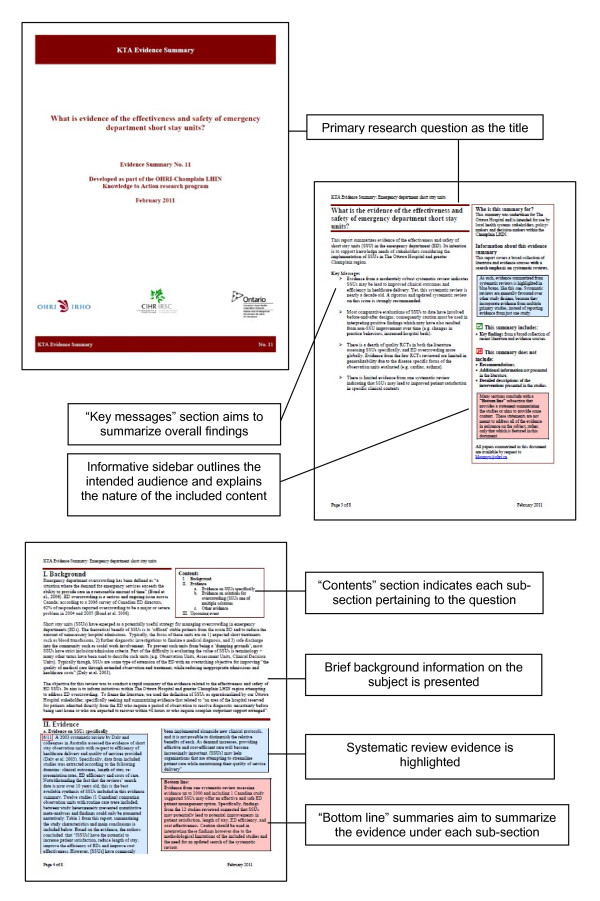
- Data or sample: 11 evidence summaries produced from November 2009 to March 2011, with topics listed in the paper; a case example describes an evidence summary on emergency department short stay units; formal evaluation through key informant interviews was ongoing.
- Main analysis: descriptive account of the eight-step production process, including narrative synthesis of included studies, assignment of evidence levels based on a modified Cochrane Musculoskeletal Group framework, and recent use of AMSTAR to assess included systematic reviews.
Limitations
- The paper states that rapid review products inherently harbor limitations relative to systematic reviews because they are produced within a short timeframe using limited resources, do not employ as much rigor, and may be subject to greater bias and/or error; it also states there is no clear evidence about decision makers’ willingness to compromise methodological rigor for quicker answers.
- The paper states that research comparing rapid with systematic review is limited, and that the purposes and context of rapid review use should be carefully considered when assessing their value.
- Evident from the text: early evidence summaries used a single reviewer for screening, excluded non-English reports and records not available electronically, did not undertake meta-analysis, relied on subjective selection of “high-quality” studies and extraction of relevant material, and in the most recent summary resolved conflicts by passing records to the next screening level rather than consensus.
Model-written summary. Check it against the paper before relying on it.
Integrity signals
Registry
Cites
Statistics
Figures
Verification
Claims the paper makes
2 Valid · 4 Not valid · 14 Not checked · 41 Own results and interpretations
The cited sources support only part of this claim — read each source’s verdict below.
In the paper
“Recent evidence summaries have also employed the 'assessment of multiple systematic reviews' (AMSTAR) tool as a means of assessing the methodological quality of included systematic reviews [13].”
§ Evidence summaries: the evolution of a rapid review approach > Evidence summary methods > Narrative synthesis of included studies (including risk-of-bias assessment)
What the sources say
- Partly supportedcites [13] 13. Shea BJ Grimshaw JM Wells GA Boers M Andersson N Hamel C Development of AMSTAR: a measurement tool to assess the methodological quality of systematic reviews BMC Med Res Methodol 2007 7 10 10.1186/1471-2288-7-10 17302989 PMC1810543 sourceExperimental — accuracy not yet measured
The Background identifies AMSTAR as a tool developed to assess the methodological quality of systematic reviews. The Discussion describes preliminary experience with the tool, but our copy does not establish that recent evidence summaries employed it to assess their included reviews. (LLM, conf=0.82)
plain- Asserted: passes — The authors put it forward as true.
- Checkable: passes — It can be checked against evidence.
- Load-bearing: unclear — It is unclear whether the paper’s conclusions depend on it.
- Based: passes — The paper gives a reason why it holds.
- Partly supported
Every source the paper cites for this claim was checked and supports it.
In the paper
“Parkill and colleagues have shown that, when compared to highly sensitive searches, pragmatically-based searches conducted for the purpose of populating an evidence map can produce a similar amount of relevant records, more quickly and at less cost [18].”
§ Evidence summaries: the evolution of a rapid review approach > Discussion
What the sources say
- Supportedcites [18] 18. Parkill A Clavisi R Pattuwage L Chau M Turner T Bragge P Searches for evidence mapping: effective, shorter, cheaper J Med Libr Assoc 2011 99 157 160 10.3163/1536-5050.99.2.008 21464854 PMC3066574 source
The RESULTS (p. 4 of our copy) report that the pragmatic evidence-mapping (EM) strategy retrieved 120 (77%) of included references versus 125 (81%) for the highly sensitive (HS) strategy — a similar yield of relevant records — while retrieving 781 fewer total citations, which 'would have resulted in a saving 19.5 hours of staff time over the 6 questions.' The DISCUSSION AND CONCLUSIONS states HS methods 'are not always cost effective for evidence mapping, in terms of resource use' and that the EM strings 'effectively identified relevant references using less staff time' (extrapolating to six extra weeks for the six questions, a year across all 55). The METHOD confirms the comparison was on yield, included studies retrieved/missed, and staff time. Only caveat: the evaluation covered six questions in traumatic brain/spinal cord injury on PubMed MEDLINE alone, so the finding is stated for that context, but the citing sentence's 'can produce' framing matches the paper's own conclusion. (LLM, conf=0.90)
plainstates a cause- Asserted: passes — The authors put it forward as true.
- Checkable: passes — It can be checked against evidence.
- Load-bearing: passes — The paper’s conclusions depend on it.
- Based: passes — The paper gives a reason why it holds.
- Supported
A result the paper reports from its own data — it cites no other source for it, so there is none to check. The quote shows it is in the paper.
In the paper
“Knowledge users have reported evidence summaries to be of high value in informing their decisions and initiatives.”
§ Evidence summaries: the evolution of a rapid review approach > Abstract > Results
plain- Asserted: passes — The authors put it forward as true.
- Checkable: passes — It can be checked against evidence.
- Load-bearing: passes — The paper’s conclusions depend on it.
- Based: passes — The paper gives a reason why it holds.
The paper states this without a source or data behind it here, so there is nothing to check it against. The quote shows it is in the paper.
In the paper
“Generally, knowledge users in our context have not demonstrated a strong capacity for formulating effective research questions”
§ Evidence summaries: the evolution of a rapid review approach > Evidence summary methods > Question development and refinement
boosted- Asserted: passes — The authors put it forward as true.
- Checkable: passes — It can be checked against evidence.
- Load-bearing: passes — The paper’s conclusions depend on it.
- Based: unclear — It is unclear why the paper says it holds.
A result the paper states — it cites no source for it, so there is none to check. The quote shows it is in the paper.
In the paper
“the first three evidence summaries were produced in the absence of a primary research question but rather using a series of research questions developed by the research team.”
§ Evidence summaries: the evolution of a rapid review approach > Evidence summary methods > Question development and refinement
plain- Asserted: passes — The authors put it forward as true.
- Checkable: passes — It can be checked against evidence.
- Load-bearing: passes — The paper’s conclusions depend on it.
- Based: passes — The paper gives a reason why it holds.
22 more claims
Create a free account to see all 61 claims and to verify the 18 references still open.
- Probably not a substantial claim. 28
- It may state two separate claims as one. 17
Claims other papers make about this one
Each is checked against this paper’s own text: does it say what the citing paper says it does?
The cited source doesn’t support the claim as written.
In the citing paper
“RRs are better suited for narrowly defined research questions where one or more SR steps may be reduced or omitted [4, 6, 21, 22, 24, 25].”
From How to conduct systematic reviews more expeditiously? (2015) · cites this paper as [4]
Checked by a reasoning model — may be wrong.
Experimental — accuracy not yet measuredThe source backs part of the claim, not all of it — or backs it for a different population, condition or comparison.
In the citing paper
“The conduct of SRs can be a time-consuming, cost- and resource-intensive task, which may take on average from 6 months to several years [4–6].”
From How to conduct systematic reviews more expeditiously? (2015) · cites this paper as [4]
Experimental — accuracy not yet measuredThe source backs part of the claim, not all of it — or backs it for a different population, condition or comparison.
In the citing paper
“In addition, the HTA process is time-consuming, generally taking over a year to complete, with the SLR and NMA part of this process taking several months each [8, 11].”
From Artificial Intelligence to Automate Network Meta-Analyses: Four Case Studies to Evaluate the Potential Application of Large Language Models (2024) · cites this paper as [11]
Experimental — accuracy not yet measuredThe source backs part of the claim, not all of it — or backs it for a different population, condition or comparison.
In the citing paper
“the methodological rigor and process that makes SR evidence trustworthy often take one to 2 years to complete [[1], [2], [3], [4]] and limit their utility to meet the time-sensitive needs of stakeholders.”
From Cochrane Rapid Reviews Methods Group offers evidence-informed guidance to conduct rapid reviews (2021) · cites this paper as [2]
Experimental — accuracy not yet measuredThe cited source says what the claim attributes to it.
In the citing paper
“We used a rapid review methodology developed by Khangura et al. (2012) which has been used within the context of various disciplines (Blakemore et al., 2017; Kadykalo et al., 2020).”
From Residential care as an alternative care option: A review of literature within a global context (2022) · cites this paper as Khangura et al., 2012
11 more claims about this paper
Create a free account to see every claim other papers make about this one.
Citations
Cites
Cochrane Handbook for Systematic Reviews of Interventions: Cochrane Book Series
(2008) · doi:10.1002/9780470712184 · Cited by 25,048 · cited 1×
“It uses explicit, systematic methods that are selected with a view to minimizing bias, thus providing more reliable findings from which conclusions can be drawn and decisions made” [1].”
MethodDevelopment of AMSTAR: A measurement tool to assess the methodological quality of systematic reviews
Shea, B. J., Grimshaw, J. M., Wells, G. A., Boers, M., Andersson, N., Hamel, C., Porter, A. C., Tugwell, P., Moher, D., & Bouter, L. M. (2007) · BMC Medical Research Methodology · doi:10.1186/1471-2288-7-10 · Cited by 4,374
Self-citationEpidemiology and reporting characteristics of systematic reviews.
Moher, D., Tetzlaff, J., Tricco, A. C., Sampson, M., & Altman, D. G. (2007) · PLoS Medicine · doi:10.1371/journal.pmed.0040078 · Cited by 891 · cited 1×
“While about half of published systematic reviews include a meta-analysis [11], the KTA evidence summaries do not undertake this level of quantitative synthesis (although we do report the results of included metaanalyses).”
BackgroundSelf-citationExpediting systematic reviews: methods and implications of rapid reviews
Ganann, R., Ciliska, D., & Thomas, H. (2010) · Implementation Science · doi:10.1186/1748-5908-5-56 · Cited by 752 · cited 3×
“A growing number of organizations, across various jurisdictions and countries, appear to be experimenting with this approach [3].”
BackgroundMoher, D., Pham, B., Lawson, M., & Klassen, T. (2003) · Health Technology Assessment · doi:10.3310/hta7410 · Cited by 500 · cited 1×
“Although exclusion of languages other than English is undesirable, it is considered to be a reasonable practice given limited time and resources and there is some evidence to suggest that it may not markedly bias review findings [9].”
BackgroundSelf-citationSingle data extraction generated more errors than double data extraction in systematic reviews
Buscemi, N., Hartling, L., Vandermeer, B., Tjosvold, L., & Klassen, T. P. (2006) · Journal of Clinical Epidemiology · doi:10.1016/j.jclinepi.2005.11.010 · Cited by 464 · cited 1×
“It is recognized, however, that a single reviewer introduces a level of error that is not desirable [10], and a second reviewer is now generally included on all evidence summaries, typically to review records excluded by the first reviewer - an approach we have labeled ‘liberal accelerated’.”
BackgroundRAPID VERSUS FULL SYSTEMATIC REVIEWS: VALIDITY IN CLINICAL PRACTICE?
Watt, A., Cameron, A., Sturm, L., Lathlean, T., Babidge, W., Blamey, S., Facey, K., Hailey, D., Norderhaug, I., & Maddern, G. (2008) · ANZ Journal of Surgery · doi:10.1111/j.1445-2197.2008.04730.x · Cited by 163 · cited 3×
“found that, despite “axiomatic differences” between the rapid and full reviews evaluated, “the essential conclusions of the rapid and full reviews did not differ extensively” [4], suggesting that products like the KTA evidence summaries may offer a useful and valid approach.”
BackgroundUsing Existing Systematic Reviews in Complex Systematic Reviews
Whitlock, E. P., Lin, J. S., Chou, R., Shekelle, P., & Robinson, K. A. (2008) · Annals of Internal Medicine · doi:10.7326/0003-4819-148-10-200805200-00010 · Cited by 144 · cited 1×
“Another consideration is a Grades of Recommendation, Assessment, Development and Evaluation-like assessment for the overall body of information included in the evidence summary as an important feature for knowledge users’ interpretation of the global evidence base [20].”
BackgroundEnd-user involvement in health technology assessment (HTA) development: A way to increase impact
McGregor, M., & Brophy, J. M. (2005) · International Journal of Technology Assessment in Health Care · doi:10.1017/s026646230505035x · Cited by 125 · cited 1×
“Usability has been an oft-neglected component in traditional systematic reviews despite evidence that has shown its capacity to improve the quality and cost effectiveness of health care [5,6].”
BackgroundLomas, J. (2005) · Healthcare Policy | Politiques de Santé · doi:10.12927/hcpol..17567 · Cited by 120
Research works printed but not linked: 2
- 1. Green S Higgins J Alderson P Clarke M Mulrow C Oxman A Higgins J, Green S Chapter 1 - Introduction Cochrane handbook for systematic reviews of interventions 2008 West Sussex, England: The Cochrane Collaboration and John Wiley & Sons Ltd
- 8. Information services CADTH Grey matters: A practical search tool for evidence-based medicine 2011 Ottawa, Canada: Canadian Agency for Drugs and Technologies in Health
Cited by
Items 301–400 of 1,003
Strategies That Promote Equity in COVID-19 Vaccine Uptake for Latinx Communities: a Review
Demeke, J., Ramos, S. R., McFadden, S. M., Dada, D., Djiometio, J. N., Vlahov, D., Wilton, L., Wang, M., & Nelson, L. E. (2022) · Journal of Racial and Ethnic Health Disparities · doi:10.1007/s40615-022-01320-8 · Cited by 38
The Effects of Cover Crops on Multiple Environmental Sustainability Indicators—A Review
Rivière, C., Béthinger, A., & Bergez, J.-É. (2022) · Agronomy · doi:10.3390/agronomy12092011 · Cited by 38
Essential medicines availability is still suboptimal in many countries: a scoping review
Mahmić-Kaknjo, M., Kadić, A. J., Utrobičić, A., Chan, K. Y., Bero, L. A., & Marušić, A. (2018) · Journal of Clinical Epidemiology · doi:10.1016/j.jclinepi.2018.02.006 · Cited by 38
“A liberal accelerated model [15] was used to search the gray literature, in which one reviewer (MMK) selected potentially inclusive titles, and the other (AJK) checked rejected titles for potential inclusion.”
MethodThe impact of the peer review of literature search strategies in support of rapid review reports
Spry, C., & Mierzwinski‐Urban, M. (2018) · Research Synthesis Methods · doi:10.1002/jrsm.1330 · Cited by 37
“A concern among researchers is the potential introduction of bias due to the use of accelerated processes.(19,25) Based on the results of this investigation, forgoing the peer review of search strategies could be a contributing factor in some content areas.”
BackgroundKwakkenbos, L., Juszczak, E., Hemkens, L. G., Sampson, M., Fröbert, O., Relton, C., Gale, C. P., Zwarenstein, M., Langan, S., Moher, D., et al. (2018) · Research Integrity and Peer Review · doi:10.1186/s41073-018-0053-3 · Cited by 39
Self-citationPublic health implications of SARS-CoV-2 variants of concern: a rapid scoping review
Somerville, M., Curran, J., Dol, J., Boulos, L., Saxinger, L. M., Doroshenko, A., Hastings, S. E., Reynolds, B., Gallant, A. J., Shin, H. D., et al. (2021) · BMJ Open · doi:10.1136/bmjopen-2021-055781 · Cited by 37
Identifying, managing and preventing skin maceration: a rapid review of the clinical evidence
Whitehead, F., Giampieri, S., Graham, T., & Grocott, P. (2017) · Journal of Wound Care · doi:10.12968/jowc.2017.26.4.159 · Cited by 39
Oral health in end‐of‐life patients: A rapid review
Fitzgerald, R., & Gallagher, J. E. (2018) · Special Care in Dentistry · doi:10.1111/scd.12316 · Cited by 44
Furlong, L., Serry, T. A., Bridgman, K., & Erickson, S. (2021) · International Journal of Language & Communication Disorders · doi:10.1111/1460-6984.12619 · Cited by 37
“The timeframe for systematic reviews can take anywhere between 6 months and 2 years to complete (Khangura et al. 2012), which may not meet the needs of key stakeholders, including practitioners.”
BackgroundHamel, C., Michaud, A., Thuku, M., Affengruber, L., Skidmore, B., Nussbaumer-Streit, B., Stevens, A., & Garritty, C. (2020) · Journal of Clinical Epidemiology · doi:10.1016/j.jclinepi.2020.06.027 · Cited by 36
Wilson, M. G., Lavis, J. N., & Gauvin, F.-P. (2015) · Systematic Reviews · doi:10.1186/s13643-015-0009-3 · Cited by 36
“Alternatively, they may turn to one of very few formalized rapid-response programs in Canada, if their question is about drugs and other health technologies [1], if they are in Quebec and have a question about drugs and other health technologies or about health and social programs and services [2], if they are in Onta…”
BackgroundKarriker‐Jaffe, K. J., Blackburn, N., Graham, K., Walker, M. J., Room, R., Wilson, I. M., Waleewong, O., Gilchrist, G., Ramsoomar, L., & Laslett, A. (2023) · International Journal of Drug Policy · doi:10.1016/j.drugpo.2023.104148 · Cited by 38
Modes of delivery in preventive intervention studies: a rapid review
Beall, R. F., Baskerville, N. B., Golfam, M., Saeed, S., & Little, J. (2014) · European Journal of Clinical Investigation · doi:10.1111/eci.12279 · Cited by 42
Chambers, D., & Wilson, P. M. (2012) · Systematic Reviews · doi:10.1186/2046-4053-1-32 · Cited by 38
“The closest parallel to our service has been developed by the Ottawa Hospital Research Institute, Canada, working with the Champlain Local Health Integration Network, a commissioner of healthcare services [19].”
MethodKovacs, B., Sullivan, K., Hiremath, S. S., & Patel, R. V. (2017) · Nephrology · doi:10.1111/nep.13009 · Cited by 36
Lin, S. H., & Dionne, T. P. (2018) · Journal of Participatory Medicine · doi:10.2196/jopm.8929 · Cited by 41
“Rapid review evidence summaries provide trustworthy information for broad questions to end users in a timely manner [6].”
BackgroundGates, A., Pillay, J., Reynolds, D. L., Stirling, R., Traversy, G., Korownyk, C. S., Moore, A. E., Thériault, G., Thombs, B. D., Little, J., et al. (2021) · Systematic Reviews · doi:10.1186/s13643-020-01538-9 · Cited by 40
Colonio-Salazar, F. B., Sipiyaruk, K., White, S., & Gallagher, J. E. (2019) · BDJ · doi:10.1038/s41415-019-0485-2 · Cited by 41
Urquhart, C., Cheuk, B., Lam, L., & Snowden, D. (2025) · Journal of the Association for Information Science and Technology · doi:10.1002/asi.24866 · Cited by 35
Assessing the impact of physical activity on reducing depressive symptoms: a rapid review
Samsudin, N., Bailey, R. P., Ríes, F., Hashim, S. N. A., & Fernandez, J. A. (2024) · BMC Sports Science Medicine and Rehabilitation · doi:10.1186/s13102-024-00895-5 · Cited by 39
“They have been shown to generate similar conclusions to systematic reviews and constitute a recognised and valuable research method [33, 34] ben-efitting the scientific community by providing an incorporated, synthesised overview of the currently available evidence.”
BackgroundImproving palliative and end-of-life care with machine learning and routine data: a rapid review
Storick, V., O’Herlihy, A., Abdelhafeez, S., Ahmed, R., & May, P. (2019) · HRB Open Research · doi:10.12688/hrbopenres.12923.1 · Cited by 40
Hamel, C., Ahmadzai, N., Beck, A., Thuku, M., Skidmore, B., Pussegoda, K., Bjerre, L. M., Chatterjee, A., Dennis, K. E. B., Ferri, L. E., et al. (2020) · Systematic Reviews · doi:10.1186/s13643-020-1275-2 · Cited by 36
Self-citationZhen, J., Chan, C., Schoonees, A., Apatu, E., Thabane, L., & Young, T. (2020) · PubMed · doi:10.7196/samj.2020.v110i6.14751 · Cited by 35
“6 Methods Rapid reviews aim to provide a summary of the evidence in a short space of time.[11] The participants of interest were humans using public transportation (taxis, buses, trains and subways) and exposed to viruses such as influenza, SARS-CoV or MERS-CoV.”
BackgroundThe Impact of COVID-19 on the Mental Well-Being of College Students
Sauer, N. J., Sałek, A., Szlasa, W., Ciecieląg, T., Obara, J., Gaweł, S., Marciniak, D. M., & Karłowicz-Bodalska, K. (2022) · International Journal of Environmental Research and Public Health · doi:10.3390/ijerph19095089 · Cited by 37
Respiratory pandemics, urban planning and design: A multidisciplinary rapid review of the literature
Harris, P. J., Harris‐Roxas, B., Prior, J., Morrison, N., McIntyre, E., Frawley, J., Adams, J., Bevan, W., Haigh, F., Freeman, E., et al. (2022) · Cities · doi:10.1016/j.cities.2022.103767 · Cited by 37
Using rapid reviews: an example from a study conducted to inform policy‐making
O'Leary, D. F., Casey, M., O’Connor, L., Stokes, D., Fealy, G., O’Brien, D., Smith, R., McNamara, M. S., & Egan, C. (2017) · Journal of Advanced Nursing · doi:10.1111/jan.13231 · Cited by 40
Koensgen, N., Rombey, T., Allers, K., Mathes, T., Hoffmann, F., & Pieper, D. (2019) · Journal of Clinical Epidemiology · doi:10.1016/j.jclinepi.2019.02.012 · Cited by 34
Mental Health in the Construction Industry: a Rapid Review
Oswald, D., Borg, J., & Sherratt, F. (2019) · Annual Conference of the International Group for Lean Construction · doi:10.24928/2019/0141 · Cited by 41
Balasubramanian, M., Hasan, A. G., Ganbavale, S. G., Alolayah, A., & Gallagher, J. E. (2021) · International Journal of Environmental Research and Public Health · doi:10.3390/ijerph18062891 · Cited by 35
Current Challenges Supporting School-Aged Children with Vision Problems: A Rapid Review
Ali, Q., Heldal, I., Helgesen, C. G., Krūmiņa, G., Costescu, C. A., Kővári, A., Katona, J., & Thill, S. (2021) · Applied Sciences · doi:10.3390/app11209673 · Cited by 40
From Theory to Practice: A review of co-design methods for humanitarian energy ecosystems
Robinson, B. L., Halford, A., & Gaura, E. I. (2022) · Energy Research & Social Science · doi:10.1016/j.erss.2022.102545 · Cited by 36
Fanti, G., Spinazzè, A., Borghi, F., Rovelli, S., Campagnolo, D., Keller, M., Borghi, A., Cattaneo, A., Cauda, E. G., & Cavallo, D. M. (2022) · Sensors · doi:10.3390/s22134841 · Cited by 38
Rombey, T., Allers, K., Mathes, T., Hoffmann, F., & Pieper, D. (2019) · BMC Medical Research Methodology · doi:10.1186/s12874-019-0698-8 · Cited by 34
Tremblay, M.-C., Olivier-D’Avignon, G., Garceau, L., Échaquan, S., Fletcher, C., Leclerc, A.-M., Poitras, M.-E., Neashish, E., Maillet, L., & Paquette, J.-S. (2023) · AlterNative: An International Journal of Indigenous Peoples · doi:10.1177/11771801221146787 · Cited by 27
“A rapid review (Khangura et al., 2012) was chosen as the most appropriate approach for quick synthesis of descriptive information from qualitative and quantitative studies for the purpose of informing decision making within the context of our larger study.”
MethodMalviya, S. (2023) · Journal of Religion and Health · doi:10.1007/s10943-023-01761-3 · Cited by 33
“The term ‘culturally and linguistically diverse’ (CALD) refers to people born overseas, people with limited English proficiency, and children of people born overseas (Khatri & Assefa, 2022).”
BackgroundVanNoy, B., Lam, J., & Zota, A. R. (2018) · Current Environmental Health Reports · doi:10.1007/s40572-018-0194-z · Cited by 36
Thompson, D. L., Leach, M., Smith, C. P., Fereday, J., & May, E. (2020) · Heliyon · doi:10.1016/j.heliyon.2020.e03564 · Cited by 26
Musculoskeletal Injuries Among Females in the Military: A Scoping Review
Barbeau, P., Michaud, A., Hamel, C., Rice, D. B., Skidmore, B., Hutton, B., Garritty, C., da Silva, D. F., Semeniuk, K., & Adamo, K. B. (2021) · Military Medicine · doi:10.1093/milmed/usaa555 · Cited by 38
Exploring anxiety levels in healthcare workers during COVID-19 pandemic: Turkey sample
Şahin, C. U., & Kulakaç, N. (2021) · Current Psychology · doi:10.1007/s12144-021-01730-7 · Cited by 38
“During epidemics, the change in working conditions of healthcare workers and increase in their workload cause them to experience anxiety (Khangura et al., 2012; Lai et al., 2020; Wong et al., 2005).”
BackgroundVillanueva, V., Carreño, M., Gil‐Nagel, A., Serrano-Castro, P. J., Serratosa, J. M., Toledo, M., Álvarez‐Barón, E., Gil, A., & Labazuy, S. S. (2021) · Epilepsy & Behavior · doi:10.1016/j.yebeh.2021.108222 · Cited by 40
“A systematic literature review [23,24] was conducted between March and April 2020 to obtain relevant information on the disease and its current management in Spain.”
BackgroundRapid reviews as an emerging approach to evidence synthesis in education
Wollscheid, S., & Tripney, J. (2021) · London Review of Education · doi:10.14324/lre.19.1.32 · Cited by 37
Optimizing Making Every Contact Count (MECC) interventions: A strategic behavioral analysis.
Haighton, C., Newbury‐Birch, D., Durlik, C., Sallis, A., Chadborn, T., Porter, L., Harling, M., & Rodrigues, A. (2021) · Health Psychology · doi:10.1037/hea0001100 · Cited by 34
State of the Art Review on the Analytic Hierarchy Process and Urban Mobility
Bargueño, D. R., Salomon, V. A. P., Marins, F. A. S., Palominos, P., & Marrone, L. A. (2021) · Mathematics · doi:10.3390/math9243179 · Cited by 42
Diestelkamp, S., Drechsel, M., Baldus, C., Wartberg, L., Arnaud, N., & Thomasius, R. (2016) · European Addiction Research · doi:10.1159/000435877 · Cited by 32
Navas-Martín, M. Á., Ovalle-Perandones, M.-A., López-Bueno, J. A., Díaz, J., Linares, C., & Martínez, G. S. (2023) · The Science of The Total Environment · doi:10.1016/j.scitotenv.2023.168441 · Cited by 36
Rapid reviews methods series: assessing the appropriateness of conducting a rapid review
Garritty, C., Nußbaumer-Streit, B., Hamel, C., & Devane, D. (2024) · BMJ Evidence-Based Medicine · doi:10.1136/bmjebm-2023-112722 · Cited by 39
Rapid Review Summit: an overview and initiation of a research agenda
Polisena, J., Garritty, C., Umscheid, C. A., Kamel, C., Samra, K., Smith, J., & Vosilla, A. (2015) · Systematic Reviews · doi:10.1186/s13643-015-0111-6 · Cited by 31
“addressing the scientific imperative for the production of robust, high-quality research that soundly supports health policy and practice [5, 6].”
BackgroundBornstein, S., Baker, R., Navarro, P., Mackey, S., Speed, D., & Sullivan, M. (2017) · Systematic Reviews · doi:10.1186/s13643-017-0606-4 · Cited by 35
“The challenge for decision makers to consider an ever-increasing number of health research publications is compounded by fiscal pressures that reduce the availability of specialized staff to carry out this work [8, 9].”
BackgroundSaxena, L. P. (2020) · Sustainability · doi:10.3390/su12051867 · Cited by 37
Low-calorie sweeteners and human health: a rapid review of systematic reviews
Andrade, L., Lee, K. M., Sylvetsky, A. C., & Kirkpatrick, S. I. (2020) · Nutrition Reviews · doi:10.1093/nutrit/nuaa123 · Cited by 33
Nyqvist, F., Häkkinen, E., Renaud, A., Bouchard, L., & Prys, C. (2021) · Journal of Cross-Cultural Gerontology · doi:10.1007/s10823-021-09433-z · Cited by 37
“Thus, rapid reviews have been identified as a research method that produces timely, user friendly and trustworthy evidence that allows for a comprehensive literature exploration (Ganann et al., 2010; Khangura et al., 2012).”
BackgroundInfluentialEffectiveness of conservation interventions globally for degraded peatlands in cool-climate regions
Rowland, J. A., Bracey, C., Moore, J. L., Cook, C. N., Bragge, P., & Walsh, J. C. (2021) · Biological Conservation · doi:10.1016/j.biocon.2021.109327 · Cited by 36
“Rapid reviews can achieve this by systematically searching the literature for reviews rather than primary studies (Khangura et al., 2012; STARR, 2019).”
BackgroundMethodInfluentialDecoding semi-automated title-abstract screening: findings from a convenience sample of reviews
Gates, A., Gates, M., DaRosa, D., Elliott, S. A., Pillay, J., Rahman, S., Vandermeer, B., & Hartling, L. (2020) · Systematic Reviews · doi:10.1186/s13643-020-01528-x · Cited by 31
Tsakonas, K., Badyal, S., Takaro, T. K., & Buse, C. G. (2024) · The Journal of Climate Change and Health · doi:10.1016/j.joclim.2024.100337 · Cited by 38
Low-calorie sweeteners and health outcomes: A demonstration of rapid evidence mapping (rEM)
Lam, J., Howard, B. E., Thayer, K. A., & Shah, R. (2019) · Environment International · doi:10.1016/j.envint.2018.11.070 · Cited by 33
Spirituality and locus of control—A rapid literature review.
Timmins, F., & Martin, C. R. (2019) · Spirituality in Clinical Practice · doi:10.1037/scp0000192 · Cited by 33
Occupational exposure and post-traumatic stress disorder: A rapid review
Eerd, D. V., Irvin, E., Harbin, S., Mahood, Q., & Tiong, M. (2021) · Work · doi:10.3233/wor-203406 · Cited by 37
“This brings about issues of feasibility for reviewing as much relevant literature as possible [23].”
Dimova, E. D., & Mitchell, D. (2021) · Drugs Education Prevention and Policy · doi:10.1080/09687637.2021.1932754 · Cited by 33
“A rapid review is a type of knowledge synthesis where the steps of a systematic review are streamlined (Khangura et al., 2012).”
BackgroundImproving teamwork in maternity services: A rapid review of interventions
Harris, J., Beck, S., Ayers, N., Bick, D., Lamb, B. W., Aref‐Adib, M., Kelly, T., Green, J. S. A., & Taylor, C. (2022) · Midwifery · doi:10.1016/j.midw.2022.103285 · Cited by 33
Sibley, K. M., Hoekstra, F., Kothari, A. R., & Mrklas, K. (2022) · Wiley eBooks · doi:10.1002/9781119757269.ch4 · Cited by 35
Active Schools in Europe—A Review of Empirical Findings
Bailey, R. P., Ríes, F., & Scheuer, C. (2023) · Sustainability · doi:10.3390/su15043806 · Cited by 37
“Rapid reviewing has become an increasingly popular form of evidence synthesis in which components of the systematic review process are simplified or omitted to produce information more quickly and/or for a more variegated response [20].”
BackgroundQuach, P., Sherif, R. E., Gomes, J., & Krewksi, D. (2016) · NeuroToxicology · doi:10.1016/j.neuro.2016.05.009 · Cited by 34
“A second reviewer acts as a safety net, with articles considered irrelevant by the first reviewer screened again by the second reviewer to ensure that the article in question is indeed irrelevant (Khangura et al., 2012; Garritty, 2011).”
BackgroundStephenson, M., Lisy, K., Stern, C., Feyer, A.-M., Fisher, L., & Aromataris, E. (2018) · International Journal of Evidence-Based Healthcare · doi:10.1097/xeb.0000000000000151 · Cited by 35
VALUE OF DATABASES OTHER THAN MEDLINE FOR RAPID HEALTH TECHNOLOGY ASSESSMENTS
Lorenzetti, D. L., Topfer, L.-A., Dennett, L., & Clement, F. (2014) · International Journal of Technology Assessment in Health Care · doi:10.1017/s0266462314000166 · Cited by 30
“Although “there is no universally accepted definition of what constitutes a rapid review” (6), they are usually narrower in scope and intended to inform the more immediate information needs of policy and healthcare decision makers (5–8).”
BackgroundSex Education in Italy: An Overview of 15 Years of Projects in Primary and Secondary Schools
Moro, G. L., Bert, F., Cappelletti, T., Elhadidy, H. S. M. A., Scaioli, G., & Siliquini, R. (2023) · Archives of Sexual Behavior · doi:10.1007/s10508-023-02541-6 · Cited by 30
“To find further information, a rapid systematic review (Khangura et al., 2012) of the literature was performed by searching the Scopus and PubMed databases and reported following the Preferred Reporting Items for Systematic Reviews and Meta-Analyses (PRISMA) checklist (Page et al.”
MethodGondek, D., Ning, K., Ploubidis, G. B., Nasim, B., & Goodman, A. T. (2018) · PLoS ONE · doi:10.1371/journal.pone.0209659 · Cited by 30
A Rapid Review on the Efficacy and Safety of Pharmacological Treatments for Chagas Disease
Malone, C. J., Nevis, I., C, E. A. F., & Sanchez, A. L. (2021) · Tropical Medicine and Infectious Disease · doi:10.3390/tropicalmed6030128 · Cited by 30
Abelson, J., Tripp, L., MacNeil, M., Lang, A., Fancott, C. A., Ganann, R., Granieri, M., Hofstetter, C., King, B., Kristy, B.-L., et al. (2023) · Health Expectations · doi:10.1111/hex.13742 · Cited by 32
Hancox, J., Mckiernan, C., Martin, A. L., Tomas, J., & MacArtney, J. I. (2023) · Palliative Medicine · doi:10.1177/02692163231169318 · Cited by 37
“This review employs rapid review methodology 23 ; an approach to synthesising knowledge in a shorter time-frame by simplifying or excluding aspects mandated in traditional systematic review.”
MethodAdedoyin, A. C. (2016) · Social Work Education · doi:10.1080/02615479.2016.1154660 · Cited by 37
“Rapid reviews are succinctly described according to Khangura, Konnyu, Cushman, Grimshaw, and Moher (2012) as ‘… a streamlined approach to synthesizing evidence in a timely manner …’ (p. 2).”
BackgroundMethodSullivan, K., Hunter, Z., Andrioli, V., Guerra, L., Leonard, M., Klassen, A. F., & Keays, M. A. (2016) · Journal of Pediatric Urology · doi:10.1016/j.jpurol.2016.11.010 · Cited by 31
Health equity considerations in guideline development: a rapid scoping review
Shaver, N., Bennett, A., Beck, A., Skidmore, B., Traversy, G., Brouwers, M. C., Little, J., Moher, D., Moore, A. E., & Persaud, N. (2023) · CMAJ Open · doi:10.9778/cmajo.20220130 · Cited by 33
Self-citationBragge, P., Delafosse, V., Kellner, P., Cong‐Lem, N., Tsering, D., Giummarra, M. J., Lannin, N. A., Andrew, N. E., & Reeder, S. C. (2025) · BMJ Open · doi:10.1136/bmjopen-2024-091942 · Cited by 33
Clarifying Ethical Dilemmas of Using Artificial Intelligence in Research Writing: A Rapid Review
Ugwu, N. F., Igbinlade, A. S., Ochiaka, R. E., Ezeani, U. D., Okorie, N. C., Opele, J. K., Onayinka, T. S., Iroegbu, O., Onyekwere, O. K., Adams, A. B., et al. (2024) · Higher Learning Research Communications · doi:10.18870/hlrc.v142.1549 · Cited by 35
Return to sender: a behavioural approach to reducing food waste in schools
Boulet, M., Wright, B., Williams, C., & Rickinson, M. (2019) · Australasian Journal of Environmental Management · doi:10.1080/14486563.2019.1672587 · Cited by 33
“Unlike traditional systematic literature reviews, rapid reviews focus on already synthesised research evidence of a high quality and are essentially ‘reviews of reviews’ (Khangura et al. 2012).”
BackgroundWray, J., Watson, R. A., Gibson, H. M., & Barrett, D. (2020) · Nurse Education Today · doi:10.1016/j.nedt.2020.104651 · Cited by 35
Kristo, I., & Mowll, J. (2021) · Health & Social Care in the Community · doi:10.1111/hsc.13694 · Cited by 29
Keeley, T., Khan, H., Pinfold, V., Williamson, P. R., Mathers, J. M., Davies, L. M., Sayers, R., England, E., Reilly, S., Byng, R., et al. (2015) · Trials · doi:10.1186/s13063-015-0553-0 · Cited by 33
“A systematic or rapid review [28,29] will be used to identify potential measures for inclusion in the core outcome set.”
Sullivan, K., Li, M., Haworth, S., Chernetsova, E., Wayne, C., Kapralik, J., Chan, E., & Nasr, A. (2017) · Pediatric Surgery International · doi:10.1007/s00383-017-4079-2 · Cited by 29
“At a title and abstract level, this was done using the liberal accelerated method [26]; at the full-text level reviewers reached consensus on articles to be included in the final analysis.”
MethodSigfrid, L., Moore, C. E., Salam, A. P., Maayan, N., Hamel, C., Garritty, C., Lutje, V., Buckley, B. S., Soares‐Weiser, K., Marshall, I. J., et al. (2019) · BMC Medicine · doi:10.1186/s12916-019-1338-1 · Cited by 30
Wells, C. E., & Smith, S. J. (2016) · Journal of Primary Care & Community Health · doi:10.1177/2150131916678715 · Cited by 36
“Rapid review methodology was chosen as it is well suited to synthesizing evidence in a timely manner and is perceived as useful in health care settings to inform decisions and practices.(23) We sought to elicit evidence to enable us to understand the nature of the involvement of primary care in diagnostic pathways for…”
Does knowledge brokering improve the quality of rapid review proposals? A before and after study
Moore, G., Redman, S., D’Este, C., Makkar, S., & Turner, T. (2017) · Systematic Reviews · doi:10.1186/s13643-017-0411-0 · Cited by 28
“Further, the study had a larger sample size than the previous studies (60 reviews compared to 11 reviews [9]) and used a multi-level analysis (Fig.”
BackgroundMethodResultInfluentialHua, M. J., Butera, G., Akinyemi, O., & Porterfield, D. S. (2024) · PLoS ONE · doi:10.1371/journal.pone.0302408 · Cited by 30
Mobile Health Interventions for Traumatic Brain Injuries
Juengst, S. B., Hart, T., Sander, A. M., Nalder, E. J., & Pappadis, M. R. (2019) · Current Physical Medicine and Rehabilitation Reports · doi:10.1007/s40141-019-00240-9 · Cited by 31
“We excluded articles published before 2012, following guidelines for a rapid review of the literature [56], and articles not published in English.”
MethodAhmadzai, N., Cheng, W., Kilty, S., Esmaeilisaraji, L., Wolfe, D. M., Bonaparte, J. P., Schramm, D., Fitzpatrick, E. M., Lin, V. W., Skidmore, B., et al. (2020) · PLoS ONE · doi:10.1371/journal.pone.0237523 · Cited by 34
Castro, F. L., Guérzoni, S., & Pellesi, L. (2021) · Drug Healthcare and Patient Safety · doi:10.2147/dhps.s304373 · Cited by 31
“The rapid review method used is similar to previously published reviews.(12,13) Briefly, we focused on English,”
MethodKhalid, A. F., Grimshaw, J., Parakh, N. D., Charide, R., Rab, F., & Sohani, S. (2022) · BMC Health Services Research · doi:10.1186/s12913-023-09302-0 · Cited by 28
Self-citationRasmussen, C. D. N., Højberg, H., Bengtsen, E., & Jørgensen, M. B. (2017) · Applied Ergonomics · doi:10.1016/j.apergo.2017.09.014 · Cited by 30
The Role of Healthcare Chaplains in Resuscitation: A Rapid Literature Review
Timmins, F., & Pujol, N. (2018) · Journal of Religion and Health · doi:10.1007/s10943-018-0604-4 · Cited by 28
“Data extraction and analysis in rapid review are less detailed in those systematic review methods and are primarily a narrative thematic approach (Smith et al. 2015; Khangura et al. 2012).”
BackgroundMethodInfluentialBellanger, M. M., Barry, K., Rana, J., & Régnaux, J.-P. (2020) · Frontiers in Medicine · doi:10.3389/fmed.2019.00325 · Cited by 32
Abogunrin, S., Muir, J. M., Zerbini, C., & Sarri, G. (2025) · Frontiers in Pharmacology · doi:10.3389/fphar.2025.1454245 · Cited by 27
Moser, A., & Korstjens, I. (2023) · European Journal of General Practice · doi:10.1080/13814788.2023.2274467 · Cited by 30
“The value of a rapid realist review for primary care is that it prioritises deep understanding of contextual aspects and can support developing local health policy, health service programmes and interventions [8].”
BackgroundPersonal protective equipment and evidence‐based advice for surgical departments during COVID ‐19
Tan, L., Kovoor, J. G., Williamson, P., Tivey, D. R., Babidge, W., Collinson, T. G., Hewett, P. J., Hugh, T. J., Padbury, R. T. A., Langley, S. J., et al. (2020) · ANZ Journal of Surgery · doi:10.1111/ans.16194 · Cited by 31
Yakusheva, O., van den Broek‐Altenburg, E. M., Brekke, G., & Atherly, A. J. (2022) · PLoS ONE · doi:10.1371/journal.pone.0261759 · Cited by 28
“Lastly, rapid review and synthesis has inherent limitations relative to systematic reviews [34, 35].”
BackgroundMethodLi, X., & Evans, J. M. (2022) · BMC Health Services Research · doi:10.1186/s12913-022-08032-z · Cited by 27
“Rapid review We conducted a rapid review of the literature on unintended consequences of PM in healthcare [19].”
MethodRubach, C., & Lazarides, R. (2023) · Edition ZfE · doi:10.1007/978-3-658-37895-0_8 · Cited by 32
The Role of Technology in Improving K-12 School Safety
Schwartz, H. L., Ramchand, R., Barnes‐Proby, D., Grant, S., Jackson, B., Leuschner, K. J., Matsuda, M., & Saunders, J. M. (2016) · RAND Corporation eBooks · doi:10.7249/rr1488 · Cited by 37
“According to Khangura et al. (2012), unlike traditional systematic reviews, which typically take between six months and two years and involve a more exhaustive search for references, our rapid review was completed in a less than six months and is therefore more limited in scope.”
BackgroundMeasuring Activity Performance of Older Adults Using the activPAL: A Rapid Review
Chan, C., Slaughter, S. E., Jones, C. A., Ickert, C., & Wagg, A. (2017) · Healthcare · doi:10.3390/healthcare5040094 · Cited by 30
Petkovic, J., Duench, S., Welch, V. A., Rader, T., Jennings, A., Forster, A. J., & Tugwell, P. (2018) · Health Expectations · doi:10.1111/hex.12837 · Cited by 28
Hunniford, V. T., Grudniewicz, A., Fergusson, D. A., Montroy, J., Grigor, E., Lansdell, C., Lalu, M. M., & On behalf of The Canadian Critical Care Translational Biology Group (2023) · eLife · doi:10.7554/elife.76300 · Cited by 26
“…were identified using rapid review methods, which consisted of the search of a single database, and having a single reviewer screen, extract, and appraise studies while an additional reviewer verified study exclusions, extracted data, and appraisals ( Khangura et al., 2012 ; Varker et al., 2015 ).”
Metadata
- Authors
- Khangura, S., Konnyu, K., Cushman, R., Grimshaw, J., & Moher, D.
- Affiliations
- Ottawa Hospital Research Institute (CA)
- Champlain Local Health Integration Network (CA)
- University of Ottawa (CA)
- Corresponding author
- Moher, David
- Venue
- Systematic Reviews
- Published
- 2012-02-10
- Volume
- 1
- Issue
- 1
- Pages
- 10-10
- ISSN
- 2046-4053 (ISSN-L)
- PMC
- PMC3351736
- OpenAlex
- W2156100542
- Cited by
- 1,232
- References
- 19
- Citations by year
- 2026: 43 · 2025: 96 · 2024: 132 · 2023: 137 · 2022: 156 · 2021: 171 · 2020: 121 · 2019: 87 · 2018: 72 · 2017: 67 · 2016: 61 · 2015: 41 · 2014: 27 · 2013: 16 · 2012: 5
- FWCI
- 32.38
- Type
- journal article
- Language
- en
- Open access
- gold
- doi.org
- Licence
- Locations
- Systematic Reviews (publishedVersion, cc-by)
- PubMed Central (publishedVersion, cc-by)
- PubMed (publishedVersion)
- uO Research (University of Ottawa) (submittedVersion, public-domain)
- DOAJ (DOAJ: Directory of Open Access Journals) (submittedVersion)
- Funders
- University of Ottawa
- Canadian Institutes of Health Research (86796_1)
- Topics
- Social Sciences › Decision Sciences › Statistics, Probability and Uncertainty › Meta-analysis and systematic reviews
- Health Sciences › Health Professions › General Health Professions › Health Sciences Research and Education
- Health Sciences › Medicine › Public Health, Environmental and Occupational Health › Clinical practice guidelines implementation
- Keywords
- rapid review, evidence summaries, knowledge to action, evidence-informed decision-making, knowledge users, knowledge infrastructure, healthcare decision-making, evidence synthesis, evidence dissemination, regional health administration
- MeSH terms
- Decision Making, Humans, Publishing, Review Literature as Topic, Evidence-Based Medicine, Information Dissemination
About these checks
Registry, retraction, Cites and statistics results are computed, not judged, with one exception: a printed reference that no index lists is read once by a model before it counts as a citation error. Claims are extracted by a model and kept only when their quote appears verbatim in the text; each cited source is then checked, with a model’s help, for whether it says what the claim relies on. Those verdicts can be wrong — read the claim’s quote and the cited source before relying on one.
The claim verdicts this report counts are experimental: their accuracy is not yet measured.
A language model drew the claims from the paper on 2026-10-04, under version 3 of the claim definition (model deepseek-v4.1-flash, prompt extract-v3).
A second model labelled each claim on 2026-10-04 (model jev-1.13-20260917, definition revision gold-guideline-v0.2).
Cited sources are checked with a language model’s help (gpt-6-sol and qwen3.8-omni-flash).
Statistics and arithmetic are recomputed, not judged.
Confidence bands are shown only for fields calibrated on our annotated test set. None is calibrated yet, so no band is shown.
What counts as a claim ›How we measure confidence ›How we check this ›
Are you an author, or do you see a problem with this page? Request a review
Data sources
Bibliographic data: Semantic Scholar, OpenAlex, Crossref.
Contains information from the Semantic Scholar Academic Graph Datasets, made available under the ODC Attribution License (ODC-BY 1.0).
Semantic Scholar’s data is described in: Kinney, R., et al. (2023). The Semantic Scholar Open Data Platform. arXiv:2301.10140.
