

Evidence summaries: the evolution of a rapid review approach
Open accessThe DOI matches its Crossref record; 18 of the 19 references it cites were found in a registry or an index; 2 of the 20 sources its claims cite were checked for support.
Abstract
Background: Rapid reviews have emerged as a streamlined approach to synthesizing evidence - typically for informing emergent decisions faced by decision makers in health care settings. Although there is growing use of rapid review 'methods', and proliferation of rapid review products, there is a dearth of published literature on rapid review methodology. This paper outlines our experience with rapidly producing, publishing and disseminating evidence summaries in the context of our Knowledge to Action (KTA) research program. Methods: The KTA research program is a two-year project designed to develop and assess the impact of a regional knowledge infrastructure that supports evidence-informed decision making by regional managers and stakeholders. As part of this program, we have developed evidence summaries - our form of rapid review - which have come to be a flagship component of this project. Our eight-step approach for producing evidence summaries has been developed iteratively, based on evidence (where available), experience and knowledge user feedback. The aim of our evidence summary approach is to deliver quality evidence that is both timely and user-friendly. Results: From November 2009 to March 2011 we have produced 11 evidence summaries on a diverse range of questions identified by our knowledge users. Topic areas have included questions of clinical effectiveness to questions on health systems and/or health services. Knowledge users have reported evidence summaries to be of high value in informing their decisions and initiatives. We continue to experiment with incorporating more of the established methods of systematic reviews, while maintaining our capacity to deliver a final product in a timely manner. Conclusions: The evolution of the KTA rapid review evidence summaries has been a positive one. We have developed an approach that appears to be addressing a need by knowledge users for timely, user-friendly, and trustworthy evidence and have transparently reported these methods here for the wider rapid review and scientific community.
Overview
CoChat Summary
TL;DR
This paper describes the Knowledge to Action (KTA) program’s iterative development of “evidence summaries,” a rapid review approach for producing timely, user-friendly evidence for health care decision makers. From November 2009 to March 2011, the program produced 11 evidence summaries using an eight-step process, while acknowledging inherent trade-offs between rigor and timeliness.
Key findings
- The KTA program produced 11 evidence summaries from November 2009 to March 2011 on diverse questions identified by knowledge users, ranging from clinical effectiveness to health systems and services topics.
- Evidence summaries were produced within a short timeframe of four to five weeks, compared with six months to two years for traditional systematic reviews, and most reports were 10 to 15 pages long, though knowledge users confirmed keeping them under 10 pages is likely important.
- The eight-step approach included needs assessment; question development and refinement; proposal development and approval; systematic literature search; screening and selection; narrative synthesis with evidence-level assignment; report production; and ongoing follow-up and dialogue with knowledge users.
- Knowledge users reported evidence summaries to be of high value in informing decisions and initiatives; the paper cites Watt et al. (2008) as finding that “the essential conclusions of the rapid and full reviews did not differ extensively,” though research comparing rapid and systematic reviews remains limited.
Methods
- Design: an experience-based methodological report describing the iterative development and refinement of KTA evidence summaries within a two-year KTA research program, a collaboration between the Ottawa Hospital Research Institute and the Champlain Local Health Integration Network.
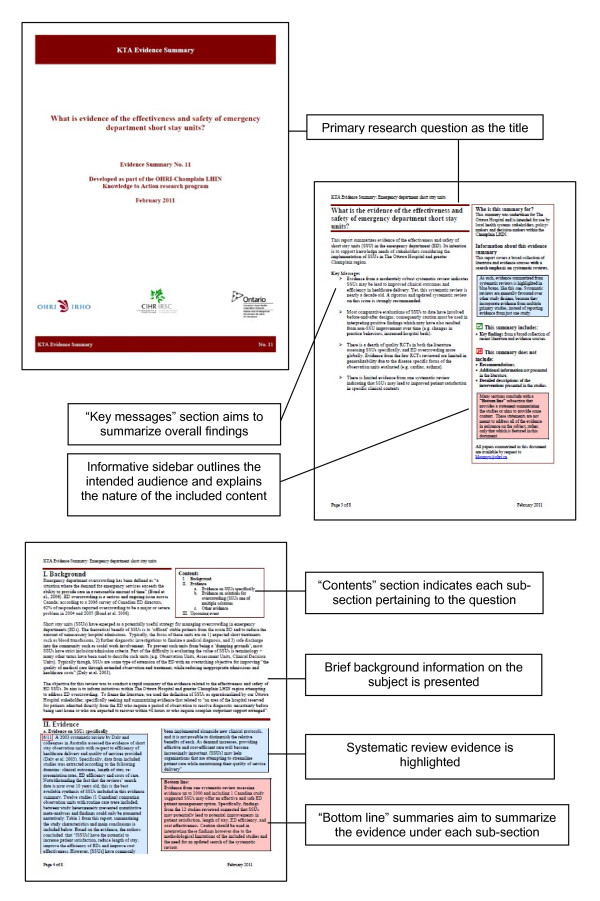
- Data or sample: 11 evidence summaries produced from November 2009 to March 2011, with topics listed in the paper; a case example describes an evidence summary on emergency department short stay units; formal evaluation through key informant interviews was ongoing.
- Main analysis: descriptive account of the eight-step production process, including narrative synthesis of included studies, assignment of evidence levels based on a modified Cochrane Musculoskeletal Group framework, and recent use of AMSTAR to assess included systematic reviews.
Limitations
- The paper states that rapid review products inherently harbor limitations relative to systematic reviews because they are produced within a short timeframe using limited resources, do not employ as much rigor, and may be subject to greater bias and/or error; it also states there is no clear evidence about decision makers’ willingness to compromise methodological rigor for quicker answers.
- The paper states that research comparing rapid with systematic review is limited, and that the purposes and context of rapid review use should be carefully considered when assessing their value.
- Evident from the text: early evidence summaries used a single reviewer for screening, excluded non-English reports and records not available electronically, did not undertake meta-analysis, relied on subjective selection of “high-quality” studies and extraction of relevant material, and in the most recent summary resolved conflicts by passing records to the next screening level rather than consensus.
Model-written summary. Check it against the paper before relying on it.
Integrity signals
Registry
Cites
Statistics
Figures
Verification
Claims the paper makes
2 Valid · 4 Not valid · 14 Not checked · 41 Own results and interpretations
The cited sources support only part of this claim — read each source’s verdict below.
In the paper
“Recent evidence summaries have also employed the 'assessment of multiple systematic reviews' (AMSTAR) tool as a means of assessing the methodological quality of included systematic reviews [13].”
§ Evidence summaries: the evolution of a rapid review approach > Evidence summary methods > Narrative synthesis of included studies (including risk-of-bias assessment)
What the sources say
- Partly supportedcites [13] 13. Shea BJ Grimshaw JM Wells GA Boers M Andersson N Hamel C Development of AMSTAR: a measurement tool to assess the methodological quality of systematic reviews BMC Med Res Methodol 2007 7 10 10.1186/1471-2288-7-10 17302989 PMC1810543 sourceExperimental — accuracy not yet measured
The Background identifies AMSTAR as a tool developed to assess the methodological quality of systematic reviews. The Discussion describes preliminary experience with the tool, but our copy does not establish that recent evidence summaries employed it to assess their included reviews. (LLM, conf=0.82)
plain- Asserted: passes — The authors put it forward as true.
- Checkable: passes — It can be checked against evidence.
- Load-bearing: unclear — It is unclear whether the paper’s conclusions depend on it.
- Based: passes — The paper gives a reason why it holds.
- Partly supported
Every source the paper cites for this claim was checked and supports it.
In the paper
“Parkill and colleagues have shown that, when compared to highly sensitive searches, pragmatically-based searches conducted for the purpose of populating an evidence map can produce a similar amount of relevant records, more quickly and at less cost [18].”
§ Evidence summaries: the evolution of a rapid review approach > Discussion
What the sources say
- Supportedcites [18] 18. Parkill A Clavisi R Pattuwage L Chau M Turner T Bragge P Searches for evidence mapping: effective, shorter, cheaper J Med Libr Assoc 2011 99 157 160 10.3163/1536-5050.99.2.008 21464854 PMC3066574 source
The RESULTS (p. 4 of our copy) report that the pragmatic evidence-mapping (EM) strategy retrieved 120 (77%) of included references versus 125 (81%) for the highly sensitive (HS) strategy — a similar yield of relevant records — while retrieving 781 fewer total citations, which 'would have resulted in a saving 19.5 hours of staff time over the 6 questions.' The DISCUSSION AND CONCLUSIONS states HS methods 'are not always cost effective for evidence mapping, in terms of resource use' and that the EM strings 'effectively identified relevant references using less staff time' (extrapolating to six extra weeks for the six questions, a year across all 55). The METHOD confirms the comparison was on yield, included studies retrieved/missed, and staff time. Only caveat: the evaluation covered six questions in traumatic brain/spinal cord injury on PubMed MEDLINE alone, so the finding is stated for that context, but the citing sentence's 'can produce' framing matches the paper's own conclusion. (LLM, conf=0.90)
plainstates a cause- Asserted: passes — The authors put it forward as true.
- Checkable: passes — It can be checked against evidence.
- Load-bearing: passes — The paper’s conclusions depend on it.
- Based: passes — The paper gives a reason why it holds.
- Supported
A result the paper reports from its own data — it cites no other source for it, so there is none to check. The quote shows it is in the paper.
In the paper
“Knowledge users have reported evidence summaries to be of high value in informing their decisions and initiatives.”
§ Evidence summaries: the evolution of a rapid review approach > Abstract > Results
plain- Asserted: passes — The authors put it forward as true.
- Checkable: passes — It can be checked against evidence.
- Load-bearing: passes — The paper’s conclusions depend on it.
- Based: passes — The paper gives a reason why it holds.
The paper states this without a source or data behind it here, so there is nothing to check it against. The quote shows it is in the paper.
In the paper
“Generally, knowledge users in our context have not demonstrated a strong capacity for formulating effective research questions”
§ Evidence summaries: the evolution of a rapid review approach > Evidence summary methods > Question development and refinement
boosted- Asserted: passes — The authors put it forward as true.
- Checkable: passes — It can be checked against evidence.
- Load-bearing: passes — The paper’s conclusions depend on it.
- Based: unclear — It is unclear why the paper says it holds.
A result the paper states — it cites no source for it, so there is none to check. The quote shows it is in the paper.
In the paper
“the first three evidence summaries were produced in the absence of a primary research question but rather using a series of research questions developed by the research team.”
§ Evidence summaries: the evolution of a rapid review approach > Evidence summary methods > Question development and refinement
plain- Asserted: passes — The authors put it forward as true.
- Checkable: passes — It can be checked against evidence.
- Load-bearing: passes — The paper’s conclusions depend on it.
- Based: passes — The paper gives a reason why it holds.
22 more claims
Create a free account to see all 61 claims and to verify the 18 references still open.
- Probably not a substantial claim. 28
- It may state two separate claims as one. 17
Claims other papers make about this one
Each is checked against this paper’s own text: does it say what the citing paper says it does?
The cited source doesn’t support the claim as written.
In the citing paper
“RRs are better suited for narrowly defined research questions where one or more SR steps may be reduced or omitted [4, 6, 21, 22, 24, 25].”
From How to conduct systematic reviews more expeditiously? (2015) · cites this paper as [4]
Checked by a reasoning model — may be wrong.
Experimental — accuracy not yet measuredThe source backs part of the claim, not all of it — or backs it for a different population, condition or comparison.
In the citing paper
“The conduct of SRs can be a time-consuming, cost- and resource-intensive task, which may take on average from 6 months to several years [4–6].”
From How to conduct systematic reviews more expeditiously? (2015) · cites this paper as [4]
Experimental — accuracy not yet measuredThe source backs part of the claim, not all of it — or backs it for a different population, condition or comparison.
In the citing paper
“In addition, the HTA process is time-consuming, generally taking over a year to complete, with the SLR and NMA part of this process taking several months each [8, 11].”
From Artificial Intelligence to Automate Network Meta-Analyses: Four Case Studies to Evaluate the Potential Application of Large Language Models (2024) · cites this paper as [11]
Experimental — accuracy not yet measuredThe source backs part of the claim, not all of it — or backs it for a different population, condition or comparison.
In the citing paper
“the methodological rigor and process that makes SR evidence trustworthy often take one to 2 years to complete [[1], [2], [3], [4]] and limit their utility to meet the time-sensitive needs of stakeholders.”
From Cochrane Rapid Reviews Methods Group offers evidence-informed guidance to conduct rapid reviews (2021) · cites this paper as [2]
Experimental — accuracy not yet measuredThe cited source says what the claim attributes to it.
In the citing paper
“We used a rapid review methodology developed by Khangura et al. (2012) which has been used within the context of various disciplines (Blakemore et al., 2017; Kadykalo et al., 2020).”
From Residential care as an alternative care option: A review of literature within a global context (2022) · cites this paper as Khangura et al., 2012
11 more claims about this paper
Create a free account to see every claim other papers make about this one.
Citations
Cites
Cochrane Handbook for Systematic Reviews of Interventions: Cochrane Book Series
(2008) · doi:10.1002/9780470712184 · Cited by 25,048 · cited 1×
“It uses explicit, systematic methods that are selected with a view to minimizing bias, thus providing more reliable findings from which conclusions can be drawn and decisions made” [1].”
MethodDevelopment of AMSTAR: A measurement tool to assess the methodological quality of systematic reviews
Shea, B. J., Grimshaw, J. M., Wells, G. A., Boers, M., Andersson, N., Hamel, C., Porter, A. C., Tugwell, P., Moher, D., & Bouter, L. M. (2007) · BMC Medical Research Methodology · doi:10.1186/1471-2288-7-10 · Cited by 4,374
Self-citationEpidemiology and reporting characteristics of systematic reviews.
Moher, D., Tetzlaff, J., Tricco, A. C., Sampson, M., & Altman, D. G. (2007) · PLoS Medicine · doi:10.1371/journal.pmed.0040078 · Cited by 891 · cited 1×
“While about half of published systematic reviews include a meta-analysis [11], the KTA evidence summaries do not undertake this level of quantitative synthesis (although we do report the results of included metaanalyses).”
BackgroundSelf-citationExpediting systematic reviews: methods and implications of rapid reviews
Ganann, R., Ciliska, D., & Thomas, H. (2010) · Implementation Science · doi:10.1186/1748-5908-5-56 · Cited by 752 · cited 3×
“A growing number of organizations, across various jurisdictions and countries, appear to be experimenting with this approach [3].”
BackgroundMoher, D., Pham, B., Lawson, M., & Klassen, T. (2003) · Health Technology Assessment · doi:10.3310/hta7410 · Cited by 500 · cited 1×
“Although exclusion of languages other than English is undesirable, it is considered to be a reasonable practice given limited time and resources and there is some evidence to suggest that it may not markedly bias review findings [9].”
BackgroundSelf-citationSingle data extraction generated more errors than double data extraction in systematic reviews
Buscemi, N., Hartling, L., Vandermeer, B., Tjosvold, L., & Klassen, T. P. (2006) · Journal of Clinical Epidemiology · doi:10.1016/j.jclinepi.2005.11.010 · Cited by 464 · cited 1×
“It is recognized, however, that a single reviewer introduces a level of error that is not desirable [10], and a second reviewer is now generally included on all evidence summaries, typically to review records excluded by the first reviewer - an approach we have labeled ‘liberal accelerated’.”
BackgroundRAPID VERSUS FULL SYSTEMATIC REVIEWS: VALIDITY IN CLINICAL PRACTICE?
Watt, A., Cameron, A., Sturm, L., Lathlean, T., Babidge, W., Blamey, S., Facey, K., Hailey, D., Norderhaug, I., & Maddern, G. (2008) · ANZ Journal of Surgery · doi:10.1111/j.1445-2197.2008.04730.x · Cited by 163 · cited 3×
“found that, despite “axiomatic differences” between the rapid and full reviews evaluated, “the essential conclusions of the rapid and full reviews did not differ extensively” [4], suggesting that products like the KTA evidence summaries may offer a useful and valid approach.”
BackgroundUsing Existing Systematic Reviews in Complex Systematic Reviews
Whitlock, E. P., Lin, J. S., Chou, R., Shekelle, P., & Robinson, K. A. (2008) · Annals of Internal Medicine · doi:10.7326/0003-4819-148-10-200805200-00010 · Cited by 144 · cited 1×
“Another consideration is a Grades of Recommendation, Assessment, Development and Evaluation-like assessment for the overall body of information included in the evidence summary as an important feature for knowledge users’ interpretation of the global evidence base [20].”
BackgroundEnd-user involvement in health technology assessment (HTA) development: A way to increase impact
McGregor, M., & Brophy, J. M. (2005) · International Journal of Technology Assessment in Health Care · doi:10.1017/s026646230505035x · Cited by 125 · cited 1×
“Usability has been an oft-neglected component in traditional systematic reviews despite evidence that has shown its capacity to improve the quality and cost effectiveness of health care [5,6].”
BackgroundLomas, J. (2005) · Healthcare Policy | Politiques de Santé · doi:10.12927/hcpol..17567 · Cited by 120
Research works printed but not linked: 2
- 1. Green S Higgins J Alderson P Clarke M Mulrow C Oxman A Higgins J, Green S Chapter 1 - Introduction Cochrane handbook for systematic reviews of interventions 2008 West Sussex, England: The Cochrane Collaboration and John Wiley & Sons Ltd
- 8. Information services CADTH Grey matters: A practical search tool for evidence-based medicine 2011 Ottawa, Canada: Canadian Agency for Drugs and Technologies in Health
Cited by
Items 601–700 of 1,003
Cohen, A. M., Schneider, J., Fu, Y., McDonagh, M. S., Das, P., Holt, A. W., & Smalheiser, N. R. (2021) · medRxiv · doi:10.1101/2021.07.13.21260468 · Cited by 16
How policymakers and other leaders can build a more sustainable post-COVID-19 ‘normal’
Bragge, P., Becker, U., Breu, T., Carlsen, H., Griggs, D., Lavis, J. N., Zimm, C., & Stevance, A.-S. (2022) · Discover Sustainability · doi:10.1007/s43621-022-00074-x · Cited by 12
“Building on at least two decades of evidence-informed policy science [28, 29], the evidence community has responded to this demand through initiatives such as the COVID-19 Evidence Network to support Decision-making (COVID-END)—an international research synthesis, policy and public health effort to systematically iden…”
Krantz, L. B., Stanko‐Lopp, D., Kuntz, M., & Wilcox, H. C. (2023) · Archives of Suicide Research · doi:10.1080/13811118.2023.2247033 · Cited by 13
“Furthermore, as Khangura, Konnyu, Cushman, Grimshaw, and Moher (2012) noted, rapid review methodology “ deliver(s) evidence in both a timely manner and usable format [ … ] to decision makers ” (pp. 6-8), which was the most appropriate approach for our study considering the lack of guidance for…”
A Fully Integrated Systematic Review of Mixed Methods Design-Based Research
Onwuegbuzie, A. J., Forzani, E. E., & Corrigan, J. A. (2023) · Journal of Mixed Methods Studies · doi:10.59455/jomes.34 · Cited by 14
Anawati, A., Fleming, H., Mertz, M., Bertrand, J., Dumond, J., Myles, S., LeBlanc, J., Ross, B. M., Lamoureux, D., Patel, D., et al. (2024) · PLOS Digital Health · doi:10.1371/journal.pdig.0000597 · Cited by 14
Common husbandry systems and practices for keeping beef cattle
(EFSA), E. F. S. A., Cozzi, G., Knierim, U., Martí, S., Mullan, S. M., Ashe, S., Lima, E., der Stede, Y. V., Vitali, M., Cecchinato, G., et al. (2025) · EFSA Supporting Publications · doi:10.2903/sp.efsa.2025.en-9565 · Cited by 12
Moya, B., Eaton, S. E., Pethrick, H., Hayden, A., Brennan, R., Wiens, J., McDermott, B., & Lesage, J. (2023) · Canadian Perspectives on Academic Integrity · doi:10.55016/ojs/cpai.v5i2.75990 · Cited by 42
“Attention to criteria applied to every piece of evidence is a considerable component (Khangura et al., 2012).”
InfluentialKwakkenbos, L., Imran, M., McCord, K. A., Sampson, M., Fröbert, O., Gale, C. P., Hemkens, L. G., Langan, S., Moher, D., Relton, C., et al. (2018) · BMJ Open · doi:10.1136/bmjopen-2018-025266 · Cited by 13
Self-citationOster, C., Lawn, S., & Waddell, E. (2019) · Journal of Military Veteran and Family Health · doi:10.3138/jmvfh.2018-0011 · Cited by 12
Reflections on conducting rapid reviews of educational research
Cirkony, C., Rickinson, M., Walsh, L., Gleeson, J., Salisbury, M., & Cutler, B. (2022) · Educational Research · doi:10.1080/00131881.2022.2120514 · Cited by 16
Davies, A., Ormel, I., Bernier, A., Harriss, E., Mumba, N., Gobat, N., Schwartz, L. J., & Cheah, P. Y. (2023) · Wellcome Open Research · doi:10.12688/wellcomeopenres.19318.1 · Cited by 13
Abalkheel, A. M., & Sourani, M. (2023) · Cogent Arts and Humanities · doi:10.1080/23311983.2023.2207264 · Cited by 12
“The development of the systematic review protocol followed the Khangura et al. (2012) rapid survey protocol, which outlines eight specific steps: assessment needs, question development & refinement, and article development.”
BackgroundMethodNancarrow, S., Roots, A., Grace, S., & Saberi, V. (2015) · Australian Health Review · doi:10.1071/ah14137 · Cited by 12
McIntosh, H. M., Calvert, J., Macpherson, K., & Thompson, L. (2016) · International Journal of Evidence-Based Healthcare · doi:10.1097/xeb.0000000000000078 · Cited by 15
Borg, K., Dumas, D., Andrew, E., Smith, K. L., Walker, T., Haworth, M., & Bragge, P. (2019) · Health Research Policy and Systems · doi:10.1186/s12961-019-0517-z · Cited by 13
A Tutorial on Saliva's Role in Swallowing With a Focus on Sjögren's Syndrome
Letawsky, V. H., Schreiber, A.-M., & Skoretz, S. A. (2020) · American Journal of Speech-Language Pathology · doi:10.1044/2020_ajslp-19-00083 · Cited by 14
Kelly, S., McGowan, J., Barnhardt, K., & Straus, S. E. (2022) · Systematic Reviews · doi:10.1186/s13643-022-01897-5 · Cited by 13
“Knowledge user engagement and dialogue Clear dialogue and continued engagement are essential to ensure that primary knowledge users’ needs are considered in the rapid review [12, 13, 17, 27].”
BackgroundMijumbi, R., Kawooya, I., Kayongo, E., Izizinga, R., Hadis, M., Amog, K., & Langlois, É. V. (2022) · Systematic Reviews · doi:10.1186/s13643-022-02021-3 · Cited by 14
“This has introduced rapid reviews as a useful approach to provide actionable and relevant evidence in a timely and cost-effective manner [5].”
BackgroundTimba, R., Morrison, N., & Paine, G. (2022) · Journal of Urbanism International Research on Placemaking and Urban Sustainability · doi:10.1080/17549175.2022.2138951 · Cited by 13
“As described by Hailey et al. (2000) (in Khangura et al. 2012, 2, emphasis added), “Policymakers, decision makers, stakeholders, and other knowledge users . . . often require access to contextualized resources that succinctly and methodically address a broader scope of scientific evidence quickly .””
Development and Implementation of the Family Caregiver Decision Guide
Robinson, C. A., Bottorff, J. L., Pesut, B., & Zerr, J. R. (2019) · Qualitative Health Research · doi:10.1177/1049732319887166 · Cited by 12
Munn, Z., McArthur, A., Mander, G., Steffensen, C., & Jordan, Z. (2020) · Radiography · doi:10.1016/j.radi.2020.05.008 · Cited by 13
Electronic Whiteboards: Review of the Literature
Randell, R., Greenhalgh, J., Wyatt, J. C., Gardner, P. H., Pearman, A. D., Honey, S., & Dowding, D. (2015) · Studies in health technology and informatics · doi:10.3233/978-1-61499-512-8-389 · Cited by 12
Hong, T., Case, V., Farcas, A., Whitfield, D. A., Muller, G., Schlesinger, S. A., Haamid, A. S., Middleton, M. T., Breyre, A., Buaprasert, P., et al. (2024) · Prehospital Emergency Care · doi:10.1080/10903127.2024.2411723 · Cited by 11
“Structured rapid reviews provide a streamlined approach to synthesize evidence, based on the principles of a systematic review of the literature, albeit simplified, to produce information in a timely manner (18).”
Architectural Trends in Collaborative Computing: Approaches in the Internet of Everything Era
Souza, D., Iwashima, G., da Costa, V. C. F., Barbosa, C. E., de Souza, J. M., & Zimbrão, G. (2024) · Future Internet · doi:10.3390/fi16120445 · Cited by 13
“Compared to Systematic Literature Reviews, the Rapid Review protocol is less labor-intensive as it may omit or simplify certain steps, such as a limited number of databases analyzed, allowing a single person to select studies, and skipping the formal synthesis of results [40].”
Developing a Standard Measure of Job Quality
Warhurst, C., Knox, A., & Wright, S. (2025) · Work, Employment and Society · doi:10.1177/09500170251325774 · Cited by 12
“What is important is that the method is transparent and can be repeated (Khangura et al., 2012).”
A place-based approach to measuring a just transition: Evidence from the north-east of Scotland
Shapovalova, D., Bender, K. A., Bone, J., & Potts, T. (2025) · Energy Research & Social Science · doi:10.1016/j.erss.2025.104236 · Cited by 11
“REAs have been used to support evidence-informed decisions in policy-making, especially in the health sector, [73] energy, and climate [74,75].”
Han, J., Yang, Y., & Liu, G. (2025) · European Journal of Education · doi:10.1111/ejed.70240 · Cited by 13
A Review of Campus Recreation and Sport-Based Experience Literature in Higher Education Contexts
Wilson, K. (2022) · Recreational Sports Journal · doi:10.1177/15588661221125469 · Cited by 11
“Rapid reviews can provide timely and userfriendly evidence to the scientific community (Khangura et al., 2012).”
BackgroundEMS Care of Adult Hospice Patients– a Position Statement and Resource Document of NAEMSP and AAHPM
Breyre, A., Wang, D. H., Brooten, J. K., Colwell, C. B., Hanson, K. C., Taigman, M., & Lyng, J. W. (2023) · Prehospital Emergency Care · doi:10.1080/10903127.2023.2193978 · Cited by 11
“Structured rapid reviews provide a streamlined approach to synthesize evidence, based on the principles of a systematic review of the literature, albeit simplified, to produce information in a timely manner (8).”
MethodA Review of Household Food Waste Generation during the COVID-19 Pandemic
Everitt, H., van der Werf, P., & Gilliland, J. (2023) · Sustainability · doi:10.3390/su15075760 · Cited by 12
Omidvar, S., Guijo, L. M., Duda, V., Costa‐Faidella, J., Escera, C., & Koravand, A. (2023) · International Journal of Pediatric Otorhinolaryngology · doi:10.1016/j.ijporl.2023.111609 · Cited by 11
Challenges to Use Role Playing in Software Engineering Education: A Rapid Review
Hidalgo, M., Hernán Astudillo, R., & Castro, L. M. (2023) · Communications in computer and information science · doi:10.1007/978-3-031-46813-1_17 · Cited by 11
Weobong, B., Glozah, F. N., Taylor-Abdulai, H. B., Koka, E., Addae, N., Alor, S. K., Kohl, K., Banati, P., Adongo, P. B., & Ross, D. A. (2024) · PLoS ONE · doi:10.1371/journal.pone.0304465 · Cited by 11
Johnston, S. (2015) · The Journal of the American Dental Association · doi:10.1016/j.adaj.2015.11.007 · Cited by 11
Donnan, J. R., Walsh, S. J., Fortin, Y., Gaskin, J., Sikora, L., Morrissey, A., Collins, K., & MacDonald, D. (2016) · NeuroToxicology · doi:10.1016/j.neuro.2016.03.006 · Cited by 12
Gautier, S., Kinouani, S., & Rahérison, C. (2017) · Santé Publique · doi:10.3917/spub.173.0333 · Cited by 17
“La méthode utilisée s’est voulue aussi proche que possible des recommandations PRISMA [14] pour les synthèses qualitatives bien qu’elle se présente davantage comme une rapid review [15].”
BackgroundAnesthesia interventions that alter perioperative mortality: a scoping review
Boet, S., Etherington, C., Nicola, D., Beck, A., Bragg, S., Carrigan, I. D., Larrigan, S., Mendonca, C. T., Miao, I., Postonogova, T., et al. (2018) · Systematic Reviews · doi:10.1186/s13643-018-0863-x · Cited by 14
Self-citationScoping reviews. Another way of literature review
Ruíz-Pérez, I., & Petrova, D. (2019) · Medicina Clínica (English Edition) · doi:10.1016/j.medcle.2019.02.026 · Cited by 17
Sumsuzzman, D. M., Khan, Z. A., Choi, J., & Hong, Y. (2022) · Ageing Research Reviews · doi:10.1016/j.arr.2022.101729 · Cited by 11
Walters, C., & Petrakis, M. (2022) · The British Journal of Social Work · doi:10.1093/bjsw/bcac242 · Cited by 13
Flemming, K., Closs, S. J., Hughes, N. D., & Bennett, M. (2016) · International Journal of Qualitative Methods · doi:10.1177/1609406916670656 · Cited by 11
“As such it is more closely positioned to a rapid review (Khangura et al., 2012); an approach that is increasingly popular as researchers and clinicians seek to scope an evidence base without the time and costs associated with a full systematic review.”
BackgroundTran, N. T., Yaméogo, W. M. E., Langwana, F., Kouanda, S., Thiéba, B., Mashinda, D. K., Yodi, R., Kyloka, J. N., Millogo, T., Coulibaly, A., et al. (2018) · Patient Education and Counseling · doi:10.1016/j.pec.2018.05.004 · Cited by 11
Tully, M. A., Cunningham, C., Cupples, M., Farrell, D., Hardeman, W., Hunter, R. F., Laventure, B., McDonough, S., Morgan, J., MURPHY, M. H., et al. (2018) · Pilot and Feasibility Studies · doi:10.1186/s40814-018-0308-2 · Cited by 12
“A rapid review [28] approach was used to update a previous systematic review of peer-led physical activity interventions in adults aged over 18 years [24].”
MethodRevisiones panorámicas. Otra forma de revisión de la literatura
Ruíz-Pérez, I., & Petrova, D. (2019) · Medicina Clínica · doi:10.1016/j.medcli.2019.02.006 · Cited by 11
Meeting support needs for informal caregivers of people with heart failure: a rapid review
Eagleton, K., Walker, I. A., Freene, N., Gibson, D. M., & Semple, S. (2021) · European Journal of Cardiovascular Nursing · doi:10.1093/eurjcn/zvaa017 · Cited by 11
The persistent problem of integrated care in English NHS hospitals
Erskine, J., Castelli, M., Hunter, D. J., & Hungin, A. P. S. (2018) · Journal of Health Organization and Management · doi:10.1108/jhom-01-2018-0020 · Cited by 11
“This streamlined approach to synthesising evidence has been particularly welcomed by decision makers in healthcare settings, owing to the rapidly evolving landscape of health and healthcare systems (Khangura et al., 2012).”
BackgroundMethodShi, Y., Zhou, S., Zheng, Q., Huang, Y., Hao, P., Xu, M., Zhang, L., Xiao, X., Zheng, H., & Li, Y. (2019) · Medicine · doi:10.1097/md.0000000000015711 · Cited by 11
Sound expectations: from impact evaluations to policy change
Weyrauch, V., & Langou, G. D. (2012) · doi:10.23846/wp0012 · Cited by 16
A Rapid Review of How Model‐based Systems Engineering is Used in Healthcare Systems
Xames, M. D., & Topcu, T. G. (2024) · INCOSE International Symposium · doi:10.1002/iis2.13218 · Cited by 10
“Utilizing a methodological tool known as a ‘rapid review’ (as outlined by Khangura et al., 2012), we conducted a focused and streamlined examination of the literature on MBSE applications in HS research.”
Amoak, D., & Najjar, D. (2025) · Environmental Development · doi:10.1016/j.envdev.2025.101308 · Cited by 11
“In addition to time efficiency, rapid reviews are designed to be completed quickly, typically within a few weeks or months, making them a valuable tool for decision-makers who need to act on the latest evidence but do not have the time for a more comprehensive review (Khangura et al., 2012).”
Enhancing the quality of systematic reviews and meta-analyses
Strawbridge, R., Sharma, D., Kisely, S. R., Cristea, I. A., Young, A. H., & Kaufman, K. R. (2025) · BJPsych Open · doi:10.1192/bjo.2025.10876 · Cited by 11
“45 This stage includes establishing whether a systematic review is the optimal methodology as opposed to say a scoping review 43 or rapid review 46,47 or a ‘ robust critique ’ method.”
Evans, J. M., Gilbert, J. E., Bacola, J., Hagens, V. K., Simanovski, V., Holm, P., Harvey, R., Blake, P. G., & Matheson, G. (2021) · Health Research Policy and Systems · doi:10.1186/s12961-021-00779-x · Cited by 12
Kumar, R., Singh, A., Mishra, R., Saraswati, U., Bhalla, J., & Pagali, S. R. (2022) · Frontiers in Psychiatry · doi:10.3389/fpsyt.2022.920581 · Cited by 10
“Search Strategy We planned, conducted, and reported this study according to the guidelines for rapid reviews (8), WHO (9), and the recent Cochrane Collaboration’s recommendations for COVID-19 (10).”
MethodChristopoulou, S. C. (2022) · BioMedInformatics · doi:10.3390/biomedinformatics2030032 · Cited by 11
Beck, A., Persaud, N., Tessier, L. A., Grad, R. M., Kidd, M. R., Klarenbach, S. W., Korownyk, C. S., Moore, A. E., Thombs, B. D., Mangin, D. A., et al. (2022) · Systematic Reviews · doi:10.1186/s13643-022-02044-w · Cited by 11
“Title and abstract screening will be completed in random order by two reviewers using the liberal accelerated approach [57].”
MethodSelf-citationMentoring for care-experienced young people: A rapid review of program design
Lohmeyer, B. A., McGregor, J. R., Crittenden, Z., & Hartung, C. (2023) · Children and Youth Services Review · doi:10.1016/j.childyouth.2023.107350 · Cited by 11
Imran, M., Cord, K. A. M., McCall, S. J., Kwakkenbos, L., Sampson, M., Fröbert, O., Gale, C., Hemkens, L. G., Langan, S., Moher, D., et al. (2021) · Journal of Clinical Epidemiology · doi:10.1016/j.jclinepi.2021.09.010 · Cited by 10
Self-citationSarker, M., Hossain, P., Ahmed, S. T., Barua, M., Sutradhar, I., & Ahmed, S. M. (2022) · The Lancet Regional Health - Southeast Asia · doi:10.1016/j.lansea.2022.100087 · Cited by 10
Rapid Reviews to Support Practice: A Guide for Professional Organization Practice Networks
MacPherson, M., Wang, R. H., Smith, E., Sithamparanathan, G., Sadiq, C. A., & Braunizer, A. R. (2022) · Canadian Journal of Occupational Therapy · doi:10.1177/00084174221123721 · Cited by 10
“While other researchers and groups have proposed approaches for rapid reviews (Abrami et al., 2010; Featherstone et al., 2015; Khangura et al., 2012; Thomas et al., 2013; Tricco et al., 2016; Varker et al., 2015), there is no agreed upon methodology and these approaches, and they were primarily…”
BackgroundRapid evidence synthesis to enable innovation and adoption in health and social care
Norman, G., Wilson, P. M., Dumville, J. C., Bower, P., & Cullum, N. A. (2022) · Systematic Reviews · doi:10.1186/s13643-022-02106-z · Cited by 10
“of rapid evidence synthesis which are usually produced on a shorter timescale driven by decision-makers’ needs [5] and have been found useful in informing decisionmaking, including by sub-national healthcare administrations [6].”
BackgroundSundaram, G., & Berleant, D. (2022) · arXiv (Cornell University) · doi:10.48550/arxiv.2211.15397 · Cited by 14
“Studies have shown that steps SLR6 – SLR9 are often among the most time consuming [9-11].”
BackgroundNúñez‐Cortés, R., Calatayud, J., López‐Gil, J. F., Koyanagi, A., Casaña, J., & López‐Bueno, R. (2022) · Reviews in Medical Virology · doi:10.1002/rmv.2410 · Cited by 10
Assessing the impact of evidence summaries in library and information practice
Kloda, L. A., Koufogiannakis, D., & Brettle, A. (2015) · Library and Information Research · doi:10.29173/lirg644 · Cited by 12
Sharwood, L. N., Stanford, R., Middleton, J. W., Burns, B., Joseph, A., Flower, O. J., Rigby, O., Ball, J. R., & Dhaliwal, S. (2017) · BMJ Open · doi:10.1136/bmjopen-2016-012377 · Cited by 10
Assessing healthcare professionals’ experiences of integrated care: do surveys tell the full story?
Stephenson, M., Campbell, J. M., Lisy, K., & Aromataris, E. (2017) · International Journal of Evidence-Based Healthcare · doi:10.1097/xeb.0000000000000116 · Cited by 11
A rapid review of barriers to oral healthcare for people with protected characteristics
Yousfi, S. E., Jones, K., White, S., & Marshman, Z. (2020) · BDJ · doi:10.1038/s41415-020-1637-0 · Cited by 10
Guidelines and evidence-based recommendations in anaesthesia: where do we stand?
Rong, L. Q., Audisio, K., & O’Shaughnessy, S. M. (2022) · British Journal of Anaesthesia · doi:10.1016/j.bja.2022.02.025 · Cited by 12
“inception to publication, have a more efficient updating process, and have improved readability.(20) Whilst focused guide-”
BackgroundCarolan‐Rees, G., & Ray, A. (2015) · Ultrasound · doi:10.1177/1742271x14567498 · Cited by 10
“A number of sources were used to (1) identify resources, (2) quantify the resources used and (3) estimate the costs, including data from the e-survey.”
MethodKantor, N., Wayne, C., & Nasr, A. (2017) · Pediatric Surgery International · doi:10.1007/s00383-017-4067-6 · Cited by 10
(2021) · Strathprints: The University of Strathclyde institutional repository (University of Strathclyde) · Cited by 10
Integrating Gender into the Governance of Urban Food Systems for Improved Nutrition
Aberman, N., Meerman, J., & van de Riet, A. (2022) · doi:10.36072/wp.25 · Cited by 11
Whitehorn, A., Lockwood, C. S., Hu, Y., Xing, W., Zhu, Z., & Porritt, K. A. (2024) · JBI Evidence Synthesis · doi:10.11124/jbies-23-00557 · Cited by 9
Holm-Jensen, A., Vlachos, E., Storm, L. K., & Myburgh, C. (2025) · Sports Medicine - Open · doi:10.1186/s40798-025-00823-y · Cited by 9
“We followed a rapid review method, a method following the systematic review procedure to synthesizing evidence in a timely and resource efficient manner for informing decisions in a health care setting [31].”
Venna, A. M., d’Udekem, Y., & Figueiredo, S. M. (2025) · BMC Public Health · doi:10.1186/s12889-025-22152-1 · Cited by 9
“Rapid reviews are becoming increasingly used in public health literature as an alternative to more traditional systematic reviews and meta-analyses because they allow for a timelier assessment and translation of findings directly into actionable programs and policies [30].”
Student Awareness and Privacy Perception of Learning Analytics in Higher Education
Botnevik, S., Khalil, M., & Wasson, B. (2020) · Lecture notes in computer science · doi:10.1007/978-3-030-57717-9_30 · Cited by 11
Caring for each other: a rapid review of how mutual dependency is challenged by advanced illness
Parsons, J., Dale, J. R., MacArtney, J. I., & Nanton, V. (2021) · International Journal of Care and Caring · doi:10.1332/239788221x16129743797002 · Cited by 10
“…similar to that for a systematic review, retaining systematic methodology in obtaining and synthesising literature to address the given research question in a similarly effective way, but within a shorter timeframe (Arksey and O’Malley 2005 ; Grant and Booth, 2009; Khangura et al, 2012).”
Use of equine chorionic gonadotropin in lactating dairy cattle: a rapid review
Beasley, L. J., Cogger, N., & Compton, C. (2022) · New Zealand Veterinary Journal · doi:10.1080/00480169.2022.2139306 · Cited by 10
Falip, M., López‐González, F. J., Martín‐Herranz, I., Bohórquez, V. M., Montoya, J., Gómez-Serranillos, I. R., Uranga, J. J. R., Ruiz, E., Sancho‐López, A., Mata, J. L. T., et al. (2023) · Epilepsy & Behavior · doi:10.1016/j.yebeh.2023.109350 · Cited by 11
“A systematic literature review [21,22] was performed between November and December 2020, and later updated until September 2022 to obtain relevant information about FOS in patients with DRE, including data on cenobamate and the four comparators: brivaracetam, perampanel, lacosamide, and eslicarbazepine acetate.”
Identifying trends and patterns in offending and victimization on Snapchat: a rapid review
Huie, K., Butler, M., & Percy, A. (2023) · Security Journal · doi:10.1057/s41284-023-00400-6 · Cited by 10
“Despite, rapid reviews differing in duration, rigor and resources, studies have found that their essential conclusions do not differ from systematic reviews (Khangura et al. 2012).”
Martinez, R. G., Weiner, B. J., Meza, R. D., Dorsey, S., Palazzo, L. G., Matson, A., Bain, C. E., Mettert, K. D., Pullmann, M. D., & Lewis, C. C. (2023) · Implementation Science Communications · doi:10.1186/s43058-023-00526-z · Cited by 9
“They are, however, very resource-intensive, typically costing around $100,000 to appropriately fund and 2 years to complete [23, 24].”
Avallone, F., Engler, K., Cox, J., Hickson, F. C. I., & Lebouché, B. (2024) · AIDS and Behavior · doi:10.1007/s10461-023-04237-3 · Cited by 9
“Rapid reviews are useful to accommodate time and resource constraints, while generating useful information in a timely manner [41, 42].”
Experience Sampling as a dietary assessment method: a scoping review towards implementation
Verbeke, J., & Matthys, C. (2024) · International Journal of Behavioral Nutrition and Physical Activity · doi:10.1186/s12966-024-01643-1 · Cited by 11
“One reviewer (JV) screened the retrieved articles first by title and abstract followed by a full text screening [19–21].”
MethodJayakumar, K. L., Lavenberg, J. G., Mitchell, M. D., Doshi, J. A., Leas, B. F., Goldmann, D. R., Williams, K., Brennan, P. J., & Umscheid, C. A. (2015) · Journal of Hospital Medicine · doi:10.1002/jhm.2498 · Cited by 11
“Given the importance of readability, concision, and relevance that has been previously described,(16,28,30) nearly all CEP reports contain an “evidence summary” on the first page that highlights key findings in a concise, user-friendly format.(31) The evidence summaries include bullet points that: (1) reference the mo…”
BackgroundMethodArévalo-Rodríguez, I., Tricco, A. C., Steingart, K. R., Nußbaumer-Streit, B., Kaunelis, D., Alonso‐Coello, P., Baxter, S. K., Bossuyt, P. M., & Zamora, J. (2019) · Diagnostic and Prognostic Research · doi:10.1186/s41512-019-0052-y · Cited by 10
Title analysis of (systematic) scoping review studies: Chaos or consistency?
Chrastina, J. (2020) · Nursing and Health Sciences · doi:10.1111/nhs.12694 · Cited by 10
Gates, A., Rahman, S., Sim, S., Pillay, J., Ismail, S. J., Tunis, M. C., Keto‐Lambert, D., & Hartling, L. (2021) · Vaccine · doi:10.1016/j.vaccine.2021.05.054 · Cited by 9
Beltrano, N. R., Archer‐Kuhn, B., & MacKinnon, S. L. (2021) · Teachers and Teaching · doi:10.1080/13540602.2021.1955672 · Cited by 9
“Rapid reviews can be used to inform stakeholders of evidence-based directions and approaches for initiatives, programmes , or developing techniques (Khangura et al., 2012).”
BackgroundKing, K., Krysinska, K. E., & Nicholas, A. (2021) · Advances in Mental Health · doi:10.1080/18387357.2021.1977666 · Cited by 9
McCall, S. J., Imran, M., Hemkens, L. G., Cord, K. A. M., Kwakkenbos, L., Sampson, M., Jawad, S., Zwarenstein, M., Relton, C., Langan, S., et al. (2021) · Journal of Clinical Epidemiology · doi:10.1016/j.jclinepi.2021.09.011 · Cited by 10
Self-citationSchaaf, R. C., Carroll, A. P., Waskie, E. C., Dumont, R. L., & Ridgway, E. M. (2021) · American Journal of Occupational Therapy · doi:10.5014/ajot.2021.044602 · Cited by 9
“It is a simplified approach to a systematic review where sources are limited because of time constraints (Khangura et al., 2012).”
Colonna, R., & Alvarez, L. (2022) · Journal of Substance Use · doi:10.1080/14659891.2022.2051622 · Cited by 10
“A rapid review uses systematic search strategies to provide a time-sensitive assessment of the literature while simplifying certain aspects of the systematic review process (Grant & Booth, 2009; Khangura et al., 2012).”
MethodMassé, J., Beaura, S., & Tremblay, M. (2023) · Canadian Medical Education Journal · doi:10.36834/cmej.73630 · Cited by 10
Telehealth technologies in care homes: a gap for dentistry?
Bhamra, I. B., Gallagher, J. E., & Patel, R. (2023) · Journal of Public Health · doi:10.1093/pubmed/fdad258 · Cited by 9
Bildung im digitalen Wandel. Die Bedeutung digitaler Medien für soziales Lernen und Teilhabe
:null (2023) · Waxmann Verlag GmbH eBooks · doi:10.31244/9783830998464 · Cited by 9
Barron, C. C., Lalu, M. M., Stewart, D. J., Fergusson, D. A., Yang, H., Moher, D., Liu, P. X., Mazer, C. D., Devereaux, P. J., & McIntyre, L. (2017) · Systematic Reviews · doi:10.1186/s13643-017-0601-9 · Cited by 10
“We will be using an accelerated screening method for the title and abstracts in which the second reviewer will review records excluded by the first reviewer [33].”
MethodSelf-citationTransitioning to adulthood: A glance at the education system
Ladhani, S., Cullen, O., Dawes, N., & Dimitropoulos, G. (2018) · Children and Youth Services Review · doi:10.1016/j.childyouth.2018.11.024 · Cited by 9
Tricco, A. C., Tetzlaff, J., & Moher, D. (2013) · Wiley eBooks · doi:10.1002/9781118413555.ch04 · Cited by 10
Self-citationDebriefing following seclusion and restraint: a summary of relevant literature
Sutton, D. G., Webster, S. L., & Wilson, M. (2014) · Tuwhera (Auckland University of Technology) · Cited by 26
Decision making and welfare assessment in canine osteoarthritis
Belshaw, Z. (2017) · Nottingham ePrints (University of Nottingham) · Cited by 14
Ten ways to optimize evidence-based policy
Bragge, P. (2019) · Journal of Comparative Effectiveness Research · doi:10.2217/cer-2019-0132 · Cited by 9
Metadata
- Authors
- Khangura, S., Konnyu, K., Cushman, R., Grimshaw, J., & Moher, D.
- Affiliations
- Ottawa Hospital Research Institute (CA)
- Champlain Local Health Integration Network (CA)
- University of Ottawa (CA)
- Corresponding author
- Moher, David
- Venue
- Systematic Reviews
- Published
- 2012-02-10
- Volume
- 1
- Issue
- 1
- Pages
- 10-10
- ISSN
- 2046-4053 (ISSN-L)
- PMC
- PMC3351736
- OpenAlex
- W2156100542
- Cited by
- 1,232
- References
- 19
- Citations by year
- 2026: 43 · 2025: 96 · 2024: 132 · 2023: 137 · 2022: 156 · 2021: 171 · 2020: 121 · 2019: 87 · 2018: 72 · 2017: 67 · 2016: 61 · 2015: 41 · 2014: 27 · 2013: 16 · 2012: 5
- FWCI
- 32.38
- Type
- journal article
- Language
- en
- Open access
- gold
- doi.org
- Licence
- Locations
- Systematic Reviews (publishedVersion, cc-by)
- PubMed Central (publishedVersion, cc-by)
- PubMed (publishedVersion)
- uO Research (University of Ottawa) (submittedVersion, public-domain)
- DOAJ (DOAJ: Directory of Open Access Journals) (submittedVersion)
- Funders
- University of Ottawa
- Canadian Institutes of Health Research (86796_1)
- Topics
- Social Sciences › Decision Sciences › Statistics, Probability and Uncertainty › Meta-analysis and systematic reviews
- Health Sciences › Health Professions › General Health Professions › Health Sciences Research and Education
- Health Sciences › Medicine › Public Health, Environmental and Occupational Health › Clinical practice guidelines implementation
- Keywords
- rapid review, evidence summaries, knowledge to action, evidence-informed decision-making, knowledge users, knowledge infrastructure, healthcare decision-making, evidence synthesis, evidence dissemination, regional health administration
- MeSH terms
- Decision Making, Humans, Publishing, Review Literature as Topic, Evidence-Based Medicine, Information Dissemination
About these checks
Registry, retraction, Cites and statistics results are computed, not judged, with one exception: a printed reference that no index lists is read once by a model before it counts as a citation error. Claims are extracted by a model and kept only when their quote appears verbatim in the text; each cited source is then checked, with a model’s help, for whether it says what the claim relies on. Those verdicts can be wrong — read the claim’s quote and the cited source before relying on one.
The claim verdicts this report counts are experimental: their accuracy is not yet measured.
A language model drew the claims from the paper on 2026-10-04, under version 3 of the claim definition (model deepseek-v4.1-flash, prompt extract-v3).
A second model labelled each claim on 2026-10-04 (model jev-1.13-20260917, definition revision gold-guideline-v0.2).
Cited sources are checked with a language model’s help (gpt-6-sol and qwen3.8-omni-flash).
Statistics and arithmetic are recomputed, not judged.
Confidence bands are shown only for fields calibrated on our annotated test set. None is calibrated yet, so no band is shown.
What counts as a claim ›How we measure confidence ›How we check this ›
Are you an author, or do you see a problem with this page? Request a review
Data sources
Bibliographic data: Semantic Scholar, OpenAlex, Crossref.
Contains information from the Semantic Scholar Academic Graph Datasets, made available under the ODC Attribution License (ODC-BY 1.0).
Semantic Scholar’s data is described in: Kinney, R., et al. (2023). The Semantic Scholar Open Data Platform. arXiv:2301.10140.
