

Evidence summaries: the evolution of a rapid review approach
Open accessThe DOI matches its Crossref record; 18 of the 19 references it cites were found in a registry or an index; 2 of the 20 sources its claims cite were checked for support.
Abstract
Background: Rapid reviews have emerged as a streamlined approach to synthesizing evidence - typically for informing emergent decisions faced by decision makers in health care settings. Although there is growing use of rapid review 'methods', and proliferation of rapid review products, there is a dearth of published literature on rapid review methodology. This paper outlines our experience with rapidly producing, publishing and disseminating evidence summaries in the context of our Knowledge to Action (KTA) research program. Methods: The KTA research program is a two-year project designed to develop and assess the impact of a regional knowledge infrastructure that supports evidence-informed decision making by regional managers and stakeholders. As part of this program, we have developed evidence summaries - our form of rapid review - which have come to be a flagship component of this project. Our eight-step approach for producing evidence summaries has been developed iteratively, based on evidence (where available), experience and knowledge user feedback. The aim of our evidence summary approach is to deliver quality evidence that is both timely and user-friendly. Results: From November 2009 to March 2011 we have produced 11 evidence summaries on a diverse range of questions identified by our knowledge users. Topic areas have included questions of clinical effectiveness to questions on health systems and/or health services. Knowledge users have reported evidence summaries to be of high value in informing their decisions and initiatives. We continue to experiment with incorporating more of the established methods of systematic reviews, while maintaining our capacity to deliver a final product in a timely manner. Conclusions: The evolution of the KTA rapid review evidence summaries has been a positive one. We have developed an approach that appears to be addressing a need by knowledge users for timely, user-friendly, and trustworthy evidence and have transparently reported these methods here for the wider rapid review and scientific community.
Overview
CoChat Summary
TL;DR
This paper describes the Knowledge to Action (KTA) program’s iterative development of “evidence summaries,” a rapid review approach for producing timely, user-friendly evidence for health care decision makers. From November 2009 to March 2011, the program produced 11 evidence summaries using an eight-step process, while acknowledging inherent trade-offs between rigor and timeliness.
Key findings
- The KTA program produced 11 evidence summaries from November 2009 to March 2011 on diverse questions identified by knowledge users, ranging from clinical effectiveness to health systems and services topics.
- Evidence summaries were produced within a short timeframe of four to five weeks, compared with six months to two years for traditional systematic reviews, and most reports were 10 to 15 pages long, though knowledge users confirmed keeping them under 10 pages is likely important.
- The eight-step approach included needs assessment; question development and refinement; proposal development and approval; systematic literature search; screening and selection; narrative synthesis with evidence-level assignment; report production; and ongoing follow-up and dialogue with knowledge users.
- Knowledge users reported evidence summaries to be of high value in informing decisions and initiatives; the paper cites Watt et al. (2008) as finding that “the essential conclusions of the rapid and full reviews did not differ extensively,” though research comparing rapid and systematic reviews remains limited.
Methods
- Design: an experience-based methodological report describing the iterative development and refinement of KTA evidence summaries within a two-year KTA research program, a collaboration between the Ottawa Hospital Research Institute and the Champlain Local Health Integration Network.
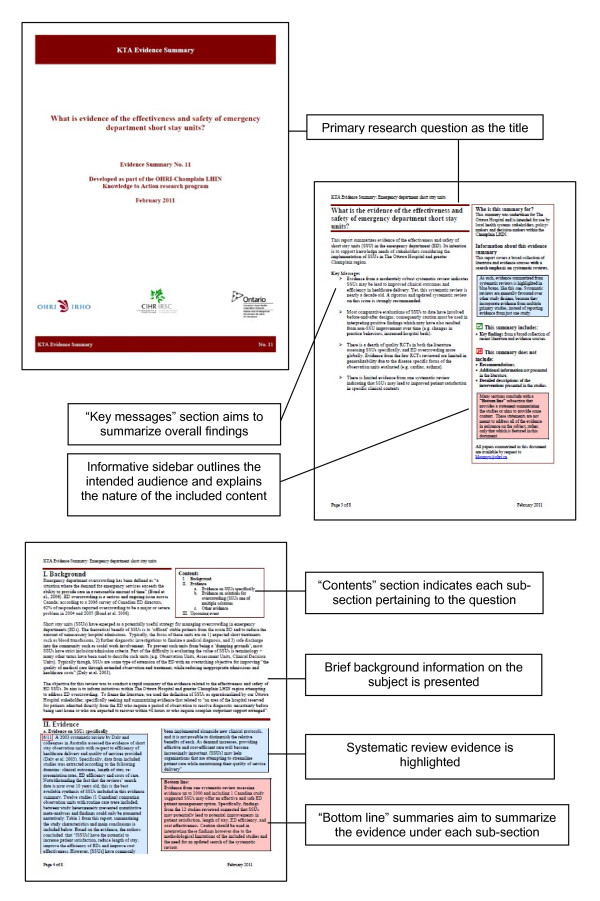
- Data or sample: 11 evidence summaries produced from November 2009 to March 2011, with topics listed in the paper; a case example describes an evidence summary on emergency department short stay units; formal evaluation through key informant interviews was ongoing.
- Main analysis: descriptive account of the eight-step production process, including narrative synthesis of included studies, assignment of evidence levels based on a modified Cochrane Musculoskeletal Group framework, and recent use of AMSTAR to assess included systematic reviews.
Limitations
- The paper states that rapid review products inherently harbor limitations relative to systematic reviews because they are produced within a short timeframe using limited resources, do not employ as much rigor, and may be subject to greater bias and/or error; it also states there is no clear evidence about decision makers’ willingness to compromise methodological rigor for quicker answers.
- The paper states that research comparing rapid with systematic review is limited, and that the purposes and context of rapid review use should be carefully considered when assessing their value.
- Evident from the text: early evidence summaries used a single reviewer for screening, excluded non-English reports and records not available electronically, did not undertake meta-analysis, relied on subjective selection of “high-quality” studies and extraction of relevant material, and in the most recent summary resolved conflicts by passing records to the next screening level rather than consensus.
Model-written summary. Check it against the paper before relying on it.
Integrity signals
Registry
Cites
Statistics
Figures
Verification
Claims the paper makes
2 Valid · 4 Not valid · 14 Not checked · 41 Own results and interpretations
The cited sources support only part of this claim — read each source’s verdict below.
In the paper
“Recent evidence summaries have also employed the 'assessment of multiple systematic reviews' (AMSTAR) tool as a means of assessing the methodological quality of included systematic reviews [13].”
§ Evidence summaries: the evolution of a rapid review approach > Evidence summary methods > Narrative synthesis of included studies (including risk-of-bias assessment)
What the sources say
- Partly supportedcites [13] 13. Shea BJ Grimshaw JM Wells GA Boers M Andersson N Hamel C Development of AMSTAR: a measurement tool to assess the methodological quality of systematic reviews BMC Med Res Methodol 2007 7 10 10.1186/1471-2288-7-10 17302989 PMC1810543 sourceExperimental — accuracy not yet measured
The Background identifies AMSTAR as a tool developed to assess the methodological quality of systematic reviews. The Discussion describes preliminary experience with the tool, but our copy does not establish that recent evidence summaries employed it to assess their included reviews. (LLM, conf=0.82)
plain- Asserted: passes — The authors put it forward as true.
- Checkable: passes — It can be checked against evidence.
- Load-bearing: unclear — It is unclear whether the paper’s conclusions depend on it.
- Based: passes — The paper gives a reason why it holds.
- Partly supported
Every source the paper cites for this claim was checked and supports it.
In the paper
“Parkill and colleagues have shown that, when compared to highly sensitive searches, pragmatically-based searches conducted for the purpose of populating an evidence map can produce a similar amount of relevant records, more quickly and at less cost [18].”
§ Evidence summaries: the evolution of a rapid review approach > Discussion
What the sources say
- Supportedcites [18] 18. Parkill A Clavisi R Pattuwage L Chau M Turner T Bragge P Searches for evidence mapping: effective, shorter, cheaper J Med Libr Assoc 2011 99 157 160 10.3163/1536-5050.99.2.008 21464854 PMC3066574 source
The RESULTS (p. 4 of our copy) report that the pragmatic evidence-mapping (EM) strategy retrieved 120 (77%) of included references versus 125 (81%) for the highly sensitive (HS) strategy — a similar yield of relevant records — while retrieving 781 fewer total citations, which 'would have resulted in a saving 19.5 hours of staff time over the 6 questions.' The DISCUSSION AND CONCLUSIONS states HS methods 'are not always cost effective for evidence mapping, in terms of resource use' and that the EM strings 'effectively identified relevant references using less staff time' (extrapolating to six extra weeks for the six questions, a year across all 55). The METHOD confirms the comparison was on yield, included studies retrieved/missed, and staff time. Only caveat: the evaluation covered six questions in traumatic brain/spinal cord injury on PubMed MEDLINE alone, so the finding is stated for that context, but the citing sentence's 'can produce' framing matches the paper's own conclusion. (LLM, conf=0.90)
plainstates a cause- Asserted: passes — The authors put it forward as true.
- Checkable: passes — It can be checked against evidence.
- Load-bearing: passes — The paper’s conclusions depend on it.
- Based: passes — The paper gives a reason why it holds.
- Supported
A result the paper reports from its own data — it cites no other source for it, so there is none to check. The quote shows it is in the paper.
In the paper
“Knowledge users have reported evidence summaries to be of high value in informing their decisions and initiatives.”
§ Evidence summaries: the evolution of a rapid review approach > Abstract > Results
plain- Asserted: passes — The authors put it forward as true.
- Checkable: passes — It can be checked against evidence.
- Load-bearing: passes — The paper’s conclusions depend on it.
- Based: passes — The paper gives a reason why it holds.
The paper states this without a source or data behind it here, so there is nothing to check it against. The quote shows it is in the paper.
In the paper
“Generally, knowledge users in our context have not demonstrated a strong capacity for formulating effective research questions”
§ Evidence summaries: the evolution of a rapid review approach > Evidence summary methods > Question development and refinement
boosted- Asserted: passes — The authors put it forward as true.
- Checkable: passes — It can be checked against evidence.
- Load-bearing: passes — The paper’s conclusions depend on it.
- Based: unclear — It is unclear why the paper says it holds.
A result the paper states — it cites no source for it, so there is none to check. The quote shows it is in the paper.
In the paper
“the first three evidence summaries were produced in the absence of a primary research question but rather using a series of research questions developed by the research team.”
§ Evidence summaries: the evolution of a rapid review approach > Evidence summary methods > Question development and refinement
plain- Asserted: passes — The authors put it forward as true.
- Checkable: passes — It can be checked against evidence.
- Load-bearing: passes — The paper’s conclusions depend on it.
- Based: passes — The paper gives a reason why it holds.
22 more claims
Create a free account to see all 61 claims and to verify the 18 references still open.
- Probably not a substantial claim. 28
- It may state two separate claims as one. 17
Claims other papers make about this one
Each is checked against this paper’s own text: does it say what the citing paper says it does?
The cited source doesn’t support the claim as written.
In the citing paper
“RRs are better suited for narrowly defined research questions where one or more SR steps may be reduced or omitted [4, 6, 21, 22, 24, 25].”
From How to conduct systematic reviews more expeditiously? (2015) · cites this paper as [4]
Checked by a reasoning model — may be wrong.
Experimental — accuracy not yet measuredThe source backs part of the claim, not all of it — or backs it for a different population, condition or comparison.
In the citing paper
“The conduct of SRs can be a time-consuming, cost- and resource-intensive task, which may take on average from 6 months to several years [4–6].”
From How to conduct systematic reviews more expeditiously? (2015) · cites this paper as [4]
Experimental — accuracy not yet measuredThe source backs part of the claim, not all of it — or backs it for a different population, condition or comparison.
In the citing paper
“In addition, the HTA process is time-consuming, generally taking over a year to complete, with the SLR and NMA part of this process taking several months each [8, 11].”
From Artificial Intelligence to Automate Network Meta-Analyses: Four Case Studies to Evaluate the Potential Application of Large Language Models (2024) · cites this paper as [11]
Experimental — accuracy not yet measuredThe source backs part of the claim, not all of it — or backs it for a different population, condition or comparison.
In the citing paper
“the methodological rigor and process that makes SR evidence trustworthy often take one to 2 years to complete [[1], [2], [3], [4]] and limit their utility to meet the time-sensitive needs of stakeholders.”
From Cochrane Rapid Reviews Methods Group offers evidence-informed guidance to conduct rapid reviews (2021) · cites this paper as [2]
Experimental — accuracy not yet measuredThe cited source says what the claim attributes to it.
In the citing paper
“We used a rapid review methodology developed by Khangura et al. (2012) which has been used within the context of various disciplines (Blakemore et al., 2017; Kadykalo et al., 2020).”
From Residential care as an alternative care option: A review of literature within a global context (2022) · cites this paper as Khangura et al., 2012
11 more claims about this paper
Create a free account to see every claim other papers make about this one.
Citations
Cites
Cochrane Handbook for Systematic Reviews of Interventions: Cochrane Book Series
(2008) · doi:10.1002/9780470712184 · Cited by 25,048 · cited 1×
“It uses explicit, systematic methods that are selected with a view to minimizing bias, thus providing more reliable findings from which conclusions can be drawn and decisions made” [1].”
MethodDevelopment of AMSTAR: A measurement tool to assess the methodological quality of systematic reviews
Shea, B. J., Grimshaw, J. M., Wells, G. A., Boers, M., Andersson, N., Hamel, C., Porter, A. C., Tugwell, P., Moher, D., & Bouter, L. M. (2007) · BMC Medical Research Methodology · doi:10.1186/1471-2288-7-10 · Cited by 4,374
Self-citationEpidemiology and reporting characteristics of systematic reviews.
Moher, D., Tetzlaff, J., Tricco, A. C., Sampson, M., & Altman, D. G. (2007) · PLoS Medicine · doi:10.1371/journal.pmed.0040078 · Cited by 891 · cited 1×
“While about half of published systematic reviews include a meta-analysis [11], the KTA evidence summaries do not undertake this level of quantitative synthesis (although we do report the results of included metaanalyses).”
BackgroundSelf-citationExpediting systematic reviews: methods and implications of rapid reviews
Ganann, R., Ciliska, D., & Thomas, H. (2010) · Implementation Science · doi:10.1186/1748-5908-5-56 · Cited by 752 · cited 3×
“A growing number of organizations, across various jurisdictions and countries, appear to be experimenting with this approach [3].”
BackgroundMoher, D., Pham, B., Lawson, M., & Klassen, T. (2003) · Health Technology Assessment · doi:10.3310/hta7410 · Cited by 500 · cited 1×
“Although exclusion of languages other than English is undesirable, it is considered to be a reasonable practice given limited time and resources and there is some evidence to suggest that it may not markedly bias review findings [9].”
BackgroundSelf-citationSingle data extraction generated more errors than double data extraction in systematic reviews
Buscemi, N., Hartling, L., Vandermeer, B., Tjosvold, L., & Klassen, T. P. (2006) · Journal of Clinical Epidemiology · doi:10.1016/j.jclinepi.2005.11.010 · Cited by 464 · cited 1×
“It is recognized, however, that a single reviewer introduces a level of error that is not desirable [10], and a second reviewer is now generally included on all evidence summaries, typically to review records excluded by the first reviewer - an approach we have labeled ‘liberal accelerated’.”
BackgroundRAPID VERSUS FULL SYSTEMATIC REVIEWS: VALIDITY IN CLINICAL PRACTICE?
Watt, A., Cameron, A., Sturm, L., Lathlean, T., Babidge, W., Blamey, S., Facey, K., Hailey, D., Norderhaug, I., & Maddern, G. (2008) · ANZ Journal of Surgery · doi:10.1111/j.1445-2197.2008.04730.x · Cited by 163 · cited 3×
“found that, despite “axiomatic differences” between the rapid and full reviews evaluated, “the essential conclusions of the rapid and full reviews did not differ extensively” [4], suggesting that products like the KTA evidence summaries may offer a useful and valid approach.”
BackgroundUsing Existing Systematic Reviews in Complex Systematic Reviews
Whitlock, E. P., Lin, J. S., Chou, R., Shekelle, P., & Robinson, K. A. (2008) · Annals of Internal Medicine · doi:10.7326/0003-4819-148-10-200805200-00010 · Cited by 144 · cited 1×
“Another consideration is a Grades of Recommendation, Assessment, Development and Evaluation-like assessment for the overall body of information included in the evidence summary as an important feature for knowledge users’ interpretation of the global evidence base [20].”
BackgroundEnd-user involvement in health technology assessment (HTA) development: A way to increase impact
McGregor, M., & Brophy, J. M. (2005) · International Journal of Technology Assessment in Health Care · doi:10.1017/s026646230505035x · Cited by 125 · cited 1×
“Usability has been an oft-neglected component in traditional systematic reviews despite evidence that has shown its capacity to improve the quality and cost effectiveness of health care [5,6].”
BackgroundLomas, J. (2005) · Healthcare Policy | Politiques de Santé · doi:10.12927/hcpol..17567 · Cited by 120
Research works printed but not linked: 2
- 1. Green S Higgins J Alderson P Clarke M Mulrow C Oxman A Higgins J, Green S Chapter 1 - Introduction Cochrane handbook for systematic reviews of interventions 2008 West Sussex, England: The Cochrane Collaboration and John Wiley & Sons Ltd
- 8. Information services CADTH Grey matters: A practical search tool for evidence-based medicine 2011 Ottawa, Canada: Canadian Agency for Drugs and Technologies in Health
Cited by
Munn, Z., Peters, M. D. J., Stern, C., Tufanaru, C., McArthur, A., & Aromataris, E. (2018) · BMC Medical Research Methodology · doi:10.1186/s12874-018-0611-x · Cited by 11,385
Aromataris, E., Fernandez, R., Godfrey, C. M., Holly, C., Khalil, H., & Tungpunkom, P. (2015) · International Journal of Evidence-Based Healthcare · doi:10.1097/xeb.0000000000000055 · Cited by 2,587
“Conduct of an umbrella review may also offer a means for a rapid review of the evidence to address a broad and high-quality evidence base in relation to a topic.(5) Umbrella reviews are conducted to provide an overall examination of the body of information that is available for a given topic, and to compare and contra…”
What Is the Impact of ChatGPT on Education? A Rapid Review of the Literature
Lo, C. K. (2023) · Education Sciences · doi:10.3390/educsci13040410 · Cited by 2,024
Research co-design in health: a rapid overview of reviews
Slattery, P., Saeri, A. K., & Bragge, P. (2020) · Health Research Policy and Systems · doi:10.1186/s12961-020-0528-9 · Cited by 1,313
“Rapid overviews of reviews are a type of rapid review, an emerging approach to research synthesis that utilises systematic search and appraisal processes but, unlike systematic reviews, focuses on review-level rather than primary studies [16, 17].”
BackgroundA scoping review of rapid review methods
Tricco, A. C., Antony, J., Zarin, W., Strifler, L., Ghassemi, M., Ivory, J., Perrier, L., Hutton, B., Moher, D., & Straus, S. E. (2015) · BMC Medicine · doi:10.1186/s12916-015-0465-6 · Cited by 1,146
“Seven publications recommended streamlining the literature search [2, 12, 16, 46, 79, 80, 110] and three suggested restricting the eligibility criteria [2, 12, 80].”
BackgroundMethodInfluentialSelf-citationCochrane Rapid Reviews Methods Group offers evidence-informed guidance to conduct rapid reviews
Garritty, C., Gartlehner, G., Nussbaumer-Streit, B., King, V. J., Hamel, C., Kamel, C., Affengruber, L., & Stevens, A. (2021) · Journal of Clinical Epidemiology · doi:10.1016/j.jclinepi.2020.10.007 · Cited by 1,141
Kisely, S., Warren, N., McMahon, L., Dalais, C., Henry, I., & Siskind, D. (2020) · BMJ · doi:10.1136/bmj.m1642 · Cited by 1,056
“9 As recommended in rapid review guidelines, 7 we also assessed the level of evidence for the quantitative studies using a modified framework from the Cochrane Musculoskeletal Group.”
MethodA critical review of the long-term disability outcomes following hip fracture
for the Fragility Fracture Network (FFN) Rehabilitation Research Special Interest Group, Dyer, S. M., Crotty, M., Fairhall, N., Magaziner, J., Beaupre, L. A., Cameron, I. D., & Sherrington, C. (2016) · BMC Geriatrics · doi:10.1186/s12877-016-0332-0 · Cited by 977
“This review was developed within a rapid time frame and contains many similarities to evolving rapid review methodology [8]; it has a clearly defined review question based on the PICO (Population, Intervention, Comparator, Outcome) criteria, the review question and protocol were developed a priori, selection of studie…”
MethodDe Kock, J. H., Latham, H. A., Leslie, S. J., Grindle, M., Munoz, S.-A., Ellis, L., Polson, R., & O’Malley, C. M. (2021) · BMC Public Health · doi:10.1186/s12889-020-10070-3 · Cited by 940
Munn, Z., Aromataris, E., Tufanaru, C., Stern, C., Porritt, K., Farrow, J., Lockwood, C., Stephenson, M., Moola, S., Lizarondo, L., et al. (2019) · International Journal of Evidence-Based Healthcare · doi:10.1097/xeb.0000000000000152 · Cited by 977
Prati, G., & Mancini, A. D. (2021) · Psychological Medicine · doi:10.1017/s0033291721000015 · Cited by 842
Miake-Lye, I. M., Hempel, S., Shanman, R., & Shekelle, P. G. (2016) · Systematic Reviews · doi:10.1186/s13643-016-0204-x · Cited by 660
“Rapid reviews, also sometimes referred to as evidence summaries [9], have received increased interest, with a journal series and dedicated summit in 2015 [10, 11], as well as multiple articles on rapid review methodology [9, 12, 13], but no official standards have been released.”
BackgroundThe updated Joanna Briggs Institute Model of Evidence-Based Healthcare
Jordan, Z., Lockwood, C., Munn, Z., & Aromataris, E. (2019) · International Journal of Evidence-Based Healthcare · doi:10.1097/xeb.0000000000000155 · Cited by 489
“As Khangura et al.(17) identify, systematic reviews typically take anywhere between 6 months and 2 years to complete and often focus on a narrow clinical question.”
BackgroundMeeting the review family: exploring review types and associated information retrieval requirements
Sutton, A., Clowes, M., Preston, L., & Booth, A. (2019) · Health Information & Libraries Journal · doi:10.1111/hir.12276 · Cited by 570
Krauer, F., Riesen, M., Reveiz, L., Oladapo, O. T., Martínez-Vega, R., Porgo, T. V., Haefliger, A., Broutet, N. J., Low, N., & WHO Zika Causality Working Group (2017) · PLOS Medicine · doi:10.1371/journal.pmed.1002203 · Cited by 492
“To speed up study selection we screened titles, abstract and full texts by liberal accelerated screening [17] (S1 Text) and for data extraction, one reviewer extracted data and a second reviewer checked the extracted data.”
BackgroundMethodInfluentialReynolds, C., Goucher, L., Quested, T., Bromley, S., Gillick, S., Wells, V. K., Evans, D., Koh, L., Carlsson Kanyama, A., Katzeff, C., et al. (2019) · Food Policy · doi:10.1016/j.foodpol.2019.01.009 · Cited by 487
Kohl, C., McIntosh, E. J., Unger, S., Haddaway, N. R., Kecke, S., Schiemann, J., & Wilhelm, R. (2018) · Environmental Evidence · doi:10.1186/s13750-018-0115-5 · Cited by 471
“…can be involved during the respective stages; and – Due to the limitations associated with the conduct of a full systematic review, further evidence synthesis approaches, such as rapid reviews, are evolving in order to save resources and to provide a timely answer to a posed question [26, 30].”
BackgroundDashboards for improving patient care: Review of the literature
Dowding, D., Randell, R., Gardner, P., Fitzpatrick, G., Dykes, P., Favela, J., Hamer, S., Whitewood-Moores, Z., Hardiker, N., Borycki, E., et al. (2015) · International Journal of Medical Informatics · doi:10.1016/j.ijmedinf.2014.10.001 · Cited by 434
Haby, M. M., Chapman, E., Clark, R., Barreto, J., Reveiz, L., & Lavis, J. N. (2016) · Health Research Policy and Systems · doi:10.1186/s12961-016-0155-7 · Cited by 409
“With this in mind, a range of methods for rapid reviews of the research evidence have been developed and put into practice [15–18].”
BackgroundMethodE-Mental Health: A Rapid Review of the Literature
Lal, S., & Adair, C. E. (2014) · Psychiatric Services · doi:10.1176/appi.ps.201300009 · Cited by 417
Hamel, C., Michaud, A., Thuku, M., Skidmore, B., Stevens, A., Nussbaumer-Streit, B., & Garritty, C. (2021) · Journal of Clinical Epidemiology · doi:10.1016/j.jclinepi.2020.09.041 · Cited by 384
Coster, J. E., Turner, J. K., Bradbury, D., & Cantrell, A. (2017) · Academic Emergency Medicine · doi:10.1111/acem.13220 · Cited by 379
“This was a rapid review; therefore, some aspects of systematic review methodology have been omitted or simplified to produce a review in a short time frame.(26) By limiting the evidence to 1995 to 2016, we have ensured that the evidence assessed has context and relevance to current policy and practice.”
BackgroundEvidence & Gap Maps: A tool for promoting evidence informed policy and strategic research agendas
Snilstveit, B., Vojtkova, M., Bhavsar, A., Stevenson, J., & Gaarder, M. (2016) · Journal of Clinical Epidemiology · doi:10.1016/j.jclinepi.2016.05.015 · Cited by 323
Disentangling ‘ecosystem services’ and ‘nature’s contributions to people’
Kadykalo, A. N., López-Rodriguez, M. D., Ainscough, J., Droste, N., Ryu, H., Ávila-Flores, G., Le Clec’h, S., Muñoz, M. C., Nilsson, L., Rana, S., et al. (2019) · Ecosystems and People · doi:10.1080/26395916.2019.1669713 · Cited by 290
“and ‘Fuzzy and Fluid Reporting Categories and Groups’), a rapid evidence literature review (Khangura et al. 2012) of peer-reviewed ES research was performed to assess the”
BackgroundAI in the Workplace: A Systematic Review of Skill Transformation in the Industry
Babashahi, L., Barbosa, C. E., Lima, Y., Lyra, A., Salazar, H., Argôlo, M., Almeida, M. A. D., & Souza, J. M. D. (2024) · Administrative Sciences · doi:10.3390/admsci14060127 · Cited by 187
“These limitations highlight the trade-off between speed and thoroughness, making it essential to consider the context and purpose when opting for a Rapid Review (Khangura et al. 2012).”
BackgroundInfluentialBitar, H., & Alismail, S. (2021) · DIGITAL HEALTH · doi:10.1177/20552076211009396 · Cited by 325
“13 Since this is a rapid systematic review and due to the urgent nature of the pandemic and time constraints, this review was not registered on PROSPERO.”
BackgroundA time-responsive tool for informing policy making: rapid realist review
Saul, J. E., Willis, C. D., Bitz, J., & Best, A. (2013) · Implementation Science · doi:10.1186/1748-5908-8-103 · Cited by 283
“While others have begun to describe methodologies for short-term evidence synthesis projects [12], the RRR methodology described here is intended to incorporate the theory specification of a realist review [8] and the boundary clarification aim of a scoping review [13].”
MethodPatient and public engagement in priority setting: A systematic rapid review of the literature
Manafò, E., Petermann, L., Vandall-Walker, V., & Mason-Lai, P. (2018) · PLOS ONE · doi:10.1371/journal.pone.0193579 · Cited by 285
Orkin, A. M., Gill, P. J., Ghersi, D., Campbell, L., Sugarman, J., Emsley, R., Steg, P. G., Weijer, C., Simes, J., Rombey, T., et al. (2021) · JAMA · doi:10.1001/jama.2021.9941 · Cited by 299
Self-citationSystematic reviews of clinical practice guidelines: a methodological guide
Johnston, A., Kelly, S. E., Hsieh, S.-C., Skidmore, B., & Wells, G. A. (2019) · Journal of Clinical Epidemiology · doi:10.1016/j.jclinepi.2018.11.030 · Cited by 273
Achieving successful community engagement: a rapid realist review
De Weger, E., Van Vooren, N., Luijkx, K. G., Baan, C. A., & Drewes, H. W. (2018) · BMC Health Services Research · doi:10.1186/s12913-018-3090-1 · Cited by 231
A review of the economic impact of mental illness
Doran, C. M., & Kinchin, I. (2019) · Australian Health Review · doi:10.1071/ah16115 · Cited by 242
Rapid review: radiomics and breast cancer
Valdora, F., Houssami, N., Rossi, F., Calabrese, M., & Tagliafico, A. S. (2018) · Breast Cancer Research and Treatment · doi:10.1007/s10549-018-4675-4 · Cited by 258
“Methods Identification of studies/literature searching A rapid review, a streamlined approach to systematically identify and summarize emerging studies [7], was done and updated on 27 September 2017.”
BackgroundCumming, T. M., & Rose, M. C. (2022) · The Australian Educational Researcher · doi:10.1007/s13384-021-00471-7 · Cited by 183
“Rapid reviews are a form of knowledge synthesis in which the systematic review process is simplified to produce information in a timelier manner (Khangura et al., 2012).”
BackgroundGarritty, C., Hamel, C., Trivella, M., Gartlehner, G., Nussbaumer-Streit, B., Devane, D., Kamel, C., Griebler, U., & King, V. J. (2024) · BMJ · doi:10.1136/bmj-2023-076335 · Cited by 260
“Recommendation 20: Consider how to synthesise evidence when including one systematic review or more When including systematic reviews in a rapid review, synthesis may involve adding primary studies to an existing meta-analysis or narrative synthesis from the systematic review.”
BackgroundInfluentialUnderstanding physical literacy in the context of health: a rapid scoping review
Cornish, K., Fox, G., Fyfe, T., Koopmans, E., Pousette, A., & Pelletier, C. A. (2020) · BMC Public Health · doi:10.1186/s12889-020-09583-8 · Cited by 199
How prepared are UK medical graduates for practice? A rapid review of the literature 2009–2014
Monrouxe, L. V., Grundy, L., Mann, M., John, Z., Panagoulas, E., Bullock, A., & Mattick, K. (2017) · BMJ Open · doi:10.1136/bmjopen-2016-013656 · Cited by 231
What Synthesis Methodology Should I Use? A Review and Analysis of Approaches to Research Synthesis.
Schick-Makaroff, K., 1 Faculty of Nursing, U. O. A., MacDonald, M., Plummer, M., Burgess, J., Neander, W., 2 School of Nursing, U. O. V., 3 College of Nursing, C. C., & 4 Student Services, U. H. S. (2016) · AIMS Public Health · doi:10.3934/publichealth.2016.1.172 · Cited by 214
COVID-19 Risk Factors Among Health Workers: A Rapid Review
Mhango, M., Dzobo, M., Chitungo, I., & Dzinamarira, T. (2020) · Safety and Health at Work · doi:10.1016/j.shaw.2020.06.001 · Cited by 234
The ecological outcomes of biodiversity offsets under “no net loss” policies: A global review
zu Ermgassen, S. O. S. E., Baker, J., Griffiths, R. A., Strange, N., Struebig, M. J., & Bull, J. W. (2019) · Conservation Letters · doi:10.1111/conl.12664 · Cited by 216
Interventions to improve adherence to antiretroviral therapy: a rapid systematic review
Chaiyachati, K. H., Ogbuoji, O., Price, M., Suthar, A. B., Negussie, E. K., & Bärnighausen, T. (2014) · AIDS · doi:10.1097/qad.0000000000000252 · Cited by 235
“However, given that the time required to conduct, complete, and publish a systematic review typically ranges from 1 to 2 years [20,22], synthesis solely based on pre-existing systematic reviews runs the danger of failing to incorporate evidence that has accrued over the most recent few years.”
BackgroundThe AI risk repository: A meta-review, database, and taxonomy of risks from artificial intelligence
Slattery, P., Saeri, A. K., Grundy, E. A. C., Graham, J., Noetel, M., Uuk, R., Dao, J., Pour, S., Casper, S., & Thompson, N. (2026) · Patterns · doi:10.1016/j.patter.2026.101517 · Cited by 264
“36,37 The protocol was registered in advance using the Open Science Framework in April 2024 (https://osf.io/egzc8).”
Interactive social media interventions to promote health equity: an overview of reviews
Welch, V., Petkovic, J., Pardo Pardo, J., Rader, T., & Tugwell, P. (2016) · Health Promotion and Chronic Disease Prevention in Canada · doi:10.24095/hpcdp.36.4.01 · Cited by 214
“A rapid response provides an overview of the available evidence, usually from guidelines or systematic reviews, in response to a need or priority identified by a knowledge user in a short timeframe.(22,23) An a priori protocol was developed and submitted to the Public Health Agency of Canada as a Statement of Work (av…”
MethodMawhood, R., Gazis, E., de Jong, S., Hoefnagels, R., & Slade, R. (2016) · Biofuels, Bioproducts and Biorefining · doi:10.1002/bbb.1644 · Cited by 229
The effect of screen advertising on children's dietary intake: A systematic review and meta‐analysis
Russell, S. J., Croker, H., & Viner, R. M. (2019) · Obesity Reviews · doi:10.1111/obr.12812 · Cited by 200
Donnan, J. R., Grandy, C. A., Chibrikov, E., Marra, C. A., Aubrey-Bassler, K., Johnston, K., Swab, M., Hache, J., Curnew, D., Nguyen, H., et al. (2019) · BMJ Open · doi:10.1136/bmjopen-2018-022577 · Cited by 222
“Duplicate screening was carried out using the ‘liberal accelerated’ method at both level one and level two, which was first applied by Khangura et al.31 This method involves having a second reviewer only evaluate studies that were deemed not relevant by the lead reviewer.”
MethodRehfuess, E. A., Stratil, J. M., Scheel, I. B., Portela, A., Norris, S. L., & Baltussen, R. (2019) · BMJ Global Health · doi:10.1136/bmjgh-2018-000844 · Cited by 200
Error rates of human reviewers during abstract screening in systematic reviews
Wang, Z., Nayfeh, T., Tetzlaff, J., O’Blenis, P., & Murad, M. H. (2020) · PLOS ONE · doi:10.1371/journal.pone.0227742 · Cited by 217
Gartlehner, G., Affengruber, L., Titscher, V., Noel-Storr, A., Dooley, G., Ballarini, N., & König, F. (2020) · Journal of Clinical Epidemiology · doi:10.1016/j.jclinepi.2020.01.005 · Cited by 206
Umbrella reviews: what they are and why we need them
Papatheodorou, S. (2019) · European Journal of Epidemiology · doi:10.1007/s10654-019-00505-6 · Cited by 201
Vukušić Rukavina, T., Viskić, J., Machala Poplašen, L., Relić, D., Marelić, M., Jokic, D., & Sedak, K. (2021) · Journal of Medical Internet Research · doi:10.2196/25770 · Cited by 199
The prevalence of patient engagement in published trials: a systematic review
Fergusson, D., Monfaredi, Z., Pussegoda, K., Garritty, C., Lyddiatt, A., Shea, B., Duffett, L., Ghannad, M., Montroy, J., Murad, M. H., et al. (2018) · Research Involvement and Engagement · doi:10.1186/s40900-018-0099-x · Cited by 186
“, one reviewer to include and two reviewers to exclude [19]) (MP, JM, MG, KP, ZM).”
BackgroundClarke, D., Jones, F., Harris, R., & Robert, G. (2017) · BMJ Open · doi:10.1136/bmjopen-2016-014650 · Cited by 178
Rapid evidence assessment: increasing the transparency of an emerging methodology
Varker, T., Forbes, D., Dell, L., Weston, A., Merlin, T., Hodson, S., & O'Donnell, M. (2015) · Journal of Evaluation in Clinical Practice · doi:10.1111/jep.12405 · Cited by 162
“REAs can be used to: serve as an informative brief that prepares stakeholders for discussion on a policy issue; support the direction and evidence base for a policy initiative; and support the development of clinical interventions and/or service programmes [7].”
BackgroundBenefits and harms of medical cannabis: a scoping review of systematic reviews
Pratt, M., Stevens, A., Thuku, M., Butler, C., Skidmore, B., Wieland, L. S., Clemons, M., Kanji, S., & Hutton, B. (2019) · Systematic Reviews · doi:10.1186/s13643-019-1243-x · Cited by 164
“All titles and abstracts were screened in duplicate by two independent reviewers (MT and MP) using the liberal accelerated method [17].”
MethodBuilt and natural environment planning principles for promoting health: an umbrella review
Bird, E. L., Ige, J. O., Pilkington, P., Pinto, A., Petrokofsky, C., & Burgess-Allen, J. (2018) · BMC Public Health · doi:10.1186/s12889-018-5870-2 · Cited by 159
Chadwick, D. D., Ågren, K. A., Caton, S., Chiner, E., Danker, J., Gómez‐Puerta, M., Heitplatz, V. N., Johansson, S., Normand, C. L., Murphy, E., et al. (2022) · Journal of Policy and Practice in Intellectual Disabilities · doi:10.1111/jppi.12410 · Cited by 176
How Are the Arts and Humanities Used in Medical Education? Results of a Scoping Review
Moniz, T., Golafshani, M., Gaspar, C. M., Adams, N. E., Haidet, P., Sukhera, J., Volpe, R. L., de Boer, C., & Lingard, L. (2021) · Academic Medicine · doi:10.1097/acm.0000000000004118 · Cited by 170
(AHAW), E. P. O. A. H. A. A. W., Nielsen, S. S., Álvarez, J., Bicout, D., Calistri, P., Canali, E., Drewe, J. A., Garin‐Bastuji, B., Gonzáles, J. L., Gortázar, C., et al. (2023) · EFSA Journal · doi:10.2903/j.efsa.2023.7993 · Cited by 176
Langlois, E. V., Straus, S. E., Antony, J., King, V. J., & Tricco, A. C. (2019) · BMJ Global Health · doi:10.1136/bmjgh-2018-001178 · Cited by 160
Stickley, T., Wright, N., & Slade, M. (2018) · Journal of Mental Health · doi:10.1080/09638237.2018.1437609 · Cited by 178
“Phase one: rapid review A rapid review of the research literature (Khangura et al., 2012) was conducted to identify qualitative evaluations of participatory art experiences amongst people with mental health problems.”
BackgroundWhat have we learned about COVID-19 volunteering in the UK? A rapid review of the literature
Mao, G., Fernandes‐Jesus, M., Ntontis, E., & Drury, J. (2021) · BMC Public Health · doi:10.1186/s12889-021-11390-8 · Cited by 174
“Rapid reviews are a useful form of producing information in a timely manner [24].”
BackgroundYuen, E. Y. N., Winter, N., Savira, F., Huggins, C. E., Nguyen, L., Cooper, P., Peeters, A., Anderson, K. L. M., Bhoyroo, R., Crowe, S., et al. (2024) · Interactive Journal of Medical Research · doi:10.2196/46888 · Cited by 185
“A rapid review was undertaken following the principles of a systematic review [14]; however, with some simplification of steps to ensure a timely and accurate synthesis of evidence to inform the development of a digital health strategy for implementation across community settings.”
MethodDietary guideline adherence during preconception and pregnancy: A systematic review
Caut, C., Leach, M., & Steel, A. (2020) · Maternal & Child Nutrition · doi:10.1111/mcn.12916 · Cited by 156
Strategies for completing a successful integrative review
Oermann, M. H., & Knafl, K. A. (2021) · Nurse author & editor · doi:10.1111/nae2.30 · Cited by 186
Ecosystem services and the idea of shared values
Irvine, K. N., O’Brien, L., Ravenscroft, N., Cooper, N. S., Everard, M., Fazey, I., Reed, M. S., & Kenter, J. O. (2016) · Ecosystem Services · doi:10.1016/j.ecoser.2016.07.001 · Cited by 170
“A REA provides an overview of existing research based on systematic searches around a (constrained) topic and a synthesis of the evidence provided by identified studies (DFID, 2015; Khangura et al. 2012).”
MethodRapid reviews: the pros and cons of an accelerated review process
Moons, P., Goossens, E., & Thompson, D. R. (2021) · European Journal of Cardiovascular Nursing · doi:10.1093/eurjcn/zvab041 · Cited by 139
“Furthermore, the synthesis and reporting of systematic reviews often fail to address the needs of the users at the point of care(5) and are considered to be too large and too complex.(3) To facilitate the uptake of research findings in clinical practice, other types of reviews with a shorter lead time are needed, and…”
BackgroundCurbing plastic consumption: A review of single-use plastic behaviour change interventions
Borg, K., Lennox, A., Kaufman, S., Tull, F., Prime, R., Rogers, L., & Dunstan, E. (2022) · Journal of Cleaner Production · doi:10.1016/j.jclepro.2022.131077 · Cited by 169
McGarrigle, L., & Todd, C. (2020) · Journal of Medical Internet Research · doi:10.2196/22201 · Cited by 154
“To provide an overview the evidence on the use of mHealth and eHealth technologies in the promotion of physical activity in older people, we undertook a rapid review of reviews [13,14] and followed guidance for conducting overviews [15].”
McCloud, T., & Bann, D. (2019) · Journal of Epidemiology and Community Health · doi:10.1136/jech-2019-212154 · Cited by 131
“1136/jech-2019-212154 review the research topic addressed, although with less certainty than a full systematic review.(15) Three databases (PsychINFO, PubMed and Embase) were searched for any papers up to 29 November 2018.”
BackgroundKelly, S. E., Moher, D., & Clifford, T. J. (2016) · Systematic Reviews · doi:10.1186/s13643-016-0258-9 · Cited by 137
“In many of the other included rapid reviews, eligibility criteria were expanded to consider more evidence when no studies of a certain type were located, an iterative process that is common in both systematic and rapid reviews [2, 9].”
BackgroundSelf-citationThe impacts of institutional child sexual abuse: A rapid review of the evidence
Blakemore, T., Herbert, J., Arney, F., & Parkinson, S. (2017) · Child Abuse & Neglect · doi:10.1016/j.chiabu.2017.08.006 · Cited by 173
Lim, W. M. (2023) · Journal of Business Research · doi:10.1016/j.jbusres.2022.113638 · Cited by 185
McIntyre, L., Moher, D., Fergusson, D. A., Sullivan, K., Mei, S. H. J., Lalu, M. M., Marshall, J. C., Mcleod, M., Griffin, G., Grimshaw, J., et al. (2016) · PLoS ONE · doi:10.1371/journal.pone.0147170 · Cited by 165
“All citations were screened for inclusion with 2 trained systematic reviewers using a liberal accelerated method[73].”
MethodSelf-citationChecklists to detect potential predatory biomedical journals: a systematic review
Cukier, S., Helal, L., Rice, D. B., Pupkaite, J., Ahmadzai, N., Wilson, M., Skidmore, B., Lalu, M. M., & Moher, D. (2020) · BMC Medicine · doi:10.1186/s12916-020-01566-1 · Cited by 138
Self-citationWilliams, M. T., Lewthwaite, H., Fraysse, F., Gajewska, A., Ignatavicius, J., & Ferrar, K. (2021) · Journal of Medical Internet Research · doi:10.2196/17023 · Cited by 141
“For larger reviews, it is not uncommon for these to take >2 years [121], with updates of Cochrane Collaboration systematic reviews taking up to 3.”
Hamel, C., Kelly, S. E., Thavorn, K., Rice, D. B., Wells, G. A., & Hutton, B. (2020) · BMC Medical Research Methodology · doi:10.1186/s12874-020-01129-1 · Cited by 140
Evidence summary: the relationship between oral health and dementia
Daly, B., Thompsell, A., Sharpling, J., Rooney, Y. M., Hillman, L., Wanyonyi, K. L., White, S., & Gallagher, J. E. (2017) · British Dental Journal · doi:10.1038/sj.bdj.2017.992 · Cited by 139
“A rapid review of articles reporting primary research published between 2005 and October 2015 was undertaken to investigate the relationship between dementia and oral health in line with Khangura et al, (2012) methodology (14).”
MethodRAPID REVIEW: AN EMERGING APPROACH TO EVIDENCE SYNTHESIS IN HEALTH TECHNOLOGY ASSESSMENT
Khangura, S., Polisena, J., Clifford, T. J., Farrah, K., & Kamel, C. (2014) · International Journal of Technology Assessment in Health Care · doi:10.1017/s0266462313000664 · Cited by 138
“While rapid review approaches are being used by HTA producers across the world in a variety of ways (4;13) an agreed-upon definition describing its constitution and methods is lacking (3).”
BackgroundSelf-citationBarriers and facilitators to cultural competence in rehabilitation services: a scoping review
Grandpierre, V., Duda, V., Sikora, L., Fitzpatrick, E. M., Thomas, R. L., & Potter, B. K. (2018) · BMC Health Services Research · doi:10.1186/s12913-017-2811-1 · Cited by 138
“After training was completed, the reviewers applied the eligibility criteria to retrieved titles and abstracts by using a liberal-accelerated approach [30].”
MethodWhat is the role of eco-labels for a circular economy? A rapid review of the literature
Meis-Harris, J., Klemm, C., Kaufman, S., Curtis, J., Borg, K., & Bragge, P. (2021) · Journal of Cleaner Production · doi:10.1016/j.jclepro.2021.127134 · Cited by 116
Polisena, J., Garritty, C., Kamel, C., Stevens, A., & Abou-Setta, A. M. (2015) · Systematic Reviews · doi:10.1186/s13643-015-0022-6 · Cited by 133
“To date, we have identified two publications that describe RR programs in detail [3,5], while it is estimated that conducting RRs is widespread and an integral part in health care policy and decision making.”
BackgroundMorgan, R. L., Flórez, I. D., Falavigna, M., Kowalski, S. C., Akl, E. A., Thayer, K. A., Rooney, A. A., & Schünemann, H. J. (2018) · Health Research Policy and Systems · doi:10.1186/s12961-018-0330-0 · Cited by 137
An international survey and modified Delphi approach revealed numerous rapid review methods
Tricco, A. C., Zarin, W., Antony, J., Hutton, B., Moher, D., Sherifali, D., & Straus, S. E. (2015) · Journal of Clinical Epidemiology · doi:10.1016/j.jclinepi.2015.08.012 · Cited by 151
Self-citationPaper 2: Performing rapid reviews
King, V. J., Stevens, A., Nußbaumer-Streit, B., Kamel, C., & Garritty, C. (2022) · Systematic Reviews · doi:10.1186/s13643-022-02011-5 · Cited by 138
“Khangura and colleagues [28] have presented a figure showing formatted sections of a sample report, and many other rapid review producers have examples of reports online that can serve as formatting examples.”
BackgroundMethodInfluentialQuality of life assessment in domestic dogs: An evidence-based rapid review
Belshaw, Z., Asher, L., Harvey, N. D., & Dean, R. S. (2015) · The Veterinary Journal · doi:10.1016/j.tvjl.2015.07.016 · Cited by 144
Vӧllm, B., Clarke, M., Tort, V., Seppänen, A., Gosek, P., Heitzman, J., & Bulten, E. (2018) · European Psychiatry · doi:10.1016/j.eurpsy.2017.12.007 · Cited by 144
“rapid reviews maintain the key steps of a systematic review in terms of identification of a research question and search strategy and identification, screening, selection and summarising of relevant studies [38]; and they have been found to maintain the essential conclusions compared to those produced by a full system…”
BackgroundOnakpoya, I. J., Heneghan, C. J., & Aronson, J. K. (2016) · Critical Reviews in Toxicology · doi:10.3109/10408444.2016.1149452 · Cited by 119
“Therefore, rapid systematic reviews could be conducted swiftly when adverse reactions are suspected, to help strengthen the evidence used for withdrawal decisions (Khangura et al., 2012).”
BackgroundEvidence summary: The relationship between oral diseases and diabetes
D’Aiuto, F., Gable, D. R., Syed, Z., Allen, Y., Wanyonyi, K., White, S., & Gallagher, J. E. (2017) · BDJ · doi:10.1038/sj.bdj.2017.544 · Cited by 126
“evidence to inform decision-makers (8).”
Munn, Z., Lockwood, C. S., & Moola, S. (2015) · Worldviews on Evidence-Based Nursing · doi:10.1111/wvn.12094 · Cited by 135
Ma, H., Lin, Y.-H., Dai, L.-Z., Lin, C.-S., Huang, Y., & Liu, S.-Y. (2023) · BMJ Open · doi:10.1136/bmjopen-2022-061807 · Cited by 104
Wutz, M., Hermes, M., Winter, V., & Köberlein-Neu, J. (2023) · Journal of Medical Internet Research · doi:10.2196/46548 · Cited by 99
“A rapid review is a form of knowledge synthesis in which components of the systematic review process are simplified or omitted to produce evidence-based information in a timely manner [155].”
Horodyska, K., Luszczynska, A., van den Berg, M., Hendriksen, M., Roos, G., De Bourdeaudhuij, I., & Brug, J. (2015) · BMC Public Health · doi:10.1186/s12889-015-1354-9 · Cited by 122
“The questions and methods were developed and approved using the rapid review approach [16].”
MethodTricco, A. C., Zarin, W., Ghassemi, M., Nincic, V., Lillie, E., Page, M. J., Shamseer, L., Antony, J., Rios, P., Hwee, J., et al. (2018) · Journal of Clinical Epidemiology · doi:10.1016/j.jclinepi.2017.10.014 · Cited by 122
Self-citationEvidence Gap Maps — A Tool for Promoting Evidence-Informed Policy and Prioritizing Future Research
Snilstveit, B., Vojtkova, M., Bhavsar, A., & Gaarder, M. (2013) · World Bank, Washington, DC eBooks · doi:10.1596/1813-9450-6725 · Cited by 115
“…(2009); Grant et al. (2009); Levac et al. (2010) 8 Clapton and Coren (2007); Oakley et al., ( 2005); Bates, Peersman (1996) 9 Ganann et al. (2009); Khangura et al. (2012), Government Social Research REA Toolkit (2008) 10 Cooper et al (2009);Higgins and Greene (2011); Lavis (2009); Waddington et…”
BackgroundInfluentialEvidence summary: the relationship between oral health and pulmonary disease
Manger, D., Walshaw, M. J., Fitzgerald, R., Doughty, J., Wanyonyi, K., White, S., & Gallagher, J. E. (2017) · BDJ · doi:10.1038/sj.bdj.2017.315 · Cited by 136
“A rapid review is a synthesis of the most current and best evidence to inform decision-makers (13).”
BackgroundA rapid review of serious games: From healthcare education to dental education
Sipiyaruk, K., Gallagher, J. E., Hatzipanagos, S., & Reynolds, P. A. (2018) · European Journal of Dental Education · doi:10.1111/eje.12338 · Cited by 112
Trendafilova, S., & McCullough, B. P. (2018) · Cogent Social Sciences · doi:10.1080/23311886.2018.1467256 · Cited by 137
“…in a shorter timeframe, research questions are specified a priori, sources may be limited but strategies are made explicit, the selection criteria of sources are uniformly applied, and the synthesis of data are descriptive in nature categorizing the data accordingly (Khangura et al., 2012).”
BackgroundText mining approaches for dealing with the rapidly expanding literature on COVID-19
Wang, L. L., & Lo, K. (2021) · Briefings in Bioinformatics · doi:10.1093/bib/bbaa296 · Cited by 116
“Rapid reviews, which condense and shorten the typically months-or years-long systematic review process [39, 89], have been common.”
BackgroundChildhood Sexual Violence in Indonesia: A Systematic Review
Rumble, L., Febrianto, R. F., Larasati, M. N., Hamilton, C., Mathews, B., & Dunne, M. P. (2018) · Trauma Violence & Abuse · doi:10.1177/1524838018767932 · Cited by 141
Metadata
- Authors
- Khangura, S., Konnyu, K., Cushman, R., Grimshaw, J., & Moher, D.
- Affiliations
- Ottawa Hospital Research Institute (CA)
- Champlain Local Health Integration Network (CA)
- University of Ottawa (CA)
- Corresponding author
- Moher, David
- Venue
- Systematic Reviews
- Published
- 2012-02-10
- Volume
- 1
- Issue
- 1
- Pages
- 10-10
- ISSN
- 2046-4053 (ISSN-L)
- PMC
- PMC3351736
- OpenAlex
- W2156100542
- Cited by
- 1,232
- References
- 19
- Citations by year
- 2026: 43 · 2025: 96 · 2024: 132 · 2023: 137 · 2022: 156 · 2021: 171 · 2020: 121 · 2019: 87 · 2018: 72 · 2017: 67 · 2016: 61 · 2015: 41 · 2014: 27 · 2013: 16 · 2012: 5
- FWCI
- 32.38
- Type
- journal article
- Language
- en
- Open access
- gold
- doi.org
- Licence
- Locations
- Systematic Reviews (publishedVersion, cc-by)
- PubMed Central (publishedVersion, cc-by)
- PubMed (publishedVersion)
- uO Research (University of Ottawa) (submittedVersion, public-domain)
- DOAJ (DOAJ: Directory of Open Access Journals) (submittedVersion)
- Funders
- University of Ottawa
- Canadian Institutes of Health Research (86796_1)
- Topics
- Social Sciences › Decision Sciences › Statistics, Probability and Uncertainty › Meta-analysis and systematic reviews
- Health Sciences › Health Professions › General Health Professions › Health Sciences Research and Education
- Health Sciences › Medicine › Public Health, Environmental and Occupational Health › Clinical practice guidelines implementation
- Keywords
- rapid review, evidence summaries, knowledge to action, evidence-informed decision-making, knowledge users, knowledge infrastructure, healthcare decision-making, evidence synthesis, evidence dissemination, regional health administration
- MeSH terms
- Decision Making, Humans, Publishing, Review Literature as Topic, Evidence-Based Medicine, Information Dissemination
About these checks
Registry, retraction, Cites and statistics results are computed, not judged, with one exception: a printed reference that no index lists is read once by a model before it counts as a citation error. Claims are extracted by a model and kept only when their quote appears verbatim in the text; each cited source is then checked, with a model’s help, for whether it says what the claim relies on. Those verdicts can be wrong — read the claim’s quote and the cited source before relying on one.
The claim verdicts this report counts are experimental: their accuracy is not yet measured.
A language model drew the claims from the paper on 2026-10-04, under version 3 of the claim definition (model deepseek-v4.1-flash, prompt extract-v3).
A second model labelled each claim on 2026-10-04 (model jev-1.13-20260917, definition revision gold-guideline-v0.2).
Cited sources are checked with a language model’s help (gpt-6-sol and qwen3.8-omni-flash).
Statistics and arithmetic are recomputed, not judged.
Confidence bands are shown only for fields calibrated on our annotated test set. None is calibrated yet, so no band is shown.
What counts as a claim ›How we measure confidence ›How we check this ›
Are you an author, or do you see a problem with this page? Request a review
Data sources
Bibliographic data: Semantic Scholar, OpenAlex, Crossref.
Contains information from the Semantic Scholar Academic Graph Datasets, made available under the ODC Attribution License (ODC-BY 1.0).
Semantic Scholar’s data is described in: Kinney, R., et al. (2023). The Semantic Scholar Open Data Platform. arXiv:2301.10140.
