

The association between sleep disturbances and suicidal behaviors in patients with psychiatric diagnoses: a systematic review and meta-analysis
Open accessThe DOI matches its Crossref record; 45 of the 45 references it cites were found in a registry or an index.
Abstract
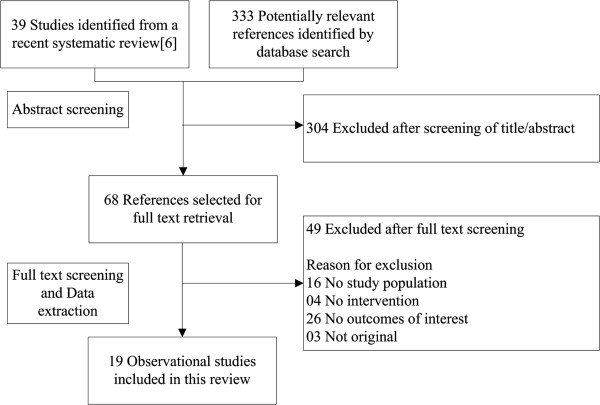
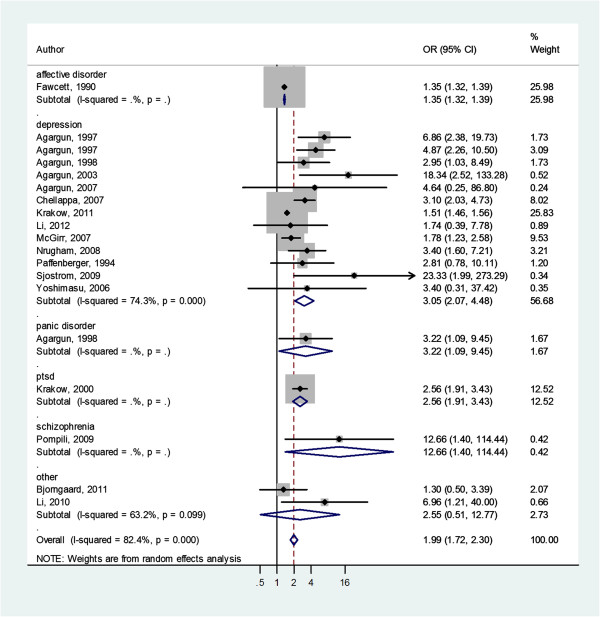
BACKGROUND: Identifying patients with increased risk of suicidal behaviors is a constant challenge and concern for clinicians caring for patients with psychiatric conditions. We conducted a systematic review to assess the association between suicidal behaviors and sleep disturbances in psychiatric patients. METHODS: A systematic literature search of Ovid Medline In-Process & Other Non-Indexed Citations, Ovid MEDLINE, Ovid EMBASE, Ovid PsycInfo, Ovid Cochrane Database of Systematic Reviews, Ovid Cochrane Central Register of Controlled Trials, and Scopus was conducted using earliest inclusive dates to 28 June 2013. Eligible studies were comparative observational studies that reported sleep disturbances in psychiatric patients and the outcome of interest (any type of suicidal behaviors). Pairs of reviewers extracted descriptive data, study quality, and outcomes. Odds ratios (OR) and 95% confidence intervals (CI) were pooled across studies using the random-effects model. Newcastle-Ottawa scale was used to critically appraise study quality. RESULTS: Nineteen studies met the inclusion criteria. Compared to those without sleep disturbances, patients with psychiatric diagnoses and co-morbid sleep disturbances were significantly more likely to report suicidal behaviors (OR = 1.99, 95% CI 1.72, 2.30, P <0.001). The association was also demonstrated across several psychiatric conditions including depression (OR = 3.05, 95% CI 2.07, 4.48, P <0.001), post-traumatic stress disorder (PTSD) (OR = 2.56, 95% CI 1.91, 3.43, P <0.001), panic disorder (OR = 3.22, 95% CI 1.09, 9.45, P = 0.03), and schizophrenia (OR = 12.66, 95% CI 1.40, 114.44, P = 0.02). In subgroup analysis based on the type of sleep disorder, we also found suicidal behavior to be significantly associated with the presence of insomnia, parasomnias, and sleep-related breathing disorders, but not hypersomnias. CONCLUSIONS: This systematic review and meta-analysis suggests that in patients with psychiatric diagnoses, sleep disturbances are associated with the increased risk of suicidal behaviors.
Overview
The claims and statistics of this paper haven’t been checked yet.
Free: it reads the open-access text and checks the first 5 claims that cite a source we can check. Create a free account to check every claim.
Integrity signals
Registry
Cites
Statistics
Figures
Verification
Claims the paper makes
The claims and statistics of this paper haven’t been checked yet.
Free: it reads the open-access text and checks the first 5 claims that cite a source we can check. Create a free account to check every claim.
Claims other papers make about this one
Each is checked against this paper’s own text: does it say what the citing paper says it does?
The source backs part of the claim, not all of it — or backs it for a different population, condition or comparison.
In the citing paper
“A more recent meta-analysis, focusing exclusively on psychiatric patient samples (Malik et al., 2014) categorized 11 studies as employing a longitudinal design, and just six of these featured longitudinal analyses.”
From Sleep and suicide: A systematic review and meta-analysis of longitudinal studies (2020) · cites this paper as Malik et al., 2014
Experimental — accuracy not yet measuredThe cited source says what the claim attributes to it.
In the citing paper
“Although four of these prior systematic reviews were meta-analyses (Chiu et al., 2018; Liu, Tu, et al., 2019; Malik et al., 2014; Pigeon et al., 2012)”
From Sleep and suicide: A systematic review and meta-analysis of longitudinal studies (2020) · cites this paper as Malik et al., 2014
Self-check
Percentages, sums and reported differences re-computed from the paper’s own numbers.
The self-check needs the paper’s full text.
Citations
Cites
Preferred Reporting Items for Systematic Reviews and Meta-Analyses: the PRISMA statement
Moher, D., Liberati, A., Tetzlaff, J., Altman, D. G., & for the PRISMA Group (2009) · BMJ · doi:10.1136/bmj.b2535 · Cited by 83,823
Measuring inconsistency in meta-analyses
Higgins, J. P. T., Thompson, S. G., Deeks, J. J., & Altman, D. G. (2003) · BMJ · doi:10.1136/bmj.327.7414.557 · Cited by 63,139 · cited 1×
“Across the included studies, substantial heterogeneity was observed in most of the pooled outcomes (>50%) [28].”
BackgroundPreferred reporting items for systematic reviews and meta-analyses: the PRISMA Statement.
(2009) · PubMed Central · Cited by 44,859
Meta-analysis in clinical trials
DerSimonian, R., & Laird, N. (1986) · Controlled Clinical Trials · doi:10.1016/0197-2456(86)90046-2 · Cited by 39,552 · cited 1×
“We pooled the logOR from all of the included studies using the DerSimonian & Laird random effects method with the estimate of heterogeneity from the MantelHaenszel model [11].”
MethodPreferred reporting items for systematic reviews and meta-analyses: The PRISMA statement
Moher, D., Liberati, A., Tetzlaff, J., Altman, D. G., & the PRISMA Group* (2009) · Annals of Internal Medicine · doi:10.7326/0003-4819-151-4-200908180-00135 · Cited by 37,554
The Pittsburgh Sleep Quality Index: a new instrument for psychiatric practice and research
Buysse, D. J., Reynolds, C. F., Monk, T. H., Berman, S. R., & Kupfer, D. J. (1989) · Psychiatry Research · doi:10.1016/0165-1781(89)90047-4 · Cited by 35,234 · cited 2×
“Screening measures such as the Pittsburgh Sleep Quality Index (PSQI) [30], which assesses sleep quality, efficiency, duration, disturbances, and daytime dysfunction, and has good reliability and validity in detecting sleep problems, may assist in this effort.”
BackgroundPreferred Reporting Items for Systematic Reviews and Meta-Analyses: The PRISMA Statement
Moher, D., Liberati, A., Tetzlaff, J., & Altman, D. G. (2009) · Journal of Clinical Epidemiology · doi:10.1016/j.jclinepi.2009.06.005 · Cited by 19,575
GRADE guidelines: 3. Rating the quality of evidence
Balshem, H., Helfand, M., Schünemann, H. J., Oxman, A. D., Kunz, R., Brozek, J., Vist, G. E., Falck-Ytter, Y., Meerpohl, J., & Norris, S. (2011) · Journal of Clinical Epidemiology · doi:10.1016/j.jclinepi.2010.07.015 · Cited by 8,285
The Handbook of Research Synthesis and Meta-Analysis
(2019) · doi:10.7758/9781610448864 · Cited by 4,553
Epidemiologic study of sleep disturbances and psychiatric disorders. An opportunity for prevention?
Ford, D. E. (1989) · JAMA · doi:10.1001/jama.262.11.1479 · Cited by 2,440
Cited by
European guideline for the diagnosis and treatment of insomnia
Riemann, D., Baglioni, C., Bassetti, C., Bjorvatn, B., Dolenc Groselj, L., Ellis, J. G., Espie, C. A., Garcia‐Borreguero, D., Gjerstad, M., Gonçalves, M., et al. (2017) · Journal of Sleep Research · doi:10.1111/jsr.12594 · Cited by 2,049
“Similar relationships have been documented for insomnia complaints and suicide ideation, suicide attempts and completed suicides (Malik et al., 2014; Pigeon et al., 2012).”
Depression sum-scores don’t add up: why analyzing specific depression symptoms is essential
Fried, E. I., & Nesse, R. M. (2015) · BMC Medicine · doi:10.1186/s12916-015-0325-4 · Cited by 981
“Another recent meta-analysis revealed that psychiatric patients with sleep disturbances are about twice as likely to report suicidal behaviors compared to patients without sleep problems, a finding that generalized across various conditions including MDD, post-traumatic stress disorder (PTSD), and schizophrenia [73].”
BackgroundRacial/Ethnic Differences in Sleep Disturbances: The Multi-Ethnic Study of Atherosclerosis (MESA)
Chen, X., Wang, R., Zee, P., Lutsey, P. L., Javaheri, S., Alcántara, C., Jackson, C. L., Williams, M. A., & Redline, S. (2015) · SLEEP · doi:10.5665/sleep.4732 · Cited by 922
Sleep, insomnia, and depression
Riemann, D., Krone, L. B., Wulff, K., & Nissen, C. (2020) · Neuropsychopharmacology · doi:10.1038/s41386-019-0411-y · Cited by 819
Improving Suicide Prevention Through Evidence-Based Strategies: A Systematic Review
Mann, J. J., Michel, C. A., & Auerbach, R. P. (2021) · American Journal of Psychiatry · doi:10.1176/appi.ajp.2020.20060864 · Cited by 655
Riemann, D., Baum, E., Cohrs, S., Crönlein, T., Hajak, G., Hertenstein, E., Klose, P., Langhorst, J., Mayer, G., Nissen, C., et al. (2017) · Somnologie · doi:10.1007/s11818-016-0097-x · Cited by 340
Sleep and suicide: A systematic review and meta-analysis of longitudinal studies
Liu, R. T., Steele, S. J., Hamilton, J. L., Do, Q. B. P., Furbish, K., Burke, T. A., Martinez, A. P., & Gerlus, N. (2020) · Clinical Psychology Review · doi:10.1016/j.cpr.2020.101895 · Cited by 239
“Although four of these prior systematic reviews were meta-analyses (Chiu et al., 2018; Liu, Tu, et al., 2019; Malik et al., 2014; Pigeon et al., 2012), which offer a unique advantage over narrative reviews in that they allow for quantitative estimates of the magnitude of the association between sleep disturbance and S…”
BackgroundMethodInfluentialPigeon, W. R., Bishop, T. M., & Krueger, K. M. (2017) · Current Psychiatry Reports · doi:10.1007/s11920-017-0802-x · Cited by 233
Carney, C. E., Edinger, J. D., Kuchibhatla, M., Lachowski, A. M., Bogouslavsky, O., Krystal, A. D., & Shapiro, C. M. (2017) · Sleep · doi:10.1093/sleep/zsx019 · Cited by 212
“For many such patients, insomnia represents a long-standing and problematic condition that can: (1) predate the onset of MDD,(6,7) (2) increase the risk of suicide,(8,9) (3) show a suboptimal response to traditional depression treatment,(10,11) (4) remain after successful depression treatment,(12,13) and (5) increase…”
BackgroundMethodInfluentialLittlewood, D. L., Kyle, S. D., Carter, L.-A., Peters, S., Pratt, D., & Gooding, P. (2019) · Psychological Medicine · doi:10.1017/s0033291718001009 · Cited by 209
Wang, X., Cheng, S., & Xu, H. (2019) · BMC Psychiatry · doi:10.1186/s12888-019-2302-5 · Cited by 178
“This result might be related to interference from the many other mental illnesses they included, such as affective disorder, panic disorder, and post-traumatic stress disorder [54].”
BackgroundSleep problem, suicide and self-harm in university students: A systematic review
Russell, K., Allan, S., Beattie, L., Bohan, J., MacMahon, K., & Rasmussen, S. (2019) · Sleep Medicine Reviews · doi:10.1016/j.smrv.2018.12.008 · Cited by 168
“original search, the reference lists for all included papers were hand searched, as were the reference lists for all major reviews and meta-analyses in the area (10-12, 34-41) .”
MethodChiu, H.-Y., Lee, H.-C., Chen, P.-Y., Lai, Y.-F., & Tu, Y.-K. (2018) · Sleep Medicine Reviews · doi:10.1016/j.smrv.2018.07.003 · Cited by 165
Suicide Crisis Syndrome: A review of supporting evidence for a new suicide‐specific diagnosis
Schuck, A., Calati, R., Barzilay, S., Bloch‐Elkouby, S., & Galynker, I. (2019) · Behavioral Sciences & the Law · doi:10.1002/bsl.2397 · Cited by 153
Zhao, H., Zhang, B., Yang, S., & Rusak, B. (2014) · Behavioural Brain Research · doi:10.1016/j.bbr.2014.09.016 · Cited by 164
Therapeutic Effects of Melatonin Receptor Agonists on Sleep and Comorbid Disorders
Laudon, M., & Frydman-Marom, A. (2014) · International Journal of Molecular Sciences · doi:10.3390/ijms150915924 · Cited by 149
“Furthermore, patients with psychiatric diagnoses (including depression, post-traumatic stress disorder (PTSD), schizophrenia and comorbid sleep disturbances were significantly more likely to report suicidal behavior [54].”
BackgroundSleep Disturbances in Mood Disorders
Rumble, M. E., White, K. H., & Benca, R. M. (2015) · Psychiatric Clinics of North America · doi:10.1016/j.psc.2015.07.006 · Cited by 158
Liu, J.-W., Tu, Y.-K., Lai, Y.-F., Lee, H.-C., Tsai, P.-S., Chen, T.-J., Huang, H.-C., Chen, Y.-T., & Chiu, H.-Y. (2019) · Sleep · doi:10.1093/sleep/zsz054 · Cited by 137
Li, S. X., Lam, S. P., Zhang, J., Yu, M. W. M., Chan, J. W. Y., Chan, C. S. Y., Espie, C. A., Freeman, D., Mason, O., & Wing, Y.-K. (2016) · Sleep · doi:10.5665/sleep.5852 · Cited by 120
Psychiatric Disorders and Sleep Issues
Sutton, E. L. (2014) · Medical Clinics of North America · doi:10.1016/j.mcna.2014.06.009 · Cited by 119
“Patients with depression, posttraumatic stress disorder (PTSD), or panic disorder who experience difficulties with sleep are at roughly 3-fold higher risk for suicidal behavior than patients with those conditions whose sleep is not impaired; for people with schizophrenia, the risk may be even higher.(33)”
BackgroundMoreno-Pino, F., Porras-Segovia, A., López-Esteban, P., Artés, A., & Baca-García, E. (2019) · Journal of Clinical Sleep Medicine · doi:10.5664/jcsm.8032 · Cited by 112
Kearns, J. C., Coppersmith, D. D. L., Santee, A. C., Insel, C., Pigeon, W. R., & Glenn, C. R. (2020) · General Hospital Psychiatry · doi:10.1016/j.genhosppsych.2018.09.011 · Cited by 115
Neurobiological Basis of Increased Risk for Suicidal Behaviour
Wisłowska-Stanek, A., Kołosowska, K., & Maciejak, P. (2021) · Cells · doi:10.3390/cells10102519 · Cited by 110
Psychological Factors as Predictors of Suicidal Ideation among Adolescents in Malaysia
Ibrahim, N., Amit, N., & Suen, M. W. Y. (2014) · PLoS ONE · doi:10.1371/journal.pone.0110670 · Cited by 105
“They found that patients with anxiety were more likely to have suicidal ideation, attempted suicide, and completed suicide compared to those without anxiety [17].”
BackgroundInfluentialExamining the role of psychological factors in the relationship between sleep problems and suicide
Littlewood, D., Kyle, S. D., Pratt, D., Peters, S., & Gooding, P. (2017) · Clinical Psychology Review · doi:10.1016/j.cpr.2017.03.009 · Cited by 101
Stickley, A., Leinsalu, M., DeVylder, J., Inoue, Y., & Koyanagi, A. (2019) · Scientific Reports · doi:10.1038/s41598-019-48334-7 · Cited by 116
Contribution of sleep deprivation to suicidal behaviour: A systematic review
Porras-Segovia, A., Pérez-Rodríguez, M. M., López-Esteban, P., Courtet, P., Barrigón M, M. L., López-Castromán, J., Cervilla, J. A., & Baca-García, E. (2019) · Sleep Medicine Reviews · doi:10.1016/j.smrv.2018.12.005 · Cited by 97
Smartphone-Based Tracking of Sleep in Depression, Anxiety, and Psychotic Disorders
Aledavood, T., Torous, J. B., Triana, A. M., Naslund, J. A., Onnela, J.-P. “., & Keshavan, M. S. (2019) · Current Psychiatry Reports · doi:10.1007/s11920-019-1043-y · Cited by 104
Berrouiguet, S., Barrigón, M. L., Castroman, J. L., Courtet, P., Artés-Rodríguez, A., & Baca-García, E. (2019) · BMC Psychiatry · doi:10.1186/s12888-019-2260-y · Cited by 84
Baldini, V., Gnazzo, M., Rapelli, G., Marchi, M., Pingani, L., Ferrari, S., Ronchi, D. D., Varallo, G., Starace, F., Franceschini, C., et al. (2024) · Frontiers in Psychiatry · doi:10.3389/fpsyt.2024.1341686 · Cited by 94
Sleep disturbances in bereavement: a systematic review
Lancel, M., Stroebe, M., & Eisma, M. C. (2020) · Sleep Medicine Reviews · doi:10.1016/j.smrv.2020.101331 · Cited by 80
Kalmbach, D. A., Cheng, P., Ahmedani, B. K., Peterson, E. L., Reffi, A. N., Sagong, C., Seymour, G. M., Ruprich, M. K., & Drake, C. L. (2022) · Sleep · doi:10.1093/sleep/zsac251 · Cited by 79
Insomnia is associated with suicide attempt in middle-aged and older adults with depression
Kay, D. B., Dombrovski, A. Y., Buysse, D. J., Reynolds, C. F., Begley, A., & Szanto, K. (2016) · International Psychogeriatrics · doi:10.1017/s104161021500174x · Cited by 76
“This study extends the results of a meta-analysis showing that symptoms of insomnia confer increased risk for suicidal behavior in patients with depression (Malik et al., 2014).”
BackgroundResultBenard, V., Etain, B., Vaiva, G., Boudebesse, C., Yeim, S., Benizri, C., Brochard, H., Bellivier, F., & Geoffroy, P. A. (2019) · Journal of Affective Disorders · doi:10.1016/j.jad.2018.09.054 · Cited by 73
Bloch-Elkouby, S., Barzilay, S., Gorman, B. S., Lawrence, O. C., Rogers, M. L., Richards, J., Cohen, L. J., Johnson, B. N., & Galynker, I. (2021) · Journal of Affective Disorders · doi:10.1016/j.jad.2021.08.048 · Cited by 72
Fulk, G. D., Boyne, P., Hauger, M., Ghosh, R. K., Romano, S., Thomas, J. O., Slutzky, A. R., & Klingman, K. J. (2020) · Neurorehabilitation and neural repair · doi:10.1177/1545968320962501 · Cited by 77
Psychiatric Illness and Sleep in Older Adults
Nadorff, M. R., Drapeau, C. W., & Pigeon, W. R. (2017) · Sleep Medicine Clinics · doi:10.1016/j.jsmc.2017.09.008 · Cited by 72
Rumble, M. E., Dickson, D., McCall, W. V., Krystal, A. D., Case, D., Rosenquist, P. B., & Benca, R. M. (2018) · Journal of Affective Disorders · doi:10.1016/j.jad.2017.11.078 · Cited by 68
“…and suicidality (including ideation, attempts, and deaths) in those with depression (OR = 3.1, 95% CI 2.1–4.5), post-traumatic stress disorder (PTSD) (OR = 2.5, 95% CI 1.9–3.4), panic disorder (OR = 3.2, 95% CI 1.1–9.5), and schizophrenia (OR = 12.7, 95% CI 1.4–114.4) (Malik et al., 2014).”
BackgroundInfluentialCandidate Biomarkers of Suicide Crisis Syndrome: What to Test Next? A Concept Paper
Calati, R., Nemeroff, C. B., Lopez-Castroman, J., Cohen, L. J., & Galynker, I. (2020) · International Journal of Neuropsychopharmacology · doi:10.1093/ijnp/pyz063 · Cited by 64
Effects of CLOCK gene variants and early stress on hopelessness and suicide in bipolar depression
Benedetti, F., Riccaboni, R., Dallaspezia, S., Locatelli, C., Smeraldi, E., & Colombo, C. (2015) · Chronobiology International · doi:10.3109/07420528.2015.1060603 · Cited by 76
“Systematic review and meta-analysis suggest however that sleep phase delay and sleep disturbances in general, as well as insomnia and nightmares individually, are associated with increased risk of suicidal behaviors independent of the severity of depression (Gangwisch et al., 2010; Malik et al., 2014; Pigeon et al., 2…”
BackgroundPigeon, W. R., Funderburk, J. S., Cross, W., Bishop, T. M., & Crean, H. F. (2019) · Translational Behavioral Medicine · doi:10.1093/tbm/ibz108 · Cited by 62
Insomnia and suicidal ideation in nonaffective psychosis
Miller, B. J., Parker, C. B., Rapaport, M. H., Buckley, P. F., & McCall, W. V. (2018) · SLEEP · doi:10.1093/sleep/zsy215 · Cited by 67
Insomnia disorder and its reciprocal relation with psychopathology
Lancel, M., Boersma, G. J., & Kamphuis, J. (2021) · Current Opinion in Psychology · doi:10.1016/j.copsyc.2021.02.001 · Cited by 64
Barua, P. D., Vicnesh, J., Lih, O. S., Palmer, E. E., Yamakawa, T., Kobayashi, M., & Acharya, U. R. (2022) · Cognitive Neurodynamics · doi:10.1007/s11571-022-09904-0 · Cited by 68
Rantamäki, T., & Kohtala, S. (2020) · Pharmacological Reviews · doi:10.1124/pr.119.018697 · Cited by 45
Research on the pathophysiology, treatment, and prevention of suicide: practical and ethical issues
Nugent, A. C., Ballard, E. D., Park, L. T., & Zarate, C. A. (2019) · BMC Psychiatry · doi:10.1186/s12888-019-2301-6 · Cited by 64
Insomnia in the context of short sleep increases suicide risk
Hedström, A. K., Hössjer, O., Bellocco, R., Ye, W., Lagerros, Y. T., & Åkerstedt, T. (2020) · SLEEP · doi:10.1093/sleep/zsaa245 · Cited by 50
“Sleep disturbances have been identified as an early and important marker for suicidal behavior, both in the general population and in patients with psychiatric disorders [2, 3].”
BackgroundInsomnia, suicidal ideation, and psychopathology in Chinese patients with chronic schizophrenia
Miller, B. J., McCall, W. V., Xia, L., Zhang, Y., Li, W., Yao, X., & Liu, H. (2020) · Progress in Neuro-Psychopharmacology and Biological Psychiatry · doi:10.1016/j.pnpbp.2020.110202 · Cited by 47
Sleep Disturbances in Schizophrenia
Kamath, J., Virdi, S., & Winokur, A. (2015) · Psychiatric Clinics of North America · doi:10.1016/j.psc.2015.07.007 · Cited by 47
Pigeon, W. R., Bishop, T. M., & Titus, C. E. (2016) · Psychiatric Annals · doi:10.3928/00485713-20160128-01 · Cited by 41
Kılıçaslan, E. E., Esen, A. T., Kasal, M. I., Ozelci, E., Boysan, M., & Güleç, M. (2017) · Psychiatry Research · doi:10.1016/j.psychres.2017.08.081 · Cited by 44
“The literature suggests that, in patients with psychiatric diagnoses, sleep disturbances are associated with an increased risk of suicidal behaviors (Malik et al., 2014; Mann et al., 1999; Agargün et al., 2007; Agargun et al., 1998; Breslau et al., 1996; Ford and KameroW, 1989, Pigeon et al., 2012).”
BackgroundBaldaçara, L., Rocha, G. A., Leite, V. D. S., Porto, D. M., Grüdtner, R. R., Díaz, A. P., Meleiro, A. M. A. D. S., Corrêa, H., Tung, T. C., Quevedo, J., et al. (2021) · Brazilian Journal of Psychiatry · doi:10.1590/1516-4446-2020-0994 · Cited by 75
Posttraumatic stress disorder clusters and suicidal ideation
Brown, L. A., Contractor, A., & Benhamou, K. (2018) · Psychiatry Research · doi:10.1016/j.psychres.2018.09.030 · Cited by 39
Rumble, M. E., McCall, W. V., Dickson, D. A., Krystal, A. D., Rosenquist, P. B., & Benca, R. M. (2020) · Journal of Clinical Sleep Medicine · doi:10.5664/jcsm.8508 · Cited by 44
“< 5 days, n (%) 3 (3) 6 (6) 0 (0) 1 (1) 2 (2)”
Baiden, P., & Fuller‐Thomson, E. (2016) · Suicide and Life-Threatening Behavior · doi:10.1111/sltb.12230 · Cited by 43
Sleep disturbance among people with major depressive disorders (MDD) in Singapore
Seow, E., Subramaniam, M., Abdin, E., Vaingankar, J. A., & Chong, S. A. (2016) · Journal of Mental Health · doi:10.3109/09638237.2015.1124390 · Cited by 41
“Contrary to the literature (Malik et al., 2014), our study revealed no association between sleep disturbance and suicidal behavior among individuals with lifetime MDD.”
ResultRichardson, J. D., King, L., Cyr, K. S., Shnaider, P., Roth, M. L., Ketcheson, F., Balderson, K., & Elhai, J. D. (2018) · BMC Psychiatry · doi:10.1186/s12888-018-1782-z · Cited by 38
Sleep Disturbances and Suicidal Behavior
López‐Castromán, J., & Jaussent, I. (2020) · Current topics in behavioral neurosciences · doi:10.1007/7854_2020_166 · Cited by 39
Sleep Disturbances and Suicidality in Posttraumatic Stress Disorder: An Overview of the Literature
Weber, F. C., Norra, C., & Wetter, T. C. (2020) · Frontiers in Psychiatry · doi:10.3389/fpsyt.2020.00167 · Cited by 40
Lavigne, J. E., Hur, K., Kane, C. P., Au, A., Bishop, T. M., & Pigeon, W. R. (2019) · Journal of General Internal Medicine · doi:10.1007/s11606-019-05030-6 · Cited by 42
Improving Suicide Prevention Through Evidence-Based Strategies: A Systematic Review
Mann, J. J., Michel, C. A., & Auerbach, R. P. (2023) · FOCUS The Journal of Lifelong Learning in Psychiatry · doi:10.1176/appi.focus.23021004 · Cited by 39
“Sleep disturbance (151) and effects onmood anddecisionmaking by acute alcohol intake (152) are risk factors for suicidal behavior that warrant further evaluation as potential prevention targets.”
Bitar, Z., Elias, M.-B., Malaeb, D. N., Hallit, S. R., & Obeïd, S. (2023) · BMC Psychology · doi:10.1186/s40359-023-01091-9 · Cited by 51
“Despite the various studies showing that anxiety is correlated with suicidal ideation, this association is still inconclusive since anxiety may trigger depressive symptoms associated with suicide [45, 46].”
BackgroundRichardson, J. D., Thompson, A., King, L., Corbett, B. A., Shnaider, P., Cyr, K. S., Nelson, C. G., Sareen, J., Elhai, J. D., & Zamorski, M. A. (2017) · BMC Psychiatry · doi:10.1186/s12888-017-1372-5 · Cited by 39
Treatment of insomnia – effect of trazodone and hypnotics on sleep
Wichniak, A., Wierzbicka, A. E., & Jarema, M. (2021) · Psychiatria Polska · doi:10.12740/pp/125650 · Cited by 37
Meta-analysis of insomnia, suicide, and psychopathology in schizophrenia
Miller, B. J., & McCall, W. V. (2023) · Current Opinion in Psychiatry · doi:10.1097/yco.0000000000000856 · Cited by 38
“Insomnia is also robustly associated with suicide in psychiatric disorders, a two-fold increased odds of suicidal behavior in psychiatric patients with versus without comorbid sleep disturbance [11,12].”
BackgroundGao, X., & Hermes, G. (2015) · Frontiers in Systems Neuroscience · doi:10.3389/fnsys.2015.00142 · Cited by 34
“…diagnoses—depression, panic disorder, Frontiers in Systems Neuroscience | www.frontiersin.org 9 October 2015 | Volume 9 | Article 142 schizophrenia, and post-traumatic stress disorder (PTSD)—sleep disturbances are associated with the increased risk of suicidal behaviors (Malik et al., 2014).”
BackgroundThe psychiatric ward environment and nursing observations at night: A qualitative study
Veale, D., Ali, S., Papageorgiou, A., & Gournay, K. (2020) · Journal of Psychiatric and Mental Health Nursing · doi:10.1111/jpm.12583 · Cited by 29
Specific aspects of sleep disturbance associated with suicidal thoughts and attempts
Batterham, P. J., Werner‐Seidler, A., Calear, A. L., McCallum, S. M., & Gulliver, A. (2020) · Journal of Affective Disorders · doi:10.1016/j.jad.2020.12.150 · Cited by 34
McClatchey, K., Murray, J., Rowat, A. M., & Chouliara, Z. (2017) · Suicide and Life-Threatening Behavior · doi:10.1111/sltb.12336 · Cited by 40
Night sleep influences white matter microstructure in bipolar depression
Benedetti, F., Melloni, E. M. T., Dallaspezia, S., Bollettini, I., Locatelli, C., Poletti, S., & Colombo, C. (2017) · Journal of Affective Disorders · doi:10.1016/j.jad.2017.05.008 · Cited by 28
Efficacy of intradermal acupuncture for insomnia: a meta-analysis
Jing, R., & Feng, K. (2021) · Sleep Medicine · doi:10.1016/j.sleep.2021.06.034 · Cited by 29
Association between hospital-diagnosed sleep disorders and suicide: a nationwide cohort study
Høier, N. K., Madsen, T., Spira, A. P., Hawton, K. E., Benros, M. E., Nordentoft, M., & Erlangsen, A. (2022) · SLEEP · doi:10.1093/sleep/zsac069 · Cited by 29
Mental disorders and medical comorbidities: Association rule mining approach
Wang, C., Lee, T.-Y., Hui, K.-C., & Chung, M. (2019) · Perspectives In Psychiatric Care · doi:10.1111/ppc.12362 · Cited by 33
Smoking, Suicidality and Psychosis: A Systematic Meta-Analysis
Sankaranarayanan, A., Mancuso, S., Wilding, H., Ghuloum, S., & Castle, D. (2015) · PLOS ONE · doi:10.1371/journal.pone.0138147 · Cited by 24
Vitale, A. M., Byma, L., Sun, S., Podolak, E., Wang, Z., Alter, S., Galfalvy, H., Geraci, J. C., Langhoff, E., Klingbeil, H., et al. (2021) · The Journal of Alternative and Complementary Medicine · doi:10.1089/acm.2020.0245 · Cited by 26
Self-citationMaruani, J., Molière, F., Godin, O., Yrondi, A., Bennabi, D., Richieri, R. M., El‐Hage, W., Allauze, E., Anguill, L., Bouvard, A., et al. (2023) · Journal of Affective Disorders · doi:10.1016/j.jad.2023.02.106 · Cited by 26
Zhang, Y., Fang, X., Tang, B., Fan, K., Wen, N., Zhao, K., Xu, W., Tang, W., & Chen, Y. (2021) · Frontiers in Psychiatry · doi:10.3389/fpsyt.2021.769743 · Cited by 22
“This relationship is also found in patients with anxiety and post-traumatic stress disorder (26).”
BackgroundSuzuki, M., Dallaspezia, S., Locatelli, C., Lorenzi, C., Uchiyama, M., Colombo, C., & Benedetti, F. (2016) · Journal of Affective Disorders · doi:10.1016/j.jad.2016.12.007 · Cited by 24
Cohen, S., Goldsmith, D. R., Ning, C. S., Addington, J., Bearden, C. E., Cadenhead, K. S., Cannon, T. D., Cornblatt, B. A., Keshavan, M. S., Mathalon, D. H., et al. (2024) · Psychiatry Research · doi:10.1016/j.psychres.2024.116147 · Cited by 25
McCarthy, E., DeViva, J. C., Southwick, S. M., & Pietrzak, R. H. (2021) · Journal of Sleep Research · doi:10.1111/jsr.13447 · Cited by 22
Goldstein, T. R., & Franzen, P. L. (2022) · Current Sleep Medicine Reports · doi:10.1007/s40675-022-00222-9 · Cited by 28
Relationship between stress, anxiety, and depression with suicidal ideation in adolescents
Windarwati, H. D., Lestari, R., Wicaksono, S. A., Kusumawati, M. W., Ati, N. A. L., Ilmy, S. K., Sulaksono, A. D., & Susanti, D. (2022) · Jurnal NERS · doi:10.20473/jn.v17i1.31216 · Cited by 48
Rössler, W., Angst, J., Ajdacic‐Gross, V., Haker, H., Berrouiguet, S., Ujeyl, M., Glozier, N., & Hengartner, M. P. (2018) · Frontiers in Psychiatry · doi:10.3389/fpsyt.2018.00320 · Cited by 26
Sleep and Suicide in Older Adults: An Opportunity for Intervention
Bishop, T. M., Simons, K. V., King, D. A., & Pigeon, W. R. (2016) · Clinical Therapeutics · doi:10.1016/j.clinthera.2016.09.015 · Cited by 23
Stubbs, B., Wu, Y., Prina, M. A., Leng, Y., & Cosco, T. D. (2016) · Journal of Psychiatric Research · doi:10.1016/j.jpsychires.2016.07.025 · Cited by 23
Sleep Problems, Suicidal Ideation, and Psychopathology in First-Episode Psychosis
Ayers, N., McCall, W. V., & Miller, B. J. (2023) · Schizophrenia Bulletin · doi:10.1093/schbul/sbad045 · Cited by 25
Longitudinal study of insomnia, suicidal ideation, and psychopathology in schizophrenia
Ketcham, E., Schooler, N. R., Severe, J. B., Buckley, P. F., & Miller, B. J. (2024) · Schizophrenia Research · doi:10.1016/j.schres.2024.03.030 · Cited by 21
Veale, D. (2019) · BJPsych Bulletin · doi:10.1192/bjb.2018.116 · Cited by 18
Longitude-based time zone partitions and rates of suicide
Reis, D. J., Yen, P., Tizenberg, B., Gottipati, A., Postolache, S. Y., Riggs, D. D., Nance, M., Dagdag, A., Plater, L. Y., Federline, A., et al. (2023) · Journal of Affective Disorders · doi:10.1016/j.jad.2023.07.080 · Cited by 20
Porras‐Segovia, A., Aguilera, A. C., Díaz-Oliván, I., Artés-Rodríguez, A., Berrouiguet, S., López‐Castromán, J., Courtet, P., Barrigón, M. L., Oquendo, M. A., & Baca‐García, E. (2021) · Journal of Affective Disorders · doi:10.1016/j.jad.2021.02.059 · Cited by 18
Mournet, A. M., & Kleiman, E. M. (2024) · Journal of Sleep Research · doi:10.1111/jsr.14133 · Cited by 18
“…and systematic reviews have highlighted sleep disturbances as a risk factor for suicidal thoughts and behaviours (STB) across age groups (Bernert et al., 2015; Chiu et al., 2018; Kearns et al., 2020; Harris et al., 2020; Liu et al., 2019; Liu et al., 2020; Malik et al., 2014; Pigeon et al., 2012).”
Methodological quality is underrated in systematic reviews and meta-analyses in health psychology
Oliveras, I., Losilla, J.-M., & Vives, J. (2017) · Journal of Clinical Epidemiology · doi:10.1016/j.jclinepi.2017.05.002 · Cited by 15
Carruthers, S. P., Lee, S. J., Sankaranarayanan, A., Sumner, P. J., Toh, W. L., Tan, E. J., Neill, E., Rheenen, T. E. V., Gurvich, C., & Rossell, S. L. (2021) · Archives of Suicide Research · doi:10.1080/13811118.2021.1944412 · Cited by 22
“A meta-analysis of 19 studies examining the relationship between sleep disturbance and suicidal behaviours in psychiatric patients, found an overall doubling (odds ratio = 1.99) of the rate of suicidal behaviours in patients with versus without sleep disturbance (Malik et al., 2014).”
BackgroundInfluentialSmartphone-based safety plan for suicidal crisis: The SmartCrisis 2.0 pilot study
Porras‐Segovia, A., de Granda-Beltrán, A. M., Gallardo, C., Abascal‐Peiró, S., Barrigón, M. L., Artés-Rodríguez, A., López‐Castromán, J., Courtet, P., & Baca‐García, E. (2023) · Journal of Psychiatric Research · doi:10.1016/j.jpsychires.2023.11.039 · Cited by 16
Sleep measures as a predictor of suicidal ideation among high-risk adolescents
Ratzon, R., Reiter, J. M., Goltser‐Dubner, T., Segman, R. H., Galili‐Weisstub, E., Benarroch, F., Ran, S. R. Z., Kianski, E., Giesser, R., Weinberg, P. B., et al. (2024) · European Child & Adolescent Psychiatry · doi:10.1007/s00787-023-02358-7 · Cited by 18
“Over the past few decades, many studies have identified associations between sleep disturbances and SIB, mainly in adult populations [16, 17].”
ter Heege, F. M., Mijnster, T., van Veen, M., Pijnenborg, G. H. M., de Jong, P. J., Boersma, G. J., & Lancel, M. (2020) · BMC Psychiatry · doi:10.1186/s12888-020-02737-3 · Cited by 22
“Moreover, the already high vulnerability for suicidal behavior in individuals with mental health problems is further increased in those with poor sleep [11, 12].”
BackgroundSleep complaints associated with wish to die after a suicide crisis—an exploratory study
Mîrșu-Păun, A., Jaussent, I., Komar, G., Courtet, P., & López‐Castromán, J. (2017) · Journal of Sleep Research · doi:10.1111/jsr.12537 · Cited by 18
“, 2012) and specifically with suicidal ideation, attempts and completed suicide (Malik et al., 2014).”
BackgroundEcological Momentary Assessment for Monitoring Risk of Suicide Behavior
Carretero, P., Campaña-Montes, J. J., & Artés-Rodríguez, A. (2020) · Current topics in behavioral neurosciences · doi:10.1007/7854_2020_170 · Cited by 18
Nazem, S., Barnes, S. M., Forster, J. E., Hostetter, T. A., Monteith, L. L., Kramer, E. B., Gaeddert, L. A., & Brenner, L. A. (2023) · JMIR Mental Health · doi:10.2196/50516 · Cited by 17
Insomnia in primary care: Considerations for screening, assessment, and management
Yamamoto, M., Lim, C. T., Huang, H., Spottswood, M., & Huang, H. Y. (2023) · The Journal of Medicine Access · doi:10.1177/27550834231156727 · Cited by 20
Metadata
- Authors
- Malik, S., Kanwar, A., Sim, L. A., Prokop, L. J., Wang, Z., Benkhadra, K., & Murad, M. H.
- Affiliations
- Fairview Health Services (US)
- University of Wisconsin–Madison (US)
- Mayo Clinic (US)
- Corresponding author
- Wang, Zhen
- Venue
- Systematic Reviews
- Published
- 2014-02-25
- Volume
- 3
- Issue
- 1
- Pages
- 18-18
- ISSN
- 2046-4053 (ISSN-L)
- PMC
- PMC3945796
- OpenAlex
- W2144386277
- Cited by
- 206
- References
- 45
- Citations by year
- 2026: 9 · 2025: 17 · 2024: 17 · 2023: 19 · 2022: 19 · 2021: 25 · 2020: 26 · 2019: 23 · 2018: 13 · 2017: 14 · 2016: 7 · 2015: 11 · 2014: 5
- FWCI
- 1.83
- Type
- journal article
- Language
- en
- Open access
- gold
- doi.org
- Licence
- Locations
- Systematic Reviews (publishedVersion, cc-by)
- Europe PMC (PubMed Central) (publishedVersion, cc-by)
- PubMed Central (publishedVersion, cc-by)
- PubMed (publishedVersion)
- Topics
- Social Sciences › Psychology › Clinical Psychology › Suicide and Self-Harm Studies
- Social Sciences › Psychology › Experimental and Cognitive Psychology › Sleep and related disorders
- Social Sciences › Psychology › Experimental and Cognitive Psychology › Mental Health Research Topics
- Keywords
- sleep disorders, suicidal behavior, mental illness, depression, post-traumatic stress disorder, panic disorder, schizophrenia, insomnia, parasomnias, sleep-disordered breathing, hypersomnia, suicide risk
- MeSH terms
- Mental Disorders, Humans, Risk Factors, Sleep Wake Disorders, Suicide
About these checks
Registry, retraction, Cites and statistics results are computed, not judged, with one exception: a printed reference that no index lists is read once by a model before it counts as a citation error. Claims are extracted by a model and kept only when their quote appears verbatim in the text; each cited source is then checked, with a model’s help, for whether it says what the claim relies on. Those verdicts can be wrong — read the claim’s quote and the cited source before relying on one.
Statistics and arithmetic are recomputed, not judged.
Confidence bands are shown only for fields calibrated on our annotated test set. None is calibrated yet, so no band is shown.
What counts as a claim ›How we measure confidence ›How we check this ›
Are you an author, or do you see a problem with this page? Request a review
Data sources
Bibliographic data: Semantic Scholar, OpenAlex, Crossref.
Contains information from the Semantic Scholar Academic Graph Datasets, made available under the ODC Attribution License (ODC-BY 1.0).
Semantic Scholar’s data is described in: Kinney, R., et al. (2023). The Semantic Scholar Open Data Platform. arXiv:2301.10140.
