

The DOI matches its Crossref record; 346 of the 347 references it cites were found in a registry or an index.
Functional coordination of alternative splicing in the mammalian central nervous system
Open accessAbstract
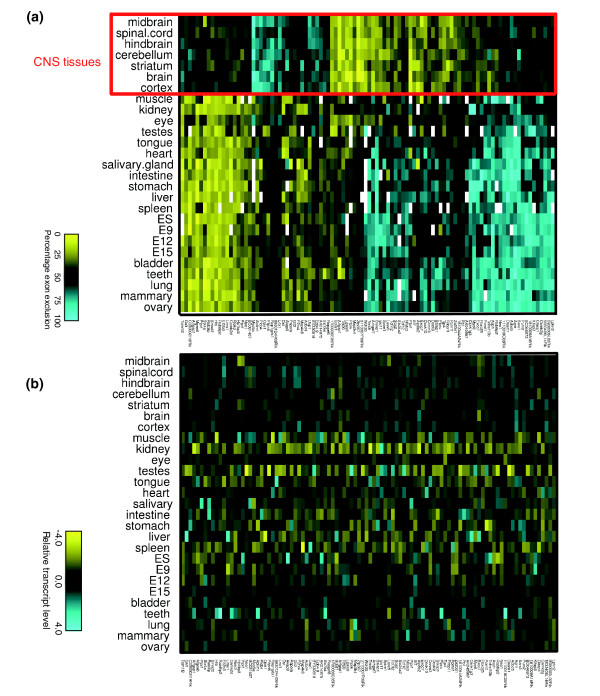
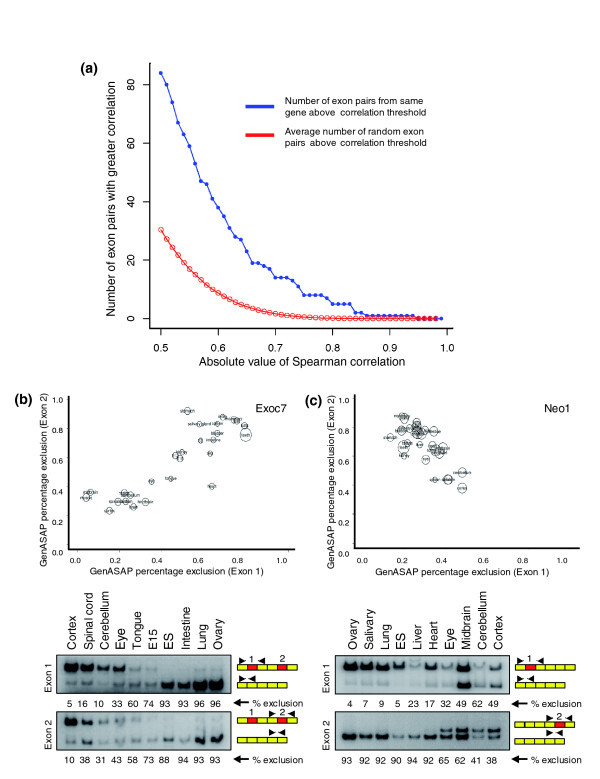
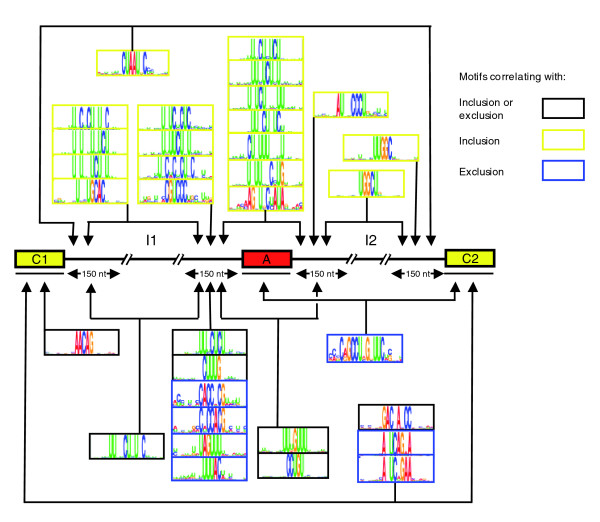
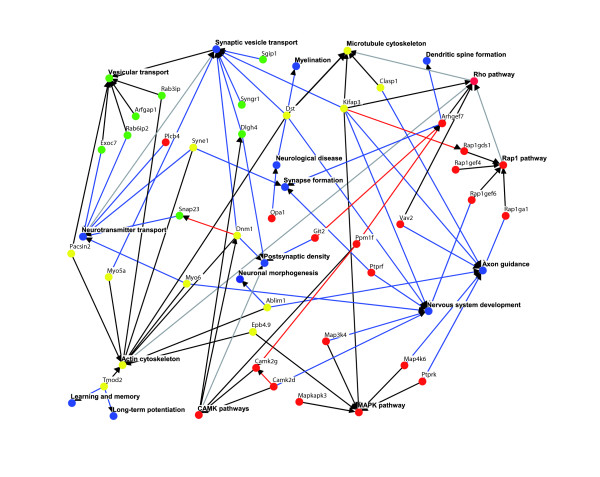
Background: Alternative splicing (AS) functions to expand proteomic complexity and plays numerous important roles in gene regulation. However, the extent to which AS coordinates functions in a cell and tissue type specific manner is not known. Moreover, the sequence code that underlies cell and tissue type specific regulation of AS is poorly understood. Results: Using quantitative AS microarray profiling, we have identified a large number of widely expressed mouse genes that contain single or coordinated pairs of alternative exons that are spliced in a tissue regulated fashion. The majority of these AS events display differential regulation in central nervous system (CNS) tissues. Approximately half of the corresponding genes have neural specific functions and operate in common processes and interconnected pathways. Differential regulation of AS in the CNS tissues correlates strongly with a set of mostly new motifs that are predominantly located in the intron and constitutive exon sequences neighboring CNS-regulated alternative exons. Different subsets of these motifs are correlated with either increased inclusion or increased exclusion of alternative exons in CNS tissues, relative to the other profiled tissues. Conclusion: Our findings provide new evidence that specific cellular processes in the mammalian CNS are coordinated at the level of AS, and that a complex splicing code underlies CNS specific AS regulation. This code appears to comprise many new motifs, some of which are located in the constitutive exons neighboring regulated alternative exons. These data provide a basis for understanding the molecular mechanisms by which the tissue specific functions of widely expressed genes are coordinated at the level of AS.
Overview
The claims and statistics of this paper haven’t been checked yet.
Run the check — free, no account needed. It reads the open-access text and checks the sources it cites.
Integrity signals
Registry
Cites
Statistics
Figures
Verification
Claims the paper makes
The claims and statistics of this paper haven’t been checked yet.
Run the check — free, no account needed. It reads the open-access text and checks the sources it cites.
Claims other papers make about this one
Each is checked against this paper’s own text: does it say what the citing paper says it does?
In the citing paper
“Consistent with previous results (Fagnani et al., 2007; Pan et al., 2004), there is little overlap (8.5%) between genes with neural-regulated AS and mRNA expression, although these subsets of genes are highly enriched in overlapping GO terms (40% in common; Figure S1).”
From A Highly Conserved Program of Neuronal Microexons Is Misregulated in Autistic Brains (2014) · cites this paper as Fagnani et al., 2007
In the citing paper
“These data reveal the largest program of neural-regulated AS events defined to date, and that this program is associated with a broader range of functional processes and pathways linked to nervous system biology than previously detected (Boutz et al., 2007; Fagnani et al., 2007; Ule et al., 2005).”
From A Highly Conserved Program of Neuronal Microexons Is Misregulated in Autistic Brains (2014) · cites this paper as Fagnani et al., 2007
Self-check
Percentages, sums and reported differences re-computed from the paper’s own numbers.
The self-check needs the paper’s full text.
Citations
Cites
Controlling the False Discovery Rate: A Practical and Powerful Approach to Multiple Testing
Benjamini, Y., & Hochberg, Y. (1995) · Journal of the Royal Statistical Society Series B: Statistical Methodology · doi:10.1111/j.2517-6161.1995.tb02031.x · Cited by 109,482
Gapped BLAST and PSI-BLAST: a new generation of protein database search programs
Altschul, S. (1997) · Nucleic Acids Research · doi:10.1093/nar/25.17.3389 · Cited by 73,302
Cytoscape: A software Environment for integrated models of biomolecular interaction networks
Shannon, P., Markiel, A., Ozier, O., Baliga, N. S., Wang, J. T., Ramage, D., Amin, N., Schwikowski, B., & Ideker, T. (2003) · Genome Research · doi:10.1101/gr.1239303 · Cited by 51,888
Modern Applied Statistics with S
Venables, W. N., & Ripley, B. D. (2002) · Statisctics and computing/Statistics and computing · doi:10.1007/978-0-387-21706-2 · Cited by 25,941
Bioconductor: open software development for computational biology and bioinformatics
Gentleman, R. C., Carey, V. J., Bates, D. M., Bolstad, B., Dettling, M., Dudoit, S., Ellis, B., Gautier, L., Ge, Y., Gentry, J., et al. (2004) · Genome biology · doi:10.1186/gb-2004-5-10-r80 · Cited by 12,082
Gentleman R: R: A language for data analysis and graphics
Ihaka, R., & Gentleman, R. (1996) · Journal of Computational and Graphical Statistics · doi:10.1080/10618600.1996.10474713 · Cited by 11,747
Database resources of the National Center for Biotechnology Information: update
Wheeler, D. L. (2003) · Nucleic Acids Research · doi:10.1093/nar/gkh073 · Cited by 10,695
The control of the false discovery rate in multiple testing under dependency
Benjamini, Y., & Yekutieli, D. (2001) · The Annals of Statistics · doi:10.1214/aos/1013699998 · Cited by 10,490
Divergence measures based on the Shannon entropy
Lin, J.-H. (1991) · IEEE Transactions on Information Theory · doi:10.1109/18.61115 · Cited by 5,877
Bootstrap Methods and Their Application
Loughin, T. M., Davison, A. C., & HINKLEY, D. V. (1999) · Journal of the American Statistical Association · doi:10.2307/2669707 · Cited by 5,478
Cited by
Sorted by citations
Barash, Y., Calarco, J. A., Gao, W., Pan, Q., Wang, X., Shai, O., Blencowe, B. J., & Frey, B. J. (2010) · Nature · doi:10.1038/nature09000 · Cited by 925
Self-citationAlternative Splicing Regulatory Networks: Functions, Mechanisms, and Evolution
Ule, J., & Blencowe, B. J. (2019) · Molecular Cell · doi:10.1016/j.molcel.2019.09.017 · Cited by 780
Self-citationRNA processing and its regulation: global insights into biological networks
Licatalosi, D. D., & Darnell, R. B. (2009) · Nature Reviews Genetics · doi:10.1038/nrg2673 · Cited by 777
Functional consequences of developmentally regulated alternative splicing
Kalsotra, A., & Cooper, T. A. (2011) · Nature Reviews Genetics · doi:10.1038/nrg3052 · Cited by 729
A single-molecule long-read survey of the human transcriptome
Sharon, D., Tilgner, H., Grubert, F., & Snyder, M. (2013) · Nature Biotechnology · doi:10.1038/nbt.2705 · Cited by 701
Metadata
- Authors
- Fagnani, M., Barash, Y., Ip, J. Y., Misquitta, C., Pan, Q., Saltzman, A. L., Shai, O., Lee, L., Rozenhek, A., Mohammad, N., Willaime-Morawek, S., Babak, T., Zhang, W., Hughes, T. R., van der Kooy, D., Frey, B. J., & Blencowe, B. J.
- Affiliations
- University of Toronto (CA)
- Hebrew University of Jerusalem (IL)
- Corresponding author
- Frey, Brendan J
- Blencowe, Benjamin J
- ORCID
- Venue
- Genome Biology
- Published
- 2007-06-12
- Volume
- 8
- Issue
- 6
- Pages
- R108-R108
- ISSN
- 1465-6906 (ISSN-L)
- 1474-760X
- PMC
- PMC2394768
- OpenAlex
- W2170074416
- Cited by
- 120
- References
- 347
- Citations by year
- 2026: 3 · 2025: 6 · 2024: 3 · 2023: 2 · 2022: 3 · 2021: 4 · 2020: 2 · 2019: 3 · 2018: 3 · 2017: 6 · 2016: 5 · 2015: 7 · 2014: 10 · 2013: 11 · 2012: 6
- FWCI
- 4.90
- Type
- journal article
- Language
- en
- Open access
- gold
- doi.org
- Locations
- Genome biology (publishedVersion, cc-by)
- PubMed Central (publishedVersion, cc-by)
- PubMed (publishedVersion)
- ePrints Soton (University of Southampton) (acceptedVersion)
- TSpace (University of Toronto) (submittedVersion)
- Funders
- Genome Canada
- Ontario Genomics
- Ontario Genomics Institute
- Canadian Institutes of Health Research
- Natural Sciences and Engineering Research Council of Canada
- National Cancer Institute
- Topics
- Life Sciences › Biochemistry, Genetics and Molecular Biology › Molecular Biology › RNA Research and Splicing
- Life Sciences › Biochemistry, Genetics and Molecular Biology › Molecular Biology › RNA regulation and disease
- Life Sciences › Biochemistry, Genetics and Molecular Biology › Cancer Research › Cancer-related molecular mechanisms research
- Keywords
- alternative splicing, central nervous system, alternative exons, mouse genes
- MeSH terms
- Animals, Central Nervous System, Exons, Gene Expression Regulation, Introns, Organ Specificity, Regulatory Sequences, Nucleic Acid, Alternative Splicing, Oligonucleotide Array Sequence Analysis, Gene Expression Profiling, Mice
About these checks
Registry, retraction, Cites and statistics results are computed, not judged, with one exception: a printed reference that no index lists is read once by a model before it counts as a citation error. Claims are extracted by a model and kept only when their quote appears verbatim in the text; each cited source is then checked, with a model’s help, for whether it says what the claim relies on. Those verdicts can be wrong — read the claim’s quote and the cited source before relying on one.
Statistics and arithmetic are recomputed, not judged.
Confidence bands are shown only for fields calibrated on our annotated test set. None is calibrated yet, so no band is shown.
What counts as a claim ›How we measure confidence ›How we check this ›
Are you an author, or do you see a problem with this page? Request a review
