

The DOI matches its Crossref record; 63 of the 67 references it cites were found in a registry or an index.
Uberon, an integrative multi-species anatomy ontology
Open accessAbstract
We present Uberon, an integrated cross-species ontology consisting of over 6,500 classes representing a variety of anatomical entities, organized according to traditional anatomical classification criteria. The ontology represents structures in a species-neutral way and includes extensive associations to existing species-centric anatomical ontologies, allowing integration of model organism and human data. Uberon provides a necessary bridge between anatomical structures in different taxa for cross-species inference. It uses novel methods for representing taxonomic variation, and has proved to be essential for translational phenotype analyses. Uberon is available at http://uberon.org.
Overview
The claims and statistics of this paper haven’t been checked yet.
Run the check — free, no account needed. It reads the open-access text and checks the sources it cites.
Integrity signals
Registry
Cites
Statistics
Figures
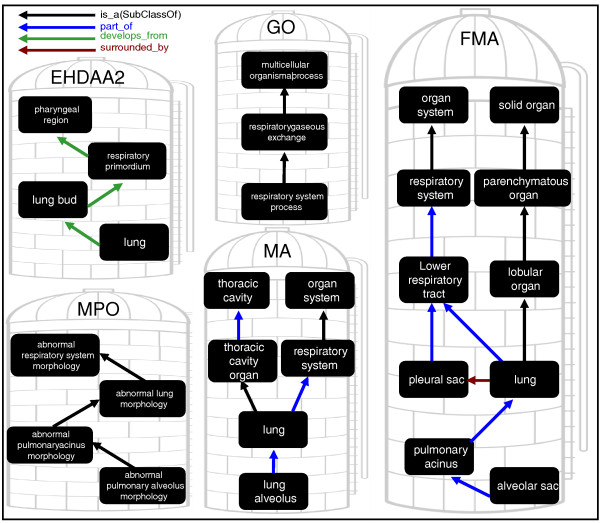
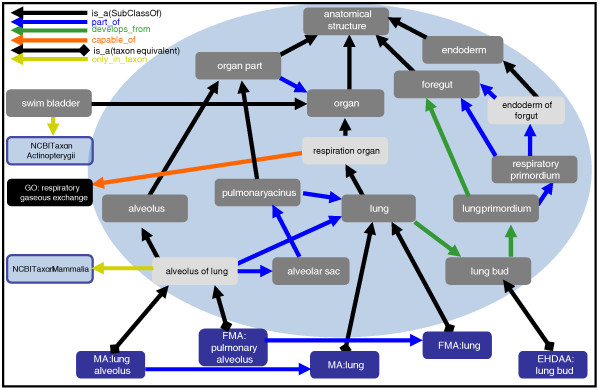
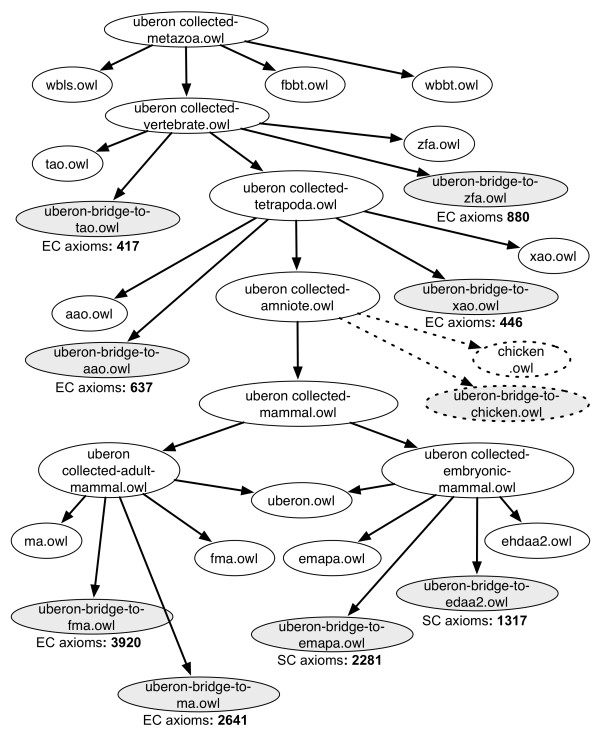
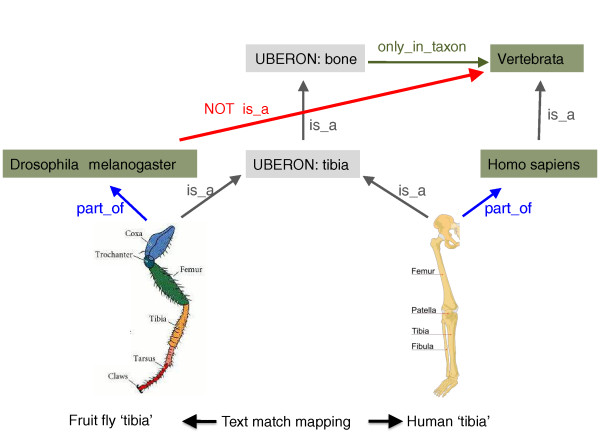
Verification
Claims the paper makes
The claims and statistics of this paper haven’t been checked yet.
Run the check — free, no account needed. It reads the open-access text and checks the sources it cites.
Claims other papers make about this one
Each is checked against this paper’s own text: does it say what the citing paper says it does?
In the citing paper
“When possible, all source tissues have been mapped to standardized Uberon (38) identifiers, enabling us to merge repetitive tissues.”
From TCRD and pharos 2021: mining the human proteome for disease biology (2021) · cites this paper as [38]
Self-check
Percentages, sums and reported differences re-computed from the paper’s own numbers.
The self-check needs the paper’s full text.
Citations
Cites
An algorithm for suffix stripping
Porter, M. F. (1980) · Program · doi:10.1108/eb046814 · Cited by 8,096 · cited 1×
“Using the Blipkit framework [67], we took the names and synonyms from each ontology, tokenized them, and performed Porter-stemming [68], removed certain tokens such as ‘of’ and ‘the’, and matched two classes if the set of stemmed tokens from any label was identical.”
MethodThe OBO Foundry: coordinated evolution of ontologies to support biomedical data integration
Smith, B., Ashburner, M., Rosse, C., Bard, J., Bug, W. J., Ceusters, W. M., Goldberg, L. J., Eilbeck, K. L., Ireland, A., Mungall, C., et al. (2007) · Nature Biotechnology · doi:10.1038/nbt1346 · Cited by 2,546 · cited 1×
“We believe that Uberon meets the current need for an integrative cross-species anatomy ontology amongst the OBO Foundry suite [66].”
BackgroundDBpedia - A crystallization point for the Web of Data
Bizer, C., Lehmann, J., Kobilarov, G., Auer, S., Becker, C., Richard Cyganiak, A., & Hellmann, S. (2009) · Journal of Web Semantics · doi:10.1016/j.websem.2009.07.002 · Cited by 2,144 · cited 6×
“It is important to track the provenance of all information collected in an ontology, and this is particularly important for an ontology such as Uberon, which as a matter of expedience frequently includes ‘tertiary sources’ such as Wikipedia, and other ontologies.”
BackgroundInfluentialA reference ontology for biomedical informatics: the Foundational Model of Anatomy
Rosse, C., & Mejino, J. L. (2003) · Journal of Biomedical Informatics · doi:10.1016/j.jbi.2003.11.007 · Cited by 1,167 · cited 19×
“However, the FMA is designed primarily to represent post-embryonic human structures, and would be unsuitable for annotating zebrafish genes expressed in an embryonic fin bud.”
BackgroundInfluentialChEBI: a database and ontology for chemical entities of biological interest
Degtyarenko, K. N., de Matos, P., Ennis, M., Hastings, J., Zbinden, M., McNaught, A., Alcántara, R., Darsow, M., Guedj, M., & Ashburner, M. (2007) · Nucleic Acids Research · doi:10.1093/nar/gkm791 · Cited by 1,130 · cited 1×
“We have included relationships and other logical axioms that reference other ontologies in Uberon, such as the GO, the Neuro Behavior Ontology (NBO) [30], the CL [15], the Protein Ontology [31] and CHEBI [32].”
MethodThe human phenotype ontology: a tool for annotating and analyzing human hereditary disease
Robinson, P. N., Köhler, S., Bauer, S., Seelow, D., Horn, D., & Mundlos, S. (2008) · The American Journal of Human Genetics · doi:10.1016/j.ajhg.2008.09.017 · Cited by 1,034 · cited 2×
“We used the MPO [74] and the Human Phenotype Ontology [58] in a method analogous to the one described for GO, above.”
MethodRelations in biomedical ontologies
Smith, B., Ceusters, W. M., Klagges, B. R. E., Köhler, J., Kumar, A., Lomax, J., Mungall, C., Neuhaus, F., Rector, A. L., & Rosse, C. (2005) · Genome biology · doi:10.1186/gb-2005-6-5-r46 · Cited by 1,030
FaCT++ Description Logic Reasoner: System Description
Tsarkov, D., & Horrocks, I. (2006) · Lecture notes in computer science · doi:10.1007/11814771_26 · Cited by 805
The Gene Ontology project in 2008
The Gene Ontology Consortium (2007) · Nucleic Acids Research · doi:10.1093/nar/gkm883 · Cited by 776
Systematic determination of patterns of gene expression during Drosophila embryogenesis
Tomančák, P., Beaton, A., Weiszmann, R., Kwan, E., Shu, S., Lewis, S., Richards, S., Ashburner, M., Hartenstein, V., Celniker, S., et al. (2002) · Genome biology · doi:10.1186/gb-2002-3-12-research0088 · Cited by 725 · cited 1×
“4 [80] to encode GCIs and other advanced OWL features within OBO format.”
Background
Research works printed but not linked: 4
- Travillian R, Malone J, Pang C, Hancock J, Holland PW, Schofield P, Parkinson H: The Vertebrate Bridging Ontology (VBO). Proceedings of the Second International Conference on Biomedical Ontology: July 26-30, 2011; Buffalo, NY. 2011, [http://icbo.buffalo.edu/ICBO-2011_Proceedings.pdf]
- Osumi-Sutherland D: CARO 2.0. Proceedings of the Second International Conference on Biomedical Ontology: July 26-30, 2011; Buffalo, NY. 2011, [http://icbo.buffalo.edu/ICBO-2011_Proceedings.pdf]
- Torniai C, Brush M, Vasilevsky N, Segerdell E, Wilson ML, Johnson T, Corday K, Shaffer C, Haendel M: Developing an application ontology for biomedical resource annotation and retrieval: Challenges and lessons learned. Proceedings of the Second International Conference on Biomedical Ontology: July 26-30, 2011; Buffalo, NY. 2011, [http://icbo.buffalo.edu/ICBO-2011_Proceedings.pdf]
- Segerdell E, Wilson ML, Bashor T, Bourges-Waldegg D, Corday K, Frost HR, Johnson T, Shaffer CJ, Stone L, Torniai C, Haendel MA: eagle-i: an ontology-driven framework for biomedical resource annotation and discovery. Nat Precedings. 2010, [http://precedings.nature.com/documents/5176/version/1/files/npre20105176-1.pdf]
Cited by
Sorted by citations
Items 601–700 of 750
Bona, J. P., Utecht, J., Bost, S. J., Brochhausen, M., & Prior, F. (2022) · Physics in Medicine and Biology · doi:10.1088/1361-6560/ac9d1d · Cited by 1
“PRISM semantic integration usesmanyOBO resources, including the humandisease ontology (Schriml et al 2012), the ontology for biomedical investigations (OBI) (Bandrowski et al 2016), and the uber anatomy ontology (Uberon) (Mungall et al 2012).”
MethodBohár, B., Fazekas, D., Madgwick, M., Csabai, L., Olbei, M. L., Korcsmaros, T. D., & Szalay-Bekő, M. (2023) · F1000Research · doi:10.12688/f1000research.52791.3 · Cited by 1
Human neural stem cells in developmental neurotoxicology: Current scenario and future prospects
(2023) · Advances in neurotoxicology · doi:10.1016/bs.ant.2023.01.005 · Cited by 1
Radiomics in the CT diagnosis of ovarian cystic malignancies - a pilot study
Mărginean, L., Ștefan, P.-A., Filep, R. C., Csutak, C., Lebovici, A., Gherman, D., Lupean, R.-A., & Suciu, B. A. (2023) · Medicine and Pharmacy Reports · doi:10.15386/mpr-2594 · Cited by 1
Improving the classification of cardinality phenotypes using collections
Alghamdi, S. M., & Hoehndorf, R. (2023) · Journal of Biomedical Semantics · doi:10.1186/s13326-023-00290-y · Cited by 1
“Furthermore, collections are not explicitly available in anatomy ontologies; while Uberon [41] contains classes such as Collection of hairs ( UBERON:0010164 ), it does not contain collections of cells.”
BackgroundData Standards and Terminology Including Biomedical Ontologies
Denaxas, S., & Stoeckert, C. J. (2023) · Springer eBooks · doi:10.1007/978-3-031-36678-9_3 · Cited by 1
Construction and Enhancement of an RNA-Based Knowledge Graph for Discovering New RNA Drugs
Cavalleri, E., & Mesiti, M. (2024) · IEEE International Conference on Data Engineering (ICDE) · doi:10.1109/icde60146.2024.00453 · Cited by 1
“…[19]), Chemical Entities of Biological Interest Ontology (ChEBI [20]), Human Phenotype Ontology (HPO [21]), Vaccine Ontology (VO [22]), Uber-anatomy Ontology (Uberon [23]), Cell Line Ontology (CLO [24]), Pathway Ontology (PW [25]), Sequence Ontology (SO [26]), and Protein Ontology (PRO [27]).”
BackgroundLost and Found in Behavioral Informatics
Haendel, M. A., & Chesler, E. J. (2012) · International review of neurobiology · doi:10.1016/b978-0-12-388408-4.00001-0 · Cited by 1
Slater, L. T., Gkoutos, G. V., Schofield, P. N., & Hoehndorf, R. (2016) · University of Birmingham Research Portal (University of Birmingham) · Cited by 1
Traits: Structuring Species Information for Discoverability, Navigation and Identification
Vattakaven, T., Rajagopal, P., Balasubramanian, D., Grard, P., & Bourgeois, T. L. (2018) · Springer eBooks · doi:10.1007/978-3-319-76445-0_6 · Cited by 1
Ecological interactions in the Scratchpads virtual research environment
Baker, E., Dupont, S. T. K., & Smith, V. (2019) · Biodiversity Data Journal · doi:10.3897/bdj.7.e47043 · Cited by 1
“Controlled vocabularies for anatomy are becoming available, for example Uberon (Mungall et al. 2012) with a focus on vertebrate animals and the Hymenoptera Anatomy Ontology (Deans et al.”
BackgroundSherlock: an open-source data platform to store, analyze and integrate Big Data for biology
Bohár, B., Fazekas, D., Madgwick, M., Csabai, L., Olbei, M. L., Korcsmaros, T. D., & Szalay-Bekő, M. (2021) · F1000Research · doi:10.12688/f1000research.52791.1 · Cited by 1
Ternary compound ontology matching for cognitive green computing
Zheng, W., Chai, Q.-W., Zhang, J., & Xue, X. (2021) · Mathematical Biosciences & Engineering · doi:10.3934/mbe.2021247 · Cited by 1
Wan, L., Ong, E., & He, Y. O. (2019) · ICBO · Cited by 1
Kulyashov, M. A., Kolmykov, S. K., Евшин, И. С., & Kolpakov, F. (2019) · Российская конференция «Распределенные информационно-вычислительные ресурсы» (DICR) · doi:10.25743/ict.2019.74.16.018 · Cited by 1
“14 UBERON (UBER anatomy atlas)[6] Ontology of various anatomical structures of animals, which is composed taking into account all modern ideas about the anatomical structure, functioning and stages of development.”
BackgroundYAM-BIO – Results for OAEI 2017
Annane, A., Bellahsène, Z., Azouaou, F., & Jonquet, C. (2017) · HAL · Cited by 1
Navigating in vitro bioactivity data: investigating available resources using model compoundsPreprint
Ilmjärv, S., Augsburger, F., Bolleman, J. T., Liechti, R., Bridge, A. J., Sandström, J., Jaquet, V., Xénarios, I., & Krause, K. (2018) · bioRxiv (Cold Spring Harbor Laboratory) · doi:10.1101/248898 · Cited by 1
Coordinating and Integrating Faceted Classification with Rich Semantic ModelingPreprint
Allen, R. B., & Park, J. (2018) · arXiv (Cornell University) · doi:10.13140/rg.2.2.23766.70726 · Cited by 1
Self-normalizing learning on biomedical ontologies using a deep Siamese neural networkPreprint
Smaili, F. Z., Gao, X., & Hoehndorf, R. (2020) · bioRxiv (Cold Spring Harbor Laboratory) · doi:10.1101/2020.04.23.057117 · Cited by 1
Using ontology embeddings for structural inductive bias in gene expression data analysisPreprint
Trębacz, M., Shams, Z., Jamnik, M., Scherer, P. C., Simidjievski, N., Andrés-Terré, H., & Lió, P. (2020) · arXiv (Cornell University) · doi:10.48550/arxiv.2011.10998 · Cited by 1
“We use DL2vec ontology embeddings that are a graph-based method learning gene representations over three biomedical ontologies (GO [1], UBERON [23], and MP [24]).”
MethodCarrio-Cordo, P., & Baudis, M. (2021) · bioRxiv (Cold Spring Harbor Laboratory) · doi:10.1101/2021.03.01.433348 · Cited by 1
“As such, important initiatives improving ontology-based search and integration of terminologies are Gene Ontology, MONDO or UBERON [10, 11, 12].”
BackgroundThe Virtual Brain Ontology: A Digital Knowledge Framework for Reproducible Brain Network ModelingPreprint
Martin, L., Bülau, K., Pille, M., Schmitt, R. A., Huettl, C., Meier, J. M., Taher, H., Perdikis, D., Schirner, M., Stefanovski, L., et al. (2025) · bioRxiv (Cold Spring Harbor Laboratory) · doi:10.1101/2025.11.19.689211 · Cited by 1
“We will expand literature coverage and strengthen semantic integration with domain ontologies (e.g., Gene Ontology [40], Human Phenotype Ontology [65], Cell Ontology [66], Uberon [49], NeuroML [23]) to support multiscale models [4] and closer links to empirical data.”
BiOmics: A Foundational Agent for Grounded and Autonomous Multi-omics InterpretationPreprint
Cao, L., Li, Y., Qin, H., Shang, Y., Zhang, Y., Jovanovic, B., Djokic, L., Xia, T., Hu, L., Hou, H., et al. (2026) · bioRxiv (Cold Spring Harbor Laboratory) · doi:10.64898/2026.01.17.699830 · Cited by 1
McLachlan, A. D., Court, R., Pilgrim, C., Longden, K. D., Brown, N. H., Osumi-Sutherland, D., Jefferis, G. S. X. E., & Armstrong, J. D. (2026) · bioRxiv (Cold Spring Harbor Laboratory) · doi:10.64898/2026.06.16.732577 · Cited by 1
“3 Many of these resources are formalised through domain-specific ontologies such as the Gene Ontology, 4 Drosophila Anatomy Ontology (DAO), 5 or the multi-species anatomy ontology Uberon, 6 and stored in graph databases, where entities and their typed relationships form traversable networks 7 .”
Mapping the gap: curation of phenotype-driven gene discovery in congenital heart disease research
Wong, M. G. (2014) · D-Scholarship@Pitt (University of Pittsburgh)
Weinandt, N., Jackson, L. M., Gnimpiéba, E. Z., & Lushbough, C. (2014) · ACM International Conference on Bioinformatics, Computational Biology, and Health Informatics (ACM-BCB) · doi:10.1145/2649387.2660851
“The integration of the complete UBERON ontology [18]”
BackgroundeNanoMapper: harnessing ontologies to enable data integration for nanomaterial risk
Jeliazkova, N., Tsiliki, G., Munteanu, C. R., Steinbeck, C., & Willighagen, E. (2015)
Hayamizu, T. F., & Ringwald, M. (2015) · Elsevier eBooks · doi:10.1016/b978-0-12-800043-4.00023-3
genetic perturbations to phenotypic evolution
Manda, P., Balhoff, J. P., Lapp, H., & Mabee, P. (2015)
Developing a Comprehensive Taxonomy for Human Cell Types
Conroy, R., & Pai, V. M. (2015) · CRC Press eBooks · doi:10.1201/b18024-5
Mapping and Merging of Anatomical Ontologies
Petrov, P. (2014) · Serdica Journal of Computing · doi:10.55630/sjc.2013.7.281-316
Annotating Adverse Outcome Pathways to Organize Toxicological Information for Risk Assessment
Ives, C. L. (2019) · Carolina Digital Repository (University of North Carolina at Chapel Hill) · doi:10.17615/y2mh-jj84
Evolution of anatomical concept usage over time
Manda, P., & Vision, T. (2017) · International Workshop on Semantic Big Data (SBD) · doi:10.1145/3066911.3066919
“For example, Uberon [16] is a cross-species ontology that represents anatomical concepts connected to each other via relationships that model traditional anatomical classications.”
BackgroundMethodTools for exploring mouse models of human disease
Haendel, M. A., Papatheodorou, I., Oellrich, A., Mungall, C., Washington, N. L., Lewis, S., Robinson, P. N., & Smedley, D. P. (2016) · Drug Discovery Today Disease Models · doi:10.1016/j.ddmod.2017.07.004
BioGraph: Linking Biological Bases Across Organisms.
Borges, L. L., & Santanchè, A. (2017) · SWAT4LS
Semantic Prioritization of Novel Causative Genomic Variants in Mendelian and Oligogenic Diseases
Boudellioua, I. (2019) · King Abdullah University of Science and Technology Repository (King Abdullah University of Science and Technology) · doi:10.25781/kaust-y5g20
“The PhenomeNET ontology includes UBERON [114], GO [214], BSPO [215], ZFA [216], PATO [170], CL [217], NBO [218], but removes all disjointness axioms from these ontologies prior to inclusion due to possible inconsistencies arising from these.”
MethodInfluentialSeMAntic RepresenTation for experimental Protocols
Pasmín, O. X. G. (2019) · doi:10.20868/upm.thesis.55408
Towards a Face Recognition Model Analyzer
Johnson, M., Angel, J., & McGuinness, D. L. (2020) · IEEE International Conference on Semantic Computing (ICSC) · doi:10.1109/icsc.2020.00049
“This sub-ontology reuses the Uber-anatomy ontology [11], to describe the different sections of the face, and the FIBO Agents ontology [12], to describe the attributes of a person within the image.”
MethodCarmichael, A. F. B., Bhowmik, D., Baily, J. L., Brownlow, A. C., Gunn, G. J., & Aaron Reeves, B. (2020) · ACM International Conference on Bioinformatics, Computational Biology, and Health Informatics (ACM-BCB) · doi:10.1145/3388440.3412417
“While multispecies ontologies such as Uberon [17] do exist, it was decided that a smaller more manageable ontology would be more appropriate for this task.”
BackgroundKulyashov, M. A., Kolmykov, S. K., Yevshin, I., & Kolpakov, F. (2020) · IEEE Ural-Siberian Conference on Computational Technologies in Cognitive Science, Genomics and Biomedicine (CSGB) · doi:10.1109/csgb51356.2020.9214681
“To describe cell type we use specialized databases: UBERON [2], Cell ontology [3], Experimental factor ontology [4], Brenda tissue ontology [5], Cellosaurus [6].”
MethodPredicting Active Enhancers From Chromatin Accessibility and RNA-seq Datasets
Nguyen, F. (2019) · TSpace (University of Toronto)
Gene network module changes associated with the vertebrate fin to limb transitionPreprint
Fernando, P. C., Mabee, P., & Zeng, E. (2021) · bioRxiv (Cold Spring Harbor Laboratory) · doi:10.1101/2021.01.28.428646
“relationships available in literature using Uberon anatomy ontology [27].”
MethodACLRO: An Ontology for the Best Practice in ACLR Rehabilitation
Phalakornkule, K. (2020) · IUScholarWorks (Indiana University) · doi:10.7912/c2/964
Semantic Approaches to Enable Drug Discovery in Biomedical Big Data
Hiebert, T. (2014) · Carleton University's Institutional Repository (MacOdrum Library, Carleton University) · doi:10.22215/etd/2014-10530
Faculty Opinions recommendation of Semantic prioritization of novel causative genomic variants.
Smith, B. (2018) · Faculty Opinions – Post-Publication Peer Review of the Biomedical Literature · doi:10.3410/f.727513715.793550373
Semantic simulations based on object-oriented analysis and modeling
Robert, B. A. (2020) · Library and Information Science Research E-Journal · doi:10.32655/libres.2019.2.4
Bedhiafi, W., Thomas‐Vaslin, V., Elgaaïed, A. B., & Six, A. (2022) · bioRxiv (Cold Spring Harbor Laboratory) · doi:10.1101/2022.05.27.493696
Ontological Support for Harmonization and Integration of Ukrzaliznytsia Information Systems Data
Zhuchyi, L. I. (2022) · Science and Transport Progress · doi:10.15802/stp2022/265335
From Farm to FAIR: The Trials of Linking and Sharing Wheat Research Data
Rawlings, C., & Davey, R. (2022) · Springer eBooks · doi:10.1007/978-3-031-13276-6_6
Transcriptomic identification of cell types in the lower urinary tract
Strand, D. W. (2023) · Elsevier eBooks · doi:10.1016/b978-0-12-822455-7.00002-7
Data-Driven Information Extraction and Enrichment of Molecular Profiling Data for Cancer Cell LinesPreprint
Smith, E., Paloots, R., Giagkos, D., Baudis, M., & Stockinger, K. (2023) · arXiv (Cornell University) · doi:10.48550/arxiv.2307.00933
Pharos and TCRD : Informatics Tools for Illuminating Dark Targets
Kelleher, K. J., Sheils, T. K., Mathias, S. L., Nguyễn, Ð.-T., Siramshetty, V. B., Pillai, A., Yang, J. J., Bologa, C., Edwards, J. S., Oprea, T. I., et al. (2023) · Methods and principles in medicinal chemistry · doi:10.1002/9783527830497.ch8
Characterization of methods for mechanistic inference of the gut microbiome in diseasePreprint
Santangelo, B. E., Hunter, L., & Lozupone, C. (2023) · bioRxiv (Cold Spring Harbor Laboratory) · doi:10.1101/2023.12.01.569617
How to Define a Multi-modal Knowledge Graph?
Wang, N., Yilahun, H., Hamdulla, A., & Qiu, Z. (2023) · Communications in computer and information science · doi:10.1007/978-981-99-8764-1_7
Girón, J. C., Balk, M. A., Dahdul, W., Lapp, H., Mikó, I., Alhajjar, E., Wynd, B. M., Tarasov, S., Lawrence, C., Khakurel, B., et al. (2024) · Biodiversity Information Science and Standards · doi:10.3897/biss.8.115232
Additional file 4 of Features of a FAIR vocabulary
Xu, F., Juty, N., Goble, C., Jupp, S., Parkinson, H., & Courtot, M. (2023) · Figshare · doi:10.6084/m9.figshare.23281041
Additional file 3 of Features of a FAIR vocabulary
Xu, F., Juty, N., Goble, C., Jupp, S., Parkinson, H., & Courtot, M. (2023) · Figshare · doi:10.6084/m9.figshare.23281038
Additional file 2 of Parallel sequence tagging for concept recognition
Furrer, L., Cornelius, J., & Rinaldi, F. (2022) · Figshare · doi:10.6084/m9.figshare.19418422
Additional file 2 of Features of a FAIR vocabulary
Xu, F., Juty, N., Goble, C., Jupp, S., Parkinson, H., & Courtot, M. (2023) · Figshare · doi:10.6084/m9.figshare.23281035
Additional file 5 of Features of a FAIR vocabulary
Xu, F., Juty, N., Goble, C., Jupp, S., Parkinson, H., & Courtot, M. (2023) · Figshare · doi:10.6084/m9.figshare.23281044
Additional file 1 of Features of a FAIR vocabulary
Xu, F., Juty, N., Goble, C., Jupp, S., Parkinson, H., & Courtot, M. (2023) · Figshare · doi:10.6084/m9.figshare.23281032
Additional file 1 of Parallel sequence tagging for concept recognition
Furrer, L., Cornelius, J., & Rinaldi, F. (2022) · Figshare · doi:10.6084/m9.figshare.19418419
Semantic computing for human phenotypesPreprint
Gentleman, R. C., Gonçalves, R. S., & Carey, V. J. (2024) · bioRxiv (Cold Spring Harbor Laboratory) · doi:10.1101/2024.06.21.599369
“Information on anatomic location of diseases was extracted directly from EFO statements of the form: X has_disease_location Y, where Y is typically an UBERON term representing an anatomical location.”
MethodInfluentialPPSDB : A Linked Open Data knowledge base for protist-prokaryote symbiotic interactionsPreprint
Seah, B. K. B. (2024) · doi:10.32942/x2zw4s
Biological and Medical Ontologies: Human Phenotype Ontology (HPO)
Khalaf, R. A., Bernasconi, A., & Masseroli, M. (2024) · Elsevier eBooks · doi:10.1016/b978-0-323-95502-7.00063-4
DELE: Deductive EL++ Embeddings for Knowledge Base Completion
Mashkova, O., Zhapa-Camacho, F., & Hoehndorf, R. (2026) · Neurosymbolic Artificial Intelligence · doi:10.1177/29498732261420011 · Cited by 1
“Food Ontology [11] contains structured information about foods formalized in SRIQ DL expressivity [7] involving terms from UBERON [33], NCBITaxon [13], Plant Ontology [16], and others.”
Hayamizu, T. F., & Ringwald, M. (2024) · Elsevier eBooks · doi:10.1016/b978-0-443-23739-3.00011-0
The informatics of developmental phenotypes
Schofield, P. N., Hoehndorf, R., Gkoutos, G. V., & Smith, C. L. (2024) · Elsevier eBooks · doi:10.1016/b978-0-443-23739-3.00012-2
Bueckle, A., Herr, B. W., Hardi, J., Quardokus, E. M., Musen, M. A., & Börner, K. (2024) · bioRxiv (Cold Spring Harbor Laboratory) · doi:10.1101/2024.12.22.630006
A fourfold pathogen reference ontology suite
Beverley, J., Babcock, S., Benson, C., Colle, G. D., Cohen, S., Diehl, A. D., Challa, R. A. N. R., Mavrovich, R. A., Billig, J., Huffman, A., et al. (2025) · Journal of Biomedical Semantics · doi:10.1186/s13326-025-00333-6
“This class is asserted equivalent to: life cycle stage and in taxon some parasite organism Where life cycle stage is imported from UBERON [75], and in taxon is imported from RO, meaning x is in taxon y just in case y is an organism and either x is part of, developmentally preceded by, derives from,…”
Wang, J., Turney, A., Murray, L., Craven, A. M., Bragger-Wilkinson, P., dos Santos, B., Martasek, J., & Desaphy, J. (2025) · Nucleic Acids Research · doi:10.1093/nar/gkaf254
Zhu, Z., Yang, J., Li, X., Zheng, Z., Genchev, G. Z., Ye, Y., Liu, L., & Ran, Z. (2025) · Advanced Intelligent Systems · doi:10.1002/aisy.202500036
Advancing Cardiovascular Research: A Tailored Knowledge Graph Schema for Scholarly Data
Bitaraf, E., Jafarpour, M., Moeini, A., Shool, S., & Tara, M. (2025) · International Conference on Web Research (ICWR) · doi:10.1109/icwr65219.2025.11006231
A FIT4NER Generic Approach for Framework-Independent Medical Named Entity Recognition
Freund, F., Tamla, P., Wilde, F., & Hemmje, M. (2025) · Information · doi:10.3390/info16070554
Heuschkel, M., Höffner, K., Schmiedel, F., Labudde, D., & Uciteli, A. (2025) · Semantic Web · doi:10.1177/22104968251344452
“– Uberon, the Uber Anatomy Ontology (Mungall et al., 2012) covers different species, lacking the necessary detail in anatomical and osteometric landmarks specific to anthropology.”
A multi-modal vision knowledge graph of cardiovascular diseasePreprint
Rjoob, K. W. Y., McGurk, K. A., Zheng, S. L., Curran, L., Ibrahim, M., Zeng, L., Kim, V., Tahasildar, S., Kalaie, S., Senevirathne, D. S., et al. (2025) · medRxiv · doi:10.1101/2025.07.17.25331359
MiroSCOPE: An AI-driven digital pathology platform for annotating functional tissue unitsPreprint
Fenner, M. R., Sevim, S., Wu, G., Beavers, D., Guo, P., Tang, Y., Eddy, C. Z., Ait-Ahmad, K., Rice-Stitt, T. L., THOMAS, G. V., et al. (2025) · bioRxiv (Cold Spring Harbor Laboratory) · doi:10.1101/2025.07.11.664228
ClarID: a human-readable and compact identifier specification for biomedical metadata integration
Rueda, M., & Gut, I. G. (2026) · Journal of Biomedical Semantics · doi:10.1186/s13326-026-00349-6
“CURIE identifiers vary by component: for example, the “tissue” field uses terms from UBERON—a cross-species anatomy ontology that semantically integrates anatomical structures across Metazoa [17] and BRENDA tissue ontology (BTO) [18].”
Harmonizing mouse anatomy terminology: a common language?
Ruberte, J., Schofield, P. N., Sundberg, J. P., Olvera‐Maneu, S., & Carretero, A. (2025) · Mammalian Genome · doi:10.1007/s00335-025-10156-6
“Interestingly “Posterior sector of the right lobe of the liver” is already in UBERON (UBERON_8600015) but with no cross-references bringing together the mouse and human regions.”
InfluentialGenerative genomics accurately predicts future experimental resultsPreprint
Koytiger, G., Walsh, A. M., Marar, V., Johnson, K. A., Highsmith, M. R., Abbas, A., Stirn, A., Brumbaugh, A. R., David, A., Hui, D., et al. (2025) · bioRxiv (Cold Spring Harbor Laboratory) · doi:10.1101/2025.09.08.674753 · Cited by 1
“The cell type labels were mapped to the cell ontology 43 , cell line labels were mapped to Cellosaurus 44 , tissue labels were mapped to the Uberon ontology 45 , and disease labels were mapped to the Mondo ontology 46 .”
AI-supported extraction of functional tissue unit properties for Human Reference Atlas construction
Kong, Y., & Börner, K. (2026) · Communications Biology · doi:10.1038/s42003-026-10850-4
Chemical classification program synthesis using generative artificial intelligence
Mungall, C., Malik, A., Korn, D., Reese, J., O’Boyle, N. M., & Hastings, J. (2025) · Journal of Cheminformatics · doi:10.1186/s13321-025-01092-3
“DL reasoning has been widely employed by a number of other ontologies such as the Gene Ontology [16], the Uberon anatomy [17], the Cell Ontology [18], and several phenotype and disease ontologies [19].”
Novoa, J., Pazos, F., & Chagoyen, M. (2025) · bioRxiv (Cold Spring Harbor Laboratory) · doi:10.64898/2025.12.09.693155
Additional file 1 of UniBind: maps of high-confidence direct TF-DNA interactions across nine species
Puig, R. R., Boddie, P., Khan, A., Castro-Mondragon, J. A., & Mathelier, A. (2021) · Figshare · doi:10.6084/m9.figshare.14853540
Fernando, P. C., Mabee, P., & Zeng, E. (2020) · Figshare · doi:10.6084/m9.figshare.13064311
Maria, M. A., White, S., Neely, B., Ardini, M.-A., Hill, C. B., Misra, R. S., Aronow, B. J., Gaddis, N., Yang, L., Wert, S. E., et al. (2021) · Figshare · doi:10.6084/m9.figshare.14100756
Yamagata, Y., Kushida, T., Onami, S., & Masuya, H. (2024) · Figshare · doi:10.6084/m9.figshare.26724206
Figueiredo, R. Q., del Ser, S. D., Raschka, T., Hofmann‐Apitius, M., Kodamullil, A. T., Mubeen, S., & Domingo-Fernández, D. (2022) · Figshare · doi:10.6084/m9.figshare.20079125
Fernando, P. C., Mabee, P., & Zeng, E. (2020) · Figshare · doi:10.6084/m9.figshare.13064305
Vogt, L., Mikó, I., & Bartolomaeus, T. (2022) · Figshare · doi:10.6084/m9.figshare.20167827
Development and analysis of the adverse outcome pathway network for neurotoxicity
Hui, X., Li, X., Liu, S., Ying, G., & Chen, C.-E. (2026) · Toxicology · doi:10.1016/j.tox.2026.154397
Metadata
- Authors
- Mungall, C. J., Torniai, C., Gkoutos, G. V., Lewis, S. E., & Haendel, M. A.
- Affiliations
- Oregon Health & Science University (US)
- University of Cambridge (GB)
- Lawrence Berkeley National Laboratory (US)
- Venue
- Genome biology
- Published
- 2012-01-31
- Volume
- 13
- Issue
- 1
- Pages
- R5-R5
- ISSN
- 1465-6906 (ISSN-L)
- 1474-760X
- PMC
- PMC3334586
- OpenAlex
- W2116034137
- Cited by
- 732
- References
- 67
- Citations by year
- 2026: 60 · 2025: 69 · 2024: 55 · 2023: 66 · 2022: 55 · 2021: 51 · 2020: 46 · 2019: 45 · 2018: 55 · 2017: 46 · 2016: 49 · 2015: 50 · 2014: 34 · 2013: 28 · 2012: 21
- FWCI
- 17.73
- Type
- journal article
- Language
- en
- Open access
- gold
- doi.org
- Locations
- Genome biology (publishedVersion, cc-by)
- Europe PMC (PubMed Central) (publishedVersion, cc-by)
- PubMed Central (publishedVersion, cc-by)
- PubMed (publishedVersion)
- OSTI OAI (U.S. Department of Energy Office of Scientific and Technical Information) (submittedVersion)
- University of Birmingham Research Portal (University of Birmingham) (submittedVersion)
- Funders
- U.S. Department of Energy (-AC02-05CH11231, 05CH11231, DE AC02 05CH11231, DE-AC02-)
- National Institutes of Health (2p41hg002273-07, 5u24rr029825-02, DE-AC02–05CH11231)
- Office of Science (DEAC02–05CH11231, AC02-05CH11231, DE-AC02, 05CH11231)
- National Human Genome Research Institute (U41HG002273, R01HG004838, P41HG002273-09S1, P41-HG002273)
- National Center for Research Resources (1U24RR029825-01)
- Basic Energy Sciences (DE-AC02, DE-AC02-05CH11231., AC02–05CH11231)
- Topics
- Health Sciences › Medicine › Health Informatics › Biomedical Text Mining and Ontologies
- Physical Sciences › Computer Science › Artificial Intelligence › Semantic Web and Ontologies
- Life Sciences › Biochemistry, Genetics and Molecular Biology › Molecular Biology › Bioinformatics and Genomic Networks
- Keywords
- UBERON, anatomy ontology, anatomical classification, taxonomic variation, human anatomy
- MeSH terms
- Anatomy, Comparative, Classification, Humans, Phenotype, Software, Species Specificity, Databases, Factual, Computational Biology
About these checks
Registry, retraction, Cites and statistics results are computed, not judged, with one exception: a printed reference that no index lists is read once by a model before it counts as a citation error. Claims are extracted by a model and kept only when their quote appears verbatim in the text; each cited source is then checked, with a model’s help, for whether it says what the claim relies on. Those verdicts can be wrong — read the claim’s quote and the cited source before relying on one.
Statistics and arithmetic are recomputed, not judged.
Confidence bands are shown only for fields calibrated on our annotated test set. None is calibrated yet, so no band is shown.
What counts as a claim ›How we measure confidence ›How we check this ›
Are you an author, or do you see a problem with this page? Request a review
