

The DOI matches its Crossref record; 63 of the 67 references it cites were found in a registry or an index.
Uberon, an integrative multi-species anatomy ontology
Open accessAbstract
We present Uberon, an integrated cross-species ontology consisting of over 6,500 classes representing a variety of anatomical entities, organized according to traditional anatomical classification criteria. The ontology represents structures in a species-neutral way and includes extensive associations to existing species-centric anatomical ontologies, allowing integration of model organism and human data. Uberon provides a necessary bridge between anatomical structures in different taxa for cross-species inference. It uses novel methods for representing taxonomic variation, and has proved to be essential for translational phenotype analyses. Uberon is available at http://uberon.org.
Overview
The claims and statistics of this paper haven’t been checked yet.
Run the check — free, no account needed. It reads the open-access text and checks the sources it cites.
Integrity signals
Registry
Cites
Statistics
Figures
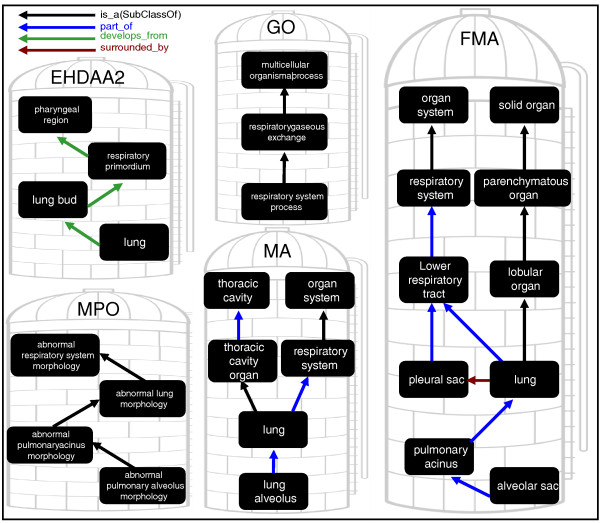
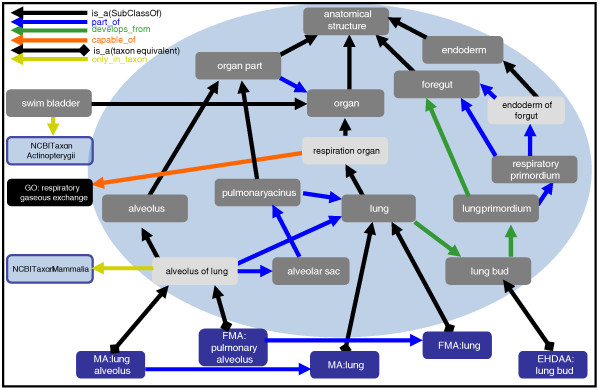
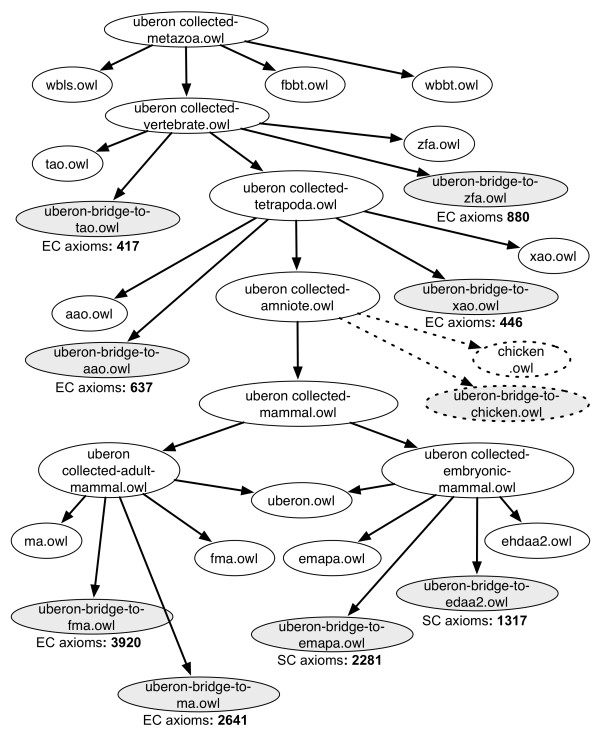
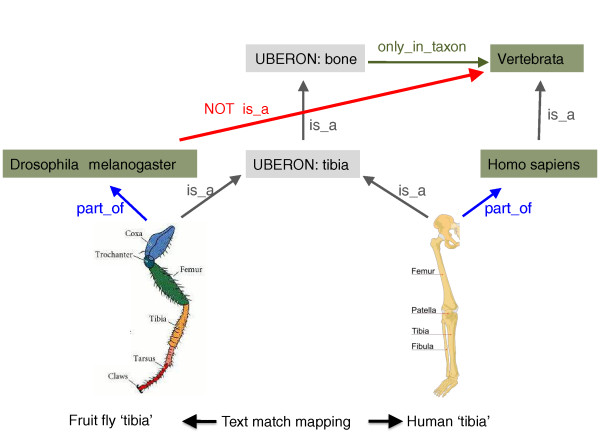
Verification
Claims the paper makes
The claims and statistics of this paper haven’t been checked yet.
Run the check — free, no account needed. It reads the open-access text and checks the sources it cites.
Claims other papers make about this one
Each is checked against this paper’s own text: does it say what the citing paper says it does?
In the citing paper
“When possible, all source tissues have been mapped to standardized Uberon (38) identifiers, enabling us to merge repetitive tissues.”
From TCRD and pharos 2021: mining the human proteome for disease biology (2021) · cites this paper as [38]
Self-check
Percentages, sums and reported differences re-computed from the paper’s own numbers.
The self-check needs the paper’s full text.
Citations
Cites
An algorithm for suffix stripping
Porter, M. F. (1980) · Program · doi:10.1108/eb046814 · Cited by 8,096 · cited 1×
“Using the Blipkit framework [67], we took the names and synonyms from each ontology, tokenized them, and performed Porter-stemming [68], removed certain tokens such as ‘of’ and ‘the’, and matched two classes if the set of stemmed tokens from any label was identical.”
MethodThe OBO Foundry: coordinated evolution of ontologies to support biomedical data integration
Smith, B., Ashburner, M., Rosse, C., Bard, J., Bug, W. J., Ceusters, W. M., Goldberg, L. J., Eilbeck, K. L., Ireland, A., Mungall, C., et al. (2007) · Nature Biotechnology · doi:10.1038/nbt1346 · Cited by 2,546 · cited 1×
“We believe that Uberon meets the current need for an integrative cross-species anatomy ontology amongst the OBO Foundry suite [66].”
BackgroundDBpedia - A crystallization point for the Web of Data
Bizer, C., Lehmann, J., Kobilarov, G., Auer, S., Becker, C., Richard Cyganiak, A., & Hellmann, S. (2009) · Journal of Web Semantics · doi:10.1016/j.websem.2009.07.002 · Cited by 2,144 · cited 6×
“It is important to track the provenance of all information collected in an ontology, and this is particularly important for an ontology such as Uberon, which as a matter of expedience frequently includes ‘tertiary sources’ such as Wikipedia, and other ontologies.”
BackgroundInfluentialA reference ontology for biomedical informatics: the Foundational Model of Anatomy
Rosse, C., & Mejino, J. L. (2003) · Journal of Biomedical Informatics · doi:10.1016/j.jbi.2003.11.007 · Cited by 1,167 · cited 19×
“However, the FMA is designed primarily to represent post-embryonic human structures, and would be unsuitable for annotating zebrafish genes expressed in an embryonic fin bud.”
BackgroundInfluentialChEBI: a database and ontology for chemical entities of biological interest
Degtyarenko, K. N., de Matos, P., Ennis, M., Hastings, J., Zbinden, M., McNaught, A., Alcántara, R., Darsow, M., Guedj, M., & Ashburner, M. (2007) · Nucleic Acids Research · doi:10.1093/nar/gkm791 · Cited by 1,130 · cited 1×
“We have included relationships and other logical axioms that reference other ontologies in Uberon, such as the GO, the Neuro Behavior Ontology (NBO) [30], the CL [15], the Protein Ontology [31] and CHEBI [32].”
MethodThe human phenotype ontology: a tool for annotating and analyzing human hereditary disease
Robinson, P. N., Köhler, S., Bauer, S., Seelow, D., Horn, D., & Mundlos, S. (2008) · The American Journal of Human Genetics · doi:10.1016/j.ajhg.2008.09.017 · Cited by 1,034 · cited 2×
“We used the MPO [74] and the Human Phenotype Ontology [58] in a method analogous to the one described for GO, above.”
MethodRelations in biomedical ontologies
Smith, B., Ceusters, W. M., Klagges, B. R. E., Köhler, J., Kumar, A., Lomax, J., Mungall, C., Neuhaus, F., Rector, A. L., & Rosse, C. (2005) · Genome biology · doi:10.1186/gb-2005-6-5-r46 · Cited by 1,030
FaCT++ Description Logic Reasoner: System Description
Tsarkov, D., & Horrocks, I. (2006) · Lecture notes in computer science · doi:10.1007/11814771_26 · Cited by 805
The Gene Ontology project in 2008
The Gene Ontology Consortium (2007) · Nucleic Acids Research · doi:10.1093/nar/gkm883 · Cited by 776
Systematic determination of patterns of gene expression during Drosophila embryogenesis
Tomančák, P., Beaton, A., Weiszmann, R., Kwan, E., Shu, S., Lewis, S., Richards, S., Ashburner, M., Hartenstein, V., Celniker, S., et al. (2002) · Genome biology · doi:10.1186/gb-2002-3-12-research0088 · Cited by 725 · cited 1×
“4 [80] to encode GCIs and other advanced OWL features within OBO format.”
Background
Research works printed but not linked: 4
- Travillian R, Malone J, Pang C, Hancock J, Holland PW, Schofield P, Parkinson H: The Vertebrate Bridging Ontology (VBO). Proceedings of the Second International Conference on Biomedical Ontology: July 26-30, 2011; Buffalo, NY. 2011, [http://icbo.buffalo.edu/ICBO-2011_Proceedings.pdf]
- Osumi-Sutherland D: CARO 2.0. Proceedings of the Second International Conference on Biomedical Ontology: July 26-30, 2011; Buffalo, NY. 2011, [http://icbo.buffalo.edu/ICBO-2011_Proceedings.pdf]
- Torniai C, Brush M, Vasilevsky N, Segerdell E, Wilson ML, Johnson T, Corday K, Shaffer C, Haendel M: Developing an application ontology for biomedical resource annotation and retrieval: Challenges and lessons learned. Proceedings of the Second International Conference on Biomedical Ontology: July 26-30, 2011; Buffalo, NY. 2011, [http://icbo.buffalo.edu/ICBO-2011_Proceedings.pdf]
- Segerdell E, Wilson ML, Bashor T, Bourges-Waldegg D, Corday K, Frost HR, Johnson T, Shaffer CJ, Stone L, Torniai C, Haendel MA: eagle-i: an ontology-driven framework for biomedical resource annotation and discovery. Nat Precedings. 2010, [http://precedings.nature.com/documents/5176/version/1/files/npre20105176-1.pdf]
Cited by
Sorted by citations
Items 701–750 of 750
Yu, K., Zhao, H., Wilderman, A. S., Farris, T. R., Arce, J. E., Chen, D., Jackson, A. R., Guo, Y., Li, Q., Jevtic, B., et al. (2026) · Bioinformatics · doi:10.1093/bioinformatics/btag013
“Specifically, the RFC recommends using Uberon (Mungall et al. 2012) for tissue/organ annotations and the Cell Ontology (CL) (Diehl et al. 2016) for cell types.”
Pengput, A., & Diehl, A. D. (2026) · Journal of Biomedical Semantics · doi:10.1186/s13326-025-00345-2
“It also includes classes from external ontologies such as the Ontology for General Medical Sciences (OGMS) [9] and the Uber-anatomy ontology (Uberon) [10].”
Nicolle, R., Caron, B., Malan, V., & Rausell, A. (2026) · medRxiv · doi:10.64898/2026.01.27.26344931
Mapping whole-organism genetic comorbidities across model Species using unified ontologies
Peaslee, C., Held, M., Fadial, E., & Conrad, D. F. (2026) · Genetics · doi:10.1093/genetics/iyag038
“The Monarch platform integrates multiple species-agnostic ontologies, including Uberon for anatomy (Mungall et al. 2012), MONDO for disease (Vasilevsky et al. 2025), and uPheno for phenotype harmonization (Matentzoglu et al. 2025), and provides interactive tools for exploring genotype-phenotype…”
A Pan-Cancer Ex Vivo Drug Screen Atlas for Functional Precision OncologyPreprint
Pichotta, K., White, J. B., Quinn, J. F., Markus, A., Tosh, C., de Mathelin, A., Coyne, E. M., Huang, F., & Tansey, W. (2026) · bioRxiv (Cold Spring Harbor Laboratory) · doi:10.64898/2026.02.14.705918
A stage and anatomy ontology for embryogenesis in indirect-developing echinoderms
Ettensohn, C. A., Chess, M. M., Formery, L., Pells, T. J., Segerdell, E., Vize, P. D., & Croce, J. C. (2026) · Development · doi:10.1242/dev.205294
Abdelwahab, A. A., & Hardy, B. J. (2026) · bioRxiv (Cold Spring Harbor Laboratory) · doi:10.64898/2026.02.27.708648
Resources for screening the literature for glycan-related terms using PubAnnotation in GlyCosmos
Kim, J.-D., Shiota, M., Yamada, I., & Aoki-Kinoshita, K. F. (2026) · Glycobiology · doi:10.1093/glycob/cwag015
Cross-Species Aging Knowledge Integration into Agentic AI Platform Uncovers Conserved MechanismsPreprint
Ahuja, G., Sharma, A., Singh, A., Kedia, S., Sharma, A., Gautam, V., Sharma, P. B., Khandelwal, A., Ramakrishna, S., Muddashetty, R. S., et al. (2026) · Research Square · doi:10.21203/rs.3.rs-9060414/v1
Bedhiafi, W. (2017) · theses.fr (ABES) · doi:10.70675/d63cc072z8a6dz4d88zabdbzd4b304c6abf3
“2005) contient des fragments de la Gene Ontology et de UBERON Ontology et inversement pour l’UBERON Ontology (Mungall et al. 2012).”
BackgroundInfluentialDevelopment of new computational methods for a synthetic gene set annotation
Ayllón-Benítez, A. (2019) · theses.fr (ABES) · doi:10.70675/e4ca6537z5926z484fz9de9z8ae5b1e1f63a
Yoganathan, T. (2022) · theses.fr (ABES) · doi:10.70675/86147de9za574z463fzbad0z57552b0ff2a5
Gene ontology for genomics and biology
Chasovskikh, N. Y. (2026) · Bulletin of Siberian Medicine · doi:10.20538/1682-0363-2026-1-176-184
An Automatic Alignment Strategy for Medical Ontologies: the MedPix 2.0 Case Study
Cante, L. C., Graziano, M., Siragusa, I., Martino, B. D., & Pirrone, R. (2026) · Communications in computer and information science · doi:10.1007/978-3-032-16708-8_21
Topographical archetypes of somatic mutagenesis in cancerPreprint
Lynch, A. W., Lee, S. W., Hummel, J. P., Geiger, B., Lawrence, M. S., Jin, H., Gulhan, D., & Park, P. J. (2026) · bioRxiv (Cold Spring Harbor Laboratory) · doi:10.64898/2026.04.18.719374 · Cited by 1
Clarkson, M. D., (23812011), N. C. P., & Detwiler, L. T. (2026) · PLoS ONE · doi:10.1371/journal.pone.0347931
“The classes for roles of region marks were mapped to anatomical classes from Foundational Model of Anatomy (FMA, version 5.0.0) [36] and Uberon (release 2024-09-03) [37].”
InfluentialSIDEKICK: A Semantically Integrated Resource for Drug Effects, Indications, and Contraindications
Ashhad, M., Mashkova, O., Henao, R., & Hoehndorf, R. (2026) · Lecture notes in computer science · doi:10.1007/978-3-032-25159-6_14
Hu, S., Cheng, H., Gillenwater, L. A., Manpearl, K., Mandava, A., Wang, Y., Pividori, M., Stranger, B. E., Krishnan, A., Greene, C., et al. (2026) · medRxiv · doi:10.64898/2026.05.26.26354182
“…↔ side-effect alignment (two-step), NCBI Gene → HGNC → UMLS (Seal et al., 2023) for gene-level UMLS coverage (two-step), and UBERON → { FMA, SNOMEDCT US, NCI, MeSH } → UMLS via five UBERON xref bridges for anatomy (Donnelly, 2006; Mungall et al., 2012; Rosse and Mejino, 2003; Sioutos et al., 2007).”
Rollin, D., Shen, C., Groh, K. J., & Kosnik, M. B. (2026) · Toxicological Sciences · doi:10.1093/toxsci/kfag122
“Using those values, a gene ranking was generated based on the expression score method provided by Bgee to prioritize genes within cell types and apply an equivalent scoring approach at both the cell and tissue type levels.”
InfluentialCistromeMeta: a large language model powered tool for automated ChIP-seq metadata extraction
Piccaro, N., Brown, M., & Meyer, C. A. (2026) · Bioinformatics · doi:10.1093/bioinformatics/btag380
“For biological source information, including cell line, cell type, tissue, and disease, we validate against Cellosaurus, EFO, and Uberon using fuzzy matching to account for phrasing variations (Malone et al. 2010, Mungall et al. 2012, Bairoch 2018).”
Reed, D. N., Marchal, F., Coco, E., & Prat, S. (2026) · Journal of Human Evolution · doi:10.1016/j.jhevol.2026.103857
Hoose, P. M. V., Linn, R. L., VonDran, M. W., Taylor, D. M., Blanchard, T. G., Hernandez, R. G., Faith, M. A., Pryhuber, G., Huyck, H. L., LeFevre, A. N., et al. (2026) · Biopreservation and Biobanking · doi:10.1177/19475535261468926
PhysioMap: an ontology-grounded causal knowledge graph of human physiologyPreprint
Hoehndorf, R., Schofield, P. N., & Gkoutos, G. V. (2026) · bioRxiv (Cold Spring Harbor Laboratory) · doi:10.64898/2026.08.03.742471
Kumar, S., Sharma, S., Panov, P., Kruisselbrink, J. W., Moreno, A., Deepika, D., & Kumar, V. (2026) · Computational Toxicology · doi:10.1016/j.comtox.2026.100445
CellConsensus: An agent-curated atlas for automatic cell typingPreprint
de Mathelin, A., Quinn, J., Tosh, C., Teamlab, D. S., & Tansey, W. (2026) · bioRxiv (Cold Spring Harbor Laboratory) · doi:10.64898/2026.08.07.743503
“Counts are double quantile-normalized in a zero-aware manner that preserves sparsity: nonzero values are rank-transformed first within each cell and then within each gene (zeros remaining at zero), and each cell vector is finally ℓ 1 -normalized to sum to one, giving a sparse matrix Q (cells ×…”
Koşaloğlu‐Yalçın, Z., Carri, I., Marrama, D., Richardson, E., Greenbaum, J., Blazseka, N., Vita, R., Carter, H. K., Nielsen, M., Peters, B., et al. (2026) · Frontiers in Oncology · doi:10.3389/fonc.2026.1898826
Bridging precision agriculture and human medicine through comparative genetics
Liu, X., Li, B., & Fang, L. (2026) · Nature Reviews Genetics · doi:10.1038/s41576-026-01000-x · Cited by 1
Machine-readable immune ontogeny maps for AOP-anchoring: A critical review
Pamanji, R. (2026) · Computational Toxicology · doi:10.1016/j.comtox.2026.100449
Long COVID Phenotype Ontology: Introductory Design and Evaluation
Lyu, T., Amith, M. “., Wang, Y., Yi, J., Lin, R. Z., Serna, M. K., & Liang, C. (2025) · Studies in computational intelligence · doi:10.1007/978-3-032-11999-5_9
Enhancing FAIR data practices in China: An integrated strategy for biomedical research
Wang, Z., Zhu, Y., Yang, S., Wang, Z., Liu, L., Zhou, W., He, Y., & Yang, X. (2026) · Information Processing & Management · doi:10.1016/j.ipm.2026.105207
SingPro 2.0: a proteomics-centric knowledge base for single-cell multimodal profiling
Zhou, Y., Deng, J., Zhu, Z., Kou, Y., Pan, Z., Zhang, Y., Jiang, Y., Sun, X., Lian, X., Mou, M., et al. (2026) · Nucleic Acids Research · doi:10.1093/nar/gkag933
Avila, K., Lasso-Saldaña, J., Gálvez, J., Michel, D. E. B., & Ávalos, O. (2026) · Mathematics · doi:10.3390/math14203775
scSpatial: an atlas for single-cell spatial omics
Sun, H., Bei, Y., Zhu, Z., Deng, J., Zhou, Y., Mou, M., Wei, T.-F., Cao, H., Yang, Q., Yao, C., et al. (2026) · Nucleic Acids Research · doi:10.1093/nar/gkag993
FAIRsharing record for: Food Ontology
FAIRsharing Team (2018) · FAIRsharing.org · doi:10.25504/fairsharing.dzxae
FAIRsharing record for: SCPortalen
FAIRsharing Team, & Lister, A. (2018) · FAIRsharing.org · doi:10.25504/fairsharing.wfo3ue
FAIRsharing record for: BioGRID Open Repository of CRISPR Screens
FAIRsharing Team (2018) · FAIRsharing.org · doi:10.25504/fairsharing.lkaome
FAIRsharing record for: UBER anatomy ONtology
FAIRsharing Team (2015) · FAIRsharing.org · doi:10.25504/fairsharing.4c0b6b
FAIRsharing record for: Ontology of Prokaryotic Phenotypic and Metabolic Characters
FAIRsharing Team (2018) · FAIRsharing.org · doi:10.25504/fairsharing.brhpb0
FAIRsharing record for: MetaSRA
FAIRsharing Team, & Lister, A. (2018) · FAIRsharing.org · doi:10.25504/fairsharing.zs8uwa
FAIRsharing record for: Genome-wide Integrated Analysis of gene Networks in Tissues 2.0
FAIRsharing Team, & Lister, A. (2018) · FAIRsharing.org · doi:10.25504/fairsharing.s6nb7s
NP-KG: Knowledge Graph Framework for Natural Product-Drug Interactions
Taneja, S. B. (2022) · Zenodo (CERN European Organization for Nuclear Research) · doi:10.5281/zenodo.6814507
FAIRsharing record for: Environment Ontology
FAIRsharing Team (2015) · FAIRsharing.org · doi:10.25504/fairsharing.azqskx
FAIRsharing record for: SoftWare Ontology
FAIRsharing Team, & Lister, A. (2015) · FAIRsharing.org · doi:10.25504/fairsharing.sp3szt
FAIRsharing record for: scMOVIR
FAIRsharing Team, et al. (2026) · FAIRsharing.org · doi:10.25504/fairsharing.3e1f6e
FAIRsharing record for: Cell Ontology
FAIRsharing Team (2015) · FAIRsharing.org · doi:10.25504/fairsharing.j9y503
FAIRsharing record for: Neuro Behavior Ontology
FAIRsharing Team (2018) · FAIRsharing.org · doi:10.25504/fairsharing.pktgc6
FAIRsharing record for: Ontology for Biomedical Investigations
FAIRsharing Team (2015) · FAIRsharing.org · doi:10.25504/fairsharing.284e1z
Hu, C., Li, T., Zhu, M., Li, L., Ren, B., Yang, K., Wang, Z., Li, M., Qi, B., Long, Y., et al. (2026) · Nucleic Acids Research · doi:10.1093/nar/gkag1040
Metadata
- Authors
- Mungall, C. J., Torniai, C., Gkoutos, G. V., Lewis, S. E., & Haendel, M. A.
- Affiliations
- Oregon Health & Science University (US)
- University of Cambridge (GB)
- Lawrence Berkeley National Laboratory (US)
- Venue
- Genome biology
- Published
- 2012-01-31
- Volume
- 13
- Issue
- 1
- Pages
- R5-R5
- ISSN
- 1465-6906 (ISSN-L)
- 1474-760X
- PMC
- PMC3334586
- OpenAlex
- W2116034137
- Cited by
- 732
- References
- 67
- Citations by year
- 2026: 60 · 2025: 69 · 2024: 55 · 2023: 66 · 2022: 55 · 2021: 51 · 2020: 46 · 2019: 45 · 2018: 55 · 2017: 46 · 2016: 49 · 2015: 50 · 2014: 34 · 2013: 28 · 2012: 21
- FWCI
- 17.73
- Type
- journal article
- Language
- en
- Open access
- gold
- doi.org
- Locations
- Genome biology (publishedVersion, cc-by)
- Europe PMC (PubMed Central) (publishedVersion, cc-by)
- PubMed Central (publishedVersion, cc-by)
- PubMed (publishedVersion)
- OSTI OAI (U.S. Department of Energy Office of Scientific and Technical Information) (submittedVersion)
- University of Birmingham Research Portal (University of Birmingham) (submittedVersion)
- Funders
- U.S. Department of Energy (-AC02-05CH11231, 05CH11231, DE AC02 05CH11231, DE-AC02-)
- National Institutes of Health (2p41hg002273-07, 5u24rr029825-02, DE-AC02–05CH11231)
- Office of Science (DEAC02–05CH11231, AC02-05CH11231, DE-AC02, 05CH11231)
- National Human Genome Research Institute (U41HG002273, R01HG004838, P41HG002273-09S1, P41-HG002273)
- National Center for Research Resources (1U24RR029825-01)
- Basic Energy Sciences (DE-AC02, DE-AC02-05CH11231., AC02–05CH11231)
- Topics
- Health Sciences › Medicine › Health Informatics › Biomedical Text Mining and Ontologies
- Physical Sciences › Computer Science › Artificial Intelligence › Semantic Web and Ontologies
- Life Sciences › Biochemistry, Genetics and Molecular Biology › Molecular Biology › Bioinformatics and Genomic Networks
- Keywords
- UBERON, anatomy ontology, anatomical classification, taxonomic variation, human anatomy
- MeSH terms
- Anatomy, Comparative, Classification, Humans, Phenotype, Software, Species Specificity, Databases, Factual, Computational Biology
About these checks
Registry, retraction, Cites and statistics results are computed, not judged, with one exception: a printed reference that no index lists is read once by a model before it counts as a citation error. Claims are extracted by a model and kept only when their quote appears verbatim in the text; each cited source is then checked, with a model’s help, for whether it says what the claim relies on. Those verdicts can be wrong — read the claim’s quote and the cited source before relying on one.
Statistics and arithmetic are recomputed, not judged.
Confidence bands are shown only for fields calibrated on our annotated test set. None is calibrated yet, so no band is shown.
What counts as a claim ›How we measure confidence ›How we check this ›
Are you an author, or do you see a problem with this page? Request a review
