

The DOI matches its Crossref record; 63 of the 67 references it cites were found in a registry or an index.
Uberon, an integrative multi-species anatomy ontology
Open accessAbstract
We present Uberon, an integrated cross-species ontology consisting of over 6,500 classes representing a variety of anatomical entities, organized according to traditional anatomical classification criteria. The ontology represents structures in a species-neutral way and includes extensive associations to existing species-centric anatomical ontologies, allowing integration of model organism and human data. Uberon provides a necessary bridge between anatomical structures in different taxa for cross-species inference. It uses novel methods for representing taxonomic variation, and has proved to be essential for translational phenotype analyses. Uberon is available at http://uberon.org.
Overview
The claims and statistics of this paper haven’t been checked yet.
Run the check — free, no account needed. It reads the open-access text and checks the sources it cites.
Integrity signals
Registry
Cites
Statistics
Figures
Verification
Claims the paper makes
The claims and statistics of this paper haven’t been checked yet.
Run the check — free, no account needed. It reads the open-access text and checks the sources it cites.
Claims other papers make about this one
Each is checked against this paper’s own text: does it say what the citing paper says it does?
In the citing paper
“When possible, all source tissues have been mapped to standardized Uberon (38) identifiers, enabling us to merge repetitive tissues.”
From TCRD and pharos 2021: mining the human proteome for disease biology (2021) · cites this paper as [38]
Self-check
Percentages, sums and reported differences re-computed from the paper’s own numbers.
The self-check needs the paper’s full text.
Citations
Cites
An algorithm for suffix stripping
Porter, M. F. (1980) · Program · doi:10.1108/eb046814 · Cited by 8,096 · cited 1×
“Using the Blipkit framework [67], we took the names and synonyms from each ontology, tokenized them, and performed Porter-stemming [68], removed certain tokens such as ‘of’ and ‘the’, and matched two classes if the set of stemmed tokens from any label was identical.”
MethodThe OBO Foundry: coordinated evolution of ontologies to support biomedical data integration
Smith, B., Ashburner, M., Rosse, C., Bard, J., Bug, W. J., Ceusters, W. M., Goldberg, L. J., Eilbeck, K. L., Ireland, A., Mungall, C., et al. (2007) · Nature Biotechnology · doi:10.1038/nbt1346 · Cited by 2,546 · cited 1×
“We believe that Uberon meets the current need for an integrative cross-species anatomy ontology amongst the OBO Foundry suite [66].”
BackgroundDBpedia - A crystallization point for the Web of Data
Bizer, C., Lehmann, J., Kobilarov, G., Auer, S., Becker, C., Richard Cyganiak, A., & Hellmann, S. (2009) · Journal of Web Semantics · doi:10.1016/j.websem.2009.07.002 · Cited by 2,144 · cited 6×
“It is important to track the provenance of all information collected in an ontology, and this is particularly important for an ontology such as Uberon, which as a matter of expedience frequently includes ‘tertiary sources’ such as Wikipedia, and other ontologies.”
BackgroundInfluentialA reference ontology for biomedical informatics: the Foundational Model of Anatomy
Rosse, C., & Mejino, J. L. (2003) · Journal of Biomedical Informatics · doi:10.1016/j.jbi.2003.11.007 · Cited by 1,167 · cited 19×
“However, the FMA is designed primarily to represent post-embryonic human structures, and would be unsuitable for annotating zebrafish genes expressed in an embryonic fin bud.”
BackgroundInfluentialChEBI: a database and ontology for chemical entities of biological interest
Degtyarenko, K. N., de Matos, P., Ennis, M., Hastings, J., Zbinden, M., McNaught, A., Alcántara, R., Darsow, M., Guedj, M., & Ashburner, M. (2007) · Nucleic Acids Research · doi:10.1093/nar/gkm791 · Cited by 1,130 · cited 1×
“We have included relationships and other logical axioms that reference other ontologies in Uberon, such as the GO, the Neuro Behavior Ontology (NBO) [30], the CL [15], the Protein Ontology [31] and CHEBI [32].”
MethodThe human phenotype ontology: a tool for annotating and analyzing human hereditary disease
Robinson, P. N., Köhler, S., Bauer, S., Seelow, D., Horn, D., & Mundlos, S. (2008) · The American Journal of Human Genetics · doi:10.1016/j.ajhg.2008.09.017 · Cited by 1,034 · cited 2×
“We used the MPO [74] and the Human Phenotype Ontology [58] in a method analogous to the one described for GO, above.”
MethodRelations in biomedical ontologies
Smith, B., Ceusters, W. M., Klagges, B. R. E., Köhler, J., Kumar, A., Lomax, J., Mungall, C., Neuhaus, F., Rector, A. L., & Rosse, C. (2005) · Genome biology · doi:10.1186/gb-2005-6-5-r46 · Cited by 1,030
FaCT++ Description Logic Reasoner: System Description
Tsarkov, D., & Horrocks, I. (2006) · Lecture notes in computer science · doi:10.1007/11814771_26 · Cited by 805
The Gene Ontology project in 2008
The Gene Ontology Consortium (2007) · Nucleic Acids Research · doi:10.1093/nar/gkm883 · Cited by 776
Systematic determination of patterns of gene expression during Drosophila embryogenesis
Tomančák, P., Beaton, A., Weiszmann, R., Kwan, E., Shu, S., Lewis, S., Richards, S., Ashburner, M., Hartenstein, V., Celniker, S., et al. (2002) · Genome biology · doi:10.1186/gb-2002-3-12-research0088 · Cited by 725 · cited 1×
“4 [80] to encode GCIs and other advanced OWL features within OBO format.”
Background
Research works printed but not linked: 4
- Travillian R, Malone J, Pang C, Hancock J, Holland PW, Schofield P, Parkinson H: The Vertebrate Bridging Ontology (VBO). Proceedings of the Second International Conference on Biomedical Ontology: July 26-30, 2011; Buffalo, NY. 2011, [http://icbo.buffalo.edu/ICBO-2011_Proceedings.pdf]
- Osumi-Sutherland D: CARO 2.0. Proceedings of the Second International Conference on Biomedical Ontology: July 26-30, 2011; Buffalo, NY. 2011, [http://icbo.buffalo.edu/ICBO-2011_Proceedings.pdf]
- Torniai C, Brush M, Vasilevsky N, Segerdell E, Wilson ML, Johnson T, Corday K, Shaffer C, Haendel M: Developing an application ontology for biomedical resource annotation and retrieval: Challenges and lessons learned. Proceedings of the Second International Conference on Biomedical Ontology: July 26-30, 2011; Buffalo, NY. 2011, [http://icbo.buffalo.edu/ICBO-2011_Proceedings.pdf]
- Segerdell E, Wilson ML, Bashor T, Bourges-Waldegg D, Corday K, Frost HR, Johnson T, Shaffer CJ, Stone L, Torniai C, Haendel MA: eagle-i: an ontology-driven framework for biomedical resource annotation and discovery. Nat Precedings. 2010, [http://precedings.nature.com/documents/5176/version/1/files/npre20105176-1.pdf]
Cited by
Sorted by citations
Items 201–300 of 750
First proposal of minimum information about a cellular assay for regenerative medicine
Sakurai, K., Kurtz, A., Stacey, G., Sheldon, M., & Fujibuchi, W. (2016) · Stem Cells Translational Medicine · doi:10.5966/sctm.2015-0393 · Cited by 31
CellFinder: a cell data repository
Stachelscheid, H., Seltmann, S., Lekschas, F., Fontaine, J., Mah, N., Neves, M., Andrade-Navarro, M. A., Leser, U., & Kurtz, A. (2013) · Nucleic Acids Research · doi:10.1093/nar/gkt1264 · Cited by 31
“The dictionary of distinct cell types used in CellFinder is thus derived from several ontologies, including those designated for cell lines (CL), anatomical (UBERON, EFO), organism (FMA, MA) and developmental information (EHDAA).”
BackgroundA guide to reverse metabolomics—a framework for big data discovery strategy
Charron‐Lamoureux, V., Mannochio-Russo, H., Lamichhane, S., Xing, S., Patan, A., Gomes, P. W. P., Rajkumar, P., Deleray, V., Caraballo‐Rodríguez, A. M., Chua, K. V., et al. (2025) · Nature Protocols · doi:10.1038/s41596-024-01136-2 · Cited by 31
Semantic prioritization of novel causative genomic variants
Boudellioua, I., Razali, R., Kulmanov, M., Hashish, Y., Bajić, V. B., Serra, E. G., Schoenmakers, N. A., Gkoutos, G. V., Schofield, P. N., & Hoehndorf, R. (2017) · PLoS Computational Biology · doi:10.1371/journal.pcbi.1005500 · Cited by 31
“Specifically, if X is a subclass of part-of some Y in either Uberon or GO, the axioms aim to force X phenotype to become a subclass of Y phenotype .”
MethodInfluentialDahdul, W., Dececchi, T. A., Ibrahim, N., Lapp, H., & Mabee, P. (2015) · Database · doi:10.1093/database/bav040 · Cited by 29
“Anatomical entity terms were drawn from the comprehensive Uberon anatomy ontology for metazoans (9, 10), into which the amphibian (AAO) (11), teleost (TAO) (12) and vertebrate skeletal (VSAO) (13) anatomy ontologies were merged (9).”
MethodKomljenović, A., Roux, J., Wollbrett, J., Robinson‐Rechavi, M., & Bastian, F. (2018) · F1000Research · doi:10.12688/f1000research.9973.2 · Cited by 30
CSEA-DB: an omnibus for human complex trait and cell type associations
Dai, Y., Hu, R., Manuel, A. M., Liu, A., Jia, P., & Zhao, Z. (2020) · Nucleic Acids Research · doi:10.1093/nar/gkaa1064 · Cited by 31
“We further annotated them with their id in the Uberon system (23), which is an integrated cross-species anatomical ontology system.”
MethodThe Progenetix oncogenomic resource in 2021
Huang, Q. D., Carrio-Cordo, P., Gao, B., Paloots, R., & Baudis, M. (2021) · Database · doi:10.1093/database/baab043 · Cited by 30
ZooArchNet: Connecting zooarchaeological specimens to the biodiversity and archaeology data networks
LeFebvre, M. J., Brenskelle, L., Wieczorek, J. R., Kansa, S. W., Kansa, E. C., Wallis, N. J., King, J. N., Emery, K. F., & Guralnick, R. (2019) · PLoS ONE · doi:10.1371/journal.pone.0215369 · Cited by 29
Antanaviciute, A., Watson, C. M., Harrison, S. M., Lascelles, C., Crinnion, L. A., Markham, A. F., Bonthron, D. T., & Carr, I. (2015) · Bioinformatics · doi:10.1093/bioinformatics/btv473 · Cited by 28
Building a developmental toxicity ontology
Baker, N., Boobis, A. R., Burgoon, L. D., Carney, E. W., Currie, R. A., Fritsche, E., Knudsen, T. B., Laffont, M., Piersma, A. H., Poole, A., et al. (2018) · Birth Defects Research · doi:10.1002/bdr2.1189 · Cited by 28
Data standardization of plant–pollinator interactions
Salim, J. A., Saraiva, A. M., Zermoglio, P., Agostini, K., Wolowski, M., Drucker, D. P., Soares, F. M., Bergamo, P. J., Varassin, I. G., Freitas, L., et al. (2022) · GigaScience · doi:10.1093/gigascience/giac043 · Cited by 28
“…and annotation and that are relevant to plant–pollinator interactions data,such as the Plant and the Plant Trait Ontologies [65], the Phenotype and Trait Ontology [66], the Flora Phenotype Ontology [67], the Hymenoptera Anatomy Ontology [68], the Vertebrate Ontology [69], and Uberon [70].”
BackgroundAnatomic nomenclature and 3-dimensional regional model of the human ovary: call for a new paradigm
O’Neill, K. E., Maher, J. Y., Laronda, M. M., Duncan, F. E., LeDuc, R. D., Lujan, M. E., Oktay, K., Pouch, A. M., Segars, J. H., Tsui, E. L., et al. (2022) · American Journal of Obstetrics and Gynecology · doi:10.1016/j.ajog.2022.09.040 · Cited by 28
InterMOD: integrated data and tools for the unification of model organism research
Sullivan, J. M., Karra, K., Moxon, S. A. T., Vallejos, A. K., Motenko, H., Wong, J. D., Aleksic, J., Balakrishnan, R., Binkley, G., Harris, T. W., et al. (2013) · Scientific Reports · doi:10.1038/srep01802 · Cited by 27
Lechanoine, F., Jacquesson, T., Beaujoin, J., Serres, B., Mohammadi, M. H., Planty-Bonjour, A., Andersson, F., Poupon, F., Poupon, C., & Destrieux, C. (2021) · NeuroImage · doi:10.1016/j.neuroimage.2021.118080 · Cited by 27
Bougzime, O., Cruz, C., André, J., Zhou, K., Qi, H. J., & Demoly, F. (2025) · Materials & Design · doi:10.1016/j.matdes.2025.113737 · Cited by 29
Anatomy of a cladistic analysis
Franz, N. M. (2013) · Cladistics · doi:10.1111/cla.12042 · Cited by 26
“Recent attempts to clearly express and embed in phenotype ontologies the specific nature and phylogenetic scope of homology-referencing expressions should be developed further (cf. Parmentier et al., 2010; Balhoff et al., 2011; Travillian et al., 2011; Mungall et al., 2012; Niknejad et al., 2012).”
BackgroundThe need for data standards in zoomorphology
Vogt, L., Nickel, M., Jenner, R. A., & DEANS, A. R. (2013) · Journal of Morphology · doi:10.1002/jmor.20138 · Cited by 26
“Although designed with a different purpose in mind, why not use the Common Anatomy Reference Ontology (CARO; Haendel et al., 2007) and the Uber-anatomy ontology (Uberon; Mungall et al., 2012) as such domain reference ontologies for metazoan anatomy?”
Hemming, I. A., Forrest, A. R. R., Shipman, P. J., Woodward, K. J., Walsh, P., Ravine, D. G., & Heng, J. I. (2016) · American Journal of Medical Genetics Part B Neuropsychiatric Genetics · doi:10.1002/ajmg.b.32427 · Cited by 26
“(highlighted in red) are identified by the UBERON [Mungall et al., 2012] anatomical term “nervous system,” with Haploinsufficiency Index”
BackgroundBio-SimVerb and Bio-SimLex: wide-coverage evaluation sets of word similarity in biomedicine
Chiu, B., Pyysalo, S., Vulić, I., & Korhonen, A. (2018) · BMC Bioinformatics · doi:10.1186/s12859-018-2039-z · Cited by 26
“…NCI Thesaurus (NCIT) [56] Foundational Model of Anatomy (FMA) [57] Disease Ontology (DOID) [58] Uberon multi-species anatomy ontology (UBERON) [59, 60] Plant Ontology (PO) [61, 62] Plant Phenotypes and Traits (PATO) [63] Ontology for Biomedical Investigations(OBI) [64] Molecular Process Ontology…”
BackgroundYu, H. J., Nysak, S., Garg, N., Ong, E., Ye, X., Zhang, X., & He, Y. O. (2019) · BMC Bioinformatics · doi:10.1186/s12859-019-2729-1 · Cited by 25
Weber, G. M., Ju, Y., & Börner, K. (2020) · Frontiers in Cardiovascular Medicine · doi:10.3389/fcvm.2020.00029 · Cited by 26
“One approach is to build on existing anatomical ontologies, such as UBERON, which already contains unique Uniform Resource Identifiers (URIs) for many vessels and defines various relationship types, such as “branching_part_of,” to describe how vessels connect (25).”
BackgroundKomljenović, A., Roux, J., Robinson‐Rechavi, M., & Bastian, F. (2016) · F1000Research · doi:10.12688/f1000research.9973.1 · Cited by 25
Pleiotropic Enhancers are Ubiquitous Regulatory Elements in the Human Genome
Laiker, I., & Frankel, N. (2022) · Genome Biology and Evolution · doi:10.1093/gbe/evac071 · Cited by 27
“114 We grouped ENCODE and FANTOM biosamples into organs using UBERON anatomy ontology 115 (Mungall et al. 2012) (see tables S1 and S2).”
MethodDual Box Embeddings for the Description Logic EL ++
Jackermeier, M., Chen, J., & Horrocks, I. R. (2024) · International World Wide Web Conference (WWW) · doi:10.1145/3589334.3645648 · Cited by 46
Knowledge Extraction and Semantic Annotation of Text from the Encyclopedia of Life
Thessen, A., & Parr, C. S. (2014) · PLoS ONE · doi:10.1371/journal.pone.0089550 · Cited by 25
“One could leverage Uberon, a multi-species anatomy ontology containing over 10,000 terms [35] that can be easily transformed into a dictionary and used to annotate text based on morphology.”
BackgroundPatil, A., & Patil, A. (2020) · bioRxiv (Cold Spring Harbor Laboratory) · doi:10.1101/2020.12.01.389890 · Cited by 25
“Each marker gene set is associated with a cell type, tissue/organ and disease condition given in the source publication, which are mapped to standardized ontology terms using Cell Ontology (14), Uberon Ontology (15) and Disease Ontology (16).”
BackgroundMethodBiological Insights Knowledge Graph: an integrated knowledge graph to support drug developmentPreprint
Geleta, D., Nikolov, A., Edwards, G., Gogleva, A. A., Jackson, R., Jansson, E., Lamov, A., Nilsson, S., Pettersson, M., Poroshin, V., et al. (2021) · bioRxiv (Cold Spring Harbor Laboratory) · doi:10.1101/2021.10.28.466262 · Cited by 25
“To maintain the consistency of the model, concepts of the BIKG ULO ontology are mapped to the standard domain ontologies (such as Uberon [31] or Gene Ontology (GO) [1]) and, indirectly, to the foundational Basic Formal Ontology (BFO) (4).”
MethodMartone, M. E. (2024) · Frontiers in Neuroinformatics · doi:10.3389/fninf.2023.1276407 · Cited by 24
“Some repositories are starting to map generic neuroanatomical structures to community ontologies like UBERON (Mungall et al., 2012).”
BackgroundvHOG, a multispecies vertebrate ontology of homologous organs groups
Niknejad, A., Comte, A., Parmentier, G., Roux, J., Bastian, F., & Robinson‐Rechavi, M. (2012) · Bioinformatics · doi:10.1093/bioinformatics/bts048 · Cited by 24
Using the Gene Ontology to Annotate Key Players in Parkinson’s Disease
Foulger, R. E., Denny, P., Hardy, J., Martin, M. J., Sawford, T., & Lovering, R. C. (2016) · Neuroinformatics · doi:10.1007/s12021-015-9293-2 · Cited by 24
“By referencing the cell-type and anatomy ontologies (Bard et al. 2005; Mungall et al. 2012) we annotate that HERPUD1 (HERP, Q15011) is located in the ER of a neuron in the substantia nigra (Slodzinski et al. 2009) by including “part_ofCL:0000540, part_ofUBERON:0002038” in the annotation.”
MethodSarntivijai, S., Zhang, S., Jagannathan, D., Zaman, S., Burkhart, K., Omenn, G. S., He, Y. O., Athey, B. D., & Abernethy, D. R. (2016) · Drug Safety · doi:10.1007/s40264-016-0414-0 · Cited by 24
“Components of the clinical, experimental, and biological processes were imported from the following existing resources: the gene ontology (GO) [31], ontology for biomedical investigation (OBI) [32], phenotypic quality ontology (PATO) [33], mammalian phenotype ontology (MP) [13], human phenotype ontology (HP) [3], info…”
InfluentialPRISM: A Platform for Imaging in Precision Medicine
Sharma, A., Tarbox, L., Kurç, T., Bona, J. P., Smith, K., Kathiravelu, P., Bremer, E., Saltz, J. H., & Prior, F. (2020) · JCO Clinical Cancer Informatics · doi:10.1200/cci.20.00001 · Cited by 24
“PRISM uses many OBO resources, including the Human Disease Ontology,(59) the Ontology for Biomedical Investigations,(60) and the Uber Anatomy Ontology (Uberon).(61)”
MethodThe changing landscape of text mining: a review of approaches for ecology and evolution
Farrell, M. J., Guillarme, N. L., Brierley, L., Hunter, S. B., Scheepens, D. R., Willoughby, A. R., Yates, A., & Mideo, N. (2024) · Proceedings of the Royal Society B Biological Sciences · doi:10.1098/rspb.2024.0423 · Cited by 32
The Minimum Information about a Molecular Interaction CAusal STatement (MI2CAST)
Touré, V., Vercruysse, S., Acencio, M. L., Lovering, R. C., Orchard, S. E., Bradley, G., Casals‐Casas, C., Chaouiya, C., del‐Toro, N., Flobak, Å., et al. (2020) · Bioinformatics · doi:10.1093/bioinformatics/btaa622 · Cited by 19
“BRENDA (Gremse et al., 2011) or Uberon (Mungall et al., 2012) are recommended to capture the tissue type for metazoans, the Plant Ontology [PO (Cooper et al., 2013)] for plants, and the Fungal Anatomy Ontology [FAO (http://purl.obolibrary.org/obo/fao.owl)] for fungi.”
BackgroundOntologizing health systems data at scale: making translational discovery a reality
Callahan, T. J., Stefanski, A. L., Wyrwa, J. M., Zeng, C., Ostropolets, A., Banda, J. M., Baumgartner, W. A., Boyce, R. D., Casiraghi, E., Coleman, B., et al. (2023) · npj Digital Medicine · doi:10.1038/s41746-023-00830-x · Cited by 29
“64]) from the Condition Occurrence, Drug Exposure (at the drug ingredient level), and Measurement tables, respectively.”
Disease insights through cross-species phenotype comparisons
Haendel, M. A., Vasilevsky, N., Brush, M., Hochheiser, H., Jacobsen, J. O. B., Oellrich, A., Mungall, C., Washington, N. L., Köhler, S., Lewis, S., et al. (2015) · Mammalian Genome · doi:10.1007/s00335-015-9577-8 · Cited by 23
“The entity terms come from well-established ontologies such as the Gene Ontology (GO 2015), the Chemical Entities of Biological Interest [CHEBI; (Hastings et al. 2013)] ontology, or the UBERON multi-species anatomy ontology (Mungall et al. 2012; Haendel et al. 2014).”
BackgroundRepresenting Kidney Development Using the Gene Ontology
Alam-Faruque, Y., Hill, D. P., Dimmer, E. C., Harris, M. A., Foulger, R. E., Tweedie, S., Attrill, H. L., Howe, D. G., Thomas, S., Davidson, D. R., et al. (2014) · PLoS ONE · doi:10.1371/journal.pone.0099864 · Cited by 23
“GO terms referencing renal anatomical structures were made consistent with existing resources including the GUDMAP Consortium [8], the Cell Type Ontology [13] and the multi-species Uber anatomy ontology (UBERON) [14].”
MethodInfluentialHan, S. K., Kim, D., Lee, H., Kim, I., & Kim, S. (2018) · Molecular Biology and Evolution · doi:10.1093/molbev/msy056 · Cited by 21
“Recent advances in ontology and text-mining techniques have helped to organize semantic representation of phenotype annotations, which is crucial for quantitative phenotype comparisons, so that it is now possible to connect the homologous or synonymous annotation of phenotype ontologies (Mungall et al. 2012; Smedley e…”
BackgroundFormal axioms in biomedical ontologies improve analysis and interpretation of associated data
Smaili, F. Z., Gao, X., & Hoehndorf, R. (2019) · Bioinformatics · doi:10.1093/bioinformatics/btz920 · Cited by 21
Data quality-aware genomic data integration
Bernasconi, A. (2021) · Computer Methods and Programs in Biomedicine Update · doi:10.1016/j.cmpbup.2021.100009 · Cited by 24
Proceedings of The 5th Workshop on BioNLP Open Shared Tasks
Kim, J.-D., Nédellec, C., Bossy, R., & Deléger, L. (2019) · doi:10.18653/v1/d19-57 · Cited by 23
OLS4: a new Ontology Lookup Service for a growing interdisciplinary knowledge ecosystem
McLaughlin, J. A., Lagrimas, J., Iqbal, H., Parkinson, H., & Harmse, H. (2025) · Bioinformatics · doi:10.1093/bioinformatics/btaf279 · Cited by 22
“Limiting a search to a specific branch of an ontology would allow users interested in, e. g. cardiology to limit their searches to terms underneath “heart disease” in MONDO or “heart” in UBERON.”
Disentangling associations between complex traits and cell types with seismic
Lai, Q., Dannenfelser, R., Roussarie, J.-P., & Yao, V. (2025) · Nature Communications · doi:10.1038/s41467-025-63753-z · Cited by 26
“Further information on research design is available in the Nature Portfolio Reporting Summary linked to this article.”
COVID-19 biomarkers and their overlap with comorbidities in a disease biomarker data model
Gogate, N., Lyman, D., Bell, A. L., Cauley, E. S., Crandall, K. A., Joseph, A., Kahsay, R., Natale, D. A., Schriml, L. M., Sen, S., et al. (2021) · Briefings in Bioinformatics · doi:10.1093/bib/bbab191 · Cited by 21
Barrett, J. S., Bétourné, A., Walls, R., Lasater, K., Russell, S., Borens, A., Rohatagi, S., & Roddy, W. (2023) · Journal of Pharmacokinetics and Pharmacodynamics · doi:10.1007/s10928-023-09859-7 · Cited by 22
“The knowledge graph uses the open-source Critical Path Ontology (CPONT) [20] and incorporates both curated knowledge (e.g., anatomical references from upper anatomy ontology UBERON [ 21]) and”
MethodGeistlinger, L., Mirzayi, C. A., Zohra, F., Azhar, R., Elsafoury, S., Grieve, C., Wokaty, J., Gamboa-Tuz, S. D., Sengupta, P., Hecht, I., et al. (2023) · Nature Biotechnology · doi:10.1038/s41587-023-01872-y · Cited by 23
Guillarme, N. L., Hedde, M., Potapov, A., Martínez-Muñoz, C. A., Berg, M. P., Briones, M. J. I., Calderón‐Sanou, I., Degrune, F., Hohberg, K., Martinez‐Almoyna, C., et al. (2023) · Ecological Informatics · doi:10.1016/j.ecoinf.2023.102360 · Cited by 22
Towards a semantic approach to numerical tree inference in phylogenetics
Vogt, L. (2017) · Cladistics · doi:10.1111/cla.12195 · Cited by 22
“…are not only taxon-independent and homology neutral (Vogt, 2009; Dahdul et al., 2010a,b; Yoder et al., 2010; Serna et al., 2011; Deans et al., 2012; Mungall et al., 2012; Vogt et al., 2013), but also focus on spatio-structural properties that allow unambiguous identification and re-identification…”
BackgroundDahdul, W., Manda, P., Cui, H., Balhoff, J. P., Dececchi, T. A., Ibrahim, N., Lapp, H., Vision, T., & Mabee, P. (2018) · Database · doi:10.1093/database/bay110 · Cited by 22
“For every concept ‘U’ in the Uberon ontology and every object property ‘OP’ used in post-compositions, a class of the form ‘OP some U’ was added to the comprehensive ontology.”
InfluentialBaltoumas, F. A., Karatzas, E., Páez-Espino, D., Venetsianou, N. K., Aplakidou, E., Oulas, A., Finn, R. D., Ovchinnikov, S., Pafilis, E., Kyrpides, N. C., et al. (2023) · Frontiers in Bioinformatics · doi:10.3389/fbinf.2023.1157956 · Cited by 21
“In this case, anatomy ontologies like Uberon (Mungall et al., 2012) and Brenda Tissue Ontology (Gremse et al., 2011) can add collecting tissue descriptors.”
MethodChichester, C., Gaudet, P., Karch, O., Groth, P., Lane, L., Bairoch, A., Mons, B., & Loizou, A. (2014) · Journal of Web Semantics · doi:10.1016/j.websem.2014.05.001 · Cited by 12
“To improve interoperability with other ontologies and controlled vocabularies, CALOHA is fully mapped to UBERON [38], Foundational Model of Anatomy [39], BRENDA Tissue Ontology [40], Medical Subject Headings, and Cell Ontology [41].”
MethodNBDC RDF portal: a comprehensive repository for semantic data in life sciences
Kawashima, S., Katayama, T., Hatanaka, H., Kushida, T., & Takagi, T. (2018) · Database · doi:10.1093/database/bay123 · Cited by 21
“Both databases include gene expression data measured using the same GeneChip technology, refer to organs in the samples using the Uberon ontology (27) and use the common RDF model to describe measured numerical data, enabling us to integrate them using a single SPARQL query.”
MethodGómez-Valadés, A., Martínez‐Tomás, R., & Rincón, M. (2021) · Frontiers in Neuroinformatics · doi:10.3389/fninf.2021.561691 · Cited by 21
“To model the physical structure of the brain, we analyzed two ontologies, Uber Anatomy Ontology (UBERON; Mungall et al., 2012) and Foundation Model of Anatomy (FMA; Rosse and Mejino, 2008), both reference ontologies in anatomy.”
MethodSmith, E., Papadopoulos, D., Braschler, M., & Stockinger, K. (2021) · Information Systems · doi:10.1016/j.is.2021.101938 · Cited by 24
“We followed an entity linking strategy to correlate triples subjects and objects with a specific anatomical entity from the Uberon [53] cross-species anatomy ontology (e.g. pharynx = UBERON:0006562 ) and with a specific biomarker from the On-coMX [54] cancer mutation and expression knowledgebase…”
MethodThe Ontology of Biological Attributes (OBA)—computational traits for the life sciences
Stefancsik, R., Balhoff, J. P., Balk, M. A., Ball, R. L., Bello, S. M., Caron, A. R., Chesler, E. J., de Souza, V., Gehrke, S. A., Haendel, M. A., et al. (2023) · Mammalian Genome · doi:10.1007/s00335-023-09992-1 · Cited by 22
“Lastly, the ODK imports relevant terms and axioms from our reference ontologies (e.g. Uberon, ChEBI, PATO), which ensures that OBA is fully consistent with their axiomatisation (see Fig.”
MethodInfluentialUsing the phenoscape knowledgebase to relate genetic perturbations to phenotypic evolution
Manda, P., Balhoff, J. P., Lapp, H., Mabee, P., & Vision, T. (2015) · genesis · doi:10.1002/dvg.22878 · Cited by 21
“Entities are taken from the Uberon anatomy ontology (Mungall et al., 2012; Haendel et al., 2014), qualities from the Phenotype and Trait Ontology (PATO, Gkoutos et al., 2005), and taxa from the Vertebrate Taxonomy Ontology (VTO, Midford et al., 2013).”
MethodNeves, M., Damaschun, A., Mah, N., Lekschas, F., Seltmann, S., Stachelscheid, H., Fontaine, J., Kurtz, A., & Leser, U. (2013) · Database · doi:10.1093/database/bat020 · Cited by 21
Rabattu, P., Massé, B., Ulliana, F., Rousset, M.-C., Rohmer, D., Léon, J.-C., & Palombi, O. (2015) · Journal of Biomedical Semantics · doi:10.1186/s13326-015-0034-0 · Cited by 21
“Uberon [5] is a multi-species ontology for anatomy (just as the gene ontology (GO) project [6] is a multi-species ontology for molecular functions, biological processes or cellular components).”
BackgroundWang, Z., & He, Y. O. (2021) · Briefings in Functional Genomics · doi:10.1093/bfgp/elab029 · Cited by 21
The Vision and Challenges of the Gene Ontology
Lewis, S. (2016) · Methods in molecular biology · doi:10.1007/978-1-4939-3743-1_21 · Cited by 20
Mortensen, H. M., Martens, M., Senn, J., Levey, T., Evelo, C. T., Willighagen, E., & Exner, T. E. (2022) · Frontiers in Toxicology · doi:10.3389/ftox.2022.803983 · Cited by 20
Tissue registration and exploration user interfaces in support of a human reference atlas
Börner, K., Bueckle, A., Herr, B. W., Cross, L. E., Quardokus, E. M., Record, E. G., Ju, Y., Silverstein, J. C., Browne, K., Jain, S. R., et al. (2022) · Communications Biology · doi:10.1038/s42003-022-03644-x · Cited by 22
Singhal, D., Börner, K., Chaikof, E. L., Detmar, M. J., Hollmén, M., Iliff, J. J., Itkin, M. G., Mäkinen, T., Oliver, G. C., Padera, T. P., et al. (2023) · Frontiers in Physiology · doi:10.3389/fphys.2023.1099403 · Cited by 21
“Taking a page from the current efforts to map the human blood vasculature(2), that leveraged the Uber-anatomy ontology (UBERON) (Mungall et al., 2012) and the Foundational Model of Anatomy (FMA) (Noy et al.”
BackgroundThe ontology of craniofacial development and malformation for translational craniofacial research
Brinkley, J. F., Borromeo, C. D., Clarkson, M. D., Cox, T. C., Cunningham, M. J., Detwiler, L. T., Heike, C. L., Hochheiser, H., Mejino, J. L. V., Travillian, R. S., et al. (2013) · American Journal of Medical Genetics Part C Seminars in Medical Genetics · doi:10.1002/ajmg.c.31377 · Cited by 20
Use of Gene Ontology Annotation to understand the peroxisome proteome in humans
Mutowo, P., Huntley, R. P., Dimmer, E. C., Alam-Faruque, Y., Sawford, T., Martin, M. J., O’Donovan, C., & Apweiler, R. (2013) · Database · doi:10.1093/database/bas062 · Cited by 21
“The ‘annotation extension’ field (16) of a GO annotation line enables the capture of such contextual information, including cell and tissue type, by cross-referencing ontologies such as the Cell Type (17) and Tissue Type (18).”
BackgroundMatching biodiversity and ecology ontologies: challenges and evaluation results
Karam, N., Khiat, A., Algergawy, A., Sattler, M., Weiland, C., & Schmidt, M. (2020) · The Knowledge Engineering Review · doi:10.1017/s0269888920000132 · Cited by 20
“AML uses the Uber Anatomy Ontology (Uberon) (Mungall et al. 2012), the Human Disease Ontology (DOID) (Kibbe et al.”
MethodWhetzel, P. L., Grethe, J. S., Banks, D., & Martone, M. E. (2015) · PLoS ONE · doi:10.1371/journal.pone.0136206 · Cited by 20
“As additional community ontologies have been developed and matured, NIFSTD gradually replaced custom neuroscience content with ontologies that provide more general coverage of biomedical systems, e.g., the Gene Ontology and UBERON [13], making them generally applicable to multiple domains.”
BackgroundThe word is not enough: on morphemes, characters and ontological concepts
Göpel, T., & Richter, S. (2016) · Cladistics · doi:10.1111/cla.12145 · Cited by 20
“A significant number of biological and biomedical ontologies have been published in recent years, and zoomorphological ontologies are increasing in number too (Ram (cid:2) ırez et al., 2007; Dah-dul et al., 2010; Harris et al., 2010; Yoder et al., 2010; Mungall et al., 2012; Costa et al., 2013).”
BackgroundBrain Data Standards - A method for building data-driven cell-type ontologies
Tan, S. Z. K., Kır, H., Aevermann, B. D., Gillespie, T., Harris, N. L., Hawrylycz, M., Jorstad, N. L., Lein, E. S., Matentzoglu, N., Miller, J. A., et al. (2023) · Scientific Data · doi:10.1038/s41597-022-01886-2 · Cited by 18
Large language model powered knowledge graph construction for mental health exploration
Gao, S., Yu, K., Yang, Y., Yu, S., Shi, C., Wang, X., Tang, N., & Hongtu Zhu, B. (2025) · Nature Communications · doi:10.1038/s41467-025-62781-z · Cited by 29
“Disease entities were connected via the MONDO 43 database or UMLS, anatomy entities through UBERON 44 , and genes and physiological functions via the Gene Ontology (GO 45 ).”
Ochs, C., Perl, Y., Geller, J., Haendel, M. A., Brush, M., Arabandi, S., & Tu, S. W. (2015) · Journal of Biomedical Informatics · doi:10.1016/j.jbi.2015.05.018 · Cited by 19
Agreement maker light results for OAEI 2013
Faria, D., Martins, C. S., Nanavaty, A., Taheri, A., Pesquita, C., dos Santos, E. M., Cruz, I. F., & Couto, F. M. (2013) · Cited by 19
Ruberte, J., Schofield, P. N., Sundberg, J. P., Rodríguez‐Baeza, A., Carretero, A., & McKerlie, C. (2023) · Mammalian Genome · doi:10.1007/s00335-023-10005-4 · Cited by 19
“Such a mapping of evolutionarily homologous structures and anatomical concepts was achieved with the Uberon ontology (Mungall et al. 2012; Haendel et al. 2014).”
MethodStroganov, O. V., Schedlbauer, A. M., Lorenzen, E., Kadhim, A., Lobanova, A., Lewis, D. A., & Glausier, J. R. (2024) · Biology Methods and Protocols · doi:10.1093/biomethods/bpae072 · Cited by 19
“To address this, we added major arteries to the data dictionary and provided corresponding links to external ontologies such as MeSH [13] or UBERON [23].”
MethodSmith, C. M., Finger, J. H., Kadin, J. A., Richardson, J. E., & Ringwald, M. (2014) · Developmental Dynamics · doi:10.1002/dvdy.24155 · Cited by 20
“Efforts to establish cross-references to anatomical ontologies from other model organism and human databases are underway (Mungall et al., 2012; Dahdul et al., 2012; Hayamizu et al., 2012; Segerdell et al., 2013, Costa et al., 2013; Van Slyke et al., 2014).”
BackgroundBard, J. (2012) · Journal of Anatomy · doi:10.1111/j.1469-7580.2012.01566.x · Cited by 19
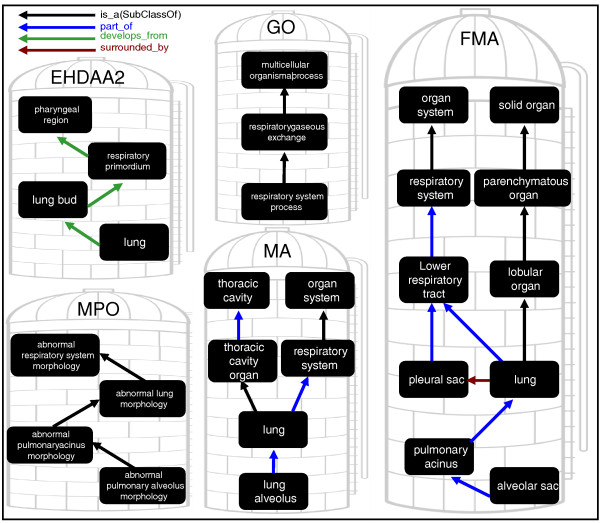
“It is, however, worth pointing out that the generic process-oriented description in the GO is unified with the human-specific anatomical description in EHDAA2 in Uberon anatomy ontology using ontology cross-products (Mungall et al. 2011).”
BackgroundInfluentialFu, X., Batista-Navarro, R., Rak, R., & Ananiadou, S. (2015) · Journal of Biomedical Semantics · doi:10.1186/s13326-015-0004-6 · Cited by 19
“…the Phenotype and Trait Ontology (PATO) [53] for qualities, Human Disease Ontology (DO) [54] for medical conditions, Uber Anatomy Ontology (UBERON) [55] for anatomical entities, Chemical Entities of Biological Interest (ChEBI) [56] for drugs, Protein Ontology (PRO) [57] for proteins and the…”
BackgroundEmerging semantics to link phenotype and environment
Thessen, A., Bunker, D. E., Buttigieg, P. L., Cooper, L., Dahdul, W., Domisch, S., Franz, N. M., Jaiswal, P., Lawrence‐Dill, C. J., Midford, P. E., et al. (2015) · PeerJ · doi:10.7717/peerj.1470 · Cited by 19
“…of a new ontology come from an existing domain or upper-level ontology (e.g., CARO, UBERON, PO, BFO— Grenon & Smith, 2004 ; Haendel et al., 2008 ; Mungall et al., 2012 ; Cooper et al., 2013 ), can result in a shared structure and homogenized development across ontologies, although more…”
BackgroundValue, but high costs in post-deposition data curation
ten Hoopen, P., Amid, C., Buttigieg, P. L., Pafilis, E., Bravakos, P., Cerdeño-Tárraga, A. M., Gibson, R., Kahlke, T., Legaki, A., Murthy, K. N., et al. (2016) · Database · doi:10.1093/database/bav126 · Cited by 19
“These include:polar desert biome (ENVO:01000186), human house (ENVO:01000418), root matter (ENVO:01000349), autoclaved sand (ENVO:01000350), gastrointestinal contents (UBERON:0035118), old plant (ENVO:01000413), young plant (ENVO:01000414), maize field (ENVO:01000348), rhizosphere (ENVO:00005801) and carbon nanotube-e…”
BackgroundMethodInfluentialSemantic Annotation of Natural History Collections
Stork, L., Weber, A., Miracle, E. G., Verbeek, F. J., Plaat, A., van den Herik, H. J., & Wolstencroft, K. (2018) · Journal of Web Semantics · doi:10.1016/j.websem.2018.06.002 · Cited by 19
“The ontology connects to classes from other ontologies and thesauri such as Uberon6 for anatomical entities [27] and NCIT7 for species attributes [13], both used for the identification of a taxon, the Geonames Database8 for geographical locations [38] and VIAF9 for referring to persons [24] as instances of the class f…”
MethodPlanarian Anatomy Ontology: a resource to connect data within and across experimental platforms
Nowotarski, S. H., Davies, E. L., Robb, S. M. C., Ross, E. J., Matentzoglu, N., Doddihal, V., Mir, M., McClain, M. L., & Alvarado, A. S. (2021) · Development · doi:10.1242/dev.196097 · Cited by 18
“Importantly, these imported classes are subject to change when Uberon is updated, thus it is important they are sufficiently broad to encompass planarian anatomy accurately.”
BackgroundMethodInfluentialGaudet, P. (2018) · Elsevier eBooks · doi:10.1016/b978-0-12-809633-8.20500-1 · Cited by 21
Hawkins, A. G., Shapiro, J. A., Spielman, S. J., Mejia, D. S., Prasad, D. V., Ichihara, N., Yakovets, A., Gottlieb, A. M., Wheeler, K. G., Bethell, C. J., et al. (2026) · Cell Genomics · doi:10.1016/j.xgen.2026.101283 · Cited by 26
CharaParser+EQ: Performance evaluation without gold standard
Cui, H., Dahdul, W., Dececchi, A., Ibrahim, N., Mabee, P., Balhoff, J. P., & Gopalakrishnan, H. (2015) · Proceedings of the Association for Information Science and Technology · doi:10.1002/pra2.2015.145052010020 · Cited by 17
“Here, UBERON (Mungall et al., 2012) and PATO (PATO, 2015) are the ontologies used to formalize (“ontologize”) original phrases (e.g., distal carpal 1 ) with terms (also called terms or classes) in relevant ontologies (e.g., UBERON:distal carpal bone 1 ).”
MethodCEDAR OnDemand: a browser extension to generate ontology-based scientific metadata
Bukhari, S. A. C., Martínez-Romero, M., Connor, M. J. O., Egyedi, A. L., Willrett, D., Graybeal, J. B., Musen, M. A., Cheung, K., & Kleinstein, S. H. (2018) · BMC Bioinformatics · doi:10.1186/s12859-018-2247-6 · Cited by 18
“…case, we first extended the user defined ontology list by adding several field-specific ontologies identified through NCBO recommender: Cell ontology (CL) [28], Cell Line Ontology (CLO) [29], NCI thesaurus NCIT [30], NCBI Taxonomy ontology NCBITAXON [31], and Uber Anatomy Ontology (UBERON) [32].”
MethodFaceBase: A Community-Driven Hub for Data-Intensive Research
Schuler, R. E., Bugacov, A., Hacia, J., Ho, T., Iwata, J., Pearlman, L., Samuels, B. D., Williams, C., Zhao, Z., Kesselman, C., et al. (2022) · Journal of Dental Research · doi:10.1177/00220345221107905 · Cited by 18
“All data are represented in an integrated data model using a common set of vocabularies, most of which are sourced from standardized community termsets, including Uberon (Mungall et al. 2012), Mammalian Phenotype Ontology (Smith and Eppig 2009), Ontology of Craniofacial Development and Malformation (Brinkley et al. 20…”
MethodSystematic tissue annotations of genomics samples by modeling unstructured metadata
Hawkins, N. T., Maldaver, M., Yannakopoulos, A., Guare, L. A., & Krishnan, A. (2022) · Nature Communications · doi:10.1038/s41467-022-34435-x · Cited by 19
Faithful Embeddings for $$\mathcal{E}\mathcal{L}^{++}$$ Knowledge Bases
Xiong, B., Potyka, N., Tran, T.-K., Nayyeri, M., & Staab, S. (2022) · Lecture notes in computer science · doi:10.1007/978-3-031-19433-7_2 · Cited by 25
Girón, J. C., Tarasov, S., Montaña, L. A. G., Matentzoglu, N., Smith, A. D., Koch, M., Boudinot, B. E., Bouchard, P., Burks, R. A., Vogt, L., et al. (2023) · Systematic Biology · doi:10.1093/sysbio/syad025 · Cited by 18
Design and application of a knowledge network for automatic prioritization of drug mechanisms
Mayers, M., Tu, R., Steinecke, D., Li, T. S., Queralt-Rosiñach, N., & Su, A. I. (2022) · Bioinformatics · doi:10.1093/bioinformatics/btac205 · Cited by 18
DrugMechDB: A Curated Database of Drug Mechanisms
Gonzalez-Cavazos, A. C., Tańska, A., Mayers, M., Carvalho‐Silva, D., Brindha, S., Rewers, P. A., Sankarlal, U., Jagannathan, L., & Su, A. I. (2023) · Scientific Data · doi:10.1038/s41597-023-02534-z · Cited by 18
Stear, B. J., Ahooyi, T. M., Simmons, J. A., Kollar, C., Hartman, L., Beigel, K., Lahiri, A., Vasisht, S., Callahan, T. J., Nemarich, C., et al. (2024) · Scientific Data · doi:10.1038/s41597-024-04070-w · Cited by 28
Lozano, A., Sun, M., Burgess, J., Chen, L., Nirschl, J., Gu, J., López, I., Aklilu, J. G., Rau, A., Katzer, A. W., et al. (2025) · IEEE Computer Society Conference on Computer Vision and Pattern Recognition/Proceedings - IEEE Computer Society Conference on Computer Vision and Pattern Recognition/Proceedings · doi:10.1109/cvpr52734.2025.01837 · Cited by 20
“First, an initial taxonomy is derived from biomedical ontologies including Uberon [42], NCBITaxon [18], and the Cell Line Ontology [51].”
AcuKG: a comprehensive knowledge graph for medical acupuncture
Li, Y., Peng, X., Peng, S., Li, J., Pei, D., Zhang, Q., Lu, Y., Hu, Y., Li, F., Zhou, L., et al. (2025) · Journal of the American Medical Informatics Association · doi:10.1093/jamia/ocaf179 · Cited by 17
Ontologies for increasing the FAIRness of plant research data
Dumschott, K., Dörpholz, H., Laporte, M., Brilhaus, D., Schrader, A., Usadel, B., Neumann, S., Arnaud, E., & Kranz, A. (2023) · Frontiers in Plant Science · doi:10.3389/fpls.2023.1279694 · Cited by 17
“…al., 2012; Cooper et al., 2013), containing terms from the Basic Formal Ontology (BFO, orange nodes) (Arp et al., 2015), the Uberon multi-species anatomy ontology (UBERON, red nodes) (Mungall et al., 2012) and the Ontology for Biomedical Investigations (OBI, purple nodes) (Brinkman et al., 2010).”
BackgroundHan, S., Lee, J. E., Kang, S., So, M., Jin, H. K., Lee, J. H., Baek, S., Jun, H., Kim, T. Y., & Lee, Y. (2024) · Briefings in Bioinformatics · doi:10.1093/bib/bbae035 · Cited by 17
Generating Clinical-Grade Gene–Disease Validity Classifications Through the ClinGen Data Platforms
Wright, M. W., Thaxton, C., Nelson, T. H., DiStefano, M. T., Savatt, J. M., Brush, M., Cheung, G., Mandell, M. E., Wulf, B., Ward, T., et al. (2024) · Annual Review of Biomedical Data Science · doi:10.1146/annurev-biodatasci-102423-112456 · Cited by 21
An integrative, translational approach to understanding rare and orphan genetically based diseases
Hoehndorf, R., Schofield, P. N., & Gkoutos, G. V. (2013) · Interface Focus · doi:10.1098/rsfs.2012.0055 · Cited by 17
“To make phenotypes in which anatomical structures are affected comparable between species, homologous anatomical structures between species can be identified and used to systematically integrate phenotypes across species [42].”
BackgroundMy Corporis Fabrica: an ontology-based tool for reasoning and querying on complex anatomical models
Palombi, O., Ulliana, F., Favier, V., Léon, J.-C., & Rousset, M.-C. (2014) · Journal of Biomedical Semantics · doi:10.1186/2041-1480-5-20 · Cited by 17
“Also, Uberon [8] takes into account functions in order to query multiple ontologies of species.”
Background
Metadata
- Authors
- Mungall, C. J., Torniai, C., Gkoutos, G. V., Lewis, S. E., & Haendel, M. A.
- Affiliations
- Oregon Health & Science University (US)
- University of Cambridge (GB)
- Lawrence Berkeley National Laboratory (US)
- Venue
- Genome biology
- Published
- 2012-01-31
- Volume
- 13
- Issue
- 1
- Pages
- R5-R5
- ISSN
- 1465-6906 (ISSN-L)
- 1474-760X
- PMC
- PMC3334586
- OpenAlex
- W2116034137
- Cited by
- 732
- References
- 67
- Citations by year
- 2026: 60 · 2025: 69 · 2024: 55 · 2023: 66 · 2022: 55 · 2021: 51 · 2020: 46 · 2019: 45 · 2018: 55 · 2017: 46 · 2016: 49 · 2015: 50 · 2014: 34 · 2013: 28 · 2012: 21
- FWCI
- 17.73
- Type
- journal article
- Language
- en
- Open access
- gold
- doi.org
- Locations
- Genome biology (publishedVersion, cc-by)
- Europe PMC (PubMed Central) (publishedVersion, cc-by)
- PubMed Central (publishedVersion, cc-by)
- PubMed (publishedVersion)
- OSTI OAI (U.S. Department of Energy Office of Scientific and Technical Information) (submittedVersion)
- University of Birmingham Research Portal (University of Birmingham) (submittedVersion)
- Funders
- U.S. Department of Energy (-AC02-05CH11231, 05CH11231, DE AC02 05CH11231, DE-AC02-)
- National Institutes of Health (2p41hg002273-07, 5u24rr029825-02, DE-AC02–05CH11231)
- Office of Science (DEAC02–05CH11231, AC02-05CH11231, DE-AC02, 05CH11231)
- National Human Genome Research Institute (U41HG002273, R01HG004838, P41HG002273-09S1, P41-HG002273)
- National Center for Research Resources (1U24RR029825-01)
- Basic Energy Sciences (DE-AC02, DE-AC02-05CH11231., AC02–05CH11231)
- Topics
- Health Sciences › Medicine › Health Informatics › Biomedical Text Mining and Ontologies
- Physical Sciences › Computer Science › Artificial Intelligence › Semantic Web and Ontologies
- Life Sciences › Biochemistry, Genetics and Molecular Biology › Molecular Biology › Bioinformatics and Genomic Networks
- Keywords
- UBERON, anatomy ontology, anatomical classification, taxonomic variation, human anatomy
- MeSH terms
- Anatomy, Comparative, Classification, Humans, Phenotype, Software, Species Specificity, Databases, Factual, Computational Biology
About these checks
Registry, retraction, Cites and statistics results are computed, not judged, with one exception: a printed reference that no index lists is read once by a model before it counts as a citation error. Claims are extracted by a model and kept only when their quote appears verbatim in the text; each cited source is then checked, with a model’s help, for whether it says what the claim relies on. Those verdicts can be wrong — read the claim’s quote and the cited source before relying on one.
Statistics and arithmetic are recomputed, not judged.
Confidence bands are shown only for fields calibrated on our annotated test set. None is calibrated yet, so no band is shown.
What counts as a claim ›How we measure confidence ›How we check this ›
Are you an author, or do you see a problem with this page? Request a review
