

The DOI matches its Crossref record; 37 of the 37 references it cites were found in a registry or an index.
p53 induces transcriptional and translational programs to suppress cell proliferation and growth
Open accessAbstract
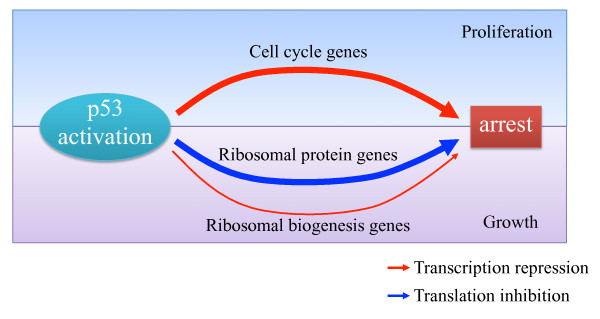
Background: Cell growth and proliferation are tightly connected to ensure that appropriately sized daughter cells are generated following mitosis. Energy stress blocks cell growth and proliferation, a critical response for survival under extreme conditions. Excessive oncogenic stress leads to p53 activation and the induction of senescence, an irreversible state of cell-cycle arrest and a critical component in the suppression of tumorigenesis. Nutrient-sensing and mitogenic cues converge on a major signaling node, which regulates the activity of the mTOR kinase. Although transcriptional responses to energy and oncogenic stresses have been examined by many gene-expression experiments, a global exploration of the modulation of mRNA translation in response to these conditions is lacking. Results: We combine RNA sequencing and ribosomal profiling analyses to systematically delineate modes of transcriptional and translational regulation induced in response to conditions of limited energy, oncogenic stress and cellular transformation. We detect a key role for mTOR and p53 in these distinct physiological states, and provide the first genome-wide demonstration that p53 activation results in mTOR inhibition and a consequent global repression of protein translation. We confirm the role of the direct p53 target genes Sestrin1 and Sestrin2 in this response, as part of the broad modulation of gene expression induced by p53 activation. Conclusions: We delineate a bimodal tumor-suppressive regulatory program activated by p53, in which cell-cycle arrest is imposed mainly at the transcriptional level, whereas cell growth inhibition is enforced by global repression of the translation machinery.
Overview
The claims and statistics of this paper haven’t been checked yet.
Run the check — free, no account needed. It reads the open-access text and checks the sources it cites.
Integrity signals
Registry
Cites
Statistics
Figures
Verification
Claims the paper makes
The claims and statistics of this paper haven’t been checked yet.
Run the check — free, no account needed. It reads the open-access text and checks the sources it cites.
Claims other papers make about this one
Each is checked against this paper’s own text: does it say what the citing paper says it does?
The cited source says what the claim attributes to it.
In the citing paper
“In addition, p53 uses two direct target genes, SESN1 and SESN2, to block mTOR and to repress mRNA translation.211, 215”
From Census and evaluation of p53 target genes (2017) · cites this paper as [215]
Self-check
Percentages, sums and reported differences re-computed from the paper’s own numbers.
The self-check needs the paper’s full text.
Citations
Cites
Ultrafast and memory-efficient alignment of short DNA sequences to the human genome.
Langmead, B., Trapnell, C., Pop, M., & Salzberg, S. L. (2009) · Genome Biology · doi:10.1186/gb-2009-10-3-r25 · Cited by 21,849
In Vivo Activation of the p53 Pathway by Small-Molecule Antagonists of MDM2
Vassilev, L. T., Vu, B. T., Graves, B., Carvajal, D., Podlaski, F., Filipovic, Z., Kong, N., Kammlott, U., Lukacs, C., Klein, C., et al. (2004) · Science · doi:10.1126/science.1092472 · Cited by 4,661
A System for Stable Expression of Short Interfering RNAs in Mammalian Cells
Brummelkamp, T. R., Bernards, R., & Agami, R. (2002) · Science · doi:10.1126/science.1068999 · Cited by 4,295
Self-citationmTOR: from growth signal integration to cancer, diabetes and ageing
Zoncu, R., Efeyan, A., & Sabatini, D. M. (2011) · Nature Reviews Molecular Cell Biology · doi:10.1038/nrm3025 · Cited by 3,941
Genome-Wide Analysis in Vivo of Translation with Nucleotide Resolution Using Ribosome Profiling
Ingolia, N. T., Ghaemmaghami, S., Newman, J. R. S., & Weissman, J. S. (2009) · Science · doi:10.1126/science.1168978 · Cited by 3,853
Oncogene-induced senescence is part of the tumorigenesis barrier imposed by DNA damage checkpoints
Bartkova, J., Rezaei, N., Liontos, M., Karakaidos, P., Kletsas, D., Issaeva, N., Vassiliou, L.-V. F., Kolettas, E., Niforou, K., Zoumpourlis, V. C., et al. (2006) · Nature · doi:10.1038/nature05268 · Cited by 1,986
SREBP transcription factors: master regulators of lipid homeostasis
Eberlé, D., Hegarty, B. D., Bossard, P., Ferré, P., & Foufelle, F. (2004) · Biochimie · doi:10.1016/j.biochi.2004.09.018 · Cited by 1,584
A unifying model for mTORC1-mediated regulation of mRNA translation
Thoreen, C. C., Chantranupong, L., Keys, H. R., Wang, T., Gray, N. S., & Sabatini, D. M. (2012) · Nature · doi:10.1038/nature11083 · Cited by 1,477
p53 Target Genes Sestrin1 and Sestrin2 Connect Genotoxic Stress and mTOR Signaling
Budanov, A. V., & Karin, M. (2008) · Cell · doi:10.1016/j.cell.2008.06.028 · Cited by 1,326 · cited 11×
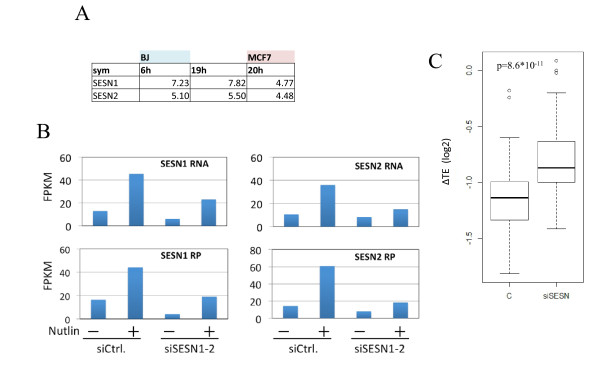
“(A) A table showing fold induction of Sestrin1 and Sestrin2 (SESN1 and SESN2, respectively) in nutlin-3a treated cells for the indicated times compared to control untreated cells.”
BackgroundInfluentialThe translational landscape of mTOR signalling steers cancer initiation and metastasis
Hsieh, A. C., Liu, Y., Edlind, M. P., Ingolia, N. T., Janes, M. R., Sher, A., Shi, E. Y., Stumpf, C. R., Christensen, C., Bonham, M. J., et al. (2012) · Nature · doi:10.1038/nature10912 · Cited by 1,313
Ingolia, N. T., Brar, G. A., Rouskin, S., McGeachy, A. M., & Weissman, J. S. (2012) · Nature Protocols · doi:10.1038/nprot.2012.086 · Cited by 1,280
Senescence-messaging secretome: SMS-ing cellular stress
Kuilman, T., & Peeper, D. S. (2009) · Nature Reviews Cancer · doi:10.1038/nrc2560 · Cited by 909
Synthesis of the translational apparatus is regulated at the translational level.
Meyuhas, O. (2000) · European Journal of Biochemistry · doi:10.1046/j.1432-1327.2000.01719.x · Cited by 570
Dazert, E., & Hall, M. N. (2011) · Current Opinion in Cell Biology · doi:10.1016/j.ceb.2011.09.003 · Cited by 460
The p53 network: cellular and systemic DNA damage responses in aging and Cancer
Reinhardt, H. C., & Schumacher, B. (2012) · Trends in Genetics · doi:10.1016/j.tig.2011.12.002 · Cited by 458
Common corruption of the mTOR signaling network in human tumors
Menon, S., & Manning, B. D. (2008) · Oncogene · doi:10.1038/onc.2009.352 · Cited by 345
Ribosomal protein S6 kinase activity controls the ribosome biogenesis transcriptional program
Chauvin, C., Koka, V., Nouschi, A., Mieulet, V., Hoareau‐Aveilla, C., Dreazen, A., Cagnard, N., Carpentier, W., Kiss, T., Meyuhas, O., et al. (2013) · Oncogene · doi:10.1038/onc.2012.606 · Cited by 310
mTOR inhibitors in cancer therapy
Zaytseva, Y. Y., Valentino, J. D., Gulhati, P., & Evers, B. M. (2012) · Cancer Letters · doi:10.1016/j.canlet.2012.01.005 · Cited by 298
The choice between p53-induced senescence and quiescence is determined in part by the mTOR pathway.
Korotchkina, L. G., Leontieva, O. V., Bukreeva, E. I., Demidenko, Z. N., Gudkov, A. V., & Blagosklonny, M. V. (2010) · Aging · doi:10.18632/aging.100160 · Cited by 278
Paradoxical suppression of cellular senescence by p53
Demidenko, Z. N., Korotchkina, L. G., Gudkov, A. V., & Blagosklonny, M. V. (2010) · Proceedings of the National Academy of Sciences · doi:10.1073/pnas.1002298107 · Cited by 273
A Genetic Screen Identifies PITX1 as a Suppressor of RAS Activity and Tumorigenicity
Kolfschoten, I., van Leeuwen, B., Berns, K., Mullenders, J., Beijersbergen, R. L., Bernards, R., Voorhoeve, P. M., & Agami, R. (2005) · Cell · doi:10.1016/j.cell.2005.04.017 · Cited by 273
Self-citationTargeting PI3 Kinase/AKT/mTOR Signaling in Cancer
Sheppard, K. E., Kinross, K. M., Solomon, B., Pearson, R. B., & Phillips, W. A. (2012) · Critical Reviews™ in Oncogenesis · doi:10.1615/critrevoncog.v17.i1.60 · Cited by 225
Cell cycle arrest is not senescence
Blagosklonny, M. V. (2011) · Aging · doi:10.18632/aging.100281 · Cited by 217
Translational coregulation of 5′TOP mRNAs by TIA-1 and TIARPreprint
Damgaard, C. K., & Lykke‐Andersen, J. (2011) · Genes & Development · doi:10.1101/gad.17355911 · Cited by 214
Expander: from expression microarrays to networks and functions
Ulitsky, I., Maron‐Katz, A., Shavit, S., Sagir, D., Linhart, C., Elkon, R., Tanay, A., Sharan, R., Shiloh, Y., & Ron Shamir, A. (2010) · Nature Protocols · doi:10.1038/nprot.2009.230 · Cited by 197
Self-citationThe tumor-suppressive functions of the human INK4A locus
Voorhoeve, P. M., & Agami, R. (2003) · Cancer Cell · doi:10.1016/s1535-6108(03)00223-x · Cited by 194
Self-citationDeconstructing p53 transcriptional networks in tumor suppression
Bieging, K. T., & Attardi, L. D. (2012) · Trends in Cell Biology · doi:10.1016/j.tcb.2011.10.006 · Cited by 194
Linhart, C., Halperin, Y., & Ron Shamir, A. (2008) · Genome Research · doi:10.1101/gr.076117.108 · Cited by 184
Leontieva, O. V., & Blagosklonny, M. V. (2010) · Aging · doi:10.18632/aging.100265 · Cited by 163
Attenuation of TORC1 signaling delays replicative and oncogenic RAS-induced senescence
Kolesnichenko, M., Hong, L., Liao, R., Vogt, P. K., & Sun, P. (2012) · Cell Cycle · doi:10.4161/cc.20683 · Cited by 123
Iadevaia, V., Caldarola, S., Tino, E., Amaldi, F., & Loreni, F. (2008) · RNA · doi:10.1261/rna.1037108 · Cited by 112
SPIKE: a database of highly curated human signaling pathways
Paz, A., Brownstein, Z., Ber, Y., Bialik, S., David, E. M., Sagir, D., Ulitsky, I., Elkon, R., Kimchi, A., Avraham, K. B., et al. (2010) · Nucleic Acids Research · doi:10.1093/nar/gkq1167 · Cited by 93
Self-citationHamilton, T. L., Stoneley, M., Spriggs, K. A., & Bushell, M. (2006) · Biochemical Society Transactions · doi:10.1042/bst0340012 · Cited by 91
TP53 and MTOR crosstalk to regulate cellular senescence
Galluzzi, L., Kepp, O., & Kroemer, G. (2010) · Aging · doi:10.18632/aging.100202 · Cited by 83
Ras-Induced Senescence and its Physiological Relevance in Cancer
DiMauro, T., & David, G. (2010) · Current Cancer Drug Targets · doi:10.2174/156800910793357998 · Cited by 77
Cellular quiescence caused by the Mdm2 inhibitor Nutlin-3A
Korotchkina, L. G., Demidenko, Z. N., Gudkov, A. V., & Blagosklonny, M. V. (2009) · Cell Cycle · doi:10.4161/cc.8.22.10121 · Cited by 53
Leontieva, O. V., Demidenko, Z. N., Gudkov, A. V., & Blagosklonny, M. V. (2011) · PLoS ONE · doi:10.1371/journal.pone.0026126 · Cited by 44
Cited by
Sorted by citations
Census and evaluation of p53 target genes
Fischer, M. (2017) · Oncogene · doi:10.1038/onc.2016.502 · Cited by 971
p53 signaling in cancer progression and therapy
Marei, H. E. S., Thani, A. A. A., Afifi, N. M., Hasan, A., Caceci, T., Pozzoli, G., Morrione, A., Giordano, A., & Cenciarelli, C. (2021) · Cancer Cell International · doi:10.1186/s12935-021-02396-8 · Cited by 628
Slobodin, B., Han, R., Calderone, V., Vrielink, J. A. F. O., Loayza-Puch, F., Elkon, R., & Agami, R. (2017) · Cell · doi:10.1016/j.cell.2017.03.031 · Cited by 434
Self-citationFischer, M., Grossmann, P., Padi, M., & DeCaprio, J. A. (2016) · Nucleic Acids Research · doi:10.1093/nar/gkw523 · Cited by 330
Sestrins Orchestrate Cellular Metabolism to Attenuate Aging
Lee, J. H., Budanov, A. V., & Karin, M. (2013) · Cell Metabolism · doi:10.1016/j.cmet.2013.08.018 · Cited by 344
Metadata
- Authors
- Loayza-Puch, F., Drost, J., Rooijers, K., Lopes, R., Elkon, R., & Agami, R.
- Affiliations
- The Netherlands Cancer Institute (NL)
- Corresponding author
- Elkon, Ran
- Agami, Reuven
- Venue
- Genome Biology
- Published
- 2013-04-17
- Volume
- 14
- Issue
- 4
- Pages
- R32-R32
- ISSN
- 1465-6906 (ISSN-L)
- 1474-760X
- PMC
- PMC4053767
- OpenAlex
- W2137903553
- Cited by
- 114
- References
- 37
- Citations by year
- 2026: 2 · 2025: 3 · 2024: 7 · 2023: 5 · 2022: 10 · 2021: 9 · 2020: 7 · 2019: 5 · 2018: 8 · 2017: 12 · 2016: 10 · 2015: 11 · 2014: 15 · 2013: 10
- FWCI
- 8.22
- Type
- journal article
- Language
- en
- Open access
- gold
- doi.org
- Locations
- Genome biology (publishedVersion, cc-by)
- Europe PMC (PubMed Central) (publishedVersion, cc-by)
- PubMed Central (publishedVersion, cc-by)
- PubMed (publishedVersion)
- Topics
- Health Sciences › Medicine › Oncology › Cancer-related Molecular Pathways
- Life Sciences › Biochemistry, Genetics and Molecular Biology › Molecular Biology › PI3K/AKT/mTOR signaling in cancer
- Life Sciences › Biochemistry, Genetics and Molecular Biology › Molecular Biology › RNA and protein synthesis mechanisms
- Keywords
- p53, mTOR, mRNA translation, cell proliferation, cell growth inhibition, oncogenic stress, energy stress, cellular senescence, Sestrin2, cell cycle arrest, tumor suppression, ribosome profiling, nutrient sensing
- MeSH terms
- Cell Line, Humans, Transcription, Genetic, Protein Biosynthesis, Gene Expression Regulation, Neoplastic, Tumor Suppressor Protein p53, Cellular Senescence, Apoptosis, Proteome, Cell Proliferation, TOR Serine-Threonine Kinases, Transcriptome, Carcinogenesis
About these checks
Registry, retraction, Cites and statistics results are computed, not judged, with one exception: a printed reference that no index lists is read once by a model before it counts as a citation error. Claims are extracted by a model and kept only when their quote appears verbatim in the text; each cited source is then checked, with a model’s help, for whether it says what the claim relies on. Those verdicts can be wrong — read the claim’s quote and the cited source before relying on one.
Statistics and arithmetic are recomputed, not judged.
Confidence bands are shown only for fields calibrated on our annotated test set. None is calibrated yet, so no band is shown.
What counts as a claim ›How we measure confidence ›How we check this ›
Are you an author, or do you see a problem with this page? Request a review
