

Characterizing and measuring bias in sequence data
Open accessThe DOI matches its Crossref record; 48 of the 49 references it cites were found in a registry or an index.
Abstract
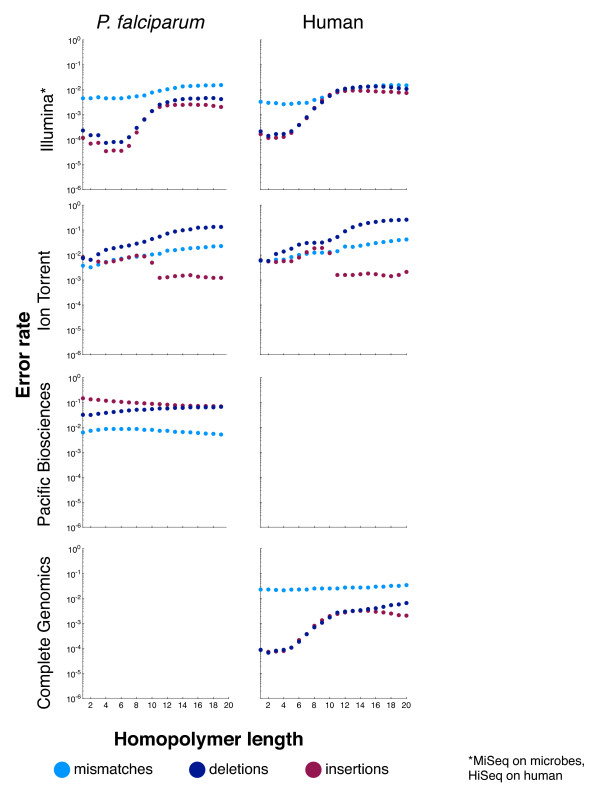
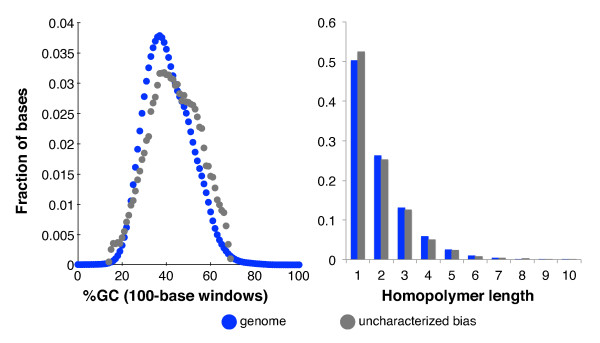
Background: DNA sequencing technologies deviate from the ideal uniform distribution of reads. These biases impair scientific and medical applications. Accordingly, we have developed computational methods for discovering, describing and measuring bias. Results: We applied these methods to the Illumina, Ion Torrent, Pacific Biosciences and Complete Genomics sequencing platforms, using data from human and from a set of microbes with diverse base compositions. As in previous work, library construction conditions significantly influence sequencing bias. Pacific Biosciences coverage levels are the least biased, followed by Illumina, although all technologies exhibit error-rate biases in high- and low-GC regions and at long homopolymer runs. The GC-rich regions prone to low coverage include a number of human promoters, so we therefore catalog 1,000 that were exceptionally resistant to sequencing. Our results indicate that combining data from two technologies can reduce coverage bias if the biases in the component technologies are complementary and of similar magnitude. Analysis of Illumina data representing 120-fold coverage of a well-studied human sample reveals that 0.20% of the autosomal genome was covered at less than 10% of the genome-wide average. Excluding locations that were similar to known bias motifs or likely due to sample-reference variations left only 0.045% of the autosomal genome with unexplained poor coverage. Conclusions: The assays presented in this paper provide a comprehensive view of sequencing bias, which can be used to drive laboratory improvements and to monitor production processes. Development guided by these assays should result in improved genome assemblies and better coverage of biologically important loci.
Overview
The claims and statistics of this paper haven’t been checked yet.
Free: it reads the open-access text and checks the first 5 claims that cite a source we can check. Create a free account to check every claim.
Integrity signals
Registry
Cites
Statistics
Figures
Verification
Claims the paper makes
The claims and statistics of this paper haven’t been checked yet.
Free: it reads the open-access text and checks the first 5 claims that cite a source we can check. Create a free account to check every claim.
Claims other papers make about this one
Each is checked against this paper’s own text: does it say what the citing paper says it does?
The source backs part of the claim, not all of it — or backs it for a different population, condition or comparison.
In the citing paper
“The limit of detection in these experiments is based on the inherent error rate of the Illumina platform (up to 0.4%), which has previously been described for genome editing experiment analyzed by NGS71–73.”
From A high-fidelity Cas9 mutant delivered as a ribonucleoprotein complex enables efficient gene editing in human hematopoietic stem and progenitor cells (2018) · cites this paper as [71]
Experimental — accuracy not yet measuredThe source backs part of the claim, not all of it — or backs it for a different population, condition or comparison.
In the citing paper
“The homopolymer can lead to low coupling efficiency in DNA synthesis (especially for G and C), and quantification of the number of identical nucleotides in DNA sequencing can also be problematic (39, 53).”
From Electrochemical DNA synthesis and sequencing on a single electrode with scalability for integrated data storage (2021) · cites this paper as [53]
Experimental — accuracy not yet measuredThe cited source says what the claim attributes to it.
In the citing paper
“GC content of individual sequences were previously found to affect PCR amplification efficiency in biological DNA15–17.”
From Quantifying Molecular Bias in DNA Data Storage (2019) · cites this paper as [15]
The cited source says what the claim attributes to it.
In the citing paper
“Although previous studies observed PCR bias in genomic biological sample amplification15–17, it remained unclear whether such bias is significant in DNA data storage.”
From Quantifying Molecular Bias in DNA Data Storage (2019) · cites this paper as [15]
The cited source says what the claim attributes to it.
In the citing paper
“Illumina sequencing was previously observed to have bias on GC-extreme sequences15,27,28, but GC content in our files did not show practically significant bias in the PCR GC bias test. Therefore, high-throughput sequencing and sample dilution are modeled using random sampling.”
From Quantifying Molecular Bias in DNA Data Storage (2019) · cites this paper as [15]
Self-check
Percentages, sums and reported differences re-computed from the paper’s own numbers.
The self-check needs the paper’s full text.
Citations
Cites
DNA sequencing with chain-terminating inhibitors
Sanger, F., Nicklen, S., & Coulson, A. R. (1977) · Proceedings of the National Academy of Sciences · doi:10.1073/pnas.74.12.5463 · Cited by 68,572
The Sequence Alignment/Map format and SAMtools
Li, H., Handsaker, B., Wysoker, A., Fennell, T., Ruan, J., Homer, N., Marth, G., Abecasis, G., Durbin, R., & 1000 Genome Project Data Processing Subgroup (2009) · Bioinformatics · doi:10.1093/bioinformatics/btp352 · Cited by 62,041
Fast and accurate short read alignment with Burrows-Wheeler transform
Li, H., & Durbin, R. (2009) · Bioinformatics · doi:10.1093/bioinformatics/btp324 · Cited by 58,607
The Genome Analysis Toolkit: A MapReduce framework for analyzing next-generation DNA sequencing data
McKenna, A., Hanna, M., Banks, E., Sivachenko, A., Cibulskis, K., Kernytsky, A., Garimella, K., Altshuler, D., Gabriel, S., Daly, M., et al. (2010) · Genome Research · doi:10.1101/gr.107524.110 · Cited by 27,895
Fast and accurate long-read alignment with Burrows-Wheeler transform.
Li, H., & Durbin, R. (2010) · Bioinformatics · doi:10.1093/bioinformatics/btp698 · Cited by 12,063 · cited 2×
“Because the default TMAP aligner [46] cannot align to references with more than 4.3 billion bases, it was necessary to use the BWA-SW aligner [47] to realign the Ion data to the diploid NA12878 reference for the error-rate comparison presented in Table S2 in Additional file 3, Figure S1 in…”
MethodInfluentialA framework for variation discovery and genotyping using next-generation DNA sequencing data
DePristo, M. A., Banks, E., Poplin, R., Garimella, K. V., Maguire, J. R., Hartl, C., Philippakis, A. A., del Angel, G., Rivas, M. A., Hanna, M., et al. (2011) · Nature Genetics · doi:10.1038/ng.806 · Cited by 11,456
A map of human genome variation from population-scale sequencing.
The 1000 Genomes Project Consortium (2010) · Nature · doi:10.1038/nature09534 · Cited by 7,877
Self-citationGenome sequencing in microfabricated high-density picolitre reactors
Margulies, M., Egholm, M., Altman, W. E., Attiya, S., Bader, J. S., Bemben, L. A., Berka, J., Braverman, M. S., Chen, Y.-J., Chen, Z., et al. (2005) · Nature · doi:10.1038/nature03959 · Cited by 7,693
Real-Time DNA Sequencing from Single Polymerase Molecules
Eid, J., Fehr, A., Gray, J., Luong, K., Lyle, J., Otto, G., Peluso, P., Rank, D., Baybayan, P., Bettman, B., et al. (2009) · Science · doi:10.1126/science.1162986 · Cited by 3,732
Accurate whole human genome sequencing using reversible terminator chemistry
Bentley, D. R., Balasubramanian, S., Swerdlow, H. P., Smith, G. P., Milton, J., Brown, C. G., Hall, K. P., Evers, D. J., Barnes, C. L., Bignell, H. R., et al. (2008) · Nature · doi:10.1038/nature07517 · Cited by 3,684
Self-citation
Research works printed but not linked: 1
- Pruitt K, Brown G, Tatusova T, Maglott D: Chapter 18: The Reference Sequence (RefSeq) Database. The NCBI Handbook [Internet]. Edited by: McEntyre J, Ostell J Bethesda (MD): National Center for Biotechnology Information (US). 2002, [http://www.ncbi.nlm.nih.gov/books/NBK21091/]
Cited by
Items 201–300 of 1,000
Gapless assembly of complete human and plant chromosomes using only nanopore sequencing
Koren, S., Bao, Z., Guarracino, A., Ou, S., Goodwin, S., Jenike, K. M., Lucas, J., McNulty, B., Park, J., Rautiainen, M., et al. (2024) · Genome Research · doi:10.1101/gr.279334.124 · Cited by 59
Chung, J., Son, D., Jeon, H.-J., Kim, K., Park, G., Ryu, G. H., Park, W., & Park, D. (2016) · Scientific Reports · doi:10.1038/srep26732 · Cited by 60
Ameur, A., Che, H., Martin, M., Bunikis, I., Dahlberg, J., Höijer, I., Häggqvist, S., Vezzi, F., Nordlund, J., Olason, P., et al. (2018) · Genes · doi:10.3390/genes9100486 · Cited by 58
High-Throughput Sequencing-Based Immune Repertoire Study during Infectious Disease
Hou, D., Chen, C., Seely, E. J., Chen, S., & Song, Y. (2016) · Frontiers in Immunology · doi:10.3389/fimmu.2016.00336 · Cited by 58
Field, M. A., Cho, V., Andrews, T. D., & Goodnow, C. C. (2015) · PLoS ONE · doi:10.1371/journal.pone.0143199 · Cited by 60
What Is in Umbilicaria pustulata? A Metagenomic Approach to Reconstruct the Holo-Genome of a Lichen
Tzovaras, B. G., Segers, F. H. I. D., Bicker, A., Grande, F. D., Otte, J., Anvar, S. Y., Hankeln, T., Schmitt, I., & Ebersberger, I. (2020) · Genome Biology and Evolution · doi:10.1093/gbe/evaa049 · Cited by 59
Unraveling the functions of uncharacterized transcription factors in Escherichia coli using ChIP-exo
Gao, Y., Lim, H. G., Verkler, H., Szubin, R., Quach, D., Rodionova, I. A., Chen, K., Yurkovich, J. T., Cho, B., & Palsson, B. Ø. (2021) · Nucleic Acids Research · doi:10.1093/nar/gkab735 · Cited by 57
Survey for a Decade of Coding for DNA Storage
Sabary, O., Kiah, H. M., Siegel, P. H., & Yaakobi, E. (2024) · IEEE Transactions on Molecular Biological and Multi-Scale Communications · doi:10.1109/tmbmc.2024.3403488 · Cited by 57
Biedrzycka, A., Sebastián, Á., Migalska, M., Westerdahl, H., & Radwan, J. (2016) · Molecular Ecology Resources · doi:10.1111/1755-0998.12612 · Cited by 57
Genomic Advances in Avian Malaria Research
Videvall, E. (2019) · Trends in Parasitology · doi:10.1016/j.pt.2018.12.005 · Cited by 56
SMRT sequencing only de novo assembly of the sugar beet (Beta vulgaris) chloroplast genome
Stadermann, K. B., Weißhaar, B., & Holtgräwe, D. (2015) · BMC Bioinformatics · doi:10.1186/s12859-015-0726-6 · Cited by 56
Villanueva, L., Speth, D. R., van Alen, T. A., Hoischen, A., & Jetten, M. S. M. (2014) · Frontiers in Microbiology · doi:10.3389/fmicb.2014.00031 · Cited by 56
Ambreen, H., Kumar, S., Variath, M. T., Joshi, G. K., Bali, S., Agarwal, M., Kumar, A., Jagannath, A., & Goel, S. (2015) · PLoS ONE · doi:10.1371/journal.pone.0135443 · Cited by 56
DNA‐Based Concatenated Encoding System for High‐Reliability and High‐Density Data Storage
Ren, Y., Zhang, Y., Liu, Y., Wu, Q., Su, J., Wang, F., Chen, D., Fan, C., Liu, K., & Zhang, H. (2022) · Small Methods · doi:10.1002/smtd.202101335 · Cited by 55
A digital twin for DNA data storage based on comprehensive quantification of errors and biases
Gimpel, A. L., Stark, W. J., Heckel, R., & Grass, R. N. (2023) · Nature Communications · doi:10.1038/s41467-023-41729-1 · Cited by 56
Adaptive coding for DNA storage with high storage density and low coverage
Cao, B., Zhang, X., Cui, S., & Zhang, Q. (2022) · npj Systems Biology and Applications · doi:10.1038/s41540-022-00233-w · Cited by 57
PacBio sequencing output increased through uniform and directional fivefold concatenation
Kanwar, N., Blanco, C., Chen, I. A., & Seelig, B. (2021) · Scientific Reports · doi:10.1038/s41598-021-96829-z · Cited by 55
Cooperative sequence clustering and decoding for DNA storage system with fountain codes
Jeong, J., Park, S., Kim, J.-W., No, J., Jeon, H. H., Lee, J. W., No, A., Kim, S., & Park, H. (2021) · Bioinformatics · doi:10.1093/bioinformatics/btab246 · Cited by 55
Family of Constrained Codes for Archival DNA Data Storage
Limbachiya, D., Gupta, M. K., & Aggarwal, V. (2018) · IEEE Communications Letters · doi:10.1109/lcomm.2018.2861867 · Cited by 56
Detection of low-density Plasmodium falciparum infections using amplicon deep sequencing
Early, A. M., Daniels, R. F., Farrell, T. M., Grimsby, J., Volkman, S. K., Wirth, D. F., MacInnis, B. L., & Neafsey, D. E. (2019) · Malaria Journal · doi:10.1186/s12936-019-2856-1 · Cited by 54
DNA Sequencing Technologies: Sequencing Data Protocols and Bioinformatics Tools
Wong, K., Zhang, J., Yan, S., Li, X., Lin, Q., Kwong, S., & Liang, C. (2019) · ACM Computing Surveys · doi:10.1145/3340286 · Cited by 54
Peña, L. D. M., Jiang, Y., Schoch, K., Spillmann, R. C., Walley, N., Stong, N., Horn, S. R. G.-V., Sullivan, J. A., McConkie‐Rosell, A., Kansagra, S. M., et al. (2017) · Genetics in Medicine · doi:10.1038/gim.2017.128 · Cited by 54
Metagenomics: Probing pollutant fate in natural and engineered ecosystems
Bouhajja, E., Agathos, S. N., & George, I. (2016) · Biotechnology Advances · doi:10.1016/j.biotechadv.2016.10.006 · Cited by 55
Illumina error correction near highly repetitive DNA regions improves de novo genome assembly
Heydari, M., Miclotte, G., de Peer, Y. V., & Fostier, J. (2019) · BMC Bioinformatics · doi:10.1186/s12859-019-2906-2 · Cited by 54
Genome sequencing as a platform for pharmacogenetic genotyping: a pediatric cohort study
Cohn, I., Paton, T., Marshall, C. R., Basran, R. K., Stavropoulos, D. J., Ray, P. N., Monfared, N., Hayeems, R. Z., Meyn, M. S., Bowdin, S. C., et al. (2017) · npj Genomic Medicine · doi:10.1038/s41525-017-0021-8 · Cited by 54
A novel conceptual approach to read-filtering in high-throughput amplicon sequencing studies
Puente‐Sánchez, F., Aguirre, J., & Parro, V. (2015) · Nucleic Acids Research · doi:10.1093/nar/gkv1113 · Cited by 56
Fishing for barcodes in the Torrent: from COI to complete mitogenomes on NGS platforms
Hinsinger, D. D., Debruyne, R., Thomas, M., Denys, G. P. J., Mennesson, M. I., Utge, J., & Dettaï, A. (2015) · DNA Barcodes · doi:10.1515/dna-2015-0019 · Cited by 54
Improved assembly of noisy long reads by k -mer validation
Carvalho, A. B., Dupim, E. G., & Goldstein, G. N. R. (2016) · Genome Research · doi:10.1101/gr.209247.116 · Cited by 54
gbtools: Interactive Visualization of Metagenome Bins in R
Seah, B. K. B., & Gruber‐Vodicka, H. R. (2015) · Frontiers in Microbiology · doi:10.3389/fmicb.2015.01451 · Cited by 52
Innovations and challenges in detecting long read overlaps: an evaluation of the state-of-the-art
Chu, J., Mohamadi, H., Warren, R. L., Yang, C., & Birol, İ. (2016) · Bioinformatics · doi:10.1093/bioinformatics/btw811 · Cited by 51
Gardner, P. P., Watson, R. J., Morgan, X. C., Draper, J. L., Finn, R. D., Morales, S. E., & Stott, M. B. (2019) · PeerJ · doi:10.7717/peerj.6160 · Cited by 52
Varadarajan, A. R., Allan, R. N., Valentin, J. D. P., Castañeda Ocampo, O. E., Somerville, V., Pietsch, F., Buhmann, M. T., West, J., Skipp, P. J., van der Mei, H. C., et al. (2020) · npj Biofilms and Microbiomes · doi:10.1038/s41522-020-00154-8 · Cited by 51
FastGT: an alignment-free method for calling common SNVs directly from raw sequencing reads
Pajuste, F., Kaplinski, L., Möls, M., Puurand, T., Lepamets, M., & Remm, M. (2017) · Scientific Reports · doi:10.1038/s41598-017-02487-5 · Cited by 50
Microbiota Present in Cystic Fibrosis Lungs as Revealed by Whole Genome Sequencing
Hauser, P. M., Bernard, T., Greub, G., Jaton, K., Pagni, M., & Hafen, G. (2014) · PLoS ONE · doi:10.1371/journal.pone.0090934 · Cited by 50
Egan, C., Rummel, A., Kokkoris, V., Klironomos, J. N., Lekberg, Y., & Hart, M. M. (2018) · Fungal ecology · doi:10.1016/j.funeco.2018.01.004 · Cited by 51
Exploring the unmapped DNA and RNA reads in a songbird genome
Laine, V. N., Gossmann, T. I., van Oers, K., Visser, M. E., & Groenen, M. A. M. (2019) · BMC Genomics · doi:10.1186/s12864-018-5378-2 · Cited by 50
SequelTools: a suite of tools for working with PacBio Sequel raw sequence data
Hufnagel, D. E., Hufford, M. B., & Seetharam, A. S. (2020) · BMC Bioinformatics · doi:10.1186/s12859-020-03751-8 · Cited by 49
High-Quality Genome Assembly of Eriocheir japonica sinensis Reveals Its Unique Genome Evolution
Tang, B., Wang, Z., Liu, Q., Zhang, H., Jiang, S., Li, X., Wang, Z., Sun, Y., Sha, Z., Jiang, H., et al. (2020) · Frontiers in Genetics · doi:10.3389/fgene.2019.01340 · Cited by 49
Blumenstiel, B. S., DeFelice, M. T., Ceyhan‐Birsoy, O., Bleyer, A. J., Kmoch, S., Carter, T. A., Gnirke, A., Kidd, K. O., Rehm, H. L., Ronco, L. V., et al. (2016) · Journal of Molecular Diagnostics · doi:10.1016/j.jmoldx.2016.03.003 · Cited by 49
Self-citationFan, X., Chaisson, M., Nakhleh, L. K., & Chen, K. (2017) · Genome Research · doi:10.1101/gr.214767.116 · Cited by 49
SpotSweeper: spatially aware quality control for spatial transcriptomics
Totty, M. S., Hicks, S. C., & Guo, B. (2025) · Nature Methods · doi:10.1038/s41592-025-02713-3 · Cited by 48
Xu, Z., Green, B., Benoit, N., Schatz, M., Wheelan, S., & Cormack, B. (2020) · Molecular Microbiology · doi:10.1111/mmi.14488 · Cited by 48
Leigh, D. M., Lischer, H. E. L., Grossen, C., & Keller, L. F. (2018) · Molecular Ecology Resources · doi:10.1111/1755-0998.12779 · Cited by 48
Rawson, J. M. O., Landman, S. R., Reilly, C., & Mansky, L. M. (2015) · Retrovirology · doi:10.1186/s12977-015-0180-6 · Cited by 49
Next-Generation Sequencing (NGS) Platforms: An Exciting Era of Genome Sequence Analysis
Krishna, B. M., Khan, M. A., & Khan, S. T. (2019) · Springer eBooks · doi:10.1007/978-981-32-9860-6_6 · Cited by 48
Frampton, S., Smith, R., Ferson, L., Gibson, J., Hollox, E. J., Cragg, M. S., & Strefford, J. C. (2024) · Immunological Reviews · doi:10.1111/imr.13401 · Cited by 48
Vibrio cholerae genomic diversity within and between patients
Levade, I., Terrat, Y., Leducq, J., Weil, A. A., Mayo-Smith, L. M., Chowdhury, F., Khan, A. I., Boncy, J., Buteau, J., Ivers, L. C., et al. (2017) · Microbial Genomics · doi:10.1099/mgen.0.000142 · Cited by 47
Use of synthetic DNA spike-in controls (sequins) for human genome sequencing
Blackburn, J., Wong, T., Madala, B. S., Barker, C., Hardwick, S. A., Reis, A. L. M., Deveson, I. W., & Mercer, T. R. (2019) · Nature Protocols · doi:10.1038/s41596-019-0175-1 · Cited by 47
Kingan, S. B., Urban, J., Lambert, C. C., Baybayan, P. A., Childers, A. K., Coates, B. S., Scheffler, B. E., Hackett, K. J., Korlach, J., & Geib, S. M. (2019) · GigaScience · doi:10.1093/gigascience/giz122 · Cited by 48
An Epigenetics‐Inspired DNA‐Based Data Storage System
Mayer, C., McInroy, G. R., Murat, P., Van Delft, P., & Balasubramanian, S. (2016) · Angewandte Chemie International Edition · doi:10.1002/anie.201605531 · Cited by 46
Optimized Code Design for Constrained DNA Data Storage With Asymmetric Errors
Li Juan, D. E. N. G., Wang, Y., Noor‐A‐Rahim, M., Guan, Y. L., Shi, Z., Gunawan, E., & Poh, C. L. (2019) · IEEE Access · doi:10.1109/access.2019.2924827 · Cited by 46
Modlin, S. J., Robinhold, C., Morrissey, C., Mitchell, S. N., Ramirez-Busby, S. M., Shmaya, T., & Valafar, F. (2021) · Microbial Genomics · doi:10.1099/mgen.0.000465 · Cited by 46
Sturk‐Andreaggi, K., Parson, W., Allen, M., & Marshall, C. K. (2019) · Forensic Science International Genetics · doi:10.1016/j.fsigen.2019.102205 · Cited by 46
Genetics of movement disorders in the next‐generation sequencing era
Olgiati, S., Quadri, M., & Bonifati, V. (2016) · Movement Disorders · doi:10.1002/mds.26521 · Cited by 47
Vanni, I., Coco, S., Truini, A., Rusmini, M., Bello, M. G. D., Alama, A., Banelli, B., Mora, M., Rijavec, E., Barletta, G., et al. (2015) · International Journal of Molecular Sciences · doi:10.3390/ijms161226129 · Cited by 46
RNA‐Seq Highlights High Clonal Variation in Monoclonal Antibody Producing CHO Cells
Orellana, C. A., Marcellin, E., Palfreyman, R. W., Munro, T. P., Gray, P. P., & Nielsen, L. K. (2018) · Biotechnology Journal · doi:10.1002/biot.201700231 · Cited by 46
Next-Generation Sequencing for Pathogen Detection and Identification
Frey, K. G., & Bishop‐Lilly, K. A. (2015) · Methods in microbiology · doi:10.1016/bs.mim.2015.06.004 · Cited by 45
Chan, H. T., Chin, Y. M., & Low, S. (2022) · Cancers · doi:10.3390/cancers14133275 · Cited by 44
Estimating IBD tracts from low coverage NGS data
Vieira, F. G., Albrechtsen, A., & Nielsen, R. (2016) · Bioinformatics · doi:10.1093/bioinformatics/btw212 · Cited by 44
DNA-Based Data Storage Systems: A Review of Implementations and Code Constructions
Milenković, O., & Pan, C. (2024) · IEEE Transactions on Communications · doi:10.1109/tcomm.2024.3367748 · Cited by 44
Gut microbiota and tuberculosis
Liu, Y., Yang, L., Meskini, M., Goel, A., Opperman, M., Shyamal, S. S., Manaithiya, A., Xiao, M., Ni, R., An, Y., et al. (2025) · iMeta · doi:10.1002/imt2.70054 · Cited by 43
Panel), E. P. O. G. M. O. (. G., Casacuberta, J., Nogué, F., Naegeli, H., Birch, A. N., de Schrijver, A., Gralak, M. A., Guerche, P., Manachini, B. R. I., Messéan, A., et al. (2018) · EFSA Journal · doi:10.2903/j.efsa.2018.5345 · Cited by 43
Al‐Kasbi, G., Al-Murshedi, F., Al‐Kindi, A., Al-Hashimi, N., Al‐Thihli, K., Al‐Saegh, A., Al-Futaisi, A. M., Al‐Mamari, W., Al-Asmi, A. R., Bruwer, Z., et al. (2022) · Scientific Reports · doi:10.1038/s41598-022-22036-z · Cited by 43
New diagnostic pathways for mitochondrial disease
Watson, E. C., Davis, R. L., & Sue, C. M. (2020) · Journal of Translational Genetics and Genomics · doi:10.20517/jtgg.2020.31 · Cited by 43
synDNA—a Synthetic DNA Spike-in Method for Absolute Quantification of Shotgun Metagenomic Sequencing
Zaramela, L. S., Tjuanta, M., Moyne, O., Neal, M. J., & Zengler, K. (2022) · mSystems · doi:10.1128/msystems.00447-22 · Cited by 43
Widespread genetic heterogeneity of human ribosomal RNA genes
Fan, W., Eklund, E., Sherman, R. M., Liu, H., Pitts, S. C., Ford, B. L., Rajeshkumar, N. V., & Laiho, M. (2022) · RNA · doi:10.1261/rna.078925.121 · Cited by 43
Accounting for GC-content bias reduces systematic errors and batch effects in ChIP-seq data
Teng, M., & Irizarry, R. A. (2017) · Genome Research · doi:10.1101/gr.220673.117 · Cited by 44
Design of Constraint Coding Sets for Archive DNA Storage
Yin, Q., Zheng, Y., Wang, B., & Zhang, Q. (2021) · IEEE Transactions on Computational Biology and Bioinformatics · doi:10.1109/tcbb.2021.3127271 · Cited by 43
ac4C: a fragile modification with stabilizing functions in RNA metabolism
Schiffers, S., & Oberdoerffer, S. (2024) · RNA · doi:10.1261/rna.079948.124 · Cited by 43
Efficient and secure outsourcing of genomic data storage
Sousa, J. S., Lefebvre, C., Huang, Z., Raisaro, J. L., Melchor, C. A., Killijian, M., & Hubaux, J. (2017) · BMC Medical Genomics · doi:10.1186/s12920-017-0275-0 · Cited by 43
Patel, V., Chevignon, G., Manzano-Marín, A., Brandt, J. W., Strand, M. R., Russell, J. A., & Oliver, K. M. (2019) · Genome Biology and Evolution · doi:10.1093/gbe/evz252 · Cited by 42
Li, X., Chen, M., & Wu, H. (2022) · Briefings in Bioinformatics · doi:10.1093/bib/bbac484 · Cited by 42
Circulating tumor DNA: a noninvasive biomarker for tracking ovarian cancer
Yang, F., Tang, J., Zhao, Z., Zhao, C., & Xiang, Y. (2021) · Reproductive Biology and Endocrinology · doi:10.1186/s12958-021-00860-8 · Cited by 42
Inferring neutral biodiversity parameters using environmental DNA data sets
Sommeria‐Klein, G., Zinger, L., Taberlet, P., Coissac, É., & Chave, J. (2016) · Scientific Reports · doi:10.1038/srep35644 · Cited by 42
Lin, R., Qin, F., Shen, B., Shi, Q., Liu, C., Zhang, X., Jiao, Y., Lu, J. K., Gao, Y., Suarez‐Fernandez, M., et al. (2018) · Scientific Reports · doi:10.1038/s41598-018-19169-5 · Cited by 42
Reid, I. D., O’Toole, N., Zabaneh, O., Nourzadeh, R., Dahdouli, M., Abdellateef, M., Gordon, P. M. K., Soh, J., Butler, G., Sensen, C. W., et al. (2014) · BMC Bioinformatics · doi:10.1186/1471-2105-15-229 · Cited by 43
Efficient retroelement-mediated DNA writing in bacteria
Farzadfard, F., Gharaei, N., Citorik, R. J., & Lu, T. K. (2021) · Cell Systems · doi:10.1016/j.cels.2021.07.001 · Cited by 41
A guide to nucleic acid detection by single-molecule kinetic fingerprinting
Johnson-Buck, A. E., Li, J., Tewari, M., & Walter, N. G. (2018) · Methods · doi:10.1016/j.ymeth.2018.08.002 · Cited by 41
Lavrichenko, K., Johansson, S., & Jonassen, I. (2021) · BMC Genomics · doi:10.1186/s12864-021-08082-3 · Cited by 40
Clinical Exome Performance for Reporting Secondary Genetic Findings
Park, J. Y., Clark, P., Londin, E. R., Sponziello, M., Kricka, L. J., & Fortina, P. M. (2015) · Clinical Chemistry · doi:10.1373/clinchem.2014.231456 · Cited by 40
Objective review ofde novostand‐alone error correction methods for NGS data
Alic, A. S., Ruzafa, D., Dopazo, J., & Blanquer, I. (2016) · Wiley Interdisciplinary Reviews Computational Molecular Science · doi:10.1002/wcms.1239 · Cited by 40
Molecular Diagnosis of Putative Stargardt Disease by Capture Next Generation Sequencing
Zhang, X., Ge, X., Shi, W., Huang, P., Min, Q., Li, M., Yu, X., Wu, Y., Zhao, G., Tong, Y., et al. (2014) · PLoS ONE · doi:10.1371/journal.pone.0095528 · Cited by 40
Friedenthal, J., Maxwell, S. M., Tiegs, A. W., Besser, A. G., McCaffrey, C., Munné, S., Noyes, N. L., & GRIFO, J. A. (2020) · European Journal of Medical Genetics · doi:10.1016/j.ejmg.2020.103852 · Cited by 40
Reynolds, N. K., Jusino, M. A., Stajich, J., & Smith, M. E. (2021) · Molecular Ecology Resources · doi:10.1111/1755-0998.13540 · Cited by 40
Making sense of genomes of parasitic worms: Tackling bioinformatic challenges
Korhonen, P. K., Young, N. D., & Gasser, R. B. (2016) · Biotechnology Advances · doi:10.1016/j.biotechadv.2016.03.001 · Cited by 39
Humble, E., Dasmahapatra, K. K., Barrio, Á. M., Gregório, I., Forcada, J., Polikeit, A.-C., Goldsworthy, S. D., Goebel, M. E., Kalinowski, J., Wolf, J. B. W., et al. (2018) · G3 Genes Genomes Genetics · doi:10.1534/g3.118.200171 · Cited by 39
Deakin, C. T., Deakin, J. J., Ginn, S. L., Young, P. E., Humphreys, D. T., Suter, C. M., Alexander, I. E., & Hallwirth, C. V. (2014) · Nucleic Acids Research · doi:10.1093/nar/gku607 · Cited by 39
Stochastic Gain and Loss of Novel Transcribed Open Reading Frames in the Human Lineage
Dowling, D., Schmitz, J. F., & Bornberg-Bauer, E. (2020) · Genome Biology and Evolution · doi:10.1093/gbe/evaa194 · Cited by 39
Williams, D. W., & Gibson, G. C. (2016) · Forensic Science International Genetics · doi:10.1016/j.fsigen.2016.09.006 · Cited by 39
Lian, Q., Chen, Y., Chang, F., Fu, Y., & Qi, J. (2021) · Genomics Proteomics & Bioinformatics · doi:10.1016/j.gpb.2019.11.014 · Cited by 39
Pan-Tetris: an interactive visualisation for Pan-genomes
Hennig, A., Bernhardt, J., & Nieselt, K. (2015) · BMC Bioinformatics · doi:10.1186/1471-2105-16-s11-s3 · Cited by 38
LSCplus: a fast solution for improving long read accuracy by short read alignment
Hu, R., Sun, G., & Sun, X. (2016) · BMC Bioinformatics · doi:10.1186/s12859-016-1316-y · Cited by 38
aBayesQR: A Bayesian Method for Reconstruction of Viral Populations Characterized by Low Diversity
Ahn, S., & Vikalo, H. (2018) · Journal of Computational Biology · doi:10.1089/cmb.2017.0249 · Cited by 38
K-Mer-Based Genome Size Estimation in Theory and Practice
Hesse, U. (2023) · Methods in molecular biology · doi:10.1007/978-1-0716-3226-0_4 · Cited by 40
GROM-RD: resolving genomic biases to improve read depth detection of copy number variants
Smith, S. D., Kawash, J., & Grigoriev, A. (2015) · PeerJ · doi:10.7717/peerj.836 · Cited by 37
How close are we to storing data in DNA?
Gervásio, J. H. D. B., Oliveira, H. D. C., Costa-Martins, A. G., Pesquero, J. B., Verona, B. M., & Cerize, N. N. P. (2023) · Trends in biotechnology · doi:10.1016/j.tibtech.2023.08.001 · Cited by 37
Holland, M. M., Makova, K. D., & McElhoe, J. A. (2018) · Genes · doi:10.3390/genes9030124 · Cited by 37
Bianconi, M. E., Dunning, L. T., Moreno-Villena, J. J., Osborne, C. P., & Christin, P. (2018) · Journal of Experimental Botany · doi:10.1093/jxb/ery029 · Cited by 37
Pightling, A., Petronella, N., & Pagotto, F. (2015) · BMC Research Notes · doi:10.1186/s13104-015-1689-4 · Cited by 37
GeNVoM: Read Mapping Near Non-Volatile Memory
Khatamifard, S. K., Chowdhury, Z. I., Pande, N., Razaviyayn, M., Kim, C. H., & Karpuzcu, U. R. (2021) · IEEE Transactions on Computational Biology and Bioinformatics · doi:10.1109/tcbb.2021.3118018 · Cited by 36
Metadata
- Authors
- Ross, M. G., Russ, C., Costello, M., Hollinger, A., Lennon, N. J., Hegarty, R., Nusbaum, C., & Jaffe, D. B.
- Affiliations
- Broad Institute (US)
- Corresponding author
- Ross, Michael G
- Venue
- Genome Biology
- Published
- 2013-05-29
- Volume
- 14
- Issue
- 5
- Pages
- R51-R51
- ISSN
- 1465-6906 (ISSN-L)
- 1474-760X
- PMC
- PMC4053816
- OpenAlex
- W1971584645
- Cited by
- 909
- References
- 49
- Citations by year
- 2026: 36 · 2025: 49 · 2024: 60 · 2023: 61 · 2022: 59 · 2021: 85 · 2020: 75 · 2019: 76 · 2018: 71 · 2017: 83 · 2016: 105 · 2015: 83 · 2014: 60 · 2013: 6
- FWCI
- 37.71
- Type
- journal article
- Language
- en
- Open access
- gold
- doi.org
- Licence
- cc-by
- creativecommons.org/licenses/by/2.0/ (tdm)
- creativecommons.org/licenses/by/2.0/ (vor)
- Locations
- Genome biology (publishedVersion, cc-by)
- Europe PMC (PubMed Central) (publishedVersion, cc-by)
- PubMed Central (publishedVersion, cc-by)
- PubMed (publishedVersion)
- Funders
- U.S. Department of Health and Human Services (HHSN272200900018C)
- Broad Institute (U54HG003067)
- National Institutes of Health (HHSN272200900018C)
- National Human Genome Research Institute (U54HG003067, R01HG003474)
- National Institute of Allergy and Infectious Diseases (HHSN272200900018C)
- Topics
- Life Sciences › Biochemistry, Genetics and Molecular Biology › Molecular Biology › Genomics and Phylogenetic Studies
- Life Sciences › Biochemistry, Genetics and Molecular Biology › Molecular Biology › Fractal and DNA sequence analysis
- Life Sciences › Biochemistry, Genetics and Molecular Biology › Genetics › Genomic variations and chromosomal abnormalities
- Keywords
- sequencing bias, GC content bias, human promoters, library construction, genome assembly, PacBio, Illumina, Ion Torrent, microbial genomes
- MeSH terms
- Algorithms, Base Composition, Humans, Promoter Regions, Genetic, Genome, Human, Genome, Bacterial, Sequence Analysis, DNA, Genome, Protozoan, Genomics
About these checks
Registry, retraction, Cites and statistics results are computed, not judged, with one exception: a printed reference that no index lists is read once by a model before it counts as a citation error. Claims are extracted by a model and kept only when their quote appears verbatim in the text; each cited source is then checked, with a model’s help, for whether it says what the claim relies on. Those verdicts can be wrong — read the claim’s quote and the cited source before relying on one.
Statistics and arithmetic are recomputed, not judged.
Confidence bands are shown only for fields calibrated on our annotated test set. None is calibrated yet, so no band is shown.
What counts as a claim ›How we measure confidence ›How we check this ›
Are you an author, or do you see a problem with this page? Request a review
Data sources
Bibliographic data: Semantic Scholar, OpenAlex, Crossref.
Contains information from the Semantic Scholar Academic Graph Datasets, made available under the ODC Attribution License (ODC-BY 1.0).
Semantic Scholar’s data is described in: Kinney, R., et al. (2023). The Semantic Scholar Open Data Platform. arXiv:2301.10140.
