

Characterizing and measuring bias in sequence data
Open accessThe DOI matches its Crossref record; 48 of the 49 references it cites were found in a registry or an index.
Abstract
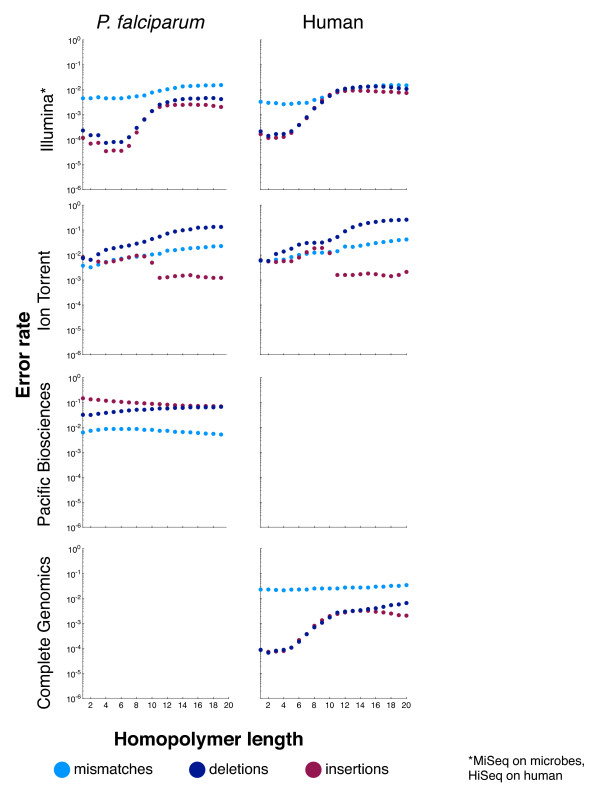
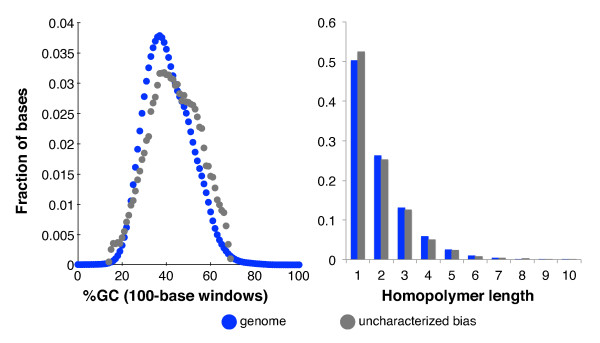
Background: DNA sequencing technologies deviate from the ideal uniform distribution of reads. These biases impair scientific and medical applications. Accordingly, we have developed computational methods for discovering, describing and measuring bias. Results: We applied these methods to the Illumina, Ion Torrent, Pacific Biosciences and Complete Genomics sequencing platforms, using data from human and from a set of microbes with diverse base compositions. As in previous work, library construction conditions significantly influence sequencing bias. Pacific Biosciences coverage levels are the least biased, followed by Illumina, although all technologies exhibit error-rate biases in high- and low-GC regions and at long homopolymer runs. The GC-rich regions prone to low coverage include a number of human promoters, so we therefore catalog 1,000 that were exceptionally resistant to sequencing. Our results indicate that combining data from two technologies can reduce coverage bias if the biases in the component technologies are complementary and of similar magnitude. Analysis of Illumina data representing 120-fold coverage of a well-studied human sample reveals that 0.20% of the autosomal genome was covered at less than 10% of the genome-wide average. Excluding locations that were similar to known bias motifs or likely due to sample-reference variations left only 0.045% of the autosomal genome with unexplained poor coverage. Conclusions: The assays presented in this paper provide a comprehensive view of sequencing bias, which can be used to drive laboratory improvements and to monitor production processes. Development guided by these assays should result in improved genome assemblies and better coverage of biologically important loci.
Overview
The claims and statistics of this paper haven’t been checked yet.
Free: it reads the open-access text and checks the first 5 claims that cite a source we can check. Create a free account to check every claim.
Integrity signals
Registry
Cites
Statistics
Figures
Verification
Claims the paper makes
The claims and statistics of this paper haven’t been checked yet.
Free: it reads the open-access text and checks the first 5 claims that cite a source we can check. Create a free account to check every claim.
Claims other papers make about this one
Each is checked against this paper’s own text: does it say what the citing paper says it does?
The source backs part of the claim, not all of it — or backs it for a different population, condition or comparison.
In the citing paper
“The limit of detection in these experiments is based on the inherent error rate of the Illumina platform (up to 0.4%), which has previously been described for genome editing experiment analyzed by NGS71–73.”
From A high-fidelity Cas9 mutant delivered as a ribonucleoprotein complex enables efficient gene editing in human hematopoietic stem and progenitor cells (2018) · cites this paper as [71]
Experimental — accuracy not yet measuredThe source backs part of the claim, not all of it — or backs it for a different population, condition or comparison.
In the citing paper
“The homopolymer can lead to low coupling efficiency in DNA synthesis (especially for G and C), and quantification of the number of identical nucleotides in DNA sequencing can also be problematic (39, 53).”
From Electrochemical DNA synthesis and sequencing on a single electrode with scalability for integrated data storage (2021) · cites this paper as [53]
Experimental — accuracy not yet measuredThe cited source says what the claim attributes to it.
In the citing paper
“GC content of individual sequences were previously found to affect PCR amplification efficiency in biological DNA15–17.”
From Quantifying Molecular Bias in DNA Data Storage (2019) · cites this paper as [15]
The cited source says what the claim attributes to it.
In the citing paper
“Although previous studies observed PCR bias in genomic biological sample amplification15–17, it remained unclear whether such bias is significant in DNA data storage.”
From Quantifying Molecular Bias in DNA Data Storage (2019) · cites this paper as [15]
The cited source says what the claim attributes to it.
In the citing paper
“Illumina sequencing was previously observed to have bias on GC-extreme sequences15,27,28, but GC content in our files did not show practically significant bias in the PCR GC bias test. Therefore, high-throughput sequencing and sample dilution are modeled using random sampling.”
From Quantifying Molecular Bias in DNA Data Storage (2019) · cites this paper as [15]
Self-check
Percentages, sums and reported differences re-computed from the paper’s own numbers.
The self-check needs the paper’s full text.
Citations
Cites
DNA sequencing with chain-terminating inhibitors
Sanger, F., Nicklen, S., & Coulson, A. R. (1977) · Proceedings of the National Academy of Sciences · doi:10.1073/pnas.74.12.5463 · Cited by 68,572
The Sequence Alignment/Map format and SAMtools
Li, H., Handsaker, B., Wysoker, A., Fennell, T., Ruan, J., Homer, N., Marth, G., Abecasis, G., Durbin, R., & 1000 Genome Project Data Processing Subgroup (2009) · Bioinformatics · doi:10.1093/bioinformatics/btp352 · Cited by 62,041
Fast and accurate short read alignment with Burrows-Wheeler transform
Li, H., & Durbin, R. (2009) · Bioinformatics · doi:10.1093/bioinformatics/btp324 · Cited by 58,607
The Genome Analysis Toolkit: A MapReduce framework for analyzing next-generation DNA sequencing data
McKenna, A., Hanna, M., Banks, E., Sivachenko, A., Cibulskis, K., Kernytsky, A., Garimella, K., Altshuler, D., Gabriel, S., Daly, M., et al. (2010) · Genome Research · doi:10.1101/gr.107524.110 · Cited by 27,895
Fast and accurate long-read alignment with Burrows-Wheeler transform.
Li, H., & Durbin, R. (2010) · Bioinformatics · doi:10.1093/bioinformatics/btp698 · Cited by 12,063 · cited 2×
“Because the default TMAP aligner [46] cannot align to references with more than 4.3 billion bases, it was necessary to use the BWA-SW aligner [47] to realign the Ion data to the diploid NA12878 reference for the error-rate comparison presented in Table S2 in Additional file 3, Figure S1 in…”
MethodInfluentialA framework for variation discovery and genotyping using next-generation DNA sequencing data
DePristo, M. A., Banks, E., Poplin, R., Garimella, K. V., Maguire, J. R., Hartl, C., Philippakis, A. A., del Angel, G., Rivas, M. A., Hanna, M., et al. (2011) · Nature Genetics · doi:10.1038/ng.806 · Cited by 11,456
A map of human genome variation from population-scale sequencing.
The 1000 Genomes Project Consortium (2010) · Nature · doi:10.1038/nature09534 · Cited by 7,877
Self-citationGenome sequencing in microfabricated high-density picolitre reactors
Margulies, M., Egholm, M., Altman, W. E., Attiya, S., Bader, J. S., Bemben, L. A., Berka, J., Braverman, M. S., Chen, Y.-J., Chen, Z., et al. (2005) · Nature · doi:10.1038/nature03959 · Cited by 7,693
Real-Time DNA Sequencing from Single Polymerase Molecules
Eid, J., Fehr, A., Gray, J., Luong, K., Lyle, J., Otto, G., Peluso, P., Rank, D., Baybayan, P., Bettman, B., et al. (2009) · Science · doi:10.1126/science.1162986 · Cited by 3,732
Accurate whole human genome sequencing using reversible terminator chemistry
Bentley, D. R., Balasubramanian, S., Swerdlow, H. P., Smith, G. P., Milton, J., Brown, C. G., Hall, K. P., Evers, D. J., Barnes, C. L., Bignell, H. R., et al. (2008) · Nature · doi:10.1038/nature07517 · Cited by 3,684
Self-citation
Research works printed but not linked: 1
- Pruitt K Brown G Tatusova T Maglott D McEntyre J, Ostell J Bethesda (MD): National Center for Biotechnology Information (US) Chapter 18: The Reference Sequence (RefSeq) Database. The NCBI Handbook [Internet] 2002 http://www.ncbi.nlm.nih.gov/books/NBK21091/
Cited by
Items 401–500 of 1,000
Dong, X., Penrice-Randal, R., Goldswain, H., Prince, T., Randle, N., Donovan-Banfield, I., Salguero, F. J., Tree, J. A., Vamos, E. E., Nelson, C., et al. (2022) · GigaScience · doi:10.1093/gigascience/giac045 · Cited by 21
McElhoe, J. A., & Holland, M. M. (2020) · Mitochondrion · doi:10.1016/j.mito.2020.02.005 · Cited by 20
Cunha, M. L. R., Meijers, J. C. M., Rosendaal, F. R., Vlieg, A. V. H., Reitsma, P. H., & Middeldorp, S. (2017) · PLoS ONE · doi:10.1371/journal.pone.0187699 · Cited by 20
Evaluating coverage bias in next-generation sequencing of Escherichia coli
Gunasekera, S., Abraham, S., Stegger, M., Pang, S., Wang, P., Sahibzada, S., & O’Dea, M. A. (2021) · PLoS ONE · doi:10.1371/journal.pone.0253440 · Cited by 21
Garzón‐Orduña, I. J., Geib, S. M., Ledezma, L. A., Bremer, F. T., & Barr, N. B. (2020) · Annals of the Entomological Society of America · doi:10.1093/aesa/saz071 · Cited by 20
Gillingham, M. A. F., Montero, B. K., Wihelm, K., Grudzus, K., Sommer, S., & Santos, P. S. C. (2020) · Molecular Ecology Resources · doi:10.1111/1755-0998.13290 · Cited by 20
Massively parallel sequencing of customised forensically informative SNP panels on the MiSeq
Mehta, B., Daniel, R., Phillips, C., Doyle, S. R., Elvidge, G. P., & McNevin, D. B. (2016) · Electrophoresis · doi:10.1002/elps.201600190 · Cited by 20
Ta, M. T. A., Nguyen, N. N., Tran, D. M., Nguyen, T. H., Vu, T. A., Dung Thi, L. E., Le, P. T., Hong, T. T., Hoang, H., & Hà, C. H. (2021) · International Journal of Legal Medicine · doi:10.1007/s00414-021-02649-1 · Cited by 20
Postma, L. (2017) · Mspace (University of Manitoba) · Cited by 21
Ferret, Y., Caillault, A., Sebda, S., Duez, M., Grardel, N., Duployez, N., Villenet, C., Figeac, M., Preudhomme, C., Salson, M., et al. (2016) · British Journal of Haematology · doi:10.1111/bjh.13981 · Cited by 20
An Epigenetics‐Inspired DNA‐Based Data Storage System
Mayer, C., McInroy, G. R., Murat, P., Van Delft, P., & Balasubramanian, S. (2016) · Angewandte Chemie · doi:10.1002/ange.201605531 · Cited by 19
Four Generations of Sequencing- Is it Ready for the Clinic Yet?
Srinivasan, S., & Batra, J. (2014) · Journal of Next Generation Sequencing & Applications · doi:10.4172/2469-9853.1000107 · Cited by 19
Kuligina, E. S., Yanus, G. A., & Имянитов, Е. Н. (2025) · Exploration of Targeted Anti-tumor Therapy · doi:10.37349/etat.2025.1002333 · Cited by 19
ReSeq simulates realistic Illumina high-throughput sequencing data
Schmeing, S., & Robinson, M. D. (2021) · Genome biology · doi:10.1186/s13059-021-02265-7 · Cited by 19
DNA and protein analyses of hair in forensic genetics
Liu, Z., Simayijiang, H., Wang, Q., Yang, J., Sun, H., Wu, R., & Yan, J. (2023) · International Journal of Legal Medicine · doi:10.1007/s00414-023-02955-w · Cited by 19
Gombert, S., Jahn, K., Pathak, H., Burkert, A., Schmidt, G., Wiehlmann, L., Davenport, C., Brändl, B., Müller, F.-J., Leffler, A., et al. (2023) · BMC Medical Genomics · doi:10.1186/s12920-023-01694-6 · Cited by 19
Meijers, J. C. M., Middeldorp, S., & Cunha, M. L. R. (2015) · Thrombosis and Haemostasis · doi:10.1160/th15-05-0411 · Cited by 20
Sun, K., Lun, F. M. F., Leung, T. Y., Chiu, R. W. K., Lo, Y. M. D., & Sun, H. (2018) · Prenatal Diagnosis · doi:10.1002/pd.5214 · Cited by 19
Value of Microbial Genome Sequencing for Probiotic Strain Identification and Characterization
Guinane, C. M., Crispie, F., & Cotter, P. D. (2016) · Elsevier eBooks · doi:10.1016/b978-0-12-802304-4.00004-9 · Cited by 18
Sequencing refractory regions in bird genomes are hotspots for accelerated protein evolution
Huttener, R., Thorrez, L., Veld, T. I., Granvik, M., Lommel, L. V., Waelkens, E., Derua, R., Lemaire, K., Goyvaerts, L., Coster, S. D., et al. (2021) · BMC Ecology and Evolution · doi:10.1186/s12862-021-01905-7 · Cited by 18
Codes for DNA storage channels
Kiah, H. M., Puleo, G. J., & Milenković, O. (2015) · IEEE Information Theory Workshop (ITW) · doi:10.1109/itw.2015.7133132 · Cited by 18
Fundoscopy-directed genetic testing to re-evaluate negative whole exome sequencing results
Cho, A., de Carvalho, J. R. L., Tanaka, A. J., Jauregui, R., Levi, S. R., Bassuk, A. G., Mahajan, V. B., & Tsang, S. H. (2020) · Orphanet Journal of Rare Diseases · doi:10.1186/s13023-020-1312-1 · Cited by 18
Hanghøj, K., & Orlando, L. (2018) · Population genomics · doi:10.1007/13836_2018_18 · Cited by 18
Design principles for clinical network-based proteomics
Goh, W. W. B., & Wong, L. (2016) · Drug Discovery Today · doi:10.1016/j.drudis.2016.05.013 · Cited by 18
Hijikata, A., Suyama, M., Kikugawa, S., Matoba, R., Naruto, T., Enomoto, Y., Kurosawa, K., Harada, N., Yanagi, K., Kaname, T., et al. (2023) · Nucleic Acids Research · doi:10.1093/nar/gkad1140 · Cited by 18
Metagenomics of Traditional Beverages
Villarreal-Morales, S. L., Montañez, J., Aguilar, C. N., & Rodríguez-Herrera, R. (2018) · Elsevier eBooks · doi:10.1016/b978-0-12-811443-8.00011-6 · Cited by 18
Varadarajan, A. R., Götze, S., Pavlou, M. P., Grosboillot, V., Shen, Y., Loessner, M. J., Ahrens, C. H., & Wollscheid, B. (2020) · Journal of Proteome Research · doi:10.1021/acs.jproteome.9b00842 · Cited by 19
Efficient Encoding/Decoding of GC-Balanced Codes Correcting Tandem Duplications
Chee, Y. M., Chrisnata, J., Kiah, H. M., & Nguyen, T. T. (2020) · IEEE Transactions on Information Theory · doi:10.1109/tit.2020.2981069 · Cited by 18
Conkle-Gutierrez, D., Ramirez-Busby, S. M., Gorman, B. M., Elghraoui, A., Hoffner, S., Elmaraachli, W., & Valafar, F. (2024) · Frontiers in Microbiology · doi:10.3389/fmicb.2023.1265390 · Cited by 18
A Workflow for Studying Specialized Metabolism in Nonmodel Eukaryotic Organisms
Torrens-Spence, M. P., Fallon, T. R., & Weng, J. (2016) · Methods in enzymology on CD-ROM/Methods in enzymology · doi:10.1016/bs.mie.2016.03.015 · Cited by 18
Novel mutations in PDE6B causing human retinitis pigmentosa
Cheng, L. L., Han, R., Yang, F., Yu, X., Xu, J., Min, Q., Tian, J., Ge, X., Zheng, S., Lin, Y.-W., et al. (2016) · International Journal of Ophthalmology · doi:10.18240/ijo.2016.08.02 · Cited by 18
Mitochondrial genome diversity across the subphylum Saccharomycotina
Wolters, J. F., LaBella, A. L., Opulente, D. A., Rokas, A., & Hittinger, C. T. (2023) · Frontiers in Microbiology · doi:10.3389/fmicb.2023.1268944 · Cited by 17
“Groups with aerobic fermenters, such as Saccharomyces , Kazachstania , and Nakaseomyces , do not exhibit significantly elevated ratios relative to the rest of the subphylum. to biases against AT-rich sequences (Chen et al., 2013; Ross et al., 2013).”
BackgroundMapReduce for accurate error correction of next-generation sequencing data
Zhao, L., Chen, Q., Li, W., Jiang, P., Wong, L., & Li, J. (2017) · Bioinformatics · doi:10.1093/bioinformatics/btx089 · Cited by 17
Advancing Archival Data Storage: The Promises and Challenges of DNA Storage System
Sensintaffar, A., Wei, Y., Ou, L., Du, D. H. C., & Li, B. (2025) · ACM Transactions on Storage · doi:10.1145/3723166 · Cited by 17
Weindel, F., Gimpel, A. L., Grass, R. N., & Heckel, R. (2023) · Allerton Conference on Communication, Control, and Computing · doi:10.1109/allerton58177.2023.10313494 · Cited by 17
Castro, R., Navelsaker, S., Krasnov, A., Pasquier, L. D., & Boudinot, P. (2017) · Developmental & Comparative Immunology · doi:10.1016/j.dci.2017.02.018 · Cited by 17
Reverse Transcription Errors and RNA–DNA Differences at Short Tandem Repeats
Fungtammasan, A., Tomaszkiewicz, M., Campos-Sánchez, R., Eckert, K. A., DeGiorgio, M., & Makova, K. D. (2016) · Molecular Biology and Evolution · doi:10.1093/molbev/msw139 · Cited by 17
Mapinsights: deep exploration of quality issues and error profiles in high-throughput sequence data
Das, S., Biswas, N. K., & Basu, A. (2023) · Nucleic Acids Research · doi:10.1093/nar/gkad539 · Cited by 17
The Plant Microbiome: Diversity, Dynamics, and Role in Food Safety
Allard, S. M., & Micallef, S. A. (2019) · Elsevier eBooks · doi:10.1016/b978-0-12-812060-6.00011-8 · Cited by 18
Vancampenhout, K., Caljon, B., Spits, C., Stouffs, K., Jonckheere, A. I., Meırleır, L. D., Lissens, W., Vanlander, A. V., Smet, J., Paepe, B. D., et al. (2014) · PLoS ONE · doi:10.1371/journal.pone.0112950 · Cited by 17
Optimal Reference for DNA Synthesis
Elishco, O., & Huleihel, W. (2023) · IEEE Transactions on Information Theory · doi:10.1109/tit.2023.3286694 · Cited by 18
COFFEE: control‐free noninvasive fetal chromosomal examination using maternal plasma DNA
Sun, K., Chan, K. C. A., Hudecova, I., Chiu, R. W. K., Lo, Y. M. D., & Jiang, P. (2017) · Prenatal Diagnosis · doi:10.1002/pd.5016 · Cited by 17
HISEA: HIerarchical SEed Aligner for PacBio data
Khiste, N., & Ilie, L. (2017) · BMC Bioinformatics · doi:10.1186/s12859-017-1953-9 · Cited by 17
Apostolides, M. J., Wang, J., Saberi, A., Choi, B., Mittmann, T., Poursina, A., Namini, A. M., Salehi, D., Perron, G., Navickas, A., et al. (2024) · bioRxiv (Cold Spring Harbor Laboratory) · doi:10.1101/2024.07.11.603067 · Cited by 16
Evaluation of Quality Assessment Protocols for High Throughput Genome Resequencing Data
Chiara, M., & Pavesi, G. (2017) · Frontiers in Genetics · doi:10.3389/fgene.2017.00094 · Cited by 16
Kabiraj, D., Chetia, H., Nath, A., Sharma, P., Mosahari, P. V., Singh, D., Dutta, P., Neog, K., & Bora, U. (2022) · Scientific Reports · doi:10.1038/s41598-022-10547-8 · Cited by 16
Hwang, K., Lee, I., Park, J., Hambuch, T. M., Choe, Y., Kim, M., Lee, K., Song, T., Neu, M. B., Gupta, N., et al. (2014) · Human Mutation · doi:10.1002/humu.22587 · Cited by 17
Yan, B., Kuick, C. H., Lim, M., Venkataraman, K., Tennakoon, C., Loh, E., Lian, D. W. Q., Leong, M. Y., Lakshmanan, M., Tergaonkar, V., et al. (2014) · PLoS ONE · doi:10.1371/journal.pone.0106575 · Cited by 16
Streamlined generation of plant virus infectious clones using the pLX mini binary vectors
Pasin, F., Tseng, X.-A., Bedoya, L. C., Heydarnejad, J., Deng, T. C., García, J. A., & Chen, Y. (2018) · Journal of Virological Methods · doi:10.1016/j.jviromet.2018.09.007 · Cited by 16
Performance characterization of PCR-free whole genome sequencing for clinical diagnosis
Zhou, G., Zhou, M., Zeng, F., Zhang, N., Sun, Y., Qiao, Z., Guo, X., Zhou, S., Yun, G., Xie, J., et al. (2022) · Medicine · doi:10.1097/md.0000000000028972 · Cited by 15
A random forest-based framework for genotyping and accuracy assessment of copy number variations
Zhuang, X., Ye, R., So, M., Lam, W.-Y., Karim, A., Yu, M., Ngo, N. D., Cherny, S. S., Tam, P. K. H., García-Barceló, M.-M., et al. (2020) · NAR Genomics and Bioinformatics · doi:10.1093/nargab/lqaa071 · Cited by 15
Wai, K. T., Barash, M., & Gunn, P. R. (2018) · Electrophoresis · doi:10.1002/elps.201700371 · Cited by 15
Buchhalter, I., Hutter, B., Alioto, T., Beck, T. A., Boutros, P. C., Brors, B., Butler, A. P., Chotewutmontri, S., Denroche, R. E., Derdak, S. V., et al. (2014) · bioRxiv (Cold Spring Harbor Laboratory) · doi:10.1101/013177 · Cited by 15
Sandmann, S., de Graaf, A. O., van der Reijden, B. A., Jansen, J. H., & Dugas, M. (2017) · PLoS ONE · doi:10.1371/journal.pone.0171983 · Cited by 15
Nanopore DNA Sequencing Channel Modeling
Conde-Canencia, L., & Dolecek, L. (2018) · SiPS ... design and implementation - IEEE Workshop on Signal Processing Systems · doi:10.1109/sips.2018.8598361 · Cited by 15
Greenwood, M. P., Capblancq, T., Wahlberg, N., & Després, L. (2024) · Molecular Phylogenetics and Evolution · doi:10.1016/j.ympev.2024.108222 · Cited by 16
The Escherichia coli Fur pan-regulon has few conserved but many unique regulatory targets
Gao, Y., Bang, I., Seif, Y., Kim, D., & Palsson, B. O. (2023) · Nucleic Acids Research · doi:10.1093/nar/gkad253 · Cited by 14
“Paired-end, strand-specific RNA-seq library was prepared using KAPA RNA Hyper Prep kit (KAPA Biosystems), following the instruction (24,25).”
MethodPan-cancer analysis of systematic batch effects on somatic sequence variations
Choi, J.-H., Hong, S.-E., & Woo, H. G. (2017) · BMC Bioinformatics · doi:10.1186/s12859-017-1627-7 · Cited by 14
“This analysis revealed the consensus sequence of homopol-ymer runs at the flanking regions (Additional file 1: Figure S4) which were previously identified as the sites likely prone to sequencing error [17, 19].”
BackgroundThe Whole Genome Sequence and mRNA Transcriptome of the Tropical Cyclopoid Copepod Apocyclops royi
Jørgensen, T. S., Nielsen, B. L. H., Petersen, B., Browne, P. D., Hansen, B. W., & Hansen, L. H. (2019) · G3 Genes Genomes Genetics · doi:10.1534/g3.119.400085 · Cited by 14
Martin, M. D., Jay, F., Castellano, S., & Slatkin, M. (2017) · Molecular Ecology · doi:10.1111/mec.14188 · Cited by 14
Wildlife Population Genomics: Applications and Approaches
Barbosa, S., Hendricks, S. A., Funk, W. C., Rajora, O. P., & Hohenlohe, P. A. (2020) · Population genomics · doi:10.1007/13836_2020_83 · Cited by 14
Belova, V., Vasiliadis, I. A., Repinskaia, Z. A., Фаритовна, С. А., Shmitko, A. O., Ponikarovskaya, N., Suchalko, O. N., Cheranev, V. V., Shatalov, P. A., Шегай, П. В., et al. (2025) · BMC Genomics · doi:10.1186/s12864-024-11196-z · Cited by 14
Embedded Codes for Reassembling Non-Overlapping Random DNA Fragments
Nassirpour, S., & Vahid, A. (2020) · IEEE Transactions on Molecular Biological and Multi-Scale Communications · doi:10.1109/tmbmc.2020.3035370 · Cited by 14
Li, X., He, W., Fang, J., Liang, Y., Zhang, H., Chen, D., Wu, X., Zhang, Z., Wang, L., Han, P., et al. (2022) · Frontiers in Plant Science · doi:10.3389/fpls.2022.1028885 · Cited by 14
A dual-rule encoding DNA storage system using chaotic mapping to control GC content
Zhang, X., Qi, B., & Niu, Y. (2024) · Bioinformatics · doi:10.1093/bioinformatics/btae113 · Cited by 14
Garrison, E. P. (2018) · Apollo (University of Cambridge) · doi:10.17863/cam.41621 · Cited by 14
Genome plasticity of triple-reassortant H1N1 influenza A virus during infection of vaccinated pigs
Díaz, A., Enomoto, S., Romagosa, A., Sreevatsan, S., Nelson, M. I., Culhane, M. R., & Torremorell, M. (2015) · Journal of General Virology · doi:10.1099/jgv.0.000258 · Cited by 14
Mobile elements create strain‐level variation in the services conferred by an aphid symbiont
Patel, V. V., Lynn-Bell, N. L., Chevignon, G., Kucuk, R. A., Higashi, C. H. V., Carpenter, M., Russell, J. A., & Oliver, K. M. (2023) · Environmental Microbiology · doi:10.1111/1462-2920.16520 · Cited by 14
Li, Z., Fang, S., Zhang, R., Yu, L., Zhang, J., Bu, D., Sun, L. D., Zhao, Y. C., & Li, J. (2020) · Journal of Molecular Diagnostics · doi:10.1016/j.jmoldx.2020.11.010 · Cited by 14
Characterization and Control of Microbially Induced Concrete Corrosion
Ling, A. L. (2013) · CU Scholar (University of Colorado Boulder) · Cited by 14
Detecting differential copy number variation between groups of samples
Lowe, C. B., Sanchez‐Luege, N., Howes, T. R., Brady, S. D., Daugherty, R. R., Jones, F. C., Bell, M. A., & Kingsley, D. M. (2017) · Genome Research · doi:10.1101/gr.206938.116 · Cited by 13
Liu, Z., Liu, J., Geng, J., Wu, E., Zhu, J., Cong, B., Wu, R., & Sun, H. (2023) · Forensic Science International Genetics · doi:10.1016/j.fsigen.2023.102978 · Cited by 13
Ostrow, S. L., Simon, E., Prinz, E., Bick, T., Shentzer, T., Nagawkar, S. S., Sabo, E., Ben‐Izhak, O., Hershberg, R., & Hershkovitz, D. (2016) · Scientific Reports · doi:10.1038/srep21927 · Cited by 13
Family of Mutually Uncorrelated Codes for DNA Storage Address Design
Liu, Z., Cao, B., Shao, Q., Zheng, Y., Wang, B., Zhou, S., & Zheng, P. (2025) · IEEE Transactions on NanoBioscience · doi:10.1109/tnb.2025.3530470 · Cited by 13
Lecomte, É., Saleün, S., Bolteau, M., Guy‐Duché, A., Adjali, O., Blouin, V., Penaud‐Budloo, M., & Ayuso, E. (2020) · Biotechnology Journal · doi:10.1002/biot.202000016 · Cited by 13
Linear-Time Encoders for Codes Correcting a Single Edit for DNA-Based Data Storage
Chee, Y. M., Kiah, H. M., & Nguyen, T. T. (2019) · IEEE International Symposium on Information Theory (ISIT) · doi:10.1109/isit.2019.8849643 · Cited by 13
Molecular genetic testing methodologies in hematopoietic diseases: current and future methods
Sridhar, K., Singh, A., Butzmann, A., Jangam, D., & Ohgami, R. S. (2019) · International Journal of Laboratory Hematology · doi:10.1111/ijlh.13024 · Cited by 13
Mitochondrial Dynamics during Development
Maheshwari, A., He, L., & Tronstad, K. J. (2023) · Newborn · doi:10.5005/jp-journals-11002-0053 · Cited by 13
Adams, C. J., Conery, M., Auerbach, B. J., Jensen, S. T., Mathieson, I., & Voight, B. F. (2023) · PLoS Genetics · doi:10.1371/journal.pgen.1010807 · Cited by 13
Park, S., Kim, S., Jeong, J., No, A., No, J., & Park, H. (2023) · Bioinformatics · doi:10.1093/bioinformatics/btad548 · Cited by 13
Chan, A. W. H., Pan, Y., TONG, J. H. M., Lung, R. W. M., Kwan, J. S., Chow, C., Tin, E. K. Y., Chung, L., Li, H., Wong, S. S.-Y., et al. (2020) · The Journal of Pathology · doi:10.1002/path.5418 · Cited by 13
Peng, L., Hoban, J., Joffe, J., Smith, A., Carpenter, M., Marcelis, T. A., Patel, V. V., Lynn-Bell, N. L., Oliver, K. M., & Russell, J. A. (2023) · Journal of Evolutionary Biology · doi:10.1111/jeb.14216 · Cited by 13
Protecting the Future of Information: LOCO Coding With Error Detection for DNA Data Storage
İrimağzı, C., Uslan, Y., & Hareedy, A. (2024) · IEEE Transactions on Molecular Biological and Multi-Scale Communications · doi:10.1109/tmbmc.2024.3400794 · Cited by 13
Rawson, J. M. O., Gohl, D. M., Landman, S. R., Roth, M. E., Meissner, M. E., Peterson, T. S., Hodges, J. S., Beckman, K. B., & Mansky, L. M. (2017) · Journal of Molecular Biology · doi:10.1016/j.jmb.2017.05.010 · Cited by 13
Yu, X., Shi, W., Cheng, L., Wang, Y., Chen, D., Hu, X., Xu, J., Xu, L., Wu, Y., Qu, J., et al. (2016) · Scientific Reports · doi:10.1038/srep19759 · Cited by 13
Physiological RNA dynamics in RNA-Seq analysis
Xu, Z., & Asakawa, S. (2018) · Briefings in Bioinformatics · doi:10.1093/bib/bby045 · Cited by 12
Chen, C., Moyzis, R. K., Lei, X., Chen, C., & Dong, Q. (2016) · Oxford University Press eBooks · doi:10.1093/oxfordhb/9780199357376.013.22 · Cited by 12
Genomic loci susceptible to systematic sequencing bias in clinical whole genomes
Freeman, T. M., Wang, D. Y. Q., & Harris, J. (2020) · Genome Research · doi:10.1101/gr.255349.119 · Cited by 13
Evaluating whole-genome sequencing quality metrics for enteric pathogen outbreaks
Wagner, D., Carleton, H. A., Trees, E., & Katz, L. S. (2021) · PeerJ · doi:10.7717/peerj.12446 · Cited by 12
Dennis, A. F., Xu, Z., & Clark, D. J. (2024) · Nucleic Acids Research · doi:10.1093/nar/gkae288 · Cited by 12
BIC Codes: Bit Insertion-Based Constrained Codes With Error Correction for DNA Storage
Park, S., Park, H., Kwak, H.-Y., & No, J. (2023) · IEEE Transactions on Emerging Topics in Computing · doi:10.1109/tetc.2023.3268274 · Cited by 12
Avila, E., Cavalheiro, C. P., Felkl, A. B., Graebin, P., Kahmann, A., & Alho, C. S. (2019) · Forensic Science International · doi:10.1016/j.forsciint.2019.109938 · Cited by 12
GANDAFL: Dataflow Acceleration for Short Read Alignment on NGS Data
Koliogeorgi, K., Xydis, S., Gaydadjiev, G. N., & Soudris, D. (2022) · IEEE Transactions on Computers · doi:10.1109/tc.2022.3144115 · Cited by 12
Illumina MiSeq sequencing disfavours a sequence motif in the GFP reporter gene
den Hoecke, S. V., Verhelst, J., & Saelens, X. (2016) · Scientific Reports · doi:10.1038/srep26314 · Cited by 12
Mohamed, W. M. A., Moustafa, M. A. M., Kelava, S., Barker, D., Matsuno, K., Nonaka, N., Shao, R., Mans, B. J., Barker, S. C., & Nakao, R. (2021) · Ticks and Tick-borne Diseases · doi:10.1016/j.ttbdis.2021.101832 · Cited by 12
Hasheminasab, S.-M., Tzvetkov, M. V., Schumann, C., Rüdiger, S., Boeck, S. H., Heinemann, V., Kächele, V., Steffens, M., Scholl, C., Hichert, V., et al. (2015) · Pharmacogenomics · doi:10.2217/pgs.15.97 · Cited by 12
Revollo, J. R., Crabtree, N. M., Pearce, M. G., Pacheco-Martínez, M. M., & Dobrovolsky, V. N. (2015) · Environmental and Molecular Mutagenesis · doi:10.1002/em.21992 · Cited by 12
Msuite: A High-Performance and Versatile DNA Methylation Data-Analysis Toolkit
Sun, K., Li, L., Ma, L., Zhao, Y. F., Deng, L., Wang, H., & Sun, H. (2020) · Patterns · doi:10.1016/j.patter.2020.100127 · Cited by 12
Cheng, X., Goktas, M. T., Williamson, L., Krzywinski, M. I., Mulder, D. T., Swanson, L., Slind, J., Sihvonen, J., Chow, C., Carr, A., et al. (2024) · Briefings in Bioinformatics · doi:10.1093/bib/bbae442 · Cited by 11
Exploring statistical weight estimates for mitochondrial DNA matches involving heteroplasmy
McElhoe, J. A., Wilton, P., Parson, W., & Holland, M. M. (2022) · International Journal of Legal Medicine · doi:10.1007/s00414-022-02774-5 · Cited by 11
Metadata
- Authors
- Ross, M. G., Russ, C., Costello, M., Hollinger, A., Lennon, N. J., Hegarty, R., Nusbaum, C., & Jaffe, D. B.
- Affiliations
- Broad Institute (US)
- Corresponding author
- Ross, Michael G
- Venue
- Genome Biology
- Published
- 2013-05-29
- Volume
- 14
- Issue
- 5
- Pages
- R51-R51
- ISSN
- 1465-6906 (ISSN-L)
- 1474-760X
- PMC
- PMC4053816
- OpenAlex
- W1971584645
- Semantic Scholar
- 8c77c718563b5e823feac3a4e0b843c75457f5fd
- Cited by
- 909
- References
- 49
- Citations by year
- 2026: 36 · 2025: 49 · 2024: 60 · 2023: 61 · 2022: 59 · 2021: 85 · 2020: 75 · 2019: 76 · 2018: 71 · 2017: 83 · 2016: 105 · 2015: 83 · 2014: 60 · 2013: 6
- FWCI
- 37.71
- Type
- journal article
- Language
- en
- Open access
- gold
- doi.org
- Licence
- cc-by
- creativecommons.org/licenses/by/2.0/ (tdm)
- creativecommons.org/licenses/by/2.0/ (vor)
- Locations
- Genome biology (publishedVersion, cc-by)
- Europe PMC (PubMed Central) (publishedVersion, cc-by)
- PubMed Central (publishedVersion, cc-by)
- PubMed (publishedVersion)
- Funders
- U.S. Department of Health and Human Services (HHSN272200900018C)
- Broad Institute (U54HG003067)
- National Institutes of Health (HHSN272200900018C)
- National Human Genome Research Institute (U54HG003067, R01HG003474)
- National Institute of Allergy and Infectious Diseases (HHSN272200900018C)
- Topics
- Life Sciences › Biochemistry, Genetics and Molecular Biology › Molecular Biology › Genomics and Phylogenetic Studies
- Life Sciences › Biochemistry, Genetics and Molecular Biology › Molecular Biology › Fractal and DNA sequence analysis
- Life Sciences › Biochemistry, Genetics and Molecular Biology › Genetics › Genomic variations and chromosomal abnormalities
- Keywords
- sequencing bias, GC content bias, human promoters, library construction, genome assembly, PacBio, Illumina, Ion Torrent, microbial genomes
- MeSH terms
- Algorithms, Base Composition, Humans, Promoter Regions, Genetic, Genome, Human, Genome, Bacterial, Sequence Analysis, DNA, Genome, Protozoan, Genomics
About these checks
Registry, retraction, Cites and statistics results are computed, not judged, with one exception: a printed reference that no index lists is read once by a model before it counts as a citation error. Claims are extracted by a model and kept only when their quote appears verbatim in the text; each cited source is then checked, with a model’s help, for whether it says what the claim relies on. Those verdicts can be wrong — read the claim’s quote and the cited source before relying on one.
Statistics and arithmetic are recomputed, not judged.
Confidence bands are shown only for fields calibrated on our annotated test set. None is calibrated yet, so no band is shown.
What counts as a claim ›How we measure confidence ›How we check this ›
Are you an author, or do you see a problem with this page? Request a review
Data sources
Bibliographic data: Semantic Scholar, OpenAlex, Crossref.
Contains information from the Semantic Scholar Academic Graph Datasets, made available under the ODC Attribution License (ODC-BY 1.0).
Semantic Scholar’s data is described in: Kinney, R., et al. (2023). The Semantic Scholar Open Data Platform. arXiv:2301.10140.
