

Characterizing and measuring bias in sequence data
Open accessThe DOI matches its Crossref record; 48 of the 49 references it cites were found in a registry or an index.
Abstract
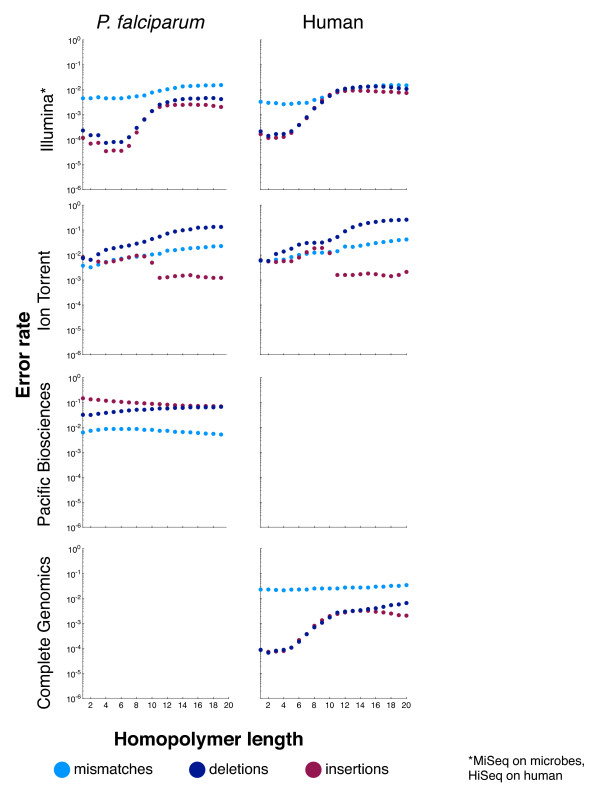
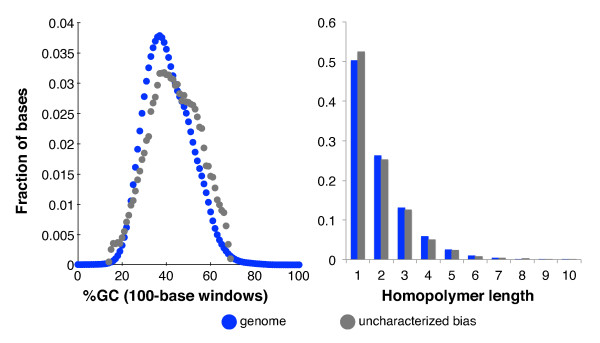
Background: DNA sequencing technologies deviate from the ideal uniform distribution of reads. These biases impair scientific and medical applications. Accordingly, we have developed computational methods for discovering, describing and measuring bias. Results: We applied these methods to the Illumina, Ion Torrent, Pacific Biosciences and Complete Genomics sequencing platforms, using data from human and from a set of microbes with diverse base compositions. As in previous work, library construction conditions significantly influence sequencing bias. Pacific Biosciences coverage levels are the least biased, followed by Illumina, although all technologies exhibit error-rate biases in high- and low-GC regions and at long homopolymer runs. The GC-rich regions prone to low coverage include a number of human promoters, so we therefore catalog 1,000 that were exceptionally resistant to sequencing. Our results indicate that combining data from two technologies can reduce coverage bias if the biases in the component technologies are complementary and of similar magnitude. Analysis of Illumina data representing 120-fold coverage of a well-studied human sample reveals that 0.20% of the autosomal genome was covered at less than 10% of the genome-wide average. Excluding locations that were similar to known bias motifs or likely due to sample-reference variations left only 0.045% of the autosomal genome with unexplained poor coverage. Conclusions: The assays presented in this paper provide a comprehensive view of sequencing bias, which can be used to drive laboratory improvements and to monitor production processes. Development guided by these assays should result in improved genome assemblies and better coverage of biologically important loci.
Overview
The claims and statistics of this paper haven’t been checked yet.
Free: it reads the open-access text and checks the first 5 claims that cite a source we can check. Create a free account to check every claim.
Integrity signals
Registry
Cites
Statistics
Figures
Verification
Claims the paper makes
The claims and statistics of this paper haven’t been checked yet.
Free: it reads the open-access text and checks the first 5 claims that cite a source we can check. Create a free account to check every claim.
Claims other papers make about this one
Each is checked against this paper’s own text: does it say what the citing paper says it does?
The source backs part of the claim, not all of it — or backs it for a different population, condition or comparison.
In the citing paper
“The limit of detection in these experiments is based on the inherent error rate of the Illumina platform (up to 0.4%), which has previously been described for genome editing experiment analyzed by NGS71–73.”
From A high-fidelity Cas9 mutant delivered as a ribonucleoprotein complex enables efficient gene editing in human hematopoietic stem and progenitor cells (2018) · cites this paper as [71]
Experimental — accuracy not yet measuredThe source backs part of the claim, not all of it — or backs it for a different population, condition or comparison.
In the citing paper
“The homopolymer can lead to low coupling efficiency in DNA synthesis (especially for G and C), and quantification of the number of identical nucleotides in DNA sequencing can also be problematic (39, 53).”
From Electrochemical DNA synthesis and sequencing on a single electrode with scalability for integrated data storage (2021) · cites this paper as [53]
Experimental — accuracy not yet measuredThe cited source says what the claim attributes to it.
In the citing paper
“GC content of individual sequences were previously found to affect PCR amplification efficiency in biological DNA15–17.”
From Quantifying Molecular Bias in DNA Data Storage (2019) · cites this paper as [15]
The cited source says what the claim attributes to it.
In the citing paper
“Although previous studies observed PCR bias in genomic biological sample amplification15–17, it remained unclear whether such bias is significant in DNA data storage.”
From Quantifying Molecular Bias in DNA Data Storage (2019) · cites this paper as [15]
The cited source says what the claim attributes to it.
In the citing paper
“Illumina sequencing was previously observed to have bias on GC-extreme sequences15,27,28, but GC content in our files did not show practically significant bias in the PCR GC bias test. Therefore, high-throughput sequencing and sample dilution are modeled using random sampling.”
From Quantifying Molecular Bias in DNA Data Storage (2019) · cites this paper as [15]
Self-check
Percentages, sums and reported differences re-computed from the paper’s own numbers.
The self-check needs the paper’s full text.
Citations
Cites
DNA sequencing with chain-terminating inhibitors
Sanger, F., Nicklen, S., & Coulson, A. R. (1977) · Proceedings of the National Academy of Sciences · doi:10.1073/pnas.74.12.5463 · Cited by 68,572
The Sequence Alignment/Map format and SAMtools
Li, H., Handsaker, B., Wysoker, A., Fennell, T., Ruan, J., Homer, N., Marth, G., Abecasis, G., Durbin, R., & 1000 Genome Project Data Processing Subgroup (2009) · Bioinformatics · doi:10.1093/bioinformatics/btp352 · Cited by 62,041
Fast and accurate short read alignment with Burrows-Wheeler transform
Li, H., & Durbin, R. (2009) · Bioinformatics · doi:10.1093/bioinformatics/btp324 · Cited by 58,607
The Genome Analysis Toolkit: A MapReduce framework for analyzing next-generation DNA sequencing data
McKenna, A., Hanna, M., Banks, E., Sivachenko, A., Cibulskis, K., Kernytsky, A., Garimella, K., Altshuler, D., Gabriel, S., Daly, M., et al. (2010) · Genome Research · doi:10.1101/gr.107524.110 · Cited by 27,895
Fast and accurate long-read alignment with Burrows-Wheeler transform.
Li, H., & Durbin, R. (2010) · Bioinformatics · doi:10.1093/bioinformatics/btp698 · Cited by 12,063 · cited 2×
“Because the default TMAP aligner [46] cannot align to references with more than 4.3 billion bases, it was necessary to use the BWA-SW aligner [47] to realign the Ion data to the diploid NA12878 reference for the error-rate comparison presented in Table S2 in Additional file 3, Figure S1 in…”
MethodInfluentialA framework for variation discovery and genotyping using next-generation DNA sequencing data
DePristo, M. A., Banks, E., Poplin, R., Garimella, K. V., Maguire, J. R., Hartl, C., Philippakis, A. A., del Angel, G., Rivas, M. A., Hanna, M., et al. (2011) · Nature Genetics · doi:10.1038/ng.806 · Cited by 11,456
A map of human genome variation from population-scale sequencing.
The 1000 Genomes Project Consortium (2010) · Nature · doi:10.1038/nature09534 · Cited by 7,877
Self-citationGenome sequencing in microfabricated high-density picolitre reactors
Margulies, M., Egholm, M., Altman, W. E., Attiya, S., Bader, J. S., Bemben, L. A., Berka, J., Braverman, M. S., Chen, Y.-J., Chen, Z., et al. (2005) · Nature · doi:10.1038/nature03959 · Cited by 7,693
Real-Time DNA Sequencing from Single Polymerase Molecules
Eid, J., Fehr, A., Gray, J., Luong, K., Lyle, J., Otto, G., Peluso, P., Rank, D., Baybayan, P., Bettman, B., et al. (2009) · Science · doi:10.1126/science.1162986 · Cited by 3,732
Accurate whole human genome sequencing using reversible terminator chemistry
Bentley, D. R., Balasubramanian, S., Swerdlow, H. P., Smith, G. P., Milton, J., Brown, C. G., Hall, K. P., Evers, D. J., Barnes, C. L., Bignell, H. R., et al. (2008) · Nature · doi:10.1038/nature07517 · Cited by 3,684
Self-citation
Research works printed but not linked: 1
- Pruitt K Brown G Tatusova T Maglott D McEntyre J, Ostell J Bethesda (MD): National Center for Biotechnology Information (US) Chapter 18: The Reference Sequence (RefSeq) Database. The NCBI Handbook [Internet] 2002 http://www.ncbi.nlm.nih.gov/books/NBK21091/
Cited by
Walker, B. J., Abeel, T., Shea, T., Priest, M., Abouelliel, A., Sakthikumar, S., Cuomo, C. A., Zeng, Q., Wortman, J., Young, S. K., et al. (2014) · PLoS ONE · doi:10.1371/journal.pone.0112963 · Cited by 9,197
Canu: scalable and accurate long-read assembly via adaptive k -mer weighting and repeat separation
Koren, S., Walenz, B. P., Berlin, K., Miller, J. R., Bergman, N. H., & Phillippy, A. M. (2017) · Genome Research · doi:10.1101/gr.215087.116 · Cited by 7,304
NOVOPlasty: de novo assembly of organelle genomes from whole genome data
Dierckxsens, N., Mardulyn, P., & Smits, G. (2016) · Nucleic Acids Research · doi:10.1093/nar/gkw955 · Cited by 2,838
Qualimap 2: advanced multi-sample quality control for high-throughput sequencing data
Okonechnikov, K., Conesa, A., & García-Alcalde, F. (2016) · Bioinformatics · doi:10.1093/bioinformatics/btv566 · Cited by 2,145
(2015) · doi:10.7717/peerj.1165 · Cited by 1,960
High-Throughput Sequencing Technologies
Reuter, J. A., Spacek, D. V., & Snyder, M. P. (2015) · Molecular Cell · doi:10.1016/j.molcel.2015.05.004 · Cited by 1,338
Single-cell sequencing-based technologies will revolutionize whole-organism science
Shapiro, E., Biezuner, T., & Linnarsson, S. (2013) · Nature Reviews Genetics · doi:10.1038/nrg3542 · Cited by 1,177
Rare-Variant Association Analysis: Study Designs and Statistical Tests
Lee, S., Abecasis, G. R., Boehnke, M., & Lin, X. (2014) · The American Journal of Human Genetics · doi:10.1016/j.ajhg.2014.06.009 · Cited by 1,042
“90 Careful variant filtering and quality control are important for avoiding the identification of associations that are driven by between-platform heterogeneity.”
BackgroundAssembling large genomes with single-molecule sequencing and locality-sensitive hashing
Berlin, K., Koren, S., Chin, C.-S., Drake, J. P., Landolin, J. M., & Phillippy, A. M. (2015) · Nature Biotechnology · doi:10.1038/nbt.3238 · Cited by 934
DNA Fountain enables a robust and efficient storage architecture
Erlich, Y., & Zielinski, D. (2017) · Science · doi:10.1126/science.aaj2038 · Cited by 898
Integrating human sequence data sets provides a resource of benchmark SNP and indel genotype calls
Zook, J. M., Chapman, B., Wang, J., Mittelman, D., Hofmann, O., Hide, W., & Salit, M. (2014) · Nature Biotechnology · doi:10.1038/nbt.2835 · Cited by 814
Vakulskas, C. A., Dever, D. P., Rettig, G. R., Turk, R., Jacobi, A. M., Collingwood, M. A., Bode, N. M., McNeill, M. S., Yan, S., Camarena, J., et al. (2018) · Nature Medicine · doi:10.1038/s41591-018-0137-0 · Cited by 782
Bickhart, D. M., Rosen, B. D., Koren, S., Sayre, B. L., Hastie, A. R., Chan, S., Lee, J., Lam, E. T., Liachko, I., Sullivan, S. T., et al. (2017) · Nature Genetics · doi:10.1038/ng.3802 · Cited by 631
Dai, Z., Coker, O. O., Nakatsu, G., Wu, W. K. K., Zhao, L., Chen, Z., Chan, F. K. L., Kristiansen, K., Sung, J. J. Y., Wong, S. H., et al. (2018) · Microbiome · doi:10.1186/s40168-018-0451-2 · Cited by 545
Manrique, P., Bolduc, B., Walk, S. T., van der Oost, J., de Vos, W. M., & Young, M. J. (2016) · Proceedings of the National Academy of Sciences · doi:10.1073/pnas.1601060113 · Cited by 545
Sequencing DNA with nanopores: Troubles and biases
Delahaye, C., & Nicolas, J. (2021) · PLOS ONE · doi:10.1371/journal.pone.0257521 · Cited by 534
Borowiak, M., Fischer, J., Hammerl, J. A., Hendriksen, R. S., Szabo, I., & Malorny, B. (2017) · Journal of Antimicrobial Chemotherapy · doi:10.1093/jac/dkx327 · Cited by 533
proovread : large-scale high-accuracy PacBio correction through iterative short read consensus
Hackl, T., Hedrich, R., Schultz, J., & Förster, F. (2014) · Bioinformatics · doi:10.1093/bioinformatics/btu392 · Cited by 510
Sereika, M., Kirkegaard, R. H., Karst, S. M., Michaelsen, T. Y., Sørensen, E. A., Wollenberg, R. D., & Albertsen, M. (2022) · Nature Methods · doi:10.1038/s41592-022-01539-7 · Cited by 484
Assembly and diploid architecture of an individual human genome via single-molecule technologies
Pendleton, M., Sebra, R., Pang, A. W. C., Ummat, A., Franzen, O., Rausch, T., Stütz, A. M., Stedman, W., Anantharaman, T., Hastie, A., et al. (2015) · Nature Methods · doi:10.1038/nmeth.3454 · Cited by 474
SvABA: genome-wide detection of structural variants and indels by local assembly
Wala, J. A., Bandopadhayay, P., Greenwald, N. F., O'Rourke, R., Sharpe, T., Stewart, C., Schumacher, S., Li, Y., Weischenfeldt, J., Yao, X., et al. (2018) · Genome Research · doi:10.1101/gr.221028.117 · Cited by 442
Self-citationSequencing error profiles of Illumina sequencing instruments
Stoler, N., & Nekrutenko, A. (2021) · NAR Genomics and Bioinformatics · doi:10.1093/nargab/lqab019 · Cited by 425
One chromosome, one contig: complete microbial genomes from long-read sequencing and assembly
Koren, S., & Phillippy, A. M. (2015) · Current Opinion in Microbiology · doi:10.1016/j.mib.2014.11.014 · Cited by 410
Measurement of bacterial replication rates in microbial communities
Brown, C. T., Olm, M. R., Thomas, B. C., & Banfield, J. F. (2016) · Nature Biotechnology · doi:10.1038/nbt.3704 · Cited by 408
A Rewritable, Random-Access DNA-Based Storage System
Tabatabaei Yazdi, S. M. H., Yuan, Y., Ma, J., Zhao, H., & Milenkovic, O. (2015) · Scientific Reports · doi:10.1038/srep14138 · Cited by 401
Fuentes‐Pardo, A. P., & Ruzzante, D. E. (2017) · Molecular Ecology · doi:10.1111/mec.14264 · Cited by 394
SVIM: structural variant identification using mapped long reads
Heller, D., & Vingron, M. (2019) · Bioinformatics · doi:10.1093/bioinformatics/btz041 · Cited by 372
Genetic variation and the de novo assembly of human genomes
Chaisson, M. J. P., Wilson, R. K., & Eichler, E. E. (2015) · Nature Reviews Genetics · doi:10.1038/nrg3933 · Cited by 336
Estimating genetic kin relationships in prehistoric populations
Monroy Kuhn, J. M., Jakobsson, M., & Günther, T. (2018) · PLOS ONE · doi:10.1371/journal.pone.0195491 · Cited by 330
Sequencing and Assembly of the 22-Gb Loblolly Pine Genome
Zimin, A., Stevens, K. A., Crepeau, M. W., Holtz-Morris, A., Koriabine, M., Marçais, G., Puiu, D., Roberts, M., Wegrzyn, J. L., de Jong, P. J., et al. (2014) · Genetics · doi:10.1534/genetics.113.159715 · Cited by 327
A reference human genome dataset of the BGISEQ-500 sequencer
Huang, J., Liang, X., Xuan, Y., Geng, C., Li, Y., Lu, H., Qu, S., Mei, X., Chen, H., Yu, T., et al. (2017) · GigaScience · doi:10.1093/gigascience/gix024 · Cited by 316
Massively parallel single-cell mitochondrial DNA genotyping and chromatin profiling
Lareau, C. A., Ludwig, L. S., Muus, C., Gohil, S. H., Zhao, T., Chiang, Z., Pelka, K., Verboon, J. M., Luo, W., Christian, E., et al. (2021) · Nature Biotechnology · doi:10.1038/s41587-020-0645-6 · Cited by 315
Sequencing and de novo assembly of a near complete indica rice genome
Du, H., Yu, Y., Ma, Y., Gao, Q., Cao, Y., Chen, Z., Ma, B., Qi, M., Li, Y., Zhao, X., et al. (2017) · Nature Communications · doi:10.1038/ncomms15324 · Cited by 315
Pérez-Cobas, A. E., Gomez-Valero, L., & Buchrieser, C. (2020) · Microbial Genomics · doi:10.1099/mgen.0.000409 · Cited by 314
Olova, N., Krueger, F., Andrews, S., Oxley, D., Berrens, R. V., Branco, M. R., & Reik, W. (2018) · Genome Biology · doi:10.1186/s13059-018-1408-2 · Cited by 313
Sources of PCR-induced distortions in high-throughput sequencing data sets
Kebschull, J. M., & Zador, A. M. (2015) · Nucleic Acids Research · doi:10.1093/nar/gkv717 · Cited by 299
Interactive analysis and assessment of single-cell copy-number variations
Garvin, T., Aboukhalil, R., Kendall, J., Baslan, T., Atwal, G. S., Hicks, J., Wigler, M., & Schatz, M. C. (2015) · Nature Methods · doi:10.1038/nmeth.3578 · Cited by 299
Fister, A. S., Landherr, L., Maximova, S. N., & Guiltinan, M. J. (2018) · Frontiers in Plant Science · doi:10.3389/fpls.2018.00268 · Cited by 297
Denoising DNA deep sequencing data—high-throughput sequencing errors and their correction
Laehnemann, D., Borkhardt, A., & McHardy, A. C. (2016) · Briefings in Bioinformatics · doi:10.1093/bib/bbv029 · Cited by 296
Computational pan-genomics: status, promises and challenges
(2016) · Briefings in Bioinformatics · doi:10.1093/bib/bbw089 · Cited by 287
A Sequel to Sanger: amplicon sequencing that scales
Hebert, P. D. N., Braukmann, T. W. A., Prosser, S. W. J., Ratnasingham, S., deWaard, J. R., Ivanova, N. V., Janzen, D. H., Hallwachs, W., Naik, S., Sones, J. E., et al. (2018) · BMC Genomics · doi:10.1186/s12864-018-4611-3 · Cited by 280
DNA-Based Storage: Trends and Methods
Yazdi, S. M. H. T., Kiah, H. M., Garcia-Ruiz, E., Ma, J., Zhao, H., & Milenkovic, O. (2015) · IEEE Transactions on Molecular, Biological and Multi-Scale Communications · doi:10.1109/tmbmc.2016.2537305 · Cited by 278
“Much less common are deletion and insertion errors, and there is an indication that sequencing error rates are higher in regions in which there are homopolymers exceeding lengths 15−20 [68].”
BackgroundEvaluating the analytical validity of circulating tumor DNA sequencing assays for precision oncology
Deveson, I. W., Gong, B., Lai, K., LoCoco, J. S., Richmond, T. A., Schageman, J., Zhang, Z., Novoradovskaya, N., Willey, J. C., Jones, W., et al. (2021) · Nature Biotechnology · doi:10.1038/s41587-021-00857-z · Cited by 276
How the pan-genome is changing crop genomics and improvement
Della Coletta, R., Qiu, Y., Ou, S., Hufford, M. B., & Hirsch, C. N. (2021) · Genome Biology · doi:10.1186/s13059-020-02224-8 · Cited by 268
Combining 16S rRNA gene variable regions enables high-resolution microbial community profiling
(2017) · doi:10.1186/s40168-017-0396-x · Cited by 266
Advances in the profiling of DNA modifications: cytosine methylation and beyond
Plongthongkum, N., Diep, D. H., & Zhang, K. (2014) · Nature Reviews Genetics · doi:10.1038/nrg3772 · Cited by 259
Analysis of plant microbe interactions in the era of next generation sequencing technologies
Knief, C. (2014) · Frontiers in Plant Science · doi:10.3389/fpls.2014.00216 · Cited by 253
Curated variation benchmarks for challenging medically relevant autosomal genes
Wagner, J., Olson, N. D., Harris, L., McDaniel, J., Cheng, H., Fungtammasan, A., Hwang, Y.-C., Gupta, R., Wenger, A. M., Rowell, W. J., et al. (2022) · Nature Biotechnology · doi:10.1038/s41587-021-01158-1 · Cited by 241
Jiang, P., Sun, K., Tong, Y. K., Cheng, S. H., Cheng, T. H. T., Heung, M. M. S., Wong, J., Wong, V. W. S., Chan, H. L. Y., Chan, K. C. A., et al. (2018) · Proceedings of the National Academy of Sciences · doi:10.1073/pnas.1814616115 · Cited by 230
Günther, T., & Nettelblad, C. (2019) · PLOS Genetics · doi:10.1371/journal.pgen.1008302 · Cited by 228
Reference standards for next-generation sequencing
Hardwick, S. A., Deveson, I. W., & Mercer, T. R. (2017) · Nature Reviews Genetics · doi:10.1038/nrg.2017.44 · Cited by 225
DNA storage: research landscape and future prospects
Dong, Y., Sun, F., Ping, Z., Ouyang, Q., & Qian, L. (2020) · National Science Review · doi:10.1093/nsr/nwaa007 · Cited by 225
“However, single-molecule sequencing has been reported to be prone to indel errors [24].”
BackgroundHoang, M. L., Kinde, I., Tomasetti, C., McMahon, K. W., Rosenquist, T. A., Grollman, A. P., Kinzler, K. W., Vogelstein, B., & Papadopoulos, N. (2016) · Proceedings of the National Academy of Sciences · doi:10.1073/pnas.1607794113 · Cited by 224
“1% (4), far lower than required to detect rare mutations in normal human tissues (5, 6).”
BackgroundFrom Benchtop to Desktop: Important Considerations when Designing Amplicon Sequencing Workflows
Murray, D. C., Coghlan, M. L., & Bunce, M. (2015) · PLOS ONE · doi:10.1371/journal.pone.0124671 · Cited by 224
Lelieveld, S. H., Spielmann, M., Mundlos, S., Veltman, J. A., & Gilissen, C. (2015) · Human Mutation · doi:10.1002/humu.22813 · Cited by 222
“Although WES is much more sensitive on an exome-wide scale, the sensitivity may be low at particular regions due to locus-specific features or sequencing bias [Ross et al., 2013].”
BackgroundEvaluation of PacBio sequencing for full-length bacterial 16S rRNA gene classification
Wagner, J., Coupland, P., Browne, H. P., Lawley, T. D., Francis, S. C., & Parkhill, J. (2016) · BMC Microbiology · doi:10.1186/s12866-016-0891-4 · Cited by 217
“Other groups have reported insertions and deletions as the most abundance error types in PacBio sequence data [12, 24, 25].”
BackgroundEmergence of New ALK Mutations at Relapse of Neuroblastoma
Schleiermacher, G., Javanmardi, N., Bernard, V., Leroy, Q., Cappo, J., Rio Frio, T., Pierron, G., Lapouble, E., Combaret, V., Speleman, F., et al. (2014) · Journal of Clinical Oncology · doi:10.1200/jco.2013.54.0674 · Cited by 215
Recurrent Neural Network for Predicting Transcription Factor Binding Sites
Shen, Z., Bao, W., & Huang, D.-S. (2018) · Scientific Reports · doi:10.1038/s41598-018-33321-1 · Cited by 211
Next-generation sequencing: advances and applications in cancer diagnosis
Serratì, S., De Summa, S., Pilato, B., Petriella, D., Lacalamita, R., Tommasi, S., & Pinto, R. (2016) · OncoTargets and Therapy · doi:10.2147/ott.s99807 · Cited by 208
“9%, mostly in the detection of homopolymer stretches.(2,3) NGS approaches are different, and concern tumoral DNA and RNA analysis.”
Identifying conserved genomic elements and designing universal bait sets to enrich them
Faircloth, B. C. (2017) · Methods in Ecology and Evolution · doi:10.1111/2041-210x.12754 · Cited by 204
“…(~400–500 MYA; Sanders and Lee 2010) relative to the other arthropod groups (~150–250 MYA; Misof et al. 2014), and (ii) account for sequencing error (Ross et al. 2013) in the arachnid Illumina data relative to the simulated reads generated for other arthropod taxa (which derive from a putatively…”
BackgroundOlson, N. D., Wagner, J., McDaniel, J., Stephens, S. H., Westreich, S. T., Prasanna, A. G., Johanson, E., Boja, E., Maier, E. J., Serang, O., et al. (2022) · Cell Genomics · doi:10.1016/j.xgen.2022.100129 · Cited by 202
Comprehensive variation discovery in single human genomes
Weisenfeld, N. I., Yin, S., Sharpe, T., Lau, B., Hegarty, R., Holmes, L., Sogoloff, B., Tabbaa, D., Williams, L., Russ, C., et al. (2014) · Nature Genetics · doi:10.1038/ng.3121 · Cited by 199
Self-citationThe present and future of de novo whole-genome assembly
Sohn, J.-I., & Nam, J.-W. (2016) · Briefings in Bioinformatics · doi:10.1093/bib/bbw096 · Cited by 196
Molecular ecology of microbial mats
(2014) · FEMS Microbiology Ecology · doi:10.1111/1574-6941.12408 · Cited by 193
“For reproducible and comparable results, special care has to be given to library construction conditions (Ross et al., 2013) and to obtaining high-base quality data (especially for high GC regions) and increasing read lengths.”
BackgroundHou, Y., Wu, K., Shi, X., Li, F., Song, L., Wu, H., Dean, M., Li, G., Tsang, S., Jiang, R., et al. (2015) · Gigascience · doi:10.1186/s13742-015-0068-3 · Cited by 191
“The sequencing error rates from the Illumina Miseq and Hiseq sequencer have been reported previously [39].”
MethodMeasuring Genetic Differentiation from Pool-seq Data
Hivert, V., Leblois, R., Petit, E. J., Gautier, M., & Vitalis, R. (2018) · Genetics · doi:10.1534/genetics.118.300900 · Cited by 191
Taberlay, P. C., Statham, A. L., Kelly, T. K., Clark, S. J., & Jones, P. A. (2014) · Genome Research · doi:10.1101/gr.163485.113 · Cited by 190
“S6C), as expected (Ross et al. 2013); however, GpC-rich regions (e.”
BackgroundInfluentialA comparison of tools for the simulation of genomic next-generation sequencing data
Escalona, M., Rocha, S., & Posada, D. (2016) · Nature Reviews Genetics · doi:10.1038/nrg.2016.57 · Cited by 189
Chan, K. C. A., Jiang, P., Sun, K., Cheng, Y. K. Y., Tong, Y. K., Cheng, S. H., Wong, A. I. C., Hudecova, I., Leung, T. Y., Chiu, R. W. K., et al. (2016) · Proceedings of the National Academy of Sciences · doi:10.1073/pnas.1615800113 · Cited by 189
Love, M. I., Hogenesch, J. B., & Irizarry, R. A. (2016) · Nature Biotechnology · doi:10.1038/nbt.3682 · Cited by 186
Deng, X., den Bakker, H. C., & Hendriksen, R. S. (2016) · Annual Review of Food Science and Technology · doi:10.1146/annurev-food-041715-033259 · Cited by 186
Understanding the Basics of NGS: From Mechanism to Variant Calling
Muzzey, D., Evans, E., & Lieber, C. (2015) · Current Genetic Medicine Reports · doi:10.1007/s40142-015-0076-8 · Cited by 184
Chromosome-level genome assembly of a parent species of widely cultivated azaleas
Yang, F.-S., Nie, S., Liu, H., Shi, T.-L., Tian, X.-C., Zhou, S.-S., Bao, Y.-T., Jia, K.-H., Guo, J.-F., Zhao, W., et al. (2020) · Nature Communications · doi:10.1038/s41467-020-18771-4 · Cited by 181
RNA Sequencing Data: Hitchhiker's Guide to Expression Analysis
den Berge, K. V., Hembach, K., Soneson, C., Tiberi, S., Clement, L., Love, M. I., Patro, R., & Robinson, M. D. (2019) · Annual Review of Biomedical Data Science · doi:10.1146/annurev-biodatasci-072018-021255 · Cited by 187
Integrating next-generation sequencing into clinical oncology: strategies, promises and pitfalls
Horak, P., Fröhling, S., & Glimm, H. (2016) · ESMO Open · doi:10.1136/esmoopen-2016-000094 · Cited by 181
Chen, X., Bracht, J. R., Goldman, A. D., Dolzhenko, E., Clay, D. M., Swart, E. C., Perlman, D. H., Doak, T. G., Stuart, A., Amemiya, C. T., et al. (2014) · Cell · doi:10.1016/j.cell.2014.07.034 · Cited by 178
Best practices for evaluating single nucleotide variant calling methods for microbial genomics
Olson, N. D., Lund, S. P., Colman, R. E., Foster, J. T., Sahl, J. W., Schupp, J. M., Keim, P., Morrow, J. B., Salit, M. L., & Zook, J. M. (2015) · Frontiers in Genetics · doi:10.3389/fgene.2015.00235 · Cited by 178
“These replication errors result in improper bases being inserted, deleted, or substituted at any given position ( Ross et al., 2013).”
BackgroundInfluentialGC bias affects genomic and metagenomic reconstructions, underrepresenting GC-poor organisms
Browne, P. D., Nielsen, T. K., Kot, W., Aggerholm, A., Gilbert, M. T. P., Puetz, L., Rasmussen, M., Zervas, A., & Hansen, L. H. (2020) · GigaScience · doi:10.1093/gigascience/giaa008 · Cited by 178
“complicate a single-genome sequencing project [6, 9, 13], and our results are illustrative of why this is the case, showing, for example, 10-fold or worse under-coverage of GC windows un-”
amplisas : a web server for multilocus genotyping using next‐generation amplicon sequencing data
Sebastián, Á., Herdegen‐Radwan, M., Migalska, M., & Radwan, J. (2015) · Molecular Ecology Resources · doi:10.1111/1755-0998.12453 · Cited by 175
Pflug, J. M., Holmes, V. R., Burrus, C., Johnston, J. S., & Maddison, D. R. (2020) · G3 Genes Genomes Genetics · doi:10.1534/g3.120.401028 · Cited by 173
DNA as a universal chemical substrate for computing and data storage
Yang, S., Bögels, B. W. A., Wang, F., Xu, C., Dou, H., Mann, S., Fan, C., & de Greef, T. F. A. (2024) · Nature Reviews Chemistry · doi:10.1038/s41570-024-00576-4 · Cited by 167
Reducing INDEL calling errors in whole genome and exome sequencing data
Fang, H., Wu, Y., Narzisi, G., ORawe, J. A., Barrón, L. T. J., Rosenbaum, J., Ronemus, M., Iossifov, I., Schatz, M. C., & Lyon, G. J. (2014) · Genome Medicine · doi:10.1186/s13073-014-0089-z · Cited by 166
“Others have reported that analytic validity for WES and WGS is still a major issue, pointing out that the accuracy and reliability of sequencing and bioinformatics analysis can and should be improved for a clinical setting [10,11,22-25].”
BackgroundDetecting Somatic Mutations in Normal Cells
Dou, Y., Gold, H. D., Luquette, L. J., & Park, P. J. (2018) · Trends in Genetics · doi:10.1016/j.tig.2018.04.003 · Cited by 163
PBSIM2: a simulator for long-read sequencers with a novel generative model of quality scores
Ono, Y., Asai, K., & Hamada, M. (2020) · Bioinformatics · doi:10.1093/bioinformatics/btaa835 · Cited by 162
Coding Over Sets for DNA Storage
Lenz, A., Siegel, P. H., Wachter-Zeh, A., & Yaakobi, E. (2018) · IEEE Transactions on Information Theory · doi:10.1109/isit.2018.8437544 · Cited by 160
OcculterCut: A Comprehensive Survey of AT-Rich Regions in Fungal Genomes
Testa, A. C., Oliver, R. P., & Hane, J. K. (2016) · Genome Biology and Evolution · doi:10.1093/gbe/evw121 · Cited by 158
Next Generation Sequencing Methods for Diagnosis of Epilepsy Syndromes
Dunn, P. J., Albury, C. L., Maksemous, N., Benton, M. C., Sutherland, H. G. E., Smith, R. A., Haupt, L. M., & Griffiths, L. R. (2018) · Frontiers in Genetics · doi:10.3389/fgene.2018.00020 · Cited by 159
Davey, J. W., Chouteau, M., Barker, S. L., Maroja, L. S., Baxter, S. W., Simpson, F., Merrill, R. M., Joron, M., Mallet, J., Dasmahapatra, K. K., et al. (2016) · G3 Genes Genomes Genetics · doi:10.1534/g3.115.023655 · Cited by 159
Ali, M., Rathnayake, R. M. L. D., Zhang, L., Ishii, S., Kindaichi, T., Satoh, H., Toyoda, S., Yoshida, N., & Okabe, S. (2016) · Water Research · doi:10.1016/j.watres.2016.06.034 · Cited by 154
Oikonomopoulos, S., Wang, Y. C., Djambazian, H., Badescu, D., & Ragoussis, J. (2016) · Scientific Reports · doi:10.1038/srep31602 · Cited by 153
Sato, M. P., Ogura, Y., Nakamura, K., Nishida, R., Gotoh, Y., Hayashi, M., Hisatsune, J., Sugai, M., Takehiko, I., & Hayashi, T. (2019) · DNA Research · doi:10.1093/dnares/dsz017 · Cited by 151
Intrinsic challenges in ancient microbiome reconstruction using 16S rRNA gene amplification
Ziesemer, K. A., Mann, A. E., Sankaranarayanan, K., Schroeder, H., Ozga, A. T., Brandt, B. W., Zaura, E., Waters-Rist, A., Hoogland, M., Salazar-García, D. C., et al. (2015) · Scientific Reports · doi:10.1038/srep16498 · Cited by 148
Third-generation sequencing and the future of genomics
Lee, H., Gurtowski, J., Yoo, S., Nattestad, M., Marcus, S., Goodwin, S., Richard McCombie, W., & Schatz, M. C. (2016) · bioRxiv (Cold Spring Harbor Laboratory) · doi:10.1101/048603 · Cited by 148
Codes for DNA Sequence Profiles
Kiah, H. M., Puleo, G. J., & Milenković, O. (2016) · IEEE Transactions on Information Theory · doi:10.1109/tit.2016.2555321 · Cited by 145
16S rRNA gene high-throughput sequencing data mining of microbial diversity and interactions
Ju, F., & Zhang, T. (2015) · Applied Microbiology and Biotechnology · doi:10.1007/s00253-015-6536-y · Cited by 144
Wu, L. R., Chen, S. X., Wu, Y., Patel, A. A., & Zhang, D. Y. (2017) · Nature Biomedical Engineering · doi:10.1038/s41551-017-0126-5 · Cited by 143
Lin, Y., Lau, H. C.-H., Liu, Y., Kang, X., Wang, Y., Ting, N. L.-N., Kwong, T. N.-Y., Han, J., Liu, W., Liu, C., et al. (2022) · Gastroenterology · doi:10.1053/j.gastro.2022.06.038 · Cited by 142
Recompleting the Caenorhabditis elegans genome
Yoshimura, J., Ichikawa, K., Shoura, M. J., Artiles, K. L., Gabdank, I., Wahba, L., Smith, C. L., Edgley, M. L., Rougvie, A. E., Fire, A. Z., et al. (2019) · Genome Research · doi:10.1101/gr.244830.118 · Cited by 142
Exploring genome characteristics and sequence quality without a reference
Simpson, J. T. (2014) · Bioinformatics · doi:10.1093/bioinformatics/btu023 · Cited by 141
Estimating genotype error rates from high-coverage next-generation sequence data
Wall, J. D., Tang, L. F., Zerbe, B., Kvale, M. N., Kwok, P.-Y., Schaefer, C., & Risch, N. (2014) · Genome Research · doi:10.1101/gr.168393.113 · Cited by 140
Metadata
- Authors
- Ross, M. G., Russ, C., Costello, M., Hollinger, A., Lennon, N. J., Hegarty, R., Nusbaum, C., & Jaffe, D. B.
- Affiliations
- Broad Institute (US)
- Corresponding author
- Ross, Michael G
- Venue
- Genome Biology
- Published
- 2013-05-29
- Volume
- 14
- Issue
- 5
- Pages
- R51-R51
- ISSN
- 1465-6906 (ISSN-L)
- 1474-760X
- PMC
- PMC4053816
- OpenAlex
- W1971584645
- Semantic Scholar
- 8c77c718563b5e823feac3a4e0b843c75457f5fd
- Cited by
- 909
- References
- 49
- Citations by year
- 2026: 36 · 2025: 49 · 2024: 60 · 2023: 61 · 2022: 59 · 2021: 85 · 2020: 75 · 2019: 76 · 2018: 71 · 2017: 83 · 2016: 105 · 2015: 83 · 2014: 60 · 2013: 6
- FWCI
- 37.71
- Type
- journal article
- Language
- en
- Open access
- gold
- doi.org
- Licence
- cc-by
- creativecommons.org/licenses/by/2.0/ (tdm)
- creativecommons.org/licenses/by/2.0/ (vor)
- Locations
- Genome biology (publishedVersion, cc-by)
- Europe PMC (PubMed Central) (publishedVersion, cc-by)
- PubMed Central (publishedVersion, cc-by)
- PubMed (publishedVersion)
- Funders
- U.S. Department of Health and Human Services (HHSN272200900018C)
- Broad Institute (U54HG003067)
- National Institutes of Health (HHSN272200900018C)
- National Human Genome Research Institute (U54HG003067, R01HG003474)
- National Institute of Allergy and Infectious Diseases (HHSN272200900018C)
- Topics
- Life Sciences › Biochemistry, Genetics and Molecular Biology › Molecular Biology › Genomics and Phylogenetic Studies
- Life Sciences › Biochemistry, Genetics and Molecular Biology › Molecular Biology › Fractal and DNA sequence analysis
- Life Sciences › Biochemistry, Genetics and Molecular Biology › Genetics › Genomic variations and chromosomal abnormalities
- Keywords
- sequencing bias, GC content bias, human promoters, library construction, genome assembly, PacBio, Illumina, Ion Torrent, microbial genomes
- MeSH terms
- Algorithms, Base Composition, Humans, Promoter Regions, Genetic, Genome, Human, Genome, Bacterial, Sequence Analysis, DNA, Genome, Protozoan, Genomics
About these checks
Registry, retraction, Cites and statistics results are computed, not judged, with one exception: a printed reference that no index lists is read once by a model before it counts as a citation error. Claims are extracted by a model and kept only when their quote appears verbatim in the text; each cited source is then checked, with a model’s help, for whether it says what the claim relies on. Those verdicts can be wrong — read the claim’s quote and the cited source before relying on one.
Statistics and arithmetic are recomputed, not judged.
Confidence bands are shown only for fields calibrated on our annotated test set. None is calibrated yet, so no band is shown.
What counts as a claim ›How we measure confidence ›How we check this ›
Are you an author, or do you see a problem with this page? Request a review
Data sources
Bibliographic data: Semantic Scholar, OpenAlex, Crossref.
Contains information from the Semantic Scholar Academic Graph Datasets, made available under the ODC Attribution License (ODC-BY 1.0).
Semantic Scholar’s data is described in: Kinney, R., et al. (2023). The Semantic Scholar Open Data Platform. arXiv:2301.10140.
