

Characterizing and measuring bias in sequence data
Open accessThe DOI matches its Crossref record; 48 of the 49 references it cites were found in a registry or an index.
Abstract
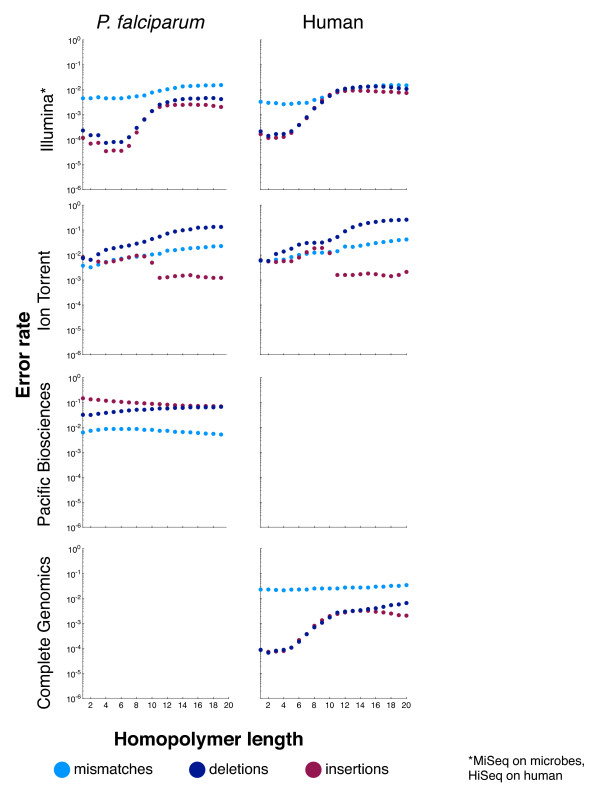
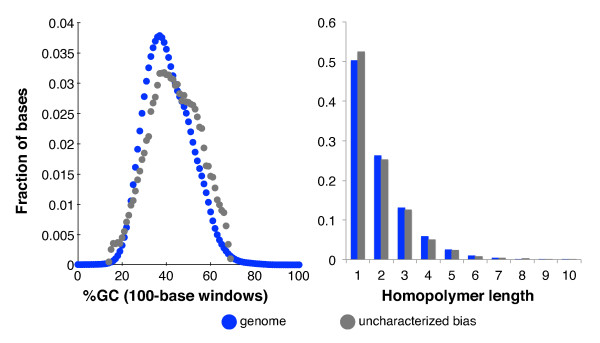
Background: DNA sequencing technologies deviate from the ideal uniform distribution of reads. These biases impair scientific and medical applications. Accordingly, we have developed computational methods for discovering, describing and measuring bias. Results: We applied these methods to the Illumina, Ion Torrent, Pacific Biosciences and Complete Genomics sequencing platforms, using data from human and from a set of microbes with diverse base compositions. As in previous work, library construction conditions significantly influence sequencing bias. Pacific Biosciences coverage levels are the least biased, followed by Illumina, although all technologies exhibit error-rate biases in high- and low-GC regions and at long homopolymer runs. The GC-rich regions prone to low coverage include a number of human promoters, so we therefore catalog 1,000 that were exceptionally resistant to sequencing. Our results indicate that combining data from two technologies can reduce coverage bias if the biases in the component technologies are complementary and of similar magnitude. Analysis of Illumina data representing 120-fold coverage of a well-studied human sample reveals that 0.20% of the autosomal genome was covered at less than 10% of the genome-wide average. Excluding locations that were similar to known bias motifs or likely due to sample-reference variations left only 0.045% of the autosomal genome with unexplained poor coverage. Conclusions: The assays presented in this paper provide a comprehensive view of sequencing bias, which can be used to drive laboratory improvements and to monitor production processes. Development guided by these assays should result in improved genome assemblies and better coverage of biologically important loci.
Overview
The claims and statistics of this paper haven’t been checked yet.
Free: it reads the open-access text and checks the first 5 claims that cite a source we can check. Create a free account to check every claim.
Integrity signals
Registry
Cites
Statistics
Figures
Verification
Claims the paper makes
The claims and statistics of this paper haven’t been checked yet.
Free: it reads the open-access text and checks the first 5 claims that cite a source we can check. Create a free account to check every claim.
Claims other papers make about this one
Each is checked against this paper’s own text: does it say what the citing paper says it does?
The source backs part of the claim, not all of it — or backs it for a different population, condition or comparison.
In the citing paper
“The limit of detection in these experiments is based on the inherent error rate of the Illumina platform (up to 0.4%), which has previously been described for genome editing experiment analyzed by NGS71–73.”
From A high-fidelity Cas9 mutant delivered as a ribonucleoprotein complex enables efficient gene editing in human hematopoietic stem and progenitor cells (2018) · cites this paper as [71]
Experimental — accuracy not yet measuredThe source backs part of the claim, not all of it — or backs it for a different population, condition or comparison.
In the citing paper
“The homopolymer can lead to low coupling efficiency in DNA synthesis (especially for G and C), and quantification of the number of identical nucleotides in DNA sequencing can also be problematic (39, 53).”
From Electrochemical DNA synthesis and sequencing on a single electrode with scalability for integrated data storage (2021) · cites this paper as [53]
Experimental — accuracy not yet measuredThe cited source says what the claim attributes to it.
In the citing paper
“GC content of individual sequences were previously found to affect PCR amplification efficiency in biological DNA15–17.”
From Quantifying Molecular Bias in DNA Data Storage (2019) · cites this paper as [15]
The cited source says what the claim attributes to it.
In the citing paper
“Although previous studies observed PCR bias in genomic biological sample amplification15–17, it remained unclear whether such bias is significant in DNA data storage.”
From Quantifying Molecular Bias in DNA Data Storage (2019) · cites this paper as [15]
The cited source says what the claim attributes to it.
In the citing paper
“Illumina sequencing was previously observed to have bias on GC-extreme sequences15,27,28, but GC content in our files did not show practically significant bias in the PCR GC bias test. Therefore, high-throughput sequencing and sample dilution are modeled using random sampling.”
From Quantifying Molecular Bias in DNA Data Storage (2019) · cites this paper as [15]
Self-check
Percentages, sums and reported differences re-computed from the paper’s own numbers.
The self-check needs the paper’s full text.
Citations
Cites
DNA sequencing with chain-terminating inhibitors
Sanger, F., Nicklen, S., & Coulson, A. R. (1977) · Proceedings of the National Academy of Sciences · doi:10.1073/pnas.74.12.5463 · Cited by 68,572
The Sequence Alignment/Map format and SAMtools
Li, H., Handsaker, B., Wysoker, A., Fennell, T., Ruan, J., Homer, N., Marth, G., Abecasis, G., Durbin, R., & 1000 Genome Project Data Processing Subgroup (2009) · Bioinformatics · doi:10.1093/bioinformatics/btp352 · Cited by 62,041
Fast and accurate short read alignment with Burrows-Wheeler transform
Li, H., & Durbin, R. (2009) · Bioinformatics · doi:10.1093/bioinformatics/btp324 · Cited by 58,607
The Genome Analysis Toolkit: A MapReduce framework for analyzing next-generation DNA sequencing data
McKenna, A., Hanna, M., Banks, E., Sivachenko, A., Cibulskis, K., Kernytsky, A., Garimella, K., Altshuler, D., Gabriel, S., Daly, M., et al. (2010) · Genome Research · doi:10.1101/gr.107524.110 · Cited by 27,895
Fast and accurate long-read alignment with Burrows-Wheeler transform.
Li, H., & Durbin, R. (2010) · Bioinformatics · doi:10.1093/bioinformatics/btp698 · Cited by 12,063 · cited 2×
“Because the default TMAP aligner [46] cannot align to references with more than 4.3 billion bases, it was necessary to use the BWA-SW aligner [47] to realign the Ion data to the diploid NA12878 reference for the error-rate comparison presented in Table S2 in Additional file 3, Figure S1 in…”
MethodInfluentialA framework for variation discovery and genotyping using next-generation DNA sequencing data
DePristo, M. A., Banks, E., Poplin, R., Garimella, K. V., Maguire, J. R., Hartl, C., Philippakis, A. A., del Angel, G., Rivas, M. A., Hanna, M., et al. (2011) · Nature Genetics · doi:10.1038/ng.806 · Cited by 11,456
A map of human genome variation from population-scale sequencing.
The 1000 Genomes Project Consortium (2010) · Nature · doi:10.1038/nature09534 · Cited by 7,877
Self-citationGenome sequencing in microfabricated high-density picolitre reactors
Margulies, M., Egholm, M., Altman, W. E., Attiya, S., Bader, J. S., Bemben, L. A., Berka, J., Braverman, M. S., Chen, Y.-J., Chen, Z., et al. (2005) · Nature · doi:10.1038/nature03959 · Cited by 7,693
Real-Time DNA Sequencing from Single Polymerase Molecules
Eid, J., Fehr, A., Gray, J., Luong, K., Lyle, J., Otto, G., Peluso, P., Rank, D., Baybayan, P., Bettman, B., et al. (2009) · Science · doi:10.1126/science.1162986 · Cited by 3,732
Accurate whole human genome sequencing using reversible terminator chemistry
Bentley, D. R., Balasubramanian, S., Swerdlow, H. P., Smith, G. P., Milton, J., Brown, C. G., Hall, K. P., Evers, D. J., Barnes, C. L., Bignell, H. R., et al. (2008) · Nature · doi:10.1038/nature07517 · Cited by 3,684
Self-citation
Research works printed but not linked: 1
- Pruitt K Brown G Tatusova T Maglott D McEntyre J, Ostell J Bethesda (MD): National Center for Biotechnology Information (US) Chapter 18: The Reference Sequence (RefSeq) Database. The NCBI Handbook [Internet] 2002 http://www.ncbi.nlm.nih.gov/books/NBK21091/
Cited by
Items 101–200 of 1,000
Meta-analysis of RNA-seq expression data across species, tissues and studies
Sudmant, P. H., Alexis, M. S., & Burge, C. B. (2015) · Genome Biology · doi:10.1186/s13059-015-0853-4 · Cited by 140
Complete vertebrate mitogenomes reveal widespread repeats and gene duplications
The Vertebrate Genomes Project Consortium, Formenti, G., Rhie, A., Balacco, J., Haase, B., Mountcastle, J., Fedrigo, O., Brown, S., Capodiferro, M. R., Al-Ajli, F. O., et al. (2021) · Genome Biology · doi:10.1186/s13059-021-02336-9 · Cited by 138
Mapping and elucidating the function of modified bases in DNA
Raiber, E., Hardisty, R. E., van Delft, P., & Balasubramanian, S. (2017) · Nature Reviews Chemistry · doi:10.1038/s41570-017-0069 · Cited by 140
van Belzen, I. A. E. M., Schönhuth, A., Kemmeren, P., & Hehir‐Kwa, J. Y. (2021) · npj Precision Oncology · doi:10.1038/s41698-021-00155-6 · Cited by 133
Mosaicism in Human Health and Disease
Thorpe, J., Osei‐Owusu, I., Avigdor, B. E., Tupler, R. G., & Pevsner, J. (2020) · Annual Review of Genetics · doi:10.1146/annurev-genet-041720-093403 · Cited by 133
Edwards, J. E., Forster, R. J., Callaghan, T. M., Dollhofer, V., Dagar, S. S., Cheng, Y., Chang, J., Kittelmann, S., Fliegerova, K., Puniya, A. K., et al. (2017) · Frontiers in Microbiology · doi:10.3389/fmicb.2017.01657 · Cited by 130
“%) content in the respective sequences and the frequent occurrence of microsatellites is likely to have led to the earlier lack of detection (Ross et al., 2013).”
BackgroundWit, P. D., Pespeni, M. H., & Palumbi, S. R. (2015) · Molecular Ecology · doi:10.1111/mec.13165 · Cited by 130
A SNaPshot of next generation sequencing for forensic SNP analysis
Daniel, R., Santos, C., Phillips, C., Fondevila, M., van Oorschot, R. A. H., Carracedo, Á., Lareu, M. V., & McNevin, D. B. (2014) · Forensic Science International Genetics · doi:10.1016/j.fsigen.2014.08.013 · Cited by 125
Genome-wide analysis of somatic noncoding mutation patterns in cancer
Dietlein, F., Wang, A. B., Fagre, C. R., Tang, A., Besselink, N. J. M., Cuppen, E. P. J. G., Li, C., Sunyaev, S. R., Neal, J. T., & Allen, E. M. V. (2022) · Science · doi:10.1126/science.abg5601 · Cited by 124
PBSIM3: a simulator for all types of PacBio and ONT long reads
Ono, Y., Hamada, M., & Asai, K. (2022) · NAR Genomics and Bioinformatics · doi:10.1093/nargab/lqac092 · Cited by 122
Review and future prospects for DNA barcoding methods in forensic palynology
Bell, K. L., Burgess, K. S., Okamoto, K., Aranda, R., & Brosi, B. J. (2015) · Forensic Science International Genetics · doi:10.1016/j.fsigen.2015.12.010 · Cited by 123
A comparative evaluation of hybrid error correction methods for error-prone long reads
Fu, S., Wang, A., & Au, K. F. (2019) · Genome Biology · doi:10.1186/s13059-018-1605-z · Cited by 119
Ebbert, M. T. W., Farrugia, S. L., Sens, J. P., Jansen-West, K., Gendron, T. F., Prudencio, M., McLaughlin, I. J., Bowman, B., Seetin, M., DeJesus-Hernandez, M., et al. (2018) · Molecular Neurodegeneration · doi:10.1186/s13024-018-0274-4 · Cited by 119
Rationally engineered Staphylococcus aureus Cas9 nucleases with high genome-wide specificity
Tan, Y., Chu, A. H. Y., Bao, S., Hoang, D. A., Kebede, F. T., Xiong, W., Ji, M., Shi, J., & Zheng, Z. (2019) · Proceedings of the National Academy of Sciences · doi:10.1073/pnas.1906843116 · Cited by 122
Tools and pipelines for BioNano data: molecule assembly pipeline and FASTA super scaffolding tool
Shelton, J. M., Coleman, M. C., Herndon, N., Lu, N., Lam, E. T., Anantharaman, T., Sheth, P., & Brown, S. J. (2015) · BMC Genomics · doi:10.1186/s12864-015-1911-8 · Cited by 118
HLA typing by next‐generation sequencing – getting closer to reality
Gabriel, C., Furst, D. E., Faé, I., Wenda, S., Zollikofer, C. P. E., Mytilineos, J., & Fischer, G. (2014) · Tissue Antigens · doi:10.1111/tan.12298 · Cited by 117
Quantifying Molecular Bias in DNA Data Storage
Chen, Y.-J., Takahashi, C. N., Organick, L., Stewart, K., Ang, S. D., Weiss, P., Peck, B., Seelig, G., Ceze, L., & Strauss, K. (2019) · doi:10.1101/566554 · Cited by 116
Lahens, N. F., Ricciotti, E., Smirnova, O., Toorens, E., Kim, E. J., Baruzzo, G., Hayer, K. E., Ganguly, T., Schug, J., & Grant, G. R. (2017) · BMC Genomics · doi:10.1186/s12864-017-4011-0 · Cited by 115
Error correction and assembly complexity of single molecule sequencing reads
Lee, H., Gurtowski, J., Yoo, S., Marcus, S., McCombie, W. R., & Schatz, M. (2014) · bioRxiv (Cold Spring Harbor Laboratory) · doi:10.1101/006395 · Cited by 113
Evaluation of the impact of Illumina error correction tools on de novo genome assembly
Heydari, M., Miclotte, G., Demeester, P., de Peer, Y. V., & Fostier, J. (2017) · BMC Bioinformatics · doi:10.1186/s12859-017-1784-8 · Cited by 113
Correcting a Single Indel/Edit for DNA-Based Data Storage: Linear-Time Encoders and Order-Optimality
Cai, K., Chee, Y. M., Gabrys, R., Kiah, H. M., & Nguyen, T. T. (2021) · IEEE Transactions on Information Theory · doi:10.1109/tit.2021.3049627 · Cited by 113
Fibre digestion by rumen microbiota — a review of recent metagenomic and metatranscriptomic studies
Terry, S. A., Badhan, A., Wang, Y., Chaves, A. V., & McAllister, T. A. (2019) · Canadian Journal of Animal Science · doi:10.1139/cjas-2019-0024 · Cited by 112
Effects of Nanoparticles on Plant Growth-Promoting Bacteria in Indian Agricultural Soil
Chavan, S., & Vigneshwaran, N. (2019) · Agronomy · doi:10.3390/agronomy9030140 · Cited by 111
Liu, B., Morrison, C. D., Johnson, C. S., Trump, D. L., Qin, M., Conroy, J., Wang, J., & Liu, S. (2013) · Oncotarget · doi:10.18632/oncotarget.1537 · Cited by 110
Physical activity, sedentary time and breast cancer risk: a Mendelian randomisation study
Dixon‐Suen, S. C., Lewis, S. J., Martin, R. M., English, D. R., Boyle, T., Giles, G. G., Michailidou, K., Bolla, M. K., Wang, Q., Dennis, J., et al. (2022) · British Journal of Sports Medicine · doi:10.1136/bjsports-2021-105132 · Cited by 107
Systematic discovery of uncharacterized transcription factors in Escherichia coli K-12 MG1655
Gao, Y., Yurkovich, J. T., Seo, S. W., Kabimoldayev, I., Dräger, A., Chen, K., Sastry, A. V., Fang, X. D., Mih, N., Yang, L., et al. (2018) · Nucleic Acids Research · doi:10.1093/nar/gky752 · Cited by 107
Kosugi, S., Hirakawa, H., & Tabata, S. (2015) · Bioinformatics · doi:10.1093/bioinformatics/btv465 · Cited by 106
Analysis of the genetic diversity of influenza A viruses using next-generation DNA sequencing
den Hoecke, S. V., Verhelst, J., Vuylsteke, M., & Saelens, X. (2015) · BMC Genomics · doi:10.1186/s12864-015-1284-z · Cited by 106
Radical remodeling of the Y chromosome in a recent radiation of malaria mosquitoes
Hall, A. B., Papathanos, P. A., Sharma, A., Cheng, C., Akbari, O. S., Assour, L. A., Bergman, N. H., Cagnetti, A., Crisanti, A., Dottorini, T., et al. (2016) · Proceedings of the National Academy of Sciences · doi:10.1073/pnas.1525164113 · Cited by 105
Dynamic, adaptive sampling during nanopore sequencing using Bayesian experimental design
Weilguny, L., Maio, N. D., Munro, R., Manser, C., Birney, E., Loose, M., & Goldman, N. (2023) · Nature Biotechnology · doi:10.1038/s41587-022-01580-z · Cited by 105
Current state‐of‐art of STR sequencing in forensic genetics
Alonso, A., Barrio, P. A., Muller, P. H., Köcher, S., Berger, B., Martín, P., Bodner, M., Willuweit, S., Parson, W., Roewer, L., et al. (2018) · Electrophoresis · doi:10.1002/elps.201800030 · Cited by 104
Buschmann, D., Haberberger, A., Kirchner, B., Spornraft, M., Riedmaier, I., Schelling, G., & Pfaffl, M. W. (2016) · Nucleic Acids Research · doi:10.1093/nar/gkw545 · Cited by 103
Khost, D. E., Eickbush, D. G., & Larracuente, A. M. (2017) · Genome Research · doi:10.1101/gr.213512.116 · Cited by 103
Enhanced sequencing coverage with digital droplet multiple displacement amplification
Sidore, A. M., Lan, F., Lim, S. W., & Abate, A. R. (2016) · Nucleic Acids Research · doi:10.1093/nar/gkv1493 · Cited by 102
Capacity-Approaching Constrained Codes With Error Correction for DNA-Based Data Storage
Nguyen, T. T., Cai, K., Immink, K. A. S., & Kiah, H. M. (2021) · IEEE Transactions on Information Theory · doi:10.1109/tit.2021.3066430 · Cited by 102
The Contribution of the Human Oral Microbiome to Oral Disease: A Review
Morrison, A. G., Sarkar, S., Umar, S., Lee, S. T. M., & Thomas, S. M. (2023) · Microorganisms · doi:10.3390/microorganisms11020318 · Cited by 101
Tsui, N. B. Y., Jiang, P., Wong, Y. F., Leung, T. Y., Chan, K. C. A., Chiu, R. W. K., Sun, H., & Lo, Y. M. D. (2014) · Clinical Chemistry · doi:10.1373/clinchem.2014.221648 · Cited by 98
Vining, K. J., Johnson, S. R., Ahkami, A. H., Lange, I., Parrish, A. N., Trapp, S., Croteau, R., Straub, S. C. K., Pandelova, I., & Lange, B. M. (2016) · Molecular Plant · doi:10.1016/j.molp.2016.10.018 · Cited by 98
The performance of genome sequencing as a first-tier test for neurodevelopmental disorders
van der Sanden, B. P. G. H., Schobers, G., Corominas Galbany, J., Koolen, D. A., Sinnema, M., van Reeuwijk, J., Stumpel, C. T. R. M., Kleefstra, T., de Vries, B. B. A., Ruiterkamp-Versteeg, M., et al. (2023) · European Journal of Human Genetics · doi:10.1038/s41431-022-01185-9 · Cited by 97
Circulating-tumor DNA as an early detection and diagnostic tool
Butler, T. M., Spellman, P. T., & Gray, J. W. (2017) · Current Opinion in Genetics & Development · doi:10.1016/j.gde.2016.12.003 · Cited by 97
Population structure of mitochondrial genomes in Saccharomyces cerevisiae
Wolters, J. F., Chiu, K., & Fiumera, H. L. (2015) · BMC Genomics · doi:10.1186/s12864-015-1664-4 · Cited by 97
Salk, J. J., & Kennedy, S. R. (2019) · Environmental and Molecular Mutagenesis · doi:10.1002/em.22342 · Cited by 94
Pécuchet, N., Rozenholc, Y., Zonta, E., Pietrasz, D., Didelot, A., Combe, P., Gibault, L., Bachet, J., Taly, V., Fabre, E., et al. (2016) · Clinical Chemistry · doi:10.1373/clinchem.2016.258236 · Cited by 94
Ha, J., Shim, S., Lee, T., Kang, Y. J., Hwang, W. J., Jeong, H., Laosatit, K., Lee, J., Kim, S. K., Satyawan, D., et al. (2018) · Plant Biotechnology Journal · doi:10.1111/pbi.12995 · Cited by 95
Next-generation DNA damage sequencing
Mingard, C., Wu, J., McKeague, M., & Sturla, S. J. (2020) · Chemical Society Reviews · doi:10.1039/d0cs00647e · Cited by 92
Humphreys, C. M., McLean, S., Schatschneider, S., Millat, T., Henstra, A. M., Annan, F. J., Breitkopf, R., Pander, B., Piatek, P., Rowe, P., et al. (2015) · BMC Genomics · doi:10.1186/s12864-015-2287-5 · Cited by 92
The GIAB genomic stratifications resource for human reference genomes
Dwarshuis, N. J., Kalra, D., McDaniel, J., Sanio, P., Jerez, P. Á., Jadhav, B., Huang, W., Mondal, R., Busby, B., Olson, N. D., et al. (2024) · Nature Communications · doi:10.1038/s41467-024-53260-y · Cited by 92
Benchmarking the empirical accuracy of short-read sequencing across the M. tuberculosis genome
Marin, M. G., Vargas, R., Harris, M. A., Jeffrey, B. M., Epperson, L. E., Durbin, D., Strong, M., Salfinger, M., Iqbal, Z., Akhundova, İ., et al. (2022) · Bioinformatics · doi:10.1093/bioinformatics/btac023 · Cited by 93
Patterns of sequencing coverage bias revealed by ultra-deep sequencing of vertebrate mitochondria
Ekblom, R., Smeds, L., & Ellegren, H. (2014) · BMC Genomics · doi:10.1186/1471-2164-15-467 · Cited by 90
Spooner, D. M., Ruess, H., Iorizzo, M., Senalik, D. A., & Simon, P. W. (2017) · American Journal of Botany · doi:10.3732/ajb.1600415 · Cited by 90
Mareschal, S., Dubois, S., Viailly, P., Bertrand, P., Bohers, E., Maingonnat, C., Jaïs, J., Tesson, B., Ruminy, P., Peyrouze, P., et al. (2016) · Genes, Chromosomes and Cancer · doi:10.1002/gcc.22328 · Cited by 89
Dunn, M. R., Otto, C., Fenton, K. E., & Chaput, J. C. (2016) · ACS Chemical Biology · doi:10.1021/acschembio.5b00949 · Cited by 89
Targeted next generation sequencing for molecular diagnosis of Usher syndrome
Aparisi, M. J., Aller, E., Fuster‐García, C., García‐García, G., Rodrigo, R., Vázquez‐Manrique, R. P., Blanco‐Kelly, F., Ayuso, C., Roux, A., Jaijo, T., et al. (2014) · Orphanet Journal of Rare Diseases · doi:10.1186/s13023-014-0168-7 · Cited by 89
Krishnakumar, R., Sinha, A., Bird, S. W., Jayamohan, H., Edwards, H. S., Schoeniger, J. S., Patel, K. D., Branda, S. S., & Bartsch, M. S. (2018) · Scientific Reports · doi:10.1038/s41598-018-21484-w · Cited by 89
Egorov, E. S., Merzlyak, E. M., Shelenkov, A. A., Britanova, O. V., Sharonov, G. V., Staroverov, D. B., Bolotin, D. A., Davydov, A. N., Barsova, E., Lebedev, Y. B., et al. (2015) · The Journal of Immunology · doi:10.4049/jimmunol.1500215 · Cited by 87
Improved contiguity of the threespine stickleback genome using long-read sequencing
Nath, S., Shaw, D. E., & White, M. A. (2021) · G3 Genes Genomes Genetics · doi:10.1093/g3journal/jkab007 · Cited by 88
Sreedasyam, A., Plott, C., Hossain, M. S., Lovell, J. T., Grimwood, J., Jenkins, J. W., Daum, C. G., Barry, K., Carlson, J. W., Shu, S., et al. (2023) · Nucleic Acids Research · doi:10.1093/nar/gkad616 · Cited by 86
Mutations in Global Regulators Lead to Metabolic Selection during Adaptation to Complex Environments
Saxer, G., Krepps, M. D., Merkley, E. D., Ansong, C. K., Kaiser, B. L. D., Valovska, M.-T., Ristic, N., Yeh, P. T., Prakash, V. P., Leiser, O. P., et al. (2014) · PLoS Genetics · doi:10.1371/journal.pgen.1004872 · Cited by 87
Vembar, S. S., Seetin, M. G., Lambert, C. C., Nattestad, M., Schatz, M. C., Baybayan, P. A., Scherf, A., & Smith, M. L. (2016) · DNA Research · doi:10.1093/dnares/dsw022 · Cited by 87
Bead-linked transposomes enable a normalization-free workflow for NGS library preparation
Bruinsma, S., Burgess, J., Schlingman, D. J., Czyż, A., Morrell, N., Ballenger, C., Meinholz, H., Brady, L., Khanna, A., Freeberg, L., et al. (2018) · BMC Genomics · doi:10.1186/s12864-018-5096-9 · Cited by 86
Recovery of small plasmid sequences via Oxford Nanopore sequencing
Wick, R. R., Judd, L. M., Wyres, K. L., & Holt, K. E. (2021) · Microbial Genomics · doi:10.1099/mgen.0.000631 · Cited by 86
Lin, Y., Xie, M., Lau, H. C.-H., Zeng, R., Zhang, R., Wang, L., Li, Q., Wang, Y., Chen, D., Jiang, L., et al. (2024) · Med · doi:10.1016/j.medj.2024.10.007 · Cited by 83
Evaluation of tools for long read RNA-seq splice-aware alignment
Križanović, K., Echchiki, A., Roux, J., & Šikić, M. (2017) · Bioinformatics · doi:10.1093/bioinformatics/btx668 · Cited by 88
Nuclear DNA from two early Neandertals reveals 80,000 years of genetic continuity in Europe
Peyrégne, S., Slon, V., Mafessoni, F., de Filippo, C., Hajdinjak, M., Nagel, S., Nickel, B., Essel, E., Le Cabec, A., Wehrberger, K., et al. (2019) · Science Advances · doi:10.1126/sciadv.aaw5873 · Cited by 82
Leichty, A. R., & Brisson, D. (2014) · Genetics · doi:10.1534/genetics.114.165498 · Cited by 82
A Benchmark Study on Error Assessment and Quality Control of CCS Reads Derived from the PacBio RS
Jiao, X. (2013) · Journal of Data Mining in Genomics & Proteomics · doi:10.4172/2153-0602.1000136 · Cited by 81
Hron, T., Pajer, P., Pačes, J., Bartůněk, P., & Elleder, D. (2015) · Genome Biology · doi:10.1186/s13059-015-0724-z · Cited by 79
“GC-rich genes are extremely hard to amplify by PCR, a key step in NGS library preparation [7, 8].”
Xu, C., Ma, B., Gao, Z., Dong, X., Zhao, C., & Liu, H. (2021) · Science Advances · doi:10.1126/sciadv.abk0100 · Cited by 79
“The homopolymer can lead to low coupling efficiency in DNA synthesis (especially for G and C), and quantification of the number of iden tical nucleotides in DNA sequencing can also be problematic (39, 53).”
BackgroundConstruction of Bio-Constrained Code for DNA Data Storage
Wang, Y., Noor‐A‐Rahim, M., Gunawan, E., Guan, Y. L., & Poh, C. L. (2019) · IEEE Communications Letters · doi:10.1109/lcomm.2019.2912572 · Cited by 78
Genome-Wide Analysis Reveals Coating of the Mitochondrial Genome by TFAM
Wang, Y. E., Marinov, G. K., Wold, B. J., & Chan, D. C. (2013) · PLoS ONE · doi:10.1371/journal.pone.0074513 · Cited by 77
Impact of sequencing depth and technology on de novo RNA-Seq assembly
Patterson, J., Carpenter, E. J., Zhu, Z., An, D., Liang, X., Geng, C., Drmanac, R., & Wong, G. K. (2019) · BMC Genomics · doi:10.1186/s12864-019-5965-x · Cited by 76
Goldfeder, R. L., Wall, D. P., Khoury, M. J., Ioannidis, J. P. A., & Ashley, E. A. (2017) · American Journal of Epidemiology · doi:10.1093/aje/kww224 · Cited by 75
An improved genome reference for the African cichlid, Metriaclima zebra
Conte, M. A., & Kocher, T. D. (2015) · BMC Genomics · doi:10.1186/s12864-015-1930-5 · Cited by 75
Genomics and transcriptomics in drug discovery
Dopazo, J. (2013) · Drug Discovery Today · doi:10.1016/j.drudis.2013.06.003 · Cited by 74
InFusion: Advancing Discovery of Fusion Genes and Chimeric Transcripts from Deep RNA-Sequencing Data
Okonechnikov, K., Imai‐Matsushima, A., Paul, L., Seitz, A., Meyer, T. F., & García-Alcalde, F. (2016) · PLoS ONE · doi:10.1371/journal.pone.0167417 · Cited by 73
Design of Capacity-Approaching Constrained Codes for DNA-Based Storage Systems
Immink, K. A. S., & Cai, K. (2017) · IEEE Communications Letters · doi:10.1109/lcomm.2017.2775608 · Cited by 73
Using Large Datasets to Understand Nanotechnology
Paunovska, K., Loughrey, D., Sago, C. D., Langer, R., & Dahlman, J. E. (2019) · Advanced Materials · doi:10.1002/adma.201902798 · Cited by 74
Larsen, P. A., Harris, R. A., Liu, Y., Murali, S. C., Campbell, C. R., Brown, A. D., Sullivan, B. A., Shelton, J., Brown, S. J., Raveendran, M., et al. (2017) · BMC Biology · doi:10.1186/s12915-017-0439-6 · Cited by 72
Scaffolding of a bacterial genome using MinION nanopore sequencing
Karlsson, E., Lärkeryd, A., Sjödin, A., Forsman, M., & Stenberg, P. (2015) · Scientific Reports · doi:10.1038/srep11996 · Cited by 71
Bergeron, L. A., Besenbacher, S., Turner, T. N., Versoza, C. J., Wang, R. J., Price, A. L., Armstrong, E. E., Riera, M., Carlson, J., Chen, H., et al. (2022) · eLife · doi:10.7554/elife.73577 · Cited by 71
Current and Future Methods for mRNA Analysis: A Drive Toward Single Molecule Sequencing
Bayega, A., Fahiminiya, S., Oikonomopoulos, S., & Ragoussis, J. (2018) · Methods in molecular biology · doi:10.1007/978-1-4939-7834-2_11 · Cited by 70
Properties and Constructions of Constrained Codes for DNA-Based Data Storage
Immink, K. A. S., & Cai, K. (2020) · IEEE Access · doi:10.1109/access.2020.2980036 · Cited by 70
Cornman, R. S., Otto, C. R. V., Iwanowicz, D. D., & Pettis, J. S. (2015) · PLoS ONE · doi:10.1371/journal.pone.0145365 · Cited by 70
Sieber, R. N., Larsen, A. R., Urth, T. R., Iversen, S., Møller, C. H., Skov, R. L., Larsen, J., & Stegger, M. (2019) · Scientific Reports · doi:10.1038/s41598-019-55086-x · Cited by 69
Ros‐Freixedes, R., Whalen, A., Chen, C.-Y., Gorjanc, G., Herring, W. O., Mileham, A. J., & Hickey, J. M. (2020) · Genetics Selection Evolution · doi:10.1186/s12711-020-00536-8 · Cited by 68
McFarland, K. N., Liu, J., Landrian, I., Godiska, R., Shanker, S., Yu, F., Farmerie, W. G., & Ashizawa, T. (2015) · PLoS ONE · doi:10.1371/journal.pone.0135906 · Cited by 69
Tsai, Y., Greenberg, D., Powell, J., Höijer, I., Ameur, A., Strahl, M., Ellis, E., Jonasson, I., Pinto, R. M., Wheeler, V. C., et al. (2017) · bioRxiv (Cold Spring Harbor Laboratory) · doi:10.1101/203919 · Cited by 67
Uncertainties in synthetic DNA-based data storage
Xu, C., Zhao, C., Ma, B., & Liu, H. (2021) · Nucleic Acids Research · doi:10.1093/nar/gkab230 · Cited by 68
Ros‐Freixedes, R., Battagin, M., Johnsson, M., Gorjanc, G., Mileham, A. J., Rounsley, S., & Hickey, J. M. (2018) · Genetics Selection Evolution · doi:10.1186/s12711-018-0436-4 · Cited by 68
GenomeTrakr proficiency testing for foodborne pathogen surveillance: an exercise from 2015
Timme, R., Rand, H. A., Leon, M. S., Hoffmann, M., Strain, E. A., Allard, M. W., Roberson, D., & Baugher, J. D. (2018) · Microbial Genomics · doi:10.1099/mgen.0.000185 · Cited by 66
Tyler, A. D., Christianson, S., Knox, N., Mabon, P., Wolfe, J. N., Domselaar, G. V., Graham, M., & Sharma, M. K. (2016) · PLoS ONE · doi:10.1371/journal.pone.0148676 · Cited by 67
Marino, M. E., Mironovich, M. A., Ineck, N. E., Citino, S. B., Emerson, J. A., Maggs, D. J., Coghill, L. M., Dubovi, E. J., Turner, R. C., Carter, R. T., et al. (2021) · Viruses · doi:10.3390/v13112307 · Cited by 64
A draft genome assembly of the solar-powered sea slug Elysia chlorotica
Cai, H., Li, Q., Fang, X., Ji, L., Curtis, N. E., Altenburger, A., Shibata, T., Feng, M., Maeda, T., Schwartz, J. A., et al. (2019) · Scientific Data · doi:10.1038/sdata.2019.22 · Cited by 64
de Beer, T. A. P., Laskowski, R. A., Parks, S. L., Sipos, B., Goldman, N., & Thornton, J. M. (2013) · PLoS Computational Biology · doi:10.1371/journal.pcbi.1003382 · Cited by 63
Johri, S., Solanki, J. B., Cantu, A., Fellows, S. R., Edwards, R. A., Moreno, I., Vyas, A., & Dinsdale, E. A. (2019) · Scientific Reports · doi:10.1038/s41598-019-40940-9 · Cited by 63
Quantifying and comparing bacterial growth dynamics in multiple metagenomic samples
Gao, Y., & Li, H. (2018) · Nature Methods · doi:10.1038/s41592-018-0182-0 · Cited by 63
Analyses of 202 plastid genomes elucidate the phylogeny of Solanum section Petota
Huang, B., Ruess, H., Liang, Q., Colleoni, C., & Spooner, D. M. (2019) · Scientific Reports · doi:10.1038/s41598-019-40790-5 · Cited by 62
Raine, A., Manlig, E., Wahlberg, P., Syvänen, A., & Nordlund, J. (2016) · Nucleic Acids Research · doi:10.1093/nar/gkw1110 · Cited by 61
Zhang, Y., & Liu, W. (2019) · Critical Reviews in Environmental Science and Technology · doi:10.1080/10643389.2019.1571351 · Cited by 60
ASAP: Accelerated Short-Read Alignment on Programmable Hardware
Banerjee, S. S., El-Hadedy, M., Lim, J. B., Kalbarczyk, Z., Chen, D., Lumetta, S. S., & Iyer, R. K. (2018) · IEEE Transactions on Computers · doi:10.1109/tc.2018.2875733 · Cited by 60
Metadata
- Authors
- Ross, M. G., Russ, C., Costello, M., Hollinger, A., Lennon, N. J., Hegarty, R., Nusbaum, C., & Jaffe, D. B.
- Affiliations
- Broad Institute (US)
- Corresponding author
- Ross, Michael G
- Venue
- Genome Biology
- Published
- 2013-05-29
- Volume
- 14
- Issue
- 5
- Pages
- R51-R51
- ISSN
- 1465-6906 (ISSN-L)
- 1474-760X
- PMC
- PMC4053816
- OpenAlex
- W1971584645
- Semantic Scholar
- 8c77c718563b5e823feac3a4e0b843c75457f5fd
- Cited by
- 909
- References
- 49
- Citations by year
- 2026: 36 · 2025: 49 · 2024: 60 · 2023: 61 · 2022: 59 · 2021: 85 · 2020: 75 · 2019: 76 · 2018: 71 · 2017: 83 · 2016: 105 · 2015: 83 · 2014: 60 · 2013: 6
- FWCI
- 37.71
- Type
- journal article
- Language
- en
- Open access
- gold
- doi.org
- Licence
- cc-by
- creativecommons.org/licenses/by/2.0/ (tdm)
- creativecommons.org/licenses/by/2.0/ (vor)
- Locations
- Genome biology (publishedVersion, cc-by)
- Europe PMC (PubMed Central) (publishedVersion, cc-by)
- PubMed Central (publishedVersion, cc-by)
- PubMed (publishedVersion)
- Funders
- U.S. Department of Health and Human Services (HHSN272200900018C)
- Broad Institute (U54HG003067)
- National Institutes of Health (HHSN272200900018C)
- National Human Genome Research Institute (U54HG003067, R01HG003474)
- National Institute of Allergy and Infectious Diseases (HHSN272200900018C)
- Topics
- Life Sciences › Biochemistry, Genetics and Molecular Biology › Molecular Biology › Genomics and Phylogenetic Studies
- Life Sciences › Biochemistry, Genetics and Molecular Biology › Molecular Biology › Fractal and DNA sequence analysis
- Life Sciences › Biochemistry, Genetics and Molecular Biology › Genetics › Genomic variations and chromosomal abnormalities
- Keywords
- sequencing bias, GC content bias, human promoters, library construction, genome assembly, PacBio, Illumina, Ion Torrent, microbial genomes
- MeSH terms
- Algorithms, Base Composition, Humans, Promoter Regions, Genetic, Genome, Human, Genome, Bacterial, Sequence Analysis, DNA, Genome, Protozoan, Genomics
About these checks
Registry, retraction, Cites and statistics results are computed, not judged, with one exception: a printed reference that no index lists is read once by a model before it counts as a citation error. Claims are extracted by a model and kept only when their quote appears verbatim in the text; each cited source is then checked, with a model’s help, for whether it says what the claim relies on. Those verdicts can be wrong — read the claim’s quote and the cited source before relying on one.
Statistics and arithmetic are recomputed, not judged.
Confidence bands are shown only for fields calibrated on our annotated test set. None is calibrated yet, so no band is shown.
What counts as a claim ›How we measure confidence ›How we check this ›
Are you an author, or do you see a problem with this page? Request a review
Data sources
Bibliographic data: Semantic Scholar, OpenAlex, Crossref.
Contains information from the Semantic Scholar Academic Graph Datasets, made available under the ODC Attribution License (ODC-BY 1.0).
Semantic Scholar’s data is described in: Kinney, R., et al. (2023). The Semantic Scholar Open Data Platform. arXiv:2301.10140.
