

Gene family expansions and contractions are associated with host range in plant pathogens of the genus Colletotrichum
Open accessThe DOI matches its Crossref record; 107 of the 108 references it cites were found in a registry or an index.
Abstract
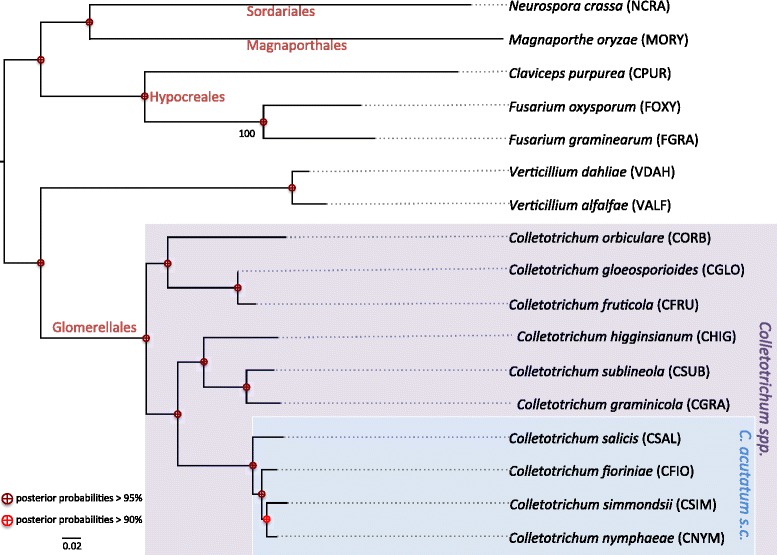
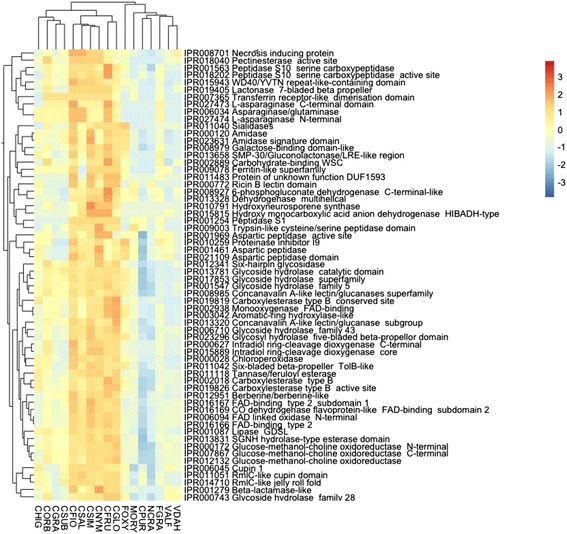
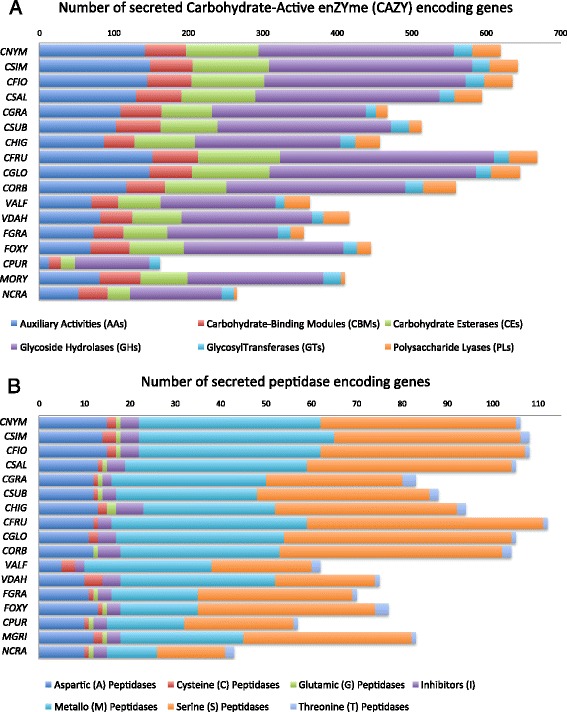
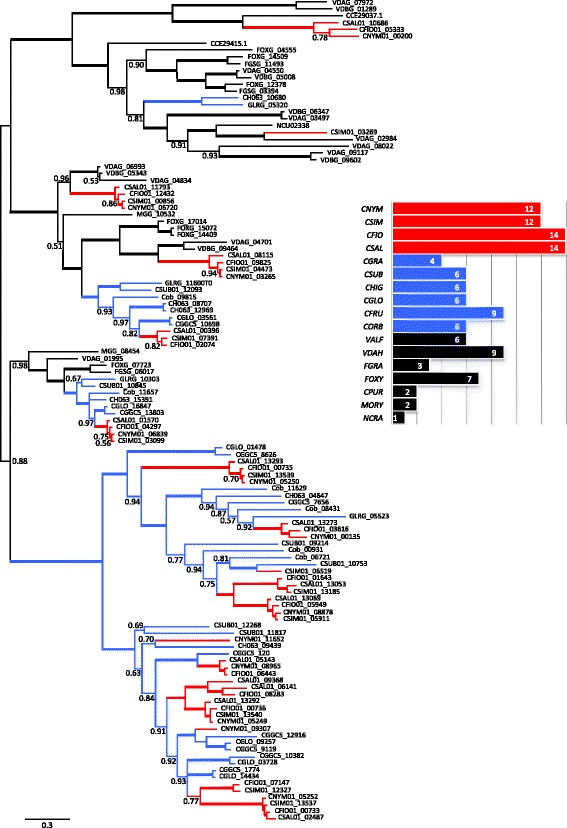
BACKGROUND: Many species belonging to the genus Colletotrichum cause anthracnose disease on a wide range of plant species. In addition to their economic impact, the genus Colletotrichum is a useful model for the study of the evolution of host specificity, speciation and reproductive behaviors. Genome projects of Colletotrichum species have already opened a new era for studying the evolution of pathogenesis in fungi. RESULTS: We sequenced and annotated the genomes of four strains in the Colletotrichum acutatum species complex (CAsc), a clade of broad host range pathogens within the genus. The four CAsc proteomes and secretomes along with those representing an additional 13 species (six Colletotrichum spp. and seven other Sordariomycetes) were classified into protein families using a variety of tools. Hierarchical clustering of gene family and functional domain assignments, and phylogenetic analyses revealed lineage specific losses of carbohydrate-active enzymes (CAZymes) and proteases encoding genes in Colletotrichum species that have narrow host range as well as duplications of these families in the CAsc. We also found a lineage specific expansion of necrosis and ethylene-inducing peptide 1 (Nep1)-like protein (NLPs) families within the CAsc. CONCLUSIONS: This study illustrates the plasticity of Colletotrichum genomes, and shows that major changes in host range are associated with relatively recent changes in gene content.
Overview
The claims and statistics of this paper haven’t been checked yet.
Free: it reads the open-access text and checks the first 5 claims that cite a source we can check. Create a free account to check every claim.
Integrity signals
Registry
Cites
Statistics
Figures
Verification
Claims the paper makes
The claims and statistics of this paper haven’t been checked yet.
Free: it reads the open-access text and checks the first 5 claims that cite a source we can check. Create a free account to check every claim.
Claims other papers make about this one
Each is checked against this paper’s own text: does it say what the citing paper says it does?
The cited source says what the claim attributes to it.
In the citing paper
“Comparative analyses of these genomes have revealed that Colletotrichum species may tailor their plant cell wall degrading enzymes and proteinases according to their lifestyle (O'Connell et al. 2012, Baroncelli et al. 2016, Hacquard et al. 2016).”
From Colletotrichum: lifestyles, biology, morpho-species, species complexes and accepted species (2021) · cites this paper as Baroncelli et al. 2016
The cited source says what the claim attributes to it.
In the citing paper
“Gene family contractions are evident in Colletotrichum and are associated with narrow host ranges (Baroncelli et al. 2016), suggesting that host-specificity may be linked to gene function loss (Stajich 2017).”
From Colletotrichum: lifestyles, biology, morpho-species, species complexes and accepted species (2021) · cites this paper as Baroncelli et al. 2016
The cited source says what the claim attributes to it.
In the citing paper
“Whole-genome sequence data (Baroncelli et al. 2016) and pathogenicity studies for this species are available.”
From Colletotrichum: lifestyles, biology, morpho-species, species complexes and accepted species (2021) · cites this paper as Baroncelli et al. 2016
The cited source says what the claim attributes to it.
In the citing paper
“Whole-genome sequence data of C. nymphaeae is available (Baroncelli et al. 2016).”
From Colletotrichum: lifestyles, biology, morpho-species, species complexes and accepted species (2021) · cites this paper as Baroncelli et al. 2016
Self-check
Percentages, sums and reported differences re-computed from the paper’s own numbers.
The self-check needs the paper’s full text.
Citations
Cites
Basic local alignment search tool
Altschul, S. F., Gish, W., Miller, W., Myers, E. W., & Lipman, D. J. (1990) · Journal of Molecular Biology · doi:10.1006/jmbi.1990.9999 · Cited by 98,669
MEGA6: Molecular Evolutionary Genetics Analysis Version 6.0
Tamura, K., Stecher, G., Peterson, D., Filipski, A., & Kumar, S. (2013) · Molecular Biology and Evolution · doi:10.1093/molbev/mst197 · Cited by 47,205
MAFFT Multiple Sequence Alignment Software Version 7: Improvements in Performance and Usability
Katoh, K., & Standley, D. M. (2013) · Molecular Biology and Evolution · doi:10.1093/molbev/mst010 · Cited by 46,209
MrBayes 3: Bayesian phylogenetic inference under mixed models
Ronquist, F., & Huelsenbeck, J. P. (2003) · Bioinformatics · doi:10.1093/bioinformatics/btg180 · Cited by 29,077
BUSCO: assessing genome assembly and annotation completeness with single-copy orthologs
Simão, F. A., Waterhouse, R. M., Ioannidis, P., Kriventseva, E. V., & Zdobnov, E. M. (2015) · Bioinformatics · doi:10.1093/bioinformatics/btv351 · Cited by 13,344
Velvet: Algorithms for de novo short read assembly using de Bruijn graphs
Zerbino, D. R., & Birney, E. (2008) · Genome Research · doi:10.1101/gr.074492.107 · Cited by 9,491
InterProScan 5: genome-scale protein function classification
Jones, P., Binns, D., Chang, H.-Y., Fraser, M., Li, W., McAnulla, C., McWilliam, H., Maslen, J., Mitchell, A., Nuka, G., et al. (2014) · Bioinformatics · doi:10.1093/bioinformatics/btu031 · Cited by 9,301
The Carbohydrate-Active EnZymes database (CAZy): an expert resource for Glycogenomics
Cantarel, B. L., Coutinho, P. M., Rancurel, C., Bernard, T., Lombard, V., & Henrissat, B. (2009) · Nucleic Acids Research · doi:10.1093/nar/gkn663 · Cited by 5,972
The Top 10 fungal pathogens in molecular plant pathology
DEAN, R., VAN KAN, J. A. L., PRETORIUS, Z. A., HAMMOND‐KOSACK, K. E., DI PIETRO, A., SPANU, P. D., RUDD, J. J., DICKMAN, M., KAHMANN, R., ELLIS, J., et al. (2012) · Molecular Plant Pathology · doi:10.1111/j.1364-3703.2011.00783.x · Cited by 4,692
A fast, lock-free approach for efficient parallel counting of occurrences of k -mers
Marçais, G., & Kingsford, C. (2011) · Bioinformatics · doi:10.1093/bioinformatics/btr011 · Cited by 4,661 · cited 1×
“3 [31].”
WoLF PSORT: protein localization predictor
Horton, P., Park, K.-J., Obayashi, T., Fujita, N., Harada, H., Adams-Collier, C. J., & Nakai, K. (2007) · Nucleic Acids Research · doi:10.1093/nar/gkm259 · Cited by 4,127
The Universal Protein Resource (UniProt)
Bairoch, A. (2004) · Nucleic Acids Research · doi:10.1093/nar/gki070 · Cited by 3,774
Emms, D. M., & Kelly, S. (2015) · Genome Biology · doi:10.1186/s13059-015-0721-2 · Cited by 3,408 · cited 1×
“4 [39] and the clusters were analysed with Mirlo (https:// github.”
Korf, I. (2004) · BMC Bioinformatics · doi:10.1186/1471-2105-5-59 · Cited by 3,192
ProtTest: selection of best-fit models of protein evolution
Abascal, F., Zardoya, R., & Posada, D. (2005) · Bioinformatics · doi:10.1093/bioinformatics/bti263 · Cited by 3,063 · cited 1×
“4 [40].”
AUGUSTUS: ab initio prediction of alternative transcripts
Stanke, M., Keller, O., Gunduz, I., Hayes, A., Waack, S., & Morgenstern, B. (2006) · Nucleic Acids Research · doi:10.1093/nar/gkl200 · Cited by 2,829
Holt, C., & Yandell, M. (2011) · BMC Bioinformatics · doi:10.1186/1471-2105-12-491 · Cited by 2,118
Medema, M. H., Blin, K., Cimermancic, P., de Jager, V., Zakrzewski, P., Fischbach, M. A., Weber, T., Takano, E., & Breitling, R. (2011) · Nucleic Acids Research · doi:10.1093/nar/gkr466 · Cited by 2,006
dbCAN: a web resource for automated carbohydrate-active enzyme annotation
Yin, Y., Mao, X., Yang, J., Chen, X., Mao, F., & Xu, Y. (2012) · Nucleic Acids Research · doi:10.1093/nar/gks479 · Cited by 1,793
Comparative genomics reveals mobile pathogenicity chromosomes in Fusarium
Ma, L.-J., van der Does, H. C., Borkovich, K. A., Coleman, J. J., Daboussi, M.-J., Di Pietro, A., Dufresne, M., Freitag, M., Grabherr, M., Henrissat, B., et al. (2010) · Nature · doi:10.1038/nature08850 · Cited by 1,772
The genome sequence of the filamentous fungus Neurospora crassa
Galagan, J. E., Calvo, S. E., Borkovich, K. A., Selker, E. U., Read, N. D., Jaffe, D., FitzHugh, W., Ma, L.-J., Smirnov, S., Purcell, S., et al. (2003) · Nature · doi:10.1038/nature01554 · Cited by 1,670
The genome sequence of the rice blast fungus Magnaporthe grisea
Dean, R. A., Talbot, N. J., Ebbole, D. J., Farman, M. L., Mitchell, T. K., Orbach, M. J., Thon, M., Kulkarni, R., Xu, J.-R., Pan, H., et al. (2005) · Nature · doi:10.1038/nature03449 · Cited by 1,660
Self-citationThe Colletotrichum gloeosporioides species complex
Weir, B. S., Johnston, P. R., & Damm, U. (2012) · Studies in Mycology · doi:10.3114/sim0011 · Cited by 1,646 · cited 1×
“orbiculare complex includes species with a narrow host range [8–11].”
MEROPS: the database of proteolytic enzymes, their substrates and inhibitors
Rawlings, N. D., Barrett, A. J., & Bateman, A. (2012) · Nucleic Acids Research · doi:10.1093/nar/gkr987 · Cited by 1,544
Expansion of the enzymatic repertoire of the CAZy database to integrate auxiliary redox enzymes
Levasseur, A., Drula, E., Lombard, V., Coutinho, P. M., & Henrissat, B. (2013) · Biotechnology for Biofuels · doi:10.1186/1754-6834-6-41 · Cited by 1,326
A NEW GENERATION OF HOMOLOGY SEARCH TOOLS BASED ON PROBABILISTIC INFERENCE
EDDY, S. R. (2009) · Genome Informatics 2009 · doi:10.1142/9781848165632_0019 · Cited by 1,285
The Universal Protein Resource (UniProt) in 2010
The UniProt Consortium (2010) · Nucleic Acids Research · doi:10.1093/nar/gkp846 · Cited by 1,257
Fungal Effectors and Plant Susceptibility
Lo Presti, L., Lanver, D., Schweizer, G., Tanaka, S., Liang, L., Tollot, M., Zuccaro, A., Reissmann, S., & Kahmann, R. (2015) · Annual Review of Plant Biology · doi:10.1146/annurev-arplant-043014-114623 · Cited by 1,249
Colletotrichum – current status and future directions
Cannon, P. F., Damm, U., Johnston, P. R., & Weir, B. S. (2012) · Studies in Mycology · doi:10.3114/sim0014 · Cited by 1,105 · cited 5×
“What is remarkable is the existence of plant pathogens manifesting these host range categories in the same phylogenetic lineage or different lineages within a single genus as exemplified by the globally important fungal genus Colletotrichum [1, 2].”
InfluentialO'Connell, R. J., Thon, M. R., Hacquard, S., Amyotte, S. G., Kleemann, J., Torres, M. F., Damm, U., Buiate, E. A., Epstein, L., Alkan, N., et al. (2012) · Nature Genetics · doi:10.1038/ng.2372 · Cited by 1,047 · cited 6×
“reveals low activity of DMATS [17, 67] with few highly active of C.”
InfluentialSelf-citationThe Colletotrichum acutatum species complex
Damm, U., Cannon, P. F., Woudenberg, J. H. C., & Crous, P. W. (2012) · Studies in Mycology · doi:10.3114/sim0010 · Cited by 979 · cited 2×
“The strain has been nominated as the holotype of the species [5].”
Comparative analysis of fungal genomes reveals different plant cell wall degrading capacity in fungi
Zhao, Z., Liu, H., Wang, C., & Xu, J.-R. (2013) · BMC Genomics · doi:10.1186/1471-2164-14-274 · Cited by 705
Ohm, R. A., Feau, N., Henrissat, B., Schoch, C. L., Horwitz, B. A., Barry, K. W., Condon, B. J., Copeland, A. C., Dhillon, B., Glaser, F., et al. (2012) · PLoS Pathogens · doi:10.1371/journal.ppat.1003037 · Cited by 613
Comparative Genomics Yields Insights into Niche Adaptation of Plant Vascular Wilt Pathogens
Klosterman, S. J., Subbarao, K. V., Kang, S., Veronese, P., Gold, S. E., Thomma, B. P. H. J., Chen, Z., Henrissat, B., Lee, Y.-H., Park, J., et al. (2011) · PLoS Pathogens · doi:10.1371/journal.ppat.1002137 · Cited by 543
Filamentous plant pathogen effectors in action
Giraldo, M. C., & Valent, B. (2013) · Nature Reviews Microbiology · doi:10.1038/nrmicro3119 · Cited by 498
The Colletotrichum boninense species complex
Damm, U., Cannon, P. F., Woudenberg, J. H. C., Johnston, P. R., Weir, B. S., Tan, Y. P., Shivas, R. G., & Crous, P. W. (2012) · Studies in Mycology · doi:10.3114/sim0002 · Cited by 485
Schardl, C. L., Young, C. A., Hesse, U., Amyotte, S. G., Andreeva, K., Calie, P. J., Fleetwood, D. J., Haws, D. C., Moore, N., Oeser, B., et al. (2013) · PLoS Genetics · doi:10.1371/journal.pgen.1003323 · Cited by 421
Cytochrome P450 enzymes in the fungal kingdom
Črešnar, B., & Petrič, Š. (2011) · Biochimica et Biophysica Acta (BBA) - Proteins and Proteomics · doi:10.1016/j.bbapap.2010.06.020 · Cited by 394
Secreted proteases from pathogenic fungi
Monod, M., Capoccia, S., Léchenne, B., Zaugg, C., Holdom, M., & Jousson, O. (2002) · International Journal of Medical Microbiology · doi:10.1078/1438-4221-00223 · Cited by 381
Gan, P., Ikeda, K., Irieda, H., Narusaka, M., O'Connell, R. J., Narusaka, Y., Takano, Y., Kubo, Y., & Shirasu, K. (2013) · New Phytologist · doi:10.1111/nph.12085 · Cited by 379
Kleemann, J., Rincon-Rivera, L. J., Takahara, H., Neumann, U., van Themaat, E. V. L., van der Does, H. C., Hacquard, S., Stüber, K., Will, I., Schmalenbach, W., et al. (2012) · PLoS Pathogens · doi:10.1371/journal.ppat.1002643 · Cited by 378
Colletotrichum: Biology, Pathology and Control
(1992) · CABI eBooks · doi:10.1079/9780851987569.0000 · Cited by 334
New bioactive metabolites produced by Colletotrichum sp., an endophytic fungus in Artemisia annua
Lu, H., Zou, W. X., Meng, J. C., Hu, J., & Tan, R. X. (2000) · Plant Science · doi:10.1016/s0168-9452(99)00199-5 · Cited by 330
Gijzen, M., & Nürnberger, T. (2006) · Phytochemistry · doi:10.1016/j.phytochem.2005.12.008 · Cited by 330
Guerber, J. C., Liu, B., Correll, J. C., & Johnston, P. R. (2003) · Mycologia · doi:10.1080/15572536.2004.11833047 · Cited by 265 · cited 2×
“The strain has been used as a reference strain for phylogenetic analyses of the CAsc and for mating tests and pathogenicity assays [24].”
A common toxin fold mediates microbial attack and plant defense
Ottmann, C., Luberacki, B., Küfner, I., Koch, W., Brunner, F., Weyand, M., Mattinen, L., Pirhonen, M., Anderluh, G., Seitz, H. U., et al. (2009) · Proceedings of the National Academy of Sciences · doi:10.1073/pnas.0902362106 · Cited by 249
Apoplastic immunity and its suppression by filamentous plant pathogens
Doehlemann, G., & Hemetsberger, C. (2013) · New Phytologist · doi:10.1111/nph.12277 · Cited by 237
Takano, Y., Kubo, Y., Shimizu, K., Mise, K., Okuno, T., & Furusawa, I. (1995) · Molecular and General Genetics MGG · doi:10.1007/bf00290362 · Cited by 231
Kelly, S. L., & Kelly, D. E. (2013) · Philosophical Transactions of the Royal Society B: Biological Sciences · doi:10.1098/rstb.2012.0476 · Cited by 230
Infection strategies of Colletotrichum species.
Bailey, J. A., O’Connell, R. J., Pring, R. J., Nash, C., & Jeger, M. J. (1992) · Cited by 225
Eukaryotic Gene Prediction Using GeneMark.hmm‐E and GeneMark‐ES
Borodovsky, M., & Lomsadze, A. (2011) · Current Protocols in Bioinformatics · doi:10.1002/0471250953.bi0406s35 · Cited by 221
Morales-Cruz, A., Amrine, K. C. H., Blanco-Ulate, B., Lawrence, D. P., Travadon, R., Rolshausen, P. E., Baumgartner, K., & Cantu, D. (2015) · BMC Genomics · doi:10.1186/s12864-015-1624-z · Cited by 189
Alkan, N., Friedlander, G., Ment, D., Prusky, D., & Fluhr, R. (2015) · New Phytologist · doi:10.1111/nph.13087 · Cited by 184
Jashni, M. K., Dols, I. H. M., Iida, Y., Boeren, S., Beenen, H. G., Mehrabi, R., Collemare, J., & de Wit, P. J. G. M. (2015) · Molecular Plant-Microbe Interactions® · doi:10.1094/mpmi-04-15-0074-r · Cited by 177
SREENIVASAPRASAD, S., & TALHINHAS, P. (2005) · Molecular Plant Pathology · doi:10.1111/j.1364-3703.2005.00291.x · Cited by 176 · cited 1×
“nymphaeae is the most wide distributed specie of CAsc and is one of the most important pathogen on different crops such strawberry and olive [26, 27].”
Self-citationHuman and Plant Fungal Pathogens: The Role of Secondary Metabolites
Scharf, D. H., Heinekamp, T., & Brakhage, A. A. (2014) · PLoS Pathogens · doi:10.1371/journal.ppat.1003859 · Cited by 175
The Nep1‐like proteins—a growing family of microbial elicitors of plant necrosis
PEMBERTON, C. L., & SALMOND, G. P. C. (2004) · Molecular Plant Pathology · doi:10.1111/j.1364-3703.2004.00235.x · Cited by 162
Piperine production by endophytic fungus Colletotrichum gloeosporioides isolated from Piper nigrum
Chithra, S., Jasim, B., Sachidanandan, P., Jyothis, M., & Radhakrishnan, E. K. (2014) · Phytomedicine · doi:10.1016/j.phymed.2013.10.020 · Cited by 160
Description of Colletotrichum lupini comb. nov. in Modern Terms
Nirenberg, H. I., Feiler, U., & Hagedorn, G. (2002) · Mycologia · doi:10.2307/3761809 · Cited by 154
The Colletotrichum orbiculare species complex: Important pathogens of field crops and weeds
Damm, U., Cannon, P. F., Liu, F., Barreto, R. W., Guatimosim, E., & Crous, P. W. (2013) · Fungal Diversity · doi:10.1007/s13225-013-0255-4 · Cited by 150
The Top 10 fungal pathogens in molecular plant pathology
Dean, R. A., van Kan, J. A. L., Pretorius, Z. A., et al. (2012) · Molecular Plant Pathology · doi:10.1111/j.1364-3703.2012.2011.00783.x · Cited by 147
The Contribution of Cell Wall Degrading Enzymes to Pathogenesis of Fungal Plant Pathogens
ten Have, A., Tenberge, K. B., BENEN, J. A. E., Tudzynski, P., Visser, J., & van Kan, J. A. L. (2002) · Springer eBooks · doi:10.1007/978-3-662-03059-2_17 · Cited by 135
Leite, B., & Nicholson, R. L. (1992) · Experimental Mycology · doi:10.1016/0147-5975(92)90043-q · Cited by 122
Baroncelli, R., Zapparata, A., Sarrocco, S., Sukno, S. A., Lane, C. R., Thon, M. R., Vannacci, G., Holub, E., & Sreenivasaprasad, S. (2015) · PLOS ONE · doi:10.1371/journal.pone.0129140 · Cited by 121
Self-citationSecondary metabolites isolated from Colletotrichum species
García-Pajón, C. M., & Collado, I. G. (2003) · Natural Product Reports · doi:10.1039/b302183c · Cited by 121
Miyamoto, K. T., Komatsu, M., & Ikeda, H. (2014) · Applied and Environmental Microbiology · doi:10.1128/aem.00727-14 · Cited by 117
Indifferent, Affectionate, or Deceitful: Lifestyles and Secretomes of Fungi
Lowe, R. G. T., & Howlett, B. J. (2012) · PLoS Pathogens · doi:10.1371/journal.ppat.1002515 · Cited by 116
The Colletotrichum gigasporum species complex
Liu, F., Cai, L., Crous, P. W., & Damm, U. (2014) · Persoonia - Molecular Phylogeny and Evolution of Fungi · doi:10.3767/003158514x684447 · Cited by 116
Alkan, N., Meng, X., Friedlander, G., Reuveni, E., Sukno, S., Sherman, A., Thon, M., Fluhr, R., & Prusky, D. (2013) · Molecular Plant-Microbe Interactions® · doi:10.1094/mpmi-03-13-0080-r · Cited by 107
Self-citationMorphological and molecular analysis of Colletotrichum acutatum sensu lato
Lardner, R., Johnston, P. R., Plummer, K. M., & Pearson, M. N. (1999) · Mycological Research · doi:10.1017/s0953756298007023 · Cited by 106
Tianpanich, K., Prachya, S., Wiyakrutta, S., Mahidol, C., Ruchirawat, S., & Kittakoop, P. (2010) · Journal of Natural Products · doi:10.1021/np1003752 · Cited by 104
Gan, P., Narusaka, M., Kumakura, N., Tsushima, A., Takano, Y., Narusaka, Y., & Shirasu, K. (2016) · Genome Biology and Evolution · doi:10.1093/gbe/evw089 · Cited by 98
Sanz‐Martín, J. M., Pacheco‐Arjona, R., Bello‐Rico, V., Vargas, W. A., Monod, M., Díaz-Mínguez, J. M., Thon, M. R., & Sukno, S. A. (2015) · Molecular Plant Pathology · doi:10.1111/mpp.12347 · Cited by 91
Self-citationThearg2Gene ofTrichoderma virens:Cloning and Development of a Homologous Transformation System
Baek, J.-M., & Kenerley, C. M. (1998) · Fungal Genetics and Biology · doi:10.1006/fgbi.1997.1025 · Cited by 87
SILVA, D. N., TALHINHAS, P., CAI, L., MANUEL, L., GICHURU, E. K., LOUREIRO, A., VÁRZEA, V., PAULO, O. S., & BATISTA, D. (2012) · Molecular Ecology · doi:10.1111/j.1365-294x.2012.05557.x · Cited by 81
Krijger, J.-J., Thon, M. R., Deising, H. B., & Wirsel, S. G. (2014) · BMC Genomics · doi:10.1186/1471-2164-15-722 · Cited by 80
Self-citationFungal proteinase expression in the interaction of the plant pathogen Magnaporthe poae with its host
Sreedhar, L., Kobayashi, D. Y., Bunting-Early, T., Hillman, B. I., & Belanger, F. C. (1999) · Gene · doi:10.1016/s0378-1119(99)00201-2 · Cited by 80
Talhinhas, P., Baroncelli, R., & Floch, G. L. (2016) · Archivio istituzionale della ricerca (Alma Mater Studiorum Università di Bologna) · doi:10.4454/jpp.v98i1.040 · Cited by 77
Self-citationAlkan, N., Fluhr, R., Sherman, A., & Prusky, D. (2008) · Molecular Plant-Microbe Interactions® · doi:10.1094/mpmi-21-8-1058 · Cited by 74
You, B.-J., Choquer, M., & Chung, K.-R. (2007) · Molecular Plant-Microbe Interactions® · doi:10.1094/mpmi-20-9-1149 · Cited by 72
Vargas, W. A., Sanz‐Martín, J. M., Rech, G. E., Armijos‐Jaramillo, V., Rivera, L. P., Echeverría, M. D. L. M., Díaz-Mínguez, J. M., Thon, M. R., & Sukno, S. A. (2015) · Molecular Plant-Microbe Interactions · doi:10.1094/mpmi-09-15-0209-r · Cited by 67
Self-citationSpatial and Temporal Control of Fungal Natural Product Synthesis
Lim, F.-Y., & Keller, N. (2014) · Natural product reports (Print) · doi:10.1039/c4np00083h · Cited by 65
Biotransformations by Colletotrichum species
García-Pajón, C. M. (2003) · Tetrahedron Asymmetry · doi:10.1016/s0957-4166(03)00223-4 · Cited by 63
A New Versatile Microarray-based Method for High Throughput Screening of Carbohydrate-active Enzymes
Vidal‐Melgosa, S., Pedersen, H. L., Schückel, J., Arnal, G., Dumon, C., Amby, D. B., Monrad, R. N., Westereng, B., & Willats, W. G. T. (2015) · Journal of Biological Chemistry · doi:10.1074/jbc.m114.630673 · Cited by 63
Self-citationGohbara, M., Kosuge, Y., Yamasaki, S., Kimura, Y. N., Suzuki, A., & Tamura, S. (1978) · Agricultural and Biological Chemistry · doi:10.1271/bbb1961.42.1037 · Cited by 62
MacMillan, J., & Simpson, T. J. (1973) · Journal of the Chemical Society Perkin Transactions 1 · doi:10.1039/p19730001487 · Cited by 59
Draft Genome Sequence of Colletotrichum acutatum Sensu Lato ( Colletotrichum fioriniae )
Baroncelli, R., Sreenivasaprasad, S., Sukno, S. A., Thon, M. R., & Holub, E. (2014) · Genome Announcements · doi:10.1128/genomea.00112-14 · Cited by 57
Self-citationDiketopiperazines produced by endophytic fungi found in association with two Asteraceae species
Guimarães, D. O., Borges, W. D. S., Vieira, N. J., de Oliveira, L. F., da Silva, C. H. T. D. P., Lopes, N. P., Dias, L. G., Durán‐Patrón, R., Collado, I. G., & Pupo, M. T. (2010) · Phytochemistry · doi:10.1016/j.phytochem.2010.05.012 · Cited by 56
Detoxification of the phytoalexins maackiain and medicarpin by fungal pathogens of alfalfa
Soby, S. D., Caldera, S., Bates, R. B., & VanEtten, H. D. (1996) · Phytochemistry · doi:10.1016/0031-9422(95)00684-2 · Cited by 52
Comparative Genomics of Taphrina Fungi Causing Varying Degrees of Tumorous Deformity in Plants
Tsai, I. J., Tanaka, E., Masuya, H., Tanaka, R., Hirooka, Y., Endoh, R., Sahashi, N., & Kikuchi, T. (2014) · Genome Biology and Evolution · doi:10.1093/gbe/evu067 · Cited by 50
Draft Genome Sequence of Colletotrichum sublineola , a Destructive Pathogen of Cultivated Sorghum
Baroncelli, R., Sanz-Martín, J. M., Rech, G. E., Sukno, S. A., & Thon, M. R. (2014) · Genome Announcements · doi:10.1128/genomea.00540-14 · Cited by 50
Self-citationProduction of the Phytotoxic Metabolite, Ferricrocin, by the FungusColletotrichum gloeosporioides
Ohra, J., Morita, K., Tsujino, Y., Tazaki, H., Fujimori, T., Goering, M. G., Evans, S., & Zorner, P. S. (1995) · Bioscience Biotechnology and Biochemistry · doi:10.1271/bbb.59.113 · Cited by 49
Molecular Characterization of a Subtilase from the Vascular Wilt Fungus Fusarium oxysporum
Pietro, A. D., Huertas-González, M. D., Gutiérrez-Corona, J. F., Martínez‐Cadena, G., Meglécz, E., & Roncero, M. I. G. (2001) · Molecular Plant-Microbe Interactions · doi:10.1094/mpmi.2001.14.5.653 · Cited by 49
Cimmino, A., Mathieu, V., Masi, M., Baroncelli, R., Boari, A., Pescitelli, G., Ferdérin, M., Lisy, R., Evidente, M., Tuzi, A., et al. (2015) · Journal of Natural Products · doi:10.1021/acs.jnatprod.5b00779 · Cited by 49
Self-citationEukaryotic Gene Prediction Using GeneMark.hmm
Borodovsky, M. Y., Lomsadze, A., Ivanov, N. V., & Mills, R. E. (2003) · Current Protocols in Bioinformatics · doi:10.1002/0471250953.bi0406s01 · Cited by 43
Armijos‐Jaramillo, V., Vargas, W. A., Sukno, S. A., & Thon, M. R. (2013) · PLoS ONE · doi:10.1371/journal.pone.0059078 · Cited by 40
Self-citationRedman, R. S., & Rodriguez, R. J. (2002) · Mycological Research · doi:10.1017/s0953756202006883 · Cited by 35
Gloeosporone – A Macrolide Fungal Germination Self‐Inhibitor Total Synthesis and Activity
Seebàch, D., Adam, G., Zibuck, R., Simona, W., Rouilly, M., Meyer, W. L., Hinton, J. F., Privett, T. A., Templeton, G. E., Heiny, D. K., et al. (1989) · Liebigs Annalen der Chemie · doi:10.1002/jlac.198919890294 · Cited by 33
Diéguez‐Uribeondo, J., Forster, H., & Adaskaveg, J. E. (2008) · Phytopathology · doi:10.1094/phyto-98-11-1171 · Cited by 29
Comparative genome analysis and genome evolution of members of the magnaporthaceae family of fungi
Okagaki, L. H., Sailsbery, J. K., Eyre, A. W., & Dean, R. A. (2016) · BMC Genomics · doi:10.1186/s12864-016-2491-y · Cited by 28
Diketopiperazines from Cultures of the FungusColletotrichum gloesporoides
Trigos, Á., Reyna, S., Gutierrez, M. L., & Sanchez, M. (1997) · Natural product letters · doi:10.1080/10575639708043751 · Cited by 26
Hu, Z., Wang, J., Bi, X., Zhang, J., Xue, Y., Yang, Y., Luo, Z., Yao, G., & Zhang, Y. (2014) · Tetrahedron Letters · doi:10.1016/j.tetlet.2014.09.041 · Cited by 20
LoBuglio, K. F., & Pfister, D. H. (2008) · Mycologia · doi:10.3852/07-192 · Cited by 17
First Report of Anthracnose Fruit Rot Caused by Colletotrichum acutatum on Strawberry in Denmark
Sundelin, T., Schiller, M., Lübeck, M., Jensen, D. F., Paaske, K., & Petersen, B. D. (2005) · Plant Disease · doi:10.1094/pd-89-0432b · Cited by 16
Fungal products. Part 22. X-Ray and molecular structure of the mono-acetate of colletotrichin
Goddard, R., Hatton, I. K., Howard, J. A. K., MacMillan, J., Simpson, T. J., & Gilmore, C. J. (1979) · Journal of the Chemical Society Perkin Transactions 1 · doi:10.1039/p19790001494 · Cited by 15
Novel Macrolide from Wild Strains of the Phytopathogen Fungus Colletotrichum Acutatum
Mancilla, G., Jiménez-Teja, D., Femenia‐Rios, M., Macías-Sánchez, A. J., Collado, I. G., & Hernández‐Galán, R. (2009) · Natural Product Communications · doi:10.1177/1934578x0900400316 · Cited by 12
New insights into the evolution and structure ofColletotrichumplant-like subtilisins (CPLSs)
Armijos‐Jaramillo, V., Vargas, W. A., Sukno, S. A., & Thon, M. R. (2013) · Communicative & Integrative Biology · doi:10.4161/cib.25727 · Cited by 4
Self-citation
Research works printed but not linked: 1
- von Arx JA Die Arten der Gattung Colletotrichum Cda Phytopathol Z 1957 29 413 68
Cited by
Fungi as mediators linking organisms and ecosystems
Bahram, M., & Netherway, T. (2022) · FEMS Microbiology Reviews · doi:10.1093/femsre/fuab058 · Cited by 246
“Host specificity of both pathogenic and mutualistic fungi can be reflected in their genomes (Baroncelli et al. 2016; Lofgren et al. 2020).”
Updating species diversity of Colletotrichum, with a phylogenomic overview
Liu, F., Ma, Z. Y., Hou, L. W., Diao, Y. Z., Wu, W. P., Damm, U., Song, S., & Cai, L. (2022) · Studies in Mycology · doi:10.3114/sim.2022.101.01 · Cited by 244
Colletotrichum: lifestyles, biology, morpho-species, species complexes and accepted species
Jayawardena, R. (2021) · Mycosphere · doi:10.5943/mycosphere/12/1/7 · Cited by 208
Plissonneau, C., Hartmann, F. E., & Croll, D. (2018) · BMC Biology · doi:10.1186/s12915-017-0457-4 · Cited by 202
Rosario, D., Bidkhori, G., Lee, S., Bedarf, J., Hildebrand, F., Le Chatelier, E., Uhlen, M., Ehrlich, S. D., Proctor, G., Wüllner, U., et al. (2021) · Cell Reports · doi:10.1016/j.celrep.2021.108807 · Cited by 167
Metadata
- Authors
- Baroncelli, R., Amby, D. B., Zapparata, A., Sarrocco, S., Vannacci, G., Le Floch, G., Harrison, R. J., Holub, E., Sukno, S. A., Sreenivasaprasad, S., & Thon, M. R.
- Affiliations
- Université de Bretagne Occidentale (FR)
- University of Copenhagen (DK)
- University of Pisa (IT)
- University of Warwick (GB)
- Universidad de Salamanca (ES)
- University of Bedfordshire (GB)
- Corresponding author
- Baroncelli, Riccardo
- Thon, Michael R.
- ORCID
- Venue
- BMC Genomics
- Published
- 2016-08-05
- Volume
- 17
- Issue
- 1
- Pages
- 555-555
- ISSN
- 1471-2164 (ISSN-L)
- PMC
- PMC4974774
- OpenAlex
- W2491554074
- Semantic Scholar
- ee3027ecf92dbfae39fff03493862b044f9b6364
- Cited by
- 179
- References
- 108
- Citations by year
- 2026: 15 · 2025: 18 · 2024: 14 · 2023: 14 · 2022: 23 · 2021: 28 · 2020: 22 · 2019: 20 · 2018: 13 · 2017: 10 · 2016: 2
- FWCI
- 10.33
- Type
- journal article
- Language
- en
- Open access
- gold
- doi.org
- Licence
- cc-by
- Locations
- BMC Genomics (publishedVersion, cc-by)
- PubMed Central (publishedVersion, cc-by)
- PubMed (publishedVersion)
- Research at the University of Copenhagen (University of Copenhagen) (publishedVersion, other-oa)
- Socio-Environmental Systems Modeling (acceptedVersion, cc-by)
- HAL (submittedVersion, other-oa)
- CINECA IRIS Institutial research information system (University of Pisa) (submittedVersion, cc-by-nc-nd)
- Archivio istituzionale della ricerca (Alma Mater Studiorum Università di Bologna) (submittedVersion, cc-by)
- University of Bedfordshire Repository (University of Bedfordshire) (submittedVersion, cc-by-nc-nd)
- Data Archiving and Networked Services (DANS) (submittedVersion, cc-by)
- Funders
- Ministerio de Economía y Competitividad (AGL2015-66362-R, AGL2012-34139)
- Topics
- Life Sciences › Agricultural and Biological Sciences › Plant Science › Plant Pathogens and Fungal Diseases
- Life Sciences › Agricultural and Biological Sciences › Plant Science › Plant Disease Resistance and Genetics
- Life Sciences › Biochemistry, Genetics and Molecular Biology › Molecular Biology › Fungal and yeast genetics research
- Keywords
- Colletotrichum, Colletotrichum acutatum species complex, host range, host specificity, gene family expansion and contraction, genome evolution, carbohydrate-active enzymes, proteolytic enzymes, secretome, proteome, anthracnose, Sordariomycetes, fungal pathogenesis
- MeSH terms
- Genes, Fungal, Multigene Family, Necrosis, Phylogeny, Cluster Analysis, Genome, Fungal, Evolution, Molecular, Computational Biology, Colletotrichum, Genomics, Host-Pathogen Interactions, Host Specificity, Molecular Sequence Annotation, High-Throughput Nucleotide Sequencing
About these checks
Registry, retraction, Cites and statistics results are computed, not judged, with one exception: a printed reference that no index lists is read once by a model before it counts as a citation error. Claims are extracted by a model and kept only when their quote appears verbatim in the text; each cited source is then checked, with a model’s help, for whether it says what the claim relies on. Those verdicts can be wrong — read the claim’s quote and the cited source before relying on one.
Statistics and arithmetic are recomputed, not judged.
Confidence bands are shown only for fields calibrated on our annotated test set. None is calibrated yet, so no band is shown.
What counts as a claim ›How we measure confidence ›How we check this ›
Are you an author, or do you see a problem with this page? Request a review
Data sources
Bibliographic data: Semantic Scholar, OpenAlex, Crossref.
Contains information from the Semantic Scholar Academic Graph Datasets, made available under the ODC Attribution License (ODC-BY 1.0).
Semantic Scholar’s data is described in: Kinney, R., et al. (2023). The Semantic Scholar Open Data Platform. arXiv:2301.10140.
