

Faecalibacterium prausnitzii prevents physiological damages in a chronic low-grade inflammation murine model
Open accessThe DOI matches its Crossref record; 60 of the 61 references it cites were found in a registry or an index.
Abstract
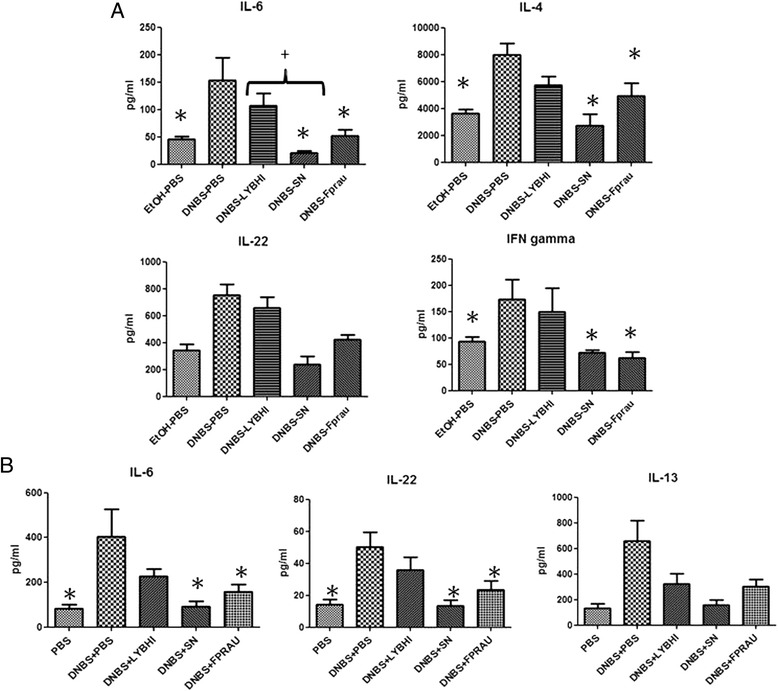
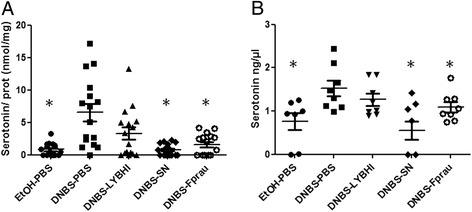
BACKGROUND: The human gut houses one of the most complex and abundant ecosystems composed of up to 10(13)-10(14) microorganisms. The importance of this intestinal microbiota is highlighted when a disruption of the intestinal ecosystem equilibrium appears (a phenomenon called dysbiosis) leading to an illness status, such as inflammatory bowel diseases (IBD). Indeed, the reduction of the commensal bacterium Faecalibacterium prausnitzii (one of the most prevalent intestinal bacterial species in healthy adults) has been correlated with several diseases, including IBD, and most importantly, it has been shown that this bacterium has anti-inflammatory and protective effects in pre-clinical models of colitis. Some dysbiosis disorders are characterized by functional and physiological alterations. Here, we report the beneficial effects of F. prausnitzii in the physiological changes induced by a chronic low-grade inflammation in a murine model. Chronic low-grade inflammation and gut dysfunction were induced in mice by two episodes of dinitro-benzene sulfonic acid (DNBS) instillations. Markers of inflammation, gut permeability, colonic serotonin and cytokine levels were studied. The effects of F. prausnitzii strain A2-165 and its culture supernatant (SN) were then investigated. RESULTS: No significant differences were observed in classical inflammation markers confirming that inflammation was subclinical. However, gut permeability, colonic serotonin levels and the colonic levels of the cytokines IL-6, INF-γ, IL-4 and IL-22 were higher in DNBS-treated than in untreated mice. Importantly, mice treated with either F. prausnitzii or its SN exhibited significant decreases in intestinal permeability, tissue cytokines and serotonin levels. CONCLUSIONS: Our results show that F. prausnitzii and its SN had beneficial effects on intestinal epithelial barrier impairment in a chronic low-grade inflammation model. These observations confirm the potential of this bacterium as a novel probiotic treatment in the management of gut dysfunction and low-grade inflammation.
Overview
The claims and statistics of this paper haven’t been checked yet.
Free: it reads the open-access text and checks the first 5 claims that cite a source we can check. Create a free account to check every claim.
Integrity signals
Registry
Cites
Statistics
Figures
Verification
Claims the paper makes
The claims and statistics of this paper haven’t been checked yet.
Free: it reads the open-access text and checks the first 5 claims that cite a source we can check. Create a free account to check every claim.
Claims other papers make about this one
Each is checked against this paper’s own text: does it say what the citing paper says it does?
The cited source says what the claim attributes to it.
In the citing paper
“F. prausnitzii can also reduce intestinal inflammation by affecting paracellular permeability and enhancing intestinal epithelium barrier function.270,271”
From The role of gut dysbiosis in Parkinson’s disease: mechanistic insights and therapeutic options (2021) · cites this paper as [271]
Self-check
Percentages, sums and reported differences re-computed from the paper’s own numbers.
The self-check needs the paper’s full text.
Citations
Cites
Single-step method of RNA isolation by acid guanidinium thiocyanate-phenol-chloroform extraction
Chomczynski, P., & Sacchi, N. (1987) · Analytical Biochemistry · doi:10.1016/0003-2697(87)90021-2 · Cited by 46,426 · cited 1×
“Total RNA was extracted from 1 cm-long sections of colon homogenized in a TissueLyser, by the guanidinium thiocyanate method [59].”
MethodSokol, H., Pigneur, B., Watterlot, L., Lakhdari, O., Bermúdez-Humarán, L. G., Gratadoux, J.-J., Blugeon, S., Bridonneau, C., Furet, J.-P., Corthier, G., et al. (2008) · Proceedings of the National Academy of Sciences · doi:10.1073/pnas.0804812105 · Cited by 4,413 · cited 4×
“5 mg/ml cysteine (Sigma-Aldrich) at 37°C in an anaerobic chamber as previously described [22].”
BackgroundMethodInfluentialSelf-citationThe NIH Human Microbiome Project
The NIH HMP Working Group, Peterson, J., Garges, S., Giovanni, M., McInnes, P., Wang, L., Schloss, J. A., Bonazzi, V., McEwen, J. E., Wetterstrand, K. A., et al. (2009) · Genome Research · doi:10.1101/gr.096651.109 · Cited by 2,066 · cited 2×
“the identification of low-grade inflammation [9], histopathological observations and mucosal cytokine levels in the colon of a subset of IBS patients [10,11] and the presence of IBS-like symptoms in quiescent IBD [8,12-14] support this hypothesis.”
BackgroundThe Microbiome in Inflammatory Bowel Disease: Current Status and the Future Ahead
Kostic, A. D., Xavier, R. J., & Gevers, D. (2014) · Gastroenterology · doi:10.1053/j.gastro.2014.02.009 · Cited by 1,789 · cited 2×
“The strongest relationship between dysbiosis and pathological condition has been observed in inflammatory bowel diseases (IBD), where the proportion of Firmicutes is lower than in healthy subjects [3,4].”
BackgroundRegulation of intestinal epithelial permeability by tight junctions
Suzuki, T. (2013) · Cellular and Molecular Life Sciences · doi:10.1007/s00018-012-1070-x · Cited by 1,343
Faecalibacterium prausnitzii and human intestinal health
Miquel, S., Martín, R., Rossi, O., Bermúdez-Humarán, L., Chatel, J., Sokol, H., Thomas, M., Wells, J., & Langella, P. (2013) · Current Opinion in Microbiology · doi:10.1016/j.mib.2013.06.003 · Cited by 1,228 · cited 1×
“Changes in the abundance of this commensal anti-inflammatory bacterium [22] and major member of the Clostridium leptum group [23] have been linked to dysbiosis in several human disorders [21], such as IBD, where a low abundance was found in patients exhibiting endoscopic recurrence 6 months after surgery [3].”
BackgroundSelf-citationRajilić–Stojanović, M., Biagi, E., Heilig, H. G. H. J., Kajander, K., Kekkonen, R. A., Tims, S., & de Vos, W. M. (2011) · Gastroenterology · doi:10.1053/j.gastro.2011.07.043 · Cited by 1,041 · cited 3×
“creased ratio of the Firmicutes to Bacteroidetes [5].”
BackgroundInfluentialTowards the human intestinal microbiota phylogenetic core
Tap, J., Mondot, S., Levenez, F., Pelletier, E., Caron, C., Furet, J., Ugarte, E., Muñoz‐Tamayo, R., Paslier, D. L. E., Nalin, R., et al. (2009) · Environmental Microbiology · doi:10.1111/j.1462-2920.2009.01982.x · Cited by 927 · cited 2×
“microbiota, with Actinobacteria being the third, comprising of only 3% [2].”
BackgroundWrzosek, L., Miquel, S., Noordine, M.-L., Bouet, S., Chevalier-Curt, M. J., Robert, V., Philippe, C., Bridonneau, C., Cherbuy, C., Robbe-Masselot, C., et al. (2013) · BMC Biology · doi:10.1186/1741-7007-11-61 · Cited by 804 · cited 1×
“leptum group, and is one of the most prevalent commensal bacteria in the human gut [2], involved in colonic epithelial physiology [32], and a reduction in its abundance has been observed in IBD patients [24].”
BackgroundSelf-citationCytokine regulation of tight junctions
Capaldo, C. T., & Nusrat, A. (2009) · Biochimica et Biophysica Acta (BBA) - Biomembranes · doi:10.1016/j.bbamem.2008.08.027 · Cited by 718 · cited 1×
“trans-epithelial electric resistance (TEER) in vitro and in vivo [43,44].”
Background
Research works printed but not linked: 1
- Miquel S Martin R Rossi O Bermudez-Humaran L Chatel J Sokol H Faecalibacterium prausnitzii and human intestinal health Curr Opin Microbiol 2014 16 3 255 61 10.1016/j.mib.2013.06.003 23831042 · DOI · Paper page
Cited by
Items 301–319 of 319
Un nouveau monde microbien chez l’homme : les candidate phyla radiation (CPR)
Naud, S. (2021) · theses.fr (ABES) · doi:10.70675/2c6ab74fz802bz4a59z8eb9z97ba8ac4edd6
Apport de la génomique en microbiologie clinique
Khedher, M. B. (2021) · theses.fr (ABES) · doi:10.70675/07f9adc3z10e0z4d0fz9ba5z2397b5f7c363
Geiger, M. (2023) · theses.fr (ABES) · doi:10.70675/47f0726dz445fz4a67zb320z7cb92751b601 · Cited by 1
Fibrose intestinale, récepteur minéralocorticoide,alimentation.
Leboutte, M. (2023) · theses.fr (ABES) · doi:10.70675/a47cb697z212az4a17za4d6zeaf9d5cbaf24
Charlet, R. (2022) · theses.fr (ABES) · doi:10.70675/11b08f90z8d0dz43efz96ffzf2527c076034
Wu, H., Shi, L., Wang, C., Liang, Y., & Huang, C. (2026) · Frontiers in Cellular and Infection Microbiology · doi:10.3389/fcimb.2026.1779298
Key commensal bacteria and dietary components promoting Faecalibacterium prausnitzii growth
Guo, Y., Huang, P., Wang, G., Cui, S., Lu, W., Lv, X., Tian, P., Zhao, J., Chen, W., & Zhai, Q. (2026) · Food Bioscience · doi:10.1016/j.fbio.2026.109220
Guo, L., Li, J., An, J., Miao, J., Yi, Y., Zhu, K., Cai, Q., Wang, S., Su, Z., Ye, X., et al. (2026) · Journal of genetics and genomics/Journal of Genetics and Genomics · doi:10.1016/j.jgg.2026.06.005
Obesity phenotypes: potential markers associated with the gut microbiome
Ganenko, L. A., Волкова, Н. И., Shestopalov, A. V., & Naboka, Y. L. (2026) · Medical Herald of the South of Russia · doi:10.21886/2219-8075-2026-17-2-64-70
Łoniewski, I., Skonieczna‐Żydecka, K., & Marlicz, W. (2026) · Elsevier eBooks · doi:10.1016/b978-0-443-41638-5.00014-4
Dietary factors and next-generation probiotics for microbiota eubiosis and barrier fortification
Huang, C. P. (2026) · Elsevier eBooks · doi:10.1016/b978-0-443-40306-4.00015-6
Li, X., Wang, Y., Wang, Z., Deng, M., Zheng, J., Geng, H., Zhao, G., & Wang, Q. (2026) · Poultry Science · doi:10.1016/j.psj.2026.107550
Innovations and Emerging Trends in Probiotic Antifungal Research
Deepthi, B., V, Rao, K. P., Achar, P. N., & Sreenivasa, M. Y. (2026) · Springer eBooks · doi:10.1007/978-981-92-0002-3_23
Hong, S. P., Kim, K. W., Im, Y., Jang, J., Cheon, D. H., Lee, E. K., Han, Y. M., Park, J. W., Lee, H. J., Park, H., et al. (2026) · Inflammatory Bowel Diseases · doi:10.1093/ibd/izag176
Gut health revolution: Probiotics and digestive wellness
Kunal, Gowda, A., Rajeshwari, G., Jogi, N., Mamatha, B. S., & Sharma, R. K. (2026) · Elsevier eBooks · doi:10.1016/b978-0-443-45154-6.00028-3
Metadata
- Authors
- Martín, R., Miquel, S., Chain, F., Natividad, J. M., Jury, J., Lu, J., Sokol, H., Theodorou, V., Bercik, P., Verdu, E. F., Langella, P., & Bermúdez-Humarán, L. G.
- Affiliations
- AgroParisTech (FR)
- McMaster University (CA)
- Centre National de la Recherche Scientifique (FR)
- Corresponding author
- Langella, Philippe
- ORCID
- Venue
- BMC Microbiology
- Published
- 2015-03-21
- Volume
- 15
- Issue
- 1
- Pages
- 67-67
- ISSN
- 1471-2180 (ISSN-L)
- PMC
- PMC4391109
- OpenAlex
- W2043019177
- Cited by
- 309
- References
- 61
- Citations by year
- 2026: 18 · 2025: 38 · 2024: 32 · 2023: 45 · 2022: 29 · 2021: 35 · 2020: 26 · 2019: 17 · 2018: 24 · 2017: 24 · 2016: 14 · 2015: 5
- FWCI
- 9.69
- Type
- journal article
- Language
- en
- Open access
- gold
- doi.org
- Locations
- BMC Microbiology (publishedVersion, cc-by)
- PubMed Central (publishedVersion, cc-by)
- PubMed (publishedVersion)
- HAL (submittedVersion, other-oa)
- Funders
- Crohn's and Colitis Foundation of Canada
- European Regional Development Fund
- Topics
- Life Sciences › Biochemistry, Genetics and Molecular Biology › Molecular Biology › Gut microbiota and health
- Health Sciences › Medicine › Gastroenterology › Inflammatory Bowel Disease
- Life Sciences › Agricultural and Biological Sciences › Food Science › Probiotics and Fermented Foods
- Keywords
- Faecalibacterium prausnitzii, low-grade inflammation, gut dysbiosis, intestinal permeability, intestinal epithelial barrier, cytokines, DNBS-induced colitis, probiotics, culture supernatant, inflammatory bowel disease, gut microbiota
- MeSH terms
- Eubacteriales, Animals, Benzenesulfonates, Colon, Disease Models, Animal, Enteritis, Permeability, Serotonin, Cytokines, Mice
About these checks
Registry, retraction, Cites and statistics results are computed, not judged, with one exception: a printed reference that no index lists is read once by a model before it counts as a citation error. Claims are extracted by a model and kept only when their quote appears verbatim in the text; each cited source is then checked, with a model’s help, for whether it says what the claim relies on. Those verdicts can be wrong — read the claim’s quote and the cited source before relying on one.
Statistics and arithmetic are recomputed, not judged.
Confidence bands are shown only for fields calibrated on our annotated test set. None is calibrated yet, so no band is shown.
What counts as a claim ›How we measure confidence ›How we check this ›
Are you an author, or do you see a problem with this page? Request a review
Data sources
Bibliographic data: Semantic Scholar, OpenAlex, Crossref.
Contains information from the Semantic Scholar Academic Graph Datasets, made available under the ODC Attribution License (ODC-BY 1.0).
Semantic Scholar’s data is described in: Kinney, R., et al. (2023). The Semantic Scholar Open Data Platform. arXiv:2301.10140.
