

Isolation, characterization, and assessment of lactic acid bacteria toward their selection as poultry probiotics
Open accessThe DOI matches its Crossref record; 65 of the 67 references it cites were found in a registry or an index.
Abstract
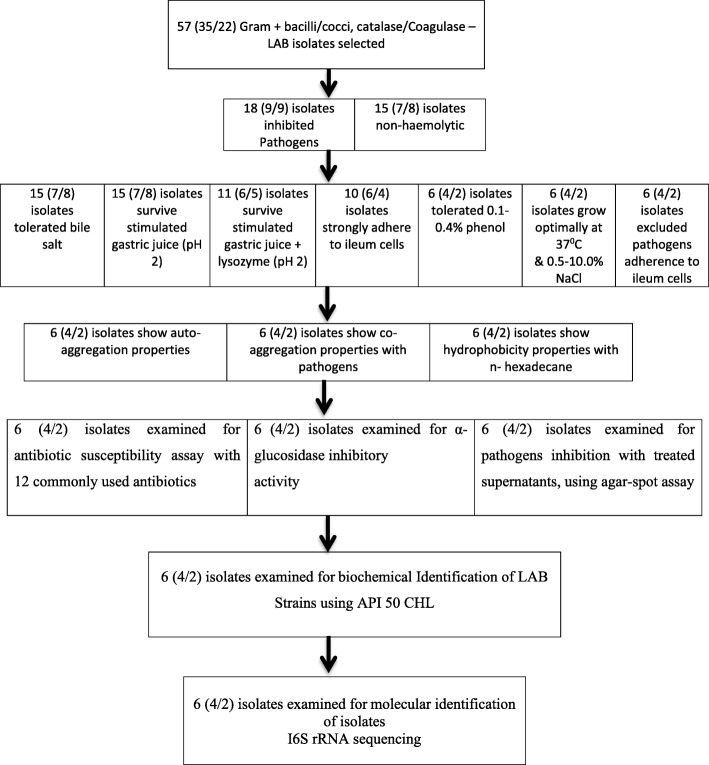
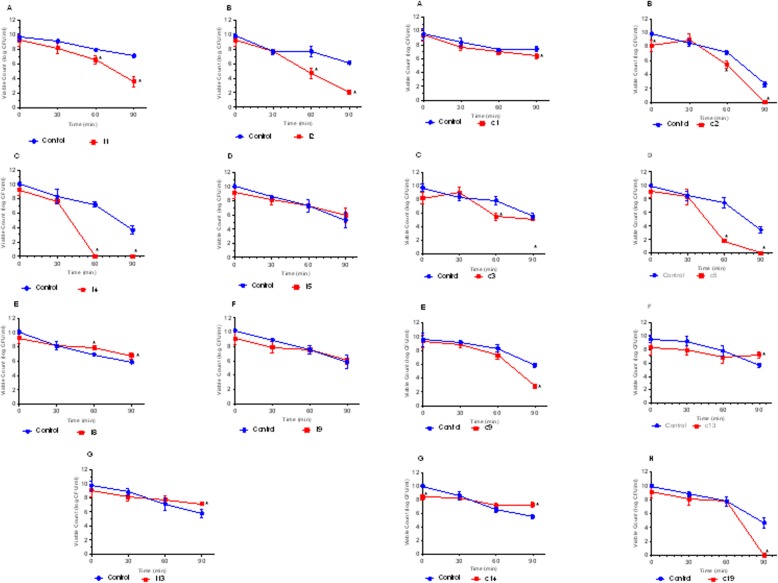
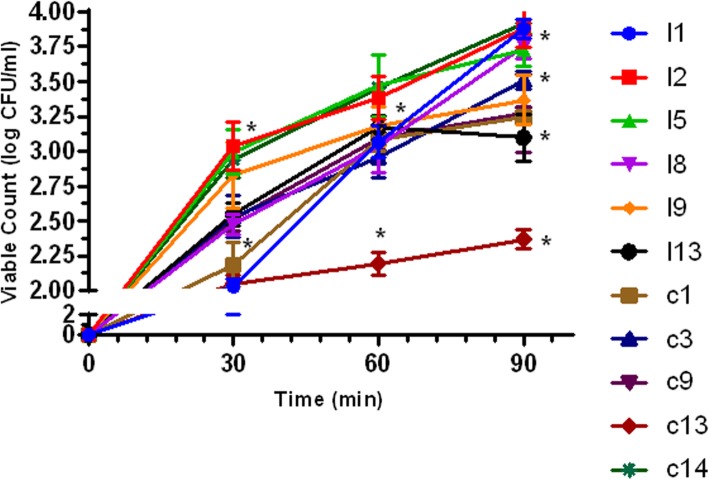
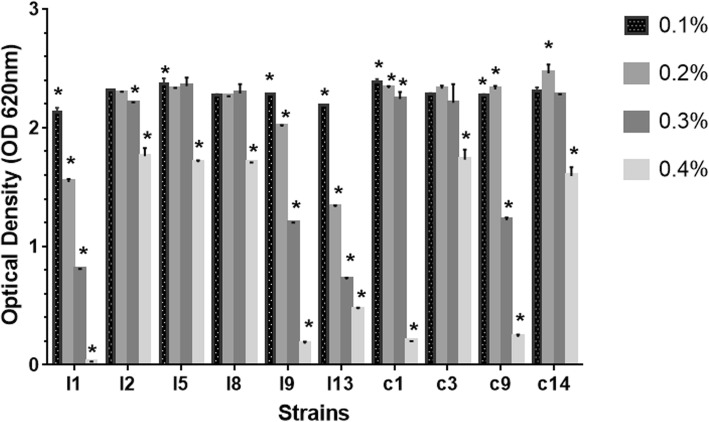
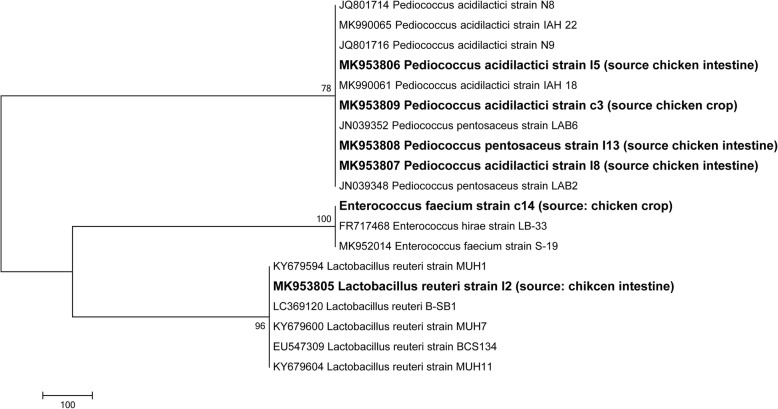
Background: Probiotics are live microorganisms that, when administered in adequate amounts, confer a health benefit on the host, are now accepted as suitable alternatives to antibiotics in the control of animal infections and improving animal production. Lactic acid bacteria (LAB) with remarkable functional properties have been evaluated in different studies as possible probiotic candidates. The purpose of this study was to isolate, characterize and assess the potentials of LAB from poultry gastrointestinal tract as potential poultry probiotics. Results: Potential LAB probiotics were isolated from broilers, characterized and evaluated for probiotic properties including antagonistic activity (against Escherichia coli , E. coli O157: H7, Enterococcus faecalis , Salmonella Typhimurium, S. Enteritidis and Listeria monocytogenes ), survivability in simulated gastric juice, tolerance to phenol and bile salts, adhesion to ileum epithelial cells, auto and co-aggregation, hydrophobicity, α–glucosidase inhibitory activity, and antibiotic susceptibility tests. Most promising LAB strains with excellent probiotic potentials were identified by API 50 CHL and 16S rRNA sequencing as Lactobacillus reuteri I2, Pediococcus acidilactici I5, P. acidilactici I8, P. acidilactici c3, P. pentosaceus I13, and Enterococcus faecium c14. They inhibited all the pathogens tested with zones of inhibition ranging from 12.5 ± 0.71 to 20 ± 0 mm, and competitively excluded ( P < 0.05) the pathogens examined while adhering to ileum epithelial cells with viable counts of 3.0 to 6.0 Log CFU/ml. The selected LAB strains also showed significant ( P < 0.005) auto and co-aggregation abilities with α-glucosidase inhibitory activity ranging from 12.5 to 92.0%. The antibiotic susceptibility test showed 100.00% resistance of the LAB strains to oxacillin, with multiple antibiotic resistance indices above 0.5. Conclusion: The selected LAB strains are ideal probiotic candidates which can be applied in the field for the improvement of poultry performance and control of pathogens in poultry, hence curtailing further transmission to humans.
Overview
The claims and statistics of this paper haven’t been checked yet.
Free: it reads the open-access text and checks the first 5 claims that cite a source we can check. Create a free account to check every claim.
Integrity signals
Registry
Cites
Statistics
Figures
Verification
Claims the paper makes
The claims and statistics of this paper haven’t been checked yet.
Free: it reads the open-access text and checks the first 5 claims that cite a source we can check. Create a free account to check every claim.
Claims other papers make about this one
Each is checked against this paper’s own text: does it say what the citing paper says it does?
The cited source says what the claim attributes to it.
In the citing paper
“This is not at all surprising, because LAB are part of the natural microbiota of the healthy gastrointestinal tract of humans and animals [215,216].”
From Lactic Acid Bacteria in Raw-Milk Cheeses: From Starter Cultures to Probiotic Functions (2022) · cites this paper as [215]
Self-check
Percentages, sums and reported differences re-computed from the paper’s own numbers.
The self-check needs the paper’s full text.
Citations
Cites
Antibiotic Susceptibility Testing by a Standardized Single Disk Method
Bauer, A. W., Kirby, W. M. M., Sherris, J. C., & Turck, M. (1966) · American Journal of Clinical Pathology · doi:10.1093/ajcp/45.4_ts.493 · Cited by 18,523
Hill (2014) · doi:10.1038/nrgastro.2014.66 · Cited by 9,592 · cited 2×
“Previous reports have shown that a correlation exists between high hydrophobicity of LAB strains with their attachment to intestinal mucosal and epithelial cells [2, 15, 19].”
BackgroundA medium for the cultivation of lactobacilli
De MAN, J. C., ROGOSA, M., & SHARPE, M. E. (1960) · Journal of Applied Bacteriology · doi:10.1111/j.1365-2672.1960.tb00188.x · Cited by 5,311 · cited 3×
“After isolating 57 strains of LAB from the crop (35) and intestine (22) of broilers as previously described [13], they were subjected to various contemporary in vitro probiotic properties evaluation and finally characterized molecularly.”
BackgroundMethodInfluentialDunne, C., O’Mahony, L., Murphy, L., Thornton, G., Morrissey, D., O’Halloran, S., Feeney, M., Flynn, S., Fitzgerald, G., Daly, C., et al. (2001) · The American Journal of Clinical Nutrition · doi:10.1093/ajcn/73.2.386s · Cited by 922 · cited 1×
“Apart from the ability of potential probiotics to tolerate bile salts, it is also expected that probiotics should be able to tolerate the acidic environment of the GIT as they pass through to colonize the gut of their host [30].”
BackgroundKos, B., Šušković, J., Vuković, S., Šimpraga, M., Frece, J., & Matošić, S. (2003) · Journal of Applied Microbiology · doi:10.1046/j.1365-2672.2003.01915.x · Cited by 880
Mack, D. R., Michail, S., Wei, S., McDougall, L., & Hollingsworth, M. A. (1999) · American Journal of Physiology-Gastrointestinal and Liver Physiology · doi:10.1152/ajpgi.1999.276.4.g941 · Cited by 829 · cited 2×
“This further enables immunoregulation by LAB which is also relevant in the removal of pathogens [36].”
BackgroundAntibiotic resistance in probiotic bacteria
Gueimonde, M., Sánchez, B., G. de los Reyes-Gavilán, C., & Margolles, A. (2013) · Frontiers in Microbiology · doi:10.3389/fmicb.2013.00202 · Cited by 691 · cited 1×
“It has also been documented that lactobacilli are generally susceptible to ampicillin [56].”
BackgroundProbiotic potential of Lactobacillus strains isolated from dairy products
Maragkoudakis, P. A., Zoumpopoulou, G., Miaris, C., Kalantzopoulos, G., Pot, B., & Tsakalidou, E. (2006) · International Dairy Journal · doi:10.1016/j.idairyj.2005.02.009 · Cited by 618 · cited 1×
“[63] was used to determine the haemolytic activity of LAB isolates.”
MethodNovel bacteriocins from lactic acid bacteria (LAB): various structures and applications
Perez, R. H., Zendo, T., & Sonomoto, K. (2014) · Microbial Cell Factories · doi:10.1186/1475-2859-13-s1-s3 · Cited by 575
Corcoran, B. M., Stanton, C., Fitzgerald, G. F., & Ross, R. P. (2005) · Applied and Environmental Microbiology · doi:10.1128/aem.71.6.3060-3067.2005 · Cited by 546
Research works printed but not linked: 3
- Food and Agriculture Organization (FAO) Makkar HPS Probiotics in animal nutrition – Production, impact and regulationby Yadav S. Bajagai, Athol V. Klieve, Peter J. Dart and Wayne L. Bryden 2016 Rome FAO Animal Production and Health
- Food and Agriculture Organization (FAO) FAOSTAT Livestock Primary 2017
- Gusils C Bujazha M Gonzalez S Preliminary studies to design a probiotic for use in swine feed Interciencia 2002 27 409 413
Cited by
Items 301–349 of 349
Zhang, H., HuangFu, H., Qin, G., Wu, G., Wang, L., & Tan, Z. (2024) · Figshare · doi:10.6084/m9.figshare.26631973
Zhang, H., HuangFu, H., Qin, G., Wu, G., Wang, L., & Tan, Z. (2024) · Figshare · doi:10.6084/m9.figshare.26631958
Zhang, H., HuangFu, H., Qin, G., Wu, G., Wang, L., & Tan, Z. (2024) · Figshare · doi:10.6084/m9.figshare.26631979
Lv, L., Xiong, F., Liu, Y., Pei, S., He, S., Li, S., & Yang, H. (2024) · Figshare · doi:10.6084/m9.figshare.26662936
Zhang, H., HuangFu, H., Qin, G., Wu, G., Wang, L., & Tan, Z. (2024) · Figshare · doi:10.6084/m9.figshare.26631967
Zhang, Y., Yang, L., Zhang, J., Huang, K., Sun, X., Yang, Y., Wang, T., Zhang, Q., Zou, Z., & Jin, M. (2022) · Figshare · doi:10.6084/m9.figshare.21077403
Zhang, H., HuangFu, H., Qin, G., Wu, G., Wang, L., & Tan, Z. (2024) · Figshare · doi:10.6084/m9.figshare.26631994
Zhang, H., HuangFu, H., Qin, G., Wu, G., Wang, L., & Tan, Z. (2024) · Figshare · doi:10.6084/m9.figshare.26631976
Zhang, Y., Yang, L., Zhang, J., Huang, K., Sun, X., Yang, Y., Wang, T., Zhang, Q., Zou, Z., & Jin, M. (2022) · Figshare · doi:10.6084/m9.figshare.21077397
Zhang, Y., Yang, L., Zhang, J., Huang, K., Sun, X., Yang, Y., Wang, T., Zhang, Q., Zou, Z., & Jin, M. (2022) · Figshare · doi:10.6084/m9.figshare.21077394
Zhang, Y., Yang, L., Zhang, J., Huang, K., Sun, X., Yang, Y., Wang, T., Zhang, Q., Zou, Z., & Jin, M. (2022) · Figshare · doi:10.6084/m9.figshare.21077400
Zhang, H., HuangFu, H., Qin, G., Wu, G., Wang, L., & Tan, Z. (2024) · Figshare · doi:10.6084/m9.figshare.26631997
Ogundipe, A., Ogunnusi, T. A., & Akpor, O. B. (2025) · F1000Research · doi:10.12688/f1000research.174479.1
Suthar, D. B., & Patel, V. H. (2026) · Applied Research · doi:10.1002/appl.70062
Mahrouk, A., Mosbah, A., Badaoui, M. Y. Z., Bouhedjar, K., Bramki, A., Hamdi, M., Slimani, A., Akkal, S., & Chaouche, N. K. (2026) · Acta Alimentaria · doi:10.1556/066.2025.00281
Deshmukh, P. V., Thorat, P. R., Wagh, S. G., Patil, A. M., More, V. V., & Shivsharan, R. R. (2026) · Current Microbiology · doi:10.1007/s00284-026-04773-w
“…or 1 g (w/v) of each sample into 10 mL sterile de Man, Rogosa, and Sharpe (MRS) broth and incubated microaerobically at 37 °C for 24 h. LAB were isolated by streaking 100 µL of enriched cultures on MRS agar followed by microaerobic incubation at 37 °C for 24 h, as described by Reuben et al. [30].”
Khenfer, S., Bouricha, M., Mosbah, S., Hammoudi, R., Bacha, O., Baka, O., Laouini, S. E., & Belkhalfa, H. (2026) · Biomass Conversion and Biorefinery · doi:10.1007/s13399-026-07098-7 · Cited by 1
Yu, S., Hong, P., Wang, C.-M., Chou, S., & Lai, C.-H. (2026) · International Journal of Microbiology · doi:10.1155/ijm/6537388
“The auto-and co-aggregation assays were conducted following the method described by Reuben et al. [30].”
Lactic acid bacteria isolated from mammalian feces exhibit distinct diversity and probiotic traits
Figueiredo, M. I. D. S., Mello, I. S., Bueno, L. D. G., Mendes, R. R. W., Almeida, J. M. D. S., Eriksson, A., da Silva, G. F., & Soares, M. A. (2026) · World Journal of Microbiology and Biotechnology · doi:10.1007/s11274-026-04801-8
“After incubation at 30 °C for 24 h, the diameter of the inhibition halos was measured in millimeters, and the lineages were categorized as sensitive (≥ 21 mm), intermediate (16–20 mm), or resistant (≤ 15 mm) (Reuben et al. 2019).”
Yu, S., Hong, P., Chou, S., Liang, T.-F., Lin, K.-S., Lai, C.-H., & Wang, C.-M. (2026) · BMC Microbiology · doi:10.1186/s12866-026-04935-7 · Cited by 1
“Auto-and co-aggregation assays were performed following the method of Reuben et al. [36].”
Quinn, J. C., & Cusack, P. (2026) · Translational Animal Science · doi:10.1093/tas/txag033
“Lacticaseibacillus paracasei has been shown to excrete low molecular weight sub-stances with antimicrobial activity, particularly against known enteric pathogens (Reuben et al. 2019, 2020).”
Ren, X., Chu, L., Zhao, B., Liang, R., Cheng, Y., Du, B., Li, J., Sun, W., Mohammedsaleh, Z. M., Saleh, F. M., et al. (2026) · Journal of Functional Foods · doi:10.1016/j.jff.2026.107270
Asiegbu, C. V., & Tabit, F. T. (2026) · Scientific Reports · doi:10.1038/s41598-026-47302-2
Bigorowski, B., Wlaźlak, S., Narloch, I., & Różański, S. Ł. (2026) · Journal of Veterinary Research · doi:10.2478/jvetres-2026-0020
“The former are frequent constituents of probiotic preparations in poultry nutrition (45, 47).”
Truong, Q. T., & Nguyen, D. K. (2026) · Food Biotechnology · doi:10.1080/08905436.2026.2653486
“The hemolytic activity of identified LAB was tested, as described by Reuben et al. (2019).”
Xu, T., Chen, Q., Ma, J., Wu, K., Su, Z., You, D., Wen, R., Zhang, T., Wang, H., & 张安云 (2026) · Poultry Science · doi:10.1016/j.psj.2026.107024
“Given that bile salt concentrations in the chicken duodenum and cecum are approximately 0.175 % and 0.008 %, respectively (Lin et al., 2003; Reuben et al., 2019), bile tolerance was assessed at 0.3 % and 0.5 %.”
InfluentialDas, A., Singh, D., Behera, R. N., Sarangi, P. P., & Ambatipudi, K. (2026) · Food Chemistry · doi:10.1016/j.foodchem.2026.149831 · Cited by 1
Zhao, M., ZHANG, Y., Li, G., & Li, F. (2026) · Probiotics and Antimicrobial Proteins · doi:10.1007/s12602-026-11082-y
Yin, Y., Huang, Y., Li, C., Pei, Z., Li, C., Chen, Z., Bai, H., Y, C., Li, J., Chen, H., et al. (2026) · Microorganisms · doi:10.3390/microorganisms14061290
“Adapted from the article by Reuben et al. [25].”
Somsu, T., Udomuksorn, W., Chandarajoti, K., Phoopha, S., Khanansuk, J., Sangkanu, S., Wattanapiromsakul, C., Wink, M., & Dej-adisai, S. (2026) · Veterinary Sciences · doi:10.3390/vetsci13060566
“These bioactive metabolites included organic acids (lactic and acetic acid), bacteriocins, hydrogen peroxide, and exopolysaccharides, which exert antimicrobial properties against pathogenic bacteria, promoting a balanced intestinal microbiome and improving overall health in broilers [74].”
IL-4-Inducing Hypothetical Proteins of Chicken-Isolated Limosilactobacillus reuteri
Adejumo, I. O., & Adebiyi, O. A. (2026) · Biologics · doi:10.3390/biologics6030021 · Cited by 1
Li, S., Zhang, H., Xing, X., Wang, Y., Shao, Y., & Qi, Z. (2026) · PeerJ · doi:10.7717/peerj.21496
“Compared to strains of Pediococcus and Enterococcus tested by Osmanagaoglu, Kiran & Ataoglu (2010) and Reuben et al. (2019) , the strains in this study demonstrated stronger co-aggregation with the pathogenic bacteria.”
Guo, C., Hu, X., Jiang, H., Hou, G., Xun, W., & Shi, L. (2026) · Poultry Science · doi:10.1016/j.psj.2026.107465
de Moraes, R. S., Teixeira, M. E., Núñez, T. A. D. L., Paschoal, N. R., da Silva, E. C., Ribeiro, M. G., Possebon, F. S., Benevenuto, L. G. D., Paz, P. J. D. L., García, H. D. M., et al. (2026) · Microbial Pathogenesis · doi:10.1016/j.micpath.2026.108729 · Cited by 1
Long-term adaptation of dark fermentation from food waste to saline marine organic matter
Hackula, A., Porter, J., Li, C., & Lansing, S. L. (2026) · Bioresource Technology · doi:10.1016/j.biortech.2026.135515
Zhai, C., Niu, J., Qiao, Q., Zhang, H., Mao, F., Liao, C., & Liu, Z. (2026) · Frontiers in Microbiology · doi:10.3389/fmicb.2026.1881881
“Increasing evidence indicates that LAB can serve as viable alternatives to antibiotics for controlling animal infections and improving productivity (Reuben et al., 2019).”
Sviridenko, G. М., Zakharova, M. B., & Mamykin, D. S. (2026) · Food systems · doi:10.21323/2618-9771-2026-9-2-199-207
Probiotics in Poultry: A Comprehensive Review of Mechanisms, Applications, and Future Directions
Jia, Z., He, Y., Xu, H., Zhang, C., & Cuan, S. (2026) · Veterinary Sciences · doi:10.3390/vetsci13080831
“…tract have demonstrated potent antagonistic activity against a broad spectrum of pathogens, including E. coli and its serotype O157:H7, Enterococcus faecalis , Salmonella typhimurium , Salmonella enteritidis , and Listeria monocytogenes , with zones of inhibition ranging from 12.5 to 20 mm [11].”
InfluentialZhao, Q., Zhang, J., Chen, M., Zhang, X., Liu, Y., Liu, L., Liu, Y., Zhang, S., Zhang, P., Xia, L., et al. (2026) · SSRN Electronic Journal · doi:10.2139/ssrn.7387361
Yuan, L., Zhang, C., Li, W., Yi, J., Liu, C., Jin, W., Li, G., Wang, B., Li, S., & Wang, H. (2026) · Microorganisms · doi:10.3390/microorganisms14091966
Akbulut, S. (2026) · RSC Advances · doi:10.1039/d6ra06744a
“8,12,14 Consequently, the extent to which quercetin can improve the probiotic performance of indigenous Lactiplanti-bacillus plantarum strains isolated from raw cow milk remains largely unexplored.”
InfluentialHafir, W., Hamma-Faradji, S., Azzouz, Z., Zikiou, A., Trabelsi, I., Ktari, N., Salah, R. B., & Bendali, F. (2026) · Brazilian Journal of Microbiology · doi:10.1007/s42770-026-02059-8
“The diameters of inhibition zones were measured in millime - tres after 48 h of incubation at 37 °C, then the isolates were regrouped in terms of resistant (R) or sensitive (S) according to Reuben et al. [25]”
Amamra, D., Chougrani, F., Belhocine, M., Cheriguene, A., Dahou, A. E. A., & Kerkoub, H. (2026) · Antonie van Leeuwenhoek · doi:10.1007/s10482-026-02426-3
Batool, A., Ali, H., Waheed, U., & Hassan, M. N. (2026) · Probiotics and Antimicrobial Proteins · doi:10.1007/s12602-026-11208-2
Feng, M.-A., li, W., xu, J. Y., Zhang, X., duan, J., & Shi, H. (2026) · Journal of Dairy Science · doi:10.3168/jds.2026-28868
Pham, T. T. H., Vũ, T. T. H., & Nguyen, T. M. H. (2026) · Journal of Science & Technology University of Economics - Technology for Industries · doi:10.67074/uneti.jst.2026.54.08
Huang, Y., Zhang, W., Yan, X., & Yang, Y. (2026) · Journal of Agricultural and Food Chemistry · doi:10.1021/acs.jafc.6c05649
Cheng, Y., Kong, J., Wang, L., Wang, Z., Yan, D., Ma, F., Kang, Y., & He, S. (2026) · Microbial Pathogenesis · doi:10.1016/j.micpath.2026.108859
Duan, L., Zhang, Y., Zhou, M., Wan, Z., Zhou, Y., 潘康成, Zeng, D., Jing, B., Shu, G., Zeng, Y., et al. (2026) · Research in Veterinary Science · doi:10.1016/j.rvsc.2026.106429
Metadata
- Authors
- Reuben, R. C., Roy, P. C., Sarkar, S. L., Alam, R.-U., & Jahid, I. K.
- Affiliations
- Jashore University of Science and Technology (BD)
- Corresponding author
- Jahid, Iqbal Kabir
- Venue
- BMC Microbiology
- Published
- 2019-11-12
- Volume
- 19
- Issue
- 1
- Pages
- 253-253
- ISSN
- 1471-2180 (ISSN-L)
- PMC
- PMC6852909
- OpenAlex
- W2985767961
- Cited by
- 341
- References
- 67
- Citations by year
- 2026: 57 · 2025: 66 · 2024: 56 · 2023: 64 · 2022: 60 · 2021: 25 · 2020: 13
- FWCI
- 18.90
- Type
- journal article
- Language
- en
- Open access
- gold
- doi.org
- Licence
- cc-by
- creativecommons.org/licenses/by/4.0/ (tdm)
- creativecommons.org/licenses/by/4.0/ (vor)
- Locations
- BMC Microbiology (publishedVersion, cc-by)
- PubMed Central (publishedVersion, cc-by)
- PubMed (publishedVersion)
- DOAJ (DOAJ: Directory of Open Access Journals) (submittedVersion, cc-by-sa)
- Funders
- U.S. Department of Agriculture
- Topics
- Life Sciences › Agricultural and Biological Sciences › Food Science › Probiotics and Fermented Foods
- Life Sciences › Agricultural and Biological Sciences › Animal Science and Zoology › Animal Nutrition and Physiology
- Life Sciences › Immunology and Microbiology › Immunology › Aquaculture disease management and microbiota
- Keywords
- lactic acid bacteria, broiler chickens, antagonistic activity, competitive exclusion, self-aggregation, co-aggregation, α-glucosidase inhibition, bile salt tolerance, antibiotic susceptibility, Lactobacillus reuteri, Pediococcus acidilactici, Enterococcus faecium, Pediococcus pentosaceus, antibiotic alternatives
- MeSH terms
- Animals, Chickens, DNA, Ribosomal, Gastric Juice, Oxacillin, Poultry, RNA, Ribosomal, 16S, Sequence Analysis, DNA, Probiotics, Drug Resistance, Bacterial, Gastrointestinal Tract, Microbial Viability, Lactobacillales
About these checks
Registry, retraction, Cites and statistics results are computed, not judged, with one exception: a printed reference that no index lists is read once by a model before it counts as a citation error. Claims are extracted by a model and kept only when their quote appears verbatim in the text; each cited source is then checked, with a model’s help, for whether it says what the claim relies on. Those verdicts can be wrong — read the claim’s quote and the cited source before relying on one.
Statistics and arithmetic are recomputed, not judged.
Confidence bands are shown only for fields calibrated on our annotated test set. None is calibrated yet, so no band is shown.
What counts as a claim ›How we measure confidence ›How we check this ›
Are you an author, or do you see a problem with this page? Request a review
Data sources
Bibliographic data: Semantic Scholar, OpenAlex, Crossref.
Contains information from the Semantic Scholar Academic Graph Datasets, made available under the ODC Attribution License (ODC-BY 1.0).
Semantic Scholar’s data is described in: Kinney, R., et al. (2023). The Semantic Scholar Open Data Platform. arXiv:2301.10140.
