

Methods to systematically review and meta-analyse observational studies: a systematic scoping review of recommendations
Open accessThe DOI matches its Crossref record; 104 of the 104 references it cites were found in a registry or an index; 48 of the 374 sources its claims cite were checked for support.
Abstract
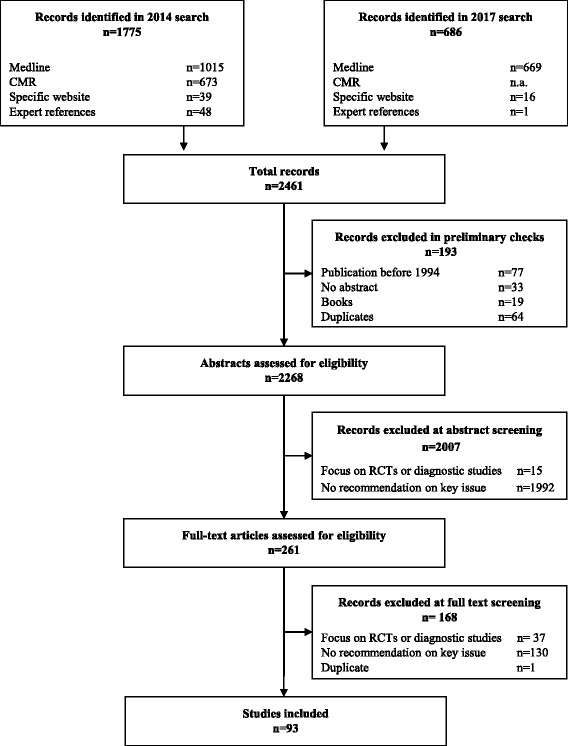
BACKGROUND: Systematic reviews and meta-analyses of observational studies are frequently performed, but no widely accepted guidance is available at present. We performed a systematic scoping review of published methodological recommendations on how to systematically review and meta-analyse observational studies. METHODS: We searched online databases and websites and contacted experts in the field to locate potentially eligible articles. We included articles that provided any type of recommendation on how to conduct systematic reviews and meta-analyses of observational studies. We extracted and summarised recommendations on pre-defined key items: protocol development, research question, search strategy, study eligibility, data extraction, dealing with different study designs, risk of bias assessment, publication bias, heterogeneity, statistical analysis. We summarised recommendations by key item, identifying areas of agreement and disagreement as well as areas where recommendations were missing or scarce. RESULTS: The searches identified 2461 articles of which 93 were eligible. Many recommendations for reviews and meta-analyses of observational studies were transferred from guidance developed for reviews and meta-analyses of RCTs. Although there was substantial agreement in some methodological areas there was also considerable disagreement on how evidence synthesis of observational studies should be conducted. Conflicting recommendations were seen on topics such as the inclusion of different study designs in systematic reviews and meta-analyses, the use of quality scales to assess the risk of bias, and the choice of model (e.g. fixed vs. random effects) for meta-analysis. CONCLUSION: There is a need for sound methodological guidance on how to conduct systematic reviews and meta-analyses of observational studies, which critically considers areas in which there are conflicting recommendations.
Overview
CoChat Summary
TL;DR
This systematic scoping review identified 93 articles giving methodological recommendations for systematic reviews and meta-analyses of observational studies. It found many recommendations were transferred from RCT guidance and that substantial disagreement remains on key methodological choices, with no comprehensive guidance available.
Key findings
- The searches identified 2461 articles; 93 were eligible. Only 1 (1%) addressed all 10 key items, 56 (60%) addressed two or more key items, and 37 (40%) addressed only one key item.
- Conflicting recommendations were found for “research question”, “study eligibility”, “considering different study designs”, “risk of bias assessment”, “publication bias” and “statistical analysis”. Examples include narrow versus broad research questions, whether to include all languages, whether to combine RCTs and non-randomised studies in one meta-analysis, use of quality scales versus component approaches, and fixed- versus random-effects models.
- Most included articles (62%) were published in statistical, epidemiological or systematic review methodological journals; 72% were written by authors affiliated with a systematic review organisation or a statistical/epidemiological university department. Many recommendations for observational studies were uncritically transferred from guidance for RCTs.
- Areas of agreement included the importance of a protocol, systematic risk-of-bias assessment, and examination of heterogeneity as central to meta-analysis of observational studies.
Methods
- Systematic scoping review following a protocol written before starting. Searches covered Medline, the Cochrane Methodology Register, websites of review centres, selected evidence-synthesis journals, expert contact, and references from included full texts; no language restrictions were applied. Initial search was January 2014, repeated February 2017 except for CMR.
- Included articles published from 1994 onward that provided recommendations on at least one of 10 a priori key methodological items. Excluded articles published before 1994, reviews of observational studies without methodological recommendations, and articles focused on RCTs, cost-effectiveness studies or diagnostic studies.
- Two reviewers independently screened and extracted data; disagreements were resolved by discussion or a senior methodologist. Recommendations were summarised descriptively and by qualitative thematic analysis. The authors did not appraise the methodological quality of included articles or recommendations.
Limitations
- Stated: including articles based on title and abstract may have missed relevant articles; books were excluded, including the Cochrane handbook; the authors did not assess the soundness of recommendations; and in-depth discussion of statistical methods was beyond scope.
- Stated: the authors did not appraise methodological quality of included articles and recommendations because widely accepted standards for systematic reviews and meta-analyses of observational studies are lacking.
- Evident from the text: the search relied on theoretical saturation rather than exhaustive retrieval, and the last search update was February 2017, so later guidance would not be captured.
Model-written summary. Check it against the paper before relying on it.
Integrity signals
Registry
Cites
Statistics
Figures
Verification
Claims the paper makes
18 Valid · 2 Not valid · 67 Not checked · 64 Own results and interpretations
At least one cited source doesn’t support this claim or points to a different paper, and none confirmed it — see the verdicts below.
In the paper
“Second, the use of a random-effects model for meta-analysis of observational studies by default was frequently recommended [8, 16, 29, 34, 70, 77, 100, 101].”
§ Methods to systematically review and meta-analyse observational studies: a systematic scoping review of recommendations > Results > Statistical analysis
What the sources say
- Not checked yetcites [8] Zwahlen M Renehan A Egger M Meta-analysis in medical research: potentials and limitations Urol Oncol 2008 26 320 329 10.1016/j.urolonc.2006.12.001 18452828 source
- Not checked yetcites [16] Lau J Ioannidis JP Schmid CH Quantitative synthesis in systematic reviews Ann Intern Med 1997 127 820 826 10.7326/0003-4819-127-9-199711010-00008 9382404 source
- Not checked yetcites [29] Egger M Smith GD Phillips AN Meta-analysis: principles and procedures BMJ 1997 315 1533 1537 10.1136/bmj.315.7121.1533 9432252 PMC2127925 source
- Not checked yetcites [34] Blair A Burg J Foran J Gibb H Greenland S Morris R Guidelines for application of meta-analysis in environmental epidemiology. ISLI risk science institute Regul Toxicol Pharmacol 1995 22 189 197 10.1006/rtph.1995.1084 8577954 source
- Disputedcites [70] Wong O Raabe GK Application of meta-analysis in reviewing occupational cohort studies Occup Environ Med 1996 53 793 800 10.1136/oem.53.12.793 8994397 PMC1128611 sourceExperimental — accuracy not yet measured
In the discussion of fixed- and random-effects models (p. 5), the paper says the choice is subject to ongoing debate, that commonly used methods are fixed-effects, and that random-effects models have been criticised. It does not recommend using random-effects models by default for observational studies; its account points in the opposite direction. (LLM, conf=0.85)
Checked by a reasoning model — may be wrong.
- Not checked yetcites [77] Colditz GA Burdick E Mosteller F Heterogeneity in meta-analysis of data from epidemiologic studies: a commentary Am J Epidemiol 1995 142 371 382 10.1093/oxfordjournals.aje.a117644 7625401 source
- Not checked yetcites [100] Pladevall-Vila M Delclos GL Varas C Guyer H Brugues-Tarradellas J Anglada-Arisa A Controversy of oral contraceptives and risk of rheumatoid arthritis: meta-analysis of conflicting studies and review of conflicting meta-analyses with special emphasis on analysis of heterogeneity Am J Epidemiol 1996 144 1 14 10.1093/oxfordjournals.aje.a008846 8659479 source
- Not checked yetcites [101] Dwyer T Couper D Walter SD Sources of heterogeneity in the meta-analysis of observational studies: the example of SIDS and sleeping position J Clin Epidemiol 2001 54 440 447 10.1016/S0895-4356(00)00313-9 11337206 source
plain- Asserted: passes — The authors put it forward as true.
- Checkable: passes — It can be checked against evidence.
- Load-bearing: unclear — It is unclear whether the paper’s conclusions depend on it.
- Based: passes — The paper gives a reason why it holds.
The sources with a verdict support this claim; the rest weren’t checked yet, have no full text we could read, or their verdicts aren’t rated yet.
In the paper
“Aspects that were frequently mentioned as important to address were the population, exposures or interventions, and outcomes [38–41, 43, 47, 48, 50, 54].”
§ Methods to systematically review and meta-analyse observational studies: a systematic scoping review of recommendations > Results > Research question
What the sources say
- Supportedcites [38] Simunovic N Sprague S Bhandari M Methodological issues in systematic reviews and meta-analyses of observational studies in orthopaedic research J Bone Jt Surg Am 2009 91 Suppl 3 87 94 10.2106/JBJS.H.01576 PMC12309503 19411505 source
The Introduction says that a systematic-review protocol should be centered on a focused research question and clearly describe the population, intervention or exposure, and outcomes of interest. This supports the aspects attributed to this source; the paper does not itself establish how frequently other sources mention them. (LLM, conf=0.92)
- Not checked yetcites [39] Armstrong R, Waters E, editors. Systematic Reviews of Health Promotion and Public Health Interventions. Guidelines for Systematic Reviews in Health Promotion and Public Health Task Force. Version 2. Melbourne University: Australia.; 2007.
- Supportedcites [40] Schünemann HJ Tugwell P Reeves BC Akl EA Santesso N Spencer FA Non-randomized studies as a source of complementary, sequential or replacement evidence for randomized controlled trials in systematic reviews on the effects of interventions Res Synth Methods. 2013 4 49 62 10.1002/jrsm.1078 26053539 source
Section 3.1 (p. 7) says review authors should define the elements of their PICO question when planning a review. Section 1.2 (p. 2) explicitly identifies population, intervention and outcomes among the elements to consider. The paper supports the cited point that these aspects are important to address, though it does not itself measure how frequently they are mentioned across sources. (LLM, conf=0.88)
- Not checked yetcites [41] Moola S Munn Z Sears K Sfetcu R Currie M Lisy K Conducting systematic reviews of association (etiology): the Joanna Briggs Institute’s approach Int J Evid Based Healthc. 2015 13 163 169 10.1097/XEB.0000000000000064 26262566 source
- Supportedcites [43] Ravani P Ronksley PE James MT Strippoli GF A nephrology guide to reading and using systematic reviews of observational studies Nephrol Dial Transplant 2015 30 1615 1621 10.1093/ndt/gfv257 26113546 source
Step 1 (p. 3) says that a systematic review’s question is specified using PICO and identifies population, intervention or exposure, and outcome as components. The source also includes a comparator, but the citing sentence does not claim its list is exhaustive. (LLM, conf=0.92)
- Not checked yetcites [47] Manchikanti L Datta S Smith HS Hirsch JA Evidence-based medicine, systematic reviews, and guidelines in interventional pain management: part 6. Systematic reviews and meta-analyses of observational studies Pain Physician 2009 12 819 850 19787009 source
- Not checked yetcites [48] Normand SL Meta-analysis: formulating, evaluating, combining, and reporting Stat Med 1999 18 321 359 10.1002/(SICI)1097-0258(19990215)18:3<321::AID-SIM28>3.0.CO;2-P 10070677 source
- Not checked yetcites [50] Raman G, Gaylor JM, Rao M, Chan J, Earley A, Chang LKW, et al. AHRQ methods for effective health care. In: Quality of reporting in systematic reviews of implantable medical devices. Rockville (MD): Agency for Healthcare Research and Quality (US); 2012. 23270007
- Not checked yetcites [54] Chaiyakunapruk N Saokaew S Sruamsiri R Dilokthornsakul P Systematic review and network meta-analysis in health technology assessment J Med Assoc Thail 2014 97 Suppl 5 S33 S42 24964697
plain- Asserted: passes — The authors put it forward as true.
- Checkable: passes — It can be checked against evidence.
- Load-bearing: unclear — It is unclear whether the paper’s conclusions depend on it.
- Based: passes — The paper gives a reason why it holds.
- Supported
The sources with a verdict support this claim; the rest weren’t checked yet, have no full text we could read, or their verdicts aren’t rated yet.
In the paper
“Only five articles referred to the combination of different non-randomised studies [38, 70, 75, 79, 80].”
§ Methods to systematically review and meta-analyse observational studies: a systematic scoping review of recommendations > Results > Considering different study designs
What the sources say
- Supportedcites [38] Simunovic N Sprague S Bhandari M Methodological issues in systematic reviews and meta-analyses of observational studies in orthopaedic research J Bone Jt Surg Am 2009 91 Suppl 3 87 94 10.2106/JBJS.H.01576 PMC12309503 19411505 source
The Introduction discusses whether different observational study designs should be combined and says that different study types should rarely be merged in a meta-analysis. This supports citing the paper as one article that refers to combining non-randomised studies; the count of five describes the citing document’s set of references, not a finding attributed to this paper. (LLM, conf=0.91)
- Supportedcites [70] Wong O Raabe GK Application of meta-analysis in reviewing occupational cohort studies Occup Environ Med 1996 53 793 800 10.1136/oem.53.12.793 8994397 PMC1128611 source
The Meta-review of occupational epidemiology (pp. 2–4) discusses when different occupational cohort studies can be combined in a meta-analysis. This establishes the cited paper as an example of an article addressing the combination of non-randomised studies; the count of five refers to the citing paper’s set of references, not a count this source needs to establish. (LLM, conf=0.91)
- Not checked yetcites [75] Valentine JC Thompson SG Issues relating to confounding and meta-analysis when including non-randomized studies in systematic reviews on the effects of interventions Res Synth Methods. 2013 4 26 35 10.1002/jrsm.1064 26053537 source
- Not checked yetcites [79] Martin DO Austin H An exact method for meta-analysis of case-control and follow-up studies Epidemiology 2000 11 255 260 10.1097/00001648-200005000-00005 10784240 source
- Not checked yetcites [80] Moreno V Martin ML Bosch FX de Sanjose S Torres F Munoz N Combined analysis of matched and unmatched case-control studies: comparison of risk estimates from different studies Am J Epidemiol 1996 143 293 300 10.1093/oxfordjournals.aje.a008741 8561164 source
plain- Asserted: passes — The authors put it forward as true.
- Checkable: passes — It can be checked against evidence.
- Load-bearing: unclear — It is unclear whether the paper’s conclusions depend on it.
- Based: passes — The paper gives a reason why it holds.
- Supported
The sources with a verdict support this claim; the rest weren’t checked yet, have no full text we could read, or their verdicts aren’t rated yet.
In the paper
“Most articles considered the combination of RCTs and non-randomised designs [29, 35, 38, 39, 49, 51, 56, 61, 75, 81].”
§ Methods to systematically review and meta-analyse observational studies: a systematic scoping review of recommendations > Results > Considering different study designs
What the sources say
- Not checked yetcites [29] Egger M Smith GD Phillips AN Meta-analysis: principles and procedures BMJ 1997 315 1533 1537 10.1136/bmj.315.7121.1533 9432252 PMC2127925 source
- Supportedcites [35] Loke YK Price D Herxheimer A Systematic reviews of adverse effects: framework for a structured approach BMC Med Res Methodol 2007 7 32 10.1186/1471-2288-7-32 17615054 PMC1933432 source
The Methods section (‘What types of studies?’) considers RCTs alongside cohort, case-control and other non-randomised designs for reviews of adverse effects. This paper supports its inclusion as one of the cited articles that considered both types of design; it does not itself establish the collective claim that most articles did so. (LLM, conf=0.88)
- Supportedcites [38] Simunovic N Sprague S Bhandari M Methodological issues in systematic reviews and meta-analyses of observational studies in orthopaedic research J Bone Jt Surg Am 2009 91 Suppl 3 87 94 10.2106/JBJS.H.01576 PMC12309503 19411505 source
The Introduction considers whether randomized controlled trials and observational studies should be included in the same review. As one of several citations supporting the citing authors’ summary of the articles, this paper is an example of an article that considers that combination. (LLM, conf=0.88)
- Not checked yetcites [39] Armstrong R, Waters E, editors. Systematic Reviews of Health Promotion and Public Health Interventions. Guidelines for Systematic Reviews in Health Promotion and Public Health Task Force. Version 2. Melbourne University: Australia.; 2007.
- Not checked yetcites [49] Price D Jefferson T Demicheli V Methodological issues arising from systematic reviews of the evidence of safety of vaccines Vaccine 2004 22 2080 2084 10.1016/j.vaccine.2004.01.009 15121328 source
- Not checked yetcites [51] Rosenthal R DiMatteo MR Meta-analysis: recent developments in quantitative methods for literature reviews Annu Rev Psychol 2001 52 59 82 10.1146/annurev.psych.52.1.59 11148299 source
- Not checked yetcites [56] Wille-Jorgensen P Renehan AG Systematic reviews and meta-analyses in coloproctology: interpretation and potential pitfalls Color Dis 2008 10 21 32 18005187 source
- Not checked yetcites [61] Thornton A Lee P Publication bias in meta-analysis: its causes and consequences J Clin Epidemiol 2000 53 207 216 10.1016/S0895-4356(99)00161-4 10729693 source
- Not checked yetcites [75] Valentine JC Thompson SG Issues relating to confounding and meta-analysis when including non-randomized studies in systematic reviews on the effects of interventions Res Synth Methods. 2013 4 26 35 10.1002/jrsm.1064 26053537 source
- Supportedcites [81] Souverein OW Dullemeijer C van’t Veer P van der Voet H Transformations of summary statistics as input in meta-analysis for linear dose-response models on a logarithmic scale: a methodology developed within EURRECA BMC Med Res Methodol 2012 12 57 10.1186/1471-2288-12-57 22533574 PMC3780718 source
The Background explicitly considers combining observational studies and RCTs in a single meta-analysis. The Discussion says the methodology makes their results comparable and identifies combining them as a possible application. This supports citing the paper as an article that considered the combination; the count of 'most articles' is the citing authors' synthesis, not a claim about this individual source. (LLM, conf=0.93)
plain- Asserted: passes — The authors put it forward as true.
- Checkable: passes — It can be checked against evidence.
- Load-bearing: unclear — It is unclear whether the paper’s conclusions depend on it.
- Based: passes — The paper gives a reason why it holds.
Every source the paper cites for this claim was checked and supports it.
In the paper
“However, our search was guided by the methodological principle of theoretical saturation [17, 18].”
§ Methods to systematically review and meta-analyse observational studies: a systematic scoping review of recommendations > Discussion
What the sources say
- Supportedcites [17] Lilford RJ Richardson A Stevens A Fitzpatrick R Edwards S Rock F Issues in methodological research: perspectives from researchers and commissioners Health Technol Assess 2001 5 1 57 10.3310/hta5080 11368832 source
In “Reflections on the findings,” the paper defines theoretical saturation as the point at which further searching yields no new insights and endorses systematicity rather than exhaustiveness. This supports its use as a principle guiding when to stop a literature search; the citing authors’ description of their own search is not a finding attributed to the source. (LLM, conf=0.92)
- Supportedcites [18] Rutjes A, Reitsma J, Coomarasamy A, Khan K, Bossuyt P. Evaluation of diagnostic tests when there is no gold standard. A review of methods. Health Technol Assess. 2007;11(50). 18021577 source
The “Literature search and inclusion of papers” section explicitly identifies theoretical saturation as a principle that guided the source paper’s search and selection. This supports citing it as a methodological precedent; the source does not independently establish how the citing authors conducted their own search. (LLM, conf=0.94)
plain- Asserted: passes — The authors put it forward as true.
- Checkable: passes — It can be checked against evidence.
- Load-bearing: passes — The paper’s conclusions depend on it.
- Based: passes — The paper gives a reason why it holds.
- Supported
43 more claims · 1 with their cited sources checked
Create a free account to see all 151 claims and to verify the 326 references still open.
- Probably not a substantial claim. 81
- It may state two separate claims as one. 45
Claims other papers make about this one
Each is checked against this paper’s own text: does it say what the citing paper says it does?
In the citing paper
“There is no standard answer to the question of whether study design or methodological quality should guide inclusion of studies [18].”
From COSMOS-E: Guidance on conducting systematic reviews and meta-analyses of observational studies of etiology (2019) · cites this paper as [18]
In the citing paper
“and some design issues are not settled yet [18].”
From COSMOS-E: Guidance on conducting systematic reviews and meta-analyses of observational studies of etiology (2019) · cites this paper as [18]
In the citing paper
“Authors provide different reasons for not pooling data [69], and different opinions exist on how to approach this question [18].”
From COSMOS-E: Guidance on conducting systematic reviews and meta-analyses of observational studies of etiology (2019) · cites this paper as [18]
In the citing paper
“The assumption that all these studies estimate the same underlying effect is rarely justified, and using a random-effects model for combining observational studies therefore seems reasonable [18].”
From COSMOS-E: Guidance on conducting systematic reviews and meta-analyses of observational studies of etiology (2019) · cites this paper as [18]
Self-check
Percentages, sums and reported differences re-computed from the paper’s own numbers.
Each contradiction between two passages listed here was confirmed by an independent check.
Rated minor: it would not touch a result — a value no result rests on, a p-value that stays on the same side of the significance level, or a conflict that is clerical, resolved elsewhere in the paper, or outside its own findings.
In the paper
§ Methods to systematically review and meta-analyse observational studies: a systematic scoping review of recommendations > Results > Overview of recommendations
“| Egger, 1997b [97] | Observational | ✗ | ✗ | ✗ | ✗ | ✗ | ✗ | ✗ | ✓ | ✗ | ✗ |”
§ Methods to systematically review and meta-analyse observational studies: a systematic scoping review of recommendations > References
“97. Egger M Smith GD Bias in location and selection of studies BMJ 1998 316 61 66 10.1136/bmj.316.7124.61 9451274 PMC2665334”
Rated minor: it would not touch a result — a value no result rests on, a p-value that stays on the same side of the significance level, or a conflict that is clerical, resolved elsewhere in the paper, or outside its own findings.
In the paper
§ Methods to systematically review and meta-analyse observational studies: a systematic scoping review of recommendations > Results > Study eligibility
“Five articles gave recommendations about how to assess eligibility: it should be blind [29, 30, 46], independent [29, 33, 46, 48], and performed by two reviewers [29, 30, 33, 48].”
§ Methods to systematically review and meta-analyse observational studies: a systematic scoping review of recommendations > Results > Overview of recommendations
“| | | Assessment of eligibility | 6 (27%) |”
Citations
Cites
Liberati, A., Altman, D. G., Tetzlaff, J., Mulrow, C., Gøtzsche, P. C., Ioannidis, J. P. A., Clarke, M., Devereaux, P. J., Kleijnen, J., & Moher, D. (2009) · PLoS Medicine · doi:10.1371/journal.pmed.1000100 · Cited by 28,164
Dermyshi, E., Wang, Y., Yan, C., Hong, W., Qiu, G., Gong, X., & Zhang, T. (2017) · Neonatology · doi:10.1159/000454668 · Cited by 24,451
Meta-analysis of Observational Studies in Epidemiology<SUBTITLE>A Proposal for Reporting</SUBTITLE>
Stroup, D. F. (2000) · JAMA · doi:10.1001/jama.283.15.2008 · Cited by 20,623
ROBINS-I: a tool for assessing risk of bias in non-randomised studies of interventions
Sterne, J. A., Hernán, M. A., Reeves, B. C., Savović, J., Berkman, N. D., Viswanathan, M., Henry, D., Altman, D. G., Ansari, M. T., Boutron, I., et al. (2016) · BMJ · doi:10.1136/bmj.i4919 · Cited by 20,329 · cited 3×
“A variation of this recommendation was to exclude studies that are at high risk of bias [42, 44, 54, 73, 82].”
BackgroundMethodLiberati, A., Altman, D. G., Tetzlaff, J., Mulrow, C., Gotzsche, P. C., Ioannidis, J. P. A., Clarke, M., Devereaux, P. J., Kleijnen, J., & Moher, D. (2009) · BMJ · doi:10.1136/bmj.b2700 · Cited by 17,648
GRADE guidelines: 3. Rating the quality of evidence
Balshem, H., Helfand, M., Schünemann, H. J., Oxman, A. D., Kunz, R., Brozek, J., Vist, G. E., Falck-Ytter, Y., Meerpohl, J., & Norris, S. (2011) · Journal of Clinical Epidemiology · doi:10.1016/j.jclinepi.2010.07.015 · Cited by 8,285 · cited 2×
“lack of applicability), and publication bias [84, 93].”
Guidance for conducting systematic scoping reviews
Peters, M. D. J., Godfrey, C. M., Khalil, H., McInerney, P., Parker, D., & Soares, C. B. (2015) · International Journal of Evidence-Based Healthcare · doi:10.1097/xeb.0000000000000050 · Cited by 7,472 · cited 1×
“However, we reported the source of each included article (see Additional file 3: Table S1) to facilitate the critical appraisal of recommendations by the reader [13].”
BackgroundMunn, Z., Moola, S., Lisy, K., Riitano, D., & Tufanaru, C. (2015) · International Journal of Evidence-Based Healthcare · doi:10.1097/xeb.0000000000000054 · Cited by 3,131 · cited 3×
“Similar to reviews of RCTs, it was suggested that criteria should be defined in terms of population, interventions, outcomes and study design of interest [47, 54], but a modified version for reviews of observational studies was also proposed: condition, context and population (“CoCoPop”) [72].”
MethodHow should meta‐regression analyses be undertaken and interpreted?
Thompson, S. G., & Higgins, J. P. T. (2002) · Statistics in Medicine · doi:10.1002/sim.1187 · Cited by 3,026 · cited 1×
“Thompson, 2002 [115] Observational ✗ ✗ ✗ ✗ ✗ ✗ ✗ ✗ ✗ ✓”
GRADE guidelines: 4. Rating the quality of evidence—study limitations (risk of bias)
Guyatt, G. H., Oxman, A. D., Vist, G., Kunz, R., Brozek, J., Alonso-Coello, P., Montori, V., Akl, E. A., Djulbegovic, B., & Falck-Ytter, Y. (2011) · Journal of Clinical Epidemiology · doi:10.1016/j.jclinepi.2010.07.017 · Cited by 2,798 · cited 2×
“lack of applicability), and publication bias [84, 93].”
Research works printed but not linked: 3
- The Cochrane Library. http://www.cochranelibrary.com. Accessed 20 Jun 2017.
- Raman G, Gaylor JM, Rao M, Chan J, Earley A, Chang LKW, et al. AHRQ methods for effective health care. In: Quality of reporting in systematic reviews of implantable medical devices. Rockville (MD): Agency for Healthcare Research and Quality (US); 2012. 23270007
- Naumann. How to develop a search strategy. 2007. https://www.researchgate.net/file.PostFileLoader.html?id=5996c4eb48954ceeca4bf303&assetKey=AS%3A528656902483968%401503053035454. Accessed 13 Feb 2018.
Cited by
Items 101–200 of 441
A Scoping Review on the Impact of Educational Technology in Agricultural Education
Xu, Z., Adeyemi, A. E., Landaverde, R. Q., Kogut, A., & Baker, M. (2023) · Education Sciences · doi:10.3390/educsci13090910 · Cited by 35
“Mueller et al. [65] in their scoping review on methods to systematically review and analyze observational studies also noted the importance of study designs and statistical analysis in making valid recommendations from the 93 articles included in their study.”
MethodFirearm Suicide Among Veterans of the U.S. Military: A Systematic Review
Theis, J., Hoops, K. E. M., Booty, M. D., Nestadt, P. S., & Crifasi, C. K. (2020) · Military Medicine · doi:10.1093/milmed/usaa495 · Cited by 35
Essential tremor plus rest tremor: current concepts and controversies
Erro, R., Sorrentino, C., Russo, M., & Barone, P. (2022) · Journal of Neural Transmission · doi:10.1007/s00702-022-02516-2 · Cited by 35
“This systematic review adhered to the suggested guidelines for systematic reviews of observational studies (Mueller et al. 2018).”
MethodAdu, T. F., Mensah, L. D., Rockson, M. A. D., & Kemausuor, F. (2025) · Heliyon · doi:10.1016/j.heliyon.2025.e42353 · Cited by 34
“This methodological approach serves to mitigate bias and ensures the integrity of the extracted data [57].”
Dental Caries in Children with Attention Deficit/Hyperactivity Disorder: A Meta-Analysis
Drumond, V. Z., Souza, G. L. N., Pereira, M. J. D. C., Mesquita, R. A., Amin, M. S., & Abreu, L. G. (2021) · Caries Research · doi:10.1159/000521142 · Cited by 34
Deng, J., Zhou, F., Heybati, K., Ali, S. H., Zuo, Q., Hou, W., Dhivagaran, T., Ramaraju, H. B., Chang, O., Wong, C. Y., et al. (2021) · Future Virology · doi:10.2217/fvl-2021-0119 · Cited by 33
“Inclusion of observational studies in meta-analyses may result in large treatment effects [168,169] and overly precise estimates [170,171]; although in the case of our efficacy outcomes, this would mean that the direction of bias would likely favor hydroxychloroquine/chloroquine.”
BackgroundRheumatic heart disease in pregnancy and neonatal outcomes: A systematic review and meta-analysis
Liaw, J., Walker, B., Hall, L., Gorton, S., White, A. V., & Heal, C. F. (2021) · PLoS ONE · doi:10.1371/journal.pone.0253581 · Cited by 32
“The random effects model was chosen to account for inter- and intra-study variability [19, 20].”
MethodDoes pain influence control of muscle force? A systematic review and meta‐analysis
Arvanitidis, M., Falla, D., Sanderson, A. J. R., & Martinez‐Valdes, E. (2024) · European Journal of Pain · doi:10.1002/ejp.4716 · Cited by 32
“We applied this quality assessment across all studies and subgroups in our review, leading to tailored evidence interpretation recommendations in line with guidelines for observational studies (Dekkers et al., 2019; Mueller et al., 2018).”
MethodMorris, H., Hatzikiriakidis, K., Savaglio, M., Dwyer, J., Lewis, C., Miller, R., & Skouteris, H. (2022) · Journal of Traumatic Stress · doi:10.1002/jts.22792 · Cited by 31
Michaud, T. L., Pereira, E. L., Porter, G. C., Golden, C. A., Hill, J. L., Kim, J., Wang, H., Schmidt, C., & Estabrooks, P. A. (2022) · BMJ Open · doi:10.1136/bmjopen-2022-060785 · Cited by 31
Jeyaraman, M. M., Al‐Yousif, N., Robson, R. C., Copstein, L., Balijepalli, C., Hofer, K., Fazeli, M. S., Ansari, M., Tricco, A. C., Rabbani, R., et al. (2020) · Systematic Reviews · doi:10.1186/s13643-020-01291-z · Cited by 31
Jackson, S., Kabir, Z., & Comiskey, C. M. (2021) · Journal of Clinical Tuberculosis and Other Mycobacterial Diseases · doi:10.1016/j.jctube.2021.100225 · Cited by 30
“[65] Mueller M, D’Addario M, Egger M, Cevallos M, Dekkers O, Mugglin C, Scott P.”
BackgroundDoraiswamy, S., Chaabna, K., Jithesh, A., Mamtani, R., & Cheema, S. (2021) · Journal of Global Health · doi:10.7189/jogh.11.04043 · Cited by 30
Kurt, E., Noordhof, R. K., van Dongen, R. T. M., Vissers, K. C. P., Henssen, D. J. H. A., & Engels, Y. (2022) · Neuromodulation Technology at the Neural Interface · doi:10.1016/j.neurom.2021.11.013 · Cited by 28
Arduino, P. G., Cabras, M., Lodi, G., & Petti, S. (2022) · Journal of Periodontal Research · doi:10.1111/jre.12968 · Cited by 28
Qureshi, A. I., Lodhi, A., Akhtar, I. N., Ma, X., Kherani, D., Kwok, C. S., Ford, D. E., Hanley, D. F., Hassan, A. E., Nguyen, T. N., et al. (2023) · International Journal of Stroke · doi:10.1177/17474930231184369 · Cited by 27
“Observational studies comprise approximately 80–90% of published clinical research 41,42 and 64% of systematic reviews include observational studies.”
BackgroundClinical systematic reviews – a brief overview
Iddagoda, M. T., & Flicker, L. A. (2023) · BMC Medical Research Methodology · doi:10.1186/s12874-023-02047-8 · Cited by 27
“The guidance by an information specialist, or an experienced librarian, is a key requirement for designing a thorough search strategy [3, 4].”
BackgroundJani, R., Irwin, C. G., Rigby, R. R., Byrne, R., Love, P., Khan, F., Larach, C., Yang, W. Y., Mandalika, S., Knight-Agarwal, C. R., et al. (2024) · Childhood Obesity · doi:10.1089/chi.2023.0196 · Cited by 27
“94 These outcomes have also been observed in isolated studies.”
Personality, Healthcare Use and Costs—A Systematic Review
Hajek, A., Kretzler, B., & König, H. (2020) · Healthcare · doi:10.3390/healthcare8030329 · Cited by 27
“However, it should be noted that recommendations for observational studies differ [36].”
BackgroundBeyzaei, Z., Geramizadeh, B., & Karimzadeh, S. (2020) · Orphanet Journal of Rare Diseases · doi:10.1186/s13023-020-01573-8 · Cited by 27
Perquier, F., Hetrick, S. E., Rodak, T., Jing, X., Wang, W., Cost, K. T., Szatmári, P., & Aitken, M. (2021) · Systematic Reviews · doi:10.1186/s13643-021-01727-0 · Cited by 27
“These outliers will be considered in a leave-one-out sensitivity analysis, which consists of performing separate meta-analyses on each subset of the studies obtained by iteratively leaving out one outlier [71].”
MethodTeo, Y. H., Peh, T. Y., Abdurrahman, A. B. H. M., Lee, A. S. I., Chiam, M., Fong, W. W. S., Wijaya, L., & Krishna, L. K. R. (2021) · Singapore Medical Journal · doi:10.11622/smedj.2021224 · Cited by 26
“Use of an SSR in SEBA facilitates identification of available data, key characteristics and knowledge gaps in nurturing professionalism in the extant literature.((22,26-40)) The SEBA methodology facilitates a reproducible, accountable and transparent means”
MethodJang, H., Lee, M., & Lee, N. (2022) · BMJ Open · doi:10.1136/bmjopen-2021-053217 · Cited by 27
Belloni, S., Caruso, R., Cattani, D., Mandelli, G., Donizzetti, D., Mazzoleni, B., & Tedeschi, M. (2022) · Worldviews on Evidence-Based Nursing · doi:10.1111/wvn.12574 · Cited by 26
A scoping review of the literature on professional learning for MTSS
Castillo, J. M., Scheel, N. L., Wolgemuth, J. R., Latimer, J. D., & Green, S. M. (2022) · Journal of School Psychology · doi:10.1016/j.jsp.2022.03.010 · Cited by 26
Detecting hidden confounding in observational data using multiple environments
Karlsson, R., & Krijthe, J. H. (2023) · neural information processing systems · doi:10.52202/075280-1916 · Cited by 26
“Another example where our method is suitable is when there are multiple observational studies where no randomized control trials are available, a problem area where systematic procedures are still lacking [Mueller et al., 2018].”
BackgroundMethodO’Meara, L., de Bruyn, J., Hope, T., Fajó‐Pascual, M., Hodge, R., Turner, C. J., Stoynova, M., Wellard, K., Ferguson, E., & Domínguez-Salas, P. (2025) · The Lancet Planetary Health · doi:10.1016/j.lanplh.2025.06.004 · Cited by 28
Peng, Q., Shen, Y., Zhao, P., Cheng, M. Y., Zhu, Y., & Xu, B. (2020) · BMC Cancer · doi:10.1186/s12885-020-06863-9 · Cited by 25
“Subgroup analysis, meta-regression, subgroup and sensitivity analyses were conducted to identify the sources of heterogeneity [14].”
MethodDubbeldam, R., Lee, Y. Y., Pennone, J., Mochizuki, L., & Mouel, C. L. (2023) · European Review of Aging and Physical Activity · doi:10.1186/s11556-023-00312-9 · Cited by 26
“For observational studies, however, there is no agreed-upon bias assessment guideline [47, 55].”
BackgroundMetabolic syndrome and risk of prostate cancer: a systematic review and meta-analysis
Motterle, G., ZORZI, L. D., Zecchini, G., Mandato, F. G., Ferraioli, G., Bianco, M. D., & Zanovello, N. (2021) · Panminerva Medica · doi:10.23736/s0031-0808.21.04507-9 · Cited by 24
Murthy, S., Kamath, P., Godinho, M. A., Gudi, N., Jacob, A. G., & John, O. (2022) · BMJ Innovations · doi:10.1136/bmjinnov-2021-000903 · Cited by 24
Minisola, S., Barlassina, A., Vincent, S.-A., Wood, S., & Williams, A. (2022) · Osteoporosis International · doi:10.1007/s00198-022-06432-9 · Cited by 24
Dellafiore, F., Caruso, R., Bonavina, L., Udugampolage, N. S., Villa, G., Russo, S., Vangone, I., Baroni, I., Pasquale, C. D., Nania, T., et al. (2022) · Current Medical Research and Opinion · doi:10.1080/03007995.2022.2081455 · Cited by 23
Reviewing and assessing existing meta-analysis models and tools
Makinde, F., Tchamga, M. S. S., Jafali, J., Fatumo, S., Chimusa, E. R., Mulder, N., & Mazandu, G. K. (2021) · Briefings in Bioinformatics · doi:10.1093/bib/bbab324 · Cited by 22
Awasthi, K. R., Jancey, J. M., Clements, A., & Leavy, J. E. (2021) · BMJ Open · doi:10.1136/bmjopen-2021-049812 · Cited by 22
Zhou, F., Deng, J., Heybati, K., Zuo, Q., Ali, S. H., Hou, W., Wong, C. Y., Ramaraju, H. B., Chang, O., Dhivagaran, T., et al. (2022) · Future Virology · doi:10.2217/fvl-2021-0244 · Cited by 22
Park, J. I., Bozkurt, S., Park, J. W., & Lee, S. (2023) · BMJ Health & Care Informatics · doi:10.1136/bmjhci-2022-100666 · Cited by 25
Prevalence of polypharmacy among older adults in Ethiopia: a systematic review and meta-analysis
Kitaw, T. A., & Haile, R. N. (2023) · Scientific Reports · doi:10.1038/s41598-023-45095-2 · Cited by 22
“The review exclude the following studies: (1) Studies that did not report the prevalence of polypharmacy in Ethiopian older adults; (2) narrative reviews, expert opinions, case reports, duplicate studies, and interventional studies; (3) Articles with no complete text and data that is difficult to extract after contact…”
MethodCheurfa, C., Tsokani, S., Kontouli, K., Boutron, I., & Chaimani, A. (2024) · Systematic Reviews · doi:10.1186/s13643-024-02464-w · Cited by 22
“Focusing only on the overall effect may cause us to overlook important discrepancies between or within sub-groups [2, 17, 18].”
BackgroundPersonality and the use of cancer screenings. A systematic review
Hajek, A., Kretzler, B., & König, H. (2020) · PLoS ONE · doi:10.1371/journal.pone.0244655 · Cited by 22
“Nevertheless, it should be acknowledged that recommendations differ for meta-analysis based on observational studies [60].”
BackgroundLennox, L., Barber, S., Stillman, N., Spitters, S., Ward, E., Marvin, V., & Reed, J. E. (2021) · BMJ Quality & Safety · doi:10.1136/bmjqs-2020-012367 · Cited by 21
Peng, Q., Zhan, C., Shen, Y., Xu, Y., Ren, B., Feng, Z., Wang, Y., Zhu, Y., & Shen, Y. (2024) · BMC Cancer · doi:10.1186/s12885-024-13265-8 · Cited by 22
Opioid Overdose in the Hospital Setting: A Systematic Review
Danovitch, I., Vanle, B., Groningen, N. V., IsHak, W. W., & Nuckols, T. K. (2019) · Journal of Addiction Medicine · doi:10.1097/adm.0000000000000536 · Cited by 21
“Lastly, due to the methodologic heterogeneity of the primary studies, we did not believe that pooling data quantitatively (ie, meta-analysis) would yield meaningful estimates (Mueller et al., 2018).”
BackgroundMethodBurns, R., Connor, K. L., Guest, R. V., Johnston, C. J. C., Harrison, E. M., Wigmore, S. J., & Sherif, A. E. (2025) · BJS Open · doi:10.1093/bjsopen/zraf076 · Cited by 21
“Meta-bias arising from the inter-variability across the included populations and over-interpretation of pooled statistically significant risk estimates is a recognized challenge in meta-analysing observational studies 56,57 .”
Contaminated sites and Indigenous peoples in Canada and the United States: A scoping review
Chong, K., & Basu, N. (2024) · Integrated Environmental Assessment and Management · doi:10.1002/ieam.4869 · Cited by 20
Abraham, J., Holzer, K. J., Lenard, E. M., Freedland, K. E., Pennington, B. R. T., Wolfe, R. C., Cordner, T., Baumann, A. A., Politi, M. C., Avidan, M. S., et al. (2022) · BMJ Open · doi:10.1136/bmjopen-2022-062398 · Cited by 20
Moro, F., Scavello, I., Maseroli, E., Rastrelli, G., Poma, C. B., Bonin, C., Dassie, F., Federici, S., Fiengo, S., Guccione, L., et al. (2022) · Journal of Endocrinological Investigation · doi:10.1007/s40618-022-01939-8 · Cited by 20
“Search strategy We performed a systematic review of the literature using methodological approaches previously published [21], and following a protocol written prior to starting the review (PROSPERO registration protocol: CRD42022300584).”
MethodHossain, M. M. (2020) · SSRN Electronic Journal · doi:10.2139/ssrn.3551055 · Cited by 20
Does suicide contagion (Werther effect) take place in response to social media? A systematic review
Calvo, S., Carrasco, J. P., Conde-Pumpido, C., Esteve, J., & Aguilar, E. J. (2026) · Spanish Journal of Psychiatry and Mental Health · doi:10.1016/j.sjpmh.2024.05.003 · Cited by 19
Humans not heroes: Canadian emergency physician experiences during the early COVID-19 pandemic
Tran, A., Wallner, C., de Wit, K., Gérin-Lajoie, C., Ritchie, K., Mercuri, M., Clayton, N., Boulos, M., Archambault, P. M., Schwartz, L. J., et al. (2022) · Emergency Medicine Journal · doi:10.1136/emermed-2022-212466 · Cited by 19
Soltantabar, P., Sharma, S., Wang, D., Lon, H., Czibere, A. G., Hickman, A., & Elmeliegy, M. A. (2024) · Clinical Pharmacology & Therapeutics · doi:10.1002/cpt.3223 · Cited by 19
Wimalawansa, S. J. (2025) · Nutrition Reviews · doi:10.1093/nutrit/nuae164 · Cited by 19
Designing experiments informed by observational studies
Rosenman, E. T. R., & Owen, A. B. (2021) · Journal of Causal Inference · doi:10.1515/jci-2021-0010 · Cited by 19
Zheng, J., Gao, Y., Xie, S., Santoni, G., & Lagergren, J. (2022) · British Journal of Cancer · doi:10.1038/s41416-021-01693-3 · Cited by 19
“A study assessed as no high risk in any of the three sources of bias and low risk in at least two sources of bias was defined as low risk of bias in general, whereas studies that did not meet these criteria were defined as having moderate to high risk of bias [25].”
BackgroundCrowdfunding for health research: a qualitative evidence synthesis and a pilot programme
Kpokiri, E. E., Sri-Pathmanathan, C., Shrestha, P., Navaid, S., Wiwatpanit, T., Wijegunawardana, N. D. A. D., Umar, M. A., Jackson, D. J., Alger, J., Bohren, M. A., et al. (2022) · BMJ Global Health · doi:10.1136/bmjgh-2022-009110 · Cited by 19
Guinness, L., Ghosh, S., Mehndiratta, A., & Shah, H. A. (2022) · BMJ Open · doi:10.1136/bmjopen-2022-065019 · Cited by 19
Slooff, V. D., Hoogendoorn, R., Nielsen, J. S. A., Pappachan, J., Amigoni, A., Caramelli, F., Aziz, O., Wildschut, E. D., Verbruggen, S. C. A. T., Crazzolara, R., et al. (2022) · Annals of Intensive Care · doi:10.1186/s13613-022-00983-0 · Cited by 18
“It was anticipated that the majority of studies would be observational, so we followed the guidelines of reporting systematic reviews and meta-analysis of observational studies [5, 6].”
MethodAllami, Y., Gooding, N. B., Young, M. M., & Hodgins, D. C. (2024) · Journal of Gambling Studies · doi:10.1007/s10899-024-10356-w · Cited by 18
“Following recommendations on how to select an instrument when assessing risk of bias (Mueller et al., 2018), we used a 10-item instrument developed and validated by Hoy et al. ( 2012) specifically designed for observational studies.”
Win, T. T., Aye, S. N., Fern, J. L. C., & Fei, C. O. (2020) · Journal of Gastrointestinal and Liver Diseases · doi:10.15403/jgld-818 · Cited by 18
“29 No 2: 191-198 As the observational studies are more prone to publication bias [68, 69], there was some degree of publication bias noted in this meta-analysis.”
BackgroundBaczynski, M., Jasani, B., Castro, C. D., Dani, C., Subhedar, N. V., Chandrasekharan, P. K., Lakshminrusimha, S., McNamara, P. J., Bischoff, A. R., & Jain, A. (2023) · Early Human Development · doi:10.1016/j.earlhumdev.2023.105841 · Cited by 18
Kristensen, K. E., Knage, C. C., Nyhegn, L. H., Mulder, B. A., Rienstra, M., Gelder, I. C. V., & Brandes, A. (2020) · EP Europace · doi:10.1093/europace/euaa030 · Cited by 18
Resilience and Depressive Symptoms in Adults With Cardiac Disease: A Systematic Review
Nolan, A., MATUS, A. M., & Riegel, B. J. (2020) · The Journal of Cardiovascular Nursing · doi:10.1097/jcn.0000000000000781 · Cited by 17
“bias.(39) To accommodate our question, we abstracted information using the Meta-Analysis of Observational Studies in Epidemiology method.”
Schaab, M., Wijlens, K. A. E., & Bode, C. (2023) · Clinical Breast Cancer · doi:10.1016/j.clbc.2023.06.005 · Cited by 17
Methods for Combining Observational and Experimental Causal Estimates: A Review
Rosenman, E. T. R. (2025) · Wiley Interdisciplinary Reviews Computational Statistics · doi:10.1002/wics.70027 · Cited by 17
“Mueller et al. (2018) provide a summary of techniques used to incorporate observational studies into meta-analyses.”
Moreira, J., Melo, A. S. C., Santos, R. S., & Sousa, A. S. P. (2022) · Sensors · doi:10.3390/s22218270 · Cited by 16
“Despite the relevance of the RoB assessment, there is no consensus on how this assessment should be performed on observational studies [29].”
BackgroundPonce, L. J., Wu, T., Sim, D. J., Chow, J. Y., Wee, L. E., Chia, P. Y., Lye, D. C., Leo, Y., & Lim, J. T. (2025) · EClinicalMedicine · doi:10.1016/j.eclinm.2025.103350 · Cited by 16
“28 The RoB classification was determined based on the highest RoB across assessed domains.”
Use of real-world evidence in meta-analyses and cost-effectiveness models
Bowrin, K., Brière, J., Lévy, P., Toumi, M., & Millier, A. (2020) · Journal of Medical Economics · doi:10.1080/13696998.2020.1792917 · Cited by 16
On recent meta-analyses of exposure to glyphosate and risk of non-Hodgkin’s lymphoma in humans
Kabat, G. C., Price, W. J., & Tarone, R. E. (2021) · Cancer Causes & Control · doi:10.1007/s10552-020-01387-w · Cited by 16
Psychological distress after subarachnoid haemorrhage: A systematic review and meta-analysis
Bartlett, M., Bulters, D. O., & Hou, R. H. (2021) · Journal of Psychosomatic Research · doi:10.1016/j.jpsychores.2021.110559 · Cited by 16
Screening for mild cognitive impairment in people with obesity: a systematic review
Karunathilaka, N., & Rathnayake, S. (2021) · BMC Endocrine Disorders · doi:10.1186/s12902-021-00898-0 · Cited by 16
“[49] stated that there was scanty methodological guidance to perform systematic reviews and meta-analyses of observational studies.”
BackgroundLinhardt, M. J., Kiser, D. P., Pauli, P., & Hilger, K. (2022) · Behavioural Brain Research · doi:10.1016/j.bbr.2022.113834 · Cited by 16
Gokhale, S., Taylor, D., Gill, J., Hu, Y., Zeps, N., Lequertier, V., Teede, H. J., & Enticott, J. (2023) · Digital Health · doi:10.1177/20552076231177497 · Cited by 16
“Heterogeneity was reported as I(2).(39) The number of eligible validation studies was small; hence, further investigation of sources of heterogeneity was not possible.”
BackgroundJadhakhan, F., Lindner, O. C., Blakemore, A., & Guthrie, E. (2019) · BMJ Open · doi:10.1136/bmjopen-2018-028295 · Cited by 16
“Studies reporting different effect measures will not be combined, unless they can be transformed.(34) 35”
BackgroundMethodInfluentialThe height premium: A systematic review and meta-analysis
Thompson, K., Portrait, F. R. M., & Schoonmade, L. J. (2023) · Economics & Human Biology · doi:10.1016/j.ehb.2023.101273 · Cited by 15
Re-expressing coefficients from regression models for inclusion in a meta-analysis
Linakis, M. W., Landingham, C. B. V., Gasparini, A., & Longnecker, M. P. (2024) · BMC Medical Research Methodology · doi:10.1186/s12874-023-02132-y · Cited by 16
“A more general discussion of issues in evidence synthesis meth-ods has been addressed elsewhere [37] and is outside the scope of the present work.”
Pfeiffer, M., Kübler, A., & Hilger, K. (2024) · Neuroscience & Biobehavioral Reviews · doi:10.1016/j.neubiorev.2024.105696 · Cited by 16
Ludwig‐Walz, H., Dannheim, I., Pfadenhauer, L. M., Fegert, J. M., & Bujard, M. (2023) · Systematic Reviews · doi:10.1186/s13643-023-02225-1 · Cited by 15
Explaining Corporate Tax Avoidance
Belnap, A., Kroeger, K., & Thornock, J. R. (2026) · Management Science · doi:10.1287/mnsc.2024.04839 · Cited by 15
Diverting Loop Ileostomy for Clostridium Difficile Colitis: A Systematic Review and Meta-analysis
Shellito, A. D., & Russell, M. M. (2020) · The American Surgeon · doi:10.1177/0003134820964213 · Cited by 15
“We are aware that combining results from different study types and observational studies can lead to misleading results.(20) However, due to the lack of available prospective data and the presence of uniformity in reporting mortality between studies, we chose to pool the mortality rates to provide a big picture view o…”
Lin, E. H. B., Harris, H., Gruszecki, S., Costa-Dookhan, K. A., Rodak, T., Sockalingam, S., & Soklaridis, S. (2022) · BMJ Open · doi:10.1136/bmjopen-2021-055289 · Cited by 15
Clinical forensic medicine in Eastern Denmark: Organisation and assessments
Jakobsen, L. S., Jacobsen, C., Lynnerup, N., Steinmetz, J., & Banner, J. (2020) · Medicine Science and the Law · doi:10.1177/0025802419898338 · Cited by 14
Garcia, S. F., Smith, J. D., Kallen, M. A., Webster, K., Lyleroehr, M., Kircher, S. M., Bass, M., Cella, D. F., & Penedo, F. J. (2022) · BMJ Open · doi:10.1136/bmjopen-2021-059563 · Cited by 14
Effect of Physical Activity on Oral Health: A Systematic Review
Medapati, A., & Pachava, S. (2022) · Journal of Indian Association of Public Health Dentistry · doi:10.4103/jiaphd.jiaphd_142_21 · Cited by 14
Gasteiger, C., den Broeder, A. A., Stewart, S., Gasteiger, N., Scholz, U., Dalbeth, N., & Petrie, K. J. (2021) · Health Psychology Review · doi:10.1080/17437199.2021.1970610 · Cited by 14
“Observational studies were included in the review, as randomized controlled trials that explore different communication methods may be difficult to conduct in a real-life transition (Mueller et al., 2018).”
BackgroundSilva, D. D. O., Johnston, R. T. R., Mentiplay, B. F., Haberfield, M. J., Culvenor, A. G., Bruder, A. M., Semciw, A. I., Girdwood, M., Pappalardo, P. J., Briggs, C., et al. (2023) · BMJ Open · doi:10.1136/bmjopen-2022-068040 · Cited by 13
Multicomponent (bio)markers for obesity risk prediction: a scoping review protocol
Vahid, F., Dessenne, C., Tur, J. A., Bouzas, C., Devaux, Y., Malisoux, L., Monserrat-Mesquida, M., Sureda, A., Desai, M. S., Turner, J. D., et al. (2024) · BMJ Open · doi:10.1136/bmjopen-2023-083558 · Cited by 13
Huber, N., Meester, M., Sassu, E. L., Waller, E. S. L., Krumova-Valcheva, G. L., Aprea, G., D’Angelantonio, D., Zoche-Golob, V., Scattolini, S., Marriott, E., et al. (2024) · Frontiers in Veterinary Science · doi:10.3389/fvets.2024.1494870 · Cited by 13
Does pain influence force steadiness? A protocol for a systematic review
Arvanitidis, M., Falla, D., Sanderson, A. J. R., & Martinez‐Valdes, E. (2021) · BMJ Open · doi:10.1136/bmjopen-2020-042525 · Cited by 13
Framing the time while designing and conducting reviews: A Focused Mapping Review and Synthesis
Palese, A., Mansutti, I., Visintini, E., Caruzzo, D., Moreale, R., Longhini, J., & Danielis, M. (2021) · Journal of Clinical Nursing · doi:10.1111/jocn.16180 · Cited by 15
Cheurfa, C., Tsokani, S., Kontouli, K., Boutron, I., & Chaimani, A. (2023) · Journal of Clinical Epidemiology · doi:10.1016/j.jclinepi.2023.02.008 · Cited by 13
Wilhelm, B., Fossen, J. D., Gow, S., & Waldner, C. (2023) · Antibiotics · doi:10.3390/antibiotics12071177 · Cited by 13
“We did not chart data specifically pertaining to risk of bias (ROB) per se given the current lack of widely endorsed guidelines for assessing individual observational studies for ROB or incorporating ROB in furthermore focused syntheses such as systematic review and meta-analysis of observational studies [57, 58].”
MethodGunawan, Y. W., & Erlina, Y. (2023) · Menopause The Journal of The North American Menopause Society · doi:10.1097/gme.0000000000002220 · Cited by 13
Reporting standards, outcomes and costs of quality improvement studies in Ireland: a scoping review
McCarthy, S. E., Jabakhanji, S. B., Martin, J., Flynn, M. A., & Sørensen, J. R. (2021) · BMJ Open Quality · doi:10.1136/bmjoq-2020-001319 · Cited by 13
Sentenac, M., Chaimani, A., Twilhaar, E. S., Benhammou, V., Johnson, S. J., Morgan, A. S., & Zeitlin, J. A. (2021) · Paediatric and Perinatal Epidemiology · doi:10.1111/ppe.12846 · Cited by 13
A systematic scoping review of the collaborative governance of environmental and cultural flows
Bergbusch, N. T., Saunders, M. D., Leonard, K., St‐Hilaire, A., Gibson, R. B., Jardine, T. D., & Courtenay, S. C. (2024) · Environmental Reviews · doi:10.1139/er-2024-0015 · Cited by 12
Hodges, R., Campbell, L., Chami, S., Knijnik, S. R., & Docking, K. M. (2020) · Pediatric Blood & Cancer · doi:10.1002/pbc.28809 · Cited by 12
Valkenborghs, S. R., Dent, P. C., & Stillman, C. M. (2022) · Neuroscience & Biobehavioral Reviews · doi:10.1016/j.neubiorev.2022.104953 · Cited by 12
Evaluation of the psychometric properties of the Reproductive Autonomy Scale for use in the UK
Riches, E., Barrett, G., & Hall, J. (2023) · BMJ Sexual & Reproductive Health · doi:10.1136/bmjsrh-2022-201685 · Cited by 12
Mousley, J. J., Hill‐Buxton, L., Gill, S. D., McGee, S. L., & Page, R. S. (2020) · Journal of Shoulder and Elbow Surgery · doi:10.1016/j.jse.2020.07.045 · Cited by 12
Jawahar, N., Walker, J. K., Murray, P. I., Gordon, C., & Reynolds, J. A. (2021) · Lupus · doi:10.1177/09612033211050337 · Cited by 12
“Our data extraction pro-forma (see Supplementary Table 2) was adapted from recommendations from COSMOS-E guidance(22) and the published literature.(23) The items in the proforma were stipulated in our protocol prior to data collection.”
Method
Metadata
- Authors
- Mueller, M., D’Addario, M., Egger, M., Cevallos, M., Dekkers, O., Mugglin, C., & Scott, P.
- Affiliations
- University of Bern (CH)
- Leiden University Medical Center (NL)
- University of Otago (NZ)
- Corresponding author
- Scott, Pippa
- Venue
- BMC Medical Research Methodology
- Published
- 2018-05-21
- Volume
- 18
- Issue
- 1
- Pages
- 44-44
- ISSN
- 1471-2288 (ISSN-L)
- PMC
- PMC5963098
- OpenAlex
- W2806453502
- Semantic Scholar
- 639ae139189516144a153fcc4b5d862e76db4eae
- Cited by
- 400
- References
- 104
- Citations by year
- 2026: 28 · 2025: 28 · 2024: 55 · 2023: 54 · 2022: 89 · 2021: 71 · 2020: 58 · 2019: 11 · 2018: 4
- FWCI
- 7.08
- Type
- journal article
- Language
- en
- Open access
- gold
- doi.org
- Licence
- cc-by
- creativecommons.org/licenses/by/4.0/ (tdm)
- Locations
- BMC Medical Research Methodology (publishedVersion, cc-by)
- Europe PMC (PubMed Central) (publishedVersion, other-oa)
- PubMed Central (publishedVersion, cc-by)
- PubMed (publishedVersion)
- Leiden Repository (Leiden University) (submittedVersion, public-domain)
- Data Archiving and Networked Services (DANS) (submittedVersion, other-oa)
- BORIS (University Library Bern) (submittedVersion, cc-by)
- DOAJ (DOAJ: Directory of Open Access Journals) (submittedVersion, cc-by-sa)
- Leiden Repository (Leiden University) (submittedVersion)
- Open Access CRIS of the University of Bern
- Funders
- University of Otago
- University of Bern
- Topics
- Social Sciences › Decision Sciences › Statistics, Probability and Uncertainty › Meta-analysis and systematic reviews
- Physical Sciences › Mathematics › Statistics and Probability › Statistical Methods in Epidemiology
- Physical Sciences › Mathematics › Statistics and Probability › Advanced Causal Inference Techniques
- Keywords
- meta-analysis, observational studies, methodological recommendations, risk of bias assessment, publication bias, heterogeneity, study design heterogeneity, data extraction, search strategies, protocol design, evidence synthesis
- MeSH terms
- Systematic Reviews as Topic, Humans, Publications, Meta-Analysis as Topic, Guidelines as Topic, Observational Studies as Topic
About these checks
Registry, retraction, Cites and statistics results are computed, not judged, with one exception: a printed reference that no index lists is read once by a model before it counts as a citation error. Claims are extracted by a model and kept only when their quote appears verbatim in the text; each cited source is then checked, with a model’s help, for whether it says what the claim relies on. Those verdicts can be wrong — read the claim’s quote and the cited source before relying on one.
The claim verdicts this report counts are experimental: their accuracy is not yet measured.
A language model drew the claims from the paper on 2026-10-04, under version 3 of the claim definition (model deepseek-v4.1-flash, prompt extract-v3).
A second model labelled each claim on 2026-10-04 (model jev-1.13-20260917, definition revision gold-guideline-v0.2).
Cited sources are checked with a language model’s help (gpt-6-sol).
Statistics and arithmetic are recomputed, not judged.
Confidence bands are shown only for fields calibrated on our annotated test set. None is calibrated yet, so no band is shown.
What counts as a claim ›How we measure confidence ›How we check this ›
Are you an author, or do you see a problem with this page? Request a review
Data sources
Bibliographic data: Semantic Scholar, OpenAlex, Crossref.
Contains information from the Semantic Scholar Academic Graph Datasets, made available under the ODC Attribution License (ODC-BY 1.0).
Semantic Scholar’s data is described in: Kinney, R., et al. (2023). The Semantic Scholar Open Data Platform. arXiv:2301.10140.
