

Serial interval and incubation period of COVID-19: a systematic review and meta-analysis
Open accessThe DOI matches its Crossref record; 39 of the 39 references it cites were found in a registry or an index.
Abstract
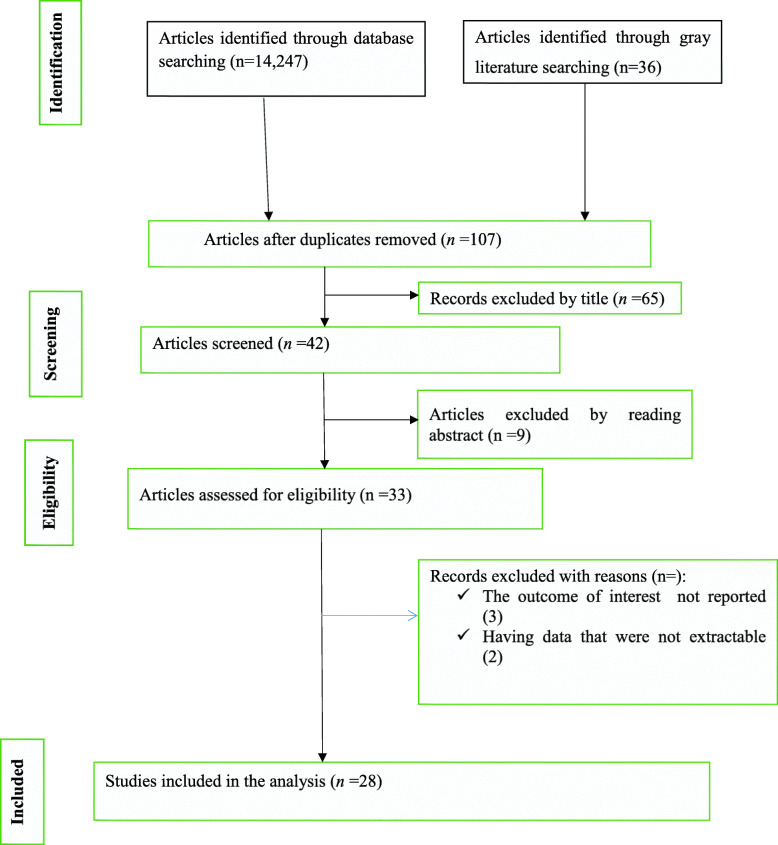
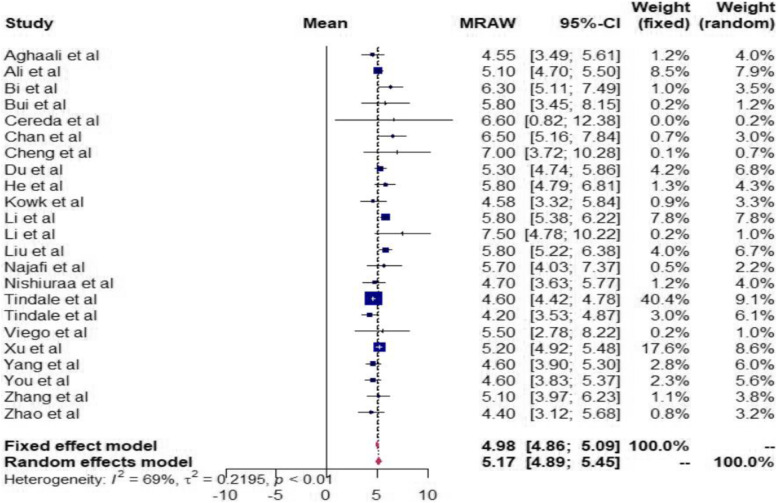
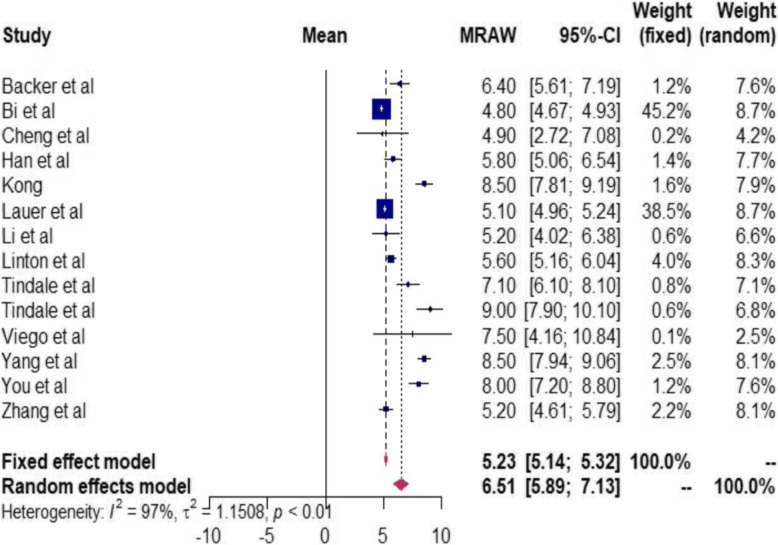
Background: Understanding the epidemiological parameters that determine the transmission dynamics of COVID-19 is essential for public health intervention. Globally, a number of studies were conducted to estimate the average serial interval and incubation period of COVID-19. Combining findings of existing studies that estimate the average serial interval and incubation period of COVID-19 significantly improves the quality of evidence. Hence, this study aimed to determine the overall average serial interval and incubation period of COVID-19. Methods: We followed the PRISMA checklist to present this study. A comprehensive search strategy was carried out from international electronic databases (Google Scholar, PubMed, Science Direct, Web of Science, CINAHL, and Cochrane Library) by two experienced reviewers (MAA and DBK) authors between the 1st of June and the 31st of July 2020. All observational studies either reporting the serial interval or incubation period in persons diagnosed with COVID-19 were included in this study. Heterogeneity across studies was assessed using the I 2 and Higgins test. The NOS adapted for cross-sectional studies was used to evaluate the quality of studies. A random effect Meta-analysis was employed to determine the pooled estimate with 95% (CI). Microsoft Excel was used for data extraction and R software was used for analysis. Results: We combined a total of 23 studies to estimate the overall mean serial interval of COVID-19. The mean serial interval of COVID-19 ranged from 4. 2 to 7.5 days. Our meta-analysis showed that the weighted pooled mean serial interval of COVID-19 was 5.2 (95%CI: 4.9–5.5) days. Additionally, to pool the mean incubation period of COVID-19, we included 14 articles. The mean incubation period of COVID-19 also ranged from 4.8 to 9 days. Accordingly, the weighted pooled mean incubation period of COVID-19 was 6.5 (95%CI: 5.9–7.1) days. Conclusions: This systematic review and meta-analysis showed that the weighted pooled mean serial interval and incubation period of COVID-19 were 5.2, and 6.5 days, respectively. In this study, the average serial interval of COVID-19 is shorter than the average incubation period, which suggests that substantial numbers of COVID-19 cases will be attributed to presymptomatic transmission.
Overview
The claims and statistics of this paper haven’t been checked yet.
Free: it reads the open-access text and checks the first 5 claims that cite a source we can check. Create a free account to check every claim.
Integrity signals
Registry
Cites
Statistics
Figures
Verification
Claims the paper makes
The claims and statistics of this paper haven’t been checked yet.
Free: it reads the open-access text and checks the first 5 claims that cite a source we can check. Create a free account to check every claim.
Claims other papers make about this one
Each is checked against this paper’s own text: does it say what the citing paper says it does?
The cited source says what the claim attributes to it.
In the citing paper
“The mean incubation period was better characterised, enabling a meta-analysis yielding a pooled random effects model estimate of 5⋅42 days (95% CI 4⋅75-6⋅09; appendix 1 p 65), similar to estimates for SARS-CoV-2.123”
From Severe acute respiratory syndrome (SARS) mathematical models and disease parameters: a systematic review (2025) · cites this paper as [123]
Self-check
Percentages, sums and reported differences re-computed from the paper’s own numbers.
The self-check needs the paper’s full text.
Citations
Cites
Preferred Reporting Items for Systematic Reviews and Meta-Analyses: the PRISMA statement
Moher, D., Liberati, A., Tetzlaff, J., Altman, D. G., & for the PRISMA Group (2009) · BMJ · doi:10.1136/bmj.b2535 · Cited by 83,823
Preferred Reporting Items for Systematic Reviews and Meta-Analyses: The PRISMA Statement
Moher, D., Liberati, A., Tetzlaff, J., Altman, D. G., & The PRISMA Group (2009) · PLoS Medicine · doi:10.1371/journal.pmed.1000097 · Cited by 64,042
Preferred reporting items for systematic reviews and meta-analyses: the PRISMA Statement.
(2009) · PubMed Central · Cited by 44,859
Wang, G., Ma, R., Qiao, G., Wada, K., Aizawa, Y., & Satoh, T. (2015) · Integrative Medicine International · doi:10.1159/000368408 · Cited by 18,657
Early transmission dynamics in Wuhan, China, of novel coronavirus-infected pneumonia
Li, Q., Guan, X., Wu, P., Wang, X., Zhou, L., Tong, Y., Ren, R., Leung, K. S. M., Lau, E. H. Y., Wong, J. Y., et al. (2020) · New England Journal of Medicine · doi:10.1056/nejmoa2001316 · Cited by 16,575 · cited 2×
“Among those, the minimum sample size was 10 [17] and the maximum was 183 [20].”
BackgroundWan, X., Wang, W., Liu, J., & Tong, T. (2014) · BMC Medical Research Methodology · doi:10.1186/1471-2288-14-135 · Cited by 11,735 · cited 1×
“In order to pool the results of included studies in a consistent format, we estimated the sample mean and standard deviation for studies that report median and interquartile range [14].”
BackgroundPharmacologic Treatments for Coronavirus Disease 2019 (COVID-19): A Review
Sanders, J. M., Monogue, M. L., Jodlowski, T. Z., & Cutrell, J. B. (2020) · JAMA · doi:10.1001/jama.2020.6019 · Cited by 2,347 · cited 1×
“Effective treatment to block the spread of COVID19 is not developed yet, hence countries implement non-treatment intervention such as social distancing, isolation, face mask and quarantine to reduce its rapid transmission [4, 5].”
BackgroundBi, Q., Wu, Y., Mei, S., Ye, C., Zou, X., Zhang, Z., Liu, X., Wei, L., Truelove, S. A., Zhang, T., et al. (2020) · The Lancet Infectious Diseases · doi:10.1016/s1473-3099(20)30287-5 · Cited by 1,958 · cited 1×
“Among those, the minimum sample size was 10 [17] and the maximum was 183 [20].”
BackgroundTransmission Dynamics and Control of Severe Acute Respiratory Syndrome
Lipsitch, M., Cohen, T., Cooper, B., Robins, J. M., Ma, S., James, L., Gopalakrishna, G., Chew, S. K., Tan, C. C., Samore, M. H., et al. (2003) · Science · doi:10.1126/science.1086616 · Cited by 1,485 · cited 2×
“Tindale et al Singapore January 19 to February 26,2020 93 4.6 0.9 2.7–6.4 17.”
ResultInfluentialCOVID-19, SARS and MERS: are they closely related?
Petrosillo, N., Viceconte, G., Ergonul, O., Ippolito, G., & Petersen, E. (2020) · Clinical Microbiology and Infection · doi:10.1016/j.cmi.2020.03.026 · Cited by 1,108
Research works printed but not linked: 2
- WHO Media briefing on COVID-19 2020
- Newcastle-Ottawa Scale customized for cross-sectional studies In. available from https://static-content.springer.com/esm/.../12889_2012_5111_MOESM3_ESM.doc. Accessed 24 July 2020.
Cited by
Long COVID burden and risk factors in 10 UK longitudinal studies and electronic health records
Thompson, E. J., Williams, D. M., Walker, A. J., Mitchell, R. E., Niedzwiedz, C. L., Yang, T. C., Huggins, C. F., Kwong, A. S. F., Silverwood, R. J., Di Gessa, G., et al. (2022) · Nature Communications · doi:10.1038/s41467-022-30836-0 · Cited by 600
Vaccine equity in low and middle income countries: a systematic review and meta-analysis
Ali, H. A., Hartner, A.-M., Echeverria-Londono, S., Roth, J., Li, X., Abbas, K., Portnoy, A., Vynnycky, E., Woodruff, K., Ferguson, N. M., et al. (2022) · International Journal for Equity in Health · doi:10.1186/s12939-022-01678-5 · Cited by 253
Comparative transmissibility of SARS-CoV-2 variants Delta and Alpha in New England, USA
Earnest, R., Uddin, R., Matluk, N., Renzette, N., Turbett, S. E., Siddle, K. J., Loreth, C., Adams, G., Tomkins-Tinch, C. H., Petrone, M. E., et al. (2022) · Cell Reports Medicine · doi:10.1016/j.xcrm.2022.100583 · Cited by 210
The dynamics of SARS-CoV-2 infectivity with changes in aerosol microenvironment
Oswin, H. P., Haddrell, A. E., Otero-Fernandez, M., Mann, J. F. S., Cogan, T. A., Hilditch, T. G., Tian, J., Hardy, D. A., Hill, D. J., Finn, A., et al. (2022) · Proceedings of the National Academy of Sciences · doi:10.1073/pnas.2200109119 · Cited by 179
Hay, J. A., Kissler, S. M., Fauver, J. R., Mack, C., Tai, C. G., Samant, R. M., Connolly, S., Anderson, D. J., Khullar, G., MacKay, M., et al. (2022) · eLife · doi:10.7554/elife.81849 · Cited by 172
Cohen, C., Kleynhans, J., Gottberg, A. V., McMorrow, M. L., Wolter, N., Bhiman, J. N., Moyes, J., Plessis, M. D., Carrim, M., Buys, A., et al. (2021) · doi:10.1101/2021.07.20.21260855 · Cited by 153
Predictive performance of multi-model ensemble forecasts of COVID-19 across European nations
Sherratt, K., Gruson, H., Grah, R., Johnson, H., Niehus, R., Prasse, B., Sandmann, F., Deuschel, J., Wolffram, D., Abbott, S., et al. (2023) · eLife · doi:10.7554/elife.81916 · Cited by 153
“First, COVID- 19 has a typical serial interval of less than a week (Alene et al., 2021).”
BackgroundDel-Águila-Mejía, J., Wallmann, R., Calvo, J., Rodríguez‐Lozano, J., Valle-Madrazo, T., & Llorente, A. H. A. (2022) · Emerging infectious diseases · doi:10.3201/eid2806.220158 · Cited by 98
“We obtained data on sociodemographic characteristics (age), vaccination status (nonvaccinated or fully vaccinated), and presence or absence of symptoms, as well as symptom onset date (SOD) or diagnosis date (DD) for asymptomatic cases, from the Contact Tracing Program of Cantabria (Appendix, https://wwwnc.cdc.gov/EID/…”
BackgroundInfluentialNipah Virus Outbreak in Kerala State, India Amidst of COVID-19 Pandemic
Yadav, P. D., Sahay, R. R., Balakrishnan, A., Mohandas, S., Radhakrishnan, C., Gokhale, M. D., Balasubramanian, R., Abraham, P., Gupta, N., Sugunan, A., et al. (2022) · Frontiers in Public Health · doi:10.3389/fpubh.2022.818545 · Cited by 89
Galmiche, S., Cortier, T., Charmet, T., Schaeffer, L., Chény, O., Platen, C. V., Lévy, A., Martin, S., Omar, F., David, C., et al. (2023) · The Lancet Microbe · doi:10.1016/s2666-5247(23)00005-8 · Cited by 106
A new lineage nomenclature to aid genomic surveillance of dengue virus
Hill, V., Cleemput, S., Pereira, J. S., Gifford, R. J., Fonseca, V., Tegally, H., Brito, A. F., Ribeiro, G. D. C., de Souza, V. C., Brcko, I. C., et al. (2024) · PLoS Biology · doi:10.1371/journal.pbio.3002834 · Cited by 85
David, S., Wong, J. L. C., Sanchez‐Garrido, J., Kwong, H.-S., Low, W. W., Morecchiato, F., Giani, T., Rossolini, G. M., Brett, S. J., Clements, A., et al. (2022) · PLoS Pathogens · doi:10.1371/journal.ppat.1010334 · Cited by 81
Xu, X., Wu, Y., Kummer, A. G., Zhao, Y., Hu, Z., Wang, Y., Liu, H., Ajelli, M., & Yu, H. (2023) · BMC Medicine · doi:10.1186/s12916-023-03070-8 · Cited by 82
Jacobson, K. B., Pinsky, B. A., Montez Rath, M. E., Wang, H., Miller, J. A., Skhiri, M., Shepard, J., Mathew, R., Lee, G., Bohman, B., et al. (2022) · Clinical Infectious Diseases · doi:10.1093/cid/ciab554 · Cited by 62
“Whether these individuals were exposed before or after their vaccine dose cannot be known, although the dates of symptom onset combined with the typical incubation period of 5–9 days [30] suggest that some early cases were acquired prior to the first vaccine dose.”
BackgroundRapid review and meta-analysis of serial intervals for SARS-CoV-2 Delta and Omicron variants
Madewell, Z. J., Yang, Y., Longini, I. M., Halloran, M. E., Vespignani, A., & Dean, N. E. (2023) · BMC Infectious Diseases · doi:10.1186/s12879-023-08407-5 · Cited by 58
“Search terms were: (“serial interval” or “generation time”), (“Omicron” or “Delta”), and (“SARS-CoV-2” or “COVID-19”) (Supplemental methods).”
ResultInfluentialSARS‐CoV‐2 virulence evolution: Avirulence theory, immunity and trade‐offs
Alizon, S., & Sofonea, M. T. (2021) · Journal of Evolutionary Biology · doi:10.1111/jeb.13896 · Cited by 59
“More generally, the symptoms of an index case appear on average 1.3 days after the mean transmission time to her/his ‘infectee’ (Alene et al., 2021).”
BackgroundInfluentialFollmann, D. A., O’Brien, M. P., Fintzi, J., Fay, M. P., Montefiori, D. C., Mateja, A., Herman, G. A., Hooper, A. T., Turner, K. C., Chan, K.-C., et al. (2023) · Nature Communications · doi:10.1038/s41467-023-39292-w · Cited by 41
SARS-CoV-2 genetic variations associated with COVID-19 pathogenicity
Aiewsakun, P., Nilplub, P., Wongtrakoongate, P., Hongeng, S., & Thitithanyanont, A. (2021) · Microbial Genomics · doi:10.1099/mgen.0.000734 · Cited by 46
“suggests a substantial role of pre- symptomatic/asymptomatic transmission [11].”
BackgroundDu, Z., Liu, C., Wang, L., Bai, Y., Lau, E. H. Y., Wu, P., & Cowling, B. J. (2022) · Journal of Travel Medicine · doi:10.1093/jtm/taac052 · Cited by 41
Herman, G. A., O’Brien, M. P., Forleo‐Neto, E., Sarkar, N., Isa, F., Hou, P., Chan, K., Bar, K. J., Barnabas, R. V., Barouch, D. H., et al. (2022) · The Lancet Infectious Diseases · doi:10.1016/s1473-3099(22)00416-9 · Cited by 41
Alshaikh, F. S., Sindi, O. N., Godman, B., Seaton, R. A., & Kurdi, A. B. (2022) · medRxiv · doi:10.1101/2022.03.02.22271779 · Cited by 40
Shah, M. R., Fatima, S., Khan, S. N., Ullah, S., Himani, G., Wan, K., Lin, T. P. H., Lau, J. Y. N., Liu, Q., & Lam, D. S. C. (2022) · Frontiers in Medicine · doi:10.3389/fmed.2022.928468 · Cited by 35
COVID-19 and the Immune Response: A Multi-Phasic Approach to the Treatment of COVID-19
Sapir, T., Averch, Z., Lerman, B., Bodzin, A., Fishman, Y., & Maitra, R. (2022) · International Journal of Molecular Sciences · doi:10.3390/ijms23158606 · Cited by 41
“The incubation period between SARS-CoV-2 exposure and symptom onset is about five days, although this may vary [7].”
BackgroundInfluentialKantele, A., Paajanen, J., Turunen, S., Pakkanen, S. H., Patjas, A., Itkonen, L., Heiskanen, E., Lappalainen, M., Desquilbet, L., Vapalahti, O. P., et al. (2022) · BMJ Global Health · doi:10.1136/bmjgh-2021-008024 · Cited by 35
Meyer‐Arndt, L., Braun, J., Fauchère, F., Vanshylla, K., Loyal, L., Henze, L., Kruse, B., Dingeldey, M., Jürchott, K., Mangold, M., et al. (2022) · Journal of Neurology Neurosurgery & Psychiatry · doi:10.1136/jnnp-2022-329395 · Cited by 35
Bilinski, A., Ciaranello, A. L., Fitzpatrick, M. C., Giardina, J., Shah, M., Salomon, J. A., & Kendall, E. A. (2022) · Archives of Pediatrics and Adolescent Medicine · doi:10.1001/jamapediatrics.2022.1326 · Cited by 31
Mining long-COVID symptoms from Reddit: characterizing post-COVID syndrome from patient reports
Sarker, A., & Ge, Y. (2021) · JAMIA Open · doi:10.1093/jamiaopen/ooab075 · Cited by 34
Nicolussi, S., Ardjomand-Woelkart, K., Stange, R., Gancitano, G., Klein, P., & Ogal, M. (2022) · Microorganisms · doi:10.3390/microorganisms10020211 · Cited by 28
“In contrast, SARS-CoV-2 is much trickier to contain due to its ability to disseminate through “silent transmitters” during the extended incubation period of up to 14 days [5].”
BackgroundHitchings, M., Lewnard, J., Dean, N., Ko, A. I., Ranzani, O., Andrews, J. R., & Cummings, D. A. T. (2021) · medRxiv · doi:10.1097/ede.0000000000001484 · Cited by 31
Badr, H. S., Zaitchik, B. F., Kerr, G. H., Nguyen, N.-L. H., Chen, Y., Hinson, P., Colston, J. M., Kosek, M. N., Dong, E., Du, H., et al. (2023) · Scientific Data · doi:10.1038/s41597-023-02276-y · Cited by 35
Neuberger, F. S., Grgic, M., Diefenbacher, S., Spensberger, F., Lehfeld, A.-S., Buchholz, U., Haas, W., Kalicki, B., & Kuger, S. (2022) · BMC Public Health · doi:10.1186/s12889-021-12470-5 · Cited by 37
“the average interval from the onset of illness in an infectious / case to the onset of illness of a case infected by that case) is estimated to have a duration of 5 days [22, 23].”
BackgroundEffects of cattle on vector-borne disease risk to humans: A systematic review
Chakraborty, S., Gao, S., Allan, B. F., & Smith, R. L. (2023) · PLoS neglected tropical diseases · doi:10.1371/journal.pntd.0011152 · Cited by 35
Vicco, A., McCormack, C. P., Pedrique, B., Ribeiro, I., Malavige, G. N., & Dorigatti, I. (2024) · EBioMedicine · doi:10.1016/j.ebiom.2024.105134 · Cited by 25
Brosseau, L. M., Escandón-Vargas, K., Ulrich, A. K., Rasmussen, A. L., Roy, C. J., Bix, G. J., Popescu, S. V., Moore, K. A., & Osterholm, M. T. (2021) · Clinical Infectious Diseases · doi:10.1093/cid/ciab903 · Cited by 30
“The incubation period for SARS-CoV-2 (from receipt of an infectious dose to symptom onset) is 2–14 days (median: 4–6 days) [15].”
Dahal, S., Luo, R., Swahn, M. H., & Chowell, G. (2021) · International Journal of Infectious Diseases · doi:10.1016/j.ijid.2021.10.024 · Cited by 30
Thompson, J., McClure, R., Blakely, T. A., Wilson, N., Baker, M. G., Wijnands, J. S., de Sá, T. H., Nice, K. A., Cruz, C., & Stevenson, M. (2022) · Australian and New Zealand Journal of Public Health · doi:10.1111/1753-6405.13221 · Cited by 25
Zhou, M., Zhang, H., Bai, Z., Mann‐Krzisnik, D., Wang, F., & Li, Y. (2023) · Cell Reports Methods · doi:10.1016/j.crmeth.2023.100563 · Cited by 27
A two-sex model of human papillomavirus infection: Vaccination strategies and a case study
Gao, S., Martcheva, M., Miao, H., & Rong, L. (2021) · Journal of Theoretical Biology · doi:10.1016/j.jtbi.2022.111006 · Cited by 25
Shim, E., Choi, W., & Song, Y. (2022) · Journal of Clinical Medicine · doi:10.3390/jcm11123269 · Cited by 22
“1 days)]; however, the estimated serial interval for both periods in our study was shorter than the mean incubation period [26], which indicates that pre-symptomatic transmission frequently occurred in the Republic of Korea.”
BackgroundEstimating the basic reproduction number at the beginning of an outbreak
Boonpatcharanon, S., Heffernan, J. M., & Jankowski, H. (2022) · PLoS ONE · doi:10.1371/journal.pone.0269306 · Cited by 26
Super-spreaders of novel coronaviruses that cause SARS, MERS and COVID-19: a systematic review
Brainard, J. S., Jones, N. R., Harrison, F. C. D., Hammer, C. C., & LAKE, I. R. (2023) · Annals of Epidemiology · doi:10.1016/j.annepidem.2023.03.009 · Cited by 24
Clerbaux, L., Amigó, N., Amorim, M. J., Bal‐Price, A., Leite, S. B., Beronius, A., Bezemer, G. F. G., Bostroem, A.-C., Carusi, A., Coecke, S., et al. (2022) · ALTEX · doi:10.14573/altex.2112161 · Cited by 25
Animal models to study the neurological manifestations of the post-COVID-19 condition
Usai, C., Mateu, L., Brander, C., Vergara‐Alert, J., & Segalés, J. (2023) · Lab Animal · doi:10.1038/s41684-023-01231-z · Cited by 24
Do infectious diseases explain Bitcoin price Fluctuations?
Aliu, F. (2024) · Journal of International Financial Markets Institutions and Money · doi:10.1016/j.intfin.2024.102011 · Cited by 24
Predictive performance of multi-model ensemble forecasts of COVID-19 across European nationsPreprint
Sherratt, K., Gruson, H., Grah, R., Johnson, H., Niehus, R., Prasse, B., Sandmann, F., Deuschel, J., Wolffram, D., Abbott, S., et al. (2022) · medRxiv · doi:10.1101/2022.06.16.22276024 · Cited by 21
“COVID-19 has a typical serial interval of less than a week [42].”
BackgroundQuach, H., Nguyen, K. C., Hoang, T. N. A., Thái, P. Q., Tran, D. N., Le, M. T. Q., Do, T. H., Vien, C. C., Lan, P. T., Ngu, N. D., et al. (2021) · International Journal of Infectious Diseases · doi:10.1016/j.ijid.2021.07.044 · Cited by 22
“Various public health measures were implemented at differnt stages across the world, with varying success ( Liu et al., 2021; laxman et al., 2020; Li et al., 2021 ).”
Preventing a cluster from becoming a new wave in settings with zero community COVID-19 cases
Abeysuriya, R., Delport, D., Stuart, R. M., Sacks‐Davis, R., Kerr, C. C., Mistry, D., Klein, D. J., Hellard, M. E., & Scott, N. (2022) · BMC Infectious Diseases · doi:10.1186/s12879-022-07180-1 · Cited by 21
Voigt, A., Omholt, S. W., & Almaas, E. (2022) · PLoS ONE · doi:10.1371/journal.pone.0263155 · Cited by 19
McCreesh, N., Karat, A. S., Govender, I., Baisley, K. J., Diaconu, K., Yates, T., Houben, R. M. G. J., Kielmann, K., Grant, A. D., & White, R. G. (2022) · BMJ Global Health · doi:10.1136/bmjgh-2021-007136 · Cited by 19
Michalow, J., Hall, L., Rowley, J. T., Anderson, R. L., Hayre, Q., Chico, R. M., Edun, O., Knight, J., Kuchukhidze, S., Majaya, E., et al. (2025) · EClinicalMedicine · doi:10.1016/j.eclinm.2025.103210 · Cited by 33
Petrone, M. E., Rothman, J. E., Breban, M. I., Ott, I. M., Russell, A., Lasek‐Nesselquist, E., Badr, H. S., Kelly, K., Omerza, G., Renzette, N., et al. (2022) · Communications Biology · doi:10.1038/s42003-022-03347-3 · Cited by 18
Hansen, C., Perofsky, A. C., Burstein, R., Famulare, M., Boyle, S., Prentice, R. A., Marshall, C., McCormick, B., Reinhart, D., Capodanno, B., et al. (2022) · JAMA Network Open · doi:10.1001/jamanetworkopen.2022.45861 · Cited by 20
Menardo, F. (2022) · eLife · doi:10.7554/elife.76780 · Cited by 17
Natto, Z. S., Bakhrebah, M. A., Afeef, M. A., Al-Harbi, S., Nassar, M. S., Alhetheel, A., & Ashi, H. M. (2022) · Medicine · doi:10.1097/md.0000000000028925 · Cited by 17
“[5] Therefore, there is evidence indicating the possibility of infection spreading when patients were unaware about their infection status and asymptomatic.[8,9] Current evidence proved saliva can act as a SARS-CoV-2 reservoir.”
BackgroundAlsuwairi, F. A., Alsaleh, A. N., Alsanea, M. S., Al-Qahtani, A. A., Obeid, D. A., Almaghrabi, R. S., Alahideb, B. M., AlAbdulkareem, M. A., Mutabagani, M. S., Althawadi, S., et al. (2023) · Microorganisms · doi:10.3390/microorganisms11051288 · Cited by 19
Switched forced SEIRDV compartmental models to monitor COVID-19 spread and immunization in Italy
Antonelli, E., Piccolomini, E. L., & Zama, F. (2021) · Infectious Disease Modelling · doi:10.1016/j.idm.2021.11.001 · Cited by 17
Hoang, T. V., Willem, L., Coletti, P., Kerckhove, K. V., Minnen, J., Beutels, P., & Hens, N. (2022) · BMC Infectious Diseases · doi:10.1186/s12879-022-07917-y · Cited by 14
Risk of COVID-19 variant importation – How useful are travel control measures?
Arino, J., Boëlle, P., Milliken, E., & Portet, S. (2021) · Infectious Disease Modelling · doi:10.1016/j.idm.2021.06.006 · Cited by 15
Oduwole, E. O., Esterhuizen, T. M., Mahomed, H., & Wiysonge, C. S. (2021) · Vaccines · doi:10.3390/vaccines9111246 · Cited by 16
Almas, S., Carpenter, R. E., Singh, A., Rowan, C., Tamrakar, V. K., & Sharma, R. (2023) · Advances in respiratory medicine · doi:10.3390/arm91010006 · Cited by 16
Sagiraju, H. K. R., Elavarasi, A., Gupta, N., Garg, R., Paul, S. S., Vig, S., Sirohiya, P., Ratre, B. K., Garg, R. K., Pandit, A., et al. (2022) · Indian Journal of Community Medicine · doi:10.4103/ijcm.ijcm_1388_21 · Cited by 14
baseLess: lightweight detection of sequences in raw MinION data
Noordijk, B., Nijland, R., Carrión, V. J., Raaijmakers, J. M., de Ridder, D., & de Lannoy, C. V. (2023) · Bioinformatics Advances · doi:10.1093/bioadv/vbad017 · Cited by 15
Munday, J. D., Abbott, S., Meakin, S. R., & Funk, S. (2023) · PLoS Computational Biology · doi:10.1371/journal.pcbi.1011453 · Cited by 16
Bouman, J. A., Hauser, A., Grimm, S. L., Wohlfender, M., Bhatt, S., Semenova, E., Gelman, A., Althaus, C. L., & Riou, J. (2024) · PLoS Computational Biology · doi:10.1371/journal.pcbi.1011575 · Cited by 22
Yellow fever in Ghana: Predicting emergence and ecology from historical outbreaks
Judson, S. D., Kenu, E., Fuller, T. L., Asiedu‐Bekoe, F., Biritwum-Nyarko, A., Schroeder, L. F., & Dowdy, D. W. (2024) · PLOS Global Public Health · doi:10.1371/journal.pgph.0003337 · Cited by 16
Musa, S., Kissling, E., Valenciano, M., Dizdar, F., Blažević, M., Jogunčić, A., Palo, M., Merdrignac, L., Pebody, R. G., & Jorgensen, P. (2021) · International Journal of Infectious Diseases · doi:10.1016/j.ijid.2021.09.063 · Cited by 14
Mullin, S., Wyk, B. V., Asher, J. L., Compton, S. R., Allore, H. G., & Zeiss, C. J. (2022) · PNAS Nexus · doi:10.1093/pnasnexus/pgac096 · Cited by 16
Nyamari, M. N., Omar, K. M., Fayehun, A. F., Dachi, O., Bwana, B. K., & Awe, O. I. (2023) · bioRxiv (Cold Spring Harbor Laboratory) · doi:10.1101/2023.09.11.557129 · Cited by 13
Metatranscriptomics-based metabolic modeling of patient-specific urinary microbiome during infection
Josephs‐Spaulding, J., Rettig, H. C., Zimmermann, J., Chkonia, M., Mischnik, A., Franzenburg, S., Graspeuntner, S., Rupp, J., & Kaleta, C. (2025) · npj Biofilms and Microbiomes · doi:10.1038/s41522-025-00823-6 · Cited by 15
A comprehensive review on various aspects of SARS-CoV-2 (COVID-19) vaccines
Mazaheri, E., Pordanjani, A. R., Pordanjani, A., Askarpour, H., Arjmand, M., Babakhanian, M., & Amiri, M. (2022) · International Journal of Preventive Medicine · doi:10.4103/ijpvm.ijpvm_513_21 · Cited by 12
Yazdani, Y., Pai, P., Sayfi, S., Mohammadi, A., Perdes, S., Spitzer, D. L., Fabreau, G. E., & Pottie, K. C. (2024) · PLoS ONE · doi:10.1371/journal.pone.0292143 · Cited by 14
Aboubakri, O., Ballester, J., Shoraka, H. R., Karamoozian, A., & Golchini, E. (2022) · Environmental Research · doi:10.1016/j.envres.2022.112887 · Cited by 12
Bees can be trained to identify SARS-CoV-2 infected samples
Kontos, E., Samimi, A., der Honing, R. W. H., Priem, J., Avarguès‐Weber, A., Haverkamp, A., Dicke, M., Gonzáles, J. L., & van der Poel, W. H. M. (2022) · Biology Open · doi:10.1242/bio.059111 · Cited by 13
Breakthrough SARS-CoV-2 infections after vaccination: a critical review
Afshar, Z. M., Barary, M., Hosseinzadeh, R., Alijanpour, A., Hosseinzadeh, D., Ebrahimpour, S., Nazary, K., Sio, T. T. W., Sullman, M. J. M., Carson‐Chahhoud, K., et al. (2022) · Human Vaccines & Immunotherapeutics · doi:10.1080/21645515.2022.2051412 · Cited by 14
Pung, R., Clapham, H., Russell, T., CMMID COVID-19 Working Group, Lee, V. J., & Kucharski, A. J. (2023) · BMC Medicine · doi:10.1186/s12916-023-02802-0 · Cited by 16
A Community Study of SARS-CoV-2 Detection by RT-PCR in Saliva: A Reliable and Effective Method
Fronza, F., Groff, N., Martinelli, A., Passerini, B. Z., Rensi, N., Cortelletti, I., Vivori, N., Adami, V., Helander, A., Bridi, S., et al. (2022) · Viruses · doi:10.3390/v14020313 · Cited by 12
Liang, J., & Yuan, H. (2022) · Environmental Research · doi:10.1016/j.envres.2022.112931 · Cited by 11
Estimation of Excess All-Cause Mortality Due to COVID-19 in Thailand
Wilasang, C., Modchang, C., Lincharoen, T., & Chadsuthi, S. (2022) · Tropical Medicine and Infectious Disease · doi:10.3390/tropicalmed7070116 · Cited by 13
Nguyen, Y., McNabb, K. C., Farley, J. E., & Warren, N. (2022) · BMJ Open · doi:10.1136/bmjopen-2021-054833 · Cited by 11
Beirag, N., Kumar, C., Madan, T., Shamji, M. H., Bulla, R., Mitchell, D. A., Murugaiah, V., Neto, M. M., Temperton, N. J., Idicula‐Thomas, S., et al. (2022) · Frontiers in Immunology · doi:10.3389/fimmu.2022.960733 · Cited by 13
Joshi, B., Lima, Y. V. D., Massom, D. M., Kaing, S., Banga, M.-F., Kamara, E. T., Sesay, S., Borand, L., Taguebue, J.-V., Moh, R., et al. (2023) · PLOS Global Public Health · doi:10.1371/journal.pgph.0001525 · Cited by 16
Hofstetter, K. S., Jacko, N. F., Shumaker, M. J., Talbot, B. M., Petit, R. A., Read, T. D., & David, M. Z. (2024) · Open Forum Infectious Diseases · doi:10.1093/ofid/ofae261 · Cited by 12
Kuylen, E., Torneri, A., Willem, L., Libin, P., Abrams, S., Coletti, P., Franco, N., Verelst, F., Beutels, P., Liesenborgs, J., et al. (2022) · PLoS Computational Biology · doi:10.1371/journal.pcbi.1009980 · Cited by 13
Iacovidou, M. A., Barreaux, P., Spencer, S. E. F., Thomas, M. B., Gorsich, E. E., & Rock, K. S. (2022) · PLoS Computational Biology · doi:10.1371/journal.pcbi.1009540 · Cited by 13
Dujmović, M., Roederer, T., Frison, S., Melki, C., Lauvin, T., & Grellety, E. (2022) · BMJ Open · doi:10.1136/bmjopen-2021-060276 · Cited by 14
Barranco, R., Caristo, I., Spigno, F., Ponzano, M., Trevisan, A., Signori, A., Biagio, A. D., & Ventura, F. (2022) · International Journal of Environmental Research and Public Health · doi:10.3390/ijerph192416764 · Cited by 10
Warne, B., Enright, J. A., Metaxaki, M., Fuller, S., Samworth, R. J., Weale, G., Holgate, J., Samtani, V., Brierley, C., Aggarwal, D., et al. (2021) · Research Square · doi:10.21203/rs.3.rs-520626/v1 · Cited by 10
Serial intervals and incubation periods of the monkeypox virus clades
Wang, S., Zhang, F., Yuan, Z., Xu, M., Wang, Z., Gao, C., Guo, R., & Du, Z. (2022) · Journal of Travel Medicine · doi:10.1093/jtm/taac105 · Cited by 9
Külekçi, B., Schwarz, S., Brait, N., Perkmann‐Nagele, N., Jaksch, P., Höetzenecker, K., Puchhammer‐Stöckl, E., & Goerzer, I. (2022) · Virus Evolution · doi:10.1093/ve/veac076 · Cited by 11
Anagnostopoulos, L., Kourentis, L., Papadakis, A., & Mouchtouri, V. Α. (2022) · International Journal of Environmental Research and Public Health · doi:10.3390/ijerph192013262 · Cited by 9
Kim, H. K., Min, K., & Cho, S. (2023) · BMC Infectious Diseases · doi:10.1186/s12879-023-08640-y · Cited by 16
“Compared to SARS-CoV-2, IFV has a short serial interval and its viral excretion peaks early [19–21].”
Qiu, J., Li, R., Han, D., Shao, Q., Han, Y., Luo, X., & Wu, Y. (2021) · One Health · doi:10.1016/j.onehlt.2021.100335 · Cited by 10
“Considering that the 202 incubation period of COVID-19 ranges from 2 to 14 days or even longer [39, 40], the number of 203 new cases on a certain day is likely to be affected by the cumulative number of inflows from 204 Wuhan before that day, rather than the number of inflows on that day or a day before.”
Salifu, R. S., Hlongwa, M., & Hlongwana, K. W. (2021) · BMJ Open · doi:10.1136/bmjopen-2020-047342 · Cited by 19
On the use of aggregated human mobility data to estimate the reproduction number
Vanni, F., Lambert, D., Palatella, L., & Grigolini, P. (2021) · Scientific Reports · doi:10.1038/s41598-021-02760-8 · Cited by 12
Neuberger, F., Grgic, M., Buchholz, U., Maly-Motta, H. L., Fackler, S., Lehfeld, A.-S., Haas, W., Kalicki, B., & Kuger, S. (2022) · BMC Public Health · doi:10.1186/s12889-022-14521-x · Cited by 13
“5 days when incubation period is added [16].”
BackgroundTuschhoff, B. M., & Kennedy, D. A. (2025) · Journal of Theoretical Biology · doi:10.1016/j.jtbi.2025.112186 · Cited by 11
Mengistu, S. T., Ghebremeskel, G. G., Rezene, A., Idris, M. M., Tikue, T. G., Hamida, M. E., & Achila, O. O. (2022) · BMJ Paediatrics Open · doi:10.1136/bmjpo-2022-001414 · Cited by 8
Geismar, C., Nguyen, V. G., Fragaszy, E., Shrotri, M., Navaratnam, A. M. D., Beale, S., Byrne, T., Fong, W. L. E., Yavlinsky, A., Kovar, J., et al. (2023) · Epidemics · doi:10.1016/j.epidem.2023.100713 · Cited by 7
“…(UKHSA, 2022a) and compared to pooled estimates from meta-analyses of data from international studies published early in the pandemic prior to the emergence of VOC (mean range = 3.03 – 7.6 days) (mean = 5.2 days, 95% Confidence Interval (CI): 4.9 – 5.5) (Griffin et al., 2020; Alene et al., 2021).”
InfluentialGeismar, C., Fragaszy, E., Nguyen, V. G., Fong, W. L. E., Shrotri, M., Beale, S., Rodger, A. J., Lampos, V., Byrne, T., Kovar, J., et al. (2021) · Wellcome Open Research · doi:10.12688/wellcomeopenres.16974.1 · Cited by 8
Effect of control measures on the pattern of COVID-19 Epidemics in Japan
Konishi, T. (2021) · PeerJ · doi:10.7717/peerj.12215 · Cited by 7
“Here, the infection period of τ is assumed to be constant at 5 days (Alene et al., 2021).”
Background
Metadata
- Authors
- Alene, M., Yismaw, L., Assemie, M. A., Ketema, D. B., Gietaneh, W., & Birhan, T. Y.
- Affiliations
- Debre Markos University (ET)
- University of Gondar (ET)
- Corresponding author
- Birhan, Tilahun Yemanu
- ORCID
- Venue
- BMC Infectious Diseases
- Published
- 2021-03-11
- Volume
- 21
- Issue
- 1
- Pages
- 257-257
- ISSN
- 1471-2334 (ISSN-L)
- PMC
- PMC7948654
- OpenAlex
- W3134238461
- Semantic Scholar
- 793e6a39b41863f36dc1112c766c637ddd3a845c
- Cited by
- 354
- References
- 36
- Citations by year
- 2026: 30 · 2025: 44 · 2024: 48 · 2023: 81 · 2022: 110 · 2021: 41
- FWCI
- 6.98
- Type
- journal article
- Language
- en
- Open access
- gold
- doi.org
- Licence
- cc-by
- creativecommons.org/licenses/by/4.0/ (tdm)
- creativecommons.org/licenses/by/4.0/ (vor)
- Locations
- BMC Infectious Diseases (publishedVersion, cc-by)
- PubMed Central (publishedVersion, cc-by)
- PubMed (publishedVersion)
- DOAJ (DOAJ: Directory of Open Access Journals) (submittedVersion, cc-by-sa)
- Topics
- Physical Sciences › Mathematics › Modeling and Simulation › COVID-19 epidemiological studies
- Health Sciences › Medicine › Infectious Diseases › SARS-CoV-2 and COVID-19 Research
- Health Sciences › Medicine › Infectious Diseases › COVID-19 Clinical Research Studies
- Keywords
- COVID-19 pandemic, serial interval, incubation period, pre-symptomatic transmission, transmission dynamics, SARS-CoV-2
- MeSH terms
- COVID-19, SARS-CoV-2, Cross-Sectional Studies, Humans, Infectious Disease Incubation Period, Asymptomatic Infections
About these checks
Registry, retraction, Cites and statistics results are computed, not judged, with one exception: a printed reference that no index lists is read once by a model before it counts as a citation error. Claims are extracted by a model and kept only when their quote appears verbatim in the text; each cited source is then checked, with a model’s help, for whether it says what the claim relies on. Those verdicts can be wrong — read the claim’s quote and the cited source before relying on one.
Statistics and arithmetic are recomputed, not judged.
Confidence bands are shown only for fields calibrated on our annotated test set. None is calibrated yet, so no band is shown.
What counts as a claim ›How we measure confidence ›How we check this ›
Are you an author, or do you see a problem with this page? Request a review
Data sources
Bibliographic data: Semantic Scholar, OpenAlex, Crossref.
Contains information from the Semantic Scholar Academic Graph Datasets, made available under the ODC Attribution License (ODC-BY 1.0).
Semantic Scholar’s data is described in: Kinney, R., et al. (2023). The Semantic Scholar Open Data Platform. arXiv:2301.10140.
