

Serial interval and incubation period of COVID-19: a systematic review and meta-analysis
Open accessThe DOI matches its Crossref record; 39 of the 39 references it cites were found in a registry or an index.
Abstract
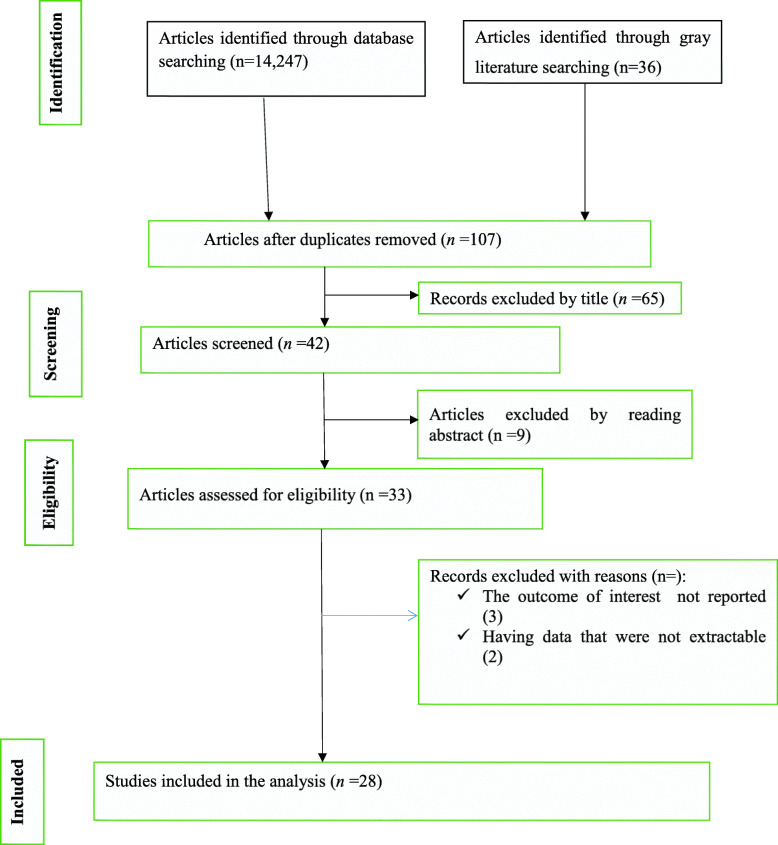
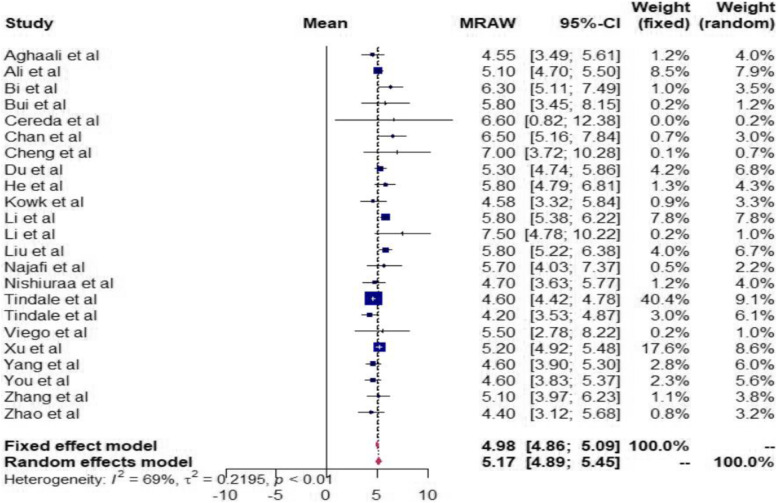
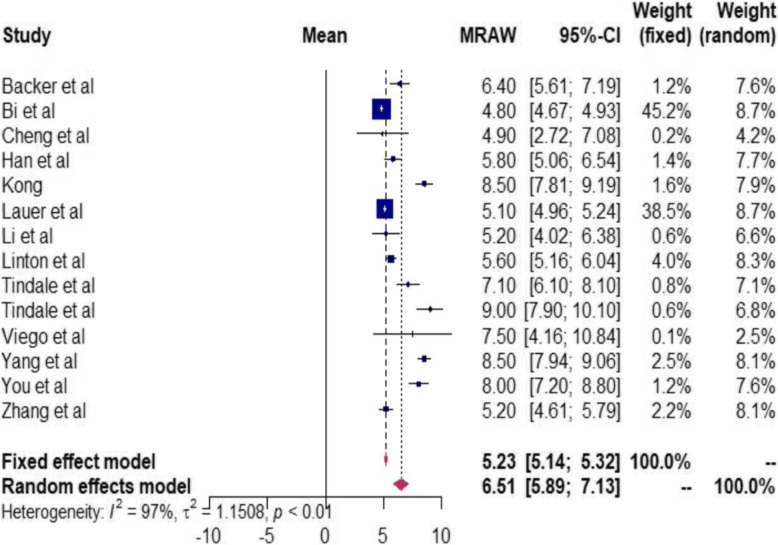
Background: Understanding the epidemiological parameters that determine the transmission dynamics of COVID-19 is essential for public health intervention. Globally, a number of studies were conducted to estimate the average serial interval and incubation period of COVID-19. Combining findings of existing studies that estimate the average serial interval and incubation period of COVID-19 significantly improves the quality of evidence. Hence, this study aimed to determine the overall average serial interval and incubation period of COVID-19. Methods: We followed the PRISMA checklist to present this study. A comprehensive search strategy was carried out from international electronic databases (Google Scholar, PubMed, Science Direct, Web of Science, CINAHL, and Cochrane Library) by two experienced reviewers (MAA and DBK) authors between the 1st of June and the 31st of July 2020. All observational studies either reporting the serial interval or incubation period in persons diagnosed with COVID-19 were included in this study. Heterogeneity across studies was assessed using the I 2 and Higgins test. The NOS adapted for cross-sectional studies was used to evaluate the quality of studies. A random effect Meta-analysis was employed to determine the pooled estimate with 95% (CI). Microsoft Excel was used for data extraction and R software was used for analysis. Results: We combined a total of 23 studies to estimate the overall mean serial interval of COVID-19. The mean serial interval of COVID-19 ranged from 4. 2 to 7.5 days. Our meta-analysis showed that the weighted pooled mean serial interval of COVID-19 was 5.2 (95%CI: 4.9–5.5) days. Additionally, to pool the mean incubation period of COVID-19, we included 14 articles. The mean incubation period of COVID-19 also ranged from 4.8 to 9 days. Accordingly, the weighted pooled mean incubation period of COVID-19 was 6.5 (95%CI: 5.9–7.1) days. Conclusions: This systematic review and meta-analysis showed that the weighted pooled mean serial interval and incubation period of COVID-19 were 5.2, and 6.5 days, respectively. In this study, the average serial interval of COVID-19 is shorter than the average incubation period, which suggests that substantial numbers of COVID-19 cases will be attributed to presymptomatic transmission.
Overview
The claims and statistics of this paper haven’t been checked yet.
Free: it reads the open-access text and checks the first 5 claims that cite a source we can check. Create a free account to check every claim.
Integrity signals
Registry
Cites
Statistics
Figures
Verification
Claims the paper makes
The claims and statistics of this paper haven’t been checked yet.
Free: it reads the open-access text and checks the first 5 claims that cite a source we can check. Create a free account to check every claim.
Claims other papers make about this one
Each is checked against this paper’s own text: does it say what the citing paper says it does?
The cited source says what the claim attributes to it.
In the citing paper
“The mean incubation period was better characterised, enabling a meta-analysis yielding a pooled random effects model estimate of 5⋅42 days (95% CI 4⋅75-6⋅09; appendix 1 p 65), similar to estimates for SARS-CoV-2.123”
From Severe acute respiratory syndrome (SARS) mathematical models and disease parameters: a systematic review (2025) · cites this paper as [123]
Self-check
Percentages, sums and reported differences re-computed from the paper’s own numbers.
The self-check needs the paper’s full text.
Citations
Cites
Preferred Reporting Items for Systematic Reviews and Meta-Analyses: the PRISMA statement
Moher, D., Liberati, A., Tetzlaff, J., Altman, D. G., & for the PRISMA Group (2009) · BMJ · doi:10.1136/bmj.b2535 · Cited by 83,823
Preferred Reporting Items for Systematic Reviews and Meta-Analyses: The PRISMA Statement
Moher, D., Liberati, A., Tetzlaff, J., Altman, D. G., & The PRISMA Group (2009) · PLoS Medicine · doi:10.1371/journal.pmed.1000097 · Cited by 64,042
Preferred reporting items for systematic reviews and meta-analyses: the PRISMA Statement.
(2009) · PubMed Central · Cited by 44,859
Wang, G., Ma, R., Qiao, G., Wada, K., Aizawa, Y., & Satoh, T. (2015) · Integrative Medicine International · doi:10.1159/000368408 · Cited by 18,657
Early transmission dynamics in Wuhan, China, of novel coronavirus-infected pneumonia
Li, Q., Guan, X., Wu, P., Wang, X., Zhou, L., Tong, Y., Ren, R., Leung, K. S. M., Lau, E. H. Y., Wong, J. Y., et al. (2020) · New England Journal of Medicine · doi:10.1056/nejmoa2001316 · Cited by 16,575 · cited 2×
“Among those, the minimum sample size was 10 [17] and the maximum was 183 [20].”
BackgroundWan, X., Wang, W., Liu, J., & Tong, T. (2014) · BMC Medical Research Methodology · doi:10.1186/1471-2288-14-135 · Cited by 11,735 · cited 1×
“In order to pool the results of included studies in a consistent format, we estimated the sample mean and standard deviation for studies that report median and interquartile range [14].”
BackgroundPharmacologic Treatments for Coronavirus Disease 2019 (COVID-19): A Review
Sanders, J. M., Monogue, M. L., Jodlowski, T. Z., & Cutrell, J. B. (2020) · JAMA · doi:10.1001/jama.2020.6019 · Cited by 2,347 · cited 1×
“Effective treatment to block the spread of COVID19 is not developed yet, hence countries implement non-treatment intervention such as social distancing, isolation, face mask and quarantine to reduce its rapid transmission [4, 5].”
BackgroundBi, Q., Wu, Y., Mei, S., Ye, C., Zou, X., Zhang, Z., Liu, X., Wei, L., Truelove, S. A., Zhang, T., et al. (2020) · The Lancet Infectious Diseases · doi:10.1016/s1473-3099(20)30287-5 · Cited by 1,958 · cited 1×
“Among those, the minimum sample size was 10 [17] and the maximum was 183 [20].”
BackgroundTransmission Dynamics and Control of Severe Acute Respiratory Syndrome
Lipsitch, M., Cohen, T., Cooper, B., Robins, J. M., Ma, S., James, L., Gopalakrishna, G., Chew, S. K., Tan, C. C., Samore, M. H., et al. (2003) · Science · doi:10.1126/science.1086616 · Cited by 1,485 · cited 2×
“Tindale et al Singapore January 19 to February 26,2020 93 4.6 0.9 2.7–6.4 17.”
ResultInfluentialCOVID-19, SARS and MERS: are they closely related?
Petrosillo, N., Viceconte, G., Ergonul, O., Ippolito, G., & Petersen, E. (2020) · Clinical Microbiology and Infection · doi:10.1016/j.cmi.2020.03.026 · Cited by 1,108
Serial interval of novel coronavirus (COVID-19) infections
Nishiura, H., Linton, N. M., & Akhmetzhanov, A. R. (2020) · International Journal of Infectious Diseases · doi:10.1016/j.ijid.2020.02.060 · Cited by 1,083 · cited 1×
“Previous studies reported that the average serial interval of COVID-19 is shorter than the average incubation period, which suggests that a substantial proportion of presymptomatic transmission [8, 9].”
BackgroundRead, J. M., Bridgen, J. R. E., Cummings, D. A. T., Ho, A., & Jewell, C. P. (2021) · Philosophical Transactions of the Royal Society B · doi:10.1098/rstb.2020.0265 · Cited by 977
Novel coronavirus 2019-nCoV: early estimation of epidemiological parameters and epidemic predictionsPreprint
Read, J. M., Bridgen, J. R. E., Cummings, D. A. T., et al. (2020) · medRxiv · doi:10.1101/2020.01.23.20018549 · Cited by 951
Donnelly, C. A., Ghani, A. C., Leung, G. M., Hedley, A. J., Fraser, C., Riley, S., Abu-Raddad, L. J., Ho, L.-M., Thach, T.-Q., Chau, P., et al. (2003) · The Lancet · doi:10.1016/s0140-6736(03)13410-1 · Cited by 940
Incubation periods of acute respiratory viral infections: a systematic review
Lessler, J., Reich, N. G., Brookmeyer, R., Perl, T. M., Nelson, K. E., & Cummings, D. A. (2009) · The Lancet Infectious Diseases · doi:10.1016/s1473-3099(09)70069-6 · Cited by 883 · cited 11×
“In the absence of strong public health interventions, preliminary estimates showed that the basic reproduction number of Severe Acute Respiratory Syndrome Coronovirus-2 (SARS-CoV-2) ranged from 2.8 to 5.5 [6].”
BackgroundInfluentialMelsen, W. G., Bootsma, M. C. J., Rovers, M. M., & Bonten, M. J. M. (2014) · Clinical Microbiology and Infection · doi:10.1111/1469-0691.12494 · Cited by 776 · cited 1×
“To determine the extent of variation between the studies, we did a heterogeneity test using the Higgins method, that was quantified by I(2) value [15].”
MethodXie, M., & Chen, Q. (2020) · International Journal of Infectious Diseases · doi:10.1016/j.ijid.2020.03.071 · Cited by 462 · cited 8×
“Moreover, the average incubation period of COVID-19 obtained in the current study is longer than the mean incubation period of MERS reported in Hong Kong, and the Middle East [29, 30].”
ResultInfluentialEvidence for transmission of COVID-19 prior to symptom onset
Tindale, L. C., Stockdale, J. E., Coombe, M., Garlock, E. S., Lau, W. Y. V., Saraswat, M., Zhang, L., Chen, D., Wallinga, J., & Colijn, C. (2020) · eLife · doi:10.7554/elife.57149 · Cited by 452
van Enst, W. A., Ochodo, E., Scholten, R. J., Hooft, L., & Leeflang, M. M. (2014) · BMC Medical Research Methodology · doi:10.1186/1471-2288-14-70 · Cited by 429 · cited 1×
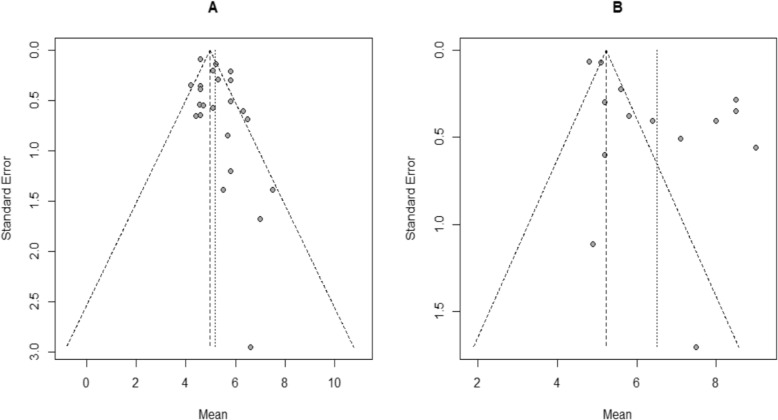
“The publication bias was also assessed using a funnel plot and Egger’s tests [16].”
MethodEstimated effectiveness of symptom and risk screening to prevent the spread of COVID-19
Gostic, K., Gomez, A. C., Mummah, R. O., Kucharski, A. J., & Lloyd-Smith, J. O. (2020) · eLife · doi:10.7554/elife.55570 · Cited by 417 · cited 2×
“Effective treatment to block the spread of COVID19 is not developed yet, hence countries implement non-treatment intervention such as social distancing, isolation, face mask and quarantine to reduce its rapid transmission [4, 5].”
BackgroundCauchemez, S., Fraser, C., Van Kerkhove, M. D., Donnelly, C. A., Riley, S., Rambaut, A., Enouf, V., van der Werf, S., & Ferguson, N. M. (2014) · The Lancet Infectious Diseases · doi:10.1016/s1473-3099(13)70304-9 · Cited by 347
Preliminary epidemiological assessment of MERS-CoV outbreak in South Korea, May to June 2015
Cowling, B. J., Park, M., Fang, V. J., Wu, P., Leung, G. M., & Wu, J. T. (2015) · Eurosurveillance · doi:10.2807/1560-7917.es2015.20.25.21163 · Cited by 323 · cited 3×
“Furthermore, the average incubation period of COVID-19 obtained in this study is longer than the average incubation period of SARS that reported in Toronto, Hong Kong, and Beijing [24, 27].”
ResultInfluentialMERS transmission and risk factors: a systematic review
Park, J.-E., Jung, S., Kim, A., & Park, J.-E. (2018) · BMC Public Health · doi:10.1186/s12889-018-5484-8 · Cited by 285 · cited 2×
“Moreover, the average incubation period of COVID-19 obtained in the current study is longer than the mean incubation period of MERS reported in Hong Kong, and the Middle East [29, 30].”
ResultInfluentialDoes SARS‐CoV‐2 has a longer incubation period than SARS and MERS?
Jiang, X., Rayner, S., & Luo, M. (2020) · Journal of Medical Virology · doi:10.1002/jmv.25708 · Cited by 244 · cited 1×
“A study that compares the incubation period of SARS-CoV-2, severe acute respiratory syndrome coronavirus (SARS-CoV), and middle east respiratory syndrome coronavirus (MERS-CoV) reported that no observable difference in the incubation was noted between them [11].”
ResultTransmission interval estimates suggest pre-symptomatic spread of COVID-19Preprint
Tindale, L. C., Coombe, M., Stockdale, J. E., et al. (2020) · medRxiv · doi:10.1101/2020.03.03.20029983 · Cited by 237
Bacteremia causes hippocampal apoptosis in experimental pneumococcal meningitis
Østergaard, C., Leib, S. L., Rowland, I., & Brandt, C. T. (2010) · BMC Infectious Diseases · doi:10.1186/1471-2334-10-1 · Cited by 228
Bank, W. (2020) · World Bank, Washington, DC eBooks · doi:10.1596/33696 · Cited by 218
Lu, L., Zhong, W., Bian, Z., Li, Z., Zhang, K., Liang, B., Zhong, Y., Hu, M., Lin, L., Liu, J., et al. (2020) · Journal of Infection · doi:10.1016/j.jinf.2020.07.002 · Cited by 173
Pormohammad, A., Ghorbani, S., Khatami, A., Farzi, R., Baradaran, B., Turner, D., Turner, R. J., Bahr, N. C., & Idrovo, J. (2020) · Reviews in Medical Virology · doi:10.1002/rmv.2112 · Cited by 115
Xu, X.-K., Liu, X. F., Wu, Y., Ali, S. T., Du, Z., Bosetti, P., Lau, E. H. Y., Cowling, B. J., & Wang, L. (2020) · Clinical Infectious Diseases · doi:10.1093/cid/ciaa790 · Cited by 105 · cited 1×
“The minimum and maximum pairs of COVID-19 patients among the included studies were 6 [17] and 1407 [18], respectively.”
BackgroundMa, S., Zhang, J., Zeng, M., Yun, Q., Guo, W., Zheng, Y., Zhao, S., Wang, M. H., & Yang, Z. (2020) · medRxiv · doi:10.1101/2020.03.21.20040329 · Cited by 99
Estimates of serial interval for COVID-19: A systematic review and meta-analysis
Rai, B., Shukla, A., & Dwivedi, L. K. (2021) · Clinical Epidemiology and Global Health · doi:10.1016/j.cegh.2020.08.007 · Cited by 97
A comparative epidemiologic analysis of SARS in Hong Kong, Beijing and Taiwan
Lau, E. H., Hsiung, C. A., Cowling, B. J., Chen, C.-H., Ho, L.-M., Tsang, T., Chang, C.-W., Donnelly, C. A., & Leung, G. M. (2010) · BMC Infectious Diseases · doi:10.1186/1471-2334-10-50 · Cited by 87 · cited 1×
“Furthermore, the average incubation period of COVID-19 obtained in this study is longer than the average incubation period of SARS that reported in Toronto, Hong Kong, and Beijing [24, 27].”
ResultAssociation between Severity of MERS-CoV Infection and Incubation Period
Virlogeux, V., Park, M., Wu, J. T. K., & Cowling, B. J. (2015) · Emerging infectious diseases · doi:10.3201/eid2203.151437 · Cited by 61 · cited 1×
“A longer incubation period was associated with a reduction in the risk of death [32].”
BackgroundVirlogeux, V., Fang, V. J., Wu, J. T. K., Ho, L., Peiris, M. J. S., Leung, G. M., & Cowling, B. J. (2015) · Epidemiology · doi:10.1097/ede.0000000000000339 · Cited by 60 · cited 1×
“The possible explanation for this result might be the associations between shorter incubation periods and greater severity of infectious disease [31].”
BackgroundMeta-Analysis of Several Epidemic Characteristics of COVID-19
Zhang, P., Wang, T., & Xie, S. X. (2021) · Journal of Data Science · doi:10.6339/jds.202007_18(3).0019 · Cited by 24
Viego, V., Geri, M., Castiglia, J., & Jouglard, E. (2020) · Ciência & Saúde Coletiva · doi:10.1590/1413-81232020259.20852020 · Cited by 24
Chan, Y.-W. D., Flasche, S., Lam, T.-L. T., Leung, M.-H. J., Miu-ling, W., Lam, H. Y., & Chuang, S. K. (2020) · Wellcome Open Research · doi:10.12688/wellcomeopenres.15896.1 · Cited by 18 · cited 1×
“Serial interval and incubation period are the two main epidemiological parameters that determine the transmission dynamics of infectious diseases [7].”
BackgroundUntitled work
Moher (2009) · doi:10.1371/journal.pmed1000097
Research works printed but not linked: 2
- WHO Media briefing on COVID-19 2020
- Newcastle-Ottawa Scale customized for cross-sectional studies In. available from https://static-content.springer.com/esm/.../12889_2012_5111_MOESM3_ESM.doc. Accessed 24 July 2020.
Cited by
Long COVID burden and risk factors in 10 UK longitudinal studies and electronic health records
Thompson, E. J., Williams, D. M., Walker, A. J., Mitchell, R. E., Niedzwiedz, C. L., Yang, T. C., Huggins, C. F., Kwong, A. S. F., Silverwood, R. J., Di Gessa, G., et al. (2022) · Nature Communications · doi:10.1038/s41467-022-30836-0 · Cited by 600
Vaccine equity in low and middle income countries: a systematic review and meta-analysis
Ali, H. A., Hartner, A.-M., Echeverria-Londono, S., Roth, J., Li, X., Abbas, K., Portnoy, A., Vynnycky, E., Woodruff, K., Ferguson, N. M., et al. (2022) · International Journal for Equity in Health · doi:10.1186/s12939-022-01678-5 · Cited by 253
Comparative transmissibility of SARS-CoV-2 variants Delta and Alpha in New England, USA
Earnest, R., Uddin, R., Matluk, N., Renzette, N., Turbett, S. E., Siddle, K. J., Loreth, C., Adams, G., Tomkins-Tinch, C. H., Petrone, M. E., et al. (2022) · Cell Reports Medicine · doi:10.1016/j.xcrm.2022.100583 · Cited by 210
The dynamics of SARS-CoV-2 infectivity with changes in aerosol microenvironment
Oswin, H. P., Haddrell, A. E., Otero-Fernandez, M., Mann, J. F. S., Cogan, T. A., Hilditch, T. G., Tian, J., Hardy, D. A., Hill, D. J., Finn, A., et al. (2022) · Proceedings of the National Academy of Sciences · doi:10.1073/pnas.2200109119 · Cited by 179
Hay, J. A., Kissler, S. M., Fauver, J. R., Mack, C., Tai, C. G., Samant, R. M., Connolly, S., Anderson, D. J., Khullar, G., MacKay, M., et al. (2022) · eLife · doi:10.7554/elife.81849 · Cited by 172
Metadata
- Authors
- Alene, M., Yismaw, L., Assemie, M. A., Ketema, D. B., Gietaneh, W., & Birhan, T. Y.
- Affiliations
- Debre Markos University (ET)
- University of Gondar (ET)
- Corresponding author
- Birhan, Tilahun Yemanu
- ORCID
- Venue
- BMC Infectious Diseases
- Published
- 2021-03-11
- Volume
- 21
- Issue
- 1
- Pages
- 257-257
- ISSN
- 1471-2334 (ISSN-L)
- PMC
- PMC7948654
- OpenAlex
- W3134238461
- Semantic Scholar
- 793e6a39b41863f36dc1112c766c637ddd3a845c
- Cited by
- 354
- References
- 36
- Citations by year
- 2026: 30 · 2025: 44 · 2024: 48 · 2023: 81 · 2022: 110 · 2021: 41
- FWCI
- 6.98
- Type
- journal article
- Language
- en
- Open access
- gold
- doi.org
- Licence
- cc-by
- creativecommons.org/licenses/by/4.0/ (tdm)
- creativecommons.org/licenses/by/4.0/ (vor)
- Locations
- BMC Infectious Diseases (publishedVersion, cc-by)
- PubMed Central (publishedVersion, cc-by)
- PubMed (publishedVersion)
- DOAJ (DOAJ: Directory of Open Access Journals) (submittedVersion, cc-by-sa)
- Topics
- Physical Sciences › Mathematics › Modeling and Simulation › COVID-19 epidemiological studies
- Health Sciences › Medicine › Infectious Diseases › SARS-CoV-2 and COVID-19 Research
- Health Sciences › Medicine › Infectious Diseases › COVID-19 Clinical Research Studies
- Keywords
- COVID-19 pandemic, serial interval, incubation period, pre-symptomatic transmission, transmission dynamics, SARS-CoV-2
- MeSH terms
- COVID-19, SARS-CoV-2, Cross-Sectional Studies, Humans, Infectious Disease Incubation Period, Asymptomatic Infections
About these checks
Registry, retraction, Cites and statistics results are computed, not judged, with one exception: a printed reference that no index lists is read once by a model before it counts as a citation error. Claims are extracted by a model and kept only when their quote appears verbatim in the text; each cited source is then checked, with a model’s help, for whether it says what the claim relies on. Those verdicts can be wrong — read the claim’s quote and the cited source before relying on one.
Statistics and arithmetic are recomputed, not judged.
Confidence bands are shown only for fields calibrated on our annotated test set. None is calibrated yet, so no band is shown.
What counts as a claim ›How we measure confidence ›How we check this ›
Are you an author, or do you see a problem with this page? Request a review
Data sources
Bibliographic data: Semantic Scholar, OpenAlex, Crossref.
Contains information from the Semantic Scholar Academic Graph Datasets, made available under the ODC Attribution License (ODC-BY 1.0).
Semantic Scholar’s data is described in: Kinney, R., et al. (2023). The Semantic Scholar Open Data Platform. arXiv:2301.10140.
