

Serial interval and incubation period of COVID-19: a systematic review and meta-analysis
Open accessThe DOI matches its Crossref record; 37 of the 39 references it cites were found in a registry or an index.
Abstract
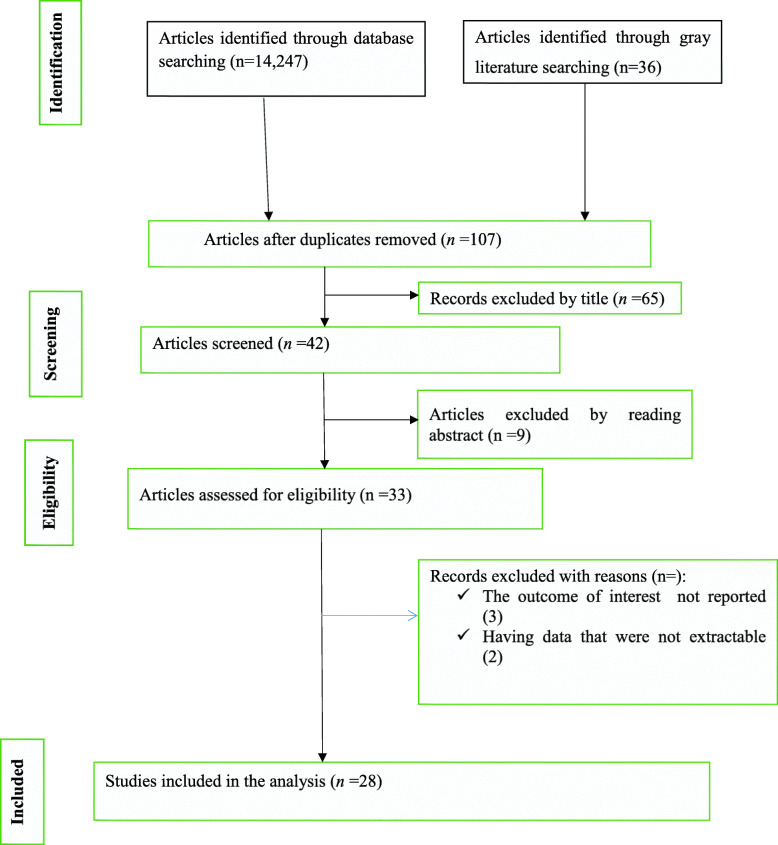
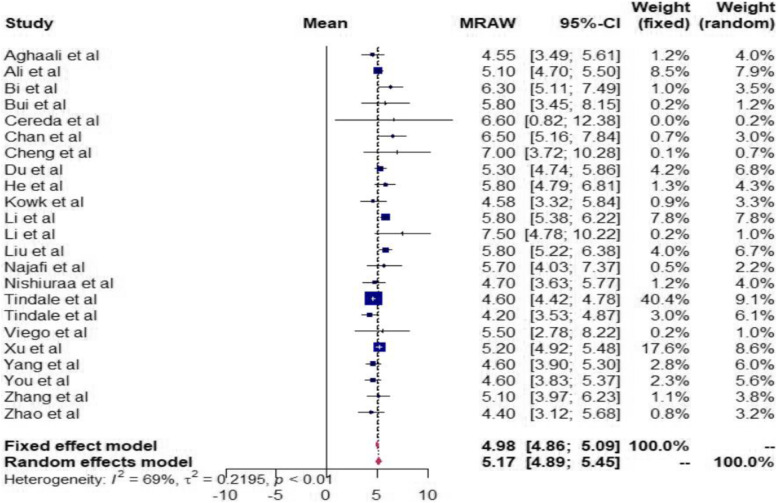
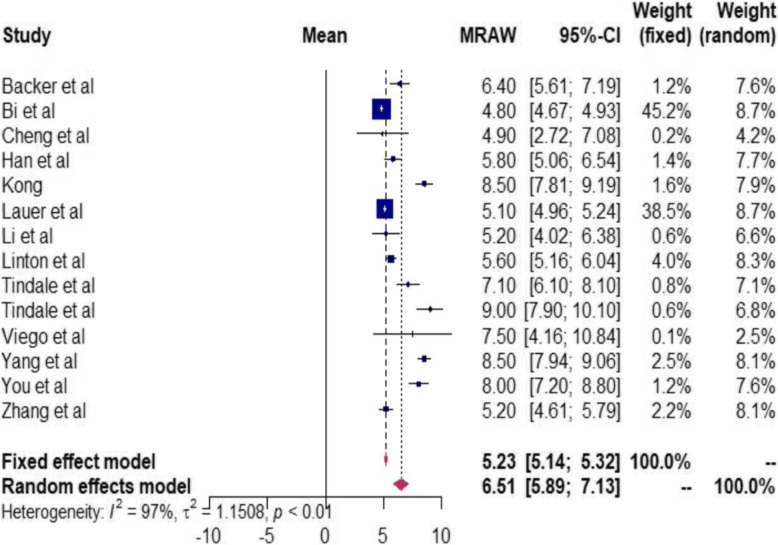
Background: Understanding the epidemiological parameters that determine the transmission dynamics of COVID-19 is essential for public health intervention. Globally, a number of studies were conducted to estimate the average serial interval and incubation period of COVID-19. Combining findings of existing studies that estimate the average serial interval and incubation period of COVID-19 significantly improves the quality of evidence. Hence, this study aimed to determine the overall average serial interval and incubation period of COVID-19. Methods: We followed the PRISMA checklist to present this study. A comprehensive search strategy was carried out from international electronic databases (Google Scholar, PubMed, Science Direct, Web of Science, CINAHL, and Cochrane Library) by two experienced reviewers (MAA and DBK) authors between the 1st of June and the 31st of July 2020. All observational studies either reporting the serial interval or incubation period in persons diagnosed with COVID-19 were included in this study. Heterogeneity across studies was assessed using the I 2 and Higgins test. The NOS adapted for cross-sectional studies was used to evaluate the quality of studies. A random effect Meta-analysis was employed to determine the pooled estimate with 95% (CI). Microsoft Excel was used for data extraction and R software was used for analysis. Results: We combined a total of 23 studies to estimate the overall mean serial interval of COVID-19. The mean serial interval of COVID-19 ranged from 4. 2 to 7.5 days. Our meta-analysis showed that the weighted pooled mean serial interval of COVID-19 was 5.2 (95%CI: 4.9–5.5) days. Additionally, to pool the mean incubation period of COVID-19, we included 14 articles. The mean incubation period of COVID-19 also ranged from 4.8 to 9 days. Accordingly, the weighted pooled mean incubation period of COVID-19 was 6.5 (95%CI: 5.9–7.1) days. Conclusions: This systematic review and meta-analysis showed that the weighted pooled mean serial interval and incubation period of COVID-19 were 5.2, and 6.5 days, respectively. In this study, the average serial interval of COVID-19 is shorter than the average incubation period, which suggests that substantial numbers of COVID-19 cases will be attributed to presymptomatic transmission.
Overview
The claims and statistics of this paper haven’t been checked yet.
Free: it reads the open-access text and checks the first 5 claims that cite a source we can check. Create a free account to check every claim.
Integrity signals
Registry
Cites
Statistics
Figures
Verification
Claims the paper makes
The claims and statistics of this paper haven’t been checked yet.
Free: it reads the open-access text and checks the first 5 claims that cite a source we can check. Create a free account to check every claim.
Claims other papers make about this one
Each is checked against this paper’s own text: does it say what the citing paper says it does?
The cited source says what the claim attributes to it.
In the citing paper
“The mean incubation period was better characterised, enabling a meta-analysis yielding a pooled random effects model estimate of 5⋅42 days (95% CI 4⋅75-6⋅09; appendix 1 p 65), similar to estimates for SARS-CoV-2.123”
From Severe acute respiratory syndrome (SARS) mathematical models and disease parameters: a systematic review (2025) · cites this paper as [123]
Self-check
Percentages, sums and reported differences re-computed from the paper’s own numbers.
The self-check needs the paper’s full text.
Citations
Cites
Preferred Reporting Items for Systematic Reviews and Meta-Analyses: the PRISMA statement
Moher, D., Liberati, A., Tetzlaff, J., Altman, D. G., & for the PRISMA Group (2009) · BMJ · doi:10.1136/bmj.b2535 · Cited by 83,823
Preferred Reporting Items for Systematic Reviews and Meta-Analyses: The PRISMA Statement
Moher, D., Liberati, A., Tetzlaff, J., Altman, D. G., & The PRISMA Group (2009) · PLoS Medicine · doi:10.1371/journal.pmed.1000097 · Cited by 64,042
Preferred reporting items for systematic reviews and meta-analyses: the PRISMA Statement.
(2009) · PubMed Central · Cited by 44,859
Wang, G., Ma, R., Qiao, G., Wada, K., Aizawa, Y., & Satoh, T. (2015) · Integrative Medicine International · doi:10.1159/000368408 · Cited by 18,657
Early transmission dynamics in Wuhan, China, of novel coronavirus-infected pneumonia
Li, Q., Guan, X., Wu, P., Wang, X., Zhou, L., Tong, Y., Ren, R., Leung, K. S. M., Lau, E. H. Y., Wong, J. Y., et al. (2020) · New England Journal of Medicine · doi:10.1056/nejmoa2001316 · Cited by 16,575 · cited 2×
“Among those, the minimum sample size was 10 [17] and the maximum was 183 [20].”
BackgroundWan, X., Wang, W., Liu, J., & Tong, T. (2014) · BMC Medical Research Methodology · doi:10.1186/1471-2288-14-135 · Cited by 11,735 · cited 1×
“In order to pool the results of included studies in a consistent format, we estimated the sample mean and standard deviation for studies that report median and interquartile range [14].”
BackgroundPharmacologic Treatments for Coronavirus Disease 2019 (COVID-19): A Review
Sanders, J. M., Monogue, M. L., Jodlowski, T. Z., & Cutrell, J. B. (2020) · JAMA · doi:10.1001/jama.2020.6019 · Cited by 2,347 · cited 1×
“Effective treatment to block the spread of COVID19 is not developed yet, hence countries implement non-treatment intervention such as social distancing, isolation, face mask and quarantine to reduce its rapid transmission [4, 5].”
BackgroundBi, Q., Wu, Y., Mei, S., Ye, C., Zou, X., Zhang, Z., Liu, X., Wei, L., Truelove, S. A., Zhang, T., et al. (2020) · The Lancet Infectious Diseases · doi:10.1016/s1473-3099(20)30287-5 · Cited by 1,958 · cited 1×
“Among those, the minimum sample size was 10 [17] and the maximum was 183 [20].”
BackgroundTransmission Dynamics and Control of Severe Acute Respiratory Syndrome
Lipsitch, M., Cohen, T., Cooper, B., Robins, J. M., Ma, S., James, L., Gopalakrishna, G., Chew, S. K., Tan, C. C., Samore, M. H., et al. (2003) · Science · doi:10.1126/science.1086616 · Cited by 1,485 · cited 2×
“Tindale et al Singapore January 19 to February 26,2020 93 4.6 0.9 2.7–6.4 17.”
ResultInfluentialCOVID-19, SARS and MERS: are they closely related?
Petrosillo, N., Viceconte, G., Ergonul, O., Ippolito, G., & Petersen, E. (2020) · Clinical Microbiology and Infection · doi:10.1016/j.cmi.2020.03.026 · Cited by 1,108
Research works printed but not linked: 2
- WHO Media briefing on COVID-19 2020
- Newcastle-Ottawa Scale customized for cross-sectional studies In. available from https://static-content.springer.com/esm/.../12889_2012_5111_MOESM3_ESM.doc. Accessed 24 July 2020.
Cited by
Items 201–300 of 337
Epidemiological and clinical characteristics of COVID-19 in a Brazilian public hospital
Pinheiro, F. D., Lopes, L. W., Dórea, R. S. D. M., Araújo, G. R. L., da Silva, F. A. F., de Brito, B. B., Santos, M. L. C., Júnior, G. M. S., Barcia, M. T. A. D. L., Marques, R. D. A., et al. (2023) · World Journal of Clinical Cases · doi:10.12998/wjcc.v11.i8.1761 · Cited by 2
Societal volunteering and COVID-19 mortality in high-income countries: a cross-sectional study
Schiltz, F., Remoortel, H. V., Scheers, H., & Vandekerckhove, P. G. (2023) · BMJ Open · doi:10.1136/bmjopen-2022-063515 · Cited by 2
Early Detection of COVID-19 in Female Athletes Using Wearable Technology
Rentería, L. I., Greenwalt, C. E., Johnson, S. A., Kviatkovsky, S. A., Dupuit, M., Angeles, E., Narayanan, S., Zeleny, T., & Ormsbee, M. J. (2023) · Sports Health A Multidisciplinary Approach · doi:10.1177/19417381231183709 · Cited by 2
“Different strains of the virus have different incubation times, resulting in symptoms presenting anywhere from 2 to 14 days after initial exposure.(1,8) In addition, HRV is also a metric that can be easily influenced by outside factors from illness, including altitude exposure or alcohol consumption.”
BackgroundMethodIdentifying Potential Superspreaders of Airborne Infectious Diseases in Construction Projects
Yuan, Z., Ye, Z., Zhang, Y., & Hsu, S. (2023) · Journal of Management in Engineering · doi:10.1061/jmenea.meeng-5497 · Cited by 2
Lopez, V. K., Kada, S., Prasad, P. V., Chin, T., Cadwell, B. L., Healy, J. M., Slayton, R. B., Biggerstaff, M., & Johansson, M. A. (2023) · medRxiv · doi:10.1101/2023.07.19.23292882 · Cited by 2
“312 We used a 7-day window and an uncertain serial interval (SI) (mean: 5 days, standard deviation: 1 day), with 5 samples 313 from the SI distribution and 5 samples of the Rt posterior for each SI value (46).”
MethodDeveloping a male-specific counselling curriculum for HIV treatment in MalawiPreprint
Mphande, M., Robson, I., Hubbard, J., Chikuse, E., Lungu, E., Phiri, K., Cornell, M., Phiri, S., Coates, T. J., & Dovel, K. L. (2023) · medRxiv · doi:10.1101/2023.08.08.23293583 · Cited by 2
Lwigale, F. (2023) · medRxiv · doi:10.1101/2023.08.09.23293917 · Cited by 2
Charnley, G. E. C., Jean, K., Kelman, I., Gaythorpe, K. A. M., & Murray, K. A. (2021) · medRxiv · doi:10.1101/2021.10.19.21265191 · Cited by 2
Josphat, M., Moraro, R., Omogi, J., Alasmari, A., Kanyangi, L., Mwema, R., Simiyu, S., & Kosgei, S. (2023) · medRxiv · doi:10.1101/2023.10.03.23296513 · Cited by 2
Estimating the household secondary attack rate and serial interval of COVID-19 using social media
Dhiman, A., Yom‐Tov, E., Pellis, L., Edelstein, M. L., Pebody, R. G., Hayward, A. C., House, T., Finnie, T., Guzman, D., Lampos, V., et al. (2024) · npj Digital Medicine · doi:10.1038/s41746-024-01160-2 · Cited by 1
An inexpensive method to measure latent toxoplasmosis and its behavioral consequences
Achtziger, A., Alós‐Ferrer, C., & Garagnani, M. (2025) · Acta Psychologica · doi:10.1016/j.actpsy.2025.104814 · Cited by 1
Othieno, J. M., Anastacia Sebbowa, N., Wembabazi, A., Odhiambo, B., Nalwanga, W., Wamawobe, A., Bakeera‐Kitaka, S., & Achan, B. (2026) · PLoS ONE · doi:10.1371/journal.pone.0321341 · Cited by 1
Canfora, B., Escosio, R. A. S., van Dorp, C. H., Boldea, O., Bonten, M. J. M., Nunes, A., & Rozhnova, G. (2026) · Communications Medicine · doi:10.1038/s43856-026-01813-1 · Cited by 1
Admasu, A., Tadesse, T., Abebe, A., & Wolka, E. (2025) · Journal of Health Population and Nutrition · doi:10.1186/s41043-025-01073-0 · Cited by 1
Scarlet fever and meteorological exposures in Jiangsu, China: a time-stratified case-crossover study
Wang, K., Liu, W., Zhu, H., Tang, Y., Ji, H. L., Wang, Y., Zhu, L., & Ling, C. (2025) · BMC Public Health · doi:10.1186/s12889-025-25366-5 · Cited by 2
Lubega, J. K., Twesigye, P., Migisha, R., Bulage, L., Kwesiga, B., Nambuya, P. M., Sewanyana, I., Magongo, E. N., & Ario, A. R. (2026) · PLoS ONE · doi:10.1371/journal.pone.0339549 · Cited by 1
Evaluating treatment outcomes stratified by regimen among drug-resistant TB patients in Sierra Leone
Koroma, J. A., Fofanah, B. D., Nair, D., Kamau, E. M., Kamara, I. F., Sesay, M. A., Turay, I. S., Sesay, N., Kanu, F., Lahai, W. K., et al. (2026) · Public Health Action · doi:10.5588/pha.25.0056 · Cited by 1
Fast approximate posterior inference for modeling disease dynamics via state-space models
Tang, M., & Prado, R. (2026) · Computational Statistics & Data Analysis · doi:10.1016/j.csda.2026.108368 · Cited by 1
Cohen, B. L. M., Ren, B., Hanage, W. P., Menzies, N. A., & Croke, K. G. (2026) · Frontiers in Bioengineering and Biotechnology · doi:10.3389/fbioe.2026.1714582 · Cited by 2
Leo, Z. H., Iskandar, F. F. M., Yeap, T. B., & Bong, C. P. (2021) · BMJ Case Reports · doi:10.1136/bcr-2021-243950 · Cited by 1
RETRACTED ARTICLE: Exploring the potential effect of COVID-19 on an endangered great ape
Colchero, F., Eckardt, W., & Stoinski, T. S. (2021) · Scientific Reports · doi:10.1038/s41598-021-00061-8 · Cited by 1
RetractedMisir, P. (2021) · SpringerBriefs in public health · doi:10.1007/978-3-030-88766-7_2 · Cited by 3
Alebel, A., Demant, D., Petrucka, P. M., & Sibbritt, D. W. (2021) · BMJ Open · doi:10.1136/bmjopen-2020-048022 · Cited by 1
Yuan, H., Hossain, M. P., Wen, T., & Wang, M. (2022) · BMC Infectious Diseases · doi:10.1186/s12879-022-07190-z · Cited by 1
Avelar, P., del Coco, N., Lamb, L. C., Tsoka, S., & Cardoso‐Silva, J. (2022) · Healthcare Analytics · doi:10.1016/j.health.2022.100115 · Cited by 1
“…on the other hand, are modelled as in the original model: where number of reported cases ( 𝑐 𝑡,𝑚 ) depends on the number of susceptible individuals 𝑆 , reproduction rate 𝑅 , and the generation distribution 𝑔 , a fixed polynomial that is also usually referred to as ‘‘serial interval’’ [42].”
BackgroundSharma, P., Rao, S., Saxena, S., Manchanda, V., Chawla, R., Mariam, W., Basu, S., Rahman, A., Singh, M. M., Rana, N., et al. (2023) · F1000Research · doi:10.12688/f1000research.126544.1 · Cited by 1
Modeling of COVID-19 outbreak in Gaza Strip using SEIR model
Radwan, A. M., Mortaja, W., & Alzaq, H. (2023) · International Conference on Computer Science, Information Technology and Engineering (ICCoSITE) · doi:10.1109/iccosite57641.2023.10127789 · Cited by 1
Khatami, S. G., Sargsyan, A., Russo, M. F., Domingo‐Fernándéz, D., Zaliani, A., Kaladharan, A., Sethumadhavan, P., Mubeen, S., Gadiya, Y., Karki, R., et al. (2024) · Data · doi:10.3390/data9020025 · Cited by 1
Household transmission of the SARS-CoV-2 omicron variant in New Zealand, 2022
Aminisani, N., Huang, Q. S., Jelley, L., Wood, T., Jennings, T., Currin, D., Seeds, R., Marull, M., Kvalsvig, A., Baker, M. G., et al. (2025) · Vaccine X · doi:10.1016/j.jvacx.2025.100638 · Cited by 1
Models for SARS-CoV-2 health policies: social distancing amid vaccination and virus variants
Zhang, Y., & Kapoor, S. (2025) · Royal Society Open Science · doi:10.1098/rsos.242277 · Cited by 1
Segregation of children into small groups for in-person learning during the COVID-19 pandemicPreprint
Muñoz-Nava, L. M., & Nahmad, M. (2021) · medRxiv · doi:10.1101/2021.08.17.21261993 · Cited by 1
Assessing Immunity by Quantitative Measurement of SARS-CoV-2 IgG Antibodies in Fingerstick SamplesPreprint
Garza, J., Quick, J., Chatterjee, D., Garr, R., Varadhachary, A., & Linbeck, L. (2021) · medRxiv · doi:10.1101/2021.12.21.21268075 · Cited by 2
de Oliveira, L. V. F., Oliveira, M. C., Lino, M. E. M., Carrijo, M. D. M., Afonso, J. P. R., Moura, R. S., Fonseca, A. L., Fonseca, D. R. P., Oliveira, L. F. R. J., Galvão, L. D. S., et al. (2022) · medRxiv · doi:10.1101/2022.04.08.22273608 · Cited by 1
Serotypes and Serogroups implicated in Bacterial meningitis across GhanaPreprint
Weyori, E. W., Abdul-Karim, A., Eleeza, J. B., Nkrumah, B., Abubakari, B. B., Abiwu, H. A. K., Kuugbee, E. D., Yidaana, A., Nuertey, B. D., Adatsi, R. K., et al. (2022) · medRxiv · doi:10.1101/2022.06.10.22276133 · Cited by 1
U.S. state-level COVID-19 transmission insights from a mechanistic mobility-incidence modelPreprint
Thommes, E. W., Mohammadi, Z., Flynn-Primrose, D., Smook, S., Gomez, G. B., Chaves, S. S., Coudeville, L., van Aalst, R., Mahé, C., & Cojocaru, M. G. (2022) · medRxiv · doi:10.1101/2022.06.21.22276712 · Cited by 1
Newman, C. (2022) · BMJ Military Health · doi:10.1136/military-2022-002205 · Cited by 1
Kyakuwa, N., Atuhairwe, C., Kalutte, H., Mpooya, S., Nakanjako, F., Perez, L. H., & Kikaire, B. (2022) · medRxiv · doi:10.1101/2022.10.20.22281300 · Cited by 1
McLaren, Z. M. (2023) · medRxiv · doi:10.1101/2023.01.12.23284481 · Cited by 1
UDCA May Promote COVID-19 Recovery: A Cohort Study with AI-Aided AnalysisPreprint
Yu, Y., Yu, G., Han, L., Li, J., Zhang, Z.-L., Liu, T.-S., Li, M., Zhan, D., Tang, S., Zhou, Z.-H., et al. (2023) · medRxiv · doi:10.1101/2023.05.02.23289410 · Cited by 1
Sevak, J. K., Islam, M., Verma, G., Saxena, A., Babu, E., Parveen, S., Jindal, A., Sharma, M. K., Ramakrishna, G., Sarin, S. K., et al. (2023) · bioRxiv (Cold Spring Harbor Laboratory) · doi:10.1101/2023.08.21.554133 · Cited by 1
Bouman, J. A., Hauser, A., Grimm, S. L., Wohlfender, M., Bhatt, S., Semenova, E., Gelman, A., Althaus, C. L., & Riou, J. (2023) · medRxiv · doi:10.1101/2023.10.09.23296742 · Cited by 2
Deep Learning Approach to Measure Alveolar Bone Loss After COVID-19Preprint
Lee, S. W., Huz, K., Gorelick, K., Bina, T., Matsumura, S., Yin, N., Zhang, N. Y., Anang, Y. N. A., Li, J., Servin-DeMarrais, H. I., et al. (2023) · medRxiv · doi:10.1101/2023.11.20.23298788 · Cited by 3
Janay, A. I., Kılıç, B., & Ünal, B. (2024) · medRxiv · doi:10.1101/2024.03.29.24305060 · Cited by 1
HBV and HCV prevalence and treatment eligibility assessment at a primary health facility in GhanaPreprint
Adanusa, M., Adjei, G., Agyeman, S., Banson, C., Nyane, B., Arthur, R. A., Amoah, S., Halm‐Lai, F., Boadi, D., & Hagan, O. C. K. (2024) · medRxiv · doi:10.1101/2024.05.01.24306678 · Cited by 3
Evaluation Of Modified Hematological Sepsis Scoring System In Early Diagnosis Of Neonatal SepsisPreprint
Baruwal, S., Karki, S., Gyawali, I., Khadka, S., Yogi, T. N., & Maharjan, S. (2025) · medRxiv · doi:10.1101/2025.02.02.25321553 · Cited by 2
Goni, B. W., Kwairanga, H. S., Isiaka, M., Ba’aba, A. I., Baba, M. M., Abdul, H., Gana, M. L., Kida, I. M., Bakki, B., Yusuph, H., et al. (2025) · medRxiv · doi:10.1101/2025.03.31.25324991 · Cited by 1
Tumuhamye, N., Mayega, R. W., Bwire, G., Ssengooba, F., Kasasa, S., & Atuyambe, L. M. (2025) · medRxiv · doi:10.1101/2025.10.13.25337867 · Cited by 1
Goni, B. W., Kwairanga, H. S., Oguntunde, O., Gana, M. L., Isiaka, M., Babagana-Kyari, M., Zau, L. B., Kalil, N., Baba, M. M., Abdul, H., et al. (2025) · medRxiv · doi:10.1101/2025.11.18.25340463 · Cited by 1
Nande, A., Larsen, S. L., Turtle, J., Davis, J. T., Bandekar, S. R., Lewis, B. L., Chen, S., Contamin, L., Jung, S.-M., Howerton, E., et al. (2026) · medRxiv · doi:10.64898/2026.04.07.26349269 · Cited by 1
MOAI: A methodology for evaluating the impact of indoor airflow in the transmission of COVID-19Preprint
Oehmichen, A., Guitton, F., Wahl, C., Foing, B., Tziamtzis, D., & Guo, Y. (2021) · arXiv (Cornell University) · doi:10.48550/arxiv.2103.17096
“In the context of this research, a systematic review has shown [58] that the”
BackgroundFaur, M., Moisin, A., Mohor, C. I., & Sabău, D. (2021) · Journal of Mind and Medical Sciences · doi:10.22543/7674.82.p317323
“The virus has an incubation period of 2 to 14 days, with an average of 3 days, although cases with an incubation period of up to 24 days have been reported [5,6].”
BackgroundContagions under control - Mathematical models to inform infectious disease prevention and control
Pham, T. M. (2022) · Utrecht University Repository (Utrecht University) · doi:10.33540/1194
Raymenants, J., Geenen, C., Thibaut, J., Gorissen, S., Nelissen, K., & André, E. (2021) · Research Square · doi:10.21203/rs.3.pex-1666/v2
Sibhat, M. M., Getnet, M., Zewde, W. C., Tiruneh, K. G., Habtamu, A., Ashine, T. M., Beyene, H. A., Mengistie, M. A., & Mesfin, E. G. (2022) · medRxiv · doi:10.1101/2022.04.04.22273344
Das, M. K., Nayak, S. R., Mahapatra, A., Behera, K. K., & Hallur, V. (2022) · Cureus · doi:10.7759/cureus.24999
“Subsequently, systematic reviews and meta-analyses have reported the mean incubation period in the range of 5-7 days [10-12].”
BackgroundSARS, MERS, and COVID-19: discovery of reasons causing COVID-19 evolving into a global pandemic
Cai, Q. (2022) · International Conference on Biotechnology, Life Science and Medical Engineering (BLSME) · doi:10.23977/blsme.2022073
“[15] In these situations, coarse data arises.”
BackgroundInfluentialComplex Temporal behavior Modeling for Pandemic Spread: Not a Simple Delayed Response!Preprint
Shahtori, N. M., & Atashzar, S. F. (2022) · medRxiv · doi:10.1101/2022.08.01.22278281
Ünallı, K. E., Gedik, E., Yazar, E., & Çandırlı, C. (2022) · Research Square · doi:10.21203/rs.3.rs-1891010/v1
Richter, D. (2022) · The Central European Journal of Paediatrics · doi:10.5457/p2005-114.326
“2 days, indicating that presymptomatic and possibly asymptomatic transmission was in place (9).”
Ioakeimidis, N. S., Arvanitakis, K., Vakfari, A., Kourtparasidou, S., Lazou, M., Tsolakis, Z., Chalkidou, M., Dervidou, Z., Moraiti, E., Polychronaki, M., et al. (2022) · Infectious Diseases in Clinical Practice · doi:10.1097/ipc.0000000000001154
Ünallı, K. E., Gedik, E., Yazar, E., & Çandırlı, C. (2022) · Research Square · doi:10.21203/rs.3.rs-1891010/v2
Therapeutic Potential of Pomegranate in SARS-CoV-2 and Acute Respiratory Distress Syndrome (ARDS)
Amarasekara, D. D. N., Ratnayake, I. A., Wewalwela, J. J., & Gamage, W. U. N. (2022) · European Journal of Medicinal Plants · doi:10.9734/ejmp/2022/v33i121109
Nagi, R. S., Chatterjee, A., Singhal, K., & Kokane, A. M. (2023) · medRxiv · doi:10.1101/2023.02.23.23286390
Residual Sanitization of Three Human Respiratory Viruses on a Hard, Non-Porous SurfacePreprint
Ikner, L. A., Rabe, A. B., & Gerba, C. P. (2023) · bioRxiv (Cold Spring Harbor Laboratory) · doi:10.1101/2023.03.02.530883
Dou, Y., & Li, T. (2023) · medRxiv · doi:10.1101/2023.03.10.23287100
Conhecimento de estudantes de medicina sobre o SARS-COV-2 e COVID-19
Sales, L. C. V., Noronha, M. V. P., Sampaio, T. S., Fernandes, N. P., & Bachur, T. P. R. (2022) · RAMB Revista da Associação Médica Brasileira Junior Doctors · doi:10.5327/2965-0682-20223208
Barker, F. D., Mirzadadeh, A., & Feachem, N. S. (2023) · medRxiv · doi:10.1101/2023.04.27.23289229
Laboratory biomarkers associated with mortality in COVID-19 patients in Addis Ababa, EthiopiaPreprint
Sisay, A., Woldesenbet, Z., Yalew, A., Shamenna, A., Worku, A., Tesfaye, A., Getnet, F., Tesfaye, L., Hassen, M. B., Geleso, M. G., et al. (2023) · medRxiv · doi:10.1101/2023.05.20.23290268
Efeitos não lineares dos padrões de contatos em estratégias de vacinação
Schulenburg, A. (2022) · doi:10.47328/ufvbbt.2022.619
Prazuck, T., Serreau, R., Theillay, A., Pallay, S., Pires‐Roteira, D., Prazuck, F., & Lesne, F. (2023) · Heliyon · doi:10.1016/j.heliyon.2023.e18088
Mawatwal, S., Mohapatra, A., Das, S., Ray, A., Mukherjee, R., Syed, G. H., Senapati, S., & Ravindran, B. (2024) · bioRxiv (Cold Spring Harbor Laboratory) · doi:10.1101/2024.02.19.579434
Zheng, Z., Huang, X., & Zhou, J. (2024) · Comunicar · doi:10.58262/v32i78.10
Ljungström, L., Andersson, R., & Jacobsson, G. (2024) · medRxiv · doi:10.1101/2024.04.18.24306009 · Cited by 1
Utley, J. (2024) · medRxiv · doi:10.1101/2024.05.08.24307015
Li, M., Yang, B., & Cowling, B. J. (2024) · PNAS Nexus · doi:10.1093/pnasnexus/pgae212
“Our main analysis employed a serial interval of 4.4 days (95% CI: 2.9 – 6.7 days) (12).”
MethodInfluentialHoletschek, C., Goekkaya, M., Dorgham, K., Eder, P., Luschkova, D., Parizot, C., Tekinsoy, M., Rauer, D., Samri, A., Early-Opt-COVID19 study group, et al. (2024) · medRxiv · doi:10.1101/2024.07.05.24309641
COVID-19 ethics: unique aspects and a review as of early 2024
Shandera, W. X. (2024) · Bioethics News · doi:10.1007/s40592-024-00199-x · Cited by 1
“…of children, but two adult diseases that can also be infectious before (1) A high rate of infectivity before manifestation of clinical disease (Alene et al. 2021) (2) An unusual high pulmonary morbidity (Johnson et al. 2020) (3) A broad range of age-associated disease a (4) A development in…”
BackgroundSadaya, M. M., & Anuran, G. O. (2024) · Acta Medica Philippina · doi:10.47895/amp.v58i13.8161
Badar, M. S., Hafeez, I., Nawaz, I., Badar, M. R., & Saba, S. (2024) · BENTHAM SCIENCE PUBLISHERS eBooks · doi:10.2174/9789815256536124010004
Scaling, Power-Law First Return Times, and Non-Ergodicity
Lambert, D. R. (2022) · University of North Texas Digital Library (University of North Texas) · doi:10.12794/metadc1987323
Impact of non-pharmacological interventions on the first wave of COVID-19 in Portugal 2020
Loyens, D. B., Caetano, C., & Dias, C. M. (2025) · Heliyon · doi:10.1016/j.heliyon.2024.e41569
“Both the incubation and recovery times were shorter than most articles suggest, with many proposing that COVID-19 has an incubation period of around 5 days [22 – 24] and a person remains infectious with COVID-19 for around 5 – 10 days [20].”
Willie, T. C., Sharpless, L., Knight, D., Shah, A., Antar, A. S., Watts, T., Alexander, K. A., & Kershaw, T. (2025) · medRxiv · doi:10.1101/2025.02.20.25322597
Optimal social distancing policy incorporating compliance of individuals
Shin, H., & Lee, T. (2026) · Socio-Economic Planning Sciences · doi:10.1016/j.seps.2026.102577
On the estimation of the time-dependent transmission rate in epidemiological models
Zubelli, J. P., Loria, J., & Albani, V. (2025) · Inverse Problems · doi:10.1088/1361-6420/add55b
Nnadozie, P. C., Nnadozie, S. C., Awopeju, A. T. O., & Ojule, I. N. (2026) · PLoS ONE · doi:10.1371/journal.pone.0325868
New predictive biomarkers for plasma leakage in dengue feverPreprint
Moallemi, S., Poljak, A., Tedla, N. T., Sigera, C., Weeratunga, P. N., Fernando, S. D., Rajapakse, S., Lloyd, A. R., & Rodrigo, C. (2025) · medRxiv · doi:10.1101/2025.07.03.25330389
Nyamwaya, D. K., Mutono, N., Kayiwa, J. T., Lutwama, J. J., Masinde, A., Thumbi, S. M., Antonio, M., Warimwe, G. M., & Kaleebu, P. (2025) · medRxiv · doi:10.1101/2025.07.19.25331648
Sun, W. P., Sun, F., & Xiao, R. (2025) · International Journal of Information Technologies and Systems Approach · doi:10.4018/ijitsa.386162
Hussain, A., Hussain, S., Rajput, M., Sajid, M. S., Sparagano, O. A. E., Mateus‐Pinilla, N. E., & Smith, R. L. (2026) · Preventive Veterinary Medicine Regional Studies and Reports · doi:10.1016/j.pvmrsr.2026.100018
IgG Fucosylation: An Emerging Key Player in the Treatment of Severe COVID-19
Zhao, C., Wang, J., Liu, Y., Shang, B., Lin, D., Xiao, Y., Ren, H., Li, Y., Wen, R., Zou, X., et al. (2025) · Engineering · doi:10.1016/j.eng.2025.08.004
Quantifying the drivers of protective behaviours in epidemics: Mask wearing during COVID-19Preprint
Scantamburlo, M., Proverbio, D., & Giordano, G. (2025) · medRxiv · doi:10.1101/2025.11.26.25341041
Interpreting epidemiological surveillance data: a modelling study based on Pune city
Bhargav, P., Kelkar, S., Monteiro, J. M., & Cherian, P. (2025) · Scientific Reports · doi:10.1038/s41598-025-30023-3
Metadata
- Authors
- Alene, M., Yismaw, L., Assemie, M. A., Ketema, D. B., Gietaneh, W., & Birhan, T. Y.
- Affiliations
- Debre Markos University (ET)
- University of Gondar (ET)
- Corresponding author
- Birhan, Tilahun Yemanu
- ORCID
- Venue
- BMC Infectious Diseases
- Published
- 2021-03-11
- Volume
- 21
- Issue
- 1
- Pages
- 257-257
- ISSN
- 1471-2334 (ISSN-L)
- PMC
- PMC7948654
- OpenAlex
- W3134238461
- Semantic Scholar
- 793e6a39b41863f36dc1112c766c637ddd3a845c
- Cited by
- 354
- References
- 36
- Citations by year
- 2026: 30 · 2025: 44 · 2024: 48 · 2023: 81 · 2022: 110 · 2021: 41
- FWCI
- 6.98
- Type
- journal article
- Language
- en
- Open access
- gold
- doi.org
- Licence
- cc-by
- creativecommons.org/licenses/by/4.0/ (tdm)
- creativecommons.org/licenses/by/4.0/ (vor)
- Locations
- BMC Infectious Diseases (publishedVersion, cc-by)
- PubMed Central (publishedVersion, cc-by)
- PubMed (publishedVersion)
- DOAJ (DOAJ: Directory of Open Access Journals) (submittedVersion, cc-by-sa)
- Topics
- Physical Sciences › Mathematics › Modeling and Simulation › COVID-19 epidemiological studies
- Health Sciences › Medicine › Infectious Diseases › SARS-CoV-2 and COVID-19 Research
- Health Sciences › Medicine › Infectious Diseases › COVID-19 Clinical Research Studies
- Keywords
- COVID-19 pandemic, serial interval, incubation period, pre-symptomatic transmission, transmission dynamics, SARS-CoV-2
- MeSH terms
- COVID-19, SARS-CoV-2, Cross-Sectional Studies, Humans, Infectious Disease Incubation Period, Asymptomatic Infections
About these checks
Registry, retraction, Cites and statistics results are computed, not judged, with one exception: a printed reference that no index lists is read once by a model before it counts as a citation error. Claims are extracted by a model and kept only when their quote appears verbatim in the text; each cited source is then checked, with a model’s help, for whether it says what the claim relies on. Those verdicts can be wrong — read the claim’s quote and the cited source before relying on one.
Statistics and arithmetic are recomputed, not judged.
Confidence bands are shown only for fields calibrated on our annotated test set. None is calibrated yet, so no band is shown.
What counts as a claim ›How we measure confidence ›How we check this ›
Are you an author, or do you see a problem with this page? Request a review
Data sources
Bibliographic data: Semantic Scholar, OpenAlex, Crossref.
Contains information from the Semantic Scholar Academic Graph Datasets, made available under the ODC Attribution License (ODC-BY 1.0).
Semantic Scholar’s data is described in: Kinney, R., et al. (2023). The Semantic Scholar Open Data Platform. arXiv:2301.10140.
