

Comparing face-to-face and online LSVT®LOUD speech training using LSVT®Coach in patients with Parkinson’s disease: a pilot randomised controlled trial
Open accessThe DOI matches its Crossref record; 58 of the 59 references it cites were found in a registry or an index; 25 of the 62 sources its claims cite were checked for support.
Abstract
LSVT®LOUD is an intensive speech therapy targeting voice amplitude, incorporating proprioceptive feedback and auditory-vocal self-monitoring, delivered through 16 one-hour sessions over a month with a high-effort approach. This study aimed to investigate preliminary effects of LSVT®LOUD teletherapy (LSVT®LOUD-tele) in comparison to traditional face-to-face LSVT®LOUD therapy (LSVT®LOUD-FTF) in people with PD and hypokinetic dysarthria, and to assess the usability of the LSVT®LOUD-tele software and the feasibility of a full-scale randomised controlled trial (RCT). Using a pilot RCT, 20 people with PD and hypokinetic dysarthria were assigned to either LSVT®LOUD-tele or LSVT®LOUD-FTF, receiving 60-min sessions 4x/week for 4 weeks, along with home-based practice maintaining the same intensity and frequency in both conditions. Primary outcome was voice loudness (sound pressure levels [SPL]). Secondary outcomes included voice handicap, dysarthria-related QoL, HRQoL, and depression, assessed at baseline and post-intervention. The feasibility of conducting a full-scale RCT based on predetermined criteria (33% recruitment rate, 85% retention rate, 75% adherence rate, and high intervention safety) and the usability of the LSVT®LOUD-tele software were assessed post-intervention. Nineteen participants completed the study (10 women). The LSVT®LOUD-FTF group showed improvements in vowel ‘Ah’ and ‘high-pitched A’ SPLs (Hedge’s g = 1.416 and 0.826), while both groups showed increases in ‘low-pitched A’ and good quality loud voice SPLs (g = 0.148; g = 0.211). No changes were observed in everyday phrases SPL (g = 0.167) for either intervention, and both groups showed improvements in text reading (g = 0.436) and conversation SPLs (g = 0.345). Subjective voice handicap improved in both groups (eta squared [η2] = 0.259), while only LSVT®LOUD brought improvement to total dysarthria-related QoL (η2 = 0.747). HRQoL improvements were noted in activities of daily living, cognition, and bodily discomfort domains after LSVT®LOUD-FTF, and in communication after LSVT®LOUD-tele (η2 = 0.054–0.386). LSVT®LOUD-FTF led to small improvements in depression, with no significant differences noted between groups. Good-to-excellent usability of LSVT®LOUD-tele was observed, and the feasibility of a full-scale RCT was supported by high overall recruitment, retention, and adherence rates, with no adverse events reported. Both LSVT®LOUD-tele and LSVT®LOUD-FTF appear effective for people with PD and hypokinetic dysarthria, and the feasibility of a full-scale RCT was confirmed. Larger studies are needed to validate these findings. German Clinical Trials Register, DRKS00027825 . Registered on 13.01.2022.
Overview
CoChat Summary
TL;DR
In this pilot RCT, both online LSVT®LOUD teletherapy and face-to-face LSVT®LOUD improved some voice loudness and quality-of-life outcomes in people with Parkinson’s disease and hypokinetic dysarthria, with no adverse events. The authors conclude that a full-scale RCT is feasible and that LSVT®LOUD-tele software had good-to-excellent usability.
Key findings
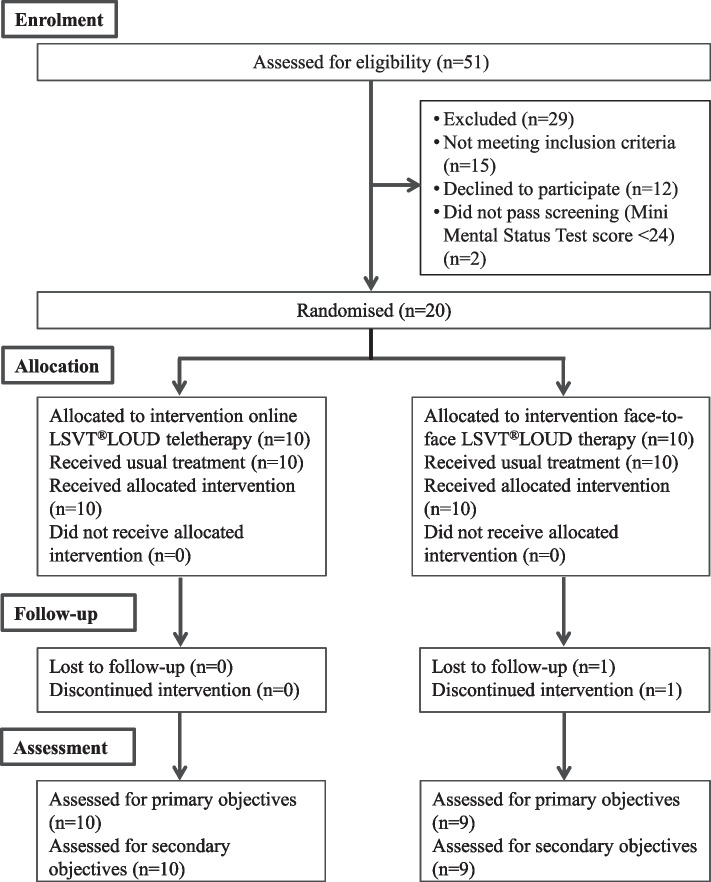
- Nineteen of 20 randomised participants completed the study (10 women; median age 70.3 years, range 51.2–77.3). LSVT®LOUD-FTF improved vowel ‘Ah’ and ‘high-pitched A’ SPLs (Hedge’s g = 1.416 and 0.826), while both groups improved ‘low-pitched A’ and good quality loud voice SPLs (g = 0.148; g = 0.211).
- Neither group changed everyday phrases SPL (g = 0.167), but both improved text reading (g = 0.436) and conversation SPLs (g = 0.345). Only three LSVT®LOUD-tele and two LSVT®LOUD-FTF participants achieved a clinically significant ≥ 4.5 dB improvement in conversation SPL.
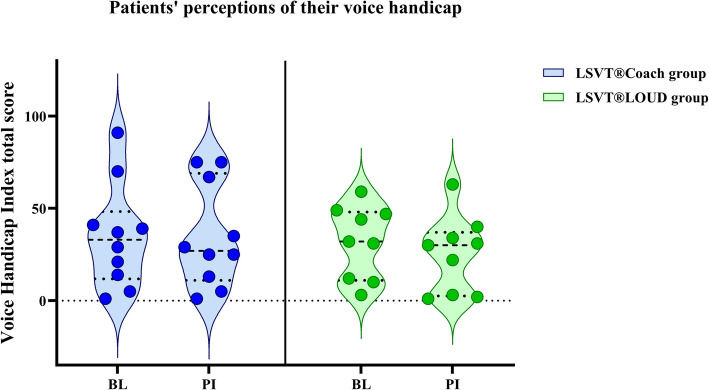
- Subjective voice handicap improved in both groups (η² = 0.259); total dysarthria-related QoL improved in the LSVT®LOUD-FTF group (η² = 0.747). HRQoL improved in activities of daily living, cognition, and bodily discomfort after LSVT®LOUD-FTF, and in communication after LSVT®LOUD-tele (η² = 0.054–0.386).
- Feasibility criteria were met: recruitment 39.2% (95% CI 25.8–53.9), retention 95% (95% CI 75.1–99.9), supervised adherence 99.1% (95% CI 68.7–99.6), home-based adherence 100% (95% CI 75.9–100), and no adverse events. TUQ usability total was median 6.2 (range 5.0–7.0).
Methods
- Non-blinded pilot RCT conducted in Vienna, Austria, from 01.02.2022–08.08.2022. Twenty people with PD and hypokinetic dysarthria were randomised 1:1 to LSVT®LOUD-tele or LSVT®LOUD-FTF; 19 completed.
- Both groups received 60-min sessions 4×/week for 4 weeks plus home practice, with the same LSVT®LOUD principles and intensity; delivery differed by online client-version LSVT®Coach versus face-to-face professional-version LSVT®Coach.
- Primary outcome was voice loudness (SPL) across vocal tasks. Secondary outcomes included VHI, QOL-DyS, PDQ-39, BDI-II, feasibility criteria, and TUQ usability. Analysis used Shapiro–Wilk tests, Hedges’ g, non-parametric η², and Wilson score confidence intervals.
Limitations
- The paper states the primary limitation is the small sample size, with intended enrolment of 30 not achieved; the same therapist delivered and assessed the intervention, preventing blinding; MMST limitations were not considered; the QOL-Dys validation study included only 6 people with PD; and exclusions limit generalisability to more severe PD, mild cognitive impairment, relevant comorbidities, and non-PD auditory/laryngeal pathologies.
- Evident from the text: this is a pilot study without a formal sample size calculation, and outcomes were assessed only at baseline and post-intervention, with no longer-term follow-up reported.
Model-written summary. Check it against the paper before relying on it.
Integrity signals
Registry
Cites
Statistics
Figures
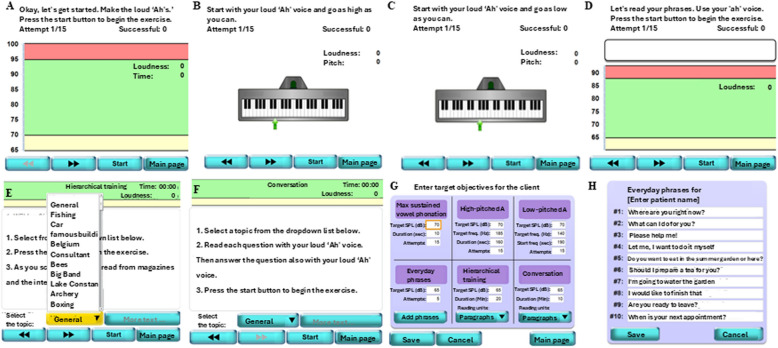
Verification
Claims the paper makes
20 Valid · 1 Not valid · 26 Not checked · 63 Own results and interpretations
Every source the paper cites for this claim was checked and supports it.
In the paper
“Telerehabilitation, the remote delivery of rehabilitation, offers an alternative and supplementary strategy for addressing communication disorders in people with PD [11].”
§ Comparing face-to-face and online LSVT®LOUD speech training using LSVT®Coach in patients with Parkinson’s disease: a pilot randomised controlled trial > Background
What the sources say
- Supportedcites [11] Theodoros D. Telerehabilitation for communication and swallowing disorders in Parkinson’s disease. J Parkinsons Dis. 2021;11(s1):S65-s70. 10.3233/jpd-202414. 33896848 PMC8385517 source
The TELEREHABILITATION section defines telerehabilitation as rehabilitation delivered at a distance and explicitly calls it an alternate and complementary approach to managing communication and swallowing disorders in Parkinson’s disease. This directly supports the citing sentence’s narrower reference to communication disorders. (LLM, conf=0.95)
plain- Asserted: passes — The authors put it forward as true.
- Checkable: passes — It can be checked against evidence.
- Load-bearing: passes — The paper’s conclusions depend on it.
- Based: passes — The paper gives a reason why it holds.
- Supported
The cited sources support only part of this claim — read each source’s verdict below.
In the paper
“However, only three participants in the LSVT®LOUD-tele group and two participants in the LSVT®LOUD-FTF group achieved a clinically significant improvement of ≥ 4.5 dB in conversation SPL [13].”
§ Comparing face-to-face and online LSVT®LOUD speech training using LSVT®Coach in patients with Parkinson’s disease: a pilot randomised controlled trial > Discussion
What the sources say
- Partly supportedcites [13] Griffin M, Bentley J, Shanks J, Wood C. The effectiveness of Lee Silverman Voice Treatment therapy issued interactively through an iPad device: a non-inferiority study. J Telemed Telecare. 2018;24(3):209–15. 10.1177/1357633x17691865. 28147896 sourceExperimental — accuracy not yet measured
The Statistical analysis section (p. 7) identifies a 4.5 dB improvement in conversation sound pressure level as clinically relevant. The Results (p. 8) discuss changes in conversation measures, but do not report that three iPad participants and two face-to-face participants reached that threshold; the participant counts are unsupported by our copy. (LLM, conf=0.84)
plainn = 3- Asserted: passes — The authors put it forward as true.
- Checkable: passes — It can be checked against evidence.
- Load-bearing: unclear — It is unclear whether the paper’s conclusions depend on it.
- Based: passes — The paper gives a reason why it holds.
- Partly supported
A result the paper reports from its own data — it cites no other source for it, so there is none to check. The quote shows it is in the paper.
In the paper
“No changes in BDI-II depression scores were observed in either group (Additional Table 1).”
§ Comparing face-to-face and online LSVT®LOUD speech training using LSVT®Coach in patients with Parkinson’s disease: a pilot randomised controlled trial > Results > Secondary outcomes
plain- Asserted: passes — The authors put it forward as true.
- Checkable: passes — It can be checked against evidence.
- Load-bearing: unclear — It is unclear whether the paper’s conclusions depend on it.
- Based: passes — The paper gives a reason why it holds.
A result the paper reports from its own data — it cites no other source for it, so there is none to check. The quote shows it is in the paper.
In the paper
“Overall effect sizes ranged from negligible to large (Table 3).”
§ Comparing face-to-face and online LSVT®LOUD speech training using LSVT®Coach in patients with Parkinson’s disease: a pilot randomised controlled trial > Results > Primary outcome
plain- Asserted: passes — The authors put it forward as true.
- Checkable: passes — It can be checked against evidence.
- Load-bearing: unclear — It is unclear whether the paper’s conclusions depend on it.
- Based: passes — The paper gives a reason why it holds.
A result the paper reports from its own data — it cites no other source for it, so there is none to check. The quote shows it is in the paper.
In the paper
“with no adverse events reported.”
§ Comparing face-to-face and online LSVT®LOUD speech training using LSVT®Coach in patients with Parkinson’s disease: a pilot randomised controlled trial > Abstract > Results
plainn = 19- Asserted: passes — The authors put it forward as true.
- Checkable: passes — It can be checked against evidence.
- Load-bearing: unclear — It is unclear whether the paper’s conclusions depend on it.
- Based: passes — The paper gives a reason why it holds.
33 more claims
Create a free account to see all 110 claims and every source verdict.
- Probably not a substantial claim. 47
- It may state two separate claims as one. 43
- The quote only partly states this claim. 1
Self-check
Percentages, sums and reported differences re-computed from the paper’s own numbers.
Each contradiction between two passages listed here was confirmed by an independent check.
Rated minor: it would not touch a result — a value no result rests on, a p-value that stays on the same side of the significance level, or a conflict that is clerical, resolved elsewhere in the paper, or outside its own findings.
In the paper
§ Comparing face-to-face and online LSVT®LOUD speech training using LSVT®Coach in patients with Parkinson’s disease: a pilot randomised controlled trial > Abstract > Results
“HRQoL improvements were noted in activities of daily living, cognition, and bodily discomfort domains after LSVT®LOUD-FTF, and in communication after LSVT®LOUD-tele (η2 = 0.054–0.386).”
§ Comparing face-to-face and online LSVT®LOUD speech training using LSVT®Coach in patients with Parkinson’s disease: a pilot randomised controlled trial > Results > Secondary outcomes
“Effect sizes were negligible to small.”
Citations
Cites
Statistical Power Analysis for the Behavioral Sciences
Muller, K. (1989) · Technometrics · doi:10.1080/00401706.1989.10488618 · Cited by 99,167
Faul, F., Erdfelder, E., Lang, A.-G., & Buchner, A. (2007) · Behavior Research Methods · doi:10.3758/bf03193146 · Cited by 65,971 · cited 1×
“These results were used to inform the sample size calculation of a full-scale RCT. Utilising G*Power version 3.1.9.7 [61], with an assumed power of 80%, a type I error probability of 0.05, a two-tailed test, and effect size of r = 0.5 (SPL effect sizes mean), a total sample size of 128 participants…”
InfluentialHughes, A. J., Daniel, S. E., Kilford, L., & Lees, A. J. (1992) · Journal of Neurology, Neurosurgery & Psychiatry · doi:10.1136/jnnp.55.3.181 · Cited by 10,378 · cited 1×
“Inclusion criteria involved people with PD diagnosed per the UK Parkinson’s Disease Society Brain Bank criteria [16]; stage I-III on the Hoehn and Yahr scale (H&Y) [17]; aged ≥ 18 years; with adequate cognitive function (German version Mini Mental Status Test [MMST]*[18] score ≥ 24/30); who were…”
Osterberg, L., & Blaschke, T. (2005) · New England Journal of Medicine · doi:10.1056/nejmra050100 · Cited by 7,974
Beck, A. T., Steer, R. A., & Brown, G. (2011) · PsycTESTS Dataset · doi:10.1037/t00742-000 · Cited by 7,535
SPSS Survival Manual: A Step by Step Guide to Data Analysis using IBM SPSS
Pallant, J. (2020) · Routledge eBooks · doi:10.4324/9781003117407 · Cited by 5,201
Two-sided confidence intervals for the single proportion: comparison of seven methods
Newcombe, R. G. (1998) · Statistics in Medicine · doi:10.1002/(sici)1097-0258(19980430)17:8<857::aid-sim777>3.0.co;2-e · Cited by 5,107
Kirk, J., MacDonald, A., Lavender, P., Dean, J., & Rubin, G. (2017) · Biomedicine Hub · doi:10.1159/000480347 · Cited by 3,887
CONSORT 2010 statement: extension to randomised pilot and feasibility trials
on behalf of the PAFS consensus group, Eldridge, S. M., Chan, C. L., Campbell, M. J., Bond, C. M., Hopewell, S., Thabane, L., & Lancaster, G. A. (2016) · Pilot and Feasibility Studies · doi:10.1186/s40814-016-0105-8 · Cited by 2,843 · cited 2×
“Design and reporting of this non-blinded randomised controlled pilot study are in line with the Consolidated Standards of Reporting Trials (CONSORT) statement [15] (Additional File 1).”
The Voice Handicap Index (VHI): Development and Validation
Jacobson, B. H., Johnson, A., Grywalski, C., Silbergleit, A., Jacobson, G., Benninger, M. S., & Newman, C. W. (1997) · American Journal of Speech-Language Pathology · doi:10.1044/1058-0360.0603.66 · Cited by 2,574
Ellis, P. D. (2010) · doi:10.1017/cbo9780511761676 · Cited by 2,461 · cited 3×
“…deviation, were calculated on the calculated differences between post-intervention and baseline values for parametric tests using the formula [46]: where M1 – M2 = difference in means and SD*pooled = pooled and weighted SD. where s 1 and n 1 denotes the SD and number of observations for…”
InfluentialBalestrino, R., & Schapira, A. H. V. (2020) · European Journal of Neurology · doi:10.1111/ene.14108 · Cited by 1,508 · cited 1×
“Parkinson’s disease (PD) is a neurodegenerative disorder characterised by annual prevalence rates in Europe that vary from 108 to 257 cases per 100,000 individuals [1].”
How to Select, Calculate, and Interpret Effect Sizes
Durlak, J. A. (2009) · Journal of Pediatric Psychology · doi:10.1093/jpepsy/jsp004 · Cited by 1,446 · cited 1×
“Given the small sample size the following bias correction was performed [47]: (1) where n = n 1 + n 2 .”
JENKINSON, C., FITZPATRICK, R., PETO, V., GREENHALL, R., & HYMAN, N. (1997) · Age and Ageing · doi:10.1093/ageing/26.5.353 · Cited by 1,321 · cited 4×
“The PDQ-39 has demonstrated validity, as the eight dimensions identified through principal component analysis, when combined into a higher-order factor, accounted for 56.8% of the total variance in a clinical sample of patients with PD [41].”
InfluentialBlinding in randomised trials: hiding who got what
Schulz, K. F., & Grimes, D. A. (2002) · The Lancet · doi:10.1016/s0140-6736(02)07816-9 · Cited by 952
Parkinsonism: Onset, progression, and mortality
Hoehn, M. M., & Yahr, M. D. (1998) · Neurology · doi:10.1212/wnl.50.2.318 · Cited by 871
Development of the Telehealth Usability Questionnaire (TUQ)
Parmanto, B., Lewis, Jr., Graham, K. M., & Bertolet, M. H. (2016) · International Journal of Telerehabilitation · doi:10.5195/ijt.2016.6196 · Cited by 624 · cited 3×
“The TUG demonstrated good content validity, and all its usability attributes exhibited good to excellent reliability (α = 0.81–0.93) [44] and no difference between test and retest ( p = 0.673) [45].”
InfluentialIntensive voice treatment (LSVT(R)) for patients with Parkinson's disease: a 2 year follow up
Ramig, L. O. (2001) · Journal of Neurology, Neurosurgery & Psychiatry · doi:10.1136/jnnp.71.4.493 · Cited by 481
Comparison of Two Forms of Intensive Speech Treatment for Parkinson Disease
Ramig, L. O., Countryman, S., Thompson, L. L., & Horii, Y. (1995) · Journal of Speech, Language, and Hearing Research · doi:10.1044/jshr.3806.1232 · Cited by 384 · cited 4×
“The intervention in both groups followed the five LSVT ® LOUD principles [22–24] and was individually tailored to the specific communication goals of the participants: focus on voice (boost phonatory output amplitude) (1); enhance perception of effort through ‘calibration’ (2); employ a high-effort…”
InfluentialValidierung des Voice Handicap Index (VHI) in der deutschen Fassung
Nawka, T., Wiesmann, U., & Gonnermann, U. (2003) · HNO · doi:10.1007/s00106-003-0909-8 · Cited by 229 · cited 1×
“Participants’ subjective assessment of a voice-related disorder/handicap was assessed using the Voice Handicap Index (VHI) [36, 37].”
Speech treatment in Parkinson's disease: Randomized controlled trial (RCT)
Ramig, L., Halpern, A., Spielman, J., Fox, C., & Freeman, K. (2018) · Movement Disorders · doi:10.1002/mds.27460 · Cited by 225 · cited 5×
“In contrast, other research found that people with PD reported improvements in their ratings of communicative effectiveness across various situations after undergoing LSVT ® LOUD and LSVT ® articulation treat-ment [7].”
InfluentialKieser, M., & Wassmer, G. (1996) · Biometrical Journal · doi:10.1002/bimj.4710380806 · Cited by 213 · cited 1×
“According to Kieser et al. who suggests 10–20 participants per arm [19], the objective was to enrol 30 people with PD within approximately 6 months, necessitated as the study was undertaken in partial fulfilment of the requirements for a Masters degree.”
Fox, C. M., & Ramig, L. O. (1997) · American Journal of Speech-Language Pathology · doi:10.1044/1058-0360.0602.85 · Cited by 202
Constantinescu, G., Theodoros, D., Russell, T., Ward, E., Wilson, S., & Wootton, R. (2011) · International Journal of Language & Communication Disorders · doi:10.3109/13682822.2010.484848 · Cited by 192 · cited 3×
“Several studies using different technologies have shown the effectiveness and non-inferiority of intensive telerehabilita-tion-delivered LSVT ® LOUD [12–14].”
Sapir, S. (2014) · Journal of Speech, Language, and Hearing Research · doi:10.1044/2014_jslhr-s-13-0039 · Cited by 183 · cited 2×
“Noticeable indicators of hypokinetic dysarthria include reduced vocal loudness (hypophonia), pitch and loudness variability, emotive vocalisation, breathy and hoarse vocal quality, festinations, hesitation, and imprecise articulation [3, 4].”
Fox, C., Ebersbach, G., Ramig, L., & Sapir, S. (2012) · Parkinson's Disease · doi:10.1155/2012/391946 · Cited by 178
Fox, C. M., Morrison, C. E., Ramig, L. O., & Sapir, S. (2002) · American Journal of Speech-Language Pathology · doi:10.1044/1058-0360(2002/012 · Cited by 171
Guidelines for Speech Recording and Acoustic Analyses in Dysarthrias of Movement Disorders
Rusz, J., Tykalova, T., Ramig, L. O., & Tripoliti, E. (2021) · Movement Disorders · doi:10.1002/mds.28465 · Cited by 170 · cited 1×
“Calibration was performed using sustained ‘Ah’ vowels over ≥ 4 s following recommended procedures [34] and guidelines [35], with each recording including a reference reading from the sound level meter, recorded on an A-weighted scale [34].”
Tutorial and Guidelines on Measurement of Sound Pressure Level in Voice and Speech
Švec, J. G., & Granqvist, S. (2018) · Journal of Speech, Language, and Hearing Research · doi:10.1044/2017_jslhr-s-17-0095 · Cited by 166 · cited 1×
“Calibration was performed using sustained ‘Ah’ vowels over ≥ 4 s following recommended procedures [34] and guidelines [35], with each recording including a reference reading from the sound level meter, recorded on an A-weighted scale [34].”
Ramig, L. O., Fox, C., & Sapir, S. (2004) · Seminars in Speech and Language · doi:10.1055/s-2004-825653 · Cited by 160 · cited 5×
“The intervention in both groups followed the five LSVT ® LOUD principles [22–24] and was individually tailored to the specific communication goals of the participants: focus on voice (boost phonatory output amplitude) (1); enhance perception of effort through ‘calibration’ (2); employ a high-effort…”
InfluentialBaumgartner, C. A., Sapir, S., & Ramig, L. O. (2001) · Journal of Voice · doi:10.1016/s0892-1997(01)00010-8 · Cited by 147
Volume perception in Parkinsonian speech
Ho, A. K., Bradshaw, J. L., & Iansek, R. (2000) · Movement Disorders · doi:10.1002/1531-8257(200011)15:6<1125::aid-mds1010>3.0.co;2-r · Cited by 146
Smith, K. M., & Caplan, D. N. (2018) · Brain and Language · doi:10.1016/j.bandl.2018.08.002 · Cited by 144 · cited 1×
“Hypokinetic dysarthria significantly contributes to functional communication limitations in people with PD, impacting social interaction and quality of life (QoL), highlighting the pressing need for effective and targeted treatment [5].”
Vocal Responses to Perturbations in Voice Auditory Feedback in Individuals with Parkinson's Disease
Liu, H., Wang, E. Q., Metman, L. V., & Larson, C. R. (2012) · PLoS ONE · doi:10.1371/journal.pone.0033629 · Cited by 114 · cited 1×
“Studies have also identified abnormal voice auditory feedback in people with PD, suggesting that abnormal voice control in these people may be related to dysfunctional mechanisms of error detection or correction in sensory feedback processing [59].”
Julious, S. A. (2005) · Statistics in Medicine · doi:10.1002/sim.2164 · Cited by 111
Theodoros, D. G., Hill, A. J., & Russell, T. G. (2016) · American Journal of Speech-Language Pathology · doi:10.1044/2015_ajslp-15-0005 · Cited by 110 · cited 3×
“Our results align with previous research that examined the impact on QoL of LSVT ® LOUD-FTF therapy and online therapy utilising alternative technologies [14].”
Hammer, M. J., & Barlow, S. M. (2010) · Experimental Brain Research · doi:10.1007/s00221-009-2048-2 · Cited by 108 · cited 2×
“Additionally, sensory deficits in people with PD have been associated with various factors such as the timing of phonatory onset, voice intensity, respiratory driving pressure, laryngeal resistance, lung volume per syllable, disease severity, and speech-related impairment [54].”
Pathomechanisms and compensatory efforts related to Parkinsonian speech
Arnold, C., Gehrig, J., Gispert, S., Seifried, C., & Kell, C. A. (2014) · NeuroImage: Clinical · doi:10.1016/j.nicl.2013.10.016 · Cited by 98 · cited 1×
“Approximately 90% of people with PD experience various speech impairments throughout the course of their illness, collectively referred to as hypokinetic dysarthria [2].”
Lee Silverman Voice Treatment for people with Parkinson's: audit of outcomes in a routine clinic
Wight, S., & Miller, N. (2014) · International Journal of Language & Communication Disorders · doi:10.1111/1460-6984.12132 · Cited by 88 · cited 1×
“Patient’s efforts were monitored using a Visual Analogue Scale (VAS) [21].”
Classification of voice qualities
Wendler, J., Rauhut, A., & Krüger, H. (1986) · Journal of Phonetics · doi:10.1016/s0095-4470(19)30694-1 · Cited by 56
Zur auditiven Bewertung der Stimmqualität
Ptok, M., Schwemmle, C., Iven, C., et al. (2005) · HNO · doi:10.1007/s00106-005-1310-6 · Cited by 53 · cited 2×
“Roughness referred to irregular vibrations of the vocal fold, breathiness to incomplete closure of the vocal folds, and hoarseness to deviations from the normal vibration pattern of the vocal folds [28, 29].”
on behalf of the PD COMM Pilot Collaborative Group, Sackley, C. M., Smith, C. H., Rick, C., Brady, M., Ives, N. J., Patel, S., Woolley, R. L., Dowling, F., Patel, R., et al. (2018) · Pilot and Feasibility Studies · doi:10.1186/s40814-017-0222-z · Cited by 52
Pu, T., Huang, M., Kong, X., Wang, M., Chen, X., Feng, X., Wei, C., Weng, X., & Xu, F. (2021) · Parkinson's Disease · doi:10.1155/2021/3366870 · Cited by 50 · cited 3×
“…voice, specifically aiming to increase vocal amplitude by concentrating on attaining, monitoring, and maintaining a loud voice to counteract hypokinetic dysarthria across the speech mechanism, and uses clinician feedback to recalibrate sensory and motor functions related to vocal loudness [6, 7].”
Reliability and Validity of an Instrument to Measure Quality of Life in the Dysarthric Speaker
Piacentini, V., Zuin, A., Cattaneo, D., & Schindler, A. (2011) · Folia Phoniatrica et Logopaedica · doi:10.1159/000322800 · Cited by 46 · cited 3×
“Significant correlations between QOL-Dys and dysarthria severity were shown ( r = 0.43) [39].”
InfluentialMisconceptions about speech impairment in Parkinson's disease
Moreau, C., & Pinto, S. (2019) · Movement Disorders · doi:10.1002/mds.27791 · Cited by 43 · cited 1×
“…align with a growing body of literature indicating that abnormalities in auditory-vocal integration, characterised by difficulties in perceiving errors in voice auditory feedback and regulating vocal motor behaviours, significantly contribute to hypokinetic dysarthria in people with PD [56, 57].”
Biofeedback on Voice Use in Call Center Agents in Order to Prevent Occupational Voice Disorders
Schneider‐Stickler, B., Knell, C., Aichstill, B., & Jocher, W. (2011) · Journal of Voice · doi:10.1016/j.jvoice.2010.10.001 · Cited by 40 · cited 1×
“6 Compute, Cores 2C + 4G, 3.5 GHz processor) was utilised for data analysis and visualisation, operating on a 1 GHz Pentium Computer, 512 Mb RAM, Windows 10, 22 Hertz version) [33].”
InfluentialThe Psychometric Properties of the Voice Handicap Index in People With Parkinson's Disease
Guimaraes, I., Cardoso, R., Pinto, S., & Ferreira, J. J. (2017) · Journal of Voice · doi:10.1016/j.jvoice.2016.05.017 · Cited by 35 · cited 2×
“Significant correlations between the VHI and patient-rated voice impairment and disease characteristics have been found [38].”
InfluentialGriffin, M., Bentley, J., Shanks, J., & Wood, C. (2018) · Journal of Telemedicine and Telecare · doi:10.1177/1357633x17691865 · Cited by 34 · cited 1×
“However, only three participants in the LSVT ® LOUD-tele group and two participants in the LSVT ® LOUD-FTF group achieved a clinically significant improvement of ≥ 4.5 dB in conversation SPL [13].”
InfluentialStimmdiagnostik: Ein Leitfaden für die Praxis
Schneider-Stickler, B., & Bigenzahn, W. (2013) · doi:10.1007/978-3-7091-1480-3 · Cited by 31
Schulz, G. M., Halpern, A. E., Spielman, J. L., Ramig, L. A., Panzer, I. L., Sharpley, A. D., & Freeman, K. D. (2021) · Brain Sciences · doi:10.3390/brainsci11070857 · Cited by 27 · cited 1×
“Noticeable indicators of hypokinetic dysarthria include reduced vocal loudness (hypophonia), pitch and loudness variability, emotive vocalisation, breathy and hoarse vocal quality, festinations, hesitation, and imprecise articulation [3, 4].”
Hammer, M. J. (2013) · Journal of Parkinson’s Disease · doi:10.3233/jpd-130180 · Cited by 21 · cited 1×
“Insufficient laryngeal function and abnormal laryngeal somatosensory function could have contributed to the lower vocal loudness in our participants [54, 55].”
Snyder, A., Gruber-Baldini, A. L., Rainer von Coelln, F., Savitt, J. M., Reich, S. G., Armstrong, M. J., & Shulman, L. M. (2021) · Journal of Parkinson's Disease · doi:10.3233/jpd-212705 · Cited by 20 · cited 1×
“Relevant evidence [62] suggests that this oversight may have limited our ability to detect the cognitive changes typically associated with PD, which relate to cognitive support needs and engagement with the intervention, particularly in home-based practice.”
A Systematic Review of Usability and Accessibility in Tele-Rehabilitation Systems
Luis Pérez Medina, J., Acosta-Vargas, P., & Rybarczyk, Y. (2019) · Assistive and Rehabilitation Engineering · doi:10.5772/intechopen.85869 · Cited by 18 · cited 1×
“Good usability of the LSVT ® LOUD-tele software appears relevant in ensuring its accessibility, efficiency, usefulness, and effectiveness [60].”
Telerehabilitation for Communication and Swallowing Disorders in Parkinson’s Disease
Theodoros, D. (2021) · Journal of Parkinson's Disease · doi:10.3233/jpd-202414 · Cited by 15 · cited 2×
“Telerehabilitation, the remote delivery of rehabilitation, offers an alternative and supplementary strategy for addressing communication disorders in people with PD [11].”
Dysarthrie und Dysphagie bei Morbus Parkinson
Nebel, A., Deuschl, G., Lauer, N., et al. (2016) · Thieme eBooks · doi:10.1055/b-004-129737 · Cited by 11
Santos, M. R., Malaguti, C., Cabral, L. A., Soares, A. L., Neves, L. H. G., Sena, L. D. A., Parmanto, B., Sauers, A. L., José, A., & Oliveira, C. C. (2023) · Revista da Associação Médica Brasileira · doi:10.1590/1806-9282.20230228 · Cited by 6 · cited 2×
“The TUG demonstrated good content validity, and all its usability attributes exhibited good to excellent reliability (α = 0.81–0.93) [44] and no difference between test and retest ( p = 0.673) [45].”
InfluentialMaggi, G., D’Iorio, A., Aiello, E. N., Poletti, B., Ticozzi, N., Silani, V., Amboni, M., Vitale, C., & Santangelo, G. (2023) · Neurological Sciences · doi:10.1007/s10072-023-06746-4 · Cited by 2 · cited 3×
“In people with PD, the BDI-II demonstrated internal consistency (α = 0.84) and largely conformed to the bi-factorial structure [43].”
Influential(2012) · doi:10.1044/1058-0360(2012/11-0125
(2007) · doi:10.1044/1092-4388(2007/064
Research works printed but not linked: 2
- Schrader V, Schöttker-Könniger T, Beushausen U. Validierung der deutschen Version des „Quality of life in the dysarthric speaker“ - ein Selbsteinschätzungsbogen zur Erfassung der kommunikationsbezogenen Lebensqualität von PatientInnen mit einer Dysarthrie Logos Interdisziplinär. 2019;4:244–57. 10.7345/prolog-1904244. · doi:10.7345/prolog-1904244
- Tomczak M, Tomczak E. The need to report effect size estimates revisited. An overview of some recommended measures of effect size. Trends Sport Sci. 2014;1(21):19–55.
Cited by
How Embodied Cognition Affects Vocal Performance: An Integrative Review
Jiang, H., & Wu, W. (2025) · Journal of Voice · doi:10.1016/j.jvoice.2025.11.005 · Cited by 7
Liu, R., Zhang, S., Xiao, Y., Cheng, Y., & Shang, H. (2026) · Journal of Medical Internet Research · doi:10.2196/79935 · Cited by 2
Salama, H. (2026) · Derna Academy Journal for Applied Sciences · doi:10.71147/ksncc516 · Cited by 1
Altan, E., Barmak, E., Yılmaz, Z., Söylemez, D., Pütürgeli, T., & Tatar, E. Ç. (2026) · The European Research Journal · doi:10.18621/eurj.1847969
Metadata
- Authors
- Kratz, E., Scheffer, J., Volc, D., & Seebacher, B.
- Affiliations
- Universität für Weiterbildung Krems (AT)
- Innsbruck Medical University (AT)
- Corresponding author
- Seebacher, Barbara
- ORCID
- Seebacher, Barbara
- Venue
- BMC Neurology
- Published
- 2025-04-26
- Volume
- 25
- Issue
- 1
- Pages
- 183-183
- ISSN
- 1471-2377 (ISSN-L)
- PMC
- PMC12034115
- OpenAlex
- W4409834762
- Cited by
- 5
- References
- 59
- Citations by year
- 2026: 4 · 2025: 1
- FWCI
- 4.05
- Type
- journal article
- Language
- en
- Open access
- gold
- doi.org
- Licence
- cc-by-nc-nd
- creativecommons.org/licenses/by-nc-nd/4.0 (tdm)
- creativecommons.org/licenses/by-nc-nd/4.0 (vor)
- Locations
- BMC Neurology (publishedVersion, cc-by-nc-nd)
- PubMed Central (publishedVersion, cc-by-nc-nd)
- PubMed (publishedVersion)
- DOAJ (DOAJ: Directory of Open Access Journals) (submittedVersion, cc-by-sa)
- Topics
- Health Sciences › Health Professions › Speech and Hearing › Voice and Speech Disorders
- Health Sciences › Medicine › Public Health, Environmental and Occupational Health › Telemedicine and Telehealth Implementation
- Health Sciences › Health Professions › Speech and Hearing › Dysphagia Assessment and Management
- Keywords
- Parkinson's disease, LSVT LOUD, external beam radiotherapy, hypokinetic dysarthria, vocal intensity, sound pressure level, voice handicap, home-based practice, speech therapy, feasibility, software usability, depression, proprioceptive feedback, activities of daily living, cognitive function, physiological function
- MeSH terms
- Aged, Dysarthria, Female, Humans, Male, Middle Aged, Parkinson Disease, Pilot Projects, Speech Therapy, Treatment Outcome
About these checks
Registry, retraction, Cites and statistics results are computed, not judged, with one exception: a printed reference that no index lists is read once by a model before it counts as a citation error. Claims are extracted by a model and kept only when their quote appears verbatim in the text; each cited source is then checked, with a model’s help, for whether it says what the claim relies on. Those verdicts can be wrong — read the claim’s quote and the cited source before relying on one.
The claim verdicts this report counts are experimental: their accuracy is not yet measured.
A language model drew the claims from the paper on 2026-10-10, under version 3 of the claim definition (model deepseek-v4.1-flash, prompt extract-v3).
A second model labelled each claim on 2026-10-10 (model jev-1.13-20260917, definition revision gold-guideline-v0.2).
Cited sources are checked with a language model’s help (gpt-6-sol).
Statistics and arithmetic are recomputed, not judged.
Confidence bands are shown only for fields calibrated on our annotated test set. None is calibrated yet, so no band is shown.
What counts as a claim ›How we measure confidence ›How we check this ›
Are you an author, or do you see a problem with this page? Request a review
Data sources
Bibliographic data: Semantic Scholar, OpenAlex, Crossref.
Contains information from the Semantic Scholar Academic Graph Datasets, made available under the ODC Attribution License (ODC-BY 1.0).
Semantic Scholar’s data is described in: Kinney, R., et al. (2023). The Semantic Scholar Open Data Platform. arXiv:2301.10140.
