

From grief, guilt pain and stigma to hope and pride – a systematic review and meta-analysis of mixed-method research of the psychosocial impact of stillbirth
Open accessThe DOI matches its Crossref record; 19 of the 19 references it cites were found in a registry or an index.
Abstract
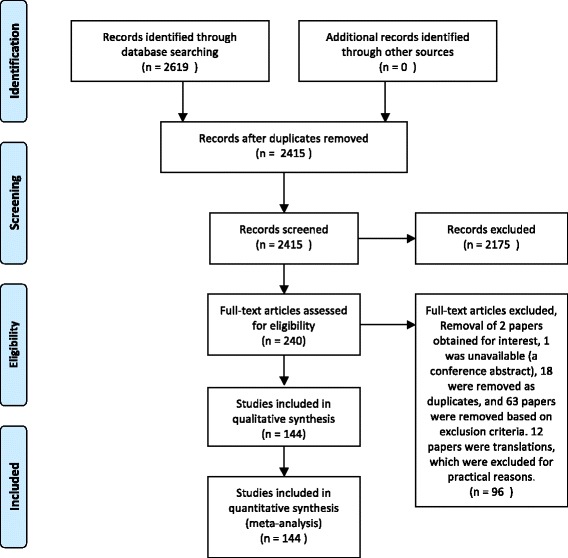
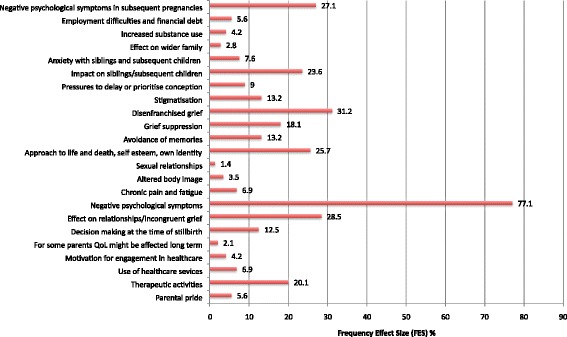
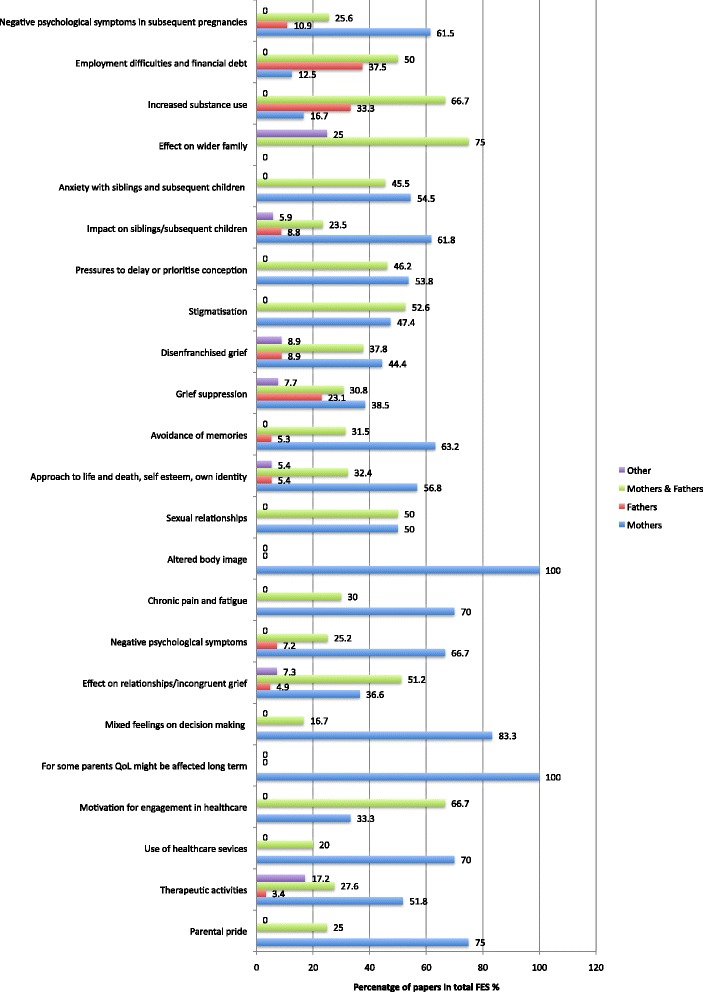
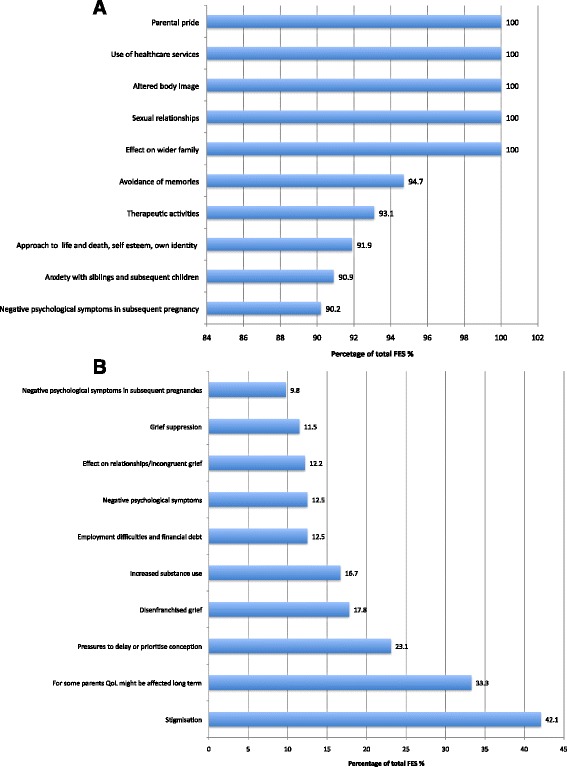
BACKGROUND: Despite improvements in maternity healthcare services over the last few decades, more than 2.7 million babies worldwide are stillborn each year. The global health agenda is silent about stillbirth, perhaps, in part, because its wider impact has not been systematically analysed or understood before now across the world. Our study aimed to systematically review, evaluate and summarise the current evidence regarding the psychosocial impact of stillbirth to parents and their families, with the aim of improving guidance in bereavement care worldwide. METHODS: Systematic review and meta-summary (quantitative aggregation of qualitative findings) of quantitative, qualitative, and mixed-methods studies. All languages and countries were included. RESULTS: Two thousand, six hundred and nineteen abstracts were identified; 144 studies were included. Frequency effect sizes (FES %) were calculated for each theme, as a measure of their prevalence in the literature. Themes ranged from negative psychological symptoms post bereavement (77 · 1) and in subsequent pregnancies (27 · 1), to disenfranchised grief (31 · 2), and incongruent grief (28 · 5), There was also impact on siblings (23 · 6) and on the wider family (2 · 8). They included mixed-feelings about decisions made when the baby died (12 · 5), avoidance of memories (13 · 2), anxiety over other children (7 · 6), chronic pain and fatigue (6 · 9), and a different approach to the use of healthcare services (6 · 9). Some themes were particularly prominent in studies of fathers; grief suppression (avoidance)(18 · 1), employment difficulties, financial debt (5 · 6), and increased substance use (4 · 2). Others found in studies specific to mothers included altered body image (3 · 5) and impact on quality of life (2 · 1). Counter-intuitively, Some themes had mixed connotations. These included parental pride in the baby (5 · 6), motivation for engagement in healthcare improvement (4 · 2) and changed approaches to life and death, self-esteem, and own identity (25 · 7). In studies from low/middle income countries, stigmatisation (13 · 2) and pressure to prioritise or delay conception (9) were especially prevalent. CONCLUSION: Experiencing the birth of a stillborn child is a life-changing event. The focus of the consequences may vary with parent gender and country. Stillbirth can have devastating psychological, physical and social costs, with ongoing effects on interpersonal relationships and subsequently born children. However, parents who experience the tragedy of stillbirth can develop resilience and new life-skills and capacities. Future research should focus on developing interventions that may reduce the psychosocial cost of stillbirth.
Overview
The claims and statistics of this paper haven’t been checked yet.
Free: it reads the open-access text and checks the first 5 claims that cite a source we can check. Create a free account to check every claim.
Integrity signals
Registry
Cites
Statistics
Figures
Verification
Claims the paper makes
The claims and statistics of this paper haven’t been checked yet.
Free: it reads the open-access text and checks the first 5 claims that cite a source we can check. Create a free account to check every claim.
Claims other papers make about this one
Each is checked against this paper’s own text: does it say what the citing paper says it does?
The cited source doesn’t support the claim as written.
In the citing paper
“Many reviews include only a specific subset of parents or family members (most often mothers) or types of perinatal loss (eg, stillbirth) in contexts other than health care facilities immediately after the loss, or are limited to studies using specific methodologies and often lack outcome measurement.12,14,15,20,32”
From Bereavement care guidelines used in health care facilities immediately following perinatal loss: a scoping review (2024) · cites this paper as [14]
Checked by a reasoning model — may be wrong.
Experimental — accuracy not yet measuredThe source backs part of the claim, not all of it — or backs it for a different population, condition or comparison.
In the citing paper
“Parents may experience disenfranchised grief, where their loss is not understood or socially acknowledged or validated by others, along with societal stigma, and feelings of guilt and shame (Burden 2016; Pollock 2021).”
From Support for parents and families after stillbirth and neonatal death (2024) · cites this paper as Burden 2016
Experimental — accuracy not yet measuredThe source backs part of the claim, not all of it — or backs it for a different population, condition or comparison.
In the citing paper
“The few studies investigating men’s reactions after SB suggest that paternal and maternal reactions might differ [10, 59].”
From Depression, anxiety, PTSD, and OCD after stillbirth: a systematic review (2021) · cites this paper as [10]
Experimental — accuracy not yet measuredThe source backs part of the claim, not all of it — or backs it for a different population, condition or comparison.
In the citing paper
“Previous research has indicated fathers are underrepresented in the stillbirth literature, but may have different perspectives on their experiences than their partners [e.g., (38, 39)].”
From Parent hospital experiences following stillbirth (2026) · cites this paper as [39]
Experimental — accuracy not yet measuredThe source backs part of the claim, not all of it — or backs it for a different population, condition or comparison.
In the citing paper
“While numerous sources are available, randomized controlled trials (RCTs) and quasi-experimental studies are lacking, and the synthesized information is older or has a limited population or focus.12,14,15,20,32”
From Bereavement care guidelines used in health care facilities immediately following perinatal loss: a scoping review (2024) · cites this paper as [14]
Experimental — accuracy not yet measured
7 more claims about this paper
Create a free account to see every claim other papers make about this one.
Self-check
Percentages, sums and reported differences re-computed from the paper’s own numbers.
The self-check needs the paper’s full text.
Citations
Cites
Beyond PICO: The SPIDER Tool for Qualitative Evidence Synthesis
Cooke, A., Smith, D., & Booth, A. (2012) · Qualitative Health Research · doi:10.1177/1049732312452938 · Cited by 2,608
Stillbirths: Where? When? Why? How to make the data count?
Lawn, J. E., Blencowe, H., Pattinson, R., Cousens, S., Kumar, R., Ibiebele, I., Gardosi, J., Day, L. T., & Stanton, C. (2011) · The Lancet · doi:10.1016/s0140-6736(10)62187-3 · Cited by 785
Oestergaard, M. Z., Inoue, M., Yoshida, S., Mahanani, W. R., Gore, F. M., Cousens, S., Lawn, J. E., Mathers, C. D., & on behalf of the United Nations Inter-agency Group for Child Mortality Estimation and the Child Health Epidemiology Reference Group (2011) · PLoS Medicine · doi:10.1371/journal.pmed.1001080 · Cited by 481 · cited 1×
“Despite underreporting, 98 % of stillbirths occur in low and middle-income countries (LMIC), and 67 % occur in rural families [3, 4].”
BackgroundPrevious prenatal loss as a predictor of perinatal depression and anxiety
Blackmore, E. R., Côté-Arsenault, D., Tang, W., Glover, V., Evans, J., Golding, J., & O'Connor, T. G. (2011) · British Journal of Psychiatry · doi:10.1192/bjp.bp.110.083105 · Cited by 315 · cited 1×
“Moreover, as the majority women conceive within a year of the loss [7], negative psychological effects of the loss may continue into subsequent pregnancies, despite the birth of a healthy child [8].”
BackgroundCreating Metasummaries of Qualitative Findings
Sandelowski, M., & Barroso, J. (2003) · Nursing Research · doi:10.1097/00006199-200307000-00004 · Cited by 273 · cited 4×
“The IES was derived for each included article by dividing the number of themes contained in the articles by the total number of themes across all reports [11].”
BackgroundMethodInfluentialStillbirth as risk factor for depression and anxiety in the subsequent pregnancy: cohort study
Hughes, P. M., Turton, P., & Evans, C. D. H. (1999) · BMJ · doi:10.1136/bmj.318.7200.1721 · Cited by 260 · cited 1×
“Moreover, as the majority women conceive within a year of the loss [7], negative psychological effects of the loss may continue into subsequent pregnancies, despite the birth of a healthy child [8].”
BackgroundPerinatal Mortality in Developing Countries
Zupan, J. (2005) · New England Journal of Medicine · doi:10.1056/nejmp058032 · Cited by 186 · cited 1×
“Despite underreporting, 98 % of stillbirths occur in low and middle-income countries (LMIC), and 67 % occur in rural families [3, 4].”
BackgroundMills, T., Ricklesford, C., Cooke, A., Heazell, A., Whitworth, M., & Lavender, T. (2014) · BJOG: An International Journal of Obstetrics & Gynaecology · doi:10.1111/1471-0528.12656 · Cited by 155 · cited 1×
“A previous review has assessed the impact of stillbirth and neonatal death on subsequent pregnancy, but was limited to studies in HIC and parents alone, not the wider family [16].”
BackgroundSelf-citationHaws, R. A., Mashasi, I., Mrisho, M., Schellenberg, J. A., Darmstadt, G. L., & Winch, P. J. (2010) · Social Science & Medicine · doi:10.1016/j.socscimed.2010.03.051 · Cited by 150 · cited 1×
“Moreover, because of this fear of stigmatization, stillbirth in LMICs is likely underreported [23].”
BackgroundThe Unique Experiences of Women and Their Families After the Death of a Baby
Cacciatore, J. (2010) · Social Work in Health Care · doi:10.1080/00981380903158078 · Cited by 128 · cited 1×
“Some studies have demonstrated these opportunities decreased anxiety, reduced physical symptoms and sleep disorders and allowed parents to cope better with their grief [18–21].”
BackgroundSelf-citationArmstrong, D. S., Hutti, M. H., & Myers, J. A. (2009) · Journal of Obstetric, Gynecologic & Neonatal Nursing · doi:10.1111/j.1552-6909.2009.01069.x · Cited by 119 · cited 1×
“This resulted in increased phone calls and visits to health care providers [13].”
BackgroundRyninks, K., Roberts-Collins, C., McKenzie-McHarg, K., & Horsch, A. (2014) · BMC Pregnancy and Childbirth · doi:10.1186/1471-2393-14-203 · Cited by 94 · cited 1×
“Some studies have demonstrated these opportunities decreased anxiety, reduced physical symptoms and sleep disorders and allowed parents to cope better with their grief [18–21].”
BackgroundSisay, M. M., Yirgu, R., Gobezayehu, A. G., & Sibley, L. M. (2014) · Journal of Midwifery & Women's Health · doi:10.1111/jmwh.12156 · Cited by 88 · cited 1×
“of their villages, thus leaving them destitute [12].”
BackgroundLong-term outcomes for mothers who have or have not held their stillborn baby
Rådestad, I., Surkan, P. J., Steineck, G., Cnattingius, S., Onelöv, E., & Dickman, P. W. (2009) · Midwifery · doi:10.1016/j.midw.2007.03.005 · Cited by 85 · cited 1×
“Some studies have demonstrated these opportunities decreased anxiety, reduced physical symptoms and sleep disorders and allowed parents to cope better with their grief [18–21].”
BackgroundErlandsson, K., Warland, J., Cacciatore, J., & Rådestad, I. (2013) · Midwifery · doi:10.1016/j.midw.2012.01.007 · Cited by 76
Self-citationThe Psychological Effects of a Stillbirth on Surviving Family Members
De Frain, J., Martens, L., Stork, J., & Stork, W. (1991) · OMEGA - Journal of Death and Dying · doi:10.2190/a8vb-08xr-acgh-2gyg · Cited by 69
Transforming loss: Taiwanese women's adaptation to stillbirth
Hsu, M., Tseng, Y., & Kuo, L. (2002) · Journal of Advanced Nursing · doi:10.1046/j.1365-2648.2002.02386.x · Cited by 51 · cited 8×
“Moreover, because of this fear of stigmatization, stillbirth in LMICs is likely underreported [23].”
BackgroundInfluentialFottrell, E., Kanhonou, L., Goufodji, S., Béhague, D. P., Marshall, T., Patel, V., & Filippi, V. (2010) · British Journal of Psychiatry · doi:10.1192/bjp.bp.108.062489 · Cited by 49 · cited 1×
“Some women felt that they were able to endure the experience of labour by looking forward to seeing their baby, [15] and a number of parents found solace in identifying family traits.”
BackgroundYamazaki, A. (2010) · Health Care For Women International · doi:10.1080/07399332.2010.503289 · Cited by 23 · cited 1×
“The potential impact of stillbirth included employment difficulties and financial debt—this occurred especially in LMIC because of hospital bills and funeral expenses, which often further increased family relationship tensions [14].”
Background
Research works printed but not linked: 2
- Lawn JE, Blencowe H, Waiswa PS, Flenady V, Froen F. Qureshi Z. Stillbirths: data for accelerating progress for 2030. For The Lancet Ending Preventable Stillbirth Series study group, The Lancet. In press.
- Peters M Riitano D Lisy K Jordan Z Aromataris E Providing care for families who have experienced stillbirth: a comprehensive systematic review 2014
Cited by
Peeling, R. W., Mabey, D., Kamb, M. L., Chen, X.-S., Radolf, J. D., & Benzaken, A. S. (2017) · Nature Reviews Disease Primers · doi:10.1038/nrdp.2017.73 · Cited by 664
Obst, K. L., Due, C., Oxlad, M., & Middleton, P. (2020) · BMC Pregnancy and Childbirth · doi:10.1186/s12884-019-2677-9 · Cited by 222
“Growing recognition of the impact of pregnancy/neonatal loss has led to increased research interest into the psychological and emotional burden on bereaved parents and families [26-28].”
BackgroundChou, V. B., Walker, N., & Kanyangarara, M. (2019) · PLOS Medicine · doi:10.1371/journal.pmed.1002990 · Cited by 158
“Although standardized household surveys can assess coverage for a limited set of MNCH interventions [24], some bias is associated with self-report [25], and not all interventions can be tracked with this approach.”
BackgroundDepression, anxiety, PTSD, and OCD after stillbirth: a systematic review
Westby, C. L., Erlandsen, A. R., Nilsen, S. A., Visted, E., & Thimm, J. C. (2021) · BMC Pregnancy and Childbirth · doi:10.1186/s12884-021-04254-x · Cited by 148
“However, for some parents, these symptoms may become pathological and long-lasting [10, 20, 21].”
BackgroundInfluentialThe mental health impact of perinatal loss: A systematic review and meta-analysis
Herbert, D., Young, K., Pietrusińska, M., & MacBeth, A. (2022) · Journal of Affective Disorders · doi:10.1016/j.jad.2021.10.026 · Cited by 146
“…between perinatal loss and psychological reactions following miscarriage (Adolfsson, 2011); experience of grief and stigma after stillbirth (Burden et al., 2016); mental health risk after early pregnancy loss (Farren et al., 2018); and the presence of common mental disorders presenting in…”
BackgroundInfluential
Metadata
- Authors
- Burden, C., Bradley, S., Storey, C., Ellis, A., Heazell, A. E. P., Downe, S., Cacciatore, J., & Siassakos, D.
- Affiliations
- Southmead Hospital (GB)
- Manchester Academic Health Science Centre (GB)
- University of Lancashire (GB)
- Arizona State University (US)
- Corresponding author
- Burden, Christy
- Venue
- BMC Pregnancy and Childbirth
- Published
- 2016-01-19
- Volume
- 16
- Issue
- 1
- Pages
- 9-9
- ISSN
- 1471-2393 (ISSN-L)
- PMC
- PMC4719709
- OpenAlex
- W2270991912
- Cited by
- 445
- References
- 19
- Citations by year
- 2026: 52 · 2025: 46 · 2024: 41 · 2023: 44 · 2022: 48 · 2021: 56 · 2020: 33 · 2019: 22 · 2018: 23 · 2017: 72 · 2016: 7
- FWCI
- 6.13
- Type
- journal article
- Language
- en
- Open access
- gold
- doi.org
- Licence
- cc-by
- Locations
- BMC Pregnancy and Childbirth (publishedVersion, cc-by)
- PubMed Central (publishedVersion, cc-by)
- PubMed (publishedVersion)
- CLOK (University of Central Lancashire) (acceptedVersion)
- Arizona State University Library Digital Repository (Arizona State University) (submittedVersion, cc-by)
- Research Explorer (The University of Manchester) (submittedVersion)
- Explore Bristol Research (submittedVersion, cc-by)
- Bristol Research (University of Bristol) (submittedVersion, cc-by)
- Figshare (cc-by)
- Funders
- SANDS Charity
- Topics
- Social Sciences › Psychology › Clinical Psychology › Grief, Bereavement, and Mental Health
- Health Sciences › Medicine › Pediatrics, Perinatology and Child Health › Global Maternal and Child Health
- Health Sciences › Medicine › Pediatrics, Perinatology and Child Health › Maternal and Neonatal Healthcare
- Keywords
- psychosocial impact, bereavement, grief, disenfranchised grief, stigma, parental guilt, mothers, siblings, chronic pain, substance use, employment problems, debt, body image, quality of life, bereavement support, low- and middle-income countries, subsequent pregnancy, maternal mental health, paternal mental health
- MeSH terms
- Adaptation, Psychological, Adult, Fathers, Female, Grief, Guilt, Humans, Infant, Newborn, Male, Mothers, Pregnancy, Quality of Life, Qualitative Research, Stillbirth, Social Stigma, Hope
About these checks
Registry, retraction, Cites and statistics results are computed, not judged, with one exception: a printed reference that no index lists is read once by a model before it counts as a citation error. Claims are extracted by a model and kept only when their quote appears verbatim in the text; each cited source is then checked, with a model’s help, for whether it says what the claim relies on. Those verdicts can be wrong — read the claim’s quote and the cited source before relying on one.
Statistics and arithmetic are recomputed, not judged.
Confidence bands are shown only for fields calibrated on our annotated test set. None is calibrated yet, so no band is shown.
What counts as a claim ›How we measure confidence ›How we check this ›
Are you an author, or do you see a problem with this page? Request a review
Data sources
Bibliographic data: Semantic Scholar, OpenAlex, Crossref.
Contains information from the Semantic Scholar Academic Graph Datasets, made available under the ODC Attribution License (ODC-BY 1.0).
Semantic Scholar’s data is described in: Kinney, R., et al. (2023). The Semantic Scholar Open Data Platform. arXiv:2301.10140.
