

From grief, guilt pain and stigma to hope and pride – a systematic review and meta-analysis of mixed-method research of the psychosocial impact of stillbirth
Open accessThe DOI matches its Crossref record; 19 of the 19 references it cites were found in a registry or an index.
Abstract
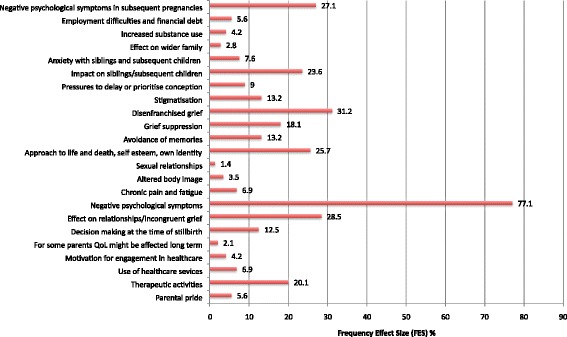
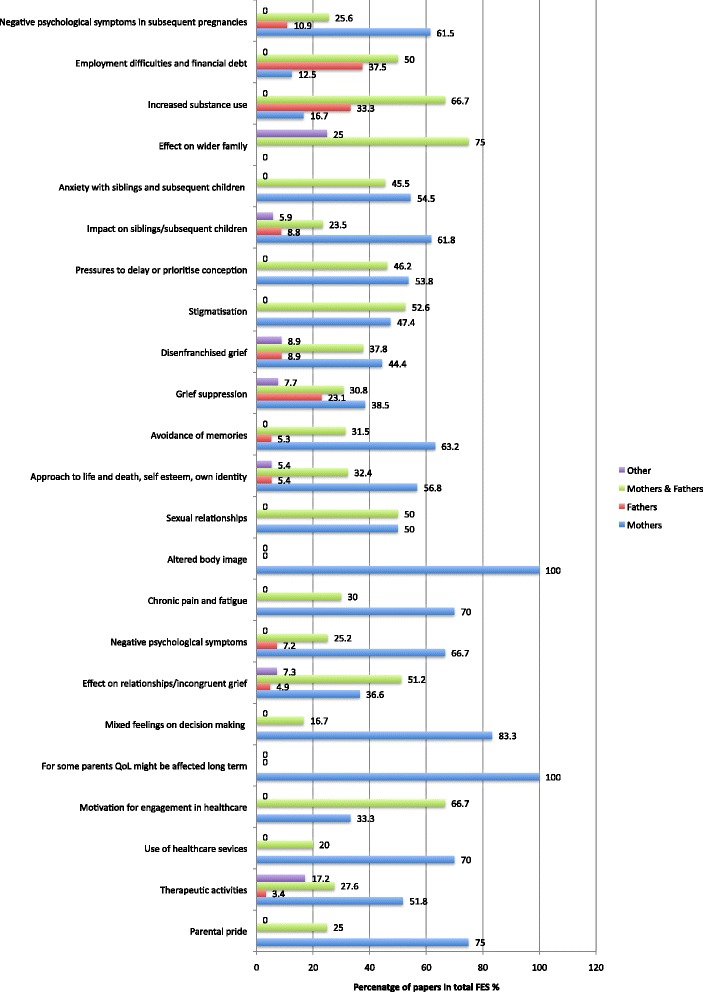
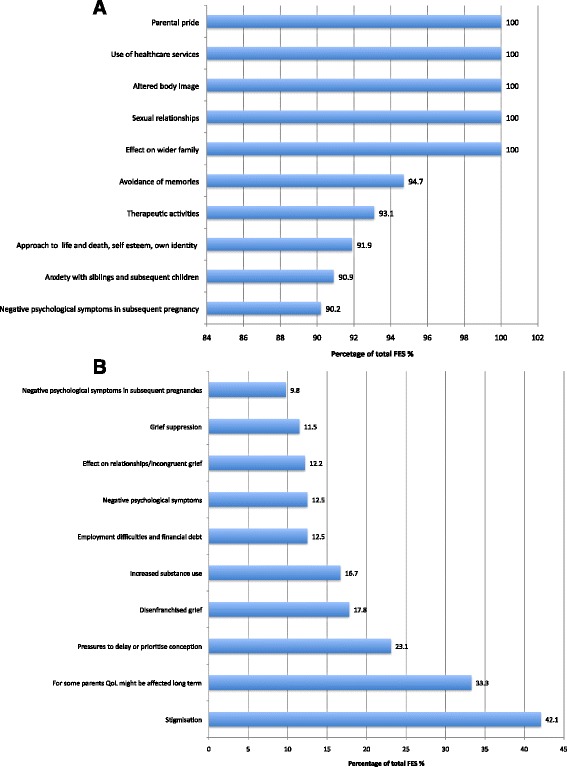
BACKGROUND: Despite improvements in maternity healthcare services over the last few decades, more than 2.7 million babies worldwide are stillborn each year. The global health agenda is silent about stillbirth, perhaps, in part, because its wider impact has not been systematically analysed or understood before now across the world. Our study aimed to systematically review, evaluate and summarise the current evidence regarding the psychosocial impact of stillbirth to parents and their families, with the aim of improving guidance in bereavement care worldwide. METHODS: Systematic review and meta-summary (quantitative aggregation of qualitative findings) of quantitative, qualitative, and mixed-methods studies. All languages and countries were included. RESULTS: Two thousand, six hundred and nineteen abstracts were identified; 144 studies were included. Frequency effect sizes (FES %) were calculated for each theme, as a measure of their prevalence in the literature. Themes ranged from negative psychological symptoms post bereavement (77 · 1) and in subsequent pregnancies (27 · 1), to disenfranchised grief (31 · 2), and incongruent grief (28 · 5), There was also impact on siblings (23 · 6) and on the wider family (2 · 8). They included mixed-feelings about decisions made when the baby died (12 · 5), avoidance of memories (13 · 2), anxiety over other children (7 · 6), chronic pain and fatigue (6 · 9), and a different approach to the use of healthcare services (6 · 9). Some themes were particularly prominent in studies of fathers; grief suppression (avoidance)(18 · 1), employment difficulties, financial debt (5 · 6), and increased substance use (4 · 2). Others found in studies specific to mothers included altered body image (3 · 5) and impact on quality of life (2 · 1). Counter-intuitively, Some themes had mixed connotations. These included parental pride in the baby (5 · 6), motivation for engagement in healthcare improvement (4 · 2) and changed approaches to life and death, self-esteem, and own identity (25 · 7). In studies from low/middle income countries, stigmatisation (13 · 2) and pressure to prioritise or delay conception (9) were especially prevalent. CONCLUSION: Experiencing the birth of a stillborn child is a life-changing event. The focus of the consequences may vary with parent gender and country. Stillbirth can have devastating psychological, physical and social costs, with ongoing effects on interpersonal relationships and subsequently born children. However, parents who experience the tragedy of stillbirth can develop resilience and new life-skills and capacities. Future research should focus on developing interventions that may reduce the psychosocial cost of stillbirth.
Overview
The claims and statistics of this paper haven’t been checked yet.
Free: it reads the open-access text and checks the first 5 claims that cite a source we can check. Create a free account to check every claim.
Integrity signals
Registry
Cites
Statistics
Figures
Verification
Claims the paper makes
The claims and statistics of this paper haven’t been checked yet.
Free: it reads the open-access text and checks the first 5 claims that cite a source we can check. Create a free account to check every claim.
Claims other papers make about this one
Each is checked against this paper’s own text: does it say what the citing paper says it does?
The cited source doesn’t support the claim as written.
In the citing paper
“Many reviews include only a specific subset of parents or family members (most often mothers) or types of perinatal loss (eg, stillbirth) in contexts other than health care facilities immediately after the loss, or are limited to studies using specific methodologies and often lack outcome measurement.12,14,15,20,32”
From Bereavement care guidelines used in health care facilities immediately following perinatal loss: a scoping review (2024) · cites this paper as [14]
Checked by a reasoning model — may be wrong.
Experimental — accuracy not yet measuredThe source backs part of the claim, not all of it — or backs it for a different population, condition or comparison.
In the citing paper
“Parents may experience disenfranchised grief, where their loss is not understood or socially acknowledged or validated by others, along with societal stigma, and feelings of guilt and shame (Burden 2016; Pollock 2021).”
From Support for parents and families after stillbirth and neonatal death (2024) · cites this paper as Burden 2016
Experimental — accuracy not yet measuredThe source backs part of the claim, not all of it — or backs it for a different population, condition or comparison.
In the citing paper
“The few studies investigating men’s reactions after SB suggest that paternal and maternal reactions might differ [10, 59].”
From Depression, anxiety, PTSD, and OCD after stillbirth: a systematic review (2021) · cites this paper as [10]
Experimental — accuracy not yet measuredThe source backs part of the claim, not all of it — or backs it for a different population, condition or comparison.
In the citing paper
“Previous research has indicated fathers are underrepresented in the stillbirth literature, but may have different perspectives on their experiences than their partners [e.g., (38, 39)].”
From Parent hospital experiences following stillbirth (2026) · cites this paper as [39]
Experimental — accuracy not yet measuredThe source backs part of the claim, not all of it — or backs it for a different population, condition or comparison.
In the citing paper
“While numerous sources are available, randomized controlled trials (RCTs) and quasi-experimental studies are lacking, and the synthesized information is older or has a limited population or focus.12,14,15,20,32”
From Bereavement care guidelines used in health care facilities immediately following perinatal loss: a scoping review (2024) · cites this paper as [14]
Experimental — accuracy not yet measured
7 more claims about this paper
Create a free account to see every claim other papers make about this one.
Self-check
Percentages, sums and reported differences re-computed from the paper’s own numbers.
The self-check needs the paper’s full text.
Citations
Cites
Beyond PICO: The SPIDER Tool for Qualitative Evidence Synthesis
Cooke, A., Smith, D., & Booth, A. (2012) · Qualitative Health Research · doi:10.1177/1049732312452938 · Cited by 2,608
Stillbirths: Where? When? Why? How to make the data count?
Lawn, J. E., Blencowe, H., Pattinson, R., Cousens, S., Kumar, R., Ibiebele, I., Gardosi, J., Day, L. T., & Stanton, C. (2011) · The Lancet · doi:10.1016/s0140-6736(10)62187-3 · Cited by 785
Oestergaard, M. Z., Inoue, M., Yoshida, S., Mahanani, W. R., Gore, F. M., Cousens, S., Lawn, J. E., Mathers, C. D., & on behalf of the United Nations Inter-agency Group for Child Mortality Estimation and the Child Health Epidemiology Reference Group (2011) · PLoS Medicine · doi:10.1371/journal.pmed.1001080 · Cited by 481 · cited 1×
“Despite underreporting, 98 % of stillbirths occur in low and middle-income countries (LMIC), and 67 % occur in rural families [3, 4].”
BackgroundPrevious prenatal loss as a predictor of perinatal depression and anxiety
Blackmore, E. R., Côté-Arsenault, D., Tang, W., Glover, V., Evans, J., Golding, J., & O'Connor, T. G. (2011) · British Journal of Psychiatry · doi:10.1192/bjp.bp.110.083105 · Cited by 315 · cited 1×
“Moreover, as the majority women conceive within a year of the loss [7], negative psychological effects of the loss may continue into subsequent pregnancies, despite the birth of a healthy child [8].”
BackgroundCreating Metasummaries of Qualitative Findings
Sandelowski, M., & Barroso, J. (2003) · Nursing Research · doi:10.1097/00006199-200307000-00004 · Cited by 273 · cited 4×
“The IES was derived for each included article by dividing the number of themes contained in the articles by the total number of themes across all reports [11].”
BackgroundMethodInfluentialStillbirth as risk factor for depression and anxiety in the subsequent pregnancy: cohort study
Hughes, P. M., Turton, P., & Evans, C. D. H. (1999) · BMJ · doi:10.1136/bmj.318.7200.1721 · Cited by 260 · cited 1×
“Moreover, as the majority women conceive within a year of the loss [7], negative psychological effects of the loss may continue into subsequent pregnancies, despite the birth of a healthy child [8].”
BackgroundPerinatal Mortality in Developing Countries
Zupan, J. (2005) · New England Journal of Medicine · doi:10.1056/nejmp058032 · Cited by 186 · cited 1×
“Despite underreporting, 98 % of stillbirths occur in low and middle-income countries (LMIC), and 67 % occur in rural families [3, 4].”
BackgroundMills, T., Ricklesford, C., Cooke, A., Heazell, A., Whitworth, M., & Lavender, T. (2014) · BJOG: An International Journal of Obstetrics & Gynaecology · doi:10.1111/1471-0528.12656 · Cited by 155 · cited 1×
“A previous review has assessed the impact of stillbirth and neonatal death on subsequent pregnancy, but was limited to studies in HIC and parents alone, not the wider family [16].”
BackgroundSelf-citationHaws, R. A., Mashasi, I., Mrisho, M., Schellenberg, J. A., Darmstadt, G. L., & Winch, P. J. (2010) · Social Science & Medicine · doi:10.1016/j.socscimed.2010.03.051 · Cited by 150 · cited 1×
“Moreover, because of this fear of stigmatization, stillbirth in LMICs is likely underreported [23].”
BackgroundThe Unique Experiences of Women and Their Families After the Death of a Baby
Cacciatore, J. (2010) · Social Work in Health Care · doi:10.1080/00981380903158078 · Cited by 128 · cited 1×
“Some studies have demonstrated these opportunities decreased anxiety, reduced physical symptoms and sleep disorders and allowed parents to cope better with their grief [18–21].”
BackgroundSelf-citation
Research works printed but not linked: 2
- Lawn JE, Blencowe H, Waiswa PS, Flenady V, Froen F. Qureshi Z. Stillbirths: data for accelerating progress for 2030. For The Lancet Ending Preventable Stillbirth Series study group, The Lancet. In press.
- Peters M Riitano D Lisy K Jordan Z Aromataris E Providing care for families who have experienced stillbirth: a comprehensive systematic review 2014
Cited by
Peeling, R. W., Mabey, D., Kamb, M. L., Chen, X.-S., Radolf, J. D., & Benzaken, A. S. (2017) · Nature Reviews Disease Primers · doi:10.1038/nrdp.2017.73 · Cited by 664
Obst, K. L., Due, C., Oxlad, M., & Middleton, P. (2020) · BMC Pregnancy and Childbirth · doi:10.1186/s12884-019-2677-9 · Cited by 222
“Growing recognition of the impact of pregnancy/neonatal loss has led to increased research interest into the psychological and emotional burden on bereaved parents and families [26-28].”
BackgroundChou, V. B., Walker, N., & Kanyangarara, M. (2019) · PLOS Medicine · doi:10.1371/journal.pmed.1002990 · Cited by 158
“Although standardized household surveys can assess coverage for a limited set of MNCH interventions [24], some bias is associated with self-report [25], and not all interventions can be tracked with this approach.”
BackgroundDepression, anxiety, PTSD, and OCD after stillbirth: a systematic review
Westby, C. L., Erlandsen, A. R., Nilsen, S. A., Visted, E., & Thimm, J. C. (2021) · BMC Pregnancy and Childbirth · doi:10.1186/s12884-021-04254-x · Cited by 148
“However, for some parents, these symptoms may become pathological and long-lasting [10, 20, 21].”
BackgroundInfluentialThe mental health impact of perinatal loss: A systematic review and meta-analysis
Herbert, D., Young, K., Pietrusińska, M., & MacBeth, A. (2022) · Journal of Affective Disorders · doi:10.1016/j.jad.2021.10.026 · Cited by 146
“…between perinatal loss and psychological reactions following miscarriage (Adolfsson, 2011); experience of grief and stigma after stillbirth (Burden et al., 2016); mental health risk after early pregnancy loss (Farren et al., 2018); and the presence of common mental disorders presenting in…”
BackgroundInfluentialThe impact of stillbirth on bereaved parents: A qualitative study
Nuzum, D., Meaney, S., & O’Donoghue, K. (2018) · PLoS ONE · doi:10.1371/journal.pone.0191635 · Cited by 127
“[20, 21, 26, 27] In an Irish context where termination of pregnancy is not a permissible option this study sheds important light on the importance of a perinatal palliative care approach for babies and their parents following a diagnosis of a life-limiting condition in-utero .”
Jones, K., Robb, M., Murphy, S., & Davies, A. (2019) · Midwifery · doi:10.1016/j.midw.2019.102531 · Cited by 105
“Indeed, the incongruence of mothers’ and fathers’ experiences of perceived distress following the death of a baby is reported as being a critical factor in the development of relationship difficulties ( Burden et al., 2016; Cacciatorre, 2008b ).”
BackgroundInfluentialHuberty, J., Sullivan, M., Green, J., Kurka, J., Leiferman, J., Gold, K., & Cacciatore, J. (2020) · BMC Complementary Medicine and Therapies · doi:10.1186/s12906-020-02926-3 · Cited by 89
“However, women who have experienced a stillbirth report physical health declines and may be more likely to develop chronic illness [61].”
BackgroundSelf-citationShakespeare, C., Merriel, A., Bakhbakhi, D., Baneszova, R., Barnard, K., Lynch, M., Storey, C., Blencowe, H., Boyle, F., Flenady, V, et al. (2019) · BJOG: An International Journal of Obstetrics & Gynaecology · doi:10.1111/1471-0528.15430 · Cited by 102
Self-citationThe RESPECT Study for consensus on global bereavement care after stillbirth
Shakespeare, C., Merriel, A., Bakhbakhi, D., Blencowe, H., Boyle, F. M., Flenady, V., Gold, K., Horey, D., Lynch, M., Mills, T. A., et al. (2020) · International Journal of Gynecology & Obstetrics · doi:10.1002/ijgo.13110 · Cited by 74
Self-citationShaohua, L., & Shorey, S. (2021) · International Journal of Nursing Studies · doi:10.1016/j.ijnurstu.2021.103871 · Cited by 91
Impact of perinatal death on the social and Family context of the parents
Fernández-Sola, C., Camacho-Ávila, M., Hernández-Padilla, J. M., Fernández-Medina, I. M., Jiménez-López, F. R., Hernández-Sánchez, E., Conesa-Ferrer, M. B., & Granero-Molina, J. (2020) · International Journal of Environmental Research and Public Health · doi:10.3390/ijerph17103421 · Cited by 89
“This may make some fathers feel marginalized from the grieving process [11] and hinder their socialization, which is needed for a successful grief process [35].”
BackgroundCare in subsequent pregnancies following stillbirth: an international survey of parents
Wojcieszek, A., Boyle, F., Belizán, J., Cassidy, J., Cassidy, P., Erwich, J., Farrales, L., Gross, M., Heazell, A., Leisher, S., et al. (2018) · BJOG: An International Journal of Obstetrics & Gynaecology · doi:10.1111/1471-0528.14424 · Cited by 75
Self-citationGopichandran, V., Subramaniam, S., & Kalsingh, M. J. (2018) · BMC Pregnancy and Childbirth · doi:10.1186/s12884-018-1742-0 · Cited by 73
“Previous studies in the western context have revealed intense grief due to perinatal loss leading to divorce, difficulties in relationships and difficulties in sexual intimacy between spouses [5, 25].”
BackgroundInfluentialParents experiences of pregnancy following perinatal loss: An integrative review
Donegan, G., Noonan, M., & Bradshaw, C. (2023) · Midwifery · doi:10.1016/j.midw.2023.103673 · Cited by 84
van Hoorn, M. E., Hague, W. M., van Pampus, M. G., Bezemer, D., & de Vries, J. I. P. (2016) · European Journal of Obstetrics & Gynecology and Reproductive Biology · doi:10.1016/j.ejogrb.2015.12.011 · Cited by 84
Understanding stillbirth stigma: A scoping literature review
Pollock, D., Ziaian, T., Pearson, E., Cooper, M., & Warland, J. (2020) · Women and Birth · doi:10.1016/j.wombi.2019.05.004 · Cited by 82
Grief and bereavement in fathers after the death of a child: a systematic review
McNeil, M. J., Baker, J. N., Snyder, I., Rosenberg, A. R., & Kaye, E. C. (2021) · Pediatrics · doi:10.1542/peds.2020-040386 · Cited by 77
Siassakos, D., Jackson, S., Gleeson, K., Chebsey, C., Ellis, A., Storey, C., & the INSIGHT Study Group (2018) · BJOG: An International Journal of Obstetrics & Gynaecology · doi:10.1111/1471-0528.14765 · Cited by 75
Self-citationDas, M. K., Arora, N. K., Gaikwad, H. S., Chellani, H. K., Debata, P. K., Rasaily, R., Meena, K. R., Kaur, G., Malik, P., Joshi, S., et al. (2021) · PLoS ONE · doi:10.1371/journal.pone.0240270 · Cited by 74
“Despite high burden of child deaths and stillbirths in India and other developing countries, the grief characteristics and phenomenology for parents, families and societies remain neglected [20].”
BackgroundOpen fire exposure increases the risk of pregnancy loss in South Asia
Xue, T., Geng, G., Han, Y., Wang, H., Li, J., Li, H., Zhou, Y., & Zhu, T. (2021) · Nature Communications · doi:10.1038/s41467-021-23529-7 · Cited by 74
Care of late intrauterine fetal death and stillbirth: Green‐top Guideline No. 55
Burden, C., Merriel, A., Bakhbakhi, D., Heazell, A. E. P., & Siassakos, D. M. (2024) · BJOG An International Journal of Obstetrics & Gynaecology · doi:10.1111/1471-0528.17844 · Cited by 68
“173,174”
Self-citationBakhbakhi, D., Burden, C., Storey, C., & Siassakos, D. (2017) · Seminars in Fetal and Neonatal Medicine · doi:10.1016/j.siny.2017.02.008 · Cited by 66
Self-citationGetaneh, T., Negesse, A., Dessie, G., Desta, M., Temesgen, H., Getu, T., & Wudineh, K. G. (2021) · International Breastfeeding Journal · doi:10.1186/s13006-021-00399-9 · Cited by 66
Pollock, D., Pearson, E., Cooper, M., Ziaian, T., Foord, C., & Warland, J. (2020) · Women and Birth · doi:10.1016/j.wombi.2019.03.002 · Cited by 65
Mergl, R., Quaatz, S. M., Edeler, L.-M., & Allgaier, A.-K. (2022) · European Journal of Psychotraumatology · doi:10.1080/20008066.2022.2108578 · Cited by 50
“Regarding stillbirths, their annual frequency is about 2.6 million worldwide (Burden et al., 2016; Heazell et al., 2016).”
BackgroundInfluentialPregnancy and infant loss: a survey of families’ experiences in Ontario Canada
Watson, J., Simmonds, A., La Fontaine, M., & Fockler, M. E. (2019) · BMC Pregnancy and Childbirth · doi:10.1186/s12884-019-2270-2 · Cited by 64
“Our findings align with the work of others that have highlighted the need to invest in better supports for families, as well as the need to clearly identify supports to families [14, 19, 22, 26, 45, 53, 55, 69].”
ResultParents' experiences about support following stillbirth and neonatal death
Camacho Ávila, M., Fernández Medina, I. M., Jiménez-López, F. R., Granero-Molina, J., Hernández-Padilla, J. M., Hernández Sánchez, E., & Fernández-Sola, C. (2020) · Advances in Neonatal Care · doi:10.1097/anc.0000000000000703 · Cited by 63
Obst, K. L., Oxlad, M., Due, C., & Middleton, P. (2021) · BMC Pregnancy and Childbirth · doi:10.1186/s12884-020-03514-6 · Cited by 61
Camacho-Ávila, M., Fernández-Sola, C., Jiménez-López, F. R., Granero-Molina, J., Fernández-Medina, I. M., Martínez-Artero, L., & Hernández-Padilla, J. M. (2019) · BMC Pregnancy and Childbirth · doi:10.1186/s12884-019-2666-z · Cited by 61
Stillbirth: prevention and supportive bereavement care
Atkins, B., Kindinger, L. M., Mahindra, M. P., Moatti, Z., & Siassakos, D. M. (2023) · BMJ Medicine · doi:10.1136/bmjmed-2022-000262 · Cited by 57
Self-citationFlach, K., Gressler, N. G., Marcolino, M., & Levandowski, D. C. (2022) · Trends in Psychology · doi:10.1007/s43076-021-00112-z · Cited by 28
“The findings of a systematic review conducted by Burden et al. (2016), considering 144 publications which included the grieving experience of parents, grandparents, and siblings (including subsequent children and twin brothers who survived the loss of a stillborn child) after a stillborn, were also…”
BackgroundResultInfluentialQian, J., Sun, S., Wang, M., Liu, L., & Yu, X. (2022) · BMJ Open · doi:10.1136/bmjopen-2021-059660 · Cited by 54
Rothschild, J., & Haase, E. (2022) · International Journal of Gynecology & Obstetrics · doi:10.1002/ijgo.14479 · Cited by 54
Breaking the silence: determining prevalence and understanding stillbirth stigma
Pollock, D. D., Pearson, D. E., Cooper, D. M., Ziaian, A. P. T., Foord, C., & Warland, A. P. J. (2021) · Midwifery · doi:10.1016/j.midw.2020.102884 · Cited by 53
Predicting grief intensity after recent perinatal loss
Hutti, M. H., Myers, J., Hall, L. A., Polivka, B. J., White, S., Hill, J., Kloenne, E., Hayden, J., & Grisanti, M. M. (2017) · Journal of Psychosomatic Research · doi:10.1016/j.jpsychores.2017.07.016 · Cited by 53
“after miscarriage and stillbirth compared couples who have live births [15-17].”
BackgroundKuforiji, O., Mills, T. A., & Lovell, K. (2022) · Women and Birth · doi:10.1016/j.wombi.2022.07.170 · Cited by 53
Gold, K. J., Sen, A., & Leon, I. (2018) · Illness, Crisis & Loss · doi:10.1177/1054137317740800 · Cited by 52
“A separate review of 43 studies on guilt in bereavement did not include any discussion of these variables (Li et al., 2014), 52 Illness, Crisis & Loss 26(1) and a systematic review and meta-analysis mentions guilt but does not link it with these socioeconomic variables (Burden et al., 2016).”
BackgroundConflicting identities between sex workers and motherhood: A systematic review
Ma, H., Chan, C. Y. Z., & Loke, A. Y. (2018) · Women & Health · doi:10.1080/03630242.2018.1500417 · Cited by 51
“It can have great impact on how women see themselves in a wider social context (Burden et al. 2016).”
BackgroundNo. 369-Management of Pregnancy Subsequent to Stillbirth
Ladhani, N. N. N., Fockler, M. E., Stephens, L., Barrett, J. F. R., & Heazell, A. E. P. (2018) · Journal of Obstetrics and Gynaecology Canada · doi:10.1016/j.jogc.2018.07.002 · Cited by 43
Self-citationNational standards for bereavement care following pregnancy loss and perinatal death
Bereavement Care Standards Development Group (2016) · Lenus, The Irish Health Repository (Dr Steevens Hospital Library) · Cited by 51
de Castro, M. H. M., Mendonça, C. R., Noll, M. A., Tacon, F. S. D. A., & do Amaral, W. N. (2021) · International Journal of Environmental Research and Public Health · doi:10.3390/ijerph182413143 · Cited by 50
When a baby dies: a systematic review of experimental interventions for women after stillbirth
Huberty, J. L., Matthews, J., Leiferman, J., Hermer, J., & Cacciatore, J. (2017) · Reproductive Sciences · doi:10.1177/1933719116670518 · Cited by 46
Self-citationLewkowitz, A. K., Rosenbloom, J. I., Keller, M., López, J. D., Macones, G. A., Olsen, M. A., & Cahill, A. G. (2019) · American Journal of Obstetrics and Gynecology · doi:10.1016/j.ajog.2019.06.027 · Cited by 46
Navidian, A., Saravani, Z., & Shakiba, M. (2017) · Issues in Mental Health Nursing · doi:10.1080/01612840.2017.1315623 · Cited by 46
“These women may not refer to a midwife for their postpartum care (Hillowe-DonahUe, 2006); however, 50–98 percent of them decide to become pregnant again about a year after the stillbirth (DeBackere, Hill, & Kavanaugh, 2008), and the negative psychological effects of the loss may also be drawn to the next pregnancy (Bu…”
BackgroundInfluentialParent Grief 1–13 Months After Death in Neonatal and Pediatric Intensive Care Units
Youngblut, J. M., Brooten, D., Glaze, J., Promise, T., & Yoo, C. (2017) · Journal of Loss and Trauma · doi:10.1080/15325024.2016.1187049 · Cited by 34
“Burden et al. (2016) in a systematic review of the impact of stillbirth on parents found that fathers suppressed their grief and resorted to substance use while mothers focused on body image and quality of life.”
Christou, A., Alam, A., Hofiani, S. M. S., Rasooly, M. H., Mubasher, A., Rashidi, M. K., Dibley, M. J., & Raynes‐Greenow, C. H. (2019) · Social Science & Medicine · doi:10.1016/j.socscimed.2019.112413 · Cited by 43
Carrasco, J. A., Abad, M. L., Padilla-Ruiz, M., & Morales‐Gil, I. M. (2019) · Journal of Clinical Nursing · doi:10.1111/jocn.15162 · Cited by 43
Gutman, A., Harty, T., O’Donoghue, K., Greene, R. A., & Leitão, S. (2022) · Journal of Perinatal Medicine · doi:10.1515/jpm-2021-0363 · Cited by 43
Christou, A., Dibley, M. J., & Raynes‐Greenow, C. H. (2016) · Tropical Medicine & International Health · doi:10.1111/tmi.12828 · Cited by 41
“In many LMICs, stigmatisation, abuse and rejection are frequently experienced consequences for mothers with stillborn babies (23-25), which may discourage disclosure and reporting of stillbirths and may also influence responses provided for births that did not result in a live birth.”
BackgroundInterventions for investigating and identifying the causes of stillbirth
Wojcieszek, A. M., Shepherd, E. S., Middleton, P., Gardener, G. J., Ellwood, D. A., McClure, E. M., Gold, K. J., Khong, T. Y., Silver, R. M., Erwich, J. J., et al. (2018) · Cochrane Database of Systematic Reviews · doi:10.1002/14651858.cd012504.pub2 · Cited by 40
Bakhbakhi, D., Siassakos, D. M., Burden, C., Jones, F., Yoward, F. J., Redshaw, M., Murphy, S., & Storey, C. (2017) · BMC Pregnancy and Childbirth · doi:10.1186/s12884-017-1509-z · Cited by 40
Self-citationFarrales, L. L., Cacciatore, J., Jonas-Simpson, C., Dharamsi, S., Ascher, J., & Klein, M. C. (2020) · BMC Psychology · doi:10.1186/s40359-020-0385-x · Cited by 39
“The literature also suggests that HCPs are greatly impacted when caring for families whose babies are stillborn and require ongoing education and support [1, 5, 24, 25].”
Self-citationPersson, M., Hildingsson, I., Hultcrantz, M., Fredriksson, M. K., Peira, N., Silverstein, R. A., Sveen, J., & Berterö, C. (2023) · PLoS ONE · doi:10.1371/journal.pone.0289617 · Cited by 40
“[40] included 144 studies with a global approach.”
BackgroundThe spiritual and theological challenges of stillbirth for bereaved parents
Nuzum, D., Meaney, S., & O’Donoghue, K. (2017) · Journal of Religion and Health · doi:10.1007/s10943-017-0365-5 · Cited by 38
“Birth and death are the two most significant life events in their own right: in stillbirth they fuse inseparably, with devastating impact not just for the baby who has died but also for parents, families, healthcare professionals, communities and wider society (Burden et al. 2016; Heazell et al. 2016; Newitt 2015; Nuz…”
BackgroundPost-traumatic stress and related symptoms in a gestation after a gestational loss: narrative review
Ordóñez, E. F., Díaz, C. R., Gil, I. M. M., Manzanares, M. T. L., Departamento de Enfermería, U. D. M., & Departamento de Fisioterapia, U. D. M. (2018) · Salud Mental · doi:10.17711/sm.0185-3325.2018.035 · Cited by 37
The forgotten father in obstetric medicine
Kothari, A., Thayalan, K., Dulhunty, J. M., & Callaway, L. K. (2019) · Obstetric Medicine · doi:10.1177/1753495x18823479 · Cited by 37
Qian, J., Wang, W., Sun, S., Wu, M., Liu, L., Sun, Y., & Yu, X. (2022) · BMC Pregnancy and Childbirth · doi:10.1186/s12884-022-04787-9 · Cited by 37
“Stillbirth is related with a number of negative psychological symptoms including social phobia, agoraphobia, anger, a sense of failure and long-term guilt [11].”
BackgroundHvidtjørn, D., Prinds, C., Bliddal, M., Henriksen, T. B., Cacciatore, J., & O’Connor, M. (2018) · BMJ Open · doi:10.1136/bmjopen-2018-024278 · Cited by 34
“Findings conclude that loss from miscarriage, stillbirth, TOPFA or neonatal death often involves feelings of guilt, disenfranchisement, feelings of betrayal by one’s body and envy of others.(12) 13 Parents lose the prospect of an entire life with the child and all the moments they dreamt of sharing.”
BackgroundInfluentialSelf-citationNavidian, A., & Saravani, Z. (2018) · Iranian Journal of Psychiatry and Behavioral Sciences · doi:10.5812/ijpbs.9275 · Cited by 27
Asim, M., Karim, S., Khwaja, H., Hameed, W., & Saleem, S. (2022) · BMC Women s Health · doi:10.1186/s12905-022-01622-3 · Cited by 36
“Stillbirth is a life-changing event for a woman and can have devastating mental, physical, and social impact, with negative effects on interpersonal relationships within family and community [7].”
BackgroundInfluentialThe experience of mothers and fathers in cases of stillbirth in Spain. A qualitative study
Martínez-Serrano, P., Pedraz-Marcos, A., Solís-Muñoz, M., & Palmar-Santos, A. M. (2019) · Midwifery · doi:10.1016/j.midw.2019.06.013 · Cited by 35
Genie, Y. D., Kebede, B. F., Silesh, M., & Beyene, D. T. (2022) · BMJ Open · doi:10.1136/bmjopen-2021-054574 · Cited by 33
Mergl, R., Quaatz, S. M., Lemke, V., & Allgaier, A. (2023) · Journal of Psychiatric Research · doi:10.1016/j.jpsychires.2023.11.021 · Cited by 32
Pregnancy subsequent to stillbirth: Medical and psychosocial aspects of care
Fockler, M. E., Ladhani, N. N. N., Watson, J., & Barrett, J. F. R. (2017) · Seminars in Fetal and Neonatal Medicine · doi:10.1016/j.siny.2017.02.004 · Cited by 32
Power, A., Atkinson, S., & Noonan, M. (2022) · Midwifery · doi:10.1016/j.midw.2022.103356 · Cited by 30
Supporting patients who are bereaved
Shear, M. K., Muldberg, S., & Periyakoil, V. (2017) · BMJ · doi:10.1136/bmj.j2854 · Cited by 30
Eklund, M. V., Prinds, C., Mørk, S., Damm, M. F., Möller, S., & Hvidtjørn, D. (2020) · Death Studies · doi:10.1080/07481187.2020.1821260 · Cited by 30
“Pregnancy and neonatal loss often generate immense and longlasting grief (Bakker & Paris, 2013) and are related to high rates of emotional and psychological distress and diagnoses (Badenhorst & Hughes, 2007; Burden et al., 2016; Cacciatore, 2012; Michon et al., 2003).”
BackgroundPredicting Need for Follow-Up Due to Severe Anxiety and Depression Symptoms After Perinatal Loss
Hutti, M. H., Myers, J. A., Hall, L. A., Polivka, B. J., White, S., Hill, J., Grisanti, M., Hayden, J., & Kloenne, E. (2018) · Journal of Obstetric, Gynecologic & Neonatal Nursing · doi:10.1016/j.jogn.2018.01.003 · Cited by 29
“…and late perinatal losses may have profound, negative effects on bereaved parents (Burden et al., 2016; Huberty, Matthews, Leiferman, Hermer, & Cacciatore, 2016; Johnson & Langford, 2015) and have been associated with the development of severe anxiety, major depression, posttraumatic stress…”
BackgroundCoyne, L., & Stockdale, C. K. (2017) · Cambridge University Press eBooks · doi:10.1017/9781316662571.036 · Cited by 29
Understanding the spirituality of parents following stillbirth: A qualitative meta-synthesis
Alvarenga, W. D. A., de Montigny, F., Zeghiche, S., Polita, N. B., Verdon, C., & Nascimento, L. C. (2019) · Death Studies · doi:10.1080/07481187.2019.1648336 · Cited by 29
Jones, E. E., Crawley, R. A., Brierley‐Jones, L., & Kenny, C. (2021) · Journal of Reproductive and Infant Psychology · doi:10.1080/02646838.2021.1972951 · Cited by 29
“Systematic reviews of care following stillbirth report that grief can be disenfranchised for some parents of stillborn babies (Burden et al., 2016; Ellis et al., 2016).”
BackgroundCacciatore, J., Blood, C., & Kurker, S. F. (2017) · Illness Crisis & Loss · doi:10.1177/1054137317740799 · Cited by 29
“Devaluation of the baby incites significant emotional distress (Burden et al., 2016; Cacciatore, 2013; Frøen et al., 2011), particularly in grieving mothers (Cacciatore, 2010b).”
BackgroundSelf-citationCallander, E. J., Thomas, J., Fox, H., Ellwood, D. A., & Flenady, V. (2019) · Birth · doi:10.1111/birt.12469 · Cited by 28
Bedwell, C., Blaikie, K., Danna, V. A., Sutton, C., Laisser, R. M., Kasengele, C. T., Wakasiaka, S., Victor, S., & Lavender, T. (2020) · BJOG An International Journal of Obstetrics & Gynaecology · doi:10.1111/1471-0528.16629 · Cited by 28
Pregnancy decisions after fetal or perinatal death: systematic review of qualitative research
Dyer, E., Bell, R., Graham, R. H., & Rankin, J. M. (2019) · BMJ Open · doi:10.1136/bmjopen-2019-029930 · Cited by 28
Roberts, L. R., Nick, J. M., Sarpy, N. L., Peters, J., & Tamares, S. (2024) · JBI Evidence Synthesis · doi:10.11124/jbies-23-00149 · Cited by 27
Factors affecting the grieving process after perinatal loss
Kishimoto, M., Yamaguchi, A., Niimura, M., Mizumoto, M., Hikitsuchi, T., Ogawa, K., Ozawa, N., & Tachibana, Y. (2021) · BMC Women's Health · doi:10.1186/s12905-021-01457-4 · Cited by 27
“Moreover, bereaved women had higher rates of comorbid psychiatric disorders such as depression [2, 7], anxiety disorder [2, 3], and post-traumatic stress disorder [7, 8].”
BackgroundComparing posttraumatic growth in mothers after stillbirth or early miscarriage
Ryninks, K., Wilkinson‐Tough, M., Stacey, S., & Horsch, A. (2022) · PLoS ONE · doi:10.1371/journal.pone.0271314 · Cited by 27
“Losing a baby through miscarriage [11] or SB [12] is recognised as traumatic [13] and can result in a variety of psychological reactions [14,15].”
BackgroundExperience of hope: an exploratory research with bereaved mothers following perinatal death
de Andrade Alvarenga, W., deMontigny, F., Zeghiche, S., Verdon, C., & Castanheira Nascimento, L. (2021) · Women and Birth · doi:10.1016/j.wombi.2020.08.011 · Cited by 26
Gower, S., Luddington, J., Khosa, D. K., Thaivalappil, A., & Papadopoulos, A. (2023) · BMC Pregnancy and Childbirth · doi:10.1186/s12884-023-05533-5 · Cited by 26
“Parents experience prolonged grief like that following the loss of a child of any age [7], and families are at a high risk of developing complicated grief and post-traumatic stress disorder [13, 14].”
BackgroundDemarchi, L., Pawluski, J. L., & Bosch, O. J. (2021) · Peptides · doi:10.1016/j.peptides.2021.170593 · Cited by 26
Cena, L., Lazzaroni, S., & Stefana, A. (2021) · Zeitschrift für psychosomatische Medizin und Psychotherapie · doi:10.13109/zptm.2021.67.3.329 · Cited by 26
Paraíso Pueyo, E., González Alonso, A. V., Botigué, T., Masot, O., Escobar‐Bravo, M. Á., & Lavedán Santamaría, A. (2021) · International Nursing Review · doi:10.1111/inr.12659 · Cited by 25
Grief, disorientation, and futurity
Mehmel, C. A. (2021) · Phenomenology and the Cognitive Sciences · doi:10.1007/s11097-021-09752-z · Cited by 25
Burden, C., Bakhbakhi, D., Heazell, A. E. P., Lynch, M., Timlin, L., Bevan, C., Storey, C., Kurinczuk, J. J., & Siassakos, D. M. (2021) · BMJ Open · doi:10.1136/bmjopen-2020-044563 · Cited by 25
Self-citationCare in pregnancies subsequent to stillbirth or perinatal death
Graham, N., Stephens, L., & Heazell, A. E. P. (2020) · The Obstetrician & Gynaecologist · doi:10.1111/tog.12708 · Cited by 24
Self-citationAggarwal, N., & Moatti, Z. (2021) · Best Practice & Research Clinical Obstetrics & Gynaecology · doi:10.1016/j.bpobgyn.2021.10.008 · Cited by 24
Wojcieszek, A. M., Heazell, A. E. P., Middleton, P., Ellwood, D. A., Silver, R. M., & Flenady, V. (2019) · BMJ Open · doi:10.1136/bmjopen-2018-028735 · Cited by 24
Self-citationDepression and post-traumatic stress disorder after perinatal loss in fathers: a systematic review
Lamon, L., De Hert, M., Detraux, J., & Hompes, T. (2022) · European Psychiatry · doi:10.1192/j.eurpsy.2022.2326 · Cited by 23
“In LMIC, there is a pronounced effect of cultural perspective on grief, care and social support are generally less extensive, and stigmatization about perinatal loss usually ismore frequent [6, 7, 53].”
BackgroundInfluentialKöneş, M. Ö., & Yıldız, H. (2020) · Journal of Psychosomatic Obstetrics & Gynecology · doi:10.1080/0167482x.2020.1759543 · Cited by 23
Beauquier‐Maccotta, B., Shulz, J., de Wailly, D., Mériot, M.-E., Soubieux, M.-J., Ouss, L., Grosmaître, C., Salomon, L. J., Golse, B., Ville, Y. G., et al. (2022) · Journal of Gynecology Obstetrics and Human Reproduction · doi:10.1016/j.jogoh.2022.102353 · Cited by 23
Abayneh, M., Rent, S. M., Ubuane, P. O., Carter, B. S., Deribessa, S. J., Kassa, B. B., Tekleab, A. M., & Kukora, S. K. (2023) · Frontiers in Pediatrics · doi:10.3389/fped.2023.1217209 · Cited by 22
“This grief suppression can increase the risk of chronic psychological issues (5).”
BackgroundChen, S., Zhang, L., Gao, J., Li, S., Chang, C., Chen, Y., Fei, H., Zhang, J., Wang, Y., Huang, H., et al. (2021) · Frontiers in Molecular Biosciences · doi:10.3389/fmolb.2021.649169 · Cited by 22
A scoping review of therapies used to treat psychological trauma post perinatal bereavement
Martin, C. J. H., & Reid, K. (2022) · Journal of Reproductive and Infant Psychology · doi:10.1080/02646838.2021.2021477 · Cited by 22
“When PTSD is specifically associated with a perinatal loss, these features are compounded by a grieving process, loneliness caused by the loss, feelings of betrayal by one’s body, and envy of other mothers (Burden et al., 2016).”
BackgroundQian, J., Cai, W., Sun, S., Wang, M., & Yu, X. (2022) · Nurse Education Today · doi:10.1016/j.nedt.2022.105479 · Cited by 22
Xie, J., Hunter, A., Biesty, L., & Grealish, A. (2024) · International Journal of Nursing Studies · doi:10.1016/j.ijnurstu.2024.104814 · Cited by 21
“It Is Not Something You Can Easily Forget”: Ghanaian Parents’ Experiences of Child Loss
Asare, G., Annor, F., & Yendork, J. S. (2020) · OMEGA - Journal of Death and Dying · doi:10.1177/0030222820981230 · Cited by 21
Riddle, J. N., Hopkins, T. A., Yeaton‐Massey, A., & Hellberg, S. N. (2023) · Current Psychiatry Reports · doi:10.1007/s11920-023-01469-x · Cited by 20
“…with them in the postpartum room), have memories captured (i.e., photos together, birth blanket or cap, stuffed animal with recording of fetal heartbeat), and have a postmortem evaluation were perceived as contributing to healing, decreasing anxiety, and allowed for better coping with grief [29].”
BackgroundLived experiences of mothers following a perinatal loss
Kirui, K. M., & Lister, O. N. (2021) · Midwifery · doi:10.1016/j.midw.2021.103007 · Cited by 19
Metadata
- Authors
- Burden, C., Bradley, S., Storey, C., Ellis, A., Heazell, A. E. P., Downe, S., Cacciatore, J., & Siassakos, D.
- Affiliations
- Southmead Hospital (GB)
- Manchester Academic Health Science Centre (GB)
- University of Lancashire (GB)
- Arizona State University (US)
- Corresponding author
- Burden, Christy
- Venue
- BMC Pregnancy and Childbirth
- Published
- 2016-01-19
- Volume
- 16
- Issue
- 1
- Pages
- 9-9
- ISSN
- 1471-2393 (ISSN-L)
- PMC
- PMC4719709
- OpenAlex
- W2270991912
- Cited by
- 445
- References
- 19
- Citations by year
- 2026: 52 · 2025: 46 · 2024: 41 · 2023: 44 · 2022: 48 · 2021: 56 · 2020: 33 · 2019: 22 · 2018: 23 · 2017: 72 · 2016: 7
- FWCI
- 6.13
- Type
- journal article
- Language
- en
- Open access
- gold
- doi.org
- Licence
- cc-by
- Locations
- BMC Pregnancy and Childbirth (publishedVersion, cc-by)
- PubMed Central (publishedVersion, cc-by)
- PubMed (publishedVersion)
- CLOK (University of Central Lancashire) (acceptedVersion)
- Arizona State University Library Digital Repository (Arizona State University) (submittedVersion, cc-by)
- Research Explorer (The University of Manchester) (submittedVersion)
- Explore Bristol Research (submittedVersion, cc-by)
- Bristol Research (University of Bristol) (submittedVersion, cc-by)
- Figshare (cc-by)
- Funders
- SANDS Charity
- Topics
- Social Sciences › Psychology › Clinical Psychology › Grief, Bereavement, and Mental Health
- Health Sciences › Medicine › Pediatrics, Perinatology and Child Health › Global Maternal and Child Health
- Health Sciences › Medicine › Pediatrics, Perinatology and Child Health › Maternal and Neonatal Healthcare
- Keywords
- psychosocial impact, bereavement, grief, disenfranchised grief, stigma, parental guilt, mothers, siblings, chronic pain, substance use, employment problems, debt, body image, quality of life, bereavement support, low- and middle-income countries, subsequent pregnancy, maternal mental health, paternal mental health
- MeSH terms
- Adaptation, Psychological, Adult, Fathers, Female, Grief, Guilt, Humans, Infant, Newborn, Male, Mothers, Pregnancy, Quality of Life, Qualitative Research, Stillbirth, Social Stigma, Hope
About these checks
Registry, retraction, Cites and statistics results are computed, not judged, with one exception: a printed reference that no index lists is read once by a model before it counts as a citation error. Claims are extracted by a model and kept only when their quote appears verbatim in the text; each cited source is then checked, with a model’s help, for whether it says what the claim relies on. Those verdicts can be wrong — read the claim’s quote and the cited source before relying on one.
Statistics and arithmetic are recomputed, not judged.
Confidence bands are shown only for fields calibrated on our annotated test set. None is calibrated yet, so no band is shown.
What counts as a claim ›How we measure confidence ›How we check this ›
Are you an author, or do you see a problem with this page? Request a review
Data sources
Bibliographic data: Semantic Scholar, OpenAlex, Crossref.
Contains information from the Semantic Scholar Academic Graph Datasets, made available under the ODC Attribution License (ODC-BY 1.0).
Semantic Scholar’s data is described in: Kinney, R., et al. (2023). The Semantic Scholar Open Data Platform. arXiv:2301.10140.
