

Web-based interventions for prevention and treatment of perinatal mood disorders: a systematic review
Open accessThe DOI matches its Crossref record; 54 of the 55 references it cites were found in a registry or an index.
Abstract
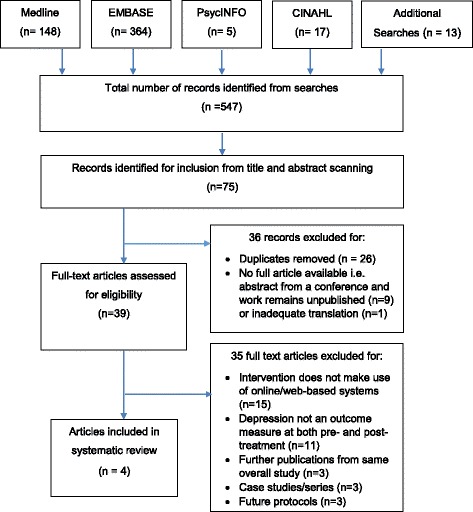
BACKGROUND: Perinatal depression is strikingly common with a prevalence of 10-15%. The adverse effects of perinatal depression on maternal and child health are profound with considerable costs. Despite this, few women seek medical attention. E-health, providing healthcare via the Internet is an accessible and effective solution for the treatment of depression in the general population. We aimed to conduct a systematic review of web-based interventions for the prevention and treatment of mood disorders in the perinatal period, defined as the start of pregnancy to 1 year post-partum. METHODS: Six databases were searched until 26(th) March 2015. Two researchers independently screened articles for eligibility. Of the 547 screened articles, four met the inclusion criteria. These included three randomised-controlled trials and one feasibility trial, with total data from 1274 participants. MOOSE and PRISMA guidelines were adhered to for the conduct and reporting of the systematic review. RESULTS: All studies were conducted in the post-partum period. All reported an improvement in maternal mood following intervention. A significant improvement in depressive symptoms was measured using validated rating scales, such as the Edinburgh Postnatal Depression Scale (EPDS), either at post-treatment or follow-up which ranged from 3 to 12 months post study completion. For the two RCTs utilising the EPDS, the EPDS score reductions were (mean ± SEM) 8.52 ± 0.22 (Range 19.46 to10.94) and 9.19 ± 0.63 (Range, 20.24 to 11.05) for treatment groups and 5.16 ± 0.25 (Range 19.44 to 14.28) and 6.81 ± 0.71 (Range 21.07 to 14.26) for comparator groups. However attrition within studies ranged from 13 to 61%. One study was rated as 'good' quality. CONCLUSIONS: Preliminary data suggests web-based therapies for perinatal depression delivered in the post-partum period may play a role in improving maternalmood but more studies are needed, particularly with interventions delivered antenatally. Further research is needed to address the limitations of the existing evidence base.
Overview
The claims and statistics of this paper haven’t been checked yet.
Free: it reads the open-access text and checks the first 5 claims that cite a source we can check. Create a free account to check every claim.
Integrity signals
Registry
Cites
Statistics
Figures
Verification
Claims the paper makes
The claims and statistics of this paper haven’t been checked yet.
Free: it reads the open-access text and checks the first 5 claims that cite a source we can check. Create a free account to check every claim.
Claims other papers make about this one
Each is checked against this paper’s own text: does it say what the citing paper says it does?
The cited source says what the claim attributes to it.
In the citing paper
“However, most of these interventions cater only to mothers [32,35,37,38] and are only introduced during the postnatal period [28,30,31,33,34,38].”
From Effectiveness of a Technology-Based Supportive Educational Parenting Program on Parental Outcomes (Part 1): Randomized Controlled Trial (2019) · cites this paper as [38]
The cited source says what the claim attributes to it.
In the citing paper
“Although internet-based interventions for PND show promising results, they face adherence problems even when the intervention is guided (O'Mahen et al., 2013a; O'Mahen et al., 2013b; Lee et al., 2016; Lau et al., 2017; Forsell et al., 2017).”
From App-based intervention for reducing depressive symptoms in postpartum women: Protocol for a feasibility randomized controlled trial (2023) · cites this paper as Lee et al., 2016
The cited source says what the claim attributes to it.
In the citing paper
“Existing reviews focused on specific intervention contents like internet-delivered Cognitive Behavioural Therapy (iCBT) [27, 31] on specific diagnoses like depression and anxiety [27, 28, 30, 31] or on specific modalities like internet-delivered interventions [26, 29].”
From Mental health-related telemedicine interventions for pregnant women and new mothers: a systematic literature review (2023) · cites this paper as [26]
The cited source says what the claim attributes to it.
In the citing paper
“To our knowledge, there are currently few systematic reviews and meta-analyses in the literature that have dealt specifically with the topic of mental health and telemedicine interventions for pregnant women or new mothers [26–31].”
From Mental health-related telemedicine interventions for pregnant women and new mothers: a systematic literature review (2023) · cites this paper as [26]
Self-check
Percentages, sums and reported differences re-computed from the paper’s own numbers.
The self-check needs the paper’s full text.
Citations
Cites
Liberati, A., Altman, D. G., Tetzlaff, J., Mulrow, C., Gøtzsche, P. C., Ioannidis, J. P. A., Clarke, M., Devereaux, P. J., Kleijnen, J., & Moher, D. (2009) · PLoS Medicine · doi:10.1371/journal.pmed.1000100 · Cited by 28,164 · cited 1×
“The Meta-analysis of Observational Studies in Epidemiology (MOOSE) guidelines were followed for the conduct [34], and the Preferred Reporting Items for Systematic Reviews and Meta-analyses (PRISMA) guidelines for the reporting [35] of this systematic review.”
MethodDermyshi, E., Wang, Y., Yan, C., Hong, W., Qiu, G., Gong, X., & Zhang, T. (2017) · Neonatology · doi:10.1159/000454668 · Cited by 24,451
Meta-analysis of Observational Studies in Epidemiology<SUBTITLE>A Proposal for Reporting</SUBTITLE>
Stroup, D. F. (2000) · JAMA · doi:10.1001/jama.283.15.2008 · Cited by 20,623
Liberati, A., Altman, D. G., Tetzlaff, J., Mulrow, C., Gotzsche, P. C., Ioannidis, J. P. A., Clarke, M., Devereaux, P. J., Kleijnen, J., & Moher, D. (2009) · BMJ · doi:10.1136/bmj.b2700 · Cited by 17,648
Jacobson, N. S., & Truax, P. (1991) · Journal of Consulting and Clinical Psychology · doi:10.1037/0022-006x.59.1.12 · Cited by 7,770 · cited 1×
“There was reduction in symptom scores in all studies, with the reported reduction in the two RCTs using the EPDS as an outcome measure, considered a clinically significant improvement [46, 47].”
ResultPerinatal Depression: A Systematic Review of Prevalence and Incidence
Gavin, N. I., Gaynes, B. N., Lohr, K. N., Meltzer-Brody, S., Gartlehner, G., & Swinson, T. (2005) · Obstetrics & Gynecology · doi:10.1097/01.aog.0000183597.31630.db · Cited by 3,282 · cited 1×
“curring in 10–15 % of pregnancies [1, 2], with the prevalence of depression peaking at 3 months postpartum.”
BackgroundSaving Mothers’ Lives: Reviewing maternal deaths to make motherhood safer: 2006–2008
(2011) · BJOG: An International Journal of Obstetrics & Gynaecology · doi:10.1111/j.1471-0528.2010.02847.x · Cited by 2,994
Maternal Depression and Child Psychopathology: A Meta-Analytic Review
Goodman, S. H., Rouse, M. H., Connell, A. M., Broth, M. R., Hall, C. M., & Heyward, D. (2011) · Clinical Child and Family Psychology Review · doi:10.1007/s10567-010-0080-1 · Cited by 2,621
Verhagen, A. P., de Vet, H. C. W., de Bie, R. A., Kessels, A. G. H., Boers, M., Bouter, L. M., & Knipschild, P. G. (1998) · Journal of Clinical Epidemiology · doi:10.1016/s0895-4356(98)00131-0 · Cited by 2,379 · cited 1×
“quality, using a modified tool [42] with objective criteria relating to sample population and recruitment, interven-”
MethodInternet-based cognitive behaviour therapy for symptoms of depression and anxiety: A meta-analysis
SPEK, V., CUIJPERS, P., NYKLÍČEK, I., RIPER, H., KEYZER, J., & POP, V. (2007) · Psychological Medicine · doi:10.1017/s0033291706008944 · Cited by 1,586
Research works printed but not linked: 1
- Cochrane Consumers and Communication Review Group. Data Extraction Template for Cochrane Reviews. The Cochrane Collaboration; 2013. http://cccrg.cochrane.org/author-resources. Accessed 23 Feb 2016
Cited by
Postpartum depression: pathophysiology, treatment, and emerging therapeutics
Stewart, D. E., & Vigod, S. N. (2019) · Annual Review of Medicine · doi:10.1146/annurev-med-041217-011106 · Cited by 445
Philippe, T. J., Sikder, N., Jackson, A., Koblanski, M. E., Liow, E., Pilarinos, A., & Vasarhelyi, K. (2022) · JMIR Mental Health · doi:10.2196/35159 · Cited by 436
eHealth as the Next-Generation Perinatal Care: An Overview of the Literature
van den Heuvel, J. F., Groenhof, T. K., Veerbeek, J. H., van Solinge, W. W., Lely, A. T., Franx, A., & Bekker, M. N. (2018) · Journal of Medical Internet Research · doi:10.2196/jmir.9262 · Cited by 318
“eHealth programs (eg, online sessions based on cognitive behavior therapy) effectuate significant reductions in the depression scales and on symptom scores compared with treatment as usual [61-64].”
Perinatal depression and infant mental health
Goodman, J. H. (2019) · Archives of Psychiatric Nursing · doi:10.1016/j.apnu.2019.01.010 · Cited by 154
Lau, Y., Htun, T. P., Wong, S. N., Tam, W. S. W., & Klainin-Yobas, P. (2017) · Journal of Medical Internet Research · doi:10.2196/jmir.6712 · Cited by 149
“However, the two reviews have been limited in using heterogeneous study designs [38,39], different therapeutic approaches [38], nonspecific outcomes [38,39], and a few eligible studies (n=4) [39].”
InfluentialLoughnan, S. A., Joubert, A. E., Grierson, A., Andrews, G., & Newby, J. M. (2019) · Archives of Women's Mental Health · doi:10.1007/s00737-019-00961-9 · Cited by 123
Branquinho, M., Rodriguez-Muñoz, M. D. L. F., Maia, B. R., Marques, M., Matos, M., Osma, J., Moreno-Peral, P., Conejo-Cerón, S., Fonseca, A., & Vousoura, E. (2021) · Journal of Affective Disorders · doi:10.1016/j.jad.2021.05.010 · Cited by 113
Mamma Mia – A randomized controlled trial of an internet-based intervention for perinatal depression
Haga, S. M., Drozd, F., Lisøy, C., Wentzel-Larsen, T., & Slinning, K. (2019) · Psychological Medicine · doi:10.1017/s0033291718002544 · Cited by 99
“Findings from two recent systematic reviews on web-based interventions for perinatal mental health are encouraging and suggest they may be effective in reducing perinatal depression (Ashford et al., 2016; Lee et al., 2016).”
BackgroundNair, U., Armfield, N. R., Chatfield, M. D., & Edirippulige, S. (2018) · Journal of Telemedicine and Telecare · doi:10.1177/1357633x18794332 · Cited by 111
Shorey, S., Ng, Y. P. M., Ng, E. D., Siew, A. L., Mörelius, E., Yoong, J., & Gandhi, M. (2019) · Journal of Medical Internet Research · doi:10.2196/10816 · Cited by 97
“However, most of these interventions cater only to mothers [32,35,37,38] and are only introduced during the postnatal period [28,30,31,33,34,38].”
BackgroundZhou, C., Hu, H., Wang, C., Zhu, Z., Feng, G., Xue, J., & Yang, Z. (2020) · Journal of Telemedicine and Telecare · doi:10.1177/1357633x20917816 · Cited by 131
“Longer-term outcomes are important in the study of PPD, as depressed patients have been reported to have a higher risk of relapse.(24) Finally, only studies published in English were included.”
BackgroundZhao, L., Chen, J., Lan, L., Deng, N., Liao, Y., Yue, L., Chen, I., Wen, S. W., & Xie, R.-H. (2021) · JMIR mHealth and uHealth · doi:10.2196/32544 · Cited by 91
“Coexistence of PPD and anxiety was common [41] and was mainly related to negative life events experienced by mothers with inadequate social support and increased childcare burden [42].”
BackgroundHeller, H. M., Hoogendoorn, A. W., Honig, A., Broekman, B. F. P., & van Straten, A. (2020) · Journal of Medical Internet Research · doi:10.2196/15172 · Cited by 82
“Although internet-based interventions proved effective in the general population [23,24] as well as postpartum [25], recent studies of internet-based interventions during pregnancy [26-28] showed varying success.”
BackgroundFonseca, A., Alves, S., Monteiro, F., Gorayeb, R., & Canavarro, M. C. (2020) · Behavior Therapy · doi:10.1016/j.beth.2019.09.007 · Cited by 82
Exploring the cancer caregiver's journey through web‐based Meaning‐Centered Psychotherapy
Applebaum, A. J., Buda, K. L., Schofield, E., Farberov, M., Teitelbaum, N. D., Evans, K., Cowens‐Alvarado, R., & Cannady, R. S. (2018) · Psycho-Oncology · doi:10.1002/pon.4583 · Cited by 80
Milgrom, J., Danaher, B. G., Seeley, J. R., Holt, C. J., Holt, C., Ericksen, J., Tyler, M. S., Gau, J. M., & Gemmill, A. W. (2021) · Journal of Medical Internet Research · doi:10.2196/17185 · Cited by 78
“Meta-analyses suggest that internet interventions have achieved medium-sized effects in reducing perinatal depressive symptoms, usually in comparison with TAU or waitlist control conditions [50-52].”
Lau, Y., Cheng, J.-Y., Wong, S.-H., Yen, K.-Y., & Cheng, L.-J. (2021) · World Journal of Psychiatry · doi:10.5498/wjp.v11.i4.133 · Cited by 68
Fonseca, A., Monteiro, F., Alves, S., Gorayeb, R., & Canavarro, M. C. (2019) · Frontiers in Psychology · doi:10.3389/fpsyg.2019.00265 · Cited by 67
Digital Health Needs of Women With Postpartum Depression: Focus Group Study
Lackie, M. E., Parrilla, J. S., Lavery, B. M., Kennedy, A. L., Ryan, D. M., Shulman, B., & Brotto, L. A. (2021) · Journal of Medical Internet Research · doi:10.2196/18934 · Cited by 73
Roman, M., Constantin, T., & Bostan, C. M. (2020) · Women & Health · doi:10.1080/03630242.2019.1610824 · Cited by 62
“Three recently published systematic reviews (Ashford, Olander, and Ayers 2016; Lau, Htun, Wong, Tam andKlainin-Yobas2017; Lee et al. 2016) have synthesized information on web-based interventions for mothers in the perinatal period.”
BackgroundZhang, M. W., Ho, R. C., Loh, A., Wing, T., Wynne, O., Chan, S. W. C., Car, J., & Fung, D. S. S. (2017) · BMJ Open · doi:10.1136/bmjopen-2016-015655 · Cited by 59
Monteiro, F., Pereira, M., Canavarro, M. C., & Fonseca, A. (2020) · International Journal of Environmental Research and Public Health · doi:10.3390/ijerph17134679 · Cited by 58
“This is in line with previous intervention studies in the perinatal period [46] and, as previously mentioned, could be explained by the demanding nature of the early postpartum period.”
BackgroundResultInkster, B., Kadaba, M., & Subramanian, V. (2023) · Frontiers in Global Women's Health · doi:10.3389/fgwh.2023.1084302 · Cited by 53
“The acceptability, feasibility and effectiveness of perinatal depression digital interventions have been evaluated in various pilot studies, randomized controlled trials (RCTs) and systematic reviews (26 – 36).”
Robinson, R., Lahti‐Pulkkinen, M., Heinonen, K., Reynolds, R. M., & Räikkönen, K. (2018) · Pediatric Research · doi:10.1038/s41390-018-0173-y · Cited by 72
Self-citationPostpartum Depression: A Comprehensive Review
Ahmad, A. (2022) · International Journal of Clinical Images and Medical Reviews · doi:10.55920/ijcimr.2022.02.001071 · Cited by 56
Stentzel, U., Grabe, H. J., Schmidt, S., Tomczyk, S., van den Berg, N., & Beyer, A. (2023) · BMC Psychiatry · doi:10.1186/s12888-023-04790-0 · Cited by 52
“Existing reviews focused on specific intervention contents like internet-delivered Cognitive Behavioural Therapy (iCBT) [27, 31] on specific diagnoses like depression and anxiety [27, 28, 30, 31] or on specific modalities like internet-delivered interventions [26, 29].”
BackgroundResultSingla, D. R., Lemberg-Pelly, S., Lawson, A., Zahedi, N., Thomas-Jacques, T., & Dennis, C.-L. (2020) · JMIR Mental Health · doi:10.2196/19271 · Cited by 47
The Role of Social Support in Perinatal Mental Health and Psychosocial Stimulation
Kay, T., Moulson, M. C., Vigod, S. N., Schoueri‐Mychasiw, N., & Singla, D. R. (2024) · The Yale Journal of Biology and Medicine · doi:10.59249/wmge9032 · Cited by 64
Ashford, M. T., Olander, E. K., Rowe, H., Fisher, J. R., & Ayers, S. (2018) · JMIR Mental Health · doi:10.2196/mental.9106 · Cited by 45
“Systematic reviews and one meta-analysis focusing on the perinatal period suggest that Web-based treatments can help improve postpartum depressive symptoms [24-26], but so far none are specifically developed for postpartum anxiety [24].”
BackgroundKhanlari, S., Eastwood, J. G., Barnett, B. E. W., Naz, S., & Ogbo, F. A. (2019) · BMC Pregnancy and Childbirth · doi:10.1186/s12884-019-2565-3 · Cited by 55
McCloskey, L., Bernstein, J., Collaborative, T. B. T. C., Amutah-Onukagha, N., Anthony, J., Barger, M., Belanoff, C., Bennett, T., Bird, C. E., Bolds, D., et al. (2021) · Women's Health Issues · doi:10.1016/j.whi.2021.01.002 · Cited by 45
Singla, D. R., Meltzer-Brody, S. E., Silver, R. K., Vigod, S. N., Kim, J. J., Porte, L. M. L., Ravitz, P., Schiller, C. E., Schoueri‐Mychasiw, N., Hollon, S. D., et al. (2021) · Trials · doi:10.1186/s13063-021-05075-1 · Cited by 41
“Telemedicine-based psychological treatments offer an alternative approach for perinatal women in terms of flexibility [26], efficiency [27], and cost [28].”
BackgroundThe Use of Social Media for Preconception Information and Pregnancy Planning among Young Women
Skouteris, H., & Savaglio, M. (2021) · Journal of Clinical Medicine · doi:10.3390/jcm10091892 · Cited by 38
“majority of participants likely to not be part of specific online support or self-help groups related to preconception or pregnancy, where such information is primarily routinely shared [22].”
BackgroundResultNeo, H. S., Tan, J. H., Ang, W. H. D., & Lau, Y. (2022) · Journal of Psychosomatic Research · doi:10.1016/j.jpsychores.2022.110790 · Cited by 32
Telehealth Interventions Designed for Women: an Evidence Map
Goldstein, K. M., Zullig, L. L., Dedert, E. A., Tabriz, A. A., Brearly, T. W., Raitz, G., Sata, S. S., Whited, J. D., Bosworth, H. B., Gordon, A. M., et al. (2018) · Journal of General Internal Medicine · doi:10.1007/s11606-018-4655-8 · Cited by 37
Koçak, V., Ege, E., & Iyısoy, M. S. (2021) · Archives of Psychiatric Nursing · doi:10.1016/j.apnu.2021.06.009 · Cited by 37
The miscarriage circle of care: towards leveraging online spaces for social support
Alqassim, M. Y., Kresnye, K. C., Siek, K. A., Lee, J. R., & Wolters, M. K. (2022) · BMC Women s Health · doi:10.1186/s12905-022-01597-1 · Cited by 59
“Recent relevant systematic reviews [63, 64] show that Kersting et al.”
BackgroundPhillips, S. E. K., Celi, A. C., Wehbe, A., Kaduthodil, J., & Zera, C. A. (2023) · American Journal of Obstetrics and Gynecology · doi:10.1016/j.ajog.2022.12.309 · Cited by 28
Oviatt, J. R., & Reich, S. M. (2019) · mHealth · doi:10.21037/mhealth.2019.09.09 · Cited by 43
Li, L., Yue, S., Xu, J., Qiao, J., Redding, S. R., & Ouyang, Y. (2022) · Journal of Clinical Nursing · doi:10.1111/jocn.16399 · Cited by 36
Wan Mohd Yunus, W. M. A., Matinolli, H.-M., Waris, O., Upadhyaya, S., Vuori, M., Korpilahti-Leino, T., Ristkari, T., Koffert, T., & Sourander, A. (2022) · Journal of Medical Internet Research · doi:10.2196/33337 · Cited by 26
Premji, S., Dobson, K. S., Prashad, A., Yamamoto, S. S., Tao, F., Zhu, B., Wu, X., Lu, M., & Shao, S. (2021) · BMC Pregnancy and Childbirth · doi:10.1186/s12884-020-03473-y · Cited by 31
Hamers, P. C. M., Festen, D. A. M., & Hermans, H. (2018) · Journal of Intellectual Disability Research · doi:10.1111/jir.12502 · Cited by 23
Radoš, S. N., Ganho-Ávila, A., Muñoz, M. D. L. F. R., Bina, R., Kittel‐Schneider, S., den Berg, M. P. L., Lega, I., Lupattelli, A., Sheaf, G., Skalkidou, A., et al. (2025) · The British Journal of Psychiatry · doi:10.1192/bjp.2025.43 · Cited by 42
Haga, S. M., Kinser, P. A., Wentzel‐Larsen, T., Lisøy, C., Garthus‐Niegel, S., Slinning, K., & Drozd, F. (2020) · The Journal of Positive Psychology · doi:10.1080/17439760.2020.1738535 · Cited by 23
Lau, Y., Yen, K. Y., Wong, S. H., Cheng, J. Y., & Cheng, L. J. (2021) · Journal of Psychiatric Research · doi:10.1016/j.jpsychires.2021.11.012 · Cited by 23
Mancinelli, E., Bassi, G., Gabrielli, S., & Salcuni, S. (2022) · International Journal of Environmental Research and Public Health · doi:10.3390/ijerph19159549 · Cited by 21
Deave, T., Ginja, S., Goodenough, T., Bailey, E. A., Piwek, L., Coad, J. E., Day, C., Nightingale, S., Kendall, S. A., & Lingam, R. (2019) · mHealth · doi:10.21037/mhealth.2019.08.05 · Cited by 26
“However, a systematic review of webbased interventions for perinatal mood disorders suggests that 3-month follow-up assessments can detect outcome improvement (34).”
BackgroundMuñoz, M. D. L. F. R., Motrico, E., Míguez, M. C., Chaves, C., Suso‐Ribera, C., Duque, A., Salinas, M. G., Caparrós-González, R. A., Martín-Agudiez, N., Kovacheva, K. I., et al. (2023) · Clínica y Salud · doi:10.5093/clysa2023a15 · Cited by 41
Solness, C. L., Kroska, E. B., Holdefer, P. J., & O’Hara, M. W. (2020) · Journal of Behavioral Medicine · doi:10.1007/s10865-020-00188-5 · Cited by 25
Anyanwu, I. S., & Jenkins, J. (2024) · Oxford Open Digital Health · doi:10.1093/oodh/oqae026 · Cited by 30
“This drifting away from website DHIs may be explained by poor adherence rates recorded in previous website-based interventions [18, 21, 27], while the increase of video conferencing may be due to its D o w n l oaded f r o m h tt p s :/ / a c ade m i c . oup . c o m / oodh / a r t i c l e / do i /…”
InfluentialLau, Y., Chew, H. S. J., Ang, W. H. D., Ang, W. W., Yeo, C. Y., Lim, Z. Q. G., Wong, S. H., Lau, S. T., & Cheng, L. J. (2023) · Health Psychology Review · doi:10.1080/17437199.2023.2185654 · Cited by 24
“…et al., 2019; Chae & Kim, 2021; Dol et al.,2020; Feldman et al., 2021; Hanach et al., 2021; Lara-Cinisomo et al., 2021; Lau et al.,2017, 2021, 2022; Lee et al., 2016; Lee & Cho, 2019; Li et al., 2022; Liu et al.,2022; Loughnan et al., 2019; Mao et al.,2023; Mu et al., 2021; Nair et al., 2018; Neo…”
BackgroundEvaluation of the implementation of an internet intervention in well-baby clinics: A pilot study
Drozd, F., Haga, S. M., Lisøy, C., & Slinning, K. (2018) · Internet Interventions · doi:10.1016/j.invent.2018.04.003 · Cited by 16
Assessing the quality of mobile applications targeting postpartum depression in China
Li, Y., Zhao, Q. L., Cross, W. M., Chen, J., Qin, C., & Sun, M. (2020) · International Journal of Mental Health Nursing · doi:10.1111/inm.12713 · Cited by 23
Digital Behavioral Activation Interventions During the Perinatal Period: Scoping Review
Mancinelli, E., Dell’Arciprete, G., Pattarozzi, D., Gabrielli, S., & Salcuni, S. (2023) · JMIR Pediatrics and Parenting · doi:10.2196/40937 · Cited by 20
“However, such barriers can be overcome through the implementation of digital interventions; the literature not only highlights a clear preference for support delivered through a web-based format expressed by women experiencing mental health issues during the postpartum period [21-23] but also underscores how such trea…”
BackgroundMartiniuk, A. L. C., Toepfer, A., & Lane-Brown, A. T. (2023) · Journal of Mental Health · doi:10.1080/09638237.2023.2182422 · Cited by 15
“A review by Lee (2016) similarly found attrition rates to be the big-gest experienced risk (up to 60% attrition) for programs aiming to prevent and treat perinatal mood disorders.”
Branquinho, M., Canavarro, M. C., & Fonseca, A. (2020) · International Journal of Environmental Research and Public Health · doi:10.3390/ijerph17228631 · Cited by 11
“However, there is also evidence that web-based interventions suffer from important limitations related to the accuracy of diagnosis, which is based only on online assessments [20], and with low engagement and high attrition rates [15,16] due to the absence of therapist support during the intervention [15,20].”
BackgroundLawrence, C. G., Breau, G., Yang, L. P. H., Hellerstein, O. S., Hippman, C., Kennedy, A. L., Ryan, D. M., Shulman, B., & Brotto, L. A. (2024) · Archives of Women s Mental Health · doi:10.1007/s00737-024-01468-8 · Cited by 21
Depression in Children's Lives
Crnic, K. A., & Lin, B. (2021) · Cambridge University Press eBooks · doi:10.1017/9781108887144 · Cited by 13
Jimènez-Barragan, M., Gutierrez, A. D. P., Garcia, J. C., Monistrol, O., Coll-Navarro, E., Roda, O. P., & Falguera‐Puig, G. (2023) · BMC Nursing · doi:10.1186/s12912-023-01440-4 · Cited by 17
“Current literature recommends the use of m-health interventions for the treatment of mood disorders, and emphasizes the need to conduct new research on the results of these interventions in the prenatal period [35].”
BackgroundBarber, C. C., & Masters‐Awatere, B. (2021) · Applied Psychology Health and Well-Being · doi:10.1111/aphw.12333 · Cited by 22
Ching, H., Chua, J. Y. X., Chua, J. S., & Shorey, S. (2023) · Worldviews on Evidence-Based Nursing · doi:10.1111/wvn.12673 · Cited by 17
Identifying risk factors of prenatal depression among mothers in Indonesia
Syam, A., Iskandar, I., Qasim, M., Kadir, A., & Usman, A. N. (2020) · Enfermería Clínica · doi:10.1016/j.enfcli.2019.07.158 · Cited by 11
Andrejek, N., Hossain, S., Schoueri‐Mychasiw, N., Saeed, G., Zibaman, M., Niño, A. P., Meltzer-Brody, S. E., Silver, R. K., Vigod, S. N., & Singla, D. R. (2021) · International Journal of Environmental Research and Public Health · doi:10.3390/ijerph182212234 · Cited by 11
“Although there is a growing body of evidence that suggests that telemedicine is a convenient [11], efficacious [12,13], cost-effective [14], and an acceptable [12,15] mode of receiving psychotherapy, there remains a need for further evidence to decipher whether psychotherapy delivered via telemedicine is as effective…”
BackgroundCanfield, S. M., Canada, K. E., Rolbiecki, A. J., & Petroski, G. F. (2023) · BMC Pregnancy and Childbirth · doi:10.1186/s12884-023-06031-4 · Cited by 18
“Online interventions have shown promise for decreased perinatal anxiety, depression, and perception of stress, increased awareness about mental health risk factors and protective strategies, and improved coping self-efficacy [21–23].”
BackgroundResultGuided Internet-Delivered Treatment for Depression: Scoping Review
Børtveit, L., Dechsling, A., Sütterlin, S., Nordgreen, T., & Nordahl‐Hansen, A. (2022) · JMIR Mental Health · doi:10.2196/37342 · Cited by 14
“A total of 28 published systematic reviews on internet-delivered t r e a t m e n t ( M u l t i m e d i a A p p e n d i x 3 [10,11,14-16,20,27,29,30,51-69]) were hand searched by LB for relevant studies not identified in the literature search.”
MethodSchwartz, H. R., McCusker, J., Costa, D. D., Singh, S., Baskaran, S., Belzile, É., & Roost, K. V. (2022) · Internet Interventions · doi:10.1016/j.invent.2022.100597 · Cited by 11
“In the context of perinatal depression and anxiety, two recent reviews of WBIs suggested that they were effective in preventing maternal depression and anxiety (Loughnan et al., 2019; Lee et al., 2016).”
BackgroundJimènez-Barragan, M., del Pino‐Gutiérrez, A., Valmaña, G. S., Monistrol, O., Marcet, C. M., Badia, M. P., Garrido-Ribas, I., Ruiz, A. C., Roda, O. P., Esquinas, C., et al. (2025) · JMIR Human Factors · doi:10.2196/71708 · Cited by 19
“According to World Health Organization, eHealth technologies can play a key role in expanding access to mental health services [15].”
Gong, M., Zhang, S., Xi, C., Luo, M., Wang, T., Wang, Y., Wang, S., Guo, L., & Lu, C. (2020) · Early Intervention in Psychiatry · doi:10.1111/eip.12953 · Cited by 10
Motrico, E., Cerón, S. C., Gómez, C. M., Gómez‐Gómez, I., Fonseca, A. C., & Moreno-Peral, P. (2021) · Internet Interventions · doi:10.1016/j.invent.2021.100471 · Cited by 10
“…Web-based and Mobile-based interventions during the perinatal period (Dosani et al., 2020; Hussain-Shamsy et al., 2020; Roman et al., 2020; Zhou et al., 2020; Ashford et al., 2016; Lau et al., 2017; Van Den Heuvel et al., 2018; Loughnan et al., 2019; Lee et al., 2016) have been published.”
BackgroundBeerli, J., Ehlert, U., & Castro, R. T. A. (2022) · BMC Family Practice · doi:10.1186/s12875-022-01779-8 · Cited by 11
“Finally, according to systematic analyses, internet-based interventions show medium-sized effects in reducing perinatal depression or anxiety symptoms [28–30], and improvements in perinatal depressive symptoms are maintained at both shortand long-term follow-ups [28, 31].”
BackgroundSharmila, V., Babu, T. A., & Balakrishnan, P. (2020) · International Journal of Community Medicine and Public Health · doi:10.18203/2394-6040.ijcmph20203414 · Cited by 10
Monteiro, F., Antunes, P., Pereira, M., Canavarro, M. C., & Fonseca, A. (2022) · International Journal of Technology Assessment in Health Care · doi:10.1017/s0266462322000447 · Cited by 10
“Fourth, consistent with other studies of web-based interventions (52), dropout rates were relatively high, particularly at the last assessment point.”
ResultAntenatal Depression Symptoms Among Pregnant Women Seeking Health Services in Erbil, Iraq
Mishkin, K. E., Maqsood, S. S., & Ahmed, H. M. (2021) · Maternal and Child Health Journal · doi:10.1007/s10995-021-03142-2 · Cited by 9
Monteiro, F., Pereira, M., Canavarro, M. C., & Fonseca, A. (2021) · Frontiers in Psychiatry · doi:10.3389/fpsyt.2021.701107 · Cited by 18
“This is in line with previous studies using unguided web-based interventions, particularly in the perinatal period (70), which is recognized as a demanding time.”
ResultXie, J., Tang, S., Huang, C., Chen, J., Owusua, T., Hu, S., Lu, J., Sun, M., Peng, H., & Qin, C. (2022) · Annals of Palliative Medicine · doi:10.21037/apm-21-2415 · Cited by 17
Haeken, S. V., Braeken, M. A. K. A., Horsch, A., Oosterman, M., & Bogaerts, A. (2023) · BMC Psychology · doi:10.1186/s40359-023-01301-4 · Cited by 20
“There is a clinical need for intervention programs aiming to enhance resilience by skill training and the application of evidence based tools [5, 11].”
BackgroundKinser, P. A., Jallo, N., Huberty, J., Jones, E. G., Thacker, L. R., Moyer, S. W., Laird, B., Rider, A., Lanni, S. M., Drozd, F., et al. (2020) · Research in Nursing & Health · doi:10.1002/nur.22092 · Cited by 10
“…recruitment can have varying success in reaching racially/ethnically and socioeconomically disadvantaged individuals (Andersson et al., 2019; Lee et al., 2016), the use of these hub sites is purposeful, allowing for focused recruitment of diverse populations at those locations via community…”
BackgroundZeng, Z., Peng, J., Liu, L., & Gong, W. (2023) · Journal of Medical Internet Research · doi:10.2196/42777 · Cited by 7
Pejó, L. A., Martínez‐Borba, V., Osma, J., Suso‐Ribera, C., & Delgado, E. C. (2022) · Nursing Open · doi:10.1002/nop2.1358 · Cited by 11
“Another strategy to improve adherence to online applications is considering the use of personalized interventions for pregnancy and postpartum (Lee et al., 2016).”
Backgroundabout:blank? Online Interventions for Postpartum Depression
Westerhoff, B., Trösken, A., & Renneberg, B. (2022) · Verhaltenstherapie · doi:10.1159/000501779 · Cited by 4
Lasheras, G., Farré-Sender, B., Osma, J., Martínez‐Borba, V., & Mestre‐Bach, G. (2021) · Journal of Reproductive and Infant Psychology · doi:10.1080/02646838.2021.1921716 · Cited by 11
“This is agreement with previous studies during the perinatal period (Drake et al., 2014; Lee et al., 2016) and could be explained by the delay between when mothers were invited to participate in the study (they were informed about the study during hospital”
ResultDigilego for Peripartum Depression: A Novel Patient-Facing Digital Health Instantiation.
Zingg, A., Rogith, D., Refuerzo, J., & Myneni, S. (2020) · PubMed Central · Cited by 11
Franco, P., Olhaberry, M., Cuijpers, P., Kelders, S., & Muzard, A. (2023) · Internet Interventions · doi:10.1016/j.invent.2023.100616 · Cited by 6
“In Chile, two studies have assessed interventions for PPD treatment (Olhaberry et al., 2015; Rojas et al., 2007).”
BackgroundInfluentialTeague, S. J., Shatte, A. B. R., Fuller‐Tyszkiewicz, M., & Hutchinson, D. M. (2025) · Behaviour and Information Technology · doi:10.1080/0144929x.2025.2502474 · Cited by 10
“…and Eriksson 2013; Shatte et al. 2020; Teague and Shatte 2018, 2021), development of web and mobile apps to support fathers (Fletcher et al. 2008; Lee et al. 2016; White et al. 2019), engaging men generally in psychological support (Mahalik et al. 2012; Seidler et al. 2018), and…”
Singla, D. R., de Oliveira, C., Murphy, S. M., Patel, V., Charlebois, J., Davis, W. N., Dennis, C., Kim, J., Kurdyak, P. A., Lawson, A., et al. (2023) · BMC Psychiatry · doi:10.1186/s12888-023-05318-2 · Cited by 7
“…distribution of tasks to non-specialist providers [11, 12] (i.e., individuals with no formal training or degree in mental health care [13]) and through telemedicine platforms, which offer an alternative approach for perinatal women in terms of flexibility [14], efficiency [15], and cost [16].”
BackgroundRecent advances in understanding maternal perinatal mood disorders
Robakis, T. K., Jernick, E., & Williams, K. E. (2017) · F1000Research · doi:10.12688/f1000research.10560.1 · Cited by 7
Carissoli, C., Corno, G., Montanelli, S., & Villani, D. (2019) · Lecture notes of the Institute for Computer Sciences, Social Informatics and Telecommunications Engineering · doi:10.1007/978-3-030-25872-6_21 · Cited by 7
A Chilean Survey of Perinatal Women and Health Care Professionals’ Views Towards Perinatal Apps
Franco, P., Olhaberry, M., Kelders, S., & Muzard, A. (2023) · mHealth · doi:10.21037/mhealth-22-37 · Cited by 5
“Apps may be particularly attractive for obtaining information because of their convenience, immediacy, and ease of access (5).”
BackgroundResultLuo, L., Lou, Y., Wu, C., He, J., & Jiang, F. (2025) · Digital Health · doi:10.1177/20552076251336283 · Cited by 12
Qiu, X., Li, T., Fang, Q., Huang, L., & Zheng, X. (2022) · International Journal of Environmental Research and Public Health · doi:10.3390/ijerph19137951 · Cited by 7
Bozkurt, M. A., & Cesur, B. (2023) · Digital Health · doi:10.1177/20552076231169840 · Cited by 8
Valla, L., Haga, S. M., Garthus‐Niegel, S., & Drozd, F. (2023) · JMIR Pediatrics and Parenting · doi:10.2196/46982 · Cited by 8
Text Messaging as a Means to Engage Patients in the Postpartum Period
Slagle, H. B. G., & Hoffman, M. (2021) · Clinical Obstetrics & Gynecology · doi:10.1097/grf.0000000000000609 · Cited by 6
Saha, A., & Das, M. (2017) · International Conference on Computer and Information Technology (ICCIT) · doi:10.1109/iccitechn.2017.8281831 · Cited by 11
“Given Internet’s tremendous potential to be a viable tool in reducing depression among women during postpartum period, researchers have developed and tested several internet-based approaches to cater to pregnant women and new mothers [16].”
BackgroundSchmidt-Hantke, J., & Jacobi, C. (2023) · PLOS Digital Health · doi:10.1371/journal.pdig.0000326 · Cited by 4
Advancing telemedicine and task-sharing to improve access to psychotherapy for perinatal populations
Andrejek, N., Lea, Z., Cussons, A., Shelly, S., Dennis, C., Porte, L. M. L., Vigod, S. N., Silver, R. K., Meltzer-Brody, S. E., & Singla, D. R. (2025) · Communications Medicine · doi:10.1038/s43856-025-01099-9 · Cited by 6
“Telemedicine reduces common barriers, such as time constraints and inconvenience associated with attending in-person appointments 10,11 .”
Xavier, S. D., Monteiro, F., Canavarro, M. C., & Fonseca, A. (2022) · Frontiers in Global Women s Health · doi:10.3389/fgwh.2022.841427 · Cited by 6
“As previous studies illustrate, dropout rates of web-based interventions in the postpartum period tend to be high (22, 23, 27, 28).”
BackgroundResultFonseca, A., Branquinho, M., & Canavarro, M. C. (2020) · Psychologica · doi:10.14195/1647-8606_63-2_6 · Cited by 5
“There is also preliminary evidence on the effectiveness of web-based psychological interventions for perinatal mood disorders (Lee et al., 2016), suggesting its applicability to the perinatal period.”
BackgroundHealthy Moms and Babies Preventive Psychological Intervention Application: A Study Protocol
Ruiz‐Segovia, N., Muñoz, M. D. L. F. R., Olivares, M. E., Izquierdo, N., Coronado, P., & Le, H. (2021) · International Journal of Environmental Research and Public Health · doi:10.3390/ijerph182312485 · Cited by 6
“Systematic reviews on the effectiveness of e-health interventions for the prevention and reduction of depressive symptomatology in the perinatal period have concluded that such interventions can improve mothers’ moods [30] and reduce depressive symptoms [31].”
Background
Metadata
- Authors
- Lee, E. W., Denison, F. C., Hor, K., & Reynolds, R. M.
- Affiliations
- The Queen's Medical Research Institute (GB)
- Queen Elizabeth University Hospital (GB)
- British Heart Foundation Centre for Cardiovascular Science (GB)
- Corresponding author
- Reynolds, Rebecca M.
- Venue
- BMC Pregnancy and Childbirth
- Published
- 2016-02-29
- Volume
- 16
- Issue
- 1
- Pages
- 38-38
- ISSN
- 1471-2393 (ISSN-L)
- PMC
- PMC4770541
- OpenAlex
- W2290323451
- Semantic Scholar
- ca9677c1b07d3b4bcd1bb2b3aebf1d8494974d25
- Cited by
- 143
- References
- 55
- Citations by year
- 2026: 3 · 2025: 11 · 2024: 9 · 2023: 25 · 2022: 19 · 2021: 27 · 2020: 16 · 2019: 16 · 2018: 10 · 2017: 6 · 2016: 1
- FWCI
- 1.63
- Type
- journal article
- Language
- en
- Open access
- gold
- doi.org
- Licence
- cc-by
- Locations
- BMC Pregnancy and Childbirth (publishedVersion, cc-by)
- PubMed Central (publishedVersion, cc-by)
- PubMed (publishedVersion)
- Edinburgh Research Explorer (University of Edinburgh) (submittedVersion, cc-by)
- Funders
- British Heart Foundation
- Topics
- Health Sciences › Medicine › Public Health, Environmental and Occupational Health › Maternal Mental Health During Pregnancy and Postpartum
- Social Sciences › Psychology › Applied Psychology › Digital Mental Health Interventions
- Health Sciences › Health Professions › General Health Professions › Mobile Health and mHealth Applications
- Keywords
- perinatal depression, online intervention, e-health, postpartum period, perinatal mood disorders, maternal mental health, Edinburgh Postnatal Depression Scale, depression prevention, antenatal depression, attrition
- MeSH terms
- Adult, Depressive Disorder, Female, Humans, Pregnancy, Pregnancy Complications, Telemedicine, Depression, Postpartum, Internet, Postpartum Period, Young Adult
About these checks
Registry, retraction, Cites and statistics results are computed, not judged, with one exception: a printed reference that no index lists is read once by a model before it counts as a citation error. Claims are extracted by a model and kept only when their quote appears verbatim in the text; each cited source is then checked, with a model’s help, for whether it says what the claim relies on. Those verdicts can be wrong — read the claim’s quote and the cited source before relying on one.
Statistics and arithmetic are recomputed, not judged.
Confidence bands are shown only for fields calibrated on our annotated test set. None is calibrated yet, so no band is shown.
What counts as a claim ›How we measure confidence ›How we check this ›
Are you an author, or do you see a problem with this page? Request a review
Data sources
Bibliographic data: Semantic Scholar, OpenAlex, Crossref.
Contains information from the Semantic Scholar Academic Graph Datasets, made available under the ODC Attribution License (ODC-BY 1.0).
Semantic Scholar’s data is described in: Kinney, R., et al. (2023). The Semantic Scholar Open Data Platform. arXiv:2301.10140.
