

Vaginal probiotics as therapeutic adjuncts for improving embryo transfer success rates: a systematic review and meta-analysis
Open accessThe DOI matches its Crossref record; 46 of the 46 references it cites were found in a registry or an index; 24 of the 39 sources its claims cite were checked for support.
Abstract
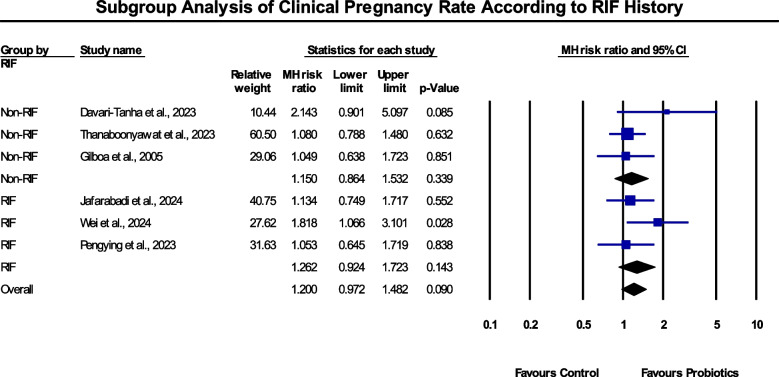
BACKGROUND: Infertility treatments are continually evolving, with vaginal probiotic supplementation before embryo transfer (ET) being explored as a potential method to improve clinical outcomes. So, this systematic review evaluated the effect of vaginal probiotics on pregnancy rates following ET. METHODS: Studies were identified through PubMed, Scopus, Web of Science, Cochrane, and clinical trial registries up to October 17, 2024. We included prospective interventional studies (RCTs or quasi-experimental) focusing on pregnancy outcomes post-ET. We excluded non-prospective studies, non-vaginal routes of probiotic administration, and studies with insufficient methodological or statistical details. The data was extracted from each qualifying study by two reviewers and recorded using an electronic form. Results were synthesized using a random-effects model, with Mantel-Haenszel (MH) risk ratio (RR) and 95% confidence intervals (CI) calculated for ET outcomes. Also, subgroup analyses were done to explore the history of recurrent implantation failure (RIF) as a probable source of heterogeneity. RESULTS: We included six studies with 850 participants (419 in intervention and 431 in control groups). Vaginal probiotics showed a non-significant increase in clinical pregnancy rates compared to the control group (157 per 419 [37.47%] versus 136 per 431 [31.55%], respectively; RR: 1.19; P = 0.07), with similar findings in women with and without a history of RIF. No significant differences were found in biochemical pregnancy (RR: 1.04; P = 0.74) or ongoing pregnancy rates (RR: 1.09; P = 0.53). A non-significant reduction in miscarriage risk was observed (RR: 0.67; P = 0.12). CONCLUSIONS: Vaginal probiotics may offer a non-significant increase in clinical pregnancy rates and a slight non-significant reduction in miscarriage risk. However, considering the potential limitations of the included studies, findings should be interpreted with caution. Further research is needed to explore the potential of personalized probiotic therapy. PROSPERO REGISTRATION CODE: CRD42024550798.
Overview
CoChat Summary
TL;DR
This systematic review and meta-analysis found that vaginal probiotics before embryo transfer were associated with a non-significant increase in clinical pregnancy rates and a non-significant reduction in miscarriage risk. Across six studies (850 participants), the evidence was limited by small study numbers, variable probiotic regimens, and incomplete reporting.
Key findings
- Six studies with 850 participants were included: 419 in the intervention group and 431 in the control group.
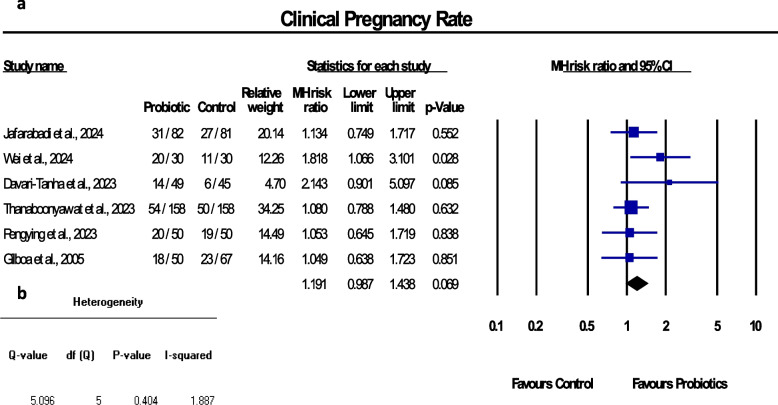
- Clinical pregnancy was higher with vaginal probiotics but not statistically significant: 157/419 (37.47%) vs 136/431 (31.55%); RR 1.19, 95% CI 0.99 to 1.44; P = 0.07.
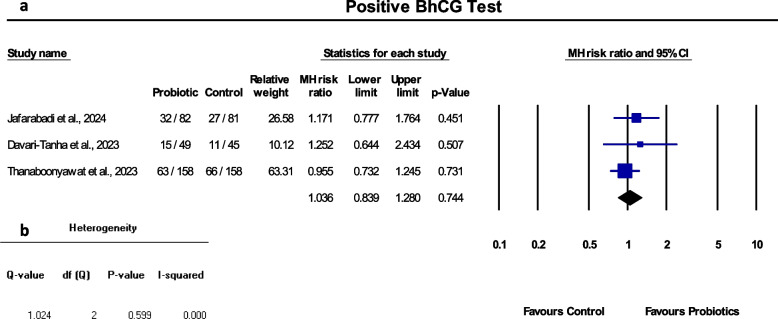
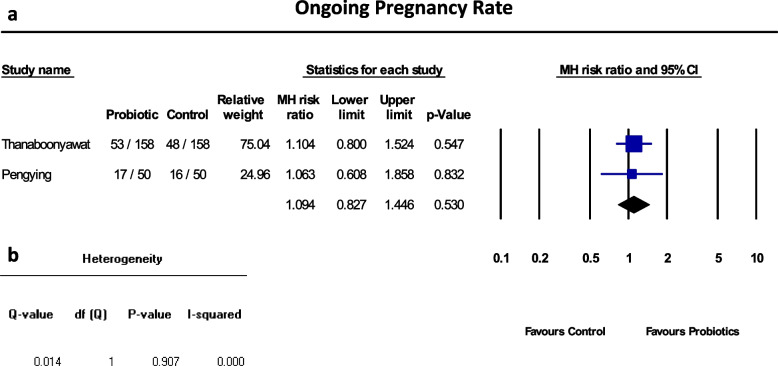
- No significant differences were found for biochemical pregnancy (RR 1.04; 95% CI 0.84 to 1.28; P = 0.74) or ongoing pregnancy (RR 1.09; 95% CI 0.83 to 1.45; P = 0.53).
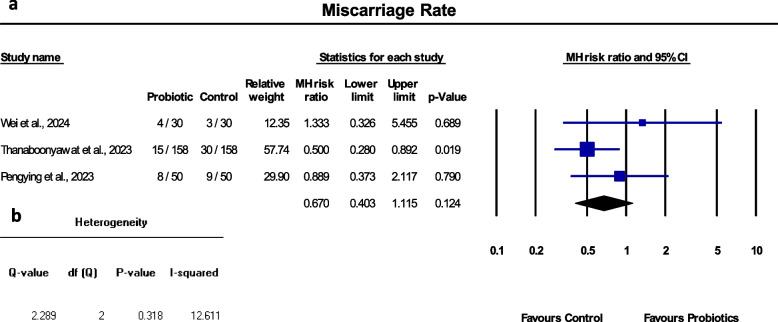
- Miscarriage showed a non-significant reduction with probiotics: RR 0.67; 95% CI 0.40 to 1.12; P = 0.12.
- Sensitivity analysis excluding three high-risk-of-bias studies still found no significant change in clinical pregnancy: RR 1.27; 95% CI 0.88 to 1.82; P = 0.20.
Methods
- Systematic review and meta-analysis of prospective interventional studies (RCTs or quasi-experimental) evaluating vaginal probiotic supplementation before or during embryo transfer in infertile women.
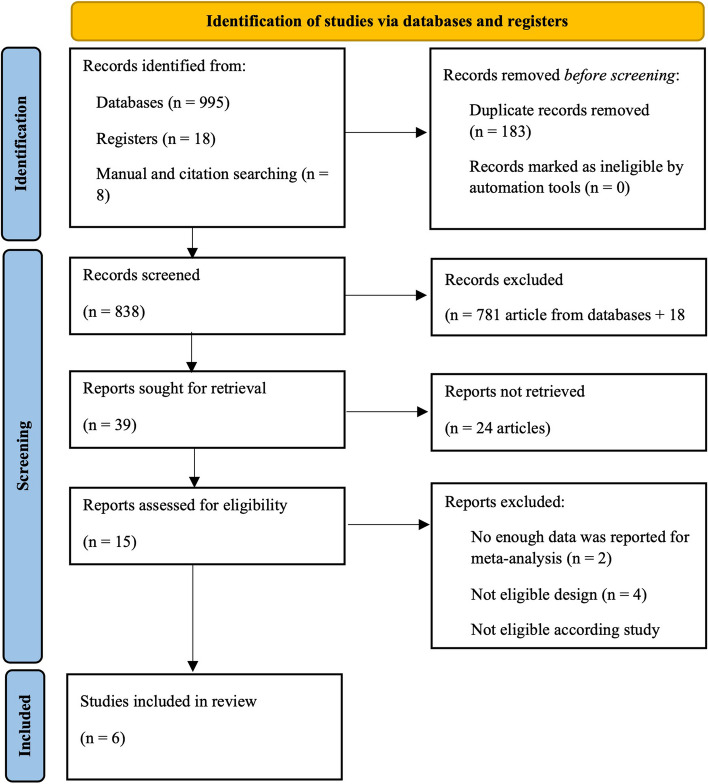
- Searched PubMed, Scopus, Web of Science, Cochrane, clinical trial registries, and grey literature sources up to October 17, 2024; six studies met inclusion criteria.
- Synthesized outcomes with random-effects Mantel–Haenszel risk ratios and 95% confidence intervals; subgroup analyses explored recurrent implantation failure (RIF), and sensitivity analysis excluded non-randomized/quasi-experimental studies.
Limitations
- The paper states that the included studies were few, and several key outcomes were underreported: implantation and live birth rates were insufficient for meta-analysis, and adverse pregnancy events were not reported.
- The paper states that probiotic interventions varied in strains, doses, and duration, and participant infertility causes were diverse; these factors may affect consistency and applicability.
- Evident from the text: most studies lacked placebo controls and some had high risk of bias or incomplete reporting, which could confound the observed effects.
Model-written summary. Check it against the paper before relying on it.
Integrity signals
Registry
Cites
Statistics
Figures
Verification
Claims the paper makes
16 Valid · 1 Not valid · 9 Not checked · 54 Own results and interpretations
Every source the paper cites for this claim was checked and supports it.
In the paper
“Recent research suggests the human microbiome, particularly the vaginal and endometrial microbiota, plays a critical role in reproductive success and embryo implantation [5].”
§ Vaginal probiotics as therapeutic adjuncts for improving embryo transfer success rates: a systematic review and meta-analysis > Introduction
What the sources say
- Supportedcites [5] Toson B, Simon C, Moreno I. The endometrial microbiome and its impact on human conception. Int J Mol Sci. 2022;23:485. 10.3390/ijms23010485. 35008911 PMC8745284 source
Section 6 describes uterine bacterial communities as crucial for pregnancy maintenance and discusses their possible effects on IVF success and embryo implantation. Section 3 also links differences in vaginal samples to repeated implantation failure. The review cautions that the precise relationship between endometrial microbiota and reproductive outcomes remains unsettled, consistent with the claim’s hedging. (LLM, conf=0.88)
hedgedstates an association- Asserted: passes — The authors put it forward as true.
- Checkable: passes — It can be checked against evidence.
- Load-bearing: passes — The paper’s conclusions depend on it.
- Based: passes — The paper gives a reason why it holds.
- Supported
The sources with a verdict support this claim; the rest weren’t checked yet, have no full text we could read, or their verdicts aren’t rated yet.
In the paper
“Numerous primary studies have examined the effects of probiotic supplementation before ET on ART outcomes and pregnancy rates, yielding inconclusive and mixed results [12, 13].”
§ Vaginal probiotics as therapeutic adjuncts for improving embryo transfer success rates: a systematic review and meta-analysis > Introduction
What the sources say
- Supportedcites [12] Favaron A, Turkgeldi E, Elbadawi M, Gaisford S, Basit AW, Orlu M. Do probiotic interventions improve female unexplained infertility? A critical commentary Reprod Biomed Online. 2024;48:103734. 10.1016/J.RBMO.2023.103734. 38359733 source
In “Do probiotics improve fertility?” (page unavailable), the commentary reports differing findings from IVF studies: no improvement in pregnancy rates after probiotics in Gilboa et al., a nonsignificant difference in Kyono et al., and benefits limited to certain outcomes or subgroups in Thanaboonyawat et al. These passages support the characterization of the evidence on probiotic use around embryo transfer as mixed and inconclusive. (LLM, conf=0.90)
- Not checked — no full text of the sourcecites [13] Corbett GA, Crosby DA, McAuliffe FM. Probiotic therapy in couples with infertility: A systematic review. European Journal of Obstetrics and Gynecology and Reproductive Biology. 2021;256:95–100. 10.1016/j.ejogrb.2020.10.054. 33188995 source
plain- Asserted: passes — The authors put it forward as true.
- Checkable: passes — It can be checked against evidence.
- Load-bearing: passes — The paper’s conclusions depend on it.
- Based: passes — The paper gives a reason why it holds.
- Supported
Every source the paper cites for this claim was checked and supports it.
In the paper
“Probiotic strains of Lactobacillus can exert early immunostimulatory effects that may be directly linked to the initial inflammation of the response of human macrophages [44].”
§ Vaginal probiotics as therapeutic adjuncts for improving embryo transfer success rates: a systematic review and meta-analysis > Discussion > Limitations of included primary studies
What the sources say
- Supportedcites [44] Rocha-Ramírez LM, Pérez-Solano RA, Castañón-Alonso SL, Moreno Guerrero SS, Ramírez Pacheco A, García Garibay M, et al. Probiotic Lactobacillus Strains Stimulate the Inflammatory Response and Activate Human Macrophages. J Immunol Res. 2017;2017:4607491. 10.1155/2017/4607491. 28758133 PMC5516745 source
The Abstract states the claim almost verbatim, including its tentative link between early immunostimulation and the initial inflammatory response of human macrophages. The Conclusion likewise reports immunostimulatory effects in an in vitro macrophage model. (LLM, conf=0.95)
hedgedstates an association- Asserted: passes — The authors put it forward as true.
- Checkable: passes — It can be checked against evidence.
- Load-bearing: unclear — It is unclear whether the paper’s conclusions depend on it.
- Based: passes — The paper gives a reason why it holds.
- Supported
A result the paper reports from its own data — it cites no other source for it, so there is none to check. The quote shows it is in the paper.
In the paper
“After excluding these studies with high risk of bias, no significant changes were observed in findings. The pooled clinical pregnancy rate was relatively higher in probiotic group compared to control group (99 per 289 [34.25%] versus 83 per 284 [29.22%] respectively. The pooled MH risk ratio was 1.27 (95% CI: 0.88 to 1.82), indicating a non-significant increase in clinical pregnancy rates with the”
§ Vaginal probiotics as therapeutic adjuncts for improving embryo transfer success rates: a systematic review and meta-analysis > Results > Results of meta-analysis
hedged- Asserted: passes — The authors put it forward as true.
- Checkable: passes — It can be checked against evidence.
- Load-bearing: passes — The paper’s conclusions depend on it.
- Based: passes — The paper gives a reason why it holds.
- Rests on 3 assumptions not shown here.
A result the paper reports from its own data — it cites no other source for it, so there is none to check. The quote shows it is in the paper.
In the paper
“Heterogeneity was low (Q = 2.29, df = 2, p = 0.32, I2 = 12.61%), suggesting that the results were relatively consistent across the included studies with some minor variation (Fig. 8).”
§ Vaginal probiotics as therapeutic adjuncts for improving embryo transfer success rates: a systematic review and meta-analysis > Results > Results of meta-analysis
plain- Asserted: passes — The authors put it forward as true.
- Checkable: passes — It can be checked against evidence.
- Load-bearing: unclear — It is unclear whether the paper’s conclusions depend on it.
- Based: passes — The paper gives a reason why it holds.
34 more claims
Create a free account to see all 80 claims and to verify the 4 references still open.
- It may state two separate claims as one. 28
- Probably not a substantial claim. 20
Statistics recomputed
Every reported test result, recomputed from its test statistic and degrees of freedom. A result shows as not adding up only once an independent check has confirmed it.
- Consistentz = 1.82reported p = .07 · recomputed p = .069
“(Z = 1.82, p = .07”
- Consistentz = 1.28reported p = .2 · recomputed p = .201
“(Z = 1.28, p = .20”
- Consistentz = 0.33reported p = .74 · recomputed p = .741
“(Z = 0.33, p = .74”
- Consistentz = 0.63reported p = .53 · recomputed p = .529
“(Z = 0.63, p = .53”
- Consistentz = -1.54reported p = .12 · recomputed p = .124
“(Z = −1.54, p = .12”
Self-check
Percentages, sums and reported differences re-computed from the paper’s own numbers.
Self-check results appear here once an independent check has confirmed them.
Citations
Cites
The PRISMA 2020 statement: An updated guideline for reporting systematic reviews
Page, M. J., McKenzie, J. E., Bossuyt, P. M., Boutron, I., Hoffmann, T. C., Mulrow, C. D., Shamseer, L., Tetzlaff, J. M., Akl, E. A., Brennan, S. E., et al. (2021) · BMJ · doi:10.1136/bmj.n71 · Cited by 108,283
RoB 2: a revised tool for assessing risk of bias in randomised trials
Sterne, J. A. C., Savović, J., Page, M. J., Elbers, R. G., Blencowe, N. S., Boutron, I., Cates, C. J., Cheng, H.-Y., Corbett, M. S., Eldridge, S. M., et al. (2019) · BMJ · doi:10.1136/bmj.l4898 · Cited by 34,787 · cited 1×
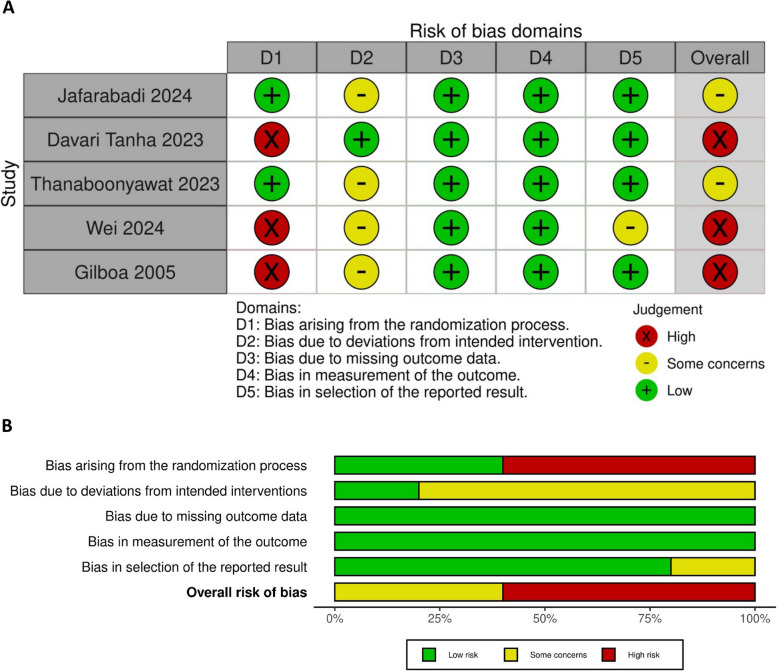
“The Cochrane Collaboration’s Risk of Bias 2 (ROB 2) was used for RCTs [17], and the Risk of Bias in Non-randomized Studies of Interventions (ROBINS-I) was used for non-randomized inter-ventional studies [18].”
ROBINS-I: a tool for assessing risk of bias in non-randomised studies of interventions
Sterne, J. A., Hernán, M. A., Reeves, B. C., Savović, J., Berkman, N. D., Viswanathan, M., Henry, D., Altman, D. G., Ansari, M. T., Boutron, I., et al. (2016) · BMJ · doi:10.1136/bmj.i4919 · Cited by 20,329 · cited 1×
“The Cochrane Collaboration’s Risk of Bias 2 (ROB 2) was used for RCTs [17], and the Risk of Bias in Non-randomized Studies of Interventions (ROBINS-I) was used for non-randomized inter-ventional studies [18].”
The international glossary on infertility and fertility care, 2017
Zegers-Hochschild, F., Adamson, G. D., Dyer, S., Racowsky, C., de Mouzon, J., Sokol, R., Rienzi, L., Sunde, A., Schmidt, L., Cooke, I. D., et al. (2017) · Human Reproduction · doi:10.1093/humrep/dex234 · Cited by 1,320 · cited 1×
“Ongoing pregnancy includes each pregnancy showing a positive heartbeat at ultrasound after 12 weeks of gestation divided by the total number of ET cycles [16].”
Estimates of human fertility and pregnancy loss
Zinaman, M. J., Clegg, E. D., Brown, C. C., O’Connor, J., & Selevan, S. G. (1996) · Fertility and Sterility · doi:10.1016/s0015-0282(16)58144-8 · Cited by 604
New insights into mechanisms behind miscarriage
Larsen, E. C., Christiansen, O. B., Kolte, A. M., & Macklon, N. (2013) · BMC Medicine · doi:10.1186/1741-7015-11-154 · Cited by 603
Lactobacillus species as biomarkers and agents that can promote various aspects of vaginal health
Petrova, M. I., Lievens, E., Malik, S., Imholz, N., & Lebeer, S. (2015) · Frontiers in Physiology · doi:10.3389/fphys.2015.00081 · Cited by 523 · cited 2×
“L. gasseri can also exert immunomodulatory effects via the Toll-like receptor 2 and NOD2-mediated phosphatidylinositol 3-kinase/protein kinase B (PI3K/Akt) signaling pathway [38].”
Kolte, A. M., Bernardi, L. A., Christiansen, O. B., Quenby, S., Farquharson, R. G., Goddijn, M., Stephenson, M. D., & on behalf of the ESHRE Special Interest Group, E. P. (2015) · Human Reproduction · doi:10.1093/humrep/deu299 · Cited by 386
Endometrial microbiota composition is associated with reproductive outcome in infertile patients
Moreno, I., Garcia-Grau, I., Perez-Villaroya, D., Gonzalez-Monfort, M., Bahçeci, M., Barrionuevo, M. J., Taguchi, S., Puente, E., Dimattina, M., Lim, M. W., et al. (2022) · Microbiome · doi:10.1186/s40168-021-01184-w · Cited by 325 · cited 2×
“Accordingly, several studies suggest that dysbiosis at the time of ET may lead to reduced pregnancy rates while Lactobacillus abundance poses a positive impact on ART outcomes [9–11].”
How uterine microbiota might be responsible for a receptive, fertile endometrium
Benner, M., Ferwerda, G., Joosten, I., & van der Molen, R. G. (2018) · Human Reproduction Update · doi:10.1093/humupd/dmy012 · Cited by 304 · cited 1×
“Moreover, these microbes are theorized to prevent pathogen colonization through spatial antagonism, thereby protecting the endometrial niche [35].”
Koedooder, R., Singer, M., Schoenmakers, S., Savelkoul, P. H. M., Morré, S. A., de Jonge, J. D., Poort, L., Cuypers, W. J. S. S., Beckers, N. G. M., Broekmans, F. J. M., et al. (2019) · Human Reproduction · doi:10.1093/humrep/dez065 · Cited by 257
Probiotic Lactobacillus Strains Stimulate the Inflammatory Response and Activate Human Macrophages
Rocha-Ramírez, L. M., Pérez-Solano, R. A., Castañón-Alonso, S. L., Moreno Guerrero, S. S., Ramírez Pacheco, A., García Garibay, M., & Eslava, C. (2017) · Journal of Immunology Research · doi:10.1155/2017/4607491 · Cited by 227 · cited 1×
“Probiotic strains of Lactobacillus can exert early immunostimulatory effects that may be directly linked to the initial inflammation of the response of human macrophages [44].”
World Gastroenterology Organisation Global Guidelines: Probiotics and Prebiotics
Guarner, F., Sanders, M. E., Szajewska, H., Cohen, H., Eliakim, R., Herrera-deGuise, C., Karakan, T., Merenstein, D., Piscoya, A., Ramakrishna, B., et al. (2024) · Journal of Clinical Gastroenterology · doi:10.1097/mcg.0000000000002002 · Cited by 209 · cited 1×
“Adverse events related to probiotic use are typically rare and mild but can occur [43].”
A slippery slope: On the origin, role and physiology of mucus
Taherali, F., Varum, F., & Basit, A. W. (2018) · Advanced Drug Delivery Reviews · doi:10.1016/j.addr.2017.10.014 · Cited by 172 · cited 2×
“…(MUC1, MUC4, MUC16) expressed on mucosal epithelial cells provide adhesive sites for vaginal bacteria, facilitating their colonization, while mucus-forming mucins (MUC5AC, MUC5B, MUC6) secreted by goblet cells can both support and inhibit bacterial attachment depending on their levels [36, 37].”
Kyono, K., Hashimoto, T., Kikuchi, S., Nagai, Y., & Sakuraba, Y. (2019) · Reproductive Medicine and Biology · doi:10.1002/rmb2.12250 · Cited by 160 · cited 3×
“8.”
Assisted reproductive technology: an overview of Cochrane Reviews
Farquhar, C., & Marjoribanks, J. (2018) · Cochrane Database of Systematic Reviews · doi:10.1002/14651858.cd010537.pub5 · Cited by 152
Ovais, M., Ayaz, M., Khalil, A. T., Shah, S. A., Jan, M. S., Raza, A., Shahid, M. M., & Shinwari, Z. K. (2018) · BMC Complementary and Alternative Medicine · doi:10.1186/s12906-017-2057-9 · Cited by 150
Recent Insights on the Maternal Microbiota: Impact on Pregnancy Outcomes
Di Simone, N., Santamaria Ortiz, A., Specchia, M., Tersigni, C., Villa, P., Gasbarrini, A., Scambia, G., & D’Ippolito, S. (2020) · Frontiers in Immunology · doi:10.3389/fimmu.2020.528202 · Cited by 146
The Endometrial Microbiome and Its Impact on Human Conception
Toson, B., Simon, C., & Moreno, I. (2022) · International Journal of Molecular Sciences · doi:10.3390/ijms23010485 · Cited by 131
Fu, M., Zhang, X., Liang, Y., Lin, S., Qian, W., & Fan, S. (2020) · mBio · doi:10.1128/mbio.03242-19 · Cited by 130 · cited 3×
“Conversely, in a dysbiotic endometrial environment, ET outcomes may be adversely affected by alterations in bacterial communities, as such changes can initiate immune reactions and alter the metabolic profile [31].”
InfluentialDoes dysbiotic endometrium affect blastocyst implantation in IVF patients?
Hashimoto, T., & Kyono, K. (2019) · Journal of Assisted Reproduction and Genetics · doi:10.1007/s10815-019-01630-7 · Cited by 109
Costa, R. L., Moreira, J., Lorenzo, A., & Lamas, C. C. (2018) · BMC Complementary and Alternative Medicine · doi:10.1186/s12906-018-2394-3 · Cited by 105 · cited 1×
“In immunocompromised individuals, there have been rare reports of systemic infections caused by probiotic bacteria, such as bacteremia or sepsis involving Lactobacillus species [45].”
López-Moreno, A., & Aguilera, M. (2021) · Journal of Clinical Medicine · doi:10.3390/jcm10071461 · Cited by 97 · cited 2×
“Another systematic review and meta-analysis by Moreno et al.’s [14] addressed the influence of vaginal probiotics on reproductive health and associated dysbiosis, demonstrating a moderate alteration of the vaginal microbiota.”
Molina, N. M., Sola-Leyva, A., Haahr, T., Aghajanova, L., Laudanski, P., Castilla, J. A., & Altmäe, S. (2021) · Human Reproduction · doi:10.1093/humrep/deab009 · Cited by 96 · cited 1×
“With advancements in microbiota assessment techniques like 16S rRNA sequencing, endometrial microbiota assessment before ET is feasible, allowing for the targeted prescription of probiotics to indicated patients [42].”
Aghamohammad, S., Sepehr, A., Miri, S. T., Najafi, S., Pourshafie, M. R., & Rohani, M. (2022) · Immunity, Inflammation and Disease · doi:10.1002/iid3.635 · Cited by 87 · cited 1×
“Additionally, probiotics containing Lactobacillus strains can decrease the expression of pro-inflammatory cytokines (IFN-γ, IL-17, and IL-23) and increase the expression of anti-inflammatory cytokines (IL-4 and IL-10) in different tissues [32–34].”
Moog, D., Schmitt, J., Senger, J., Zarzycki, J., Rexer, K.-H., Linne, U., Erb, T. J., & Maier, U. G. (2020) · Microbial Cell Factories · doi:10.1186/s12934-019-1269-8 · Cited by 86
De Gregorio, P. R., Parolin, C., Abruzzo, A., Luppi, B., Protti, M., Mercolini, L., Silva, J. A., Giordani, B., Marangoni, A., Nader-Macías, M. E. F., et al. (2020) · Microbial Cell Factories · doi:10.1186/s12934-020-01390-5 · Cited by 86
Giordani, B., Costantini, P. E., Fedi, S., Cappelletti, M., Abruzzo, A., Parolin, C., Foschi, C., Frisco, G., Calonghi, N., Cerchiara, T., et al. (2019) · European Journal of Pharmaceutics and Biopharmaceutics · doi:10.1016/j.ejpb.2019.04.011 · Cited by 77
Lactobacilli and Their Probiotic Effects in the Vagina of Reproductive Age Women
Pendharkar, S., Skafte-Holm, A., Simsek, G., & Haahr, T. (2023) · Microorganisms · doi:10.3390/microorganisms11030636 · Cited by 67
Yin, M., Yan, X., Weng, W., Yang, Y., Gao, R., Liu, M., Pan, C., Zhu, Q., Li, H., Wei, Q., et al. (2018) · Cellular Physiology and Biochemistry · doi:10.1159/000487027 · Cited by 58 · cited 1×
“Additionally, probiotics containing Lactobacillus strains can decrease the expression of pro-inflammatory cytokines (IFN-γ, IL-17, and IL-23) and increase the expression of anti-inflammatory cytokines (IL-4 and IL-10) in different tissues [32–34].”
Thanaboonyawat, I., Pothisan, S., Petyim, S., & Laokirkkiat, P. (2023) · Scientific Reports · doi:10.1038/s41598-023-39078-6 · Cited by 49 · cited 3×
“The studies were conducted in Iran (2 studies) [21, 22], China (2 studies) [23–25], Thailand (one study) [26], and Israel (one study) [20].”
Gilboa, Y., Bar-Hava, I., Fisch, B., Ashkenazi, J., Voliovitch, I., Borkowski, T., & Orvieto, R. (2005) · Reproductive BioMedicine Online · doi:10.1016/s1472-6483(10)61301-6 · Cited by 44 · cited 6×
“One of these [ 20 In Table 2 we offered a detailed account of the probiotic supplementation strategies employed across the reviewed studies.”
InfluentialProbiotic therapy in couples with infertility: A systematic review
Corbett, G., Crosby, D., & McAuliffe, F. (2021) · European Journal of Obstetrics & Gynecology and Reproductive Biology · doi:10.1016/j.ejogrb.2020.10.054 · Cited by 39 · cited 1×
“Numerous primary studies have examined the effects of probiotic supplementation before ET on ART outcomes and pregnancy rates, yielding inconclusive and mixed results [12, 13].”
Bui, B. N., van Hoogenhuijze, N., Viveen, M., Mol, F., Teklenburg, G., de Bruin, J.-P., Besselink, D., Brentjens, L. S., Mackens, S., Rogers, M. R. C., et al. (2023) · Scientific Reports · doi:10.1038/s41598-023-30591-2 · Cited by 38
In vivo imaging of the Muc5b gel-forming mucin
Portal, C., Gouyer, V., Magnien, M., Plet, S., Gottrand, F., & Desseyn, J.-L. (2017) · Scientific Reports · doi:10.1038/srep44591 · Cited by 31 · cited 4×
“…(MUC1, MUC4, MUC16) expressed on mucosal epithelial cells provide adhesive sites for vaginal bacteria, facilitating their colonization, while mucus-forming mucins (MUC5AC, MUC5B, MUC6) secreted by goblet cells can both support and inhibit bacterial attachment depending on their levels [36, 37].”
InfluentialEinenkel, R., Zygmunt, M., & Muzzio, D. O. (2019) · Reproductive Biology · doi:10.1016/j.repbio.2019.04.001 · Cited by 30 · cited 1×
“An eubiotic endometrial microbiome is postulated to mildly activate the local immune response, thereby facilitating normal endometrial cells remodeling essential for implantation [30].”
Blancafort, C., & Llácer, J. (2023) · Frontiers in Endocrinology · doi:10.3389/fendo.2022.1081830 · Cited by 23 · cited 2×
“Blancafort et al. [15] assessed the potential of probiotics to improve fertility outcomes, emphasizing benefits for non-symptomatic women of reproductive age, but again, did not focus on infertile women undergoing ART.”
Mashatan, N., Heidari, R., Altafi, M., Amiri, A., Ommati, M. M., & Hashemzaei, M. (2023) · Pathogens and Disease · doi:10.1093/femspd/ftad012 · Cited by 23 · cited 2×
“For instance, some strains, like L.s jensenii , produce hydrogen peroxide, which has antimicrobial properties [39].”
Wei, Q., Chen, H., Zou, H., Zhang, H., Liu, S., Zheng, J., Zhang, S., & Hu, L. (2024) · Journal of Assisted Reproduction and Genetics · doi:10.1007/s10815-024-03066-0 · Cited by 16 · cited 3×
“The studies were conducted in Iran (2 studies) [21, 22], China (2 studies) [23–25], Thailand (one study) [26], and Israel (one study) [20].”
Tanha, F. D., Rahmani, Z., Rezaei, Z., Asbagh, F. A., Ebrahimi, M., Quchani, S. H., Feizabad, E., & Shahraki, Z. (2023) · Archives of Gynecology and Obstetrics · doi:10.1007/s00404-023-07147-w · Cited by 15 · cited 4×
“The studies were conducted in Iran (2 studies) [21, 22], China (2 studies) [23–25], Thailand (one study) [26], and Israel (one study) [20].”
InfluentialThe role of the endometrial microbiome in embryo implantation and recurrent implantation failure
Rokhsartalab Azar, P., Karimi, S., Haghtalab, A., Taram, S., Hejazi, M., Sadeghpour, S., Pashaei, M. R., Ghasemnejad-Berenji, H., & Taheri-Anganeh, M. (2024) · Journal of Reproductive Immunology · doi:10.1016/j.jri.2024.104192 · Cited by 14 · cited 1×
“A shift in the population of Lactobacillus species, for instance, has been implicated in diminished endometrial receptivity [8, 9, 28, 29].”
Jafarabadi, M. N., Hadavi, F., Ahmadi, M., Masoumi, M., & Zabihzadeh, S. (2024) · International Journal of Reproductive BioMedicine (IJRM) · doi:10.18502/ijrm.v22i5.16435 · Cited by 11 · cited 3×
“The studies were conducted in Iran (2 studies) [21, 22], China (2 studies) [23–25], Thailand (one study) [26], and Israel (one study) [20].”
Do probiotic interventions improve female unexplained infertility? A critical commentary
Favaron, A., Turkgeldi, E., Elbadawi, M., Gaisford, S., Basit, A. W., & Orlu, M. (2024) · Reproductive BioMedicine Online · doi:10.1016/j.rbmo.2023.103734 · Cited by 9 · cited 1×
“Numerous primary studies have examined the effects of probiotic supplementation before ET on ART outcomes and pregnancy rates, yielding inconclusive and mixed results [12, 13].”
Female genital tract microbiome: the influence of probiotics on assisted reproduction
Santana, A. S. A., & Póvoa, A. M. (2024) · Revista Brasileira de Ginecologia e Obstetrícia · doi:10.61622/rbgo/2024rbgo82 · Cited by 8 · cited 1×
“There is only one systematic review with relatively similar objective by San-tana et al. [27].”
Chen, R.-Z., Wang, Y.-F., Chen, P.-G., Fang, C., & Li, T.-T. (2024) · Reproductive and Developmental Medicine · doi:10.1097/rd9.0000000000000085 · Cited by 5 · cited 1×
“They administered probiotics alone or in combination with antibiotics in patients with RIF and found significant improvements in pregnancy rate [24].”
Jiang, L., Liu, D., & Hu, X. (2022) · Journal of Biomaterials and Tissue Engineering · doi:10.1166/jbt.2022.2878 · Cited by 2
Research works printed but not linked: 1
- Pengying X, Microecology YX-CJ of, 2023 undefined. The application of lactobacillus vaginal capsule adjuvant therapy in patients with repeated implantation failure of ART. Chinese J Microecology. 2023;35:817–20. 10.13381/j.cnki.cjm.202307013. · doi:10.13381/j.cnki.cjm.202307013
Cited by
Lucan, M., Şandor, M. I., Bodog, A., Mocuta, D., Aur, C., Sachelarie, L., & Huniadi, A. C. (2025) · Reproductive Medicine · doi:10.3390/reprodmed6020014 · Cited by 17
“Histological studies of CE patients show a higher density of stromal plasma cells, indicating chronic inflammation, reduced glandular density, and abnormal vascularization [52].”
How microbiota influence maternal blood disorder in miscarriage
Sefat, M. P., Bahar, A., Khazaei, M., Jahantigh, M., & Tahmasebi, H. (2025) · Molecular Biology Reports · doi:10.1007/s11033-025-11113-x · Cited by 5
Liu, M., Wen, X., Feng, M., Sun, Y., Feng, X., Jin, T., Liu, B., Muhammad, S., Liu, K., Cheng, J., et al. (2025) · Frontiers in Veterinary Science · doi:10.3389/fvets.2025.1608791 · Cited by 2
Lund, A. K., Zhang, R., Xuelan, M., Zhu, L., & Zhang, M. (2026) · Journal of Reproductive Immunology · doi:10.1016/j.jri.2026.104842 · Cited by 2
Hoang, T., & Kim, J. (2026) · Nutrition Reviews · doi:10.1093/nutrit/nuaf303 · Cited by 1
Metadata
- Authors
- Maleki-Hajiagha, A., Karimi, R., abbasi, S., Emami, N., & Amidi, F.
- Affiliations
- Tehran University of Medical Sciences (IR)
- Corresponding author
- Amidi, Fardin
- Venue
- BMC Pregnancy and Childbirth
- Published
- 2025-03-08
- Volume
- 25
- Issue
- 1
- Pages
- 262-262
- ISSN
- 1471-2393 (ISSN-L)
- PMC
- PMC11890537
- OpenAlex
- W4408247047
- Semantic Scholar
- a026378feedb0dd250202af9e70f60fc9c6b49f4
- Cited by
- 13
- References
- 45
- Citations by year
- 2026: 9 · 2025: 4
- FWCI
- 1.43
- Type
- journal article
- Language
- en
- Open access
- gold
- doi.org
- Licence
- cc-by-nc-nd
- creativecommons.org/licenses/by-nc-nd/4.0 (tdm)
- creativecommons.org/licenses/by-nc-nd/4.0 (vor)
- Locations
- BMC Pregnancy and Childbirth (publishedVersion, cc-by-nc-nd)
- Europe PMC (PubMed Central) (publishedVersion, cc-by-nc-nd)
- PubMed Central (publishedVersion, cc-by-nc-nd)
- PubMed (publishedVersion)
- DOAJ (DOAJ: Directory of Open Access Journals) (submittedVersion, cc-by-sa)
- Topics
- Life Sciences › Immunology and Microbiology › Microbiology › Reproductive tract infections research
- Health Sciences › Medicine › Reproductive Medicine › Reproductive Health and Technologies
- Life Sciences › Agricultural and Biological Sciences › Food Science › Probiotics and Fermented Foods
- Keywords
- vaginal probiotics, embryo transfer, clinical pregnancy rate, recurrent implantation failure, biochemical pregnancy, miscarriage, infertility treatment, probiotic supplementation
- MeSH terms
- Administration, Intravaginal, Embryo Transfer, Female, Humans, Pregnancy, Pregnancy Outcome, Vagina, Pregnancy Rate, Probiotics
About these checks
Registry, retraction, Cites and statistics results are computed, not judged, with one exception: a printed reference that no index lists is read once by a model before it counts as a citation error. Claims are extracted by a model and kept only when their quote appears verbatim in the text; each cited source is then checked, with a model’s help, for whether it says what the claim relies on. Those verdicts can be wrong — read the claim’s quote and the cited source before relying on one.
The claim verdicts this report counts are experimental: their accuracy is not yet measured.
A language model drew the claims from the paper on 2026-10-10, under version 3 of the claim definition (model deepseek-v4.1-flash, prompt extract-v3).
A second model labelled each claim on 2026-10-10 (model jev-1.13-20260917, definition revision gold-guideline-v0.2).
Cited sources are checked with a language model’s help (gpt-6-sol).
Statistics and arithmetic are recomputed, not judged.
Confidence bands are shown only for fields calibrated on our annotated test set. None is calibrated yet, so no band is shown.
What counts as a claim ›How we measure confidence ›How we check this ›
Are you an author, or do you see a problem with this page? Request a review
Data sources
Bibliographic data: Semantic Scholar, OpenAlex, Crossref.
Contains information from the Semantic Scholar Academic Graph Datasets, made available under the ODC Attribution License (ODC-BY 1.0).
Semantic Scholar’s data is described in: Kinney, R., et al. (2023). The Semantic Scholar Open Data Platform. arXiv:2301.10140.
