

Feasibility and potential efficacy of a guided internet- and mobile-based CBT for adolescents and young adults with chronic medical conditions and comorbid depression or anxiety symptoms (youthCOACHCD): a randomized controlled pilot trial
Open accessThe DOI matches its Crossref record; 89 of the 91 references it cites were found in a registry or an index, and 1 are not checked yet; 18 of the 33 sources its claims cite were checked for support.
Abstract
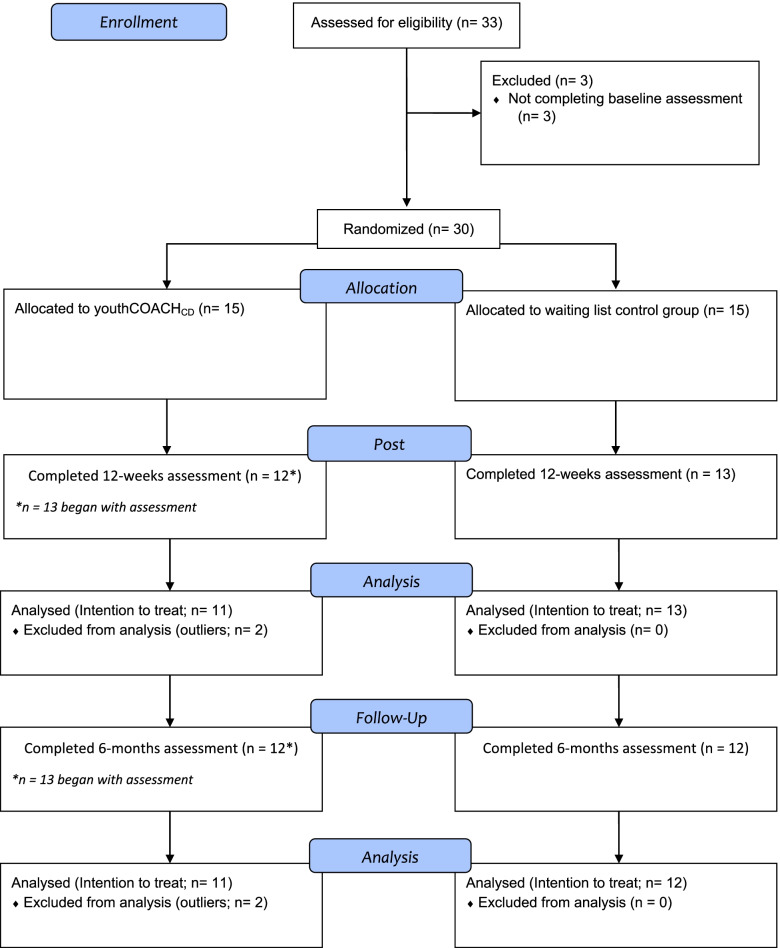
Background: Adolescents and young adults (AYA) with a chronic medical condition show an increased risk for developing mental comorbidities compared to their healthy peers. Internet- and mobile-based cognitive behavioral therapy (iCBT) might be a low-threshold treatment to support affected AYA. In this randomized controlled pilot trial, the feasibility and potential efficacy of youthCOACHCD, an iCBT targeting symptoms of anxiety and depression in AYA with chronic medical conditions, was evaluated. Methods: A total of 30 AYA (Mage 16.13; SD= 2.34; 73% female), aged 12-21 years either suffering from cystic fibrosis, juvenile idiopathic arthritis or type 1 diabetes, were randomly assigned to either a guided version of the iCBT youthCOACHCD (IG, n=15) or to a waitlist control group (CG, n=15), receiving an unguided version of the iCBT six months post-randomization. Participants of the IG and the CG were assessed before (t0), twelve weeks after (t1) and six months after (t2) randomization. Primary outcome was the feasibility of the iCBT. Different parameters of feasibility e.g. acceptance, client satisfaction or potential side effects were evaluated. First indications of the possible efficacy with regard to the primary efficacy outcome, the Patient Health Questionnaire Anxiety and Depression Scale, and further outcome variables were evaluated using linear regression models, adjusting for baseline values. Results: Regarding feasibility, intervention completion was 60%; intervention satisfaction (M = 25.42, SD = 5.85) and perceived therapeutic alliance (M = 2.83, SD = 1.25) were moderate and comparable to other iCBTs. No patterns emerged regarding subjective and objective negative side effects due to participation in youthCOACHCD. Estimates of potential efficacy showed between group differences, with a potential medium-term benefit of youthCOACHCD (β = -0.55, 95%CI: -1.17; 0.07), but probably not short-term (β = 0.20, 95%CI: -0.47; 0.88). Conclusions: Our results point to the feasibility of youthCOACHCD and the implementation of a future definitive randomized controlled trial addressing its effectiveness and cost-effectiveness. Due to the small sample size, conclusions are premature, however, further strategies to foster treatment adherence should be considered. Trial registration: The trial was registered at the WHO International Clinical Trials Registry Platform via the German Clinical Trials Register (ID: DRKS00016714, 25/03/2019). © 2022, The Author(s).
Verifying this paper
8 of 9 steps done · this page updates itself — you can leave and come back
- Registry recordVerified
- Full textRead the full text
- Reference list90 references found
- Reference checkChecking each cited work — 89 of 90
- StatisticsRecomputed
- Claims89 claims anchored to a quote
- Cited sourcesChecked
- Self-checkChecked
- VerificationFindings verified
Overview
CoChat Summary
## TL;DR
This randomized controlled pilot trial found that guided youthCOACHCD, an internet- and mobile-based CBT for adolescents and young adults with chronic medical conditions, was feasible and well tolerated, with no clear pattern of negative side effects. Evidence for efficacy was preliminary only: symptom change was not significant at 12 weeks but suggested a possible medium-term benefit at 6 months.
## Key findings
- Among the 30 randomized participants, intervention completion in the guided group was 60% (9/15 completed all seven modules), and overall study dropout was 20% (24/30 completed all questionnaires).
- Feasibility ratings were moderate: intervention satisfaction was M = 25.42 (SD = 5.85) at 12 weeks and M = 26.50 (SD = 4.68) at 6 months; therapeutic alliance was M = 2.83 (SD = 1.25) at 12 weeks and M = 2.99 (SD = 1.00) at 6 months.
- No patterns emerged for subjective or objective negative side effects; at 12 weeks the IG reported 45 negative, 146 neutral, and 66 positive effects, and at 6 months 41 negative, 149 neutral, and 66 positive effects.
- In intention-to-treat analyses, the primary efficacy outcome (PHQ-ADS) showed no significant short-term effect at 12 weeks (β = 0.20, 95% CI: -0.47; 0.88) but a potential medium-term benefit at 6 months (β = -0.55, 95% CI: -1.17; 0.07).
## Methods
- Randomized controlled feasibility pilot trial in Germany comparing guided youthCOACHCD (IG, n = 15) with waitlist control (CG, n = 15), which received unguided access 6 months post-randomization.
- Sample: 30 adolescents and young adults aged 12-21 years (Mage = 16.13, SD = 2.34; 73% female) with cystic fibrosis, juvenile idiopathic arthritis, or type 1 diabetes; no cut-off for depression/anxiety symptoms, but suicidal ideation above BDI-II item 9 = 1 was an exclusion criterion.
- Main analyses used descriptive statistics and linear regression models adjusted for baseline values; all efficacy analyses were intention-to-treat, with a per-protocol analysis defined as completing 80% of modules up to 12 weeks.
## Limitations
- The paper explicitly notes the sample size was very small, so conclusions about efficacy are premature and the trial is underpowered.
- The authors state that efficacy was only assessed across the three chronic conditions combined; disease-specific efficacy and differences could not be evaluated in this sample.
- The text also makes evident that the unequal distribution of chronic conditions between arms is a limitation, and the authors note stratified randomization would be advisable in future trials (for example, 75% of participants with CF were in the IG).
Model-written summary. Check it against the paper before relying on it.
Integrity signals
Registry
Cites
Statistics
Figures
Verification
Claims the paper makes
15 Valid · 1 Not valid · 6 Not checked · 67 Own results and interpretations
At least one cited source doesn’t support this claim or points to a different paper, and none confirmed it — see the verdicts below.
In the paper
“We observed a study dropout rate of 20%. In comparison to reported treatment dropout rates from efficacy studies among children and adolescents in an outpatient mental health care setting [63] as well as to these reported from internet-based interventions for mental disorders in AYA [64, 65], this rate is above average.”
§ Feasibility and potential efficacy of a guided internet- and mobile-based CBT for adolescents and young adults with chronic medical conditions and comorbid depression or anxiety symptoms (youthCOACHCD): a randomized controlled pilot trial > Discussion
What the sources say
- Not checked — no full text of the sourcecites [63] de Haan AM Boon AE de Jong JTVM Hoeve M Vermeiren RRJM A meta-analytic review on treatment dropout in child and adolescent outpatient mental health care Clin Psychol Rev 2013 33 698 711 10.1016/j.cpr.2013.04.005 23742782 source
- Disputedcites [64] Melville KM Casey LM Kavanagh DJ Dropout from internet-based treatment for psychological disorders Br J Clin Psychol 2010 49 455 71 10.1348/014466509X472138 19799804 sourceExperimental — accuracy not yet measured
The Extent of Dropout section reports a weighted average treatment dropout rate of 35% and a median of 24%, both above the citing study’s 20%, rather than below it. The Data Selection section also says the review was restricted to adults, so it does not establish an average for adolescents and young adults (AYA). (LLM, conf=0.89)
Checked by a reasoning model — may be wrong.
- Not checked yetcites [65] Clarke AM Kuosmanen T Barry MM A systematic review of online youth mental health promotion and prevention interventions Journal of Youth and Adolescence 2015 44 90 113 10.1007/s10964-014-0165-0 25115460 source
Checked before — its earlier verdict is held back until a new check runs.
plain- Asserted: passes — The authors put it forward as true.
- Checkable: passes — It can be checked against evidence.
- Load-bearing: passes — The paper’s conclusions depend on it.
- Based: passes — The paper gives a reason why it holds.
The cited sources support only part of this claim — read each source’s verdict below.
In the paper
“Only a small proportion of AYA with chronic conditions in need of mental health services actually receives professional support [6, 14, 15].”
§ Feasibility and potential efficacy of a guided internet- and mobile-based CBT for adolescents and young adults with chronic medical conditions and comorbid depression or anxiety symptoms (youthCOACHCD): a randomized controlled pilot trial > Background
What the sources say
- Not checked — no full text of the sourcecites [6] Delamater AM Guzman A Aparicio K Mental health issues in children and adolescents with chronic illness I’tnl Jrnl Human Rights Health 2017 10 163 73 10.1108/IJHRH-05-2017-0020 source
- Not checked — no full text of the sourcecites [14] Hintzpeter B Klasen F Schön G Voss C Hölling H Ravens-Sieberer U Mental health care use among children and adolescents in Germany: results of the longitudinal BELLA study Eur Child Adolesc Psychiatry 2015 24 705 13 10.1007/s00787-015-0676-6 25651821 source
- Partly supportedcites [15] Wit M de, Snoek FJ. Depressive symptoms and unmet psychological needs of Dutch youth with type 1 diabetes: results of a web-survey. Pediatr Diabetes. 2011:172–6. 20561242 sourceExperimental — accuracy not yet measured
The Elevated depressive symptoms section (page not provided) reports that 28% of youth with elevated depressive symptoms received psychological care; the Discussion similarly says only about one fourth of depressed youth received care. This supports the claim for Dutch youth with type 1 diabetes, but the paper does not establish the same rate across adolescents and young adults with chronic conditions generally. (LLM, conf=0.87)
plain- Asserted: passes — The authors put it forward as true.
- Checkable: passes — It can be checked against evidence.
- Load-bearing: passes — The paper’s conclusions depend on it.
- Based: passes — The paper gives a reason why it holds.
The cited sources support only part of this claim — read each source’s verdict below.
In the paper
“There is a growing evidence base reporting on the effectiveness of CBT for the prevention and treatment of anxiety and depression symptoms in AYA [11, 12].”
§ Feasibility and potential efficacy of a guided internet- and mobile-based CBT for adolescents and young adults with chronic medical conditions and comorbid depression or anxiety symptoms (youthCOACHCD): a randomized controlled pilot trial > Background
What the sources say
- Partly supportedcites [11] Oud M Winter L de, Vermeulen-Smit E Bodden D Nauta M Stone L Effectiveness of CBT for children and adolescents with depression: a systematic review and meta-regression analysis Eur Psychiatry 2019 57 33 45 10.1016/j.eurpsy.2018.12.008 30658278 sourceExperimental — accuracy not yet measured
The Abstract reports that CBT reduced depressive symptoms in youth and that indicated prevention lowered the risk of depression at follow-up. The Eligibility criteria limit the review to children and adolescents with depressive symptoms or disorders; it does not establish effectiveness for anxiety symptoms or young adults. (LLM, conf=0.88)
- Not checked — no full text of the sourcecites [12] James AC, James G, Cowdrey FA, Soler A, Choke A. Cognitive behavioural therapy for anxiety disorders in children and adolescents. Cochrane Database Syst Rev. 2013:CD004690. 10.1002/14651858.CD004690.pub3. 23733328 source
plainstates a cause- Asserted: passes — The authors put it forward as true.
- Checkable: passes — It can be checked against evidence.
- Load-bearing: passes — The paper’s conclusions depend on it.
- Based: passes — The paper gives a reason why it holds.
- Partly supported
The cited sources support only part of this claim — read each source’s verdict below.
In the paper
“Studies also suggest the effectiveness of CBT when specifically targeting AYA with chronic conditions and comorbid symptoms of anxiety and depression [13].”
§ Feasibility and potential efficacy of a guided internet- and mobile-based CBT for adolescents and young adults with chronic medical conditions and comorbid depression or anxiety symptoms (youthCOACHCD): a randomized controlled pilot trial > Background
What the sources say
- Partly supportedcites [13] Morey A Loades ME Review How has cognitive behaviour therapy been adapted for adolescents with comorbid depression and chronic illness? A scoping review Child Adolesc Ment Health 2020 10.1111/camh.12421 32951336 sourceExperimental — accuracy not yet measured
The Abstract (page not provided) says there is emerging evidence that CBT is effective for depression in adolescents with chronic illness. The Eligibility criteria limit the review to adolescents aged 11–19 or samples with a mean age in that range, and the Discussion says the review did not evaluate intervention efficacy. It therefore does not establish effectiveness for the broader adolescent-and-young-adult population or for comorbid anxiety symptoms. (LLM, conf=0.86)
hedgedstates a cause- Asserted: passes — The authors put it forward as true.
- Checkable: passes — It can be checked against evidence.
- Load-bearing: passes — The paper’s conclusions depend on it.
- Based: passes — The paper gives a reason why it holds.
- Partly supported
Every source the paper cites for this claim was checked and supports it.
In the paper
“In a Dutch web-survey of AYA with type 1 diabetes (T1D) only 28% of participants with symptoms of depression received psychological care [15].”
§ Feasibility and potential efficacy of a guided internet- and mobile-based CBT for adolescents and young adults with chronic medical conditions and comorbid depression or anxiety symptoms (youthCOACHCD): a randomized controlled pilot trial > Background
What the sources say
- Supportedcites [15] Wit M de, Snoek FJ. Depressive symptoms and unmet psychological needs of Dutch youth with type 1 diabetes: results of a web-survey. Pediatr Diabetes. 2011:172–6. 20561242 source
The “Elevated depressive symptoms (CDI ≥ 16)” section reports that 28% of youth with elevated depressive symptoms received psychological care. The Design section identifies the study as an internet survey of Dutch youth with type 1 diabetes aged 9–19. Page numbers are unavailable in our copy. (LLM, conf=0.95)
plain- Asserted: passes — The authors put it forward as true.
- Checkable: passes — It can be checked against evidence.
- Load-bearing: passes — The paper’s conclusions depend on it.
- Based: passes — The paper gives a reason why it holds.
- Supported
37 more claims · 4 with their cited sources checked
Create a free account to see all 89 claims and to verify the 1 reference still open.
- Probably not a substantial claim. 26
- It may state two separate claims as one. 27
- The quote only partly states this claim. 1
Citations
Cites
Applied Multiple Regression/Correlation Analysis for the Behavioral Sciences
Cohen, P., Cohen, P., West, S. G., & Aiken, L. S. (2014) · Psychology Press eBooks · doi:10.4324/9781410606266 · Cited by 20,737
mice: Multivariate Imputation by Chained Equations in R
Buuren, S. V., & Groothuis-Oudshoorn, K. (2011) · Journal of Statistical Software · doi:10.18637/jss.v045.i03 · Cited by 13,870
Bush, K. (1998) · Archives of Internal Medicine · doi:10.1001/archinte.158.16.1789 · Cited by 6,196
Applied Multiple Regression/Correlation Analysis for the Behavioral Sciences.
Fong, G. T., Cohen, J., & Cohen, P. (1985) · Journal of the American Statistical Association · doi:10.2307/2287930 · Cited by 4,475
CONSORT 2010 statement: extension to randomised pilot and feasibility trials.
Eldridge, S. M., Chan, C. L., Campbell, M. J., Bond, C. M., Hopewell, S., Thabane, L., & Lancaster, G. A. (2016) · BMJ · doi:10.1136/bmj.i5239 · Cited by 3,404
Gulliver, A., Griffiths, K. M., & Christensen, H. (2010) · BMC Psychiatry · doi:10.1186/1471-244x-10-113 · Cited by 3,292 · cited 1×
“Some of the known barriers to help-seeking in AYA are self-reliance, lack of perceived confidentiality and trust in the potential source of help, or lack of knowledge about symptoms of mental disorders [84].”
BackgroundCONSORT 2010 statement: extension to randomised pilot and feasibility trials
on behalf of the PAFS consensus group, Eldridge, S. M., Chan, C. L., Campbell, M. J., Bond, C. M., Hopewell, S., Thabane, L., & Lancaster, G. A. (2016) · Pilot and Feasibility Studies · doi:10.1186/s40814-016-0105-8 · Cited by 2,843
Thapar, A., Collishaw, S., Pine, D. S., & Thapar, A. K. (2012) · The Lancet · doi:10.1016/s0140-6736(11)60871-4 · Cited by 2,365
Plummer, F., Manea, L., Trepel, D., & McMillan, D. (2016) · General Hospital Psychiatry · doi:10.1016/j.genhosppsych.2015.11.005 · Cited by 1,882 · cited 1×
“Therefore, additional sub-group analyses for AYA with clinically relevant symptoms of depression and / or anxiety (PHQ-9 or GAD-7 score ≧ 7) [61, 62] were conducted.”
BackgroundPersuasive Systems Design: Key Issues, Process Model, and System Features
Oinas-Kukkonen, H., & Harjumaa, M. (2009) · Communications of the Association for Information Systems · doi:10.17705/1cais.02428 · Cited by 1,663 · cited 1×
“Principles of the PSD framework aim to optimize the human-machine interaction and therefore influence users’ attitudes and behaviors [68].”
BackgroundThe Impact of Mental Illness Stigma on Seeking and Participating in Mental Health Care
Corrigan, P. W., Druss, B. G., & Perlick, D. A. (2014) · Psychological Science in the Public Interest · doi:10.1177/1529100614531398 · Cited by 1,642
Assessment and Prediction of Stress‐Related Growth
Park, C. L., Cohen, L. H., & Murch, R. L. (1996) · Journal of Personality · doi:10.1111/j.1467-6494.1996.tb00815.x · Cited by 1,561 · cited 1×
“Personal growth Short version of the Stress‐Related Growth Scale (SRGS) adapted to AYA with chronic conditions [46, 47] X X X”
MethodBest-practice recommendations for defining, identifying, and handling outliers
Aguinis, H., Gottfredson, R. K., & Joo, H. (2013) · Organizational Research Methods · doi:10.1177/1094428112470848 · Cited by 1,341
Persuasive System Design Does Matter: a Systematic Review of Adherence to Web-based Interventions
Kelders, S. M., Kok, R. N., Ossebaard, H. C., & Van Gemert-Pijnen, J. E. (2012) · Journal of Medical Internet Research · doi:10.2196/jmir.2104 · Cited by 1,308 · cited 2×
“Implementing PSD in IMI showed positive effects on treatment adherence, effectiveness and user satisfaction before [66, 69].”
MethodResultThe impact of guidance on Internet-based mental health interventions — A systematic review
Baumeister, H., Reichler, L., Munzinger, M., & Lin, J. (2014) · Internet Interventions · doi:10.1016/j.invent.2014.08.003 · Cited by 1,037 · cited 1×
“This result is consistent with the literature indicating that guided IMI are superior to unguided versions [74, 75].”
ResultSelf-citationAnxiety and Its Disorders: The Nature and Treatment of Anxiety and Panic
Otto, M. W. (1989) · Psychosomatics · doi:10.1016/s0033-3182(89)72285-4 · Cited by 938 · cited 1×
“treatment of anxiety or post-traumatic stress disorder in AYA bears the risk of no improvement or symptom increase during or short-term after treatment [88].”
BackgroundKühner, C., Bürger, C., Keller, F., & Hautzinger, M. (2007) · Der Nervenarzt · doi:10.1007/s00115-006-2098-7 · Cited by 935
Cognitive behavioural therapy for anxiety disorders in children and adolescents
James, A. C., James, G., Cowdrey, F. A., Soler, A., & Choke, A. (2015) · Cochrane Database of Systematic Reviews · doi:10.1002/14651858.cd004690.pub4 · Cited by 876
Development of the EQ-5D-Y: a child-friendly version of the EQ-5D
Wille, N., Badia, X., Bonsel, G., Burström, K., Cavrini, G., Devlin, N., Egmar, A.-C., Greiner, W., Gusi, N., Herdman, M., et al. (2010) · Quality of Life Research · doi:10.1007/s11136-010-9648-y · Cited by 872 · cited 1×
“Health‐related quality of life EuroQol Five‐Dimensional Questionnaire ‐ Youth (EQ‐5D‐Y) [41, 42] X X X”
Dropout from Internet‐based treatment for psychological disorders
Melville, K. M., Casey, L. M., & Kavanagh, D. J. (2010) · British Journal of Clinical Psychology · doi:10.1348/014466509x472138 · Cited by 597 · cited 1×
“In comparison to reported treatment dropout rates from efficacy studies among children and adolescents in an outpatient mental health care setting [63] as well as to these reported from internet-based interventions for mental disorders in AYA [64, 65], this rate is above average.”
ResultBarriers to children's mental health services
OWENS, P. L., HOAGWOOD, K., HORWITZ, S. M., LEAF, P. J., PODUSKA, J. M., KELLAM, S. G., & IALONGO, N. S. (2002) · Journal of the American Academy of Child & Adolescent Psychiatry · doi:10.1097/00004583-200206000-00013 · Cited by 565
Munder, T., Wilmers, F., Leonhart, R., Linster, H. W., & Barth, J. (2010) · Clinical Psychology & Psychotherapy · doi:10.1002/cpp.658 · Cited by 538 · cited 2×
“The therapeutic alliance is comparable to those in other internet-based interventions [38, 80].”
BackgroundPatterson, C. C., Harjutsalo, V., Rosenbauer, J., Neu, A., Cinek, O., Skrivarhaug, T., Rami-Merhar, B., Soltesz, G., Svensson, J., Parslow, R. C., et al. (2019) · Diabetologia · doi:10.1007/s00125-018-4763-3 · Cited by 512 · cited 1×
“In recent decades the incidence rate increased [2].”
BackgroundPinquart, M., & Shen, Y. (2011) · Journal of Pediatric Psychology · doi:10.1093/jpepsy/jsq104 · Cited by 506 · cited 1×
“Particularly, symptoms of anxiety and depression are increased in AYA with chronic conditions in comparison to their healthy peers [4, 5].”
BackgroundKroenke, K., Wu, J., Yu, Z., Bair, M. J., Kean, J., Stump, T., & Monahan, P. O. (2016) · Psychosomatic Medicine · doi:10.1097/psy.0000000000000322 · Cited by 504 · cited 9×
“Depressive and anxiety symptom severity Patient Health Questionnaire Anxiety and Depression Scale (PHQ‐ ADS) [40] X X X”
BackgroundInfluentialChisholm, D., Knapp, M. R. J., Knudsen, H. C., Amaddeo, F., Gaite, L., van Wijngaarden, B., & EPSILON Study Group (2000) · British Journal of Psychiatry · doi:10.1192/bjp.177.39.s28 · Cited by 480 · cited 2×
“Service utilization; medications taken; medical devices used Child and Adolescents Service Receipt Inventory German Version (CAMSHRI‑DE) [50] X X X Behavioral activation Behavioral Activation for Depression Scale (BADS) [51] X X X Automatic thoughts Automatic Thoughts Questionnaire‑Revised (ATQR) [52] X X X”
MethodA meta-analytic review on treatment dropout in child and adolescent outpatient mental health care
de Haan, A. M., Boon, A. E., de Jong, J. T. V. M., Hoeve, M., & Vermeiren, R. R. J. M. (2013) · Clinical Psychology Review · doi:10.1016/j.cpr.2013.04.005 · Cited by 479 · cited 1×
“In comparison to reported treatment dropout rates from efficacy studies among children and adolescents in an outpatient mental health care setting [63] as well as to these reported from internet-based interventions for mental disorders in AYA [64, 65], this rate is above average.”
ResultSoziale Unterstützung bei der Krankheitsbewältigung: Die Berliner Social Support Skalen (BSSS)
Schulz, U., & Schwarzer, R. (2003) · Diagnostica · doi:10.1026//0012-1924.49.2.73 · Cited by 467
Quittner, A. L., Abbott, J., Georgiopoulos, A. M., Goldbeck, L., Smith, B., Hempstead, S. E., Marshall, B., Sabadosa, K. A., & Elborn, S. (2016) · Thorax · doi:10.1136/thoraxjnl-2015-207488 · Cited by 465
Feasibility, reliability, and validity of the EQ-5D-Y: results from a multinational study
Ravens-Sieberer, U., Wille, N., Badia, X., Bonsel, G., Burström, K., Cavrini, G., Devlin, N., Egmar, A.-C., Gusi, N., Herdman, M., et al. (2010) · Quality of Life Research · doi:10.1007/s11136-010-9649-x · Cited by 464 · cited 1×
“Health‐related quality of life EuroQol Five‐Dimensional Questionnaire ‐ Youth (EQ‐5D‐Y) [41, 42] X X X”
Sample size calculations for pilot randomized trials: a confidence interval approach
Cocks, K., & Torgerson, D. J. (2013) · Journal of Clinical Epidemiology · doi:10.1016/j.jclinepi.2012.09.002 · Cited by 431 · cited 1×
“The number of participants was estimated at around 10% of the calculated sample size required for the definitive RCT (n = 212) and we anticipated a high dropout rate of 50%, resulting in a sample size of n = 30 [31].”
BackgroundA systematic review of online youth mental health promotion and prevention interventions
Clarke, A. M., Kuosmanen, T., & Barry, M. M. (2015) · Journal of Youth and Adolescence · doi:10.1007/s10964-014-0165-0 · Cited by 381 · cited 1×
“In comparison to reported treatment dropout rates from efficacy studies among children and adolescents in an outpatient mental health care setting [63] as well as to these reported from internet-based interventions for mental disorders in AYA [64, 65], this rate is above average.”
ResultSachser, C., Berliner, L., Holt, T., Jensen, T. K., Jungbluth, N., Risch, E., Rosner, R., & Goldbeck, L. (2017) · Journal of Affective Disorders · doi:10.1016/j.jad.2016.12.040 · Cited by 361 · cited 2×
“Symptoms of posttraumatic stress disorder The Child and Adolescent Trauma Screen (CATS) 7‐17 [45] X X X”
BackgroundCognitive behavioural therapy for anxiety disorders in children and adolescents
James, A. C., James, G., Cowdrey, F. A., Soler, A., & Choke, A. (2013) · Cochrane Database of Systematic Reviews · doi:10.1002/14651858.cd004690.pub3 · Cited by 337 · cited 1×
“There is a growing evidence base reporting on the effectiveness of CBT for the prevention and treatment of anxiety and depression symptoms in AYA [11, 12].”
BackgroundOud, M., de Winter, L., Vermeulen-Smit, E., Bodden, D., Nauta, M., Stone, L., van den Heuvel, M., Taher, R. A., de Graaf, I., Kendall, T., et al. (2019) · European Psychiatry · doi:10.1016/j.eurpsy.2018.12.008 · Cited by 319 · cited 1×
“There is a growing evidence base reporting on the effectiveness of CBT for the prevention and treatment of anxiety and depression symptoms in AYA [11, 12].”
BackgroundRose, T., Barker, M., Maria Jacob, C., Morrison, L., Lawrence, W., Strömmer, S., Vogel, C., Woods-Townsend, K., Farrell, D., Inskip, H., et al. (2017) · Journal of Adolescent Health · doi:10.1016/j.jadohealth.2017.05.024 · Cited by 313 · cited 1×
“Another important aspect in regard to adherence might be parental involvement [77, 78].”
BackgroundInternet addiction: coping styles, expectancies, and treatment implications
Brand, M., Laier, C., & Young, K. S. (2014) · Frontiers in Psychology · doi:10.3389/fpsyg.2014.01256 · Cited by 297 · cited 4×
“D: Child and Adolescents Trauma Screen‑Caregiver; CBT: Cognitive and Behavioral Therapy; CF: Cystic fibrosis; CG: Control group; CI: Confidence Interval; COACH: Chronic conditions in adolescents: implementation and evaluation of patient‑ centered collaborative healthcare; CODI: Coping with a Disease; Cohen’s d: Betwee…”
BackgroundInfluentialSelf-referent speech and psychopathology: The balance of positive and negative thinking
Kendall, P. C., Howard, B. L., & Hays, R. C. (1989) · Cognitive Therapy and Research · doi:10.1007/bf01176069 · Cited by 283 · cited 3×
“Service utilization; medications taken; medical devices used Child and Adolescents Service Receipt Inventory German Version (CAMSHRI‑DE) [50] X X X Behavioral activation Behavioral Activation for Depression Scale (BADS) [51] X X X Automatic thoughts Automatic Thoughts Questionnaire‑Revised (ATQR) [52] X X X”
BackgroundHealth Risk Behaviors in Adolescents With Chronic Conditions
Surís, J.-C., Michaud, P.-A., Akre, C., & Sawyer, S. M. (2008) · Pediatrics · doi:10.1542/peds.2008-1479 · Cited by 254
Reliability and Validity of Assessing User Satisfaction With Web-Based Health Interventions
Boß, L., Lehr, D., Reis, D., Vis, C., Riper, H., Berking, M., & Ebert, D. D. (2016) · Journal of Medical Internet Research · doi:10.2196/jmir.5952 · Cited by 251
Thabrew, H., Stasiak, K., Bavin, L., Frampton, C., & Merry, S. (2018) · International Journal of Methods in Psychiatric Research · doi:10.1002/mpr.1610 · Cited by 234 · cited 3×
“D: Child and Adolescents Trauma Screen‑Caregiver; CBT: Cognitive and Behavioral Therapy; CF: Cystic fibrosis; CG: Control group; CI: Confidence Interval; COACH: Chronic conditions in adolescents: implementation and evaluation of patient‑ centered collaborative healthcare; CODI: Coping with a Disease; Cohen’s d: Betwee…”
BackgroundSchrieken, M., Visser, J., Oosterling, I., van Steijn, D., Bons, D., Draaisma, J., van der Gaag, R.-J., Buitelaar, J., Donders, R., & Rommelse, N. (2013) · European Child & Adolescent Psychiatry · doi:10.1007/s00787-012-0318-1 · Cited by 233
Ladwig, I., Rief, W., & Nestoriuc, Y. (2014) · Verhaltenstherapie · doi:10.1159/000367928 · Cited by 227 · cited 1×
“Subjective side effects Inventory for Recording Negative Effects of Online Interventions (INEP‐On) [35] X (IG only) X (IG only)”
BackgroundChronic illness and disability
Yeo, M., & Sawyer, S. (2005) · BMJ · doi:10.1136/bmj.330.7493.721 · Cited by 227 · cited 1×
“Chronic conditions can impact the cognitive, physical, social and emotional development of afflicted AYA beyond the usual developmental challenges at this age [3].”
BackgroundDomhardt, M., Geßlein, H., von Rezori, R. E., & Baumeister, H. (2019) · Depression and Anxiety · doi:10.1002/da.22860 · Cited by 218 · cited 1×
“This result is consistent with the literature indicating that guided IMI are superior to unguided versions [74, 75].”
ResultSelf-citationEssau, C. A., Muris, P., & Ederer, E. M. (2002) · Journal of Behavior Therapy and Experimental Psychiatry · doi:10.1016/s0005-7916(02)00005-8 · Cited by 216 · cited 3×
“D: Child and Adolescents Trauma Screen‑Caregiver; CBT: Cognitive and Behavioral Therapy; CF: Cystic fibrosis; CG: Control group; CI: Confidence Interval; COACH: Chronic conditions in adolescents: implementation and evaluation of patient‑ centered collaborative healthcare; CODI: Coping with a Disease; Cohen’s d: Betwee…”
BackgroundCorrelates of help-seeking in adolescence
Schonert-Reichl, K. A., & Muller, J. R. (1996) · Journal of Youth and Adolescence · doi:10.1007/bf01537450 · Cited by 209 · cited 1×
“In addition, male adolescents with emotional burdens tend to show less help-seeking behavior than female adolescents [82, 83].”
BackgroundBadawy, S. M., Barrera, L., Sinno, M. G., Kaviany, S., O’Dwyer, L. C., & Kuhns, L. M. (2017) · JMIR mHealth and uHealth · doi:10.2196/mhealth.7798 · Cited by 207 · cited 1×
“The evidence for utilizing IMI on AYA with chronic conditions points to their feasibility and effectiveness [20].”
BackgroundPersönliche Reifung (Personal Growth) durch Belastungen und Traumata:
Maercker, A., & Langner, R. (2001) · Diagnostica · doi:10.1026//0012-1924.47.3.153 · Cited by 178
Gamification and Adherence to Web-Based Mental Health Interventions: A Systematic Review
Brown, M., O'Neill, N., van Woerden, H., Eslambolchilar, P., Jones, M., & John, A. (2016) · JMIR Mental Health · doi:10.2196/mental.5710 · Cited by 178 · cited 1×
“One potential strategy to realize this principle could be the implementation of further gamification approaches [70].”
BackgroundBevölkerungsrepräsentative Normierung der Skala zur Allgemeinen Selbstwirksamkeitserwartung
Hinz, A., Schumacher, J., Albani, C., Schmid, G., & Brähler, E. (2006) · Diagnostica · doi:10.1026/0012-1924.52.1.26 · Cited by 175
Power and Error: Increased Risk of False Positive Results in Underpowered Studies
Christley, R. M. (2010) · The Open Epidemiology Journal · doi:10.2174/1874297101003010016 · Cited by 173 · cited 2×
“Because the sample size in this feasibility trial has low statistical power, corresponding 95%-confidence intervals are reported for each outcome, but we refrained from reporting p-values [29, 59].”
BackgroundAnxiety in children and adolescents with chronic physical illnesses: a meta‐analysis
Pinquart, M., & Shen, Y. (2011) · Acta Paediatrica · doi:10.1111/j.1651-2227.2011.02223.x · Cited by 170 · cited 1×
“Particularly, symptoms of anxiety and depression are increased in AYA with chronic conditions in comparison to their healthy peers [4, 5].”
BackgroundMiller, K. M., Beck, R. W., Foster, N. C., Maahs, D. M., & Exchange, F. T. T. (2020) · Diabetes Technology & Therapeutics · doi:10.1089/dia.2019.0393 · Cited by 162 · cited 1×
“Therefore, research in clinical practice has been focused to improve clinical outcomes [7].”
BackgroundThabrew, H., Stasiak, K., Hetrick, S. E., Wong, S., Huss, J. H., & Merry, S. N. (2018) · Cochrane Database of Systematic Reviews · doi:10.1002/14651858.cd012489.pub2 · Cited by 141 · cited 1×
“These studies showed limited methodological quality and indicate limited efficacy [21, 22].”
BackgroundShould treatment effects be estimated in pilot and feasibility studies?
Sim, J. (2019) · Pilot and Feasibility Studies · doi:10.1186/s40814-019-0493-7 · Cited by 123
Unmet Health Care Need in US Adolescents and Adult Health Outcomes
Hargreaves, D. S., Elliott, M. N., Viner, R. M., Richmond, T. K., & Schuster, M. A. (2015) · Pediatrics · doi:10.1542/peds.2015-0237 · Cited by 111
Domhardt, M., Steubl, L., Boettcher, J., Buntrock, C., Karyotaki, E., Ebert, D. D., Cuijpers, P., & Baumeister, H. (2021) · Clinical Psychology Review · doi:10.1016/j.cpr.2020.101953 · Cited by 106 · cited 1×
“coping with the disease and behavioral activation [90].”
BackgroundSelf-citationDomhardt, M., Steubl, L., & Baumeister, H. (2020) · Zeitschrift für Kinder- und Jugendpsychiatrie und Psychotherapie · doi:10.1024/1422-4917/a000625 · Cited by 101 · cited 1×
“In the general population of AYA, IMI, especially based on CBT (iCBT), have been shown to be efficacious in reducing symptoms of anxiety and depression [19].”
BackgroundSelf-citationOutlier detection in multivariate data
Kannan, K. S., & Manoj, K. (2015) · Applied Mathematical Sciences · doi:10.12988/ams.2015.53213 · Cited by 97
Wilmers, F., Munder, T., Leonhart, R., Herzog, T., Plassmann, R., Barth, J., & Linster, H. W. (2008) · University of Bern · doi:10.7892/boris.27962 · Cited by 94
Wozney, L., Huguet, A., Bennett, K., Radomski, A. D., Hartling, L., Dyson, M., McGrath, P. J., & Newton, A. S. (2017) · Journal of Medical Internet Research · doi:10.2196/jmir.7573 · Cited by 93 · cited 2×
“Implementing PSD in IMI showed positive effects on treatment adherence, effectiveness and user satisfaction before [66, 69].”
BackgroundMethodPalermo, T. M., de la Vega, R., Murray, C., Law, E., & Zhou, C. (2020) · Pain · doi:10.1097/j.pain.0000000000001994 · Cited by 93
Help-seeking intention for depression in early adolescents: Associated factors and sex differences
Ando, S., Nishida, A., Usami, S., Koike, S., Yamasaki, S., Kanata, S., Fujikawa, S., Furukawa, T. A., Fukuda, M., Sawyer, S. M., et al. (2018) · Journal of Affective Disorders · doi:10.1016/j.jad.2018.05.077 · Cited by 89 · cited 1×
“In addition, male adolescents with emotional burdens tend to show less help-seeking behavior than female adolescents [82, 83].”
BackgroundAvoidant coping and diabetes-related distress: Pathways to adolescents’ Type 1 diabetes outcomes.
Iturralde, E., Weissberg-Benchell, J., & Hood, K. K. (2017) · Health Psychology · doi:10.1037/hea0000445 · Cited by 83 · cited 1×
“In addition to reducing symptoms of anxiety and depression, youthCOACHCD aims to support AYA in dealing with further potential symptoms of mental disorders that are highly important in adolescence and when living with a chronic medical condition: potential symptoms of post-traumatic stress disorder due to (treatment o…”
BackgroundSchaefer, M. R., & Kavookjian, J. (2017) · Patient Education and Counseling · doi:10.1016/j.pec.2017.05.037 · Cited by 83 · cited 1×
“, through personal information provided by a trusted physician or applying strategies of motivational interviewing [76, 85, 86].”
BackgroundGamifying CBT to deliver emotional health treatment to young people on smartphones
Christie, G. I., Shepherd, M., Merry, S. N., Hopkins, S., Knightly, S., & Stasiak, K. (2019) · Internet Interventions · doi:10.1016/j.invent.2019.100286 · Cited by 81
Achilles, M. R., Anderson, M., Li, S. H., Subotic-Kerry, M., Parker, B., & O’Dea, B. (2020) · DIGITAL HEALTH · doi:10.1177/2055207620926064 · Cited by 80
Poor Metabolic Control in Children and Adolescents With Type 1 Diabetes and Psychiatric Comorbidity
Sildorf, S. M., Breinegaard, N., Lindkvist, E. B., Tolstrup, J. S., Boisen, K. A., Teilmann, G., Skovgaard, A. M., & Svensson, J. (2018) · Diabetes Care · doi:10.2337/dc18-0609 · Cited by 79 · cited 1×
“Nonetheless, the significant impact of mental comorbidities on clinical outcome parameters as well as quality of life highlights the need for a multidisciplinary approach [8].”
BackgroundThe BELLA study group, Hintzpeter, B., Klasen, F., Schön, G., Voss, C., Hölling, H., & Ravens-Sieberer, U. (2015) · European Child & Adolescent Psychiatry · doi:10.1007/s00787-015-0676-6 · Cited by 77
Jasper, K., Weise, C., Conrad, I., Andersson, G., Hiller, W., & Kleinstäuber, M. (2014) · Internet Interventions · doi:10.1016/j.invent.2014.04.002 · Cited by 68 · cited 1×
“The therapeutic alliance is comparable to those in other internet-based interventions [38, 80].”
Petersen, C., Schmidt, S., & Bullinger, M. (2004) · Journal of Pediatric Psychology · doi:10.1093/jpepsy/jsh066 · Cited by 67 · cited 4×
“D: Child and Adolescents Trauma Screen‑Caregiver; CBT: Cognitive and Behavioral Therapy; CF: Cystic fibrosis; CG: Control group; CI: Confidence Interval; COACH: Chronic conditions in adolescents: implementation and evaluation of patient‑ centered collaborative healthcare; CODI: Coping with a Disease; Cohen’s d: Betwee…”
BackgroundInfluentialChronic conditions in adolescents
Jin, M., An, Q., & Wang, L. (2017) · Experimental and Therapeutic Medicine · doi:10.3892/etm.2017.4526 · Cited by 65 · cited 1×
“Background Worldwide, approximately 15-20% of adolescents and young adults (AYA) live with chronic medical conditions [1].”
BackgroundPinquart, M. (2018) · Journal of Child & Adolescent Trauma · doi:10.1007/s40653-018-0222-z · Cited by 65 · cited 1×
“In addition to reducing symptoms of anxiety and depression, youthCOACHCD aims to support AYA in dealing with further potential symptoms of mental disorders that are highly important in adolescence and when living with a chronic medical condition: potential symptoms of post-traumatic stress disorder due to (treatment o…”
Backgroundde Wit, M., & Snoek, F. J. (2011) · Pediatric Diabetes · doi:10.1111/j.1399-5448.2010.00673.x · Cited by 58 · cited 2×
“In a Dutch web-survey of AYA with type 1 diabetes (T1D) only 28% of participants with symptoms of depression received psychological care [15].”
BackgroundPersuasive E-Health Design for Behavior Change
Baumeister, H., Kraft, R., Baumel, A., Pryss, R., & Messner, E.-M. (2019) · Studies in Neuroscience, Psychology and Behavioral Economics · doi:10.1007/978-3-030-31620-4_17 · Cited by 53 · cited 8×
“Implementing PSD in IMI showed positive effects on treatment adherence, effectiveness and user satisfaction before [66, 69].”
BackgroundMethodInfluentialSelf-citationMental health issues in children and adolescents with chronic illness
Delamater, A. M., Guzman, A., & Aparicio, K. (2017) · International Journal of Human Rights in Healthcare · doi:10.1108/ijhrh-05-2017-0020 · Cited by 52 · cited 2×
“Comorbid mental health issues can have an important impact on AYAs’ quality of life, disease course, regime adherence and medical outcomes [6].”
BackgroundEfficacy of digital health interventions in youth with chronic medical conditions: A meta-analysis
Domhardt, M., Schröder, A., Geirhos, A., Steubl, L., & Baumeister, H. (2021) · Internet Interventions · doi:10.1016/j.invent.2021.100373 · Cited by 45 · cited 1×
“These studies showed limited methodological quality and indicate limited efficacy [21, 22].”
BackgroundSelf-citationDomhardt, M., Engler, S., Nowak, H., Lutsch, A., Baumel, A., & Baumeister, H. (2021) · Journal of Medical Internet Research · doi:10.2196/29742 · Cited by 41 · cited 1×
“Another important aspect in regard to adherence might be parental involvement [77, 78].”
BackgroundSelf-citationTeismann, T., Ertle, A., Furka, N., Willutzki, U., & Hoyer, J. (2016) · Clinical Psychology & Psychotherapy · doi:10.1002/cpp.1948 · Cited by 38 · cited 4×
“Service utilization; medications taken; medical devices used Child and Adolescents Service Receipt Inventory German Version (CAMSHRI‑DE) [50] X X X Behavioral activation Behavioral Activation for Depression Scale (BADS) [51] X X X Automatic thoughts Automatic Thoughts Questionnaire‑Revised (ATQR) [52] X X X”
MethodInfluentialCOACH consortium, Lunkenheimer, F., Domhardt, M., Geirhos, A., Kilian, R., Mueller-Stierlin, A. S., Holl, R. W., Meissner, T., Minden, K., Moshagen, M., et al. (2020) · Trials · doi:10.1186/s13063-019-4041-9 · Cited by 37
Self-citationPalermo, T. M., de la Vega, R., Dudeney, J., Murray, C., & Law, E. (2018) · Contemporary Clinical Trials · doi:10.1016/j.cct.2018.10.003 · Cited by 32
COACH consortium, Reinauer, C., Viermann, R., Förtsch, K., Linderskamp, H., Warschburger, P., Holl, R. W., Staab, D., Minden, K., Muche, R., et al. (2018) · Trials · doi:10.1186/s13063-018-2997-5 · Cited by 23 · cited 2×
“, through personal information provided by a trusted physician or applying strategies of motivational interviewing [76, 85, 86].”
BackgroundMethodSelf-citationGeirhos, A., Lunkenheimer, F., Holl, R. W., Minden, K., Schmitt, A., Temming, S., Baumeister, H., & Domhardt, M. (2021) · Internet Interventions · doi:10.1016/j.invent.2021.100383 · Cited by 23 · cited 5×
“Intervention content and design were informed by focus groups conducted with potential users of youthCOACHCD [27].”
BackgroundMethodInfluentialSelf-citationPeople with diabetes need a lower cut-off than others for depression screening with PHQ-9
Cichoń, E., Kiejna, A., Kokoszka, A., Gondek, T. M., Radzio, R., Jastrzębski, A., Andrzejewska, B. E., Alosaimi, F. D., Lloyd, C. E., & Sartorius, N. (2020) · PLOS ONE · doi:10.1371/journal.pone.0240209 · Cited by 22 · cited 1×
“Therefore, additional sub-group analyses for AYA with clinically relevant symptoms of depression and / or anxiety (PHQ-9 or GAD-7 score ≧ 7) [61, 62] were conducted.”
BackgroundVoorhees, B. W. V., Hsiung, R. C., Marko-Holguin, M., Houston, T. K., Fogel, J., Lee, R., & Ford, D. E. (2013) · Journal of Medical Internet Research · doi:10.2196/jmir.2197 · Cited by 21
Predictors and impact of psychotherapy side effects in young adults
Lorenz, T. K. (2020) · Counselling and Psychotherapy Research · doi:10.1002/capr.12356 · Cited by 21 · cited 1×
“This might be a necessary feature of effective psychotherapy [89].”
BackgroundMorey, A., & Loades, M. E. (2021) · Child and Adolescent Mental Health · doi:10.1111/camh.12421 · Cited by 20 · cited 1×
“Studies also suggest the effectiveness of CBT when specifically targeting AYA with chronic conditions and comorbid symptoms of anxiety and depression [13].”
BackgroundThomschke, S., Schulz, M., & Bätzing, J. (2018) · Zentralinstitut für die kassenärztliche Versorgung in der Bundesrepublik Deutschland (Zi) · doi:10.20364/va-18.10 · Cited by 1
(2003)
Research works printed but not linked: 1
- Maughan B, Collishaw S, Stringaris A. Depression in childhood and adolescence. Journal of the Canadian Academy of Child and Adolescent Psychiatry. 2013:35–40. PMC3565713 23390431
Cited by
Current Implementation of Digital Health in Chronic Disease Management: Scoping Review
Pong, C. Y., Tseng, R. M. W. W., Tham, Y. C., & Lum, E. (2024) · Journal of Medical Internet Research · doi:10.2196/53576 · Cited by 126
Bear, H. A., Ayala‐Nunes, L., Ramos, G., Manchanda, T., Fernandes, B., Chabursky, S., Walper, S., Watkins, E. R., & Fazel, M. S. (2024) · Journal of Medical Internet Research · doi:10.2196/48964 · Cited by 79
Tao, T. J., Lim, T. K., Yeung, E. T. F., Liu, H., Shris, P. B., Lawrence, K., Lee, T. M. C., & Hou, W. K. (2023) · npj Digital Medicine · doi:10.1038/s41746-023-00809-8 · Cited by 67
Ho, T. Q. A., Le, L. K.-D., Engel, L., Le, N., Melvin, G., Le, H. N. D., & Mihalopoulos, C. (2025) · European Child & Adolescent Psychiatry · doi:10.1007/s00787-024-02386-x · Cited by 38
Barriers to Type 1 Diabetes Adherence in Adolescents
Azar, S., Jaoude, N. M. A., Kędzia, A. W., & Niechciał, E. (2024) · Journal of Clinical Medicine · doi:10.3390/jcm13195669 · Cited by 54
“These tools allow them to reach optimal care by staying updated on their condition and facilitating communication with healthcare providers [106].”
Background
Metadata
- Authors
- Geirhos, A., Domhardt, M., Lunkenheimer, F., Temming, S., Holl, R. W., Minden, K., Warschburger, P., Meissner, T., Mueller-Stierlin, A. S., & Baumeister, H.
- Affiliations
- Universität Ulm (DE)
- Stiftung Charité (DE)
- German Rheumatism Research Centre (DE)
- University of Potsdam (DE)
- Düsseldorf University Hospital (DE)
- Corresponding author
- Geirhos, A.
- Venue
- BMC Pediatrics
- Published
- 2022-01-29
- Volume
- 22
- Issue
- 1
- Pages
- 69-69
- ISSN
- 1471-2431 (ISSN-L)
- PMC
- PMC8800235
- OpenAlex
- W4210540128
- Cited by
- 37
- References
- 91
- Citations by year
- 2026: 7 · 2025: 8 · 2024: 14 · 2023: 7 · 2022: 1
- FWCI
- 6.60
- Type
- journal article
- Language
- en
- Open access
- gold
- doi.org
- Licence
- cc-by
- creativecommons.org/licenses/by/4.0 (tdm)
- creativecommons.org/licenses/by/4.0 (vor)
- Locations
- BMC Pediatrics (publishedVersion, cc-by)
- PubMed Central (publishedVersion, cc-by)
- PubMed (publishedVersion)
- DOAJ (DOAJ: Directory of Open Access Journals) (submittedVersion, cc-by-sa)
- publish.UP (University of Potsdam) (submittedVersion, cc-by)
- OPen Access Repositorium der Universität Ulm (OPARU) (Ulm University) (submittedVersion, other-oa)
- Universität Ulm, Kommunikations- und Informationszentrum (kiz) (cc-by)
- Funders
- Bundesministerium für Bildung und Forschung (01GL1740E)
- Universität Ulm
- Topics
- Social Sciences › Psychology › Applied Psychology › Digital Mental Health Interventions
- Social Sciences › Psychology › Experimental and Cognitive Psychology › Anxiety, Depression, Psychometrics, Treatment, Cognitive Processes
- Health Sciences › Medicine › Public Health, Environmental and Occupational Health › Telemedicine and Telehealth Implementation
- Keywords
- adolescents and young adults, chronic disease, depression, anxiety, cystic fibrosis, juvenile idiopathic arthritis, type 1 diabetes, psychiatric comorbidity, feasibility, therapeutic relationship, client satisfaction, intervention completion, anxiety and depressive symptoms, patient-reported outcomes, quality of life
- MeSH terms
- Adolescent, Adult, Anxiety, Child, Depression, Feasibility Studies, Female, Humans, Male, Pilot Projects, Cognitive Behavioral Therapy, Treatment Outcome, Internet, Young Adult
About these checks
Registry, retraction, Cites and statistics results are computed, not judged, with one exception: a printed reference that no index lists is read once by a model before it counts as a citation error. Claims are extracted by a model and kept only when their quote appears verbatim in the text; each cited source is then checked, with a model’s help, for whether it says what the claim relies on. Those verdicts can be wrong — read the claim’s quote and the cited source before relying on one.
The claim verdicts this report counts are experimental: their accuracy is not yet measured.
A language model drew the claims from the paper on 2026-10-11, under version 3 of the claim definition (model deepseek-v4.1-flash, prompt extract-v3).
A second model labelled each claim on 2026-10-11 (model jev-1.13-20260917, definition revision gold-guideline-v0.2).
Cited sources are checked with a language model’s help (gpt-6-sol).
Statistics and arithmetic are recomputed, not judged.
Confidence bands are shown only for fields calibrated on our annotated test set. None is calibrated yet, so no band is shown.
What counts as a claim ›How we measure confidence ›How we check this ›
Are you an author, or do you see a problem with this page? Request a review
Data sources
Bibliographic data: Semantic Scholar, OpenAlex, Crossref.
Contains information from the Semantic Scholar Academic Graph Datasets, made available under the ODC Attribution License (ODC-BY 1.0).
Semantic Scholar’s data is described in: Kinney, R., et al. (2023). The Semantic Scholar Open Data Platform. arXiv:2301.10140.
