

Effects of mental health self-efficacy on outcomes of a mobile phone and web intervention for mild-to-moderate depression, anxiety and stress: secondary analysis of a randomised controlled trial
Open accessThe DOI matches its Crossref record; 51 of the 53 references it cites were found in a registry or an index.
Abstract
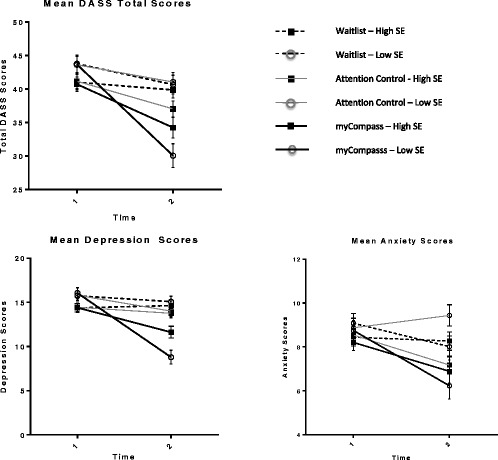
BACKGROUND: Online psychotherapy is clinically effective yet why, how, and for whom the effects are greatest remain largely unknown. In the present study, we examined whether mental health self-efficacy (MHSE), a construct derived from Bandura's Social Learning Theory (SLT), influenced symptom and functional outcomes of a new mobile phone and web-based psychotherapy intervention for people with mild-to-moderate depression, anxiety and stress. METHODS: STUDY I: Data from 49 people with symptoms of depression, anxiety and/or stress in the mild-to-moderate range were used to examine the reliability and construct validity of a new measure of MHSE, the Mental Health Self-efficacy Scale (MHSES). STUDY II: We conducted a secondary analysis of data from a recently completed randomised controlled trial (N = 720) to evaluate whether MHSE effected post-intervention outcomes, as measured by the Depression, Anxiety and Stress Scales (DASS) and Work and Social Adjustment Scale (WSAS), for people with symptoms in the mild-to-moderate range. RESULTS: STUDY I: The data established that the MHSES comprised a unitary factor, with acceptable internal reliability (Cronbach's alpha = .89) and construct validity. STUDY II: The intervention group showed significantly greater improvement in MHSE at post-intervention relative to the control conditions (p's < = .000). MHSE mediated the effects of the intervention on anxiety and stress symptoms. Furthermore, people with low pre-treatment MHSE reported the greatest post-intervention gains in depression, anxiety and overall distress. No effects were found for MHSE on work and social functioning. CONCLUSION: Mental health self-efficacy influences symptom outcomes of a self-guided mobile phone and web-based psychotherapeutic intervention and may itself be a worthwhile target to increase the effectiveness and efficiency of online treatment programs. TRIAL REGISTRATION: Australian New Zealand Clinical Trials Registry ACTRN12610000625077.
Overview
The claims and statistics of this paper haven’t been checked yet.
Free: it reads the open-access text and checks the first 5 claims that cite a source we can check. Create a free account to check every claim.
Integrity signals
Registry
Cites
Statistics
Figures
Verification
Claims the paper makes
The claims and statistics of this paper haven’t been checked yet.
Free: it reads the open-access text and checks the first 5 claims that cite a source we can check. Create a free account to check every claim.
Claims other papers make about this one
Each is checked against this paper’s own text: does it say what the citing paper says it does?
The source backs part of the claim, not all of it — or backs it for a different population, condition or comparison.
In the citing paper
“In contrast, low coping self-efficacy is associated with passive coping51, avoidance, lower treatment adherence52,53, substance use54, and other maladaptive coping strategies55 that may serve to increase risk or course of depression.”
From Psychobiological factors of resilience and depression in late life (2019) · cites this paper as [53]
Experimental — accuracy not yet measuredThe cited source says what the claim attributes to it.
In the citing paper
“While some apps have demonstrated efficacy in definitive trials [2-5], others have performed poorly [6-9].”
From A Library of Analytic Indicators to Evaluate Effective Engagement with Consumer mHealth Apps for Chronic Conditions: Scoping Review (2019) · cites this paper as [3]
The cited source says what the claim attributes to it.
In the citing paper
“The instrument shows a Cronbach's Alpha of 0.89 (71).”
The cited source says what the claim attributes to it.
In the citing paper
“They have been evaluated in many countries in general, student, and corporate populations [24-36].”
From Efficacy of Seren@ctif, a computer-based stress management program for patients with adjustment disorder with anxiety: Protocol for a controlled trial (2017) · cites this paper as [27]
In the citing paper
“Confidence in self-management of mental health issues was measured using the MHSES [51], which has 6 items that address confidence in managing stress, depression, and anxiety and are scored on a 10-point scale (1: not at all confident, 10: very confident).”
From Chatbot-Delivered Cognitive Behavioral Therapy in Adolescents With Depression and Anxiety During the COVID-19 Pandemic: Feasibility and Acceptability Study (2022) · cites this paper as [51]
Self-check
Percentages, sums and reported differences re-computed from the paper’s own numbers.
The self-check needs the paper’s full text.
Citations
Cites
Hu, L., & Bentler, P. M. (1999) · Structural Equation Modeling A Multidisciplinary Journal · doi:10.1080/10705519909540118 · Cited by 108,788 · cited 1×
“08 [41-43].”
Baron, R. M., & Kenny, D. A. (1986) · Journal of Personality and Social Psychology · doi:10.1037/0022-3514.51.6.1173 · Cited by 91,532 · cited 6×
“In light of recent evidence questioning the validity of the RMSEA in models with low degrees of freedom [Kenny DA, Kanisken B, McCoach D: The performance of RMSEA in models with small degrees of freedom.”
BackgroundResultInfluentialSelf-efficacy: Toward a unifying theory of behavioral change
Bandura, A. (1977) · Psychological Review · doi:10.1037/0033-295x.84.2.191 · Cited by 43,925
SPSS and SAS procedures for estimating indirect effects in simple mediation models
Preacher, K. J., & Hayes, A. F. (2004) · Behavior Research Methods, Instruments, & Computers · doi:10.3758/bf03206553 · Cited by 17,383 · cited 3×
“Preacher KJ, Hayes AF: SPSS and SAS procedures for estimating indirect effects in simple mediation models.”
BackgroundMethodLovibond, P. F., & Lovibond, S. H. (1995) · Behaviour Research and Therapy · doi:10.1016/0005-7967(94)00075-u · Cited by 14,523 · cited 11×
“Descriptive statistics were calculated for the DASS, WSAS and TIPI.”
MethodInfluentialAsymptotic Confidence Intervals for Indirect Effects in Structural Equation Models
Sobel, M. E. (1982) · Sociological Methodology · doi:10.2307/270723 · Cited by 12,810 · cited 1×
“In a second set of analyses, direct and indirect effects of MHSE on outcomes were examined using Preacher and Hayes’ [32] revised version of the Sobel test [36].”
MethodSelf-efficacy: Toward a unifying theory of behavioral change
Bandura, A. (1978) · Advances in Behaviour Research and Therapy · doi:10.1016/0146-6402(78)90002-4 · Cited by 10,586
Costello, A. B., & Osborne, J. (2005) · University of Massachusetts Amherst · doi:10.7275/jyj1-4868 · Cited by 10,297
Structural Equation Modelling: Guidelines for Determining Model Fit
Hooper, D., Coughlan, J., & Mullen, M. R. (2008) · Dublin Institute of Technology · doi:10.21427/d7cf7r · Cited by 8,746 · cited 1×
“08 [41-43].”
A very brief measure of the Big-Five personality domains
Gosling, S. D., Rentfrow, P. J., & Swann, W. B. (2003) · Journal of Research in Personality · doi:10.1016/s0092-6566(03)00046-1 · Cited by 8,307
Research works printed but not linked: 1
- 40. Nunnally J Psychometric Methods 1978 New York McGraw-Hill
Cited by
Artificially intelligent chatbots in digital mental health interventions: a review
Boucher, E. M., Harake, N. R., Ward, H. E., Stoeckl, S. E., Vargas, J., Minkel, J., Parks, A. C., & Zilca, R. (2021) · Expert Review of Medical Devices · doi:10.1080/17434440.2021.2013200 · Cited by 440
“efficacy, these individuals may benefit more from DMHIs in terms of depression, anxiety, and overall distress [125].”
BackgroundA Systematic Review of Cognitive Behavioral Therapy and Behavioral Activation Apps for Depression
Huguet, A., Rao, S., McGrath, P. J., Wozney, L., Wheaton, M., Conrod, J., & Rozario, S. (2016) · PLOS ONE · doi:10.1371/journal.pone.0154248 · Cited by 328
“The 53 manuscripts [9,14,15,22, 23,24, 25,26,27,28,29,30,31,32,33,34,35,36,37,38,39,40,41,42,43,44,45,46,47,48, 49,50,51,52, 53,54,55, 56,57,58,59,60,61,62,63,64,65, 66,67,68,69,70,71] identified as relevant to the review made mention of a total of 48 unique apps that met our inclusion/exclusion criteria.”
BackgroundPsychobiological factors of resilience and depression in late life
Laird, K. T., Krause, B., Funes, C., & Lavretsky, H. (2019) · Translational Psychiatry · doi:10.1038/s41398-019-0424-7 · Cited by 229
Huang, G., & Ren, Y. (2020) · Computers in Human Behavior · doi:10.1016/j.chb.2019.09.013 · Cited by 203
Pocket Skills: A Conversational Mobile Web App To Support Dialectical Behavioral Therapy
Schroeder, J., Wilkes, C., Rowan, K., Toledo, A., Paradiso, A., Czerwinski, M., Mark, G., & Linehan, M. M. (2018) · Proceedings of the 2018 CHI Conference on Human Factors in Computing Systems · doi:10.1145/3173574.3173972 · Cited by 175
“Prior research suggests selfefficacy is important for positive symptom outcomes to using a mental health app for depression [18, 24], and as discussed above, our own results similarly showed a significant negative correlation between self-efficacy and general dysfunctional coping.”
BackgroundPham, Q., Graham, G., Carrion, C., Morita, P. P., Seto, E., Stinson, J. N., & Cafazzo, J. A. (2019) · JMIR mHealth and uHealth · doi:10.2196/11941 · Cited by 131
“While some apps have demonstrated efficacy in definitive trials [2-5], others have performed poorly [6-9].”
BackgroundNicol, G., Wang, R., Graham, S., Dodd, S., & Garbutt, J. (2022) · JMIR Formative Research · doi:10.2196/40242 · Cited by 123
“Confidence in self-management of mental health issues was measured using the MHSES [51], which has 6 items that address confidence in managing stress, depression, and anxiety and are scored on a 10-point scale (1: not at all confident, 10: very confident).”
MethodInfluentialHennemann, S., Beutel, M. E., & Zwerenz, R. (2016) · Journal of Medical Internet Research · doi:10.2196/jmir.6003 · Cited by 121
“Furthermore, we aimed to extend existing literature on the role of self-efficacy [57] in the eHealth context.”
Implementation of Cognitive Behavioral Therapy in e–Mental Health Apps: Literature Review
Denecke, K., Schmid, N., & Nüssli, S. (2022) · Journal of Medical Internet Research · doi:10.2196/27791 · Cited by 107
“We identified in the included papers 3 of the 4 fundamental techniques of psychotherapy applied in CBT (cognitive restructuring, behavioral activation, exposure, and problem solving [15]; Multimedia Appendix 3 [24-27,29,30,32-50]).”
BackgroundDomhardt, M., Steubl, L., Boettcher, J., Buntrock, C., Karyotaki, E., Ebert, D. D., Cuijpers, P., & Baumeister, H. (2021) · Clinical Psychology Review · doi:10.1016/j.cpr.2020.101953 · Cited by 106
“Half of these studies examined samples with clinically depressed patients ( n = 2769) (Choi et al., 2014; Clarke et al., 2014; Forand et al., 2018; Hirsch et al., 2018; Lamers et al., 2015; Newby, Williams, & Andrews, 2014; Pictet, Jermann, & Ceschi, 2016; Pots, Trompetter, Schreurs, & Bohlmeijer,…”
BackgroundLivingston, N. A., Flentje, A., Brennan, J. M., Mereish, E. H., Reed, O. M., & Cochran, B. N. (2020) · Psychology of Sexual Orientation and Gender Diversity · doi:10.1037/sgd0000371 · Cited by 126
“Technology-based interventions have already been developed and tested among individuals struggling with depression and anxiety (e.g., Clarke et al., 2014; Kauer et al., 2012), but have only just begun to address concerns specific to SGM individuals (e.g., Israel et al., 2019; Lin & Israel, 2012).”
BackgroundMcLaren, T., Peter, L.-J., Tomczyk, S., Muehlan, H., Schomerus, G., & Schmidt, S. (2023) · BMC Public Health · doi:10.1186/s12889-022-14937-5 · Cited by 111
“On the other hand, self-help self-efficacy might decrease professional help-seeking in favour of tendencies to help oneself [39, 40], however this has rarely been investigated.”
BackgroundAssociations between health-related self-efficacy and suicidality
Isaac, V., Wu, C., McLachlan, C. S., & Lee, M. (2018) · BMC Psychiatry · doi:10.1186/s12888-018-1705-z · Cited by 74
“There is evidence that mental health self-efficacy influences symptom outcomes when clients use a self-guided mobile phone and web-based psychotherapeutic intervention [35].”
BackgroundSelf-efficacy as a predictor of treatment outcome in an outpatient eating disorder program
Keshen, A., Helson, T., Town, J., & Warren, K. (2017) · Eating Disorders · doi:10.1080/10640266.2017.1324073 · Cited by 54
Barakat, A., Blankers, M., Cornelis, J. E., Lommerse, N. M., Beekman, A. T. F., & Dekker, J. (2021) · International Journal of Mental Health Systems · doi:10.1186/s13033-020-00426-y · Cited by 57
“Self-efficacy has also been found to be directly associated with treatment outcomes, or treatment outcomes were mediated by self-efficacy [20, 21].”
BackgroundMoeini, B., Bashirian, S., Soltanian, A. R., Ghaleiha, A., & Taheri, M. (2019) · PubMed Central · Cited by 67
Mackenzie, S. G., & Davies, A. R. (2019) · Environmental Impact Assessment Review · doi:10.1016/j.eiar.2019.106300 · Cited by 62
Fürtjes, S., Voß, C., Rückert, F., Peschel, S. K. V., Kische, H., Ollmann, T. M., Berwanger, J., & Beesdo‐Baum, K. (2023) · Journal of Mood and Anxiety Disorders · doi:10.1016/j.xjmad.2023.100039 · Cited by 69
“Research has also often focused on domain-specific self-efficacy regarding topics such as e.g. health behavior or stress management [15, 21,22] instead of overall self-efficacy as a trait.”
Breil, B., Salewski, C., & Apolinário-Hagen, J. (2022) · JMIR Cardio · doi:10.2196/31617 · Cited by 66
“[25], electronic mental health interventions [16,26], and hypertension apps [21].”
BackgroundThe path from big data to precision medicine
Huang, B. E., Mulyasasmita, W., & Rajagopal, G. (2016) · Expert Review of Precision Medicine and Drug Development · doi:10.1080/23808993.2016.1157686 · Cited by 49
“These technologies hence offer great promise, particularly for diagnosing and monitoring cardiovascular and metabolic diseases [87] and mental health [88,89].”
BackgroundEffect of TELEmedicine for Inflammatory Bowel Disease on Patient Activation and Self-Efficacy
Bilgrami, Z., Abutaleb, A., Chudy‐Onwugaje, K., LANGENBERG, P. W., Regueiro, M. D., Schwartz, D. A., Tracy, J. K., Ghazi, L. J., Patil, S. A., Quezada, S. M., et al. (2019) · Digestive Diseases and Sciences · doi:10.1007/s10620-018-5433-5 · Cited by 45
Turner, J., Brown, J. C., & Carpenter, D. T. (2018) · Journal of Psychiatric and Mental Health Nursing · doi:10.1111/jpm.12440 · Cited by 37
Tokgöz, P., Hrynyschyn, R., Hafner, J., Schönfeld, S., & Dockweiler, C. (2021) · JMIR Mental Health · doi:10.2196/26268 · Cited by 36
“In 19% (9/52), mixed forms were used, consisting of 2 or more forms of therapy [27,31,33,34,42,47,51,58,59].”
van Agteren, J., Iasiello, M., Ali, K., Fassnacht, D. B., Furber, G., Woodyatt, L., Howard, A., & Kyrios, M. (2021) · Frontiers in Psychology · doi:10.3389/fpsyg.2021.648678 · Cited by 33
Connected Mental Health: Systematic Mapping Study
(2020) · doi:10.2196/19950 · Cited by 33
Self Efficacy in Depression: Bridging the Gap Between Competence and Real World Functioning
Milanovic, M., Ayukawa, E., Usyatynsky, A., Holshausen, K., & Bowie, C. R. (2018) · The Journal of Nervous and Mental Disease · doi:10.1097/nmd.0000000000000804 · Cited by 41
“Indeed, self-efficacy is explained to be a key factor explaining treatment gains and behavioural change (Clarke et al., 2014).”
Fletcher, S. L., Chondros, P., Densley, K., Murray, E., Dowrick, C. F., Coe, A., Hegarty, K. L., Davidson, S. K., Wachtler, C., Mihalopoulos, C., et al. (2020) · British Journal of General Practice · doi:10.3399/bjgp.2020.0783 · Cited by 36
Domhardt, M., Nowak, H., Engler, S., Baumel, A., Grund, S., Mayer, A., Terhorst, Y., & Baumeister, H. (2021) · Clinical Psychology Review · doi:10.1016/j.cpr.2021.102084 · Cited by 32
McCall, T., Ali, M. O., Yu, F., Fontelo, P. A., & Khairat, S. (2021) · JMIR Formative Research · doi:10.2196/24393 · Cited by 34
“Numerous interventions have successfully used apps to help participants in reducing their anxiety or depressive symptoms [9-12].”
BackgroundDay, J. J., Freiberg, K., Hayes, A. J., & Homel, R. J. (2019) · Clinical Child and Family Psychology Review · doi:10.1007/s10567-019-00282-4 · Cited by 38
Baumeister, H., Bauereiss, N., Zarski, A.-C., Braun, L., Buntrock, C., Hoherz, C., Idrees, A. R., Kraft, R., Meyer, P., Nguyen, T. B. D., et al. (2021) · Frontiers in Psychiatry · doi:10.3389/fpsyt.2021.660534 · Cited by 30
“Self-efficacy will be assessed with the Mental Health Self Efficacy Scale [MHSES; six items, score range: 6–60; (71)].”
MethodSuffoletto, B., Goldstein, T., Gotkiewicz, D., Gotkiewicz, E., George, B., & Brent, D. (2021) · JMIR Formative Research · doi:10.2196/32271 · Cited by 29
“Mental health self-efficacy was measured using the 6-item self-report Mental Health Self-Efficacy Scale (MHSES) [20], which asks participants to rate each statement on a 10-point Likert scale ranging from 1 (not at all confident) to 10 (totally confident) whereby higher scores indicate higher…”
MethodLi, Y., Li, G.-X., Yu, M., Liu, C., Qu, Y., & Wu, H. L. (2021) · Frontiers in Psychiatry · doi:10.3389/fpsyt.2021.581367 · Cited by 38
“Self-efficacy training has been confirmed effective in reducing mental problems, such as anxiety and depression (45).”
BackgroundClarke, J., Proudfoot, J., & Ma, H. (2016) · JMIR Mental Health · doi:10.2196/mental.5131 · Cited by 26
“These preliminary data concur with previous controlled investigations of myCompass [16,17] and Internet-delivered treatments generally [44-47] and are in line with findings for guided disease-specific interventions and face-to-face CBT in people with diabetes [48,49].”
Free mobile apps on depression for Indian users: A brief overview and critique
Kumar, S., & Mehrotra, S. (2017) · Asian Journal of Psychiatry · doi:10.1016/j.ajp.2017.03.031 · Cited by 25
“The more recent intervention programmes of this kind are utilizing multimedia technology and several have developed web-browser based as well as mobile-based versions (Christensen et al., 2004; Clarke et al., 2014; Proudfoot et al., 2003; Proudfoot, 2004; Wright et al., 2005).”
MethodGunn, J. M., Wachtler, C., Fletcher, S. L., Davidson, S. K., Mihalopoulos, C., Palmer, V. J., Hegarty, K. L., Coe, A., Murray, E., Dowrick, C. F., et al. (2017) · Trials · doi:10.1186/s13063-017-2089-y · Cited by 26
“The MHSES comprises six items that require respondents to rate on a 10-point Likert scale how confident they are in performing behaviors related to mental health self-care (from 1 = “not at all confident” to 10 = “totally confident”).”
MethodInfluentialVillagonzalo, K.-A., Leitan, N., Farhall, J., Foley, F., McLeod, B., & Thomas, N. (2018) · Psychiatry Research · doi:10.1016/j.psychres.2018.08.093 · Cited by 35
Seow, L. L. Y., Page, A. C., & Hooke, G. R. (2020) · Psychotherapy Research · doi:10.1080/10503307.2020.1720931 · Cited by 27
“A number of studies have demonstrated that self-efficacy predicts treatment outcomes in a number of areas, including depression and substance use (Clarke et al., 2014; Kadden & Litt, 2011).”
BackgroundVally, Z., Helmy, M. S., & Fourie, L. C. H. (2023) · PLoS ONE · doi:10.1371/journal.pone.0291034 · Cited by 29
Petrinec, A. B., Wilk, C., Hughes, J. W., Zullo, M. D., Chen, Y.-J., & Palmieri, P. A. (2021) · American Journal of Critical Care · doi:10.4037/ajcc2021962 · Cited by 26
Livingston, N. A. (2017) · Journal of LGBTQ Issues in Counseling · doi:10.1080/15538605.2017.1273164 · Cited by 32
Frank, E., Pong, J., Asher, Y., & Soares, C. N. (2018) · Current Opinion in Psychiatry · doi:10.1097/yco.0000000000000382 · Cited by 23
McCall, T., Foster, M. L., & Schwartz, T. A. (2023) · Journal of Medical Internet Research · doi:10.2196/45766 · Cited by 27
Heilemann, M. V., Soderlund, P. D., Kehoe, P., & Brecht, M. (2017) · JMIR Mental Health · doi:10.2196/mental.8571 · Cited by 27
“Other research on the ability to perform mental health care activities using the mental health self-efficacy scale offers support for linking confidence, self-efficacy, media, and mental health symptoms; Clarke and colleagues [63] studied a sample of adults suffering from mild-to-moderate symptoms of depression, anxie…”
Chen, L., Liu, R., Zeng, H., Xu, X., Zhu, R., Sharma, M., & Zhao, Y. (2018) · International Journal of Environmental Research and Public Health · doi:10.3390/ijerph15081664 · Cited by 31
Park, C., Zhu, J., Ho, R., Rosenblat, J. D., Iacobucci, M., Gill, H., Mansur, R. B., & McIntyre, R. S. (2020) · Annals of Clinical Psychiatry · doi:10.1177/104012372003200109 · Cited by 21
“38 This concept as well as other hypothesized mechanisms should be explored in future studies.”
Ligus, K., Fritzson, E., Hennessy, E. A., Acabchuk, R. L., & Bellizzi, K. M. (2021) · Translational Behavioral Medicine · doi:10.1093/tbm/ibab020 · Cited by 24
Petrinec, A. B., Wilk, C., Hughes, J. W., Zullo, M. D., & George, R. L. (2023) · American Journal of Critical Care · doi:10.4037/ajcc2023800 · Cited by 22
Rohde, J., Marciniak, M. A., Henninger, M., Homan, S., Ries, A., Paersch, C., Friedman, O. B., Brown, A. D., & Kleim, B. (2024) · PLoS ONE · doi:10.1371/journal.pone.0305103 · Cited by 40
Desire for Control Moderates the Relationship between Perceived Control and Depressive Symptomology
Myles, L. A. M., Merlo, E. M., & Obele, A. (2021) · Journal of Mind and Medical Sciences · doi:10.22543/7674.82.p299305 · Cited by 43
Tong, X., Mauriello, M. L., Mora-Mendoza, M. A., Prabhu, N., Kim, J. P., & Paredes, P. E. (2023) · CHI Conference on Human Factors in Computing Systems · doi:10.1145/3544548.3581319 · Cited by 26
Chilcot, J., Pearce, C. J., Hall, N., Rehman, Z., Norton, S., Griffiths, S., Hudson, J. L., Mackintosh, L., Busby, A. D., Wellsted, D. M., et al. (2025) · Journal of Nephrology · doi:10.1007/s40620-024-02194-1 · Cited by 28
“Mental health self-efficacy has been shown to be associated with improved mental health outcomes [25], whilst self-efficacy more generally is associated with increased psychosocial functioning and better emotional regulation [34].”
Behr, S., Garcia, L. M., Lucas, J., Kohlhase, E., Puetz, M., Boettcher, J., Schaeuffele, C., & Knaevelsrud, C. (2025) · Internet Interventions · doi:10.1016/j.invent.2025.100821 · Cited by 27
“3 (cid:0) 7 1 Acosta2017, 2 Bakker2018 (all 3 intervention groups), 3 Brodbeck2022, 4 Cieslak2016, 5 Clarke2014, 6 Dingle2017, 7 Ehlers2023, 8 Nixon2022, 9 Vincent2010, 10 War-merdam2010; + significant mediator effect,? mixed results, – no significant mediator effect; a studies included in the…”
InfluentialPossemato, K., Wu, J. C., Greene, C. J., MacQueen, R., Blonigen, D. M., Wade, M. J., Owen, J. E., Keane, T. M., Brief, D. J., Lindley, S. E., et al. (2021) · Journal of Medical Internet Research · doi:10.2196/29559 · Cited by 17
“Confidence and the closely related construct of self-efficacy are common mechanisms of action in many behavioral interventions, including eHealth programs [14,38].”
Rogala, A., Smoktunowicz, E., Żukowska, K., Kowalska, M., & Cieślak, R. (2016) · Medycyna Pracy · doi:10.13075/mp.5893.00220 · Cited by 20
Ngooi, B. X., Wong, S. R., Chen, J. D., & Koh, V. S. Y. (2022) · Hong Kong Journal of Occupational Therapy · doi:10.1177/15691861221075798 · Cited by 29
“Mental Health Self-Efficacy Scale (MHSES) is a self-efficacy scale developed according to the Bandura’s guidelines for constructing self-efficacy questionnaires, specifically for common mental health problems (Clarke et al., 2014).”
BackgroundMethodAngerer, F., Mennel, V., Grund, S., Mayer, A., Büscher, R., Sander, L., Cuijpers, P. J., Terhorst, Y., Baumeister, H., & Domhardt, M. (2024) · Journal of Affective Disorders · doi:10.1016/j.jad.2024.09.055 · Cited by 19
Problem gambling during Covid-19
Frisone, F., Alibrandi, A., & Settineri, S. (2020) · Mediterranean Journal of Clinical Psychology · doi:10.6092/2282-1619/mjcp-2457 · Cited by 32
A Systematic Review on Sexual Health and Drug Use Prevention Interventions for Black Girls
Opara, I., Pierre, K., Assan, M. A., Scheinfeld, L., Alves, C., Cross, K., Lizarraga, A., & Brawner, B. M. (2022) · International Journal of Environmental Research and Public Health · doi:10.3390/ijerph19063176 · Cited by 17
Beintner, I., Görlich, D., Berger, T., Ebert, D. D., Zeiler, M., Herrero Camarano, R., Waldherr, K., & Jacobi, C. (2019) · Internet Interventions · doi:10.1016/j.invent.2018.05.001 · Cited by 14
“, 2008), mental health self-efficacy (Clarke et al., 2014).”
Schaeuffele, C., Heinrich, M., Behr, S., Fenski, F., Hammelrath, L., Zagorscak, P., Jansen, A., Pohl, S., Boettcher, J., & Knaevelsrud, C. (2022) · Trials · doi:10.1186/s13063-022-06757-0 · Cited by 17
“Furthermore, we will assess self-efficacy with the 3-item General Self-efficacy Short Scale (ASKU) [46] and mental health self-efficacy with the 6-item Mental Health Self-Efficacy Scale (MHSES) [47].”
MethodClarke, J., Vatiliotis, V., Verge, C. F., Holmes-Walker, D. J., Campbell, L. V., Wilhelm, K. A., & Proudfoot, J. G. (2015) · JMIR Research Protocols · doi:10.2196/resprot.4032 · Cited by 14
“The MHSES yields reliable and valid data, and is sensitive to change [48].”
Self-citationMcCall, T., Foster, M. L., Tomlin, H. R., & Schwartz, T. A. (2023) · JAMIA Open · doi:10.1093/jamiaopen/ooad088 · Cited by 16
Omylinska‐Thurston, J., Aithal, S., Liverpool, S., Clark, R. D., Moula, Z., Wood, J., Viliardos, L., Rodríguez-Dorans, E., Farish-Edwards, F., Parsons, A. S., et al. (2024) · JMIR Mental Health · doi:10.2196/55500 · Cited by 18
Finding Web-Based Anxiety Interventions on the World Wide Web: A Scoping Review
Ashford, M. T., Olander, E. K., & Ayers, S. (2016) · JMIR Mental Health · doi:10.2196/mental.5349 · Cited by 11
Zhou, X. (2022) · Frontiers in Psychology · doi:10.3389/fpsyg.2022.979037 · Cited by 20
“Mental health self-efficacy The construct mental health self-efficacy was measured with six items scale adopted from (Clarke et al., 2014).”
MethodMcCall, T., Bolton, C. S., Carlson, R., & Khairat, S. (2021) · mHealth · doi:10.21037/mhealth-20-114 · Cited by 11
“, websites, email) (6,15,22), and mobile applications (13,19,23) to help participants reduce anxiety or depressive symptoms.”
BackgroundVîslă, A., Allemand, M., & Flückiger, C. (2022) · Journal of Clinical Psychology · doi:10.1002/jclp.23407 · Cited by 13
“…results on OE found in the study of Constantino and Aviram (2020) and with the relations evidenced when WP effects are not distinguished from BP effects but are usually interpreted as they were WP effects (see studies included in the meta‐analyses of Clarke et al., 2014; Constantino et al., 2018).”
BackgroundInfluentialMental health support apps and ‘proper distance’: relational ethics in mHealth
Shaw, F., & McCosker, A. (2019) · Media International Australia · doi:10.1177/1329878x19848789 · Cited by 10
“Evaluation methods also target self-efficacy, considering the likelihood users will follow through with use of the app overtime (Clarke et al., 2014), and content evaluations of the accuracy and evidence base of apps (Nicholas et al., 2015).”
MethodDevelopment and testing of a self-regulation model for recurrent depression
Hagerty, B. M., Bathish, M. A., & Kuchman, E. (2018) · Journal of Health Psychology · doi:10.1177/1359105318772083 · Cited by 13
“The term self-management is used interchangeably with the concepts of self-care and self-help and there are discrepant definitions (Barlow et al., 2002; Cavanagh et al., 2014; Clarke et al., 2014).”
MethodSkaczkowski, G., van der Kruk, S., Loxton, S., Hughes-Barton, D., Howell, C., Turnbull, D., Jensen, N., Smout, M., & Gunn, K. (2022) · JMIR Mental Health · doi:10.2196/31018 · Cited by 9
Dallinger, V. C., Krishnamoorthy, G., du Plessis, C., Pillai‐Sasidharan, A., Ayres, A. C., Waters, L., Groom, Y., Sweeney, K., Anderson, L., Rees, B., et al. (2023) · International Journal of Mental Health and Addiction · doi:10.1007/s11469-023-01170-3 · Cited by 14
“Although several MH conditions experienced in youth are treatable through evidence-based interventions (Barry et al., 2013; Clarke et al., 2014; Das et al., 2016), young people continue to experience challenges and barriers in accessing support within existing MH care systems (McGorry et al., 2022).”
From Telecytology to Mobile Cytopathology: Past, Present, and Future
Pouliakis, A., Archondakis, S. K., Margari, N., & Karakitsos, P. (2016) · Advances in healthcare information systems and administration book series · doi:10.4018/978-1-4666-9861-1.ch012 · Cited by 9
“…(Finkelstein et al., 1998; Gupta et al., 2011), control of obesity (Patrick et al., 2009), smoking control (Ghorai et al., 2014; Ybarra et al., 2014), seizure management (Pandher et al., 2014), stress management (Clarke et al., 2014) and treatment of depression (Burns et al., 2011) among others.”
BackgroundBeliefs About Depression Relate to Active and Avoidant Coping in High-Symptom AdolescentsPreprint
Pinder, J. B., Ahuvia, I. L., Chen, S., & Schleider, J. L. (2022) · PsyArXiv (OSF Preprints) · doi:10.1016/j.jad.2023.11.026 · Cited by 11
Servant, D., Leterme, A.-C., Barasino, O., Rougegrez, L., Duhamel, A., & Vaiva, G. (2017) · JMIR Research Protocols · doi:10.2196/resprot.7976 · Cited by 8
Religion and self-efficacy: a multilevel approach
Nie, F. (2019) · Mental Health Religion & Culture · doi:10.1080/13674676.2019.1612337 · Cited by 8
“…been found to be associated with a number of important life outcomes, such as less substance abuse (e.g., Kilinc & Tezel, 2011), less anxiety (e.g., Clarke et al., 2014), better mental health (Bavojdan, Towhidi, & Rahmati, 2011), more effective recoveries from adversities (e.g., Omu, Al-Obaidi,…”
BackgroundValidation of a general mental health self-efficacy assessment tool
Frank, C., Lee, J. E. C., Fikretoglu, D., & Bailey, S. M. (2021) · Military Psychology · doi:10.1080/08995605.2021.1897449 · Cited by 12
Li, W. W., Miller, D., Leow, T. Y. Q., Heward, C., Li, Y., Yang, F., & Yu, H. (2023) · Journal of Pacific Rim Psychology · doi:10.1177/18344909231192765 · Cited by 8
“These fi ndings are consistent with existing literature (Bandura, 1988; Chiesi et al., 2022; Clarke et al., 2014; Hall et al., 2016; Hu et al., 2015; Kabat-Zinn, 2013; Kallapiran et al., 2015; Keng et al., 2011; Li & Miller, 2017; Ni et al., 2020; Parto, 2011).”
BackgroundResultPetrinec, A. B., Hughes, J. W., Zullo, M. D., Wilk, C., & George, R. L. (2021) · JMIR Research Protocols · doi:10.2196/30813 · Cited by 7
“The MHSE Scale is a 6-item scale for measuring MHSE [49].”
BackgroundMethodInfluentialEmerging Technologies Serving Cytopathology: Big Data, the Cloud, and Mobile Computing
Pouliakis, A., Margari, N., Karakitsou, E., Archondakis, S. K., & Karakitsos, P. (2018) · Advances in medical diagnosis, treatment, and care (AMDTC) book series · doi:10.4018/978-1-5225-3085-5.ch005 · Cited by 7
McLaren, T., Peter, L.-J., Tomczyk, S., Muehlan, H., Schomerus, G., & Schmidt, S. (2023) · Frontiers in Psychiatry · doi:10.3389/fpsyt.2023.1232848 · Cited by 12
Hendrickse, J., Ray, E. C., Arpan, L. M., Perko, A., Bradley, L., Oehme, K., & Clark, J. J. (2023) · Southern Communication Journal · doi:10.1080/1041794x.2023.2250323 · Cited by 7
“For example, positive outcomes associated with a mobile-phone and web intervention for depression, anxiety, and stress were explained by increases in participants’ self-efficacy beliefs about managing their mental health (Clarke et al., 2014).”
BackgroundGalvin, A. D. (2019) · Royal Society of Chemistry eBooks · doi:10.1039/9781788013031-00127 · Cited by 7
Neumayr, C., Voderholzer, U., & Schlegl, S. (2020) · Verhaltenstherapie · doi:10.1159/000510954 · Cited by 6
Küchler, A., Kählke, F., Bantleon, L., Terhorst, Y., Ebert, D. D., & Baumeister, H. (2023) · Frontiers in Digital Health · doi:10.3389/fdgth.2023.1179216 · Cited by 8
McLaren, T., Peter, L.-J., Tomczyk, S., Muehlan, H., Schomerus, G., & Schmidt, S. (2023) · Acta Psychologica · doi:10.1016/j.actpsy.2023.104119 · Cited by 12
Mobile Platforms Supporting Health Professionals: Need, Technical Requirements, and Applications
Tamposis, I., Pouliakis, A., Fezoulidis, I. V., & Karakitsos, P. (2016) · Advances in healthcare information systems and administration book series · doi:10.4018/978-1-4666-9861-1.ch005 · Cited by 5
“…of health-related domains: diabetes management (Quinn et al., 2011), asthma management (Gupta et al., 2011), obesity control (Patrick et al., 2009), smoking cessation (Ghorai et al., 2014; Ybarra et al., 2014), stress management (Clarke et al., 2014) and depression treatment (Burns et al., 2011).”
BackgroundEfikasi Diri Kesehatan Mental sebagai Mediator antara Dukungan Suami dengan Kelekatan Ibu-Janin
Prihandini, S., & Primana, L. (2020) · INSAN Jurnal Psikologi dan Kesehatan Mental · doi:10.20473/jpkm.v5i22020.112-124 · Cited by 4
Zahed, K., Markert, C., & Sasangohar, F. (2025) · Applied Ergonomics · doi:10.1016/j.apergo.2025.104485 · Cited by 5
Adoption of Mobile Devices in the Australian Healthcare: A Conceptual Framework Approach
Sood, V. R., Gururajan, R., Hafeez‐Baig, A., & Wickramasinghe, N. S. (2016) · Advances in healthcare information systems and administration book series · doi:10.4018/978-1-5225-0920-2.ch040 · Cited by 6
Elvira, A. C., Santacreu, M., Giráldez, C. A. M., & Shih, P. (2021) · Clinical Psychology & Psychotherapy · doi:10.1002/cpp.2571 · Cited by 4
Mobile Platforms Supporting Health Professionals: Need, Technical Requirements, and Applications
Tamposis, I., Pouliakis, A., Fezoulidis, I. V., & Karakitsos, P. (2016) · IGI Global eBooks · doi:10.4018/978-1-5225-0571-6.ch041 · Cited by 5
Yes, I can! Development and validation of the self-efficacy for self-help scale
Tomczyk, S., Heineck, S., McLaren, T., Peter, L.-J., Schomerus, G., Schmidt, S., & Muehlan, H. (2023) · Journal of Affective Disorders · doi:10.1016/j.jad.2023.03.028 · Cited by 8
Adoption of Mobile Devices in the Australian Healthcare: A Conceptual Framework Approach
Sood, V. R., Gururajan, R., Hafeez‐Baig, A., & Wickramasinghe, N. S. (2018) · IGI Global eBooks · doi:10.4018/978-1-5225-5201-7.ch043 · Cited by 5
Cho, M., Park, D., Choo, M., Han, D. H., & Kim, J. (2025) · JMIR Human Factors · doi:10.2196/66536 · Cited by 6
“By boosting self-efficacy, self-monitoring can enhance mental health, increasing an individual’s belief that they can autonomously manage and overcome emotional challenges [38,39].”
Population Health Management and the Science of Individuality
Moumtzoglou, A. S., & Pouliakis, A. (2018) · International Journal of Reliable and Quality E-Healthcare · doi:10.4018/ijrqeh.2018040101 · Cited by 3
Cytopathology and the Smartphone: An Update
Pouliakis, A., Karakitsou, E., & Margari, N. (2018) · Advances in healthcare information systems and administration book series · doi:10.4018/978-1-5225-8021-8.ch007 · Cited by 3
Shirahmadi, S., Hazavehei, S. M. M., Abbasi, H., Otogara, M., Etesamifard, T., Roshanaei, G., Dadaei, N., & Taheri, M. (2023) · PLoS ONE · doi:10.1371/journal.pone.0280312 · Cited by 6
“in which web-based programs were used to improve the self-efficacy of adolescent girls to deal with depression [39], and this inconsistency can be due to the nature of the intervention outcome because studies have shown that a long duration of the intervention is necessary for improving self-efficacy in depression [40…”
MethodDang, L., Kroenke, K., Connors, J. D. N., Stump, T. E., Monahan, P. O., Chernyak, Y., Holmes, E., Hoffman, C., Prather, K., & Musey, P. I. (2025) · Academic Emergency Medicine · doi:10.1111/acem.70113 · Cited by 3
Emerging Technologies Serving Cytopathology: Big Data, the Cloud, and Mobile Computing
Pouliakis, A., Margari, N., Karakitsou, E., Archondakis, S. K., & Karakitsos, P. (2021) · IGI Global eBooks · doi:10.4018/978-1-7998-5339-8.ch085 · Cited by 3
Metadata
- Authors
- Clarke, J., Proudfoot, J., Birch, M.-R., Whitton, A. E., Parker, G., Manicavasagar, V., Harrison, V., Christensen, H., & Hadzi-Pavlovic, D.
- Affiliations
- Black Dog Institute (AU)
- UNSW Sydney (AU)
- Corresponding author
- Clarke, Janine
- ORCID
- Venue
- BMC Psychiatry
- Published
- 2014-09-26
- Volume
- 14
- Issue
- 1
- Pages
- 272-272
- ISSN
- 1471-244X (ISSN-L)
- PMC
- PMC4189737
- OpenAlex
- W2106461288
- Semantic Scholar
- 17824bf89c40edcf21d97d1e3b455266caa227f7
- Cited by
- 138
- References
- 53
- Citations by year
- 2026: 5 · 2025: 10 · 2024: 8 · 2023: 17 · 2022: 11 · 2021: 22 · 2020: 11 · 2019: 18 · 2018: 14 · 2017: 9 · 2016: 11 · 2015: 2
- FWCI
- 11.35
- Type
- journal article
- Language
- en
- Open access
- gold
- doi.org
- Locations
- BMC Psychiatry (publishedVersion, cc-by)
- Europe PMC (PubMed Central) (publishedVersion, cc-by)
- PubMed Central (publishedVersion, cc-by)
- PubMed (publishedVersion)
- Open Research Online - ORO (The Open University) (acceptedVersion)
- UNSWorks (University of New South Wales, Sydney, Australia) (submittedVersion, cc-by-nc-nd)
- Funders
- Australian Government
- Medical Research Council
- National Health and Medical Research Council (510135)
- Topics
- Social Sciences › Psychology › Applied Psychology › Digital Mental Health Interventions
- Social Sciences › Psychology › Experimental and Cognitive Psychology › Anxiety, Depression, Psychometrics, Treatment, Cognitive Processes
- Health Sciences › Medicine › Public Health, Environmental and Occupational Health › Maternal Mental Health During Pregnancy and Postpartum
- Keywords
- online therapy, mild to moderate depression, anxiety, stress, social learning theory, mediation, self-guided intervention, work and social functioning
- MeSH terms
- Adolescent, Adult, Aged, Anxiety Disorders, Depressive Disorder, Female, Humans, Male, Middle Aged, Psychiatric Status Rating Scales, Social Adjustment, Stress, Psychological, Reproducibility of Results, Cognitive Behavioral Therapy, Telemedicine, Self Efficacy, Internet, Cell Phone, Young Adult
About these checks
Registry, retraction, Cites and statistics results are computed, not judged, with one exception: a printed reference that no index lists is read once by a model before it counts as a citation error. Claims are extracted by a model and kept only when their quote appears verbatim in the text; each cited source is then checked, with a model’s help, for whether it says what the claim relies on. Those verdicts can be wrong — read the claim’s quote and the cited source before relying on one.
Statistics and arithmetic are recomputed, not judged.
Confidence bands are shown only for fields calibrated on our annotated test set. None is calibrated yet, so no band is shown.
What counts as a claim ›How we measure confidence ›How we check this ›
Are you an author, or do you see a problem with this page? Request a review
Data sources
Bibliographic data: Semantic Scholar, OpenAlex, Crossref.
Contains information from the Semantic Scholar Academic Graph Datasets, made available under the ODC Attribution License (ODC-BY 1.0).
Semantic Scholar’s data is described in: Kinney, R., et al. (2023). The Semantic Scholar Open Data Platform. arXiv:2301.10140.
