

Effects of mental health self-efficacy on outcomes of a mobile phone and web intervention for mild-to-moderate depression, anxiety and stress: secondary analysis of a randomised controlled trial
Open accessThe DOI matches its Crossref record; 51 of the 53 references it cites were found in a registry or an index.
Abstract
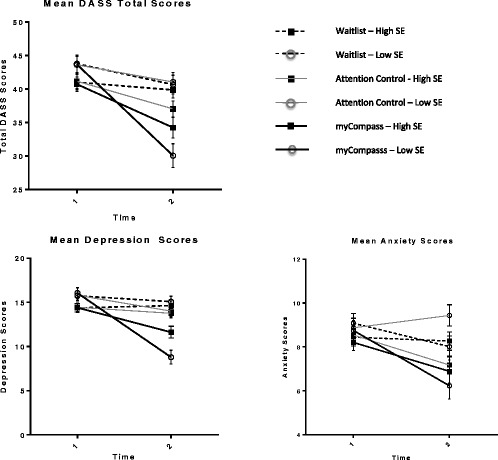
BACKGROUND: Online psychotherapy is clinically effective yet why, how, and for whom the effects are greatest remain largely unknown. In the present study, we examined whether mental health self-efficacy (MHSE), a construct derived from Bandura's Social Learning Theory (SLT), influenced symptom and functional outcomes of a new mobile phone and web-based psychotherapy intervention for people with mild-to-moderate depression, anxiety and stress. METHODS: STUDY I: Data from 49 people with symptoms of depression, anxiety and/or stress in the mild-to-moderate range were used to examine the reliability and construct validity of a new measure of MHSE, the Mental Health Self-efficacy Scale (MHSES). STUDY II: We conducted a secondary analysis of data from a recently completed randomised controlled trial (N = 720) to evaluate whether MHSE effected post-intervention outcomes, as measured by the Depression, Anxiety and Stress Scales (DASS) and Work and Social Adjustment Scale (WSAS), for people with symptoms in the mild-to-moderate range. RESULTS: STUDY I: The data established that the MHSES comprised a unitary factor, with acceptable internal reliability (Cronbach's alpha = .89) and construct validity. STUDY II: The intervention group showed significantly greater improvement in MHSE at post-intervention relative to the control conditions (p's < = .000). MHSE mediated the effects of the intervention on anxiety and stress symptoms. Furthermore, people with low pre-treatment MHSE reported the greatest post-intervention gains in depression, anxiety and overall distress. No effects were found for MHSE on work and social functioning. CONCLUSION: Mental health self-efficacy influences symptom outcomes of a self-guided mobile phone and web-based psychotherapeutic intervention and may itself be a worthwhile target to increase the effectiveness and efficiency of online treatment programs. TRIAL REGISTRATION: Australian New Zealand Clinical Trials Registry ACTRN12610000625077.
Overview
The claims and statistics of this paper haven’t been checked yet.
Free: it reads the open-access text and checks the first 5 claims that cite a source we can check. Create a free account to check every claim.
Integrity signals
Registry
Cites
Statistics
Figures
Verification
Claims the paper makes
The claims and statistics of this paper haven’t been checked yet.
Free: it reads the open-access text and checks the first 5 claims that cite a source we can check. Create a free account to check every claim.
Claims other papers make about this one
Each is checked against this paper’s own text: does it say what the citing paper says it does?
The source backs part of the claim, not all of it — or backs it for a different population, condition or comparison.
In the citing paper
“In contrast, low coping self-efficacy is associated with passive coping51, avoidance, lower treatment adherence52,53, substance use54, and other maladaptive coping strategies55 that may serve to increase risk or course of depression.”
From Psychobiological factors of resilience and depression in late life (2019) · cites this paper as [53]
Experimental — accuracy not yet measuredThe cited source says what the claim attributes to it.
In the citing paper
“While some apps have demonstrated efficacy in definitive trials [2-5], others have performed poorly [6-9].”
From A Library of Analytic Indicators to Evaluate Effective Engagement with Consumer mHealth Apps for Chronic Conditions: Scoping Review (2019) · cites this paper as [3]
The cited source says what the claim attributes to it.
In the citing paper
“The instrument shows a Cronbach's Alpha of 0.89 (71).”
The cited source says what the claim attributes to it.
In the citing paper
“They have been evaluated in many countries in general, student, and corporate populations [24-36].”
From Efficacy of Seren@ctif, a computer-based stress management program for patients with adjustment disorder with anxiety: Protocol for a controlled trial (2017) · cites this paper as [27]
In the citing paper
“Confidence in self-management of mental health issues was measured using the MHSES [51], which has 6 items that address confidence in managing stress, depression, and anxiety and are scored on a 10-point scale (1: not at all confident, 10: very confident).”
From Chatbot-Delivered Cognitive Behavioral Therapy in Adolescents With Depression and Anxiety During the COVID-19 Pandemic: Feasibility and Acceptability Study (2022) · cites this paper as [51]
Self-check
Percentages, sums and reported differences re-computed from the paper’s own numbers.
The self-check needs the paper’s full text.
Citations
Cites
Hu, L., & Bentler, P. M. (1999) · Structural Equation Modeling A Multidisciplinary Journal · doi:10.1080/10705519909540118 · Cited by 108,788 · cited 1×
“08 [41-43].”
Baron, R. M., & Kenny, D. A. (1986) · Journal of Personality and Social Psychology · doi:10.1037/0022-3514.51.6.1173 · Cited by 91,532 · cited 6×
“In light of recent evidence questioning the validity of the RMSEA in models with low degrees of freedom [Kenny DA, Kanisken B, McCoach D: The performance of RMSEA in models with small degrees of freedom.”
BackgroundResultInfluentialSelf-efficacy: Toward a unifying theory of behavioral change
Bandura, A. (1977) · Psychological Review · doi:10.1037/0033-295x.84.2.191 · Cited by 43,925
SPSS and SAS procedures for estimating indirect effects in simple mediation models
Preacher, K. J., & Hayes, A. F. (2004) · Behavior Research Methods, Instruments, & Computers · doi:10.3758/bf03206553 · Cited by 17,383 · cited 3×
“Preacher KJ, Hayes AF: SPSS and SAS procedures for estimating indirect effects in simple mediation models.”
BackgroundMethodLovibond, P. F., & Lovibond, S. H. (1995) · Behaviour Research and Therapy · doi:10.1016/0005-7967(94)00075-u · Cited by 14,523 · cited 11×
“Descriptive statistics were calculated for the DASS, WSAS and TIPI.”
MethodInfluentialAsymptotic Confidence Intervals for Indirect Effects in Structural Equation Models
Sobel, M. E. (1982) · Sociological Methodology · doi:10.2307/270723 · Cited by 12,810 · cited 1×
“In a second set of analyses, direct and indirect effects of MHSE on outcomes were examined using Preacher and Hayes’ [32] revised version of the Sobel test [36].”
MethodSelf-efficacy: Toward a unifying theory of behavioral change
Bandura, A. (1978) · Advances in Behaviour Research and Therapy · doi:10.1016/0146-6402(78)90002-4 · Cited by 10,586
Costello, A. B., & Osborne, J. (2005) · University of Massachusetts Amherst · doi:10.7275/jyj1-4868 · Cited by 10,297
Structural Equation Modelling: Guidelines for Determining Model Fit
Hooper, D., Coughlan, J., & Mullen, M. R. (2008) · Dublin Institute of Technology · doi:10.21427/d7cf7r · Cited by 8,746 · cited 1×
“08 [41-43].”
A very brief measure of the Big-Five personality domains
Gosling, S. D., Rentfrow, P. J., & Swann, W. B. (2003) · Journal of Research in Personality · doi:10.1016/s0092-6566(03)00046-1 · Cited by 8,307
(1995) · Cited by 4,008
The Explanatory and Predictive Scope of Self-Efficacy Theory
Bandura, A. (1986) · Journal of Social and Clinical Psychology · doi:10.1521/jscp.1986.4.3.359 · Cited by 3,776 · cited 4×
“Internal consistency reliability of the MHSES was assessed using Cronbach’s alpha, and construct validity was determined using Pearson’s correlation to relate baseline scores on the MHSES to theoretically related constructs [9,15,19], including baseline measures of symptoms and overall psychological distress (DASS), w…”
BackgroundMethodInfluentialSelf-Efficacy Beliefs of Adolescents
(2006) · Emerald Group Publishing Limited eBooks · doi:10.1108/978-1-60752-750-3 · Cited by 3,506
Lundberg, C. C. (2000) · Creative Consulting · doi:10.1108/978-1-60752-837-120251015 · Cited by 3,337
Mediators and Moderators of Treatment Effects in Randomized Clinical Trials
Kraemer, H. C., Wilson, G. T., Fairburn, C. G., & Agras, W. S. (2002) · Archives of General Psychiatry · doi:10.1001/archpsyc.59.10.877 · Cited by 2,562 · cited 4×
“Randomised controlled trials (RCTs) provide the ideal context in which to examine possible determinants of psychotherapy outcomes [20].”
BackgroundInfluentialThe Work and Social Adjustment Scale: a simple measure of impairment in functioning
Mundt, J. C., Marks, I. M., Shear, M. K., & Greist, J. M. (2002) · British Journal of Psychiatry · doi:10.1192/bjp.180.5.461 · Cited by 2,515 · cited 9×
“Descriptive statistics were calculated for the DASS, WSAS and TIPI.”
BackgroundInfluentialMediation Analysis in Social Psychology: Current Practices and New Recommendations
Rucker, D. D., Preacher, K. J., Tormala, Z. L., & Petty, R. E. (2011) · Social and Personality Psychology Compass · doi:10.1111/j.1751-9004.2011.00355.x · Cited by 2,430 · cited 1×
“Although the necessity for mediation of a direct effect on outcomes has since been questioned (criterion 3 [20,32]), Baron and Kenny’s [31] causal steps framework is still the most widely used approach to testing mediation in the social sciences [33].”
BackgroundAndrews, G., Cuijpers, P., Craske, M. G., McEvoy, P., & Titov, N. (2010) · PLoS ONE · doi:10.1371/journal.pone.0013196 · Cited by 1,311 · cited 1×
“Background Online self-management of depression and anxiety has evolved as a popular, clinically effective and costefficient public health solution to reducing the personal and societal burden associated with unmet treatment need [1,2].”
BackgroundBarak, A., Hen, L., Boniel-Nissim, M., & Shapira, N. (2008) · Journal of Technology in Human Services · doi:10.1080/15228830802094429 · Cited by 1,283 · cited 1×
“Grounded predominantly in cognitive behaviour therapy (CBT), and increasingly incorporating other therapeutic approaches [3,4], online psychological interventions help people with symptom management by teaching skills to regain control over and change problematic thoughts and behaviours (including cognitive restructur…”
BackgroundAdherence in Internet Interventions for Anxiety and Depression
Christensen, H., Griffiths, K. M., & Farrer, L. (2009) · Journal of Medical Internet Research · doi:10.2196/jmir.1194 · Cited by 1,133
Self-citationRole of Affective Self-Regulatory Efficacy in Diverse Spheres of Psychosocial Functioning
Bandura, A., Caprara, G. V., Barbaranelli, C., Gerbino, M., & Pastorelli, C. (2003) · Child Development · doi:10.1111/1467-8624.00567 · Cited by 1,092 · cited 2×
“Internal consistency reliability of the MHSES was assessed using Cronbach’s alpha, and construct validity was determined using Pearson’s correlation to relate baseline scores on the MHSES to theoretically related constructs [9,15,19], including baseline measures of symptoms and overall psychological distress (DASS), w…”
BackgroundMethodBarriers to mental health treatment: results from the National Comorbidity Survey Replication
Mojtabai, R., Olfson, M., Sampson, N. A., Jin, R., Druss, B., Wang, P. S., Wells, K. B., Pincus, H. A., & Kessler, R. C. (2011) · Psychological Medicine · doi:10.1017/s0033291710002291 · Cited by 951 · cited 1×
“’s [23] Mental Health Confidence Scale relies heavily on recovery-related items, including items referring to mental illness diagnosis and treatment, and may be inappropriate for people with symptoms in the mild-tomoderate range who are unlikely to consider themselves unwell, meet diagnostic criteria or seek treatment…”
BackgroundA Systematic Review of the Impact of Adherence on the Effectiveness of e-Therapies
Donkin, L., Christensen, H., Naismith, S. L., Neal, B., Hickie, I. B., & Glozier, N. (2011) · Journal of Medical Internet Research · doi:10.2196/jmir.1772 · Cited by 876 · cited 1×
“Furthermore, rates of adherence with these interventions, which are characteristically low [7], may be improved by incorporating program content and functions that increase therapeutic efficiency by targeting intervening processes directly [8].”
Self-citationCuijpers, P., Donker, T., van Straten, A., Li, J., & Andersson, G. (2010) · Psychological Medicine · doi:10.1017/s0033291710000772 · Cited by 832 · cited 1×
“Whereas effect sizes in studies of online interventions compare well with face-to-face treatments [6], the psychological mechanisms that explain these findings are largely unknown.”
BackgroundMarks, R., Allegrante, J. P., & Lorig, K. (2005) · Health Promotion Practice · doi:10.1177/1524839904266790 · Cited by 738 · cited 1×
“Research has shown that self-efficacy can be reinforced via a range of information sources, including performance mastery, verbal persuasion and social influence, vicarious learning, and emotional arousal [15], and studies show that self-management programs incorporating these strategies produce more favourable physic…”
BackgroundSelf-efficacy in weight management.
Clark, M. M., Abrams, D. B., NIAURA, R. S., Eaton, C. A., & Rossi, J. S. (1991) · Journal of Consulting and Clinical Psychology · doi:10.1037//0022-006x.59.5.739 · Cited by 692 · cited 1×
“Together, these findings are in line with studies showing the benefits for health behaviours and physical health outcomes of interventions that enhance self-efficacy [10-14], and are consistent with findings supporting the role of cognitive factors, including perceived control, as mediators of outcomes of face-to-face…”
ResultGIST, M. E., STEVENS, C. K., & BAVETTA, A. G. (1991) · Personnel Psychology · doi:10.1111/j.1744-6570.1991.tb00701.x · Cited by 504 · cited 1×
“Alternatively, given that individuals with low self-efficacy typically lack confidence and require more guidance in managing activities [44], a self-efficacy enhancing web-based intervention (like myCompass) may provide exactly what they”
BackgroundMarks, R., & Allegrante, J. P. (2005) · Health Promotion Practice · doi:10.1177/1524839904266792 · Cited by 502 · cited 1×
“Research has shown that self-efficacy can be reinforced via a range of information sources, including performance mastery, verbal persuasion and social influence, vicarious learning, and emotional arousal [15], and studies show that self-management programs incorporating these strategies produce more favourable physic…”
BackgroundDesign and Analysis of Quality of Life Studies in Clinical Trials
Fairclough, D. L. (2002) · Chapman & Hall/CRC eBooks · doi:10.1201/9781420035438 · Cited by 461 · cited 1×
“Analyses assumed a compound symmetric structure, in line with Fairclough’s recommendation that the covariance structure be restricted in situations where attrition is high [35].”
BackgroundMediators of Weight Loss and Weight Loss Maintenance in Middle‐aged Women
Teixeira, P. J., Silva, M. N., Coutinho, S. R., Palmeira, A. L., Mata, J., Vieira, P. N., Carraça, E. V., Santos, T. C., & Sardinha, L. B. (2010) · Obesity · doi:10.1038/oby.2009.281 · Cited by 404 · cited 1×
“For this reason, the procedure is increasing in popularity as a statistically rigorous approach for assessing mediation in treatment outcome studies [37,38].”
MethodRecognition, Management, and Course of Anxiety and Depression in General Practice
Ormel, J. (1991) · Archives of General Psychiatry · doi:10.1001/archpsyc.1991.01810320024004 · Cited by 375 · cited 1×
“, face-to-face or online psychotherapy, supportive counselling, and medication; [47,48]).”
BackgroundComputer-Assisted Research Design and Analysis
Tabachnick, B. G., & Fidell, L. S. (2000) · Cited by 366
Meyer, B., Berger, T., Caspar, F., Beevers, C. G., Andersson, G., & Weiss, M. (2009) · Journal of Medical Internet Research · doi:10.2196/jmir.1151 · Cited by 363 · cited 2×
“[5] provide data supporting the psychometric adequacy of the WSAS when administered in an online format.”
BackgroundMethodAnalyzing Longitudinal Data With the Linear Mixed Models Procedure in SPSS
West, B. T. (2009) · Evaluation & the Health Professions · doi:10.1177/0163278709338554 · Cited by 362
Cognitive Behavioral Therapy for Mood Disorders: Efficacy, Moderators and Mediators
Driessen, E., & Hollon, S. D. (2010) · Psychiatric Clinics of North America · doi:10.1016/j.psc.2010.04.005 · Cited by 291 · cited 2×
“Previous reviews support a mediating role of cognitive variables (including dysfunctional attitudes, automatic thoughts and attributional styles) in recovery from mental health problems [17,18] and, more recently, a construct related to self-efficacy, namely ‘perceived control’, has been shown to predict outcomes of o…”
BackgroundResultInternet-based mental health programs: A powerful tool in the rural medical kit
Griffiths, K. M., & Christensen, H. (2007) · Australian Journal of Rural Health · doi:10.1111/j.1440-1584.2007.00859.x · Cited by 270 · cited 1×
“Background Online self-management of depression and anxiety has evolved as a popular, clinically effective and costefficient public health solution to reducing the personal and societal burden associated with unmet treatment need [1,2].”
BackgroundSelf-citationMobile mental health: Review of the emerging field and proof of concept study
Harrison, V., Proudfoot, J., Wee, P. P., Parker, G., Pavlovic, D. H., & Manicavasagar, V. (2011) · Journal of Mental Health · doi:10.3109/09638237.2011.608746 · Cited by 267 · cited 2×
“[25] have previously reported sensitivity of MHSES scores to change, a finding consistent with Bandura’s [9] proposition that self-efficacy is a malleable psychological state, as opposed to a more permanent personality trait.”
MethodResultSelf-citationProudfoot, J., Clarke, J., Birch, M.-R., Whitton, A. E., Parker, G., Manicavasagar, V., Harrison, V., Christensen, H., & Hadzi-Pavlovic, D. (2013) · BMC Psychiatry · doi:10.1186/1471-244x-13-312 · Cited by 264
Self-citationDesign and Analysis of Quality of Life Studies in Clinical Trials
Fairclough, D. L. (2010) · Chapman & Hall/CRC eBooks · doi:10.1201/9781420061185 · Cited by 228
Baldwin, A. S., Rothman, A. J., Hertel, A. W., Linde, J. A., Jeffery, R. W., Finch, E. A., & Lando, H. A. (2006) · Health Psychology · doi:10.1037/0278-6133.25.5.626 · Cited by 209
Garratt, G., Ingram, R. E., Rand, K. L., & Sawalani, G. (2007) · Clinical Psychology: Science and Practice · doi:10.1111/j.1468-2850.2007.00081.x · Cited by 188 · cited 2×
“Previous reviews support a mediating role of cognitive variables (including dysfunctional attitudes, automatic thoughts and attributional styles) in recovery from mental health problems [17,18] and, more recently, a construct related to self-efficacy, namely ‘perceived control’, has been shown to predict outcomes of o…”
BackgroundResultWarmerdam, L., van Straten, A., Jongsma, J., Twisk, J. W. R., & Cuijpers, P. J. (2009) · Journal of Behavior Therapy and Experimental Psychiatry · doi:10.1016/j.jbtep.2009.10.003 · Cited by 183 · cited 3×
“Previous reviews support a mediating role of cognitive variables (including dysfunctional attitudes, automatic thoughts and attributional styles) in recovery from mental health problems [17,18] and, more recently, a construct related to self-efficacy, namely ‘perceived control’, has been shown to predict outcomes of o…”
BackgroundResultCarpinello, S. E., Knight, E. L., Markowitz, F. E., & Pease, E. A. (2000) · Psychiatric Rehabilitation Journal · doi:10.1037/h0095162 · Cited by 178
Anderson, E. S., Winett, R. A., Wojcik, J. R., & Williams, D. M. (2010) · Journal of Health Psychology · doi:10.1177/1359105309342297 · Cited by 175 · cited 1×
“Research has shown that self-efficacy can be reinforced via a range of information sources, including performance mastery, verbal persuasion and social influence, vicarious learning, and emotional arousal [15], and studies show that self-management programs incorporating these strategies produce more favourable physic…”
BackgroundImproving medical care for persons with serious mental illness: challenges and solutions.
Druss, B. G. (2007) · PubMed · Cited by 173
Psychological predictors of physical activity in the Diabetes Prevention Program
Delahanty, L. M., Conroy, M. B., & Nathan, D. M. (2006) · Journal of the American Dietetic Association · doi:10.1016/j.jada.2006.02.011 · Cited by 165 · cited 1×
“Together, these findings are in line with studies showing the benefits for health behaviours and physical health outcomes of interventions that enhance self-efficacy [10-14], and are consistent with findings supporting the role of cognitive factors, including perceived control, as mediators of outcomes of face-to-face…”
ResultReview the key role of self-efficacy in diabetes care
Sharifirad, G., Mohebi, S., Azadbakht, L., Feizi, A., & Kargar, M. (2013) · Journal of Education and Health Promotion · doi:10.4103/2277-9531.115827 · Cited by 134 · cited 1×
“Together, these findings are in line with studies showing the benefits for health behaviours and physical health outcomes of interventions that enhance self-efficacy [10-14], and are consistent with findings supporting the role of cognitive factors, including perceived control, as mediators of outcomes of face-to-face…”
ResultZlomke, K. R. (2009) · Computers in Human Behavior · doi:10.1016/j.chb.2008.06.003 · Cited by 96 · cited 1×
“The DASS has high internal consistency, acceptable test-retest reliability [26] and yields reliable and valid data when used in an online format [27].”
MethodObesity-related beliefs predict weight loss after an 8-week low-calorie diet
Wamsteker, E. W., Geenen, R., Iestra, J. A., Larsen, J. K., ZELISSEN, P. M. J., & van Staveren, W. A. (2005) · Journal of the American Dietetic Association · doi:10.1016/j.jada.2004.12.031 · Cited by 88 · cited 1×
“Together, these findings are in line with studies showing the benefits for health behaviours and physical health outcomes of interventions that enhance self-efficacy [10-14], and are consistent with findings supporting the role of cognitive factors, including perceived control, as mediators of outcomes of face-to-face…”
Resultvan der Gaag, M., van Oosterhout, B., Daalman, K., Sommer, I. E., & Korrelboom, K. (2012) · British Journal of Clinical Psychology · doi:10.1111/j.2044-8260.2011.02025.x · Cited by 67
Coping self-efficacy and psychological distress: Results from an Italian study on nurses
Pisanti, R. (2012) · PsycEXTRA Dataset · doi:10.1037/e544762013-003 · Cited by 17 · cited 2×
“This is because such interventions require the active cognitive and behavioural involvement of the individual [15,16], as well as the ongoing practice and implementation of therapeutic skills (e.”
Background
Research works printed but not linked: 1
- 40. Nunnally J Psychometric Methods 1978 New York McGraw-Hill
Cited by
Artificially intelligent chatbots in digital mental health interventions: a review
Boucher, E. M., Harake, N. R., Ward, H. E., Stoeckl, S. E., Vargas, J., Minkel, J., Parks, A. C., & Zilca, R. (2021) · Expert Review of Medical Devices · doi:10.1080/17434440.2021.2013200 · Cited by 440
“efficacy, these individuals may benefit more from DMHIs in terms of depression, anxiety, and overall distress [125].”
BackgroundA Systematic Review of Cognitive Behavioral Therapy and Behavioral Activation Apps for Depression
Huguet, A., Rao, S., McGrath, P. J., Wozney, L., Wheaton, M., Conrod, J., & Rozario, S. (2016) · PLOS ONE · doi:10.1371/journal.pone.0154248 · Cited by 328
“The 53 manuscripts [9,14,15,22, 23,24, 25,26,27,28,29,30,31,32,33,34,35,36,37,38,39,40,41,42,43,44,45,46,47,48, 49,50,51,52, 53,54,55, 56,57,58,59,60,61,62,63,64,65, 66,67,68,69,70,71] identified as relevant to the review made mention of a total of 48 unique apps that met our inclusion/exclusion criteria.”
BackgroundPsychobiological factors of resilience and depression in late life
Laird, K. T., Krause, B., Funes, C., & Lavretsky, H. (2019) · Translational Psychiatry · doi:10.1038/s41398-019-0424-7 · Cited by 229
Huang, G., & Ren, Y. (2020) · Computers in Human Behavior · doi:10.1016/j.chb.2019.09.013 · Cited by 203
Pocket Skills: A Conversational Mobile Web App To Support Dialectical Behavioral Therapy
Schroeder, J., Wilkes, C., Rowan, K., Toledo, A., Paradiso, A., Czerwinski, M., Mark, G., & Linehan, M. M. (2018) · Proceedings of the 2018 CHI Conference on Human Factors in Computing Systems · doi:10.1145/3173574.3173972 · Cited by 175
“Prior research suggests selfefficacy is important for positive symptom outcomes to using a mental health app for depression [18, 24], and as discussed above, our own results similarly showed a significant negative correlation between self-efficacy and general dysfunctional coping.”
Background
Metadata
- Authors
- Clarke, J., Proudfoot, J., Birch, M.-R., Whitton, A. E., Parker, G., Manicavasagar, V., Harrison, V., Christensen, H., & Hadzi-Pavlovic, D.
- Affiliations
- Black Dog Institute (AU)
- UNSW Sydney (AU)
- Corresponding author
- Clarke, Janine
- ORCID
- Venue
- BMC Psychiatry
- Published
- 2014-09-26
- Volume
- 14
- Issue
- 1
- Pages
- 272-272
- ISSN
- 1471-244X (ISSN-L)
- PMC
- PMC4189737
- OpenAlex
- W2106461288
- Cited by
- 138
- References
- 53
- Citations by year
- 2026: 5 · 2025: 10 · 2024: 8 · 2023: 17 · 2022: 11 · 2021: 22 · 2020: 11 · 2019: 18 · 2018: 14 · 2017: 9 · 2016: 11 · 2015: 2
- FWCI
- 11.35
- Type
- journal article
- Language
- en
- Open access
- gold
- doi.org
- Locations
- BMC Psychiatry (publishedVersion, cc-by)
- Europe PMC (PubMed Central) (publishedVersion, cc-by)
- PubMed Central (publishedVersion, cc-by)
- PubMed (publishedVersion)
- Open Research Online - ORO (The Open University) (acceptedVersion)
- UNSWorks (University of New South Wales, Sydney, Australia) (submittedVersion, cc-by-nc-nd)
- Funders
- Australian Government
- Medical Research Council
- National Health and Medical Research Council (510135)
- Topics
- Social Sciences › Psychology › Applied Psychology › Digital Mental Health Interventions
- Social Sciences › Psychology › Experimental and Cognitive Psychology › Anxiety, Depression, Psychometrics, Treatment, Cognitive Processes
- Health Sciences › Medicine › Public Health, Environmental and Occupational Health › Maternal Mental Health During Pregnancy and Postpartum
- Keywords
- online therapy, mild to moderate depression, anxiety, stress, social learning theory, mediation, self-guided intervention, work and social functioning
- MeSH terms
- Adolescent, Adult, Aged, Anxiety Disorders, Depressive Disorder, Female, Humans, Male, Middle Aged, Psychiatric Status Rating Scales, Social Adjustment, Stress, Psychological, Reproducibility of Results, Cognitive Behavioral Therapy, Telemedicine, Self Efficacy, Internet, Cell Phone, Young Adult
About these checks
Registry, retraction, Cites and statistics results are computed, not judged, with one exception: a printed reference that no index lists is read once by a model before it counts as a citation error. Claims are extracted by a model and kept only when their quote appears verbatim in the text; each cited source is then checked, with a model’s help, for whether it says what the claim relies on. Those verdicts can be wrong — read the claim’s quote and the cited source before relying on one.
Statistics and arithmetic are recomputed, not judged.
Confidence bands are shown only for fields calibrated on our annotated test set. None is calibrated yet, so no band is shown.
What counts as a claim ›How we measure confidence ›How we check this ›
Are you an author, or do you see a problem with this page? Request a review
Data sources
Bibliographic data: Semantic Scholar, OpenAlex, Crossref.
Contains information from the Semantic Scholar Academic Graph Datasets, made available under the ODC Attribution License (ODC-BY 1.0).
Semantic Scholar’s data is described in: Kinney, R., et al. (2023). The Semantic Scholar Open Data Platform. arXiv:2301.10140.
