

Association between abnormal default mode network activity and suicidality in depressed adolescents
Open accessThe DOI matches its Crossref record; 73 of the 73 references it cites were found in a registry or an index.
Abstract
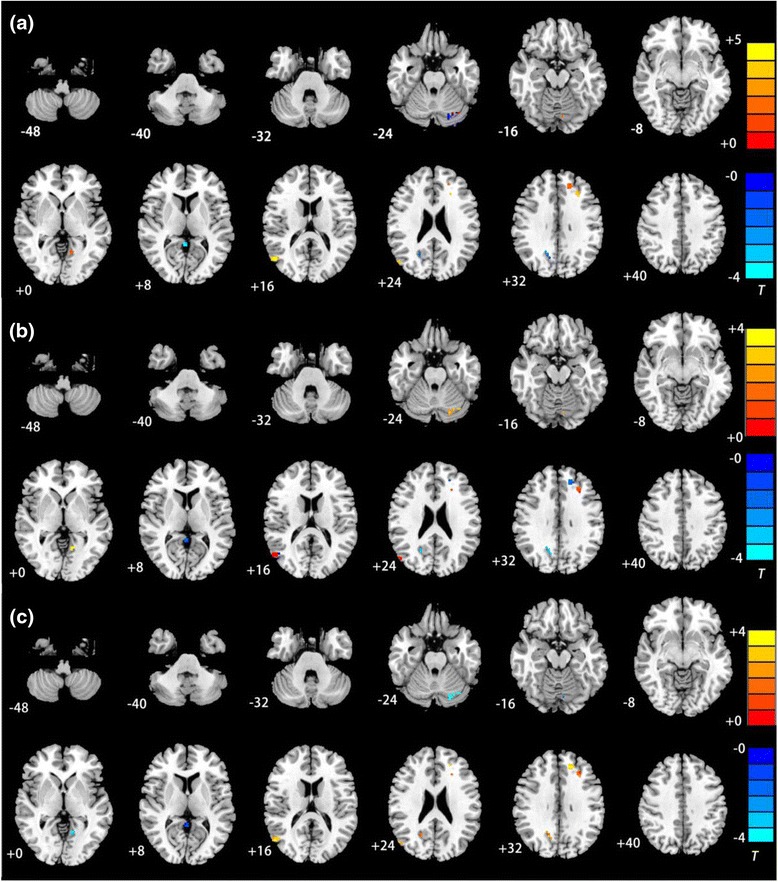
BACKGROUND: Suicide is the second leading cause of death among 15- to 29-year-olds in China, and 60 % of suicidal patients have a history of depression. Previous brain imaging studies have shown that depression and suicide may be associated with abnormal activity in default mode network (DMN) regions. However, no study has specifically investigated the relationship between DMN functional activity and suicidal behavior in depressed individuals. Therefore, in the present study, we directly investigated features of DMN brain activity in adolescent patients with histories of depression and attempted suicide. METHODS: A total of 35 sex- and age-matched suicidal depressed patients were compared with 18 non-suicidal depressed patients and 47 healthy controls. We explored functional activity changes in DMN regions that could be associated with suicidal behavior by comparing resting-state functional magnetic resonance imaging (rs-fMRI) signals using independent component analysis (ICA). Scores on six clinical scales that measure depression severity (Hamilton Depression Scale (HDRS) and Beck Depression Inventory (BDI)) and suicidal traits (Barratt Impulsiveness Scale (BIS-11), Suicide Attitude Questionnaire (SAQ), Beck Hopelessness Scale (BHS), and Scale for Suicide Ideation (SSI)) were compared in the three groups. RESULTS: Compared with the healthy controls, all of the evaluated depressed patients showed increased functional connectivity in select DMN regions. The suicidal patients showed increased connectivity in the left cerebellum and decreased connectivity in the right posterior cingulate cortex (PCC), whereas the non-suicidal depressed patients showed increased connectivity in the left superior frontal gyrus, left lingual gyrus and right precuneus and decreased connectivity in the left cerebellum. Compared to the non-suicidal patients, the suicidal patients showed increased connectivity in the left cerebellum and the left lingual gyrus and decreased connectivity in the right precuneus. No differences in the scores of any clinical scales were found between the suicidal and non-suicidal depressed patients. CONCLUSIONS: Collectively, our results highlight the importance of the DMN in the pathophysiology of depression and suggest that suicidal behavior in depressed adolescents may be related to abnormal functional connectivity in the DMN. In particular, abnormal connectivity in the PCC/precuneus and left cerebellum might be a predictor of suicidal behavior in depressed adolescent patients.
Overview
The claims and statistics of this paper haven’t been checked yet.
Free: it reads the open-access text and checks the first 5 claims that cite a source we can check. Create a free account to check every claim.
Integrity signals
Registry
Cites
Statistics
Figures
Verification
Claims the paper makes
The claims and statistics of this paper haven’t been checked yet.
Free: it reads the open-access text and checks the first 5 claims that cite a source we can check. Create a free account to check every claim.
Claims other papers make about this one
Each is checked against this paper’s own text: does it say what the citing paper says it does?
The source backs part of the claim, not all of it — or backs it for a different population, condition or comparison.
In the citing paper
“Resting state functional connectivity findings highlight reduced positive connectivity between the default mode network and salience network in attempters”
From Neural correlates associated with suicide and nonsuicidal self-injury in youth (2021) · cites this paper as [102]
Experimental — accuracy not yet measuredThe source backs part of the claim, not all of it — or backs it for a different population, condition or comparison.
In the citing paper
“Consistent with Schmaal and colleagues (32), youth STB research is characterized by alterations within prefrontal (53–55) and limbic (62, 75, 102, 103) systems whereby a compromised regulatory system may potentiate suicidal thinking, and perturbations in top-down and bottom-up connections may lead to suicidal behaviors.”
From Neural correlates associated with suicide and nonsuicidal self-injury in youth (2021) · cites this paper as [102]
Experimental — accuracy not yet measuredThe source backs part of the claim, not all of it — or backs it for a different population, condition or comparison.
In the citing paper
“Resting-state functional MRI (rs-fMRI) indicates lower functional connectivity in adolescent and adult suicide attempters, predominantly in the default mode network, which is implicated in self-referential processing and social cognition (85-87).”
From A brain-centric model of suicidal behavior (2020) · cites this paper as [87]
Experimental — accuracy not yet measuredThe cited source says what the claim attributes to it.
In the citing paper
“One sex- and age-matched case-control study found that suicidal adolescents with depression showed reduced DMN connectivity in the PCC and increased connectivity in the left cerebellum, suggesting altered coordination between self-referential and emotional processing regions (17).”
From Exploring the neurobiological markers of suicidal behaviors in pediatric population: a narrative review (2026) · cites this paper as [17]
In the citing paper
“Compared to psychiatric controls, attempters show increased connectivity between an ICA-derived DMN component and the cerebellum and lingual gyrus, and decreased connectivity with precuneus.”
From Neural correlates associated with suicide and nonsuicidal self-injury in youth (2021) · cites this paper as [102]
1 more claim about this paper
Create a free account to see every claim other papers make about this one.
Self-check
Percentages, sums and reported differences re-computed from the paper’s own numbers.
The self-check needs the paper’s full text.
Citations
Cites
Hamilton, M. (1960) · Journal of Neurology, Neurosurgery & Psychiatry · doi:10.1136/jnnp.23.1.56 · Cited by 32,817 · cited 1×
“The Hamilton Depression Rating Scale (HDRS, [38]) and Beck Depression Inventory (BDI, [39]) were used to evaluate depression severity.”
MethodA default mode of brain function
Raichle, M. E., MacLeod, A. M., Snyder, A. Z., Powers, W. J., Gusnard, D. A., & Shulman, G. L. (2001) · Proceedings of the National Academy of Sciences · doi:10.1073/pnas.98.2.676 · Cited by 12,190
An Information-Maximization Approach to Blind Separation and Blind Deconvolution
Bell, A. J., & Sejnowski, T. J. (1995) · Neural Computation · doi:10.1162/neco.1995.7.6.1129 · Cited by 8,986 · cited 1×
“rithm [48] was used for ICA decomposition; this analysis”
MethodComparison of Beck Depression Inventories -IA and -II in psychiatric outpatients
Beck, A. T., Steer, R. A., Ball, R., & Ranieri, W. F. (1996) · Journal of Personality Assessment · doi:10.1207/s15327752jpa6703_13 · Cited by 5,965 · cited 1×
“The Hamilton Depression Rating Scale (HDRS, [38]) and Beck Depression Inventory (BDI, [39]) were used to evaluate depression severity.”
MethodThe precuneus: a review of its functional anatomy and behavioural correlates
Cavanna, A. E., & Trimble, M. R. (2006) · Brain · doi:10.1093/brain/awl004 · Cited by 5,128 · cited 1×
“The precuneus is also important for visuospatial imagery, episodic memory retrieval and self-processing operations [67].”
BackgroundDPARSF: a MATLAB toolbox for “pipeline” data analysis of resting-state fMRI
Yan (2010) · Frontiers in System Neuroscience · doi:10.3389/fnsys.2010.00013 · Cited by 3,475
Assessment of suicidal intention: The Scale for Suicide Ideation.
Beck, A. T., Kovacs, M., & Weissman, A. (1979) · Journal of Consulting and Clinical Psychology · doi:10.1037//0022-006x.47.2.343 · Cited by 3,419 · cited 1×
“The Scale for Suicide Ideation (SSI, [41]) was also employed; higher scores on this scale indicate a stronger intention to commit suicide.”
MethodSearching for a baseline: Functional imaging and the resting human brain
Gusnard, D. A., & Raichle, M. E. (2001) · Nature Reviews Neuroscience · doi:10.1038/35094500 · Cited by 3,371 · cited 1×
“Marchand proposed that the striatum-anterior cortical midline structure (CMS) circuit, which is a component of the DMN, plays a significant role in the expression of depressive symptoms and suicidal ideation and that the striatum-motor/sensory cortex network may be a trait marker of suicide-related behavior [60, 61].”
BackgroundCommon blood flow changes across visual tasks: II. Decreases in cerebral cortex
Shulman, G. L., Fiez, J. A., Corbetta, M., Buckner, R. L., Miezin, F. M., Raichle, M. E., & Petersen, S. E. (1997) · Journal of Cognitive Neuroscience · doi:10.1162/jocn.1997.9.5.648 · Cited by 1,890
REST: A Toolkit for Resting-State Functional Magnetic Resonance Imaging Data Processing
Song, X.-W., Dong, Z.-Y., Long, X.-Y., Li, S.-F., Zuo, X.-N., Zhu, C.-Z., He, Y., Yan, C.-G., & Zang, Y.-F. (2011) · PLoS ONE · doi:10.1371/journal.pone.0025031 · Cited by 1,872
Research works printed but not linked: 2
- First M, Spitzer RL, Gibbon M, Williams JB. Structured clinical interview for DSM-IV-TR Axis I disorders, research version, patient edition (SCID-I/P). New York: Biometric Research, New York State Psychiatric Institute; 2002.
- Wang D Qian M Report on the village use of the recension Chinese combined Raven’s Test Inf Psychol Sci 1989 5 23 27
Cited by
Items 101–163 of 163
Fattahi, M., Rostami, R., & Hossein‐Zadeh, G. (2021) · National and International Iranian Conference on Biomedical Engineering (ICBME) · doi:10.1109/icbme54433.2021.9750309 · Cited by 4
Hierarchical whole-brain modeling of critical synchronization dynamics in human brainPreprint
Myrov, V. O., Suleimanova, A., Knapič, S., Partanen, P., Vesterinen, M., Liu, W., Palva, S., & Palva, J. M. (2024) · bioRxiv (Cold Spring Harbor Laboratory) · doi:10.1101/2024.05.08.593146 · Cited by 3
“…constitute core pathophysiological mechanisms in neurological disorders, such as epilepsy (3, 14) and Parkinson’s disease (15), and characterize neuropsychiatric diseases, such as depression (16, 17), where abnormalities in synchrony are correlated with the severity of depressive symptoms (18–20).”
Neuroimaging Studies of Effects of Psychotherapy in Depression
Bauer, I. E., & Meyer, T. D. (2021) · Cambridge University Press eBooks · doi:10.1017/9781108623018.021 · Cited by 2
Stress, Vulnerability, and Suicide: The Stress–Diathesis Model
van Heeringen, K. (2018) · Cambridge University Press eBooks · doi:10.1017/9781316563205.003 · Cited by 3
Contemplation of Nature to Promote Mental Health and Prevent Depression in Youth
Medeiros, S., Langer, A. I., & Nielsen, S. S. (2022) · Depression and personality · doi:10.1007/978-3-031-13029-8_5 · Cited by 3
Yeung, H. W., Stolicyn, A., Shen, X., Adams, M. J., Romaniuk, L., Thng, G., Buchanan, C. R., Tucker–Drob, E. M., Bastin, M. E., McIntosh, A. M., et al. (2024) · Imaging Neuroscience · doi:10.1162/imag_a_00064 · Cited by 3
Electrophysiological Biomarkers for Mood Disorders
Ramakrishnan, N., Murphy, N., Selvaraj, S., & Cho, R. Y. (2021) · Cambridge University Press eBooks · doi:10.1017/9781108623018.015 · Cited by 2
Neural biomarkers of suicidal behavior: from cognition and circuits to cells (and back)
Jollant, F., & Mechawar, N. (2022) · Elsevier eBooks · doi:10.1016/b978-0-12-821398-8.00007-2 · Cited by 2
Wu, Y., Fan, L., An, S., Su, X., Su, C.-W., Yao, N., Zhu, Q., Huang, Z., & Li, Y. (2025) · SLEEP · doi:10.1093/sleep/zsaf361 · Cited by 1
Ma, Y., Wang, X.-Y., Wang, W.-L., Zhang, J., Liu, X.-H., Du-xing, L., Zhou, Z.-H., Chen, L., & Zhou, H. (2026) · World Journal of Psychiatry · doi:10.5498/wjp.v16.i2.113513 · Cited by 1
Self-citationAperiodic Signatures of Stress Sensitivity and Depression Recurrence in Adolescents
Schantell, M. D., Kim, N., Trivedi, E., Wool, E., McGregor, M. M., Sarkas, S. E., Li, L. Y., Letkiewicz, A. M., Durham, K., Pagliaccio, D., et al. (2026) · Biological Psychiatry Cognitive Neuroscience and Neuroimaging · doi:10.1016/j.bpsc.2026.02.005 · Cited by 3
Hong, X., Cui, X., Chen, C., Zhang, Z., Jin, Y., & Wang, Y. (2026) · Psychiatry Research Neuroimaging · doi:10.1016/j.pscychresns.2026.112223 · Cited by 1
Li, J., Li, B., Meng, Y., Yang, S., Chen, H., & Liao, W. (2020) · International Symposium on Image Computing and Digital Medicine (ISICDM) · doi:10.1145/3451421.3451453 · Cited by 1
“Importantly, several studies have demonstrated that the structural and functional brain changes in LING are associated with suicide behavior in MDD patients, including the increased connectivity in the left cerebellum and the left LING compared with non-suicidal MDD patients [22], and smaller gray-matter volumed in th…”
BackgroundMajör Depresif Bozukluğu Olan Ergenlerde İntihar Girişimi
Demirdöğen, E. Y., Akıncı, M. A., Bozkurt, A., & DAĞCI, H. (2023) · Namık Kemal Tıp Dergisi · doi:10.4274/nkmj.galenos.2023.42204 · Cited by 3
Dóra, F., Hajdu, T., Renner, É., Paál, K., Alpár, A., Palkovits, M., Chinopoulos, C., & Dobolyi, Á. (2024) · Translational Psychiatry · doi:10.1038/s41398-024-03137-x · Cited by 1
Brain Imaging and the Mechanisms of Antidepressant Action
Godlewska, B. R., Selvaraj, S., & Cowen, P. J. (2021) · Cambridge University Press eBooks · doi:10.1017/9781108623018.020 · Cited by 1
Effects of Lithium on Brain Structure in Bipolar Disorder
Kaur, J., Kafantaris, V., & Szeszko, P. R. (2021) · Cambridge University Press eBooks · doi:10.1017/9781108623018.018 · Cited by 1
Functional Connectome in Bipolar Disorder
Cha, J., & Anand, A. (2021) · Cambridge University Press eBooks · doi:10.1017/9781108623018.008 · Cited by 1
Salehi, M., Saeidi, M., Amanat, M., Barias, T., Anyeji, U., Alzein, O., & Gunturu, S. (2026) · Frontiers in Pediatrics · doi:10.3389/fped.2026.1738009
“One sex-and age-matched case-control study found that suicidal adolescents with depression showed reduced DMN connectivity in the PCC and increased connectivity in the left cerebellum, suggesting altered coordination between self-referential and emotional processing regions (17).”
What Is Suicidal Behavior, and Can It Be Prevented?
van Heeringen, K. (2018) · Cambridge University Press eBooks · doi:10.1017/9781316563205.002
“In my end is my beginning”: A Neurodevelopmental Perspective on Suicidal Behavior*
van Heeringen, K. (2018) · Cambridge University Press eBooks · doi:10.1017/9781316563205.008
I Predict, Therefore I Cannot Be: A Predictive Coding Account of Suicidal Behavior
van Heeringen, K. (2018) · Cambridge University Press eBooks · doi:10.1017/9781316563205.009
Predicting the Unpredictable: Neuroscience Contributions to Suicide Prediction
van Heeringen, K. (2018) · Cambridge University Press eBooks · doi:10.1017/9781316563205.010
The Dark Side of the Brain: Neuroscience Approaches to Suicidal Behavior
van Heeringen, K. (2018) · Cambridge University Press eBooks · doi:10.1017/9781316563205.004
Imaging Genetic and Epigenetic Markers in Mood Disorders
Poletti, S., Mazza, E. A., Vai, B., & Benedetti, F. (2021) · Cambridge University Press eBooks · doi:10.1017/9781108623018.012
Brain Imaging of Reward Dysfunction in Unipolar and Bipolar Disorders
Kumar, P., Jiang, Y., & Whitton, A. E. (2021) · Cambridge University Press eBooks · doi:10.1017/9781108623018.006
Resting-State Functional Connectivity in Unipolar Depression
Chen, Z., & Gong, Q. (2021) · Cambridge University Press eBooks · doi:10.1017/9781108623018.007
Brain Imaging Methods in Mood Disorders
Selvaraj, S., Brambilla, P., & Soares, J. C. (2021) · Cambridge University Press eBooks · doi:10.1017/9781108623018.002
Kious, B. M., & Renshaw, P. F. (2021) · Cambridge University Press eBooks · doi:10.1017/9781108623018.009
Neuroimaging Brain Inflammation in Mood Disorders
Meyer, J. H. (2021) · Cambridge University Press eBooks · doi:10.1017/9781108623018.011
Functional Near-Infrared Spectroscopy Studies in Mood Disorders
Matsuo, K., & Matsubara, T. (2021) · Cambridge University Press eBooks · doi:10.1017/9781108623018.014
Neuroanatomical Findings in Unipolar Depression and the Role of the Hippocampus
Arnone, D. (2021) · Cambridge University Press eBooks · doi:10.1017/9781108623018.003
Neuroimaging Biomarkers in Pediatric Mood Disorders
West, M. P., Tang, W. J., & Singh, M. K. (2021) · Cambridge University Press eBooks · doi:10.1017/9781108623018.005
fMRI Neurofeedback as Treatment for Depression
Skottnik, L., & Linden, D. E. J. (2021) · Cambridge University Press eBooks · doi:10.1017/9781108623018.013
Neuroanatomical Findings in Bipolar Disorder
Tronchin, G., & McDonald, C. (2021) · Cambridge University Press eBooks · doi:10.1017/9781108623018.004
Imaging Glutamatergic and GABAergic Abnormalities in Mood Disorders
Scotti-Muzzi, E., Otaduy, M. C. G., Soeiro‐de‐Souza, M. G., & Machado‐Vieira, R. (2021) · Cambridge University Press eBooks · doi:10.1017/9781108623018.010
Molecular Imaging of Dopamine and Antipsychotics in Bipolar Disorder
Jauhar, S. (2021) · Cambridge University Press eBooks · doi:10.1017/9781108623018.019
Magnetoencephalography Studies in Mood Disorders
Nugent, A. C. (2021) · Cambridge University Press eBooks · doi:10.1017/9781108623018.016
Neuroimaging of suicidal behaviour: A decade of progress
Sudol, K., & Oquendo, M. A. (2021) · doi:10.1093/med/9780198834441.003.0048
The Treatment of Suicide Risk: Neuroscience Aspects
van Heeringen, K. (2018) · Cambridge University Press eBooks · doi:10.1017/9781316563205.011
Images of the Suicidal Brain: Systems Neuroscience and Suicide
van Heeringen, K. (2018) · Cambridge University Press eBooks · doi:10.1017/9781316563205.007
I Think, Therefore I Do Not Want to Be: The Cognitive Neuroscience of Suicidal Behavior
van Heeringen, K. (2018) · Cambridge University Press eBooks · doi:10.1017/9781316563205.006
van Heeringen, K. (2018) · Cambridge University Press eBooks · doi:10.1017/9781316563205.013
Selvaraj, S., Brambilla, P., & Soares, J. C. (2021) · Cambridge University Press eBooks · doi:10.1017/9781108623018.022
van Heeringen, K. (2018) · Cambridge University Press eBooks · doi:10.1017/9781316563205.015
van Heeringen, K. (2018) · Cambridge University Press eBooks · doi:10.1017/9781316563205.001
Phenomenology of Adolescent Suicide Attempt: A Basis For Program Design With A Transcendence Focus
Baloyo, R. A. (2021) · Journal of Advance Research in Social Science and Humanities · doi:10.53555/nnssh.v7i10.1059 · Cited by 1
Lethal Signals: The Molecular Neuroscience of Suicidal Behavior
van Heeringen, K. (2018) · Cambridge University Press eBooks · doi:10.1017/9781316563205.005
van Heeringen, K. (2018) · Cambridge University Press eBooks · doi:10.1017/9781316563205.012
Selvaraj, S., Brambilla, P., & Soares, J. C. (2021) · Cambridge University Press eBooks · doi:10.1017/9781108623018.001
van Heeringen, K. (2018) · Cambridge University Press eBooks · doi:10.1017/9781316563205.014
Olié, É., Clain, G., Malestroit, M., Fiedos, D., Cognasse, F., Deverdun, J., Bars, E. L., & Courtet, P. (2023) · Research Square · doi:10.21203/rs.3.rs-2669073/v1
Dong, M. N. T. K. T. (2018) · theses.fr (ABES) · doi:10.70675/a7dbfb58z251cz4ff1z929ez333caaa06eb8
Tyron, J. M., Ip, C.-T., Jørgensen, M. B., & Jensen, K. H. R. (2024) · Journal of Affective Disorders · doi:10.1016/j.jad.2024.11.073
Neural Timescale of Adolescents Major Depressive DisorderPreprint
Gao, Y., Wang, S., Wei, H., He, J., Liu, G., Liu, L., Liu, X., Li, X., Guo, X., & Liu, X. (2025) · bioRxiv (Cold Spring Harbor Laboratory) · doi:10.1101/2025.07.01.662431
Self-citationKim, J., Kim, H., Kim, S., Park, H., Fava, M., Mischoulon, D., Jeon, H. J., & Jeong, B. (2025) · Journal of Affective Disorders · doi:10.1016/j.jad.2025.120074 · Cited by 1
Wang, Y., Wang, J., Tian, S., Tian, J., Wang, Y., Liu, Y., Hu, X., & Wang, W. (2025) · Journal of Affective Disorders · doi:10.1016/j.jad.2025.120591 · Cited by 1
Self-citationLiu, Y., Deng, J., Zhou, J., Sun, Y., Zhou, Y., Peng, X., Gong, K., Liu, K., Lei, W., & Chen, J. (2025) · Behavioural Brain Research · doi:10.1016/j.bbr.2025.115944
Self-citationHe, Y., Shen, J., Wang, X., Wu, Q., Liu, J., & Ji, Y. (2023) · Figshare · doi:10.6084/m9.figshare.22610635
Kayış, H. (2025) · Medical Journal of Western Black Sea · doi:10.29058/mjwbs.1822820
Song, Z., Wang, H., Jin, M., Liu, J., Yuan, L., Zhu, Y., Lian, J., Xu, X., & Shen, Z. (2026) · Psychiatry Research Neuroimaging · doi:10.1016/j.pscychresns.2026.112199
Sedeek, N., Rivers, C., Williamson, L., Asadi, A., & Grundy, J. G. (2026) · Journal of Affective Disorders · doi:10.1016/j.jad.2026.121891
Bergman, E., Miller, J. M., Sublette, M. E., Burke, A. K., Mann, J. J., & Lan, M. J. (2026) · Journal of Affective Disorders · doi:10.1016/j.jad.2026.122005
Metadata
- Authors
- Zhang, S., Chen, J.-M., Kuang, L., Cao, J., Zhang, H., Ai, M., Wang, W., Zhang, S.-D., Wang, S.-Y., Liu, S.-J., & Fang, W.-D.
- Affiliations
- The Affiliated Yongchuan Hospital of Chongqing Medical University (CN)
- Hangzhou Normal University (CN)
- Chongqing Medical University (CN)
- Corresponding author
- Kuang, Li
- Venue
- BMC Psychiatry
- Published
- 2016-09-29
- Volume
- 16
- Issue
- 1
- Pages
- 337-337
- ISSN
- 1471-244X (ISSN-L)
- PMC
- PMC5041526
- OpenAlex
- W2524432712
- Cited by
- 163
- References
- 73
- Citations by year
- 2026: 8 · 2025: 11 · 2024: 12 · 2023: 19 · 2022: 15 · 2021: 42 · 2020: 15 · 2019: 13 · 2018: 22 · 2017: 6
- FWCI
- 8.70
- Type
- journal article
- Language
- en
- Open access
- gold
- doi.org
- Licence
- cc-by
- Locations
- BMC Psychiatry (publishedVersion, cc-by)
- Europe PMC (PubMed Central) (publishedVersion, cc-by)
- PubMed Central (publishedVersion, cc-by)
- PubMed (publishedVersion)
- Funders
- Special Research Fund for Public Service from the Ministry of Health (20102003)
- National Natural Science Foundation of China (CN) (81071118)
- Key Project Fund from Chongqing Science and Technology Commission (CSTC,2011BA5010)
- Medicine Scientific Key Research Fund from Chongqing Health Bureau (2009-1-55)
- Topics
- Life Sciences › Neuroscience › Cognitive Neuroscience › Functional Brain Connectivity Studies
- Social Sciences › Psychology › Clinical Psychology › Suicide and Self-Harm Studies
- Health Sciences › Medicine › Pharmacology (medical) › Treatment of Major Depression
- Keywords
- default mode network, suicidality, adolescent depression, suicide attempts, functional connectivity, posterior cingulate cortex, precuneus, cerebellum, resting-state brain activity, suicide risk prediction, impulsivity, hopelessness
About these checks
Registry, retraction, Cites and statistics results are computed, not judged, with one exception: a printed reference that no index lists is read once by a model before it counts as a citation error. Claims are extracted by a model and kept only when their quote appears verbatim in the text; each cited source is then checked, with a model’s help, for whether it says what the claim relies on. Those verdicts can be wrong — read the claim’s quote and the cited source before relying on one.
Statistics and arithmetic are recomputed, not judged.
Confidence bands are shown only for fields calibrated on our annotated test set. None is calibrated yet, so no band is shown.
What counts as a claim ›How we measure confidence ›How we check this ›
Are you an author, or do you see a problem with this page? Request a review
Data sources
Bibliographic data: Semantic Scholar, OpenAlex, Crossref.
Contains information from the Semantic Scholar Academic Graph Datasets, made available under the ODC Attribution License (ODC-BY 1.0).
Semantic Scholar’s data is described in: Kinney, R., et al. (2023). The Semantic Scholar Open Data Platform. arXiv:2301.10140.
