

Association between abnormal default mode network activity and suicidality in depressed adolescents
Open accessThe DOI matches its Crossref record; 73 of the 73 references it cites were found in a registry or an index.
Abstract
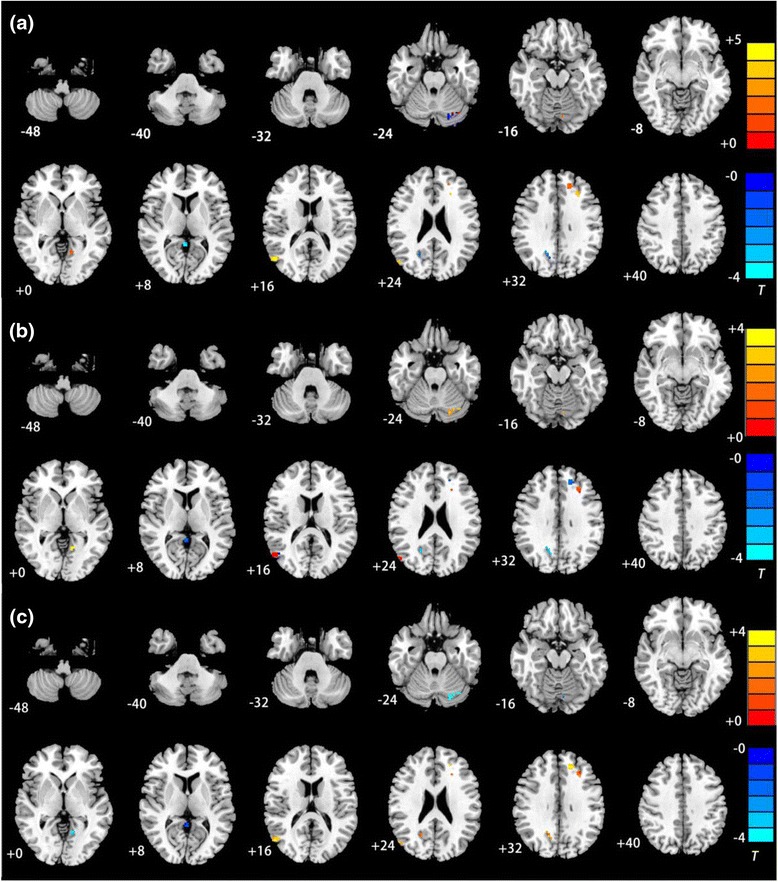
BACKGROUND: Suicide is the second leading cause of death among 15- to 29-year-olds in China, and 60 % of suicidal patients have a history of depression. Previous brain imaging studies have shown that depression and suicide may be associated with abnormal activity in default mode network (DMN) regions. However, no study has specifically investigated the relationship between DMN functional activity and suicidal behavior in depressed individuals. Therefore, in the present study, we directly investigated features of DMN brain activity in adolescent patients with histories of depression and attempted suicide. METHODS: A total of 35 sex- and age-matched suicidal depressed patients were compared with 18 non-suicidal depressed patients and 47 healthy controls. We explored functional activity changes in DMN regions that could be associated with suicidal behavior by comparing resting-state functional magnetic resonance imaging (rs-fMRI) signals using independent component analysis (ICA). Scores on six clinical scales that measure depression severity (Hamilton Depression Scale (HDRS) and Beck Depression Inventory (BDI)) and suicidal traits (Barratt Impulsiveness Scale (BIS-11), Suicide Attitude Questionnaire (SAQ), Beck Hopelessness Scale (BHS), and Scale for Suicide Ideation (SSI)) were compared in the three groups. RESULTS: Compared with the healthy controls, all of the evaluated depressed patients showed increased functional connectivity in select DMN regions. The suicidal patients showed increased connectivity in the left cerebellum and decreased connectivity in the right posterior cingulate cortex (PCC), whereas the non-suicidal depressed patients showed increased connectivity in the left superior frontal gyrus, left lingual gyrus and right precuneus and decreased connectivity in the left cerebellum. Compared to the non-suicidal patients, the suicidal patients showed increased connectivity in the left cerebellum and the left lingual gyrus and decreased connectivity in the right precuneus. No differences in the scores of any clinical scales were found between the suicidal and non-suicidal depressed patients. CONCLUSIONS: Collectively, our results highlight the importance of the DMN in the pathophysiology of depression and suggest that suicidal behavior in depressed adolescents may be related to abnormal functional connectivity in the DMN. In particular, abnormal connectivity in the PCC/precuneus and left cerebellum might be a predictor of suicidal behavior in depressed adolescent patients.
Overview
The claims and statistics of this paper haven’t been checked yet.
Free: it reads the open-access text and checks the first 5 claims that cite a source we can check. Create a free account to check every claim.
Integrity signals
Registry
Cites
Statistics
Figures
Verification
Claims the paper makes
The claims and statistics of this paper haven’t been checked yet.
Free: it reads the open-access text and checks the first 5 claims that cite a source we can check. Create a free account to check every claim.
Claims other papers make about this one
Each is checked against this paper’s own text: does it say what the citing paper says it does?
The source backs part of the claim, not all of it — or backs it for a different population, condition or comparison.
In the citing paper
“Resting state functional connectivity findings highlight reduced positive connectivity between the default mode network and salience network in attempters”
From Neural correlates associated with suicide and nonsuicidal self-injury in youth (2021) · cites this paper as [102]
Experimental — accuracy not yet measuredThe source backs part of the claim, not all of it — or backs it for a different population, condition or comparison.
In the citing paper
“Consistent with Schmaal and colleagues (32), youth STB research is characterized by alterations within prefrontal (53–55) and limbic (62, 75, 102, 103) systems whereby a compromised regulatory system may potentiate suicidal thinking, and perturbations in top-down and bottom-up connections may lead to suicidal behaviors.”
From Neural correlates associated with suicide and nonsuicidal self-injury in youth (2021) · cites this paper as [102]
Experimental — accuracy not yet measuredThe source backs part of the claim, not all of it — or backs it for a different population, condition or comparison.
In the citing paper
“Resting-state functional MRI (rs-fMRI) indicates lower functional connectivity in adolescent and adult suicide attempters, predominantly in the default mode network, which is implicated in self-referential processing and social cognition (85-87).”
From A brain-centric model of suicidal behavior (2020) · cites this paper as [87]
Experimental — accuracy not yet measuredThe cited source says what the claim attributes to it.
In the citing paper
“One sex- and age-matched case-control study found that suicidal adolescents with depression showed reduced DMN connectivity in the PCC and increased connectivity in the left cerebellum, suggesting altered coordination between self-referential and emotional processing regions (17).”
From Exploring the neurobiological markers of suicidal behaviors in pediatric population: a narrative review (2026) · cites this paper as [17]
In the citing paper
“Compared to psychiatric controls, attempters show increased connectivity between an ICA-derived DMN component and the cerebellum and lingual gyrus, and decreased connectivity with precuneus.”
From Neural correlates associated with suicide and nonsuicidal self-injury in youth (2021) · cites this paper as [102]
1 more claim about this paper
Create a free account to see every claim other papers make about this one.
Self-check
Percentages, sums and reported differences re-computed from the paper’s own numbers.
The self-check needs the paper’s full text.
Citations
Cites
Hamilton, M. (1960) · Journal of Neurology, Neurosurgery & Psychiatry · doi:10.1136/jnnp.23.1.56 · Cited by 32,817 · cited 1×
“The Hamilton Depression Rating Scale (HDRS, [38]) and Beck Depression Inventory (BDI, [39]) were used to evaluate depression severity.”
MethodA default mode of brain function
Raichle, M. E., MacLeod, A. M., Snyder, A. Z., Powers, W. J., Gusnard, D. A., & Shulman, G. L. (2001) · Proceedings of the National Academy of Sciences · doi:10.1073/pnas.98.2.676 · Cited by 12,190
An Information-Maximization Approach to Blind Separation and Blind Deconvolution
Bell, A. J., & Sejnowski, T. J. (1995) · Neural Computation · doi:10.1162/neco.1995.7.6.1129 · Cited by 8,986 · cited 1×
“rithm [48] was used for ICA decomposition; this analysis”
MethodComparison of Beck Depression Inventories -IA and -II in psychiatric outpatients
Beck, A. T., Steer, R. A., Ball, R., & Ranieri, W. F. (1996) · Journal of Personality Assessment · doi:10.1207/s15327752jpa6703_13 · Cited by 5,965 · cited 1×
“The Hamilton Depression Rating Scale (HDRS, [38]) and Beck Depression Inventory (BDI, [39]) were used to evaluate depression severity.”
MethodThe precuneus: a review of its functional anatomy and behavioural correlates
Cavanna, A. E., & Trimble, M. R. (2006) · Brain · doi:10.1093/brain/awl004 · Cited by 5,128 · cited 1×
“The precuneus is also important for visuospatial imagery, episodic memory retrieval and self-processing operations [67].”
BackgroundDPARSF: a MATLAB toolbox for “pipeline” data analysis of resting-state fMRI
Yan (2010) · Frontiers in System Neuroscience · doi:10.3389/fnsys.2010.00013 · Cited by 3,475
Assessment of suicidal intention: The Scale for Suicide Ideation.
Beck, A. T., Kovacs, M., & Weissman, A. (1979) · Journal of Consulting and Clinical Psychology · doi:10.1037//0022-006x.47.2.343 · Cited by 3,419 · cited 1×
“The Scale for Suicide Ideation (SSI, [41]) was also employed; higher scores on this scale indicate a stronger intention to commit suicide.”
MethodSearching for a baseline: Functional imaging and the resting human brain
Gusnard, D. A., & Raichle, M. E. (2001) · Nature Reviews Neuroscience · doi:10.1038/35094500 · Cited by 3,371 · cited 1×
“Marchand proposed that the striatum-anterior cortical midline structure (CMS) circuit, which is a component of the DMN, plays a significant role in the expression of depressive symptoms and suicidal ideation and that the striatum-motor/sensory cortex network may be a trait marker of suicide-related behavior [60, 61].”
BackgroundCommon blood flow changes across visual tasks: II. Decreases in cerebral cortex
Shulman, G. L., Fiez, J. A., Corbetta, M., Buckner, R. L., Miezin, F. M., Raichle, M. E., & Petersen, S. E. (1997) · Journal of Cognitive Neuroscience · doi:10.1162/jocn.1997.9.5.648 · Cited by 1,890
REST: A Toolkit for Resting-State Functional Magnetic Resonance Imaging Data Processing
Song, X.-W., Dong, Z.-Y., Long, X.-Y., Li, S.-F., Zuo, X.-N., Zhu, C.-Z., He, Y., Yan, C.-G., & Zang, Y.-F. (2011) · PLoS ONE · doi:10.1371/journal.pone.0025031 · Cited by 1,872
Default-mode brain dysfunction in mental disorders: A systematic review
Broyd, S. J., Demanuele, C., Debener, S., Helps, S. K., James, C. J., & Sonuga-Barke, E. J. S. (2009) · Neuroscience & Biobehavioral Reviews · doi:10.1016/j.neubiorev.2008.09.002 · Cited by 1,675
Neurocircuitry of Mood Disorders
Price, J. L., & Drevets, W. C. (2010) · Neuropsychopharmacology · doi:10.1038/npp.2009.104 · Cited by 1,606
The default mode network and self-referential processes in depression
Sheline, Y. I., Barch, D. M., Price, J. L., Rundle, M. M., Vaishnavi, S. N., Snyder, A. Z., Mintun, M. A., Wang, S., Coalson, R. S., & Raichle, M. E. (2009) · Proceedings of the National Academy of Sciences · doi:10.1073/pnas.0812686106 · Cited by 1,480 · cited 2×
“High functional connectivity within the DMN and failure to down-regulate DMN activity during participation in goal-directed tasks can distinguish depressed patients from normal subjects [12, 13].”
BackgroundSelf-citationA Baseline for the Multivariate Comparison of Resting-State Networks
Allen, E. A., Erhardt, E. B., Damaraju, E., Gruner, W., Segall, J. M., Silva, R. F., Havlicek, M., Rachakonda, S., Fries, J., Kalyanam, R., et al. (2011) · Frontiers in Systems Neuroscience · doi:10.3389/fnsys.2011.00002 · Cited by 1,293 · cited 1×
“The ICs were grouped into different brain networks of interest, including the DMN, based on visual inspection, previous investigations and reported spatial patterns [49, 50].”
MethodNeurobiology of suicidal behaviour
Mann, J. J. (2003) · Nature Reviews Neuroscience · doi:10.1038/nrn1220 · Cited by 1,260
Fransson, P., & Marrelec, G. (2008) · NeuroImage · doi:10.1016/j.neuroimage.2008.05.059 · Cited by 1,213
Posner, K., Oquendo, M. A., Gould, M., Stanley, B., & Davies, M. (2007) · American Journal of Psychiatry · doi:10.1176/ajp.2007.164.7.1035 · Cited by 1,025 · cited 1×
“Evidence that an individual intended to kill him/herself could be explicit or inferred from the individual’s behavior or circumstances [35].”
BackgroundThe role of default network deactivation in cognition and disease
Anticevic, A., Cole, M. W., Murray, J. D., Corlett, P. R., Wang, X.-J., & Krystal, J. H. (2012) · Trends in Cognitive Sciences · doi:10.1016/j.tics.2012.10.008 · Cited by 978
Precuneus Is a Functional Core of the Default-Mode Network
Utevsky, A. V., Smith, D. V., & Huettel, S. A. (2014) · The Journal of Neuroscience · doi:10.1523/jneurosci.4227-13.2014 · Cited by 897 · cited 1×
“The precuneus plays a key role in the DMN through its engagement in a variety of processing states; connectivity between the precuneus and the DMN has been demonstrated to increase during rest [66].”
BackgroundAffective disorders and suicide risk: a reexamination
Bostwick, J. M., & Pankratz, V. S. (2000) · American Journal of Psychiatry · doi:10.1176/appi.ajp.157.12.1925 · Cited by 878 · cited 1×
“Suicidal behavior is closely related to depression, and depressed patients have a high lifetime risk of death by suicide [4].”
BackgroundAnand, A., Li, Y., Wang, Y., Wu, J., Gao, S., Bukhari, L., Mathews, V. P., Kalnin, A., & Lowe, M. J. (2005) · Biological Psychiatry · doi:10.1016/j.biopsych.2005.02.021 · Cited by 787 · cited 1×
“In magnetic resonance imaging (MRI) studies, depression has been associated with structural and functional abnormalities within select brain regions, such as the prefrontal cortical region and limbic region, both of which have been implicated in the regulation and processing of emotions [10, 11].”
BackgroundLeech, R., Kamourieh, S., Beckmann, C. F., & Sharp, D. J. (2011) · The Journal of Neuroscience · doi:10.1523/jneurosci.5626-10.2011 · Cited by 759
Zuo, X.-N., Kelly, C., Adelstein, J. S., Klein, D. F., Castellanos, F. X., & Milham, M. P. (2010) · NeuroImage · doi:10.1016/j.neuroimage.2009.10.080 · Cited by 744 · cited 2×
“This type of analysis thus allows model-free analysis of whole-brain fMRI data without the seed region selection and placement that are inherent to analyses of functional connectivity [33, 34].”
MethodPosterior cingulate cortex activation by emotional words: fMRI evidence from a valence decision task
Maddock, R. J., Garrett, A. S., & Buonocore, M. H. (2003) · Human Brain Mapping · doi:10.1002/hbm.10075 · Cited by 695
The Cerebellum and Cognition: Evidence from Functional Imaging Studies
Stoodley, C. J. (2012) · The Cerebellum · doi:10.1007/s12311-011-0260-7 · Cited by 686 · cited 1×
“This region of the brain is involved in a variety of psychiatric disorders, including depression, bipolar disorder, and schizophrenia [70, 71].”
BackgroundDepression, rumination and the default network
Berman, M. G., Peltier, S., Nee, D. E., Kross, E., Deldin, P. J., & Jonides, J. (2011) · Social Cognitive and Affective Neuroscience · doi:10.1093/scan/nsq080 · Cited by 568
Fornito, A., Harrison, B. J., Zalesky, A., & Simons, J. S. (2012) · Proceedings of the National Academy of Sciences · doi:10.1073/pnas.1204185109 · Cited by 548 · cited 1×
“The ICs were grouped into different brain networks of interest, including the DMN, based on visual inspection, previous investigations and reported spatial patterns [49, 50].”
MethodFales, C. L., Barch, D. M., Rundle, M. M., Mintun, M. A., Snyder, A. Z., Cohen, J. D., Mathews, J., & Sheline, Y. I. (2008) · Biological Psychiatry · doi:10.1016/j.biopsych.2007.06.012 · Cited by 517
Classification of suicidal behaviors: I. Quantifying intent and medical lethality
(1975) · American Journal of Psychiatry · doi:10.1176/ajp.132.3.285 · Cited by 460 · cited 1×
“High lethality suicide attempts require hospitalization to treat the resultant sequelae [57].”
BackgroundAlexopoulos, G. S., Hoptman, M. J., Kanellopoulos, D., Murphy, C. F., Lim, K. O., & Gunning, F. M. (2012) · Journal of Affective Disorders · doi:10.1016/j.jad.2011.12.002 · Cited by 437 · cited 3×
“Furthermore, connectivity changes in the DMN have been correlated with pessimism during depressive episodes, but not with treatment response [16].”
BackgroundResultBrent, D. A., Oquendo, M., Birmaher, B., Greenhill, L., Kolko, D., Stanley, B., Zelazny, J., Brodsky, B., Bridge, J., Ellis, S., et al. (2002) · Archives of General Psychiatry · doi:10.1001/archpsyc.59.9.801 · Cited by 342 · cited 1×
“ders who have attempted suicide relative to the offspring of patients with mood disorders who have not attempted suicide [6], suggesting that a close relationship exists between suicidal behavior and depression.”
BackgroundThe Cerebellum and Psychiatric Disorders
Phillips, J. R., Hewedi, D. H., Eissa, A. M., & Moustafa, A. A. (2015) · Frontiers in Public Health · doi:10.3389/fpubh.2015.00066 · Cited by 340 · cited 2×
“In depressed patients, the cerebellum is typically smaller in size than in non-depressed patients and exhibits increased activity and disrupted cortical connections [69].”
BackgroundA Treatment-Resistant Default Mode Subnetwork in Major Depression
Li, B., Liu, L., Friston, K. J., Shen, H., Wang, L., Zeng, L.-L., & Hu, D. (2013) · Biological Psychiatry · doi:10.1016/j.biopsych.2012.11.007 · Cited by 333
Monkul, E. S., Hatch, J. P., Nicoletti, M. A., Spence, S., Brambilla, P., Lacerda, A. L. T., Sassi, R. B., Mallinger, A. G., Keshavan, M. S., & Soares, J. C. (2007) · Molecular Psychiatry · doi:10.1038/sj.mp.4001919 · Cited by 322 · cited 2×
“Furthermore, these findings support the hypothesis that the neuropathological mechanisms underlying depression primarily involve fronto-limbic circuitry [31, 52, 53].”
BackgroundOquendo, M. A., Placidi, G. P. A., Malone, K. M., Campbell, C., Keilp, J., Brodsky, B., Kegeles, L. S., Cooper, T. B., Parsey, R. V., Van Heertum, R. L., et al. (2003) · Archives of General Psychiatry · doi:10.1001/archpsyc.60.1.14 · Cited by 313 · cited 1×
“Reduced activity in the ventromedial prefrontal cortex is associated with both increased suicidal intent and suicide attempts with high lethality [56].”
BackgroundFunctional brain imaging studies of youth depression: A systematic review
Kerestes, R., Davey, C. G., Stephanou, K., Whittle, S., & Harrison, B. J. (2014) · NeuroImage: Clinical · doi:10.1016/j.nicl.2013.11.009 · Cited by 303 · cited 1×
“assess the relationships that exist between different brain networks in patients with depression [28], there is a paucity of studies regarding adolescent depression and its as-”
BackgroundThe default mode network and recurrent depression: A neurobiological model of cognitive risk factors
Marchetti, I., Koster, E. H. W., Sonuga-Barke, E. J., & De Raedt, R. (2012) · Neuropsychology Review · doi:10.1007/s11065-012-9199-9 · Cited by 287
Wagner, G., Koch, K., Schachtzabel, C., Schultz, C. C., Sauer, H., & Schlösser, R. G. (2011) · NeuroImage · doi:10.1016/j.neuroimage.2010.08.082 · Cited by 228 · cited 2×
“tients, as have DMN connectivity alterations [26, 27].”
Increased neural resources recruitment in the intrinsic organization in major depression
Zhou, Y., Yu, C., Zheng, H., Liu, Y., Song, M., Qin, W., Li, K., & Jiang, T. (2010) · Journal of Affective Disorders · doi:10.1016/j.jad.2009.05.029 · Cited by 228
Hwang, J.-P., Lee, T.-W., Tsai, S.-J., Chen, T.-J., Yang, C.-H., Lirng, J.-F., & Tsai, C.-F. (2010) · Journal of Geriatric Psychiatry and Neurology · doi:10.1177/0891988710363713 · Cited by 211 · cited 4×
“In addition, suicidal depression has been associated with decreased gray matter and white matter volumes in the cerebellum compared to non-suicidal depression [30].”
BackgroundResultInfluentialPan, L. A., Hassel, S., Segreti, A. M., Nau, S. A., Brent, D. A., & Phillips, M. L. (2013) · Psychological Medicine · doi:10.1017/s0033291712002966 · Cited by 183
Prefrontal cortical thickness in depressed patients with high-risk for suicidal behavior
Wagner, G., Schultz, C. C., Koch, K., Schachtzabel, C., Sauer, H., & Schlösser, R. G. (2012) · Journal of Psychiatric Research · doi:10.1016/j.jpsychires.2012.07.013 · Cited by 171
Hoekzema, E., Carmona, S., Ramos‐Quiroga, J. A., Richarte Fernández, V., Bosch, R., Soliva, J. C., Rovira, M., Bulbena, A., Tobeña, A., Casas, M., et al. (2014) · Human Brain Mapping · doi:10.1002/hbm.22250 · Cited by 170 · cited 2×
“This type of analysis thus allows model-free analysis of whole-brain fMRI data without the seed region selection and placement that are inherent to analyses of functional connectivity [33, 34].”
BackgroundMethodvan Heeringen, C., Bijttebier, S., & Godfrin, K. (2011) · Neuroscience & Biobehavioral Reviews · doi:10.1016/j.neubiorev.2010.08.007 · Cited by 167 · cited 1×
“Previous comparisons of structural and functional imaging studies of the suicidal brain have shown that the orbitofrontal and dorsolateral regions of the prefrontal cortex are the primary sites of alteration in suicidal patients [55].”
ResultMa, C., Ding, J., Li, J., Guo, W., Long, Z., Liu, F., Gao, Q., Zeng, L., Zhao, J., & Chen, H. (2012) · PLoS ONE · doi:10.1371/journal.pone.0045263 · Cited by 165 · cited 1×
“tients, as have DMN connectivity alterations [26, 27].”
Ernst, C., Mechawar, N., & Turecki, G. (2009) · Progress in Neurobiology · doi:10.1016/j.pneurobio.2009.09.001 · Cited by 158
High-Field Magnetic Resonance Imaging of Suicidality in Patients With Major Depressive Disorder
Jia, Z., Huang, X., Wu, Q., Zhang, T., Lui, S., Zhang, J., Amatya, N., Kuang, W., Chan, R. C. K., Kemp, G. J., et al. (2010) · American Journal of Psychiatry · doi:10.1176/appi.ajp.2010.09101513 · Cited by 157 · cited 1×
“Structural MRI studies of the brain have revealed gray matter and white matter abnormalities in suicidal depressed patients [29], and reductions in gray matter volume in the ACC, prefrontal”
BackgroundDefault-mode network connectivity and white matter burden in late-life depression
Wu, M., Andreescu, C., Butters, M. A., Tamburo, R., Reynolds, C. F., & Aizenstein, H. (2011) · Psychiatry Research: Neuroimaging · doi:10.1016/j.pscychresns.2011.04.003 · Cited by 140 · cited 1×
“Ethics approval and consent to participate This study was approved by the Ethics Committee of the First Affiliated Hospital of Chongqing Medical University, China (Approval no: 2012 [24]).”
MethodLiu, L., Zeng, L.-L., Li, Y., Ma, Q., Li, B., Shen, H., & Hu, D. (2012) · PLoS ONE · doi:10.1371/journal.pone.0039516 · Cited by 125 · cited 2×
“Decreased connectivity between the cerebellum and the DMN has also been found in patients with MDD [72, 73].”
BackgroundForintos, D. P., Rózsa, S., Pilling, J., & Kopp, M. (2013) · Community Mental Health Journal · doi:10.1007/s10597-013-9619-1 · Cited by 116 · cited 1×
“The Barratt Impulsiveness Scale-11 (BIS-11, [42]) was used to measure impulsive personality traits, and the Beck Hopelessness Scale (BHS, [43]) was used to measure negative attitudes about the future.”
MethodFang, W., Chen, H., Wang, H., Zhang, H., Puneet, M., Liu, M., Lv, F., Luo, T., Cheng, O., Wang, X., et al. (2015) · Human Brain Mapping · doi:10.1002/hbm.23024 · Cited by 107
Self-citationWilleumier, K., Taylor, D. V., & Amen, D. G. (2011) · Translational Psychiatry · doi:10.1038/tp.2011.28 · Cited by 107 · cited 1×
“Alexopoulos demonstrated that subjects suffering late-life depression had greater connectivity in the left precuneus [16], and precuneus hypoperfusion and white matter volume reduction were identified in suicidal patients [30, 68].”
BackgroundMarchand, W. R., Lee, J. N., Johnson, S., Thatcher, J. W., Gale, P. D., Wood, N., & Jeong, E. (2011) · Progress in Neuro-Psychopharmacology and Biological Psychiatry · doi:10.1016/j.pnpbp.2011.10.016 · Cited by 95 · cited 1×
“Marchand proposed that the striatum-anterior cortical midline structure (CMS) circuit, which is a component of the DMN, plays a significant role in the expression of depressive symptoms and suicidal ideation and that the striatum-motor/sensory cortex network may be a trait marker of suicide-related behavior [60, 61].”
BackgroundChildhood Chemotherapy and Later Drug Abuse and Growth Curve: A Follow-Up Study of 30 Adolescents
BECK, L., LANGFORD, W. S., MACKAY, M., & SUM, G. (1975) · American Journal of Psychiatry · doi:10.1176/ajp.132.4.436 · Cited by 93
Ryding, E., Ahnlide, J. A., Lindström, M., Rosén, I., & Träskman‐Bendz, L. (2006) · Psychiatry Research Neuroimaging · doi:10.1016/j.pscychresns.2006.06.001 · Cited by 90
Peng, H., Wu, K., Li, J., Qi, H., Guo, S., Chi, M., Wu, X.-M., Guo, Y., Yang, Y., & Ning, Y. (2014) · Journal of Affective Disorders · doi:10.1016/j.jad.2014.04.046 · Cited by 90 · cited 1×
“Suicidal behavior is associated with changes in the structural and functional characteristics of parietaloccipital-temporal areas [54].”
BackgroundA Comparative Analysis of Completed Suicide Using High Resolution Brain SPECT Imaging
Amen, D. G., Prunella, J. R., Fallon, J. H., Amen, B., & Hanks, C. (2009) · Journal of Neuropsychiatry · doi:10.1176/appi.neuropsych.21.4.430 · Cited by 88
Neurobiological Risk Factors for Suicide
Cox Lippard, E. T., Johnston, J. A. Y., & Blumberg, H. P. (2014) · American Journal of Preventive Medicine · doi:10.1016/j.amepre.2014.06.009 · Cited by 82
Ehrlich, S., Noam, G. G., Lyoo, I. K., Kwon, B. J., Clark, M. A., & Renshaw, P. F. (2004) · Journal of the American Academy of Child & Adolescent Psychiatry · doi:10.1097/01.chi.0000120020.48166.93 · Cited by 79 · cited 1×
“White matter abnormalities are associated with cognitive impairment, and young patients with depression who have attempted suicide have more prevalent white matter hyperintensities (WMHs) and white matter lesions (WHLs) at baseline [5, 30, 32].”
BackgroundDefault mode network connectivity in children with a history of preschool onset depression
Gaffrey, M. S., Luby, J. L., Botteron, K., Repovš, G., & Barch, D. M. (2012) · Journal of Child Psychology and Psychiatry · doi:10.1111/j.1469-7610.2012.02552.x · Cited by 78
Fronto-limbic volumetric changes in major depressive disorder
Malykhin, N. V., Carter, R., Hegadoren, K., Seres, P., & Coupland, N. J. (2011) · Journal of Affective Disorders · doi:10.1016/j.jad.2011.10.038 · Cited by 73 · cited 1×
“Furthermore, these findings support the hypothesis that the neuropathological mechanisms underlying depression primarily involve fronto-limbic circuitry [31, 52, 53].”
BackgroundSachs-Ericsson, N., Hames, J. L., Joiner, T. E., Corsentino, E., Rushing, N. C., Palmer, E., Gotlib, I. H., Selby, E. A., Zarit, S., & Steffens, D. C. (2014) · The American Journal of Geriatric Psychiatry · doi:10.1016/j.jagp.2013.01.063 · Cited by 64 · cited 1×
“White matter abnormalities are associated with cognitive impairment, and young patients with depression who have attempted suicide have more prevalent white matter hyperintensities (WMHs) and white matter lesions (WHLs) at baseline [5, 30, 32].”
BackgroundDysfunction of fronto-limbic brain circuitry in depression
Liao, C., Feng, Z., Zhou, D., Dai, Q., Xie, B., Ji, B., Wang, X., & Wang, X. (2011) · Neuroscience · doi:10.1016/j.neuroscience.2011.10.053 · Cited by 64 · cited 1×
“Furthermore, these findings support the hypothesis that the neuropathological mechanisms underlying depression primarily involve fronto-limbic circuitry [31, 52, 53].”
BackgroundFrontal cortex control dysfunction related to long-term suicide risk in recent-onset schizophrenia
Minzenberg, M., Lesh, T. A., Niendam, T. A., Yoon, J. H., Rhoades, R. N., & Carter, C. S. (2014) · Schizophrenia Research · doi:10.1016/j.schres.2014.05.039 · Cited by 57 · cited 1×
“Suicide risk in individuals with major mental illnesses is directly associated with prefrontal cortex-based circuit dysfunction when engaging in cognitive tasks [58].”
BackgroundSubject order-independent group ICA (SOI-GICA) for functional MRI data analysis
Zhang, H., Zuo, X., Ma, S.-Y., Zang, Y., Milham, M. P., & Zhu, C.-Z. (2010) · NeuroImage · doi:10.1016/j.neuroimage.2010.03.039 · Cited by 57
Self-citationWiebking, C., de Greck, M., Duncan, N. W., Heinzel, A., Tempelmann, C., & Northoff, G. (2011) · Neuroscience Letters · doi:10.1016/j.neulet.2011.01.012 · Cited by 56
Lai, C., & Wu, Y. (2014) · The International Journal of Neuropsychopharmacology · doi:10.1017/s1461145714000947 · Cited by 54 · cited 2×
“Decreased connectivity between the cerebellum and the DMN has also been found in patients with MDD [72, 73].”
BackgroundZhang, H., Wei, X., Tao, H., Mwansisya, T. E., Pu, W., He, Z., Hu, A., Xu, L., Liu, Z., Shan, B., et al. (2013) · PLoS ONE · doi:10.1371/journal.pone.0063477 · Cited by 45 · cited 1×
“Additionally, hypoconnectivity from the left MPFC to the left PCC may be correlated with increased vulnerability to attempting suicide [59].”
BackgroundSelf-citationCognitive and Emotional Deficits in Chronic Alcoholics: a Role for the Cerebellum?
Fitzpatrick, L. E., & Crowe, S. F. (2013) · The Cerebellum · doi:10.1007/s12311-013-0461-3 · Cited by 39
Magnetic resonance imaging markers of suicide attempt and suicide risk in adolescents
Martin, P. C., Zimmer, T. J., & Pan, L. A. (2015) · CNS Spectrums · doi:10.1017/s1092852915000048 · Cited by 36 · cited 1×
“Adolescence is a time of high risk for suicidal behavior and is the best time for intervention and treatment [2].”
BackgroundXie, X., Zou, B., & Huang, Z. (2012) · PubMed · Cited by 12
Functional connectivity among brain networks in continuous feedback of finger force
Zhang, H., Zhang, H., & Zang, Y. (2015) · Neuroscience · doi:10.1016/j.neuroscience.2014.12.075 · Cited by 4 · cited 1×
“The preprocessing steps included slice timing, head motion correction, spatial normalization in Montreal Neurological Institute (MNI) space (resampling with 3 × 3 mm3 resolution), smoothing (a smoothing kernel with FWHM of 4x4x4 mm(3)) [46], linear trend removal and filtering (0.”
MethodSelf-citationFactor structure of the Barratt impulsiveness scale
Patton, J. H., Stanford, M. S., & Barratt, E. S. (1995) · Journal of Clinical Psychology · doi:10.1002/1097-4679(199511)51:6<768::aid-jclp2270510607>3.0.co;2-1
Research works printed but not linked: 2
- First M, Spitzer RL, Gibbon M, Williams JB. Structured clinical interview for DSM-IV-TR Axis I disorders, research version, patient edition (SCID-I/P). New York: Biometric Research, New York State Psychiatric Institute; 2002.
- Wang D Qian M Report on the village use of the recension Chinese combined Raven’s Test Inf Psychol Sci 1989 5 23 27
Cited by
Annual Research Review: Suicide among youth – epidemiology, (potential) etiology, and treatment
Cha, C. B., Franz, P. J., M. Guzmán, E., Glenn, C. R., Kleiman, E. M., & Nock, M. K. (2018) · Journal of Child Psychology and Psychiatry · doi:10.1111/jcpp.12831 · Cited by 602
“Zhang et al. (2016) found that the DMN can be abnormally connected among adolescent suicide attempters, as demonstrated through their increased connectivity in the cerebellum, and decreased connectivity in the right posterior cingulate cortex.”
BackgroundResultImaging suicidal thoughts and behaviors: a comprehensive review of 2 decades of neuroimaging studies
Schmaal, L., van Harmelen, A.-L., Chatzi, V., Lippard, E. T. C., Toenders, Y. J., Averill, L. A., Mazure, C. M., & Blumberg, H. P. (2020) · Molecular Psychiatry · doi:10.1038/s41380-019-0587-x · Cited by 373
“These findings are in line with findings of lower resting functional connectivity of rostral ACC with medial OFC, precuneus, and temporal pole in adults with MDD and SI [152] and within the precuneus in young adult SAs with MDD [153].”
ResultBrakowski, J., Spinelli, S., Dörig, N., Bosch, O. G., Manoliu, A., Holtforth, M. G., & Seifritz, E. (2017) · Journal of Psychiatric Research · doi:10.1016/j.jpsychires.2017.04.007 · Cited by 328
Adolescent Suicide as a Failure of Acute Stress-Response Systems.
Miller, A. B., & Prinstein, M. J. (2019) · Annual Review of Clinical Psychology · doi:10.1146/annurev-clinpsy-050718-095625 · Cited by 235
“…research points to altered neural activation (Just et al. 2017, Miller et al. 2018, Pan et al. 2013, Quevedo et al. 2016) and neural network connectivity (Chase et al. 2017; Ordaz et al. 2018; Zhang et al. 2014, 2016) in PFC regions among individuals with a history of suicidal ideation or behavior.”
BackgroundA brain-centric model of suicidal behavior
Mann, J. J., & Rizk, M. M. (2020) · American Journal of Psychiatry · doi:10.1176/appi.ajp.2020.20081224 · Cited by 214
“—Resting-state functional MRI (rs-fMRI) indicates lower functional connectivity in adolescent and adult suicide attempters, predominantly in the default mode network, which is implicated in self-referential processing and social cognition (85-87).”
Background
Metadata
- Authors
- Zhang, S., Chen, J.-M., Kuang, L., Cao, J., Zhang, H., Ai, M., Wang, W., Zhang, S.-D., Wang, S.-Y., Liu, S.-J., & Fang, W.-D.
- Affiliations
- The Affiliated Yongchuan Hospital of Chongqing Medical University (CN)
- Hangzhou Normal University (CN)
- Chongqing Medical University (CN)
- Corresponding author
- Kuang, Li
- Venue
- BMC Psychiatry
- Published
- 2016-09-29
- Volume
- 16
- Issue
- 1
- Pages
- 337-337
- ISSN
- 1471-244X (ISSN-L)
- PMC
- PMC5041526
- OpenAlex
- W2524432712
- Cited by
- 163
- References
- 73
- Citations by year
- 2026: 8 · 2025: 11 · 2024: 12 · 2023: 19 · 2022: 15 · 2021: 42 · 2020: 15 · 2019: 13 · 2018: 22 · 2017: 6
- FWCI
- 8.70
- Type
- journal article
- Language
- en
- Open access
- gold
- doi.org
- Licence
- cc-by
- Locations
- BMC Psychiatry (publishedVersion, cc-by)
- Europe PMC (PubMed Central) (publishedVersion, cc-by)
- PubMed Central (publishedVersion, cc-by)
- PubMed (publishedVersion)
- Funders
- Special Research Fund for Public Service from the Ministry of Health (20102003)
- National Natural Science Foundation of China (CN) (81071118)
- Key Project Fund from Chongqing Science and Technology Commission (CSTC,2011BA5010)
- Medicine Scientific Key Research Fund from Chongqing Health Bureau (2009-1-55)
- Topics
- Life Sciences › Neuroscience › Cognitive Neuroscience › Functional Brain Connectivity Studies
- Social Sciences › Psychology › Clinical Psychology › Suicide and Self-Harm Studies
- Health Sciences › Medicine › Pharmacology (medical) › Treatment of Major Depression
- Keywords
- default mode network, suicidality, adolescent depression, suicide attempts, functional connectivity, posterior cingulate cortex, precuneus, cerebellum, resting-state brain activity, suicide risk prediction, impulsivity, hopelessness
About these checks
Registry, retraction, Cites and statistics results are computed, not judged, with one exception: a printed reference that no index lists is read once by a model before it counts as a citation error. Claims are extracted by a model and kept only when their quote appears verbatim in the text; each cited source is then checked, with a model’s help, for whether it says what the claim relies on. Those verdicts can be wrong — read the claim’s quote and the cited source before relying on one.
Statistics and arithmetic are recomputed, not judged.
Confidence bands are shown only for fields calibrated on our annotated test set. None is calibrated yet, so no band is shown.
What counts as a claim ›How we measure confidence ›How we check this ›
Are you an author, or do you see a problem with this page? Request a review
Data sources
Bibliographic data: Semantic Scholar, OpenAlex, Crossref.
Contains information from the Semantic Scholar Academic Graph Datasets, made available under the ODC Attribution License (ODC-BY 1.0).
Semantic Scholar’s data is described in: Kinney, R., et al. (2023). The Semantic Scholar Open Data Platform. arXiv:2301.10140.
