

The DOI matches its Crossref record; 55 of the 55 references it cites were found in a registry or an index; 2 of the 39 sources its claims cite were checked for support.
Remote Assessment of Disease and Relapse in Major Depressive Disorder (RADAR-MDD): recruitment, retention, and data availability in a longitudinal remote measurement study
Open accessPublished version of a preprint
Abstract
Background: Major Depressive Disorder (MDD) is prevalent, often chronic, and requires ongoing monitoring of symptoms to track response to treatment and identify early indicators of relapse. Remote Measurement Technologies (RMT) provide an opportunity to transform the measurement and management of MDD, via data collected from inbuilt smartphone sensors and wearable devices alongside app-based questionnaires and tasks. A key question for the field is the extent to which participants can adhere to research protocols and the completeness of data collected. We aimed to describe drop out and data completeness in a naturalistic multimodal longitudinal RMT study, in people with a history of recurrent MDD. We further aimed to determine whether those experiencing a depressive relapse at baseline contributed less complete data. Methods: Remote Assessment of Disease and Relapse – Major Depressive Disorder (RADAR-MDD) is a multi-centre, prospective observational cohort study conducted as part of the Remote Assessment of Disease and Relapse – Central Nervous System (RADAR-CNS) program. People with a history of MDD were provided with a wrist-worn wearable device, and smartphone apps designed to: a) collect data from smartphone sensors; and b) deliver questionnaires, speech tasks, and cognitive assessments. Participants were followed-up for a minimum of 11 months and maximum of 24 months. Results: Individuals with a history of MDD ( n = 623) were enrolled in the study,. We report 80% completion rates for primary outcome assessments across all follow-up timepoints. 79.8% of people participated for the maximum amount of time available and 20.2% withdrew prematurely. We found no evidence of an association between the severity of depression symptoms at baseline and the availability of data. In total, 110 participants had > 50% data available across all data types. Conclusions: RADAR-MDD is the largest multimodal RMT study in the field of mental health. Here, we have shown that collecting RMT data from a clinical population is feasible. We found comparable levels of data availability in active and passive forms of data collection, demonstrating that both are feasible in this patient group.
Overview
AI snapshot
Written from the paper’s full text.
TL;DR
RADAR-MDD enrolled 623 people with recurrent major depressive disorder across three sites and followed them for 11–24 months using smartphone and wearable remote measurement technologies. The study reports high retention and outcome completion (~80%) and comparable active/passive data availability, with no convincing evidence that baseline depression symptom severity predicts data availability.
Key findings
- Of 623 enrolled participants, 497 (79.8%) participated for the maximum possible duration and 126 (20.2%) withdrew prematurely; completion of primary and secondary outcomes was approximately 80% across follow-up, with 445 (71.4%) providing 1-year outcome data and 181 (29.1%) participating for a full 2 years.
- Median study participation was 541 days (IQR 401–730); 2.9 terabytes of compressed data were collected, and 110 participants (17.7%) had >50% available data across all modes of data collection.
- Active RMT: participants completed median 21 PHQ-8 questionnaires, 20 RSES questionnaires, and 12 speech tasks; any data were available for 95.3% (PHQ8), 94.5% (RSES), and 82.2% (speech). THINC-it tasks had median 5 completions each, with >84% of participants having any data for each test.
- Wearable RMT: average Fitbit wear-time was 62.5% (SD 9.1 percentage points) and mean 15.1 h/day; step count was most available (~50% provided >75% expected data), while activity data were least available (only 5% had >75%). Activity availability differed by baseline depression status (X² = 14.1, p = 0.002); passive smartphone data showed no evidence of difference by baseline depression in the narrative.
Methods
- Multi-centre, prospective observational cohort study (RADAR-MDD) within RADAR-CNS; 623 adults with recurrent MDD (DSM-5 non-psychotic MDD within past 2 years and ≥2 lifetime episodes) were recruited at King’s College London (UK), Amsterdam University Medical Centre (Netherlands), and CIBER (Barcelona, Spain), with follow-up of 11–24 months.
- Participants used a wrist-worn Fitbit Charge 2/3, RADAR-base active and passive smartphone apps (questionnaires, speech tasks, ESM, smartphone sensors), a THINC-it cognitive app, and REDCap outcome surveys every 3 months.
- Analyses described baseline characteristics; compared baseline symptomatic vs no/some depression symptoms using chi-squared tests, linear regressions, and t-tests for ESM; summarised data availability in quartiles; estimated Fitbit wear time from heart-rate values >0 per 15-min window; used STATA v16.0.
Limitations
- Stated: sensor and data types have different temporal validity and aggregation requirements, making coherent summary challenging; iterative RADAR-base/app changes meant participants had different user experiences over time; COVID-19 may have affected research experience and data completion; the sample had a higher proportion of White and female individuals than typical populations, limiting generalisability; the paper describes data availability, not quality or completeness, and does not examine predictors of availability.
- Evident from the text: “available” data may include complete, partial, corrupted, or invalid data; baseline depression status is static and may not capture symptom fluctuations relevant to technology use; no formal threshold for acceptable dropout is established, though the authors describe ~80% completion as excellent.
Model-written summary. Check it against the paper before relying on it.
Integrity signals
Registry
Cites
Statistics
Figures
Verification
Claims the paper makes
60 Own result · 27 Not checked yet · 16 Own interpretation · 6 No basis given · 3 Own method · 2 Partly supported · accuracy not yet measured
The cited sources support only part of this claim — read each source’s verdict below.
In the paper
“In depression the illness, characterised by loss of motivation, may be a further barrier to adherence with digital medicine protocols [15, 16].”
§ Remote Assessment of Disease and Relapse in Major Depressive Disorder (RADAR-MDD): recruitment, retention, and data availability in a longitudinal remote measurement study > Background
What the sources say
- Not checked yetcites [15] Firth J, Torous J, Nicholas J, Carney R, Pratap A, Rosenbaum S, et al. The efficacy of smartphone-based mental health interventions for depressive symptoms: a meta-analysis of randomized controlled trials. World Psychiatry. 2017;16:287–98. source
- Partly supportedcites [16] Fleming T, Bavin L, Lucassen M, Stasiak K, Hopkins S, Merry S. Beyond the trial: systematic review of real-world uptake and engagement with digital self-help interventions for depression, low mood, or anxiety. J Med Internet Res. 2018;20:e199. sourceExperimental — accuracy not yet measured
The Introduction (Background; page unavailable) says trial participants may have additional motivations to complete digital interventions, and the Discussion (Summary of Evidence; page unavailable) reports lower adherence in real-world settings. The paper does not say that loss of motivation is a characteristic of depression or that this symptom itself impedes adherence. (LLM, conf=0.78)
hedgedconditional- Asserted: passes — The authors put it forward as true.
- Checkable: passes — It can be checked against evidence.
- Load-bearing: passes — The paper’s conclusions depend on it.
- Based: passes — The paper gives a reason why it holds.
A result the paper reports from its own data — it cites no other source for it, so there is none to check. The quote shows it is in the paper.
In the paper
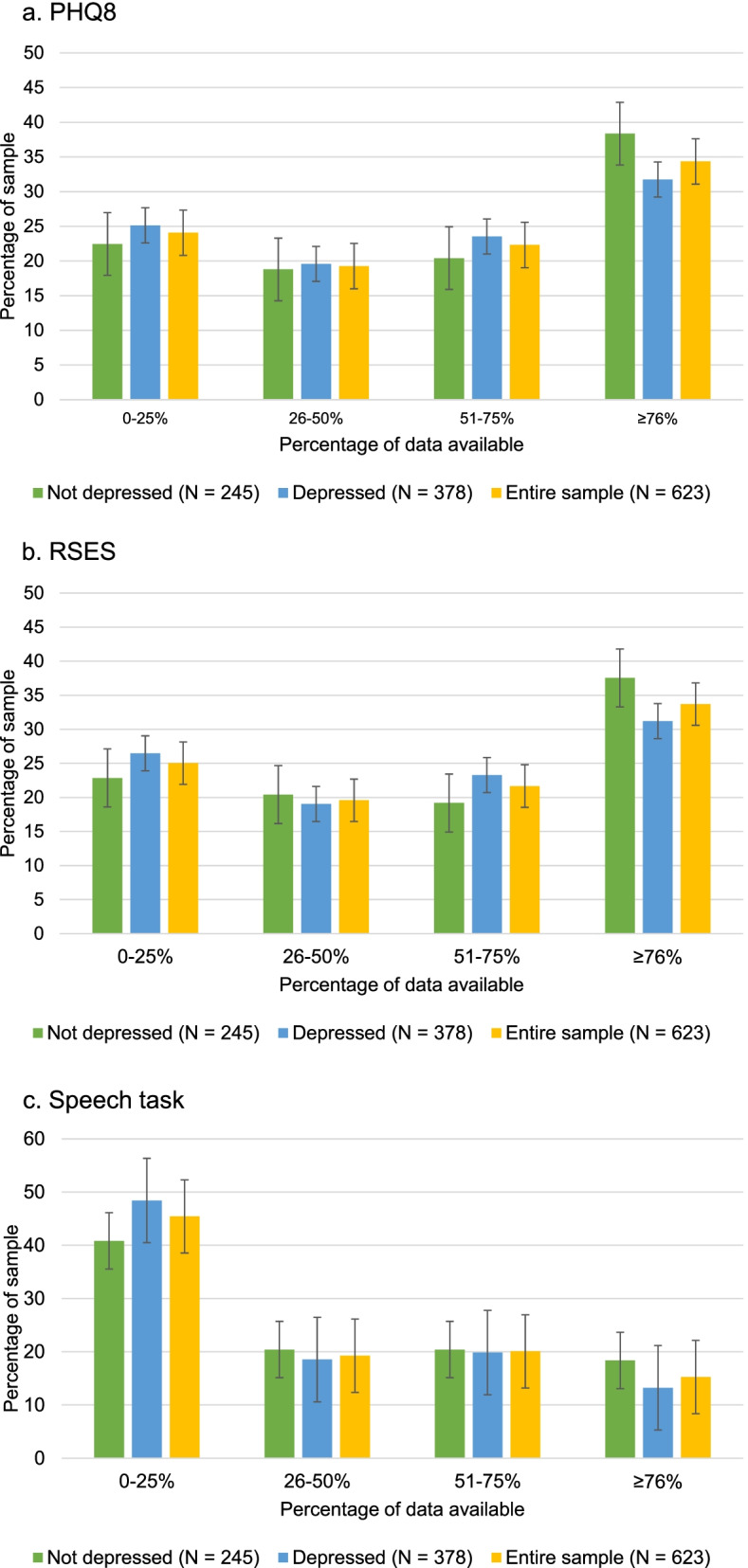
“Overall, participants completed a median of 21 (IQR:9–31) PHQ-8 questionnaires, 20 (IQR:9–30) RSES questionnaires, 12 (IQR:2–23) speech tasks.”
§ Remote Assessment of Disease and Relapse in Major Depressive Disorder (RADAR-MDD): recruitment, retention, and data availability in a longitudinal remote measurement study > Results > Recruitment and retention rates
plainn = 623- Asserted: passes — The authors put it forward as true.
- Checkable: passes — It can be checked against evidence.
- Load-bearing: unclear — It is unclear whether the paper’s conclusions depend on it.
- Based: passes — The paper gives a reason why it holds.
A result the paper reports from its own data — it cites no other source for it, so there is none to check. The quote shows it is in the paper.
In the paper
“In comparison to those with no/some depression symptoms at baseline, the symptomatic group were significantly younger, and had a higher proportion of individuals who were female, on long-term sick leave or unemployed, receiving benefits, and earning less than £/€15,000 per annum.”
§ Remote Assessment of Disease and Relapse in Major Depressive Disorder (RADAR-MDD): recruitment, retention, and data availability in a longitudinal remote measurement study > Results > Recruitment and retention rates
plaincorrelational- Asserted: passes — The authors put it forward as true.
- Checkable: passes — It can be checked against evidence.
- Load-bearing: unclear — It is unclear whether the paper’s conclusions depend on it.
- Based: passes — The paper gives a reason why it holds.
A result the paper reports from its own data — it cites no other source for it, so there is none to check. The quote shows it is in the paper.
In the paper
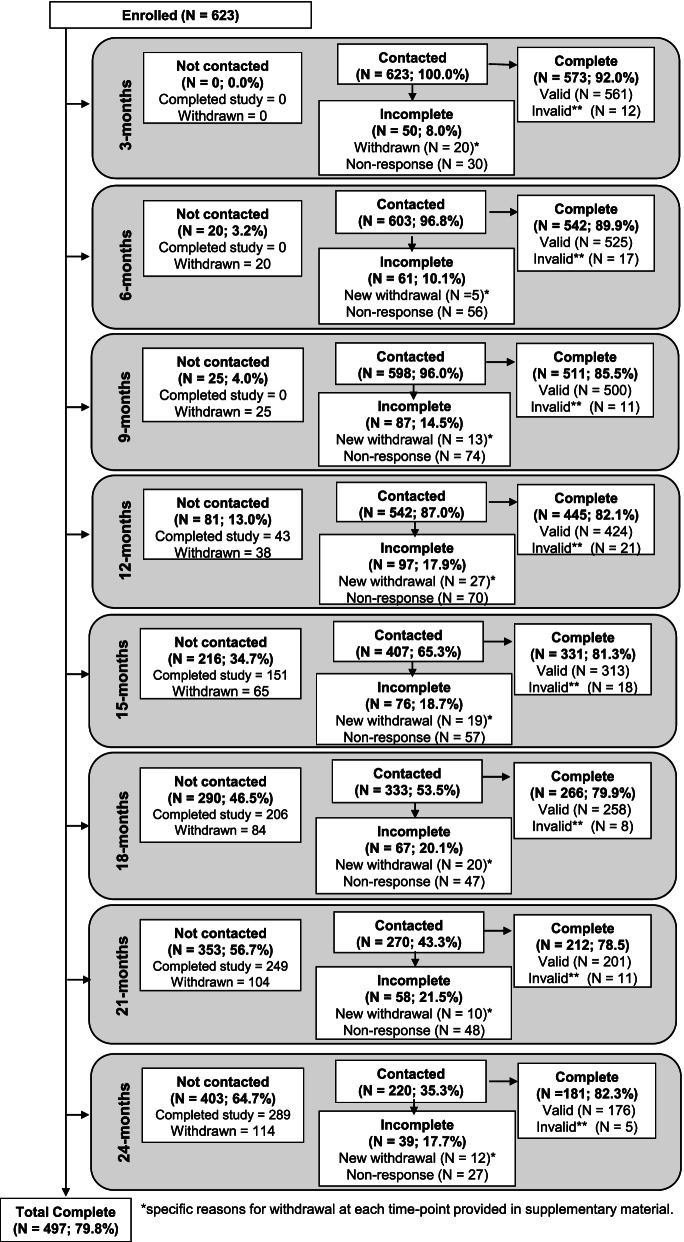
“A total of 497 people (79.8%) participated for the maximum possible duration (from their enrolment until the end of data collection in April 2021), and 126 people (20.2%) withdrew prematurely.”
§ Remote Assessment of Disease and Relapse in Major Depressive Disorder (RADAR-MDD): recruitment, retention, and data availability in a longitudinal remote measurement study > Results > Recruitment and retention rates
plainn = 497- Asserted: passes — The authors put it forward as true.
- Checkable: passes — It can be checked against evidence.
- Load-bearing: unclear — It is unclear whether the paper’s conclusions depend on it.
- Based: passes — The paper gives a reason why it holds.
A result the paper reports from its own data — it cites no other source for it, so there is none to check. The quote shows it is in the paper.
In the paper
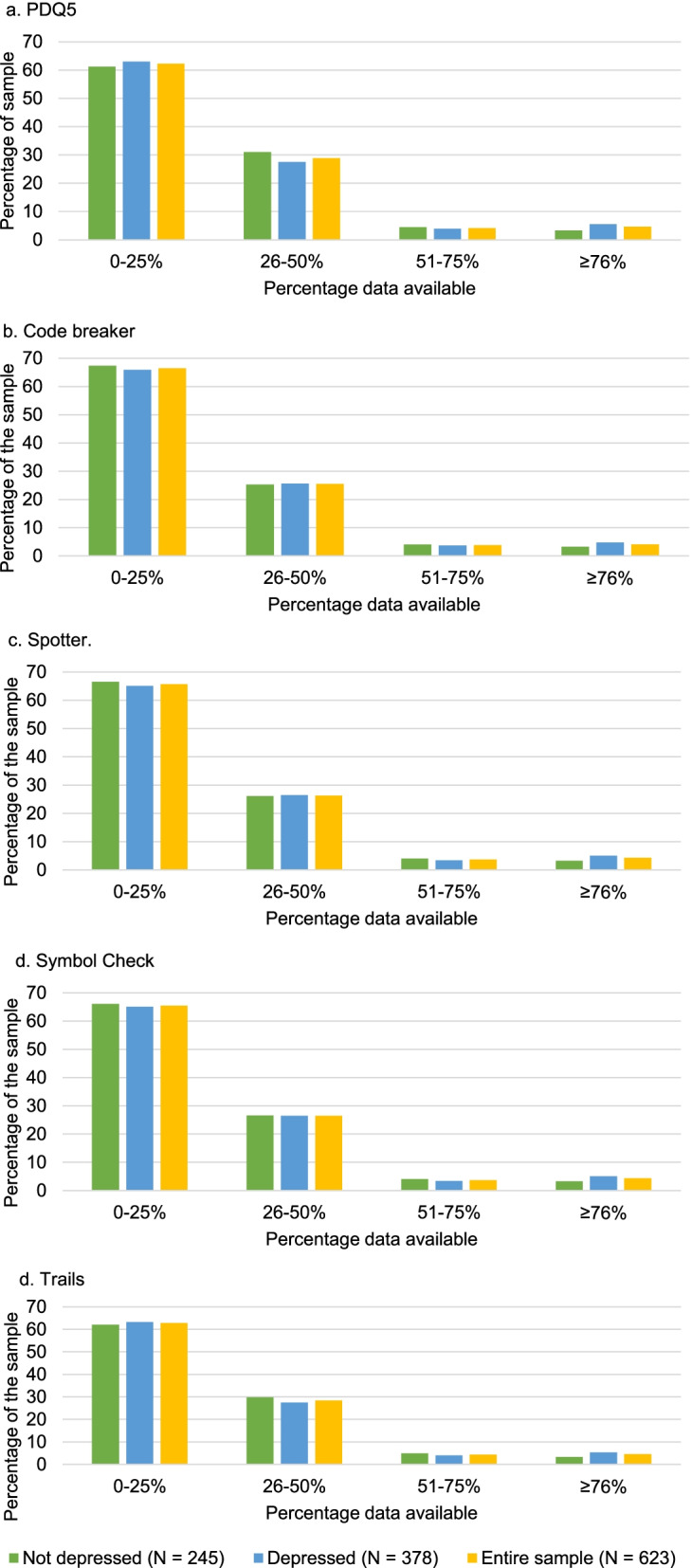
“Overall, participants completed a median of 5 (IQR:2–10) THINC-it app® PDQ5 questionnaires, 5 (IQR:2–9) Code Breaker tasks, 5 (IQR:2–9) Spotter tasks, 5 (IQR-2-9) Symbol Check tasks, and 5 (IQR = 2–10) Trails tasks.”
§ Remote Assessment of Disease and Relapse in Major Depressive Disorder (RADAR-MDD): recruitment, retention, and data availability in a longitudinal remote measurement study > Results > Recruitment and retention rates
plainn = 623- Asserted: passes — The authors put it forward as true.
- Checkable: passes — It can be checked against evidence.
- Load-bearing: unclear — It is unclear whether the paper’s conclusions depend on it.
- Based: passes — The paper gives a reason why it holds.
A result the paper reports from its own data — it cites no other source for it, so there is none to check. The quote shows it is in the paper.
In the paper
“wear-time did not significantly differ between those with no depression symptoms versus those with symptoms at baseline (X2(622, n = 623) = 525616, p=0.24).”
§ Remote Assessment of Disease and Relapse in Major Depressive Disorder (RADAR-MDD): recruitment, retention, and data availability in a longitudinal remote measurement study > Results > Recruitment and retention rates
plainn = 623- Asserted: passes — The authors put it forward as true.
- Checkable: passes — It can be checked against evidence.
- Load-bearing: unclear — It is unclear whether the paper’s conclusions depend on it.
- Based: passes — The paper gives a reason why it holds.
A result the paper reports from its own data — it cites no other source for it, so there is none to check. The quote shows it is in the paper.
In the paper
“Overall, participants completed a median of 5 (IQR:2–10) THINC-it app® PDQ5 questionnaires, 5 (IQR:2–9) Code Breaker tasks, 5 (IQR:2–9) Spotter tasks, 5 (IQR-2-9) Symbol Check tasks, and 5 (IQR = 2–10) Trails tasks.”
§ Remote Assessment of Disease and Relapse in Major Depressive Disorder (RADAR-MDD): recruitment, retention, and data availability in a longitudinal remote measurement study > Results > Recruitment and retention rates
plainn = 623- Asserted: passes — The authors put it forward as true.
- Checkable: passes — It can be checked against evidence.
- Load-bearing: unclear — It is unclear whether the paper’s conclusions depend on it.
- Based: passes — The paper gives a reason why it holds.
A result the paper reports from its own data — it cites no other source for it, so there is none to check. The quote shows it is in the paper.
In the paper
“In comparison to those with no/some depression symptoms at baseline, the symptomatic group were significantly younger, and had a higher proportion of individuals who were female, on long-term sick leave or unemployed, receiving benefits, and earning less than £/€15,000 per annum.”
§ Remote Assessment of Disease and Relapse in Major Depressive Disorder (RADAR-MDD): recruitment, retention, and data availability in a longitudinal remote measurement study > Results > Recruitment and retention rates
plaincorrelational- Asserted: passes — The authors put it forward as true.
- Checkable: passes — It can be checked against evidence.
- Load-bearing: unclear — It is unclear whether the paper’s conclusions depend on it.
- Based: passes — The paper gives a reason why it holds.
A result the paper reports from its own data — it cites no other source for it, so there is none to check. The quote shows it is in the paper.
In the paper
“In comparison to those without depression at baseline, those identified as symptomatic at baseline had a significantly larger percentage of people providing < 26% of activity data.”
§ Remote Assessment of Disease and Relapse in Major Depressive Disorder (RADAR-MDD): recruitment, retention, and data availability in a longitudinal remote measurement study > Results > Recruitment and retention rates
plaincorrelationaln = 623 ·- Asserted: passes — The authors put it forward as true.
- Checkable: passes — It can be checked against evidence.
- Load-bearing: unclear — It is unclear whether the paper’s conclusions depend on it.
- Based: passes — The paper gives a reason why it holds.
A result the paper reports from its own data — it cites no other source for it, so there is none to check. The quote shows it is in the paper.
In the paper
“A total of 8 participants identified study burden as the main reason for withdrawal, including finding the study “too demanding” (n = 6) or the study “not meeting expectations” (n = 2).”
§ Remote Assessment of Disease and Relapse in Major Depressive Disorder (RADAR-MDD): recruitment, retention, and data availability in a longitudinal remote measurement study > Results > Recruitment and retention rates
plainn = 8- Asserted: passes — The authors put it forward as true.
- Checkable: passes — It can be checked against evidence.
- Load-bearing: unclear — It is unclear whether the paper’s conclusions depend on it.
- Based: passes — The paper gives a reason why it holds.
- It may state two separate claims as one. 32
- Probably not a substantial claim. 22
The cited sources support only part of this claim — read each source’s verdict below.
In the paper
“reflecting the tendency for White females to attend mental health services more often than their male/non-White counterparts, and their greater likelihood of participating in research studies [46, 47].”
§ Remote Assessment of Disease and Relapse in Major Depressive Disorder (RADAR-MDD): recruitment, retention, and data availability in a longitudinal remote measurement study > Discussion > Sociodemographic characteristics
What the sources say
- Partly supportedcites [46] Manuel JI. Racial/ethnic and gender disparities in health care use and access. Health Serv Res. 2018. https://doi.org/10.1111/1475-6773.12705. sourceExperimental — accuracy not yet measured
The discussion on p. 1408 reports mental health service disparities for Black and Hispanic women compared with White women. It does not establish that White women use mental health services more often than White men; the paper says findings on gender and mental health service use are mixed. Our copy also does not address whether White women are more likely to participate in research studies. (LLM, conf=0.84)
- Not checked yetcites [47] Brown G, Marshall M, Bower P, Woodham A, Waheed W. Barriers to recruiting ethnic minorities to mental health research: a systematic review. Int J Methods Psychiatr Res. 2014. https://doi.org/10.1002/mpr.1434. source
plaindirect- Asserted: passes — The authors put it forward as true.
- Checkable: passes — It can be checked against evidence.
- Load-bearing: unclear — It is unclear whether the paper’s conclusions depend on it.
- Based: passes — The paper gives a reason why it holds.
It may state two separate claims as one.
- Partly supported
A result the paper reports from its own data — it cites no other source for it, so there is none to check. The quote shows it is in the paper.
In the paper
“Regarding clinical characteristics, the symptomatic group had a higher proportion of current smokers, medical comorbidities, as well as increased levels of current depression, anxiety, functional disability, and worsened illness perceptions, although lower levels of alcohol use.”
§ Remote Assessment of Disease and Relapse in Major Depressive Disorder (RADAR-MDD): recruitment, retention, and data availability in a longitudinal remote measurement study > Results > Recruitment and retention rates
plaincorrelational- Asserted: passes — The authors put it forward as true.
- Checkable: passes — It can be checked against evidence.
- Load-bearing: unclear — It is unclear whether the paper’s conclusions depend on it.
- Based: passes — The paper gives a reason why it holds.
It may state two separate claims as one.
A result the paper reports from its own data — it cites no other source for it, so there is none to check. The quote shows it is in the paper.
In the paper
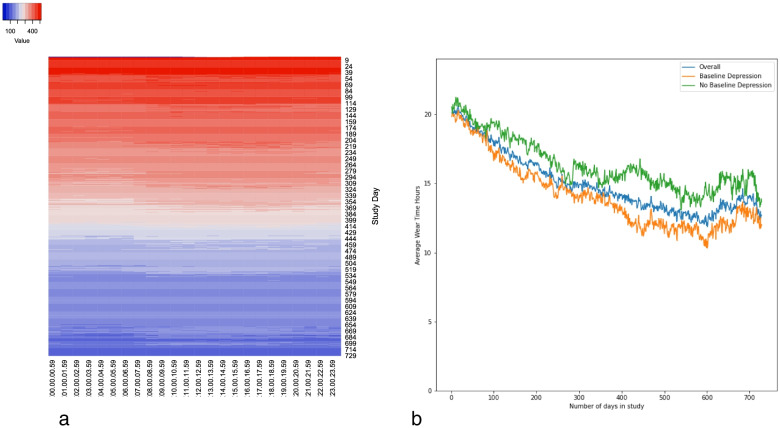
“Figure 5a shows a paler horizontal band of colour between days 290 and 380 of study participation, indicating lower levels of wear-time during these time-points, and Fig. 5b shows a dip in percentage wear-time in people with symptoms of depression at baseline after the first year of participation.”
§ Remote Assessment of Disease and Relapse in Major Depressive Disorder (RADAR-MDD): recruitment, retention, and data availability in a longitudinal remote measurement study > Results > Recruitment and retention rates
hedgedcorrelational- Asserted: passes — The authors put it forward as true.
- Checkable: passes — It can be checked against evidence.
- Load-bearing: fails — The paper’s conclusions may not depend on it.
- Based: passes — The paper gives a reason why it holds.
Probably not a substantial claim. The paper’s conclusions may not depend on it. It may state two separate claims as one.
In the paper
“Recruitment into RADAR-MDD was highly successful, with the flexibility of face-to-face and remote enrolments resulting in the study exceeding its recruitment targets despite the COVID-19 pandemic [42].”
§ Remote Assessment of Disease and Relapse in Major Depressive Disorder (RADAR-MDD): recruitment, retention, and data availability in a longitudinal remote measurement study > Discussion > Study recruitment and retention
What the sources say
- Not checked yetcites [42] Oetzmann C, White KM, Ivan A, Julie J, Leightley D, Lavelle G, et al. A framework for recruiting into a remote measurement technologies (RMTs) study: Experiences from a major depressive disorder cohort. OSF Preprint. https://doi.org/10.31219/osf.io/ns7dc. source
plaindirect- Asserted: passes — The authors put it forward as true.
- Checkable: passes — It can be checked against evidence.
- Load-bearing: unclear — It is unclear whether the paper’s conclusions depend on it.
- Based: passes — The paper gives a reason why it holds.
It may state two separate claims as one.
A result the paper reports from its own data — it cites no other source for it, so there is none to check. The quote shows it is in the paper.
In the paper
“Activity data (comprising a combination of data derived from Fitbit proprietary algorithms and via participants inputting their own activities manually) was the least readily available data, with only 5% of participants having > 75% data availability.”
§ Remote Assessment of Disease and Relapse in Major Depressive Disorder (RADAR-MDD): recruitment, retention, and data availability in a longitudinal remote measurement study > Results > Recruitment and retention rates
plain- Asserted: passes — The authors put it forward as true.
- Checkable: passes — It can be checked against evidence.
- Load-bearing: unclear — It is unclear whether the paper’s conclusions depend on it.
- Based: passes — The paper gives a reason why it holds.
It may state two separate claims as one.
A result the paper reports from its own data — it cites no other source for it, so there is none to check. The quote shows it is in the paper.
In the paper
“Step count data were the most frequently available data, with almost 50% of participants providing > 75% of expected data throughout the course of follow-up.”
§ Remote Assessment of Disease and Relapse in Major Depressive Disorder (RADAR-MDD): recruitment, retention, and data availability in a longitudinal remote measurement study > Results > Recruitment and retention rates
plain- Asserted: passes — The authors put it forward as true.
- Checkable: passes — It can be checked against evidence.
- Load-bearing: unclear — It is unclear whether the paper’s conclusions depend on it.
- Based: passes — The paper gives a reason why it holds.
It may state two separate claims as one.
A result the paper reports from its own data — it cites no other source for it, so there is none to check. The quote shows it is in the paper.
In the paper
“Throughout RADAR-MDD, a total of 341 risk assessments were conducted (9.0% of the 3777 depression measurements taken).”
§ Remote Assessment of Disease and Relapse in Major Depressive Disorder (RADAR-MDD): recruitment, retention, and data availability in a longitudinal remote measurement study > Results > Recruitment and retention rates
plain- Asserted: passes — The authors put it forward as true.
- Checkable: passes — It can be checked against evidence.
- Load-bearing: fails — The paper’s conclusions may not depend on it.
- Based: passes — The paper gives a reason why it holds.
Probably not a substantial claim. The paper’s conclusions may not depend on it.
A result the paper reports from its own data — it cites no other source for it, so there is none to check. The quote shows it is in the paper.
In the paper
“The most common reason for withdrawal across all timepoints was loss to follow-up (n = 47) and problems using the Android study phone (for those who had switched from an iPhone for the purposes of the study (n = 14), representing 37.3 and 11.1% of all withdrawals respectively.”
§ Remote Assessment of Disease and Relapse in Major Depressive Disorder (RADAR-MDD): recruitment, retention, and data availability in a longitudinal remote measurement study > Results > Recruitment and retention rates
plainn = 47- Asserted: passes — The authors put it forward as true.
- Checkable: passes — It can be checked against evidence.
- Load-bearing: unclear — It is unclear whether the paper’s conclusions depend on it.
- Based: passes — The paper gives a reason why it holds.
It may state two separate claims as one.
A result the paper reports from its own data — it cites no other source for it, so there is none to check. The quote shows it is in the paper.
In the paper
“Regarding clinical characteristics, the symptomatic group had a higher proportion of current smokers, medical comorbidities, as well as increased levels of current depression, anxiety, functional disability, and worsened illness perceptions, although lower levels of alcohol use.”
§ Remote Assessment of Disease and Relapse in Major Depressive Disorder (RADAR-MDD): recruitment, retention, and data availability in a longitudinal remote measurement study > Results > Recruitment and retention rates
plaincorrelational- Asserted: passes — The authors put it forward as true.
- Checkable: passes — It can be checked against evidence.
- Load-bearing: fails — The paper’s conclusions may not depend on it.
- Based: passes — The paper gives a reason why it holds.
Probably not a substantial claim. The paper’s conclusions may not depend on it.
A result the paper reports from its own data — it cites no other source for it, so there is none to check. The quote shows it is in the paper.
In the paper
“A total of 2.9 terabytes of compressed data were collected, with 110 (17.7%) participants having more than 50% available data across all modes of data collection.”
§ Remote Assessment of Disease and Relapse in Major Depressive Disorder (RADAR-MDD): recruitment, retention, and data availability in a longitudinal remote measurement study > Results > Recruitment and retention rates
plain- Asserted: passes — The authors put it forward as true.
- Checkable: passes — It can be checked against evidence.
- Load-bearing: fails — The paper’s conclusions may not depend on it.
- Based: passes — The paper gives a reason why it holds.
Probably not a substantial claim. The paper’s conclusions may not depend on it.
A result the paper reports from its own data — it cites no other source for it, so there is none to check. The quote shows it is in the paper.
In the paper
“Regarding clinical characteristics, the symptomatic group had a higher proportion of current smokers, medical comorbidities, as well as increased levels of current depression, anxiety, functional disability, and worsened illness perceptions, although lower levels of alcohol use.”
§ Remote Assessment of Disease and Relapse in Major Depressive Disorder (RADAR-MDD): recruitment, retention, and data availability in a longitudinal remote measurement study > Results > Recruitment and retention rates
plaincorrelational- Asserted: passes — The authors put it forward as true.
- Checkable: passes — It can be checked against evidence.
- Load-bearing: fails — The paper’s conclusions may not depend on it.
- Based: passes — The paper gives a reason why it holds.
Probably not a substantial claim. The paper’s conclusions may not depend on it.
A result the paper reports from its own data — it cites no other source for it, so there is none to check. The quote shows it is in the paper.
In the paper
“The most data were available for GPS location and battery level data.”
§ Remote Assessment of Disease and Relapse in Major Depressive Disorder (RADAR-MDD): recruitment, retention, and data availability in a longitudinal remote measurement study > Results > Recruitment and retention rates
plain- Asserted: fails — The authors may not put it forward as true.
- Checkable: passes — It can be checked against evidence.
- Load-bearing: fails — The paper’s conclusions may not depend on it.
- Based: fails — The paper may give no reason why it holds.
Probably not a substantial claim. The authors may not put it forward as true. The paper’s conclusions may not depend on it. The paper may give no reason why it holds.
A result the paper reports from its own data — it cites no other source for it, so there is none to check. The quote shows it is in the paper.
In the paper
“The mean numbers of ESM items completed by those with and without depression symptoms at baseline throughout the study duration were 11.8 (SD = 23.7) and 11.9 (SD = 23.7) respectively, with t-tests demonstrating no significant difference in ESM data availability between these groups (p = 0.158).”
§ Remote Assessment of Disease and Relapse in Major Depressive Disorder (RADAR-MDD): recruitment, retention, and data availability in a longitudinal remote measurement study > Results > Recruitment and retention rates
plain- Asserted: passes — The authors put it forward as true.
- Checkable: passes — It can be checked against evidence.
- Load-bearing: unclear — It is unclear whether the paper’s conclusions depend on it.
- Based: passes — The paper gives a reason why it holds.
It may state two separate claims as one.
The paper states this without a source or data behind it here, so there is nothing to check it against. The quote shows it is in the paper.
In the paper
“due to the technical requirements of integrating data from the separate THINC-it® app into the RADAR-base platform, the first THINC-it® data were received in March 2018, with the first 4-months of data collection excluding THINC-it® data.”
§ Remote Assessment of Disease and Relapse in Major Depressive Disorder (RADAR-MDD): recruitment, retention, and data availability in a longitudinal remote measurement study > Discussion > RMT domains and data availability
plaindirect- Asserted: passes — The authors put it forward as true.
- Checkable: passes — It can be checked against evidence.
- Load-bearing: unclear — It is unclear whether the paper’s conclusions depend on it.
- Based: passes — The paper gives a reason why it holds.
It may state two separate claims as one.
In the paper
“In terms of clinical presentation, our sample have slightly lower levels of current depression severity and reduced WSAS functional disability than those recruited into STAR*D [48].”
§ Remote Assessment of Disease and Relapse in Major Depressive Disorder (RADAR-MDD): recruitment, retention, and data availability in a longitudinal remote measurement study > Discussion > Sociodemographic characteristics
What the sources say
- Not checked yetcites [48] Trivedi MH, John Rush A, Wisniewski SR, Nierenberg AA, Warden D, Louise Ritz M, et al. Evaluation of outcomes with citalopram for depression using measurement-based care in STAR*D: implications for clinical practice. Am J Psychiatry. 2006;163:28–40. source
plain- Asserted: passes — The authors put it forward as true.
- Checkable: passes — It can be checked against evidence.
- Load-bearing: unclear — It is unclear whether the paper’s conclusions depend on it.
- Based: passes — The paper gives a reason why it holds.
It may state two separate claims as one.
A result the paper reports from its own data — it cites no other source for it, so there is none to check. The quote shows it is in the paper.
In the paper
“Over 90% of participants had data available for analysis from the aRMT, with the PHQ-8 and RSES having the largest amount of data available for the most people.”
§ Remote Assessment of Disease and Relapse in Major Depressive Disorder (RADAR-MDD): recruitment, retention, and data availability in a longitudinal remote measurement study > Discussion > RMT domains and data availability
plain- Asserted: passes — The authors put it forward as true.
- Checkable: passes — It can be checked against evidence.
- Load-bearing: passes — The paper’s conclusions depend on it.
- Based: passes — The paper gives a reason why it holds.
It may state two separate claims as one.
A result the paper reports from its own data — it cites no other source for it, so there is none to check. The quote shows it is in the paper.
In the paper
“Here we report ~ 80% completion rates of our outcomes across all follow-up timepoints, with 79.8% of all enrolled individuals completing the study protocol for the maximum amount of time possible”
§ Remote Assessment of Disease and Relapse in Major Depressive Disorder (RADAR-MDD): recruitment, retention, and data availability in a longitudinal remote measurement study > Discussion > Study recruitment and retention
hedged- Asserted: passes — The authors put it forward as true.
- Checkable: passes — It can be checked against evidence.
- Load-bearing: passes — The paper’s conclusions depend on it.
- Based: passes — The paper gives a reason why it holds.
It may state two separate claims as one.
None of the sources cited for this claim have been checked yet.
In the paper
“Major Depressive Disorder (MDD) is prevalent, often chronic, and requires ongoing monitoring of symptoms to track response to treatment and identify early indicators of relapse.”
- Also stated in: § Background · hedged
“Whilst some may experience a single lifetime episode of MDD, it is becoming more widely recognised as a chronic condition, characterised by periods of relapse and recovery [6, 7].”
§ Remote Assessment of Disease and Relapse in Major Depressive Disorder (RADAR-MDD): recruitment, retention, and data availability in a longitudinal remote measurement study > Abstract > Background
What the sources say
- Not checked yetcites [6] Verduijn J, Verhoeven JE, Milaneschi Y, Schoevers RA, van Hemert AM, Beekman ATF, et al. Reconsidering the prognosis of major depressive disorder across diagnostic boundaries: full recovery is the exception rather than the rule. BMC Med. 2017. https://doi.org/10.1186/s12916-017-0972-8. source
- Not checked yetcites [7] Blanco C, Okunda M, Markowitz JC, Liu S-M, Grant BF, Hasin DS. The epidemiology of chronic major depressive disorder and dysthymic disorder: results from the National Epidemiologic Survey on alcohol and related conditions. J Clin Psychiatr. 2010;17:1645–56. source
plain- Asserted: passes — The authors put it forward as true.
- Checkable: passes — It can be checked against evidence.
- Load-bearing: passes — The paper’s conclusions depend on it.
- Based: passes — The paper gives a reason why it holds.
It may state two separate claims as one.
- Also stated in: § Background · hedged
In the paper
“This threshold has previously been shown to have good levels of sensitivity and specificity [34].”
§ Remote Assessment of Disease and Relapse in Major Depressive Disorder (RADAR-MDD): recruitment, retention, and data availability in a longitudinal remote measurement study > Methods > Study population
What the sources say
- Not checked yetcites [34] Jordan P, Shedden-Mora MC, Löwe B. Psychometric analysis of the generalized anxiety disorder scale (GAD-7) in primary care using modern item response theory. PLoS One. 2017. https://doi.org/10.1371/journal.pone.0182162. source
plain- Asserted: passes — The authors put it forward as true.
- Checkable: passes — It can be checked against evidence.
- Load-bearing: fails — The paper’s conclusions may not depend on it.
- Based: passes — The paper gives a reason why it holds.
Probably not a substantial claim. The paper’s conclusions may not depend on it.
What the paper did — it cites no source for this, so there is none to check. The quote shows it is in the paper.
In the paper
“All participants provided written consent and provided detailed baseline assessments including sociodemographic, social environment, medical history, medical comorbidities and technology use questionnaires.”
§ Remote Assessment of Disease and Relapse in Major Depressive Disorder (RADAR-MDD): recruitment, retention, and data availability in a longitudinal remote measurement study > Methods > Study population
plain- Asserted: passes — The authors put it forward as true.
- Checkable: passes — It can be checked against evidence.
- Load-bearing: fails — The paper’s conclusions may not depend on it.
- Based: passes — The paper gives a reason why it holds.
Probably not a substantial claim. The paper’s conclusions may not depend on it.
What the paper did — it cites no source for this, so there is none to check. The quote shows it is in the paper.
In the paper
“The study was co-developed with service users in our Patient Advisory Board. They were involved in the choice of measures, the timing and issues of engagement and have also been involved in developing the analysis plan and representative(s) are authors of this paper and critically reviewed it.”
§ Remote Assessment of Disease and Relapse in Major Depressive Disorder (RADAR-MDD): recruitment, retention, and data availability in a longitudinal remote measurement study > Methods > Covariates
plain- Asserted: passes — The authors put it forward as true.
- Checkable: passes — It can be checked against evidence.
- Load-bearing: fails — The paper’s conclusions may not depend on it.
- Based: passes — The paper gives a reason why it holds.
Probably not a substantial claim. The paper’s conclusions may not depend on it. It may state two separate claims as one.
In the paper
“follow-up levels of 50, 60 and 70% have previously been described as adequate, good and very good respectively [44].”
§ Remote Assessment of Disease and Relapse in Major Depressive Disorder (RADAR-MDD): recruitment, retention, and data availability in a longitudinal remote measurement study > Discussion > Study recruitment and retention
What the sources say
- Not checked yetcites [44] Kristman V, Manno M, Côté P. Loss to follow-up in cohort studies: how much is too much? Eur J Epidemiol. 2004;28:2272–81.
plain- Asserted: passes — The authors put it forward as true.
- Checkable: passes — It can be checked against evidence.
- Load-bearing: fails — The paper’s conclusions may not depend on it.
- Based: passes — The paper gives a reason why it holds.
Probably not a substantial claim. The paper’s conclusions may not depend on it.
In the paper
“In a recent systematic review we identified 52 publications testing RMT in depression [17].”
§ Remote Assessment of Disease and Relapse in Major Depressive Disorder (RADAR-MDD): recruitment, retention, and data availability in a longitudinal remote measurement study > Background
What the sources say
- Not checked yetcites [17] De Angel V, Lewis S, White K, Oetzmann C, Leightley D, Oprea E, et al. Digital health tools for the passive monitoring of depression: A systematic review of methods. npj Digital Medicine. In press. https://doi.org/10.1101/2021.07.19.21260786. source
plain- Asserted: passes — The authors put it forward as true.
- Checkable: passes — It can be checked against evidence.
- Load-bearing: fails — The paper’s conclusions may not depend on it.
- Based: passes — The paper gives a reason why it holds.
Probably not a substantial claim. The paper’s conclusions may not depend on it.
None of the sources cited for this claim have been checked yet.
In the paper
“Whilst the wider field of digital medicine has seen vast growth and investment, many technologies have poor uptake [13, 14].”
§ Remote Assessment of Disease and Relapse in Major Depressive Disorder (RADAR-MDD): recruitment, retention, and data availability in a longitudinal remote measurement study > Background
What the sources say
- Not checked yetcites [13] Szinay D, Jones A, Chadborn T, Brown J, Naughton F. Influences on the uptake of and engagement with health and well-being smartphone apps: systematic review. JMIR. 2020. https://doi.org/10.2196/17572. source
- Not checked yetcites [14] Pham Q, Graham G, Carrion C, Morita PP, Seto E, Stinson JN, et al. A library of analytic indicators to evaluate effective engagement with consumer mHealth apps for chronic conditions: scoping review. JMIR mHealth uHealth. 2019;7:e11941. source
plain- Asserted: passes — The authors put it forward as true.
- Checkable: passes — It can be checked against evidence.
- Load-bearing: fails — The paper’s conclusions may not depend on it.
- Based: passes — The paper gives a reason why it holds.
Probably not a substantial claim. The paper’s conclusions may not depend on it.
In the paper
“The literature was characterised by inconsistent reporting, and very rarely were data on adherence to protocol reported.”
§ Remote Assessment of Disease and Relapse in Major Depressive Disorder (RADAR-MDD): recruitment, retention, and data availability in a longitudinal remote measurement study > Background
What the sources say
- Not checked yetcites [17] De Angel V, Lewis S, White K, Oetzmann C, Leightley D, Oprea E, et al. Digital health tools for the passive monitoring of depression: A systematic review of methods. npj Digital Medicine. In press. https://doi.org/10.1101/2021.07.19.21260786. source
plain- Asserted: passes — The authors put it forward as true.
- Checkable: passes — It can be checked against evidence.
- Load-bearing: passes — The paper’s conclusions depend on it.
- Based: passes — The paper gives a reason why it holds.
It may state two separate claims as one.
In the paper
“whilst there is no recognised threshold for “acceptable” versus “unacceptable” dropout”
§ Remote Assessment of Disease and Relapse in Major Depressive Disorder (RADAR-MDD): recruitment, retention, and data availability in a longitudinal remote measurement study > Discussion > Study recruitment and retention
What the sources say
- Not checked yetcites [44] Kristman V, Manno M, Côté P. Loss to follow-up in cohort studies: how much is too much? Eur J Epidemiol. 2004;28:2272–81.
plain- Asserted: passes — The authors put it forward as true.
- Checkable: passes — It can be checked against evidence.
- Load-bearing: fails — The paper’s conclusions may not depend on it.
- Based: passes — The paper gives a reason why it holds.
Probably not a substantial claim. The paper’s conclusions may not depend on it.
A conclusion the paper draws from its own results — it cites no other source for it, so there is none to check. The quote shows it is in the paper.
In the paper
“We found comparable levels of data availability in active and passive forms of data collection, demonstrating that both are feasible in this patient group.”
- Also stated in: § Conclusion · boosted
“demonstrating that both are feasible in this patient group.”
§ Remote Assessment of Disease and Relapse in Major Depressive Disorder (RADAR-MDD): recruitment, retention, and data availability in a longitudinal remote measurement study > Abstract > Conclusions
boosted- Asserted: passes — The authors put it forward as true.
- Checkable: passes — It can be checked against evidence.
- Load-bearing: passes — The paper’s conclusions depend on it.
- Based: passes — The paper gives a reason why it holds.
It may state two separate claims as one.
- The authors state this as an assumption: Data availability is a valid indicator of the feasibility of implementing RMT protocols in people with MDD.
- Rests on an assumption: The RADAR-MDD sample of people with a history of recurrent MDD is representative of the clinical population with MDD for assessing feasibility of RMT.
- Also stated in: § Conclusion · boosted
In the paper
“an Aesop’s fable which is phonetically balanced across all three languages and has been shown to provide linguistic parameters indicative of low mood [27].”
§ Remote Assessment of Disease and Relapse in Major Depressive Disorder (RADAR-MDD): recruitment, retention, and data availability in a longitudinal remote measurement study > Methods > Study population
What the sources say
- Not checked yetcites [27] Williamson JR, Quatieri TF, Helfer BS, Ciccarellu G, Mehta DD. Vocal and facial biomarkers of dperession based on motor incoordination and timing. In: 4th International Audio/Visual Emotion Challenge and Workshop: Depression Challenge; 2014. https://doi.org/10.1145/2661806.2661809. source
plaincorrelational- Asserted: passes — The authors put it forward as true.
- Checkable: passes — It can be checked against evidence.
- Load-bearing: fails — The paper’s conclusions may not depend on it.
- Based: passes — The paper gives a reason why it holds.
Probably not a substantial claim. The paper’s conclusions may not depend on it. It may state two separate claims as one.
A conclusion the paper draws from its own results — it cites no other source for it, so there is none to check. The quote shows it is in the paper.
In the paper
“RADAR-MDD is the largest multimodal RMT study in the field of mental health.”
§ Remote Assessment of Disease and Relapse in Major Depressive Disorder (RADAR-MDD): recruitment, retention, and data availability in a longitudinal remote measurement study > Abstract > Conclusions
plain- Asserted: passes — The authors put it forward as true.
- Checkable: passes — It can be checked against evidence.
- Load-bearing: fails — The paper’s conclusions may not depend on it.
- Based: fails — The paper may give no reason why it holds.
Probably not a substantial claim. The paper’s conclusions may not depend on it. The paper may give no reason why it holds.
What the paper did — it cites no source for this, so there is none to check. The quote shows it is in the paper.
In the paper
“RADAR-base and its associated apps were developed and piloted within the main data collection period, with iterative changes and updates being made throughout the course of follow-up.”
§ Remote Assessment of Disease and Relapse in Major Depressive Disorder (RADAR-MDD): recruitment, retention, and data availability in a longitudinal remote measurement study > Discussion > Limitations
plain- Asserted: passes — The authors put it forward as true.
- Checkable: passes — It can be checked against evidence.
- Load-bearing: unclear — It is unclear whether the paper’s conclusions depend on it.
- Based: passes — The paper gives a reason why it holds.
It may state two separate claims as one.
None of the sources cited for this claim have been checked yet.
In the paper
“In contrast to our sample, Radin et al. [52] used a non-clinical population and the barriers to long-term use of a wearable device are likely to be different in an MDD versus general population sample [21].”
§ Remote Assessment of Disease and Relapse in Major Depressive Disorder (RADAR-MDD): recruitment, retention, and data availability in a longitudinal remote measurement study > Discussion > RMT domains and data availability
What the sources say
- Not checked yetcites [52] Radin JM, Wineinger NE, Topol EJ, Steinhubl SR. Harnessing wearable device data to improve state-level real-time surveillance of influenza-like illness in the USA: a population-based study. Lancet Digit Heal. 2020;11:e85–93. source
- Not checked yetcites [21] Simblett S, Matcham F, Siddi S, Bulgari V, di San Pietro CB, López JH, et al. Barriers to and facilitators of engagement with mHealth technology for remote measurement and management of depression: qualitative analysis. JMIR mHealth uHealth. 2019. https://doi.org/10.2196/11325. source
hedgedconditional- Asserted: passes — The authors put it forward as true.
- Checkable: passes — It can be checked against evidence.
- Load-bearing: unclear — It is unclear whether the paper’s conclusions depend on it.
- Based: passes — The paper gives a reason why it holds.
It may state two separate claims as one.
A conclusion the paper draws from its own results — it cites no other source for it, so there is none to check. The quote shows it is in the paper.
In the paper
“It is also worth noting that ethnic groups across the two countries who collected ethnicity data are challenging to compare, meaning that in-depth interrogation of racial differences in outcomes will be affected by small cell sizes unless ethnic groups are merged into larger, less descriptive categories.”
§ Remote Assessment of Disease and Relapse in Major Depressive Disorder (RADAR-MDD): recruitment, retention, and data availability in a longitudinal remote measurement study > Discussion > Sociodemographic characteristics
plaindirect- Asserted: passes — The authors put it forward as true.
- Checkable: passes — It can be checked against evidence.
- Load-bearing: unclear — It is unclear whether the paper’s conclusions depend on it.
- Based: passes — The paper gives a reason why it holds.
It may state two separate claims as one.
A conclusion the paper draws from its own results — it cites no other source for it, so there is none to check. The quote shows it is in the paper.
In the paper
“it is likely that fluctuations in depression symptoms over time are more relevant for predicting technology use, rather than a static baseline status”
§ Remote Assessment of Disease and Relapse in Major Depressive Disorder (RADAR-MDD): recruitment, retention, and data availability in a longitudinal remote measurement study > Discussion > Future research
hedgedcorrelational- Asserted: passes — The authors put it forward as true.
- Checkable: passes — It can be checked against evidence.
- Load-bearing: fails — The paper’s conclusions may not depend on it.
- Based: passes — The paper gives a reason why it holds.
Probably not a substantial claim. The paper’s conclusions may not depend on it.
In the paper
“However, Radin et al. omitted missing wear time data, and excluded measurements with a wear-time lower than 1000 min per day which inflates their wear-time statistics.”
§ Remote Assessment of Disease and Relapse in Major Depressive Disorder (RADAR-MDD): recruitment, retention, and data availability in a longitudinal remote measurement study > Discussion > RMT domains and data availability
What the sources say
- Not checked yetcites [52] Radin JM, Wineinger NE, Topol EJ, Steinhubl SR. Harnessing wearable device data to improve state-level real-time surveillance of influenza-like illness in the USA: a population-based study. Lancet Digit Heal. 2020;11:e85–93. source
plaindirect- Asserted: passes — The authors put it forward as true.
- Checkable: passes — It can be checked against evidence.
- Load-bearing: unclear — It is unclear whether the paper’s conclusions depend on it.
- Based: passes — The paper gives a reason why it holds.
It may state two separate claims as one.
In the paper
“Despite these limitations, RADAR-MDD remains the largest, most ambitious multimodal RMT study in depression.”
§ Remote Assessment of Disease and Relapse in Major Depressive Disorder (RADAR-MDD): recruitment, retention, and data availability in a longitudinal remote measurement study > Discussion > Limitations
What the sources say
- Not checked yetcites [17] De Angel V, Lewis S, White K, Oetzmann C, Leightley D, Oprea E, et al. Digital health tools for the passive monitoring of depression: A systematic review of methods. npj Digital Medicine. In press. https://doi.org/10.1101/2021.07.19.21260786. source
plain- Asserted: passes — The authors put it forward as true.
- Checkable: passes — It can be checked against evidence.
- Load-bearing: unclear — It is unclear whether the paper’s conclusions depend on it.
- Based: passes — The paper gives a reason why it holds.
It may state two separate claims as one.
A conclusion the paper draws from its own results — it cites no other source for it, so there is none to check. The quote shows it is in the paper.
In the paper
“Whilst the majority of our recruitment occurred before the global pandemic, the threat posed by COVID-19 may have affected existing participants’ research experience and data completion.”
§ Remote Assessment of Disease and Relapse in Major Depressive Disorder (RADAR-MDD): recruitment, retention, and data availability in a longitudinal remote measurement study > Discussion > Limitations
hedgedconditional- Asserted: passes — The authors put it forward as true.
- Checkable: passes — It can be checked against evidence.
- Load-bearing: unclear — It is unclear whether the paper’s conclusions depend on it.
- Based: passes — The paper gives a reason why it holds.
It may state two separate claims as one.
The paper states this without a source or data behind it here, so there is nothing to check it against. The quote shows it is in the paper.
In the paper
“For a multiparametric analysis, data across multiple sensor types will be needed.”
§ Remote Assessment of Disease and Relapse in Major Depressive Disorder (RADAR-MDD): recruitment, retention, and data availability in a longitudinal remote measurement study > Discussion > RMT domains and data availability
plain- Asserted: passes — The authors put it forward as true.
- Checkable: fails — It may be too vague to check against evidence.
- Load-bearing: fails — The paper’s conclusions may not depend on it.
- Based: passes — The paper gives a reason why it holds.
Probably not a substantial claim. It may be too vague to check against evidence. The paper’s conclusions may not depend on it.
In the paper
“A recent systematic review summarising studies using passive and active smartphone-based measurements in affective disorders found only 5 studies in people with MDD, and these studies reported a median sample size of 5, and median follow-up time of 4 weeks, in addition to huge variability in the quality of reporting [17].”
§ Remote Assessment of Disease and Relapse in Major Depressive Disorder (RADAR-MDD): recruitment, retention, and data availability in a longitudinal remote measurement study > Discussion > Limitations
What the sources say
- Not checked yetcites [17] De Angel V, Lewis S, White K, Oetzmann C, Leightley D, Oprea E, et al. Digital health tools for the passive monitoring of depression: A systematic review of methods. npj Digital Medicine. In press. https://doi.org/10.1101/2021.07.19.21260786. source
plainn = 5- Asserted: passes — The authors put it forward as true.
- Checkable: passes — It can be checked against evidence.
- Load-bearing: passes — The paper’s conclusions depend on it.
- Based: passes — The paper gives a reason why it holds.
It may state two separate claims as one.
A conclusion the paper draws from its own results — it cites no other source for it, so there is none to check. The quote shows it is in the paper.
In the paper
“At a granular level, data from smartphone and wearable sensors are so fine that no meaningful inferences can be gained, requiring some form of aggregation which may not be the same across different sensors.”
§ Remote Assessment of Disease and Relapse in Major Depressive Disorder (RADAR-MDD): recruitment, retention, and data availability in a longitudinal remote measurement study > Discussion > Limitations
plaindirect- Asserted: passes — The authors put it forward as true.
- Checkable: passes — It can be checked against evidence.
- Load-bearing: fails — The paper’s conclusions may not depend on it.
- Based: passes — The paper gives a reason why it holds.
Probably not a substantial claim. The paper’s conclusions may not depend on it. It may state two separate claims as one.
In the paper
“Attrition rates in longitudinal research vary widely [43]”
§ Remote Assessment of Disease and Relapse in Major Depressive Disorder (RADAR-MDD): recruitment, retention, and data availability in a longitudinal remote measurement study > Discussion > Study recruitment and retention
What the sources say
- Not checked yetcites [43] Gustavson K, Von Soest T, Karevold E, Roysamb E. Attrition and generalizability in longitudinal studies: findings from a 15-year population-based study and a Monte Carlo simulation study. BMC Public Health. 2012. https://doi.org/10.1186/1471-2458-12-918. source
plain- Asserted: passes — The authors put it forward as true.
- Checkable: passes — It can be checked against evidence.
- Load-bearing: fails — The paper’s conclusions may not depend on it.
- Based: passes — The paper gives a reason why it holds.
Probably not a substantial claim. The paper’s conclusions may not depend on it.
A conclusion the paper draws from its own results — it cites no other source for it, so there is none to check. The quote shows it is in the paper.
In the paper
“Given the high level of depressive symptoms in our sample, the pandemic and its associated social interventions may have added a burden to participants resulting in an increased dropout rate and reduced adherence to the study protocol.”
§ Remote Assessment of Disease and Relapse in Major Depressive Disorder (RADAR-MDD): recruitment, retention, and data availability in a longitudinal remote measurement study > Discussion > Limitations
hedgedconditional- Asserted: passes — The authors put it forward as true.
- Checkable: passes — It can be checked against evidence.
- Load-bearing: unclear — It is unclear whether the paper’s conclusions depend on it.
- Based: passes — The paper gives a reason why it holds.
It may state two separate claims as one.
A conclusion the paper draws from its own results — it cites no other source for it, so there is none to check. The quote shows it is in the paper.
In the paper
“Secondly, the THINC-it® app is separate to the other RADAR-base apps, with different branding, design and feel to the RADAR-base apps. This may have made the tasks appear separate or “other” to the main protocol and reduced adherence to these tasks.”
§ Remote Assessment of Disease and Relapse in Major Depressive Disorder (RADAR-MDD): recruitment, retention, and data availability in a longitudinal remote measurement study > Discussion > RMT domains and data availability
hedgedconditional- Asserted: passes — The authors put it forward as true.
- Checkable: passes — It can be checked against evidence.
- Load-bearing: fails — The paper’s conclusions may not depend on it.
- Based: passes — The paper gives a reason why it holds.
Probably not a substantial claim. The paper’s conclusions may not depend on it. It may state two separate claims as one.
In the paper
“The THINC-it® app does not have an inbuilt notification system - participants received notifications to complete the cognitive tasks via the RADAR-base aRMT app. Participants are required to switch between apps, which increases the number of points at which interest or motivation may be lost [50].”
§ Remote Assessment of Disease and Relapse in Major Depressive Disorder (RADAR-MDD): recruitment, retention, and data availability in a longitudinal remote measurement study > Discussion > RMT domains and data availability
What the sources say
- Not checked yetcites [50] Dahl AJ, D’Alessandro AM, Peltier JW, Swan EL. Differential effects of omni-channel touchpoints and digital behaviors on digital natives’ social cause engagement. J Res Interact Mark. 2018;12:258–73. source
plaindirect- Asserted: passes — The authors put it forward as true.
- Checkable: passes — It can be checked against evidence.
- Load-bearing: passes — The paper’s conclusions depend on it.
- Based: passes — The paper gives a reason why it holds.
It may state two separate claims as one.
The paper states this without a source or data behind it here, so there is nothing to check it against. The quote shows it is in the paper.
In the paper
“For example, sleep data are only meaningful when aggregated from midday-midday, whereas activity data are more relevant when calculated from midnight-midnight.”
§ Remote Assessment of Disease and Relapse in Major Depressive Disorder (RADAR-MDD): recruitment, retention, and data availability in a longitudinal remote measurement study > Discussion > Limitations
plain- Asserted: passes — The authors put it forward as true.
- Checkable: passes — It can be checked against evidence.
- Load-bearing: fails — The paper’s conclusions may not depend on it.
- Based: fails — The paper may give no reason why it holds.
Probably not a substantial claim. The paper’s conclusions may not depend on it. The paper may give no reason why it holds. It may state two separate claims as one.
In the paper
“Comparatively, Pedrelli et al., 2020 [53] report Empatica E4 wear-time estimates of 92–94% in their study involving 31 individuals with MDD, however their follow-up period was limited to only 8-weeks [53].”
§ Remote Assessment of Disease and Relapse in Major Depressive Disorder (RADAR-MDD): recruitment, retention, and data availability in a longitudinal remote measurement study > Discussion > RMT domains and data availability
What the sources say
- Not checked yetcites [53] Pedrelli P, Fedor S, Ghandeharioun A, Howe E, Ionescu DF, Bhathena D, et al. Monitoring changes in depression severity using wearable and mobile sensors. Front Psychiatry. 2020;11:584711. source
plainn = 31- Asserted: passes — The authors put it forward as true.
- Checkable: passes — It can be checked against evidence.
- Load-bearing: unclear — It is unclear whether the paper’s conclusions depend on it.
- Based: passes — The paper gives a reason why it holds.
It may state two separate claims as one.
A conclusion the paper draws from its own results — it cites no other source for it, so there is none to check. The quote shows it is in the paper.
In the paper
“representing excellent availability of our primary and secondary outcome measures.”
§ Remote Assessment of Disease and Relapse in Major Depressive Disorder (RADAR-MDD): recruitment, retention, and data availability in a longitudinal remote measurement study > Discussion > Study recruitment and retention
plain- Asserted: passes — The authors put it forward as true.
- Checkable: passes — It can be checked against evidence.
- Load-bearing: passes — The paper’s conclusions depend on it.
- Based: passes — The paper gives a reason why it holds.
It may state two separate claims as one.
In the paper
“Finally, the cognitive tasks offered as part of the THINC-it requires more attention than conventional questionnaires which may be more challenging for those who are experiencing depression symptoms [51].”
§ Remote Assessment of Disease and Relapse in Major Depressive Disorder (RADAR-MDD): recruitment, retention, and data availability in a longitudinal remote measurement study > Discussion > RMT domains and data availability
What the sources say
- Not checked yetcites [51] Peterson JZ, Porter RJ, Miskowiak KW. Clinical characteristics associated with the discrepancy between subjective and objective cognitive impairment indepression. J Affect Dis. 2019;246:763–74. source
hedgedconditional- Asserted: passes — The authors put it forward as true.
- Checkable: passes — It can be checked against evidence.
- Load-bearing: unclear — It is unclear whether the paper’s conclusions depend on it.
- Based: passes — The paper gives a reason why it holds.
It may state two separate claims as one.
A conclusion the paper draws from its own results — it cites no other source for it, so there is none to check. The quote shows it is in the paper.
In the paper
“It is important to acknowledge this as an indicator of the amount of resource and data collection required for multiparametric analyses.”
§ Remote Assessment of Disease and Relapse in Major Depressive Disorder (RADAR-MDD): recruitment, retention, and data availability in a longitudinal remote measurement study > Discussion > RMT domains and data availability
hedgedn = 110- Asserted: passes — The authors put it forward as true.
- Checkable: passes — It can be checked against evidence.
- Load-bearing: fails — The paper’s conclusions may not depend on it.
- Based: passes — The paper gives a reason why it holds.
Probably not a substantial claim. The paper’s conclusions may not depend on it.
The authors state this as an assumption.
Data availability is a valid indicator of the feasibility of implementing RMT protocols in people with MDD.
“We believe it is essential to include partial or incomplete data as part of this paper, as they are indicative not only of participant characteristics and study burden, but also of the underlying technical infrastructure.”
“This concession gives greater insight into how data availability may fluctuate with changes in depressive state and provides a truer representation of the feasibility of implementing RMT protocols in people with MDD.”
The paper relies on this without support.
The RADAR-MDD sample of people with a history of recurrent MDD is representative of the clinical population with MDD for assessing feasibility of RMT.
“Here, we have shown that collecting RMT data from a clinical population is feasible.”
The paper relies on this without support.
No remote measurement studies have reported the quantity of data collected via smartphone sensors.
“To the best of our knowledge, no remote measurement studies have reported the quantity of data collected via smartphone sensors.”
Claims other papers make about this one
Each is checked against this paper’s own text: does it say what the citing paper says it does?
In the citing paper
“Remote sensing measures, such as actigraphy, may be a promising objective measure of behaviour that can be standardized to an individual's baseline. 29”
In the citing paper
“Remote biosensors can assess potential biomarkers such as motor activity and sleep patterns over long periods.29–31”
Self-check
Percentages, sums and reported differences re-computed from the paper’s own numbers.
Each contradiction between two passages listed here was confirmed by an independent check.
Rated major: it would touch a result — a value a result rests on, reported and recomputed p-values on opposite sides of the significance level, two passages that conflict with no sign which is right, or a cited work retracted before this paper was published.
In the paper
§ Remote Assessment of Disease and Relapse in Major Depressive Disorder (RADAR-MDD): recruitment, retention, and data availability in a longitudinal remote measurement study > Results > Recruitment and retention rates
“No evidence of a difference in data availability between those with and without depression at baseline was identified.”
§ Remote Assessment of Disease and Relapse in Major Depressive Disorder (RADAR-MDD): recruitment, retention, and data availability in a longitudinal remote measurement study > Results > Recruitment and retention rates
“| Phone interactionsc | 0–25% | 237 (38.0) | 83 (33.9) | 154 (40.7) | 8.8 (0.03) |”
Rated minor: it would not touch a result — a value no result rests on, a p-value that stays on the same side of the significance level, or a conflict that is clerical, resolved elsewhere in the paper, or outside its own findings.
In the paper
“| Calorie intakec | 26–50% | 87 (19.6) | 31 (12.7) | 56 (14.8) | |”
§ Remote Assessment of Disease and Relapse in Major Depressive Disorder (RADAR-MDD): recruitment, retention, and data availability in a longitudinal remote measurement study > Results > Recruitment and retention rates
Reported 19.6 · recomputed 13.964687
Rated minor: it would not touch a result — a value no result rests on, a p-value that stays on the same side of the significance level, or a conflict that is clerical, resolved elsewhere in the paper, or outside its own findings.
In the paper
“| Marital Status, N(%) | Single/separated/divorced/widowed | 332 (53.3) | 119 (47.8) | 213 (56.2) | 0.070 |”
§ Remote Assessment of Disease and Relapse in Major Depressive Disorder (RADAR-MDD): recruitment, retention, and data availability in a longitudinal remote measurement study > Results > Recruitment and retention rates
Reported 47.8 · recomputed 48.571429
Rated minor: it would not touch a result — a value no result rests on, a p-value that stays on the same side of the significance level, or a conflict that is clerical, resolved elsewhere in the paper, or outside its own findings.
In the paper
“| Phone interactionsc | Any data | 584 (93.7) | 225 (9.2) | 359 (95.0 | |”
§ Remote Assessment of Disease and Relapse in Major Depressive Disorder (RADAR-MDD): recruitment, retention, and data availability in a longitudinal remote measurement study > Results > Recruitment and retention rates
Reported 9.2 · recomputed 91.836735
Rated minor: it would not touch a result — a value no result rests on, a p-value that stays on the same side of the significance level, or a conflict that is clerical, resolved elsewhere in the paper, or outside its own findings.
In the paper
§ Remote Assessment of Disease and Relapse in Major Depressive Disorder (RADAR-MDD): recruitment, retention, and data availability in a longitudinal remote measurement study > Methods > Study population
“and scores > 20 indicate likely alcohol dependence [37].”
§ Remote Assessment of Disease and Relapse in Major Depressive Disorder (RADAR-MDD): recruitment, retention, and data availability in a longitudinal remote measurement study > Results > Recruitment and retention rates
“| Alcohol use | Addiction likely (> 19), N(%) | 8 (1.3) | 5 (2.0) | 3 (0.8) | |”
Rated minor: it would not touch a result — a value no result rests on, a p-value that stays on the same side of the significance level, or a conflict that is clerical, resolved elsewhere in the paper, or outside its own findings.
In the paper
“| Steps | No data | 36 (6.8) | 16 (6.6) | 20 (5.3) | |”
§ Remote Assessment of Disease and Relapse in Major Depressive Disorder (RADAR-MDD): recruitment, retention, and data availability in a longitudinal remote measurement study > Results > Recruitment and retention rates
Reported 6.8 · recomputed 5.778491
Rated minor: it would not touch a result — a value no result rests on, a p-value that stays on the same side of the significance level, or a conflict that is clerical, resolved elsewhere in the paper, or outside its own findings.
In the paper
“| Activity | 26–50% | 143 (23.0) | 53 (51.6) | 90 (23.8) | |”
§ Remote Assessment of Disease and Relapse in Major Depressive Disorder (RADAR-MDD): recruitment, retention, and data availability in a longitudinal remote measurement study > Results > Recruitment and retention rates
Reported 51.6 · recomputed 21.632653
Citations
Cites
Harris, P. A., Taylor, R., Thielke, R., Payne, J., Gonzalez, N., & Conde, J. G. (2009) · Journal of Biomedical Informatics · doi:10.1016/j.jbi.2008.08.010 · Cited by 51,384
A Brief Measure for Assessing Generalized Anxiety Disorder: The GAD-7
Spitzer, R. L., Kroenke, K., Williams, J. B. W., & Löwe, B. (2006) · Archives of Internal Medicine · doi:10.1001/archinte.166.10.1092 · Cited by 31,765 · cited 1×
“Anxiety was measured via the 7-item Generalised Anxiety Disorder questionnaire (GAD7; [33]), used as a continuous indicator of anxiety symptom severity (a total of 21, with higher scores indicating increased anxiety severity) and a total score ≥ 10 indicating significant symptoms.”
James, S. L., Abate, D., Abate, K. H., Abay, S. M., Abbafati, C., Abbasi, N., Abbastabar, H., Abd-Allah, F., Abdela, J., Abdelalim, A., et al. (2018) · The Lancet · doi:10.1016/s0140-6736(18)32279-7 · Cited by 13,867
The PHQ-8 as a measure of current depression in the general population
Kroenke, K., Strine, T. W., Spitzer, R. L., Williams, J. B. W., Berry, J. T., & Mokdad, A. H. (2009) · Journal of Affective Disorders · doi:10.1016/j.jad.2008.06.026 · Cited by 5,121 · cited 2×
“Active RMT The RADAR-base active RMT (aRMT) app administered validated measurements of depression and selfesteem every 2-weeks via the 8-item Patient Health Questionnaire (PHQ8; [25] and Rosenberg Self-Esteem Scale (RSES; 26).”
Trivedi, M. H., Rush, A. J., Wisniewski, S. R., Nierenberg, A. A., Warden, D., Ritz, L., Norquist, G., Howland, R. H., Lebowitz, B., McGrath, P. J., et al. (2006) · American Journal of Psychiatry · doi:10.1176/appi.ajp.163.1.28 · Cited by 3,879 · cited 3×
“In terms of clinical presentation, our sample have slightly lower levels of current depression severity and reduced WSAS functional disability than those recruited into STAR*D [48].”
InfluentialThe Brief Illness Perception Questionnaire
Broadbent, E., Petrie, K. J., Main, J., & Weinman, J. (2006) · Journal of Psychosomatic Research · doi:10.1016/j.jpsychores.2005.10.020 · Cited by 3,431 · cited 1×
“Illness perceptions The Brief Illness Perceptions Questionnaire (BIPQ; [38]) measured emotional and cognitive representations of illness, capturing perceptions relating to illness identity, causes, control, consequences, timeline, concern, understanding and emotional response.”
The Work and Social Adjustment Scale: a simple measure of impairment in functioning
Mundt, J. C., Marks, I. M., Shear, M. K., & Greist, J. M. (2002) · British Journal of Psychiatry · doi:10.1192/bjp.180.5.461 · Cited by 2,515 · cited 1×
“Functional ability Functional ability was measured using the Work and Social Adjustment Scale (WSAS; [35]), using a continuous score from 0 to 40 to describe the level of impairment, with scores of 0–10, 11–20 and > 20 to indicate no, some and significant impairment respectively [35].”
The world health organization composite international diagnostic interview short-form (CIDI-SF)
Kessler, R. C., Andrews, G., Mroczek, D., Ustun, B., & Wittchen, H. (1998) · International Journal of Methods in Psychiatric Research · doi:10.1002/mpr.47 · Cited by 2,242 · cited 1×
“Depression Depressive state was measured using the Inventory of Depressive Symptomatology – Self Report (IDS-SR; [31]) to capture changes in symptom severity, and the World Health Organisation’s Composite Diagnostic Interview – Short Form (CIDI-SF; [32]) to identify people meeting DSM-5 criteria for MDD at each timepo…”
Firth, J., Torous, J., Nicholas, J., Carney, R., Pratap, A., Rosenbaum, S., & Sarris, J. (2017) · World Psychiatry · doi:10.1002/wps.20472 · Cited by 1,097 · cited 1×
“In depression the illness, characterised by loss of motivation, may be a further barrier to adherence with digital medicine protocols [15, 16].”
Brugha, T. S., & Cragg, D. (1990) · Acta Psychiatrica Scandinavica · doi:10.1111/j.1600-0447.1990.tb01360.x · Cited by 883 · cited 1×
“Any significant life events which may have happened between outcome assessments were measured via the List of Threatening Experiences Questionnaire (LTE-Q; [40]).”
Cited by
Sorted by citations
Cohen, A., Naslund, J. A., Chang, S., Nagendra, S., Bhan, A., Rozatkar, A., Thirthalli, J., Bondre, A., Tugnawat, D., Reddy, P. V., et al. (2023) · Schizophrenia · doi:10.1038/s41537-023-00332-5 · Cited by 90
Leaning, I. E., Ikani, N., Savage, H. S., Leow, A., Beckmann, C. F., Ruhé, H. G., & Marquand, A. F. (2024) · Neuroscience & Biobehavioral Reviews · doi:10.1016/j.neubiorev.2024.105541 · Cited by 85
“The general aim of this review was, therefore, to investigate the current state of digital phenotyping research for populations with MDD, in particular to establish what current methods are able to achieve in terms of their predictive power, and where subsequent efforts need to be focused to advance digital phenotypin…”
BackgroundInfluentialJiang, Z., Seyedi, S. S., Griner, E. L., Abbasi, A., Rad, A. B., Kwon, H., Cotes, R. O., & Clifford, G. D. (2024) · IEEE Journal of Biomedical and Health Informatics · doi:10.1109/jbhi.2024.3352075 · Cited by 89
“This begs the question of whether data collected remotely, such as in [44], [45], and in our previous research protocol [13], can provide a comparable level of information as the data collected in a lab-controlled environment.”
Zhang, Y., Pratap, A., Folarin, A., Sun, S., Cummins, N., Matcham, F., Vairavan, S., Dineley, J., Ranjan, Y., Rashid, Z., et al. (2023) · npj Digital Medicine · doi:10.1038/s41746-023-00749-3 · Cited by 62
“The detailed study protocol and descriptions of the dataset have been reported by Matcham et al.10,28.”
MethodSelf-citationWearable Technology in Clinical Practice for Depressive Disorder
Fedor, S., Lewis, R., Pedrelli, P., Mischoulon, D., Curtiss, J. E., & Picard, R. W. (2023) · New England Journal of Medicine · doi:10.1056/nejmra2215898 · Cited by 59
Ali, M., Ali, S., Abbas, Q., Abbas, Z., & Lee, S. (2025) · Digital Health · doi:10.1177/20552076251395548 · Cited by 80
Screening for Depression Using Natural Language Processing: Literature Review
Teferra, B. G., Rueda, A., Pang, H. Y. M., Valenzano, R., Samavi, R., Krishnan, S., & Bhat, V. (2024) · Interactive Journal of Medical Research · doi:10.2196/55067 · Cited by 65
“In another dataset, as presented in the study by Matcham et al [56], they presented data collected from 623 participants with a history of recurrent major depressive disorder.”
MethodZhang, Y., Folarin, A., Sun, S., Cummins, N., Vairavan, S., Bendayan, R., Ranjan, Y., Rashid, Z., Conde, P., Stewart, C., et al. (2022) · JMIR Mental Health · doi:10.2196/34898 · Cited by 43
“All participants in the study had at least one diagnosis of depression in the most recent 2 years and were recruited from 3 countries (Netherlands, Spain, and the United Kingdom); additional details descriptions are reported in [28].”
Self-citationMultilingual markers of depression in remotely collected speech samples: A preliminary analysis
Cummins, N., Dineley, J., Conde, P., Matcham, F., Siddi, S., Lamers, F., Carr, E., Lavelle, G., Leightley, D., White, K. M., et al. (2023) · Journal of Affective Disorders · doi:10.1016/j.jad.2023.08.097 · Cited by 59
Self-citationStolfi, F., Abreu, H., Sinella, R., Nembrini, S., Centonze, S., Landra, V., Brasso, C., Cappellano, G., Rocca, P., & Chiocchetti, A. (2024) · Frontiers in Psychiatry · doi:10.3389/fpsyt.2024.1422939 · Cited by 54
Matcham, F., Simblett, S. K., Leightley, D., Dalby, M., Siddi, S., Haro, J. M., Lamers, F., Penninx, B. W. J. H., Bruce, S., Nica, R. I., et al. (2022) · Psychological Medicine · doi:10.1017/s0033291722003671 · Cited by 45
Self-citationCurrey, D., & Torous, J. B. (2023) · BMJ Mental Health · doi:10.1136/bmjment-2023-300718 · Cited by 43
Sun, S., Folarin, A., Zhang, Y., Cummins, N., Garcia‐Dias, R., Stewart, C., Ranjan, Y., Rashid, Z., Conde, P., Laiou, P., et al. (2023) · Journal of Medical Internet Research · doi:10.2196/45233 · Cited by 48
“We previously elaborated issues in relation to recruitment, retention, data availability, and predictors of engagement [30].”
BackgroundSelf-citationPersonalized mood prediction from patterns of behavior collected with smartphones
Balliu, B., Douglas, C., Seok, D., Shenhav, L., Wu, Y., Chatzopoulou, D., Kaiser, W., Chen, V., Kim, J. S., Deverasetty, S., et al. (2024) · npj Digital Medicine · doi:10.1038/s41746-024-01035-6 · Cited by 37
Siddi, S., Bailon, R., Giné-Vázquez, I., Matcham, F., Lamers, F., Kontaxis, S., Laporta, E., Garcia, E., Lombardini, F., Annas, P., et al. (2023) · Psychological Medicine · doi:10.1017/s0033291723001034 · Cited by 31
Self-citationZhang, Y., Folarin, A., Sun, S., Cummins, N., Ranjan, Y., Rashid, Z., Stewart, C., Conde, P., Sankesara, H., Laiou, P., et al. (2024) · Journal of Medical Internet Research · doi:10.2196/55302 · Cited by 30
“Further details can be found in the study protocol and data description papers [40,41].”
InfluentialSelf-citationZhang, Y., Folarin, A., Dineley, J., Conde, P., de Angel, V., Sun, S., Ranjan, Y., Rashid, Z., Stewart, C., Laiou, P., et al. (2024) · Journal of Affective Disorders · doi:10.1016/j.jad.2024.03.106 · Cited by 32
Self-citationLinardon, J., Chen, K., Gajjar, S., Eadara, A., Wang, S., Flathers, M., Burns, J., & Torous, J. B. (2025) · Psychiatry Research · doi:10.1016/j.psychres.2025.116483 · Cited by 34
Passively sensing smartphone use in teens with rates of use by sex and across operating systems
Alexander, J. D., Linkersdörfer, J., Toda-Thorne, K., Sullivan, R. M., Cummins, K. M., Tomko, R. L., Allen, N. B., Bagot, K. S., Baker, F. C., Fuemmeler, B. F., et al. (2024) · Scientific Reports · doi:10.1038/s41598-024-68467-8 · Cited by 28
“Although these rates of missingness are not out of line with the field of sensor-based phone data (e.g., 35 ), caution is warranted to consider reasons for missingness and the potential influence on research aims, particularly with iOS variables.”
Backgroundde Angel, V., Adeleye, F., Zhang, Y., Cummins, N., Munir, S., Lewis, S., Laporta, E., Matcham, F., Sun, S., Folarin, A., et al. (2022) · JMIR Mental Health · doi:10.2196/42866 · Cited by 27
“…7 months is markedly lower than the 94% retention after a 9-month follow-up in a sample at different stages of recurrent major depressive disorder [15], yet it is higher than the 50% retention after 15 days in a self-referral study with little researcher contact [13] and the 53% retention in…”
InfluentialSelf-citationValue of Engagement in Digital Health Technology Research: Evidence Across 6 Unique Cohort Studies
Goodday, S., Karlin, E., Brooks, A., Chapman, C., Harry, C., Lugo, N., Peabody, S., Rangwala, S., Swanson, E., Tempero, J., et al. (2024) · Journal of Medical Internet Research · doi:10.2196/57827 · Cited by 25
“Importantly, the included studies in this analysis involved high burden designs in comparison to other studies that request, for example, weekly or biweekly active tasks of participants [14] or only involve the use of a smartwatch.”
Rashid, Z., Folarin, A., Zhang, Y., Ranjan, Y., Conde, P., Sankesara, H., Sun, S., Stewart, C., Laiou, P., & Dobson, R. (2024) · JMIR Mental Health · doi:10.2196/51259 · Cited by 22
Self-citationOetzmann, C., White, K. M., Ivan, A., Julie, J., Leightley, D., Lavelle, G., Lamers, F., Siddi, S., Annas, P., Arranz, S., et al. (2022) · npj Digital Medicine · doi:10.1038/s41746-022-00680-z · Cited by 20
Self-citationZhang, Y., Folarin, A., Sun, S., Cummins, N., Vairavan, S., Qian, L., Ranjan, Y., Rashid, Z., Conde, P., Stewart, C., et al. (2022) · JMIR mhealth and uhealth · doi:10.2196/40667 · Cited by 22
“The EU research program RADAR-MDD aimed to investigate the utility of mobile technologies for the long-term monitoring of participants with depression in real-world settings [35,40].”
MethodSelf-citationWhite, K. M., Dawe‐Lane, E., Siddi, S., Lamers, F., Simblett, S. K., Alacid, G. R., Ivan, A., Myin‐Germeys, I., Haro, J. M., Oetzmann, C., et al. (2023) · JMIR Human Factors · doi:10.2196/39479 · Cited by 19
“The RADAR-MDD study has recently reported promising engagement, both in terms of initial recruitment rates [18] and sustained retention and data availability [19] over a 2-year follow-up of 623 participants across 3 European sites (United Kingdom, Spain, and the Netherlands).”
BackgroundSelf-citationThe relationship between wearable-derived sleep features and relapse in Major Depressive Disorder
Matcham, F., Carr, E., Meyer, N., White, K. M., Oetzmann, C., Leightley, D., Lamers, F., Siddi, S., Cummins, N., Annas, P., et al. (2024) · Journal of Affective Disorders · doi:10.1016/j.jad.2024.07.136 · Cited by 25
“We have previously published recruitment rates, retention rates, and data availability for the RADAR-MDD study (Matcham et al., 2022).”
Self-citationBryan, A. C., Heinz, M. V., Salzhauer, A. J., Price, G. D., Tlachac, M., & Jacobson, N. C. (2024) · Biomedical Materials & Devices · doi:10.1007/s44174-023-00150-4 · Cited by 21
“The Remote Assessment of Disease and Relapse-Major Depressive Disorder (RADAR-MDD) study is a multicenter, prospective observational cohort study and a part of the RADAR-CNS program [126].”
Denyer, H., Deng, Q., Adanijo, A., Asherson, P., Bilbow, A., Folarin, A., Groom, M., Hollis, C., Wykes, T., Dobson, R., et al. (2023) · JMIR Formative Research · doi:10.2196/44126 · Cited by 12
“For research, a remote ADHD assessment and monitoring battery will enable detailed, frequent, long-term, and real-world data collection on the clinical symptoms of ADHD and co-occurring disorders, functional and cognitive impairments, and health behaviors (such as exercise and sleep) in large sample sizes [5,7].”
BackgroundSelf-citationLangholm, C., Kowatsch, T., Bucci, S., Cipriani, A., & Torous, J. B. (2023) · Digital Biomarkers · doi:10.1159/000530698 · Cited by 16
“Other larger digital phenotyping studies have even reported that data quality concerns (related to the amount of sensor data captured vs. expected) preclude any reliable formal analysis [18].”
BackgroundMatcham, F., Carr, E., White, K. M., Leightley, D., Lamers, F., Siddi, S., Annas, P., de Girolamo, G., Haro, J. M., Horsfall, M., et al. (2022) · Journal of Affective Disorders · doi:10.1016/j.jad.2022.05.005 · Cited by 14
“With over 600 individuals participating in the study for a median of 541 days (Matcham et al., 2022), RADAR-MDD provides insights into relationships between clinical presentation, perceptions of technology usability, and long-term engagement in a major depression population.”
Self-citationde Angel, V., Lewis, S., White, K. M., Matcham, F., & Hotopf, M. H. (2022) · JMIR Mental Health · doi:10.2196/38934 · Cited by 15
“Studies examining the severity of depression and device engagement are already underway [37].”
BackgroundSelf-citationPluym, N., Burkhardt, T., Scherer, G., & Scherer, M. (2024) · Harm Reduction Journal · doi:10.1186/s12954-024-01047-1 · Cited by 14
“With the high availability of smartphones and internet worldwide including in LMICs, app-based QBAs and use recording can facilitate documentation making the data accessible in real time for future studies as demonstrated in other fields [81–83].”
MethodTowards a consensus roadmap for a new diagnostic framework for mental disorders
Kas, M. J., Hyman, S. E., Williams, L. M., Hidalgo‐Mazzei, D., Huys, Q. J. M., Hotopf, M. H., Cuthbert, B. N., Lewis, C. M., Picker, L. D., Lalousis, P. A., et al. (2024) · European Neuropsychopharmacology · doi:10.1016/j.euroneuro.2024.08.515 · Cited by 14
“The programme identified excellent recruitment and retention, with variable data completeness according to whether data were passively or actively collected, the latter having considerably better completeness (Matcham et al., 2022).”
BackgroundSelf-citationRees, J., Liu, W., Sebastien Ourselin, A., Shi, Y., Probst, F., Antonelli, M., Tinker, A., & Matcham, F. (2023) · BMJ Open · doi:10.1136/bmjopen-2023-072420 · Cited by 10
Self-citationEvaluating and mitigating unfairness in multimodal remote mental health assessments
Jiang, Z., Seyedi, S. S., Griner, E. L., Abbasi, A., Rad, A. B., Kwon, H., Cotes, R. O., & Clifford, G. D. (2024) · PLOS Digital Health · doi:10.1371/journal.pdig.0000413 · Cited by 13
“The probability of the presence of seven basic emotions (neutral, happiness, sadness, surprise, fear, disgust, and anger) and 12 facial action units [49] (AU1, 2, 4, 6, 7, 10, 12, 14, 15, 17, 23, 24) was estimated using convolutional neural network (CNN) based models [50, 51].”
MethodJiang, Z., Seyedi, S. S., Griner, E. L., Abbasi, A., Rad, A. B., Kwon, H., Cotes, R. O., & Clifford, G. D. (2023) · medRxiv · doi:10.1101/2023.09.11.23295212 · Cited by 11
“This begs the question of whether data collected re-motely, such as in [49], [50], and in our previous research protocol [19], can provide a similar level of information as the data collected in a lab-controlled environment.”
ResultAssessing seasonal and weather effects on depression and physical activity using mobile health data
Zhang, Y., Folarin, A., Ranjan, Y., Cummins, N., Rashid, Z., Conde, P., Stewart, C., Sun, S., Vairavan, S., Matcham, F., et al. (2025) · npj Mental Health Research · doi:10.1038/s44184-025-00125-x · Cited by 12
“Due to rolling enrollment, the follow-up durationvariedfrom 11monthsto24 months 50 .”
InfluentialSelf-citationSiddi, S., Giné-Vázquez, I., Bailón, R., Matcham, F., Lamers, F., Kontaxis, S., Laporta, E., Pagès, E. G., Arranz, B., Costa, G. D., et al. (2022) · Journal of Clinical Medicine · doi:10.3390/jcm11237163 · Cited by 9
“For more details on the available data in the MDD cohort, see [64].”
Self-citationLenze, E. J., Torous, J. B., & Areán, P. A. (2023) · Neuropsychopharmacology · doi:10.1038/s41386-023-01664-7 · Cited by 11
Digitale Technologien zur Verbesserung der psychischen Gesundheit
Fuhr, D. C., Wolf‐Ostermann, K., Hoel, V., & Zeeb, H. (2024) · Bundesgesundheitsblatt - Gesundheitsforschung - Gesundheitsschutz · doi:10.1007/s00103-024-03842-4 · Cited by 12
Stein, M., Stegherr, R., Narayanaswami, P., Legg, D., Herdick, M. L., Meisel, A., Gerischer, L. M., & Lehnerer, S. (2024) · JMIR Formative Research · doi:10.2196/58266 · Cited by 9
Kuehne, C., Phillips, M. D., Moody, S. C., Bryson, C., Campbell, I. C., Conde, P., Cummins, N., Desrivières, S., Dineley, J., Dobson, R., et al. (2024) · BMC Psychiatry · doi:10.1186/s12888-024-05841-w · Cited by 12
“The perceived impact of RMT on weight-and food-related behaviours and attitudes was assessed as part of a qualitative interview study with former participants from the RADAR-MDD study who reported an ED diagnosis during their participation [58].”
MethodSelf-citationWright, L. A., Moore, M. R., Reeves, S., Vallejos, E. P., & Morriss, R. K. (2025) · JMIR Formative Research · doi:10.2196/65140 · Cited by 7
“…RADAR platform, as used in depression, multiple sclerosis, and epilepsy, uses passive monitoring to obtain a general detection of important changes in the underlying condition, which then triggers active data completion to provide more granularity and greater sensitivity and specificity [17,25,26].”
Holmqvist, S. L., Kaplan, M., Chaturvedi, R., Shou, H., & Giovannetti, T. (2025) · JMIR Human Factors · doi:10.2196/69952 · Cited by 8
“Adherence to wearable device use, which is relatively less demanding, versus the completion of daily EMA surveys has been estimated to be approximately >90% and 70%, respectively, in studies that are not fully remote [16-19].”
White, K. M., Matcham, F., Leightley, D., Carr, E., Conde, P., Dawe‐Lane, E., Ranjan, Y., Simblett, S. K., Henderson, C., & Hotopf, M. H. (2021) · JMIR Research Protocols · doi:10.2196/32653 · Cited by 7
Self-citationLam, R. W., Rnic, K., Nunez, J.-J., Ho, K., LeMoult, J., Nunes, A., Chakrabarty, T., Foster, J. A., Frey, B. N., Harkness, K. L., et al. (2025) · The Canadian Journal of Psychiatry · doi:10.1177/07067437251337603 · Cited by 6
Self-citationBonnechère, B. (2022) · Genes · doi:10.3390/genes14010063 · Cited by 7
“) must be used to assess the quality of the data and evaluate the context in which these data were collected [94,95].”
BackgroundWhite, K. M., Carr, E., Leightley, D., Matcham, F., Conde, P., Ranjan, Y., Simblett, S. K., Dawe‐Lane, E., Williams, L., Henderson, C., et al. (2023) · JMIR mhealth and uhealth · doi:10.2196/44214 · Cited by 8
“This measure was chosen to align with previous data availability reporting [12] and other studies [38].”
InfluentialSelf-citationIncreasing the Value of Digital Phenotyping Through Reducing Missingness: A Retrospective AnalysisPreprint
Currey, D., & Torous, J. B. (2022) · medRxiv · doi:10.1101/2022.05.17.22275182 · Cited by 6
Multilingual markers of depression in remotely collected speech samplesPreprint
Cummins, N., Dineley, J., Conde, P., Matcham, F., Siddi, S., Lamers, F., Carr, E., Lavelle, G., Leightley, D., White, K. M., et al. (2022) · Research Square · doi:10.21203/rs.3.rs-2183980/v1 · Cited by 6
Self-citationBrown, R. D., Bondy, E., Prim, J., Dichter, G. S., & Schiller, C. E. (2024) · Frontiers in Psychiatry · doi:10.3389/fpsyt.2024.1448914 · Cited by 7
Khan, H., Aerts, S., Vermeulen, I., Woodruff, H. C., Lambin, P., & Peeters, L. M. (2025) · Journal of NeuroEngineering and Rehabilitation · doi:10.1186/s12984-025-01748-z · Cited by 5
“To date, AI has already shown promise in improving diagnostic and prognostic performances, workflow, and cost-effectiveness in various fields such as oncology [10], Parkinson’s disease [11], depression [12], and epilepsy [13].”
Wright, L. A., Majid, M., Shajan, G., Momoh, G., Patil, R., Rawsthorne, M., Purewal, D., Patel, S., & Morriss, R. K. (2025) · npj Digital Medicine · doi:10.1038/s41746-025-02118-8 · Cited by 5
LINC: a framework for maintaining high-quality passive data in digital phenotyping studies
Calvert, E., Lane, E., Flathers, M., & Torous, J. B. (2026) · Scientific Reports · doi:10.1038/s41598-026-41435-0 · Cited by 5
Oetzmann, C., Cummins, N., Lamers, F., Matcham, F., Siddi, S., White, K. M., Haro, J. M., Vairavan, S., Penninx, B. W. J. H., Narayan, V. A., et al. (2025) · PLoS ONE · doi:10.1371/journal.pone.0314604 · Cited by 5
Self-citationGeorgescu, A. L., Cummins, N., Molimpakis, E., Giacomazzi, E., Marczyk, J. R., & Goria, S. (2024) · JMIR Formative Research · doi:10.2196/55856 · Cited by 6
“This approach, as shown in the Remote Assessment of Disease and Relapse in Major Depressive Disorder (RADAR-MDD) study, is characterized by high adherence, making it a practical, accessible, and engaging method for patients [13].”
Self-citationAlt, A. K., Pascher, A., Seizer, L., Finkbeiner, M., Conzelmann, A., & Renner, T. J. (2024) · Internet Interventions · doi:10.1016/j.invent.2024.100785 · Cited by 5
“Information resulting from sensors can also be used to assess the risk of relapse in major depressive disorder (Matcham et al., 2022; Zlatintsi et al., 2022) by using digital questionnaires via smartphone in combination with measuring the patient's activity behavior to determine the risk of relapse.”
Condominas, E., Niubo, A. S., Domènech‐Abella, J., Haro, J. M., Bailón, R., Giné-Vázquez, I., Alacid, G. R., Matcham, F., Lamers, F., Kontaxis, S., et al. (2025) · Journal of Affective Disorders · doi:10.1016/j.jad.2025.02.010 · Cited by 7
“In this self-rated version (IDS-SR26), a cut-off-point ≥ 22 indicates the presence of clinically relevant depressive symptomatology ( ≥ 26 score were considered in the previous papers (Matcham et al., 2022) including the items 1 – 4.”
Self-citationAdelman, M. R., Aalbers, G., Matcham, F., Simblett, S. K., Leightley, D., Siddi, S., Haro, J. M., Oetzmann, C., Narayan, V. A., Hotopf, M. H., et al. (2025) · Depression and Anxiety · doi:10.1155/da/1509978 · Cited by 4
“A full description of the RADAR-MDD sample, recruitment, data availability, and retention rates are available in Matcham et al. [32].”
InfluentialSelf-citationBiomarker Methodologies: A NIMH Perspective
Grabb, M. C., & Brady, L. S. (2024) · Advances in neurobiology · doi:10.1007/978-3-031-69491-2_1 · Cited by 4
Dobson, R., Zhang, Y., Pratap, A., Folarin, A., Sun, S., Cummins, N., Matcham, F., Vairavan, S., Dineley, J., Ranjan, Y., et al. (2022) · Research Square · doi:10.21203/rs.3.rs-1602069/v1 · Cited by 4
Self-citationWright, L. A., Roe, J., Guo, B., & Morriss, R. K. (2026) · JMIR Mental Health · doi:10.2196/83765 · Cited by 3
Artificial Intelligence in Drug Discovery and Development: Raising Quality per Decision
Furukawa, S., Uchida, H., & Kishimoto, T. (2026) · Pharmacopsychiatry · doi:10.1055/a-2810-8972 · Cited by 7
Collection and Analysis of Repeated Speech Samples: Methodological Framework and Example Protocol
Cummins, N., White, L. L., Rahman, Z., Lucas, C., Pan, T., Carr, E., Matcham, F., Downs, J. M., Dobson, R., Quatieri, T. F., et al. (2025) · JMIR Research Protocols · doi:10.2196/69431 · Cited by 3
“While not 50/50, this is more balanced than the 75/25 female/male balance of the clinical speech cohort recruited in RADAR-MDD, which was attributed to the greater reported incidence of depression in women [7,60].”
Self-citationMental Health and Mobile Communication Profiles of Crowdsourced Participants
Tlachac, M., & Heinz, M. V. (2024) · IEEE Journal of Biomedical and Health Informatics · doi:10.1109/jbhi.2024.3436654 · Cited by 4
Hamlin, M., Holmén, J., Wentz, E., Aiff, H., Ali, L., & Steingrímsson, S. (2023) · JMIR Mental Health · doi:10.2196/48843 · Cited by 3
“Furthermore, studies have reported that several participants linked a higher severity of depression with reduced adherence to the mobile app [32,33].”
BackgroundBeames, J. R., Dabash, O., Spoelma, M. J., Shvetcov, A., Zheng, W. Y., Slade, A., Han, J., Hoon, L., Kupper, J. F., Parker, R., et al. (2025) · JMIR Formative Research · doi:10.2196/71377 · Cited by 2
Manrai, R., Swiffen, D., Wyse, C. A., Gray, D., Ferguson, A., Lopez, L. M., Campbell, I. H., Murray, A. L., Caddick, L., Gale, E. L., et al. (2025) · Wellcome Open Research · doi:10.12688/wellcomeopenres.23662.1 · Cited by 2
Wright, L. A., Monk-Cunliffe, J., Guo, B., & Morriss, R. K. (2025) · JMIR Mental Health · doi:10.2196/79500 · Cited by 3
“…depression Hidalgo-Mazzei et al [41]; Hidalgo-Mazzei et al [42]; Garcia-Estela et al [43]; Drake et al [51]; Van der Watt et al [46]; Matcham et al [53] Unwelcome reminder of mental illness 2 (8) Bipolar disorder Hidalgo-Mazzei et al [42]; Garcia-Estela et al [43] Difficult to use 3 (12) Bipolar…”
InfluentialSieberts, S. K., Burn, A., Carey, E., Carlson, S., Fernandes, B., Kalha, J., Lindani, S., Marten, C., Neelakantan, L., Ranganathan, S., et al. (2023) · Wellcome Open Research · doi:10.12688/wellcomeopenres.19383.1 · Cited by 2
Acceptability of Remote Monitoring Technologies for Early Warning of Major Depression
Haley, F., Andrews, J. A., & Moghaddam, N. G. (2025) · Journal of Technology in Behavioral Science · doi:10.1007/s41347-025-00530-1 · Cited by 2
Braun, M., Crombez, G., Debeer, D., & Paepe, A. L. D. (2025) · Psychology and Health · doi:10.1080/08870446.2025.2582467 · Cited by 1
Kiguchi, R., Hata, A., Fujita, S., Yoshida, Y., Kitanishi, Y., Yoshimoto, J., Tajika, A., & Furukawa, T. A. (2025) · Journal of Affective Disorders · doi:10.1016/j.jad.2025.119703 · Cited by 1
Hammelrath, L., Brose, A., Heinrich, M., Zagorscak, P., Burchert, S., Langhammer, T., & Knaevelsrud, C. (2025) · BMJ Open · doi:10.1136/bmjopen-2025-102392 · Cited by 1
“Second, we will use aggregates of EMA assessments on positive and negative affect (PANAS-X; 21) collected during measurement bursts at T20 and TPost as additional indicators of treatment response as EMA-based measures were shown to capture different aspects of symptom load (28).”
A literature review of remote mental health screening: barriers, potential solutions, and tools
Quiram, N., Salam, T., Sadjadpour, F., Hosseinichimeh, N., Jarvis, L. R., & Soghier, L. M. (2025) · Frontiers in Digital Health · doi:10.3389/fdgth.2025.1670691 · Cited by 2
Stimpson, K. H., Feyder, M. T., Maron‐Katz, A., Kiris, E., Ford, T. J., Carreon, D. M., DeSouza, D. D., Cole, E. J., Meng, N. F., Williams, N., et al. (2025) · Transcranial magnetic stimulation . · doi:10.1016/j.transm.2025.100203 · Cited by 2
Ross-Adelman, M., Aalbers, G., Matcham, F., Leightley, D., Oetzmann, C., Carr, E., Siddi, S., Haro, J. M., Annas, P., Dalby, M., et al. (2026) · Neuroscience Applied · doi:10.1016/j.nsa.2026.106985
“This paper presents a secondary analysis of RADAR-MDD, a multi-center longitudinal observational cohort study designed to remotely monitor individuals with recurrent major depressive disorder using smartphones and wearables (Matcham et al., 2019).”
InfluentialSelf-citationWearable Technology for Depression Assessment: A Scoping Review of Datasets
Tlachac, M., Elsbree, H. K., & Heinz, M. V. (2026) · IEEE Transactions on Affective Computing · doi:10.1109/taffc.2026.3704930
“Othertimeframesincludedaily[50],[87],[88],biweekly[84], [116],weekly[77],[84],[92],everytwoweeks[43],[72],[96], [102],[106],[110],[111],[132],monthly[41],everythree months[98],[105],andevery6months[107].”
InfluentialBladon, S., Ainsworth, J. D., Cahuantzi, R., Cella, M., Drake, R., Eisner, E., Emsley, R., Faulkner, S., Greenwood, K., Gumley, A. I., et al. (2026) · JMIR Formative Research · doi:10.2196/86049 · Cited by 1
“We selected commercially available wearables rather than research-grade devices because previous similar studies demonstrated good uptake and adherence with commercial-grade devices during longitudinal monitoring [15,16].”
Self-citationKang, X., Ding, W., Matsumoto, K., Wang, L., Yu, H.-T., & Shi, X. (2026) · Information Fusion · doi:10.1016/j.inffus.2026.104702 · Cited by 1
Ribeiro, T. C., Pagès, E. G., Ballester, L., Vilagut, G., García‐Mieres, H., Aragonès, V. S., Amigo, F., Bailón, R., Mortier, P., Pérez, V., et al. (2024) · JMIR Research Protocols · doi:10.2196/51298 · Cited by 3
“Wearable devices allow researchers to passively monitor individuals in real time and gather data outside of traditional laboratory settings, that is, along with everyday life situations, providing a more holistic understanding of mental health status [25,26].”
BackgroundHaley, F., Andrews, J. A., & Moghaddam, N. G. (2024) · Journal of Technology in Behavioral Science · doi:10.1007/s41347-024-00457-z · Cited by 3
“While this still constitutes only half of the largest sample sizes noted in this review, the extended 2-year follow-up of participants has yielded an extensive repository of sequential time-related data, encompassing demographics from three distinct European nations (Matcham et al., 2022).”
Stein, M., Stegherr, R., Narayanaswami, P., Legg, D., Herdick, M. L., Meisel, A., Gerischer, L. M., & Lehnerer, S. (2024) · doi:10.2196/preprints.58266 · Cited by 1
de Angel, V., Lewis, S., White, K. M., Matcham, F., & Hotopf, M. H. (2022) · doi:10.2196/preprints.38934
Self-citationde Angel, V., Adeleye, F., Zhang, Y., Cummins, N., Munir, S., Lewis, S., Laporta, E., Matcham, F., Sun, S., Dobson, R., et al. (2022) · doi:10.2196/preprints.42866
Self-citationGeorgescu, A. L., Cummins, N., Molimpakis, E., Giacomazzi, E., Marczyk, J. R., & Goria, S. (2024) · doi:10.2196/preprints.55856
Self-citationZhang, Y., Folarin, A., Ranjan, Y., Cummins, N., Rashid, Z., Conde, P., Stewart, C., Sun, S., Vairavan, S., Matcham, F., et al. (2024) · Research Square · doi:10.21203/rs.3.rs-4254244/v1
Self-citationAlt, A. K., Pascher, A., Seizer, L., Finkbeiner, M., Conzelmann, A., & Renner, T. J. (2024) · doi:10.2196/preprints.58561
Barajas, B. V. R., Arelis, A. A., García‐Estrada, J., & Yepez, J. E. (2024) · Revista de Fomento Social · doi:10.24875/rmn.23000053 · Cited by 1
“It was also shown that remote evaluation of psychiatric and cognitive alterations was possible, as well as data collection by questionnaires and interviews 48 .”
Ibáñez, D., Condominas, E., Haro, J. M., Giné-Vázquez, I., RADAR-MDD-Spain, Bailón, R., Pagès, E. G., Kontaxis, S., Peñarrubia‐María, M. T., Arranz, B., et al. (2024) · Frontiers in Psychology · doi:10.3389/fpsyg.2024.1436611 · Cited by 1
Self-citationBeames, J. R., Dabash, O., Spoelma, M. J., Shvetcov, A., Zheng, W. Y., Slade, A., Han, J., Hoon, L., Kupper, J. F., Parker, R., et al. (2025) · doi:10.2196/preprints.71377
Hammelrath, L., Brose, A., Heinrich, M., Zagorscak, P., Burchert, S., Langhammer, T., & Knaevelsrud, C. (2025) · medRxiv · doi:10.1101/2025.03.14.25323957
“Based on previous studies investigating the feasibility of digital phenotyping in clinical samples (26), it was further expected that 75% of the sample would decide for the long version of the study, resulting in 350 patients providing data at T20 and TPost.”
Amalakanti, S., Avula, V. C. R., & Jillella, J. P. (2025) · Archives of Mental Health · doi:10.4103/amh.amh_35_25
Caruso, A., Vázquez, C. G., Eicher, C., Huber, R., Kronenberg, G., Landolt, H., Seifritz, E., & Poian, G. D. (2025) · Annual International Conference of the IEEE Engineering in Medicine and Biology Society (EMBC) · doi:10.1109/embc58623.2025.11251685
“Data from devices such as wearable devices, accelerometers, and mobile applications can offer continuous real-time insights into the physiological and social aspects of depression, allowing the detection of nuanced symptom patterns over time [10–12].”
Kuehne, C., Phillips, M. D., Moody, S., Bryson, C., Campbell, I. C., Conde, P., Cummins, N., Desrivières, S., Dineley, J., Dobson, R., et al. (2024) · Figshare · doi:10.6084/m9.figshare.25940235
Self-citationKuehne, C., Phillips, M. D., Moody, S., Bryson, C., Campbell, I. C., Conde, P., Cummins, N., Desrivières, S., Dineley, J., Dobson, R., et al. (2024) · Figshare · doi:10.6084/m9.figshare.25940077
Self-citationPluym, N., Burkhardt, T., Scherer, G., & Scherer, M. (2024) · Figshare · doi:10.6084/m9.figshare.26743655
Pluym, N., Burkhardt, T., Scherer, G., & Scherer, M. (2024) · Figshare · doi:10.6084/m9.figshare.26743658
Kuehne, C., Yim, S. H., İnce, B., Fordham, E., Matcham, F., Simblett, S. K., White, K. M., Folarin, A., Sharpe, H., & Schmidt, U. (2025) · doi:10.2196/preprints.86382
Self-citationCOPE-EMBRACE: Coping with stress after encephalitis using real-time assessment
Fifield, K., Thomas, R., Dawe‐Lane, E., Kusosa, R., O'Connor, E., Cummins, N., Pollak, T. A., Wykes, T., Easton, A., & Simblett, S. K. (2026) · Neuropsychological Rehabilitation · doi:10.1080/09602011.2026.2619548
Self-citation
Metadata
- Authors
- Matcham, F., Leightley, D., Siddi, S., Lamers, F., White, K. M., Annas, P., de Girolamo, G., Difrancesco, S., Haro, J. M., Horsfall, M., Ivan, A., Lavelle, G., Li, Q., Lombardini, F., Mohr, D. C., Narayan, V. A., Oetzmann, C., Penninx, B. W. J. H., Bruce, S., Nica, R., Simblett, S. K., Wykes, T., Brasen, J. C., Myin-Germeys, I., Rintala, A., Conde, P., Dobson, R. J. B., Folarin, A. A., Stewart, C., Ranjan, Y., Rashid, Z., Cummins, N., Manyakov, N. V., Vairavan, S., Hotopf, M., & on behalf of the RADAR-CNS consortium
- Affiliations
- King's College London (GB)
- Centro de Investigación Biomédica en Red de Salud Mental (ES)
- Amsterdam Public Health (NL)
- Lundbeck (Denmark) (DK)
- Northwestern University (US)
- LAB University of Applied Sciences (FI)
- Janssen (Belgium) (BE)
- Corresponding author
- Matcham, Faith
- ORCID
- Matcham, Faith
- Leightley, Daniel
- Siddi, Sara
- Lamers, Femke
- White, Katie M.
- Annas, Peter
- Difrancesco, Sonia
- Haro, Josep Maria
- Horsfall, Melany
- Ivan, Alina
- Lavelle, Grace
- Li, Qingqin
- Lombardini, Federica
- Mohr, David C.
- Narayan, Vaibhav A.
- Oetzmann, Carolin
- Penninx, Brenda W. J. H.
- Nica, Raluca
- Simblett, Sara K.
- Wykes, Til
- Brasen, Jens Christian
- Rintala, Aki
- Conde, Pauline
- Dobson, Richard J. B.
- Folarin, Amos A.
- Stewart, Callum
- Ranjan, Yatharth
- Rashid, Zulqarnain
- Manyakov, Nikolay V.
- Vairavan, Srinivasan
- Hotopf, Matthew
- Venue
- BMC Psychiatry
- Published
- 2022-02-21
- Volume
- 22
- Issue
- 1
- Pages
- 136-136
- ISSN
- 1471-244X (ISSN-L)
- PMC
- PMC8860359
- OpenAlex
- W4225751944
- Cited by
- 110
- References
- 55
- Citations by year
- 2026: 18 · 2025: 26 · 2024: 35 · 2023: 16 · 2022: 14
- FWCI
- 20.04
- Type
- journal article
- Language
- en
- Open access
- gold
- doi.org
- Locations
- BMC Psychiatry (publishedVersion, cc-by)
- PubMed Central (publishedVersion, cc-by)
- PubMed (publishedVersion)
- Research Portal (King's College London) (publishedVersion, cc-by)
- Pure Amsterdam UMC (publishedVersion, other-oa)
- Amsterdam UMC (VU Amsterdam) - Institutional Repository (publishedVersion, other-oa)
- Lirias (submittedVersion, cc-by)
- OPUS (Augsburg University) (submittedVersion, cc-by)
- DOAJ (DOAJ: Directory of Open Access Journals) (submittedVersion, cc-by-sa)
- Data Archiving and Networked Services (DANS) (submittedVersion, other-oa)
- Funders
- NHS Blood and Transplant
- South London and Maudsley NHS Foundation Trust
- Wellcome Trust (116074)
- King's College Hospital NHS Foundation Trust
- Scottish Government
- European Federation of Pharmaceutical Industries and Associations (116074)
- UK Research and Innovation
- Alzheimer's Society
- National Institute for Health and Care Research (NF-SI-0515-10102, 116074)
- British Heart Foundation
- Department of Health and Social Care
- King's College London
- University College London
- European Commission (115902, 116074, HORIZON2020)
- Public Health Agency
- ZonMw (73305095003)
- King's Health Partners
- Innovative Medicines Initiative (116074)
- Institut Català de la Salut
- GIESKES-STRIJBIS FONDS
- Chief Scientist Office, Scottish Government Health and Social Care Directorate
- NIHR BioResource
- NIHR Maudsley Biomedical Research Centre
- Medical Research Council (MC_PC_17214)
- Engineering and Physical Sciences Research Council
- Economic and Social Research Council
- Health and Social Care Research and Development Division
- National Institute for Health Research Applied Research Collaboration South London
- Health Data Research UK
- Topics
- Social Sciences › Psychology › Applied Psychology › Digital Mental Health Interventions
- Social Sciences › Psychology › Experimental and Cognitive Psychology › Mental Health Research Topics
- Health Sciences › Health Professions › General Health Professions › Mobile Health and mHealth Applications
- Keywords
- major depressive disorder, recurrent depression, depression relapse, wearable devices, smartphone sensors, participant recruitment and retention, data completeness, multimodal data collection, passive data collection
- MeSH terms
- Smartphone, Chronic Disease, Major Depressive Disorder, Humans, Prospective Studies, Recurrence, Mobile Applications
About these checks
Registry, retraction, Cites and statistics results are computed, not judged, with one exception: a printed reference that no index lists is read once by a model before it counts as a citation error. Claims are extracted by a model and kept only when their quote appears verbatim in the text; each cited source is then checked, with a model’s help, for whether it says what the claim relies on. Those verdicts can be wrong — read the claim’s quote and the cited source before relying on one.
A language model drew the claims from the paper on 2026-10-10, under version 3 of the claim definition (model deepseek-v4.1-flash, prompt extract-v3).
A second model labelled each claim on 2026-10-10 (model jev-1.13-20260917, definition revision gold-guideline-v0.2).
Cited sources are checked with a language model’s help (gpt-6-sol).
Statistics and arithmetic are recomputed, not judged.
Confidence bands are shown only for fields calibrated on our annotated test set. None is calibrated yet, so no band is shown.
What counts as a claim ›How we measure confidence ›How we check this ›
Are you an author, or do you see a problem with this page? Request a review
