

Impact of the COVID-19 pandemic on suicidal attempts and death rates: a systematic review
Open accessThe DOI matches its Crossref record; 47 of the 47 references it cites were found in a registry or an index; 31 of the 69 sources its claims cite were checked for support.
Abstract
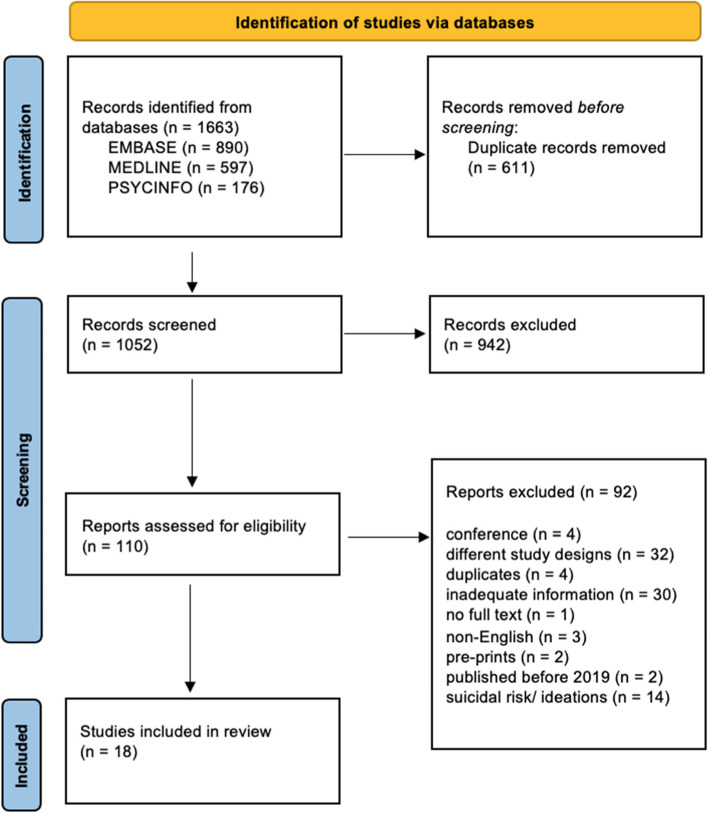
Background: The COVID-19 pandemic has exacerbated the risk factors associated with suicidal behavior and thus, prioritizing its prevention is recommended. Methods: This study systematically reviewed the global evidence on the incidence of suicide/suicidal attempts and the trend in suicidal rates during the COVID-19 pandemic. Cross-sectional and cohort studies investigating the outcomes of suicidal death and suicidal attempts at any setting during the COVID-19 pandemic were searched in Medline, Embase, and PsycINFO databases for papers published from December 2019 to May 2021. Results: Out of 1052 studies18 studies with 12,746 suicidal attempts and 33,345 suicidal deaths were included in the final analysis. The mental health impact of social distancing, COVID-19 quarantine, and financial crises due to loss of employment were associated risk factors with suicide and/or suicidal attempts during the COVID-19 pandemic. Six common thematic recommendations for preventing suicidal deaths and suicidal attempts were identified. Conclusions: Unexpected behavior changes during the COVID-19 pandemic may have contributed to the increasing trend of suicidal attempts reported. Domestic conflicts and violence, financial loss, anxiety and depression, and pre-existing mental health condition/s should be considered in preventing suicidal attempts and deaths secondary to the COVID 19 pandemic. Early detection and timely intervention for individuals with suicidal behavior is crucial and collated recommendations in the current study can be utilized for those preventive interventions. More systematic suicide risk screening process should be introduced who are at risk, along with an evidence base prevention approach.
Overview
CoChat Summary
TL;DR
This systematic review of 18 studies found mixed trends in suicidal attempts and deaths during the COVID-19 pandemic, with more studies reporting increased attempts than decreased attempts, while deaths showed both increases and decreases. It identifies social distancing, quarantine, financial loss, domestic conflict/violence, anxiety/depression, and pre-existing mental health conditions as risk factors and collates prevention recommendations.
Key findings
- Across 18 included studies, 12,746 suicidal attempts and 33,345 suicidal deaths were reported during the COVID-19 pandemic; 16.7% (n = 3) of studies had no reported trend data for suicidal attempts or deaths.
- Suicidal attempts: an increasing trend was reported in 22.2% (n = 4) of studies, a decreased trend in 11.1% (n = 2), and no increased/decreased trend in 5.6% (n = 1). Suicidal deaths: an increasing trend in 16.7% (n = 3), decreased in 5.6% (n = 1), and no increased/decreased trend in 16.7% (n = 3); one study reported decreased trends during the immediate crisis but increased after it passed.
- Risk factors reported by six studies included the mental health impact of social distancing, COVID-19 quarantine, financial crises due to loss of employment, domestic conflicts and violence, anxiety and depression, and pre-existing mental health condition(s).
- Common prevention recommendations included systematic suicide risk screening, facilitating communication and access to interventions, mental health and psychological well-being interventions, economic mitigation measures, and regulation of media reporting.
Methods
- Systematic review registered with PROSPERO (CRD42021253347); Medline, Embase, and PsycINFO were searched from December 2019 to May 2021, with English-language restriction, following PRISMA and the Cochrane handbook.
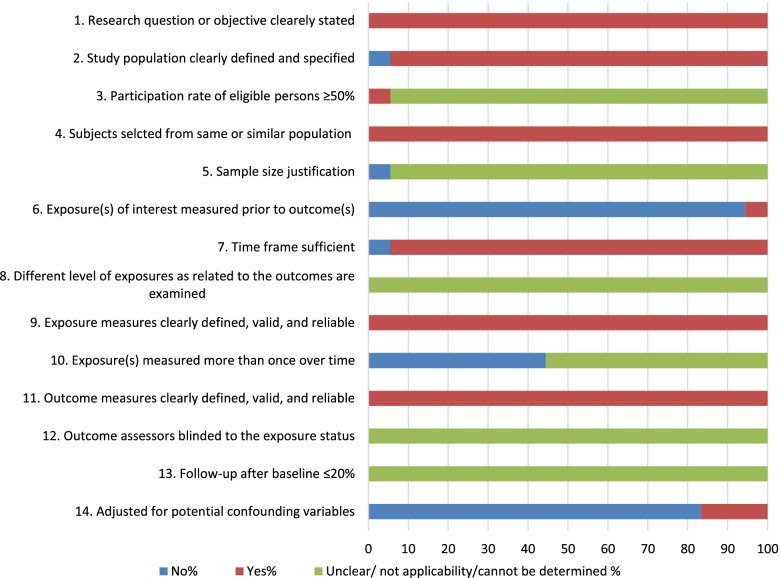
- Included cross-sectional and cohort studies investigating suicidal deaths/attempts during COVID-19; excluded case studies, case reports, commentaries, editorials, letters, reports, reviews, systematic reviews, non-peer-reviewed articles, and conference abstracts. Two independent reviewers screened and extracted data, and quality was assessed with the 14-item Quality Assessment Tool for Observational Cohort and Cross-Sectional Studies.
- 18 studies were included (16 cross-sectional, 2 cohort): 8 from the USA, 4 from Japan, 2 from India, and 1 each from Austria, Canada, Germany, and Nepal. Descriptive statistics were used; meta-analysis was not possible because studies used different data collection durations.
Limitations
- Stated by the authors: potential articles beyond the search strategies may have been missed; different data collection durations during the pandemic made it difficult to estimate incidence rates or pool data for meta-analysis; inter-rater agreement was not calculated.
- Evident from the text: high heterogeneity in settings, populations, and outcome definitions; only 6 of 18 studies provided data on associated risk factors; quality assessment showed more than 80% of studies did not measure exposure before outcomes or adjust for confounding variables, and several quality criteria were undetermined or not applicable in almost all studies.
Model-written summary. Check it against the paper before relying on it.
Integrity signals
Registry
Cites
Statistics
Figures
Verification
Claims the paper makes
16 Valid · 0 Not valid · 25 Not checked · 32 Own results and interpretations
Every source the paper cites for this claim was checked and supports it.
In the paper
“COVID-19 quarantine was mentioned as an associated factor identified by Daly et al., 2021.”
§ Impact of the COVID-19 pandemic on suicidal attempts and death rates: a systematic review > Risk factors associated with suicide/suicidal attempts during COVID-19 pandemic
What the sources say
- Supportedcites Daly et al., 2021 matched to “Associations between periods of COVID-19 quarantine and mental health in Canada” (2021) source
Daly et al. (2021) report exactly this association: the Discussion 'Policy and public health implications' states 'Data from our study suggest an association between COVID-19 quarantine and suicide and self-harm,' and 'Key Findings' says the paper 'contributes evidence that supports the recognition of quarantine as a risk factor for suicidal thoughts and deliberate self-harm.' The Results confirm the aggregate finding (quarantine for all reasons combined associated with increased odds of deliberate self-harm, controlled for age, pre-existing mental health condition, living alone, COVID-19 job loss and income), with the caveat that travel-related quarantine showed no elevated odds. The outcomes measured were suicidal ideation and deliberate self-harm rather than Medically attended attempts, but the claim's hedged 'suicide and/or suicidal attempts' framing is carried by the source's own wording and the 'and/or' construction, so the attribution holds. (LLM, conf=0.85)
plainstates an association- Asserted: passes — The authors put it forward as true.
- Checkable: passes — It can be checked against evidence.
- Load-bearing: unclear — It is unclear whether the paper’s conclusions depend on it.
- Based: passes — The paper gives a reason why it holds.
- Supported
The cited sources support only part of this claim — read each source’s verdict below.
In the paper
“Three studies [23, 27, 39] reported that financial crises due to loss of employment are associated with suicide and/or suicidal attempts during COVID-19.”
- Also stated in: § Risk factors associated with suicide/suicidal attempts during COVID-19 pandemic · plain
“Financial losses/job loss”
- Also stated in: § Results · plain
“Loss of employment”
§ Impact of the COVID-19 pandemic on suicidal attempts and death rates: a systematic review > Risk factors associated with suicide/suicidal attempts during COVID-19 pandemic
What the sources say
- Supportedcites [23] Choudhury R. An observational analysis of suicidal deaths during COVID 19 pandemic lockdown at Lucknow, India. Indian J Forensic Med Toxicol. 2020. 10.37506/ijfmt.v14i4.11517. source
The Discussion passage of our copy states that 'the possible contributing factors which triggered these suicides were mainly financial or related to loss of income during lockdown (49.2%)' and that daily wagers and the self-employed were 'badly stuck by the lockdown (36%)', with 'unemployment, hopelessness and helplessness' forcing them to take such steps. Table-3 (Material & Methods) lists 'Financial losses/job loss' as a probable contributing factor (16 cases, 27.1%) and economic factors overall as 29 cases. The study reports completed suicidal deaths in Lucknow during the 69-day lockdown rather than attempts, but the claim's disjunction ('suicide and/or suicidal attempts') is satisfied by the former, so this work stands as one of the three studies reporting the association. (LLM, conf=0.88)
- Partly supportedcites [27] Nomura S Kawashima T Yoneoka D Tanoue Y Eguchi A Gilmour S Kawamura Y Harada N Hashizume M Trends in suicide in Japan by gender during the COVID-19 pandemic, up to September 2020 Psychiatry Res 2021 295 113629 10.1016/j.psychres.2020.113622 33290942 sourceExperimental — accuracy not yet measured
Nomura et al. (2021) is an ecological excess-mortality study of Japanese suicide up to September 2020 that found excess suicides among women (Results; Abstract) and repeatedly frames economic/employment hardship as part of the COVID-19 suicide burden (Discussion: 'The challenges are not limited to financial hardship and violence'; Conclusions call for 'financial safety nets and social and labor support'). However, the association between economic crisis/unemployment and suicide is stated there as prior knowledge credited to other works (Introduction, citing Wada 2012 and Oyesanya 2015, pre-pandemic; Discussion citing Stuckler 2009), and the only COVID-era employment link reported is to psychological distress, not suicide (Discussion, citing Every-Palmer 2020). The paper also states it had 'no age or occupational level data' (Discussion), so it does not itself report a job-loss/financial-crisis association with suicide, and it covers suicide mortality only, not suicidal attempts. (LLM, conf=0.72)
- Partly supportedcites [39] Shrestha R Siwakoti S Singh S Shrestha AP Impact of the COVID-19 pandemic on suicide and self-harm among patients presenting to the emergency department of a teaching hospital in Nepal PLoS ONE 2021 16 4 e0250706 10.1371/journal.pone.0250706 33930044 PMC8087018 sourceExperimental — accuracy not yet measured
Our copy supports the economic/financial part: Results (Descriptive data) records 'economic crisis' as the alleged cause in 23 (18.4%) suicidal attempts, and Discussion states 'the common causes of suicidal attempts during the lockdown period were disputes with the family members and economic crisis.' However, the specific attribution to loss of employment appears only as hedged background speculation — 'The lockdown has created a sudden economic recession, unemployment, worsened poverty which might have led individuals to contemplate suicide' (Discussion) — not as a measured association this study reports. The claim's framing as one of 'three studies' reporting an employment-loss association therefore overstates what this single-center Nepali ED study found. (LLM, conf=0.75)
plainstates an association- Asserted: passes — The authors put it forward as true.
- Checkable: passes — It can be checked against evidence.
- Load-bearing: passes — The paper’s conclusions depend on it.
- Based: passes — The paper gives a reason why it holds.
- Also stated in: § Risk factors associated with suicide/suicidal attempts during COVID-19 pandemic · plain
The cited sources support only part of this claim — read each source’s verdict below.
In the paper
“Out of 18 studies included in this systematic review, only six studies [22, 23, 27, 30, 33, 39] provided data on associated factors for suicide and/or suicidal attempts during the COVID-19 pandemic.”
§ Impact of the COVID-19 pandemic on suicidal attempts and death rates: a systematic review > Risk factors associated with suicide/suicidal attempts during COVID-19 pandemic
What the sources say
- Partly supportedcites [22] Bergmans RS Larson PS Suicide attempt and intentional self-harm during the earlier phase of the COVID-19 pandemic in Washtenaw County, Michigan J Epidemiol Community Health 2021 75 10 963 969 10.1136/jech-2020-215333 33782051 PMC8008914 sourceExperimental — accuracy not yet measured
Our copy of Bergmans & Larson (2021) does contain associational data on suicide-related behaviour during the pandemic: the Approach section describes an exploratory univariate logistic regression 'tested associations of patient demographic factors (ie, age, gender, race, marital status and number of ED encounters...) with the binary measure for after versus before the COVID-19 pandemic', and the Results/Discussion report odds ratios (male vs female OR 1.16; 18-65 vs <18 OR 1.41; >=3 vs single encounter OR 1.18). So it qualifies as a primary study reporting factors associated with suicide-related outcomes in the pandemic period. However, the counting claim itself — 18 studies in a systematic review of which only six provided associated-factor data — is nowhere in our copy; this paper is a single-county ED time-series study and reports no review or enumeration of studies. Also, its associations are with pandemic period rather than with suicide attempt/self-harm as the outcome, and the Strengths and limitations section notes it 'could not quantify susceptibility by social or economic status' and did not test method. (LLM, conf=0.65)
- Supportedcites [23] Choudhury R. An observational analysis of suicidal deaths during COVID 19 pandemic lockdown at Lucknow, India. Indian J Forensic Med Toxicol. 2020. 10.37506/ijfmt.v14i4.11517. source
The Material & Methods section (Table 3) reports probable contributing factors for suicides during the COVID-19 lockdown in Lucknow, including financial losses, domestic conflicts, poverty and anxiety. The citation identifies this paper as one of the studies providing associated-factor data; the six-of-18 count describes the citing review, not this individual study. (LLM, conf=0.91)
- Supportedcites [27] Nomura S Kawashima T Yoneoka D Tanoue Y Eguchi A Gilmour S Kawamura Y Harada N Hashizume M Trends in suicide in Japan by gender during the COVID-19 pandemic, up to September 2020 Psychiatry Res 2021 295 113629 10.1016/j.psychres.2020.113622 33290942 source
This citation identifies Nomura et al. as one of the studies providing data relevant to factors associated with suicide during COVID-19. The Results report suicide mortality separately for women and men and find excess deaths among women in July–September 2020, supporting its inclusion as a study with gender-related data. The count of six out of 18 describes the citing review, not a finding attributed to Nomura et al. (Results; page unavailable). (LLM, conf=0.87)
- Not checked yetcites [30] Ammerman BA Burke TA Jacobucci R McClure K Preliminary investigation of the association between COVID-19 and suicidal thoughts and behaviors in the U.S. J Psychiatr Res 2021 134 32 38 10.1016/j.jpsychires.2020.12.037 33360222 source
- Partly supportedcites [33] Daly Z Slemon A Richardson CG Salway T McAuliffe C Gadermann AM Thomson KC Hirani S Jenkins EK Associations between periods of COVID-19 quarantine and mental health in Canada Psychiatry Res 2021 295 113631 10.1016/j.psychres.2020.113631 33310417 PMC7718586 sourceExperimental — accuracy not yet measured
The Methods (Variables of interest; page unavailable) and Results show that this study provides data on factors associated with suicidal ideation and deliberate self-harm during the pandemic, so it fits the citation's role as an example of a study reporting associated factors. It did not measure completed suicide or suicide attempts; its questions asked about suicidal thoughts and deliberately hurting oneself. The six-of-18 count describes the citing review, not a finding attributed to this paper. (LLM, conf=0.84)
- Supportedcites [39] Shrestha R Siwakoti S Singh S Shrestha AP Impact of the COVID-19 pandemic on suicide and self-harm among patients presenting to the emergency department of a teaching hospital in Nepal PLoS ONE 2021 16 4 e0250706 10.1371/journal.pone.0250706 33930044 PMC8087018 source
The Results (Descriptive data; page unavailable) report alleged causes of suicidal attempts, including family disputes and economic crisis. The Discussion also identifies these as common causes during lockdown. This supports citing the paper as one that provided data on associated factors; the count of 18 studies and six reporting factors belongs to the citing review, not to this source. (LLM, conf=0.90)
plain- Asserted: passes — The authors put it forward as true.
- Checkable: passes — It can be checked against evidence.
- Load-bearing: unclear — It is unclear whether the paper’s conclusions depend on it.
- Based: passes — The paper gives a reason why it holds.
- Partly supported
The cited sources support only part of this claim — read each source’s verdict below.
In the paper
“There is substantial evidence to demonstrate the deterioration of mental health among people during and after the COVID-19 pandemic compared to the pre-COVID-19 period [13–16].”
§ Impact of the COVID-19 pandemic on suicidal attempts and death rates: a systematic review > Introduction
What the sources say
- Partly supportedcites [13] Breslau J Finucane ML Locker AR Baird MD Roth EA Collins RL A longitudinal study of psychological distress in the United States before and during the COVID-19 pandemic Prev Med 2021 143 106362 10.1016/j.ypmed.2020.106362 33388325 PMC9753596 sourceExperimental — accuracy not yet measured
Breslau et al. (2021) do document worsening relative to a pre-pandemic assessment: the Discussion states that 'the prevalence of SD... during the pandemic exceeded levels that would be expected in the absence of the pandemic', and the Results (Table 1, Abstract) report substantial within-person increases in distress above T1 (e.g., 17.7% of women, 20.8% of ages 20-39). However, the source covers only the first two months after the U.S. national emergency declaration (T1 February 2019 vs. T2 May 2020), so nothing in it addresses the 'after the COVID-19 pandemic' portion of the claim, and its headline population comparison is null — SD was 10.9% pre-pandemic worst month vs. 10.1% during the pandemic, 'did not differ... for any demographic group'. The Introduction also frames the evidence base as thin ('There is little data yet available on psychological distress during the COVID-19 pandemic'), which does not carry the claim's 'substantial evidence' weight. (LLM, conf=0.75)
- Partly supportedcites [14] Benke C Autenrieth LK Asselmann E Pané-Farré CA Lockdown, quarantine measures, and social distancing: Associations with depression, anxiety and distress at the beginning of the COVID-19 pandemic among adults from Germany Psychiatry Res 2020 293 113462 10.1016/j.psychres.2020.113462 32987222 PMC7500345 sourceExperimental — accuracy not yet measured
Our copy of Benke et al. (2020) supports only the 'during the pandemic' half of the claim: the Discussion states that 'the current findings suggest that the COVID-19 pandemic causes negative consequences for mental health especially in vulnerable groups', and the Abstract reports that higher lockdown restrictions, greater reduction of social contacts and greater perceived changes in life were associated with higher mental health impairments in a German community sample (N = 4335). It does not support a deterioration relative to the pre-COVID-19 period: the study was a single cross-sectional online survey run 17 April–15 May 2020 (Methods, Participants) with no pre-pandemic mental-health baseline (the only January-2020 reference is for social-contact frequency, not symptoms), and nothing addresses the period 'after' the pandemic. The claim's framing of 'substantial evidence' also runs against this source, whose Abstract states that 'evidence on the associations of the COVID-19 pandemic and public health measures with mental health are limited so far'. (LLM, conf=0.78)
- Partly supportedcites [15] Ozamiz-Etxebarria N Dosil-Santamaria M Picaza-Gorrochategui M Idoiaga-Mondragon N Stress, anxiety, and depression levels in the initial stage of the COVID-19 outbreak in a population sample in the northern Spain Cad Saude Publica 2020 36 4 e00054020 10.1590/0102-311X00054020 32374806 sourceExperimental — accuracy not yet measured
Our copy supports worsening mental-health indicators during the early pandemic: the Discusión reports higher means on stress, anxiety and depression after the 14 March stay-at-home order, and the Conclusiones state that under confinement and threat of illness these levels rise in the population. However, the Metodología describes a cross-sectional survey of 976 Basque adults administered only in the initial outbreak phase, with no pre-COVID-19 measurement, so the claim's comparison 'compared to the pre-COVID-19 period' is not supported by this source; nor does it cover the period 'after' the pandemic (the paper only predicts further increases as confinement continues). The English abstract likewise notes levels were 'generally low at the start of the alert'. (LLM, conf=0.78)
- Partly supportedcites [16] Pierce M Hope H Ford T Hatch S Hotopf M John A Kontopantelis E Webb R Wessely S McManus S Mental health before and during the COVID-19 pandemic: a longitudinal probability sample survey of the UK population The Lancet Psychiatry 2020 7 10 883 892 10.1016/S2215-0366(20)30308-4 32707037 PMC7373389 sourceExperimental — accuracy not yet measured
Pierce et al. (2020) clearly support deterioration DURING the pandemic versus pre-COVID-19: the Abstract Findings report prevalence of clinically significant mental distress rising from 18·9% (2018–19) to 27·3% in April 2020 and mean GHQ-12 from 11·5 to 12·6, 0·48 points above projected trends, and the Interpretation states 'By late April, 2020, mental health in the UK had deteriorated compared with pre-COVID-19 trends.' However, our copy contains no post-pandemic follow-up — fieldwork was one month into the first UK lockdown, and the Discussion only anticipates ('we believe it is reasonable to expect') sustained distress and recession-related effects later. The 'and after the COVID-19 pandemic' element of the citing sentence is therefore not supported by this source. (LLM, conf=0.82)
boostedstates an association- Asserted: passes — The authors put it forward as true.
- Checkable: passes — It can be checked against evidence.
- Load-bearing: passes — The paper’s conclusions depend on it.
- Based: passes — The paper gives a reason why it holds.
- Partly supported
Every source the paper cites for this claim was checked and supports it.
In the paper
“The study done by Nomura et al., 2021 in Japan revealed an increased rate of suicide among women.”
§ Impact of the COVID-19 pandemic on suicidal attempts and death rates: a systematic review > Recommendations for prevention of suicide/suicidal attempts during the COVID-19 pandemic
What the sources say
- Supportedcites [27] Nomura S Kawashima T Yoneoka D Tanoue Y Eguchi A Gilmour S Kawamura Y Harada N Hashizume M Trends in suicide in Japan by gender during the COVID-19 pandemic, up to September 2020 Psychiatry Res 2021 295 113629 10.1016/j.psychres.2020.113622 33290942 source
The Abstract and Discussion (p. 1, §4) report excess suicide deaths among women in Japan in July, August and September 2020 during the COVID-19 pandemic, with none among men, and the Discussion quantifies the women's burden as about 20-30% above previous years. This matches the citing sentence's attribution of an increased suicide burden among Japanese women during the pandemic. (LLM, conf=0.92)
plainstates an association- Asserted: passes — The authors put it forward as true.
- Checkable: passes — It can be checked against evidence.
- Load-bearing: passes — The paper’s conclusions depend on it.
- Based: passes — The paper gives a reason why it holds.
- Supported
40 more claims · 9 with their cited sources checked
Create a free account to see all 73 claims and to verify the 38 references still open.
- Probably not a substantial claim. 22
- It may state two separate claims as one. 14
- The quote only partly states this claim. 1
Self-check
Percentages, sums and reported differences re-computed from the paper’s own numbers.
Each contradiction between two passages listed here was confirmed by an independent check.
Rated minor: it would not touch a result — a value no result rests on, a p-value that stays on the same side of the significance level, or a conflict that is clerical, resolved elsewhere in the paper, or outside its own findings.
In the paper
§ Impact of the COVID-19 pandemic on suicidal attempts and death rates: a systematic review > Characteristics of included studies
“Holland et al., 2021 [35] | Japan”
§ Impact of the COVID-19 pandemic on suicidal attempts and death rates: a systematic review > Characteristics of included studies
“Patients who visited USA Emergency Departments”
Rated minor: it would not touch a result — a value no result rests on, a p-value that stays on the same side of the significance level, or a conflict that is clerical, resolved elsewhere in the paper, or outside its own findings.
In the paper
§ Impact of the COVID-19 pandemic on suicidal attempts and death rates: a systematic review > Abstract > Results
“Six common thematic recommendations for preventing suicidal deaths and suicidal attempts were identified.”
§ Impact of the COVID-19 pandemic on suicidal attempts and death rates: a systematic review > Recommendations for prevention of suicide/suicidal attempts during the COVID-19 pandemic
“4) Implement measures to mitigate the impact on the economy (e.g., Provision of economic supports and changes in payment policies) [35, 37], and 5) Regulation of media reporting [27, 37].”
Citations
Cites
WHO Declares COVID-19 a Pandemic.
Cucinotta, D., & Vanelli, M. (2020) · Acta bio-medica dell'Ateneo parmense/Acta biomedica · doi:10.23750/abm.v91i1.9397 · Cited by 7,457
Mental health and the COVID-19 pandemic
Pfefferbaum, B., & North, C. S. (2020) · New England Journal of Medicine · doi:10.1056/nejmp2008017 · Cited by 4,378 · cited 1×
“Furthermore, it is evident that during pandemics, a considerable number of people present with anxiety and depressive symptoms though they do not have any pre-existing mental health conditions [8].”
BackgroundCOVID-19 pandemic and mental health consequences: Systematic review of the current evidence
Vindegaard, N., & Benros, M. E. (2020) · Brain, Behavior, and Immunity · doi:10.1016/j.bbi.2020.05.048 · Cited by 3,221 · cited 1×
“The evidence on the mental health harms caused by the response to COVID-19 found to be overwhelming, and studies on the general public revealed lower psychological well-being and higher scores of anxiety and depression compared to before COVID-19 [10].”
ResultPierce, M., Hope, H., Ford, T., Hatch, S., Hotopf, M., John, A., Kontopantelis, E., Webb, R., Wessely, S., McManus, S., et al. (2020) · The Lancet Psychiatry · doi:10.1016/s2215-0366(20)30308-4 · Cited by 2,621
Mental health in the COVID-19 pandemic
Cullen, W., Gulati, G., & Kelly, B. D. (2020) · QJM: An International Journal of Medicine · doi:10.1093/qjmed/hcaa110 · Cited by 1,275
Ozamiz-Etxebarria, N., Dosil-Santamaria, M., Picaza-Gorrochategui, M., & Idoiaga-Mondragon, N. (2020) · Cadernos de Saúde Pública · doi:10.1590/0102-311x00054020 · Cited by 892
COVID 19 and its mental health consequences
Kumar, A., & Nayar, K. R. (2021) · Journal of Mental Health · doi:10.1080/09638237.2020.1757052 · Cited by 883 · cited 1×
“As new measures imposed in many countries such as self-isolation and quarantine, which affects day-to-day activities, routines, and livelihoods of people, they may lead to an increase in loneliness, anxiety, depression, insomnia, harmful alcohol and drug use, and self-harm or suicidal behaviour [12].”
BackgroundMental health outcomes of the CoViD-19 pandemic
Talevi, D., Socci, V., Carai, M., Carnaghi, G., Faleri, S., Trebbi, E., di Bernardo, A., Capelli, F., & Pacitti, F. (2020) · Rivista di Psichiatria · doi:10.1708/3382.33569 · Cited by 821
Telemedicine and the COVID-19 Pandemic, Lessons for the Future
Bashshur, R., Doarn, C. R., Frenk, J. M., Kvedar, J. C., & Woolliscroft, J. O. (2020) · Telemedicine and e-Health · doi:10.1089/tmj.2020.29040.rb · Cited by 642 · cited 1×
“In this regard, as several studies have already identified the positive effects of new technologies in combating and preventing suicidal behavior, virtual platforms can be used as an effective way of screening to identify the people those at risk at the early stages [51, 53].”
BackgroundBenke, C., Autenrieth, L. K., Asselmann, E., & Pané-Farré, C. A. (2020) · Psychiatry Research · doi:10.1016/j.psychres.2020.113462 · Cited by 585
Research works printed but not linked: 3
- World Health Organiztion Preventing suicide: A global imperative: World Health Organization 2014
- Sengupta D Saha S Bharatee P Prasad R Pattern of Suicidal Deaths in the First Month of Lockdown at A Tertiary Care Hospital: a Time Trend Analysis Indian J Forensic Med Toxicol 2020 14 4 167
- Bhalotra S Britto GCD Pinotti P Sampaio B ob displacement, unemployment benefits and domestic violence 2021
Cited by
Davis Weaver, N., Bertolacci, G. J., Rosenblad, E., Ghoba, S., Cunningham, M., Ikuta, K. S., Moberg, M. E., Mougin, V., Han, C., Wool, E. E., et al. (2025) · The Lancet Public Health · doi:10.1016/s2468-2667(25)00006-4 · Cited by 181
“60 Furthermore, the calculation of mean age at the time of suicide death is not standardised for different population age structures.”
Suicide before and during the COVID-19 Pandemic: A Systematic Review with Meta-Analysis
Yan, Y., Hou, J., Li, Q., & Yu, N. X. (2023) · International Journal of Environmental Research and Public Health · doi:10.3390/ijerph20043346 · Cited by 185
“Aligned with the upward trend found by a systematic review [22], the pooled prevalence of suicidal ideation and suicide attempt were estimated to be 10.”
BackgroundVitamin D in Depression: A Potential Bioactive Agent to Reduce Suicide and Suicide Attempt Risk
Somoza-Moncada, M. M., Turrubiates‐Hernández, F. J., Muñóz-Valle, J. F., Gutiérrez-Brito, J. A., Díaz-Pérez, S. A., Arelis, A. A., & Hernández‐Bello, J. (2023) · Nutrients · doi:10.3390/nu15071765 · Cited by 41
“associated with this exacerbation [4].”
Factors Associated with Post-Traumatic Growth during the COVID-19 Pandemic: A Systematic Review
Bovero, A., Balzani, S., Tormen, G., Malandrone, F., & Carletto, S. (2023) · Journal of Clinical Medicine · doi:10.3390/jcm13010095 · Cited by 31
Unmasking the COVID-19 pandemic prevention gains: excess mortality reversal in 2022
Walkowiak, M. P., Domaradzki, J., & Walkowiak, D. (2023) · Public Health · doi:10.1016/j.puhe.2023.08.004 · Cited by 28
Suicide Risk in Post-COVID-19 Syndrome
Simonetti, A., Bernardi, E., Janiri, D., Mazza, M., Montanari, S., Catinari, A., Terenzi, B., Tosato, M., Galluzzo, V., Ciciarello, F., et al. (2022) · Journal of Personalized Medicine · doi:10.3390/jpm12122019 · Cited by 22
“Evidence on the increased/decreased risk of suicide during the COVID-19 pandemic is still conflicting [7,25].”
BackgroundResultSobh, Z. K., Kholief, M., Sobh, E. K., & Balah, M. I. F. (2023) · Critical Reviews in Toxicology · doi:10.1080/10408444.2023.2225539 · Cited by 24
“In recent years, the COVID-19 crisis and economic recessions exacerbated the risk factors associated with suicidal attempts (Huikari and Korhonen 2021; Pathirathna et al. 2022).”
BackgroundYang, Y., Zhang, E. L., Liu, Y., Ge, X., Su, Z., Cheung, T. C. C., Ng, C. H., Xiang, M., & Xiang, Y. (2023) · Journal of Affective Disorders · doi:10.1016/j.jad.2023.07.030 · Cited by 23
Seasonal variation in suicide: age group and summer effects in the United States (2015–2020)
To, S., Messias, E., Burch, L., & Chibnall, J. T. (2024) · BMC Psychiatry · doi:10.1186/s12888-024-06309-7 · Cited by 24
“…in suicides and suicide attempts throughout the pandemic resulting from a variety of factors such as social distancing and loss of employment (Pathirathna et al., [18]), indicating that the decrease in suicides in the present study may have been a temporary early effect of the SARS-CoV pandemic.”
Andreo-Jover, J., Ramos, J. C., Bobes, J., Bravo‐Ortiz, M. F., Cebrià, A. I., Crespo‐Facorro, B., de la Torre‐Luque, A., Díaz‐Marsá, M., Fernández-Rodrigues, V., Torres, N. G., et al. (2024) · Journal of Psychiatric Research · doi:10.1016/j.jpsychires.2024.01.005 · Cited by 22
Melnyk, B. M. (2023) · Nursing Outlook · doi:10.1016/j.outlook.2023.102058 · Cited by 17
Valle‐Palomino, N., Mantilla, M. M. F., Talledo‐Sebedón, D. D. L., Guzmán-González, O. V., Carguachinchay-Huanca, V. H., Sosa-Lizama, A. A., Orlandini‐Valle, B., & Miranda, O. M. V. (2023) · Journal of Clinical Medicine · doi:10.3390/jcm12216700 · Cited by 16
Austria‐Corrales, F., Jiménez-Tapia, A., Astudillo‐García, C. I., Arenas-Landgrave, P., Xochihua-Tlecuitl, T., Cruz-Cruz, C., Rivera-Rivera, L., Gómez-García, J. A., Palacios-Hernández, B., Pérez-Amezcua, B., et al. (2023) · Frontiers in Public Health · doi:10.3389/fpubh.2023.1157581 · Cited by 19
Suicide Risk Assessment and Prevention Tools in the UK: Current Landscape and Future Directions
Arowosegbe, A., & Oyelade, T. (2023) · Psychiatry International · doi:10.3390/psychiatryint4040032 · Cited by 17
“Multiple factors coexisting in an individual are likely to increase the likelihood of a fatal suicide attempt according to previous studies [21].”
ResultPaudel, K., Gautam, K., Bhandari, P., Wickersham, J. A., Dhakal, M., Sharma, S., Poudel, K. C., Ha, T., & Shrestha, R. (2023) · PLOS Global Public Health · doi:10.1371/journal.pgph.0002348 · Cited by 17
“Moreover, factors such as financial stress, domestic violence, food insecurity, and limited or variable access to healthcare services might have significantly increased suicidal behavior [33].”
BackgroundIndonesian Stakeholders’ Perspectives on Warning Signs and Beliefs about Suicide
Setiyawati, D., Puspakesuma, N., Jatmika, W. N., & Colucci, E. (2024) · Behavioral Sciences · doi:10.3390/bs14040295 · Cited by 15
“%) article reported no change [10].”
Practical pathway for the management of depression in the workplace: a Canadian perspective
Chokka, P. R., Bender, A., Brennan, S., Ahmed, G., Corbière, M., Dozois, D. J. A., Habert, J., Harrison, J., Katzman, M. A., McIntyre, R. S., et al. (2023) · Frontiers in Psychiatry · doi:10.3389/fpsyt.2023.1207653 · Cited by 16
“A systematic review including 18 studies found that, although there were conflicting findings, the majority of studies reported an increasing trend of suicidal attempts during compared to before the COVID-19 pandemic (14).”
ResultSuicidal Ideation in Iraqi Medical Students Based on Research Using PHQ-9 and SSI-C
Al-Imam, A., Motyka, M. A., Hoffmann, B., Basil, S., & Al-Hemiary, N. J. (2023) · International Journal of Environmental Research and Public Health · doi:10.3390/ijerph20031795 · Cited by 15
Boisvert, C., Talarico, R., Gandhi, J., Kaluzienski, M., Dingwall‐Harvey, A. L. J., White, R. R., Sampsel, K., Wen, S. W., Walker, M. C., Muldoon, K. A., et al. (2023) · BMC Pregnancy and Childbirth · doi:10.1186/s12884-023-05903-z · Cited by 12
“In the general population, suicide attempts and death by suicide have risen during the COVID-19 pandemic, [18], however, it is yet to be determined how this will change for the perinatal population.”
BackgroundResultAymerich, C., Pedruzo, B., de Pablo, G. S., Olazabal, N., Catalán, A., & Torres, M. Á. G. (2024) · Frontiers in Psychiatry · doi:10.3389/fpsyt.2024.1380401 · Cited by 17
“The results of our study suggest that this trend likely persisted in the years after the pandemic, in line with initial predictions made at the start of the pandemic (48) and similar fi ndings in other countries (49, 50).”
ResultYan, Y., Li, J., Liu, X., Li, Q., & Yu, N. X. (2024) · Journal of Medical Internet Research · doi:10.2196/48907 · Cited by 12
“%) has notably increased compared with prepandemic levels [5,6].”
Singh, P., Nawaz, S., Seiber, E. E., Bryant, I., Moon, K. J., Wastler, H. M., & Breitborde, N. J. K. (2023) · JAMA Network Open · doi:10.1001/jamanetworkopen.2023.49305 · Cited by 9
Sotelo, K. V., Cárdenas, F. P., González, B. Z., Orozco, C. M. V., Rodríguez, I. H., & Pérez, C. L. (2023) · Frontiers in Psychology · doi:10.3389/fpsyg.2022.984374 · Cited by 9
“On the other hand, staying at home has led to a mental burden that increases levels of depression and anxiety in the young, elderly, and fragile populations and cannot be ignored, making it a risk factor for suicidal ideation and behavior (Sayeed et al., 2020; Nomura et al., 2021; Rahman et al., 2021; Pathirathna et a…”
BackgroundThe Mortality from External Causes: Impact of the COVID-19 Pandemic and the War in Ukraine
Ryngach, N. O. (2023) · Statistics of Ukraine · doi:10.31767/su.1(100)2023.01.13 · Cited by 8
“Огляд понад тисячі досліджень щодо суїцидальних спроб та смертей внаслідок самогубств надав змогу сформулювати низку тематичних рекомендацій щодо попередження таких втрат, передусім через систематичний процес скринінгу суїциду для тих, хто перебуває в групі ризику [3].”
The Risk of Suicide in the Post-COVID-19 Emergency Era: Psychological and Forensic Implications
Sacco, M. A., Gualtieri, S., Ricci, P., & Aquila, I. (2023) · Cureus · doi:10.7759/cureus.49081 · Cited by 10
Tu, L., Liu, Y., Zhu, H., Zhang, Q., & Xiao, J. (2024) · BMC Public Health · doi:10.1186/s12889-024-19095-4 · Cited by 11
The long COVID and its mental health manifestations – the review of literature
Pietrzak, P., & Hanke, W. (2024) · International Journal of Occupational Medicine and Environmental Health · doi:10.13075/ijomeh.1896.02373 · Cited by 11
“For example an increased rate of suicide attempts was reported in 22.2% of studies whereas the decreased trend was observed in 11.1% of cases with 5.6% of studies reporting neither negative nor positive trend in the level of suicide attempts [7].”
ResultInfluentialAssociation of HTTLPR, BDNF, and FTO Genetic Variants with Completed Suicide in Slovakia
Bednářová, A., Habalová, V., Iannaccone, S. F., Tkáč, I., Jarčušková, D., Krivosova, M., Marcatili, M., & Hlaváčová, N. (2023) · Journal of Personalized Medicine · doi:10.3390/jpm13030501 · Cited by 9
“50 per population of 100,000) in Europe between the years 2000–2019, the COVID-19 pandemic could have affected the current situation, and the most recent data are yet to come [2,3].”
BackgroundMcCaughey, E. J., Ho, F. K. W., Mackay, D., Pell, J. P., Humburg, P., & Purcell, M. (2023) · Spinal Cord · doi:10.1038/s41393-023-00939-6 · Cited by 7
Gozum, I. E. A., & Gutierrez, J. G. (2023) · Journal of Religion and Health · doi:10.1007/s10943-023-01865-w · Cited by 7
“A report cited domestic conflicts and violence, financial loss, anxiety and depression, and preexisting mental health conditions as factors in the spike in suicide cases (Pathirathna et al., 2022).”
BackgroundPetrocelli, M., Ruggiero, F., Allegri, D., Cutrupi, S., Baietti, A. M., Salzano, G., Maglitto, F., Manfuso, A., Copelli, C., Barca, I., et al. (2023) · Oral and Maxillofacial Surgery · doi:10.1007/s10006-023-01201-2 · Cited by 7
Jeremić, J., Mihaljević, J., Radosavljević, I., Jurišić, M., Suđecki, B. J., Stojičić, M., Jovanovic, M. D., Pavlović, Z., Radenović, K., Milic, N., et al. (2024) · Frontiers in Public Health · doi:10.3389/fpubh.2024.1234584 · Cited by 7
Himel, M. R., Siyam, S. A., Tanni, J., Rafiquzzaman, S., Alam, M. F., Hassan, M. N., & Uddin, M. J. (2024) · Health Science Reports · doi:10.1002/hsr2.70203 · Cited by 9
Rotejanaprasert, C., Phoncharoenwirot, C., Thanutchapat, P., Mekchaiporn, O., Chienwichai, P., Detkong, T., & Maude, R. J. (2025) · Scientific Reports · doi:10.1038/s41598-025-20481-0 · Cited by 6
“Studies from other countries have documented rising mental health challenges, financial strain, and increased interpersonal conflicts in the post-pandemic period, all of which may contribute to suicide risk 43,44 .”
Kheibari, A., Lawson, S. G., Szechy, K. A., & Sheehan, R. (2024) · Death Studies · doi:10.1080/07481187.2024.2326927 · Cited by 7
“Instead, the impact is complex and multifactorial – which is consistent with other studies showing varied outcomes (Pathirathna et al., 2022).”
Yu, C., Hu, W., & Xiong, L. (2025) · Journal of Affective Disorders · doi:10.1016/j.jad.2025.03.157 · Cited by 6
Rodríguez–Jiménez, R., Fernandez, L. G., Pérez, B. S. B., Ansede‐Cascudo, J. C., Arroba, C. M., Sendra‐Gutiérrez, J. M., Romero‐Ferreiro, V., Álvarez-Mon, M. Á., Wynn, R., Palao, D. J., et al. (2025) · Psychiatry Research · doi:10.1016/j.psychres.2025.116500 · Cited by 6
“This pattern aligns with global studies highlighting how various social, economic, and mental health stressors, probably exacerbated by the pandemic, have impacted people ´ s mental health (Farooq et al., 2021; Pathirathna et al., 2022; Yan et al., 2023).”
A pilot predictive model based on COVID-19 data to assess suicidal ideation indirectly
Prelog, P. R., Matić, T., Pregelj, P., & Sadikov, A. (2023) · Journal of Psychiatric Research · doi:10.1016/j.jpsychires.2023.05.008 · Cited by 8
“Along with the rise in depression and anxiety, several studies and a recent systematic review report the rise in suicidal attempts and deaths by suicide (Pathirathna et al., 2022; García-Iglesias et al., 2022).”
Chainé, S. M., Palafox, G. P., Robles-García, R., Arenas-Landgrave, P., Montoya, A. L., Romero, V. F., & Imaz-Gispert, M. A. (2024) · Journal of Affective Disorders · doi:10.1016/j.jad.2023.12.077 · Cited by 6
Fernández‐Martínez, E., Barros-Martínez, A., Martínez-Fernández, M. C., & Quiñones-Pérez, M. (2024) · Healthcare · doi:10.3390/healthcare12030385 · Cited by 6
“A systematic review of the influence of COVID-19 on suicide attempts indicates that the unforeseen behavioral changes during the pandemic may have played a role in the escalating trend of suicide attempts [28].”
BackgroundBeneria, A., Marte, L., Quesada‐Franco, M., García-González, S., Restoy, D., Pérez-Galbarro, C., Santesteban‐Echarri, O., Ramos, R., Ramos‐Quiroga, J. A., & Braquehais, M. D. (2024) · BMC Psychiatry · doi:10.1186/s12888-024-06232-x · Cited by 6
“Despite that, the literature reported an increase in SA in the elderly during the COVID period, associated with more vulnerability, lower economic inputs, and isolation [33, 34].”
BackgroundPinzón, J. H., da Silva, A. M. B., Machado, W. D. L., Moret‐Tatay, C., & de Oliveira, M. Z. (2023) · Journal of Personalized Medicine · doi:10.3390/jpm13060955 · Cited by 5
“The financial crisis resulting from job loss and social distancing during the COVID-19 quarantine was a risk factor associated with suicidal attempts and suicide, impacting mental health [12].”
BackgroundCause-specific mortality in Korea during the first year of the COVID-19 pandemic
Bahk, J., & Jung‐Choi, K. (2022) · Epidemiology and Health · doi:10.4178/epih.e2022110 · Cited by 6
“However, the COVID-19 pandemic could also be related to suicide, as the risk of suicidal thoughts may have increased due to quarantine, exhaustion, social distancing, unemployment, and financial hardships [47].”
BackgroundMerino, E. S., Martínez-Vispo, C., & González‐Sanguino, C. (2023) · Mortality · doi:10.1080/13576275.2023.2203805 · Cited by 4
“Another mental health-related consequence derived from COVID-19 is the increased rates of suicide ideation, attempts, and completed suicides (Pathirathna et al., 2022).”
Köse, S., Inal-Kaleli, I., Boru, E., Kan, Ö. Y., Hakverdi, G., Üçüncü, B., Calik, H. N., Savran-Yorulmaz, S., Pilan, B. Ş., Özbaran, B., et al. (2023) · Asian Journal of Psychiatry · doi:10.1016/j.ajp.2023.103698 · Cited by 4
Peña, J. R. Z., Peña, J., Landaeta, A. P. V., Ferro, E., Marín, A. L., Bejarano, D. R. C., & López, J. E. B. (2023) · Revista Colombiana de Psiquiatría · doi:10.1016/j.rcp.2023.09.001 · Cited by 5
Lo, H. K. Y., Chan, J. K. N., Yip, E. W.-C., Chui, E. M. C., Fung, V. S. C., Wong, C. S. M., Chu, R. S. T., So, Y. K., Chan, J. M. T., Chung, A. K. K., et al. (2023) · European Neuropsychopharmacology · doi:10.1016/j.euroneuro.2023.08.485 · Cited by 4
ÖZTÜRK, Ş. B., & AKBAYIR, S. B. (2023) · Journal of Family Counseling and Education · doi:10.32568/jfce.1270737 · Cited by 3
Sebti, J., Serres, M., Calabro, V., & Tsai, G. E. (2023) · The Lancet Regional Health - Western Pacific · doi:10.1016/j.lanwpc.2023.100899 · Cited by 4
“14 Although the fi rst cases of COVID-19 were recorded in March 2020, the number of cases and deaths of COVID-19 remained relatively low during strict social distancing measures and an active lock-down.”
BackgroundMuñoz, J. (2024) · Heart & Lung · doi:10.1016/j.hrtlng.2024.06.017 · Cited by 3
Hori, K., Yamada, Y., Namba, H., Kimura, M., Fujita, H., & Date, H. (2025) · JMIR Formative Research · doi:10.2196/65204 · Cited by 3
“Those who faced unemployment or had a history of chronic or mental illnesses were particularly susceptible to worsening mental health [1-5].”
Shielding without a Shield—Older People under COVID-19: A Comparison of Four Cities
Wong, J. H. C., & Ho, G. W. (2022) · Social Sciences · doi:10.3390/socsci11110498 · Cited by 3
Lo, H. K. Y., Chan, J. K. N., Wong, C. S. M., Wong, G. H. S., Lei, J. H. C., So, Y. K., Fung, V. S. C., Chu, R. S. T., Ling, R. H. Y., Chung, A. K. K., et al. (2024) · Frontiers in Psychiatry · doi:10.3389/fpsyt.2023.1252600 · Cited by 3
Preventing suicide by jumping in public locations: a systematic review of interventions
Chamberlain, B., & Woodnutt, S. (2024) · Mental Health Practice · doi:10.7748/mhp.2024.e1681 · Cited by 4
White, M., & Hungwe, C. (2024) · Vulnerable Children and Youth Studies · doi:10.1080/17450128.2024.2326422 · Cited by 3
“During the COVID-19 pandemic, gender-based violence, financial loss, pressure from school, anxiety, depression, and pre-existing mental health conditions led to suicide ideation and suicidality (Pathirathna et al., 2022).”
BackgroundEl suicidio asistido como estrategia de prevención del suicidio traumático
Sebastiani, M. A. (2023) · Evidencia actualizacion en la práctica ambulatoria · doi:10.51987/evidencia.v27i1.7103 · Cited by 4
Intended and suicidal trauma to the anterior neck in Finnish young adults
Mäkitie, R. E., Kosola, S. K., & Ilmarinen, T. T. (2025) · European Journal of Trauma and Emergency Surgery · doi:10.1007/s00068-025-02813-x · Cited by 2
“…discrep - ancies could be due to differences in evaluated populations, geographical areas and pandemic timepoints, and today the general understanding is that the pandemic period led to an increase in suicidal ideation and attempts while death rates by suicide might have stayed constant [30, 31 ].”
The Sociology of Suicide After COVID-19: Assessment of the Spanish Case
Vilas, E. F., Coca, J. R., González, J. J. L., & Carrera, M. I. (2025) · Behavioral Sciences · doi:10.3390/bs15050606 · Cited by 2
“While some studies found no significant changes in suicide rates during the pandemic (Pathirathna et al., 2022), others reported an increase in suicidal ideation and suicide attempts (Schnitzer et al., 2023).”
Rahmon, I. J., Postema, A. S., Bosmans, M. W. G., Marra, E., & Dückers, M. (2025) · Public Health · doi:10.1016/j.puhe.2025.105902 · Cited by 3
Wang, X., Xie, Y., Cai, J., Zhang, X., Zhou, W., Zhang, J., Ren, G., & Tao, Z. (2025) · BMC Public Health · doi:10.1186/s12889-025-24468-4 · Cited by 2
“The difference could result from the country-to-country variations in social, cultural, ethnic, or religious traits, and mandatory COVID-19 isolation policies [39–41].”
Graziano, F., Davico, C., Giordano, I., Lonardelli, E., Marcotulli, D., & Calandri, E. (2026) · Behavioral Sciences · doi:10.3390/bs16030409 · Cited by 3
“In recent years, following the COVID-19 crisis, suicide rates have increased (Pathirathna et al., 2022; Marco et al., 2025); in Italy, for example, the female population aged 10–24 years was the most affected, with a notable increase especially in the adolescent age group between 15 and 19 years…”
InfluentialGoldblatt, M. J., Ronningstam, E. F., Briggs, S. R., Lindner, R., & Teising, M. (2023) · The Scandinavian Psychoanalytic Review · doi:10.1080/01062301.2024.2303568 · Cited by 2
“Early detection of individuals at risk for self-attack and timely interventions are recommended to prevent suicidal attempts and deaths (Pathirathna et al., 2022).”
BackgroundPrediction and Modelling of Suicidal Mental Tendencies
Guruprasad, S., Rao, A. G., Shreeraksha, Shivani, K., Varsha, S. N., & Yashoda, K. (2024) · IEEE International Conference on Distributed Computing, VLSI, Electrical Circuits and Robotics (DISCOVER) · doi:10.1109/discover62353.2024.10750643 · Cited by 2
“Restrictions apply. algorithms, with Statistical features yielding the highest accuracy of 79.6 percent in SVM. Authors of [11-13] addressed the impact of the COVID-19 pandemic on suicide risk factors and prevention strategies, providing insights into the intersection of public health crises and…”
InfluentialImpact of the COVID-19 pandemic and a supertyphoon: A quantitative study in Cebu, Philippines
Ylade, M. C., Adhikari, B., Crisostomo, M. V., Daag, J. V., Cuachin, A. M., Lopez, M. H., Macasero, A., Agrupis, K. A., & Deen, J. L. (2024) · PLOS Global Public Health · doi:10.1371/journal.pgph.0004008 · Cited by 2
“Lockdowns and travel restrictions have been found to have major impacts on health and well-being of the population, sometimes leading to extreme events such as suicide and violence [58–60].”
Emokpae, M. A., Osifo, J. O., Emokpae, L. A., ERHUNMWUNSE, R. U., & Ayomide, I. B. (2024) · Journal of Behavioral and Brain Science · doi:10.4236/jbbs.2024.1412020 · Cited by 3
Santos, O. V., da Silva, L. A. M. L., Okuno, M. F. P., Hino, P., Riera, J. R. M., & Fernandes, H. (2024) · Revista Brasileira de Enfermagem · doi:10.1590/0034-7167-2024-0289 · Cited by 2
Kelly, S. W., Donohue, S. E., Rospenda, K. M., Moilanen, K. L., Karnik, N. S., Herron, J. D., Johnson, T. P., & Richman, J. A. (2025) · Social Psychiatry and Psychiatric Epidemiology · doi:10.1007/s00127-025-02868-6 · Cited by 2
Identifying patients at risk of suicide using data from health information exchanges
Sacco, S. J., Chen, K., Jin, J., Tang, B., Wang, F., & Aseltine, R. H. (2025) · BMC Public Health · doi:10.1186/s12889-025-22752-x · Cited by 2
“Moreover, this data was captured prior to the COVID-19 pandemic, a period with markedly increased mental health issues and suicide risk in part due to social isolation, financial hardship, and general safety concerns [37].”
Santos-Revilla, G., Mon, N. O., Patel, P., Swezey, E., Cardozo-Stolberg, S., Li, K., & Angus, L. D. G. (2025) · Injury · doi:10.1016/j.injury.2025.112469 · Cited by 2
Ward, J. A., Wagner, E. D., Bebarta, G. E., Crifasi, C. K., & Zeoli, A. M. (2026) · American Journal of Preventive Medicine · doi:10.1016/j.amepre.2026.108285 · Cited by 2
Chow, S., Men, V. Y., Zaheer, R., Schaffer, A., Triggs, C., Spittal, M. J., Elliott, M., Schaffer, D., Vije, M., Jayakumar, N., et al. (2024) · The Lancet Regional Health - Americas · doi:10.1016/j.lana.2024.100754 · Cited by 2
“34 All met the modi-fi ed disjunctive cause criteria for inclusion in our study.”
Death by suicide during COVID-19 infection: Two case reports
Alabdulla, M., & Kumar, R. (2023) · Qatar medical journal · doi:10.5339/qmj.2023.12 · Cited by 1
Kim, H., Durey, A., Kang, S. Y., Lee, W. K., Kim, J. H., Han, S. B., & Lee, Y. J. (2023) · Clinical and Experimental Emergency Medicine · doi:10.15441/ceem.23.143 · Cited by 1
“However, a recent systematic review [11] identified domestic conflict and violence, financial or job loss, anxiety, depression, and existing psychiatric conditions as risk factors.”
BackgroundTelemental health services during COVID-19 outbreak in Saudi Arabia
Ruddin, F., & Alzahrani, S. S. (2023) · Asian Journal of Islamic Psychology · doi:10.23917/ajip.v1i1.3712 · Cited by 1
Peer support as a potential tool to promote pharmacists’ wellbeing
Cooper, M. B., McMillan, S. S., Dunkley, K., Kelly, F., McDERMOTT, B. M., Hotham, E. D., & Suppiah, V. (2024) · Journal of the American Pharmacists Association · doi:10.1016/j.japh.2024.102122 · Cited by 2
Swaminathan, A., DeSchryver, B., Rayapuraju, A., Barbaro, J. L., Orui, H., Subramaniam, B., & Reed, P. U. (2025) · Frontiers in Psychology · doi:10.3389/fpsyg.2025.1436910 · Cited by 1
Traumatic Self-Harm in Older People: A 7-Year Descriptive Analysis from a London Major Trauma Centre
Thompson, J. H. S., Sivapathasuntharam, D., Cole, E. M., & Sampson, E. L. (2025) · Injury · doi:10.1016/j.injury.2025.112542 · Cited by 1
The Hidden Toll: Demographic Changes in Suicide Attempts During the Coronavirus Disease-19 Era
Hunter, D., Nahmias, J. T., Aryan, N., Dolich, M. O., Swentek, L., Bagga, A., & Grigorian, A. (2025) · Journal of Surgical Research · doi:10.1016/j.jss.2025.06.053 · Cited by 1
Evaluating the relationship between COVID-19 and suicide deaths in Türkiye
İnanç, B. B. (2025) · Eastern Mediterranean Health Journal · doi:10.26719/2025.31.7.446 · Cited by 1
“It is especially important to evaluate suicides, which are affected by clinical, psychologic , cultural, social and environmental factors (17) , especially during COVID-19, as a public health issue that has intensified worldwide.”
Watson-Grace, A. C., Barboza-Salerno, G. E., McCarthy, K. J. S., Harrington, T. R., Chang, Y., Stanek, C. J., & Warren, K. L. (2025) · AJPM Focus · doi:10.1016/j.focus.2025.100447 · Cited by 1
Geographic inequalities in suicide mortality in Italy: Insights from spatial epidemiology
Bevione, F., & Preti, A. (2025) · Psychiatry Research · doi:10.1016/j.psychres.2025.116755 · Cited by 1
Tao, X., Zhang, Z., Liang, L., Xu, S., Du, X., Ren, Z., & Yu, X. (2025) · Epidemiology and Psychiatric Sciences · doi:10.1017/s2045796025100358 · Cited by 1
“However, substantial inter-study heterogeneity exists; a systematic review reported that among 18 suicide-related studies, four documented increased suicide attempts and two reported decreases (Pathirathna et al. , 2022).”
Using Machine Learning to identify risk factors for youth suicide attempts
Wang, L., & Liu, M. (2024) · Journal of High School Science · doi:10.64336/001c.122927 · Cited by 1
Niewiadomski, P., Wojtasik, J., & Łyszczarz, B. (2026) · Frontiers in Public Health · doi:10.3389/fpubh.2025.1720864 · Cited by 1
“Additionally, emerging mental health issues resulting from social isolation measures and pandemic-borne fears plausibly played a role (61).”
Spatiotemporal patterns and environmental correlates of suicide seasonality in Brazil
Coimbra, D. G., Coelho, J. A. P. D. M., & de Andrade, T. G. (2026) · Journal of Affective Disorders · doi:10.1016/j.jad.2026.121269 · Cited by 2
Gundersen, K., Dzúrová, D., & Csémy, L. (2026) · Journal of Cross-Cultural Gerontology · doi:10.1007/s10823-026-09576-x · Cited by 1
“Although suicide mortality has received considerable attention in epidemiological research (Pathirathna et al., 2022; Yan et al., 2023), much inform prevention strategies that address both individual and contextual risk factors.”
Cullip, M., Rosenthal, J. S., & Dmetrichuk, J. M. (2026) · Forensic Science International · doi:10.1016/j.forsciint.2026.113031 · Cited by 1
Suicide mortality in Portugal after 4 mediatized suicides from 1996 to 2020
Ribeiro, E., Granado, A., Gomes, J. J. F., & Ramos, F. (2023) · Heliyon · doi:10.1016/j.heliyon.2023.e20753 · Cited by 1
“According to a systematic review [55], some studies found an increasing trend in suicidal deaths during the COVID-19 pandemic [56 – 58], other studies reported no increased or decreased trends [59 – 61], one study reported a decreased trend [62], and another found a decreased trend during the…”
ResultMostafazadeh, B., Shadnia, S., Talaie, H., Golestani, M., Pashapour, S., Rahimi, M., Evini, P. E. T., & Hosseini, S. M. (2023) · Iranian Journal of Psychiatry and Behavioral Sciences · doi:10.5812/ijpbs-132735 · Cited by 1
“Domestic violence was also reported to be among the identified risk factors for suicidal attempts during the COVID-19 pandemic (37).”
BackgroundBöttcher, F., Petrozzi, B. P., Lamadé, E. K., Sánchez, M. P. J., Rieker, J. A., Avilés, J. M. R., Arévalo-Flores, M., Anculle-Arauco, V., Krüger-Malpartida, H., & Ballesteros, S. (2023) · Scientific Reports · doi:10.1038/s41598-023-46235-4 · Cited by 1
“Items 7, 8, and 11 were removed from the analysis 14 .”
MethodNakajima, K., Tanaka, K., Takagi, M., Ushimoto, T., & Inaba, H. (2024) · Pediatric Research · doi:10.1038/s41390-024-03290-5 · Cited by 1
Plaatjies, C., Twala, B., & Dlamini, C. S. (2024) · F1000Research · doi:10.12688/f1000research.152938.1 · Cited by 1
Injury patterns of suicide attempts in the head and neck area—a retrospective analysis over 15 years
Lehner, R. L., Lochbaum, R., Hoffmann, T. K., & Hahn, J. (2024) · European Archives of Oto-Rhino-Laryngology · doi:10.1007/s00405-024-09138-2 · Cited by 2
Espinoza-Turcios, E., Zambrano, L. I., Sosa-Mendoza, C. A., Ramos, H. N. C., Arias-Chávez, D., & Mejia, C. R. (2025) · Critical Public Health · doi:10.1080/09581596.2025.2557016 · Cited by 1
“…norms (thurston et al., 2021). to prevent suicide attempts and deaths as a result of the cOViD-19 pandemic, it is important to consider factors such as domestic conflict and violence, financial loss, anxiety and depression, and pre-existing mental health conditions (Pathirathna et al., 2022).”
Sumiyoshi, T., Satoh, Y., & Tanaka, M. (2022) · The Open Public Health Journal · doi:10.2174/18749445-v15-e221201-2022-81
Houjaghan, A. K., Arya, P., Aarabi, S., Ashraf, H., & Bahreini, M. (2023) · Current Psychiatry Research and Reviews · doi:10.2174/2666082219666230516155749
Investigating the Experiences of Ontario's Rural Residents during the COVID-19 Pandemic
Şekercioğlu, F., Hakmi, S. E., & Lewis, A. (2023) · Journal of Sustainable Development · doi:10.5539/jsd.v16n4p34
“…pandemic has led to increased rates of homelessness and poor housing conditions (Better Toronto Coalition, 2020), opioid overdoses (Friesen et al., 2021; Ghose et al., 2022), suicidal ideation and attempts (Pathirathna et al., 2022) and domestic violence (Ireton, 2020) in rural communities.”
BackgroundAdaptación de la actividad de la Red de Salud Mental de Navarra durante la pandemia de COVID-19
Etxegoena, A., Basterra, V., Ladrón-Arana, S., Lasheras, S. C., de Mendoza, E. A. H., & Goñi-Sarriés, A. (2023) · Gobierno de Navarra eBooks · doi:10.23938/spas08.0504
Psychological Impact of COVID-19 on individuals: Through Active Choices and Passive Adaption
Fang, J., Lau, C. K. M., & Cheng, Y. (2024) · Frontiers research topics · doi:10.3389/978-2-8325-4481-5
Insights in Public Mental Health: 2022
Rössler, W. (2024) · Frontiers research topics · doi:10.3389/978-2-8325-4490-7
Metadata
- Authors
- Pathirathna, M. L., Nandasena, H. M. R. K., Atapattu, A. M. M. P., & Weerasekara, I.
- Affiliations
- University of Peradeniya (LK)
- Corresponding author
- Pathirathna, Malshani L.
- Venue
- BMC Psychiatry
- Published
- 2022-07-28
- Volume
- 22
- Issue
- 1
- Pages
- 506-506
- ISSN
- 1471-244X (ISSN-L)
- PMC
- PMC9331016
- OpenAlex
- W4288074542
- Semantic Scholar
- 598a63d097224108de50172ecfbfb60ce11eb946
- Cited by
- 134
- References
- 47
- Citations by year
- 2026: 17 · 2025: 27 · 2024: 43 · 2023: 43 · 2022: 4
- FWCI
- 4.88
- Type
- journal article
- Language
- en
- Open access
- gold
- doi.org
- Licence
- cc-by
- creativecommons.org/licenses/by/4.0 (tdm)
- creativecommons.org/licenses/by/4.0 (vor)
- Locations
- BMC Psychiatry (publishedVersion, cc-by)
- PubMed Central (publishedVersion, cc-by)
- PubMed (publishedVersion)
- DOAJ (DOAJ: Directory of Open Access Journals) (submittedVersion, cc-by-sa)
- Figshare (submittedVersion, cc-by)
- NOVA (University of Newcastle Australia) (submittedVersion, cc-by)
- Topics
- Social Sciences › Psychology › Clinical Psychology › Suicide and Self-Harm Studies
- Social Sciences › Psychology › Clinical Psychology › COVID-19 and Mental Health
- Social Sciences › Sociology and Political Science › Homicide, Infanticide, and Child Abuse
- Keywords
- COVID-19 pandemic, suicide attempts, suicide rates, suicide prevention, social distancing, quarantine, financial crisis, unemployment, domestic violence, anxiety, depression, pre-existing mental health conditions, suicide risk screening, early detection and intervention
- MeSH terms
- COVID-19, Cross-Sectional Studies, Humans, Suicide, Attempted, Pandemics, Suicidal Ideation
About these checks
Registry, retraction, Cites and statistics results are computed, not judged, with one exception: a printed reference that no index lists is read once by a model before it counts as a citation error. Claims are extracted by a model and kept only when their quote appears verbatim in the text; each cited source is then checked, with a model’s help, for whether it says what the claim relies on. Those verdicts can be wrong — read the claim’s quote and the cited source before relying on one.
The claim verdicts this report counts are experimental: their accuracy is not yet measured.
A language model drew the claims from the paper on 2026-10-04, under version 3 of the claim definition (model deepseek-v4.1-flash, prompt extract-v3).
A second model labelled each claim on 2026-10-04 (model jev-1.13-20260917, definition revision gold-guideline-v0.2).
Cited sources are checked with a language model’s help (qwen3.8-omni-flash and gpt-6-sol).
Statistics and arithmetic are recomputed, not judged.
Confidence bands are shown only for fields calibrated on our annotated test set. None is calibrated yet, so no band is shown.
What counts as a claim ›How we measure confidence ›How we check this ›
Are you an author, or do you see a problem with this page? Request a review
Data sources
Bibliographic data: Semantic Scholar, OpenAlex, Crossref.
Contains information from the Semantic Scholar Academic Graph Datasets, made available under the ODC Attribution License (ODC-BY 1.0).
Semantic Scholar’s data is described in: Kinney, R., et al. (2023). The Semantic Scholar Open Data Platform. arXiv:2301.10140.
