

Impact of the COVID-19 pandemic on suicidal attempts and death rates: a systematic review
Open accessThe DOI matches its Crossref record; 47 of the 47 references it cites were found in a registry or an index; 31 of the 69 sources its claims cite were checked for support.
Abstract
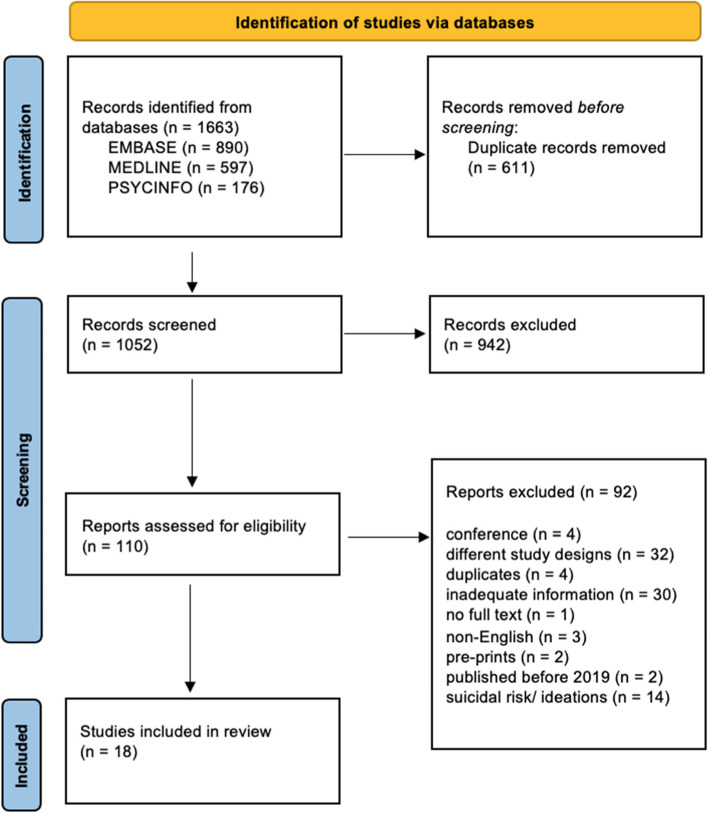
Background: The COVID-19 pandemic has exacerbated the risk factors associated with suicidal behavior and thus, prioritizing its prevention is recommended. Methods: This study systematically reviewed the global evidence on the incidence of suicide/suicidal attempts and the trend in suicidal rates during the COVID-19 pandemic. Cross-sectional and cohort studies investigating the outcomes of suicidal death and suicidal attempts at any setting during the COVID-19 pandemic were searched in Medline, Embase, and PsycINFO databases for papers published from December 2019 to May 2021. Results: Out of 1052 studies18 studies with 12,746 suicidal attempts and 33,345 suicidal deaths were included in the final analysis. The mental health impact of social distancing, COVID-19 quarantine, and financial crises due to loss of employment were associated risk factors with suicide and/or suicidal attempts during the COVID-19 pandemic. Six common thematic recommendations for preventing suicidal deaths and suicidal attempts were identified. Conclusions: Unexpected behavior changes during the COVID-19 pandemic may have contributed to the increasing trend of suicidal attempts reported. Domestic conflicts and violence, financial loss, anxiety and depression, and pre-existing mental health condition/s should be considered in preventing suicidal attempts and deaths secondary to the COVID 19 pandemic. Early detection and timely intervention for individuals with suicidal behavior is crucial and collated recommendations in the current study can be utilized for those preventive interventions. More systematic suicide risk screening process should be introduced who are at risk, along with an evidence base prevention approach.
Overview
CoChat Summary
TL;DR
This systematic review of 18 studies found mixed trends in suicidal attempts and deaths during the COVID-19 pandemic, with more studies reporting increased attempts than decreased attempts, while deaths showed both increases and decreases. It identifies social distancing, quarantine, financial loss, domestic conflict/violence, anxiety/depression, and pre-existing mental health conditions as risk factors and collates prevention recommendations.
Key findings
- Across 18 included studies, 12,746 suicidal attempts and 33,345 suicidal deaths were reported during the COVID-19 pandemic; 16.7% (n = 3) of studies had no reported trend data for suicidal attempts or deaths.
- Suicidal attempts: an increasing trend was reported in 22.2% (n = 4) of studies, a decreased trend in 11.1% (n = 2), and no increased/decreased trend in 5.6% (n = 1). Suicidal deaths: an increasing trend in 16.7% (n = 3), decreased in 5.6% (n = 1), and no increased/decreased trend in 16.7% (n = 3); one study reported decreased trends during the immediate crisis but increased after it passed.
- Risk factors reported by six studies included the mental health impact of social distancing, COVID-19 quarantine, financial crises due to loss of employment, domestic conflicts and violence, anxiety and depression, and pre-existing mental health condition(s).
- Common prevention recommendations included systematic suicide risk screening, facilitating communication and access to interventions, mental health and psychological well-being interventions, economic mitigation measures, and regulation of media reporting.
Methods
- Systematic review registered with PROSPERO (CRD42021253347); Medline, Embase, and PsycINFO were searched from December 2019 to May 2021, with English-language restriction, following PRISMA and the Cochrane handbook.
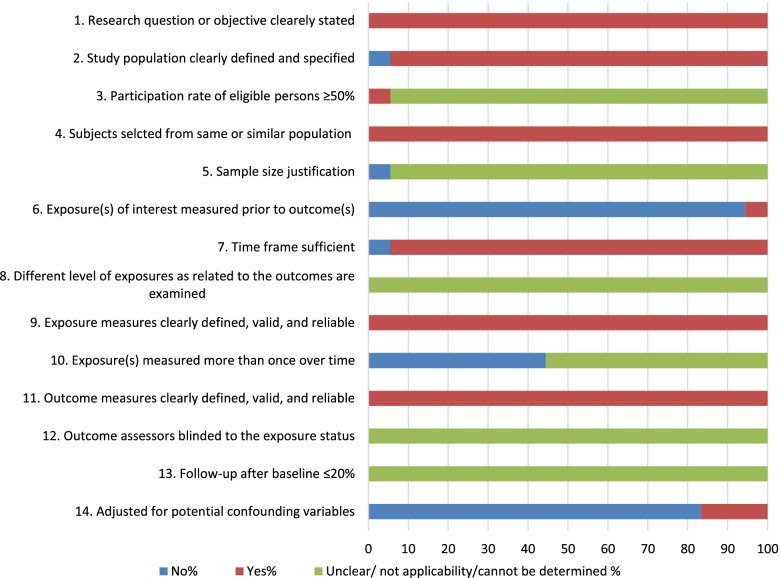
- Included cross-sectional and cohort studies investigating suicidal deaths/attempts during COVID-19; excluded case studies, case reports, commentaries, editorials, letters, reports, reviews, systematic reviews, non-peer-reviewed articles, and conference abstracts. Two independent reviewers screened and extracted data, and quality was assessed with the 14-item Quality Assessment Tool for Observational Cohort and Cross-Sectional Studies.
- 18 studies were included (16 cross-sectional, 2 cohort): 8 from the USA, 4 from Japan, 2 from India, and 1 each from Austria, Canada, Germany, and Nepal. Descriptive statistics were used; meta-analysis was not possible because studies used different data collection durations.
Limitations
- Stated by the authors: potential articles beyond the search strategies may have been missed; different data collection durations during the pandemic made it difficult to estimate incidence rates or pool data for meta-analysis; inter-rater agreement was not calculated.
- Evident from the text: high heterogeneity in settings, populations, and outcome definitions; only 6 of 18 studies provided data on associated risk factors; quality assessment showed more than 80% of studies did not measure exposure before outcomes or adjust for confounding variables, and several quality criteria were undetermined or not applicable in almost all studies.
Model-written summary. Check it against the paper before relying on it.
Integrity signals
Registry
Cites
Statistics
Figures
Verification
Claims the paper makes
16 Valid · 0 Not valid · 25 Not checked · 32 Own results and interpretations
Every source the paper cites for this claim was checked and supports it.
In the paper
“COVID-19 quarantine was mentioned as an associated factor identified by Daly et al., 2021.”
§ Impact of the COVID-19 pandemic on suicidal attempts and death rates: a systematic review > Risk factors associated with suicide/suicidal attempts during COVID-19 pandemic
What the sources say
- Supportedcites Daly et al., 2021 matched to “Associations between periods of COVID-19 quarantine and mental health in Canada” (2021) source
Daly et al. (2021) report exactly this association: the Discussion 'Policy and public health implications' states 'Data from our study suggest an association between COVID-19 quarantine and suicide and self-harm,' and 'Key Findings' says the paper 'contributes evidence that supports the recognition of quarantine as a risk factor for suicidal thoughts and deliberate self-harm.' The Results confirm the aggregate finding (quarantine for all reasons combined associated with increased odds of deliberate self-harm, controlled for age, pre-existing mental health condition, living alone, COVID-19 job loss and income), with the caveat that travel-related quarantine showed no elevated odds. The outcomes measured were suicidal ideation and deliberate self-harm rather than Medically attended attempts, but the claim's hedged 'suicide and/or suicidal attempts' framing is carried by the source's own wording and the 'and/or' construction, so the attribution holds. (LLM, conf=0.85)
plainstates an association- Asserted: passes — The authors put it forward as true.
- Checkable: passes — It can be checked against evidence.
- Load-bearing: unclear — It is unclear whether the paper’s conclusions depend on it.
- Based: passes — The paper gives a reason why it holds.
- Supported
The cited sources support only part of this claim — read each source’s verdict below.
In the paper
“Three studies [23, 27, 39] reported that financial crises due to loss of employment are associated with suicide and/or suicidal attempts during COVID-19.”
- Also stated in: § Risk factors associated with suicide/suicidal attempts during COVID-19 pandemic · plain
“Financial losses/job loss”
- Also stated in: § Results · plain
“Loss of employment”
§ Impact of the COVID-19 pandemic on suicidal attempts and death rates: a systematic review > Risk factors associated with suicide/suicidal attempts during COVID-19 pandemic
What the sources say
- Supportedcites [23] Choudhury R. An observational analysis of suicidal deaths during COVID 19 pandemic lockdown at Lucknow, India. Indian J Forensic Med Toxicol. 2020. 10.37506/ijfmt.v14i4.11517. source
The Discussion passage of our copy states that 'the possible contributing factors which triggered these suicides were mainly financial or related to loss of income during lockdown (49.2%)' and that daily wagers and the self-employed were 'badly stuck by the lockdown (36%)', with 'unemployment, hopelessness and helplessness' forcing them to take such steps. Table-3 (Material & Methods) lists 'Financial losses/job loss' as a probable contributing factor (16 cases, 27.1%) and economic factors overall as 29 cases. The study reports completed suicidal deaths in Lucknow during the 69-day lockdown rather than attempts, but the claim's disjunction ('suicide and/or suicidal attempts') is satisfied by the former, so this work stands as one of the three studies reporting the association. (LLM, conf=0.88)
- Partly supportedcites [27] Nomura S Kawashima T Yoneoka D Tanoue Y Eguchi A Gilmour S Kawamura Y Harada N Hashizume M Trends in suicide in Japan by gender during the COVID-19 pandemic, up to September 2020 Psychiatry Res 2021 295 113629 10.1016/j.psychres.2020.113622 33290942 sourceExperimental — accuracy not yet measured
Nomura et al. (2021) is an ecological excess-mortality study of Japanese suicide up to September 2020 that found excess suicides among women (Results; Abstract) and repeatedly frames economic/employment hardship as part of the COVID-19 suicide burden (Discussion: 'The challenges are not limited to financial hardship and violence'; Conclusions call for 'financial safety nets and social and labor support'). However, the association between economic crisis/unemployment and suicide is stated there as prior knowledge credited to other works (Introduction, citing Wada 2012 and Oyesanya 2015, pre-pandemic; Discussion citing Stuckler 2009), and the only COVID-era employment link reported is to psychological distress, not suicide (Discussion, citing Every-Palmer 2020). The paper also states it had 'no age or occupational level data' (Discussion), so it does not itself report a job-loss/financial-crisis association with suicide, and it covers suicide mortality only, not suicidal attempts. (LLM, conf=0.72)
- Partly supportedcites [39] Shrestha R Siwakoti S Singh S Shrestha AP Impact of the COVID-19 pandemic on suicide and self-harm among patients presenting to the emergency department of a teaching hospital in Nepal PLoS ONE 2021 16 4 e0250706 10.1371/journal.pone.0250706 33930044 PMC8087018 sourceExperimental — accuracy not yet measured
Our copy supports the economic/financial part: Results (Descriptive data) records 'economic crisis' as the alleged cause in 23 (18.4%) suicidal attempts, and Discussion states 'the common causes of suicidal attempts during the lockdown period were disputes with the family members and economic crisis.' However, the specific attribution to loss of employment appears only as hedged background speculation — 'The lockdown has created a sudden economic recession, unemployment, worsened poverty which might have led individuals to contemplate suicide' (Discussion) — not as a measured association this study reports. The claim's framing as one of 'three studies' reporting an employment-loss association therefore overstates what this single-center Nepali ED study found. (LLM, conf=0.75)
plainstates an association- Asserted: passes — The authors put it forward as true.
- Checkable: passes — It can be checked against evidence.
- Load-bearing: passes — The paper’s conclusions depend on it.
- Based: passes — The paper gives a reason why it holds.
- Also stated in: § Risk factors associated with suicide/suicidal attempts during COVID-19 pandemic · plain
The cited sources support only part of this claim — read each source’s verdict below.
In the paper
“Out of 18 studies included in this systematic review, only six studies [22, 23, 27, 30, 33, 39] provided data on associated factors for suicide and/or suicidal attempts during the COVID-19 pandemic.”
§ Impact of the COVID-19 pandemic on suicidal attempts and death rates: a systematic review > Risk factors associated with suicide/suicidal attempts during COVID-19 pandemic
What the sources say
- Partly supportedcites [22] Bergmans RS Larson PS Suicide attempt and intentional self-harm during the earlier phase of the COVID-19 pandemic in Washtenaw County, Michigan J Epidemiol Community Health 2021 75 10 963 969 10.1136/jech-2020-215333 33782051 PMC8008914 sourceExperimental — accuracy not yet measured
Our copy of Bergmans & Larson (2021) does contain associational data on suicide-related behaviour during the pandemic: the Approach section describes an exploratory univariate logistic regression 'tested associations of patient demographic factors (ie, age, gender, race, marital status and number of ED encounters...) with the binary measure for after versus before the COVID-19 pandemic', and the Results/Discussion report odds ratios (male vs female OR 1.16; 18-65 vs <18 OR 1.41; >=3 vs single encounter OR 1.18). So it qualifies as a primary study reporting factors associated with suicide-related outcomes in the pandemic period. However, the counting claim itself — 18 studies in a systematic review of which only six provided associated-factor data — is nowhere in our copy; this paper is a single-county ED time-series study and reports no review or enumeration of studies. Also, its associations are with pandemic period rather than with suicide attempt/self-harm as the outcome, and the Strengths and limitations section notes it 'could not quantify susceptibility by social or economic status' and did not test method. (LLM, conf=0.65)
- Supportedcites [23] Choudhury R. An observational analysis of suicidal deaths during COVID 19 pandemic lockdown at Lucknow, India. Indian J Forensic Med Toxicol. 2020. 10.37506/ijfmt.v14i4.11517. source
The Material & Methods section (Table 3) reports probable contributing factors for suicides during the COVID-19 lockdown in Lucknow, including financial losses, domestic conflicts, poverty and anxiety. The citation identifies this paper as one of the studies providing associated-factor data; the six-of-18 count describes the citing review, not this individual study. (LLM, conf=0.91)
- Supportedcites [27] Nomura S Kawashima T Yoneoka D Tanoue Y Eguchi A Gilmour S Kawamura Y Harada N Hashizume M Trends in suicide in Japan by gender during the COVID-19 pandemic, up to September 2020 Psychiatry Res 2021 295 113629 10.1016/j.psychres.2020.113622 33290942 source
This citation identifies Nomura et al. as one of the studies providing data relevant to factors associated with suicide during COVID-19. The Results report suicide mortality separately for women and men and find excess deaths among women in July–September 2020, supporting its inclusion as a study with gender-related data. The count of six out of 18 describes the citing review, not a finding attributed to Nomura et al. (Results; page unavailable). (LLM, conf=0.87)
- Not checked yetcites [30] Ammerman BA Burke TA Jacobucci R McClure K Preliminary investigation of the association between COVID-19 and suicidal thoughts and behaviors in the U.S. J Psychiatr Res 2021 134 32 38 10.1016/j.jpsychires.2020.12.037 33360222 source
- Partly supportedcites [33] Daly Z Slemon A Richardson CG Salway T McAuliffe C Gadermann AM Thomson KC Hirani S Jenkins EK Associations between periods of COVID-19 quarantine and mental health in Canada Psychiatry Res 2021 295 113631 10.1016/j.psychres.2020.113631 33310417 PMC7718586 sourceExperimental — accuracy not yet measured
The Methods (Variables of interest; page unavailable) and Results show that this study provides data on factors associated with suicidal ideation and deliberate self-harm during the pandemic, so it fits the citation's role as an example of a study reporting associated factors. It did not measure completed suicide or suicide attempts; its questions asked about suicidal thoughts and deliberately hurting oneself. The six-of-18 count describes the citing review, not a finding attributed to this paper. (LLM, conf=0.84)
- Supportedcites [39] Shrestha R Siwakoti S Singh S Shrestha AP Impact of the COVID-19 pandemic on suicide and self-harm among patients presenting to the emergency department of a teaching hospital in Nepal PLoS ONE 2021 16 4 e0250706 10.1371/journal.pone.0250706 33930044 PMC8087018 source
The Results (Descriptive data; page unavailable) report alleged causes of suicidal attempts, including family disputes and economic crisis. The Discussion also identifies these as common causes during lockdown. This supports citing the paper as one that provided data on associated factors; the count of 18 studies and six reporting factors belongs to the citing review, not to this source. (LLM, conf=0.90)
plain- Asserted: passes — The authors put it forward as true.
- Checkable: passes — It can be checked against evidence.
- Load-bearing: unclear — It is unclear whether the paper’s conclusions depend on it.
- Based: passes — The paper gives a reason why it holds.
- Partly supported
The cited sources support only part of this claim — read each source’s verdict below.
In the paper
“There is substantial evidence to demonstrate the deterioration of mental health among people during and after the COVID-19 pandemic compared to the pre-COVID-19 period [13–16].”
§ Impact of the COVID-19 pandemic on suicidal attempts and death rates: a systematic review > Introduction
What the sources say
- Partly supportedcites [13] Breslau J Finucane ML Locker AR Baird MD Roth EA Collins RL A longitudinal study of psychological distress in the United States before and during the COVID-19 pandemic Prev Med 2021 143 106362 10.1016/j.ypmed.2020.106362 33388325 PMC9753596 sourceExperimental — accuracy not yet measured
Breslau et al. (2021) do document worsening relative to a pre-pandemic assessment: the Discussion states that 'the prevalence of SD... during the pandemic exceeded levels that would be expected in the absence of the pandemic', and the Results (Table 1, Abstract) report substantial within-person increases in distress above T1 (e.g., 17.7% of women, 20.8% of ages 20-39). However, the source covers only the first two months after the U.S. national emergency declaration (T1 February 2019 vs. T2 May 2020), so nothing in it addresses the 'after the COVID-19 pandemic' portion of the claim, and its headline population comparison is null — SD was 10.9% pre-pandemic worst month vs. 10.1% during the pandemic, 'did not differ... for any demographic group'. The Introduction also frames the evidence base as thin ('There is little data yet available on psychological distress during the COVID-19 pandemic'), which does not carry the claim's 'substantial evidence' weight. (LLM, conf=0.75)
- Partly supportedcites [14] Benke C Autenrieth LK Asselmann E Pané-Farré CA Lockdown, quarantine measures, and social distancing: Associations with depression, anxiety and distress at the beginning of the COVID-19 pandemic among adults from Germany Psychiatry Res 2020 293 113462 10.1016/j.psychres.2020.113462 32987222 PMC7500345 sourceExperimental — accuracy not yet measured
Our copy of Benke et al. (2020) supports only the 'during the pandemic' half of the claim: the Discussion states that 'the current findings suggest that the COVID-19 pandemic causes negative consequences for mental health especially in vulnerable groups', and the Abstract reports that higher lockdown restrictions, greater reduction of social contacts and greater perceived changes in life were associated with higher mental health impairments in a German community sample (N = 4335). It does not support a deterioration relative to the pre-COVID-19 period: the study was a single cross-sectional online survey run 17 April–15 May 2020 (Methods, Participants) with no pre-pandemic mental-health baseline (the only January-2020 reference is for social-contact frequency, not symptoms), and nothing addresses the period 'after' the pandemic. The claim's framing of 'substantial evidence' also runs against this source, whose Abstract states that 'evidence on the associations of the COVID-19 pandemic and public health measures with mental health are limited so far'. (LLM, conf=0.78)
- Partly supportedcites [15] Ozamiz-Etxebarria N Dosil-Santamaria M Picaza-Gorrochategui M Idoiaga-Mondragon N Stress, anxiety, and depression levels in the initial stage of the COVID-19 outbreak in a population sample in the northern Spain Cad Saude Publica 2020 36 4 e00054020 10.1590/0102-311X00054020 32374806 sourceExperimental — accuracy not yet measured
Our copy supports worsening mental-health indicators during the early pandemic: the Discusión reports higher means on stress, anxiety and depression after the 14 March stay-at-home order, and the Conclusiones state that under confinement and threat of illness these levels rise in the population. However, the Metodología describes a cross-sectional survey of 976 Basque adults administered only in the initial outbreak phase, with no pre-COVID-19 measurement, so the claim's comparison 'compared to the pre-COVID-19 period' is not supported by this source; nor does it cover the period 'after' the pandemic (the paper only predicts further increases as confinement continues). The English abstract likewise notes levels were 'generally low at the start of the alert'. (LLM, conf=0.78)
- Partly supportedcites [16] Pierce M Hope H Ford T Hatch S Hotopf M John A Kontopantelis E Webb R Wessely S McManus S Mental health before and during the COVID-19 pandemic: a longitudinal probability sample survey of the UK population The Lancet Psychiatry 2020 7 10 883 892 10.1016/S2215-0366(20)30308-4 32707037 PMC7373389 sourceExperimental — accuracy not yet measured
Pierce et al. (2020) clearly support deterioration DURING the pandemic versus pre-COVID-19: the Abstract Findings report prevalence of clinically significant mental distress rising from 18·9% (2018–19) to 27·3% in April 2020 and mean GHQ-12 from 11·5 to 12·6, 0·48 points above projected trends, and the Interpretation states 'By late April, 2020, mental health in the UK had deteriorated compared with pre-COVID-19 trends.' However, our copy contains no post-pandemic follow-up — fieldwork was one month into the first UK lockdown, and the Discussion only anticipates ('we believe it is reasonable to expect') sustained distress and recession-related effects later. The 'and after the COVID-19 pandemic' element of the citing sentence is therefore not supported by this source. (LLM, conf=0.82)
boostedstates an association- Asserted: passes — The authors put it forward as true.
- Checkable: passes — It can be checked against evidence.
- Load-bearing: passes — The paper’s conclusions depend on it.
- Based: passes — The paper gives a reason why it holds.
- Partly supported
Every source the paper cites for this claim was checked and supports it.
In the paper
“The study done by Nomura et al., 2021 in Japan revealed an increased rate of suicide among women.”
§ Impact of the COVID-19 pandemic on suicidal attempts and death rates: a systematic review > Recommendations for prevention of suicide/suicidal attempts during the COVID-19 pandemic
What the sources say
- Supportedcites [27] Nomura S Kawashima T Yoneoka D Tanoue Y Eguchi A Gilmour S Kawamura Y Harada N Hashizume M Trends in suicide in Japan by gender during the COVID-19 pandemic, up to September 2020 Psychiatry Res 2021 295 113629 10.1016/j.psychres.2020.113622 33290942 source
The Abstract and Discussion (p. 1, §4) report excess suicide deaths among women in Japan in July, August and September 2020 during the COVID-19 pandemic, with none among men, and the Discussion quantifies the women's burden as about 20-30% above previous years. This matches the citing sentence's attribution of an increased suicide burden among Japanese women during the pandemic. (LLM, conf=0.92)
plainstates an association- Asserted: passes — The authors put it forward as true.
- Checkable: passes — It can be checked against evidence.
- Load-bearing: passes — The paper’s conclusions depend on it.
- Based: passes — The paper gives a reason why it holds.
- Supported
40 more claims · 9 with their cited sources checked
Create a free account to see all 73 claims and to verify the 38 references still open.
- Probably not a substantial claim. 22
- It may state two separate claims as one. 14
- The quote only partly states this claim. 1
Self-check
Percentages, sums and reported differences re-computed from the paper’s own numbers.
Each contradiction between two passages listed here was confirmed by an independent check.
Rated minor: it would not touch a result — a value no result rests on, a p-value that stays on the same side of the significance level, or a conflict that is clerical, resolved elsewhere in the paper, or outside its own findings.
In the paper
§ Impact of the COVID-19 pandemic on suicidal attempts and death rates: a systematic review > Characteristics of included studies
“Holland et al., 2021 [35] | Japan”
§ Impact of the COVID-19 pandemic on suicidal attempts and death rates: a systematic review > Characteristics of included studies
“Patients who visited USA Emergency Departments”
Rated minor: it would not touch a result — a value no result rests on, a p-value that stays on the same side of the significance level, or a conflict that is clerical, resolved elsewhere in the paper, or outside its own findings.
In the paper
§ Impact of the COVID-19 pandemic on suicidal attempts and death rates: a systematic review > Abstract > Results
“Six common thematic recommendations for preventing suicidal deaths and suicidal attempts were identified.”
§ Impact of the COVID-19 pandemic on suicidal attempts and death rates: a systematic review > Recommendations for prevention of suicide/suicidal attempts during the COVID-19 pandemic
“4) Implement measures to mitigate the impact on the economy (e.g., Provision of economic supports and changes in payment policies) [35, 37], and 5) Regulation of media reporting [27, 37].”
Citations
Cites
WHO Declares COVID-19 a Pandemic.
Cucinotta, D., & Vanelli, M. (2020) · Acta bio-medica dell'Ateneo parmense/Acta biomedica · doi:10.23750/abm.v91i1.9397 · Cited by 7,457
Mental health and the COVID-19 pandemic
Pfefferbaum, B., & North, C. S. (2020) · New England Journal of Medicine · doi:10.1056/nejmp2008017 · Cited by 4,378 · cited 1×
“Furthermore, it is evident that during pandemics, a considerable number of people present with anxiety and depressive symptoms though they do not have any pre-existing mental health conditions [8].”
BackgroundCOVID-19 pandemic and mental health consequences: Systematic review of the current evidence
Vindegaard, N., & Benros, M. E. (2020) · Brain, Behavior, and Immunity · doi:10.1016/j.bbi.2020.05.048 · Cited by 3,221 · cited 1×
“The evidence on the mental health harms caused by the response to COVID-19 found to be overwhelming, and studies on the general public revealed lower psychological well-being and higher scores of anxiety and depression compared to before COVID-19 [10].”
ResultPierce, M., Hope, H., Ford, T., Hatch, S., Hotopf, M., John, A., Kontopantelis, E., Webb, R., Wessely, S., McManus, S., et al. (2020) · The Lancet Psychiatry · doi:10.1016/s2215-0366(20)30308-4 · Cited by 2,621
Mental health in the COVID-19 pandemic
Cullen, W., Gulati, G., & Kelly, B. D. (2020) · QJM: An International Journal of Medicine · doi:10.1093/qjmed/hcaa110 · Cited by 1,275
Ozamiz-Etxebarria, N., Dosil-Santamaria, M., Picaza-Gorrochategui, M., & Idoiaga-Mondragon, N. (2020) · Cadernos de Saúde Pública · doi:10.1590/0102-311x00054020 · Cited by 892
COVID 19 and its mental health consequences
Kumar, A., & Nayar, K. R. (2021) · Journal of Mental Health · doi:10.1080/09638237.2020.1757052 · Cited by 883 · cited 1×
“As new measures imposed in many countries such as self-isolation and quarantine, which affects day-to-day activities, routines, and livelihoods of people, they may lead to an increase in loneliness, anxiety, depression, insomnia, harmful alcohol and drug use, and self-harm or suicidal behaviour [12].”
BackgroundMental health outcomes of the CoViD-19 pandemic
Talevi, D., Socci, V., Carai, M., Carnaghi, G., Faleri, S., Trebbi, E., di Bernardo, A., Capelli, F., & Pacitti, F. (2020) · Rivista di Psichiatria · doi:10.1708/3382.33569 · Cited by 821
Telemedicine and the COVID-19 Pandemic, Lessons for the Future
Bashshur, R., Doarn, C. R., Frenk, J. M., Kvedar, J. C., & Woolliscroft, J. O. (2020) · Telemedicine and e-Health · doi:10.1089/tmj.2020.29040.rb · Cited by 642 · cited 1×
“In this regard, as several studies have already identified the positive effects of new technologies in combating and preventing suicidal behavior, virtual platforms can be used as an effective way of screening to identify the people those at risk at the early stages [51, 53].”
BackgroundBenke, C., Autenrieth, L. K., Asselmann, E., & Pané-Farré, C. A. (2020) · Psychiatry Research · doi:10.1016/j.psychres.2020.113462 · Cited by 585
Holland, K. M., Jones, C., Vivolo-Kantor, A. M., Idaikkadar, N., Zwald, M., Hoots, B., Yard, E., D’Inverno, A., Swedo, E., Chen, M. S., et al. (2021) · JAMA Psychiatry · doi:10.1001/jamapsychiatry.2020.4402 · Cited by 578 · cited 5×
“, 2021 [35] − Provision of counselling for those who are presented to emergency departments with risk of suicide/suicide attempts − Make linkage with existing behavioural health and social support services to provide immediate support for those who are in crisis − Conversion of existing in-person services health and s…”
BackgroundMethodInfluentialOzamiz-Etxebarria, N., Dosil-Santamaria, M., Picaza-Gorrochategui, M., & Idoiaga-Mondragon, N. (2021) · SciELO journals · doi:10.6084/m9.figshare.14280665 · Cited by 575
Suicide Ideation and Attempts in a Pediatric Emergency Department Before and During COVID-19
Hill, R. M., Rufino, K., Kurian, S., Saxena, J., Saxena, K., & Williams, L. (2021) · Pediatrics · doi:10.1542/peds.2020-029280 · Cited by 380
Jernigan, D. B., & CDC COVID-19 Response Team (2020) · MMWR. Morbidity and Mortality Weekly Report · doi:10.15585/mmwr.mm6908e1 · Cited by 346
Breslau, J., Finucane, M. L., Locker, A. R., Baird, M. D., Roth, E. A., & Collins, R. L. (2021) · Preventive Medicine · doi:10.1016/j.ypmed.2020.106362 · Cited by 251
Natural disasters and suicidal behaviours: A systematic literature review
Kõlves, K., Kõlves, K. E., & De Leo, D. (2013) · Journal of Affective Disorders · doi:10.1016/j.jad.2012.07.037 · Cited by 244
COVID-19 lockdowns throughout the world
Koh, D. (2020) · Occupational Medicine · doi:10.1093/occmed/kqaa073 · Cited by 214 · cited 1×
“By early April 2020, more than one-third of the global population was under some form of movement restriction [5].”
BackgroundIsumi, A., Doi, S., Yamaoka, Y., Takahashi, K., & Fujiwara, T. (2020) · Child Abuse & Neglect · doi:10.1016/j.chiabu.2020.104680 · Cited by 205 · cited 3×
“Of them, we have identified common thematic recommendations for preventing suicidal deaths and suicidal attempts, and those were; 1) Develop a systematic suicide screening process and increase the suicide risk screening [23, 25, 28, 30, 37].”
BackgroundMethodJohn, A., Eyles, E., Webb, R. T., Okolie, C., Schmidt, L., Arensman, E., Hawton, K., O'Connor, R. C., Kapur, N., Moran, P., et al. (2021) · F1000Research · doi:10.12688/f1000research.25522.2 · Cited by 189 · cited 1×
“However, there was no consistent evidence of a rise in suicide during and post-COVID era [19].”
BackgroundThe impact of the COVID-19 pandemic on self-harm and suicidal behaviour: a living systematic review
John, A., Okolie, C., Eyles, E., Webb, R. T., Schmidt, L., McGuinness, L. A., Olorisade, B. K., Arensman, E., Hawton, K., Kapur, N., et al. (2020) · F1000Research · doi:10.12688/f1000research.25522.1 · Cited by 178
Ammerman, B. A., Burke, T. A., Jacobucci, R., & McClure, K. (2021) · Journal of Psychiatric Research · doi:10.1016/j.jpsychires.2020.12.037 · Cited by 176
Assessment of Suicide in Japan During the COVID-19 Pandemic vs Previous Years
Sakamoto, H., Ishikane, M., Ghaznavi, C., & Ueda, P. (2021) · JAMA Network Open · doi:10.1001/jamanetworkopen.2020.37378 · Cited by 176
The traumatic impact of job loss and job search in the aftermath of COVID-19.
Crayne, M. P. (2020) · Psychological Trauma: Theory, Research, Practice, and Policy · doi:10.1037/tra0000852 · Cited by 172 · cited 1×
“Moreover, in the wake of COVID 19, millions of people lost their access to employment and experienced financial hardships in day-to-day life [44].”
BackgroundPreventing suicide in the context of the COVID‐19 pandemic
McIntyre, R. S., & Lee, Y. (2020) · World Psychiatry · doi:10.1002/wps.20767 · Cited by 162 · cited 2×
“In this regard, as several studies have already identified the positive effects of new technologies in combating and preventing suicidal behavior, virtual platforms can be used as an effective way of screening to identify the people those at risk at the early stages [51, 53].”
BackgroundCoope, C., Donovan, J., Wilson, C., Barnes, M., Metcalfe, C., Hollingworth, W., Kapur, N., Hawton, K., & Gunnell, D. (2015) · Journal of Affective Disorders · doi:10.1016/j.jad.2015.04.045 · Cited by 146
Ioannidis, J. P. A. (2021) · European Journal of Clinical Investigation · doi:10.1111/eci.13554 · Cited by 130
Trends in suicide in Japan by gender during the COVID-19 pandemic, up to September 2020
Nomura, S., Kawashima, T., Yoneoka, D., Tanoue, Y., Eguchi, A., Gilmour, S., Kawamura, Y., Harada, N., & Hashizume, M. (2021) · Psychiatry Research · doi:10.1016/j.psychres.2020.113622 · Cited by 129
Leaune, E., Samuel, M., Oh, H., Poulet, E., & Brunelin, J. (2020) · Preventive Medicine · doi:10.1016/j.ypmed.2020.106264 · Cited by 116 · cited 1×
“Nevertheless, a review done in 2020 to find the suicidal behaviors and ideation during emerging viral disease outbreaks before the COVID-19 pandemic found weak evidence to suggest a significant increase in suicidal attempts and deaths by suicide during emerging viral disease outbreaks [41].”
BackgroundYeates, E. O., Grigorian, A., Barrios, C., Schellenberg, M. A., Owattanapanich, N., Barmparas, G., Margulies, D. R., Juillard, C. J., Garber, K. D., Cryer, H., et al. (2020) · The Journal of Trauma: Injury, Infection, and Critical Care · doi:10.1097/ta.0000000000003068 · Cited by 106 · cited 2×
“%) were from the United State of America [22, 24, 26, 30, 32, 34, 36, 38], 4 (22.2”
BackgroundInfluentialChiba, H., Lewis, M. R., Benjamin, E., Jakob, D. A., Liasidis, P., Wong, M. D., Navarrete, S., Carreon, R., & Δημητριάδης, Δ. (2020) · The Journal of Trauma: Injury, Infection, and Critical Care · doi:10.1097/ta.0000000000003061 · Cited by 103 · cited 2×
“%) were from the United State of America [22, 24, 26, 30, 32, 34, 36, 38], 4 (22.2”
BackgroundInfluentialAssociations between periods of COVID-19 quarantine and mental health in Canada
Daly, Z., Slemon, A., Richardson, C. G., Salway, T., McAuliffe, C., Gadermann, A. M., Thomson, K. C., Hirani, S., & Jenkins, E. K. (2021) · Psychiatry Research · doi:10.1016/j.psychres.2020.113631 · Cited by 102 · cited 7×
“6%) each from Austria [31], Canada [33], German [28] and Nepal [39].”
BackgroundMethodInfluentialNatural disasters and suicide: Evidence from Japan
Matsubayashi, T., Sawada, Y., & Ueda, M. (2013) · Social Science & Medicine · doi:10.1016/j.socscimed.2012.12.021 · Cited by 101
The effect of COVID-19 on the economy: Evidence from an early adopter of localized lockdowns
Asahi, K., Undurraga, E. A., Valdés, R., & Wagner, R. A. (2021) · Journal of Global Health · doi:10.7189/jogh.10.05002 · Cited by 101
COVID-19 Compared to Other Pandemic Diseases
Pitlik, S. D. (2020) · Rambam Maimonides Medical Journal · doi:10.5041/rmmj.10418 · Cited by 100 · cited 1×
“Compared to the global past pandemics, COVID 19 has tricky and complex mechanisms that have facilitated its rapid and catastrophic spread worldwide [42].”
BackgroundCOVID-19: Review of a 21st Century Pandemic from Etiology to Neuro-psychiatric Implications
Yamamoto, V., Bolanos, J. F., Fiallos, J., Strand, S. E., Morris, K., Shahrokhinia, S., Cushing, T. R., Hopp, L., Tiwari, A., Hariri, R., et al. (2020) · Journal of Alzheimer's Disease · doi:10.3233/jad-200831 · Cited by 100 · cited 1×
“It is considered the most severe pandemic of the twenty-first century [43].”
BackgroundDomestic violence amid COVID‐19
Anurudran, A., Yared, L., Comrie, C., Harrison, K., & Burke, T. (2020) · International Journal of Gynecology & Obstetrics · doi:10.1002/ijgo.13247 · Cited by 99 · cited 1×
“isolating them from networks of support [47].”
Suicide Deaths During the COVID-19 Stay-at-Home Advisory in Massachusetts, March to May 2020
Faust, J. S., Shah, S. B., Du, C., Li, S.-X., Lin, Z., & Krumholz, H. M. (2021) · JAMA Network Open · doi:10.1001/jamanetworkopen.2020.34273 · Cited by 98
Trends in suicide rates during the COVID-19 pandemic restrictions in a major German city
Radeloff, D., Papsdorf, R., Uhlig, K., Vasilache, A., Putnam, K., & von Klitzing, K. (2021) · Epidemiology and Psychiatric Sciences · doi:10.1017/s2045796021000019 · Cited by 95 · cited 6×
“6%) each from Austria [31], Canada [33], German [28] and Nepal [39].”
BackgroundMethodInfluentialMitchell, T. O., & Li, L. (2021) · Psychiatry Research · doi:10.1016/j.psychres.2020.113629 · Cited by 88 · cited 3×
“%) were from the United State of America [22, 24, 26, 30, 32, 34, 36, 38], 4 (22.2”
BackgroundInfluentialSuicide Risk and Prevention During the COVID-19 Pandemic: One Year On
Sinyor, M., Knipe, D., Borges, G., Ueda, M., Pirkis, J., Phillips, M. R., Gunnell, D., & the International COVID-19 Suicide Prevention Research Collaboration (2022) · Archives of Suicide Research · doi:10.1080/13811118.2021.1955784 · Cited by 73 · cited 1×
“Unlike previous pandemics, COVID-19 is occurring in the modern digital world, where video conferencing and virtual healthcare provision are widely available [52].”
BackgroundOrui, M., Suzuki, Y., Maeda, M., & Yasumura, S. (2018) · Crisis · doi:10.1027/0227-5910/a000509 · Cited by 59
Shrestha, R., Siwakoti, S., Singh, S., & Shrestha, A. P. (2021) · PLOS ONE · doi:10.1371/journal.pone.0250706 · Cited by 55 · cited 5×
“…and hunger Anxiety and depression Daly et al., 2021 [33] COVID-19 quarantine Pre-existing mental health condition/s Nomura et al., 2021 [27] Gender-based violence Loss of employment Shrestha et al., 2021 [39] Disputes with family members Economic crisis isolating them from networks of support [47].”
BackgroundInfluentialCarlin, G. L., Baumgartner, J. S., Moftakhar, T., König, D., & Negrin, L. L. (2021) · Wiener klinische Wochenschrift · doi:10.1007/s00508-021-01839-6 · Cited by 26 · cited 1×
“…care connection, if suicide risk is indicated − Increase access to intervention for those who are experiencing psychological distress related to COVID-19 Carlin et al., 2021 [31] − Consideration of mental health and psychological well-being when establishing lockdown policies Choudhury, 2020…”
BackgroundStack, S., & Rockett, I. R. H. (2021) · Suicide and Life-Threatening Behavior · doi:10.1111/sltb.12729 · Cited by 25 · cited 1×
“Stack and Rockett (2021) discovered an increased suicide rate during the Spanish flu epidemic in 43 large cities, which was connected to the degree of social distancing, independent of the influenza fatality rate [17].”
BackgroundBergmans, R. S., & Larson, P. S. (2021) · Journal of Epidemiology and Community Health · doi:10.1136/jech-2020-215333 · Cited by 17 · cited 5×
“…at risk for further violence and Ammerman et al., 2021 [30] General distress Physical safety concerns Mental health impact of social distancing Bergmans and Larson 2021 [22] Male sex Aged group of 18–65 years Having a history of three or more encounters of suicide attempt or intentional…”
BackgroundInfluentialOntiveros, S. T., Levine, M., Cantrell, F. L., Thomas, C., & Minns, A. B. (2021) · Academic Emergency Medicine · doi:10.1111/acem.14209 · Cited by 12 · cited 2×
“%) were from the United State of America [22, 24, 26, 30, 32, 34, 36, 38], 4 (22.2”
BackgroundInfluentialAn Observational Analysis of Suicidal Deaths during COVID 19 Pandemic Lockdown at Lucknow, India
Choudhury, R. (2020) · Indian Journal of Forensic Medicine & Toxicology · doi:10.37506/ijfmt.v14i4.11517 · Cited by 9 · cited 9×
“Similarly, social isolation and stay-at-home rules imposed by many counties badly resulted in domestic violence, making survivors of domestic violence at risk for further violence and Ammerman et al., 2021 [30] General distress Physical safety concerns Mental health impact of social distancing Bergmans and Larson 2021…”
BackgroundMethodInfluential
Research works printed but not linked: 3
- World Health Organiztion Preventing suicide: A global imperative: World Health Organization 2014
- Sengupta D Saha S Bharatee P Prasad R Pattern of Suicidal Deaths in the First Month of Lockdown at A Tertiary Care Hospital: a Time Trend Analysis Indian J Forensic Med Toxicol 2020 14 4 167
- Bhalotra S Britto GCD Pinotti P Sampaio B ob displacement, unemployment benefits and domestic violence 2021
Cited by
Davis Weaver, N., Bertolacci, G. J., Rosenblad, E., Ghoba, S., Cunningham, M., Ikuta, K. S., Moberg, M. E., Mougin, V., Han, C., Wool, E. E., et al. (2025) · The Lancet Public Health · doi:10.1016/s2468-2667(25)00006-4 · Cited by 181
“60 Furthermore, the calculation of mean age at the time of suicide death is not standardised for different population age structures.”
Suicide before and during the COVID-19 Pandemic: A Systematic Review with Meta-Analysis
Yan, Y., Hou, J., Li, Q., & Yu, N. X. (2023) · International Journal of Environmental Research and Public Health · doi:10.3390/ijerph20043346 · Cited by 185
“Aligned with the upward trend found by a systematic review [22], the pooled prevalence of suicidal ideation and suicide attempt were estimated to be 10.”
BackgroundVitamin D in Depression: A Potential Bioactive Agent to Reduce Suicide and Suicide Attempt Risk
Somoza-Moncada, M. M., Turrubiates‐Hernández, F. J., Muñóz-Valle, J. F., Gutiérrez-Brito, J. A., Díaz-Pérez, S. A., Arelis, A. A., & Hernández‐Bello, J. (2023) · Nutrients · doi:10.3390/nu15071765 · Cited by 41
“associated with this exacerbation [4].”
Factors Associated with Post-Traumatic Growth during the COVID-19 Pandemic: A Systematic Review
Bovero, A., Balzani, S., Tormen, G., Malandrone, F., & Carletto, S. (2023) · Journal of Clinical Medicine · doi:10.3390/jcm13010095 · Cited by 31
Unmasking the COVID-19 pandemic prevention gains: excess mortality reversal in 2022
Walkowiak, M. P., Domaradzki, J., & Walkowiak, D. (2023) · Public Health · doi:10.1016/j.puhe.2023.08.004 · Cited by 28
Metadata
- Authors
- Pathirathna, M. L., Nandasena, H. M. R. K., Atapattu, A. M. M. P., & Weerasekara, I.
- Affiliations
- University of Peradeniya (LK)
- Corresponding author
- Pathirathna, Malshani L.
- Venue
- BMC Psychiatry
- Published
- 2022-07-28
- Volume
- 22
- Issue
- 1
- Pages
- 506-506
- ISSN
- 1471-244X (ISSN-L)
- PMC
- PMC9331016
- OpenAlex
- W4288074542
- Cited by
- 134
- References
- 47
- Citations by year
- 2026: 17 · 2025: 27 · 2024: 43 · 2023: 43 · 2022: 4
- FWCI
- 4.88
- Type
- journal article
- Language
- en
- Open access
- gold
- doi.org
- Licence
- cc-by
- creativecommons.org/licenses/by/4.0 (tdm)
- creativecommons.org/licenses/by/4.0 (vor)
- Locations
- BMC Psychiatry (publishedVersion, cc-by)
- PubMed Central (publishedVersion, cc-by)
- PubMed (publishedVersion)
- DOAJ (DOAJ: Directory of Open Access Journals) (submittedVersion, cc-by-sa)
- Figshare (submittedVersion, cc-by)
- NOVA (University of Newcastle Australia) (submittedVersion, cc-by)
- Topics
- Social Sciences › Psychology › Clinical Psychology › Suicide and Self-Harm Studies
- Social Sciences › Psychology › Clinical Psychology › COVID-19 and Mental Health
- Social Sciences › Sociology and Political Science › Homicide, Infanticide, and Child Abuse
- Keywords
- COVID-19 pandemic, suicide attempts, suicide rates, suicide prevention, social distancing, quarantine, financial crisis, unemployment, domestic violence, anxiety, depression, pre-existing mental health conditions, suicide risk screening, early detection and intervention
- MeSH terms
- COVID-19, Cross-Sectional Studies, Humans, Suicide, Attempted, Pandemics, Suicidal Ideation
About these checks
Registry, retraction, Cites and statistics results are computed, not judged, with one exception: a printed reference that no index lists is read once by a model before it counts as a citation error. Claims are extracted by a model and kept only when their quote appears verbatim in the text; each cited source is then checked, with a model’s help, for whether it says what the claim relies on. Those verdicts can be wrong — read the claim’s quote and the cited source before relying on one.
The claim verdicts this report counts are experimental: their accuracy is not yet measured.
A language model drew the claims from the paper on 2026-10-04, under version 3 of the claim definition (model deepseek-v4.1-flash, prompt extract-v3).
A second model labelled each claim on 2026-10-04 (model jev-1.13-20260917, definition revision gold-guideline-v0.2).
Cited sources are checked with a language model’s help (qwen3.8-omni-flash and gpt-6-sol).
Statistics and arithmetic are recomputed, not judged.
Confidence bands are shown only for fields calibrated on our annotated test set. None is calibrated yet, so no band is shown.
What counts as a claim ›How we measure confidence ›How we check this ›
Are you an author, or do you see a problem with this page? Request a review
Data sources
Bibliographic data: Semantic Scholar, OpenAlex, Crossref.
Contains information from the Semantic Scholar Academic Graph Datasets, made available under the ODC Attribution License (ODC-BY 1.0).
Semantic Scholar’s data is described in: Kinney, R., et al. (2023). The Semantic Scholar Open Data Platform. arXiv:2301.10140.
