

The role of telehealth during COVID-19 outbreak: a systematic review based on current evidence
Open accessPublished version of a preprint
The DOI matches its Crossref record; 43 of the 43 references it cites were found in a registry or an index.
Abstract
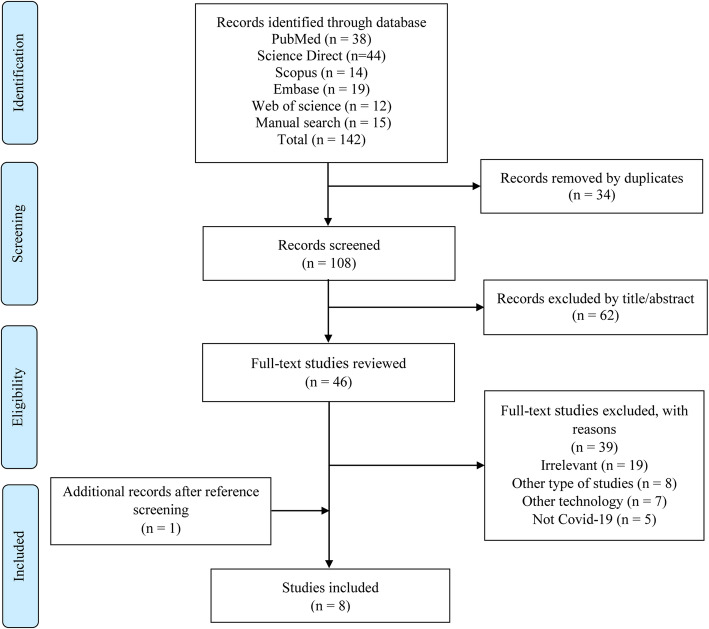
Background: The outbreak of coronavirus disease-19 (COVID-19) is a public health emergency of international concern. Telehealth is an effective option to fight the outbreak of COVID-19. The aim of this systematic review was to identify the role of telehealth services in preventing, diagnosing, treating, and controlling diseases during COVID-19 outbreak. Methods: This systematic review was conducted through searching five databases including PubMed, Scopus, Embase, Web of Science, and Science Direct. Inclusion criteria included studies clearly defining any use of telehealth services in all aspects of health care during COVID-19 outbreak, published from December 31, 2019, written in English language and published in peer reviewed journals. Two reviewers independently assessed search results, extracted data, and assessed the quality of the included studies. Quality assessment was based on the Critical Appraisal Skills Program (CASP) checklist. Narrative synthesis was undertaken to summarize and report the findings. Results: Eight studies met the inclusion out of the 142 search results. Currently, healthcare providers and patients who are self-isolating, telehealth is certainly appropriate in minimizing the risk of COVID-19 transmission. This solution has the potential to prevent any sort of direct physical contact, provide continuous care to the community, and finally reduce morbidity and mortality in COVID-19 outbreak. Conclusions: The use of telehealth improves the provision of health services. Therefore, telehealth should be an important tool in caring services while keeping patients and health providers safe during COVID-19 outbreak.
Overview
The claims and statistics of this paper haven’t been checked yet.
Free: it reads the open-access text and checks the first 5 claims that cite a source we can check. Create a free account to check every claim.
Integrity signals
Registry
Cites
Statistics
Figures
Verification
Claims the paper makes
The claims and statistics of this paper haven’t been checked yet.
Free: it reads the open-access text and checks the first 5 claims that cite a source we can check. Create a free account to check every claim.
Claims other papers make about this one
Each is checked against this paper’s own text: does it say what the citing paper says it does?
The source backs part of the claim, not all of it — or backs it for a different population, condition or comparison.
In the citing paper
“In Australia, a national study suggests that the COVID-19 pandemic considerably encouraged and promoted the use of telehealth and thanks to this window of opportunity, a lot of progress was made in the domain that, without that progress, telehealth use would have remained infrequent [50,51,52,53,54,55,56,57,58].”
From Telehealth and COVID-19 Pandemic: An Overview of the Telehealth Use, Advantages, Challenges, and Opportunities during COVID-19 Pandemic (2022) · cites this paper as [58]
Experimental — accuracy not yet measuredThe source backs part of the claim, not all of it — or backs it for a different population, condition or comparison.
In the citing paper
“In general, studies on the satisfactory level of use of telehealth services during the COVID-19 pandemic suggested it was above average by patients and health professional users and often they showed their willingness to continue with the use of telecare even after the pandemic [56,57,58,59,60,61,62].”
From Telehealth and COVID-19 Pandemic: An Overview of the Telehealth Use, Advantages, Challenges, and Opportunities during COVID-19 Pandemic (2022) · cites this paper as [58]
Experimental — accuracy not yet measuredThe source backs part of the claim, not all of it — or backs it for a different population, condition or comparison.
In the citing paper
“The pandemic has accelerated the adoption of digital health services.”
From Acceptance and perceived usefulness of digital health services in the management of chronic urticaria: a survey of patients and physicians (2025) · cites this paper as [36]
Experimental — accuracy not yet measuredThe source backs part of the claim, not all of it — or backs it for a different population, condition or comparison.
In the citing paper
“The application of digital health has rapidly grown worldwide over the past 4 decades, and accelerated particularly during the COVID-19 pandemic.[1][2][3]”
From The Digital Health Competencies in Medical Education Framework: An International Consensus Statement Based on a Delphi Study (2025) · cites this paper as [1]
Experimental — accuracy not yet measuredThe cited source says what the claim attributes to it.
In the citing paper
“TM is an important tool for health care delivery and has achieved even greater significance in the context of the COVID-19 pandemic [13,14].”
From Diagnostic Concordance of Telemedicine as Compared With Face-to-Face Care in Primary Health Care Clinics in Rural India: Randomized Crossover Trial (2023) · cites this paper as [13]
1 more claim about this paper
Create a free account to see every claim other papers make about this one.
Self-check
Percentages, sums and reported differences re-computed from the paper’s own numbers.
The self-check needs the paper’s full text.
Citations
Cites
Clinical features of patients infected with 2019 novel coronavirus in Wuhan, China
Huang, C., Wang, Y., Li, X., Ren, L., Zhao, J., Hu, Y., Zhang, L., Fan, G., Xu, J., Gu, X., et al. (2020) · The Lancet · doi:10.1016/s0140-6736(20)30183-5 · Cited by 48,884
Virtually perfect? Telemedicine for COVID-19
Hollander, J. E., & Carr, B. G. (2020) · New England Journal of Medicine · doi:10.1056/nejmp2003539 · Cited by 2,970 · cited 4×
“that is made possible by the reduction of person-toperson contact [7, 8].”
BackgroundInfluentialEarly dynamics of transmission and control of COVID-19: a mathematical modelling study
Kucharski, A. J., Russell, T. W., Diamond, C., Liu, Y., Edmunds, J., Funk, S., Eggo, R. M., Sun, F., Jit, M., Munday, J. D., et al. (2020) · The Lancet Infectious Diseases · doi:10.1016/s1473-3099(20)30144-4 · Cited by 2,671 · cited 1×
“Nowadays, the best preventive strategy is to avoid being exposed to the coronavirus, because there is no vaccine to overcome COVID-19 in the all countries [41].”
BackgroundAdhikari, S. P., Meng, S., Wu, Y.-J., Mao, Y.-P., Ye, R.-X., Wang, Q.-Z., Sun, C., Sylvia, S., Rozelle, S., Raat, H., et al. (2020) · Infectious Diseases of Poverty · doi:10.1186/s40249-020-00646-x · Cited by 2,402 · cited 1×
“of unwashed hands with eyes, nose, and mouth [42].”
BackgroundPopay, J., Roberts, H., Sowden, A., Petticrew, M., Arai, L., Rodgers, M., Britten, N., Roen, K., & Duffy, S. (2006) · Lancaster University · doi:10.13140/2.1.1018.4643 · Cited by 2,070
The mental health of medical workers in Wuhan, China dealing with the 2019 novel coronavirus.
Kang, L., Li, Y., Hu, S., Chen, M., Yang, C., Yang, B. X., Wang, Y., Hu, J., Lai, J., Ma, X., et al. (2020) · The Lancet Psychiatry · doi:10.1016/s2215-0366(20)30047-x · Cited by 2,061 · cited 1×
“Also, under strict infection control, unnecessary personnel such as clinical psychiatrists strongly refuse to enter ward of COVID-19 patients (10, 11).”
BackgroundOnline mental health services in China during the COVID-19 outbreak
Liu, S., Yang, L., Zhang, C., Xiang, Y.-T., Liu, Z., Hu, S., & Zhang, B. (2020) · The Lancet Psychiatry · doi:10.1016/s2215-0366(20)30077-8 · Cited by 1,992 · cited 1×
“During the COVID-19 outbreak in China, online mental health surveys with communication programs, such as Weibo, WeChat and TikTok have enabled mental health professionals and health authorities to render safety mental health services online during the COVID-19 pandemic [44].”
BackgroundIdentification of a new human coronavirus
van der Hoek, L., Pyrc, K., Jebbink, M. F., Vermeulen-Oost, W., Berkhout, R. J. M., Wolthers, K. C., Wertheim-van Dillen, P. M. E., Kaandorp, J., Spaargaren, J., & Berkhout, B. (2004) · Nature Medicine · doi:10.1038/nm1024 · Cited by 1,886 · cited 1×
“Coronaviruses, a genus of the coronaviridae family, may cause illness in animals or humans [1, 2].”
BackgroundTelehealth for global emergencies: Implications for coronavirus disease 2019 (COVID-19)
Smith, A. C., Thomas, E., Snoswell, C. L., Haydon, H., Mehrotra, A., Clemensen, J., & Caffery, L. J. (2020) · Journal of Telemedicine and Telecare · doi:10.1177/1357633x20916567 · Cited by 1,828 · cited 4×
“that is made possible by the reduction of person-toperson contact [7, 8].”
BackgroundInfluentialReview of the Clinical Characteristics of Coronavirus Disease 2019 (COVID-19)
Jiang, F., Deng, L., Zhang, L., Cai, Y., Cheung, C. W., & Xia, Z. (2020) · Journal of General Internal Medicine · doi:10.1007/s11606-020-05762-w · Cited by 1,410 · cited 1×
“Primitive symptoms of COVID-19 contain fever, dry cough, breathing difficulty, and boredom [4, 5].”
Background
Cited by
Items 901–1,000 of 1,005
Role of the Advanced Practice Registered Nurse in Crisis Response
Henry, K. N., & Wogatske, A. (2022) · AACN Advanced Critical Care · doi:10.4037/aacnacc2022710 · Cited by 6
Smart Cities for People with IDD - Foundations for Digitally Inclusive Healthcare Ecosystems
Badr, N. G. (2023) · ITM Web of Conferences · doi:10.1051/itmconf/20235104002 · Cited by 6
Covid-19 Self-Isolation Telemedicine Service User Satisfaction in Indonesia
Wulandari, A., & Febrianti, F. (2022) · Al-sihah The Public Health Science Journal · doi:10.24252/al-sihah.v14i2.31793 · Cited by 6
Arden-Close, E. J., Thomas, S., Bush‐Evans, R., Wang, R., Bolat, E., Hodge, S., Phalp, K. T., & McAlaney, J. (2023) · BMJ Open · doi:10.1136/bmjopen-2022-065400 · Cited by 6
Healthcare 4.0 in Future Capacity Building for Pandemic Control
Wadali, J. S., & Khosla, P. K. (2021) · Algorithms for intelligent systems · doi:10.1007/978-981-33-4236-1_6 · Cited by 9
“What Next?”: Toward telebehavioral health sustainability in couple and family therapy
Hertlein, K. M., Drude, K. P., & Jordan, S. S. (2021) · Journal of Marital and Family Therapy · doi:10.1111/jmft.12510 · Cited by 7
Preoperative patient blood management during the SARS‐CoV‐2 pandemic
Hands, K., Taylor, C., Kotzé, A., Richards, T., Narayan, S., & A British Society for Haematology Good Practice Paper (2021) · British Journal of Haematology · doi:10.1111/bjh.17487 · Cited by 6
“Telehealth-based solutions provide an innovative option to provide patient care during pandemic times while helping prevent and contain the spread of infection.(3) They are also convenient for the patient and medical staff and are likely to become part of routine care in the future.”
BackgroundKearney, K. L., Gold, J., Corrigan, C., Dhital, K. K., Boshell, D., Haydock, D. A., McGiffin, D. C., Wilson, M. K., Collins, N. J., Cordina, R., et al. (2021) · Respirology · doi:10.1111/resp.14162 · Cited by 6
Defining Post-Pandemic Work and Organizations: The Need for Team Belongingness and Trust
Crawford, J. (2022) · IntechOpen eBooks · doi:10.5772/intechopen.102055 · Cited by 6
“These ranged from telehealth consultations using Zoom [49], university curriculums being digitalized [50], to boutique restaurants delivering high-end takeaway [51].”
BackgroundInfluentialMorgan, T., Duschinsky, R., & Barclay, S. I. G. (2022) · Sociology of Health & Illness · doi:10.1111/1467-9566.13455 · Cited by 7
“This analysis attests to the importance of relationships, not the technology itself as the central ingredient for good care, a lesson worth reiterating in light of the increasing push for digitalised solutions to older people's care (Monaghesh and Hajizadeh, 2020; World Health Organisation., 2017).”
BackgroundClary, K. L., Campbell, C., & Chiu, C. (2022) · Clinical Social Work Journal · doi:10.1007/s10615-022-00837-z · Cited by 6
Roth, R., & Willems, J. (2022) · Australian Journal of General Practice · doi:10.31128/ajgp-02-21-5817 · Cited by 6
Shah, N., Shetty, G. M., Kanna, R., & Thakur, H. P. (2022) · Disability and Rehabilitation Assistive Technology · doi:10.1080/17483107.2022.2107718 · Cited by 8
Conversion of No-Show Patients to Telehealth in a Primary Medicine Clinic.
Priya, L., Carey, P. M., & Shafi, F. (2022) · PubMed Central · Cited by 10
Jiang, J., Jenkins, Z., Crocker, K. M., & Castle, D. J. (2023) · International Urology and Nephrology · doi:10.1007/s11255-023-03480-w · Cited by 6
“A systematic review demonstrated that telehealth is useful for providing continuous care to patients during the pandemic [3], however, the transition to telehealth in CKD patients has unique challenges.”
BackgroundMacariola, A. D., Santarin, T. M. C., Villaflor, F. J. M., Villaluna, L. M. G., Yonzon, R. S. L., Fermin, J. L., Kee, S. L., AlDahoul, N., Karim, H. B. A., & Tan, M. J. T. (2021) · OSF Preprints (OSF Preprints) · doi:10.31219/osf.io/n6by8 · Cited by 6
Hameed, F., & Hameed, K. (2023) · Preprints.org · doi:10.20944/preprints202308.0867.v1 · Cited by 6
Dasgupta, A. (2023) · Research Square · doi:10.21203/rs.3.rs-3449618/v1 · Cited by 7
Gitau, J., Kinyori, G., Sayed, S., Saleem, M., Makokha, F., & Kirabo, A. (2024) · bioRxiv (Cold Spring Harbor Laboratory) · doi:10.1101/2024.06.07.597892 · Cited by 6
Nichols, B. E., de Nooy, A., Benade, M., Balakasi, K., Mphande, M., Rao, G., Claassen, C. W., Khan, S., Stillson, C., Russell, C. A., et al. (2022) · Journal of the International AIDS Society · doi:10.1002/jia2.26020 · Cited by 5
A New Frontier in Telehealth Research: A National Telehealth Data Warehouse
Goldwater, J. C., Zhang, Y., Harris, Y., Chandra, S., & Summers, R. L. (2023) · Telemedicine Journal and e-Health · doi:10.1089/tmj.2022.0422 · Cited by 5
“Through telehealth, many individuals have been able to safely receive health services that were not easily or safely accessible due to the coronavirus.(2) This significant increase in usage (across a variety of payer types) provides an opportunity to evaluate telehealth’s effectiveness in delivering clinical care, its…”
BackgroundPhilip, J., Sethuraman, S., Hussaindeen, J. R., Jacob, N., & Swaminathan, M. (2023) · Indian Journal of Ophthalmology · doi:10.4103/ijo.ijo_1764_22 · Cited by 5
“The most sought after mode of intervention is face to face, and India being vast in its population and diverse in resource settings, cultures, and socioeconomic backgrounds, catering to every family with child with CVI conventionally is not possible.[10,11] We realized the need for an alternative approach to sustain t…”
MethodAcceptability of Teleconsultation Services for HIV Care in Nigeria: A Mixed Methods Study
Iliyasu, B. Z., Iliyasu, Z., Kwaku, A. A., Sani, A., Nass, N. S., Amole, T. G., Abdullahi, H. M., Abdullahi, A. U., Tsiga-Ahmed, F. I., Jibo, A. M., et al. (2024) · Telemedicine Journal and e-Health · doi:10.1089/tmj.2024.0196 · Cited by 8
“11,12 In Nigeria, where the health care system experienced significant strain during the pandemic, telemedicine emerged as a crucial lifeline for PLWH, providing access to essential care while mitigating the risk of COVID-19 exposure.”
Yang, N., & Yang, X. T. (2024) · International Journal of Medical Informatics · doi:10.1016/j.ijmedinf.2024.105781 · Cited by 5
The Utility and Impact of Telemedicine in Childhood Cancer Care: A Mixed Methods Study
Ganguly, S., Sasi, A., Sra, M. S., Sharma, S., Sharma, S., Kumari, M., Pushpam, D., & Bakhshi, S. (2025) · Pediatric Blood & Cancer · doi:10.1002/pbc.31552 · Cited by 5
“Previous studies have shown telemedicine can be a cost-effective way of providing care, especially at the specialist level, in remote places [5].”
Handebo, S., Biratu, T. D., Demie, T. G., Woldeamanuel, B. T., Hunduma, F., & Tilahun, G. (2025) · BMJ Open · doi:10.1136/bmjopen-2024-084234 · Cited by 6
Katakis, P., Frankson, P., Estrin, G. L., Wolstencroft, J., Mirzaei, V., Sayani, S., Skuse, D., & Heys, M. (2025) · PLOS Digital Health · doi:10.1371/journal.pdig.0000931 · Cited by 7
“Several reviews highlight telehealth’s beneficial role in maintaining services during COVID-19 while ensuring the safety of patients, providers, and the general public [87].”
Ssenfuka, V., Bwanika, J. M., Kamulegeya, L. H., Kiracho, E. E., Akulume, M., & Atuyambe, L. M. (2025) · PLOS Digital Health · doi:10.1371/journal.pdig.0000770 · Cited by 7
Khaeratunnafisah, K., & Lizbeth, K. (2025) · Journal of Health Innovation and Environmental Education. · doi:10.37251/jhiee.v2i1.1723 · Cited by 5
Muhumuza, R., Ndekezi, D., Nagawa, R., Awino, E., Bwalya, C., Mbewe, M., Nassali, J., Namara, J., Rutaro, F., Simwinga, M., et al. (2026) · PLoS ONE · doi:10.1371/journal.pone.0330000 · Cited by 5
Gona, O. J., Madhan, R., & Sunil Kumar, S. (2020) · Frontiers in Cardiovascular Medicine · doi:10.3389/fcvm.2020.599807 · Cited by 5
“Telemedicine negated the risk of COVID-19 exposure or transmission (5).”
BackgroundResultPetersen, J. A., Brauer, C., Thygesen, L. C., Flachs, E. M., Lund, C. B., & Thomsen, J. F. (2021) · Occupational and Environmental Medicine · doi:10.1136/oemed-2021-107543 · Cited by 6
Ackah, M., Ameyaw, L., Salifu, M. G., & Yeboah, C. O. (2021) · BMJ Open · doi:10.1136/bmjopen-2021-053825 · Cited by 5
Jallal, M., Berrada, K. R., Bouaddi, O., Badisy, I. E., Charaka, H., Serhier, Z., Othmani, M. B., Nejjari, C., & Khalis, M. (2022) · Telemedicine Journal and e-Health · doi:10.1089/tmj.2022.0094 · Cited by 5
“14 Matching the rapid pace of technological advances, Morocco has incorporated telemedicine into its digital development and national health strategy.”
The efficacy of soap against schistosome cercariae: A systematic review
Zhang, J., Pitol, A. K., Braun, L., Hazell, L., & Templeton, M. R. (2022) · PLoS neglected tropical diseases · doi:10.1371/journal.pntd.0010820 · Cited by 6
The Impact of COVID-19 on E-book Reading Behavior: The Case of the Municipal Library of Prague
Stejskal, J., & Hájek, P. (2022) · The Library Quarterly · doi:10.1086/721402 · Cited by 5
“These services have flourished in Australia, the United Kingdom, and the United States (Fisk, Livingstone, and Pit 2020; Monaghesh and Hajizadeh 2020).”
BackgroundPatient Satisfaction With Medical and Social Concerns Addressed During Telemedicine Visits
Abraham, H. N., Acuff, C., Brauer, B., Nabaty, R. M., Opara, I. N., & Levine, D. L. (2022) · Cureus · doi:10.7759/cureus.32529 · Cited by 5
“The use of telemedicine and virtual healthcare visits became integral during the early days of the COVID-19 pandemic, as patients needed care but were either unable to be seen face-to-face or limited by the concern for virus exposure and transmission [15].”
BackgroundEven less visible: disadvantaged children in disadvantaged countries
Selçuk, B., Karakas, C., Tuncay, İ., & Can, B. (2022) · European Journal of Developmental Psychology · doi:10.1080/17405629.2022.2157398 · Cited by 6
“…and many other services (e.g., medical services where specialists who would never make it to outlying rural areas can nevertheless give expert advice, Monaghesh & Hajizadeh, 2020) to a large number of children – and actually people of all ages, at any time in many parts of the world (Dhawan, 2020).”
BackgroundJergović, M., Watanabe, M., Bhat, R., Coplen, C. P., Sonar, S. A., Wong, R., Castaneda, Y., Davidson, L., Kala, M., Wilson, R. C., et al. (2023) · GeroScience · doi:10.1007/s11357-022-00724-y · Cited by 6
Meredith, S. J., Roberts, H. C., Grocott, M. P. W., Jack, S., Murphy, J. L., Varkonyi-Sepp, J., Bates, A. S., & Lim, S. E. R. (2023) · BMJ Open · doi:10.1136/bmjopen-2022-069533 · Cited by 6
“20 21 Moreover, online communication tools have gained popularity among older people to remain socially connected, allowing PA and nutrition interventions to be delivered online.”
Validation of a Satisfaction Scale with a Telemedicine COVID-19 Service: Satis-COVID
Silva, H. K. C., Cardoso, C. S., Oliveira, C. D. L., Menezes, A. C., Seixas, A. F. A. M., & Rocha, G. M. (2023) · Telemedicine Journal and e-Health · doi:10.1089/tmj.2022.0473 · Cited by 5
“13 In view of this, it is important to have instruments available that can measure the degree of satisfaction, adapted to the context of the COVID-19 pandemic, so that it is possible to base and support assistance programs and new research in this area.”
Shoullis, A., Mohi, S. R., Quinlan, E., Collison, J., & Braude, G. (2023) · International Journal for the Advancement of Counselling · doi:10.1007/s10447-023-09516-1 · Cited by 5
“Telehealth is the delivery of health care services using information and communication technologies (ICT) without direct physical contact with clients (Monaghesh & Hajizadeh, 2020).”
BackgroundLi, T., Zhang, Y., Luo, X. L., Wan, W., Zhang, H., Wang, X., & Wang, D. (2023) · Telemedicine Journal and e-Health · doi:10.1089/tmj.2023.0253 · Cited by 6
Phillips, J., Tomlin, D., Graydon, K., & Sarant, J. Z. (2024) · Telemedicine Journal and e-Health · doi:10.1089/tmj.2023.0652 · Cited by 5
Islam, M. T., Bruce, M., & Alam, K. (2024) · BMC Health Services Research · doi:10.1186/s12913-024-10789-4 · Cited by 6
“While e-health and m-health systems are well-established in high-income countries to provide care, South Asian nations had to develop these systems from scratch during the pandemic to address non-COVID-19 related health needs [24, 25].”
BackgroundReyes, J. L., Cederbaum, J. A., Zerden, L. D. S., Zelnick, J., & Ross, A. M. (2024) · Human Services Organizations Management Leadership & Governance · doi:10.1080/23303131.2024.2377073 · Cited by 5
Mallory, K. D., Al-Hakeem, H., Alam, S., Brassel, S., Isaacs, T., Basarke, S., Hooper, M., Hickling, A., & Scratch, S. E. (2024) · PEC Innovation · doi:10.1016/j.pecinn.2024.100326 · Cited by 5
Machine Learning Applied to the Analysis of Prolonged COVID Symptoms: An Analytical Review
Ariza-Colpas, P., Piñeres-Melo, M. A., Urina‐Triana, M., Barceló, E., Barceló-Castellanos, C., & Román, F. (2024) · Informatics · doi:10.3390/informatics11030048 · Cited by 7
“The symptoms associated with COVID-19 are still prevalent in the global community; therefore, different mechanisms or strategies have been covered to be able to carry out continuous monitoring that guarantees health around the world [1].”
BackgroundSantomauro, C., McLanders, M., & Rae, A. J. (2024) · Digital Health · doi:10.1177/20552076241251950 · Cited by 5
“[4] Reducing the burden on rural facilities Rural practice inevitably involves multitasking, but a recurring frustration was the burden of tasks placed on rural clinicians despite being under-resourced and under-staffed.”
BackgroundSener, U. T., Uhm, J. H., Haddad, T. C., & Pritchett, J. C. (2024) · Current Oncology Reports · doi:10.1007/s11912-024-01588-5 · Cited by 5
“During the COVID-19 pandemic, changes in regulations and reimbursement models as part of the public health emergency (PHE) declaration allowed telehealth adoption to rapidly increase [11–13].”
Factors influencing use of eHealth services during and after the COVID-19 pandemic
Katsaliaki, K. (2024) · Health Services Management Research · doi:10.1177/09514848241275777 · Cited by 5
“3,6 Nonetheless, not all people can bene fi t from eHealth seamlessly.”
Zeng, Y., Fu, J., Cao, W., Chen, Y., & Yang, Z. (2024) · Sustainability · doi:10.3390/su16229735 · Cited by 11
The Effect of Digitalization in Healthcare on Service Sustainability
Köse, A. (2024) · Advances in logistics, operations, and management science book series · doi:10.4018/979-8-3693-7442-9.ch005 · Cited by 5
Nohuddin, P. N. E., Kadir, Z. A., & Noordin, N. A. (2025) · Springer eBooks · doi:10.1007/978-981-96-1721-0_14 · Cited by 5
Utami, A. P., Achour, N., & Pascale, F. (2025) · Hospitals · doi:10.3390/hospitals2020009 · Cited by 7
“To address this challenge, there has been a significant increase in the adoption of telehealth services to both curb the spread of COVID-19 and provide support to the continuity of healthcare for the elderly, frail individuals, and those with chronic conditions [6].”
Optimal call-in policies under travel-induced risk: application to hybrid hospitalization
Zychlinski, N., Mendelson, G., & Daw, A. (2025) · Queueing Systems · doi:10.1007/s11134-025-09964-z · Cited by 5
“Telemedicine enables real-time remote clinical services, connecting patients and providers via video confer-encing and monitoring [48], with benefits such as travel cost savings, reduced disease exposure, and improved healthcare efficiency [34].”
Firmansyah, Y., & Utomo, S. L. (2021) · Jurnal Indonesia Sosial Sains · doi:10.36418/jiss.v2i8.392 · Cited by 5
“Among these warnings are the following: (Colbert, 2020; Mann et al., 2020; Monaghesh & Hajizadeh, 2020; Orrange et al., 2021) • The hospital provides services to Covid-19 patients and ensures that all Covid-19 cases and personal protective equipment are properly handled (PPE).”
Telehealth quality check: Is it time for national standards?
McKenzie, R., & Kanhutu, K. N. (2021) · Australian Journal of General Practice · doi:10.31128/ajgp-05-21-5967 · Cited by 5
Using social marketing for the promotion of cognitive health: a scoping review protocol
Barbier, M., Schulte, C., Kornadt, A. E., Federspiel, C., Steinmetz, J., & Vögele, C. (2021) · BMJ Open · doi:10.1136/bmjopen-2021-049947 · Cited by 5
Mohamed, N. A., Mohamed, H., & Hafez, S. H. (2021) · NILES Journal forGeriatric and Gerontology/NILES Journal for Geriatric and Gerontology · doi:10.21608/niles.2022.197285 · Cited by 5
Becker, S. J., Bowen, C. A., Reed, E. N., Lang, S. G., Correia, N., Yermash, J., Yap, K. R., Rash, C. J., & Garner, B. R. (2021) · Drug and Alcohol Dependence Reports · doi:10.1016/j.dadr.2021.100003 · Cited by 6
Reno, E. M., Li, B. H., Eutermoser, M., Davis, C. B., Haukoos, J. S., & Shy, B. D. (2022) · The American Journal of Emergency Medicine · doi:10.1016/j.ajem.2022.01.046 · Cited by 5
“While evidence suggests that telehealth volume increased nationally during the COVID-19 pandemic, it's unclear how much of this increase was from acute unscheduled healthcare, and how much was from a transition of routine outpatient care to a telehealth model to reduce infectious exposure [3,4].”
BackgroundShannon, M., Callum, S. M., & Callisaya, M. L. (2022) · Internal Medicine Journal · doi:10.1111/imj.15750 · Cited by 6
Adoption of Telemedicine During the COVID-19 Pandemic: Perspectives of Primary Healthcare Providers
Lintz, J. (2022) · European Journal of Environment and Public Health · doi:10.21601/ejeph/11804 · Cited by 9
Prevention of HBV Reactivation in Hemato-Oncologic Setting during COVID-19
Sagnelli, C., Sica, A., Creta, M., Borsetti, A., Ciccozzi, M., & Sagnelli, E. (2022) · Pathogens · doi:10.3390/pathogens11050567 · Cited by 5
Fortier, J. H., McDougall, A., Zhang, C., Ehrat, C., Ficara, G., Cranney, A., & Garber, G. E. (2022) · CMAJ Open · doi:10.9778/cmajo.20210256 · Cited by 5
“27 Our findings echo these contributions to the growing literature on how physicians have adapted to the shift to virtual care.”
Hoff, R., Maltzahn, N., Hasting, R. L., Merkus, S. L., Undem, K., Kristensen, P., Mehlum, I. S., & Gran, J. M. (2022) · BMJ Open · doi:10.1136/bmjopen-2022-062558 · Cited by 6
DeShong, H. L., Mason, C. K., Kelley, K., Nelson, S. M., & McDaniel, C. J. (2023) · Journal of American College Health · doi:10.1080/07448481.2023.2186139 · Cited by 5
“67,68 While addressing the rise in mental health challenges specific to COVID-19 is a recent endeavor, the advent of efficacious telemental health services had been established in years prior to the global pandemic.”
Smith, S., Tallon, M. M., Smith, J. A., Jones, L., & Mörelius, E. (2023) · Health Expectations · doi:10.1111/hex.13792 · Cited by 5
“In support, telehealth has been found to improve the provision of health services and be a critical tool.(46) However, the current study highlights that not all appointments were suitable for telehealth.”
BackgroundTrommer, M., Adams, A., Bürkle, C., Brunner, S., Grandoch, A., Geffroy, A., Franklin, C., Gassa, A., Meißner, A.-K., Mellinghoff, S. C., et al. (2023) · Strahlentherapie und Onkologie · doi:10.1007/s00066-023-02121-6 · Cited by 5
“New services were implemented and existing concepts expanded, such as telephone and video consultations or virtual meetings [18].”
BackgroundAkinrolie, O., Ripat, J. D., Strachan, S. M., Webber, S. C., & Barclay, R. (2024) · Journal of Health Psychology · doi:10.1177/13591053241235094 · Cited by 5
“The use of technology (telehealth or tele-medicine) for delivering interventions has rapidly increased due to the COVID-19 pandemic (Monaghesh and Hajizadeh, 2020; Wright and Caudill, 2020).”
BackgroundDonkor, A., Atuwo-Ampoh, V. D., Opie, C., Yakanu, F., Lombe, D. C., & Khader, J. (2021) · Reports of Practical Oncology & Radiotherapy · doi:10.5603/rpor.a2021.0032 · Cited by 6
“This nding is consistent with previous studies, which recommend careful planning, implementation and evaluation to ensure equity and sustainability of telehealth after the COVID-19 crisis (Fryer et al. 2020; Monaghesh & Hajizadeh 2020).”
ResultManaging the Journey of Patients under Chemotherapy in a Pandemic Era: A Nursing Perspective
Gualandi, R., Benedictis, A. D., Marinis, M. G. D., & Tartaglini, D. (2020) · Chemotherapy · doi:10.1159/000513140 · Cited by 5
An Introduction to Telehealth and COVID-19 Innovations – A Primer for Librarians
Rahaman, T. (2021) · Medical Reference Services Quarterly · doi:10.1080/02763869.2021.1873647 · Cited by 5
Renom-Guiteras, M., Najas, V., Ramírez-Mirabal, E., Nadal-Castells, M. J., Pintor-Ojeda, A., & Bascuñana, H. (2022) · Rehabilitación · doi:10.1016/j.rh.2022.03.001 · Cited by 5
Mohanty, D., Schmitt, P., Dixon, L., Holiday, V. N., & Hedera, P. (2022) · Journal of Huntington s Disease · doi:10.3233/jhd-220547 · Cited by 5
“While the concept of telehealth has existed for some time, it was not a widespread practice until the start of the COVID-19 pandemic, which saw a new need for virtual healthcare resources [1, 2].”
Pavlova, A., Scarth, B., Witt, K., Hetrick, S. E., & Fortune, S. A. (2022) · Frontiers in Psychiatry · doi:10.3389/fpsyt.2022.973261 · Cited by 5
“Similar to what was observed overseas (6, 7), in Aotearoa there was a decrease in the use of regular face-to-face primary and secondary healthcare, including mental healthcare and, at the same time, helplines and telehealth providers saw an increase in service demand (8).”
ResultManagement of Cancer Patients in the COVID-19 Crisis Using Telemedicine: A Systematic Review
Salehi, F., Mashhadi, L., Khazeni, K., & Ebrahimi, Z. (2022) · Studies in health technology and informatics · doi:10.3233/shti220969 · Cited by 6
Lee, J., Park, J., Wang, K., Feng, B., Tennant, M., & Kruger, E. (2022) · Asia Pacific Journal of Health Management · doi:10.24083/apjhm.v17i3.1433 · Cited by 5
Use of telemedicine and artificial intelligence in Eye and ENT: a boon for developing countries
Upadhyaya, P., Upadhyay, S. K., Shrestha, A., Shrestha, N., Shrestha, R. K., Khatri, B., Pandey, J., Subedi, A., & Dhungana, S. R. (2022) · International Conference on Artificial Intelligence and Speech Technology (AIST) · doi:10.1109/aist55798.2022.10064808 · Cited by 7
“Telemedicine available remotely can help benefit such patients [2].”
BackgroundSiripongboonsitti, T., Tawinprai, K., Cheirsilpa, K., Ungtrakul, T., Krisorakun, W., Chotipanich, C., Wimolsiri, N., Noitun, P., Srirattana, N., & Mahanonda, N. (2023) · Medicina · doi:10.3390/medicina59061098 · Cited by 5
“Therefore, favipiravir might be a potential anti-SARS-CoV-2 agent to mitigate the progression of the disease and alleviate the burden on healthcare systems [53].”
BackgroundShamsi, A., Namnabati, M., Ehteshami, A., & Zandi, H. (2023) · Eastern Mediterranean Health Journal · doi:10.26719/emhj.23.055 · Cited by 7
The Telehealth Dilemma—Health-Care Deserts Meet the Internet’s Remote Regions
Kathiravelu, P., Fonović, D., Grbac, T. G., Zaiman, Z., Veiga, L., Gichoya, J. W., Purkayastha, S., & Mahmoudi, B. (2023) · Computer · doi:10.1109/mc.2023.3252945 · Cited by 5
Development and validation of an electronic version of Sydney Swallow Questionnaire
Huang, D., Schar, M. S., Wu, P., Maclean, J., Pandey, D., Cock, C., Omari, T. I., & Szczesniak, M. M. (2024) · Neurogastroenterology & Motility · doi:10.1111/nmo.14766 · Cited by 5
Basilio, D. D., Shigemura, J., & Guglielmucci, F. (2021) · Frontiers in Psychology · doi:10.3389/fpsyg.2021.720160 · Cited by 5
Agarwal, S., Gupta, S., Singh, V., Sutar, R. F., & Nair, D. (2022) · medRxiv · doi:10.1101/2022.06.09.22275910 · Cited by 6
Hobbs, N. P., & Hastings, I. M. (2024) · bioRxiv (Cold Spring Harbor Laboratory) · doi:10.1101/2024.04.30.591816 · Cited by 5
Ethical issues raised in using online tele-mental health (OTH): a review of studies
Wendy, H., Guballa, M. J. S., & Ronda, M. L. (2024) · Diversitas Journal · doi:10.48017/dj.v9ispecial1.2875 · Cited by 4
“Also, Monaghesh and Hajizadeh (2020) pointed out that there is a big challenge in the use of telehealth in the future.”
BackgroundRankin, N. M., Nutbeam, D., Lévesque, J., Ko, H., Jennings, G., Walczak, A., & Jorm, C. M. (2024) · Journal of Health Organization and Management · doi:10.1108/jhom-03-2023-0059 · Cited by 4
Lozano‐Lozano, M., López-Garzón, M., Cuadrado-Guerrero, P., Postigo-Martín, P., Fernández‐Lao, C., Martín, I. T., & Galiano‐Castillo, N. (2025) · Health and Quality of Life Outcomes · doi:10.1186/s12955-025-02347-1 · Cited by 4
Menthol flavour enhances vaping experiences: a randomised crossover clinical trial
Chowdhury, S., Roy, S., Ferdous, T., Osibogun, O. I., Asfar, T., Bursac, Z., & Maziak, W. (2025) · Tobacco Control · doi:10.1136/tc-2024-059202 · Cited by 4
Butt, A. S. (2025) · Digital Society · doi:10.1007/s44206-025-00223-5 · Cited by 6
Lobaina, D., Llorens, C., Eldawy, N., Kosseifi, G., Puvvala, A., Srivastav, M., Miron, E., Frishman, M. B., Nasr, M., Jhumkhawala, V., et al. (2026) · Telemedicine Journal and e-Health · doi:10.1177/15305627261443159 · Cited by 5
Frankham, L. J., Thorsteinsson, E., & Bartik, W. J. (2021) · Open Journal of Depression · doi:10.4236/ojd.2021.104010 · Cited by 5
“Many routine appointments have been cancelled, reduced or transitioned to telehealth; fewer visitors are permitted in hospitals and resources have been stretched (Koonin et al., 2020; Monaghesh & Hajizadeh, 2020; Ralli et al., 2020; Sutherland et al., 2020).”
BackgroundPenerapan Layanan Telefarmasi oleh Apoteker di Apotek Wilayah Surabaya pada Masa Pandemi COVID-19
Khairunnisa, A., Aryanto, F., Rhea, B., Ilmi, M., Milenia, N., Salfa, R., Rindang, M., Auli, R., & Shavira, S. (2023) · Jurnal Farmasi Komunitas · doi:10.20473/jfk.v10i1.32940 · Cited by 4
Changes in Caregiver Burden in Older Adults’ Caregivers During the COVID-19 Outbreak
Lee, C. D., Kim, H., Cooper, R., & Beach, S. R. (2023) · OTJR Occupational Therapy Journal of Research · doi:10.1177/15394492231214961 · Cited by 4
“Also, it may be because the use of telehealth services during the pandemic has eliminated or mitigated the need for care recipients to travel to physically see doctors (Monaghesh & Hajizadeh, 2020).”
Elsafty, A., & Shawky, M. (2023) · International Journal of Social Science Studies · doi:10.11114/ijsss.v11i6.6564 · Cited by 5
Hayrumyan, V., Abrahamyan, A., Harutyunyan, A., Libaridian, L., & Sahakyan, S. (2024) · BMC Family Practice · doi:10.1186/s12875-024-02377-6 · Cited by 5
“Telemedicine was especially relevant and effective in the provision of sustainable services for patients in low-resource settings [60, 61].”
BackgroundRocha, R. M. S., Faria‐Fortini, I., & Scalzo, P. L. (2024) · Arquivos de Neuro-Psiquiatria · doi:10.1055/s-0044-1787135 · Cited by 5
“17 While face-to-face assessments provide more detailed data collection, telephone-based assessments offer advantages such as facilitating data collection, reducing dropout rates and costs, and enabling evaluations during periods of restrictions.”
BackgroundTechnologies and main functionalities of the telemonitoring application reCOVeryaID
D’Auria, D., Bettini, F., Tognarelli, S., Calvanese, D., & Menciassi, A. (2024) · Frontiers in Big Data · doi:10.3389/fdata.2024.1360092 · Cited by 4
Metadata
- Authors
- Monaghesh, E., & Hajizadeh, A.
- Affiliations
- Tabriz University of Medical Sciences (IR)
- Corresponding author
- Hajizadeh, Alireza
- Venue
- BMC Public Health
- Published
- 2020-08-01
- Volume
- 20
- Issue
- 1
- Pages
- 1193-1193
- ISSN
- 1471-2458 (ISSN-L)
- PMC
- PMC7395209
- OpenAlex
- W3046280637
- Semantic Scholar
- 4d9cd54e49d0de81c8af9fe0669924a281cc4557
- Cited by
- 1,941
- References
- 43
- Citations by year
- 2026: 117 · 2025: 246 · 2024: 297 · 2023: 392 · 2022: 502 · 2021: 354 · 2020: 31
- FWCI
- 53.44
- Type
- journal article
- Language
- en
- Open access
- gold
- doi.org
- Licence
- cc-by
- creativecommons.org/licenses/by/4.0 (tdm)
- creativecommons.org/licenses/by/4.0 (vor)
- Locations
- BMC Public Health (publishedVersion, cc-by)
- Research Square (acceptedVersion, cc-by)
- PubMed Central (publishedVersion, cc-by)
- PubMed (publishedVersion)
- DOAJ (DOAJ: Directory of Open Access Journals) (submittedVersion, cc-by-sa)
- Topics
- Health Sciences › Medicine › Public Health, Environmental and Occupational Health › Telemedicine and Telehealth Implementation
- Health Sciences › Dentistry › General Dentistry › Dental Research and COVID-19
- Physical Sciences › Computer Science › Information Systems › Healthcare during COVID-19 Pandemic
- Keywords
- telemedicine, COVID-19 pandemic, telehealth services, COVID-19 prevention, COVID-19 diagnosis, COVID-19 treatment, disease control, self-isolation, infection transmission prevention, continuity of care
- MeSH terms
- COVID-19, Disease Outbreaks, Humans, Pneumonia, Viral, Telemedicine, Coronavirus Infections, Pandemics
About these checks
Registry, retraction, Cites and statistics results are computed, not judged, with one exception: a printed reference that no index lists is read once by a model before it counts as a citation error. Claims are extracted by a model and kept only when their quote appears verbatim in the text; each cited source is then checked, with a model’s help, for whether it says what the claim relies on. Those verdicts can be wrong — read the claim’s quote and the cited source before relying on one.
Statistics and arithmetic are recomputed, not judged.
Confidence bands are shown only for fields calibrated on our annotated test set. None is calibrated yet, so no band is shown.
What counts as a claim ›How we measure confidence ›How we check this ›
Are you an author, or do you see a problem with this page? Request a review
Data sources
Bibliographic data: Semantic Scholar, OpenAlex, Crossref.
Contains information from the Semantic Scholar Academic Graph Datasets, made available under the ODC Attribution License (ODC-BY 1.0).
Semantic Scholar’s data is described in: Kinney, R., et al. (2023). The Semantic Scholar Open Data Platform. arXiv:2301.10140.
