

The role of telehealth during COVID-19 outbreak: a systematic review based on current evidence
Open accessPublished version of a preprint
The DOI matches its Crossref record; 43 of the 43 references it cites were found in a registry or an index.
Abstract
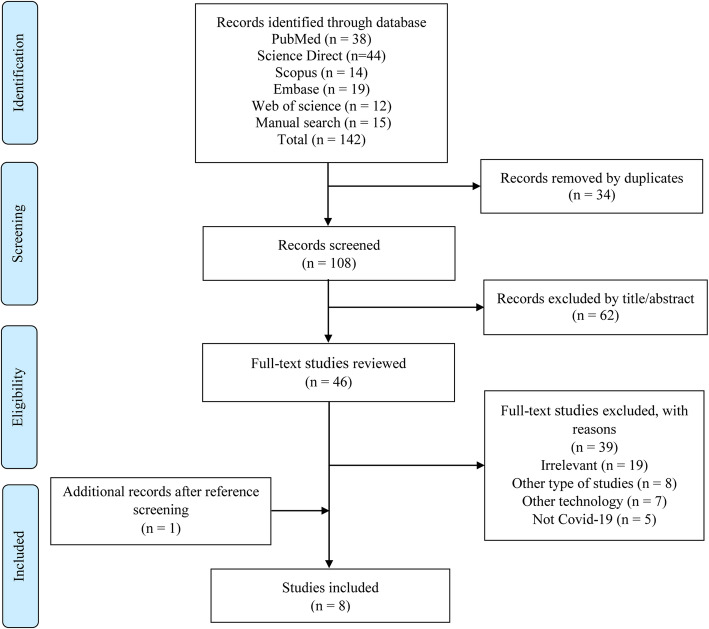
Background: The outbreak of coronavirus disease-19 (COVID-19) is a public health emergency of international concern. Telehealth is an effective option to fight the outbreak of COVID-19. The aim of this systematic review was to identify the role of telehealth services in preventing, diagnosing, treating, and controlling diseases during COVID-19 outbreak. Methods: This systematic review was conducted through searching five databases including PubMed, Scopus, Embase, Web of Science, and Science Direct. Inclusion criteria included studies clearly defining any use of telehealth services in all aspects of health care during COVID-19 outbreak, published from December 31, 2019, written in English language and published in peer reviewed journals. Two reviewers independently assessed search results, extracted data, and assessed the quality of the included studies. Quality assessment was based on the Critical Appraisal Skills Program (CASP) checklist. Narrative synthesis was undertaken to summarize and report the findings. Results: Eight studies met the inclusion out of the 142 search results. Currently, healthcare providers and patients who are self-isolating, telehealth is certainly appropriate in minimizing the risk of COVID-19 transmission. This solution has the potential to prevent any sort of direct physical contact, provide continuous care to the community, and finally reduce morbidity and mortality in COVID-19 outbreak. Conclusions: The use of telehealth improves the provision of health services. Therefore, telehealth should be an important tool in caring services while keeping patients and health providers safe during COVID-19 outbreak.
Overview
The claims and statistics of this paper haven’t been checked yet.
Free: it reads the open-access text and checks the first 5 claims that cite a source we can check. Create a free account to check every claim.
Integrity signals
Registry
Cites
Statistics
Figures
Verification
Claims the paper makes
The claims and statistics of this paper haven’t been checked yet.
Free: it reads the open-access text and checks the first 5 claims that cite a source we can check. Create a free account to check every claim.
Claims other papers make about this one
Each is checked against this paper’s own text: does it say what the citing paper says it does?
The source backs part of the claim, not all of it — or backs it for a different population, condition or comparison.
In the citing paper
“In Australia, a national study suggests that the COVID-19 pandemic considerably encouraged and promoted the use of telehealth and thanks to this window of opportunity, a lot of progress was made in the domain that, without that progress, telehealth use would have remained infrequent [50,51,52,53,54,55,56,57,58].”
From Telehealth and COVID-19 Pandemic: An Overview of the Telehealth Use, Advantages, Challenges, and Opportunities during COVID-19 Pandemic (2022) · cites this paper as [58]
Experimental — accuracy not yet measuredThe source backs part of the claim, not all of it — or backs it for a different population, condition or comparison.
In the citing paper
“In general, studies on the satisfactory level of use of telehealth services during the COVID-19 pandemic suggested it was above average by patients and health professional users and often they showed their willingness to continue with the use of telecare even after the pandemic [56,57,58,59,60,61,62].”
From Telehealth and COVID-19 Pandemic: An Overview of the Telehealth Use, Advantages, Challenges, and Opportunities during COVID-19 Pandemic (2022) · cites this paper as [58]
Experimental — accuracy not yet measuredThe source backs part of the claim, not all of it — or backs it for a different population, condition or comparison.
In the citing paper
“The pandemic has accelerated the adoption of digital health services.”
From Acceptance and perceived usefulness of digital health services in the management of chronic urticaria: a survey of patients and physicians (2025) · cites this paper as [36]
Experimental — accuracy not yet measuredThe source backs part of the claim, not all of it — or backs it for a different population, condition or comparison.
In the citing paper
“The application of digital health has rapidly grown worldwide over the past 4 decades, and accelerated particularly during the COVID-19 pandemic.[1][2][3]”
From The Digital Health Competencies in Medical Education Framework: An International Consensus Statement Based on a Delphi Study (2025) · cites this paper as [1]
Experimental — accuracy not yet measuredThe cited source says what the claim attributes to it.
In the citing paper
“TM is an important tool for health care delivery and has achieved even greater significance in the context of the COVID-19 pandemic [13,14].”
From Diagnostic Concordance of Telemedicine as Compared With Face-to-Face Care in Primary Health Care Clinics in Rural India: Randomized Crossover Trial (2023) · cites this paper as [13]
1 more claim about this paper
Create a free account to see every claim other papers make about this one.
Self-check
Percentages, sums and reported differences re-computed from the paper’s own numbers.
The self-check needs the paper’s full text.
Citations
Cites
Clinical features of patients infected with 2019 novel coronavirus in Wuhan, China
Huang, C., Wang, Y., Li, X., Ren, L., Zhao, J., Hu, Y., Zhang, L., Fan, G., Xu, J., Gu, X., et al. (2020) · The Lancet · doi:10.1016/s0140-6736(20)30183-5 · Cited by 48,884
Virtually perfect? Telemedicine for COVID-19
Hollander, J. E., & Carr, B. G. (2020) · New England Journal of Medicine · doi:10.1056/nejmp2003539 · Cited by 2,970 · cited 4×
“that is made possible by the reduction of person-toperson contact [7, 8].”
BackgroundInfluentialEarly dynamics of transmission and control of COVID-19: a mathematical modelling study
Kucharski, A. J., Russell, T. W., Diamond, C., Liu, Y., Edmunds, J., Funk, S., Eggo, R. M., Sun, F., Jit, M., Munday, J. D., et al. (2020) · The Lancet Infectious Diseases · doi:10.1016/s1473-3099(20)30144-4 · Cited by 2,671 · cited 1×
“Nowadays, the best preventive strategy is to avoid being exposed to the coronavirus, because there is no vaccine to overcome COVID-19 in the all countries [41].”
BackgroundAdhikari, S. P., Meng, S., Wu, Y.-J., Mao, Y.-P., Ye, R.-X., Wang, Q.-Z., Sun, C., Sylvia, S., Rozelle, S., Raat, H., et al. (2020) · Infectious Diseases of Poverty · doi:10.1186/s40249-020-00646-x · Cited by 2,402 · cited 1×
“of unwashed hands with eyes, nose, and mouth [42].”
BackgroundPopay, J., Roberts, H., Sowden, A., Petticrew, M., Arai, L., Rodgers, M., Britten, N., Roen, K., & Duffy, S. (2006) · Lancaster University · doi:10.13140/2.1.1018.4643 · Cited by 2,070
The mental health of medical workers in Wuhan, China dealing with the 2019 novel coronavirus.
Kang, L., Li, Y., Hu, S., Chen, M., Yang, C., Yang, B. X., Wang, Y., Hu, J., Lai, J., Ma, X., et al. (2020) · The Lancet Psychiatry · doi:10.1016/s2215-0366(20)30047-x · Cited by 2,061 · cited 1×
“Also, under strict infection control, unnecessary personnel such as clinical psychiatrists strongly refuse to enter ward of COVID-19 patients (10, 11).”
BackgroundOnline mental health services in China during the COVID-19 outbreak
Liu, S., Yang, L., Zhang, C., Xiang, Y.-T., Liu, Z., Hu, S., & Zhang, B. (2020) · The Lancet Psychiatry · doi:10.1016/s2215-0366(20)30077-8 · Cited by 1,992 · cited 1×
“During the COVID-19 outbreak in China, online mental health surveys with communication programs, such as Weibo, WeChat and TikTok have enabled mental health professionals and health authorities to render safety mental health services online during the COVID-19 pandemic [44].”
BackgroundIdentification of a new human coronavirus
van der Hoek, L., Pyrc, K., Jebbink, M. F., Vermeulen-Oost, W., Berkhout, R. J. M., Wolthers, K. C., Wertheim-van Dillen, P. M. E., Kaandorp, J., Spaargaren, J., & Berkhout, B. (2004) · Nature Medicine · doi:10.1038/nm1024 · Cited by 1,886 · cited 1×
“Coronaviruses, a genus of the coronaviridae family, may cause illness in animals or humans [1, 2].”
BackgroundTelehealth for global emergencies: Implications for coronavirus disease 2019 (COVID-19)
Smith, A. C., Thomas, E., Snoswell, C. L., Haydon, H., Mehrotra, A., Clemensen, J., & Caffery, L. J. (2020) · Journal of Telemedicine and Telecare · doi:10.1177/1357633x20916567 · Cited by 1,828 · cited 4×
“that is made possible by the reduction of person-toperson contact [7, 8].”
BackgroundInfluentialReview of the Clinical Characteristics of Coronavirus Disease 2019 (COVID-19)
Jiang, F., Deng, L., Zhang, L., Cai, Y., Cheung, C. W., & Xia, Z. (2020) · Journal of General Internal Medicine · doi:10.1007/s11606-020-05762-w · Cited by 1,410 · cited 1×
“Primitive symptoms of COVID-19 contain fever, dry cough, breathing difficulty, and boredom [4, 5].”
Background
Cited by
Items 101–200 of 1,005
Sadek, O., Baldwin, F., Gray, R., Khayyat, N., & Fotis, T. G. (2023) · Journal of Graduate Medical Education · doi:10.4300/jgme-d-22-00594.1 · Cited by 61
Digital literacy in undergraduate pharmacy education: a scoping review
Alowais, M., Rudd, G., Besa, V., Nazar, H., Shah, T., & Tolley, C. L. (2023) · Journal of the American Medical Informatics Association · doi:10.1093/jamia/ocad223 · Cited by 63
Johnson, C., Dupuis, J. B., Goguen, P., & Grenier, G. (2021) · PLOS ONE · doi:10.1371/journal.pone.0258839 · Cited by 55
“However, few studies measured the increase in use [8, 19, 20, 26, 30].”
BackgroundResultInfluentialMacariola, A. D., Santarin, T. M. C., Villaflor, F. J. M., Villaluna, L. M. G., Yonzon, R. S. L., Fermin, J. L., Kee, S. L., AlDahoul, N., Karim, H. B. A., & Tan, M. J. T. (2021) · Frontiers in Pharmacology · doi:10.3389/fphar.2021.754011 · Cited by 63
Missing Diagnoses during the COVID-19 Pandemic: A Year in Review
Arolas, H. P. I., Vidal‐Alaball, J., Gil, J., Seguí, F. L., Nicodemo, C., & Sáez, M. (2021) · International Journal of Environmental Research and Public Health · doi:10.3390/ijerph18105335 · Cited by 60
“policies [35] and public health concerns of the population.”
BackgroundBlockchain Technology Projects to Provide Telemedical Services: Systematic Review
Koshechkin, K. A., Lebedev, G. S., Radzievsky, G. P., Seepold, R., & Madrid, N. M. (2021) · Journal of Medical Internet Research · doi:10.2196/17475 · Cited by 58
“This pandemic situation is the perfect opportunity for humanity to bring all countries together regardless of their differences under a single umbrella for ensuring world health safety and fighting against COVID-19 and future pandemics [23-25].”
BackgroundGonçalves, R. L., Pagano, A. S., Reis, Z. S. N., Brackstone, K., Lopes, T. C. P., Cordeiro, S. A., Nunes, J. M., Afagbedzi, S. K., Head, M., Meira, W., et al. (2023) · Journal of Medical Internet Research · doi:10.2196/44209 · Cited by 62
“Usability can be defined as the extent to which a product can be used by specific users to achieve specific goals of effectiveness, efficiency, and satisfaction in a specific context of use [67].”
Basu, A., Kuziemsky, C. E., Novaes, M. D. A., Kleber, A., Sales, F. J. R., Al-Shorbaji, N., Florez-Arango, J. F., Gogia, S. B., Ho, K., Hunter, I. M., et al. (2021) · Yearbook of Medical Informatics · doi:10.1055/s-0041-1726484 · Cited by 60
“As a result, traditional face-to-face clinical encounters needed to be complemented with digital solutions, resulting in the adoption of virtual care tools such as telehealth to became commonplace worldwide [1, 2].”
BackgroundDiagnosis of COVID-19, vitality of emerging technologies and preventive measures
Asif, M., Xu, Y., Xiao, F., & Sun, Y. (2021) · Chemical Engineering Journal · doi:10.1016/j.cej.2021.130189 · Cited by 54
“Elham and Alireza [191] searched 5 data bases to evaluate the telemedicine services for health care during the COVID-19 pandemic and concluded that telemedicine potentially inhibited all kind of direct physical contact and provided continuous care to the community consequently lowering the morbidity and mortality rate…”
Werneke, M. W., Deutscher, D., Hayes, D., Grigsby, D., Mioduski, J. E., & Resnik, L. J. (2022) · Physical Therapy · doi:10.1093/ptj/pzac020 · Cited by 56
Artificial intelligence for telemedicine diabetic retinopathy screening: a review
Nakayama, L. F., Ribeiro, L. Z., Novaes, F. D. C., Miyawaki, I. A., Miyawaki, A. E., de Oliveira, J. A. E., de Oliveira, T. V. F., Malerbi, F. K., Regatieri, C. V., Celi, L. A., et al. (2023) · Annals of Medicine · doi:10.1080/07853890.2023.2258149 · Cited by 57
Inampudi, S., Rajkumar, E., Gopi, A., Vany Mol, K. S., & Sruthi, K. S. (2024) · Humanities and Social Sciences Communications · doi:10.1057/s41599-024-03081-7 · Cited by 66
Scalable Telehealth Services to Combat Novel Coronavirus (COVID-19) Pandemic
Ullah, S. M. A., Islam, M. M., Mahmud, S., Nooruddin, S., Raju, S. M. T. U., & Haque, M. R. (2021) · SN Computer Science · doi:10.1007/s42979-020-00401-x · Cited by 54
Capasso, N., Virgilio, E., Covelli, A., Giovannini, B., Foschi, M., Montini, F., Nasello, M., Nilo, A., Prestipino, E., Schirò, G., et al. (2023) · Frontiers in Neurology · doi:10.3389/fneur.2023.1207617 · Cited by 57
Omboni, S., Ballatore, T., Rizzi, F., Tomassini, F., Panzeri, E., & Campolo, L. (2021) · PLoS ONE · doi:10.1371/journal.pone.0258015 · Cited by 51
Ren, D., & Ma, B. (2021) · Journal of Medical Internet Research · doi:10.2196/21892 · Cited by 60
“COVID-19 also endangers people undergoing in-person care at hospitals as patients with different diseases gather in hospitals; therefore, the government stopped offline care to avoid spreading COVID-19 between doctors and patients [5].”
Negash, W. D., Fetene, S. M., Shewarega, E. S., Fentie, E. A., Asmamaw, D. B., Teklu, R. E., Aragaw, F. M., Belay, D. G., Alemu, T. G., & Eshetu, H. B. (2022) · BMJ Open · doi:10.1136/bmjopen-2022-063426 · Cited by 57
Effectiveness of Telemedicine for Musculoskeletal Disorders: Umbrella Review
Bargeri, S., Castellini, G., Vitale, J. A., Guida, S., Banfi, G., Gianola, S., & Pennestrì, F. (2024) · Journal of Medical Internet Research · doi:10.2196/50090 · Cited by 59
“During the COVID-19 pandemic, the spread of smart devices and accessible internet connections made telemedicine grow exponentially, become increasingly popular, and be tested for many health conditions [3,4].”
Méndez, D., & Le, T. T. T. (2021) · Tobacco Control · doi:10.1136/tobaccocontrol-2021-056748 · Cited by 51
Digital Health Platforms in Saudi Arabia: Determinants from the COVID-19 Pandemic Experience
Alghamdi, S. M., Alsulayyim, A. S., Alqahtani, J. S., & Aldhahir, A. M. (2021) · Healthcare · doi:10.3390/healthcare9111517 · Cited by 53
Mwinbam, M. M., Suglo, J. N., Agyeman, Y. N., & Kukeba, M. W. (2023) · BMJ Paediatrics Open · doi:10.1136/bmjpo-2022-001807 · Cited by 52
Amer, F., Hammoud, S., Khatatbeh, H., Lohner, S., Boncz, I., & Endrei, D. (2022) · BMC Health Services Research · doi:10.1186/s12913-022-07863-0 · Cited by 58
Macchi, Z. A., Ayele, R., Dini, M., Lamira, J., Katz, M., Pantilat, S. Z., Jones, J., & Kluger, B. M. (2021) · Palliative Medicine · doi:10.1177/02692163211017383 · Cited by 49
Braune, K., Boß, K., Schmidt-Herzel, J., Gajewska, K. A., Thieffry, A., Schulze, L., Posern, B., & Raile, K. (2021) · JMIR mhealth and uhealth · doi:10.2196/24374 · Cited by 55
“Due to people’s interest in the transition from traditional care to digital care, which has considerably increased as a result of the COVID-19 pandemic, evidence related to HCPs’, patients’, and caregivers’ experiences with this transition has been emerging in various fields of medicine [15-28].”
BackgroundLee, H., Kang, J., & Yeo, J. (2021) · Journal of Medical Internet Research · doi:10.2196/27460 · Cited by 47
“The COVID-19 pandemic has encouraged the development of telemedicine and the use of digital platforms [1].”
BackgroundPastrana, T., De Lima, L., Pettus, K., Ramsey, A., Napier, G., Wenk, R., & Radbruch, L. (2021) · Palliative and Supportive Care · doi:10.1017/s1478951521000298 · Cited by 48
“Some of the advantages include reduced transportation burden, risk of transmission, infection rates, and the ability to ensure continuity of care in the community (Monaghesh and Hajizadeh, 2020).”
BackgroundKassahun, A., & Zewdie, A. (2022) · BMJ Open · doi:10.1136/bmjopen-2021-059307 · Cited by 48
Cunha, A. S., Pedro, A. R., & Cordeiro, J. V. (2023) · Journal of Medical Internet Research · doi:10.2196/44188 · Cited by 55
COVID-19 among LGBTQ+ individuals living with HIV/AIDS: psycho-social challenges and care options
Tomar, A., Spadine, M. N., Graves-Boswell, T., & Wigfall, L. T. (2021) · AIMS Public Health · doi:10.3934/publichealth.2021023 · Cited by 47
“In addition, the benefits of tele-counselling in mitigating the mental health ramifications of COVID-19 have been widely discussed [29].”
BackgroundCOVID-19, Telehealth, and Pediatric Integrated Primary Care: Disparities in Service Use
Chakawa, A., Throckmorton‐Belzer, L., Crawford, T. P., & Yeh, H. (2021) · Journal of Pediatric Psychology · doi:10.1093/jpepsy/jsab077 · Cited by 47
“Over the past two decades, provision of telehealth IPC grew and demonstrated equivalent efficacy as inperson visits (Bashshur et al., 2016; Myers & Lieberman, 2013; Ralston et al., 2019).”
BackgroundAl-Garadi, M. A., Kim, S., Guo, Y., Warren, E., Yang, Y., Lakamana, S., & Sarker, A. (2022) · Array · doi:10.1016/j.array.2022.100217 · Cited by 58
Patient satisfaction with e-oral health care in rural and remote settings: a systematic review
Emami, E., Harnagea, H., Shrivastava, R., Ahmadi, M., & Giraudeau, N. (2022) · Systematic Reviews · doi:10.1186/s13643-022-02103-2 · Cited by 49
“The effectiveness of e-health has been especially acknowledged during the COVID-19 pandemic [11], and telemedicine and teledentistry have addressed patients’ needs during the closure of dental clinics in this period.”
BackgroundAntonacci, G., Benevento, E., Bonavitacola, S., Cannavacciuolo, L., Foglia, E., Fusi, G., Garagiola, E., Ponsiglione, C., & Stefanini, A. (2023) · BMC Health Services Research · doi:10.1186/s12913-023-10100-x · Cited by 55
“A large body of literature, including empirical studies, systematic reviews, and opinion pieces, describing benefits, challenges and success factors related to the use of telemedicine during the pandemic, has been increasingly produced [15].”
BackgroundInfluentialMarchi, M., Alkema, A., Xia, C., Thio, C. H. L., Chen, L.-Y., Schalkwijk, W., Galeazzi, G. M., Ferrari, S., Pingani, L., Kweon, H., et al. (2024) · Nature Human Behaviour · doi:10.1038/s41562-024-01919-3 · Cited by 51
Dopelt, K., Avni, N., Haimov-Sadikov, Y., Golan, I., & Davidovitch, N. (2021) · International Journal of Environmental Research and Public Health · doi:10.3390/ijerph18189556 · Cited by 55
“It has gained momentum in the wake of the COVID-19 pandemic due to pressure to reduce person-toperson interface and slow down the spread of the pandemic [25].”
BackgroundDow‐Fleisner, S., Seaton, C. L., Li, E., Plamondon, K., Oelke, N. D., Kurtz, D., Jones, C., Currie, L. M., Pesut, B., Hasan, K., et al. (2022) · BMC Public Health · doi:10.1186/s12889-022-13254-1 · Cited by 51
Khan, N. A., Stergiou, G. S., Omboni, S., Kario, K., Renna, N. F., Chapman, N., McManus, R. J., Williams, B., Parati, G., Конради, А. О., et al. (2022) · Journal of Hypertension · doi:10.1097/hjh.0000000000003205 · Cited by 51
Paul, E., Jessup, B., & Barnett, T. (2023) · Australian Journal of Rural Health · doi:10.1111/ajr.12961 · Cited by 49
Alsahli, S., Hor, S.-Y., & Lam, M. K. (2023) · JMIR mhealth and uhealth · doi:10.2196/50419 · Cited by 54
“…pandemic has clearly been a catalyst of the wider acceptance and adoption of mHealth interventions worldwide, with studies frequently reporting benefits such as minimized risk of transmission, increased patient involvement, and reduced burden on hospitals and health care expenditure [9,62,63].”
BackgroundAn Overview of the Evolution and Impact of Chatbots in Modern Healthcare Services
Catherine, A. T., Towfek, S. K., & Abdelhamid, A. A. (2023) · Mesopotamian Journal of Artificial Intelligence in Healthcare · doi:10.58496/mjaih/2023/014 · Cited by 49
“Telemedicine is one of the most critical services provided by electronic healthcare on a large scale, as it allows for remote consultations and monitoring, overcoming geographic barriers, enhancing communication with patients, and enhancing their health condition [18-20].”
BackgroundAnderson, K. M., Diaz, A., Parikh, D. R., & Garvey, G. (2021) · BMC Health Services Research · doi:10.1186/s12913-021-06066-3 · Cited by 49
Liu, R., Yu, M., Zhao, Q., Wang, J., Bai, Y., Chen, H., Yang, X., Liu, S., Okan, O., Chen, X., et al. (2025) · Frontiers in Public Health · doi:10.3389/fpubh.2025.1570615 · Cited by 45
COVID-19 mortality in women and men in sub-Saharan Africa: a cross-sectional study
Dalal, J., Triulzi, I., James, A., Nguimbis, B., Dri, G. G., Venkatasubramanian, A., Royd, L. N. T., Mesa, S. B., Somerville, C., Turchetti, G., et al. (2021) · BMJ Global Health · doi:10.1136/bmjgh-2021-007225 · Cited by 48
Research on digital technology use in cardiology: bibliometric analysis
Yeung, A. W. K., Kulnik, S. T., Parvanov, E. D., Fassl, A., Eibensteiner, F., Völkl-Kernstock, S., Kletecka-Pulker, M., Crutzen, R., Gutenberg, J., Höppchen, I., et al. (2022) · Journal of Medical Internet Research · doi:10.2196/36086 · Cited by 44
“This enables effective automation in many areas that are highly relevant for health care and medicine, such as communication (eg, telehealth [5], which has been recently emphasized by an increased need for remote access for medical support in both physical and mental health during the COVID-19 pandemic [6,7]), social…”
BackgroundPandit, A. A., Mahashabde, R. V., Brown, C. C., Acharya, M., Shoults, C. C., Eswaran, H., & Hayes, C. J. (2023) · Journal of Telemedicine and Telecare · doi:10.1177/1357633x231166026 · Cited by 48
Blockchain-Enabled Telehealth Services Using Smart Contracts
Hasan, H. R., Salah, K. M., Jayaraman, R., Yaqoob, I., Omar, M., & Ellahham, S. H. (2021) · IEEE Access · doi:10.1109/access.2021.3126025 · Cited by 51
“Consequently, telehealth has proven to be a beneficial technology that has the potential to mitigate the spread of the infectious COVID-19 [9].”
BackgroundOakman, J., Kinsman, N., Lambert, K. A., Stuckey, R., Graham, M., & Weale, V. P. (2022) · BMJ Open · doi:10.1136/bmjopen-2021-052733 · Cited by 53
Kitamura, N., Abbas, K., & Nathwani, D. (2022) · BMC Public Health · doi:10.1186/s12889-022-13411-6 · Cited by 46
“Some doctors expressed concerns about safety, quality, privacy, and accountability [58, 59].”
BackgroundImplementations and strategies of telehealth during COVID-19 outbreak: a systematic review
Simone, S. D., Franco, M., Servillo, G., & Vargas, M. (2022) · BMC Health Services Research · doi:10.1186/s12913-022-08235-4 · Cited by 44
“Telemedicine may also improve health care delivery by substituting in-person care [4].”
BackgroundMeisha, D. E., Alsolami, A. M., & Alharbi, G. M. (2021) · BMC Oral Health · doi:10.1186/s12903-021-01577-1 · Cited by 47
“During this pandemic, the importance of teleconsultation has risen and is now considered an essential service [26, 27].”
BackgroundThe Clinical Information Systems Response to the COVID-19 Pandemic
Reeves, J. J., Pageler, N. M., Wick, E. C., Melton, G. B., Tan, Y.-H. G., Clay, B. J., & Longhurst, C. (2021) · Yearbook of Medical Informatics · doi:10.1055/s-0041-1726513 · Cited by 48
“In response to the pandemic, there was a rapid growth in applications and adoption of and use cases for telehealth in the ambulatory setting in almost every specialty from mental health to oncology to obstetrics [66-70].”
Yoon, S., Goh, H., Chan, A. W.-M., Malhotra, R., Visaria, A., Matchar, D. B., Lum, E., Seng, B., Ramakrishnan, C., Quah, S. R., et al. (2021) · Journal of the American Medical Directors Association · doi:10.1016/j.jamda.2021.11.004 · Cited by 43
Vaghasiya, J. V., Mayorga‐Martinez, C. C., & Pumera, M. (2022) · npj Flexible Electronics · doi:10.1038/s41528-022-00208-1 · Cited by 43
Lim, J. M., Duong, M. C., Cook, A. R., Hsu, L. Y., & Tam, C. C. (2021) · BMJ Open · doi:10.1136/bmjopen-2020-048157 · Cited by 42
Mirshahi, A., Bakitas, M. A., Khoshavi, M., Khanipour-Kencha, A., Riahi, S. M., Wells, R. D., Dionne-Odom, J. N., Ghiyasvandian, S., & Zakerimoghadam, M. (2024) · BMC Palliative Care · doi:10.1186/s12904-024-01348-z · Cited by 48
Volandes, A. E., Zupanc, S. N., Paasche-Orlow, M. K., Lakin, J. R., Chang, Y., Burns, E. A., LaVine, N. A., Carney, M. T., Martins-Welch, D., Emmert, K., et al. (2022) · JAMA Network Open · doi:10.1001/jamanetworkopen.2022.0354 · Cited by 41
Lawrence, K. S., Nov, O., Mann, D., Mandal, S., Iturrate, E., & Wiesenfeld, B. M. (2022) · JMIR Medical Informatics · doi:10.2196/34826 · Cited by 46
“Although research documenting the experience of health systems undergoing the transition to telemedicine in response to the pandemic has increased [18-20], there is limited research exploring the effects of telemedicine on health care delivery areas such as clinical workflows, administrative load, or practice efficien…”
BackgroundMilosevic, I., Cameron, D. H., Milanovic, M., McCabe, R. E., & Rowa, K. (2022) · The Canadian Journal of Psychiatry · doi:10.1177/07067437211027319 · Cited by 41
“Since the outbreak of the COVID-19 pandemic, telehealth has additionally received widespread attention for its ability to facilitate an alternative avenue to care while reducing the risk of disease transmission.(11-13) Indeed, recent reports highlight the explosive expansion of telehealth services during COVID-19,(14-…”
BackgroundWiwatkunupakarn, N., Aramrat, C., Pliannuom, S., Buawangpong, N., Pinyopornpanish, K., Nantsupawat, N., Mallinson, P. A. C., Kinra, S., & Angkurawaranon, C. (2023) · Journal of Medical Internet Research · doi:10.2196/45944 · Cited by 44
“Online databases showed a significant increase in the number of publications related to the use of CDSSs in telemedicine in 2015 and an exponential increase since the COVID-19 pandemic [28].”
Tonapa, S. I., Inayati, A., Sithichoksakulchai, S., Saragih, I. D., Efendi, F., & Chou, F. (2021) · Journal of Clinical Nursing · doi:10.1111/jocn.16025 · Cited by 43
Liverani, M., Ir, P., Perel, P., Khan, M. S., Balabanova, D., & Wiseman, V. L. (2022) · Health Policy and Planning · doi:10.1093/heapol/czac019 · Cited by 45
Parker, S. M., Barr, M. L., Stocks, N. P., Denney‐Wilson, E., Zwar, N. A., Karnon, J. D., Kabir, A., Nutbeam, D., Roseleur, J., Liaw, S., et al. (2022) · BMJ Open · doi:10.1136/bmjopen-2021-060393 · Cited by 44
Gillam, J., Davies, N., Aworinde, J., Yorganci, E., Anderson, J. E., & Evans, C. (2022) · Journal of Medical Internet Research · doi:10.2196/29837 · Cited by 42
“A way to facilitate this is through the use of eHealth [15], which is defined as “health services and information delivered or enhanced through the internet and related technologies” [16], encompassing an array of interventions that enable care to be delivered remotely.”
Telehealth and Transformation of Nursing Care in Saudi Arabia: A Systematic Review
Baalharith, I. M. A., Sherim, M. A., Almutairi, S. H., & Albaqami, A. S. A. (2022) · International Journal of Telemedicine and Applications · doi:10.1155/2022/8426095 · Cited by 55
“A study by Monaghesh & Hajizadeh [33] affirms these findings by noting that remote healthcare reduces the risk of transmitting infectious diseases and reduces the usage of resources among HCWs and service users.”
BackgroundKosowicz, L., Tran, K., Toàn, T. K., Dang, T. H., Pham, V. A., Hue, T. T. K., Duong, H. T. B., Nguyen, T. D., Phuong, A. T., Le, T. H., et al. (2023) · Journal of Medical Internet Research · doi:10.2196/43224 · Cited by 53
Prasse, T., Yap, N., Sivakanthan, S., Pan, J., Ogunlade, J. I., Bredow, J., Eysel, P., Ellenbogen, R. G., & Hofstetter, C. P. (2023) · Journal of Neurosurgery Spine · doi:10.3171/2023.2.spine23136 · Cited by 41
Psychological antecedents of telehealth acceptance: A technology readiness perspective
Li, X., Zhou, Y., Liu, Y., Wang, X., & Yuen, K. F. (2023) · International Journal of Disaster Risk Reduction · doi:10.1016/j.ijdrr.2023.103688 · Cited by 45
“Moreover, telehealth can control the transmission of the coronavirus by minimizing physical contact [3].”
BackgroundHuman resource management (HRM) strategies of medical staff during the COVID-19 pandemic
Mahdavi, A., Atlasi, R., Ebrahimi, M., Azimian, E., & Naemi, R. (2023) · Heliyon · doi:10.1016/j.heliyon.2023.e20355 · Cited by 47
“The EHR provides an opportunity for emergency patient care without the need for patient ’ s presence [53].”
Lunde, E. D., Joensen, A. M., Fonager, K., Lundbye‐Christensen, S., Johnsen, S. P., Larsen, M. L., Lip, G. Y. H., & Riahi, S. (2021) · BMJ Open · doi:10.1136/bmjopen-2021-048839 · Cited by 40
m-Health Applications for Hearing Loss: A Scoping Review
Frisby, C., Eikelboom, R. H., Mahomed‐Asmail, F., Kuper, H., & Swanepoel, D. W. (2021) · Telemedicine Journal and e-Health · doi:10.1089/tmj.2021.0460 · Cited by 40
“28,51 Support, treatment, and health promotion were less common, contributing to only 15%, 10%, and 2%, respectively, mostly undertaken in high-income countries.”
Mak, V. S. L., Krishnan, S., & Chuang, S. (2022) · Healthcare · doi:10.3390/healthcare10020328 · Cited by 40
“More recently, telehealth models have emerged at the forefront at the outset of the COVID-19 pandemic, allowing delivery of healthcare services while containing the transmission of infection [30,31].”
BackgroundXu, P., Hudnall, M., Zhao, S., Raja, U., Parton, J., & Lewis, D. (2022) · Journal of Medical Internet Research · doi:10.2196/38602 · Cited by 45
“” Monaghesh and Hajizadeh [2] proposed that researchers can “examine the effectiveness of using telehealth approaches in different health areas, especially in the field of home nursing the elderly who are high-risk people in the community.”
BackgroundInfluentialKorab-Chandler, E., Kyei-Nimakoh, M., Cameron, J., Hegarty, K. L., & Tarzia, L. (2022) · BMJ Open · doi:10.1136/bmjopen-2021-058582 · Cited by 43
Maleka, N. H., & Matli, W. (2022) · Journal of Science and Technology Policy Management · doi:10.1108/jstpm-08-2021-0126 · Cited by 44
Telehealth in speech and language therapy during the COVID-19 pandemic: a systematic review
Shahouzaei, N., & Arefi, M. G. (2022) · Disability and Rehabilitation Assistive Technology · doi:10.1080/17483107.2022.2122605 · Cited by 40
Shifti, D. M., Chojenta, C., Holliday, E. G., & Loxton, D. J. (2021) · BMJ Open · doi:10.1136/bmjopen-2020-047892 · Cited by 45
Thirunavukkarasu, A., Alotaibi, N. H., Alhazmi, A., Alenzi, M. J., Alshaalan, Z. M., Alruwaili, M. G., Alruwaili, T. A. M., Alanazi, H., & Alosaimi, T. H. (2021) · Healthcare · doi:10.3390/healthcare9121739 · Cited by 44
“Telemedicine has been extensively utilized during the COVID-19 pandemic as it helps in diminishing contact with medical services offices, staff, and patients, and thereby minimizes the danger of COVID-19 spread [11].”
BackgroundCost-effectiveness of telehealth-delivered diet and exercise interventions: A systematic review
Law, L., Kelly, J. T., Savill, H., Wallen, M. P., Hickman, I. J., Erku, D., & Mayr, H. L. (2022) · Journal of Telemedicine and Telecare · doi:10.1177/1357633x211070721 · Cited by 39
Preparing the health workforce for future public health emergencies in Africa
Okoroafor, S. C., Asamani, J. A., Kabego, L., Ahmat, A., Nyoni, J., Millogo, J. J. S., Illou, M. M. A., & Mwinga, K. (2022) · BMJ Global Health · doi:10.1136/bmjgh-2021-008327 · Cited by 39
Nurse practitioner led telehealth services: A scoping review
Charalambous, J., Hollingdrake, O., & Currie, J. (2023) · Journal of Clinical Nursing · doi:10.1111/jocn.16898 · Cited by 44
Russo, V., Cassini, R., Caso, V. M., Donno, C., Laezza, A., Naddei, M., Fiorelli, A., Golino, P., & Nigro, G. (2021) · International Journal of Environmental Research and Public Health · doi:10.3390/ijerph18042087 · Cited by 41
“International guidelines recommend that all high-risk individuals, including those with traditional cardiovascular risk factors and/or established atherosclerotic cardiovascular disease (ASCVD), stay at home if possible, primarily to limit potential exposure; moreover, clinicians and patients are strongly recommended…”
BackgroundTelemedicine and diabetic foot ulcer outcomes. A meta-analysis of controlled trials
Yammine, K., & Estephan, M. (2021) · The Foot · doi:10.1016/j.foot.2021.101872 · Cited by 45
From COVID-19 Pandemic to Patient Safety: A New “Spring” for Telemedicine or a Boomerang Effect?
Micco, F. D., Fineschi, V., Banfi, G., Frati, P., Oliva, A., Travaini, G. V., Picozzi, M., Curcio, G., Pecchia, L., Petitti, T., et al. (2022) · Frontiers in Medicine · doi:10.3389/fmed.2022.901788 · Cited by 41
Global Interest in Telehealth During COVID-19 Pandemic: An Analysis of Google Trends™
Arshad Ali, S., Bin Arif, T., Maab, H., Baloch, M., Manazir, S., Jawed, F., & Ochani, R. K. (2020) · Cureus · doi:10.7759/cureus.10487 · Cited by 37
“Thus, the telehealth is a paramount strategy to keep the people discrete or the caregivers discrete from patients and other providers [23].”
BackgroundArtificial Intelligence in Telemedicine
Fernandes, J. G. (2022) · Springer eBooks · doi:10.1007/978-3-030-64573-1_93 · Cited by 48
Cibralic, S., Alam, M., Diaz, A. M., Woolfenden, S. R., Katz, I., Tzioumi, D., Murphy, E., Deering, A., McNamara, L., Raman, S., et al. (2022) · BMJ Open · doi:10.1136/bmjopen-2021-060395 · Cited by 39
Assessment of Patient Experiences in Otolaryngology Virtual Visits During the COVID‐19 Pandemic
Itamura, K., Rimell, F. L., Illing, E. A., Higgins, T. S., Ting, J. Y., Lee, M., & Wu, A. W. (2020) · OTO Open · doi:10.1177/2473974x20933573 · Cited by 37
“W ith the coronavirus disease 2019 (COVID-19) pandemic, otolaryngologists, among other specialties, implemented telehealth strategies to adapt to physical distancing guidelines.(1-9) Previous studies demonstrated telehealth to be cost-effective and useful.”
BackgroundLaMonica, H. M., Roberts, A., Lee, G. Y., Davenport, T. A., & Hickie, I. B. (2021) · Journal of Medical Internet Research · doi:10.2196/26317 · Cited by 37
“The availability of health information technologies (HITs) is proving invaluable during the COVID-19 pandemic, where face-to-face mental health care is often delivered digitally (eg, videoconferencing) [3].”
BackgroundReviewing Teledentistry Usage in Canada during COVID-19 to Determine Possible Future Opportunities
Singhal, S., Mohapatra, S., & Quiñonez, C. (2021) · International Journal of Environmental Research and Public Health · doi:10.3390/ijerph19010031 · Cited by 45
“The report reinforced that telehealth was an appropriate modality to provide continuous care by reducing physical contact and COVID-19-related morbidity and mortality [15].”
BackgroundObstetrical Telehealth and Virtual Care Practices During the COVID-19 Pandemic
Kern‐Goldberger, A. R., & Srinivas, S. K. (2021) · Clinical Obstetrics & Gynecology · doi:10.1097/grf.0000000000000671 · Cited by 41
Paul, E., & Fancourt, D. E. (2021) · The British Journal of Psychiatry · doi:10.1192/bjp.2021.130 · Cited by 38
Marshall, S. M., Moore, A., Sahm, L. J., & Fleming, A. (2021) · Pharmacy · doi:10.3390/pharmacy9040188 · Cited by 43
Aldekhyyel, R. N., Almulhem, J. A., & Binkheder, S. (2021) · Healthcare · doi:10.3390/healthcare9111574 · Cited by 41
“The threat of an imminent surge of COVID19 patients drove healthcare organizations to act quickly to develop and deploy mobile health technologies [2,3], with telemedicine solutions in particular seeing an uprise [2,4,5].”
BackgroundWalczak, R., Kludacz-Alessandri, M., & Hawrysz, L. (2022) · International Journal of Environmental Research and Public Health · doi:10.3390/ijerph191710937 · Cited by 41
“This tool aims to improve access to care for everyone, regardless of location, and reduce face-to-face visits [5,6].”
MethodGaravand, A., Jalali, S., Talebi, A. H., & Sabahi, A. (2022) · Informatics in Medicine Unlocked · doi:10.1016/j.imu.2022.101119 · Cited by 41
“Lack of facilities and supports The fact is that the implementation of remote work programs and the provision of remote health services widely in the era of Covid-19 required the use of different facilities and infrastructures [53], and providing these facilities to health care officials in different regions is facing…”
Importance of the English Language in Today’s World
(2024) · International Journal of English Learning & Teaching Skills · doi:10.15864/ijelts.6205 · Cited by 36
Sebothoma, B., Khoza‐Shangase, K., Masege, D., & Mol, D. (2021) · Indian Journal of Otolaryngology and Head & Neck Surgery · doi:10.1007/s12070-021-02836-x · Cited by 35
Kelly, J. T., Law, L., Guzman, K. R. D., Hickman, I. J., Mayr, H. L., Campbell, K. L., Snoswell, C. L., & Erku, D. (2023) · Nutrition Reviews · doi:10.1093/nutrit/nuad032 · Cited by 37
Workplace Violence Against Physicians Treating COVID-19 Patients in Peru: A Cross-Sectional Study
Muñoz-del-Carpio-Toia, Á., del Carpio, L. B. M., Mayta‐Tristán, P., Alarcón‐Yaquetto, D. E., & Málaga, G. (2021) · The Joint Commission Journal on Quality and Patient Safety · doi:10.1016/j.jcjq.2021.06.002 · Cited by 38
Rasmussen, B., Perry, R., Hickey, M., Hua, X., Wong, Z. W., Guy, L., Hitch, D., Hiscock, H., Dalziel, K., Winter, N., et al. (2022) · Internal Medicine Journal · doi:10.1111/imj.15726 · Cited by 35
Metadata
- Authors
- Monaghesh, E., & Hajizadeh, A.
- Affiliations
- Tabriz University of Medical Sciences (IR)
- Corresponding author
- Hajizadeh, Alireza
- Venue
- BMC Public Health
- Published
- 2020-08-01
- Volume
- 20
- Issue
- 1
- Pages
- 1193-1193
- ISSN
- 1471-2458 (ISSN-L)
- PMC
- PMC7395209
- OpenAlex
- W3046280637
- Semantic Scholar
- 4d9cd54e49d0de81c8af9fe0669924a281cc4557
- Cited by
- 1,941
- References
- 43
- Citations by year
- 2026: 117 · 2025: 246 · 2024: 297 · 2023: 392 · 2022: 502 · 2021: 354 · 2020: 31
- FWCI
- 53.44
- Type
- journal article
- Language
- en
- Open access
- gold
- doi.org
- Licence
- cc-by
- creativecommons.org/licenses/by/4.0 (tdm)
- creativecommons.org/licenses/by/4.0 (vor)
- Locations
- BMC Public Health (publishedVersion, cc-by)
- Research Square (acceptedVersion, cc-by)
- PubMed Central (publishedVersion, cc-by)
- PubMed (publishedVersion)
- DOAJ (DOAJ: Directory of Open Access Journals) (submittedVersion, cc-by-sa)
- Topics
- Health Sciences › Medicine › Public Health, Environmental and Occupational Health › Telemedicine and Telehealth Implementation
- Health Sciences › Dentistry › General Dentistry › Dental Research and COVID-19
- Physical Sciences › Computer Science › Information Systems › Healthcare during COVID-19 Pandemic
- Keywords
- telemedicine, COVID-19 pandemic, telehealth services, COVID-19 prevention, COVID-19 diagnosis, COVID-19 treatment, disease control, self-isolation, infection transmission prevention, continuity of care
- MeSH terms
- COVID-19, Disease Outbreaks, Humans, Pneumonia, Viral, Telemedicine, Coronavirus Infections, Pandemics
About these checks
Registry, retraction, Cites and statistics results are computed, not judged, with one exception: a printed reference that no index lists is read once by a model before it counts as a citation error. Claims are extracted by a model and kept only when their quote appears verbatim in the text; each cited source is then checked, with a model’s help, for whether it says what the claim relies on. Those verdicts can be wrong — read the claim’s quote and the cited source before relying on one.
Statistics and arithmetic are recomputed, not judged.
Confidence bands are shown only for fields calibrated on our annotated test set. None is calibrated yet, so no band is shown.
What counts as a claim ›How we measure confidence ›How we check this ›
Are you an author, or do you see a problem with this page? Request a review
Data sources
Bibliographic data: Semantic Scholar, OpenAlex, Crossref.
Contains information from the Semantic Scholar Academic Graph Datasets, made available under the ODC Attribution License (ODC-BY 1.0).
Semantic Scholar’s data is described in: Kinney, R., et al. (2023). The Semantic Scholar Open Data Platform. arXiv:2301.10140.
