

The role of telehealth during COVID-19 outbreak: a systematic review based on current evidence
Open accessPublished version of a preprint
The DOI matches its Crossref record; 43 of the 43 references it cites were found in a registry or an index.
Abstract
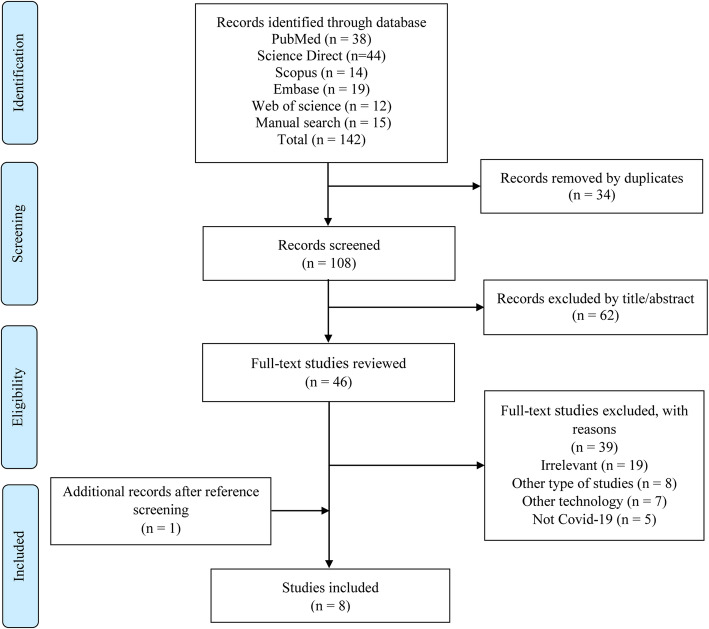
Background: The outbreak of coronavirus disease-19 (COVID-19) is a public health emergency of international concern. Telehealth is an effective option to fight the outbreak of COVID-19. The aim of this systematic review was to identify the role of telehealth services in preventing, diagnosing, treating, and controlling diseases during COVID-19 outbreak. Methods: This systematic review was conducted through searching five databases including PubMed, Scopus, Embase, Web of Science, and Science Direct. Inclusion criteria included studies clearly defining any use of telehealth services in all aspects of health care during COVID-19 outbreak, published from December 31, 2019, written in English language and published in peer reviewed journals. Two reviewers independently assessed search results, extracted data, and assessed the quality of the included studies. Quality assessment was based on the Critical Appraisal Skills Program (CASP) checklist. Narrative synthesis was undertaken to summarize and report the findings. Results: Eight studies met the inclusion out of the 142 search results. Currently, healthcare providers and patients who are self-isolating, telehealth is certainly appropriate in minimizing the risk of COVID-19 transmission. This solution has the potential to prevent any sort of direct physical contact, provide continuous care to the community, and finally reduce morbidity and mortality in COVID-19 outbreak. Conclusions: The use of telehealth improves the provision of health services. Therefore, telehealth should be an important tool in caring services while keeping patients and health providers safe during COVID-19 outbreak.
Overview
The claims and statistics of this paper haven’t been checked yet.
Free: it reads the open-access text and checks the first 5 claims that cite a source we can check. Create a free account to check every claim.
Integrity signals
Registry
Cites
Statistics
Figures
Verification
Claims the paper makes
The claims and statistics of this paper haven’t been checked yet.
Free: it reads the open-access text and checks the first 5 claims that cite a source we can check. Create a free account to check every claim.
Claims other papers make about this one
Each is checked against this paper’s own text: does it say what the citing paper says it does?
The source backs part of the claim, not all of it — or backs it for a different population, condition or comparison.
In the citing paper
“In Australia, a national study suggests that the COVID-19 pandemic considerably encouraged and promoted the use of telehealth and thanks to this window of opportunity, a lot of progress was made in the domain that, without that progress, telehealth use would have remained infrequent [50,51,52,53,54,55,56,57,58].”
From Telehealth and COVID-19 Pandemic: An Overview of the Telehealth Use, Advantages, Challenges, and Opportunities during COVID-19 Pandemic (2022) · cites this paper as [58]
Experimental — accuracy not yet measuredThe source backs part of the claim, not all of it — or backs it for a different population, condition or comparison.
In the citing paper
“In general, studies on the satisfactory level of use of telehealth services during the COVID-19 pandemic suggested it was above average by patients and health professional users and often they showed their willingness to continue with the use of telecare even after the pandemic [56,57,58,59,60,61,62].”
From Telehealth and COVID-19 Pandemic: An Overview of the Telehealth Use, Advantages, Challenges, and Opportunities during COVID-19 Pandemic (2022) · cites this paper as [58]
Experimental — accuracy not yet measuredThe source backs part of the claim, not all of it — or backs it for a different population, condition or comparison.
In the citing paper
“The pandemic has accelerated the adoption of digital health services.”
From Acceptance and perceived usefulness of digital health services in the management of chronic urticaria: a survey of patients and physicians (2025) · cites this paper as [36]
Experimental — accuracy not yet measuredThe source backs part of the claim, not all of it — or backs it for a different population, condition or comparison.
In the citing paper
“The application of digital health has rapidly grown worldwide over the past 4 decades, and accelerated particularly during the COVID-19 pandemic.[1][2][3]”
From The Digital Health Competencies in Medical Education Framework: An International Consensus Statement Based on a Delphi Study (2025) · cites this paper as [1]
Experimental — accuracy not yet measuredThe cited source says what the claim attributes to it.
In the citing paper
“TM is an important tool for health care delivery and has achieved even greater significance in the context of the COVID-19 pandemic [13,14].”
From Diagnostic Concordance of Telemedicine as Compared With Face-to-Face Care in Primary Health Care Clinics in Rural India: Randomized Crossover Trial (2023) · cites this paper as [13]
1 more claim about this paper
Create a free account to see every claim other papers make about this one.
Self-check
Percentages, sums and reported differences re-computed from the paper’s own numbers.
The self-check needs the paper’s full text.
Citations
Cites
Clinical features of patients infected with 2019 novel coronavirus in Wuhan, China
Huang, C., Wang, Y., Li, X., Ren, L., Zhao, J., Hu, Y., Zhang, L., Fan, G., Xu, J., Gu, X., et al. (2020) · The Lancet · doi:10.1016/s0140-6736(20)30183-5 · Cited by 48,884
Virtually perfect? Telemedicine for COVID-19
Hollander, J. E., & Carr, B. G. (2020) · New England Journal of Medicine · doi:10.1056/nejmp2003539 · Cited by 2,970 · cited 4×
“that is made possible by the reduction of person-toperson contact [7, 8].”
BackgroundInfluentialEarly dynamics of transmission and control of COVID-19: a mathematical modelling study
Kucharski, A. J., Russell, T. W., Diamond, C., Liu, Y., Edmunds, J., Funk, S., Eggo, R. M., Sun, F., Jit, M., Munday, J. D., et al. (2020) · The Lancet Infectious Diseases · doi:10.1016/s1473-3099(20)30144-4 · Cited by 2,671 · cited 1×
“Nowadays, the best preventive strategy is to avoid being exposed to the coronavirus, because there is no vaccine to overcome COVID-19 in the all countries [41].”
BackgroundAdhikari, S. P., Meng, S., Wu, Y.-J., Mao, Y.-P., Ye, R.-X., Wang, Q.-Z., Sun, C., Sylvia, S., Rozelle, S., Raat, H., et al. (2020) · Infectious Diseases of Poverty · doi:10.1186/s40249-020-00646-x · Cited by 2,402 · cited 1×
“of unwashed hands with eyes, nose, and mouth [42].”
BackgroundPopay, J., Roberts, H., Sowden, A., Petticrew, M., Arai, L., Rodgers, M., Britten, N., Roen, K., & Duffy, S. (2006) · Lancaster University · doi:10.13140/2.1.1018.4643 · Cited by 2,070
The mental health of medical workers in Wuhan, China dealing with the 2019 novel coronavirus.
Kang, L., Li, Y., Hu, S., Chen, M., Yang, C., Yang, B. X., Wang, Y., Hu, J., Lai, J., Ma, X., et al. (2020) · The Lancet Psychiatry · doi:10.1016/s2215-0366(20)30047-x · Cited by 2,061 · cited 1×
“Also, under strict infection control, unnecessary personnel such as clinical psychiatrists strongly refuse to enter ward of COVID-19 patients (10, 11).”
BackgroundOnline mental health services in China during the COVID-19 outbreak
Liu, S., Yang, L., Zhang, C., Xiang, Y.-T., Liu, Z., Hu, S., & Zhang, B. (2020) · The Lancet Psychiatry · doi:10.1016/s2215-0366(20)30077-8 · Cited by 1,992 · cited 1×
“During the COVID-19 outbreak in China, online mental health surveys with communication programs, such as Weibo, WeChat and TikTok have enabled mental health professionals and health authorities to render safety mental health services online during the COVID-19 pandemic [44].”
BackgroundIdentification of a new human coronavirus
van der Hoek, L., Pyrc, K., Jebbink, M. F., Vermeulen-Oost, W., Berkhout, R. J. M., Wolthers, K. C., Wertheim-van Dillen, P. M. E., Kaandorp, J., Spaargaren, J., & Berkhout, B. (2004) · Nature Medicine · doi:10.1038/nm1024 · Cited by 1,886 · cited 1×
“Coronaviruses, a genus of the coronaviridae family, may cause illness in animals or humans [1, 2].”
BackgroundTelehealth for global emergencies: Implications for coronavirus disease 2019 (COVID-19)
Smith, A. C., Thomas, E., Snoswell, C. L., Haydon, H., Mehrotra, A., Clemensen, J., & Caffery, L. J. (2020) · Journal of Telemedicine and Telecare · doi:10.1177/1357633x20916567 · Cited by 1,828 · cited 4×
“that is made possible by the reduction of person-toperson contact [7, 8].”
BackgroundInfluentialReview of the Clinical Characteristics of Coronavirus Disease 2019 (COVID-19)
Jiang, F., Deng, L., Zhang, L., Cai, Y., Cheung, C. W., & Xia, Z. (2020) · Journal of General Internal Medicine · doi:10.1007/s11606-020-05762-w · Cited by 1,410 · cited 1×
“Primitive symptoms of COVID-19 contain fever, dry cough, breathing difficulty, and boredom [4, 5].”
Background
Cited by
Items 201–300 of 1,005
Murphy, A., Kirby, A., Lawlor, A., Drummond, F. J., & Heavin, C. (2022) · Sensors · doi:10.3390/s22093598 · Cited by 36
“This means that a range of consultations and services was delivered via telephone, video conferencing, and other messaging services [2], extending from consultations”
BackgroundZhang, W., He, D., Wang, G., Zhu, C., & Evans, R. D. (2022) · International Journal of Medical Informatics · doi:10.1016/j.ijmedinf.2022.104854 · Cited by 37
A Systematic Review and IoMT Based Big Data Framework for COVID-19 Prevention and Detection
Hamid, S., Bawany, N. Z., Sodhro, A. H., Lakhan, A. R., & Ahmed, S. (2022) · Electronics · doi:10.3390/electronics11172777 · Cited by 37
Baral, N., Volgman, A. S., Seri, A. R., Chelikani, V., Isa, S. O., Javvadi, S. L. P., Paul, T. K., & Mitchell, J. D. (2023) · The American Journal of Cardiology · doi:10.1016/j.amjcard.2023.06.109 · Cited by 37
Computerized migraine diagnostic tools: a systematic review
Woldeamanuel, Y. W., & Cowan, R. P. (2022) · Therapeutic Advances in Chronic Disease · doi:10.1177/20406223211065235 · Cited by 35
Hung, C., Banerjee, S., Gilada, I., Green, K., Inoue, Y., Kamarulzaman, A., Leyritana, K., Phanuphak, N., Wong, T., Wong, T., et al. (2022) · PLoS ONE · doi:10.1371/journal.pone.0270831 · Cited by 34
Virtual Reality-Based Interventions for Patients with Paranoia: A Systematic Review
Monaghesh, E., Samad-Soltani, T., & Farhang, S. (2022) · Psychiatry Research · doi:10.1016/j.psychres.2021.114338 · Cited by 33
Self-citationUse of tele-nursing in primary care: A qualitative study on its negative and positive aspects
Martínez, O. N., Martínez-Millana, A., & Traver, V. (2024) · Atención Primaria · doi:10.1016/j.aprim.2023.102843 · Cited by 46
Terry, D. L., & Buntoro, S. P. (2021) · Journal of Technology in Behavioral Science · doi:10.1007/s41347-021-00215-5 · Cited by 37
Guzman, K. R. D., Caffery, L. J., Smith, A. C., & Snoswell, C. L. (2021) · Journal of Telemedicine and Telecare · doi:10.1177/1357633x211042433 · Cited by 34
Benis, A., Banker, M., Pinkasovich, D., Kirin, M., Yoshai, B.-E., Benchoam-Ravid, R., Ashkenazi, S., & Seidmann, A. A. (2021) · Journal of Clinical Medicine · doi:10.3390/jcm10235519 · Cited by 35
Das, D., & Sengar, A. (2022) · International Journal of Medical Informatics · doi:10.1016/j.ijmedinf.2022.104830 · Cited by 38
Neri, A., Whitfield, G. P., Umeakunne, E., Hall, J. E., DeFrances, C. J., Shah, A. B., Sandhu, P. K., Demeke, H. B., Amy Board, Iqbal, N. J., et al. (2022) · Journal of Public Health Management and Practice · doi:10.1097/phh.0000000000001563 · Cited by 35
“23,31 Similarly, other literature evaluates the use and impact of remote patient monitoring, which often includes the use of medical monitoring devices whose data are accessible to healthcare providers.”
BackgroundScheffer, M. C., Cassenote, A. J. F., Alves, M. T. S. S. D. B. E., & Russo, G. (2022) · Globalization and Health · doi:10.1186/s12992-022-00875-9 · Cited by 44
“As a widely used procedure during the COVID-19 pandemic around the world, several authors have reported that telemedicine helped maintain physical isolation and avoid direct physical contact, minimizing the risk of COVID-19 transmission [3].”
BackgroundResultШаповалова, В. (2025) · SSP Modern Pharmacy and Medicine · doi:10.53933/r7f5xj91 · Cited by 37
Latest hypertension research to inform clinical practice in Asia
Kario, K., Mogi, M., & Hoshide, S. (2022) · Hypertension Research · doi:10.1038/s41440-022-00874-8 · Cited by 32
Shamsabadi, A., Pashaei, Z., Karimi, A., Mirzapour, P., Qaderi, K., Marhamati, M., Barzegary, A., Fakhfouri, A., Mehraeen, E., SeyedAlinaghi, S., et al. (2022) · Health Science Reports · doi:10.1002/hsr2.557 · Cited by 32
“17 There are five components of IoT that serve intelligent medical services and shape a rounded healthcare system including sensor technology, smart hospital, big ‐ data analysis, clouding computing, and intelligence network.”
BackgroundRetractedLocke, A., James, M., Jones, H., Davies, R., Williams, F., & Brophy, S. T. (2025) · BMJ Open · doi:10.1136/bmjopen-2024-093244 · Cited by 43
Yee, A., Walsh, K., Schulze, M., & Jones, L. (2021) · Contact Lens and Anterior Eye · doi:10.1016/j.clae.2021.02.018 · Cited by 34
The Breast Cancer Patient Experience of Telemedicine During COVID-19
Cadili, L., DeGirolamo, K. M., Suet-Ying, C., Chen, L., McKevitt, E. C., Pao, J., Dingee, C. K., Bazzarelli, A., & Warburton, R. (2021) · Annals of Surgical Oncology · doi:10.1245/s10434-021-11103-w · Cited by 32
“In order to reduce person-to-person contact and transmission of the virus and comply with public health rules, telemedicine has been adopted worldwide.(6) As discussed by Monaghesh et al.”
MethodExamining risk and protective factors for psychological health during the COVID-19 pandemic
Racine, S., Miller, A., Mehak, A., & Trolio, V. (2022) · Anxiety, Stress, & Coping · doi:10.1080/10615806.2021.1958789 · Cited by 31
“These forms of therapy have clear advantages in the context of the pandemic in terms of reducing the spread of infection and increasing client comfort with accessing services (Ho et al., 2020; Monaghesh & Hajizadeh, 2020).”
BackgroundXiang, X.-N., Wang, Z., Hu, J., Zhang, J.-Y., Li, K., Chen, Q.-X., Xu, F., Zhang, Y.-W., He, H., He, C., et al. (2024) · Journal of Medical Internet Research · doi:10.2196/54876 · Cited by 33
“Hence, the need for advice or interventions via telehealth has soared [17,18].”
Disease Outbreak Detection and Forecasting: A Review of Methods and Data Sources
Babanejaddehaki, G., An, A., & Papagelis, M. (2025) · ACM Transactions on Computing for Healthcare · doi:10.1145/3708549 · Cited by 44
“To leverage these novel data sources, many public health agencies have implemented automated surveillance systems capable of monitoring data in real-time or near real-time [1–6].”
Universal health coverage—Exploring the what, how, and why using realist review
Endalamaw, A., Mengistu, T. S., Khatri, R. B., Wolka, E., Erku, D., Zewdie, A., & Assefa, Y. A. (2025) · PLOS Global Public Health · doi:10.1371/journal.pgph.0003330 · Cited by 37
Sabbagh, R. S., Shah, N. S., Jenkins, S. H., Macdonald, J., Foote, A. M., Matar, R. N., Steffensmeier, A., & Grawe, B. M. (2021) · Journal of Telemedicine and Telecare · doi:10.1177/1357633x21990997 · Cited by 33
“Due to the mitigated risk of viral transmission, the utility of a socially distanced alternative to in-person healthcare during the COVID-19 pandemic is largely undeniable.(19) Therefore, in order to establish telemedicine as a sustainable resource under both crisis and non-crisis conditions, several changes to the US…”
BackgroundThe Sum of Fears in Cancer Patients Inside the Context of the COVID-19
Bandinelli, L. P., Ornell, F. R., DIEMEN, L. V., & Kessler, F. H. P. (2021) · Frontiers in Psychiatry · doi:10.3389/fpsyt.2021.557834 · Cited by 38
“For patients in isolation, telephone and Internet calls are crucial alternatives to guarantee access to treatment and reduce the risk of COVID-19 transmission (87).”
BackgroundThe Contribution of Digital Health in the Response to Covid-19 in Vietnam
Bui, L. V., Ha, S. T., Nguyen, H. N., Nguyen, T. T., Nguyen, T. P., Trần, K., Tran, T., Tu, N. H., Tran, T. H., Pham, N. D., et al. (2021) · Frontiers in Public Health · doi:10.3389/fpubh.2021.672732 · Cited by 33
Volpe, M., Gallo, G., Modena, M. G., Ferri, C., Desideri, G., Tocci, G., Members of the Board of the Italian Society of Cardiovascular Prevention, Bellone, S., Bertolotti, M., Biffi, A., et al. (2022) · High Blood Pressure & Cardiovascular Prevention · doi:10.1007/s40292-021-00503-4 · Cited by 35
Alhajri, N., Simsekler, M. C. E., Alfalasi, B., Alhashmi, M., Memon, H., Housser, E., Abdi, A. M., Balalaa, N., Ali, M. A., Almaashari, R., et al. (2022) · JMIR Medical Informatics · doi:10.2196/32373 · Cited by 34
“This care delivery model was challenging during the COVID-19 pandemic, given the fast spread of the virus and risk of transmission to uninfected patients who were seeking medical assessment [2,4-6].”
Hospitalization Outcomes Among Patients With COVID-19 Undergoing Remote Monitoring
Crotty, B. H., Dong, Y., Laud, P. W., Hanson, R. J., Gershkowitz, B. D., Penlesky, A. C., Shah, N., Anderes, M., Green, E., Fickel, K., et al. (2022) · JAMA Network Open · doi:10.1001/jamanetworkopen.2022.21050 · Cited by 35
Nurse-Led Telehealth Interventions During COVID-19: A Scoping Review
Joo, J. Y. (2022) · CIN Computers Informatics Nursing · doi:10.1097/cin.0000000000000962 · Cited by 35
“Several systematic reviews from disciplines unrelated to nursing have shown the effectiveness of telehealth during the pandemic.(11,12) However, empirical studies on the effects of nurse-led and -managed telehealth services on patients are limited.”
BackgroundHunter, M. B., Ogunlayi, F., Middleton, J., & Squires, N. (2023) · BMJ Global Health · doi:10.1136/bmjgh-2022-011310 · Cited by 31
Anastasio, A. T., Tabarestani, T. Q., Bagheri, K., Bethell, M. A., Prado, I. P., Taylor, J. R., & Adams, S. B. (2023) · Foot & Ankle Orthopaedics · doi:10.1177/24730114231171117 · Cited by 33
Tukur, M., Saad, G., Alshagathrh, F. M., Househ, M. S., & Agus, M. (2023) · BMJ Health & Care Informatics · doi:10.1136/bmjhci-2022-100676 · Cited by 55
“17 19–22 These studies can be classified according to their study design and the main issues reported.”
BackgroundFan, I., Govil, D., King, M., Scholes, M. J., & Semciw, A. I. (2023) · Osteoarthritis and Cartilage · doi:10.1016/j.joca.2023.11.011 · Cited by 31
Verma, N., Buch, B., Taralekar, R., & Acharya, S. (2023) · JMIR Formative Research · doi:10.2196/42775 · Cited by 30
“TM is an important tool for health care delivery and has achieved even greater significance in the context of the COVID-19 pandemic [13,14].”
Eslami Jahromi, M., & Ayatollahi, H. (2023) · Journal of the American Medical Informatics Association · doi:10.1093/jamia/ocac250 · Cited by 30
Gichuhi, H. W., Magumba, M. A., Kumar, M., & Mayega, R. W. (2023) · PLOS Global Public Health · doi:10.1371/journal.pgph.0001466 · Cited by 37
The determinants of public acceptance of telemedicine apps: an innovation diffusion perspective
Liu, D., Son, S., & Cao, J. (2023) · Frontiers in Public Health · doi:10.3389/fpubh.2023.1325031 · Cited by 37
Islam, J. Y., Vidot, D. C., Havanur, A., & Camacho‐Rivera, M. (2021) · AIDS Research and Human Retroviruses · doi:10.1089/aid.2020.0302 · Cited by 31
“Unique approaches to evaluating mental health symptoms have been used in several settings; for example, in China, online mental health surveys using communication programs, such as Weibo, WeChat, and TikTok, enabled mental health professionals and health authorities to provide mental health services online during the…”
MethodMuniz, Í. D. A. F., Campos, D. E. S., Shinkai, R. S. A., da Trindade, T. G., & Cosme‐Trindade, D. C. (2021) · Special Care in Dentistry · doi:10.1111/scd.12605 · Cited by 30
Khan, M. N., Kabir, M. A., Shariff, A. A., & Rahman, M. M. (2022) · PLOS Global Public Health · doi:10.1371/journal.pgph.0000091 · Cited by 36
Razavi, S., Farrokhnia, N., & Davoody, N. (2022) · PLoS ONE · doi:10.1371/journal.pone.0264876 · Cited by 30
Universality of universal health coverage: A scoping review
Endalamaw, A., Gilks, C. F., Ambaw, F., & Assefa, Y. A. (2022) · PLoS ONE · doi:10.1371/journal.pone.0269507 · Cited by 35
(2022) · doi:10.2196/preprints.42775 · Cited by 30
Damrongplasit, K., & Melnick, G. A. (2024) · BMJ Global Health · doi:10.1136/bmjgh-2024-015179 · Cited by 33
Kramer, E., Ahsan, A., & Rees, V. W. (2021) · Tobacco Control · doi:10.1136/tobaccocontrol-2021-056633 · Cited by 31
van der Heiden, W., Lacroix, J. P. W., van Charante, E. P. M., & Beune, E. (2022) · BMJ Open · doi:10.1136/bmjopen-2021-056451 · Cited by 31
The impact of COVID-19 on the cascade of care of HCV in the US and China
Yeo, Y. H., Gao, X., Wang, J., Li, Q., Su, X., Geng, Y., Huang, R., Wu, C., Ji, F., Sundaram, V., et al. (2022) · Annals of Hepatology · doi:10.1016/j.aohep.2022.100685 · Cited by 29
Effect of the COVID-19 pandemic on psychological aspects
Alqahtani, J. S., Almamary, A. S., Alghamdi, S. M., Komies, S., Althobiani, M. A., Aldhahir, A. M., & Naser, A. Y. (2022) · Elsevier eBooks · doi:10.1016/b978-0-323-91307-2.00007-9 · Cited by 30
“Telehealth plays an important role in addressing the needs of individuals with mental health instability without the need for physical contact.(137) Social media networks, telephone helplines, internet access, and informative TV programs should be implemented to minimize the level of loneliness and isolation.”
BackgroundKalu, G. O., Francis, J. M., Ibisomi, L., Chirwa, T. F., & Kagura, J. (2023) · PLOS Global Public Health · doi:10.1371/journal.pgph.0000771 · Cited by 32
Chen, H.-H., Hsu, H., Lin, P., Chen, C., Hsieh, H., & Ko, C. (2023) · JMIR Mental Health · doi:10.2196/50806 · Cited by 31
“Subsequently, wider use of telehealth and digital tools was promoted, such as smartphone apps, in providing medical services for the reduction of person-to-person contact to lower the likelihood of COVID-19 transmission to patients [14].”
BackgroundNg’oda, M., Gatheru, P. M., Oyeyemi, O. T., Busienei, P. J., Karugu, C. H., Mugo, S., Okoth, L., Nampijja, M., Kiwuwa-Muyingo, S., Wado, Y. D., et al. (2024) · PLOS Global Public Health · doi:10.1371/journal.pgph.0003314 · Cited by 28
Digital divides in telehealth accessibility for cancer care in the United States
Liu, L., Onega, T., Moen, E. L., Tosteson, A. N. A., Smith, R. E., Wang, Q., Cowan, L., & Wang, F. (2025) · npj Digital Medicine · doi:10.1038/s41746-025-01931-5 · Cited by 29
Jackson, P., Goodin, B. R., Long, D. L., Jablonski, R. A., Penn, T. M., Sims, A., Quinn, T. L., Overstreet, D. S., Kempf, M.-C., Rumble, D., et al. (2021) · Journal of Nursing Measurement · doi:10.1891/jnm-d-20-00126 · Cited by 29
Saragih, I., Tonapa, S. I., Porta, C., & Lee, B.-O. (2021) · Journal of Telemedicine and Telecare · doi:10.1177/1357633x211047762 · Cited by 19
“18 Telehealth solutions also con fi rmed that some adolescents had the information or resources they needed to support their sexual and reproductive health.”
BackgroundRussell, A., de Wildt, G., Grut, M., Greenfield, S., & Clarke, J. L. (2022) · BMJ Open · doi:10.1136/bmjopen-2021-055955 · Cited by 31
Der‐Martirosian, C., Chu, K., Steers, W. N., Wyte‐Lake, T., Balut, M. D., Dobalian, A., Heyworth, L. K., Paige, N. M., & Leung, L. B. (2022) · BMC Family Practice · doi:10.1186/s12875-022-01738-3 · Cited by 28
“of real-time video telehealth to patients’ homes nationwide [1, 2, 4].”
BackgroundBu, S., Smith, A. ‘., Janssen, A., Donnelly, C., Dadich, A., Mackenzie, L. J., Smith, A. L., Young, A. L., Wu, V. S., Smith, S. J., et al. (2022) · Critical Reviews in Oncology/Hematology · doi:10.1016/j.critrevonc.2022.103869 · Cited by 27
Khalid, A., Dong, Q., Chuluunbaatar, E., Haldane, V., Durrani, H., & Wei, X. (2023) · Journal of Medical Internet Research · doi:10.2196/42134 · Cited by 27
“The COVID-19 pandemic has accelerated the adoption of telemedicine for routine health service delivery [28-30].”
Ebert, A., Harper, S., Vestergaard, M. V., Mitchell, W. A., Jess, T., & Elmahdi, R. (2024) · Nature Communications · doi:10.1038/s41467-024-52195-8 · Cited by 27
Schürmann, F., Westmattelmann, D., & Schewe, G. (2025) · JMIR Formative Research · doi:10.2196/54777 · Cited by 30
“Telemedicine provided a viable solution to many of those challenges by avoiding direct contact, reducing the danger of transmission, and ultimately ensuring continuous care [5,14].”
Angell, B. J., Khan, M., Islam, M. R., Mandeville, K., Naher, N., Hutchinson, E., McKee, M., Ahmed, S. M., & Balabanova, D. (2021) · BMJ Global Health · doi:10.1136/bmjgh-2021-006001 · Cited by 29
Steinert, J., Alacevich, C., Steele, B., Hennegan, J. M., & Yakubovich, A. R. (2021) · BMJ Open · doi:10.1136/bmjopen-2020-048292 · Cited by 30
Campbell, D. R., & Goldstein, H. (2021) · American Journal of Speech-Language Pathology · doi:10.1044/2021_ajslp-21-00013 · Cited by 30
Ahinkorah, B. O. (2021) · BMJ Open · doi:10.1136/bmjopen-2021-049337 · Cited by 30
The COVID-19 Pandemic Impact on Households of Young Children With Special Healthcare Needs
Liu, S., Lombardi, J., & Fisher, P. A. (2021) · Journal of Pediatric Psychology · doi:10.1093/jpepsy/jsab135 · Cited by 27
“Concerns about the safety of in-person healthcare visits have been addressed to some extent by an increase in telehealth services and drive-through clinics (Monaghesh & Hajizadeh, 2020; Wosik et al., 2020).”
Hefti, E., Wei, B. P. C., & Engelen, K. (2022) · Telemedicine Journal and e-Health · doi:10.1089/tmj.2021.0420 · Cited by 30
“It has been postulated by others that this aspect of telehealth has the potential to reduce morbidity and mortality in COVID-19 patients.(39)”
BackgroundSerhal, E., Pereira, C., Armata, R., Hardy, J., Sockalingam, S., & Crawford, A. S. (2022) · Health Research Policy and Systems · doi:10.1186/s12961-022-00818-1 · Cited by 27
“With the recent disruption caused by the COVID19 pandemic, and the need to exchange information both rapidly and remotely, the ability to effectively implement virtual models of care and capacity-building is essential [37, 38].”
BackgroundCousins, M. M., Til, M. V., Steppe, E., Ng, S., Ellimoottil, C., Sun, Y., Schipper, M. J., & Evans, J. R. (2022) · PLoS ONE · doi:10.1371/journal.pone.0277617 · Cited by 27
“This increase in telehealth use occurred to balance efforts to manage new and chronic medical needs of individual patients against public health imperatives such as COVID-19 transmission risk reduction, in-person visit capacity limitations, and preservation of limited stocks of medical supplies for inpatient acute car…”
BackgroundAssessing COVID-19 pandemic excess deaths in Brazil: Years 2020 and 2021
Colonia, S. R. R., Cardeal, L. M., de Oliveira, R. A., & Trinca, L. A. (2023) · PLoS ONE · doi:10.1371/journal.pone.0272752 · Cited by 30
Training for virtual care: What do the experts think?
Curran, V. R., Hollett, A., & Peddle, E. (2023) · Digital Health · doi:10.1177/20552076231179028 · Cited by 27
“These methods have assisted in reducing morbidity and mortality during the pandemic.(5) Employing virtual care allowed providers to determine which patients were at high risk of deterioration and required emergency referral to in-person care, and which patients could continue at home.”
MethodAhmed, A., Mutahar, M., Daghrery, A., Albar, N. H. M., Alhadidi, I. Q. I., Asiri, A., Boreak, N. M., Alshahrani, A. A. S., Shariff, M., Shubayr, M. A., et al. (2024) · Medical Science Monitor · doi:10.12659/msm.943383 · Cited by 34
“It aims to provide insights and guidance for future healthcare interventions [24].”
BackgroundSeff, I., Vahedi, L., McNelly, S., Kormawa, E., & Stark, L. (2021) · BMJ Global Health · doi:10.1136/bmjgh-2021-006780 · Cited by 29
The New Leadership Paradigm in Digital Health and Its Relations to Hospital Services
Darmawan, E. S., & Laksono, S. (2021) · Jurnal Ilmu Kesehatan Masyarakat · doi:10.26553/jikm.2021.12.2.89-103 · Cited by 34
Srivastava, A., Swaminathan, A., Chockalingam, M., Srinivasan, M. K., Surya, N., Ray, P., Hegde, P. S., Akkunje, P. S., Kamble, S. N., Chitnis, S. V., et al. (2021) · Frontiers in Neurology · doi:10.3389/fneur.2021.667925 · Cited by 26
Mistry, S. K., Ali, A. M., Yadav, U. N., Huda, M. N., Ghimire, S., Bestman, A., Hossain, M. B., Reza, S., Qasim, R., & Harris, M. (2021) · BMJ Global Health · doi:10.1136/bmjgh-2021-007051 · Cited by 26
Building a Real-Time Remote Patient Monitoring Patient Safety Program for COVID-19 Patients
Patel, H., Hassell, A., Cyriacks, B., Fisher, B., Tonelli, W., & Davis, C. (2022) · American Journal of Medical Quality · doi:10.1097/jmq.0000000000000046 · Cited by 28
“American Journal of Medical Quality 37(4) 346”
Elsayed, M., Schönfeldt‐Lecuona, C., Welte, X. A., Dardeer, K. T., Kamal, M. A., Abdelnaby, R., Rudek, M. A., Riedel, E., Denkinger, M. D., Gahr, M., et al. (2022) · Frontiers in Psychiatry · doi:10.3389/fpsyt.2022.860683 · Cited by 30
Dev, R., Raparelli, V., Bacon, S., Lavoie, K., Pilote, L., & Norris, C. M. (2022) · BMJ Open · doi:10.1136/bmjopen-2021-059673 · Cited by 29
Microbiological risk ranking of foodborne pathogens and food products in scarce-data settings
Crotta, M., Prakashbabu, B. C., Holt, H., Swift, B. M. C., Pedada, V. C., Shaik, T. B., Kaur, P., Bedi, J. S., Tumati, S. R., & Guitián, J. (2022) · Food Control · doi:10.1016/j.foodcont.2022.109152 · Cited by 26
Impact of COVID ‐19 pandemic on mobility of older adults: A scoping review
Felipe, S. G. B., Batista, P. P., da Silva, C. C. R., de Melo, R. C., de Assumpção, D., & Perracini, M. R. (2022) · International Journal of Older People Nursing · doi:10.1111/opn.12496 · Cited by 30
“This tool was recommended as an efficient solution for the continuity of care during COVID- 19 pandemic, mainly due to its low cost, resolvability and convenience(Monaghesh & Hajizadeh, 2020).”
MethodChatterton, M. L., Marangu, E., Clancy, E. M., Mackay, M. I., Gu, E., Moylan, S., Langbein, A., & O’Shea, M. (2022) · International Journal of Mental Health Systems · doi:10.1186/s13033-022-00553-8 · Cited by 27
“Telehealth has been shown to be an important tool to maintain delivery of health care services during the COVID-19 pandemic while keeping consumers and providers safe [17].”
MethodLarebo, Y. M., Elilo, L. T., Erkalo, D., Akiso, D. E., Bawore, S. G., Anshebo, A. A., & Gopalan, N. (2022) · Vaccines · doi:10.3390/vaccines10121988 · Cited by 26
Healthcare Built Environment and Telemedicine Practice for Social and Environmental Sustainability
Sun, C., Chrysikou, E. G., Savvopoulou, E., Hernandez-Garcia, E., & Schieck, A. F. G. (2023) · Sustainability · doi:10.3390/su15032697 · Cited by 26
“This fact shows that the incorporation of telemedicine services into healthcare, besides becoming a resilient means to safely deliver care in a public health emergency, it can feasibly strengthen the structure of integrated care to provide access to cost-effective interventions of care [9,10].”
The Promise of Remote Patient Monitoring
Holtz, B., Urban, F. A., Oesterle, J., Blake, R., & Henry, A. (2024) · Telemedicine Journal and e-Health · doi:10.1089/tmj.2024.0521 · Cited by 30
Bazzano, A. N., Patel, T., Nauman, E., Cernigliaro, D., & Shi, L. (2024) · Journal of Medical Internet Research · doi:10.2196/43583 · Cited by 25
“For patients with chronic diseases, such as diabetes, health management through telemedicine can be crucial for continuity of care and avoiding exposure to COVID-19 [6,36].”
Hall, T. L., Connelly, L., Staton, E. W., Holtrop, J. S., Sieja, A., Knierim, K. E., & Holmstrom, H. (2022) · The Journal of the American Board of Family Medicine · doi:10.3122/jabfm.2022.03.210325 · Cited by 26
A 25-Year Retrospective of Health IT Infrastructure Building: The Example of the Catalonia Region
Piera-Jiménez, J., Carot-Sans, G., Ramiro‐Pareta, M., Nogueras, M. M., Folguera-Profitós, J., Ródenas, P., Jiménez-Rueda, A., Navarro, T. D. P., Palacios, J. A. M., Fajardo, J. C., et al. (2024) · Journal of Medical Internet Research · doi:10.2196/58933 · Cited by 28
“This shift mirrored global trends, with many countries rapidly adopting telemedicine to ensure continuity of care while minimizing viral transmission risks [96].”
Telehealth during COVID‐19: The perspective of alcohol and other drug nurses
Searby, A., & Burr, D. (2021) · Journal of Advanced Nursing · doi:10.1111/jan.14939 · Cited by 25
“Telehealth modalities have also been used to triage healthcare consumers with respiratory symptoms to determine risk factors for COVID- 19 and have replaced many community and mental health services that frequently would be delivered face to face (Chavis et al., 2020; Monaghesh & Hajizadeh, 2020).”
Bakhit, M., Baillie, E. J., Krzyżaniak, N., van Driel, M., Clark, J. M., Glasziou, P., & Mar, C. D. (2021) · BJGP Open · doi:10.3399/bjgpo.2021.0106 · Cited by 34
Itani, R., Khojah, H. M. J., Jaffal, F., Rahme, D., Karout, L., & Karout, S. (2021) · BMC Health Services Research · doi:10.1186/s12913-021-07014-x · Cited by 25
“Telehealth services were at the center of the medical field’s response to this pandemic, particularly when patients were in quarantine [16].”
BackgroundChronic Wound Telemedicine Models Before and During the COVID-19 Pandemic: A Scoping Review
Kim, P. J., Homsi, H. A., Sachdeva, M., Mufti, A., & Sibbald, R. G. (2022) · Advances in Skin & Wound Care · doi:10.1097/01.asw.0000805140.58799.aa · Cited by 26
Silesh, M., Demisse, T. L., Abdu, S., Kebede, B. F., Tadese, M., & Taye, B. T. (2022) · BMJ Open · doi:10.1136/bmjopen-2021-051152 · Cited by 25
Palitsky, R., Kaplan, D. M., Brodt, M., Anderson, M., Athey, A. J., Coffino, J. A., Egbert, A. H., Hallowell, E. S., Han, G. T., Hartmann, M.-A., et al. (2022) · Clinical Psychological Science · doi:10.1177/21677026211072232 · Cited by 29
“Although new research will no doubt emerge in the wake of the COVID-19 pandemic (e.g., Monaghesh & Hajizadeh, 2020; Zhou et al., 2020), existing research has found that teletherapy is effective for delivering evidence-based treatment for patients, and there are only small differences compared with…”
BackgroundFagbamigbe, A. F., & Oyedele, O. K. (2022) · BMJ Open · doi:10.1136/bmjopen-2021-051791 · Cited by 28
Geographic barriers to establishing a successful hospital referral system in rural Madagascar
Ihantamalala, F. A., Bonds, M. H., Randriamihaja, M., Rakotonirina, L., Herbreteau, V., Révillion, C., Rakotoarimanana, S., Cowley, G., Andriatiana, T. A., Mayfield, A., et al. (2021) · BMJ Global Health · doi:10.1136/bmjgh-2021-007145 · Cited by 28
Sodi, T., Quarshie, E. N., Asante, K. O., Radzilani-Makatu, M., Makgahlela, M., Nkoana, S. E., & Mutambara, J. (2022) · BMJ Open · doi:10.1136/bmjopen-2022-063687 · Cited by 28
Barwise, A. K., Huschka, T., Woo, C., Egginton, J. S., Huang, L., Allen, J.-S. P., Johnson, M. G., Hamm, K., Wolfersteig, W., Phelan, S. M., et al. (2023) · Journal of Medical Internet Research · doi:10.2196/44242 · Cited by 28
“Substantial literature has been published during the pandemic documenting the increased uptake and use of telehealth, but there has been less research focus on garnering the views of telehealth users [28,29].”
Leigh, S., Daly, R. M., Stevens, S., Lapajne, L., Clayton, C., Andrews, T., & Ashall-Payne, L. (2021) · BMJ Open · doi:10.1136/bmjopen-2021-053891 · Cited by 25
Metadata
- Authors
- Monaghesh, E., & Hajizadeh, A.
- Affiliations
- Tabriz University of Medical Sciences (IR)
- Corresponding author
- Hajizadeh, Alireza
- Venue
- BMC Public Health
- Published
- 2020-08-01
- Volume
- 20
- Issue
- 1
- Pages
- 1193-1193
- ISSN
- 1471-2458 (ISSN-L)
- PMC
- PMC7395209
- OpenAlex
- W3046280637
- Semantic Scholar
- 4d9cd54e49d0de81c8af9fe0669924a281cc4557
- Cited by
- 1,941
- References
- 43
- Citations by year
- 2026: 117 · 2025: 246 · 2024: 297 · 2023: 392 · 2022: 502 · 2021: 354 · 2020: 31
- FWCI
- 53.44
- Type
- journal article
- Language
- en
- Open access
- gold
- doi.org
- Licence
- cc-by
- creativecommons.org/licenses/by/4.0 (tdm)
- creativecommons.org/licenses/by/4.0 (vor)
- Locations
- BMC Public Health (publishedVersion, cc-by)
- Research Square (acceptedVersion, cc-by)
- PubMed Central (publishedVersion, cc-by)
- PubMed (publishedVersion)
- DOAJ (DOAJ: Directory of Open Access Journals) (submittedVersion, cc-by-sa)
- Topics
- Health Sciences › Medicine › Public Health, Environmental and Occupational Health › Telemedicine and Telehealth Implementation
- Health Sciences › Dentistry › General Dentistry › Dental Research and COVID-19
- Physical Sciences › Computer Science › Information Systems › Healthcare during COVID-19 Pandemic
- Keywords
- telemedicine, COVID-19 pandemic, telehealth services, COVID-19 prevention, COVID-19 diagnosis, COVID-19 treatment, disease control, self-isolation, infection transmission prevention, continuity of care
- MeSH terms
- COVID-19, Disease Outbreaks, Humans, Pneumonia, Viral, Telemedicine, Coronavirus Infections, Pandemics
About these checks
Registry, retraction, Cites and statistics results are computed, not judged, with one exception: a printed reference that no index lists is read once by a model before it counts as a citation error. Claims are extracted by a model and kept only when their quote appears verbatim in the text; each cited source is then checked, with a model’s help, for whether it says what the claim relies on. Those verdicts can be wrong — read the claim’s quote and the cited source before relying on one.
Statistics and arithmetic are recomputed, not judged.
Confidence bands are shown only for fields calibrated on our annotated test set. None is calibrated yet, so no band is shown.
What counts as a claim ›How we measure confidence ›How we check this ›
Are you an author, or do you see a problem with this page? Request a review
Data sources
Bibliographic data: Semantic Scholar, OpenAlex, Crossref.
Contains information from the Semantic Scholar Academic Graph Datasets, made available under the ODC Attribution License (ODC-BY 1.0).
Semantic Scholar’s data is described in: Kinney, R., et al. (2023). The Semantic Scholar Open Data Platform. arXiv:2301.10140.
