

The role of telehealth during COVID-19 outbreak: a systematic review based on current evidence
Open accessPublished version of a preprint
The DOI matches its Crossref record; 43 of the 43 references it cites were found in a registry or an index.
Abstract
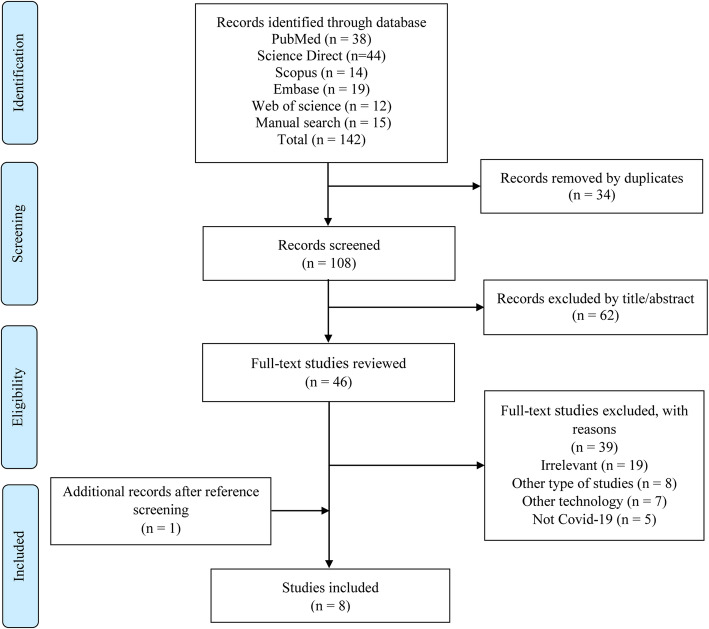
Background: The outbreak of coronavirus disease-19 (COVID-19) is a public health emergency of international concern. Telehealth is an effective option to fight the outbreak of COVID-19. The aim of this systematic review was to identify the role of telehealth services in preventing, diagnosing, treating, and controlling diseases during COVID-19 outbreak. Methods: This systematic review was conducted through searching five databases including PubMed, Scopus, Embase, Web of Science, and Science Direct. Inclusion criteria included studies clearly defining any use of telehealth services in all aspects of health care during COVID-19 outbreak, published from December 31, 2019, written in English language and published in peer reviewed journals. Two reviewers independently assessed search results, extracted data, and assessed the quality of the included studies. Quality assessment was based on the Critical Appraisal Skills Program (CASP) checklist. Narrative synthesis was undertaken to summarize and report the findings. Results: Eight studies met the inclusion out of the 142 search results. Currently, healthcare providers and patients who are self-isolating, telehealth is certainly appropriate in minimizing the risk of COVID-19 transmission. This solution has the potential to prevent any sort of direct physical contact, provide continuous care to the community, and finally reduce morbidity and mortality in COVID-19 outbreak. Conclusions: The use of telehealth improves the provision of health services. Therefore, telehealth should be an important tool in caring services while keeping patients and health providers safe during COVID-19 outbreak.
Overview
The claims and statistics of this paper haven’t been checked yet.
Free: it reads the open-access text and checks the first 5 claims that cite a source we can check. Create a free account to check every claim.
Integrity signals
Registry
Cites
Statistics
Figures
Verification
Claims the paper makes
The claims and statistics of this paper haven’t been checked yet.
Free: it reads the open-access text and checks the first 5 claims that cite a source we can check. Create a free account to check every claim.
Claims other papers make about this one
Each is checked against this paper’s own text: does it say what the citing paper says it does?
The source backs part of the claim, not all of it — or backs it for a different population, condition or comparison.
In the citing paper
“In Australia, a national study suggests that the COVID-19 pandemic considerably encouraged and promoted the use of telehealth and thanks to this window of opportunity, a lot of progress was made in the domain that, without that progress, telehealth use would have remained infrequent [50,51,52,53,54,55,56,57,58].”
From Telehealth and COVID-19 Pandemic: An Overview of the Telehealth Use, Advantages, Challenges, and Opportunities during COVID-19 Pandemic (2022) · cites this paper as [58]
Experimental — accuracy not yet measuredThe source backs part of the claim, not all of it — or backs it for a different population, condition or comparison.
In the citing paper
“In general, studies on the satisfactory level of use of telehealth services during the COVID-19 pandemic suggested it was above average by patients and health professional users and often they showed their willingness to continue with the use of telecare even after the pandemic [56,57,58,59,60,61,62].”
From Telehealth and COVID-19 Pandemic: An Overview of the Telehealth Use, Advantages, Challenges, and Opportunities during COVID-19 Pandemic (2022) · cites this paper as [58]
Experimental — accuracy not yet measuredThe source backs part of the claim, not all of it — or backs it for a different population, condition or comparison.
In the citing paper
“The pandemic has accelerated the adoption of digital health services.”
From Acceptance and perceived usefulness of digital health services in the management of chronic urticaria: a survey of patients and physicians (2025) · cites this paper as [36]
Experimental — accuracy not yet measuredThe source backs part of the claim, not all of it — or backs it for a different population, condition or comparison.
In the citing paper
“The application of digital health has rapidly grown worldwide over the past 4 decades, and accelerated particularly during the COVID-19 pandemic.[1][2][3]”
From The Digital Health Competencies in Medical Education Framework: An International Consensus Statement Based on a Delphi Study (2025) · cites this paper as [1]
Experimental — accuracy not yet measuredThe cited source says what the claim attributes to it.
In the citing paper
“TM is an important tool for health care delivery and has achieved even greater significance in the context of the COVID-19 pandemic [13,14].”
From Diagnostic Concordance of Telemedicine as Compared With Face-to-Face Care in Primary Health Care Clinics in Rural India: Randomized Crossover Trial (2023) · cites this paper as [13]
1 more claim about this paper
Create a free account to see every claim other papers make about this one.
Self-check
Percentages, sums and reported differences re-computed from the paper’s own numbers.
The self-check needs the paper’s full text.
Citations
Cites
Clinical features of patients infected with 2019 novel coronavirus in Wuhan, China
Huang, C., Wang, Y., Li, X., Ren, L., Zhao, J., Hu, Y., Zhang, L., Fan, G., Xu, J., Gu, X., et al. (2020) · The Lancet · doi:10.1016/s0140-6736(20)30183-5 · Cited by 48,884
Virtually perfect? Telemedicine for COVID-19
Hollander, J. E., & Carr, B. G. (2020) · New England Journal of Medicine · doi:10.1056/nejmp2003539 · Cited by 2,970 · cited 4×
“that is made possible by the reduction of person-toperson contact [7, 8].”
BackgroundInfluentialEarly dynamics of transmission and control of COVID-19: a mathematical modelling study
Kucharski, A. J., Russell, T. W., Diamond, C., Liu, Y., Edmunds, J., Funk, S., Eggo, R. M., Sun, F., Jit, M., Munday, J. D., et al. (2020) · The Lancet Infectious Diseases · doi:10.1016/s1473-3099(20)30144-4 · Cited by 2,671 · cited 1×
“Nowadays, the best preventive strategy is to avoid being exposed to the coronavirus, because there is no vaccine to overcome COVID-19 in the all countries [41].”
BackgroundAdhikari, S. P., Meng, S., Wu, Y.-J., Mao, Y.-P., Ye, R.-X., Wang, Q.-Z., Sun, C., Sylvia, S., Rozelle, S., Raat, H., et al. (2020) · Infectious Diseases of Poverty · doi:10.1186/s40249-020-00646-x · Cited by 2,402 · cited 1×
“of unwashed hands with eyes, nose, and mouth [42].”
BackgroundPopay, J., Roberts, H., Sowden, A., Petticrew, M., Arai, L., Rodgers, M., Britten, N., Roen, K., & Duffy, S. (2006) · Lancaster University · doi:10.13140/2.1.1018.4643 · Cited by 2,070
The mental health of medical workers in Wuhan, China dealing with the 2019 novel coronavirus.
Kang, L., Li, Y., Hu, S., Chen, M., Yang, C., Yang, B. X., Wang, Y., Hu, J., Lai, J., Ma, X., et al. (2020) · The Lancet Psychiatry · doi:10.1016/s2215-0366(20)30047-x · Cited by 2,061 · cited 1×
“Also, under strict infection control, unnecessary personnel such as clinical psychiatrists strongly refuse to enter ward of COVID-19 patients (10, 11).”
BackgroundOnline mental health services in China during the COVID-19 outbreak
Liu, S., Yang, L., Zhang, C., Xiang, Y.-T., Liu, Z., Hu, S., & Zhang, B. (2020) · The Lancet Psychiatry · doi:10.1016/s2215-0366(20)30077-8 · Cited by 1,992 · cited 1×
“During the COVID-19 outbreak in China, online mental health surveys with communication programs, such as Weibo, WeChat and TikTok have enabled mental health professionals and health authorities to render safety mental health services online during the COVID-19 pandemic [44].”
BackgroundIdentification of a new human coronavirus
van der Hoek, L., Pyrc, K., Jebbink, M. F., Vermeulen-Oost, W., Berkhout, R. J. M., Wolthers, K. C., Wertheim-van Dillen, P. M. E., Kaandorp, J., Spaargaren, J., & Berkhout, B. (2004) · Nature Medicine · doi:10.1038/nm1024 · Cited by 1,886 · cited 1×
“Coronaviruses, a genus of the coronaviridae family, may cause illness in animals or humans [1, 2].”
BackgroundTelehealth for global emergencies: Implications for coronavirus disease 2019 (COVID-19)
Smith, A. C., Thomas, E., Snoswell, C. L., Haydon, H., Mehrotra, A., Clemensen, J., & Caffery, L. J. (2020) · Journal of Telemedicine and Telecare · doi:10.1177/1357633x20916567 · Cited by 1,828 · cited 4×
“that is made possible by the reduction of person-toperson contact [7, 8].”
BackgroundInfluentialReview of the Clinical Characteristics of Coronavirus Disease 2019 (COVID-19)
Jiang, F., Deng, L., Zhang, L., Cai, Y., Cheung, C. W., & Xia, Z. (2020) · Journal of General Internal Medicine · doi:10.1007/s11606-020-05762-w · Cited by 1,410 · cited 1×
“Primitive symptoms of COVID-19 contain fever, dry cough, breathing difficulty, and boredom [4, 5].”
Background
Cited by
Health systems resilience in managing the COVID-19 pandemic: lessons from 28 countries
Haldane, V., De Foo, C., Abdalla, S. M., Jung, A.-S., Tan, M., Wu, S., Chua, A., Verma, M., Shrestha, P., Singh, S., et al. (2021) · Nature Medicine · doi:10.1038/s41591-021-01381-y · Cited by 1,264
Effective public health measures to mitigate the spread of COVID-19: a systematic review
Ayouni, I., Maatoug, J., Dhouib, W., Zammit, N., Fredj, S. B., Ghammam, R., & Ghannem, H. (2021) · BMC Public Health · doi:10.1186/s12889-021-11111-1 · Cited by 418
Omboni, S., Padwal, R. S., Alessa, T., Benczúr, B., Green, B. B., Hubbard, I., Kario, K., Khan, N. A., Konradi, A., Logan, A. G., et al. (2022) · Connected Health · doi:10.20517/ch.2021.03 · Cited by 370
Wearable sensors for telehealth based on emerging materials and nanoarchitectonics
Vaghasiya, J. V., Mayorga-Martinez, C. C., & Pumera, M. (2023) · npj Flexible Electronics · doi:10.1038/s41528-023-00261-4 · Cited by 302
Challenges of Telemedicine during the COVID-19 pandemic: a systematic review
Ftouni, R., AlJardali, B., Hamdanieh, M., Ftouni, L., & Salem, N. (2022) · BMC Medical Informatics and Decision Making · doi:10.1186/s12911-022-01952-0 · Cited by 291
“Telemedicine offers the public an efficient and safe way to consult healthcare professionals about the symptoms of infectious diseases, prevention and treatment measures, psychological troubles, and other issues [8].”
Health, Wellbeing and the Changing Structure of Communities
(2023) · Climate Change 2022 – Impacts, Adaptation and Vulnerability · doi:10.1017/9781009325844.009 · Cited by 294
Changes in Access to Health Services during the COVID-19 Pandemic: A Scoping Review
Pujolar, G., Oliver-Anglès, A., Vargas, I., & Vázquez, M.-L. (2022) · International Journal of Environmental Research and Public Health · doi:10.3390/ijerph19031749 · Cited by 284
The effectiveness of teleconsultations in primary care: systematic review
Carrillo de Albornoz, S., Sia, K.-L., & Harris, A. (2022) · Family Practice · doi:10.1093/fampra/cmab077 · Cited by 269
“Key words: Mental health, primary care, remote consultation, teleconsultation, telehealth, telemedicine Background The COVID-19 pandemic in 2020 focussed attention on models of healthcare that avoid face-to-face contacts between clinicians and patients (1).”
BackgroundIyanna, S., Kaur, P., Ractham, P., Talwar, S., & Najmul Islam, A. K. M. (2022) · Journal of Business Research · doi:10.1016/j.jbusres.2022.08.007 · Cited by 225
Sharifi, A., Khavarian-Garmsir, A. R., & Kummitha, R. K. R. (2021) · Sustainability · doi:10.3390/su13148018 · Cited by 215
“Telemedicine is another smart city initiative whose potential and necessity became evident during the COVID-19 pandemic [92].”
BackgroundOrrange, S., Patel, A., Mack, W. J., & Cassetta, J. (2021) · JMIR Human Factors · doi:10.2196/28589 · Cited by 208
Isautier, J. M., Copp, T., Ayre, J., Cvejic, E., Meyerowitz-Katz, G., Batcup, C., Bonner, C., Dodd, R., Nickel, B., Pickles, K., et al. (2020) · Journal of Medical Internet Research · doi:10.2196/24531 · Cited by 209
“To help minimize the spread of COVID-19, health care systems have rapidly adopted alternative models for health care delivery, including telehealth services [1].”
Nanda, M., & Sharma, R. (2021) · Telemedicine and e-Health · doi:10.1089/tmj.2020.0570 · Cited by 211
Galle, A., Semaan, A., Huysmans, E., Audet, C., Asefa, A., Delvaux, T., Afolabi, B. B., El Ayadi, A. M., & Benova, L. (2021) · BMJ Global Health · doi:10.1136/bmjgh-2020-004575 · Cited by 185
“For handling confirmed COVID-19 cases with mild symptoms, the maximum use of telemedicine for guaranteeing providers’ and other patients’ safety has not been questioned as a good practice and essential part of reducing the spread of the virus[23, 24].”
BackgroundBaker, S., & Xiang, W. (2023) · IEEE Communications Surveys & Tutorials · doi:10.1109/comst.2023.3256323 · Cited by 178
“…apparent since the outbreak of the COVID-19 pandemic, which pushed many healthcare centres to breaking point - during significant outbreaks, many patients suffering from COVID-19 and other unrelated illnesses were cared for in makeshift facilities [1] and via telehealth technologies [2].”
BackgroundAl-Ghaili, A. M., Kasim, H., Al-Hada, N. M., Hassan, Z. B., Othman, M., Tharik, J. H., Kasmani, R. M., & Shayea, I. (2022) · IEEE Access · doi:10.1109/access.2022.3225638 · Cited by 170
Haimi, M. (2023) · BMC Medical Informatics and Decision Making · doi:10.1186/s12911-023-02194-4 · Cited by 182
“Telemedicine proved essential for treating COVID-19 sufferers as well as healthy people who had to stay in quarantine [36].”
BackgroundBouabida, K., Lebouché, B., & Pomey, M.-P. (2022) · Healthcare · doi:10.3390/healthcare10112293 · Cited by 179
“In Australia, a national study suggests that the COVID-19 pandemic considerably encouraged and promoted the use of telehealth and thanks to this window of opportunity, a lot of progress was made in the domain that, without that progress, telehealth use would have remained infrequent [50–58].”
BackgroundBennell, K. L., Lawford, B. J., Metcalf, B., Mackenzie, D., Russell, T. G., van den Berg, M., Finnin, K., Crowther, S. P., Aiken, J., Fleming, J., et al. (2021) · Journal of physiotherapy · doi:10.1016/j.jphys.2021.06.009 · Cited by 177
Bone, J. K., Bu, F., Fluharty, M., Paul, E., Sonke, J. K., & Fancourt, D. E. (2022) · Social Science & Medicine · doi:10.1016/j.socscimed.2022.114703 · Cited by 190
Hepburn, J., Williams, L., & McCann, L. (2025) · JMIR Aging · doi:10.2196/80000 · Cited by 180
“While the original review included studies up to April 2022, it missed a critical wave of literature emerging during and after the COVID-19 pandemic, a period marked by a surge in the deployment and evaluation of DHTs [34,35].”
Car, J., Ong, Q. C., Erlikh Fox, T., Leightley, D., Kemp, S. J., Švab, I., Tsoi, K. K. F., Sam, A. H., Kent, F. M., Hertelendy, A. J., et al. (2025) · JAMA Network Open · doi:10.1001/jamanetworkopen.2024.53131 · Cited by 226
Ye, J., He, L., & Beestrum, M. (2023) · npj Digital Medicine · doi:10.1038/s41746-023-00908-6 · Cited by 181
“…previous reports on experiences to implement and adopt telehealth during the pandemic offered valuable insights, they mostly focused on describing the systems that were adopted in their speci fi c contexts rather than a holistic review of the process of how they were implemented and adopted 63,64 .”
Perspectives on Telephone and Video Communication in the Intensive Care Unit during COVID-19
Kennedy, N. R., Steinberg, A., Arnold, R. M., Doshi, A. A., White, D. B., DeLair, W., Nigra, K., & Elmer, J. (2021) · Annals of the American Thoracic Society · doi:10.1513/annalsats.202006-729oc · Cited by 164
“Over the last several months of the COVID-19 pandemic, the use of telemedicine services has expanded signi fi cantly across the globe (22, 23).”
Greenwood, H., Krzyzaniak, N., Peiris, R., Clark, J., Scott, A. M., Cardona, M., Griffith, R., & Glasziou, P. (2022) · JMIR Mental Health · doi:10.2196/31780 · Cited by 141
“Given the health risks posed by face-to-face meetings, especially for older people or otherwise vulnerable, there was a rapid shift to remote delivery in health care services worldwide [9-12].”
BackgroundPaterson, C., Bacon, R., Dwyer, R., Morrison, K. S., Toohey, K., O'Dea, A., Slade, J., Mortazavi, R., Roberts, C., Pranavan, G., et al. (2020) · Seminars in Oncology Nursing · doi:10.1016/j.soncn.2020.151090 · Cited by 139
Wentzensen, N., Clarke, M. A., & Perkins, R. B. (2021) · Preventive Medicine · doi:10.1016/j.ypmed.2021.106596 · Cited by 147
“Telehealth fills a crucial need for healthcare provision during the pandemic, and there may be important roles for telehealth in future clinical care (Monaghesh and Hajizadeh, 2020).”
BackgroundCOVID-19 and Cancer Comorbidity: Therapeutic Opportunities and Challenges
Pathania, A. S., Prathipati, P., Abdul, B. A., Chava, S. P., Katta, S. S., Gupta, S. C., Gangula, P. R., Pandey, M. K., Durden, D. L., Byrareddy, S. N., et al. (2020) · Theranostics · doi:10.7150/thno.51471 · Cited by 144
“Telemedicine implies the use of a variety of communication means to support clinical care [154].”
BackgroundWerneke, M. W., Deutscher, D., Grigsby, D., Tucker, C. A., Mioduski, J. E., & Hayes, D. (2021) · Physical Therapy · doi:10.1093/ptj/pzab110 · Cited by 136
Tessema, Z. T., Worku, M. G., Tesema, G. A., Alamneh, T. S., Teshale, A. B., Yeshaw, Y., Alem, A. Z., Ayalew, H. G., & Liyew, A. M. (2022) · BMJ Open · doi:10.1136/bmjopen-2021-054397 · Cited by 129
Digital health competencies in medical school education: a scoping review and Delphi method study
Khurana, M. P., Raaschou-Pedersen, D. E., Kurtzhals, J., Bardram, J. E., Ostrowski, S. R., & Bundgaard, J. S. (2022) · BMC Medical Education · doi:10.1186/s12909-022-03163-7 · Cited by 129
Dietary Management of Heart Failure: DASH Diet and Precision Nutrition Perspectives
Wickman, B. E., Enkhmaa, B., Ridberg, R. A., Romero, E., Cadeiras, M., Meyers, F., & Steinberg, F. M. (2021) · Nutrients · doi:10.3390/nu13124424 · Cited by 135
“During the coronavirus disease-19 (COVID-19) pandemic, telehealth services reduced COVID-19 transmission risk while allowing continuation of required healthcare services for disease management [106].”
BackgroundTelemedicine in the COVID-19 Era: A Narrative Review Based on Current Evidence
Nittari, G., Savva, D., Tomassoni, D., Tayebati, S. K., & Amenta, F. (2022) · International Journal of Environmental Research and Public Health · doi:10.3390/ijerph19095101 · Cited by 140
Morina, N., Kip, A., Hoppen, T. H., Priebe, S., & Meyer, T. (2021) · BMJ Open · doi:10.1136/bmjopen-2020-042335 · Cited by 127
Hameed, K., Naha, R. K., & Hameed, F. (2024) · Discover Sustainability · doi:10.1007/s43621-024-00273-8 · Cited by 135
“Hence, this situation, in addition to anxiety, also provided chances for countries worldwide to assess and advance their healthcare systems [5].”
A 3-Item Measure of Digital Health Care Literacy: Development and Validation Study
Nelson, L. A., Pennings, J. S., Sommer, E. C., Popescu, F., & Barkin, S. L. (2022) · JMIR Formative Research · doi:10.2196/36043 · Cited by 111
“Digital technologies for managing health have proliferated in recent years, in large part as a response to the COVID-19 pandemic [1-3].”
BackgroundWestbury, S., Ghosh, I., Jones, H. M., Mensah, D., Samuel, F., Irache, A., Azhar, N., Al-Khudairy, L., Iqbal, R., & Oyebode, O. (2021) · BMJ Global Health · doi:10.1136/bmjgh-2021-006358 · Cited by 107
The Role of Digital Technology in Curbing COVID-19
Alghamdi, N. S., & Alghamdi, S. M. (2022) · International Journal of Environmental Research and Public Health · doi:10.3390/ijerph19148287 · Cited by 121
“The systematic review included eight studies that demonstrate that using telehealth applications in medical fields has the potential to mitigate the spread of the virus [40] Telehealth is a significant way to maintain social distance and minimize the risk of virus transmission.”
BackgroundMethodInfluentialDigital Therapeutics in Hypertension: Evidence and Perspectives
Kario, K., Harada, N., & Okura, A. (2022) · Hypertension · doi:10.1161/hypertensionaha.122.19414 · Cited by 110
Nakayama, L. F., Binotti, W. W., Woite, N. L., Fernandes, C. O., Alfonso, P. G., Celi, L. A., & Regatieri, C. V. (2023) · Journal of Medical Internet Research · doi:10.2196/42483 · Cited by 122
“The COVID-19 pandemic accelerated the adoption of technological solutions in health care to address the whole-city lockdowns, social distancing measures, and the interruption of ambulatory care elective surgeries [1,2].”
Face-to-face more important than digital communication for mental health during the pandemic
Stieger, S., Lewetz, D., & Willinger, D. (2023) · Scientific Reports · doi:10.1038/s41598-023-34957-4 · Cited by 115
Abbaspur-Behbahani, S., Monaghesh, E., Hajizadeh, A., & Fehresti, S. (2022) · Health Policy and Technology · doi:10.1016/j.hlpt.2022.100595 · Cited by 114
“According to another systematic review, the use of mobile to provide tele-health in the COVID-19 outbreak is very effective in promoting health services [35].”
Self-citationHiwale, M., Walambe, R. A., Potdar, V. M., & Kotecha, K. V. (2023) · Healthcare Analytics · doi:10.1016/j.health.2023.100192 · Cited by 114
“The speedy global outbreak of COVID9 has accelerated the demand for telemedicine technology-based soutions to a new height that too on an urgent basis [2].”
Righi, E., Mirandola, M., Mazzaferri, F., Dossi, G., Razzaboni, E., Zaffagnini, A., Ivaldi, F., Visentin, A., Lambertenghi, L., Arena, C., et al. (2022) · Journal of Infection · doi:10.1016/j.jinf.2022.02.003 · Cited by 117
Children and COVID19: Understanding impact on the growth trajectory of an evolving generation
Haleemunnissa, S., Didel, S., Swami, M. K., Singh, K., & Vyas, V. (2020) · Children and Youth Services Review · doi:10.1016/j.childyouth.2020.105754 · Cited by 99
Rajkumar, E., Gopi, A., Joshi, A. U., Thomas, A. E., Arunima, N. M., Ramya, G. S., Kulkarni, P., Rahul, P., George, A. J., Romate, J., et al. (2023) · BMC Health Services Research · doi:10.1186/s12913-022-08970-8 · Cited by 102
“Although there are systematic reviews published on the diverse utilisations of telehealth during the COVID-19 pandemic [27, 28], no such studies specifically focused on the Indian context.”
BackgroundShabnam, S., Razieh, C., Dambha‐Miller, H., Yates, T. E., Gillies, C., Chudasama, Y., Pareek, M., Banerjee, A., Kawachi, I. I., Lacey, B., et al. (2023) · Journal of the Royal Society of Medicine · doi:10.1177/01410768231168377 · Cited by 96
El rol de la telesalud en la lucha contra el COVID-19 y la evolución del marco normativo peruano
Curioso, W. H., & Galán-Rodas, E. (2020) · ACTA MEDICA PERUANA · doi:10.35663/amp.2020.373.1004 · Cited by 163
The Need for Expanding Pulmonary Rehabilitation Services
Lahham, A., & Holland, A. E. (2021) · Life · doi:10.3390/life11111236 · Cited by 101
“A recent systematic review on the use of tele-medicine during COVID-19 reported that tele-medicine improves the provision of quality health services while minimizing the risk of COVID-19 transmission [81].”
BackgroundAzevedo, L. B., Stephenson, J., Ells, L., Adu‐Ntiamoah, S., DeSmet, A., Giles, E. L., Haste, A., O'Malley, C., Jones, D., Chai, L. K., et al. (2022) · Obesity Reviews · doi:10.1111/obr.13373 · Cited by 86
Couturier, J., Pellegrini, D., Miller, C., Bhatnagar, N., Boachie, A., Bourret, K., Brouwers, M., Coelho, J. S., Dimitropoulos, G., Findlay, S., et al. (2021) · Journal of Eating Disorders · doi:10.1186/s40337-021-00394-9 · Cited by 86
“Importantly, evidence indicates that telehealth is a promising alternative for the delivery of outpatient care [11].”
BackgroundMörelius, E., Robinson, S., Arabiat, D. H., & Whitehead, L. (2021) · Journal of Medical Internet Research · doi:10.2196/31665 · Cited by 99
“Despite minimal evidence for the effectiveness of digital health interventions, these have significantly increased because of the restrictions related to COVID-19 [28].”
BackgroundTelemedicine technologies and applications in the era of COVID-19 pandemic: A systematic review
Mehraeen, E., SeyedAlinaghi, S., Heydari, M., Karimi, A., Mahdavi, A., Mashoufi, M., Sarmad, A., Mirghaderi, P., Shamsabadi, A., Qaderi, K., et al. (2023) · Health Informatics Journal · doi:10.1177/14604582231167431 · Cited by 98
Nakkash, R. T., Khader, Y. S., Chalak, A., Abla, R., Abu-Rmeileh, N. M. E., Mostafa, A., Jawad, M., Lee, J., & Salloum, R. G. (2022) · BMJ Open · doi:10.1136/bmjopen-2021-055201 · Cited by 88
Compassion through technology: Digital empathy concept analysis and implications in nursing
Hashish, E. A. A. (2025) · Digital Health · doi:10.1177/20552076251326221 · Cited by 107
Al-Shorbaji, N. (2022) · IntechOpen eBooks · doi:10.5772/intechopen.99607 · Cited by 117
“In their systematic review, Monaghesh and Hajizadeh (2020) they indicated that “telehealth can become a basic need for the general population, healthcare providers, and patients with COVID-19, especially when people are in quarantine, enabling patients in real time through contact with healthcare…”
BackgroundRajkumar, E., Rajan, A. M., Daniel, M., Lakshmı, R., Romate, J., George, A. J., Abraham, J., & Varghese, J. (2022) · Heliyon · doi:10.1016/j.heliyon.2022.e09765 · Cited by 92
“Telehealth services during a pandemic would be of great advantage for the chronically ill to keep timely consultation with their physicians as well as to general public to spread appropriate awareness to individuals amidst the pandemic-imposed fear (Monaghesh and Hajizadeh, 2020).”
Ornell, F., Borelli, W. V., Benzano, D., Schuch, J. B., Moura, H. F., Sordi, A. O., Kessler, F. H. P., Scherer, J. N., & von Diemen, L. (2021) · The Lancet Regional Health - Americas · doi:10.1016/j.lana.2021.100061 · Cited by 73
Reddy, L. K. V., Madithati, P., Narapureddy, B. R., Ravula, S. R., Vaddamanu, S. K., Alhamoudi, F. H., Minervini, G., & Chaturvedi, S. (2022) · Journal of Personalized Medicine · doi:10.3390/jpm12111920 · Cited by 94
An IoT Framework for Screening of COVID-19 Using Real-Time Data from Wearable Sensors
Mukhtar, H., Rubaiee, S., Krichen, M., & Alroobaea, R. (2021) · International Journal of Environmental Research and Public Health · doi:10.3390/ijerph18084022 · Cited by 89
“The Internet of Things, especially the Internet of Connected Medical Things (IoMT), is the best technology used to remotely control people affected by the COVID-19 epidemic [59].”
BackgroundThe Use of Digital Health Services Among Patients and Citizens Living at Home: Scoping Review
Rosenlund, M., Kinnunen, U., & Saranto, K. (2023) · Journal of Medical Internet Research · doi:10.2196/44711 · Cited by 102
“The use of digital health services has become increasingly relevant for health care professionals, patients, and citizens as the COVID-19 pandemic has challenged the health sector worldwide [1-3].”
The Use and Promise of Conversational Agents in Digital Health
Dingler, T., Kwasnicka, D., Wei, J., Gong, E., & Oldenburg, B. (2021) · Yearbook of Medical Informatics · doi:10.1055/s-0041-1726510 · Cited by 81
Simmich, J., Ross, M. H., & Russell, T. G. (2024) · Journal of physiotherapy · doi:10.1016/j.jphys.2024.06.001 · Cited by 89
Barakat‐Johnson, M., Jones, A., Burger, M., Leong, T., Frotjold, A., Randall, S., Kim, B., Fethney, J., & Coyer, F. M. (2022) · International Wound Journal · doi:10.1111/iwj.13755 · Cited by 93
Inequity in Access and Delivery of Virtual Care Interventions: A Scoping Review
Mistry, S. K., Shaw, M., Raffan, F., Johnson, G., Perren, K., Saito, S., Harris‐Roxas, B., & Haigh, F. (2022) · International Journal of Environmental Research and Public Health · doi:10.3390/ijerph19159411 · Cited by 83
“In recent times, due to the COVID-19 pandemic, virtual care interventions have been widely used due to restricted in-person health service delivery [25,26].”
BackgroundBrigo, E., Rintala, A., Kossi, O., Verwaest, F., Vanhoof, O., Feys, P., & Bonnechère, B. (2022) · International Journal of Environmental Research and Public Health · doi:10.3390/ijerph191610325 · Cited by 84
“During the coronavirus disease 2019 (COVID-19) pandemic, social distancing policies have been established in an attempt to prevent the spread of the virus, resulting in the disruption of many healthcare services; one of the most severely affected ones has been rehabilitation care [1].”
BackgroundRush, K. L., Seaton, C. L., Li, E., Oelke, N. D., & Pesut, B. (2021) · Health Informatics Journal · doi:10.1177/14604582211020064 · Cited by 82
Parkes, P., Pillay, T. D., Bdaiwi, Y., Simpson, R., Almoshmosh, N., Murad, L. B., & Abbara, A. (2022) · Conflict and Health · doi:10.1186/s13031-022-00493-7 · Cited by 78
“During the COVID19 pandemic, the use of telemedicine has increased and the need for low-cost, sustainable interventions has become even more pertinent both in these settings and in high income countries (HICs) [52].”
BackgroundNg, B. P., & Park, C. (2021) · Preventing Chronic Disease · doi:10.5888/pcd18.210056 · Cited by 79
“The independent variables included were guided by previous studies (1,12,13,17) and the Andersen Behavioral Model of Health Services Use (18), which hypothesizes that predisposing, enabling, and need-related factors affect the use of health care services.”
Nasser, A. A., Alzahrani, R. M., Al-falah, C. A., Jreash, D. M., Almouled, N. T., Bakula, D. S., & Abed, R. A. R. (2021) · Cureus · doi:10.7759/cureus.13382 · Cited by 87
“Studies have found that live video conferencing can lead to the avoiding of direct physical contact, thereby diminishing the risk of exposure to respiratory secretions, and preventing the potential transmission of infection to physicians and other healthcare providers [25].”
BackgroundWong, A. K. C., Bayuo, J., Wong, F. K. Y., Yuen, W. S., Lee, A. Y. L., Chang, P. K., & Lai, J. T. C. (2022) · Journal of Medical Internet Research · doi:10.2196/31912 · Cited by 82
“It has also helped to minimize the risk of direct transmission of infectious diseases for both health care providers and older adults during the COVID-19 pandemic [13].”
BackgroundBernal, J., & Mazo, C. (2022) · Applied Sciences · doi:10.3390/app122010228 · Cited by 70
Clarke, J. L., Kipping, R., Chambers, S., Willis, K. J., Taylor, H., Brophy, R., Hannam, K. J., Simpson, S. A., & Langford, R. M. (2021) · BMJ Open · doi:10.1136/bmjopen-2021-051497 · Cited by 77
Dewanjee, S., Kandimalla, R. J. L., Kalra, R. S., Valupadas, C., Vallamkondu, J., Kolli, V., Ray, S. D., Reddy, A. P., & Reddy, P. H. (2021) · Cells · doi:10.3390/cells10123291 · Cited by 78
Tiwari, B. B., Kulkarni, A., Zhang, H., Khan, M. M., & Zhang, D. “. (2023) · Global Health Action · doi:10.1080/16549716.2023.2179163 · Cited by 75
“The virtual consultation reduced the chances of the nosocomial spread of COVID-19 among patients and reduced the likelihood of getting infected among already scared healthcare personnel [6,8,25,32].”
BackgroundNg, B. P., Park, C., Silverman, C., Eckhoff, D. O., Guest, J. C., & Díaz, D. A. (2022) · Health & Social Care in the Community · doi:10.1111/hsc.13709 · Cited by 72
Yew, S. Q., Trivedi, D. P., Adanan, N. I. H., & Chew, B. (2025) · Journal of Medical Internet Research · doi:10.2196/63482 · Cited by 81
“Furthermore, in structuring and categorizing the identified barriers and facilitators, we utilized a conceptual model developed by Feldstein and Glasgow [33], thereby enhancing the analytical rigor of the review.”
Turner, S., Botero-Tovar, N., Herrera, M. A., Kuhlmann, J. P. B., Ortiz, F., Ramírez, J. C., & Maldonado, L. F. (2021) · Implementation Science · doi:10.1186/s13012-021-01114-2 · Cited by 72
The impact of digital competence on telehealth utilization
Le, T. V., Galperín, H., & Traube, D. E. (2023) · Health Policy and Technology · doi:10.1016/j.hlpt.2023.100724 · Cited by 77
White, J. H., Byles, J., & Walley, T. (2022) · Health Research Policy and Systems · doi:10.1186/s12961-021-00812-z · Cited by 65
“As supported by a recent systematic review of the role of telehealth during COVID-19, improved administrative processes, such as having a triage system, would allow for more accurate identification of people who needed to be seen person [44].”
BackgroundLi, E., Tsopra, R., Jiménez, G., Serafini, A., Gusso, G. D. F., Lingner, H., Fernández, M. J., Irving, G. J., Petek, D., Hoffman, R., et al. (2022) · PLOS Digital Health · doi:10.1371/journal.pdig.0000029 · Cited by 68
“Remote primary care is widely recognised as an promising solution to ensuring both patient and provider safety by preventing direct physical contact, hence reducing morbidity and mortality during the COVID-19 pandemic [16,38,39].”
BackgroundA Systematic Review of Clinical Decision Rules for the Diagnosis of Influenza
Ebell, M. H., & Afonso, A. (2011) · The Annals of Family Medicine · doi:10.1370/afm.1192 · Cited by 73
Haimi, M., & Gesser‐Edelsburg, A. (2022) · Health Informatics Journal · doi:10.1177/14604582221075561 · Cited by 71
“epidemics.(40,78-79) We wanted to find out which telehealth solutions were developed and implemented for the elderly population during this time.”
BackgroundGhimire, S., Martínez, S., Hartvigsen, G., & Gerdes, M. W. (2022) · International Journal of Medical Informatics · doi:10.1016/j.ijmedinf.2022.104964 · Cited by 72
Elimian, K., Yennan, S., Musah, A., Cheshi, I. D., King, C., Dunkwu, L., Ladan, A., Ekeng, E., Akande, O. W., Ayres, S., et al. (2022) · BMJ Open · doi:10.1136/bmjopen-2022-063703 · Cited by 63
Zhang, Y., Leuk, J. S.-P., & Teo, W. (2023) · JMIR Aging · doi:10.2196/40460 · Cited by 66
“Second, it can minimize the risk of direct transmission of infectious agents from person to person [7], especially during the recent COVID-19 pandemic [8].”
BackgroundNeves, A. L., Li, E., Gupta, P. P., Fontana, G., & Darzi, A. W. (2021) · European Journal of General Practice · doi:10.1080/13814788.2021.1965120 · Cited by 65
“This approach can provide access to a range of primary care services, such as booking and cancelling appointments, having remote consultations, receiving referrals, and obtaining prescriptions [1,3].”
BackgroundTABACOF, L. R., Kellner, C. P., Breyman, E., Dewil, S., Braren, S. H., Nasr, L., Tosto, J., Cortes, M., & Putrino, D. F. (2021) · Telemedicine Journal and e-Health · doi:10.1089/tmj.2020.0339 · Cited by 65
“14 Moreover, RPM provides the opportunity for continuous clinical data collection from which future predictive models can be generated.”
Alakija, A. (2023) · The Lancet Infectious Diseases · doi:10.1016/s1473-3099(23)00279-7 · Cited by 65
McGrowder, D. A., Miller, F. G., Vaz, K., Cross, M. A., Anderson-Jackson, L., Bryan, S., Latore, L., Thompson, R. K., Lowe, D., McFarlane, S., et al. (2021) · Healthcare · doi:10.3390/healthcare9101401 · Cited by 63
“The implementation of telehealth has substantially decreased the risk of exposure of these cancer patients who are immunocompromised to the SARS-CO-V2 virus with less outpatient visits [66].”
BackgroundDal-Ré, R., Becker, S. L., Bottieau, E., & Holm, S. (2022) · The Lancet Infectious Diseases · doi:10.1016/s1473-3099(22)00119-0 · Cited by 59
The emergence of B2B omni-channel marketing in the digital era: a systematic literature review
Hayes, Ó., & Kelliher, F. (2022) · Journal of Business and Industrial Marketing · doi:10.1108/jbim-02-2021-0127 · Cited by 59
Banda, G. T., Deribe, K., & Davey, G. (2021) · BMJ Global Health · doi:10.1136/bmjgh-2021-006968 · Cited by 60
Al‐Hakeim, H. K., Abed, A. K., Moustafa, S. R., Almulla, A. F., & Maes, M. H. J. (2023) · Frontiers in Molecular Neuroscience · doi:10.3389/fnmol.2023.1194769 · Cited by 60
Rettinger, L., & Kühn, S. (2023) · Journal of Medical Internet Research · doi:10.2196/46715 · Cited by 65
“The rapid implementation of video visits with health care professionals prevented infections [25] and kept the health care system running [26-29].”
Alhajri, N., Simsekler, M. C. E., Alfalasi, B., Alhashmi, M., AlGhatrif, M., Balalaa, N., Ali, M. A., Almaashari, R., Memari, S. A., Hosani, F. I. A., et al. (2021) · JMIR Medical Informatics · doi:10.2196/29251 · Cited by 60
“Telemedicine created new opportunities for patient care in the context of the COVID-19 pandemic and thus reduced health care disparities [9,10].”
BackgroundGiacalone, A., Marin, L., Febbi, M., Franchi, T., & Tovani-Palone, M. R. (2022) · World Journal of Clinical Cases · doi:10.12998/wjcc.v10.i8.2363 · Cited by 52
Shaw, S. E., Hughes, G., Wherton, J. P., Moore, L., Rosen, R., Papoutsi, C., Rushforth, A., Morris, J. H., Wood, G. W., Faulkner, S. D., et al. (2021) · Frontiers in Digital Health · doi:10.3389/fdgth.2021.754319 · Cited by 60
Telehealth for Australian general practice: The present and the future
Fisher, K. E., Davey, A., & Magin, P. J. (2022) · Australian Journal of General Practice · doi:10.31128/ajgp-11-21-6229 · Cited by 58
Artificial intelligence assisted telehealth for nursing: A scoping review
Choi, J., Woo, S., & Ferrell, A. V. (2023) · Journal of Telemedicine and Telecare · doi:10.1177/1357633x231167613 · Cited by 63
Metadata
- Authors
- Monaghesh, E., & Hajizadeh, A.
- Affiliations
- Tabriz University of Medical Sciences (IR)
- Corresponding author
- Hajizadeh, Alireza
- Venue
- BMC Public Health
- Published
- 2020-08-01
- Volume
- 20
- Issue
- 1
- Pages
- 1193-1193
- ISSN
- 1471-2458 (ISSN-L)
- PMC
- PMC7395209
- OpenAlex
- W3046280637
- Semantic Scholar
- 4d9cd54e49d0de81c8af9fe0669924a281cc4557
- Cited by
- 1,941
- References
- 43
- Citations by year
- 2026: 117 · 2025: 246 · 2024: 297 · 2023: 392 · 2022: 502 · 2021: 354 · 2020: 31
- FWCI
- 53.44
- Type
- journal article
- Language
- en
- Open access
- gold
- doi.org
- Licence
- cc-by
- creativecommons.org/licenses/by/4.0 (tdm)
- creativecommons.org/licenses/by/4.0 (vor)
- Locations
- BMC Public Health (publishedVersion, cc-by)
- Research Square (acceptedVersion, cc-by)
- PubMed Central (publishedVersion, cc-by)
- PubMed (publishedVersion)
- DOAJ (DOAJ: Directory of Open Access Journals) (submittedVersion, cc-by-sa)
- Topics
- Health Sciences › Medicine › Public Health, Environmental and Occupational Health › Telemedicine and Telehealth Implementation
- Health Sciences › Dentistry › General Dentistry › Dental Research and COVID-19
- Physical Sciences › Computer Science › Information Systems › Healthcare during COVID-19 Pandemic
- Keywords
- telemedicine, COVID-19 pandemic, telehealth services, COVID-19 prevention, COVID-19 diagnosis, COVID-19 treatment, disease control, self-isolation, infection transmission prevention, continuity of care
- MeSH terms
- COVID-19, Disease Outbreaks, Humans, Pneumonia, Viral, Telemedicine, Coronavirus Infections, Pandemics
About these checks
Registry, retraction, Cites and statistics results are computed, not judged, with one exception: a printed reference that no index lists is read once by a model before it counts as a citation error. Claims are extracted by a model and kept only when their quote appears verbatim in the text; each cited source is then checked, with a model’s help, for whether it says what the claim relies on. Those verdicts can be wrong — read the claim’s quote and the cited source before relying on one.
Statistics and arithmetic are recomputed, not judged.
Confidence bands are shown only for fields calibrated on our annotated test set. None is calibrated yet, so no band is shown.
What counts as a claim ›How we measure confidence ›How we check this ›
Are you an author, or do you see a problem with this page? Request a review
Data sources
Bibliographic data: Semantic Scholar, OpenAlex, Crossref.
Contains information from the Semantic Scholar Academic Graph Datasets, made available under the ODC Attribution License (ODC-BY 1.0).
Semantic Scholar’s data is described in: Kinney, R., et al. (2023). The Semantic Scholar Open Data Platform. arXiv:2301.10140.
