

Risk and protective factors of drug abuse among adolescents: a systematic review
Open accessThe DOI matches its Crossref record; 71 of the 71 references it cites were found in a registry or an index; 24 of the 47 sources its claims cite were checked for support.
Abstract
Drug usage typically begins during adolescence. This systematic review identified risk and protective factors of drug abuse among adolescents worldwide across individual, family, and community domains.
Overview
CoChat Summary
## TL;DR
This systematic review identified risk and protective factors for adolescent drug abuse across individual, family, and community domains using 23 included studies (22 quantitative and 1 qualitative). The most frequently highlighted risks were individual factors, especially impulsivity, rebelliousness, emotional regulation problems, maltreatment, psychiatric disorders, prior substance exposure, and perceived accessibility; protective factors included optimism, mindfulness, school connectedness, and strong religious beliefs.
## Key findings
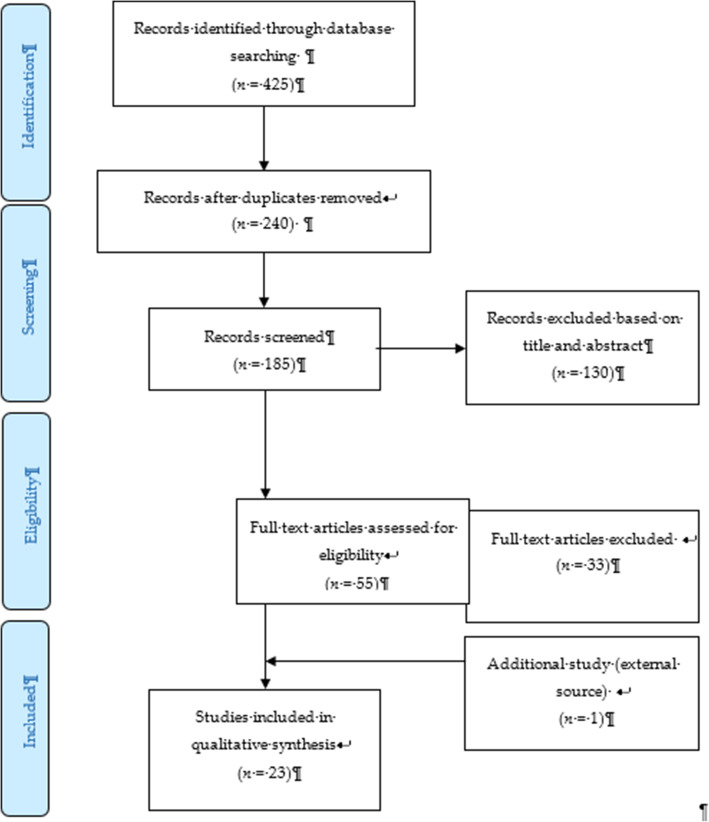
- The review screened 425 records and included 23 studies: 22 quantitative articles and 1 qualitative article; sample sizes ranged from 70 to 700,178, and the qualitative study included 100 interviewees.
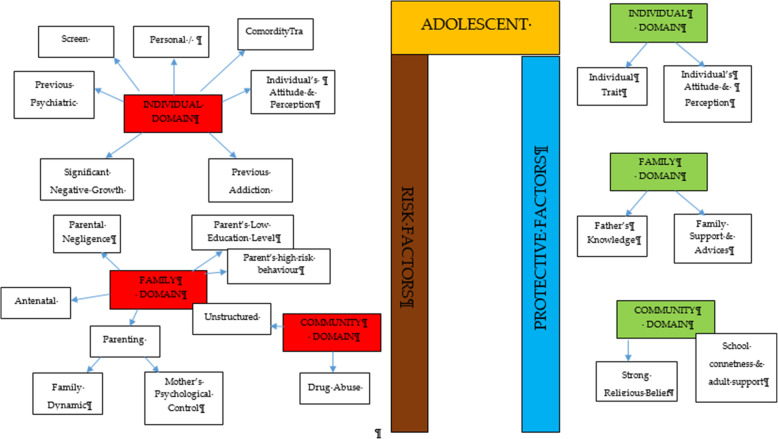
- Individual risk factors reported included high impulsivity, rebelliousness, emotional regulation impairment, alexithymia, maltreatment/negative upbringing, conduct problems, major depressive disorder, prior e-cigarette exposure, behavioral addiction, low perceived risk, high perceived drug accessibility, and positive attitudes toward synthetic drugs.
- Family risk factors included prenatal maternal smoking, poor maternal psychological control, low parental education, negligence, poor supervision, uncontrolled pocket money, and substance-using family members; community risk factors included peers who abuse drugs.
- Protective factors reported included optimism (OR = 0.90, 95% CI 0.85–0.95), mindfulness (slower progression toward injectable drug abuse by 1.67 years, p = .041), social phobia (OR = 0.87, 95% CI 0.77–0.97), strong beliefs against substance abuse, desire to maintain health, high paternal awareness, school connectedness, structured activity, and strong religious beliefs.
## Methods
- Systematic review conducted following PRISMA, searching PubMed, EBSCOhost, and Web of Science for English-language full-text articles published from 2016 to December 2020.
- Inclusion focused on adolescents aged 10–18 years and drug-related substances excluding nicotine/tobacco and alcohol; citations were screened, duplicates removed, and full texts assessed against inclusion/exclusion criteria.
- Study quality was appraised with MMAT 2018 by two independent reviewers; because of heterogeneity, results were synthesized descriptively rather than meta-analyzed.
## Limitations
- The paper states it may have missed important factors because it included only English articles and searched only three databases.
- The paper also notes heterogeneity in study designs, substances, outcome measures, and analysis techniques, which led to descriptive synthesis rather than pooled analysis.
- Evident from the text: the review excluded tobacco and alcohol-related substance use, so its findings do not cover the full broader substance-abuse landscape.
Model-written summary. Check it against the paper before relying on it.
Integrity signals
Registry
Cites
Statistics
Figures
Verification
Claims the paper makes
23 Valid · 0 Not valid · 17 Not checked · 16 Own results and interpretations
The cited sources support only part of this claim — read each source’s verdict below.
In the paper
“This study also showed that the impulsivity trait alone was an independent risk factor that increased the odds between two to four times for using any drug compared to the non-impulsive group.”
§ Risk and protective factors of drug abuse among adolescents: a systematic review > Results > DOMAIN: individual factor
What the sources say
- Partly supportedcites [29] Chuang CWI Sussman S Stone MD Pang RD Chou CP Leventhal AM Kirkpatrick MG Impulsivity and history of behavioral addictions are associated with drug use in adolescents Addict Behav 2017 74 41 47 10.1016/j.addbeh.2017.05.021 28570913 PMC6604811 sourceExperimental — accuracy not yet measured
The Results section on past-six-month drug use (page not provided) says impulsivity alone was associated with greater likelihood of use across all five outcomes, including any drug use. It gives an odds ratio of 3.72 for tobacco use, but the available passage does not establish a two-to-fourfold odds ratio for any drug use. The Discussion also cautions that impulsivity may be a marker of other risk factors, so calling it an independent factor that increases use overstates the association. (LLM, conf=0.86)
plainstates a cause- Asserted: passes — The authors put it forward as true.
- Checkable: passes — It can be checked against evidence.
- Load-bearing: unclear — It is unclear whether the paper’s conclusions depend on it.
- Based: passes — The paper gives a reason why it holds.
- Partly supported
The cited sources support only part of this claim — read each source’s verdict below.
In the paper
“A study by Marin et al. found that youth with an optimistic trait were less likely to become drug dependent [33].”
§ Risk and protective factors of drug abuse among adolescents: a systematic review > Results > Protective factors
What the sources say
- Partly supportedcites [33] Marin S Heshmatian E Nadrian H Fakhari A Mohammadpoorasl A Associations between optimism, tobacco smoking and substance abuse among Iranian high school students Health Promot Perspect 2019 9 4 279 284 10.15171/hpp.2019.38 31777707 PMC6875553 sourceExperimental — accuracy not yet measured
The Results report that higher optimism scores were associated with lower odds of illicit drug use among students, and the Discussion describes the study as cross-sectional. The paper does not establish that optimistic youth were less likely to become drug dependent: it measured drug use, not dependence or later onset. (LLM, conf=0.88)
plainstates an association- Asserted: passes — The authors put it forward as true.
- Checkable: passes — It can be checked against evidence.
- Load-bearing: passes — The paper’s conclusions depend on it.
- Based: passes — The paper gives a reason why it holds.
- Partly supported
The cited sources support only part of this claim — read each source’s verdict below.
In the paper
“adolescents who had high-perceived availability of drugs in their neighborhoods were more likely to increase their usage of marijuana over time (OR = 11.00, 95% CI 9.11, 13.27) [35].”
§ Risk and protective factors of drug abuse among adolescents: a systematic review > Results > DOMAIN: individual factor
What the sources say
- Partly supportedcites [35] Schleimer JP Rivera-Aguirre AE Castillo-Carniglia A Laqueur HS Rudolph KE Suárez H Ramírez J Cadenas N Somoza M Brasesco MV Martins SS Cerdá M Investigating how perceived risk and availability of marijuana relate to marijuana use among adolescents in Argentina, Chile, and Uruguay over time Drug Alcohol Depend 2019 201 115 126 10.1016/j.drugalcdep.2019.03.029 31207452 PMC7075484 sourceExperimental — accuracy not yet measured
The Abstract Results report the quoted OR and 95% CI for the association between perceived marijuana availability and use in Argentina in 2014. The Abstract Methods describe cross-sectional surveys and past-month use, not an increase in an individual's use over time. The Materials and Methods > Measures section asks how easy marijuana would be to obtain; it does not measure the availability of drugs in respondents' neighborhoods. No page numbers are provided in our copy. (LLM, conf=0.91)
plainstates an association- Asserted: passes — The authors put it forward as true.
- Checkable: passes — It can be checked against evidence.
- Load-bearing: unclear — It is unclear whether the paper’s conclusions depend on it.
- Based: passes — The paper gives a reason why it holds.
- Partly supported
Every source the paper cites for this claim was checked and supports it.
In the paper
“exposure to e-cigarettes within the past 30 days is related to an increase in the prevalence of marijuana use and prescription drug use by at least four times in the 8th and 10th grades and by at least three times in the 12th grade [34].”
§ Risk and protective factors of drug abuse among adolescents: a systematic review > Results > DOMAIN: individual factor
What the sources say
- Supportedcites [34] Miech RA O’Malley PM Johnston LD Patrick ME E-cigarettes and the drug use patterns of adolescents Nicotine Tob Res 2015 18 5 654 659 10.1093/ntr/ntv217 26416823 PMC5654373 source
The Results section reports that past-30-day marijuana use and prescription drug abuse were at least four times as prevalent among past-30-day e-cigarette users in 8th and 10th grades, and at least three times as prevalent in 12th grade, compared with nonusers. The paper describes an association, not a causal increase. (LLM, conf=0.93)
plainstates an association- Asserted: passes — The authors put it forward as true.
- Checkable: passes — It can be checked against evidence.
- Load-bearing: unclear — It is unclear whether the paper’s conclusions depend on it.
- Based: passes — The paper gives a reason why it holds.
- Supported
The cited sources support only part of this claim — read each source’s verdict below.
In the paper
“Expecting mothers who smoke tobacco and alcohol have an indirect link with adolescent substance abuse in later life [24, 39].”
§ Risk and protective factors of drug abuse among adolescents: a systematic review > Results > DOMAIN: family factors
What the sources say
- Partly supportedcites [24] Cecil CAM Walton E Smith RG Viding E McCrory EJ Relton CL Suderman M Pingault JB McArdle W Gaunt TR Mill J Barker ED DNA methylation and substance-use risk: a prospective, genome-wide study spanning gestation to adolescence Transl Psychiatry 2016 6 12 e976 10.1038/tp.2016.247 27922636 PMC5315565 sourceExperimental — accuracy not yet measured
The Results (Follow-up analyses; page unavailable) report an indirect association between prenatal maternal tobacco smoking and adolescent substance use, including adolescent alcohol use. The Discussion identifies tobacco smoking—not maternal alcohol use—as the prenatal exposure with this indirect association. The claim is supported for smoking but not for alcohol use by expecting mothers. (LLM, conf=0.90)
- Not checked — no full text of the sourcecites [39] Osborne V Serdarevic M Striley CW Nixon SJ Winterstein AG Cottler LB Age of first use of prescription opioids and prescription opioid non-medical use among older adolescents Substance Use Misuse 2020 55 14 2420 2427 10.1080/10826084.2020.1823420 33059498 source
plainstates an association- Asserted: passes — The authors put it forward as true.
- Checkable: passes — It can be checked against evidence.
- Load-bearing: unclear — It is unclear whether the paper’s conclusions depend on it.
- Based: passes — The paper gives a reason why it holds.
- Partly supported
35 more claims · 13 with their cited sources checked
Create a free account to see all 56 claims and to verify the 3 references still open.
- It may state two separate claims as one. 12
- Probably not a substantial claim. 6
- The quote only partly states this claim. 1
Claims other papers make about this one
Each is checked against this paper’s own text: does it say what the citing paper says it does?
The source backs part of the claim, not all of it — or backs it for a different population, condition or comparison.
In the citing paper
“Additionally, individuals seeking enjoyment, those with personality traits like impulsivity, and those needing energy for extended work hours are more prone to substance use [75].”
From Prevalence and patterns of substance use in West Africa: A systematic review and meta-analysis (2024) · cites this paper as [75]
Experimental — accuracy not yet measuredIn the citing paper
“The data is clear-children who are unsupervised are more likely to engage in substance abuse, early sexuality, delinquency, and other related harms (Nawi et al., 2021;Reynoso & Rossi, 2019;Sun et al., 2025).”
From The Symbiotic Harm of a Criminal Record (2026) · cites this paper as Nawi et al., 2021
Citations
Cites
Interrater reliability: The kappa statistic
McHugh, M. L. (2012) · Biochemia Medica · doi:10.11613/bm.2012.031 · Cited by 19,877 · cited 1×
“77, indicating moderate agreement [23].”
Emotion-regulation strategies across psychopathology: A meta-analytic review
Aldao, A., Nolen-Hoeksema, S., & Schweizer, S. (2010) · Clinical Psychology Review · doi:10.1016/j.cpr.2009.11.004 · Cited by 6,686 · cited 1×
“way to avoid or suppress the negative feelings that they are experiencing [41, 47, 48].”
BackgroundThe Mixed Methods Appraisal Tool (MMAT) version 2018 for information professionals and researchers
Hong, Q. N., Fàbregues, S., Bartlett, G., Boardman, F., Cargo, M., Dagenais, P., Gagnon, M.-P., Griffiths, F., Nicolau, B., O’Cathain, A., et al. (2018) · Education for Information · doi:10.3233/efi-180221 · Cited by 4,737 · cited 1×
“This tool has been shown to be useful in systematic reviews encompassing different study designs [22].”
MethodSawyer, S. M., Azzopardi, P. S., Wickremarathne, D., & Patton, G. C. (2018) · The Lancet Child & Adolescent Health · doi:10.1016/s2352-4642(18)30022-1 · Cited by 3,666
Cannabis use and risk of psychotic or affective mental health outcomes: a systematic review.
Moore, T. H., Zammit, S., Lingford-Hughes, A., Barnes, T. R., Jones, P. B., Burke, M., & Lewis, G. (2007) · The Lancet · doi:10.1016/s0140-6736(07)61162-3 · Cited by 2,224
Adolescent cortical development: A critical period of vulnerability for addiction
Crews, F., He, J., & Hodge, C. (2007) · Pharmacology Biochemistry and Behavior · doi:10.1016/j.pbb.2006.12.001 · Cited by 1,091 · cited 1×
“Abusing drugs impairs the successful transition to adulthood by impairing the development of critical thinking and the learning of crucial cognitive skills [7].”
BackgroundMacleod, J., Oakes, R., Copello, A., Crome, I., Egger, M., Hickman, M., Oppenkowski, T., Stokes-Lampard, H., & Smith, G. D. (2004) · The Lancet · doi:10.1016/s0140-6736(04)16200-4 · Cited by 639
The increasing global health priority of substance use in young people
Degenhardt, L., Stockings, E., Patton, G., Hall, W. D., & Lynskey, M. (2016) · The Lancet Psychiatry · doi:10.1016/s2215-0366(15)00508-8 · Cited by 601 · cited 2×
“The increased burden due to drug abuse among adolescents and young adults was shown by the Global Burden of Disease (GBD) study in 2013 [2].”
BackgroundPrevalence of the Addictions: A Problem of the Majority or the Minority?
Sussman, S., Lisha, N., & Griffiths, M. (2011) · Evaluation & the Health Professions · doi:10.1177/0163278710380124 · Cited by 598 · cited 1×
“way to avoid or suppress the negative feelings that they are experiencing [41, 47, 48].”
BackgroundNeurobiologic processes in drug reward and addiction
Adinoff, B. (2004) · Harvard Review of Psychiatry · doi:10.1080/10673220490910844 · Cited by 546 · cited 1×
“On the opposite side of the coin, a greater perceived risk remains a protective factor for marijuana abuse [56].”
Background
Research works printed but not linked: 2
- Nation, U World Drug Report 2018 (United Nations publication, Sales No. E.18X.XI.9. United Nation publication) 2018
- National Institutes on Drug Abuse Drugs, brains, and behavior the science of addiction national institute on drug abuse (nida) 2014
Cited by
Items 201–300 of 494
Chang, C.-H., Huang, C., Lim, K.-Y., Lin, F.-H., Huang, K., & Guo, J. (2025) · SAGE Open · doi:10.1177/21582440251334852 · Cited by 1
“Establishing a positive and caring atmosphere on campus can aid high-risk students in reducing drug use by enhancing their social connections and protective factors (Nawi et al., 2021).”
Benjiman, L. E., Wahab, S. B., & Manaf, M. R. A. (2025) · BMC Psychology · doi:10.1186/s40359-025-02997-2 · Cited by 1
“A diminished self-esteem would amplify the effect of childhood adversity by reduced resilience and increased mental health issues and substance use, which can be partially explained by effort to self-medicate to deal with the depressive symptoms or feeling of inadequacy [15, 16].”
Self-citationPrasittichok, P., Prayai, N., & Janyarat, S. (2025) · Journal of Education and Health Promotion · doi:10.4103/jehp.jehp_1016_24 · Cited by 1
“[6] conducted a systematic literature review categorizing drug prevention risk factors into three groups: individual, family, and community levels.”
Aziz, N. A. B. A., Wahab, S. B., Sutan, R., Baharom, M. A., Azmi, A. D., & Asmai, S. A. B. (2025) · PLoS ONE · doi:10.1371/journal.pone.0308192 · Cited by 6
“This finding was consistent with other studies that described the family environment as a social factor in youth substance use [13,42,48–50].”
InfluentialExploring Drug Use Among Youth Raised by Custodial Grandparents and Other Caregiver Types
Goulette, N. W., Scott, D. W., & Bainbridge, G. (2025) · Youth · doi:10.3390/youth5030075 · Cited by 1
“Prior research suggests that substance use during adolescence can negatively impact the physical and mental health, growth, and social development of youth (Crews et al., 2007; Gordon et al., 2004; Hall et al., 2016; Nawi et al., 2021).”
Prevalence and determinants of recreational drug use and related health effects among youths
Oritsemuelebi, B., Ben‐Azu, B., Ordinioha, B., Orovwigho, O., Asiwe, J. N., Chidebe, E. O., Iyere, P. I., Ijirigho, B., & Oghenerukevwe, T. (2025) · Emerging Trends in Drugs Addictions and Health · doi:10.1016/j.etdah.2025.100180 · Cited by 2
Weybright, E. H., Hampilos, K. E., White, A., Grinstead, C., Fees, J., Greer, M., Doering, E. L., & Graham, L. M. (2025) · American Journal of Community Psychology · doi:10.1002/ajcp.70001 · Cited by 1
“Although some risk factors for adolescent opioid use are similar to those for other substances, there are unique risk factors, such as receiving routine medical or dental pain treatment (Nawi et al., 2021; Rahmandar et al., 2021).”
Unveiling the Physiological Systemic Consequences of Adolescent Opioid Use: A Systematic Review
Folorunsho, A. A., Oyovwi, M. O., Akano, O. P., Okeleji, L. O., Adedeji, B. O., & Oluwatoyin, A. L. (2025) · Journal of Child & Adolescent Substance Use · doi:10.1080/29973368.2025.2546438 · Cited by 3
“Robust neurodevelopmental research consistently demonstrates that adolescent opioid usage can profoundly and permanently impact the brain, affecting both its structural and functional integrity (Hamidullah et al., 2020; Hung et al., 2020; Nawi et al., 2021).”
Ghelbash, Z., Alavi, M., Noroozi, M., et al. (2025) · Culture Medicine and Psychiatry · doi:10.1007/s11013-025-09942-3 · Cited by 1
“Therefore, peer pressure is considered a risk factor for adolescents’ unhealthy social behaviors (Nawi et al., 2021).”
Skeer, M. R., Eliasziw, M., Sabelli, R. A., Hajinazarian, G., Ryan, E. C., Lee-Bravatti, M., Rancaño, K. M., Ialongo, N. S., & Spirito, A. (2025) · Journal of Adolescent Health · doi:10.1016/j.jadohealth.2025.08.005 · Cited by 2
Ani, C. L., Omigie, I. O., Omigie, D. O., Na’inna, A. M., Adesue, G. A., & Daramola, D. A. (2025) · Academic Bulletin of Mental Health · doi:10.25259/abmh_9_2025 · Cited by 1
Figueiredo, C. P. M., Bezerra, H. A., Miguel, E. C., Rohde, L. A., Salum, G. A., Pan, P. M., & Caye, A. (2025) · International Review of Psychiatry · doi:10.1080/09540261.2025.2573758 · Cited by 1
“…context, certain subgroups of adolescents exhibit disproportionately increased vulnerability to substance use, driven by unique biological, psychosocial stressors and environmental factors, rendering them particularly susceptible to adverse health outcomes (Nawi et al., 2021; Watts et al., 2024).”
Sanchez, Z. M., Caetano, S. C., Valente, J. Y., Soares‐Santos, L. E., & Cogo‐Moreira, H. (2025) · Addictive Behaviors · doi:10.1016/j.addbeh.2025.108567 · Cited by 1
Hadianfard, F., Hadianfard, H., Sadeghi, A., & Taherifard, E. (2025) · Health Science Reports · doi:10.1002/hsr2.71604 · Cited by 2
Abagye, N., Daliri, D. B., Deegbe, D. A., Adjorlolo, S., & Afaya, A. (2025) · BMJ Open · doi:10.1136/bmjopen-2025-100131 · Cited by 2
“Additionally, the qualitative design, Open access combined with a small purposively selected sample from a single municipality, restricts the generalisability of the findings to other regions or cultural contexts.”
Omidali, F., Kordi, N., & Khalkhali, A. (2025) · Scientific Reports · doi:10.1038/s41598-025-32518-5 · Cited by 3
Osarhiaekhimen, G., Oge, S. O., Oyeniyi, T., Ifezuoke, N. F., Emesobum, M., Olamiju, J. O., Onyemuwa, C. N., Onwuasoanya, E. E., Okeh, C. I., Kassim, N., et al. (2025) · F1000Research · doi:10.12688/f1000research.174166.1 · Cited by 4
An exploration into the factors contributing to addiction relapse: A qualitative study
Araban, M., Salahshouri, A., Ghorrabi, A. T., & Jiba, M. (2025) · Heliyon · doi:10.1016/j.heliyon.2025.e44266 · Cited by 6
Frounfelker, R. L., Bromley, G., Blomkvist, K., Henkels, G., Child, K., & Mishra, T. (2026) · SSM - Qualitative Research in Health · doi:10.1016/j.ssmqr.2026.100700 · Cited by 1
Associations between childhood risk factors and alcohol treatment outcomes in adolescence
Komarnyckyj, M., Mangan, D., Hayhurst, K. P., Kaar, S. J., Jahr, S., & Jones, A. (2025) · Alcohol and Alcoholism · doi:10.1093/alcalc/agaf081 · Cited by 1
“Childhood risk factors increase a person’s vulnerability for developing alcohol or substance use problems later in life (Rozin and Zagonel 2012, Nawi et al. 2021).”
Asensio-Hernández, M., Jiménez-Martín, P. J., & Jiménez-Martín, A. (2026) · Substance Use & Misuse · doi:10.1080/10826084.2026.2628149 · Cited by 2
“Mixed-methods frameworks and designs are increasingly recommended to enhance the rigor of good practice evaluations (Smith et al., 2025) and have been applied in substance use research (Nawi et al., 2021).”
Incretin-Based Therapies: A Novel Pathway in Addiction Treatment
Rosiejka, D., Joanna, M., Marcickiewicz, J., Bogdańska, A., Błażejewska, W., & Szulińska, M. (2026) · Journal of Clinical Medicine · doi:10.3390/jcm15041613 · Cited by 2
“Furthermore, mental health conditions, particularly depression and anxiety, greatly heighten the risk of substance use [2,6].”
Opara, I., Weerakoon, S. M., Saeed, G. J., Duran-Becerra, B., & Pagan, C. (2026) · Journal of Clinical Child & Adolescent Psychology · doi:10.1080/15374416.2026.2617211 · Cited by 2
“Consistent with Nawi et al.’s (2021) authored systematic review on the risk and protective factors of substance abuse among adolescents worldwide, our study underscores that high accessibility to drugs and constant exposure to drug-related activities, such as at the street corners and on the way to…”
Sindhu, P. S., & Narendra, M. (2026) · Frontiers in Public Health · doi:10.3389/fpubh.2026.1771271 · Cited by 1
“The spread of unethical behavior like cheating through online social networks and how peer behavior has influenced individual choices are explored by Nawi et al. (4).”
Developmentally tailored school-based interventions for substance use disorders: A narrative review
Saha, P., Muhammed, J. K., Chatterjee, B., & Dhawan, A. (2026) · Indian Journal of Psychiatry · doi:10.4103/indianjpsychiatry_815_25 · Cited by 1
Ochterbeck, D., Muellmann, S., Gerhardus, A., Hrynyschyn, R., Graff, H., Busse, H., & Helmer, S. M. (2026) · Journal of Prevention · doi:10.1007/s10935-025-00894-3 · Cited by 4
“Peers are known as important reference group for adolescents and emerging adults and are recognized as one of the most important influence factor for substance use in the literature (Helmer et al., 2021 ; Nawi et al., 2021 ).”
Vandy, A., Kargbo, M. I., Lahai, M., Abiri, O. T., Turay, A., Conteh, E. B., Kamara, M., Marah, M., Torin, D. E., Mecaral-Paquiz, K. M., et al. (2026) · Global Public Health · doi:10.1080/17441692.2026.2654242 · Cited by 1
Gates, P., Zocco, A., & Farnbach, S. (2026) · American Journal of Community Psychology · doi:10.1002/ajcp.70071 · Cited by 1
“An individual's choice to consume AOD occurs within a broader context shaped by community ‐ level risk and protective factors (Nawi et al., 2021).”
Ferrara, P., Scaltrito, F., Pastore, M., Giardino, I., Cannito, S., Cammisa, I., Serra, G., Corsello, G., & Zona, M. (2026) · Global Pediatrics · doi:10.1016/j.gpeds.2026.100339 · Cited by 1
Gonzalez, M. R., Silmi, K. P., del Castillo, V., Perez, Y., Orama, M., Cuan, A., Alkire, D. R., Aupperle, R. L., Aguinaldo, L. D., Pelham, W., et al. (2026) · Developmental Cognitive Neuroscience · doi:10.1016/j.dcn.2026.101785 · Cited by 2
“…strong cultural identity, collectivist cultural values, and spiritual engagement enhance resilience in youth, whereas impulsivity, poor mental health, low self-worth, and experiences of cultural marginali-zation increase vulnerability (Bozzini et al., 2021; Nawi et al., 2021; Wang et al., 2010).”
Shaikh, J. (2022) · Madridge Journal of Nursing · doi:10.18689/mjn-1000135 · Cited by 1
Self-Esteem and Peer Pressure in Adolescent Males using Drugs
Amara, U., Rao, S., & Siddiqui, B. (2023) · Applied Psychology Review · doi:10.32350/apr.12.03 · Cited by 2
Pastor, A. S., Guillermo, J., & Hugo, B. D. L. Á. H. (2023) · ConcienciaDigital · doi:10.33262/concienciadigital.v6i2.1.2593 · Cited by 1
“…o reprimir sus estados emocionales y demás afecciones, para mejorar su desempeño en distintas actividades que realicen, para experimentar nuevos estados o la falta de motivación debido a que la persona consumidora se encuentra desorientada o con demasiado tiempo libre (Nawi et al., 2021, p. 1,15).”
BackgroundYon, H., Park, S., Koyanagi, A., Jacob, L., Smith, L., Lee, J., Fond, G. B., Boyer, L., Kim, N., & Woo, H. G. (2023) · Life Cycle · doi:10.54724/lc.2023.e10 · Cited by 1
Effectiveness of Video Self-Modeling on Hope and Daily Activities of Indonesian Youth
Azizah, N., Dowrick, P. W., & Lestari, T. P. (2023) · Psympathic Jurnal ilmiah Psikologi · doi:10.15575/psy.v10i1.21328 · Cited by 1
“This vulnerability could exaggerate the risks of delinquency (Azeredo et al., 2019; Darvishi et al., 2022; Freelin et al., 2023), drug use and drinking, and other behavior problems (Buvik et al., 2022; Nahvizadeh et al., 2014; Nawi et al., 2021; Zucco et al., 2017).”
BackgroundCharacteristics of drug users admitted in Lido Rehabilitation Center during 2022
Putri, A. T. D., & Ayuningtyas, D. (2023) · International Journal of Public Health Science (IJPHS) · doi:10.11591/ijphs.v12i4.23169 · Cited by 3
Resiliencia con enfoque humanista en pacientes con consumo problemático de sustancias
Meza, A. K. T., Salmon, L. D. R. L., Roller, T. P., & Zambrano, J. Y. P. (2023) · doi:10.31876/rcs.v29i.40942 · Cited by 5
“En un Informe Mundial sobre las Drogas, se señala que el 5,6% de la población mundial, entre 15 y 64 años, ha consumido drogas al menos una vez, con trastornos resultantes de dicha adicción (Peacock et al., 2018; Nawi et al., 2021).”
Chau, K., & Chau, N. (2024) · Psychiatry · doi:10.1080/00332747.2024.2303897 · Cited by 2
Rakhshani, T., Keshtkar, R., Kamyab, A., Mohammadkhah, F., & Jeihooni, A. K. (2024) · International Journal of Adolescence and Youth · doi:10.1080/02673843.2024.2319836 · Cited by 3
“In the study of Nawi et al., maternal smoking prior to childbirth was one of the familial risk factors for teenage addiction (Nawi et al., 2021).”
Jadoo, S. A. A., Mahdy, A., & Al-ezzi, B. N. A. A.-E. (2024) · Journal of Ideas in Health · doi:10.47108/jidhealth.vol7.iss1.324 · Cited by 1
Fatiah, M. S., Tambing, Y., Irjayanti, A., et al. (2024) · I-Com Indonesian Community Journal · doi:10.33379/icom.v4i1.4007 · Cited by 1
Illicit drug consumption in Singapore: Where are we in the fight against drugs?
Teo, D. C. L., Sasidharan, S. N., & Winslow, R. M. (2024) · Annals of the Academy of Medicine Singapore · doi:10.47102/annals-acadmedsg.2024134 · Cited by 1
Malinao, D. M. (2024) · Technium Social Sciences Journal · doi:10.47577/tssj.v57i1.10939 · Cited by 3
Mansourkhani, Z., Tamini, B. K., Mofrad, M., & Karimi, M. (2024) · Journal of Ethnicity in Substance Abuse · doi:10.1080/15332640.2024.2360734 · Cited by 2
“According to Nawi et al. (2021), 5.6% of individuals aged 15 to 64 globally experimented with drugs in 2016, with young people being more prone to drug use compared to the elderly.”
InfluentialCriminal Careers and Drug Abuse Among Adolescents in Indonesia
Latif, S. A., Som, A. P. M., & Novarizal, R. (2024) · Nurani Jurnal Kajian Syari ah dan Masyarakat · doi:10.19109/sgw9w721 · Cited by 4
“Secondly, studies have looked at adolescents' involvement in drug addiction situations in relation to law enforcement (Durand et al., 2024; Nawi et al., 2021; Nelson et al., 2023).”
BackgroundGwarzo, I., & Danja, A. J. (2024) · World Social Psychiatry · doi:10.4103/wsp.wsp_9_24 · Cited by 2
Aeni, N., Yosep, I., & Sriati, A. (2024) · Jurnal Kesehatan Manarang · doi:10.33490/jkm.v10i2.1333 · Cited by 1
Zubiaurre, P. D. M., Wasum, F. D., de Oliveira, M. A. F., Barroso, T. M. M. D. D. A., Padoin, S. M. D. M., Tisott, Z. L., & de Siqueira, D. F. (2024) · Texto & Contexto - Enfermagem · doi:10.1590/1980-265x-tce-2024-0049en · Cited by 3
Rottnek, F., & Kottenstette, J. B. (2024) · Oxford University Press eBooks · doi:10.1093/9780197675250.003.0007 · Cited by 1
Combating opioid misuse in Nigeria: A comprehensive strategy for public health and social stability
Oladapo, R. K., & Oladapo, M. O. (2024) · Addiction · doi:10.1111/add.16710 · Cited by 3
Trauma, Resilience, and Substance Use in Adolescents: A Review Article
Anona, K., Onigu-Otite, E., Conner, C., & Saxena, K. (2024) · Adolescent Psychiatry · doi:10.2174/0122106766318176241024065029 · Cited by 7
Consumo de alcohol entre adolescentes y la paradoja de la información
Eraso, Á. G. B., Pastor, I., Sánchez-Aragón, A., Fonayet, F. V., Moreno, V. D., & Sánchez, J. D. A. (2025) · Revista Española de Investigaciones Sociológicas · doi:10.5477/cis/reis.190.21-42 · Cited by 1
Ntshalintshali, T., & Maepa, M. P. (2025) · Acta Psychologica · doi:10.1016/j.actpsy.2025.105045 · Cited by 5
Psychosocial factors driving common substances used among Ghanaian senior high school students
Darko, R. A., & Glozah, F. N. (2025) · BMC Research Notes · doi:10.1186/s13104-025-07307-y · Cited by 2
“Other important social determinants include community norms, academic pressures, and involvement with peer groups that normalize substance use [24].”
Ballard, P. J., Vidrascu, E. M., Arnold, T. J., Hernandez, G. C., Ozer, E. J., Lassiter, R., Nayyar, H., Daniel, S. S., & Wolfson, M. (2025) · Journal of Prevention · doi:10.1007/s10935-025-00861-y · Cited by 2
“…for various substances, including the nonmedical use of prescription opioids, points to risk factors such as emotion regulation difficulty, prior substance use, friends and family who use substances, accessibility, and disconnection from institutions (Nargiso et al., 2015; Nawi et al., 2021).”
Mahic, S., Alpers, L., & Haug, K. S. (2025) · Journal of Religion and Health · doi:10.1007/s10943-025-02368-6 · Cited by 1
Kosgolla, J. V., Smith, D. C., Reinhart, C. A., & Evans, J. (2025) · Addiction Research & Theory · doi:10.1080/16066359.2025.2537139 · Cited by 1
“A broad review by Nawi et al. (2021) identified strong beliefs against substance abuse and high parental monitoring as crucial protective factors (Nawi et al. 2021).”
Young Adults Coping with Sibling Loss: Risk and Protective Factors for Substance Use Disorder
Shaer, B.-G., Gross, Z., & Efrati, Y. (2025) · Journal of Child & Adolescent Trauma · doi:10.1007/s40653-025-00758-2 · Cited by 3
“Although many young adults are exposed to signifi - cant risk factors—such as sibling loss, self-criticism, and bereavement-related guilt—not all go on to develop SUD, highlighting the potential role of protective factors that buffer against such outcomes (Nawi et al., 2021; Stone et al., 2012 ).”
Patricia María del Carmen Fuentes, A., González‐Forteza, C., Ruiz-Cortés, E. M., & Tapia, A. J. (2025) · Salud Mental · doi:10.17711/sm.0185-3325.2025.027 · Cited by 1
“…poor school performance, previous experiences of use, low risk perception of psychoactive substance use, and problems with one’s parents (Gonzálvez et al., 2014; Larsman et al., 2012; Lee et al., 2018; National Institute on Drug Abuse [NIDA], 2020 ; Nawi et al., 2021; Whitesell et al., 2013).”
Khazaee, R., Manshaee, G., Atashpoor, H., & Golparvar, M. (2022) · فصلنامه علمی و پژوهشی اعتیادپژوهی · doi:10.52547/etiadpajohi.16.65.49 · Cited by 1
Timely Detection of Behavioral Risks in High School Students in Mexico City
Rodríguez-Ramírez, D. I., & Martini-Blanquel, H. A. (2023) · Atención Familiar · doi:10.22201/fm.14058871p.2023.486539 · Cited by 1
“This is relevant because these dimensions are interrelated in their functioning; Azmawati et al., 13 and Rodriguez et al., 14 reported that impairment of mental health status increases the risk of drug use (or 1.71, p= 0.0001).”
BackgroundInfluentialApproaches to Code Selection for Epistemic NetworksPreprint
Árva, D., Jeney, A., Diána, D., et al. (2023) · doi:10.31234/osf.io/rygvp · Cited by 1
Cheuyem, F. Z. L., Edzamba, M. F., Amani, A., et al. (2024) · medRxiv · doi:10.1101/2024.03.10.24304034 · Cited by 1
“…risk variables for adolescent substance dependence, which can be divided into five subdomains, including personal/individual characteristics, significant adverse childhood experiences, personal mental health diagnoses, drug history, comorbidity, and individual attitudes and perspectives [5] .”
BackgroundTeo, K. S., Leung, C. C., Yi, J. T. Y., & Samion, S. (2024) · Elsevier eBooks · doi:10.1016/b978-0-323-99967-0.00230-1 · Cited by 1
Substance Use Among Young People in the West Arsi Zone, Ethiopia: A Cross-Sectional StudyPreprint
Shifa, J. E., Adams, J., & Demant, D. (2024) · SSRN Electronic Journal · doi:10.2139/ssrn.4868535 · Cited by 1
Lai, A. C. H., Du, Y. H., Theodora Wai See, L. E. E., & Hor, C. H. H. (2024) · Research Square · doi:10.21203/rs.3.rs-4593363/v1 · Cited by 1
Gonzalez, M. R., Cardenas‐Iniguez, C., Linares, D. E., Wonnum, S. J. W., Bagot, K. S., White, E. J., Cuan, A., DiMatteo, S., Akiel, Y., Lindsley, P. M., et al. (2024) · doi:10.31234/osf.io/ar2t3 · Cited by 1
Substance Use Disorder - New Research Perspectives in the Diagnosis, Treatment, and Prognosis
Sampedro-Piquero, P., Fernández, R. D. M., & Zancada-Menéndez, C. (2022) · IntechOpen eBooks · doi:10.5772/intechopen.100838
Soccol, K. L. S., Terra, M. G., Tisott, Z. L., et al. (2022) · Revista de Pesquisa Cuidado é Fundamental Online · doi:10.9789/2175-5361.rpcfo.v14.11686
Ecstasy Use among Youth: an Examination of Psychosocial Factors
Burbage, M. L., Vidourek, R. A., Lin, Y.-H., & King, K. A. (2022) · International Journal of Mental Health and Addiction · doi:10.1007/s11469-022-00980-1
“Most recent research focused on alcohol, tobacco, opioids, and marijuana or classified ecstasy into a broad group with other illicit drugs in surveys and interventions (Das et al., 2016; Nawi et al., 2021; Schinke et al., 2016), which minimized the understanding of the drug.”
Freitas, J. M. G., Sampaio, K. R., & Martins, Á. K. L. (2022) · Ciência Cuidado e Saúde · doi:10.4025/ciencuidsaude.v21i0.58992
“We highlight the evidence that reveals the need and guides new construction research((7,15)), but also the validation of technologies, in order to guarantee the quality related to the content and appearance of the material elaborated and that will be applied to the adolescent public((19)).”
Backgroundde Oliveira, S. P. M., de Oliveira, J. V., da Silva, S. M. A., Garcia, F. D. S., Souza, M. N. E., & Soares, G. S. (2023) · Brazilian Journal of Health Review · doi:10.34119/bjhrv6n1-009
Introductory Chapter: Adolescent Substance Abuse – Risk Factors and Consequences
Sampedro‐Piquero, P., Zancada-Menéndez, C., & Moreno‐Fernández, R. D. (2023) · IntechOpen eBooks · doi:10.5772/intechopen.108015
Barnett, B. S., Anand, A., Dewey, E. N., Smith, D. T., Nayak, S. M., & Weleff, J. (2023) · Research Square · doi:10.21203/rs.3.rs-2667155/v1
Barnett, B. S., Anand, A., Dewey, E. N., Smith, D. T., Nayak, S. M., & Weleff, J. (2023) · Research Square · doi:10.21203/rs.3.rs-2667155/v2
Soccol, K. L. S., Tisott, Z. L., de Siqueira, D. F., et al. (2022) · Disciplinarum Scientia. Série Ciências da Saúde · doi:10.37777/dscs.v23n2-008
Prevalence of metastases in patients with head and neck tumors in a public radiotherapy service
Souto, D. F., Prado, M. C., Schuch, N. J., et al. (2023) · Disciplinarum Scientia. Série Ciências da Saúde · doi:10.37777/dscs.v24n2-001
Prevalence and Correlates of Substance Use among Samoan AdolescentsPreprint
Obeng, P., Amoadu, M., Cobbinah, G., & Sarfo, J. O. (2023) · Research Square · doi:10.21203/rs.3.rs-2855570/v1 · Cited by 1
Romano, T. V. M. (2023) · Digital Library of Theses and Dissertations (Universidade de São Paulo) · doi:10.11606/d.59.2023.tde-28062023-073734
Vieira, H. R. D. A. L., Filho, E. S., & Jácomo, A. D. N. (2023) · International Journal of Health Science · doi:10.22533/at.ed.1593602316083
Imtinan, B. A., Reymiza, F. S., Arianatagati, K. F. S., et al. (2023) · Jurnal Pengabdian Masyarakat Dalam Kesehatan · doi:10.20473/jpmk.v5i2.48507
“There is also a strong tendency towards experimentation, curiosity, susceptibility to peer pressure, resistance to authority, and poor self-esteem during this period, which makes individuals vulnerable to drug abuse(Nawi et al., 2021).”
BackgroundSamek, D. R., Akua, B. A., & Crumly, B. (2023) · Elsevier eBooks · doi:10.1016/b978-0-323-96023-6.00048-8
Corcoran, J., & Wolk, C. B. (2023) · Oxford University Press eBooks · doi:10.1093/oso/9780197653562.003.0008
Why Do Adolescents Relapse? A Multicenter, Cross-sectional Study
Kardaş, Ö., Şimşek, M., & Ögel, K. (2023) · Psychiatry and Clinical Psychopharmacology · doi:10.5152/pcp.2023.23748
“39 Reports from child and adolescent rehabilitation centers have shown that school attendance rates and academic success are low and disciplinary problems are high.”
BackgroundOral manifestations found among illicit drugs users
Alghamdi, N. A., Alghamdi, A. D., Alotaibi, S. S., Alzahrani, T. A. A., Albeshri, N. S., Albarakati, N. N., & Najei, A. J. (2023) · International Journal of Community Medicine and Public Health · doi:10.18203/2394-6040.ijcmph20233514 · Cited by 2
Nia, H. S., Heidari, T., Zarghami, M., Toyeh, A. R., Mianaee, P. G., Ganji, V., & Lolaty, H. Â. (2023) · Journal of Nursing and Midwifery Sciences · doi:10.5812/jnms-137541
“Collegegoers, like other classes of society, are prone to substance abuse (3).”
BackgroundPrevalence of Substance Use among Lesbian, Gay, and Bisexual High School Students in 2019 vs. 2021
Lee, J., Hayes, E., & Wyatt, A. T. M. (2023) · Nursing & Health Sciences Research Journal · doi:10.55481/2578-3750.1152
“Previous studies have shown that parental monitoring is a protective factor against adolescent substance use (Nawi et al., 2021).”
BackgroundLevel of Well-Being among School Going Adolescents
Sakthivel, R. (2023) · TEXILA INTERNATIONAL JOURNAL OF NURSING · doi:10.21522/tijnr.2015.09.02.art002
Synthetic tobacco dependence: a case report from Bintang mountains, Papua, Indonesia
Saputra, D. A., & Amin, M. M. (2023) · Advances in health sciences research/Advances in Health Sciences Research · doi:10.2991/978-94-6463-310-8_10
Ganotis, A., Louka, P., & Pilafas, G. (2023) · International Journal of Research and Review · doi:10.52403/ijrr.20231275
Optimalisasi Edukasi Bahaya Napza pada Remaja di Sekolah Menengah Pertama Negeri 2 Kota Sorong
Junaiddin, J., Andirwana, A., Astuti, R., et al. (2024) · Idea Pengabdian Masyarakat · doi:10.53690/ipm.v4i01.241
Rodríguez-Ramírez, D. I., & Martini-Blanquel, H. A. (2023) · Atención Familiar · doi:10.22201/fm.14058871p.2023.486540
Makutonin, M., Ramdin, C., Meltzer, A. C., et al. (2024) · Substance Use & Misuse · doi:10.1080/10826084.2023.2294963
“It is possible that this could be the result of labeling bias or presence of other comorbid conditions such as behavioral disorders or suicidal ideation, which are associated with polysubstance use (Clark et al., 2022; Nawi et al., 2021).”
BackgroundDepresión posparto y uso de drogas
Pérez, V. (2023) · Actas Médicas (Ecuador) · doi:10.61284/159
Radovanović, I., Spasić, D., & Maljković, M. (2023) · Nauka bezbednost policija · doi:10.5937/nabepo28-40947 · Cited by 1
“In the literature namely, it is considered that they gradually assume the most important role in the behaviour of adolescents in all areas, including deviant behaviours (Bartol & Bartol, 2009; Dodge & Pettit, 2003; Knežević, 2003; Nawi et al., 2021).”
BackgroundO OVISNOJ LIČNOSTI – POVEZANOST OSOBINA LIČNOSTI I MEHANIZAMA ODBRANE KOD (ZLO)UPOTREBE SUPSTANCI
Sulejmanović, D., & Handanagić, A. (2023) · Zbornik radova Islamskog pedagoškog fakulteta u Bihaću · doi:10.52535/27441695.2023.15.145-164
Analysis of Cognitive Impairment Risk Factors for Drug Inmates
Asra, M., Tosepu, R., & Kusnan, A. (2024) · International Journal of Research and Review · doi:10.52403/ijrr.20240182
Ridjal, A. T. M., Zamaa, M. S., Irawati, A., et al. (2023) · Journal of Islamic Nursing · doi:10.24252/join.v8i1.37185
de Jonge, M. C., Troelstra, S. A., van Aerde, M. A., & Voogt, C. V. (2024) · Elsevier eBooks · doi:10.1016/b978-0-323-96023-6.00102-0
Barcellos, C. M., Aguiar, R. N., da Silva, J. V. M. B., da Silva, L. C., Souza, D., & do Nascimento, L. C. G. (2024) · Cuadernos de Educación y Desarrollo · doi:10.55905/cuadv16n2-071
Metadata
- Authors
- Nawi, A. M., Ismail, R., Ibrahim, F., Hassan, M. R., Manaf, M. R. A., Amit, N., Ibrahim, N., & Shafurdin, N. S.
- Affiliations
- National University of Malaysia (MY)
- Venue
- BMC Public Health
- Published
- 2021-11-13
- Volume
- 21
- Issue
- 1
- Pages
- 2088-2088
- ISSN
- 1471-2458 (ISSN-L)
- PMC
- PMC8590764
- OpenAlex
- W3213688921
- Cited by
- 506
- References
- 71
- Citations by year
- 2026: 94 · 2025: 159 · 2024: 140 · 2023: 80 · 2022: 25
- FWCI
- 13.26
- Type
- journal article
- Language
- en
- Open access
- gold
- doi.org
- Licence
- cc-by
- creativecommons.org/licenses/by/4.0 (tdm)
- creativecommons.org/licenses/by/4.0 (vor)
- Locations
- BMC Public Health (publishedVersion, cc-by)
- PubMed Central (publishedVersion, cc-by)
- PubMed (publishedVersion)
- DOAJ (DOAJ: Directory of Open Access Journals) (submittedVersion, cc-by-sa)
- Topics
- Health Sciences › Medicine › Epidemiology › Substance Abuse Treatment and Outcomes
- Health Sciences › Medicine › Pediatrics, Perinatology and Child Health › Prenatal Substance Exposure Effects
- Social Sciences › Psychology › Clinical Psychology › Child and Adolescent Psychosocial and Emotional Development
- Keywords
- adolescent drug abuse, risk factors, protective factors, impulsivity, emotion regulation, parental supervision, family history of substance use, peer influence
- MeSH terms
- Adolescent, Major Depressive Disorder, Depressive Disorder, Major, Female, Humans, Pregnancy, Risk Factors, Schools, Substance-Related Disorders, Protective Factors
About these checks
Registry, retraction, Cites and statistics results are computed, not judged, with one exception: a printed reference that no index lists is read once by a model before it counts as a citation error. Claims are extracted by a model and kept only when their quote appears verbatim in the text; each cited source is then checked, with a model’s help, for whether it says what the claim relies on. Those verdicts can be wrong — read the claim’s quote and the cited source before relying on one.
The claim verdicts this report counts are experimental: their accuracy is not yet measured.
A language model drew the claims from the paper on 2026-10-10, under version 3 of the claim definition (model deepseek-v4.1-flash, prompt extract-v3).
A second model labelled each claim on 2026-10-10 (model jev-1.13-20260917, definition revision gold-guideline-v0.2).
Cited sources are checked with a language model’s help (gpt-6-sol).
Statistics and arithmetic are recomputed, not judged.
Confidence bands are shown only for fields calibrated on our annotated test set. None is calibrated yet, so no band is shown.
What counts as a claim ›How we measure confidence ›How we check this ›
Are you an author, or do you see a problem with this page? Request a review
Data sources
Bibliographic data: Semantic Scholar, OpenAlex, Crossref.
Contains information from the Semantic Scholar Academic Graph Datasets, made available under the ODC Attribution License (ODC-BY 1.0).
Semantic Scholar’s data is described in: Kinney, R., et al. (2023). The Semantic Scholar Open Data Platform. arXiv:2301.10140.
