

Risk and protective factors of drug abuse among adolescents: a systematic review
Open accessThe DOI matches its Crossref record; 71 of the 71 references it cites were found in a registry or an index; 24 of the 47 sources its claims cite were checked for support.
Abstract
Drug usage typically begins during adolescence. This systematic review identified risk and protective factors of drug abuse among adolescents worldwide across individual, family, and community domains.
Overview
CoChat Summary
## TL;DR
This systematic review identified risk and protective factors for adolescent drug abuse across individual, family, and community domains using 23 included studies (22 quantitative and 1 qualitative). The most frequently highlighted risks were individual factors, especially impulsivity, rebelliousness, emotional regulation problems, maltreatment, psychiatric disorders, prior substance exposure, and perceived accessibility; protective factors included optimism, mindfulness, school connectedness, and strong religious beliefs.
## Key findings
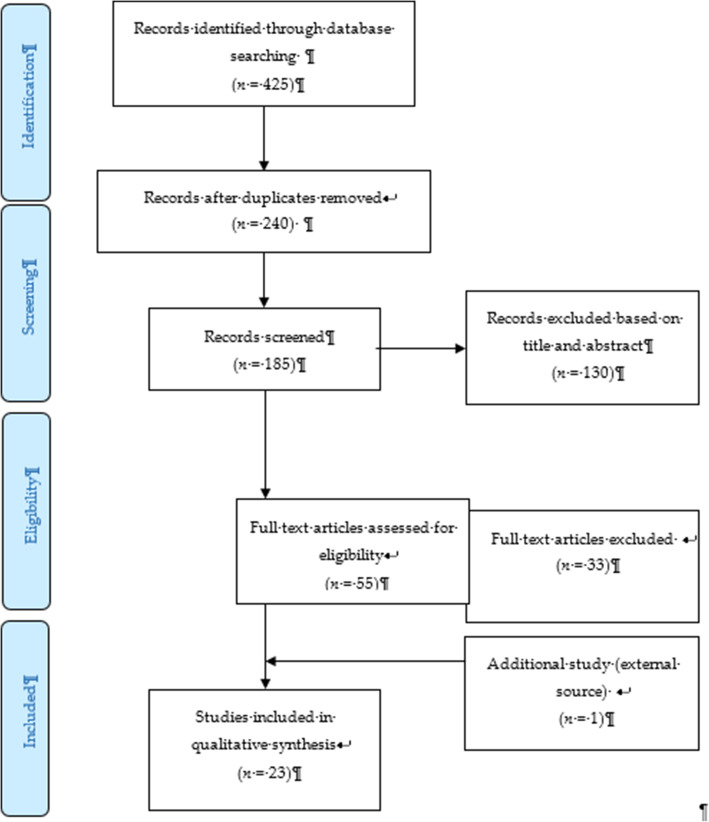
- The review screened 425 records and included 23 studies: 22 quantitative articles and 1 qualitative article; sample sizes ranged from 70 to 700,178, and the qualitative study included 100 interviewees.
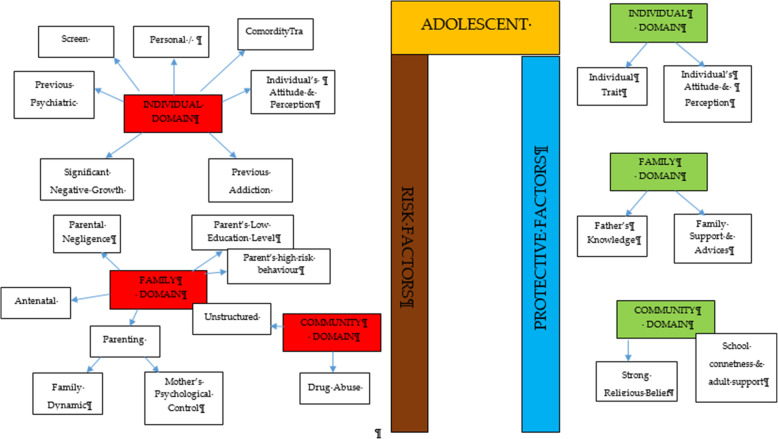
- Individual risk factors reported included high impulsivity, rebelliousness, emotional regulation impairment, alexithymia, maltreatment/negative upbringing, conduct problems, major depressive disorder, prior e-cigarette exposure, behavioral addiction, low perceived risk, high perceived drug accessibility, and positive attitudes toward synthetic drugs.
- Family risk factors included prenatal maternal smoking, poor maternal psychological control, low parental education, negligence, poor supervision, uncontrolled pocket money, and substance-using family members; community risk factors included peers who abuse drugs.
- Protective factors reported included optimism (OR = 0.90, 95% CI 0.85–0.95), mindfulness (slower progression toward injectable drug abuse by 1.67 years, p = .041), social phobia (OR = 0.87, 95% CI 0.77–0.97), strong beliefs against substance abuse, desire to maintain health, high paternal awareness, school connectedness, structured activity, and strong religious beliefs.
## Methods
- Systematic review conducted following PRISMA, searching PubMed, EBSCOhost, and Web of Science for English-language full-text articles published from 2016 to December 2020.
- Inclusion focused on adolescents aged 10–18 years and drug-related substances excluding nicotine/tobacco and alcohol; citations were screened, duplicates removed, and full texts assessed against inclusion/exclusion criteria.
- Study quality was appraised with MMAT 2018 by two independent reviewers; because of heterogeneity, results were synthesized descriptively rather than meta-analyzed.
## Limitations
- The paper states it may have missed important factors because it included only English articles and searched only three databases.
- The paper also notes heterogeneity in study designs, substances, outcome measures, and analysis techniques, which led to descriptive synthesis rather than pooled analysis.
- Evident from the text: the review excluded tobacco and alcohol-related substance use, so its findings do not cover the full broader substance-abuse landscape.
Model-written summary. Check it against the paper before relying on it.
Integrity signals
Registry
Cites
Statistics
Figures
Verification
Claims the paper makes
23 Valid · 0 Not valid · 17 Not checked · 16 Own results and interpretations
The cited sources support only part of this claim — read each source’s verdict below.
In the paper
“This study also showed that the impulsivity trait alone was an independent risk factor that increased the odds between two to four times for using any drug compared to the non-impulsive group.”
§ Risk and protective factors of drug abuse among adolescents: a systematic review > Results > DOMAIN: individual factor
What the sources say
- Partly supportedcites [29] Chuang CWI Sussman S Stone MD Pang RD Chou CP Leventhal AM Kirkpatrick MG Impulsivity and history of behavioral addictions are associated with drug use in adolescents Addict Behav 2017 74 41 47 10.1016/j.addbeh.2017.05.021 28570913 PMC6604811 sourceExperimental — accuracy not yet measured
The Results section on past-six-month drug use (page not provided) says impulsivity alone was associated with greater likelihood of use across all five outcomes, including any drug use. It gives an odds ratio of 3.72 for tobacco use, but the available passage does not establish a two-to-fourfold odds ratio for any drug use. The Discussion also cautions that impulsivity may be a marker of other risk factors, so calling it an independent factor that increases use overstates the association. (LLM, conf=0.86)
plainstates a cause- Asserted: passes — The authors put it forward as true.
- Checkable: passes — It can be checked against evidence.
- Load-bearing: unclear — It is unclear whether the paper’s conclusions depend on it.
- Based: passes — The paper gives a reason why it holds.
- Partly supported
The cited sources support only part of this claim — read each source’s verdict below.
In the paper
“A study by Marin et al. found that youth with an optimistic trait were less likely to become drug dependent [33].”
§ Risk and protective factors of drug abuse among adolescents: a systematic review > Results > Protective factors
What the sources say
- Partly supportedcites [33] Marin S Heshmatian E Nadrian H Fakhari A Mohammadpoorasl A Associations between optimism, tobacco smoking and substance abuse among Iranian high school students Health Promot Perspect 2019 9 4 279 284 10.15171/hpp.2019.38 31777707 PMC6875553 sourceExperimental — accuracy not yet measured
The Results report that higher optimism scores were associated with lower odds of illicit drug use among students, and the Discussion describes the study as cross-sectional. The paper does not establish that optimistic youth were less likely to become drug dependent: it measured drug use, not dependence or later onset. (LLM, conf=0.88)
plainstates an association- Asserted: passes — The authors put it forward as true.
- Checkable: passes — It can be checked against evidence.
- Load-bearing: passes — The paper’s conclusions depend on it.
- Based: passes — The paper gives a reason why it holds.
- Partly supported
The cited sources support only part of this claim — read each source’s verdict below.
In the paper
“adolescents who had high-perceived availability of drugs in their neighborhoods were more likely to increase their usage of marijuana over time (OR = 11.00, 95% CI 9.11, 13.27) [35].”
§ Risk and protective factors of drug abuse among adolescents: a systematic review > Results > DOMAIN: individual factor
What the sources say
- Partly supportedcites [35] Schleimer JP Rivera-Aguirre AE Castillo-Carniglia A Laqueur HS Rudolph KE Suárez H Ramírez J Cadenas N Somoza M Brasesco MV Martins SS Cerdá M Investigating how perceived risk and availability of marijuana relate to marijuana use among adolescents in Argentina, Chile, and Uruguay over time Drug Alcohol Depend 2019 201 115 126 10.1016/j.drugalcdep.2019.03.029 31207452 PMC7075484 sourceExperimental — accuracy not yet measured
The Abstract Results report the quoted OR and 95% CI for the association between perceived marijuana availability and use in Argentina in 2014. The Abstract Methods describe cross-sectional surveys and past-month use, not an increase in an individual's use over time. The Materials and Methods > Measures section asks how easy marijuana would be to obtain; it does not measure the availability of drugs in respondents' neighborhoods. No page numbers are provided in our copy. (LLM, conf=0.91)
plainstates an association- Asserted: passes — The authors put it forward as true.
- Checkable: passes — It can be checked against evidence.
- Load-bearing: unclear — It is unclear whether the paper’s conclusions depend on it.
- Based: passes — The paper gives a reason why it holds.
- Partly supported
Every source the paper cites for this claim was checked and supports it.
In the paper
“exposure to e-cigarettes within the past 30 days is related to an increase in the prevalence of marijuana use and prescription drug use by at least four times in the 8th and 10th grades and by at least three times in the 12th grade [34].”
§ Risk and protective factors of drug abuse among adolescents: a systematic review > Results > DOMAIN: individual factor
What the sources say
- Supportedcites [34] Miech RA O’Malley PM Johnston LD Patrick ME E-cigarettes and the drug use patterns of adolescents Nicotine Tob Res 2015 18 5 654 659 10.1093/ntr/ntv217 26416823 PMC5654373 source
The Results section reports that past-30-day marijuana use and prescription drug abuse were at least four times as prevalent among past-30-day e-cigarette users in 8th and 10th grades, and at least three times as prevalent in 12th grade, compared with nonusers. The paper describes an association, not a causal increase. (LLM, conf=0.93)
plainstates an association- Asserted: passes — The authors put it forward as true.
- Checkable: passes — It can be checked against evidence.
- Load-bearing: unclear — It is unclear whether the paper’s conclusions depend on it.
- Based: passes — The paper gives a reason why it holds.
- Supported
The cited sources support only part of this claim — read each source’s verdict below.
In the paper
“Expecting mothers who smoke tobacco and alcohol have an indirect link with adolescent substance abuse in later life [24, 39].”
§ Risk and protective factors of drug abuse among adolescents: a systematic review > Results > DOMAIN: family factors
What the sources say
- Partly supportedcites [24] Cecil CAM Walton E Smith RG Viding E McCrory EJ Relton CL Suderman M Pingault JB McArdle W Gaunt TR Mill J Barker ED DNA methylation and substance-use risk: a prospective, genome-wide study spanning gestation to adolescence Transl Psychiatry 2016 6 12 e976 10.1038/tp.2016.247 27922636 PMC5315565 sourceExperimental — accuracy not yet measured
The Results (Follow-up analyses; page unavailable) report an indirect association between prenatal maternal tobacco smoking and adolescent substance use, including adolescent alcohol use. The Discussion identifies tobacco smoking—not maternal alcohol use—as the prenatal exposure with this indirect association. The claim is supported for smoking but not for alcohol use by expecting mothers. (LLM, conf=0.90)
- Not checked — no full text of the sourcecites [39] Osborne V Serdarevic M Striley CW Nixon SJ Winterstein AG Cottler LB Age of first use of prescription opioids and prescription opioid non-medical use among older adolescents Substance Use Misuse 2020 55 14 2420 2427 10.1080/10826084.2020.1823420 33059498 source
plainstates an association- Asserted: passes — The authors put it forward as true.
- Checkable: passes — It can be checked against evidence.
- Load-bearing: unclear — It is unclear whether the paper’s conclusions depend on it.
- Based: passes — The paper gives a reason why it holds.
- Partly supported
35 more claims · 13 with their cited sources checked
Create a free account to see all 56 claims and to verify the 3 references still open.
- It may state two separate claims as one. 12
- Probably not a substantial claim. 6
- The quote only partly states this claim. 1
Claims other papers make about this one
Each is checked against this paper’s own text: does it say what the citing paper says it does?
The source backs part of the claim, not all of it — or backs it for a different population, condition or comparison.
In the citing paper
“Additionally, individuals seeking enjoyment, those with personality traits like impulsivity, and those needing energy for extended work hours are more prone to substance use [75].”
From Prevalence and patterns of substance use in West Africa: A systematic review and meta-analysis (2024) · cites this paper as [75]
Experimental — accuracy not yet measuredIn the citing paper
“The data is clear-children who are unsupervised are more likely to engage in substance abuse, early sexuality, delinquency, and other related harms (Nawi et al., 2021;Reynoso & Rossi, 2019;Sun et al., 2025).”
From The Symbiotic Harm of a Criminal Record (2026) · cites this paper as Nawi et al., 2021
Citations
Cites
Interrater reliability: The kappa statistic
McHugh, M. L. (2012) · Biochemia Medica · doi:10.11613/bm.2012.031 · Cited by 19,877 · cited 1×
“77, indicating moderate agreement [23].”
Emotion-regulation strategies across psychopathology: A meta-analytic review
Aldao, A., Nolen-Hoeksema, S., & Schweizer, S. (2010) · Clinical Psychology Review · doi:10.1016/j.cpr.2009.11.004 · Cited by 6,686 · cited 1×
“way to avoid or suppress the negative feelings that they are experiencing [41, 47, 48].”
BackgroundThe Mixed Methods Appraisal Tool (MMAT) version 2018 for information professionals and researchers
Hong, Q. N., Fàbregues, S., Bartlett, G., Boardman, F., Cargo, M., Dagenais, P., Gagnon, M.-P., Griffiths, F., Nicolau, B., O’Cathain, A., et al. (2018) · Education for Information · doi:10.3233/efi-180221 · Cited by 4,737 · cited 1×
“This tool has been shown to be useful in systematic reviews encompassing different study designs [22].”
MethodSawyer, S. M., Azzopardi, P. S., Wickremarathne, D., & Patton, G. C. (2018) · The Lancet Child & Adolescent Health · doi:10.1016/s2352-4642(18)30022-1 · Cited by 3,666
Cannabis use and risk of psychotic or affective mental health outcomes: a systematic review.
Moore, T. H., Zammit, S., Lingford-Hughes, A., Barnes, T. R., Jones, P. B., Burke, M., & Lewis, G. (2007) · The Lancet · doi:10.1016/s0140-6736(07)61162-3 · Cited by 2,224
Adolescent cortical development: A critical period of vulnerability for addiction
Crews, F., He, J., & Hodge, C. (2007) · Pharmacology Biochemistry and Behavior · doi:10.1016/j.pbb.2006.12.001 · Cited by 1,091 · cited 1×
“Abusing drugs impairs the successful transition to adulthood by impairing the development of critical thinking and the learning of crucial cognitive skills [7].”
BackgroundMacleod, J., Oakes, R., Copello, A., Crome, I., Egger, M., Hickman, M., Oppenkowski, T., Stokes-Lampard, H., & Smith, G. D. (2004) · The Lancet · doi:10.1016/s0140-6736(04)16200-4 · Cited by 639
The increasing global health priority of substance use in young people
Degenhardt, L., Stockings, E., Patton, G., Hall, W. D., & Lynskey, M. (2016) · The Lancet Psychiatry · doi:10.1016/s2215-0366(15)00508-8 · Cited by 601 · cited 2×
“The increased burden due to drug abuse among adolescents and young adults was shown by the Global Burden of Disease (GBD) study in 2013 [2].”
BackgroundPrevalence of the Addictions: A Problem of the Majority or the Minority?
Sussman, S., Lisha, N., & Griffiths, M. (2011) · Evaluation & the Health Professions · doi:10.1177/0163278710380124 · Cited by 598 · cited 1×
“way to avoid or suppress the negative feelings that they are experiencing [41, 47, 48].”
BackgroundNeurobiologic processes in drug reward and addiction
Adinoff, B. (2004) · Harvard Review of Psychiatry · doi:10.1080/10673220490910844 · Cited by 546 · cited 1×
“On the opposite side of the coin, a greater perceived risk remains a protective factor for marijuana abuse [56].”
Background
Research works printed but not linked: 2
- Nation, U World Drug Report 2018 (United Nations publication, Sales No. E.18X.XI.9. United Nation publication) 2018
- National Institutes on Drug Abuse Drugs, brains, and behavior the science of addiction national institute on drug abuse (nida) 2014
Cited by
Items 401–494 of 494
Ibukun, O., Fadoju, A. O., Oyerinde, O. O., Abiodun, O. O., Bello, O. E., & Akanji, F. G. (2025) · African Journal of Health Nursing and Midwifery · doi:10.52589/ajhnm-4cbsigpr
Substanzkonsum und substanzbezogene Störungen bei Erwachsenen mit Fetalen Alkoholspektrumstörungen
Schecke, H., Jabby, A., Krebs, J., d'Heureuse, J., Rosenstock, M., Scherbaum, N., & Bohn, A. (2025) · Suchttherapie · doi:10.1055/a-2557-5707
Nyarko, S., Mahama, J. C., Faridu, A.-W., Kipo, N. M., Issah, M. A., Erica, A., Atchulo, K., & Antuolkuu, M. (2025) · Research Square · doi:10.21203/rs.3.rs-8296597/v1 · Cited by 1
Khairiah, S., Halim, S., & Zaini, Z.-‘. I. (2025) · Environment-Behaviour Proceedings Journal · doi:10.21834/e-bpj.v10isi35.7508
da Silva, F. B. R., Fernandes, G. J. D., Anjos-Santos, A., Favoretto, C. A., Rodolpho, B. T., Palombo, P., Vialou, V., Abrahao, K. P., & Cruz, F. C. (2026) · CNS Neuroscience & Therapeutics · doi:10.1002/cns.71138
The Impact of Substance Use in Latent Bipolar Disorder
de Aguiar, K. R., Zimmer, C., Gnielka, V., & Watts, D. (2025) · Springer eBooks · doi:10.1007/978-3-032-01297-5_12
Analysis of Legal Misuse by Pharmacy Inspectors in Relation to the Alleged Drug Mafia
Lisowski, P. (2025) · Journal of Forensic Science and Medicine · doi:10.4103/jfsm.jfsm_21_25
Odo, H. M., Warutere, P., Musau, J., et al. (2025) · International Journal of Community Medicine and Public Health · doi:10.18203/2394-6040.ijcmph20254415
Abu, T. M., & Olutola, F. B. (2026) · Journal of arts, humanities and social science. · doi:10.69739/jahss.v3i1.1334
Fischer, C. E., Otu, E.-E. O., Agbor, C. A., Raymond, A.-E. M., Umoh, E. A., Effiong, O. E., Jumbo, S. B., Asuquo, J. O., Ogon, B. E., & Anwana, N.-A. E. (2026) · F1000Research · doi:10.12688/f1000research.175565.1 · Cited by 1
Adams, Z. W., Marriott, B. R., Burns, A. B., Agley, J. D., Wu, W., Aalsma, M. C., Hulvershorn, L. A., & Zapolski, T. C. B. (2026) · Contemporary Clinical Trials · doi:10.1016/j.cct.2026.108241
Kim, B., & Chen, Y. (2026) · Trauma Violence & Abuse · doi:10.1177/15248380251408395 · Cited by 2
Drug Abuse: Distribution and Health Impact on Societies
Abbas, S. M., Mizel, S. N., Ibrahim, N. A., & Rashid, R. F. (2025) · Medical Journal of Babylon · doi:10.4103/mjbl.mjbl_849_24
Self-citationDinamarca‐Aravena, K. A., Rocha‐Jiménez, T., Silva, C. P., Palacios, D., & Castillo‐Carniglia, Á. (2026) · Substance Abuse Treatment Prevention and Policy · doi:10.1186/s13011-025-00686-2
“According to Nomaguchi and Milkie [30] and Nawi, Ismail [8], open dialogue, support, and parental super-vision are factors that reduce the risk of substance or alcohol use in adolescents.”
InfluentialLin, M.-W., Li, F.-Y., Lin, Y.-H., & Huang, P. (2026) · Substance Use & Misuse · doi:10.1080/10826084.2026.2621260
“Extensive evidence implicates close social ties, including family members, peers, and intimate partners, in adolescent illicit substance use (Henneberger et al., 2021; Nawi et al., 2021).”
Alcohol use among students of "Bećo Bašić" Secondary school (Plav)
Čekić, S. (2025) · Medicinska rec · doi:10.5937/medrec2504132c
Biopsychosocial profile of people with substance use disorders treated in governmental hospital
Hasan, A. (2026) · Journal of Ethnicity in Substance Abuse · doi:10.1080/15332640.2026.2625828
Cadri, A., Barnett, T. A., Schuster, T., Asampong, E., & Adams, A. M. (2026) · PLOS Global Public Health · doi:10.1371/journal.pgph.0004345 · Cited by 1
“In response to interest holders’ perceptions that parents and teachers may discriminate against young people who use sub-stances, the training can emphasize their role in supporting young people who use substances and communicating with them in an open and non-judgemental manner [68].”
Lunden, J., & Morin, A. M. F. (2026) · Journal of Occupational Therapy Schools & Early Intervention · doi:10.1080/19411243.2026.2634309
Higher exposure to secondhand smoking among adolescents living in Zambia in 2021Preprint
Ng’ambi, W. F., Mutasha, S., Habbanti, S. G., Chigere, A., & Zyambo, C. M. (2026) · medRxiv · doi:10.64898/2026.02.20.26346759 · Cited by 1
Edwards, K. (2026) · Springer eBooks · doi:10.1007/978-3-031-57159-6_40-1
Risk Factors and Protective Elements in the Fight Against Addiction: A Conceptual Evaluation
Erol, T. (2026) · European Archives of Social Sciences · doi:10.35365/eass.26.1.01
Raising Concern of Substance Abuse among Adolescents in India: A Narrative Review
Vrinda Sankar, K. (2024) · doi:10.26634/djhm.1.1.20224
Sport and Preventive Education: Keys to Reducing Drug Consumption Among Adolescents
Mayoral, J. C. A., Sánchez, Á. M. Ú., Rodríguez, J. Á., & Ferrándiz, D. Á. (2026) · Youth · doi:10.3390/youth6010031
Patterns and risk factors of illicit substance abuse by Sri Lankan teenagers: a case–control study
Dayasiri, K. C., Samarasinghe, M., Gunarathna, G., Sandakelum, U., & Gawarammana, I. (2026) · BMJ Paediatrics Open · doi:10.1136/bmjpo-2025-004410 · Cited by 1
“Among cases, data collection was conducted after initial stabilisation during rehabilitation to mini-mise distress and improve reliability of reporting, while controls completed the questionnaire following outpatient consultation.”
Soerachman, R., Ardani, I. G. A. K. S., Oktarina, O., Tjandrarini, D. H., Pranata, S., Afifah, T., Roosihermiatie, B., Yunitawati, D., Rizkianti, A., & Wardhani, Y. F. (2026) · Korean Journal of Family Medicine · doi:10.4082/kjfm.25.0237
“International research consistently shows strong associations between drug use and other high-risk behaviors, such as unprotected sexual activity, violence, and poor academic performance [4,5].”
KABAKOĞLU, H., Özdemir, Ç., & Tanrıverdi, D. (2026) · Journal of Psychosocial Nursing and Mental Health Services · doi:10.3928/02793695-20260311-04
Drug Use Among Teens: A Test of Agnew’s Integrated Theory of Crime and Delinquency
Zavala, E., & Vito, A. G. (2026) · Deviant Behavior · doi:10.1080/01639625.2026.2644437 · Cited by 1
MACHINE LEARNING NA SAÚDE PÚBLICA: PREDIÇÃO DO USO DE DROGAS ILÍCITAS ENTRE ADOLESCENTES BRASILEIROS
de Nadai, M. Z., Ramos, K. Â., Silva, M. Z., Cardoso, F. S. A., Mantovani, G. C. G., Cezana, D. F., & de Freitas, W. R. (2026) · Brazilian Medical Students · doi:10.53843/bms.v11i15.1148
Störungen durch Substanzgebrauch oder Verhaltenssüchte
(2026) · Elsevier eBooks · doi:10.1016/b978-3-437-21237-6.00019-3
Yu, W., & Wang, F. (2026) · World Journal of Psychiatry · doi:10.5498/wjp.v16.i4.115520
Social Determinants of Health and Substance Use Disorders
Etudor-Eyo, E., & Morelli, V. (2026) · Springer eBooks · doi:10.1007/978-3-031-57159-6_35-1
Applied Theater as a Participatory Health Promotion Tool
Massar, K., & Heijligenberg, P. (2025) · Springer eBooks · doi:10.1007/978-981-97-0821-5_87-1 · Cited by 1
Chung, T., Kennelly, N., Latendresse, S. J., Powell, M. Z., & Sartor, C. E. (2026) · Addictive Behaviors · doi:10.1016/j.addbeh.2026.108702
“In a risk factors framework (Nawi et al., 2021), key predictors of early use include perceived ease of access to substances (Miller et al., 2023), risk of harm due to use (Merianos et al., 2017), and friends’ disapproval of use (Johnson et al., 2023).”
Posey, G., Kaur, R. P., Elbash, Z., Holloway, J., Pasman, E., Nist, A. N., Washam, M., Miller, W., Wang, D., & Cabral, D. (2026) · Journal of American College Health · doi:10.1080/07448481.2026.2648669
“4,7 The normalization of drug use across groups and the persistence of high-risk behaviors among certain individuals, regardless of their academic trajectory, may correlate to this null finding.”
Sun, S., DeJuliis, C., & Chisolm, M. S. (2026) · Psychiatry International · doi:10.3390/psychiatryint7020075
“In many ways, chronic substance use undermines one’s ability to flourish in life, creating obstacles to meaningful social connections, personal growth, and well-being [15].”
MENDES, F. G., Ferreira, J. L., Schrijvers, K., & Catunda, C. (2026) · BMC Public Health · doi:10.1186/s12889-026-27379-0
“For instance, adolescents in single-parent or reconstituted families may experience lower levels of parental monitoring and supervision, which has been identified as a protective factor against substance use [22, 52, 53].”
Understanding Marijuana Use Among Bangladeshi Young Adults: A Mixed-Method Study
Islam, R. U., Hossain, M. Z., Kamal, S., Taher, L., Noshin, F., Taher, T., & Moonajilin, M. S. (2026) · Journal of Drug Issues · doi:10.1177/00220426261444983
van Dongen, N., Technau, K., Jaguga, F., Murenzi, G., Machado, D. M., Amorissani‐Folquet, M., Ditango, R., Mureithi, F., McCoy, B. M., Brazier, E., et al. (2026) · AIDS and Behavior · doi:10.1007/s10461-026-05127-0 · Cited by 1
Kelly, S., Bakhireva, L. N., Buresh, C., Camenga, D. R., Gonzales-Castaneda, R., Kaliamurthy, S., Smith, D. C., Tolou‐Shams, M., Horigian, V. E., Marsch, L. A., et al. (2026) · Journal of Substance Use and Addiction Treatment · doi:10.1016/j.josat.2026.209979 · Cited by 1
Psychosocial latent profiles of adolescent alcohol use in Ecuador
Sinchi-Sinchi, H., Moral-Jiménez, M. D. L. V., Ramírez, A., Burgos‐Benavides, L., Díez, F. J. H., & Rodríguez‐Díaz, F. J. (2026) · Acta Psychologica · doi:10.1016/j.actpsy.2026.106939 · Cited by 1
Tejafan, S., Prasartpornsirichoke, J., & Booranasuksakul, T. (2026) · BMC Psychology · doi:10.1186/s40359-026-04767-0
“Family and peer behaviors, exposure to advertising, and social norms surrounding vaping have been consistently identified as influential contextual factors [11–18].”
An analytics framework for inverse cascade classification in cancer risk assessment
Jaworsky, M., Tao, X., Shaik, T., & Pokhrel, S. R. (2026) · Healthcare Analytics · doi:10.1016/j.health.2026.100471
Huangmit, P., Ketkosan, N., & Ponrachom, C. (2026) · Behavioral Sciences · doi:10.3390/bs16060873 · Cited by 2
“Contemporary adolescents commonly engage in health-risk behaviors, including unhealthy dietary consumption (Soliman et al., 2022), substance use (Nawi et al., 2021), and sexual risk behaviors (World Health Organization, 2024b).”
Ng’ambi, W. F., Mutasha, S., Habbanti, S. G., Chigere, A., & Zyambo, C. M. (2026) · Public Health Toxicology · doi:10.18332/pht/220974 · Cited by 2
Lemettilä, M., Vuori, N., Shamma, S., Yan, X., van de Ven, K., & Pohjanoksa-Mäntylä, M. (2026) · International Journal of Drug Policy · doi:10.1016/j.drugpo.2026.105380 · Cited by 1
An Investigation of Socially Relevant Moderators of Childhood Substance Familiarity
Moore, A., Lewis, B., Hinckley, J. D., Nixon, S. J., & Bhatia, D. (2026) · Journal of Child & Adolescent Substance Use · doi:10.1080/29973368.2026.2681627
“Socially influenced protective factors that have been explored previously include family environment (e.g., parental monitoring) (Luk et al., 2017; Pelham et al., 2023), neighborhood socialization (Trucco, 2020), and strong interpersonal relationships (Nawi et al., 2021; Parsai et al., 2009).”
Academic performance, study time, psychological factors, and substance use among Korean adolescents
Kim, J. S., Kim, S. M., & Han, D. H. (2026) · Acta Psychologica · doi:10.1016/j.actpsy.2026.107192
Yeo, J., & So, E. S. (2025) · International Journal of Addiction Nursing · doi:10.1097/jan.0000000000000677
Aziz, N. S., Tahir, M. F., Rasat, M. A. M., Ali, O., & Soelar, S. A. (2025) · Pertanika Journal of Counsellor Educator and Counselling Psychology · doi:10.47836/pjocecp.1.1.07
Mizuno, S., Inoura, S., Kitamura, M., Matsumoto, T., Kitagaki, K., Koide, A., Takehara, K., & Shimane, T. (2026) · Psychiatry and Clinical Neurosciences Reports · doi:10.1002/pcn5.70365
“4 This interpretation is consistent with prior research showing that adolescent substance use is associated with insufficient parental monitoring and weaker family structures, 4 whereas improved family relationships and supervision are protective.”
Congia, P. (2026) · Journal of Public Health · doi:10.1007/s10389-026-02824-x
Rios, S. L. P., Barneveld, H. O. V., Ovando, P. S. D. C., et al. (2026) · PSICUMEX · doi:10.36793/psicumex.v16i1.770
Social and behavioral correlates of multiple substance use patterns among illinois adolescents
Cheng, K., & Czuba, F. G. (2026) · Discover Public Health · doi:10.1186/s12982-026-02357-4
“…health predictors, such as reporting feelings of depression, experiencing bullying school, perceiving school being unsafe, and experiencing peer pressure were significantly associated with higher likelihood of sole-use, dual-use, and poly-use, consistent with prior research findings [28, 41–43].”
Prevalence of non-medical drug use and dependence among school-going adolescents in Malaysia
Shafurdin, N. S., İsmail, R., Shukor, M. S., Nawi, A. M., Halim, M. R. T. A., Rasdi, R. M., Lyndon, N., Amit, N., Hassan, S. A., Hanafi, N. B., et al. (2026) · Addicta The Turkish Journal on Addictions · doi:10.15805/addicta.2026.498
“Drug abuse has now become a menace to world health and a major health problem, especially among adolescents (Nawi et al., 2021), due mainly to peer influence and thrill seeking in pursuit of deceptive pleasure and happiness.”
Self-citationJanssen, S., & Schnell, T. (2026) · Essentials · doi:10.1007/978-3-662-73854-2_3
A mini-review on the contexts and conditions of substance abuse in nurses
Sharafi, S., Esmaeelzadeh, M., Moshtagh, M., & Salehian, S. (2026) · Journal of Ethnicity in Substance Abuse · doi:10.1080/15332640.2026.2692449
Malki, H. E., Moutawakkil, S. G., El‐Ammari, A., Ragala, M. E. A., Taoufik, F., Gnaoui, S. E., Zaidi, K., TAOUFIQ, I., Chibri, S., Beniaich, G., et al. (2026) · Addiction Science & Clinical Practice · doi:10.1186/s13722-026-00691-1
“Preventing these effects is challenging, with the best strategy being to delay or prevent drug use onset [17, 18].”
Zielińska-Król, K., Tatala, M., & Šuľová, M. (2026) · Religions · doi:10.3390/rel17070767
“The literature consistently shows that a family’s protective potential is highest when closeness is combined with clear expectations and appropriate monitoring (Okulicz-Kozaryn and Bobrowski 2008; Kielar-Turska and Duplaga 2020; Nawi et al. 2021).”
Mamukeyani, E., Mashamba, T. J., & Netshapapame, T. S. (2026) · Discover Public Health · doi:10.1186/s12982-026-02451-7
Mittal, P., Srivastava, A., Singh, P. P., & Chauhan, J. (2026) · medRxiv · doi:10.64898/2026.07.11.26357831
Lee, J., & Nam, S. (2026) · Asia Pacific Journal of Public Health · doi:10.1177/10105395261465727
“1,18,19 International research has further highlighted that substance use during adolescence increases the risk of long-term neurodevelopmental impairment and mental health disorders in adulthood, 4 underscoring the importance of early prevention efforts.”
Consumo de Substâncias Psicoativas e Desenvolvimento Educacional de Adolescentes
Araújo, I. C. S., Pereira, F. A., da Silva, M. F., et al. (2026) · Revista Multidisciplinar do Nordeste Mineiro · doi:10.66104/9tk5zt47
Digital and Substance Dependence in the Post-Digital Era
Romeo, V. M. (2026) · Encyclopedia · doi:10.3390/encyclopedia6070160
“Its inclusion in ICD-11, and its conceptual proximity to the DSM-5 framework, supports clinical and epidemiological research on addiction-like online behaviors [2]. opportunity structures), with systematic reviews detailing heterogeneous but meaningful SES–substance links across adolescence [15].”
Mataru, B. (2026) · Journal of Applied Mathematics · doi:10.1155/jama/6608738
Roberts, D. L. (2026) · Healthcare · doi:10.3390/healthcare14152252 · Cited by 1
“…influences, encourages attention to diverse populations and the structural determinants of health, and reframes prevention as the active cultivation of capacities, environments, and relationships that reduce the appeal or necessity of substance use as a maladaptive coping mechanism [1,2,5–16].”
InfluentialExploring the cycle: “Perceptions, perspectives, and practices of substance use in young adults”
Semwal, J., Vallabh, V., Nagrath, D., Uniyal, A., Srivastava, Bijalwan, R. P., & Shikha, D. (2026) · Journal of Education and Health Promotion · doi:10.4103/jehp.jehp_886_25
“[11] Studies have also depicted the above factors as a primary factor in the early initiation of usage.”
Applied Theater as a Participatory Health Promotion Tool
Massar, K., & Heijligenberg, P. (2026) · Springer eBooks · doi:10.1007/978-981-92-1290-3_87
Subba, P., Lamichhane, B., Dulal, N., Skeen, S., Tomlinson, M., Jordans, M. J. D., & Luitel, N. P. (2026) · Mental Health & Prevention · doi:10.1016/j.mhp.2026.200548 · Cited by 1
Schecke, H., Lenz, B., Rosenstock, M., Bohn, A., Scherbaum, N., & Jabby, A. (2026) · International Journal of Mental Health and Addiction · doi:10.1007/s11469-026-01705-4
Fenton, M. P., Lynne‐Landsman, S. D., Bryan, J. L., Striley, C. W., & Forthun, L. F. (2026) · American Journal of Community Psychology · doi:10.1002/ajcp.70094
“…to document lifetime and past ‐ 30 ‐ day use of various substances to identify potential geographic health disparities and to inform community ‐ based prevention strategies for different sizes of geographic locations (Cambron et al., 2020; Chilenski, 2011; Feinberg, 2012; Nawi et al., 2021).”
Skogen, J. C., Colman, I., Sivertsen, B., Hjetland, G. J., & Finserås, T. R. (2026) · Journal of Child & Adolescent Substance Use · doi:10.1080/29973368.2026.2704596
Nanomaterials for drug analysis: emerging advancements and future challenges
Zhao, L.-M., Zhao, Y.-G., & Cheng, H. (2026) · Frontiers in Materials · doi:10.3389/fmats.2026.1860155 · Cited by 1
Substance Use Disorders in the Orthodox Jewish Community: A Scoping Review
Schechter, N., & Schechter, I. (2026) · Journal of Religion and Health · doi:10.1007/s10943-026-02752-w
Nomatshila, Z. B., Pulido-Estrada, G.-A., Nomatshila, S. C., & Apalata, T. R. (2026) · Tropical Medicine and Infectious Disease · doi:10.3390/tropicalmed11080230
Tewari, D. B., Gautam, U., Jaiswal, V., Pooja, P., Mishra, A., & Das, P. (2026) · International Journal of Environmental Research and Public Health · doi:10.3390/ijerph23081073
“These interventions draw on theoretical frameworks addressing the risk and protective factors [43,44], family-based [45], youth empowerment [46], cognitive and behavioural, community and social learning approaches [47,48].”
Sagayanathan, R., Wichaidit, W., & Stafström, M. (2026) · Addictive Behaviors Reports · doi:10.1016/j.abrep.2026.100738
“…risk, consistent with research linking non-family living to substance use, likely due to reduced parental monitoring (Dittus et al., 2023; Park & Kim, 2017) and peer influence (Hall et al., 2016; Nawi et al., 2021), however these mechanisms were not directly measured in the present study.”
Brewer, A. G., Michelson, K. A., Masias, E. J., Walter, T., Robinson, K., & Hoffmann, J. A. (2026) · Annals of Emergency Medicine · doi:10.1016/j.annemergmed.2026.07.015 · Cited by 1
Wojciechowski, T. W. (2026) · Substance Use & Misuse · doi:10.1080/10826084.2026.2724153
Kausar, N., Qazi, A. K., & Habib, W. (2026) · The regional tribune. · doi:10.55737/trt/v-vii.378
Exploring risk profiles of adolescent substance users: an application of general strain theory
Paez, G. R. (2026) · Safer Communities · doi:10.1108/sc-03-2026-0016
Molyneux, T. M., Daly, Z., Richardson, C. G., Gilham, C., Amlani, A., McGuinness, L., Goodyear, T., Gadermann, A., Ngieng, N., Sam, J., et al. (2026) · Drugs Education Prevention and Policy · doi:10.1080/09687637.2026.2731599
Wang, Y., Zhang, Y., Yan, J., Huang, Q., Jelsma, E. B., Zhao, Z., Zhao, J., Cham, H., Alegria, M. M., & Yip, T. (2026) · Drug and Alcohol Dependence · doi:10.1016/j.drugalcdep.2026.113372
I feel lonely and stressed: psychological flexibility and addictive behavior in college students
Uzun, K., Arslan, G., & Aydoğdu, U. (2026) · Current Psychology · doi:10.1007/s12144-026-10078-9
“In this context, individual characteristics such as self-awareness, health-pro-tective motivation (Nawi et al., 2021), and emotion regulation skills (Koo & Kwon, 2014) are considered as protective factors against addictive behaviors.”
Mental Health Problems Among Unaccompanied Refugee Minors Treated for Substance Abuse
Ivert, A., & Magnusson, M.-M. (2026) · Springer eBooks · doi:10.1007/978-3-032-32399-6_8
Thompson, K. R. (2026) · Journal of Public Health Management and Practice · doi:10.1097/phh.0000000000002462
Evaluation of Peer Bullying in Pediatric Forensic Cases
Altıner, B., Yurteri, N., & Aliustaoğlu, F. S. (2026) · Sağlık Bilimlerinde Değer · doi:10.33631/sabd.1971414
Bağımlılıkta Dini İnanç-Davranış Çatışması: Bilişsel Çelişki Kuramı Temelli Bir İnceleme
Akdağ, M., & Gürsu, O. (2026) · Afyon Kocatepe Üniversitesi Sosyal Bilimler Dergisi · doi:10.32709/akusosbil.1921200
Esfahani, N. N., Kamel, A. A., & Yousefi, Z. (2026) · Journal of Education and Health Promotion · doi:10.4103/jehp.jehp_550_25
Dash, G. F., Lichenstein, S. D., Cheng, A., Prieto, S., Thomsen, K. R., Yip, S. W., Leventhal, A. M., & Ewing, S. W. F. (2026) · Neuroscience & Biobehavioral Reviews · doi:10.1016/j.neubiorev.2026.107023 · Cited by 2
Zhang, X., & Zhang, W. (2026) · Frontiers in Psychology · doi:10.3389/fpsyg.2026.1860144
A narrative review of school-based preventive interventions on mental disorders and addictions
Aguilar-Moya, R., Ibáñez-Martínez, R., & Melero-Fuentes, D. (2026) · Discover Mental Health · doi:10.1007/s44192-026-00532-2
“These aspects are focused on work on risk and protective factors that also appear in reviews focused on the field of addictions such as those of Nawi et al. [72].”
Bouchard, R., Cantin, S., Huỳnh, C., & Fallu, J. (2026) · Revue de psychoéducation · doi:10.7202/1128945ar
What Gets Measured, Gets Managed: Guidance for Recovery Measurement in Addiction Recovery Science
Jurinsky, J., Henderson, C. E., Porter, N., Bowen, E. A., Hagaman, A. M., Miller, R., Rodriguez, L. M., Lewis, L. E., Hayes, B. B., Hoffman, L. A., et al. (2026) · Substance Use & Misuse · doi:10.1080/10826084.2026.2741337
Metadata
- Authors
- Nawi, A. M., Ismail, R., Ibrahim, F., Hassan, M. R., Manaf, M. R. A., Amit, N., Ibrahim, N., & Shafurdin, N. S.
- Affiliations
- National University of Malaysia (MY)
- Venue
- BMC Public Health
- Published
- 2021-11-13
- Volume
- 21
- Issue
- 1
- Pages
- 2088-2088
- ISSN
- 1471-2458 (ISSN-L)
- PMC
- PMC8590764
- OpenAlex
- W3213688921
- Cited by
- 506
- References
- 71
- Citations by year
- 2026: 94 · 2025: 159 · 2024: 140 · 2023: 80 · 2022: 25
- FWCI
- 13.26
- Type
- journal article
- Language
- en
- Open access
- gold
- doi.org
- Licence
- cc-by
- creativecommons.org/licenses/by/4.0 (tdm)
- creativecommons.org/licenses/by/4.0 (vor)
- Locations
- BMC Public Health (publishedVersion, cc-by)
- PubMed Central (publishedVersion, cc-by)
- PubMed (publishedVersion)
- DOAJ (DOAJ: Directory of Open Access Journals) (submittedVersion, cc-by-sa)
- Topics
- Health Sciences › Medicine › Epidemiology › Substance Abuse Treatment and Outcomes
- Health Sciences › Medicine › Pediatrics, Perinatology and Child Health › Prenatal Substance Exposure Effects
- Social Sciences › Psychology › Clinical Psychology › Child and Adolescent Psychosocial and Emotional Development
- Keywords
- adolescent drug abuse, risk factors, protective factors, impulsivity, emotion regulation, parental supervision, family history of substance use, peer influence
- MeSH terms
- Adolescent, Major Depressive Disorder, Depressive Disorder, Major, Female, Humans, Pregnancy, Risk Factors, Schools, Substance-Related Disorders, Protective Factors
About these checks
Registry, retraction, Cites and statistics results are computed, not judged, with one exception: a printed reference that no index lists is read once by a model before it counts as a citation error. Claims are extracted by a model and kept only when their quote appears verbatim in the text; each cited source is then checked, with a model’s help, for whether it says what the claim relies on. Those verdicts can be wrong — read the claim’s quote and the cited source before relying on one.
The claim verdicts this report counts are experimental: their accuracy is not yet measured.
A language model drew the claims from the paper on 2026-10-10, under version 3 of the claim definition (model deepseek-v4.1-flash, prompt extract-v3).
A second model labelled each claim on 2026-10-10 (model jev-1.13-20260917, definition revision gold-guideline-v0.2).
Cited sources are checked with a language model’s help (gpt-6-sol).
Statistics and arithmetic are recomputed, not judged.
Confidence bands are shown only for fields calibrated on our annotated test set. None is calibrated yet, so no band is shown.
What counts as a claim ›How we measure confidence ›How we check this ›
Are you an author, or do you see a problem with this page? Request a review
Data sources
Bibliographic data: Semantic Scholar, OpenAlex, Crossref.
Contains information from the Semantic Scholar Academic Graph Datasets, made available under the ODC Attribution License (ODC-BY 1.0).
Semantic Scholar’s data is described in: Kinney, R., et al. (2023). The Semantic Scholar Open Data Platform. arXiv:2301.10140.
