

Parental technoference and adolescents’ mental health and violent behaviour: a scoping review
Open accessPublished version of a preprint
The DOI matches its Crossref record; 67 of the 70 references it cites were found in a registry or an index.
Abstract
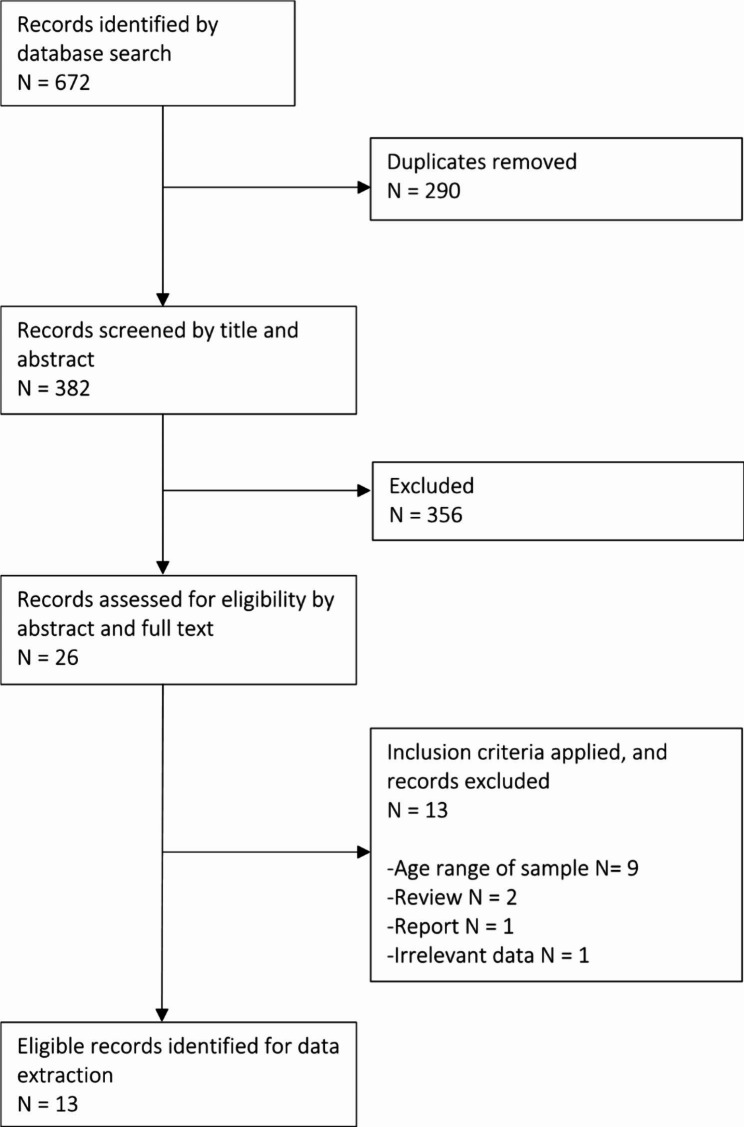
Purpose: The term ‘technoference’ refers to habitual interferences and disruptions within interpersonal relationships or time spent together due to use of electronic devices. Emerging evidence suggests associations between parental technoference and young people’s mental health and violent behaviours. This scoping review sought to summarise the existing literature. Methods: A scoping review was undertaken across six databases (APA PsycINFO, MEDLINE, ASSIA, ERIC, Social Sciences Premium Collection, SciTech Premium). Searches included articles examining the association between parental technoference and adolescent mental health and violent behaviours. All included studies provided empirical findings. Results: Searches retrieved 382 articles, of which 13 articles met the eligibility criteria. A narrative approach was applied to synthesise the eligible findings. Across all studies, adolescent perceptions of parental technoference were negatively associated to adolescent mental health and positively related to adolescent violent behaviours. Parental cohesion and mental health were identified as significant mediating factors. Conclusion: Findings suggest that parents should be aware of the environment in which they use electronic devices as their use can potentially, directly and indirectly, influence adolescent mental health and violent behaviours. Further research into the potential caveats of parental technoference could support the development of evidence-informed guidelines for parental management of electronic devices.
Overview
The claims and statistics of this paper haven’t been checked yet.
Free: it reads the open-access text and checks the first 5 claims that cite a source we can check. Create a free account to check every claim.
Integrity signals
Registry
Cites
Statistics
Figures
Verification
Claims the paper makes
The claims and statistics of this paper haven’t been checked yet.
Free: it reads the open-access text and checks the first 5 claims that cite a source we can check. Create a free account to check every claim.
Claims other papers make about this one
Each is checked against this paper’s own text: does it say what the citing paper says it does?
The cited source says what the claim attributes to it.
In the citing paper
“During the teen years, technoference has a significant correlation between caregiver mobile device use and teen symptoms of depression and anxiety.164,165”
From Digital Ecosystems, Children, and Adolescents: Technical Report (2026) · cites this paper as [164]
Self-check
Percentages, sums and reported differences re-computed from the paper’s own numbers.
The self-check needs the paper’s full text.
Citations
Cites
PRISMA Extension for Scoping Reviews (PRISMA-ScR): Checklist and Explanation
Tricco, A. C., Lillie, E., Zarin, W., O'Brien, K. K., Colquhoun, H., Levac, D., Moher, D., Peters, M. D. J., Horsley, T., Weeks, L., et al. (2018) · Annals of Internal Medicine · doi:10.7326/m18-0850 · Cited by 43,565 · cited 1×
“This review followed the Preferred Reporting Items for Systematic Reviews guidelines (PRISMA; see Supplementary Table 1) [39].”
MethodMunn, Z., Peters, M. D. J., Stern, C., Tufanaru, C., McArthur, A., & Aromataris, E. (2018) · BMC Medical Research Methodology · doi:10.1186/s12874-018-0611-x · Cited by 11,385 · cited 1×
“In contrast to a systematic review approach which aims to explore the effectiveness of a treatment or practice, a scoping review methodology was applied to summarise existing research and knowledge in the area and to identify gaps to inform future research [38].”
BackgroundPersonality and Individual Differences
Smith, M. B., Jordan, P., & Wallace, J. C. (2015) · The Wiley Blackwell Handbook of the Psychology of Occupational Safety and Workplace Health · doi:10.1002/9781118979013.ch2 · Cited by 2,577
Global burden of disease in young people aged 10–24 years: a systematic analysis
Gore, F. M., Bloem, P. J., Patton, G. C., Ferguson, J., Joseph, V., Coffey, C., Sawyer, S. M., & Mathers, C. D. (2011) · The Lancet · doi:10.1016/s0140-6736(11)60512-6 · Cited by 2,301 · cited 1×
“Poor mental health in adolescence can include depression [32], anxiety [33] and addiction [34], and evidence has found mental health condition tracks into adulthood [31].”
BackgroundFrustration-aggression hypothesis: Examination and reformulation.
Berkowitz, L. (1989) · Psychological Bulletin · doi:10.1037/0033-2909.106.1.59 · Cited by 2,283 · cited 1×
“This can be explained by the frustration aggression theory [61], which postulates that adolescents become so disconcerted at feeling rejected by their parents they retaliate in the form of tormenting others.”
BackgroundSocial Learning Theory of Aggression
Bandura, A. (1978) · Journal of Communication · doi:10.1111/j.1460-2466.1978.tb01621.x · Cited by 1,459 · cited 1×
“This direct effect could be explained by the social learning theory [66], which states that children model parental behaviours.”
BackgroundCOUNCIL ON COMMUNICATIONS AND MEDIA, Hill, D., Ameenuddin, N., Reid Chassiakos, Y. (., Cross, C., Hutchinson, J., Levine, A., Boyd, R., Mendelson, R., Moreno, M., et al. (2016) · Pediatrics · doi:10.1542/peds.2016-2591 · Cited by 1,372
International Journal of Mental Health and Addiction
(2013) · International Journal of Mental Health and Addiction · doi:10.1007/11469.1557-1882 · Cited by 1,058
Roberts, J. A., & David, M. E. (2016) · Computers in Human Behavior · doi:10.1016/j.chb.2015.07.058 · Cited by 999 · cited 1×
“Similarly, the term ‘phubbing’, blending the words ‘phone’ and ‘snubbing’ is used to characterise a direct disregard for another individual in favour of one’s phone [10].”
BackgroundMcDaniel, B. T., & Coyne, S. M. (2016) · Psychology of Popular Media Culture · doi:10.1037/ppm0000065 · Cited by 643
The Bowlby-Ainsworth attachment theory
Bowlby, J. (1979) · Behavioral and Brain Sciences · doi:10.1017/s0140525x00064955 · Cited by 594
Cheever, N. A., Rosen, L. D., Carrier, L. M., & Chavez, A. (2014) · Computers in Human Behavior · doi:10.1016/j.chb.2014.05.002 · Cited by 589
The challenge of absent presence
Gergen, K. J. (2002) · Perpetual Contact · doi:10.1017/cbo9780511489471.018 · Cited by 574 · cited 1×
“Initially, this demeanour was dubbed ‘absent presence’; referring to an individual being physically present but being distracted by communication or mobile content [7].”
BackgroundChildhood Externalizing Behavior: Theory and Implications
Liu, J. (2004) · Journal of Child and Adolescent Psychiatric Nursing · doi:10.1111/j.1744-6171.2004.tb00003.x · Cited by 539
Chen, X., Liu, M., & Li, D. (2000) · Journal of Family Psychology · doi:10.1037//0893-3200.14.3.401 · Cited by 516
Patterns of mobile device use by caregivers and children during meals in fast food restaurants
Radesky, J. S., Kistin, C. J., Zuckerman, B., Nitzberg, K., Gross, J., Kaplan-Sanoff, M., Augustyn, M., & Silverstein, M. (2014) · Pediatrics · doi:10.1542/peds.2013-3703 · Cited by 468 · cited 2×
“Parents reported using electronic devices during family time, such as at home [16], during meal times [20] and at playgrounds [13, 21].”
BackgroundSocialization Processes in the Family: Social and Emotional Development
Grusec, J. E. (2011) · Annual Review of Psychology · doi:10.1146/annurev.psych.121208.131650 · Cited by 466 · cited 1×
“Given that parents are prominent role models to adolescents [67], the findings of this review are important to inform parents on the significant role they play in their adolescent’s behaviours.”
BackgroundDevelopment of the social brain in adolescence
Blakemore, S.-J. (2012) · Journal of the Royal Society of Medicine · doi:10.1258/jrsm.2011.110221 · Cited by 458 · cited 1×
“Due to the cognitive and psychological development that occurs during adolescent years [30], it is important to understand the impact of tech-noference during these years.”
BackgroundSmartphone addiction is increasing across the world: A meta-analysis of 24 countries
Olson, J. A., Sandra, D. A., Colucci, É. S., Al Bikaii, A., Chmoulevitch, D., Nahas, J., Raz, A., & Veissière, S. P. L. (2022) · Computers in Human Behavior · doi:10.1016/j.chb.2021.107138 · Cited by 420
Impact of parents mobile device use on parent-child interaction: A literature review
Kildare, C. A., & Middlemiss, W. (2017) · Computers in Human Behavior · doi:10.1016/j.chb.2017.06.003 · Cited by 386 · cited 5×
“Currently, recommendations on parental management of device use during family time are scarce [22].”
BackgroundInfluentialThe Bowlby-Ainsworth attachment theory
Ainsworth, M. D. S. (1978) · Behavioral and Brain Sciences · doi:10.1017/s0140525x00075828 · Cited by 370 · cited 1×
“…allow digital devices to distract them from interacting with their adolescent, it is possible that the adolescent may perceive the parents as less responsive and supportive, which in turn can discourage feelings of cohesion; a crucial determinant of parent-adolescent attachment quality [55].”
BackgroundMaternal Mobile Device Use During a Structured Parent–Child Interaction Task
Radesky, J., Miller, A. L., Rosenblum, K. L., Appugliese, D., Kaciroti, N., & Lumeng, J. C. (2015) · Academic Pediatrics · doi:10.1016/j.acap.2014.10.001 · Cited by 327 · cited 3×
“The emergence of digital distraction could be worse than non-digital distractions due to the strong habits or addictive behavioural tendencies devices can elicit [12].”
BackgroundNew Mothers and Media Use: Associations Between Blogging, Social Networking, and Maternal Well-Being
McDaniel, B. T., Coyne, S. M., & Holmes, E. K. (2012) · Maternal and Child Health Journal · doi:10.1007/s10995-011-0918-2 · Cited by 318 · cited 1×
“Despite the benefits technology has created for adults, such as increased social support [5] and the flexibility to work from home [6], research highlights the potential for disruption of in-person social dynamics by mobile and digital technology use.”
BackgroundLaconi, S., Rodgers, R. F., & Chabrol, H. (2014) · Computers in Human Behavior · doi:10.1016/j.chb.2014.09.026 · Cited by 305
Phubbed and Alone: Phone Snubbing, Social Exclusion, and Attachment to Social Media
David, M. E., & Roberts, J. A. (2017) · Journal of the Association for Consumer Research · doi:10.1086/690940 · Cited by 289 · cited 1×
“Studies on technoference were initiated in romantic relationships finding that diminished interactions due to digital interruptions led to greater conflict between couples and lower relationship satisfaction, resulting in depression and lower life satisfaction [9, 11].”
BackgroundNot at the Dinner Table: Parents' and Children's Perspectives on Family Technology Rules
Hiniker, A., Schoenebeck, S. Y., & Kientz, J. A. (2016) · Proceedings of the 19th ACM Conference on Computer-Supported Cooperative Work & Social Computing · doi:10.1145/2818048.2819940 · Cited by 287
Xie, X., Chen, W., Zhu, X., & He, D. (2019) · Children and Youth Services Review · doi:10.1016/j.childyouth.2019.104426 · Cited by 284 · cited 5×
“The relationship between perceived parental technoference and levels of adolescent mobile phone addiction was also investigated in a further four studies [41, 46, 48, 49].”
BackgroundInfluentialMcDaniel, B. T., & Radesky, J. S. (2018) · Pediatric Research · doi:10.1038/s41390-018-0052-6 · Cited by 268 · cited 3×
“A common interpretation within the studies herein is that electronic devices are not the direct cause of poor mental health or violent behaviour among adolescents, but rather an indirect consequence of the parent adolescent relationship, beyond digital devices [14].”
BackgroundMcDaniel, B. T. (2019) · Human Behavior and Emerging Technologies · doi:10.1002/hbe2.139 · Cited by 255 · cited 4×
“They also reported being less attentive and responsive to their young children when immersed in electronic devices, with fewer verbal and non-verbal parent-child interactions [15, 16, 22].”
BackgroundInfluentialStockdale, L. A., Coyne, S. M., & Padilla-Walker, L. M. (2018) · Computers in Human Behavior · doi:10.1016/j.chb.2018.06.034 · Cited by 247 · cited 10×
“The association between parental technoference and levels of adolescent depression and/or anxiety was explored in four studies [40, 42–44].”
BackgroundMethodInfluentialRadesky, J. S., Kistin, C., Eisenberg, S., Gross, J., Block, G., Zuckerman, B., & Silverstein, M. (2016) · Journal of Developmental & Behavioral Pediatrics · doi:10.1097/dbp.0000000000000357 · Cited by 246 · cited 1×
“Further, observations suggest parents can demonstrate less sensitivity towards their children when digitally distracted, using harsher and angry parenting styles [12, 24, 25].”
BackgroundThe displacement effect: assessing the relation between television viewing and reading performance
Neuman, S. B. (1988) · Reading Research Quarterly · doi:10.2307/747641 · Cited by 238 · cited 1×
“An explanatory model for the association between parental technoference and the parent-adolescent relationship is the displacement hypothesis [54], which in this context proposes that time spent on digital devices displaces time spent with other individuals.”
BackgroundChildhood internalizing behaviour: analysis and implications
LIU, J., CHEN, X., & LEWIS, G. (2011) · Journal of Psychiatric and Mental Health Nursing · doi:10.1111/j.1365-2850.2011.01743.x · Cited by 227 · cited 1×
“Poor mental health in adolescence can include depression [32], anxiety [33] and addiction [34], and evidence has found mental health condition tracks into adulthood [31].”
BackgroundWang, X., Gao, L., Yang, J., Zhao, F., & Wang, P. (2020) · Journal of Youth and Adolescence · doi:10.1007/s10964-019-01185-x · Cited by 200 · cited 2×
“Similarly, low adolescent self-esteem was identified as a mediating factor between parental technoference and adolescent depressive symptoms [43].”
BackgroundScaramella, L. V., Conger, R. D., & Simons, R. L. (1999) · Journal of Research on Adolescence · doi:10.1207/s15327795jra0902_1 · Cited by 183 · cited 1×
“A substantial body of research has reported that diminished parent-adolescent cohesion and low satisfaction in family functioning is strongly associated with poorer adolescent mental health [56–58].”
BackgroundParental phubbing accelerates depression in late childhood and adolescence:A two‐path model
Xie, X., & Xie, J. (2020) · Journal of Adolescence · doi:10.1016/j.adolescence.2019.12.004 · Cited by 178 · cited 2×
“Parental warmth was also identified as a risk factor [40, 44], with lower levels of perceived parental warmth significantly predicting adolescent depression and/or anxiety.”
BackgroundTexting while Parenting: How Adults Use Mobile Phones while Caring for Children at the Playground
Hiniker, A., Sobel, K., Suh, H., Sung, Y.-C., Lee, C. P., & Kientz, J. A. (2015) · Proceedings of the 33rd Annual ACM Conference on Human Factors in Computing Systems · doi:10.1145/2702123.2702199 · Cited by 172 · cited 3×
“Parents reported using electronic devices during family time, such as at home [16], during meal times [20] and at playgrounds [13, 21].”
BackgroundKushlev, K., & Dunn, E. W. (2019) · Journal of Social and Personal Relationships · doi:10.1177/0265407518769387 · Cited by 162 · cited 3×
“Further, observations suggest parents can demonstrate less sensitivity towards their children when digitally distracted, using harsher and angry parenting styles [12, 24, 25].”
BackgroundGeng, J., Lei, L., Ouyang, M., Nie, J., & Wang, P. (2021) · Addictive Behaviors · doi:10.1016/j.addbeh.2021.106995 · Cited by 158 · cited 3×
“[41], fear of missing out [46], social anxiety and core self-evaluations [49].”
BackgroundStories of the Smartphone in everyday discourse: conflict, tension & instability
Harmon, E., & Mazmanian, M. (2013) · Proceedings of the SIGCHI Conference on Human Factors in Computing Systems · doi:10.1145/2470654.2466134 · Cited by 143 · cited 2×
“Technical advances in internet connectivity alongside device portability has increased ownership of mobiles and allowed continuous engagement and connectivity [1].”
BackgroundThe Digital Addiction Scale for Children: Development and Validation
Hawi, N. S., Samaha, M., & Griffiths, M. D. (2019) · Cyberpsychology, Behavior, and Social Networking · doi:10.1089/cyber.2019.0132 · Cited by 142 · cited 1×
“However, evidence on the strength of the association between people and their addiction to digital devices is currently being debated in the literature [18].”
BackgroundInternet Addiction Through the Phase of Adolescence: A Questionnaire Study
Karacic, S., & Oreskovic, S. (2017) · JMIR Mental Health · doi:10.2196/mental.5537 · Cited by 134 · cited 1×
“Poor mental health in adolescence can include depression [32], anxiety [33] and addiction [34], and evidence has found mental health condition tracks into adulthood [31].”
BackgroundWang, X., Wang, W., Qiao, Y., Ling, G., Yang, J., & Wang, P. (2020) · Journal of Interpersonal Violence · doi:10.1177/0886260520961877 · Cited by 132 · cited 3×
“Wang et al., 2020(b) To examine whether parental phubbing was significantly related to adolescent cyberbullying perpetration and if moral disen-gagement mediated this relationship.”
BackgroundBraune‐Krickau, K., Schneebeli, L., Pehlke‐Milde, J., Gemperle, M., Koch, R., & von Wyl, A. (2021) · Infant Mental Health Journal · doi:10.1002/imhj.21908 · Cited by 124 · cited 1×
“Previous reviews have summarised the evidence on the relationship between parental technoference and younger children’s behavioural outcomes and on parent-child interactions [16, 22, 27–29].”
BackgroundWhy parental phubbing is at risk for adolescent mobile phone addiction: A serial mediating model
Zhang, Y., Ding, Q., & Wang, Z. (2021) · Children and Youth Services Review · doi:10.1016/j.childyouth.2020.105873 · Cited by 120 · cited 3×
“[41], fear of missing out [46], social anxiety and core self-evaluations [49].”
BackgroundKnitter, B., & Zemp, M. (2020) · Digital Psychology · doi:10.24989/dp.v1i1.1809 · Cited by 117
The Frustrations and Benefits of Mobile Device Usage in the Home when Co-Present with Family Members
Oduor, E., Neustaedter, C., Odom, W., Tang, A., Moallem, N., Tory, M., & Irani, P. (2016) · Proceedings of the 2016 ACM Conference on Designing Interactive Systems · doi:10.1145/2901790.2901809 · Cited by 115 · cited 1×
“Adolescents report their frustration at parental device use interrupting valuable family time, their expectations of parents to refrain from using digital devices during family time, and that they perceive parents as being less responsive whilst using their devices [17, 36, 37].”
BackgroundTECHNOLOGY USE AND EMPLOYEE ASSESSMENTS OF WORK EFFECTIVENESS, WORKLOAD, AND PACE OF LIFE
Chesley, N. (2010) · Information, Communication & Society · doi:10.1080/13691180903473806 · Cited by 114 · cited 1×
“Despite the benefits technology has created for adults, such as increased social support [5] and the flexibility to work from home [6], research highlights the potential for disruption of in-person social dynamics by mobile and digital technology use.”
BackgroundMason, W. A., & Windle, M. T. (2002) · Youth & Society · doi:10.1177/0044118x02033004001 · Cited by 97 · cited 1×
“Previous research has identified that adolescent alliances with individuals who exhibit delinquent behaviours increase the development of deviant and antisocial undertakings [63, 64].”
BackgroundLiu, Q., Wu, J., Zhou, Z., & Wang, W. (2020) · Children and Youth Services Review · doi:10.1016/j.childyouth.2020.105434 · Cited by 93 · cited 4×
“Articles were published over a three-year period (2018 and 2021), with [41] identified in 2019 that 87.5% of adolescents in China revealed that they experienced parental phubbing on a daily basis.”
BackgroundMethodInfluentialVanden Abeele, M. M. P., Abels, M., & Hendrickson, A. T. (2020) · Cyberpsychology, Behavior, and Social Networking · doi:10.1089/cyber.2019.0472 · Cited by 92
Bai, Q., Bai, S., Dan, Q., Lei, L., & Wang, P. (2020) · Personality and Individual Differences · doi:10.1016/j.paid.2019.109622 · Cited by 91 · cited 4×
“Additionally, a negative correlation between perceptions of technoference and adolescents’ mental health was found which subsequently predicted academic burnout [45].”
BackgroundInfluential“Look at me!” Parental use of mobile phones at the playground
Lemish, D., Elias, N., & Floegel, D. (2020) · Mobile Media & Communication · doi:10.1177/2050157919846916 · Cited by 88 · cited 2×
“Consequently, it is argued that parental technoference in public is a safety risk to children due to decreased parental awareness and supervision, which in turn can increase child injuries [22, 23].”
BackgroundBai, Q., Lei, L., Hsueh, F.-H., Yu, X., Hu, H., Wang, X., & Wang, P. (2020) · Journal of Affective Disorders · doi:10.1016/j.jad.2020.03.156 · Cited by 88 · cited 8×
“The association between parental technoference and levels of adolescent depression and/or anxiety was explored in four studies [40, 42–44].”
BackgroundMethodInfluentialWang, X., Qiao, Y., Li, W., & Lei, L. (2021) · Journal of Interpersonal Violence · doi:10.1177/08862605211042807 · Cited by 84
Mann, F. D., Kretsch, N., Tackett, J. L., Harden, K. P., & Tucker-Drob, E. M. (2015) · Personality and Individual Differences · doi:10.1016/j.paid.2014.11.055 · Cited by 76
Family Communication in the Age of Digital and Social Media
Bruess, C. J. (2015) · doi:10.3726/978-1-4539-1668-1 · Cited by 76
Beamish, N., Fisher, J., & Rowe, H. (2019) · Australasian Psychiatry · doi:10.1177/1039856218789764 · Cited by 70
Lim, S. A., You, S., & Ha, D.-H. (2014) · Applied Research in Quality of Life · doi:10.1007/s11482-014-9344-0 · Cited by 69 · cited 1×
“Given that adolescents rely on their parents for emotional support, guidance and reassurance, parental technoference can lead to feeling of emotional neglect [53].”
BackgroundLiu, K., Chen, W., Wang, H., Geng, J., & Lei, L. (2020) · Child Care Health and Development · doi:10.1111/cch.12839 · Cited by 69 · cited 2×
“One study described that adolescents who reported frequent parental technoference experienced lower levels of life satisfaction [47].”
BackgroundQu, J., Lei, L., Wang, X., Xie, X., & Wang, P. (2020) · Journal of Interpersonal Violence · doi:10.1177/0886260520983905 · Cited by 68 · cited 4×
“One study found that adolescents who perceived lower levels of maternal acceptance were more likely to be cyber-bully perpetrators [52].”
BackgroundInfluentialIs parental rearing an associated factor of quality of life in adulthood?
Zimmermann, J. J., Eisemann, M. R., & Fleck, M. P. (2007) · Quality of Life Research · doi:10.1007/s11136-007-9261-x · Cited by 65 · cited 1×
“A substantial body of research has reported that diminished parent-adolescent cohesion and low satisfaction in family functioning is strongly associated with poorer adolescent mental health [56–58].”
BackgroundThe talking species: Perspectives on the evolutionary, neuronal and cultural foundations of language
Luef, E. M. (2018) · Unipub UB Graz (Universität Graz) · Cited by 62
Hua, W., Ding, H., Huang, F., & Zhu, L. (2021) · International Journal of Mental Health and Addiction · doi:10.1007/s11469-021-00535-w · Cited by 58 · cited 1×
“Wei et al., 2021 To investigate the association between parental phubbing and adolescent cyberbullying perpetration and the mediating role of anxiety and Zhong-Yong thinking.”
BackgroundSmartphone addiction is increasing across the world: A meta-analysis of 24 countries
(2020) · doi:10.31234/osf.io/fsn6v · Cited by 52 · cited 1×
“In particular, there has been a surge in the uptake of smartphones over the last decade, reaching over half of the world’s population [2].”
BackgroundTarantino, N., Tully, E. C., Garcia, S. E., South, S., Iacono, W. G., & McGue, M. (2014) · Developmental Psychology · doi:10.1037/a0034345 · Cited by 47 · cited 1×
“It has also been advocated that adolescent deviant peer affiliation is strongly influenced by negative factors within the immediate environment, in particular, the relationship between parent and adolescent [65].”
BackgroundWandera, S. O., Duncan, E., Diaz, M. M., & Ayuku, D. (2023) · Zenodo (CERN European Organization for Nuclear Research) · doi:10.5281/zenodo.7957419 · Cited by 23
Research works printed but not linked: 2
- McDaniel B Coyne S Technoference the interference of technology and couple relationships and implications for women’s personal and relational well-being Psychol Popular Media Cult 2014 5 1 85 98 10.1037/ppm0000065 · DOI · Paper page
- Bornstein MH. Children’s parents. In Bornstein,MH. Leventhal T. Lerner RN, editors, Handbook of child psychology and developmental science: Ecological settings and processes. John Wiley & Sons. (2015); pp. 55–132.
Cited by
Technoference in Parenting and Impacts on Parent–Child Relationships and Child Development
McDaniel, B. T., Linder, L. K., Abeele, M. V., Ventura, A. K., Coyne, S. M., & Barr, R. (2024) · Springer eBooks · doi:10.1007/978-3-031-69362-5_56 · Cited by 31
Janssens, N., Meeus, A., & Beullens, K. (2024) · Mobile Media & Communication · doi:10.1177/20501579241278757 · Cited by 17
“…use within the family context has predominantly relied on the viewpoint of only one informant (i.e., parent reports) (Canale et al., 2023; Dixon et al., 2023), notwithstanding quantitative research having already suggested that parent-and child reports cannot always be used…”
Digital Ecosystems, Children, and Adolescents: Technical Report
Munzer, T., Milkovich, L. M., Madigan, S., Tomopoulos, S., Parga-Belinkie, J., Ajumobi, T., Cross, C., Gerwin, R., Council on Communications and Media, Radesky, J., et al. (2026) · Pediatrics · doi:10.1542/peds.2025-075321 · Cited by 14
Perceived Parental Distraction by Technology and Mental Health Among Emerging Adolescents
Deneault, A., Plamondon, A., Neville, R. D., Eirich, R., McArthur, B. A., Tough, S., & Madigan, S. L. (2024) · JAMA Network Open · doi:10.1001/jamanetworkopen.2024.28261 · Cited by 12
Bozzola, E., Irrera, M., Barni, S., Caruso, C., Leccese, B., Franzese, E., Fioretti, L., Bernardelli, L., Scarpato, E., Cupertino, V., et al. (2026) · The Italian Journal of Pediatrics/Italian journal of pediatrics · doi:10.1186/s13052-026-02198-6 · Cited by 13
Metadata
- Authors
- Dixon, D., Sharp, C. A., Hughes, K., & Hughes, J. C.
- Affiliations
- Bangor University (GB)
- Corresponding author
- Sharp, Catherine A.
- Venue
- BMC Public Health
- Published
- 2023-10-19
- Volume
- 23
- Issue
- 1
- Pages
- 2053-2053
- ISSN
- 1471-2458 (ISSN-L)
- PMC
- PMC10588142
- OpenAlex
- W4387770833
- Semantic Scholar
- fa8fad7b690732bc1ff1d882de9285b976d612db
- Cited by
- 26
- References
- 70
- Citations by year
- 2026: 17 · 2025: 3 · 2024: 6
- FWCI
- 1.57
- Type
- journal article
- Language
- en
- Open access
- gold
- doi.org
- Licence
- cc-by
- creativecommons.org/licenses/by/4.0 (tdm)
- creativecommons.org/licenses/by/4.0 (vor)
- Locations
- BMC Public Health (publishedVersion, cc-by)
- Research Square (acceptedVersion, cc-by)
- PubMed Central (publishedVersion, cc-by)
- PubMed (publishedVersion)
- DOAJ (DOAJ: Directory of Open Access Journals) (submittedVersion, cc-by-sa)
- Bangor University Research Portal (Bangor University) (submittedVersion, other-oa)
- Funders
- Public Health Wales
- Topics
- Social Sciences › Education › Child Development and Digital Technology
- Social Sciences › Sociology and Political Science › Impact of Technology on Adolescents
- Social Sciences › Psychology › Clinical Psychology › Child and Adolescent Psychosocial and Emotional Development
- Keywords
- adolescent mental health, digital technology use, screen time, parent-child relationship, mediation
- MeSH terms
- Adolescent, Humans, Mental Health, Parents
About these checks
Registry, retraction, Cites and statistics results are computed, not judged, with one exception: a printed reference that no index lists is read once by a model before it counts as a citation error. Claims are extracted by a model and kept only when their quote appears verbatim in the text; each cited source is then checked, with a model’s help, for whether it says what the claim relies on. Those verdicts can be wrong — read the claim’s quote and the cited source before relying on one.
Statistics and arithmetic are recomputed, not judged.
Confidence bands are shown only for fields calibrated on our annotated test set. None is calibrated yet, so no band is shown.
What counts as a claim ›How we measure confidence ›How we check this ›
Are you an author, or do you see a problem with this page? Request a review
Data sources
Bibliographic data: Semantic Scholar, OpenAlex, Crossref.
Contains information from the Semantic Scholar Academic Graph Datasets, made available under the ODC Attribution License (ODC-BY 1.0).
Semantic Scholar’s data is described in: Kinney, R., et al. (2023). The Semantic Scholar Open Data Platform. arXiv:2301.10140.
