

The DOI matches its Crossref record; 26 of the 26 references it cites were found in a registry or an index; none of the 22 sources its claims cite is checked for support yet.
Social media use by physicians: a qualitative study of the new frontier of medicine
Open accessAbstract
BACKGROUND: A growing number of physicians are using social media as a professional platform for health communication. The purpose of this study was to understand perspectives and experiences of these "early adopter" physician bloggers and social media users. METHODS: This was an exploratory qualitative study involving in-depth semi-structured telephone interviews of physicians who were early adopters, defined as physicians who used social media to distribute health information. Participants were recruited through snowball sampling. Interview transcripts were manually analyzed for common themes by three separate investigators who came to common conclusions via the constant comparative method. RESULTS: Seventeen physicians participated in this study, including 35 % females, 76 % pediatricians and 76 % bloggers. Participants identified multiple perceived benefits and barriers to social media use by physicians; further, four major themes were identified. First, participants often saw themselves as rugged individualists who set their own rules for social media health communications. Second, participants expressed uncertainty about boundaries or strategies for social media use. Third, participants described using social media much like traditional media, as a one-way communication platform, rather than as an interactive forum. Finally, participants expressed disparate views regarding the time involved in participating in social media; some felt that time spent on social media was unproblematic to fit into their day while others felt that it was an impediment to patient care. CONCLUSIONS: Uncertainty remains regarding roles and responsibilities of physicians providing medical content within social media forums and few providers appeared to be using the platform to its full potential. Future studies may inform best practices to optimize social media health communication to benefit patients.
Overview
AI snapshot
Written from the paper’s full text.
TL;DR
This qualitative study interviewed 17 “early adopter” physicians who used social media to distribute health information, finding varied perceived benefits and barriers plus four themes: rugged individualism, uncertainty, social media as media, and time constraints. Participants often used social media as a one-way broadcast platform and reported uncertainty about boundaries, impact, and best practices.
Key findings
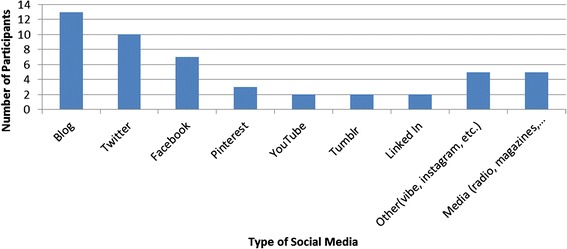
- Seventeen physicians participated: 65% male, 35% female, 82% Caucasian, 76% pediatricians, and 76% bloggers; most used multiple platforms, including Twitter (10), Facebook (7), Pinterest (3), YouTube (2), Tumblr (2), and freestanding blogs (13).
- Most participants felt benefits outweighed barriers; perceived benefits included career/research advancement, self-improvement, increasing reach, and open expression, while barriers included time/work requirements, skill requirements, lack of institutional support, fear of saying the wrong thing, and lack of models/guidelines.
- Four major themes emerged: rugged individualism (only 6 of 17 reported any peer review, and none mentioned formal peer review), uncertainty (about preparedness, audience, impact, and repercussions), social media as media (often used as a one-way “megaphone” rather than interactive forum), and time constraints (some found it easy to fit in; others saw it as an impediment to patient care).
- Participants also described patient benefits such as accurate, trusted, understandable health information and engagement outside the office, and patient barriers including language, literacy/education, lack of internet access, and privacy concerns.
Methods
- Exploratory qualitative study using in-depth semi-structured telephone interviews with physicians who had at least one year cumulative experience using social media to distribute health information; interviews were conducted January 2014–November 2015.
- Recruitment used snowball sampling beginning with pediatricians, asking participants to recommend physicians from varied specialties and practices; 17 physicians participated, and interviews generally lasted 20–40 minutes and were transcribed verbatim by hand-typed notes.
- Analysis included a preliminary evaluation after 10 interviews, then formal coding after 17 interviews by three investigators who read transcripts, identified codes and themes, discussed to consensus, and used the constant comparative method.
Limitations
- Stated: small purposeful sample, predominance of pediatricians, recruitment of nominated successful/influential early adopters, nonrandom sample not generalizable, two-year study period amid changing social media systems, no longitudinal assessment, and qualitative design not intended for causal inference.
- Evident: the sample was mostly male, Caucasian, and pediatrician, and participants were self-selected early adopters, limiting transferability; data rely on self-report and hand-typed interview notes, and no patient-level outcomes or behavior-change data were collected.
Model-written summary. Check it against the paper before relying on it.
Integrity signals
Registry
Cites
Statistics
Figures
Verification
Claims the paper makes
90 Own result · 15 Not checked yet · 10 Own method · 9 Own interpretation · 2 No basis given
A result the paper reports from its own data — it cites no other source for it, so there is none to check. The quote shows it is in the paper.
In the paper
“For most, the appeal of social media was described as its ability to serve as an independent platform where they could express their own opinions freely, without administrative interference or oversight.”
§ Social media use by physicians: a qualitative study of the new frontier of medicine > Results > Themes
plainn = 17- Asserted: passes — The authors put it forward as true.
- Checkable: passes — It can be checked against evidence.
- Load-bearing: passes — The paper’s conclusions depend on it.
- Based: passes — The paper gives a reason why it holds.
A result the paper reports from its own data — it cites no other source for it, so there is none to check. The quote shows it is in the paper.
In the paper
“In addition to the benefits and barriers, four major themes were identified: (a) Rugged individualism, (b) Uncertainty, (c) Social media as media and (d) Time constraints.”
§ Social media use by physicians: a qualitative study of the new frontier of medicine > Results > Themes
plain- Asserted: passes — The authors put it forward as true.
- Checkable: passes — It can be checked against evidence.
- Load-bearing: passes — The paper’s conclusions depend on it.
- Based: passes — The paper gives a reason why it holds.
A result the paper reports from its own data — it cites no other source for it, so there is none to check. The quote shows it is in the paper.
In the paper
“A common sentiment that arose during interviews was that physicians participating in social media perceived themselves as pioneers in the field who would like to make their mark on a new frontier of medicine.”
§ Social media use by physicians: a qualitative study of the new frontier of medicine > Results > Themes
plainn = 17- Asserted: passes — The authors put it forward as true.
- Checkable: passes — It can be checked against evidence.
- Load-bearing: unclear — It is unclear whether the paper’s conclusions depend on it.
- Based: passes — The paper gives a reason why it holds.
A result the paper reports from its own data — it cites no other source for it, so there is none to check. The quote shows it is in the paper.
In the paper
“Finally, most participants described using social media as fun and enjoyable.”
§ Social media use by physicians: a qualitative study of the new frontier of medicine > Results > Themes
plain- Asserted: passes — The authors put it forward as true.
- Checkable: passes — It can be checked against evidence.
- Load-bearing: unclear — It is unclear whether the paper’s conclusions depend on it.
- Based: passes — The paper gives a reason why it holds.
A result the paper reports from its own data — it cites no other source for it, so there is none to check. The quote shows it is in the paper.
In the paper
“Only six of the seventeen physicians interviewed reported any peer review of their publications, where the oversight came from a co-blogger or their own practice.”
§ Social media use by physicians: a qualitative study of the new frontier of medicine > Results > Themes
plainn = 17- Asserted: passes — The authors put it forward as true.
- Checkable: passes — It can be checked against evidence.
- Load-bearing: passes — The paper’s conclusions depend on it.
- Based: passes — The paper gives a reason why it holds.
A result the paper reports from its own data — it cites no other source for it, so there is none to check. The quote shows it is in the paper.
In the paper
“Most physicians voiced the opinion that the benefits of their participation in social media far outweighed any barriers they faced.”
§ Social media use by physicians: a qualitative study of the new frontier of medicine > Results > Benefits and barriers
plain- Asserted: passes — The authors put it forward as true.
- Checkable: passes — It can be checked against evidence.
- Load-bearing: unclear — It is unclear whether the paper’s conclusions depend on it.
- Based: passes — The paper gives a reason why it holds.
A result the paper reports from its own data — it cites no other source for it, so there is none to check. The quote shows it is in the paper.
In the paper
“Finally, social media know-how was described by participants as a mutual barrier to uptake for both physicians and patients.”
§ Social media use by physicians: a qualitative study of the new frontier of medicine > Results > Benefits and barriers
plainstates a cause- Asserted: passes — The authors put it forward as true.
- Checkable: passes — It can be checked against evidence.
- Load-bearing: unclear — It is unclear whether the paper’s conclusions depend on it.
- Based: passes — The paper gives a reason why it holds.
A result the paper reports from its own data — it cites no other source for it, so there is none to check. The quote shows it is in the paper.
In the paper
“Most participants stated that their participation in social media hinged on the premise that they “have all editorial control” on what is published.”
§ Social media use by physicians: a qualitative study of the new frontier of medicine > Results > Themes
plainn = 17- Asserted: passes — The authors put it forward as true.
- Checkable: passes — It can be checked against evidence.
- Load-bearing: passes — The paper’s conclusions depend on it.
- Based: passes — The paper gives a reason why it holds.
A result the paper reports from its own data — it cites no other source for it, so there is none to check. The quote shows it is in the paper.
In the paper
“Even though the study was preferentially targeted towards physicians using social media as a tool to reach patients/communities, participants more often touted its utility for personal branding, marketing and networking than for interacting with patients.”
§ Social media use by physicians: a qualitative study of the new frontier of medicine > Results > Themes
plain- Asserted: passes — The authors put it forward as true.
- Checkable: passes — It can be checked against evidence.
- Load-bearing: passes — The paper’s conclusions depend on it.
- Based: passes — The paper gives a reason why it holds.
A result the paper reports from its own data — it cites no other source for it, so there is none to check. The quote shows it is in the paper.
In the paper
“Furthermore, several participants highlighted that this drive towards personal promotion resulted in having been granted new research or career opportunities as a result of their engagement with social media, even if this was not their original motivation for joining these platforms.”
§ Social media use by physicians: a qualitative study of the new frontier of medicine > Results > Themes
plainstates a cause- Asserted: passes — The authors put it forward as true.
- Checkable: passes — It can be checked against evidence.
- Load-bearing: unclear — It is unclear whether the paper’s conclusions depend on it.
- Based: passes — The paper gives a reason why it holds.
- Probably not a substantial claim. 42
- It may state two separate claims as one. 29
A result the paper reports from its own data — it cites no other source for it, so there is none to check. The quote shows it is in the paper.
In the paper
“In terms of specialty, most of the participants were pediatricians (76 %) (Table 1).”
§ Social media use by physicians: a qualitative study of the new frontier of medicine > Results > Participants
plainn = 17- Asserted: passes — The authors put it forward as true.
- Checkable: passes — It can be checked against evidence.
- Load-bearing: fails — The paper’s conclusions may not depend on it.
- Based: passes — The paper gives a reason why it holds.
Probably not a substantial claim. The paper’s conclusions may not depend on it.
A result the paper reports from its own data — it cites no other source for it, so there is none to check. The quote shows it is in the paper.
In the paper
“Finally, participants expressed disparate views regarding the time involved in participating in social media; some felt that time spent on social media was unproblematic to fit into their day while others felt that it was an impediment to patient care.”
§ Social media use by physicians: a qualitative study of the new frontier of medicine > Abstract > Results
plain- Asserted: passes — The authors put it forward as true.
- Checkable: passes — It can be checked against evidence.
- Load-bearing: unclear — It is unclear whether the paper’s conclusions depend on it.
- Based: passes — The paper gives a reason why it holds.
It may state two separate claims as one.
A result the paper reports from its own data — it cites no other source for it, so there is none to check. The quote shows it is in the paper.
In the paper
“Participants also perceived several barriers to patient engagement in social media, including language barriers, poor literacy/education, lack of internet access and worries about the lack of online privacy.”
§ Social media use by physicians: a qualitative study of the new frontier of medicine > Results > Benefits and barriers
plain- Asserted: passes — The authors put it forward as true.
- Checkable: passes — It can be checked against evidence.
- Load-bearing: unclear — It is unclear whether the paper’s conclusions depend on it.
- Based: passes — The paper gives a reason why it holds.
It may state two separate claims as one.
A result the paper reports from its own data — it cites no other source for it, so there is none to check. The quote shows it is in the paper.
In the paper
“Around one third of participants were compensated for at least some of their work on social media (Table 1).”
§ Social media use by physicians: a qualitative study of the new frontier of medicine > Results > Participants
plainn = 17- Asserted: passes — The authors put it forward as true.
- Checkable: passes — It can be checked against evidence.
- Load-bearing: fails — The paper’s conclusions may not depend on it.
- Based: passes — The paper gives a reason why it holds.
Probably not a substantial claim. The paper’s conclusions may not depend on it.
A result the paper reports from its own data — it cites no other source for it, so there is none to check. The quote shows it is in the paper.
In the paper
“Five of the participants also engaged in traditional media such as radio, newspaper columns and magazines (Fig. 1).”
§ Social media use by physicians: a qualitative study of the new frontier of medicine > Results > Participants
plainn = 5- Asserted: passes — The authors put it forward as true.
- Checkable: passes — It can be checked against evidence.
- Load-bearing: fails — The paper’s conclusions may not depend on it.
- Based: passes — The paper gives a reason why it holds.
Probably not a substantial claim. The paper’s conclusions may not depend on it.
A result the paper reports from its own data — it cites no other source for it, so there is none to check. The quote shows it is in the paper.
In the paper
“Seventeen physicians participated in this study, including 35 % females, 76 % pediatricians and 76 % bloggers.”
- Also stated in: § Participants · plain
“Seventeen physicians participated in this study, only one blogger responded and declined participation.”
§ Social media use by physicians: a qualitative study of the new frontier of medicine > Abstract > Results
plainn = 17- Asserted: passes — The authors put it forward as true.
- Checkable: passes — It can be checked against evidence.
- Load-bearing: fails — The paper’s conclusions may not depend on it.
- Based: passes — The paper gives a reason why it holds.
Probably not a substantial claim. The paper’s conclusions may not depend on it.
- Also stated in: § Participants · plain
A result the paper reports from its own data — it cites no other source for it, so there is none to check. The quote shows it is in the paper.
In the paper
“While participants were conscious of their role as physicians online and the responsibility of the information that they promulgated, the majority still described their social media page as a personal platform.”
§ Social media use by physicians: a qualitative study of the new frontier of medicine > Results > Themes
plain- Asserted: passes — The authors put it forward as true.
- Checkable: passes — It can be checked against evidence.
- Load-bearing: passes — The paper’s conclusions depend on it.
- Based: passes — The paper gives a reason why it holds.
It may state two separate claims as one.
A result the paper reports from its own data — it cites no other source for it, so there is none to check. The quote shows it is in the paper.
In the paper
“Only one of the participants had practiced medicine for less than five years, with the majority (41 %) having been in practice for eleven to twenty years (Table 1).”
§ Social media use by physicians: a qualitative study of the new frontier of medicine > Results > Participants
plainn = 17- Asserted: passes — The authors put it forward as true.
- Checkable: passes — It can be checked against evidence.
- Load-bearing: fails — The paper’s conclusions may not depend on it.
- Based: passes — The paper gives a reason why it holds.
Probably not a substantial claim. The paper’s conclusions may not depend on it.
A result the paper reports from its own data — it cites no other source for it, so there is none to check. The quote shows it is in the paper.
In the paper
“The perceived benefits of their social media use included forwarding their career or research endeavors, self-improvement through reading others’ tweets and keeping up with the literature, increasing their reach, i.e., their audience, and providing a space for them to openly express their opinions.”
§ Social media use by physicians: a qualitative study of the new frontier of medicine > Results > Benefits and barriers
plain- Asserted: passes — The authors put it forward as true.
- Checkable: passes — It can be checked against evidence.
- Load-bearing: passes — The paper’s conclusions depend on it.
- Based: passes — The paper gives a reason why it holds.
It may state two separate claims as one.
A result the paper reports from its own data — it cites no other source for it, so there is none to check. The quote shows it is in the paper.
In the paper
“Almost all of the participants engaged with multiple social media platforms, including Twitter (10), Facebook (7), Pinterest (3), YouTube (2) and Tumblr (2) as well as freestanding Blogs (13) (Fig. 1).”
§ Social media use by physicians: a qualitative study of the new frontier of medicine > Results > Participants
plainn = 17- Asserted: passes — The authors put it forward as true.
- Checkable: passes — It can be checked against evidence.
- Load-bearing: unclear — It is unclear whether the paper’s conclusions depend on it.
- Based: passes — The paper gives a reason why it holds.
It may state two separate claims as one.
A result the paper reports from its own data — it cites no other source for it, so there is none to check. The quote shows it is in the paper.
In the paper
“These included increasing communication options and the speed of communication as well as breaking down traditional professional barriers.”
§ Social media use by physicians: a qualitative study of the new frontier of medicine > Results > Benefits and barriers
plainstates a cause- Asserted: passes — The authors put it forward as true.
- Checkable: passes — It can be checked against evidence.
- Load-bearing: passes — The paper’s conclusions depend on it.
- Based: passes — The paper gives a reason why it holds.
It may state two separate claims as one.
A result the paper reports from its own data — it cites no other source for it, so there is none to check. The quote shows it is in the paper.
In the paper
“The majority of participants had been involved in traditional media or communications prior to engaging with social media and enjoyed interacting in this new sphere personally as well as professionally.”
§ Social media use by physicians: a qualitative study of the new frontier of medicine > Results > Themes
plain- Asserted: passes — The authors put it forward as true.
- Checkable: passes — It can be checked against evidence.
- Load-bearing: unclear — It is unclear whether the paper’s conclusions depend on it.
- Based: passes — The paper gives a reason why it holds.
It may state two separate claims as one.
A result the paper reports from its own data — it cites no other source for it, so there is none to check. The quote shows it is in the paper.
In the paper
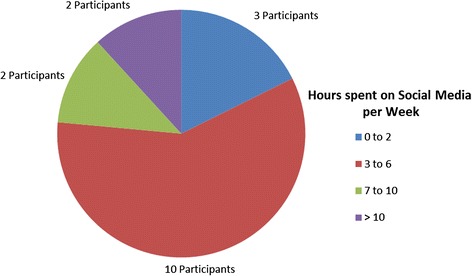
“Although the majority of participants spent three to six hours per week working on social media platforms, a few spent less than two or greater than ten hours per week on social media (Fig. 2).”
§ Social media use by physicians: a qualitative study of the new frontier of medicine > Results > Participants
plainn = 17- Asserted: passes — The authors put it forward as true.
- Checkable: passes — It can be checked against evidence.
- Load-bearing: unclear — It is unclear whether the paper’s conclusions depend on it.
- Based: passes — The paper gives a reason why it holds.
It may state two separate claims as one.
A result the paper reports from its own data — it cites no other source for it, so there is none to check. The quote shows it is in the paper.
In the paper
“They perceived that patient benefits may include having increased access to an accurate, trusted and understandable source of health information, that social media is accessible in general and that it provides a way for patients to engage with providers outside the office.”
§ Social media use by physicians: a qualitative study of the new frontier of medicine > Results > Benefits and barriers
hedged- Asserted: passes — The authors put it forward as true.
- Checkable: passes — It can be checked against evidence.
- Load-bearing: passes — The paper’s conclusions depend on it.
- Based: passes — The paper gives a reason why it holds.
Probably not a substantial claim. It may state two separate claims as one.
A result the paper reports from its own data — it cites no other source for it, so there is none to check. The quote shows it is in the paper.
In the paper
“Of the seventeen participants, the majority were male (65 %) and Caucasian (82 %) (Table 1).”
§ Social media use by physicians: a qualitative study of the new frontier of medicine > Results > Participants
plainn = 17- Asserted: passes — The authors put it forward as true.
- Checkable: passes — It can be checked against evidence.
- Load-bearing: fails — The paper’s conclusions may not depend on it.
- Based: passes — The paper gives a reason why it holds.
Probably not a substantial claim. The paper’s conclusions may not depend on it. It may state two separate claims as one.
A result the paper reports from its own data — it cites no other source for it, so there is none to check. The quote shows it is in the paper.
In the paper
“Examples of these included the time/work requirements, skill requirements, lack of institutional support, fear of saying the wrong thing online and lack of models/guidelines in how to conduct themselves online in their role as physicians.”
§ Social media use by physicians: a qualitative study of the new frontier of medicine > Results > Benefits and barriers
plain- Asserted: passes — The authors put it forward as true.
- Checkable: passes — It can be checked against evidence.
- Load-bearing: passes — The paper’s conclusions depend on it.
- Based: passes — The paper gives a reason why it holds.
It may state two separate claims as one.
A result the paper reports from its own data — it cites no other source for it, so there is none to check. The quote shows it is in the paper.
In the paper
“others believed that it decreased efficiency by distracting providers from direct patient care.”
§ Social media use by physicians: a qualitative study of the new frontier of medicine > Results > Themes
plainstates a cause- Asserted: fails — The authors may not put it forward as true.
- Checkable: passes — It can be checked against evidence.
- Load-bearing: fails — The paper’s conclusions may not depend on it.
- Based: passes — The paper gives a reason why it holds.
Probably not a substantial claim. The authors may not put it forward as true. The paper’s conclusions may not depend on it.
A result the paper reports from its own data — it cites no other source for it, so there is none to check. The quote shows it is in the paper.
In the paper
“Several physicians discussed how this amplifying effect was exactly the reason why more physicians need to add their voice to social media, especially in terms of countering vaccine misinformation.”
§ Social media use by physicians: a qualitative study of the new frontier of medicine > Results > Themes
plainstates a cause- Asserted: passes — The authors put it forward as true.
- Checkable: passes — It can be checked against evidence.
- Load-bearing: fails — The paper’s conclusions may not depend on it.
- Based: passes — The paper gives a reason why it holds.
Probably not a substantial claim. The paper’s conclusions may not depend on it.
A result the paper reports from its own data — it cites no other source for it, so there is none to check. The quote shows it is in the paper.
In the paper
“Participants also debated whether using social media for health promotion improved or decreased efficiency in the office.”
§ Social media use by physicians: a qualitative study of the new frontier of medicine > Results > Themes
plain- Asserted: passes — The authors put it forward as true.
- Checkable: passes — It can be checked against evidence.
- Load-bearing: fails — The paper’s conclusions may not depend on it.
- Based: passes — The paper gives a reason why it holds.
Probably not a substantial claim. The paper’s conclusions may not depend on it.
A result the paper reports from its own data — it cites no other source for it, so there is none to check. The quote shows it is in the paper.
In the paper
“While some participants were insistent that more physicians should be involved, most were equivocal, stating that physicians should only participate if they feel they would enjoy it and are equipped to do so.”
§ Social media use by physicians: a qualitative study of the new frontier of medicine > Results > Themes
plain- Asserted: passes — The authors put it forward as true.
- Checkable: passes — It can be checked against evidence.
- Load-bearing: fails — The paper’s conclusions may not depend on it.
- Based: passes — The paper gives a reason why it holds.
Probably not a substantial claim. The paper’s conclusions may not depend on it.
A result the paper reports from its own data — it cites no other source for it, so there is none to check. The quote shows it is in the paper.
In the paper
“Participants voiced that they generally felt that their audiences were most likely middle-upper class Caucasian readers.”
§ Social media use by physicians: a qualitative study of the new frontier of medicine > Discussion
hedged- Asserted: passes — The authors put it forward as true.
- Checkable: passes — It can be checked against evidence.
- Load-bearing: passes — The paper’s conclusions depend on it.
- Based: passes — The paper gives a reason why it holds.
Probably not a substantial claim.
A result the paper reports from its own data — it cites no other source for it, so there is none to check. The quote shows it is in the paper.
In the paper
“Many of these physicians concluded that the time and effort required establishing a partnership was too great of a barrier and that they would rather continue alone.”
§ Social media use by physicians: a qualitative study of the new frontier of medicine > Results > Themes
plainstates a cause- Asserted: passes — The authors put it forward as true.
- Checkable: passes — It can be checked against evidence.
- Load-bearing: unclear — It is unclear whether the paper’s conclusions depend on it.
- Based: passes — The paper gives a reason why it holds.
It may state two separate claims as one.
A result the paper reports from its own data — it cites no other source for it, so there is none to check. The quote shows it is in the paper.
In the paper
“Several participants felt that they were “digital immigrants,””
§ Social media use by physicians: a qualitative study of the new frontier of medicine > Results > Themes
plain- Asserted: passes — The authors put it forward as true.
- Checkable: passes — It can be checked against evidence.
- Load-bearing: fails — The paper’s conclusions may not depend on it.
- Based: passes — The paper gives a reason why it holds.
Probably not a substantial claim. The paper’s conclusions may not depend on it.
A result the paper reports from its own data — it cites no other source for it, so there is none to check. The quote shows it is in the paper.
In the paper
“However, participant responses suggested that they felt unaware of who was listening or what their audience was saying.”
§ Social media use by physicians: a qualitative study of the new frontier of medicine > Discussion
hedged- Asserted: passes — The authors put it forward as true.
- Checkable: passes — It can be checked against evidence.
- Load-bearing: passes — The paper’s conclusions depend on it.
- Based: passes — The paper gives a reason why it holds.
It may state two separate claims as one.
A result the paper reports from its own data — it cites no other source for it, so there is none to check. The quote shows it is in the paper.
In the paper
“While some participants were insistent that more physicians should be involved, most were equivocal, stating that physicians should only participate if they feel they would enjoy it and are equipped to do so.”
§ Social media use by physicians: a qualitative study of the new frontier of medicine > Results > Themes
plain- Asserted: passes — The authors put it forward as true.
- Checkable: passes — It can be checked against evidence.
- Load-bearing: fails — The paper’s conclusions may not depend on it.
- Based: passes — The paper gives a reason why it holds.
Probably not a substantial claim. The paper’s conclusions may not depend on it.
A result the paper reports from its own data — it cites no other source for it, so there is none to check. The quote shows it is in the paper.
In the paper
“Conversely, other participants felt that their time spent on social media could easily fit into downtime at meetings or 15 min before bed”
§ Social media use by physicians: a qualitative study of the new frontier of medicine > Results > Themes
hedged- Asserted: passes — The authors put it forward as true.
- Checkable: passes — It can be checked against evidence.
- Load-bearing: fails — The paper’s conclusions may not depend on it.
- Based: passes — The paper gives a reason why it holds.
Probably not a substantial claim. The paper’s conclusions may not depend on it.
A result the paper reports from its own data — it cites no other source for it, so there is none to check. The quote shows it is in the paper.
In the paper
“Finally, our third theme illustrated that while our participants were recognized as forerunners in the field, many of them still underutilized the full power of social media tools.”
§ Social media use by physicians: a qualitative study of the new frontier of medicine > Discussion
plain- Asserted: passes — The authors put it forward as true.
- Checkable: passes — It can be checked against evidence.
- Load-bearing: passes — The paper’s conclusions depend on it.
- Based: passes — The paper gives a reason why it holds.
It may state two separate claims as one.
- Rests on an assumption: Social media allows participants to listen as well as communicate back, unlike traditional media which is one-directional.
A result the paper reports from its own data — it cites no other source for it, so there is none to check. The quote shows it is in the paper.
In the paper
“A few physicians noted anecdotally that patients would mention topics that they had posted about online; however, they had no data on behavior change”
§ Social media use by physicians: a qualitative study of the new frontier of medicine > Results > Themes
plain- Asserted: passes — The authors put it forward as true.
- Checkable: passes — It can be checked against evidence.
- Load-bearing: fails — The paper’s conclusions may not depend on it.
- Based: passes — The paper gives a reason why it holds.
Probably not a substantial claim. The paper’s conclusions may not depend on it. It may state two separate claims as one.
A result the paper reports from its own data — it cites no other source for it, so there is none to check. The quote shows it is in the paper.
In the paper
“Several participants felt that this was one of the most pressing reasons for physicians to expand into the realm of social media”
§ Social media use by physicians: a qualitative study of the new frontier of medicine > Results > Themes
plainstates a cause- Asserted: passes — The authors put it forward as true.
- Checkable: passes — It can be checked against evidence.
- Load-bearing: fails — The paper’s conclusions may not depend on it.
- Based: passes — The paper gives a reason why it holds.
Probably not a substantial claim. The paper’s conclusions may not depend on it.
A result the paper reports from its own data — it cites no other source for it, so there is none to check. The quote shows it is in the paper.
In the paper
“Our participants described numerous benefits and downsides of using social media, viewed themselves as pioneers in the field facing much uncertainty, and debated whether time spent on social media was feasible.”
§ Social media use by physicians: a qualitative study of the new frontier of medicine > Conclusions
plain- Asserted: passes — The authors put it forward as true.
- Checkable: passes — It can be checked against evidence.
- Load-bearing: fails — The paper’s conclusions may not depend on it.
- Based: passes — The paper gives a reason why it holds.
Probably not a substantial claim. The paper’s conclusions may not depend on it.
A result the paper reports from its own data — it cites no other source for it, so there is none to check. The quote shows it is in the paper.
In the paper
“Finally, participants expressed disparate views regarding the concept of time; some felt that time spent on social media was insignificant and easy to fit into their day while others felt that it was an impediment.”
§ Social media use by physicians: a qualitative study of the new frontier of medicine > Discussion
plain- Asserted: passes — The authors put it forward as true.
- Checkable: passes — It can be checked against evidence.
- Load-bearing: unclear — It is unclear whether the paper’s conclusions depend on it.
- Based: passes — The paper gives a reason why it holds.
It may state two separate claims as one.
A result the paper reports from its own data — it cites no other source for it, so there is none to check. The quote shows it is in the paper.
In the paper
“Time was also discussed in terms of the “21st century conception of time,” where clinical conversations, questions and updates happen immediately, not only in a 15 min office visit.”
§ Social media use by physicians: a qualitative study of the new frontier of medicine > Results > Themes
plain- Asserted: passes — The authors put it forward as true.
- Checkable: passes — It can be checked against evidence.
- Load-bearing: passes — The paper’s conclusions depend on it.
- Based: passes — The paper gives a reason why it holds.
Probably not a substantial claim.
A result the paper reports from its own data — it cites no other source for it, so there is none to check. The quote shows it is in the paper.
In the paper
“Finally, participants expressed uncertainty around the issue of whether or not it is the duty/ obligation of all physicians to provide health information on this new accessible medium.”
§ Social media use by physicians: a qualitative study of the new frontier of medicine > Results > Themes
plain- Asserted: passes — The authors put it forward as true.
- Checkable: passes — It can be checked against evidence.
- Load-bearing: fails — The paper’s conclusions may not depend on it.
- Based: passes — The paper gives a reason why it holds.
Probably not a substantial claim. The paper’s conclusions may not depend on it.
A result the paper reports from its own data — it cites no other source for it, so there is none to check. The quote shows it is in the paper.
In the paper
“Two physicians who reported primarily working in low-resource settings, such as with Medicaid patients, were both less enamored with its prospects of reaching their patient populations, or the idea that every physician should be involved in social media.”
§ Social media use by physicians: a qualitative study of the new frontier of medicine > Results > Themes
plainstates an association- Asserted: passes — The authors put it forward as true.
- Checkable: passes — It can be checked against evidence.
- Load-bearing: unclear — It is unclear whether the paper’s conclusions depend on it.
- Based: passes — The paper gives a reason why it holds.
It may state two separate claims as one.
A result the paper reports from its own data — it cites no other source for it, so there is none to check. The quote shows it is in the paper.
In the paper
“Time was a thematic element which seemed to diffuse itself through every part of every interview.”
§ Social media use by physicians: a qualitative study of the new frontier of medicine > Results > Themes
hedged- Asserted: passes — The authors put it forward as true.
- Checkable: passes — It can be checked against evidence.
- Load-bearing: fails — The paper’s conclusions may not depend on it.
- Based: passes — The paper gives a reason why it holds.
Probably not a substantial claim. The paper’s conclusions may not depend on it.
A result the paper reports from its own data — it cites no other source for it, so there is none to check. The quote shows it is in the paper.
In the paper
“Participants viewed it as a powerful tool for reaching patients with important medical information, especially messages concerning public health.”
§ Social media use by physicians: a qualitative study of the new frontier of medicine > Results > Themes
plain- Asserted: passes — The authors put it forward as true.
- Checkable: passes — It can be checked against evidence.
- Load-bearing: passes — The paper’s conclusions depend on it.
- Based: passes — The paper gives a reason why it holds.
Probably not a substantial claim.
A result the paper reports from its own data — it cites no other source for it, so there is none to check. The quote shows it is in the paper.
In the paper
“Participants expressed how “institutional backing is lukewarm at best” and how, “apparently, according to our organization, we have other priorities.””
§ Social media use by physicians: a qualitative study of the new frontier of medicine > Results > Themes
plain- Asserted: passes — The authors put it forward as true.
- Checkable: passes — It can be checked against evidence.
- Load-bearing: unclear — It is unclear whether the paper’s conclusions depend on it.
- Based: passes — The paper gives a reason why it holds.
It may state two separate claims as one.
A result the paper reports from its own data — it cites no other source for it, so there is none to check. The quote shows it is in the paper.
In the paper
“Although most physicians were able to track how many hits they had on their site and where the hits were from geographically, where a “hit” is a click on a page, they could only guess at the demographics of their followers and responders.”
§ Social media use by physicians: a qualitative study of the new frontier of medicine > Results > Themes
plain- Asserted: passes — The authors put it forward as true.
- Checkable: passes — It can be checked against evidence.
- Load-bearing: unclear — It is unclear whether the paper’s conclusions depend on it.
- Based: passes — The paper gives a reason why it holds.
It may state two separate claims as one.
A result the paper reports from its own data — it cites no other source for it, so there is none to check. The quote shows it is in the paper.
In the paper
“While some physicians postulated that their posts on social media may increase clinic efficiency by decreasing unnecessary patient calls and visits”
§ Social media use by physicians: a qualitative study of the new frontier of medicine > Results > Themes
hedgedstates a possible cause- Asserted: fails — The authors may not put it forward as true.
- Checkable: passes — It can be checked against evidence.
- Load-bearing: fails — The paper’s conclusions may not depend on it.
- Based: passes — The paper gives a reason why it holds.
Probably not a substantial claim. The authors may not put it forward as true. The paper’s conclusions may not depend on it.
A result the paper reports from its own data — it cites no other source for it, so there is none to check. The quote shows it is in the paper.
In the paper
“In this study of social media use by physicians, we identified multiple perceived benefits and barriers for both physicians who create content and readers who consume this content, as well as several themes.”
§ Social media use by physicians: a qualitative study of the new frontier of medicine > Discussion
plain- Asserted: passes — The authors put it forward as true.
- Checkable: passes — It can be checked against evidence.
- Load-bearing: passes — The paper’s conclusions depend on it.
- Based: passes — The paper gives a reason why it holds.
It may state two separate claims as one.
A result the paper reports from its own data — it cites no other source for it, so there is none to check. The quote shows it is in the paper.
In the paper
“Participants adamantly defended their views on whether or not time spent working on social media was a serious impediment versus an easy to fit into their day.”
§ Social media use by physicians: a qualitative study of the new frontier of medicine > Results > Themes
plain- Asserted: passes — The authors put it forward as true.
- Checkable: passes — It can be checked against evidence.
- Load-bearing: fails — The paper’s conclusions may not depend on it.
- Based: passes — The paper gives a reason why it holds.
Probably not a substantial claim. The paper’s conclusions may not depend on it.
In the paper
“In a 2010 study of 921 health-related blogs, 43 % of bloggers were physicians [20].”
§ Social media use by physicians: a qualitative study of the new frontier of medicine > Background
What the sources say
- Not checked yetcites [20] Miller EA, Pole A. Diagnosis blog: checking up on health blogs in the blogosphere. Am J Public Health. 2010;100(8):1514–9. source
plain- Asserted: passes — The authors put it forward as true.
- Checkable: passes — It can be checked against evidence.
- Load-bearing: fails — The paper’s conclusions may not depend on it.
- Based: passes — The paper gives a reason why it holds.
Probably not a substantial claim. The paper’s conclusions may not depend on it.
In the paper
“Physician-bloggers have used social media to share health information, network with colleagues, disseminate research, market their practice and engage in health advocacy [14].”
§ Social media use by physicians: a qualitative study of the new frontier of medicine > Background
What the sources say
- Not checked yetcites [14] Chretien KC, Kind T. Social media and clinical care: ethical, professional, and social implications. Circulation. 2013;127(13):1413–21. source
plain- Asserted: passes — The authors put it forward as true.
- Checkable: passes — It can be checked against evidence.
- Load-bearing: unclear — It is unclear whether the paper’s conclusions depend on it.
- Based: passes — The paper gives a reason why it holds.
It may state two separate claims as one.
In the paper
“In one 2008 study which analyzed the content of 271 weblogs written by health professionals, researchers found that weblogs offered the opportunity to share narratives, but also risked revealing confidential patient information or reflecting poorly on the author or profession [21].”
§ Social media use by physicians: a qualitative study of the new frontier of medicine > Background
What the sources say
- Not checked yetcites [21] Lagu T, Kaufman EJ, Asch DA, Armstrong K. Content of weblogs written by health professionals. J Gen Intern Med. 2008;23(10):1642–6. source
plainstates an association- Asserted: passes — The authors put it forward as true.
- Checkable: passes — It can be checked against evidence.
- Load-bearing: fails — The paper’s conclusions may not depend on it.
- Based: passes — The paper gives a reason why it holds.
Probably not a substantial claim. The paper’s conclusions may not depend on it. It may state two separate claims as one.
None of the sources cited for this claim have been checked yet.
In the paper
“However, studies on social media have found that African American internet-users are more likely to use social networking sites than their non-Hispanic Caucasian counterparts and that seven of ten households earning less than ten thousand dollars a year are using the internet [13, 38].”
§ Social media use by physicians: a qualitative study of the new frontier of medicine > Discussion
What the sources say
- Not checked yetcites [13] Chou WY, Hunt YM, Beckjord EB, Moser RP, Hesse BW. Social media use in the United States: implications for health communication. J Med Internet Res. 2009;11(4):e48. source
- Not checked yetcites [38] Zickuhr K, Smith A. Digital differences. Washington, D.C: Pew Research Center; 2012.
plainstates an association- Asserted: passes — The authors put it forward as true.
- Checkable: passes — It can be checked against evidence.
- Load-bearing: passes — The paper’s conclusions depend on it.
- Based: passes — The paper gives a reason why it holds.
It may state two separate claims as one.
What the paper did — it cites no source for this, so there is none to check. The quote shows it is in the paper.
In the paper
“Questions were further revised on the basis of feedback from participants.”
§ Social media use by physicians: a qualitative study of the new frontier of medicine > Methods > Data collection
plainstates a cause- Asserted: passes — The authors put it forward as true.
- Checkable: passes — It can be checked against evidence.
- Load-bearing: fails — The paper’s conclusions may not depend on it.
- Based: passes — The paper gives a reason why it holds.
Probably not a substantial claim. The paper’s conclusions may not depend on it.
What the paper did — it cites no source for this, so there is none to check. The quote shows it is in the paper.
In the paper
“Limitations of this study include the small and purposeful study sample, and the predominance of pediatricians in our sample.”
§ Social media use by physicians: a qualitative study of the new frontier of medicine > Discussion
plain- Asserted: passes — The authors put it forward as true.
- Checkable: passes — It can be checked against evidence.
- Load-bearing: passes — The paper’s conclusions depend on it.
- Based: passes — The paper gives a reason why it holds.
It may state two separate claims as one.
What the paper did — it cites no source for this, so there is none to check. The quote shows it is in the paper.
In the paper
“Interviews were transcribed verbatim by the interviewer via hand-typed notes.”
§ Social media use by physicians: a qualitative study of the new frontier of medicine > Methods > Procedure
plain- Asserted: passes — The authors put it forward as true.
- Checkable: passes — It can be checked against evidence.
- Load-bearing: fails — The paper’s conclusions may not depend on it.
- Based: passes — The paper gives a reason why it holds.
Probably not a substantial claim. The paper’s conclusions may not depend on it.
In the paper
“Previous studies have found that physicians may be early adopters of other ideas and products, such as pharmaceuticals [34].”
§ Social media use by physicians: a qualitative study of the new frontier of medicine > Discussion
What the sources say
- Not checked yetcites [34] Dybdahl T, Andersen M, Sondergaard J, Kragstrup J, Kristiansen IS. Does the early adopter of drugs exist? A population-based study of general practitioners’ prescribing of new drugs. Eur J Clin Pharmacol. 2004;60(9):667–72. source
hedged- Asserted: passes — The authors put it forward as true.
- Checkable: passes — It can be checked against evidence.
- Load-bearing: fails — The paper’s conclusions may not depend on it.
- Based: passes — The paper gives a reason why it holds.
Probably not a substantial claim. The paper’s conclusions may not depend on it.
What the paper did — it cites no source for this, so there is none to check. The quote shows it is in the paper.
In the paper
“After 17 interviews were completed, investigators reviewed transcripts and noted repetition of benefits and risks and saturation of themes.”
§ Social media use by physicians: a qualitative study of the new frontier of medicine > Methods > Analysis
plain- Asserted: passes — The authors put it forward as true.
- Checkable: passes — It can be checked against evidence.
- Load-bearing: passes — The paper’s conclusions depend on it.
- Based: passes — The paper gives a reason why it holds.
Probably not a substantial claim. It may state two separate claims as one.
In the paper
“Thus, a formal coding was conducted at that time using an iterative process [32], transcripts were first read individually by three investigators to identify key codes and themes.”
§ Social media use by physicians: a qualitative study of the new frontier of medicine > Methods > Analysis
What the sources say
- Not checked yetcites [32] Glesne C. Becoming Qualitative Researchers. Hawthorne, NY: Longman Publishers: Reading, MA; 1999.
plain- Asserted: passes — The authors put it forward as true.
- Checkable: passes — It can be checked against evidence.
- Load-bearing: fails — The paper’s conclusions may not depend on it.
- Based: passes — The paper gives a reason why it holds.
Probably not a substantial claim. The paper’s conclusions may not depend on it.
What the paper did — it cites no source for this, so there is none to check. The quote shows it is in the paper.
In the paper
“Furthermore, since our study design was qualitative in nature, causal inference was not the goal.”
§ Social media use by physicians: a qualitative study of the new frontier of medicine > Discussion
plain- Asserted: passes — The authors put it forward as true.
- Checkable: passes — It can be checked against evidence.
- Load-bearing: passes — The paper’s conclusions depend on it.
- Based: passes — The paper gives a reason why it holds.
Probably not a substantial claim.
What the paper did — it cites no source for this, so there is none to check. The quote shows it is in the paper.
In the paper
“Interview questions to meet these objectives were developed by study staff and reviewed by several experts in qualitative research.”
§ Social media use by physicians: a qualitative study of the new frontier of medicine > Methods > Data collection
plain- Asserted: passes — The authors put it forward as true.
- Checkable: passes — It can be checked against evidence.
- Load-bearing: fails — The paper’s conclusions may not depend on it.
- Based: passes — The paper gives a reason why it holds.
Probably not a substantial claim. The paper’s conclusions may not depend on it. It may state two separate claims as one.
A conclusion the paper draws from its own results — it cites no other source for it, so there is none to check. The quote shows it is in the paper.
In the paper
“According to our participants and general trends, social media is only going to continue to grow its presence within medical care.”
§ Social media use by physicians: a qualitative study of the new frontier of medicine > Conclusions
plain- Asserted: passes — The authors put it forward as true.
- Checkable: passes — It can be checked against evidence.
- Load-bearing: passes — The paper’s conclusions depend on it.
- Based: passes — The paper gives a reason why it holds.
Probably not a substantial claim.
None of the sources cited for this claim have been checked yet.
In the paper
“While several medical associations have produced guidelines for social media use among physicians, few have taken into account the goals and needs of physicians who are engaged in social media.”
§ Social media use by physicians: a qualitative study of the new frontier of medicine > Discussion
What the sources say
- Not checked yetcites [25] AMA. In: Association AM, editor. AMA policy: professionalism in the use of social media. 2011.
- Not checked yetcites [35] AAP. In: Pediatrics AAo, editor. Social media resource kit for AAP chapters. 2010.
- Not checked yetcites [36] AAFP. In: Physicians AAoF, editor. Social media for family physicians: guidelines and resources for success. 2013.
plain- Asserted: passes — The authors put it forward as true.
- Checkable: passes — It can be checked against evidence.
- Load-bearing: passes — The paper’s conclusions depend on it.
- Based: passes — The paper gives a reason why it holds.
It may state two separate claims as one.
A conclusion the paper draws from its own results — it cites no other source for it, so there is none to check. The quote shows it is in the paper.
In the paper
“The idea of the loudspeaker may be an artifact of the fact that many of our participants had previous experience in traditional broadcast media, marketing or communications.”
§ Social media use by physicians: a qualitative study of the new frontier of medicine > Discussion
hedgedstates a possible cause- Asserted: passes — The authors put it forward as true.
- Checkable: passes — It can be checked against evidence.
- Load-bearing: fails — The paper’s conclusions may not depend on it.
- Based: passes — The paper gives a reason why it holds.
Probably not a substantial claim. The paper’s conclusions may not depend on it.
The paper states this without a source or data behind it here, so there is nothing to check it against. The quote shows it is in the paper.
In the paper
“This technique is particularly effective in studies of early adopters since there are usually few individuals involved: they are usually the best resource for determining who else is involved in the field.”
§ Social media use by physicians: a qualitative study of the new frontier of medicine > Methods > Recruitment
plainstates a cause- Asserted: passes — The authors put it forward as true.
- Checkable: passes — It can be checked against evidence.
- Load-bearing: fails — The paper’s conclusions may not depend on it.
- Based: passes — The paper gives a reason why it holds.
Probably not a substantial claim. The paper’s conclusions may not depend on it. It may state two separate claims as one.
What the paper did — it cites no source for this, so there is none to check. The quote shows it is in the paper.
In the paper
“First, a preliminary evaluation of transcripts was completed after ten interviews.”
§ Social media use by physicians: a qualitative study of the new frontier of medicine > Methods > Analysis
plain- Asserted: passes — The authors put it forward as true.
- Checkable: passes — It can be checked against evidence.
- Load-bearing: fails — The paper’s conclusions may not depend on it.
- Based: passes — The paper gives a reason why it holds.
Probably not a substantial claim. The paper’s conclusions may not depend on it.
A conclusion the paper draws from its own results — it cites no other source for it, so there is none to check. The quote shows it is in the paper.
In the paper
“As the first generation of physicians using social media, it may not be surprising that these participants value their independence, ability to make autonomous decisions and importance in the field.”
§ Social media use by physicians: a qualitative study of the new frontier of medicine > Discussion
hedgedstates a possible cause- Asserted: passes — The authors put it forward as true.
- Checkable: passes — It can be checked against evidence.
- Load-bearing: fails — The paper’s conclusions may not depend on it.
- Based: passes — The paper gives a reason why it holds.
Probably not a substantial claim. The paper’s conclusions may not depend on it.
In the paper
“Transcripts were then re-assessed and the investigators deliberated until consensus was reached on the common themes and concepts expressed by participants using the constant comparative method [28].”
§ Social media use by physicians: a qualitative study of the new frontier of medicine > Methods > Analysis
What the sources say
- Not checked yetcites [28] Glaser BG, Strauss AL, Strutzel E. The discovery of grounded theory; Strategies for qualitative research. Hawthorne: Aldine Transaction; 1967.
plain- Asserted: passes — The authors put it forward as true.
- Checkable: passes — It can be checked against evidence.
- Load-bearing: passes — The paper’s conclusions depend on it.
- Based: passes — The paper gives a reason why it holds.
Probably not a substantial claim.
The paper states this without a source or data behind it here, so there is nothing to check it against. The quote shows it is in the paper.
In the paper
“Interviews were selected as the primary method of data collection because this approach encourages open information exchange and targeted follow-up questions.”
§ Social media use by physicians: a qualitative study of the new frontier of medicine > Methods > Study design
plainstates a cause- Asserted: passes — The authors put it forward as true.
- Checkable: passes — It can be checked against evidence.
- Load-bearing: passes — The paper’s conclusions depend on it.
- Based: passes — The paper gives a reason why it holds.
Probably not a substantial claim.
What the paper did — it cites no source for this, so there is none to check. The quote shows it is in the paper.
In the paper
“We did not include longitudinal assessments in this study thus we did not assess whether participants’ usage or attitudes changed over the study period.”
§ Social media use by physicians: a qualitative study of the new frontier of medicine > Discussion
plain- Asserted: passes — The authors put it forward as true.
- Checkable: passes — It can be checked against evidence.
- Load-bearing: fails — The paper’s conclusions may not depend on it.
- Based: passes — The paper gives a reason why it holds.
Probably not a substantial claim. The paper’s conclusions may not depend on it. It may state two separate claims as one.
A conclusion the paper draws from its own results — it cites no other source for it, so there is none to check. The quote shows it is in the paper.
In the paper
“Our study is the first to evaluate physicians’ perceptions, goals and challenges in using social media.”
§ Social media use by physicians: a qualitative study of the new frontier of medicine > Conclusions
plain- Asserted: passes — The authors put it forward as true.
- Checkable: passes — It can be checked against evidence.
- Load-bearing: passes — The paper’s conclusions depend on it.
- Based: fails — The paper may give no reason why it holds.
Probably not a substantial claim. The paper may give no reason why it holds.
The paper relies on this without support.
Social media use for health promotion by physicians is a relatively new practice.
“As social media use for health promotion by physicians is still a relatively new practice, the participants were considered to be early adopters in this field.”
“Given that the phenomenon of social media use by healthcare providers is relatively new, open-ended questions were used to obtain insights from participants.”
The paper relies on this without support.
Social media allows for two-way communication online between creators and consumers of information.
“Social media is unique in that it allows for two-way communication online between creators and consumers of information.”
The paper relies on this without support.
Social media allows participants to listen as well as communicate back, unlike traditional media which is one-directional.
“Unlike traditional media in which messages are distributed in a one directional manner, social media allows participants to listen as well as communicate back.”
The paper relies on this without support.
The physician-bloggers nominated by their peers are successful, influential, and recognized early adopters.
“We specifically recruited physician-bloggers who were nominated by their peers because of their success, influence and recognition.”
Claims other papers make about this one
Each is checked against this paper’s own text: does it say what the citing paper says it does?
The cited source says what the claim attributes to it.
In the citing paper
“A total of 11 studies conducted in-depth or semistructured interviews [34,36,44,49,58,65,73,76,97,104,117], and 6 studies used focus groups [45,49,58,70,112,117].”
From Dangers and Benefits of Social Media on E-Professionalism of Health Care Professionals: Scoping Review (2021) · cites this paper as [76]
The cited source says what the claim attributes to it.
In the citing paper
“Participants described feeling unprepared when they started using SM.”
From Dangers and Benefits of Social Media on E-Professionalism of Health Care Professionals: Scoping Review (2021) · cites this paper as [76]
The cited source says what the claim attributes to it.
In the citing paper
“In a qualitative study among physicians by Campbell et al [76], participants expressed many levels of uncertainty about their preparedness, their impact, the potential for repercussions, and the future of physicians’ presence on SM.”
From Dangers and Benefits of Social Media on E-Professionalism of Health Care Professionals: Scoping Review (2021) · cites this paper as [76]
The cited source says what the claim attributes to it.
In the citing paper
“Lack of free time or time constraint was often recognized as a barrier [39,69,74,79,91,93,96], as well as lack of knowledge or technical skills for use of SM [33,39,76,79,93,118].”
From Dangers and Benefits of Social Media on E-Professionalism of Health Care Professionals: Scoping Review (2021) · cites this paper as [76]
The cited source says what the claim attributes to it.
In the citing paper
“Several participants felt that they were “digital immigrants” [76].”
From Dangers and Benefits of Social Media on E-Professionalism of Health Care Professionals: Scoping Review (2021) · cites this paper as [76]
The cited source says what the claim attributes to it.
In the citing paper
“A lack of SM policies was also recognized as a barrier, either as a lack of models/guidelines in how to conduct themselves online in their role as physicians, which is manifested as fear of saying the wrong thing online [76] or related mainly to being unclear about whether they are supported by their employer and professional bodies [93,97].”
From Dangers and Benefits of Social Media on E-Professionalism of Health Care Professionals: Scoping Review (2021) · cites this paper as [76]
The cited source says what the claim attributes to it.
In the citing paper
“Many participants described concerns such as lacking knowledge about how to use certain SM platforms versus others.”
From Dangers and Benefits of Social Media on E-Professionalism of Health Care Professionals: Scoping Review (2021) · cites this paper as [76]
The cited source says what the claim attributes to it.
In the citing paper
“A lack of free time or time constraint was often recognized as a barrier [39,69,74,79,91,93,96], as well as a lack of knowledge or technical skills for use of SM [33,39,76,79,93,118].”
From Dangers and Benefits of Social Media on E-Professionalism of Health Care Professionals: Scoping Review (2021) · cites this paper as [76]
Citations
Cites
Wagner, H. R., Glaser, B. G., & Strauss, A. L. (1968) · Social Forces · doi:10.2307/2575405 · Cited by 46,525
The Discovery of Grounded Theory: Strategies for Qualitative Research
Glaser, B. G., & Strauss, A. L. (2017) · Aldine (Routledge reprint) · doi:10.4324/9780203793206 · Cited by 25,789
Moorhead, S. A., Hazlett, D. E., Harrison, L., Carroll, J. K., Irwin, A., & Hoving, C. (2013) · Journal of Medical Internet Research · doi:10.2196/jmir.1933 · Cited by 2,517
Boulos, M. N. K., Maramba, I. D. C., & Wheeler, S. (2006) · BMC Medical Education · doi:10.1186/1472-6920-6-41 · Cited by 1,154
Social media use in the United States: implications for health communication
Chou, W.-Y. S., Hunt, Y. M., Beckjord, E. B., Moser, R. P., & Hesse, B. W. (2009) · Journal of Medical Internet Research · doi:10.2196/jmir.1249 · Cited by 1,082
Benedetto, C. A. D. (2015) · Wiley eBooks · doi:10.1002/9781118785317.weom130016 · Cited by 1,052
Hawn, C. (2009) · Health Affairs · doi:10.1377/hlthaff.28.2.361 · Cited by 821
Farnan, J. M., Snyder Sulmasy, L., Worster, B. K., Chaudhry, H. J., Rhyne, J. A., Arora, V. M., for the American College of Physicians Ethics, P. A. H. R. C., the American College of Physicians Council of Associates, & the Federation of State Medical Boards Special Committee on Ethics and Professionalism* (2013) · Annals of Internal Medicine · doi:10.7326/0003-4819-158-8-201304160-00100 · Cited by 420
Disruptiveness of innovations: measurement and an assessment of reliability and validity
Govindarajan, V., & Kopalle, P. K. (2006) · Strategic Management Journal · doi:10.1002/smj.511 · Cited by 410
Social Media and Clinical Care: Ethical, Professional, and Social Implications
Chretien, K. C., & Kind, T. (2013) · Circulation · doi:10.1161/circulationaha.112.128017 · Cited by 355
Social support in an Internet weight loss community
Hwang, K. O., Ottenbacher, A. J., Green, A. P., Cannon-Diehl, M. R., Richardson, O., Bernstam, E. V., & Thomas, E. J. (2010) · International Journal of Medical Informatics · doi:10.1016/j.ijmedinf.2009.10.003 · Cited by 338
A Biography of the Pew Research Center’s Internet & American Life Project
Rainie, L. (2012) · IGI Global eBooks · doi:10.4018/978-1-4666-0315-8.ch003 · Cited by 315
The Patient–Doctor Relationship and Online Social Networks: Results of a National Survey
Bosslet, G. T., Torke, A. M., Hickman, S. E., Terry, C. L., & Helft, P. R. (2011) · Journal of General Internal Medicine · doi:10.1007/s11606-011-1761-2 · Cited by 306
Content of Weblogs Written by Health Professionals
Lagu, T., Kaufman, E. J., Asch, D. A., & Armstrong, K. (2008) · Journal of General Internal Medicine · doi:10.1007/s11606-008-0726-6 · Cited by 255
Shore, R., Halsey, J., Shah, K., Crigger, B.-J., & Douglas, S. P. (2011) · The Journal of Clinical Ethics · doi:10.1086/jce201122208 · Cited by 149
Diagnosis Blog: Checking Up on Health Blogs in the Blogosphere
Miller, E. A., & Pole, A. (2010) · American Journal of Public Health · doi:10.2105/ajph.2009.175125 · Cited by 129
Talking about your health to strangers: Understanding the use of online social networks by patients
Colineau, N., & Paris, C. (2010) · New Review of Hypermedia and Multimedia · doi:10.1080/13614568.2010.496131 · Cited by 126
Adams, S. A. (2010) · International Journal of Medical Informatics · doi:10.1016/j.ijmedinf.2008.06.009 · Cited by 97
Experiences of Physicians Who Frequently Use E-Mail With Patients
Houston, T. K., Sands, D. Z., Nash, B. R., & Ford, D. E. (2003) · Health Communication · doi:10.1207/s15327027hc1504_08 · Cited by 83
Profile of e-Patients: Analysis of Their Cancer Information-Seeking From a National Survey
Kim, K., & Kwon, N. (2010) · Journal of Health Communication · doi:10.1080/10810730.2010.514031 · Cited by 80
Hogan, T. M., Olade, T. O., & Carpenter, C. R. (2014) · Academic Emergency Medicine · doi:10.1111/acem.12332 · Cited by 65
Pillow, M., Hopson, L., Bond, M., Cabrera, D., Patterson, L., Pearson, D., Sule, H., Ankel, F., Fernández-Frackelton, M., Hall, R., et al. (2014) · Western Journal of Emergency Medicine · doi:10.5811/westjem.2013.7.14945 · Cited by 61
Adolescent Access to Online Health Services: Perils and Promise
Moreno, M. A., Ralston, J. D., & Grossman, D. C. (2008) · Journal of Adolescent Health · doi:10.1016/j.jadohealth.2008.07.015 · Cited by 41
Self-citationRuíz-Veguilla, M., Barrigón, M. L., Hernández, L., Rubio, J. L., Gurpegui, M., Sarramea, F., Cervilla, J. A., Gutiérrez, B., James, A. C., & Ferrín, M. (2013) · Journal of Psychiatric Research · doi:10.1016/j.jpsychires.2013.03.003 · Cited by 38
Dybdahl, T., Andersen, M., S�ndergaard, J., Kragstrup, J., & Kristiansen, I. S. (2004) · European Journal of Clinical Pharmacology · doi:10.1007/s00228-004-0797-1 · Cited by 31
Variations in Structure and Content of Online Social Networks for Patients With Diabetes
Shrank, W. H. (2011) · Archives of Internal Medicine · doi:10.1001/archinternmed.2011.407 · Cited by 28 · cited 1×
“In some cases, specific social media platforms facilitate health-related dialogue, such as blogs devoted to specific health conditions such as diabetes, or patient portals dedicated to sharing stories such as PatientsLikeMe [7, 18, 19].”
Background
Research works printed but not linked: 7
- Social media. In: Oxford Dictionary. Oxford: Oxford University Press; 2014.
- Fox S. The Social Life of Health Information, 2011. Washington, D.C: Pew Research Center; 2011.
- Soyer AD. In: Committee APM: American Academy/Association of Orthopaedic Surgeons, editor. Social media in healthcare: a primer for orthopaedic surgeons. 2012.
- AMA. In: Association AM, editor. AMA policy: professionalism in the use of social media. 2011.
- AAP. In: Pediatrics AAo, editor. Social media resource kit for AAP chapters. 2010.
- AAFP. In: Physicians AAoF, editor. Social media for family physicians: guidelines and resources for success. 2013.
- Zickuhr K, Smith A. Digital differences. Washington, D.C: Pew Research Center; 2012.
Cited by
Sorted by citations
Social media usage among health care providers
Surani, Z., Hirani, R., Elias, A., Quisenberry, L., Varon, J., Surani, S., & Surani, S. (2017) · BMC Research Notes · doi:10.1186/s13104-017-2993-y · Cited by 214
Vukušić Rukavina, T., Viskić, J., Machala Poplašen, L., Relić, D., Marelić, M., Jokic, D., & Sedak, K. (2021) · Journal of Medical Internet Research · doi:10.2196/25770 · Cited by 199
“Lack of free time or time constraint was often recognized as a barrier [39,69,74,79,91,93,96], as well as lack of knowledge or technical skills for use of SM [33,39,76,79,93,118].”
InfluentialHealth information on social media.
Marar, S. D., Al-Madaney, M. M., & Almousawi, F. H. (2019) · Saudi Medical Journal · doi:10.15537/smj.2019.12.24682 · Cited by 134
Social Media for Networking, Professional Development, and Patient Engagement
Markham, M. J., Gentile, D., & Graham, D. L. (2017) · American Society of Clinical Oncology Educational Book · doi:10.1200/edbk_180077 · Cited by 117
A Short History of Free Open Access Medical Education. The Past, Present, and Future
Chan, T. M., Stehman, C. R., Gottlieb, M. A., & Thoma, B. (2020) · ATS Scholar · doi:10.34197/ats-scholar.2020-0014ps · Cited by 89
Metadata
- Authors
- Campbell, L., Evans, Y., Pumper, M., & Moreno, M. A.
- Affiliations
- University of Washington (US)
- Seattle Children's Research Institute (US)
- Corresponding author
- Moreno, Megan A.
- Venue
- BMC Medical Informatics and Decision Making
- Published
- 2016-07-15
- Volume
- 16
- Issue
- 1
- Pages
- 91-91
- ISSN
- 1472-6947 (ISSN-L)
- PMC
- PMC4946237
- OpenAlex
- W2471449888
- Semantic Scholar
- 03289809f6573119bac46e45e606d7af45c8dc17
- Cited by
- 135
- References
- 26
- Citations by year
- 2026: 4 · 2025: 11 · 2024: 15 · 2023: 17 · 2022: 15 · 2021: 16 · 2020: 24 · 2019: 15 · 2018: 12 · 2017: 6
- FWCI
- 14.52
- Type
- journal article
- Language
- en
- Open access
- gold
- doi.org
- Licence
- Locations
- BMC Medical Informatics and Decision Making (publishedVersion, cc-by)
- PubMed Central (publishedVersion, cc-by)
- PubMed (publishedVersion)
- ResearchWorks at the University of Washington (University of Washington) (submittedVersion)
- Topics
- Social Sciences › Health › Social Media in Health Education
- Health Sciences › Health Professions › General Health Professions › Health Literacy and Information Accessibility
- Social Sciences › Communication › Social Media and Politics
- Keywords
- physician social media use, health communication, early adopters, perceived benefits and barriers, physician identity, one-way communication, time constraints, patient care, pediatricians
- MeSH terms
- Adult, Aged, Female, Humans, Male, Medicine, Middle Aged, Physicians, Qualitative Research, Social Media
About these checks
Registry, retraction, Cites and statistics results are computed, not judged, with one exception: a printed reference that no index lists is read once by a model before it counts as a citation error. Claims are extracted by a model and kept only when their quote appears verbatim in the text; each cited source is then checked, with a model’s help, for whether it says what the claim relies on. Those verdicts can be wrong — read the claim’s quote and the cited source before relying on one.
A language model drew the claims from the paper on 2026-10-09, under version 3 of the claim definition (model deepseek-v4.1-flash, prompt extract-v3).
A second model labelled each claim on 2026-10-09 (model jev-1.13-20260917, definition revision gold-guideline-v0.2).
Statistics and arithmetic are recomputed, not judged.
Confidence bands are shown only for fields calibrated on our annotated test set. None is calibrated yet, so no band is shown.
What counts as a claim ›How we measure confidence ›How we check this ›
Are you an author, or do you see a problem with this page? Request a review
